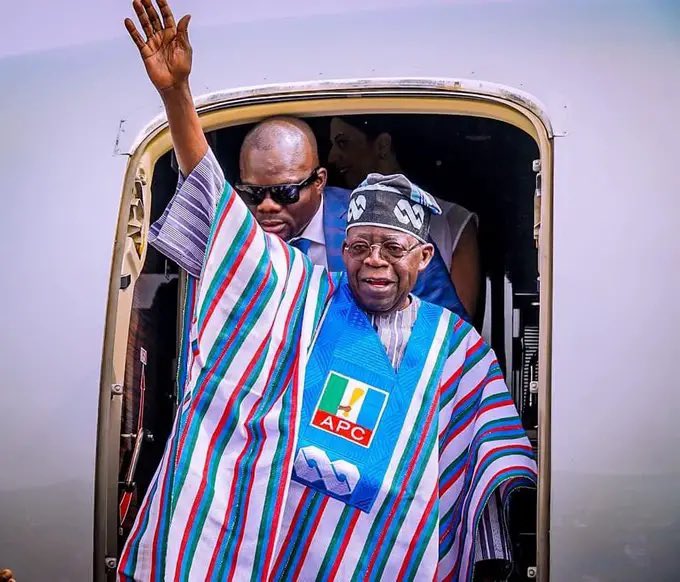
THE All Progressives Congress (APC) on Thursday, April 13, said Nigeria’s President-elect Bola Tinubu, cannot get adequate rest within Nigeria, following the keenly contested presidential election which he won.
National Publicity Secretary of the APC Felix Muoka disclosed this while explaining Tinubu’s continued absence form the country during an interview on the Channels Television programme, Politics Today.
“There is no such thing as an easy time here in the country. He is the President-elect. There are many people, hundreds, if not thousands of people, who are looking to see him for one thing or the other. This is the lobby season for the new government that is about to be formed.
“If he is here, I doubt that he will actually get the kind of rest that he deserves because of the pressure; the kind of people who will want his attention for one thing or the other. And he cannot refuse all of them without offending everybody. But when he is not in the country and is just taking a few days of rest, I think that is deserved,” Muoka said.
Muoka added the President-elect would be back shortly from what he described as a working rest.
“He is preparing intensely; I am aware of that. All of those who are necessary and relevant to his preparation have access to him whether digitally or physically and he is working where he is, even though he is resting. He is making preparation for the job ahead,” he said.
In March, Tinubu’s spokesperson Tunde Rahman announced that the President-elect left the country for France and the United Kingdom to rest and plan ahead of his inauguration on May 29.
Rahman also said his principal would attend the Lesser Hajj in Saudi Arabia.
Tinubu’s continued absence, and frequent trips abroad, have given rise to speculations concerning his health status.
Ahead of the presidential campaigns, a peace pact was signed by candidates of all parties contesting the elections.
Tinubu, had been in the United Kingdom at the time and missed the event, though he was represented by his running mate, Kashim Shettima.
THE Executive Director, PowerUp Nigeria and a power sector governance expert, Adetayo Adegbemle, speaks with HARRISON EDEH of The ICIR on concerns on the Federal Government’s mass metering programme, how states can explore opportunities in the new Electricity Act, and other key issues in the power sector.
Can you share your thoughts on the mass metering programme. Where are we currently?
To be frank with you, everyone is confused about the progress of the National Mass Metering Programme,(NMMP), and it’s a shame we cannot muscle the resources, even after taking the World Bank loan, to complete a simple project like the NMMP.
The last serious thing I heard was in late December 2022 that contract offers were given to meter manufacturers, but the prices quoted were ridiculously low. So, manufacturers and vendors were writing and asking for the review of the awarded prices.
Where do you think the government possibly got it wrong?
On the NMMP, we actually reached out to the Federal Government and asked that the approach should be changed. We should not continue to take loans and be consuming without a plan to sustain whatever gains we might be getting.
The NMMP itself was a kneejerk reaction, a Trojan Horse, if I may say, because the FG came up with the six million meters idea when it insisted on implementing the Service-Based Tariff in September 2020.
By now, we should have had a Common Meter Design – like they have in China – and build an ecosystem around metering so we can start sourcing for parts locally. I even made a presentation to the Nigerian Society of Engineers on this, to showcase the entrepreneural opportunities that we can develop.
The basal thinking of NMMP was not to solve the problem of metering in Nigeria, and has not solved the problem of bridging the metering gap.
The Senate Committee on Power is pushing for the reversal of the 700-megawatt Zungeru concessioning. What is the cost of this inconsistency to power sector reforms?
I have asked: in whose interest is this? I don’t believe this will be done eventually, so I won’t bother myself too much about it.
The new Electricity Act recently signed by President Buhari offers hope. But do you have concerns about a possible breach in this legislation?
No, not at all. In fact, myself and my organization have been asking for this constitutional amendment since 2015.
There’s no reason we should continue to deceive ourselves about the progress being made in the power sector. And if we want any change, our mental approach should also change.
This amendment opens up the power sector for investments, both at the state and national levels.
Of course, not all states will be able to float their own electricity market, but those with the capacity will do it, and should be a relief on the national grid.
The amendment is also clear, so I am not expecting any breach.
What can states do differently to reap the benefits from this landmark Act?
States like Lagos State are already advanced in this regard. I think Akwa Ibom and Cross Rivers are, too. Some people have argued that it’s not possible to have two parallel distribution lines. This is not true, as we presently have a system like that running in this country.
Two distribution lines running in parallel can exist, and this opens up a proper competitive market.
Imagine Lagos running a distribution line from their independent power projects (IPPs) in Alausa, Ikeja, to Maryland, then concession it out, thereby making it possible for people in that axis to switch their distribution company.
States can also license metering companies to meter every household in their coverage area.
We are not even talking of original equipment manufacturers that will benefit from the development.
Then, states can now trade in electricity, selling to neighbouring states, and the national grid.
Are there possibilities of enacting state electricity regulatory commissions, and how does that pan out?
This is what it means, basically. States can now have their individual Electricity Regulatory Commission to handle everything electricity within their boundaries. Enacting this will be left to the respective House of Assembly.
What will become the fate of various contractual obligations entered into by the government, which could be tied directly or indirectly to the new Act?
I don’t believe it has any adverse effects on existing contracts, and don’t also forget that this is a market in evolution. Everything can run concurrently.
Where does this new Act leave the generation, transmission and distribution companies? Does this Act signpost any form of policy somersault?
No, there’s no policy somersault here; this is a constitutional issue.
What the amendment did was to remove the restrictions that we had. So, while power has always been on the Concurrent List of the constitution of the Federal Republic of Nigeria, and allowed states to only provide power where the national grid didn’t cover, the amendment now allows states to operate without such limitations.
Many upbeat investors have started signalling interests into Nigeria’s power sector. How does this new Act enable them to do more?
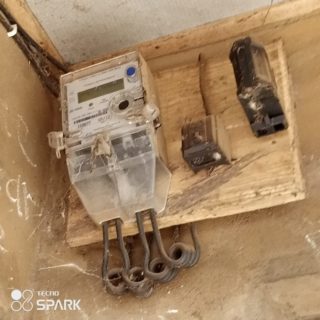
One of the electricity meters distributed to communities. Photo by Sodiq Ojuroungbe
I have mentioned this earlier. Now states can develop their distribution networks and can generate power locally and consume same locally.
All these will need funds, and the development of local industrial capacity.
Investors can now look at the gamut and choose where they want to play. We are also poised to consult and provide business intelligence for any interested investors that might like to play within that space.
Lagos State has also published a Policy Document to throw light on their vision for Lagos State power market. I am sure other states will follow suit; and again, we can provide business intelligence for any investor that might be interested in any state.
How would states re-set themselves to tap into the enormous benefits of this new Act?
I will continue to use Lagos as an example. Lagos State started with the Lagos State Energy Board since the Babatunde Raji Fashola days, compiling data and researching into Lagos State capacities. So at one glance, you can see what the energy demands for Lagos is and what investment opportunities are available.
Other states are advised to take similar steps. Let the world know what local resources are available. If I were to be Ondo, Kogi or Enugu state, I would be talking to investors from Australia, Poland and India on how the available coal resources could be used to generate electricity and service my state, and then, maybe, now sell the excess to the national grid, thereby creating massive internally generated revenue as well.
With this new Act, where do you see the sector in the next 10 years?
Like the maxim says, ‘the best time to plant a tree was yesterday, the next best time is now.’
The constitutional amendment has opened up further opportunities for us to resolve the power challenges we have been having, and the only thing that can make it successful, or otherwise, is the intent of purpose with which we implement it.
Positive results are expected, at least, from states with resources, and there won’t be any need for one section or set of people to be dragging back the nation.
Don’t also forget that this is also a drive at deregulating power from the centre, and every state can now develop at their own pace.
The future is exciting for Nigeria and the power sector.
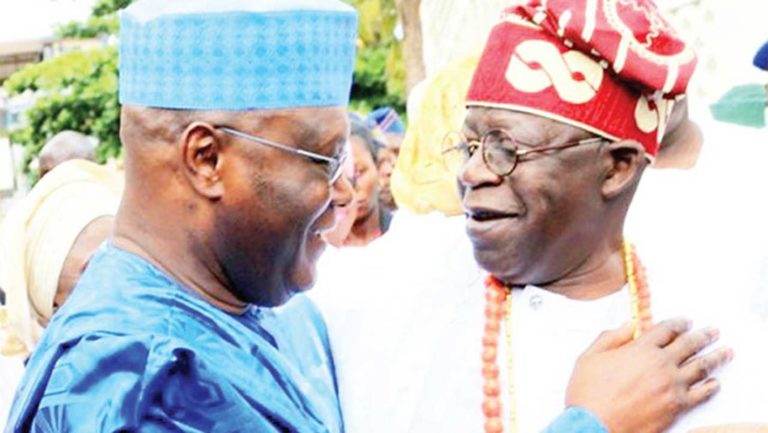
A claim has circulated online that Atiku Abubakar, the presidential candidate of the Peoples Democratic Party (PDP) in Nigeria’s 2023 general election, is retiring from politics and has promised to join hands with others to support the nation’s president-elect, Bola Ahmed Tinubu.
This claim which was circulated as a press release allegedly from Atiku has found its way into many closed WhatsApp groups.
The content of the WhatsApp broadcast message read:
PRESS RELEASE!
2023 PDP presidential candidate Alh. Atiku Abubakar from Active Politics And Ready Join Hands With President-Elect Sen. Bola Tinubu To Move Nigeria Forward.
On behalf of my family, friends and well-wishers, and in the best interests of Nigerians, and for the betterment of our great party, PDP, and our country, Nigeria, I, ATIKU ABUBAKAR, publicly announce my retirement from active politics. It has been a successful journey for me so far, irrespective of my inability to win the Presidential race of this great nation during my prime in politics, I still thank all Nigerians, and my supporters from other nations who fought the battle with me. This is the end of my political journey, and I wish the present and upcoming leaders of this great nation a successful journey, and also advise them to know that leadership tussle is not a do-or-die affair. It is God That enthrones and, as well, dethrones leaders.
Moreover, I congratulate the President elect, ASIWAJU BOLA AHMED TINUBU, and advise him to lead the nation with the fear of Allah. He should shun politics of acrimony and gangsterism. He should sustain the unity that has been existing among us, carry everybody along and give all Nigerians something to be proud of his administration.
Finally, I advise my fellow contestants from other political parties not to seek any court injunction, because I have accepted the defeat in good fate, and also plead fervently with them to follow suit.
Long live PDP! Long live Democracy! Long live Federal Republic of Nigeria!
– ATIKU ABUBAKAR
//copied.
THE CLAIM
Atiku Abubakar has retired from politics and congratulated Bola Tinubu.
THE FINDINGS
Findings by The FactCheckHub revealed that the claim is FALSE.
A check on Atiku’s Instagram and Twitter pages showed that he did not make any such post.
Further checks revealed that no credible media platform also published the report.
The FactCheckhub reached out to Paul Ibe, the spokesperson to Atiku Abubakar, via a telephone call.
In his response to our inquiry, he described the claim as “false and a contrived statement of those shopping for validation and congratulations to the flawed and shambolic presidential election.”
Ibe also sent a copy of the press release signed by Atiku Abubakar debunking the claim to the The FactCheckHub.
The press statement reads thus:
PRESS RELEASE
I’ll never validate an illegitimate outcome of a flawed process
I have been notified of a fake press release attributed to me and purportedly giving legitimacy to the widely rigged presidential election of February 25.
The so-called press release did not emanate from me or my office, and it should be treated with repudiation, untrue, and deliberately contrived by those who illegally appropriated the mandate of the Nigerian people.
For the avoidance of any doubt, I wish to state categorically that my lawyers still have my unflinching mandate to challenge the outcome of the February 25 presidential election.
I join other lovers of democracy in Nigria and friends of our great country in the outright rejection of the pre-determined outcome of the February 25 election.
I shall continue to challenge the legality of that election, alongside my party, the Peoples Democratic Party.
The decision to challenge the sham election of February 25, the worst election in our democratic history, is not predicated on my personal interest but the interest of Nigeria and its people. It is aimed at deepening democracy and ensuring that we do not confer legitimacy to an outcome of illegitimacy.
My commitment to the democratic struggle in Nigeria is beyond an election season.
Signed:
Atiku Abubakar
Presidential candidate of the Peoples Democratic Party and former Vice President of Nigeria, 1999-2007
25th March, 2023
THE VERDICT
The claim that Atiku Abubakar has retired from politics and congratulated Bola Tinubu is FALSE; the PDP flagbearer has debunked it via a press statement.
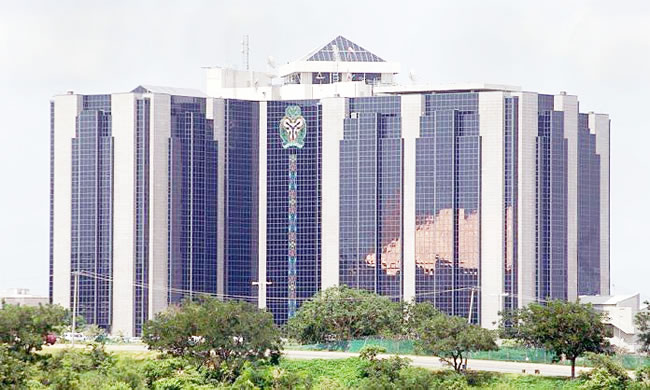
MORE Nigerian banks will adopt cross-border expansion in the face of tight regulation, over-concentrated risk, and the desire to stay afloat, financial experts told The ICIR.
The Central Bank of Nigeria (CBN) had in the last one year aggressively tightened its monetary policy rate (MPR) by 650 basis points (bps) to quell inflationary pressure.
The rate hike rose from 11.5 per cent in April 2022 to 18 per cent in March this year, impacting banks’ profitability as percentage change in interest expense rose higher than interest income.
Interest expense is simply the amount a bank paid on depositors’ funds, while interest income is the amount it received on loan to customers.
Zenith Bank Plc, for instance, saw its interest expense shot up by 62 per cent to N173.54 billion in 2022 from N106.79 billion in 2021, while FCMB Group Plc reported a 37.15 per cent increase to N97.55 billion in 2022 from N71.13 billion in 2021.
Many of CBN’s policies are unfriendly to good banking practice, the chief executive officer (CEO) of Highcap Securities Limited, David Adonri, told The ICIR.
Adonri said that, for instance, sectoral credit interventions by the CBN constitutes competition with banks.
“Many other obnoxious policies of the past caught many banks napping. It’s against these that Nigerian banks are diversifying across borders to reduce their regulatory and over-concentration risks,” he added.
At a virtual meeting on ‘Nigeria’s Economic Landscape’ held on Wednesday, April 5, the CEO of Cowry Asset Management, Johnson Chukwu, lamented that the continuous hike in MPR would force more lenders to other countries that have favourable interest rates.
According to him, the cumulative 650bps would encourage more banks to expand into other African markets by increasing lending yields and reducing banks’ net interest margins.
“What is happening now is all about the survival of the fittest,” Boniface Okezie, the national chairman of the Progressive Shareholders Association of Nigeria (PSAN), told The ICIR.
Okezie said, “The banks have to go outside to see how they can survive and make it to stay afloat because CBN policy is no longer favourable to them.
“If the banks do not go out there to operate, they can’t be able to stay in business. Banking is all about being in business – financial industry is what they are called, not buying and selling.”
However, the chief executive officer/principal partner with Afrique Capital and Equity Funds Limited, Kazeem Bello, painted a bitter-sweet picture of the situation.
Bello said banks in Nigeria were known to take advantage of the shallow banking environments in many other countries to expand their operations.
As it stands, Nigeria’s banks have spread in over 15 countries across the continent, and to Europe and the Americas.
Bello, a global development economist, argued that the CBN did not really institute cognate policy direction and criteria for those cross-border expansions until, perhaps, 12 years ago.
“It may not be entirely correct to assert that the tough business environments in Nigeria are driving Nigerian banks to set up offshore operations in sub-Saharan Africa. Rather, the enabling opportunities available in those countries may have been the top reason why Nigerian banks venture to invest overseas,” he said.
According to him, by global standard, the banking penetration index for the African continent is the lowest as approximately less than 22 per cent of the continent’s population have access to core banking services.
“This underscores the huge investment opportunities available, especially in some countries where the index is surprisingly below 10 per cent of their population.
“Those figures explain why Nigerian banks flocked the entire sub-region of West Africa with banking operations and some other parts of the continent as well,” he noted.
He pointed out that most banks invest in overseas to drive deposits and increase revenue.
“Banks are taking the decision to invest across the Nigerian borders rather than being driven away by the CBN policies as investors generally look for opportunities to grow revenue as a priority,” he said.
Bello, however, raised the concern that the monetary authorities needed to examine and address the “grossly” under-banked situation in the country to grow banking penetration.
“Some of these banks venturing overseas may not have had the adequate capitalisation base to be allowed to open business abroad,” Bello added.
Recent update showed that more banks have now transitioned to the holding company (HoldCo) structure to allow for more leverage to diversify their earnings in the face of the present tight monetary policy regime.
THE All Progressives Congress (APC) has said the Bayelsa State gubernatorial primary election is open for all aspirants in accordance with the Electoral Act.
The party’s governorship primary takes place on Friday, April 14, in Yenagoa, Bayelsa State capital.
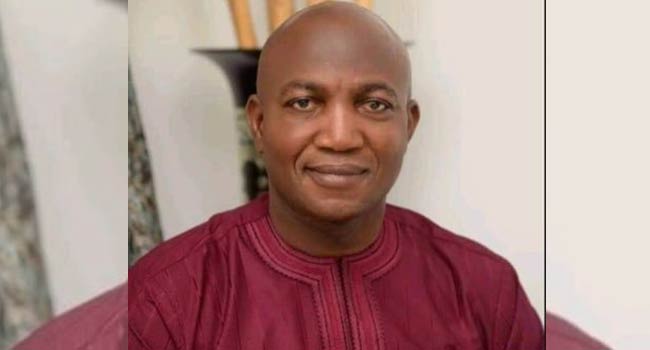
Speaking on Channels TV on Thursday, April 12, the National Publicity Secretary of the APC, Felix Morka, expressed the sympathy of the party’s leadership for David Lyon.
Lyon was the APC candidate in the Bayelsa State governorship election in 2020. He was declared winner of the election but his victory was nullified by the Supreme Court due to irregularities in the certificates of his running mate Biobarakuma Degi-Eremieoyo.
The Peoples Democratic Party (PDP) candidate, incumbent governor Duoye Diri, who finished second, was subsequently declared winner of the poll.
Speaking on Channels TV on Thursday, Morka said the APC leaders sympathised with Lyon over the loss of his mandate in 2020.
But he explained that the provisions of the Electoral Act and the party’s Constitution made it impossible to give an automatic ticket to Lyon.
“If this was up to individuals, I’m quite sure that the sentiments are with David Lyon but when you have laws that govern the process, the Electoral Act, the party’s Constitution, the Federal Constitution of Nigeria at play, when people insist they want a competitive, fair, transparent process, and invoke provisions of the constitutions and the Electoral Act, you can’t shove it aside.
“If you take a barometer and measure the level of sympathy for David Lyon, yes, even amongst the leaders of the party, there are many who have enormous sympathy for his situation but at the end of the day, you cannot use sympathy to upstage legality and due process.
“Sometimes, no matter the strength of your sentiments, you yield to the law because if you don’t, the judges will not be governed by sentiments if the matter goes to court in a legal challenge.”
Morka urged those who cast their votes for Lyon during the last primary election to vote for him again, if he remains their preferred choice.
“They spoke loud and clear and now that a time has come for that election, we’re hoping that as citizens, they’re free to go to the primaries, for those of them who are members of the party to support him if that is their preference still or support any of the other aspirants in the race,” he said.
Why Supreme Court sackedDavid Lyon as Bayelsa State governor-elect in 2020
In February, 2020, The ICIR reported that the Supreme Court sacked then governor-elect of Bayelsa State, David Lyon and his deputy, Biobarakuma Degi-Eremieoyo barely 24 hours to his inauguration.
In a unanimous judgment delivered by a five-men panel, the Supreme Court ordered the Independent National Electoral Commission (INEC) to withdraw the Certificate of Return issued to Lyon.
The apex court nullified Lyon’s election because of the false information presented to INEC by his deputy, Degi-Eremienyo.
The Supreme Court noted that the information submitted by Eremienyo to INEC lacks credibility due to disparities.
The court, as well ordered the Commission to declare the party with the highest number of lawful votes and geographical spread, winner of the election.
The ICIRreported that Lyon’s running mate presented five different names to INEC.
Degi-Eremienyo’s name was written as ‘Degi Biobara’ in his Primary School Certificate but his secondary school education documents showed a different name – Adegi Biobarakumo.
During his tertiary institution years at the Rivers State University of Science and Technology (RSUST), the name was again mutated to Degi Biobarakuma..
He adopted Degi Biobarakuma Wangaha for his MBA Certificate from the same university in 2002.
But as the deputy governorship aspirant, he bore Degi-Eremienyo.
A UNITED States (US) District Court in Illinois has set July 11 for the sentencing of a Nigerian international fraudster Olalekan Jacob Ponle, better known as Woodberry, after the suspect pleaded guilty to committing wire fraud and agreed to forfeit $8 million illegally acquired through crime.
The flamboyant internet fraudster is an ally of another popular Nigerian Ramon Abbas, alias Hushpuppi, who was convicted of similar charges and handed an 11-year sentence last year.
Woodberry initially pleaded not guilty to the eight-count fraud charge brought against him for engaging in a scheme known as business email compromise (BEC), which violates Section 1343 of the United States Criminal Codes.
However, a plea declaration submitted at the United States District Court of the Northern District of Illinois Eastern Division on April 6, revealed the suspect had rescinded his plea and had entered into an agreement with the US authorities to repay the $8 million he fraudulently received from the seven companies that fell for his scam.
The document containing Woodberry’s signed plea declaration read in part: “Defendant understands that by pleading guilty, he will subject to forfeiture to the United States all right, title, and interest that he has in any property constituting or derived from proceeds obtained, directly or indirectly, as a result of the offence.”
He has also waived his rights to some designer watches, jewelry and luxury cars, including a Rolls Royce Cullinan with vehicle number J9153, Lamborghini Urus (N4973) and Mercedes-Benz G-class (G68816) he had stashed in Dubai.
Last year, he had forfeited 151.8 Bitcoin, roughly $6 million, to the US government determined to recover all stolen monies from the Nigerian fraudster.
Woodberry and Hushpuppi were arrested for extensive international online scams in Dubai, the United Arab Emirates, on 10 June 2020, and extradited to the US on July 2, 2020, to face separate trials.
However, on July 22, 2020, a court order issued by Judge Robert W. Gettleman, dismissed the charges against Woodberry without prejudice.
When a case is dismissed with prejudice, it is over and done with, once and for all, and cannot be brought back to court, but when it is dismissed without prejudice, the dismissal is only temporary as the prosecutor can refile the case within a certain period of time.
Consequently, the charges against the suspect were refiled and in a forfeiture filing dated April 29, 2022, US prosecutors sought the confiscation of any property derived from the proceeds of Woodberry’s criminal enterprise.
THE National Assembly has forwarded the harmonised version of the Peace Corps Bill to President Muhammadu Buhari for assent.
The ICIR reports that it is the second time the bill will await the President’s assent, which, expectedly, will make the Federal Government fund and own the volunteer corps.
Before his re-election in 2019, the President had rejected the bill in 2018, citing financial constraints and security challenges.
He had said due to “scarce resources”, funding the organisation would impose a financial burden on the Federal Government.
The ICIR further reports that the Peace Corps of Nigeria wasestablishedin 1998 by a youth development advocate and strategist, Dickson Akoh.
Akoh has spent decades pushing for government funding and ownership of the corps.
He has severally argued that the organisation would support the nation’s security architecture in facing the challenges of terrorism and other forms of criminality.
He also noted that the organisation would provide jobs for teeming youths in the country.
Akoh, who has led the corps since its inception, is also ready to relinquish his position should the government accept to own the organisation.
Currently running its offices across Nigeria, the corps is funded largely by private organisations and individuals who engage its services.
Thousands of its volunteers also hope that the President assent to the bill to enable the corps to enjoy government ownership like the Nigerian Security and Civil Defence Corps, which the government took over after a similar law signed by former President Olusegun Obasanjo’s administration.
The Punch reported that the Clerk to the National Assembly, Magaji Tambuwal, transmitted the bill to the President through a letter on Wednesday, April 12.
The transmission followed the adoption of the report of the conference committee set up by both chambers of the National Assembly to harmonise the bill last Tuesday.
In April 2022, The ICIRreported how the Senate passed the bill.
Sponsored by Ali Ndume, a Senator, the bill seeks to empower and provide employment for youths and facilitate peace, volunteerism, community service and nation-building.
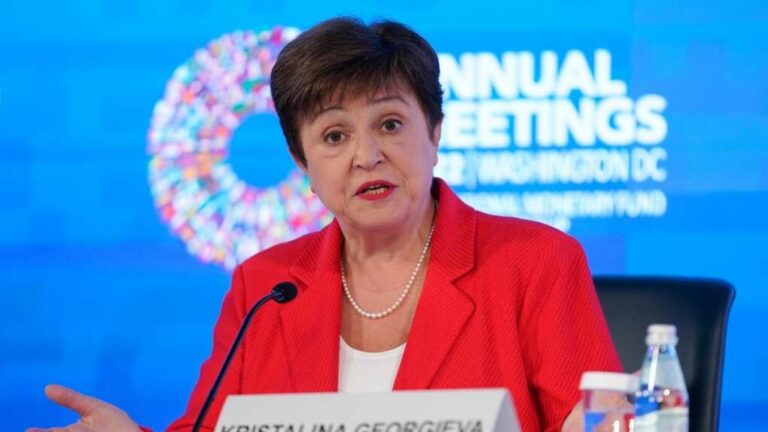
THE International Monetary Fund (IMF) says it needs a total of $4.7 billion to close the loan resource gap in Africa as it intensifies plans to hold its annual meeting in Morocco in October.
The meeting will be IMF’s first in 50 years, its Director-General, Kristalina Georgieva, said on Wednesday, April 12 at the ongoing IMF/World Bank Spring meeting holding in Washington D.C., United States.
Georgieva disclosed that the IMF urgently needed to provide $1.6 billion support to the continent.
“As an urgent first step, what I called for is to provide pledges of $1.6 billion; we need $4.7 billion to close the loan resource gap. We have to work together to close this gap,” the IMF chief said as she called on the international community to support the world’s poorest countries.
Africa and other low-income countries have been impacted severely by multiple economic shocks in recent years.
Georgieva noted that the IMF and World Bank were no longer providing emergency financing, but are having very strong demand from countries for ‘Upper Credit Tranche programmes’, which could help countries build fundamentals and create opportunities for growth and employment for their people.
An upper credit tranche is a policy the IMF uses to make credit available in four tranches (segments) to countries, each tranche equals to 25 per cent of a member’s quota.
“We know that at a time when the global economy is still experiencing multiplicity of challenges – slow growth, higher inflation – for these countries, it translates into holding them back in their aspirations to catch up with the better us,” she said.
She explained that, technically, every dollar committed in Poverty Reduction and Growth Trust (PRGT) subsidies translates into $5 of interest-free lending.
Georgieva, stressing on closing the loan gap by October, said the IMF could restore access to concessional financing for PRGT eligible countries at par with access for Generalized System of Preferences (GSP) eligible countries.
The ICIR can report that the concessional support through the PRGT is currently interest-free.
She noted that in addition to the increase in demand, countries are experiencing higher interest rates that make bringing down the cost of lending to low-income countries harder, and, as a result, the resource gap for the PRGT has grown.
In March 2020, when the World Health Organisation (WHO) announced the start of the Covid-19 pandemic, all countries were faced with tremendous uncertainties, particularly for low income countries, the IMF boss recalled.
But since the start of the pandemic, the IMF has provided $24 billion in support through the PRGT, alleviating people’s suffering and preventing instability from spreading beyond borders, she said.
According to her, per capita income growth for 2023/2024 was projected at 2.8 per cent, the lowest per capita growth since 1990.
“That puts them in further divergence unless we act,” Georgieva added.
Per capita income is used to determine the average per person income for an area, and to evaluate the standard of living and quality of life of the population.
AN 18-year-old Italian volleyball star of Nigerian descent Julia Ituma, has died tragically after falling from the window of her hotel just hours after her team was knocked out of their Champions League semi-final clash.
Ituma, described as the ‘next big thing’ in volleyball was found motionless on the ground outside the Valley Hotel in Istanbul, Turkey at around 5.30 am on Thursday morning.
She was pronounced dead by paramedics and emergency responders who arrived at the scene a short while after her fall from the sixth floor.
The rising star had been representing her team Igor Gorgonzola Novara in their second-leg knockout clash with Turkish side Eczacibasi Dynavit Istanbul, where she had scored two points despite their loss.
Local police confirmed that they have launched an investigation into the incident. Her body has since been sent for forensic examination to determine the cause of the tragic death.
The Italian consulate in Turkey said they were working closely with officials in the country and providing support to Ituma’s family.
Ituma was born in 2001 in Milan to Nigerian parents and was considered one of the most promising talents in Italian volleyball. She started playing volleyball at the age of 11.
This was her first season with Igor Gorgonzola Novara, having transferred from Club Italia three seasons earlier.
Ituma had just finished the season with Igor where they finished fifth in the national Serie A1 league.
THE Nigeria Centre for Disease Control (NCDC) says Nigeria has recorded 4,338 suspected cases of Lassa fever infection in 2023.
Lassa fever is an acute viral hemorrhagic illness transmitted to humans through contact with food or household items contaminated by infected rodents or contaminated persons.
NCDC released its latest Lassa Fever situation report which covered all the suspected cases recorded between March 27 and April 2, on Thursday, April 13.
The report revealed that there has been continuous surge in the spread of Lassa Fever compared to the number of suspected cases recorded in April 2022.
The report also indicated that from week 1 to week 13, 2023, there has been 846 confirmed cases of Lassa Fever infections.
It further stressed that 148 deaths were reported with a case fatality rate of 17.5 per cent which reduced compared to the death rate for the same period in 2022 (19.1 per cent).
The report said, “Cumulatively from week 1 to week 13, 2023, 148 deaths have been reported with a case fatality rate (CFR) of 17.5% which is lower than the CFR for the same period in 2022 (19.1%).
“In total for 2023, 25 states have recorded at least one confirmed case across 99 Local Government Areas.”
NCDC stated that the number of confirmed cases decreased to 23 cases compare to the 39 cases recorded in week 12.
The report noted that newly suspected cases were reported from Bauchi, Ondo, Edo, Taraba, Ebonyi, Oyo and Kebbi states.
It noted that 72 per cent of all confirmed Lassa Fever cases were reported from Ondo, Edo, and Bauchi while 28 per cent were reported from four other states.
Ondo, Edo and Bauchi topped the list of states with the highest number of all Lassa Fever suspected cases with 32 per cent, 29 per cent and 11 per cent, respectively.
The report also showed that a health worker was affected in Week 13.
Meanwhile on Monday, January 30 The ICIR reported that the Nigeria Centre for Disease Control (NCDC) issued a warning that the country is at a high risk of increased Lassa Fever transmission.
NCDC said that it had activated the National Multi-sectoral Emergency Operations Centre for Lassa Fever (LF-EOC) at Level 2 to coordinate and strengthen ongoing response activities in the country.
According to the NCDC, “The outcome of the risk assessment placed the country at a very high risk of increased Lassa fever transmission due to an unprecedented upward trend in the number of confirmed cases being reported compared to previous years, increased number of states reporting cases in comparison to previous years and increased risk of healthcare worker infections and deaths due to Lassa fever infection.”
In January, The ICIRreported that the Edo State government said it has recorded 13 deaths from 115 cases of Lassa Fever in the state.
The ICIRreported that over 171 persons were killed by Lassa in Nigeria between January to September 2022.
In a report released in January 2023, the NCDC revealed that Nigeria recorded 1,067 suspected cases of Lassa Fever and 189 deaths from the disease in 2022.
The report pointed that the number of reported deaths with a case fatality rate (CFR) of 17.7 per cent was lower than the CFR for the same period in 2021 (20.0 per cent).
It further stressed that Nigeria recorded more suspected Lassa Fever cases towards the end of 2022 compared to the same period in 2021.
Moreover, the Centre highlighted that 27 states recorded at least one confirmed case across 112 affected LGAs.
The report however, added that Ondo, Edo and Bauchi took the lion share (72 per cent) of all confirmed Lassa Fever cases in 2022 while 23 per cent were reported from 24 states with confirmed Lassa Fever cases.