BAYELSA state governor Duoye Diri has ordered relevant government and security agencies to join the search for corpses still missing after a boat mishap in the Nembe Local Government Area (LGA) on Thursday April 6.
The directive was disclosed in a statement by the governor’s Chief Press Secretary (CPS) Amanda Daniel on Saturday April 8.
“Governor Diri has directed the relevant government agencies, including security agencies, to collaborate in the search-and-rescue efforts and ensure the recovery of all missing persons,” the CPS noted.
The statement comes after some bodies were recovered along the waterways where the mishap occurred.
Speaking to The ICIR, Bayelsa Police Public Relations Officer (PPRO) Asinim Butswat confirmed that some corpses had been recovered, but did not disclose the number.
“I haven’t got the actual figure. This takes some time and we do not want to give information in bits. So by tomorrow, we will know the actual figure,” he said.
Passengers had been travelling from Yenegoa to the Brass Islands, in the boat, which was originally meant to transport cargo, when the accident occurred.
The governor, in his statement, noted that the boat was overloaded, leading to the accident.
“The boat was said to be carrying scores of passengers and goods worth millions of naira from Yenagoa to the Brass island and neighbouring communities when it suddenly went under, reportedly due to overloading,” the statement added.
Earlier, there were no reports of any casualties following the incident.
However, on Saturday, Chairman of the Maritime Workers Union in Bayelsa Ipigansi Ogoniba said at least three corpses had been discovered.
“The local boats are designed for heavy cargo and not for passengers, but people smuggle themselves into these boats and pay very little fares to operators.
“Unfortunately the regulation on the use of safety jackets is weak. The boats are not primarily meant for passengers; there is no manifest to ascertain the exact number of passengers on board,” Ogoniba said.
He said passengers aboard the boat were estimated to be about a hundred.
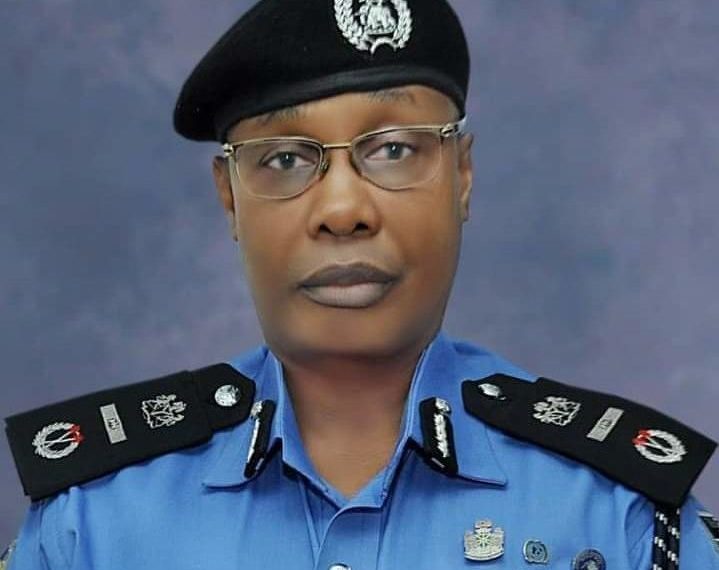
THE Inspector-General of Police (IGP), Usman Alkali Baba, has deployed the newly appointed Assistant Inspector-Generals (AIGs) of Police to their posts.
This is shortly after decorated them with their new ranks following their promotion in the Nigeria Police Force.
Their deployment to the various Commands in the force aligns with the manpower development policy, according to the IGP.
The policy dictates that the right people should be assigned roles fitting for them based on their capabilities.
This was disclosed in a statement by the Force Public Relations Officer, CSP Olumuyiwa Adejobi.
The statement said the deployment aligns with the IGP’s mandate and strategies to strengthen the operational structures of Commands, departments, and formations of the Nigeria Police Force.
The former police Public Relations Officer of the NPF, Frank Mba, is one of the newly promoted AIGs.
Mba was deployed to the Force Criminal Investigation Department (FCID), Annex Lagos.
The IGP asked the AIGs to fully comply with all standard operating procedures while discharging their duties.
He noted that the activities of their new Commands, formations, and departments align with the Police Reform Mandate.
The statement explained that the deployment is with immediate effect.
The AIGs and their duty posts is as follows:
AIG Zone 14 Katsina-AIG Ahmed Abdulrahman, mni
AIG Police Mobile Force-AIG Ibrahim Sani Ka’oje, mni
AIG Special Protection Unit -AIG Matthew Akinyosola, mni
AIG Zone 12 Bauchi-AIG Sylvester Abiodun Alabi, fdc
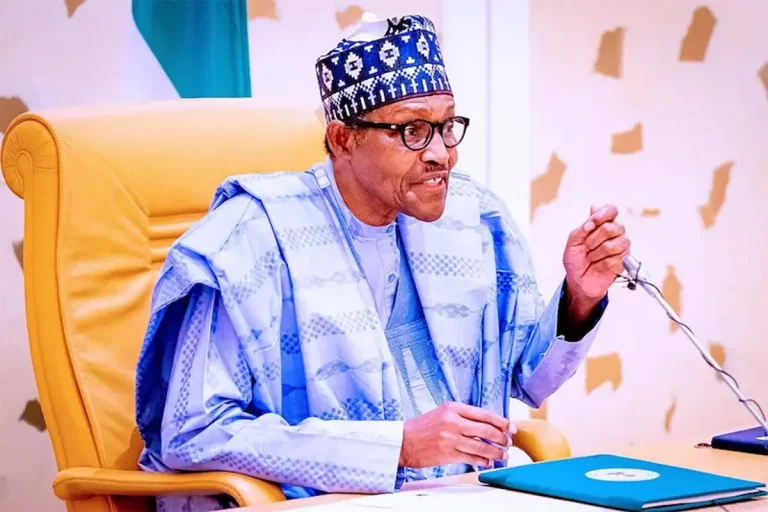
PRESIDENT Muhammadu Buhari has condemned the recent killings in Benue communities, ordering security agencies to make efforts to end the ‘extreme violence’.
In a statement by the Senior Special Assistant to the President on Media and Publicity, Garba Shehu, on Saturday, April 8, the President said politics must be set aside to bridge divisions in the interests of all citizens.
He also ordered security agents to immediately apprehend and deal with the perpetrators according to the law.
“No one should attack anyone because of their way of life. Neither should anyone take revenge on others for injustice done to them. Both should be held accountable for their actions, and justice delivered,” the President said.
According to Buhari, it was unacceptable for lives to be taken by herdsmen and farmers alike.
The President added that Nigerians must remember first and foremost that they are all equal citizens of the country, adding that his administration would hold those that took innocent lives to account.
“It is equally unacceptable for the lives of those merely practicing their duties as police officers and government officials to also be lost.
“As those who have been entrusted with leadership by our citizens, we have a duty to remember that and do everything we can to bridge divisions and come together in the interests of all our people.
“There are many times when Buhari and Gov. Samuel Ortom of Benue have disagreed politically. But, today, the president puts all these aside, to reach out to the Governor to express the heartfelt condolences of the nation for what has occurred in recent days,” the statement added.
On April 7, The ICIRreported how residents of Apa community in Benue State took to the streets to protest against incessant killings by suspected armed herdsmen in the state.
The protesters, who are mostly youths, lamented that more than 100 people have been killed and injured in the community while a traditional chief’s hand was amputated by the armed herdsmen.
According to the report, the protests followed the killing of 46 persons in the latest attack by suspected armed herdsmen in the state.
In another report by The ICIR, some suspected herdsmen attacked Mgban community, in the Guma Local Government Area (LGA) of Benue state on Friday, April 7, killing dozens of residents.
The Public Relations Officer (PRO) of the Benue State Police Command Catherine Anene, confirmed the attack but could not give details on the number of casualties.
“Yes, there was an attack in Guma. There are officers on ground, but we are moving there ourselves now. I cannot give any more information for now,” she said.
The ICIR had earlier reported that the Benue State Emergency and Management Agency said it recorded 5,138 deaths from suspected armed herders in seven years.
According to the state emergency management agency, 18 of the 23 Local Government Areas had been under series attacks since the beginning of Governor Samuel Ortom’s administration.
THE National Pension Commission (PenCom) has called on the public to be mindful of the activities of the Association of Pension Desk Practitioners of Nigeria (ASSOPEP).
PenCom gave the warning in a statement signed by its Head of Corporate Communications, Abdulqadir Dahiru, and made available to newsmen on April 7.
The Commission also dissociated itself from ASSOPEP’s activities on pension issues.
It also urged the public to desist from relating with ASSOPEP regarding their pension and retirement benefits or other matters relating to the pension industry in Nigeria.
“The attention of PenCom has been drawn to the illicit activities of ASSOPEP and its claims of resolving pension issues and assisting retirees in securing their retirement benefits.
“The general public is kindly requested to note that the claims by ASSOPEP are entirely false,” the Commission said.
PenCom emphasized that the association has no affiliation with the pension industry, nor authorisation of any kind whatsoever.
The Commission further explained that Licensed Pension Fund Operators (LPFOs), statutorily mandated to undertake the processing and payment of retirement benefits, were also not associated with ASSOPEP in any way.
It advised workers, retirees, pension desk officers and everyone approached by the association with claims of consulting with their Pension Fund Administrators (PFAs) and PenCom in respect of their retirement benefits to exercise caution.
PenCom said that it had reported ASSOPEP to law enforcement agencies for appropriate action.
Individuals dealing with the association are doing so at their own risk, the Commission stressed.
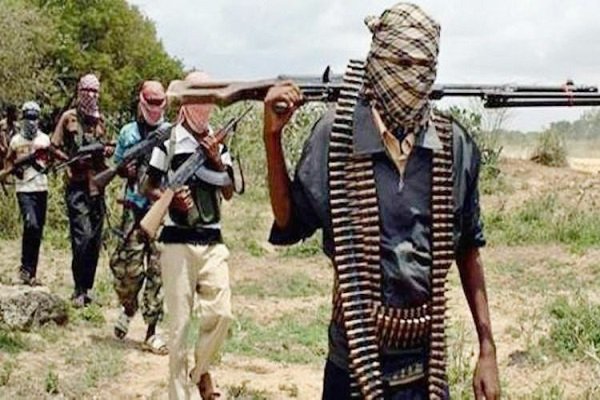
SUSPECTED herdsmen attacked Mgban community, in the Guma Local Government Area (LGA) of Benue state on Friday, April 7, killing dozens of residents.
Speaking to The ICIR on Saturday, April 8, Public Relations Officer (PRO) of the Benue State Police Command Catherine Anene, confirmed the attack but could not give details on the number of casualties.
“Yes, there was an attack in Guma. There are officers on ground, but we are moving there ourselves now. I cannot give any more information for now,” she said.
However, according to a report, Security Officer of the local government Christopher Waku confirmed that at least 34 corpses had been recovered from the scene of the attack.
He said the victims had been refugees taking shelter at a primary school in the community.
On Wednesday, April 5, at least 46 people were killed in an attack by gunmen on residents of Umogidi in the Otukpo LGA of the state.
Following the incident, residents of the state took to the streets on Friday, April 7 to protest against the incessant killings.
Guma was among the LGAs attacked in March when gunmen invaded several parts of the state, launching fatal attacks for over three weeks.
According to the Benue State Emergency Management Agency, at least 5,138 residents have died in such attacks in the last seven years.
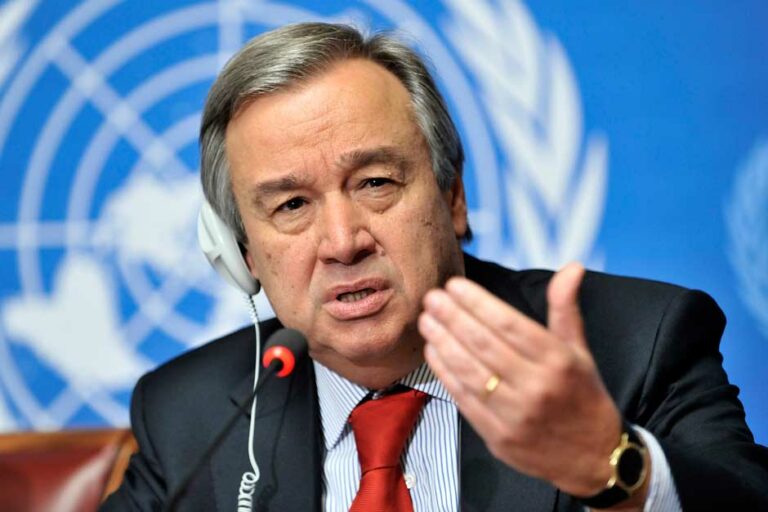
UNITED Nations (UN) Secretary-General Antonio Guterres has called on the international community to take a firm stand against rising intolerance in different countries.
Guterres also called for caution against acts that can trigger genocide as the world commemorates the 29th anniversary of the 1994 genocide in Rwanda.
“We mourn the more than one million children, women and men who perished in 100 days of horror 29 years ago,” Guterres said in his message to mark the International Day of Reflection on the 1994 Genocide Against the Tutsi in Rwanda, which falls on April 7 every year.
A generation since the genocide, the world must never forget what happened, and ensure future generations always remember, he said.
Guterres underscored the need to remember how easily hate speech turns to hate crime and how complacency in the face of atrocity is complicity, calling hate speech “a key indicator of the risk of genocide”.
The UN chief stressed the importance of preventing serious violations of international law, including genocide, which he described as a shared responsibility and a core duty of every member of the United Nations.
“Together, let us stand firm against rising intolerance,” he said.
“Let us be ever vigilant, and always ready to act.”
It would be recalled that in December 2003, the UN General Assembly designated April 7, which marked the start of the 1994 genocide, as the International Day of Reflection on the Genocide in Rwanda.
In 2018, the Assembly amended the title of the annual observance to the International Day of Reflection on the 1994 Genocide Against the Tutsi in Rwanda.
THE Medical and Dental Consultants Association of Nigeria (MDCAN) has condemned a bill which seeks to mandate graduates in medical and dental fields to work in Nigeria for five years before being granted a full license.
MDCAN opposed the bill in a press statement signed by its President, Dr Victor Makanjuola, and Secretary-General, Dr Yemi Raji.
The association described the bill as discriminatory, harsh and not in the people’s interest.
On Thursday, April 6, the House of reps announced that the Medical and Dental Practitioners Act (Amendment) Bill, 2022, sponsored by Rep. Ganiyu Abiodun Johnson, representing Oshodi/Isolo constituency in Lagos State, has passed through second reading.
The bill, according to Johnson, would check the mass exodus of medical professionals from the country.
“The bill is titled ‘A Bill for an Act to Amend the Medical and Dental Practitioners Act, Cap. M379, Laws of the Federation of Nigeria, 2004’ is to mandate any Nigeria-trained medical or dental practitioner to practice in Nigeria for a minimum of five years before being granted a full licence by the Council to make quality health services available to Nigeria; and for related matters (H B.2130),” the lawmaker stated.
Reacting to the development, MDCAN described the bill as misdirected and ill-informed, adding that it was poorly thought through and an excellent example of modern-day slavery.
“In fact, this bill can do the exact opposite: aggravating the exodus which we have been working with the executive arm of government to mitigate. It is pertinent to state that none of the suggestions of the inter-ministerial committee on brain drain and bonding of health workers has been implemented to date.
“Perhaps, a simple consultation with the primary constituency affected by the bill would have afforded the honourable member a clearer understanding of the hydra-headed nature of the problem he is trying to solve.
“This bill, without making any assumptions about the ill intent of the proposer, simply lacks the basic ingredients of good faith in the sense that it is both discriminatory and harsh, to say the least, and not in the interest of the people,” MDCAN said in the statement.
THE University of Calabar (UNICAL), Cross River State, has vowed to punish any student or staff member found guilty of indecent dressing.
The University said anyone dressed in short skirts, braless tops, sleeveless shirts and other revealing dresses would no longer be allowed entry into the school premises.
This was disclosed in a statement by the University SERVICOM Director Prof Patrick Egaga on Friday, April 9.
The development, according to Egaga, is as a result of an increase in indecent, provocative and unofficial dressing, mostly by students and some female staff of the institution.
Describing indecent dressings, Egaga noted that short skirts or gowns above the knee, bikinis, sleeveless tops, bums shorts amongst others would not be tolerated on campus from Tuesday, May 2, 2023.
Parts of the statement read, “Specifically, short skirts or gowns above the knee, open backs, crap tops, braless tops and gowns, spaghetti finger, sleeveless tops and gowns, bikinis, see-through, transparent, apparels and revealing contours are no longer tolerated on campus.
“Others are handless gowns, bum shorts revealing laps, slit skirts, body hugs, V-necks exposing breasts, tubes, strip-less, rag jeans, shorts above the knee, sleeveless shirts, singlets, lingerie, sagged trousers and others.
“All of these will no longer be tolerated on campus with effect from Tuesday, May 2, 2023. Consequently, any student or staff clad in regalia or paraphernalia mentioned will be denied effective access into any of the university facilities or be appropriately sanctioned. A combined security and administrative task force will be constituted to monitor compliance.”
A number of African countries, including Kenya, Egypt, Zimbabwe, Nigeria, Ghana and Zambia, are currently experiencing shortages of US dollars. The dollar is the dominant currency in international transactions. These countries rely on the US currency to pay for foreign debts, essential goods and industrial inputs. Development economist Christopher Adam explains to The Conversation Africa’s George Omondi what causes US dollar shortages and how they can be remedied.
What is a dollar shortage?
Global trade is conducted in the currencies of the world’s major economic powers, principally the US dollar, the European Union’s euro, the Japanese yen and, to a lesser extent, the Chinese renminbi and the UK’s pound sterling. Individuals, firms and government elsewhere in the world need these currencies to import goods and services and make other payments overseas.
A dollar shortage is simply a situation where the demand for this foreign currency exceeds the available supply, at the current exchange rate.
A dollar shortage is simply a situation where the demand for this foreign currency exceeds the available supply, at the current exchange rate.
Depending on how the exchange rate is determined, a dollar shortage will present itself in different ways.
In countries operating a fixed exchange rate regime – where the national currency is pegged to a hard currency – the shortage may be physical. The banks that normally supply their customers with dollars may simply have none to sell or are forced to ration their limited stock.
But most countries today operate some form of flexible exchange rate. Their central banks don’t intervene in support of a particular exchange rate. Here, there may be no actual shortage. Dollars may still be available but can only be purchased at a higher cost. There’s a shortage only in the sense that the same amount of domestic currency buys fewer imports.
Even with a fixed exchange rate, dollars can usually be obtained on the parallel or black market, though at a less favourable exchange rate. It takes more of the domestic currency to buy the hard currency.
The domestic currency’s loss of value against the US dollar is often taken as an indicator of the severity of the dollar shortage.
What causes dollar shortage and what are the impacts?
The immediate cause of a dollar shortage is a deterioration in the country’s balance of payments, meaning a country’s financial transactions with the rest of the world. This might be due to some unexpected event like a natural disaster that destroys a country’s dollar-earning tourism sector. It could also be due to increased demand for essential imports such as food and medicines. Other causes include an increase in debt service payments falling due and a fall in remittances from workers abroad. The worsening balance of payments may also reflect deterioration of the country’s terms of trade meaning the value of what a country exports relative to what it imports.
World prices are determined by the actions of the large economies of the world. Small economies – including most developing countries – are price-takers: they have little or no capacity to alter their terms of trade.
What’s behind the current dollar shortage in Africa?
Many African countries now face a combination of disrupted exports and worsening terms of trade. Exports grew substantially in the later 2010s because of high and rising world prices for primary products. Then the 2020s opened with a series of shocks that have contributed to the dollar shortage.
COVID-related lockdowns and the associated global recession drove down prices for many of Africa’s key exports. Tourism – an important source of dollar earnings – came to a halt. The resurgence of global inflation and the resulting tight monetary policy (higher interest rates) have driven up prices for key imports and the cost of foreign borrowing.
On top of this, prices for oil, food and fertiliser spiked when Russia invaded Ukraine. Rising oil prices ease dollar shortages for oil producing countries such as Angola and Nigeria but have an adverse impact on other countries.
The effect is stark. When imports are fewer and more expensive, prices rise and spending falls. When the squeeze on imports reduces investment, there is lower growth and less economic progress.
Can the dollar shortage be avoided?
The only sure-fire way to avoid a dollar shortage is self-sufficiency – referred to in economics as autarky. But this is not a realistic option and certainly not for countries at early stages of development. Low-income developing countries need not just essential imports like food, fuel and medicines. They also need imported capital goods and intermediate inputs to develop their own productive capacity.
Over the medium term, as countries become able to produce more of the goods and services people want and need, they will depend less on imports. And they will be able to export more. Their vulnerability to periodic dollar shortages will ease. But this will take time.
Dollar inflows from trade, supported by remittances and aid inflows, may be temporarily augmented by foreign direct investment and dollar borrowing from official and private lenders. But capital inflows must eventually reverse as debts are repaid and foreign investors seek dividends and repatriation of their capital. If well used, though, capital inflows can support the export-led growth strategies that the most successful developing countries have pursued.
What should be done?
The moderation of global inflation and the recovery of global growth are likely to bring an improvement in the terms of trade and the recovery in export demand. There is little domestic policymakers can do about this but wait.
While they do so, they can take policy measures to address the immediate reality of the dollar shortage. Few of these measures are easy.
The usual advice is to cut public spending. That will reduce the demand for imports. It’s politically difficult. Governments are also usually advised to encourage the production of exports and import substitutes. That is challenging and takes time.
Effective adjustment therefore will also rely on external support. This means new and additional balance of payments support from the international financial institutions and multilateral development banks. And it means debt-restructuring initiatives such as the G20’s Common Framework mechanism.
Periodic dollar shortages are an enduring fact of life for many low-income countries, even as growth and development mean they are likely to become less frequent and less severe over time. The current pressures experienced by some countries in Africa are certainly severe, but these can be managed if countries maintain the high-quality macroeconomic management that they have developed over the last decade, especially if this domestic economic discipline is accompanied by decisive support from the international financial institutions and external development partners.
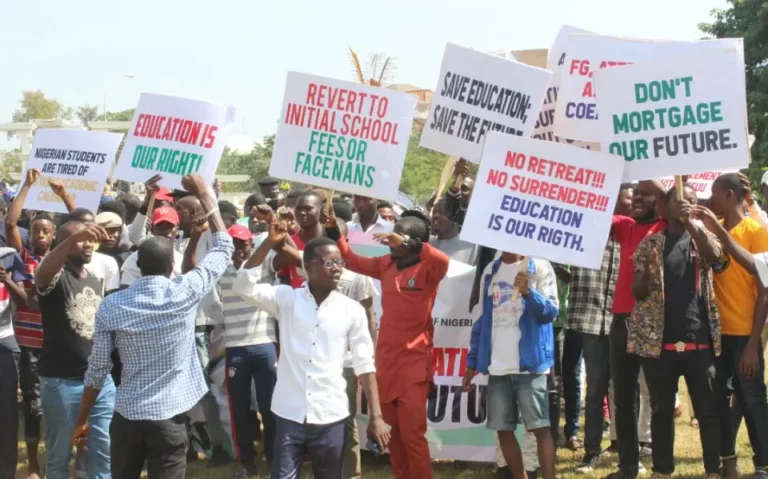
IN this Special Report, Bankole Abe and Theophilus Adedokun give an insight into the history of the National Association Of Nigerian Students (NANS), its present challenges, and solutions.
The National Association of Nigerian Students (NANS), formerly known as the National Union of Nigerian Students (NUNS), was initially set up to bring together all Nigerian Students to form a common front where issues concerning students are discussed.
The NUNS, which later transformed into NANS, was founded in 1956 after bringing together University student groups from Zaria, Nsukka and Ife.
In its earlier days, the student association was bold and helped shape the acceptance of any government in Nigeria.
The student body functioned as a pressure group that constantly pressured governments to change their political objectives, allies, and policies while also agitating against injustice in the country.
Ali Must Go Protest
The 1978 Ali Must Go” Protests was the Nigerian students’ uprising that followed an increase in fees.
Image from the Ali Must Go Protest in 1978 Credit: Yorubaness
Jibril Aminu, the former Secretary of the Nigerian University Commission (NUC), stated that the increase was necessary due to the “high cost of living in the country.”
The NUC said that, despite the fact that all undergraduate students will continue to receive free tuition, the cost of housing would rise to N90 per student for a session lasting 36 weeks or N30 for a session lasting three terms.
A former president of NUNS, Segun Okeowo, now late, led a nationwide student protest against this government decision.
Okeowo assembled university students from all over Nigeria in a demonstration against the military government’s perceived arbitrary increase in the price of meal tickets for students.
Ex- NUNS President, late Segun-Okeowo
After several meetings with the then Federal Commissioner for Education, Ahmadu Ali, without achieving a reversal, NUNS called out students on a national protest which was to be tagged ‘Ali Must Go.’
The widespread demonstrations created unrest among the general Public and spread beyond the schools.
The ‘Ali Must Go Protest” shook the fabric of the Nation and led to a significant challenge for the Obasanjo military administration.
In order to put an end to the rioting, the military government under Obasanjo ordered the closure of all campuses.
The protest signalled to the government the seriousness of the students to challenge any policy against them and the willingness of the students to organise subsequent demonstrations.
In addition, the “Ali Must Go Protest” helped galvanise student unionism across the Nation and created a means through which students’ voices could be heard.
The protest brought respect to the student body and provided direction for future student agitations.
Okeowo, who led the protest, was swiftly expelled from the University of Lagos; he eventually received his first degree in education from the University of Ife (now Obafemi Awolowo University) in 1980.
Another demonstration occurred in May 1986 when some Ahmadu Bello University (ABU) students were killed by police while protesting the punishment of student leaders on a day of mourning for those who had died in the “Ali Must Go” 1978 demonstration.
Present day NANS
Recently, NANS has been accused of deviating from its original mandate and being used by selfish politicians for political gains.
An instance is a televised promise made by the former national President of the association, Danielson Bamidele Akpan, to deliver twenty million voters among Nigerian students and youths to president Mohammed Buhari during the 2019 Presidential Election.
This made a former president of the association Abdul Mahmud renounce his membership of the students’ umbrella body over what he termed its recent ‘reckless’ activities.
Mahmud stated in a 2019 interview with the Guardian newspaper said that he thought it was inappropriate for NANS to have intervened in an ongoing strike, threatened ASUU, and been connected to President Muhammadu Buhari.
He talked about the roles played by Buhari as military President in 1984 and reminded the student union of how the administration maltreated the association.
He warned NANS not to associate with Buhari on any grounds.
“Nor does it include the visit to Buhari, the then-dictator who gave Nigerian students bullets when they asked for bread in 1984,” Mahmud said.
Mahmud said only members of the association without a historical background would associate themselves with Buhari.
Under Buhari’s watch as Head of State in 1984, the regime banned NANS, which was only four years old at the time.
At that time, the President of the student body, Lanre Arogundade, was arrested and locked up in Ife Prison.
Towards the 2023 elections, we saw various NANS groups publicly endorsing candidates. An act that some persons say points to the fact that they are for hire.
NANS and the struggle for democracy
While speaking to The ICIR, an erstwhile National president of NANS, Yinka Dada, said NANS was relatively associated with the impactful and developmental agitation of the top leadership of the association in the 19th century.
He stated that the union collaborated with different mother associations like the Nigeria Bar Association (NBA), National Labour Congress (NLC), and Trade Union Congress (TUC) to ubiquitously express their grievances and displeasure in any national matters as they affect Nigerian masses.
Former National President of NANS, Yinka Dada
“NANS was established by foremost Nigerian nationalists to agitate for Nigeria’s Independence, but the organisation’s strength waxed stronger after the actualisation of Nigeria Independent. It is set up to ensure every Nigerian child is educated at no cost.”
“In the late 1970s, the union staged a series of protests against the tyrannical rule of the military leaders because of the vicious policies levelled on Nigerian Students and citizens like increment in tuition fees of university students, withdrawal of students privileges and the signing of a military pact with the western allies led to the proscription of the union under the leadership of Segun Okeowo,” he said.
Also, the former leader said the union demonstrated against the structural adjustment programme (SAP) of the Ibrahim Babaginda regime because it was perceived as an imperialist-oriented programme that would take Nigeria’s economy away from its citizens.
Divide and rule/factional NANS
Since 1999 politicians have employed a divide-and-rule method against NANS, including encouraging factions in the association.
Usman Umar of the Federal University Dutse and Umar Lawal of the Department of Library and Information Science at Bayero University, Kano, are the two candidates who emerged as the faction’s presidents.
Oladimeji Uthman, the incumbent Executive Director of Special Duties of NANS, said the issue of faction in the association is a pure distraction because a house divided against itself cannot stand.
“Factionalised leadership in NANS has made the association look irresponsible and should be stopped. Although efforts are being made by the present leadership to eradicate any factionalism in the association, yet more needs to be done.”
Dada said clashes of interest among members and the involvement of the political class regularly spike the continuous rise of factions in the once-revered association.
“What the government do is that they polarised NANS to prevent the unity of thought. Anytime you see a faction in NANS, there is somebody supporting the government while we have another group that will represent the student voices. Even as it is declining, there are still people who believe in the independence of the organisation,” Dada stressed.
Bad crop of leadership among executives
When The ICIR spoke to another former national president of the association, Tijani Usman, he stressed that the student body had been turned into a breeding ground for bad leadership because many Nigerian youths and students presently see the association as a channel to gather wealth at the expense of students interests.
“The crop of leadership produced this day by the NANS is bad. Imagine somebody contesting going to meet the President or governor for money to contest. Also, most students’ union leaders are guilty of obtaining money from the elected officials of the association by demanding money for accommodation, transportation and feeding, which indicates a sign of greediness from them.”
Snapshot of NANS members during a protest
“Also another case is the former national president of the association, Danielson Akpan who was impeached on allegation that he failed to disburse and utilise a sum of 200 million naira meant for the students’ community during the COVID-19 pandemic for personal purpose,” he said.
Funding is a significant gridlock in the association
Reacting to the association’s funding challenges, Dada commented that the decline in NANS started due to a lack of funding base. “If a leadership that caters for about forty million people but does not have a dime in its account, it cannot function effectively. When it was NUNS, there was funding; we didn’t solicit for support from politicians and the government for mobilisation and welfarism of the union members.”
“Imagine national presidents in Lagos and other stakeholders across the country who plan to agitate in Maiduguri without a funding based; it would be impossible to actualise his plan without seeking for external support that would have influence and reflect in our agitations.”
“IBB decree against NANS criminalise student union activities on Campuses, and that negatively influenced the self-sustainability of the union which made it lose its funding base till date,” he lamented.
He further pointed out that the participation of adults who are not youth in the activities of the body is for advisory roles, while in some situations, the older comrades take the mantle of leadership and steering its affairs.
We are not seeing NANS impact – students
A political science student at the Tai Solarin University of Education, Alabi Olarenwaju, said he is still waiting to see a positive impact from the association because they are only concerned with their pocket.
“You cannot expect people in their mid-life crisis age, especially forty and above who are married and active in conventional politics, to solicit on students’ behalf.”
He further stressed that the outrageous amount used in elections is disturbing and discouraging.
“For one to secure a post at the national level of NANS, you will spend millions of naira, and even those contesting are supported and funded by political godfathers.”
Another student Boluwatife Oluwafisayo of Ekiti State University, lamented that the impacts of NANS are not felt, and he is not benefiting from the association as an active student.
“They have not been at the forefront of the struggle for students on campuses, and I think that is one of the basic mandates they stand for. I cannot see their impact,” he said.
A student activist, Adeyeye Olorunfemi, said the government became very interested in NANS and infiltrated the student body, which crippled and destroyed it.
“Just the way other civil societies were infiltrated, the government infiltrated NANS and brought in their persons; we have PDP NANS and APC NANS. This, however, made students follow this template that has been put in place.”
“Government now sponsor agents of the government to contest in school especially the DSS and many people who are not students or people who just pick up a Diploma course or the other to contest.”
Finding a sustainable solution
To ensure that the once respected and feared body becomes more effective and active in delivering the mandate it is created for, Dada said that the amendment of the student union act is sacrosanct.
“The student union Act needs to be amended and looked upon to ensure that NANS generate funding, and this will make the union financially independent.”
Usman, on his part, believed that there is more need to enlighten and sensitise student union leaders in the country to change their perspective of the union.
A lawyer with J. S. Okutepa, Abiola Kolawole, said the problem with NANS is simply because of the corruption in the Nigerian system.
According to him, the association is now for hire.
“That’s why you hardly see University students as NANS presidents. They are now old, usually in their 40’s and exposed to the corrupt system of Nigeria.”
“The association is now for hire; any agitation brings money. Politicians now use the association for their political gains, and as we know, money is always an issue.”
He suggested proper regulation of the association as the immediate solution.