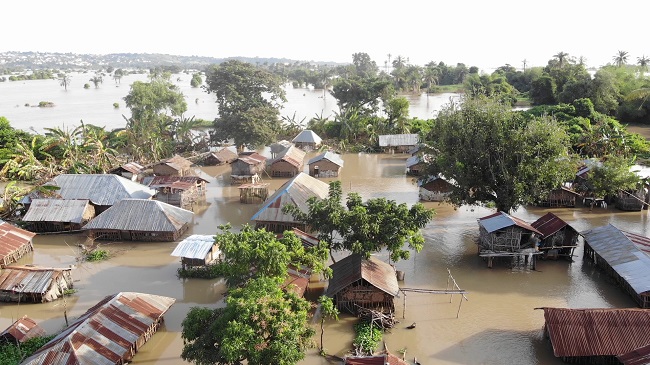
INVESTMENT worth about N700 billion ib Nigeria’s agricultural sector was destroyed by floods in 2022, according to the latest report by the National Agricultural Extension Research Liaison Services (NAESRLS).
Executive Director of NAESRLS, Emmanuel Ikani, said last year’s floods damaged crops and destroyed agricultural land, leading to reduced yields and economic losses for farmers.
He said it is estimated that there are over 3000 gully erosion sites in the 10 most-affected States in the South-East, South-South, and South-West regions of Nigeria.
Presenting the executive summary to Minister of Agriculture and Rural Development, Mohammad Mahmood Abububakar, Ikani noted that communities and government need to work collaboratively to implement measures aimed at reducing the risk of flooding and its impacts.
He said, “The economic value of the agricultural-related losses due to the 2022 flood was estimated to be about N700 billion.
“The 2022 flooding situation damaged roads, bridges, and other transport networks, making it difficult for people to travel and for agricultural goods to be transported. The flood also damaged agricultural stores and warehouses.
“The flood had serious consequences for human populations, including loss of life, injury, and displacement. It led to the spread of waterborne diseases and disrupted access to clean water and other necessities.”
Ikani added that as of September 14, 2022, many communities in Borno, Adamawa, and Yobe States regions had reported cholera outbreaks, with 586,110 and 320 cases, respectively, and while about 300 have died.
He explained that the release of water from the Lagdo dam in Cameroon was the main cause of the flood in South-South, South-East and North-Central regions of the country while flooding in the North-West, North-East and South-West was due to heavy rainfall and blockage of existing drainages.
“Kebbi, Delta, and Cross River States with calculated index values of 0.3500, 0.2951 and 0.2218, respectively were the most severely affected by the 2022 flood while Nasarawa, FCT and Oyo with 0.0515, 0.0243 and 0.0079, respectively were the least affected,” he noted.
Ikani further stated that a total of 1,798 communities were affected in 263 LGAs, while the major causes were releases of excess water from Lagdo Dam, Cameroon, and excessive rainfall.
He said interventions aimed at alleviating the effect of the flood were mostly shared after the occurrences of the flood by 23 states while farmers in 7 States did not receive any form of intervention during and after the flood situation.
“The assessment showed that the 2022 flooding damaged crops, washed farmlands and destroyed livestock and fish resources. The enormous flood is a potential threat to food security,” he said.
In his remarks, the Minister of Agriculture and Rural Development, Dr Mohammad Abubakar, called for collective efforts to educate Nigerians on how to mitigate flooding.
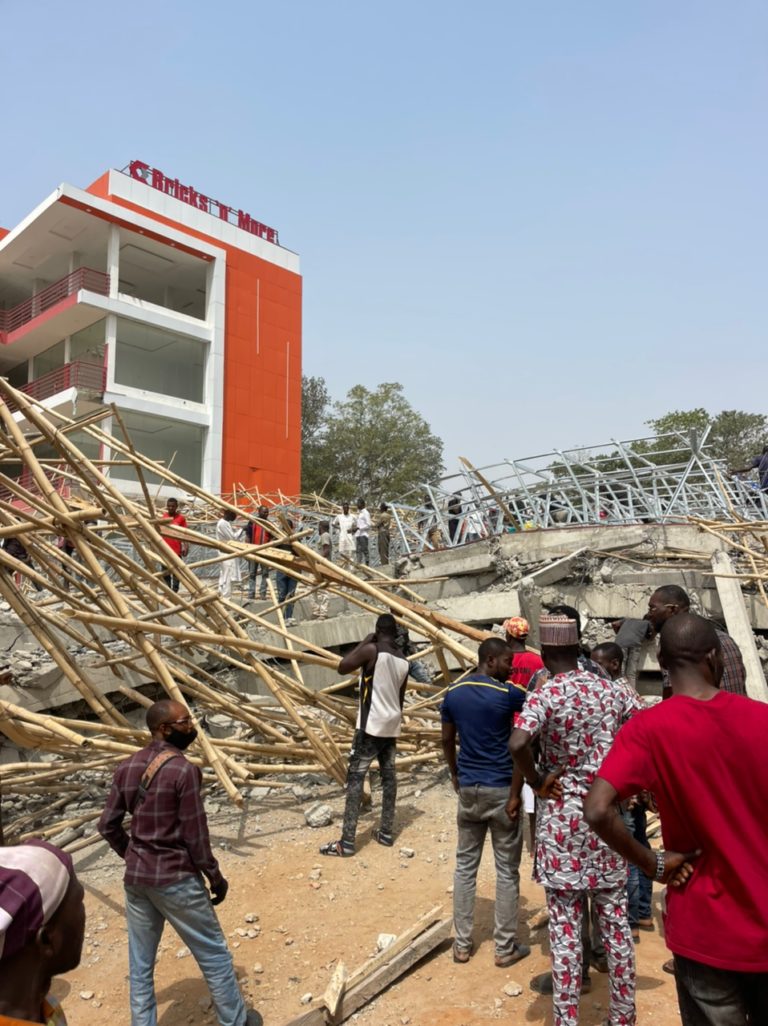
AT least 23 people have been rescued from a building that collapsed in the Gwarimpa area of the Federal Capital Territory (FCT) on Thursday, February 2.
The National Emergency Management Agency (NEMA) gave the update via its Facebook handle on Thursday night.
“So far, 23 people have been rescued,” the statement said.
NEMA also noted that rescue operations by its operatives and personnel of other agencies continued throughout the night.
The building, located along 7th Avenue in Gwarimpa, was still under construction at the time it collapsed.
According to eyewitnesses who spoke to The ICIR, at least 40 people were trapped in the rubble following the collapse, which occured at about 10.00am.
Several response teams were involved in the rescue operations, including the National Emergency Management Agency (NEMA), FCT Emergency Management Agency (FEMA), National Security and Civil Defence Corps (NSCDC), International Committee of the Red Cross (ICRC), Nigerian Police Force (NPF) among others.
Sector Commander of the FCT Federal Road Safety Corps Ochi Oga who spoke with The ICIR on Thursday said the rescue operations would continue till all those trapped in the building were rescued.
“I’m assuring you that this operation will continue until everybody involved in this is rescued,” he said.
THE Comptroller-General of the Nigeria Customs Service (NCS), retired colonel Hameed Ali, has given unpredicted stock market and fiscal polices of government like waivers and concessions as factors that led to a shortfall in the 2022 revenue target.
Ali, fielding questions from journalists at a briefing on Thursday, February 2 to mark the end of a three-day global conference organised by the World Customs Organisation (WCO), said the NCS had set a target of N3.1 trillion for 2022 but was able to generate N2.6 trillion, with a shortfall of over N400 billion.
He said, “Non-commencement of tariffs on carbonated drinks and telecommunications among other items, affected the actualisation of the target.”
He was hopeful that with these tariffs in place this year, 2023 would be better.
On the theme of the conference ‘Enabling Customs in Fragile and Conflict Affected Situations’, Ali said he was disturbed by the security challenges in border areas.
He added that the Service was making efforts to adequately equip its personnel for their jobs, and would do everything to build their capacity for effective performance.
The NCS had declared the sum of N2.24 trillion revenue for the year 2021, representing a 25 per cent increase on the N1.67 trillion target set for the year.
The generated sum represented a 43.45 per cent increase on the N1.56 trillion generated in 2020.
THE United Nations (UN) has condemned the airstrike that killed several herders in Nasarawa State, calling on the Nigerian government to look into the incident.
Speaking on Thursday, February 2, the Special Adviser to the UN Secretary General on the Prevention of Genocide, Alice Nderitu, urged Nigerian authorities to conduct counter-terrorism operations in accordance with international human rights and humanitarian law.
Nderitu expressed concern at the worsening security situation in Nigeria, urging authorities to address the challenges.
She stressed that it is important for the Federal Government to investigate the killings that happened in Nasarawa State.
According to her, the dynamics of targeting communities along identity lines, if unaddressed would further fuel inter-communal tensions, recruitment by armed groups, and retaliatory attacks, with obvious impact on civilians.
“In this extremely volatile environment, it is important that the general elections scheduled to be held on 25 February 2023 do not trigger violence and even atrocity crimes,” she added.
The UN official noted that the worsening security situation is characterized by the seasonal movement of livestock for grazing, and increasing divisions among communities, based on stigmatization along religious and ethnic lines.
She stressed the need for political leaders to abide by the peace accord signed that included a commitment to peaceful campaigns.
In the same vein, she urged religious and traditional leaders to work to appease tensions, prevent incitement to violence and address the risk of crimes ahead of the elections and beyond.
The ICIR earlier reported that the Nasarawa State Police Command said it is yet to identify those responsible for the airstrikethat claimed several lives at the Nasarawa-Benue border.
Hours after the Governor of the Central Bank of Nigeria, (CBN) Godwin Emefiele announced a 10-day extension of the initial 31 January deadline for the collection of old notes on Sunday January 29, *Ikechukwu Samuel walked into a First Bank branch in Enugu state and deposited his old naira notes.
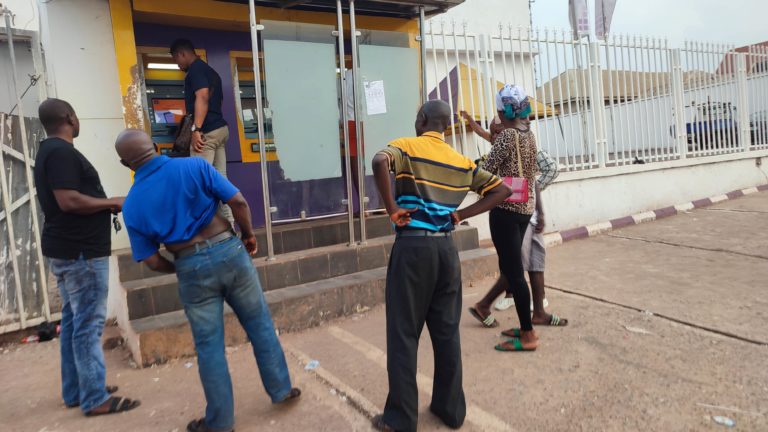
Afterwards, he proceeded to the automated teller machine (ATM) area of the bank to withdraw the new notes but he got the response, “temporarily unable to dispense cash, do you want to perform another transaction?
Disappointed but still hopeful, he visited other bank branches, including First City Monument Bank, (FCMB), Access and Fidelity banks. By 5pm, he had already visited more than seven bank branches within the Enugu metropolis. But none of them gave him the new notes.
Response from FCMB ATM
Samuel planned to use the money to settle his sick mother’s hospital bills. He had tried to make a transfer which failed due to poor network. Now, he is confused as to what to do.
“If I knew, I would have kept my old naira notes since the new ones are not available,” a distraught Samuel said”. “Now, I can’t even withdraw the old notes”. I will have to go and keep trying to make a transfer”.
Samuel is only one out of thousands of Nigerians who have their monies deposited in banks but cannot withdraw, following the redesign of the naira notes.
For almost an hour, Pregnant *Joy Chimezie tried to withdraw money from the automated teller machine (ATM) area of the Zenith Bank located at presidential road, Enugu. But the message remained the same: Temporarily unable to dispense cash.
Response from Zenith Bank ATM
Earlier in the day, she visited several banks within the metropolis, including United Bank for Africa and Access Bank located at the University of Nigeria, Enugu Campus, (UNEC) and Fidelity bank at Rangers Avenue but could not withdraw.
She is tired but needs the money for business.
“I will wait, she said, her hand wrapped around her waist. “But It is sad because the ordinary citizens often bear the brunt of these policies.”. “I have money in my account but cannot withdraw”.
These days, it is common to see Nigerians waiting on long queues, hoping to withdraw the new notes. Sometimes, they fight to get their money. Sometimes, they spend the entire day and return home without the notes.
The redesign
Last October, the CBN announced that it would redesign the N200, N500 and N1,000 denominations of the naira, with January 31 as the deadline for the return of the old notes to the banks.
At the unveiling of the new naira notes at the State House on November 23, 2022, the CBN Governor, Emefiele told journalists that the January 31 deadline was sacrosanct. He had said that the redesign was intended to among other things, make the country’s monetary policy decisions more efficacious and support the efforts of security agencies in combating banditry and ransom-taking.
Notice on First bank
from Nigerians.
Money in circulation
As the deadline approached, pressure was mounted on the CBN for a review of the policy and the extension of the deadline, especially given that the new notes were not in circulation yet.
Speaker of the House of Representatives, Femi Gbajabiamila even threatened to issue a warrant of arrest on Emefiele and some bank directors over their refusal to appear before the green chamber over the scarcity of the new naira notes and the January 31, 2023 deadline.
Having sought and obtained approval from President Buhari, Emefiele announced an extension of the deadline from January 31 to February 10 to allow for the collection of more old notes legitimately held by Nigerians and achieve more success in cash swap in rural communities.
The CBN governor also announced a 7-day grace period, beginning on February 10 to 17, in compliance with sections 20(3) and 22 of the CBN Act, allowing Nigerians to deposit their old notes at the CBN after the deadline when the old currency would have lost its legal tender status.
But while the deadline has been extended, there yet remains a problem of unavailability of the new notes across ATMs in Nigeria. While some marketers collect the old notes, especially with the extension of the deadline and given that that is the only way they can make sales, others insist on the new ones.
Empty ATM machines at Zenith Bank
To confirm the widespread unavailability, this journalist visited four banks within the Enugu metropolis, including First Bank, presidential road, Zenith Bank presidential road, First City Monument Bank, (FCMB) off presidential road, and Access Bank Ogui road.
On arrival, it was noticed that the various points, which normally would have long queues, were empty. While the Zenith and First bank branches have six and four ATM points, respectively, FCMB and Access banks have 3 ATMs. As of 5 pm on Sunday January 29, none of the machines in these banks was dispensing money to people who had come to withdraw money.
This reporter also tried to withdraw from each of the machines but got the response “temporarily unable to dispense cash, do you want to perform another transaction?.
At Access Bank, Ogui road, one of the security officers said that the ATMs paid in the morning hours and stopped.
Banks allegedly selling new notes
While the new notes remain scarce at ATMs points, they have been sited at various social gatherings, further confirming allegations that banks are selling the notes to high-net-worth customers, also known as priority customers or currency traders who allegedly pay extra when withdrawing large amounts of the redesigned naira notes.
Empty First Bank ATM
This January, a Twitter user shared a video that captured moments when a certain man was spraying bundles of mint new naira notes at a party. The video sparked concerns among Nigerians who wondered what the fate of the ordinary Nigerian is following the redesigned notes.
On Monday, January 30, another Twitter user shared a video showing moments when a group of men and women were throwing bundles of the scarce new notes at another party.
“It amounts to economic sabotage, and efforts must be made to find out where the disconnect is, and those behind it punished, said Segun Ajibola, a Professor of Economics at the Babcock University, Illisan, Ogun State, on a programme on Arise TV.
Implications for economy
Senior Analyst at SBM Intelligence, Gloria Oscar, said that the negative implications of the redesign include: Counterfeiting risk, reduced access to financial services, particularly for people in remote or rural areas, loss of value as people who are unable to exchange their old notes in time will lose the value of their savings, increase in black market activities.
Others include disruption of economic activities as businesses and consumers are being forced to temporarily stop transactions while they cannot access the new currency and decrease in spending because people hold on to their cash until they are confident in the stability of the new notes.
Response from Access Bank ATM
“The redesign also creates confusion and uncertainty among the public, particularly those less familiar with online banking”she said. “Banks also face logistical difficulties because people rush to exchange their old notes simultaneously, leading to long lines and congested banks”.
Commercial banks blame CBN for inadequate supply
As the public accuses commercial banks of selling the new notes, sources familiar with operations of the CBN accuse the apex bank of inadequate supply of the notes which makes it difficult for them to meet customers’ demands.
A source in a Premium Times report who prefers not to be mentioned was quoted as saying that banks were receiving an average of N12 million in some parts of the country, an amount the source said was grossly inadequate to meet operational demands.
“Cash needed for ATM operations alone in this place is about N25m, and that’s apart from other cash transactions within the bank,” the source said. “Bankers are scared to complain openly.”
Another bank manager in the report said that while his branch usually needs about N10 million to enable ATMs to dispense cash to customers, they only got N2 million of the new note for an entire week, which explains why the machines could not dispense money to customers.
Banks have since been ordered not to use the old notes.
In his statement on Sunday, Emefiele said that the CBN had received reports of breaches by some bank branches. He, however, assured that the bank had agreed with executive chairmen of the Economic and Financial Crimes Commission (EFCC) and Independent Corrupt Practices Commission (ICPC) to assist by sending their staff to all CBN and deposit money banks (DMB) branches nationwide to join in monitoring the implementation of the guidelines.
Billions outside banking industry
In a statement on the progress on implementation of the new redesigned currency on January 29, Emefiele said that while currency circulation had risen to N3.23 trillion as of October 2022 from N1.4 trillion in 2015, only N500 billion was within the banking industry and N2.7 trillion held permanently in people’s homes.
He however noted that since the commencement of the programme, the bank has collected about N1.9 trillion while about N900 billion remain outside the banking industry.
“We are happy that so far, the exercise has achieved a success rate of over 75 per cent of the N2.7 trillion held outside the banking system, “he said. “Aside from those holding illicit/stolen naira in their homes, for speculative purposes, we aim to give all Nigerians that have naira legitimately earned the opportunity to deposit their monies for exchange”.
EFCC, DSS arrest new notes traders, bank officials fingered
On Monday, January 30, the Economic and Financial Crimes Commission (EFCC) announced the arrest of members of a syndicate who were trading the redesigned naira notes around zone 4 and Dei-Dei axis in Abuja.
In a statement by EFCC spokesperson Wilson Uwujaren, the suspects said that they were working in connivance with some commercial bank officials.
Uwujaren said that the operation followed intelligence on activities of unscrupulous currency speculators who were exploiting desperate citizens by offering them the new Naira notes for foreign currencies at below the going rate.
“The Commission will extend the operation to all the major commercial centres of the country until all the syndicates involved in the illegal trade are demobilised,”he said. “Financial system operators are also warned to desist from the sharp practices or risk arrest and prosecution”.
The DSS had during operations across the country, arrested some Nigerians involved in the sale of the new naira notes. Its public relations officer, Peter Afunanya said in a statement that some Commercial Bank officials were aiding the act.
The DSS warned that the Service has ordered its Commands and Formations to ensure that all persons and groups engaged in the illegal sale of the notes are identified, calling on appropriate regulatory authorities to step up monitoring and supervisory activities to expeditiously address emerging trends.
N200 per N1000 new note
Apart from banks that have been accused of doing business with the new notes, others who seem to be benefitting from the scarcity are owners of Point of Sale (POS) Businesses who now charge exorbitant amounts for withdrawals.
To withdraw N10,000 in the era of the old notes cost only N100. Now it costs N2000 to withdraw the same amount. That is, N200 per N1000. Some of those who spoke to this reporter say they charge as much as N300 for N1000 because of the difficulty in getting the new notes.
Nelson John runs a POS business in Enugu. To make withdrawals, he leaves home as early 5am every morning and sometimes, when he gets to the machine, he finds people already queuing up and waiting for their turns.
“Sometimes, you have only one bank that gives the new notes, “he said. “It is affecting business because the highest you can withdraw is N20000 per day, you cannot even use more than one card,”. The old notes are not even available”.
Sometimes, he spends N10,000 to get N100,000 from an individual who according to him, buys the new notes from bank officials and sells to individuals.
Accusations, counter-accusations over naira redesign
The decision by the CBN to redesign the N200, N500 and 1,000 banknotes has ruffled many feathers. This January, the presidential candidate of the ruling All Progressives Congress (APC), Asiwaju Bola Tinubu told a crowd of APC supporters at the party’s presidential campaign rally in Abeokuta, the Ogun state capital that the naira redesign and fuel scarcity were intended to sabotage his victory at next month’s election.
Last November, the Chairman of the Economic and Financial Crimes Commission, Abdulrasheed Bawa, was quoted as saying that there was no political motive behind the idea. Rather, it was intended to have hidden funds returned.
At the apex bank’s sensitisation event and old notes swap in Ekiti , the Director of Finance at the CBN, Benjamin Fakunle, had also said that the redesign was not targeted at any politician or political party but in the interest of the nation.
CBN pledged to ensure new notes get to citizens
In the statement, Emefiele had assured that the bank had held several meetings with its deposit money banks, (DMBs) and provided them with guidance notes on processes they must adopt in the collection of old notes and distribution of the new notes to all Nigerians.
These, according to the statement, include specific directives to the DBMs to load new notes into their ATMs nationwide to ensure that an equitable/transparent mechanism for the distribution for the distribution of the new notes to all Nigerians.
ATMs charge exorbitant amounts
Emefiele said that the bank has also deployed 30,000 super agents nationwide to assist in the cash swap initiative in the hinterlands, rural areas and regions underserved by banks In the country to ensure that the weak and vulnerable ones can swap/exchange their old notes.
For Oscar, the redesign will enhance financial Inclusion and a cashless economy as well as stress out bandit and terrorist groups.
However, efforts must be made to ratify the shortages in the weeks leading up to the election because if it continues, “the government may be forced to still consider the old notes valid,”.
PRESIDENT Muhammadu Buhari has prohibited government officials from using private emails for official purposes.
The President gave the directive on Thursday, February 2, during the launch of the National Policy on Nigeria Government Second-Level Domains at the State House, Abuja, according to a statement released by his spokesperson, Special Adviser on Media and Publicity, Femi Adesina.
Buhari also ordered all federal public institutions to migrate their websites to the relevant government domains.
“I hereby direct that all government officials should refrain from using private emails for official purposes,” he said.
“We are glad Starlink services are already deployed in Nigeria. This has made Nigeria the first and only African country to have this link.”
Buhari also said he was pleased with the deployment of Starlink services by SpaceX in Nigeria, saying the country now has 100 per cent broadband penetration.
“With the deployment of Starlink services in Nigeria, we have 100 per cent broadband penetration in Nigeria,” the President said.
THE number of casualties resulting from the collapse of a three-storey building in the Gwarimpa area of the Federal Capital Territory (FCT) is still yet to be ascertained.
Sector Commander of the FCT Federal Road Safety Corps Ochi Oga disclosed this in an interview with The ICIR.
“We are only removing victims to the hospital as they are. We cannot confirm the number now because as they are bringing them out, the ambulances are carrying them straight to the hospital. We will collate the numbers. But as the rescue is going on, it may not be easy to give you specific numbers.
“But I’m assuring you that this operation will continue until everybody involved in this is rescued,” he said.
The three-storey building located at 7th Avenue, Gwarimpa, which was still under construction, collapsed at about 10.00am on Thursday, February 2.
Eyewitnesses reported that at least 40 people were trapped in the building at the time of the collapse.
An eyewitness, who gave his name as Samuel, said at least ten people had been rescued from the rubble. He, however, noted that some of those rescued died on the way to the hospital.
“They are up to 10. Some died on the way to the hospital, according to what we heard, but I’m not sure how many,” he said.
Several response teams were involved in the rescue operations, including the National Emergency Management Agency (NEMA), FCT Emergency Management Agency (FEMA), National Security and Civil Defence Corps (NSCDC), International Committee of the Red Cross (ICRC), Nigerian Police Force (NPF) among others.
The FCT Police Command released a statement signed by the Public Relations Officer (PRO) Josephine Adeh, pledging its commitment towards the success of the rescue operations.
Parts of the statement read, “The Commissioner of Police, CP Sadiq Abubakar, mni, who personally visited the scene, has assured that the FCT Police would provide all necessary support to ensure the ease of the rescue operations and to ensure hoodlums do not take advantage of the situation. He equally pledged the support of the Command to aid the functions of Building Regulatory and Investigative Bodies within the FCT.
“The CP, who described the situation as very unfortunate, called on the residents of the area to remain vigilant and to report any suspicious movement to the Police. He prayed that the victims, especially those reportedly trapped under the rubble, would be rescued and stabilised accordingly.”
The leadership of the Council of Registered Builders of Nigeria (CORBON), who were also present at the scene, urged prospective house owners to pay attention to designs made by structural engineers ahead of construction.
Chairman of the Nigerian Institute of Building Project Evaluation and Monitoring Unit of the CORBON Omale Ameh, encouraged individuals to consult with professional builders before embarking on building projects.
“If you are doing any endeavor that is related to building, we have the built environment professionals that we encourage individuals going into such projects to consult. In this clime, we run solo and bring in quacks, people that have no knowledge or ideas,” he said.
THE European Union (EU) has launched the European Union Election Observation Mission (EU EOM) in Nigeria ahead of the 2023 general elections.
Barry Andrews, a member of the European Parliament and the Chief Observer of the EU EOM, announced the launch of the election observation mission at a press conference.
“This is the seventh EU Election Observation Mission to Nigeria since 1999. The EU attaches great significance to these elections,” Andrews said.
He urged the Nigerian government, candidates and the political parties to ensure that the general elections are peaceful and election-related violence is prevented.
As part of its overall analysis, the EU EOM will follow the implementation of the 2022 Electoral Act which has introduced new measures aimed at enhancing various aspects of the electoral process.
The EU EOM was deployed by the EU following an invitation from the Independent National Electoral Commission (INEC), Nigeria’s electoral umpire.
The EU EOM operates under a separate and distinct mandate from the EU Delegation in Nigeria, and it is independent in its finding from EU Member States and all EU institutions.
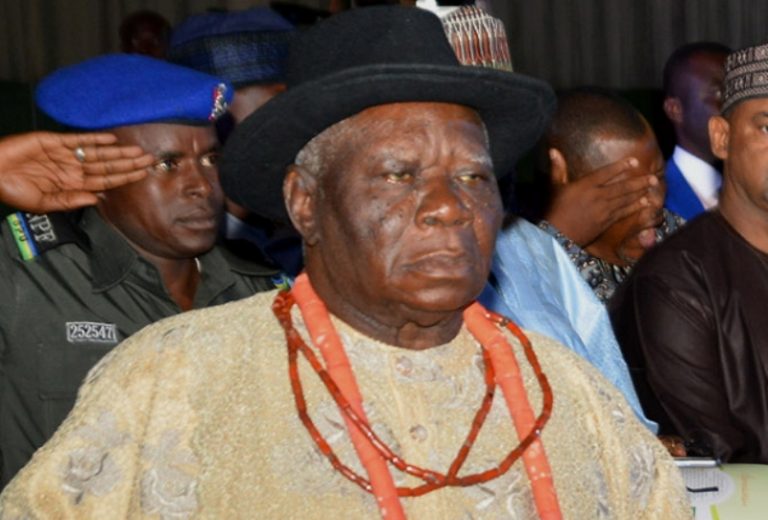
IJAW National Leader and convener of the Pan-Niger Delta Forum (PANDEF), Edwin Clark, has accused Delta State governor, Ifeanyi Okowa, of mismanaging the state’s share of 13 per cent derivation funds for oil-producing communities.
Clark, who said this in a statement on Thursday, February 2, described the administration of the Peoples Democratic Party (PDP) vice presidential candidate as a “reign of unaccountability.”
According to him, the funds, which come from the Federation Account to oil-producing communities through state governments as stated in Section 162, Sub-section 2 of the Nigerian Constitution, should be dedicated solely to the development of affected communities.
The elder statesman claimed that the state government has not properly utilized the derivation funds on important areas and projects but rather on “favoured areas.”
According to him, the funds should be directed towards schools and projects in the oil-producing communities.
Clark pointed out that the inclusion of three state higher institutions recently converted by the Delta state government does not qualify under the scheme. He argued that three other higher institutions in Warri, Burutu, and Agbor would qualify for conversion.
The former Information Minister wondered why the new Osadebey University in Asaba, which used to be part of Delta State University, has now been singled out to be qualified for the 13 per cent derivation funds.
He questioned why the old Delta State University in Abraka, an oil-producing area, was not qualified for funding from the 13 per cent derivation fund while Asaba, which does not produce oil, was included.
The Ijaw leader also demanded that the Delta State government release records and amounts spent on the projects, warning that failure will result in PANDEF releasing its own records.
Clark stressed that all educational institutions in Delta State, including tertiary institutions, are provided for in the state’s yearly budget and have nothing to do with the 13 per cent derivation funds.
He called on Okowa to stop favouring certain parts of the state and to provide a clear financial record concerning the 13 per cent derivation funds, stressing the need for all deserving and other communities to benefit from the funds.
Clark equally questioned the statement made by the Delta State Commissioner of Finance, who claimed that N5 billion from the 13 per cent derivation was used to pay pensions for both state and local government workers.
He criticized the governor’s decision to amend the enabling legislation of the Delta State Oil Producing Areas Development Commission (DESOPADEC) to include more oil-producing communities in Delta State, including his own local government area, Ika.
Clark noted that the amendment to the principal law by inserting “Ika” after the word “Isoko” in the interpretation of ethnic nationalities goes against the definition provided in the Delta State Gazette, which stated that ethnic nationalities in the state include Ijaws, Itsekiris, Urhobos, Isokos and Ndokwas.
According to Clark, the governor’s interpretation or definition of ethnic nationalities only includes Ika, his own ethnic nationality, while ignoring other ethnic nationalities in Delta North, such as Oshimili North and South, and Aniocha North and South.
He expressed concern that Okowa may reduce Warri to a deserted village, similar to what the state’s former governor, James Ibori, did to Sapele.
“It may be too late, but finally, I wish to again advise you not to reduce Warri to a deserted village as Chief Onanefe Ibori did to Sapele, as he removed most of the offices from Sapele to Oghara, his hometown. This is exactly what you are carrying out now,” he said.
“I can see you smiling at Alhaji Atiku Abubakar when you said that Owa-Alero was your humble small village and that it is now a big town. The question is, with whose money?”
Other countries with Nigeria at the meeting are Angola, Cameroon, Côte d’Ivoire, the Democratic Republic of the Congo (DRC), Kenya, Mozambique, South Africa, the United Republic of Tanzania, Uganda, Zambia, and Zimbabwe.
The meeting had heads of global agencies and development partners working on HIV/AIDs in attendance.
In partnership with networks of people living with HIV and community leaders, the countries laid out their action plans to help find and provide testing to more pregnant women and link them to care, a statement released about the meeting by the World Health Organization (WHO) said.
The plans involve finding and caring for infants and children living with HIV.
The meeting marks a step up to ensure that all children with HIV have access to life-saving treatment and that mothers living with HIV have babies free from HIV. The statement stated that the alliance will work to drive progress over the next seven years to ensure that the 2030 target is met.
The statement noted that a child dies from AIDS-related causes every five minutes worldwide.
“Only half (52 per cent) of children living with HIV are on life-saving treatment, far behind adults of whom three quarters (76 per cent) are receiving antiretrovirals.”
According to the WHO, 160 000 children newly acquired HIV in 2021, and children accounted for 15 per cent of all AIDS-related deaths, even though only four per cent of the total number of people living with HIV are children.
Addressing the ministers, Tanzanian Vice-President Philip Mpango said, “Tanzania has shown its political engagement. Now we need to commit to moving forward as a collective whole. All of us, in our capacities, must have a role to play in ending AIDS in children. The Global Alliance is the right direction, and we must not remain complacent. 2030 is at our doorstep.”
The wife of Namibian President Monica Geingos agreed with Npango. She said, “This gathering of leaders is uniting in a solemn vow – and a clear plan of action – to end AIDS in children once and for all. There is no higher priority than this.”
The country’s work will centre on four pillars namely: early testing and optimal treatment and care for infants, children, and adolescents;
closing the treatment gap for pregnant and breastfeeding women living with HIV, to eliminate vertical transmission;
preventing new HIV infections among pregnant and breastfeeding adolescent girls and women; and
addressing rights, gender equality and the social and structural barriers that hinder access to services.
UNICEF, WHO, UNAIDS, others welcome decision
Reacting to the development, the United Nations Children Fund (UNICEF) said every child “has the right to a healthy and hopeful future, but for more than half of children living with HIV, that future is threatened”
Speaking through its Associate Director Anurita Bains, the agency said children must not be left behind in the global response to HIV and AIDS.
In her response, Executive Director of The Joint United Nations Programme on HIV/AIDS (UNAIDS) Winnie Byanyima said with the science available in the world, no baby should be born with HIV or get infected during breastfeeding, and no child living with HIV had to be without treatment.
WHO’s Director-General Tedros Ghebreyesus submitted that the world had come a long way in preventing infections among children and increasing access to treatment, but progress in caring for children with HIV had stalled globally 40 years after AIDS first emerged.
“The Global Alliance to End AIDS in Children is a much-needed initiative to reinvigorate progress. WHO is committed to supporting countries with the technical leadership and policy implementation to realise our shared vision of ending AIDS in children by 2030.”
Peter Sands, Executive Director of The Global Fund, PEPFAR’s John Nkengasong, and EGPAF President Chip Lyons also shared the same thoughts as others who attended the meeting.
The ICIR reports UNAIDS as saying 1.5 million people were newly infected with HIV in 2021; 38.4 million people lived with the disease, which killed 650,000 people that year.