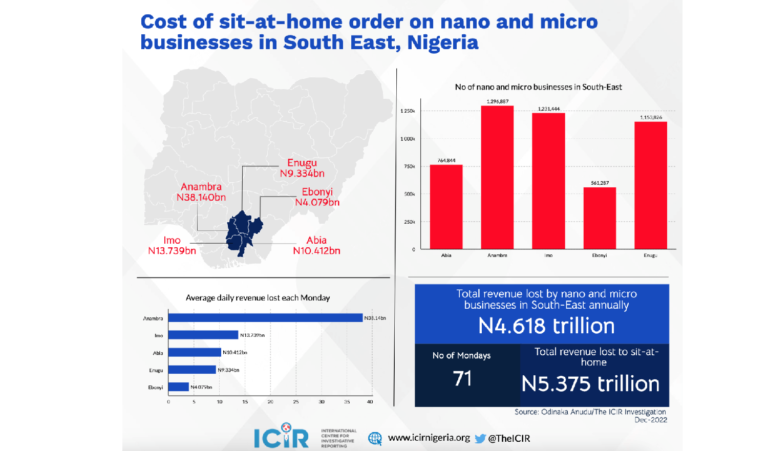
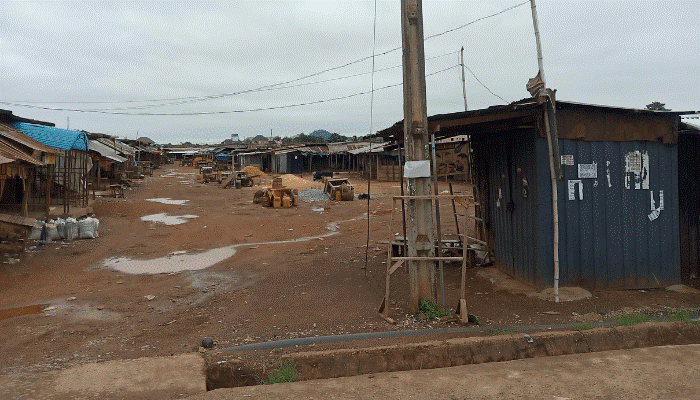
MICRO businesses in Nigeria’s Southeastern states lost an average of N4.618 trillion ($10.495 billion) in one year to the sit-at-home order that the Indigenous People of Biafra (IPOB) imposed on the region, an ICIR investigation has shown.
The southeastern states comprise Anambra, Enugu, Ebonyi, Imo and Abia.
The enforcement of the sit-at-home order every Monday was an approach IPOB adopted to protest the Federal government’s continuous detention of its leader, Nnamdi Kanu.
By the investigation, the total estimated revenues of micro-businesses in the five Southeastern states were summed up and multiplied by 52 to arrive at the N4.618 trillion.
The 52 weeks represented the number of the sit-at-home Mondays in a year.
The investigation relied on figures from the National Bureau of Statistics (NBS), Nigeria’s data agency, and the Small and Medium Enterprise Development Agency of Nigeria (SMEDAN) 2021 survey reports.
The survey classified Nigerian businesses into four categories: nano, micro, small and medium enterprises.
The ICIR investigation concentrated on nano and micro businesses, which made up 96.9 per cent (38.413 million) of the 39.654 million MSMEs in Nigeria. In line with the survey, those interviewed were businesses in trade, agriculture and minor services. The majority of those interviewed were in the informal (untaxed and unregulated) sector.
According to the SMEDAN/NBS report, there were 1.297 million micro/nano enterprises in Anambra State and 764, 844 in Abia State.
Enugu State was estimated to have 1.154 million micro/nano enterprises, while Ebonyi had 561,287 businesses in the category. Also, Imo State had 1.231 million micro/nano businesses.
From the computations, the Southeast lost an estimated N75.704 billion every Monday on nano and micro businesses. This was disaggregated as follows: Anambra, N38.140b billion, Enugu N9.334 billion, Imo N13.739 billion, Ebonyi N4.079 billion, and Abia N10.412 billion.
The loss sum did not, however, represent the entire economic cost of the sit-at-home order, as the report focused only on the price paid by the smallest businesses for sitting at home, while their counterparts in other regions were busy.
Few observed exceptions
The investigation observed that not all businesses were shut down every Monday in the region.
In Ebonyi State, many businesses were open on Mondays, over the period the investigation covered.
Even in the other four states in the region, some nano and micro businesses operated on Mondays, but were always on the lookout for the IPOB enforcers, who disrupted such trading.
Whenever such disruptions happened, the traders would scamper for safety, leaving their wares – if they were unable to quickly save them – to the caprices of the enforcers.
For example, on December 14, 2022, gunmen, enforcing the sit-at-home order, attacked businesses in Imo and Ebonyi states.
PRESIDENTIAL candidate of the Labour Party (LP) Peter Obi has said fiscal rascality, rather than Central Bank of Nigeria (CBN) governor Godwin Emefiele, is responsible for Nigeria’s monetary problems.
He disclosed this while fielding questions on the leadership and independence of the CBN governor at Chatham House in the United Kingdom on Monday, January 16.
Obi was asked if he would sack or retain Emefiele if elected President in the 2023 general elections.
Responding, he said, “Let me assure you, the Central Bank of Nigeria will maintain its independence. It will be respected. Again, it is not the problem of the person there. The cause is a weak governance structure.
“Replacing Godwin Emefiele and putting somebody with that level of fiscal rascality, which is what is fueling our inflation and our rate of exchange today. As long as the government continues on that fiscal rascality, that situation will occur.”
He also noted that fiscal rascality was reflected in payment of unsustainable subsidy on petrol, a situation which he described as criminal.
“Nigeria is today the only oil nation apart from Venezuela, because of sanctions, that is not meeting up its quota because over the years of oil theft, the multinationals have not been investing. Coupled with the theft and everything we are not realising what we are supposed to.
“Every other nation that is in the same condition was able to bring down their rates and inflation within this period of Ukraine war. But we couldn’t take that advantage because of poor management of our own fiscal space, which will change with Datti and I,” he said.
THE presidential candidate of the Labour Party (LP) Peter Obi has assured Nigerians of 25,000 megawatts of electricity before the end of 2025 if elected President.
Obi made the promise at the Chatham House in London on Monday, January 16.
He said that his administration would see to the provision of stable electricity to improve production in the country.
“Our solution to the power problem in Nigeria is comprehensive and is well covered by our manifesto. We will ensure that we deal with the issue of transmission distribution.
“We will achieve a stable 7000 megawatts by the end of this year, provide 11,000 megawatts by 2024 and 25,000 megawatts by 2025,” he said.
He stressed that energy is important for local manufacturing and creation of employment opportunities.
“We will support local manufacturing capacities and expand local random factories around the universities, training centres and workshops.”
Obi also promised to improve the educational sector.
THE Presidential candidate of the Labour Party (LP), Peter Obi, has described the Indigenous People of Biafra (IPOB) and other secessionist groups in the country as evidence of bad leadership.
Obi stated this when he appeared at the Chatham House, United Kingdom, on Monday, January 16.
The former governor of Anambra State said he would dialogue with IPOB and other secessionist agitators.
“IPOB and other agitations in the country are a culmination of years of bad leadership,” Obi said. “All those things will start reversing themselves when the leadership problem is sorted. I and Datti will talk with all agitators.”
Addressing the issue of youth unemployment, he said he would turn the situation into a dividend for the country.
“It is not to be doubted at the global scene that Nigeria is blessed with some of the most entrepreneurial youths in the world of science and in business, in art and entertainment. We believe that what remains is the changing of the leadership class.
“We will turn our youth bunch to a democratic dividend rather than today’s harvest of time bomb violence,” he said.
On foreign direct investment in the country, he stated that foreign capital is afraid of corruption, and he will do everything in his power to reduce corruption to the barest minimum so that even Nigerians who have migrated due to a lack of opportunities will return home.
Chatham House is a policy institut whose aim is to help governments and societies build a safe, prosperous, and fair world that will last.
THE presidential candidate of the Peoples Democratic Party (PDP) Atiku Abubakar has warned Nigerians against returning the All Progressives Congress (APC) to power in the 2023 general elections.
Atiku also warned that it will be dangerous to elect a ‘greenhorn’.
He gave the warning in a series of tweets posted on his official Twitter handle on Monday, January 16.
It will be dangerous for Nigeria to relinquish their future to a greenhorn or the national leader of the same party that brought us to this very sorry situation. #AtikuAtNESG
The PDP presidential candidate noted that the APC was responsible for Nigeria’s problems.
The former Vice President said, “Capital has taken a flight alongside policy incoherence which continues to cause an impediment to economic growth. The failure of the APC-led government is staring every Nigerian in the face.
“It will be dangerous for Nigeria to relinquish their future to a greenhorn or the national leader of the same party that brought us to this very sorry situation.”
In the same vein, he noted that partnership with the private sector is necessary for the success of any economic policy.
Atiku assured of a strong partnership with the private sector if elected. The partnership, according to him, will provide jobs, economic and infrastructural growth, and alleviate poverty.
“No one should downplay the enormity of the task ahead. I have a good knowledge of the challenges facing Nigeria. I will come prepared and experienced.
“Our government will tackle the deficit in infrastructure financing and fast-track infrastructure development in the country.
“We will create a strong partnership with the private sector to create jobs, grow our infrastructure, and fight poverty.
“We will support the private sector to drive growth. We have done it before, and you know we can do it again,” he said.
A SUSPENDED Assistant Superintendent of Police (ASP) Drambi Vandi has pleaded not guilty while being arraigned for the murder of Lagos female lawyer Bolanle Raheem.
Vandi was arraigned on a one-count charge bordering on murder before the Lagos State High Court, Tafawa Balewa Square, on Monday, January 16.
He pleaded not guilty after the charge was read to him.
However, the first witness called by the prosecution in the trial, Matthew Ahmen, an Inspector of Police, who is also Vandi’s colleague, narrated how the suspect killed the victim.
Ahmed told the court that they were conducting a stop and search when the incident happened.
According to him, Vandi, who was the leader of their team, was behind while he was in the middle, and another colleague, Inspector Dimini, was in the front.
Ahmen said when Dimini saw a car coming, he flagged it down but the car didn’t stop. He added that when the car got to where he was standing, he also flagged the car down but it didn’t stop.
“The next thing I heard was a gunshot and I looked back to see what was happening and I saw that a windscreen was falling.
“The next thing I saw again was a dark woman who jumped down from the vehicle and I heard her saying that ‘oga you have killed my sister.’ The woman held him (Vandi) and before I and Dimini could get to them, they had entered the car, locked it, and left.”
The ICIR reported that Raheem was allegedly shot dead by Vandi in the Ajah area of Lagos on Christmas Day, December 25, 2022.
She was returning home with her family when she met her death.
Vandi was arrested and appeared before Chief Magistrate C.A. Adedayo on December 30, 2022, a day after the Police Service Commission approved his suspension.
The killing of Raheem towards the end of 2022 generated outrage as Police officers allegedly killed two persons within three weeks.
Raheem and a young man, Gafaru Buraimoh, were allegedly killed by police officers attached to the same station.
Former Senate President Bukola Saraki has said the presidential candidate of the Labour Party (LP) Peter Obi is the biggest threat to the chances of the Peoples Democratic Party (PDP) in the South-East.
Saraki disclosed this while speaking on Arise TV on Monday, January 16.
He said PDP will win the presidential election in four zones – North-West, North-East, South-South and North-Central.
“South-South is a strong PDP area. We will do very well in South-South. South-East, the challenge we have there, of course, is Labour Party.
“But we will still do well in the South-East and take our 25 per cent. We will do well in North-Central; we will do well in North-West and North-East.
“We need four zones. By the time you have four zones, you will win the election. The four zones that we will win are North-West, North-East, South-South and North-Central, and we will take our 25 per cent in more than 24 states. There is no doubt about that,” Saraki said.
Speaking on internal crisis in the PDP, the former Senate President said the G5 governors will reconcile with the party before the general elections.
“What the G5 want is not something that can be done easily. It requires addressing the Constitution of the party and processes. It is not what can be done by one individual.
“What the G5 is asking is insurance of equity and balancing for everybody is on the same page and nobody is against what they’re saying. It’s about timing. When it should be done. How should we go about it? And I promise you we are working to see that the issues were addressed.”
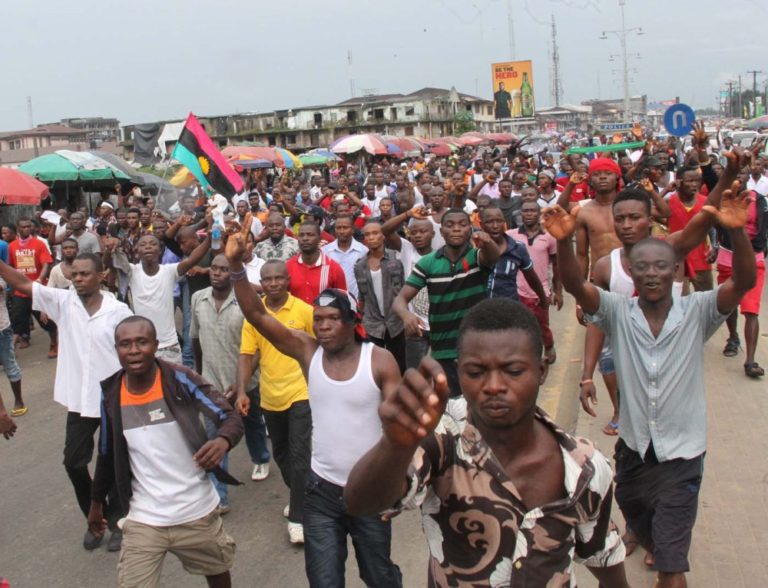
FOR many residents of South-East Nigeria, Monday is part of the weekend. Banks, shops, transport companies, churches, schools and government offices are under lock and key.
For 52 Mondays in a year, revenues and profits do not matter. Jobs and contracts are of no significance. What matters is what the people hold dear: freedom.
The South-East zone is made up of five states: Anambra, Enugu, Imo, Abia and Ebonyi. It is the only region with five states in Nigeria, with the other five zones having six, except North-West region that has seven.
On August 22, 2022, a bright Monday morning, The ICIR reporter was in Onitsha, the commercial nerve centre of the South-East Nigeria, to witness the much-discussed sit-at-home exercise.
On that sunny Monday morning, markets were all closed. The streets were turned into football fields. It was another day for roadwork – and everybody was allowed to keep fit.
The pubs were full as early as 10 am with boisterous men exchanging banters over bottles of beer.
It was a rowdy session at a taproom close to Urban Girls Secondary School, Fegge, Onitsha.
The reporter sat there, trying to feel the pulse of the people. “Are you happy with this sit-at-home exercise?” the reporter asked a man sitting close to him.
It was a simple question meant for an acquaintance, but eavesdroppers hijacked the discussion and turned it into a row.
A man in his early 40s responded, “Are you also one of the saboteurs?”
The reporter answered in the negative. The atmosphere was getting tense, and tempers could flare.
After feeling reassured that the reporter was not a saboteur, the man said, “This present government of Muhammadu Buhari is responsible for this sit-at-home. We will continue to sit at home every Monday until he releases our leader, Mazi Nnamdi Kanu.”
Almost everybody in the pub responded with a nod. But a fellow, who obviously belonged to a different school of thought asked, “How does this sit-at-home exercise affect Buhari?”
A man in his 40s, whom the reporter later understood to be Chima, said it did not matter.
“We are fighting for our freedom. We will continue to shut down our region every Monday until the Federal government releases our leader,” he retorted.
A major point in the sit-at-home exercise is that Chima and others who cheered him were taking its financial implications for granted.
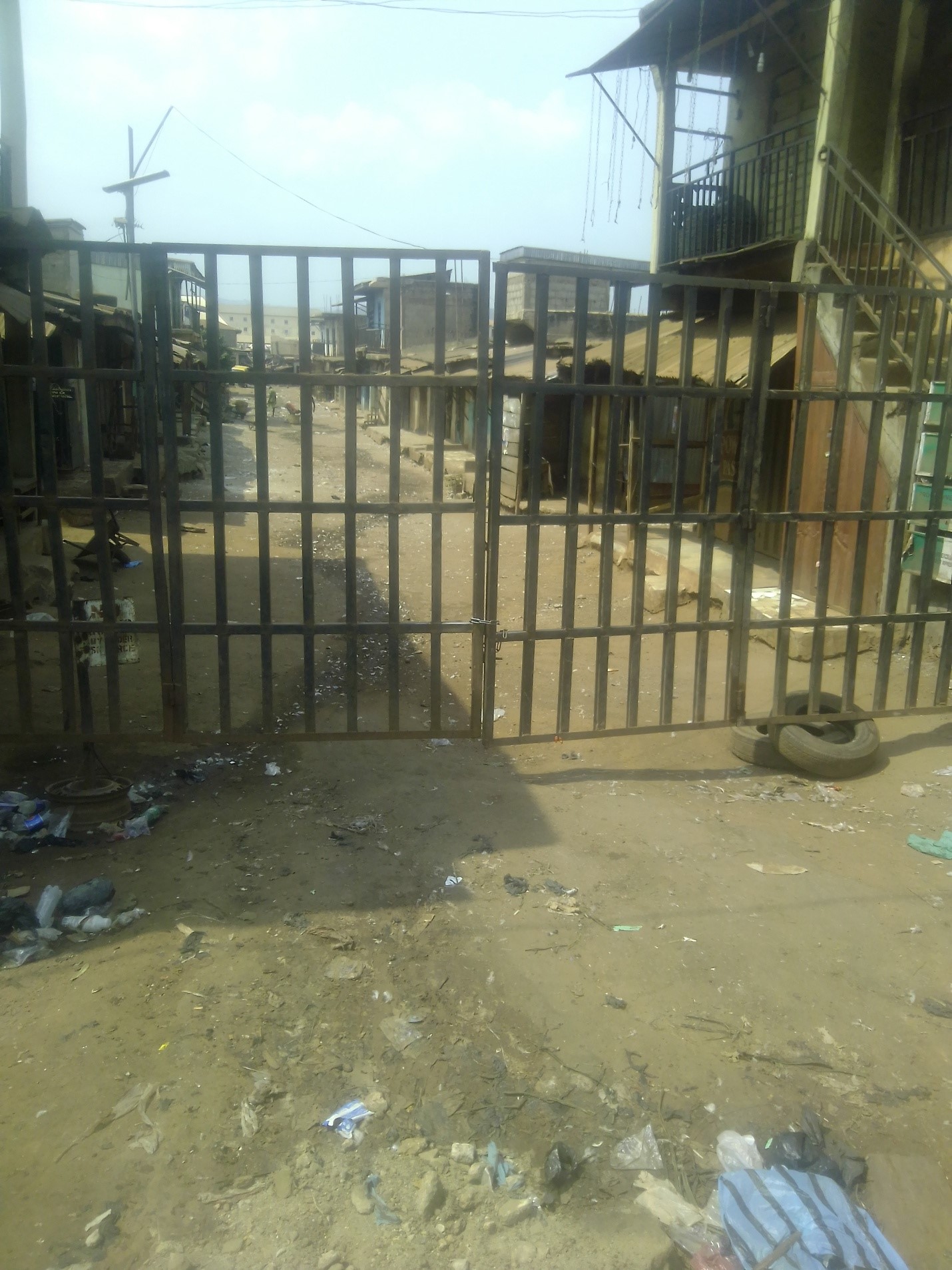
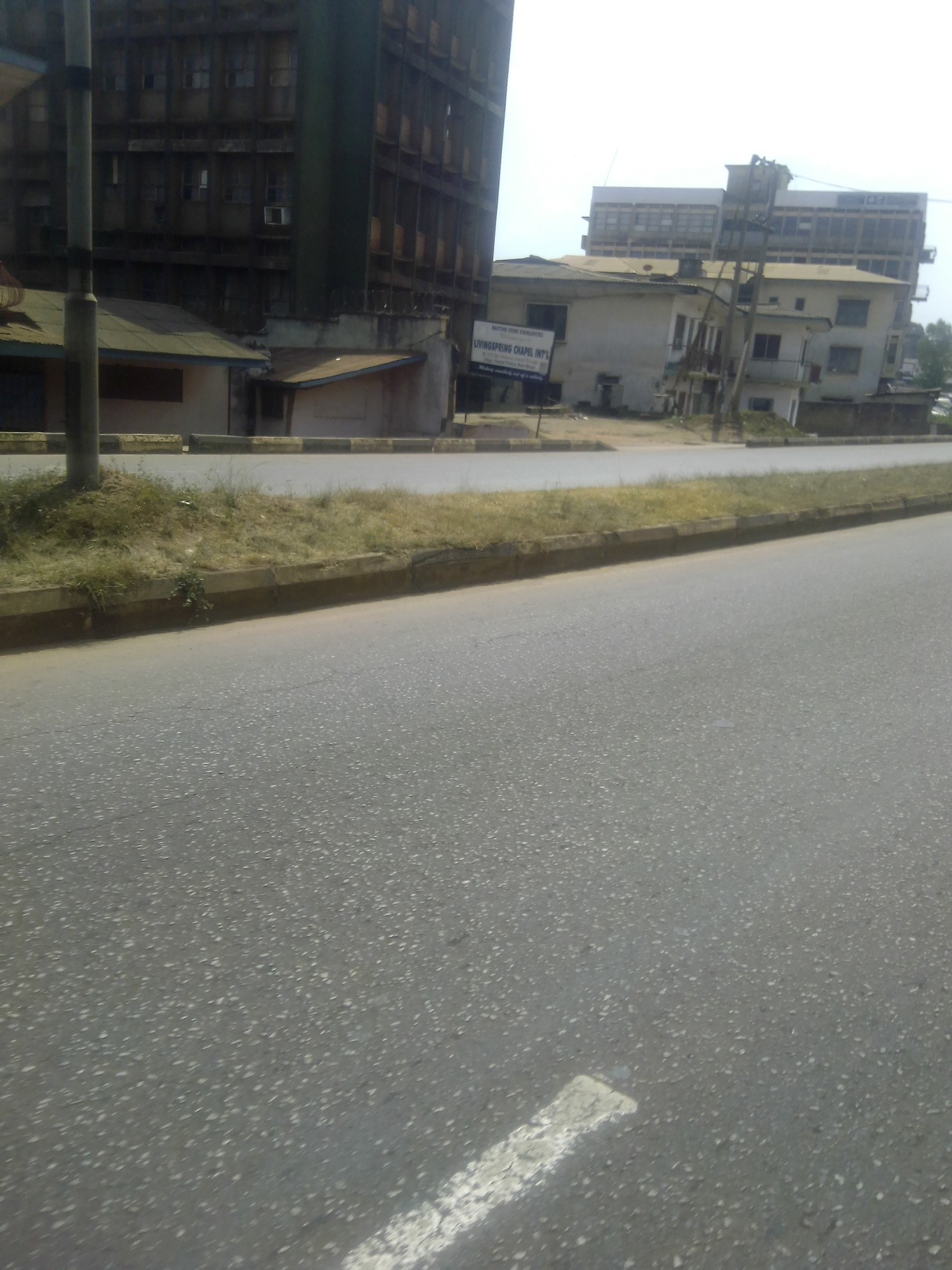
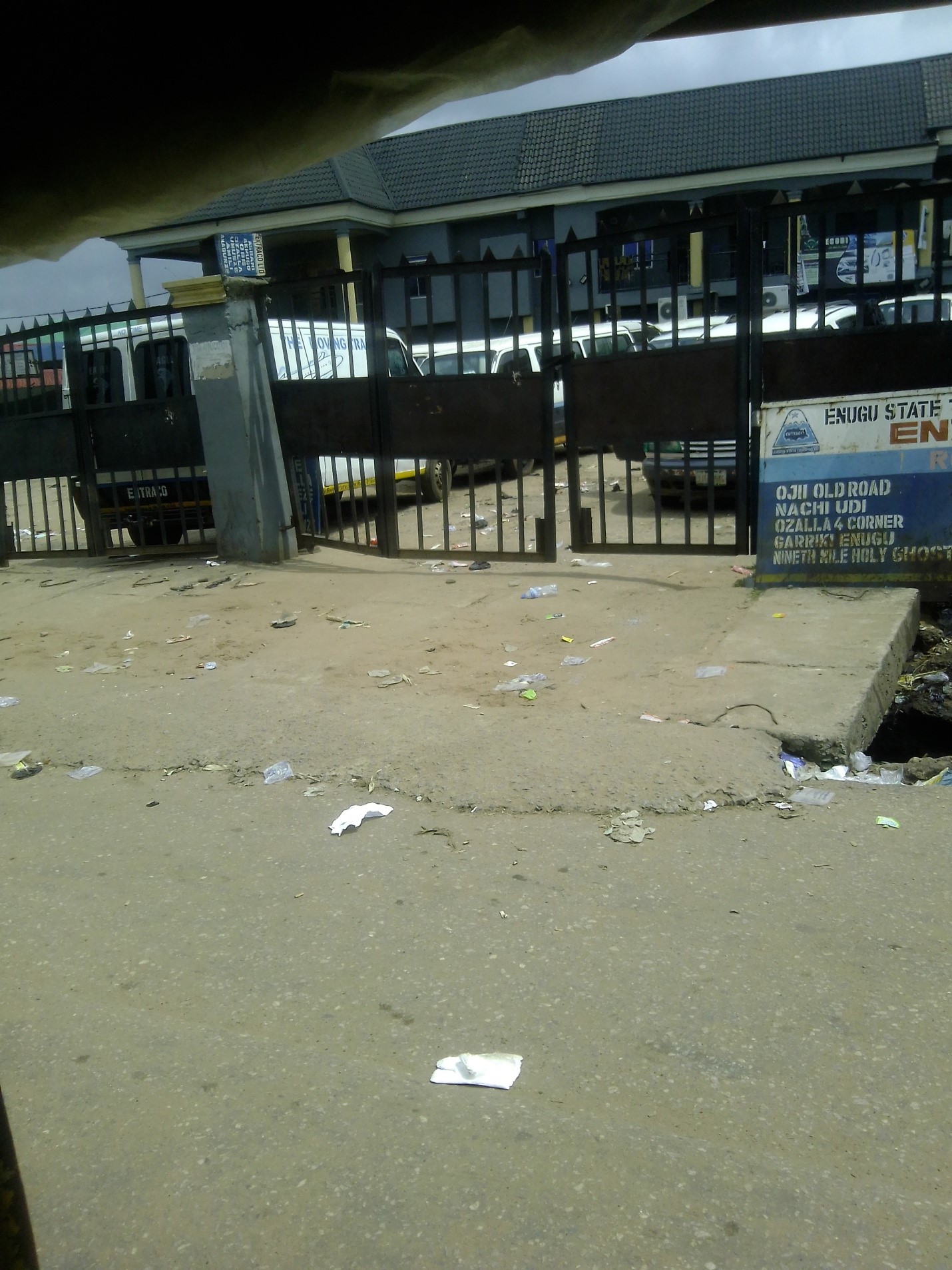
Garki Market in Enugu on a sit-at-home day, Dec 12Agbani Road, Enugu, on a sit-at-home day, Dec 12, 2022
How it all began
The ICIR ventured into an estimation of what the region could be losing from its citizens sitting at home every Monday by looking at losses borne by businesses known as nano/homestead and micro enterprises.
Nano or homestead enterprises have one to two workers and make an annual turnover of less than N3 million. Micro businesses, on the other hand, have three to nine staff members and an annual turnover of N3 million to N25 million, according to the Small and Medium Enterprises Development Agency of Nigeria (SMEDAN) and the National Bureau of Statistics.
Micro and nano businesses were considered because they make up 99.8 per cent of MSMEs in Nigeria, according to a 2017 SMEDAN report.
Before the investigation officially commenced in August 2022, the reporter had been interacting with businesses in the region, especially micro-enterprises, since January 2022, trying to understand how the sit-at-home exercise affected them and how much they were losing in financial terms from the exercise.
A total of 22 micro businesses were interviewed in each of the five states of the South-East region. They were asked to estimate, based on their financial records, how much they earned in revenue every Monday before the sit-at-home began.
Some micro-business owners refused to disclose their income levels. A few of them even avoided the reporter completely.
However, a sizeable number of them later cooperated freely.
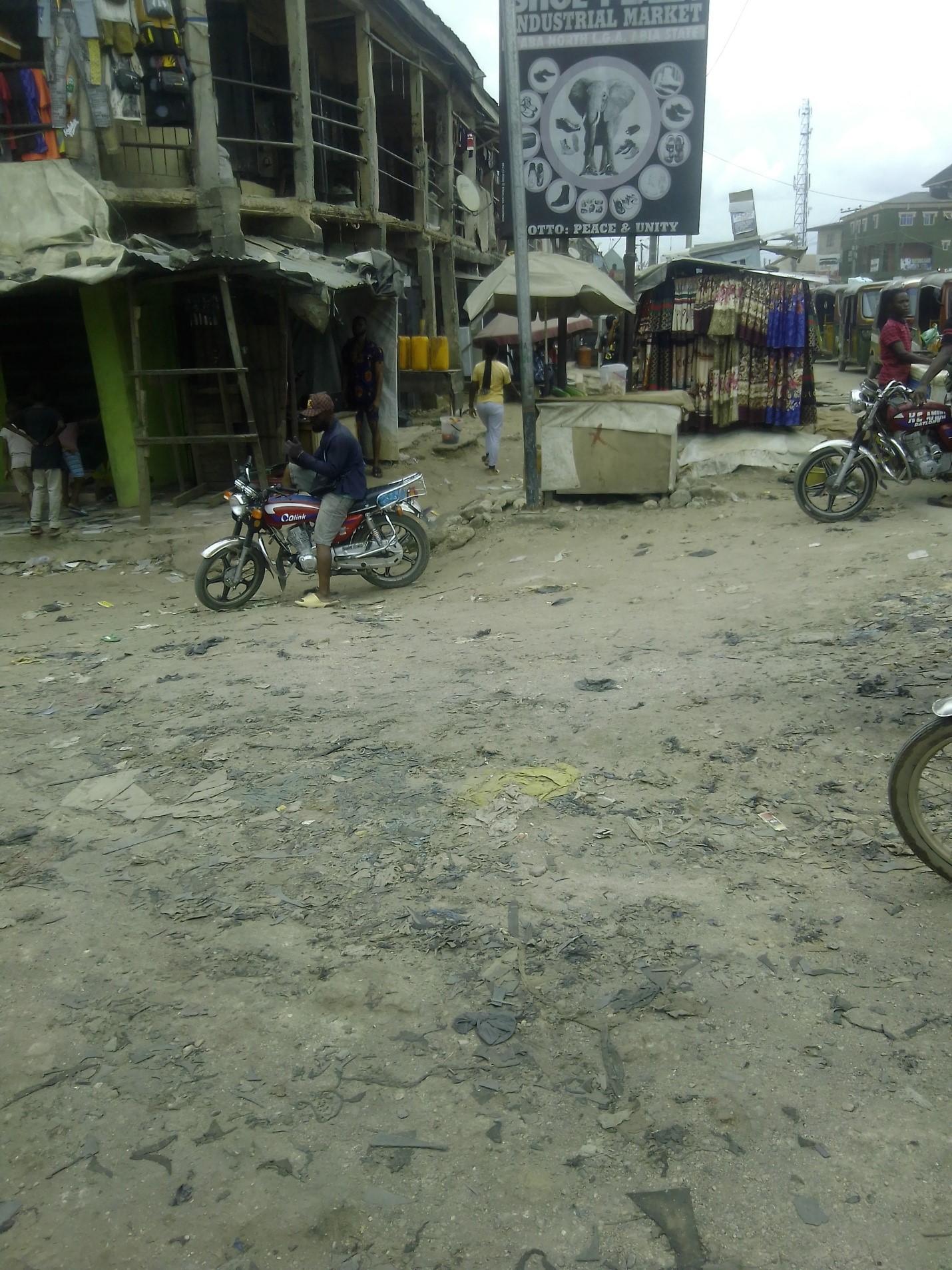
Some shop owners were seen hanging around a shoe cluster/Powerline in Aba
Visited locations
In Anambra State, micro and nano business owners, ranging from petty traders dealing in clothes at the Main Market in Onitsha to kiosk operators at Eke Ekwulobia, were interviewed.
Onitsha South Park at Upper Iweka, Onitsha
Micro and nano businesses at the Ochanja Market and Awada Obosi in Onitsha, including those at Nkwo Nnewi, Eke Awka, and Afia Nkpor, were also interviewed.
Findings from the interviews showed that the average revenue made in Anambra State by each of these businesses every Monday was estimated at N29,409.
In Enugu State, interviews were conducted at Holy Ghost/ Ogbete Main Market and Abakpa. The ICIR also visited the University of Nigeria, Nsukka axis, to interact with micro and nano business operators.
Based on the interviews, the average revenue made by each nano/micro business in these areas on Mondays was estimated at N8,090.
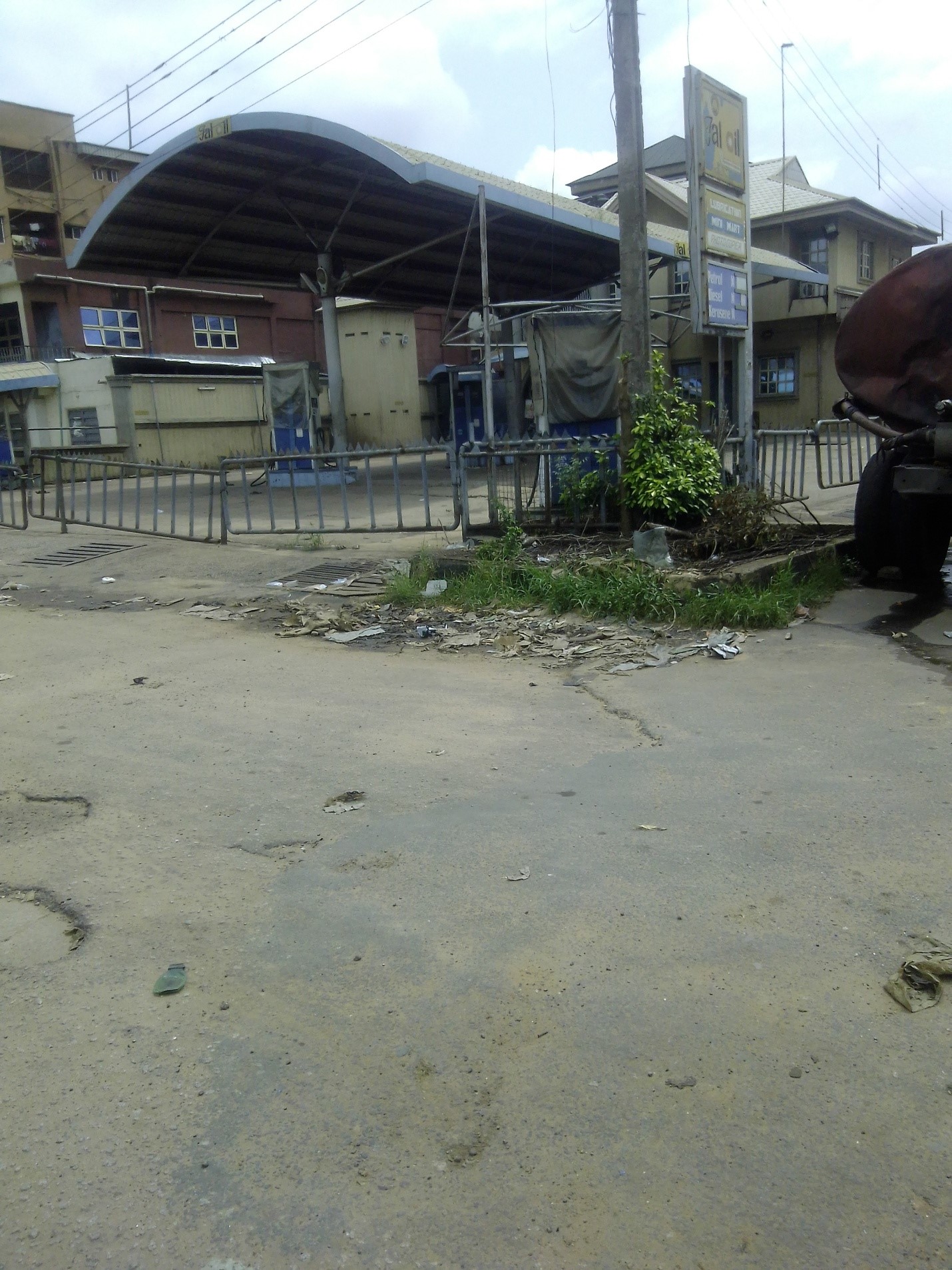
A filling station shut down at 3-3, Onitsha
Micro and nano businesses at Powerline, Abia North, Old Express, all in Aba, Abia State, were equally interviewed. Most of the traders spoken with were in the shoe, belt and trunk box manufacturing business.
The ICIR was also in Umuahia (at Crowther Street and Umuahia Tower) and at Ahia Ukwu –Olokoro Market near Umuahia for the same reason. The average revenue for the businesses in the state each Monday was estimated at N13,613.
In Imo state, places such as Orie Akokwa, Nekede and Owerri metropolis (Mbaise Road Junction and Control) were visited. A town known as Ogbaku was also visited. After computations, the income by each of the micro/nano business in the state stood at N11,156.59.
Also, in Ebonyi State, The ICIR visited Abakiliki, Onueke market, and Mgbom Afikpo for the same purpose. The estimated average revenue made by each of the micro businesses stood at N7,268.18.
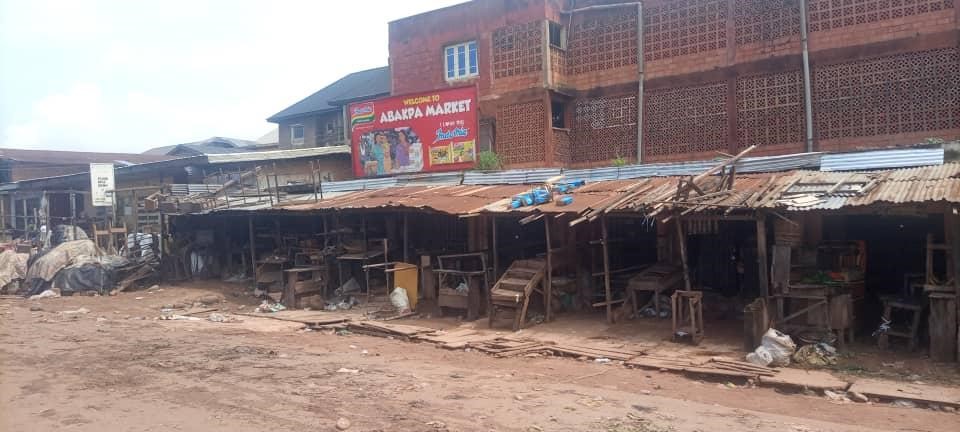
Abakpa, Enugu, Source: Vanguardngr.com
Punching the numbers
The ICIR relied on figures from the National Bureau of Statistics, Nigeria’s data agency, and SMEDAN in 2021. The two government agencies had carried out a census to determine the number of nano, micro, small and medium enterprises (MSMEs) in the country. It was entitled ‘2020 National Survey of MSMEs’.
The survey put Nigerian businesses into four categories:
nano,
micro,
small
and medium businesses.
The ICIR concentrated on nano and micro businesses which make up 96.9 per cent (38.413 million) of the 39.654 million MSMEs in Nigeria. In line with the survey, those interviewed were businesses in trade, agriculture and minor services. The majority of those interviewed were in the informal (untaxed and unregulated) sector.
According to the SMEDAN/NBS report, there are 1.297 million micro/nano enterprises in Anambra State and 764, 844 in Abia State.
Enugu state is estimated to have 1.154 million micro/nano enterprises, while Ebonyi has 561,287 businesses in the category. Also, Imo State has 1.231 million micro/nano businesses.
In order to determine the revenues or losses, the average amount made by micro/nano businesses in each state every Monday was used to multiply the number of micro/nano enterprises in that state. That arithmetically produced the amount made by the micro/nano businesses every Monday and invariably how much is lost for not being in business that Monday.
Total revenues in the five states were summed up and multiplied by 52, which represents the number of Mondays in a year.
Based on these, the annual revenue that could have been made by micro businesses on 52 lost Mondays is estimated at N4.618 trillion ($10.495 billion), which also represents the amount lost by the region in one year for sitting at home every Monday.
But this does not represent the entire economic cost of the sit-at-home order being implemented on Mondays in the region, as this report focused only on the price paid by the smallest businesses for sitting at home while their counterparts in other regions keep busy.
Few exceptions
But there are exceptions. The ICIR found that not all businesses are shut down every Monday in the South-East region.
In Ebonyi state, businesses are mostly open on Mondays at the time of going to press.
Even in the other four states in the region, some nano and micro businesses are open on Mondays, but their operations are sometimes disrupted by hoodlums.
In some occasions, the operators’ close shops in the middle of the day and scamper for safety. For example, gunmen enforcing sit-at-home order attacked Imo and Ebonyi states on December 14, 2022.
This also happened at Obollo-Afor in Enugu State and many parts of the region in several occasions. There is no certainty as to which Monday is a market day in the South-East region, which validates that the zone is almost at a standstill every Monday, even when some businesses are on.
Seventy- one wasted Mondays
Findings showed that the South-East region has sat at home for over 71 Mondays since the exercise began on August 9, 2021.
On July 30, 2021, the Indigenous People of Biafra (IPOB) announced that it would be enforcing a lockdown every Monday in the region until its leader, Kanu, was released.
Petty business operators managed to set up at Ogbaku, Owerri on August 29
The IPOB Publicity Secretary, Emma Powerful, called the lockdown “Ghost Monday,” saying that schools and markets would be closed.
“We, the global family of the Indigenous People of Biafra IPOB (IPOB), ably led by our great leader Mazi Nnamdi Kanu, wish to announce to all Biafra citizens, friends of Biafra and lovers of Biafra freedom and independence that IPOB leadership has declared every Monday ‘a ghost Monday.
“This declaration takes effect from Monday, August 9, 2021. From that day Biafraland will be on lockdown every Monday from 6 am to 6 pm until our leader, Mazi Nnamdi Kanu, who was unlawfully abducted in Kenya and illegally detained by the federal government of Nigeria is released.
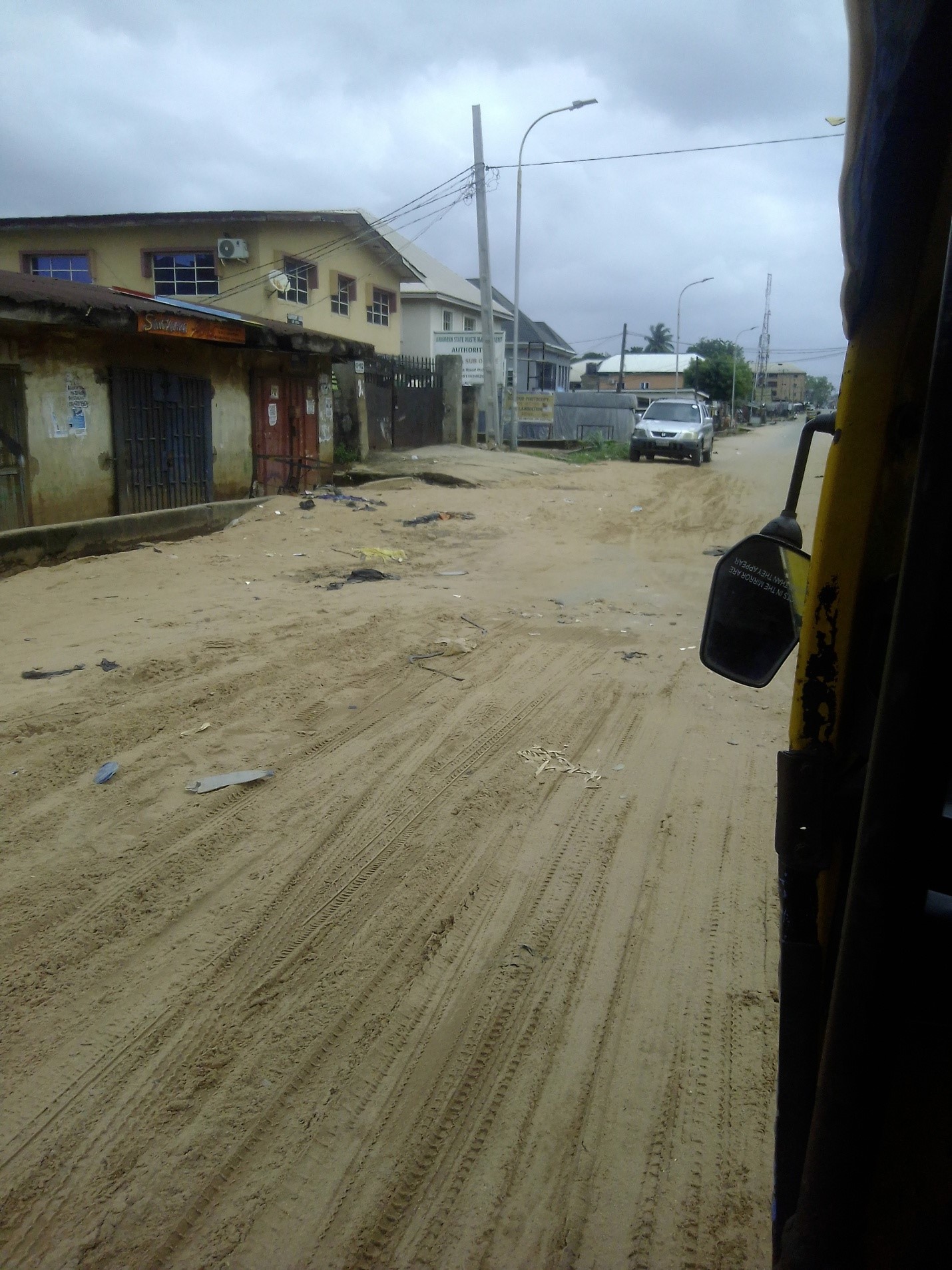
The deserted Oguta Road in Onitsha on August 22
“Our people must understand that it was designed to show the world how serious we are towards this fight for Biafra freedom and independence. Everybody must adhere to this clarion call put in place by the leadership of IPOB. It would be good for everyone to know that IPOB will not relent until Biafra is fully achieved. The DSS can go ahead and keep our leader Mazi Nnamdi Kanu incommunicado without access to him. We observed that DSS operatives are torturing him to the point of death. That was why they don’t want anybody to see his state of health in the DSS facility,” Powerful had said.
But on January 12, 2022, IPOB backtracked, saying that enforcers of the Monday sit-at-home order were criminals. In a statement, Powerful said, “We have severally explained that IPOB has not authorized anybody to enforce Monday sit-at-home, which has been suspended since August 19, 2021. Anybody unleashing terror on innocent citizens under the guise of enforcing sit-at-home order is a criminal and does not deserve pity.
“Henceforth, the Eastern Security Network (a security network set up by IPOB) operatives will come from the bushes and forests and go after these criminals unleashing mayhem on innocent people and visitors to Biafraland in the name of enforcing non-existent Monday sit-at-home order.”
But the explanation appeared to be late. A lot of damage had been done.
It was the 71st sit-at-home exercise on December 17, 2022. The total nominal revenue lost by micro-businesses within the 71-Monday period was N5.375 trillion ($12.215 billion), according to The ICIR’s computations.
Abakiliki market, Ebonyi State, on a sit-at-home day Source: BusinessDay
A dwindling economy
The gross domestic product (GDP) is a record of the monetary values of all the economic activities within a period, usually a year, according to economists.
The National Bureau of Statistics calculated the GDP of 22 Nigerian states in 2017. Only two states in the South-East region – Anambra and Ebonyi – were included.
According to the statistics agency, Anambra’s GDP was valued at N3.079 trillion, while Ebonyi’s was worth N1.327 trillion. This was not sufficient as it did not incorporate the five states of the South-East region.
A Wikipedia page citing The Economist Group’s strategy consulting business, Canback Consulting, which reported the GDP of 36 Nigerian states, as putting the size of the five South-East states at $36.791 billion, which is equivalent to N15.820 trillion.
If this report is to be believed, then the micro/nano business revenue loss to sit-at-home order is equivalent to 30 per cent of the GDP of the region.
According to statisticians and economists who spoke with this reporter, businesses in various parts of Nigeria often record the highest economic activities on Mondays. They also said that the recent GDP reports might have undervalued the economic size of the region.
It is worthy of note that the Canback’s report was retrieved on August 20, 2008. But the Nigerian GDP was rebased in 2014, while the states’ GDP report was published in 2017.
‘Happy sit-at-home’
The sit-at-home exercise has become a new normal in the South-East Nigeria. Like Christmas and New Year, workers enjoy the ‘holiday’ and make fun of it. The most common felicitation in the region every Monday is, “Happy sit-at-home.”
A staff member of an Aba-based shoemaking outfit, Adanna Ukaeje, told The ICIR, “We enjoy the extended holiday. Once someone tells you ‘happy sit-at-home’, respond by saying ‘same to you’, or find another way to reciprocate.”
But employers are not as happy as their staff. They are, however, afraid to speak out because they could be attacked, or even killed by non-state actors who are terrorising the region.
Some small business owners told the reporter that one’s staff could even give one away and make one susceptible to attacks.
“We are not happy with the sit-at-home exercise, but you can be a victim if you complain a lot,” a chief executive officer of an Owerri-based clothing outfit (name withheld for security reasons) said.
“If any of your staff members discuss your disdain for the exercise outside your office, unknown criminals could invade your business and even set it on fire,” he added.
A small-scale manufacturer in Awka, Anambra State, who did not want his name printed, noted that the situation was hurting his projections.
“The losses we incur are humongous. No business practically goes on at my factory because a group of unpatriotic persons want it so. And the government keeps quiet,” he said.
The president, Leather Product Manufacturers Association (LEPMAS), covering the Ariaria market and shoemakers in Aba, Mazi Okechukwu Williams, said even though market leaders like him did not like the situation, traders and business people in the region were already used to it.
“It has eaten deep into the fabrics of our people that they have decided to observe it willingly and accepted it as what they need to do,” Williams said.
He added, “We are not 100 per cent in support of the sit-at-home, but the people we lead have accepted it. Initially, it was done out of fear, but as time went on, people accepted to rest on Mondays. That is what we see in Aba.”
How businesses are responding
In many places visited on Mondays, some business owners were seen hanging around their shop premises in the event customers called in. In various business areas in Aba, shop owners waited around their shops, beckoning on passers-by to patronise them. Though their shops were closed, they were ready to unlock them, serve their customers and shut them again as quickly as possible.
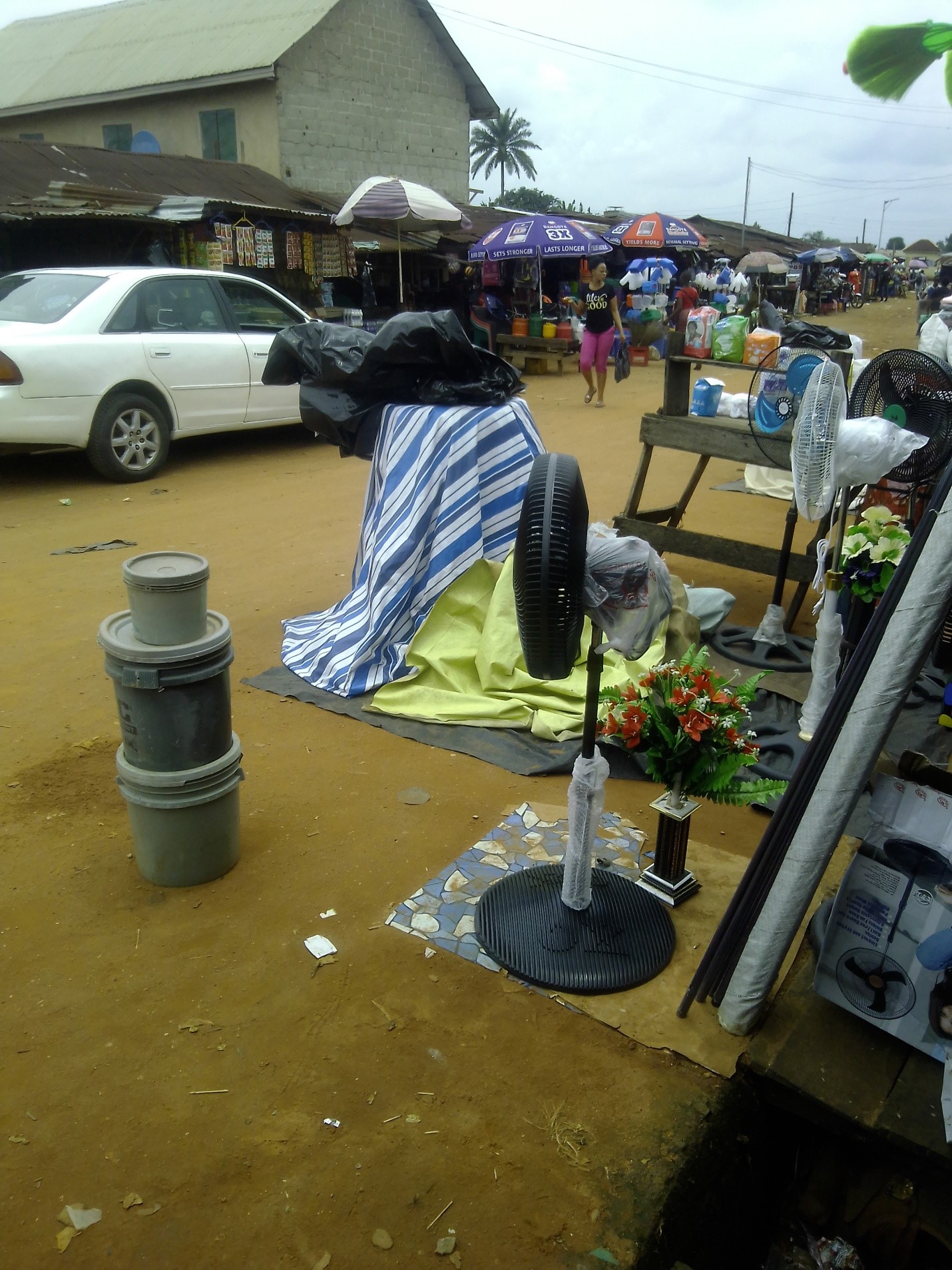
In Owerri, scores of business owners displayed their goods at Douglas when the reporter visited. But they were also on the alert. From time to time, someone would shout, “they are coming”, and many would abandon their goods and run away, only to return minutes later.
Scores of micro business owners are hard hit by the losses incurred from sitting at home every Monday.
“Every business in Aba is being affected negatively. Aba is the centre of production. All traders from North, East, West and outside Africa come here. During the sit-at-home, nothing goes on. The next day, there is a rush, and heavy traffic,” the Secretary of the Association of Leather and Allied Industrialists of Nigeria, Ken Anyanwu, told The ICIR.
An Abakiliki, Ebonyi state-based business owner with two staff members, Joy, said the situation was creating a lot of losses for the entire region.
“Businesses make critical decisions every Monday, but in this region, we sit down every Monday doing nothing.
“Apart from the revenue losses, I cannot bring in my goods from other states in the South-East into the town. Ebonyi State does not observe it all the time, but how can I bring in my goods from Anambra or Imo State? Those who tried it in the past had their trucks burnt and the drivers attacked,” she said.
A micro business owner, who deals in soft drinks in Owerri, Imo State, Adaku Nnanna, bemoaned the exercise, saying that meetings that should have been done on Mondays were being postponed to Tuesdays.
“This is a loss of man hours,” she said, adding rhetorically, “When you pay your staff for 30-day services and they work four or five days less, who is losing?”
Also, a Holy Ghost, Enugu-based shoe seller, Uju Ajuonuma, said there was no end in sight for the exercise. “The way things are today, no one is sure when this will stop. When business owners who should be productive, creative and making money are at home watching television, there is a problem,” she further said.
However, there are two sides to every coin. While many business owners are not happy, some are excited and want the exercise to continue.
An operator of a pub in Onitsha, Jane James, said she was happy because she recorded high sales every Monday.
“People patronise my beer parlour so well every Monday,” she said, “I do not want it to end.”
But a nano business owner, who deals in foodstuffs in Enugu, said it afforded her opportunity to rest.
“I rest every Monday to prepare for Tuesday,” she told the reporter, arguing that “rest is good for the body.”
An Onitsha-based award-winning children books author, Roy Nkwocha, said nobody cared much about the loss.
“What is important to the people is freedom from oppressors,” Nkwocha added, complaining that President Buhari had not managed the matter well.
Big economic implications
Economists believe the situation is scaring investors away from the South-East region, which was once known as a critical investment destination.
“When you shut down an economy, you will have loss of income, which will result in loss of jobs. This will also affect government revenue negatively,” said the Chief Executive Officer of the Centre for the Promotion of Private Enterprise, Dr Muda Yusuf, in an interview with The ICIR.
“There is also a perception factor. People perceive the place as unsafe and it is negative for investment,” Yusuf further said.
Anyanwu, said one out of 10 businesses in Abia State was virtually dead. “Some people’s businesses have shut down. One out of 10 businesses in Aba has been severely affected by this. It is hard for you to borrow N100,000 from anybody in Aba today, unlike before when you could easily get it. There is huge suffering in Aba right now. No cash flow, and everybody is complaining,” the Leather and Allied Industrialists scribe said.
The president of the Amalgamated Markets and Traders Association in Imo state, Chief Ezeanoche Emmanuel, also lamented that the sit-at-home order had been negatively affecting businesses in the state.
Emmanuel told The ICIR that the order had also sent many businessmen to the village.
Ogbete Main Market, Enugu, on Monday, December 12, 2022
He said, “There are many people who live on daily incomes. Any day they don’t go to the market, they and their respective families will not feed. Many business outfits have also shut down,” he said, noting that this was hurting the South-East economy.
Similarly, the Chairman of Johnson Street, Main Market Onitsha, Emmanuel Okafor, said the sit-at-home order had killed the trade which the region had been known for.
The global health body said that it is working with guideline development groups composed of independent international experts who consider the latest available evidence and the changing epidemiology.
“Masks are recommended following a recent exposure to COVID-19, when someone has or suspects they have COVID-19. When someone is at high risk of severe COVID-19 and for anyone in a crowded, enclosed, or poorly ventilated space,” the agency said.
According to a study by Peking University, some 900 million people in China have been infected with the coronavirus.
In the same vein, the Nigeria Centre for Disease Control (NCDC), said, Nigeria recorded 29 fresh COVID-19 cases in the last week.
“To date, a total of 266,492 cases have been confirmed, 259,858 cases have been discharged and 3,155 deaths have been recorded in 36 states and the Federal Capital Territory,” the NCDC said.
According to the Centre, 29 new cases were reported from six states with Lagos recording the highest number (15), followed by the FCT (5), Kano (4), Nasarawa (3), Kaduna and Plateau, one case each.
The Federal Government has however advised Nigerians to go for vaccination following the fresh surge of the virus but has not considered imposing mandatory COVID-19 testing or restrictions on travelers from China.
With support from the Kingfisher Foundation, EJN is offering story grants to journalists to cover stories that will also call attention to solutions for coastal issues in their communities.
These journalists will receive support from journalist mentors and a coastal resilience expert to increase media coverage of this critical issue in their region.
Journalists residing in coastal countries can apply for grants of up to US$1,200 to produce in-depth stories on coastal resilience.
To apply, applicants must submit a story proposal. Stories can be produced in any language. However, applicants who intend to write or produce stories in their local language need to also include an English translation.
The deadline for submission of applications is February 6, 2023. Interested applicants can apply here.