DW Akademie is accepting applications for its International Media Studies program (IMS) in Bonn, Germany, which will start in September.
Students who successfully complete the four-semester program will be awarded a master of arts degree.
The program offers a mix of research, lectures and practical experience in disciplines such as media and development, journalism, communications, and media management.
The organiser says up to 10 full scholarships will be offered to applicants from Africa, Asia, Latin America and Eastern Europe.
Young journalists, media managers and other communication professionals can apply.
Applicants must have a bachelor’s degree and at least a year of professional experience in a media-related field. Applicants must also have a good command of English language skills.
The deadline for the submission of the application is March 31, 2023. Interested applicants can apply here.
PARENTS of the remaining 11 female students abducted by terrorists from the Federal Government College, Birnin Yauri, Kebbi State in 2021, have appealed for donations to raise N100 million ransom demanded by the abductors.
The parents, under the aegis of ‘Committee of Parents of 11 Abducted Students of F.G.C Birnin Yauri, Kebbi State, Nigeria’, made the appeal in an open letter addressed to Nigerians.
In the letter, they said efforts at negotiating with the abductors or getting the government to intervene and secure the release of the students have not yielded results.
Chairman of the committee of parents, Salim Ka’oje, noted in the letter that the abductors were demanding the sum of N100 million naira as ransom for the release of the students.
Ka’oje also said the parents have sold all their valuable assets in a bid to raise the ransom.
“This is what informed the resolution of the parents to seek for assistance in addition to disposing of all their disposable assets to achieve this goal.
“Assistance and donations can be sent to the following accounts: Salim Sani Ka’oje Jaiz Bank with Account Number: 0007886580 and Keziah Kano Union Bank Account No 0032362797,” Ka’oje said.
On June 17, 2021, terrorists attacked the FGC in Birnin Yauri and kidnapped about 80 students and teachers.
Some students were badly injured in the gun battle between the abductors and the police. A policeman was also killed in the incident.
A letter had been addressed to the school presumably by the terrorists, warning of the attack but it was dismissed by the authorities as a prank.
While some students have been released, 11 are still in captivity.
It was reported in February 2022 that some of the girls had been married off and impregnated by their captors.
Mass abduction of students have become more frequent since 2014, when at least 276 girls were kidnapped from the Government Girls Secondary School in Chibok, Borno State.
Between 2020 and 2021, at least 700 students were abducted in northern Nigeria, forcing many schools to shutdown.
The situation has forced many parents to withdraw their children from school, worsening the number of out-of-school children in Nigeria, which is currently over 20 million according to the United Nations Educational, Scientific and Cultural Organisation (UNESCO).
As transport electrification takes hold in rich countries to reduce emissions that lead to climate change and air pollution, increasing numbers of internal combustion engine vehicles are likely to land in used vehicle markets.
Africa is already one of the main destinations for used vehicles. Between 2015 and 2018, the European Union, Japan, and the United States exported 14 million used vehicles worldwide. Forty percent of these went to African countries.
Used vehicles serve real needs in the continent by supporting mobility and generating livelihoods for millions of people, including mechanics, sprayers, and other garage operators. But they also contribute to its public health and environmental problems through crashes and pollution.
Africa’s dependency on used vehicles is often attributed to low incomes and weak regulation. The cost of new vehicles and limited access to loans put new vehicles beyond the financial reach of the majority. Environmental and public health protection standards against used vehicle harms are weak and poorly enforced in many African countries. The cost of repairing old vehicles, too, is relatively low.
Together, these factors tend to elevate demand for used vehicles. And supply is ready because wealthy countries have stringent recycling policies. However, this is not the full picture.
Our recent paper explores Ghana’s dependence on used vehicles. We found that low incomes and poor regulation tell us only so much about it. This explanation also tends to limit the policy tools to bans and import restrictions. We argue that a more holistic view reveals more at play and opens up more policy options.
These practices continue to promote the spatial separation of work and other activities like shopping for food far from home. This compels or encourages people to travel more. Road construction gets priority over public transport provision. Roads have huge political value in Ghana. Voters love roads, and constructing them generates great opportunities for kickbacks and profiteering.
These dynamics create incentives for investing ever more in roads. Indeed, the Ghanaian Ministry of Transport reports that over 80% of the government’s annual transport budget goes into road projects. Roads induce more spread-out land use – requiring more travel.
The roads are primarily designed for cars – they often lack pedestrian pathways, crossovers and bicycle lanes.
The construction of more and more roads, coupled with under-investment in public and non-motorised transport and the high social status attached to car ownership, encourages higher income individuals to import vehicles for their personal use.
The demand for private vehicles is easily met by importers focused on the cheaper used vehicles in abundant supply. Well-documented corruption in the Customs Service also undermines effective enforcement of regulations for importing used vehicles. Benefits accrue to powerful actors connected to the sector, and this is a very regressive approach.
The minibus (popularly called “tro-tro”) sector has stepped in to meet the high public transport demand. Some studies suggest that the sector serves about 60% of Ghana’s travelling public. The operators, however, remain highly fragmented and largely focused on individual short-term profits. Service improvements – like more efficient operations, fleet renewal or electrification – that require more capital are neglected.
The government of Ghana and its “development partners” direct their high quality bus investments into Bus Rapid Transit projects which do not always work as planned, leaving gaps. These conditions encourage the continuing purchase and use of second-hand minibuses, which are often poorly maintained and kept on the roads even as they get older and more dangerous. Their regular use means that large numbers of people are exposed to discomfort, air pollution, poor safety and other problems. Research shows that poor minibus (tro-tro) transport experience adds to the factors that push people towards used private car consumption in Ghana.
Big picture view of the problem
Currently, a focus on weak regulation and poverty leads to bans and penalties on used vehicle imports as the primary policy response to Africa’s used vehicle dependency. A broader view, incorporating land-use patterns, and investment in public transport, provides new policy options for reducing used vehicle and vehicle consumption generally.
The options could include:
changing town and city planning to allow people to live, work and shop in the same area and therefore travel less
investments to make public transport as well as walking and cycling cleaner, safer, efficient, affordable and attractive
investments in public transport infrastructure like dedicated bus lanes and proper bus stops, stations and passenger information
tax relief and financial support for new public transport vehicles – minibus recapitalisation programmes like South Africa’s can introduce higher occupancy, low emissions and safer vehicles
Overall, there is a need for policy shifts from just banning used vehicle imports, and building more and more expensive roads. A broader range of interventions exists that can shift Ghana and other countries away from automobile dependency and all the socio-environmental harms that this brings.
ON August 20, 2022, the presidential candidate of Accord Party, Christopher Imumolen said Nigeria has about 350,000 police personnel while speaking about his plan to tackle insecurity in Nigeria when he becomes the president.
A Nigerian fact-checker, Ikulajolu Adesola, intended to verify the claim but after rigorous search on the websites of the National Bureau of Statistics, Nigerian Police Force among others, Adesola couldn’t find a reliable data to verify it. As a result, he couldn’t forge ahead with the fact-check.
“INTERPOL Nigeria data says Nigeria has about 350,000 police personnel. Dataphyte and ThisDay reports say 372,300 police personnel. We needed to confirm and even the police PPRO did not respond to our mail,” said Adesola.
“We resorted to using several other data available and try to compare and contrast – but a data from NBS or Nigerian Police Force would have given the fact in what we needed to use it for.”
The challenge of Adesola mirrors frequent difficulties facing many Nigerian fact-checkers in accessing data to ensure that the public consumes accurate information.
Inconsistent open data
According to the Centre for Democracy and Development (CDD) the proliferation of electoral disinformation, misinformation and the weaponisation of fake news, poses the biggest threat to the 2023 poll.
As widespread misinformation continues to threaten the forthcoming general elections in Nigeria, fact-checkers have been working tirelessly to stem the tide but access to credible data has proved to be one of the stumbling blocks to achieving productive political conversations and credible polls.
Findings have shown that several government agencies and organisations in Nigeria do not make government data readily available for citizens on their websites.
This, according to research, is due to of lack of political will, poor ICT infrastructure and a lack of highly skilled personnel in Nigerian government agencies.
The National Freedom of Information Ranking Cohort assesses the level of compliance to the Freedom of Information Act by public institutions based on three parameters, namely:
Proactive Disclosure,
Level of Responsiveness to requests for information
and Level of Disclosure.
Proactive disclosure ranks public institutions based on the level of information made available for public consumption on their official websites.
This includes information relating to the receipt or expenditure of public or other funds of the institution, names, salaries, titles, and dates of employment of all employees and officers of the Institution, name of every official and the final records of voting in all proceedings of the institution, file containing applications for any contract, permit, grants, licenses or agreement.
Other details are reports, documents, studies, or publications prepared by independent contractors for the institution, a description of the organisation and responsibilities of the institution including details of the programme and functions of each division, branch and department of the institution, materials containing information relating to any grant or contract made by or between the institution and another public institution or private organization, details of FOI Desk Officers, details of FOI Trainings and FOI Annual Report.
According to the 2022 ranking by the coalition, out of the 250 public institutions ranked, 231, representing 92 per cent were not fully proactive, which is a 16 per cent increase compared to 199 recorded in 2021. This shows that many Nigeria’s public institutions do not make critical information available on their websites.
Infographic showing the level of proactive in MDAs
This challenge has been a source of concern for journalists and fact-checkers who need credible data to enlighten citizens on the state of the nation. It also makes it hard for fact-checkers to hold politicians accountable for their claims.
Expressing her ordeals in navigating around this difficulty, Lois Ugbede, a fact-checker and researcher with Dubawa, said, “It is almost useless when the statistics for 2020 is what is available in 2022.
“It’s crazy fact-checking a claim in 2022 with data from 2020. So, most times, you must use the data you have to make the context clear just to save yourself from any backlash or pair the data with other sources.”
She recalled working on a claim about the unemployment rate in the country, and she couldn’t find recent data from the NBS to verify the claim except its unemployment report published in 2021.
“This (challenge of obsolete/missing statistics) makes the job more tasking and frustrating,” she lamented.
Adesola warned that this deficiency could expose citizens to misinformation as fact-checkers would not be able to debunk misinformation coming out from Nigerian politicians and their supporters ahead of the 2023 elections.
“The implication of lack of access to credible data is that candidates will continue to churn out obsolete data or, better still, rely on other sources which might not be accurate.
“This will also not give candidates insights into certain sectors of importance. If data says there are 3 million out-of-school children, whereas the number had tripled, then campaign plans will be tailored towards the 3 million figure, making it look as if it isn’t a thing of huge concern.
“We will only have more misinformation because the agency to feed us with accurate data based on their wide reach and parameters, is not up to date,” Adesola told The ICIR.
NBS outdated dataset
Lack of access to consistent data has always led to controversy and confusion in political conversations. For instance, the data of unemployment rate in the country elicited controversy online after the presidential candidate of the Labour Party, Peter Obi, tweeted that the Nigerian poverty rate stood at 35 per cent – nearly two points higher than the official statistics given by the NBS.
Findings by The ICIR show that the National Bureau of Statistics (NBS) used to be consistent in releasing the reports on quarterly basis until about two years ago. The last “Labour Force Statistics” was released in May, 2021. The report details the national and sub-national unemployment index as of the fourth quarter of 2020.
Screenshot of Labour Force Reports by NBS
Even though Obi later corrected himself in his subsequent speeches, many still believe that the figure might have gone higher. This is due to the fact that report which was published two years ago cannot be used to appraise the present realities.
‘Many government agencies do not have modern websites’
Meanwhile, the Statistician General of the Federation and Chief Executive Officer of the NBS, Semiu Adeniran disclosed that the new Nigerian Labour Force Survey (NLFS) will be published in the first quarter of 2023.
Similarly, the presidential candidate of the Peoples Democratic Party, Atiku Abubakar, made a claim about the number of social media users in Northern Nigeria. The claim elicited mixed reactions online, but again, there was no direct evidence to corroborate or debunk Atiku’s claim as the data on the actual number of social media users – state by state is nowhere to be found.
A researcher and head of investigation at Humangle, Kunle Adebajo, argued that Nigerian government agencies have not been performing well in making essential data and information available on their websites.
“Many government agencies do not have modern websites, some of them their websites are not consistent and accessible. Some of them that have websites, when you go to the resources and downloads section, it’s usually very scanty. Sometimes there might be information there but it would be outdated. For instance, you need a report from 2022 but the last time they updated it was 2017. These are the challenges,” he said.
According to him, there have been improvements as well, such as the introduction of project monitoring applications launched by the Federal Government, among others.
On his part, Yusuf Akinpelu, a fact-checker and data journalist with BBC, noted that there have been improvements in proactive disclosure as a result of advocacies by Civil Society Organisations.
“I would say because of advocacy, there have been increase openness by government agencies to churn out data. You can imagine that from the open treasury portal that keeps records of government daily expenses that exceed certain limit. For the first time in long time, the NNPC yearly audit was released. We were not where we were before though it can be better,” Akinpelu said.
He further pointed out the need for fact-checkers to be equipped with the knowledge of interpreting the existing data and utilising it to inform the public.
“For instance, when NNPC released its audit, there were certain part of it that ordinarily, it’s not common knowledge among people, including journalists. As a journalist, we should seek knowledge of what we don’t know to inform the public better. ”
Akinpelu called for the need for more advocacy to push the government to be more open and make the data more readily available and understandable for the public.
Poor response to information requests
Since the return to democratic government in Nigeria in 1999, active citizens and civil society organisations have been deeply engaging government to achieve transparency and accountability.
In 2011, President Goodluck Jonathan signed into law the Freedom of information Act to allow access to public records and information.
The law gives a person, group, association or organization the right to access information from Government Agencies, Parastatals, Federal Civil Service, Private and Public sector organizations providing public services.
It provides a platform to hold leaders accountable and aids the decision-making process but public institutions have continued to disregard the provisions of the law.
When the information required to fact-check a claim is not publicly available, fact-checkers make use of this channel to request for the needed information.
The FOI law mandates the agencies involved to supply such a piece of information within seven working days; however, Nigerian public institutions have remained unresponsive to Freedom of Information Requests.
According to the 2022 ranking by the FOI cohort, only seven public institutions scored 50 points and above out of the 250 institutions assessed in the FOI compliance ranking.
The report stated that only 28 institutions responded to FOI requests within 0-14 days, 48 took longer than that while 183 failed to respond.
Infographic showing level of responsiveness to information requests by MDAs
More notorious for poor responses to information request are the state public institutions that feel they are not bound by the law.
Several Nigerian states are yet to domesticate it or create similar mechanisms that serve to promote transparency and accountability in government while some states are also taking advantage of conflicting judicial pronouncements to evade the law.
The way forward…
The ICIRreported how stakeholders expressed concern over the failure of ministries, departments and agencies (MDAs) to honour the Freedom of Information Act (FOIA) noting that it could hamper accountability governance in Nigeria.
The FOIA National Coordinator at the Ministry of Justice, Ayobamidele Bakare noted that the law mandates public servants to provide information upon request by the citizens because it is their right.
Bakare said that though the law makes provisions for certain information not to be disclosed without authorisation, the law also mandates public institutions to provide information proactively to the public via their websites according to Section 2 (3) a-f.
He, frowned at how MDAs still withhold some “ridiculously basic information”.
Similarly, the Executive Director, Centre for Transparency Advocacy, Faith Nwadishi at the FOI ranking event held in September 2022, noted that various basic pieces of information like addresses were still absent on government websites.
Nwadishi urged citizens to demand more accountability from government agencies.
“If you look at the effort put into having the FOI law in place, we are not reciprocating that by demanding. You can only get accountability when you demand it. Nobody comes to give you an account of anything if you don’t demand it. So on the citizens and civil societies’ part, we need to do much more,” she said.
Adebajo, the researcher and head of investigations at Humangle called for sanctioning of public institutions that fail to comply with the law in order to ensure adequate compliance.
“There should be sanctions for agencies that are found defaulting otherwise, people would think they can go on without adequate transparency.”
On his part, Akinpelu, the data journalist with the BBC, advised journalists to seek the support of civil society organisations that offer legal aid support to journalists willing to sue an institution that refuses to comply.
A CATHOLIC Priest, Isaac Achi, was burnt to death on January 15 after terrorists set fire to his parish rectory in Niger State.
Achi’s body was found among the charred parish building of Saints Peter and Paul Catholic Church, Kafin-Koro in Paikoro Local Government Area of Niger State, following an early morning attack by terrorists suspected to be Boko Haram fighters.
The Catholic Diocese of Minna, Niger State, which confirmed the development, said another priest, Collins Omeh, escaped the building but sustained gunshot wounds and is being treated in a hospital.
Here are a few things to know about the late priest
According to reports, Reverend Father Achi was ordained on January 7, 1995, becoming the first indigenous Catholic priest from Gbagyi/Koro land.
As a priest under the Minna Archdiocese of the Catholic Church, he was moved to different parishes.
As at the time he was killed on Sunday, January 15, Achi was serving as the parish priest of Saints Peter and Paul Catholic Church, Kafin-Koro.
The late priest was also the chairman of the local branch of the Christian Association of Nigeria (CAN).
His many battles with death
Achi was the parish priest of St. Theresa’s Catholic Church, Madalla, near Suleja, in Niger State, when the church was bombed on December 25, 2011, by Boko Haram terrorists.
The attack is popularly known as Christmas Day bomb blast.
The church in Madalla, a satellite town about 40 km (25 miles) from the centre of Nigeria’s capital Abuja, was packed when the bomb exploded.
The attack led to the death of 44 persons, many of whom were parishioners, and others also sustained injuries.
One year after the incident, Achi conducted the requiem mass for victims of the attack and appealed to relatives and parishioners to learn to forgive all those who had hurt them.
The clergyman also sustained a gunshot injury on his jaw when he went to bless a child during a naming ceremony.
Gunmen were said to have invaded the house and started attacking persons when the priest reportedly stood up to confront them.
He was flown abroad for treatment.
Also, Achi was kidnapped in February 2013, while serving as the Parish Priest of St Theresa’s Catholic Church, Madalla.
However, he was rescued after the Police tracked the kidnappers to Abuja.
About 11 years after the Christmas Day bomb attack, terrorists eventually killed Achi on January 15, 2023.
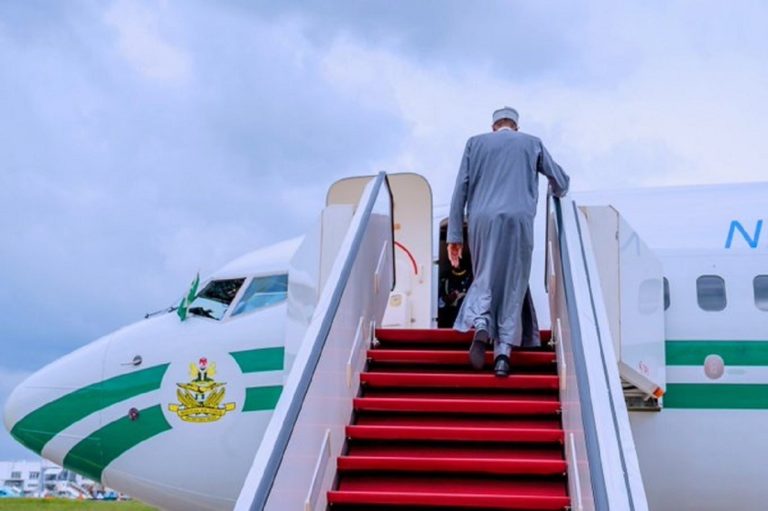
President Muhammadu Buhari will depart for Nouakchott, Islamic Republic of Mauritania, on Monday, January 16, to receive the ‘Africa Award for Strengthening Peace’.
The Special Adviser to the President on Media and Publicity, Femi Adesina, in a statement issued on Sunday, January 15, stated that the award would be conferred on Buhari for his leadership role in promoting peace on the continent through regular interventions, counsel and conciliatory position.
The presidential spokesperson noted that the award was instituted by the Abu Dhabi Peace Forum in 2014 to proffer new ways to embrace inclusive citizenship and promote peace.
Adesina further disclosed that the President will address the Third Forum of the African Conference for Peace, where he will deliver a speech on the African Peace Process.
The statement added that Buhari is to be accompanied by Minister of Foreign Affairs, Geoffrey Onyeama; Minister of Defence, Bashir Salihi Magashi; National Security Adviser, Mohammed Monguno; and Director General of the National Intelligence Agency, Ahmed Rufai Abubakar.
The ICIR had reported that Buhari undertook sixteen trips out of the country, spending more than 60 days outside Nigeria, in 2022.
ABOUT 10 people are feared dead in a multiple car crash along the Nnamdi Azikiwe expressway in the Federal Capital Territory (FCT) on Sunday, January 15.
According to a report, the crash which involved a Toyota Camry and a Mazda, occurred at the Nicon-Gishiri area of the expressway.
Three other vehicles at the scene were reportedly damaged as a result of the crash. An eyewitness, Samaila Isyaku, disclosed that some pedestrians waiting for vehicles and others attempting to cross the expressway were among the victims of the crash.
“We counted at least 10 dead bodies besides the numerous people that were injured. The crash resulted from dangerous over-speeding and eventual loss of control,” he said.
The ICIR contacted the FCT Police Command for an official confirmation. However, Public Relations Officer (PRO) Josephine Adeh said she was not aware of the crash.
“Madam, I don’t know about it. You are just giving me the information. Let me find out,” she said.
Over-speeding has been identified by the Federal Road Safety Corps (FRSC) as a significant cause of auto accidents in Nigeria.
In 2021, 51 per cent of deaths resulting from road accidents in Nigeria occurred in the FCT, Kaduna and Niger states.
The FCT alone recorded 2,016 deaths which was the highest figure across the country.
A FUEL tanker caught fire on Sunday evening at a petrol filling station along the Abuja-Lokoja expressway.
The fire incident reportedly resulted in a gridlock on the highway.
The Abuja-Lokoja expressway is among the busiest highways in the country as it serves as a route to different states of the federation.
The burnt tanker that caused the fire
Confirming the incident, the FCT Police Public Relations Officer (PPRO) Josephine Adeh said the fire broke out while a fuel tanker was discharging at the station.
“A Fire incident has occurred at an AA RANO fuel station along Abuja-Lokoja Expressway.
“The Fire broke out while a fuel tanker was dumping fuel at the station,” she said.
Adeh added that Police operatives, firefighters and other emergency responders were on the ground to put out the fire and ensure minimal damage to individuals and properties.
THE presidential candidate of the All Progressives Congress (APC), Bola Tinubu, has appointed Abdulaziz Abdulaziz and Mahmud Jega of Daily Trust newspapers as members of his campaign team.
Jega, until recently a Deputy Editor with the newspaper, was appointed as Special Adviser, Public Affairs, while Abdulaziz, who just resigned as Deputy Editor General, was appointed as Special Assistant on Media and Publicity.
Tinubu’s spokesman, Tunde Rahman in a statement on Sunday, January 15, said the two appointees would deploy their expertise and deep understanding of political issues across the country, particularly the North, in shoring up the activities of the APC presidential candidate’s media team.
Jega served as Managing Editor, Editor, Deputy Editor-in-Chief and Editorial Board Chairman of Daily Trust Newspapers.
He has also served as Editor, New Nigerian Newspapers, Editor of The Sentinel magazine, Kaduna, and Assistant Editor, Citizen magazine.
Abdulaziz was an Editor at Premium Times before he joined Daily Trust. Until his appointment, he was the Deputy General Editor of Daily Trust Newspapers and also anchored a morning show for the Trust TV, an arm of the Media Trust Group.
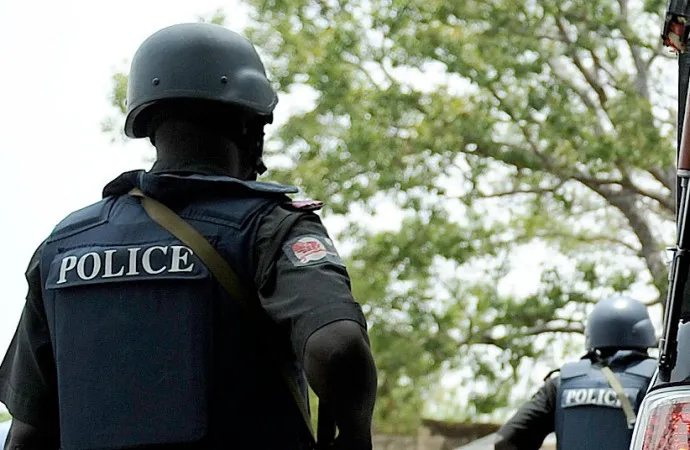
THE Nigerian Police Force (NPF) has debunked reports that some of its officers are planning to protest against unpaid salaries.
Force Public Relations Officer (FPRO) Olumuyiwa Adejobi, via his Twitter handle, described the reports as fake news and presumptions, adding that police officers could not stage protests or embark on strike actions.
“Police Force is not a labour union or group where its personnel meet and deliberate on protest or strike. Its not possible. We know and are aware of some ‘don’ts’ in the NPF being a regimental organisation,” he noted.
Urging bloggers and other organisations to avoid reporting false information concerning the Police, Adejobi expressed optimism that the welfare of officers and me of the NPF would be improved soon.
“We appreciate the improvements in our welfare and conditions of service under this present administration. It’s unprecedented, and I am sure more goodies will come for police personnel as soon as possible,” the FPRO stated.
On Saturday, it was reported that some senior police officers were planning a mega protest in Lagos over six months’ unpaid salaries.
According to the reports, those who were being owed include Senior Inspectors, Assistant Superintendents of Police, Deputy Superintendents of Police, Superintendents of Police, and Chief Superintendents of Police. It was reported that the officers have begun making plans for the protests via WhatsApp groups.
According to the reports, the protest was scheduled to be held at the Lagos State Police Command Headquarters on Monday, January 16.
The reports also alleged that the Inspector-General of Police Usman Alkali Baba had issued warnings to Squadron Commanders against the protests.