Home Blog Page 1125

Reps warn EFCC against selling recovered assets to looters

0

THE Economic and Financial Crimes Commission (EFCC) has been warned against selling recovered proceeds of corruption to their original owners through representatives.

The EFCC has commenced the auction of assets forfeited to the Federal Government in cases of corruption across the country.

The House of Representatives Ad Hoc Committee on Assessment and Status of All Recovered Loot Movable and Immovable Assets from 2002 to 2020 by Agencies of the Federal Government of Nigeria for Effective Efficient Management and Utilisation warned the anti-graft agency against returning the seized assets to corrupt persons who forfeited the properties to the government.

The Chairman of the committee, Adejoro Adeogun, issued the warning in an interview with reporters on Tuesday.

Noting that the committee had advised on speedy disposal of recovered loot, Adeogun expressed concerns at the possibility of looters recovering the forfeited assets through representatives.

He faulted the situation whereby the House does not have the powers to determine how the assets should be disposed of or to whom they should be sold.

“The enabling law allows the (anti-corruption) agencies to auction directly. The EFCC is supposed to auction what it seized, subject to due process.

“That is possible, but we in the National Assembly have no control over that. We can’t control what they do but what we have to do is to ensure that they did the right thing,” the lawmaker stated.

He added that the assets should not remain abandoned till another government takes power later in the year.

Adeogun further stated that his committee had done most of what it needed to do, including presenting an interim report to the House.

The ICIR reported that the EFCC, on December 6, 2022, commenced the inspection and auction of over 400 forfeited cars in Lagos.

The vehicles are subject of final forfeiture orders.

The Agency said the exercise was in line with the EFCC (Establishment) Act 2004, Public Procurement Act 2007, and the Proceeds of Crimes (Recovery and Management) Act 2022.

According to the EFCC, the exercise is scheduled to take place across the Commands of the Commission.

Also, on December 28, 2022, the Commission opened bids for forfeited properties across the country.

According to the EFCC, the concerned properties are alleged proceeds of corruption which were seized from their owners and forfeited to the Federal Government.

Buhari okays deployment of technology to combat insecurity in South-East

PRESIDENT Muhammadu Buhari has approved the deployment of advanced technology to combat insecurity in the South East.

Imo State governor Hope Uzodinma disclosed this in an interview with journalists after a meeting with Buhari at the Presidential Villa, Abuja.

The governor said he came to see the President to appeal to him to approve the deployment of technology in the campaign against rising insecurity in the South-East.

According to the governor, the technology, which is to be deployed immediately, consists of surveillance equipment and other gadgets that will help to vontrol crime and insecurity, with minimal collateral damage.

“I also appealed to him for further support; to support us with some technological deployments. We have planned to be able to do advanced kind of security control in the South-East. And he has also given his approval to that,” Uzodimma said.

“And any moment from now, we will be getting some surveillance equipment and some modern technologies that will help us manage security so that we can fight crime with little or no collateral damage to the environment.”

Uzodimma further said his administration cannot be blamed for insecurity in Imo State, stressing that the entire country was facing security challenges.

He, however, said his administration has fared well in fighting and managing insecurity in the state.

Only 30% of registrants collect PVCs at first try – SBM report

0

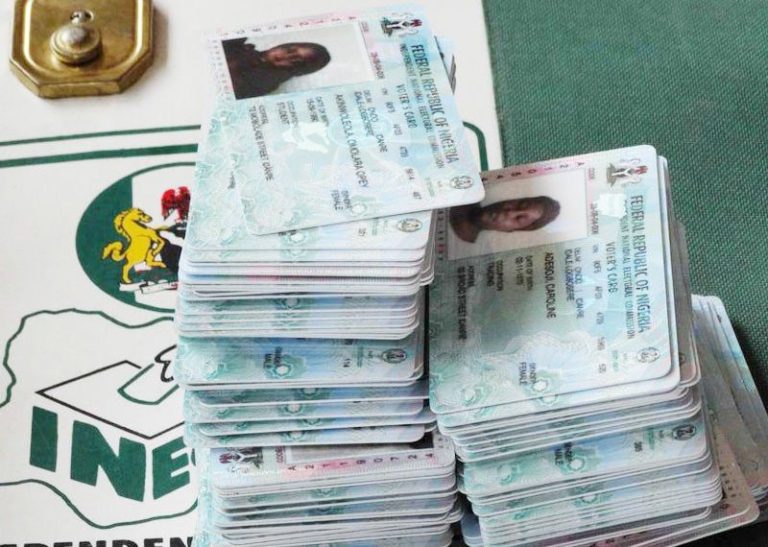
GEO-POLITICAL research consultancy firm SBM Intelligence has said only 30 per cent of registrants collect their Permanent Voter Cards (PVCs) at first attempt.

SBM disclosed this in a report published following a survey it carried out in December 2022 on over 6000 registrants across 16 states.

According to the report, 79 per cent of Nigerians interviewed had successfully collected their PVCs, indicating a high desire to vote, but many experienced certain constraints, including recurrent visits to the Independent National Electoral Commission (INEC) collection centres.

“A majority of those who have picked up have had to visit the INEC offices multiple times to get the PVCs. Only 30 per cent of the respondents were able to get their PVCs the first time they tried to collect,” the report said.

The report noted that about a quarter of the respondents of the survey encountered violence or abuse while attempting to collect their PVCs and called on the INEC to investigate the claims.

SBM Intelligence also noted that a wide margin exists between collection rates for new registrants and previous voters transferring their cards.

“The reasons given to Nigerians for PVCs not being available for pickup do not engender Trust. INEC needs to be more transparent with the actual reasons and call for logistical help where needed.

“Cases, where voters can find themselves on the Voters Register, displayed on the CVR portal, but their PVCS cannot be found and/or they are told they cannot be found on the system need to be documented and investigated.”

The organisation also recommended that a citizens’ complaint platform be included in the INEC portal to enable the Commission address the issues faster.

INEC was also urged to publish PVC collection statistics publicly to enable Nigerians track information on the status of their cards.

“Registrants needing multiple visits to the INEC office to get their PVCs is inefficient and costly to the registrant. Ultimately, some may give up.

“INEC needs to leverage the data it has collected to keep the registrants informed of the status of their PVCs from the comfort of their homes and only require them to come to the INEC office when there is confirmation that their PVC are available for collection,” the report added.

With the 2023 general elections less than two months away, many Nigerians have expressed frustration over collection of PVCs across the country.

A Lagos State resident and new registrant, Joel Chizaram, said attempts to collect his PVC has yielded no results since February 2022.

“Today makes it one year, five months and two days since I registered for my PVC. I have still not collected my card, and every time I go to the INEC office at Shomolu, they tell me it was omitted and that the incident will be reported.

“I have been asked to check back in two weeks time after every encounter since February 2022, still, no card. INEC, is this a deliberate attempt to disenfranchise me?” he posted via his Twitter handle on Wednesday, January 4.

A resident of the Federal Capital Territory (FCT) Abosede Korede also told The ICIR that she could not collect her PVC upon her first visit to the INEC office.

“I went to the INEC office at Area 10 to collect my PVC, but my card was not available. I don’t know why they couldn’t find it. They just asked me to write my name and phone number in a paper and check back in two weeks,” she said.

Kwara: Family of late Mogaji Ara-Oyo maintain he is not kidnapper

0

By Dare Akogun

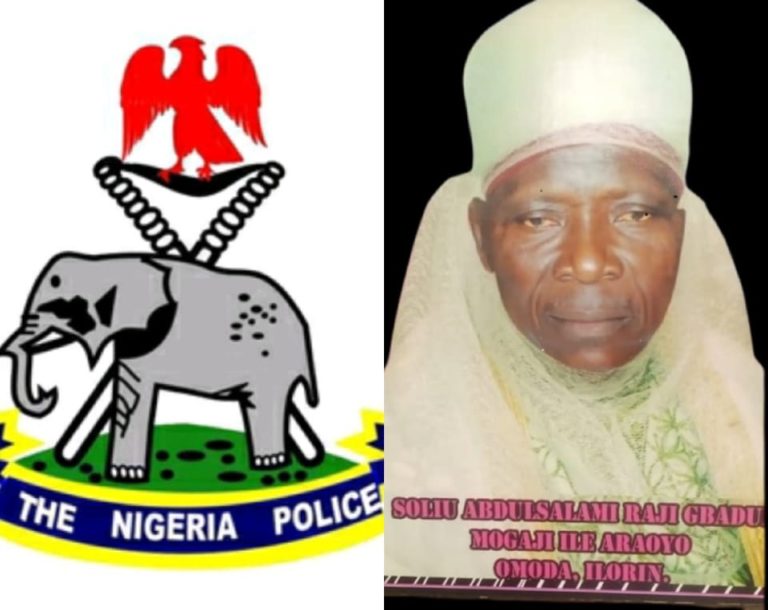
THE family of the late Abdulsalami Soliu Mogaji of the Araoyo family Omoda of Ilorin, the Kwara state, capital has accused the Kwara state police command of shielding the killers of their family held and also falsely tagging him as a kidnapper.

Soliu was killed in September 2022  and was later labelled a Kidnapper. A label the family have vehemently maintained is untrue.

The deceased wife Funmilayo Soliu Abdulsalam, amidst intermittent sobs said the police wanted to oppress the family because they are poor.

According to her “on September 13, 2022, my husband went to the Government House to see the governor according to him, the governor requested a meeting with all the Mogaji’s of the Ilorin Emirate. After the meeting, he left and he informed us about his movement; which he always did that, he is going to see his friend, Mogaji Alaase who owns a block industry somewhere along the Oko olowo expressway. I was not around on that day, as I made a trip to Lagos.”

“According to one of the sons of his friend who was with him when the incident happened, my late husband, around 9:00 pm told his friend that he would be leaving because his wife was not at home. Then, his friend requested that my husband should give his three children a ride home.

“My husband and one of the children that sat in the front were killed. I see this as total oppression. They used the powers they have to oppress us. They just want to drag his name in the mud and spoil his reputation.”  Funmilayo explained.

One of the sons of the deceased Kehinde Abdulganiyu Abdulsalam said when the incident happened, he received a call around 12:30am that his father has been killed and the corpse has been taken to the Shao police station.

Kehinde Abdulganiyu Abdulsalam

“When we got to Shao Police station, we met the DPO one SP Akpan, and he told us that from their investigations, our dad was a kidnapper and he showed some amount of money and bottles of hot drinks, but we vehemently argued with the DPO and told him point blank that our dad was not a kidnapper.”

Kehinde added that  “We then requested for his body so that we could bury him according to Islamic rites, but the police DPO said if we agree that our father is a kidnapper, they will release the body to us, we said no, that is not possible. The DPO now said they have referred the case to the headquarters, and the body was deposited at the morgue of the University of Ilorin Teaching Hospital.”

“Before we left Shao that day, people that are gathered at the station were stoning us with stones and our vehicles destroyed, calling us family of kidnappers, it was the police that took us in their vehicles, and escorted us to the Sobi barracks before we came home and plan the next line of action.

“We also saw on Facebook a post by the PRO of Kwara Police Command Ajayi Okasanmi, that the police in the state rescued some kidnapped victims and killed two of the kidnappers while two others escaped with the pictures of our father and the boy with him that was killed.

“So, the following day, we went to the Police headquarters, and we met the newly posted CP Paul Odama, who invited us into his office with the DPO Shao Division, who still maintained that our father was a kidnapper, and he came to the command with money, locally made gun bullets and some charms which he said his boys recovered from deceased,” he said.

Kehinde explained that they eventually got the body the following Friday after the intervention of a senior officer they know.

He added that by Sunday the kidnapped victims and their families and some members of the vigilantes, where asked “if they can recognise anyone from the people from our side and they said no”.

He added that “The wife that was kidnapped said the people that kidnapped them were middle-aged men, not old nor young, and they were speaking the Hausa language.”

He said that the following Tuesday, which was the day of the 8 days prayer for the late Mogaji was when they were told that Mogaji Alasee was arraigned in court and remanded in prison after visiting the Commissioner of Police Paul Odama.

“Baba Mogaji was with us that Tuesday morning, and he told us he was going to the police headquarters that the Commissioner of Police asked him to come and identify some vigilantes who have been invited by the police regarding the issue of the death of our father.

“This particular turn of event came as a shock to us because we thought the police commissioner is trying to help us to find the killers of our fathers, but it turned out the police are trying to hide something because I don’t understand,” he narrated.

Kehinde said since that day his work has been affected and has contemplated suicide as he is finding it difficult to feed his family as they always call him the son of a kidnapper.

Another son of the deceased Wakil Abdulsalam said  “On the morning of Wednesday, September 14, 2022, our attention was drawn to what was posted online by the police, alleging that our dad was a kidnapper. This was posted on the Internet by the Police Public Relations Officer in Kwara State, Okasanmi Ajayi, alleging that the police killed two kidnappers and two ran away.

“That was what he posted. He said that it was four bandits/kidnappers, two were killed and two escaped into the jungle. The children of his friend (Alaase) that escaped would later narrate their ordeal and explain all that happened that our dad was killed by the vigilante known to the police, but tagged him a kidnapper.

He said was the late Mogaji left the block industry at about 9pm that day with the three boys.

“According to the boys, they noticed that a car was trailing them and when they drew the attention of my dad to it, he told them that the car might just be going its way, not really trailing them until the car suddenly overtook and intercepted them.

“At that point, my dad engaged the reverse gear quickly but he ran into a heap of sand. My dad was always driving with just one hand; he started driving like that after he suffered a paralysis in his left hand about 34 years ago. I’m quite sure that if it were not for the paralysis on his other arm, he wouldn’t have died the way he did because he was a very good driver.

“After hitting the heap of sand, he came down of the car to ask what the matter was and that was how the assailants shot him with local bullets on his chest. It was surprising that the police said what they said.”

When contacted, the Public Relations Officer of the Kwara Command Ajayi Okasanmi, said the case was referred to court the following day the incident happened, and some suspects were charged to court, and as such he can’t comment on the matter again.

He, however confirmed that the police had an encounter with a suspected kidnapper on September 13, 2022 where some kidnapped victims were rescued and some kidnappers killed in the fire exchange.

Sanusi’s epistle for Atiku, Tinubu, others

1

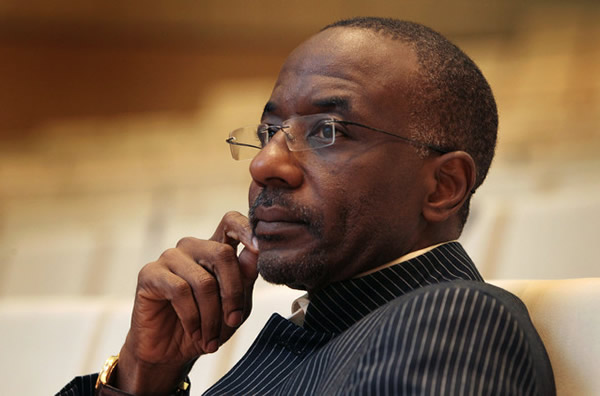
EACH  time Emir Sanusi Lamido Sanusi speaks, his words sting the powerful like the poisonous teeth of a viper.  At the same time, like a pool of water in a desert, Sanusi’s words refresh the larger society who are bewildered at the contradictory and chaotic policies and strategies of those who conduct the affairs of the nation to shipwreck, Theophilus Abbah writes in this book review. 


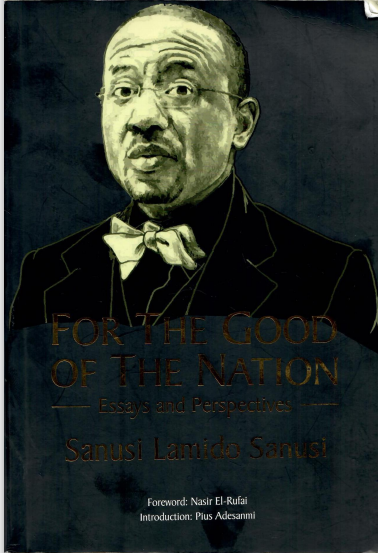
  • Title: For the Good of the Nation: Essays and Perspectives
  • Author: Sanusi Lamido Sanusi
  • Pages: 509
  • Publishers: Alfa Communications Ltd.
  • Year: 2021
  • Reviewer: By Theophilus Abbah  @theophilusa

As governor of the Central Bank of Nigeria from 2009 to 2014, Sanusi showed how a public servant could stand out from the crowd, take measures that were not conforming to traditions, and never failing to cry wolf when one emerges to devour his flock.

Not departing from these unique characteristics, Sanusi cast off the garment of conservatism as Emir of Kano, and spoke up about socio-economic wrongdoings that impacted harshly on the larger population.

Learned, fearless, unconventional, and urbane, Sanusi is loved and feared because of his intellectual prowess; being a banker and religious philosopher whose firm grasp of Islamic Jurisprudence makes it difficult for anyone to ignore his viewpoints on religion and governance in Nigeria.

Cover page for "For the Good of the Nation: Essays and Perspectives" written by Sanusi Lamido Sanusi
Cover page for “For the Good of the Nation: Essays and Perspectives” written by Sanusi Lamido Sanusi

For those familiar with the uniqueness of SLS, the contents of his book, For the Good of the Nation, come as a periscope by which readers could view the consistency in the values, thoughts and philosophies of this Nigerian, since the late 1990s until the present dispensation.

Divided into five parts, the themes explored in the book are as follows: Identity, Politics & Democracy; Reflections on Shariah; SLS and The Gender Question; Islamic Theology and Philosophy and Interviews.

Each contains topics of religious and political debates in Nigeria since the late 1990s upto the current dispensation. For instance,  Nigeria’s return to democratic rule in 1999 coincided with an era of religious politics, a consummation of a long struggle by the elite in the North to redefine politics in Nigeria.

The tumultuous Sharia movement that engulfed many states in the North attracted torrents of arguments, as the dust of the agitation threw the polity and people of Nigeria into apocalyptic uncertainty. Seen by a narrow few in the political elite as the pathway to utopia, state after state in the North-West and North-East lined up behind the Rule of Shariah, like the silver bullet to our ailments as a nation.

In the midst of that cacophony,   a lone voice in the wilderness warned the people against gullibility. That voice was that of Sanusi Lamido Sanusi, who exposed the political class as using Shariah as a political bait for the votes of the Muslim population in Northern Nigeria.

This, Sanusi did through newspaper articles, chapters in books, speeches he presented as guests at various events, and interviews he granted media organizations over the years.

He was unsparing in a 1998 article in Weekly Trust on the topic: “On the Islamisation of Politics & the Politicization of Islam. ” In it, Sanusi dissected Islam and politics, but faulted the mischief to which politicians use Islam in their quest for political power.

He says, “Our greatest task is to fight against those politicians who seek to gain or hold on to power in the name of Islam or the North, as a route to looting the national treasury and treating the country like a private estate to be shared among family members and friends.

Without a doubt, this country has been brought to its knees, its citizens victims of the highest degree of economic mismanagement, political repression and breach of faith on the part of its leaders… Without a doubt, every government in Nigeria over the past two decades (except Shonekan’s 3-month Interim Contraption) has been headed by a Northern Muslim.

In each of these governments, Muslims and Northerners have held important portfolios.

These Muslims and Northerners have not achieved anything worthy of note on behalf of the North or Islam. The last government, in particular waged a relentless war against sections of the Islamic Movement, subjecting its leadership to arbitrary and extrajudicial executions, arrest and detention” (p37).

His thoughts on the issue of restructuring Nigeria were laid bare in an article published in Weekly Trust on October 1, 1999. The thrust of the write-up is that most Nigerians who sang about the necessity for restructuring Nigeria were tied to, and influenced by, historical events.

The author claimed that advocates of restructuring failed to realise that Nigeria was no longer what it was in the 1950s and 1960s. As the cliche goes, much water had passed under the bridge; therefore, the society has transformed from the pre-civil war era through a long era of military rule, and democratic experiments that departed diametrically from the First Republic.

Looking at the contemporary Nigeria from how the citizens of South-East origin were viewed, Sanusi argued that it was an error to treat the Igbo man in today’s Nigeria with the biases evoked by the three-year civil war.

He wrote, “Our present political leaders have no sense of history. There is a new Igbo man, who was not born in 1966 and neither knows nor cares about Nzeogwu and Ojukwu. There are Igbo men on the street who were never Biafrans. They were born Nigerians and are Nigerians, but suffer because of actions of earlier generations… They will soon decide that it is better to fight their war, and maybe find an honourable peace, than to remain in this contemptible state in perpetuity.” (p25)

“Our present political leaders have no sense of history. There is a new Igbo man, who was not born in 1966 and neither knows nor cares about Nzeogwu and Ojukwu. There are Igbo men on the street who were never Biafrans. They were born Nigerians and are Nigerians, but suffer because of actions of earlier generations… They will soon decide that it is better to fight their war, and maybe find an honourable peace, than to remain in this contemptible state in perpetuity.” (p25)

As if those lines were predictive, Nigerians today are living witnesses to the agitations in the South-East, anchored on the ill-desire to revive the spirit of Biafra. Complaining about discrimination and marginalisation, some young men and women from the geopolitical zone have come together to unleash mayhem on the country  under the Indigenous People of Biafra (IPOB). They now constitute a wild security challenge to the country.

Unfortunately, our political parties are trapped in this myopic fixation that some sections of Nigeria are more entitled to political positions than others, and now deliberately put in place structures that frustrate the prospects of some. It is common knowledge that the march to the 2023 power grab is on the basis of religion, geopolitical region and ethnicity; and it is being conducted brazenly in a manner that enhances the elevation of the ‘favoured’ segment of the society to juicy positions, to the detriment of others.

For a cohesive and united Nigeria, political leaders must adopt a more pragmatic approach to equity and justice, an approach that should not ignore the country’s religious, ethnic and regional demographics,  and, of course, the social contexts of the 21st Century Nigeria.

Writing further on this theme, Sanusi argues thus: “If only we would look, we would find that the values that make a good Fulani, Yoruba, Kanuri or Bini man; the values that make a good Christian and a good Muslim; are the same. If only we had  in each part of the country, a leadership with the vision to recognise this, to harness this, to bring together good Yoruba, Hausa, Igbo, Ogoni and Angas men and women, Christians and Muslims, to run the affairs of this country, we would find peace.” (p26).

“If only we would look, we would find that the values that make a good Fulani, Yoruba, Kanuri or Bini man; the values that make a good Christian and a good Muslim; are the same.”

Apart from warning against the danger of regional biases in the polity, Sanusi demonstrated his robust understanding of the Islamic faith in various articles that make up the 500-page book, as he discusses Islam and culture, democracy, economy,  Almajirai, Islamic State, finance, and banking in Nigeria.

His views are primarily idyllic and eloquently radical, a departure from those in his position whose desire to be politically correct makes them to err into complacency and undue compromise of standards. Some of his values manifested in the probe of the banking sector during his tenure as CBN governor, and his disagreement with his supervisory Minister of Finance, Ngozi Okonjo-Iweala, during the tenure of President Goodluck Jonathan.

Though some of the essays that make up the collection were written over two decades ago, the arguments are still fresh and contemporary, as they touch on religion and politics; corruption and economic mismanagement; and the lack of focus by those in power.

The battle for 2023 is being fought on the fields of ethnicity and religion, as politicians deliberately employ schemes that grow division among the voting population instead of fostering unity, peace and cohesion.

Current political gladiators, like Asiwaju Bola Tinubu, of the All Progressives Congress (APC), Alhaji Atiku Abubakar, of the Peoples Democratic Party (PDP), and Peter Obi of Labour Party, would need to read the book to familiarise themselves with the issues and assumptions that Sanusi tackled dispassionately, and borrow ideas on how to deal with such situations.

Nigeria is caught in the thicket of errors. But the blunders are not natural; they are the handiwork of manipulative politicians who realise that ethnicity and religion are the weak points of the populace, and invoking one or both of them would guarantee their political success for personal aggrandizement.

*Theophilus Abbah, PhD, is the programme director of Daily Trust Foundation and Fellow, Chartered Institute of Forensic Investigations and Fraud Examiners of Nigeria.

Lifeless body of murdered couple’s son recovered from Ogun river

0

THE lifeless body of Oreoluwa Fatinloye, the son of the couple murdered on New Year Day in Abeokuta, has been recovered from the Ogun river in the Adigbe-Obada axis of the Ogun State capital.

The decomposing body of Oreoluwa, who was kidnapped shortly after his parents were killed, was discovered floating on the river by fishermen on Tuesday morning.

It was also gathered that both hands of the deceased were tied with rope to the back.

One of the fisherman, Idowu Taiwo, told newsmen that he discovered the body floating on the river while he was preparing for the day’s work.

“On Monday, we heard that someone was thrown into this river but this morning, while we were preparing for work, the police approached us and pleaded with us to inform them any time we discover the body,” he said.

“But, this morning, around 7.30, we discovered the body while we were checking our equipment in the river.

“I called someone to help us get the number of the PPRO (Police Public Relations Officer) to tell him that we have discovered the body.

“Not long after, the police came and we showed them the body after we had brought it to the river bank,” Idowu said.

The police later took the corpse away in the presence of some family members of the Fatinoyes.

Meanwhile, the the state police spokesperson, Abimbola Oyeyemi, confirmed that the corpse of the boy had been recovered.

Oyeyemi explained that the police would continue with their investigation to unravel the mystery behind the death of the Fatinoyes.

Kehinde Fatinloye and his wife were murdered and burnt beyond recognition inside their house located in the Government Reservation Area (GRA) of the state capital by gunmen suspected to be hired assassins on Sunday, January 1.

The deceased were buried amid tears by family members and friends on Monday, January 2.

Before their death, Fatinoye worked with the Central Bank of Nigeria (CBN) while the wife worked at the Federal University of Agriculture, Abeokuta (FUNAAB).

Why there is apathy to TETFund conference support funding in Academia

0

By Raheemat Adeniran

THE Lagos State University’s Tertiary Education Trust Fund (TETFund) Desk Office recently announced call for applications from staff members for TETFund’s local and international Conference Attendance (CA) intervention “applicable to conferences with scheduled dates from April to June, 2023”.

Ideally, this should be good news for the university community, offering academic and non-academic staff the rare opportunity to travel for conferences and workshops to any part of the world, fully-funded.

It was also coming after TETFund’s long suspension of conference attendance sponsorship travels occasioned by alleged diversion of previous CA sponsorship grants and prolonged by the COVID-19 disruptions.


Read Also:

Unfortunately, that enthusiasm is dampened by the unrealistic requirements and expectation for eligibility.

Research is a core aspect of an academic’s career. Aside teaching, faculties are expected to engage in impactful research studies and strives to present their findings to their peers in local and international conferences.

As with many sectors in Nigeria, higher education financing is grossly inadequate. Hence, lecturers often attend local and international conferences to share their research findings and experiences with peers using personal funding.

Federal government’s attempt at increasing funding of public institutions led to the establishment of TETFund.

The Tertiary Education Trust Fund (TETFund) is an initiative of the FG backed by parliamentary act to “administer and disburse education tax collections to public tertiary educational institutions in Nigeria”.

Among TETFund areas of intervention is Academic Staff Training and Development which entails disbursement of fund for sponsorship to study for Masters and Doctorate Degrees, conference attendance, and teaching practice intervention.

These interventions are managed through beneficiary institutions which collate applications from their staff for onward transmission to TETFund.

In as much as there is an array of issues with varied aspects of TETFund interventions, in this piece, I will only dwell on observed issues regarding conference attendance sponsorship which supports local and international conference and workshop attendance for teaching and non-teaching staff.

The views expressed here are based on personal experience in applying for the fund supported with available data on the administration of the conference attendance intervention fund in my institution, the Lagos State University.

These views may not reflect the general practice across all beneficiary institutions in the country, but there are likely to be some similarities.

In line with the TETFUND intervention guideline, beneficiary institutions are expected to collate staff applications, process and submit their recommendation for the utilisation of conference attendance intervention on behalf of their staff not later than two months before the conference date.

Institutions can make the submission up to four times in a year. As simple as this seems, this basic preliminary requirement already impedes access to many academic staff. The mere fact that submissions are accepted up to two months before the conference date already impedes the timely approval to facilitate attendance particularly with the entrenched bureaucratic officialdom in many government agencies in Nigeria.

LASU’s Call

The recent call, released late December 2022, provides five eligibility criteria for applicants, as contained in TETFund’s guidelines document for accessing its intervention funds.

These include being a full-time and confirmed Staff; applying to attend an academic conference organised by academic institutions, learned society (regional, national) and/or recognised professional bodies; and presentation of evidence of attendance and presentations from previous conference supported by the fund.

Two additional conditions were stressed for academic staff requesting them to “have a paper accepted for presentation at the conference to be attended” and publishing research articles from previously attended conferences supported by TETFund.

I truly understand the need to curb observed corrupt practices among staff of TETFund beneficiary institutions alleged to have diverted conference attendance funds for other purposes in previous administrations of the fund.

How set conditions limit conference attendance for academic staff

I, however, believe the current condition can potentially discourage genuine applicants from applying for the fund due to the limited feasibility of the current requirement. It gives an undue advantage to non-academic staff over academic staff who are supposed to be the primary beneficiary of the intervention as indicated in its title, Academic Staff Training and Development.

While non-academic staff members can hand-pick any conference/workshop within between May and June 2023 with a greater possibility of being approved by TETFund, it is not so easy for academic staff.

To start with, the present call expects applicants for genuine conferences scheduled for April to June, 2023. Experience with previous calls however shows that applying for any conferences slated before June may be at one’s peril as the conference date might have lapsed by the time TETFund considers the applications.

For instance, the university’s previous call was made in May 2022 with June 30, 2022 deadline for conferences slated for September to December 2022. I intentionally ignored the call then since it was only for sponsorship of local conferences. I was not interested in going through the hurdle to seek support to attend a local conference I can still struggle to fund personally, as many academics do. Not with the low possibility of approval anyway.

As projected, when TETFund’s decision on the applications was released on November 24, 2022 via the university’s official bulletin, serial no LASU/CIPPR/2251, all applications for conferences in September and early October were simply disqualified with the remark “Not approved, conference lapsed”. And with the release of the bulletin in November, successful applicants whose conferences were scheduled for October and November must have attended the conferences to be eligible for refund.

Attending the conference with the expectation of getting a refund after TETFund’s approval is, however risky as there is still a possibility of being disqualified with the remarks, “Not approved, unrecognised conference organiser”. Hence, anyone who decides to attend his/her proposed conference before due communication of the approval must be prepared for any eventualities…

Unfortunately for academic staff, the added requirement for an accepted abstract for presentation at the conference for the application to be considered poses a greater burden. This is because many conference organiser may not provide feedback on submitted abstracts until a few months to the scheduled dates.

Hence, many academics simply prioritise seeking out conferences that can provide early feedback on their submitted abstracts over and above conferences that really matter to their career development when submitting their applications.

For instance, in my Communication and Media related studies field, many reputable international conferences rarely provide early feedback on submitted abstracts. The International Association for Media and Communication Research (IAMCR) 2023 Conference, to be held in Lyon, France in July will still be accepting abstract submissions till February 9, 2023 and may not send feedback on acceptance till April.

Another conference I would have loved to apply for is International Fact-Checking Network (IFCN)’s #GlobalFact10 conference bringing together fact-checkers worldwide. Despite being confirmed for June 2023 in Seoul, South Korea, it is yet to release its call for abstract submissions for the academic track.

The 73rd Annual International Communication Association (ICA) Conference scheduled for May 2023, in Toronto Canada may, however not be appropriate for the recent LASU’s call for application despite expected feedback on submitted abstracts from January 11 since the application may not be approved early enough for successful applicants to aptly plan the trip.

Unfortunately, it stands the risk of being dismissed as having already lapsed by then. All these dampen the desire to attend highly relevant conferences for academic staff development.

If per chance, a lecturer eventually scales these hurdles, to be eligible for sponsorship in another two years, he or she must “present evidence of publishing at least one article in any qualified first quartile (Q1) journal or two articles in any second quartile (Q2) journals before qualifying to be sponsored to attend another conference.

In a country where many of our journals are offline and not even indexed, many academics remain at the mercy of western dominated journals, often not favourably disposed to publishing research articles from scholars in the Global South.

I have had experiences where submitted manuscripts were never sent for reviews for flimsy reasons such as, “the rate of submissions to the Journal has grown markedly in recent years, and this high flow of submissions places extraordinary pressures on limited editorial space”.

It will be good if TETFund can also support indexing of our journals in major databases before setting publication in high-ranking journals as a criterion for future access to the fund.

At present, it is impossible for many who had previously assessed the fund to submit another application. This might have resulted in a significant drop in academics’ applications over the years as observed from published data on LASU Conference Attendance (CA) Intervention 2010-2020 data.

The trend: LASU conference attendance (CA) intervention 2010-2020 data

In the course of writing this piece, I stumbled upon published data on TETFund’s Conference Attendance (CA) Interventions for LASU staff members from 2010-2020.

I was able to convert the PDF file into Excel format by signing up for a free 7-day trial of Adobe Pro version for easy processing. The observed trend is intriguing and speaks to the need for a review of the criteria to ease access to the funds, particularly for academic staff, while also ensuring accountability to ensure proper use of the disbursed funds.

Over the period from 2010-2020, academic and non-academic staff in LASU received 454 CA interventions for local and international conferences. Interestingly, Non-academic staff members accessed the fund much more than academic staff members, getting almost 60% of approved TETFund-sponsored conference attendance slots.

In the early years, academics got more CA slots, attending more conferences from 2010 up till 2016. Academics recorded the highest approvals for their applications in 2021/2022.

Non-academics have since overtaken the shots, mostly gaining more approvals from 2017, except for 2019, when academics had slightly higher slots. There were, however, no data reported for 2014 and 2015, while limited interventions were recorded in 2016 for academics only.

While non-academics in LASU tend to access the TETFund CA intervention fund more, such interventions were mostly received for local conferences. Non-academics received approvals to attend 222 local conferences and workshops and 40 international ones. Academics, however, got approvals for 182 international conferences and five local conferences.

The location of some of the approved conferences could not be ascertained due to omission from the published data, and repeated searches online failed to identify the conferences and their locations.

The published data may not be entirely accurate as some of the beneficiaries listed may not have accessed the fund. I know a senior colleague whose name was listed to have received the fund in 2019 but never assessed the fund as the approval was received a few weeks to the conference, making it impossible to make the trip with the required visa application process.

There are also reports of individuals who were able to use the approval to go to another conference in another year. Unfortunately, this opportunity is not open to all. I once got the approval to attend a conference in Accra, Ghana in February, 2014. Despite making the application in September 2013, the approval was only received a week before the conference. I had approached the TETFund Desk of the university to possibly use the approved fund to attend another conference which was outrightly declined.

Way forward

TETFund needs to review its eligibility criteria and allow for the submission of evidence of abstract acceptance long after the application had been submitted up to when decisions are taken on each application.

The current practice of submitting applications manually may be automated to allow the uploading of relevant documents as they become available.

There should also be increased support for our journals to attain desired rankings for international relevance. The current practice of insisting on Publishing in Q1 or Q2 journals even when our academic journals struggle to maintain online presence is inimical to the development of our local journals to international standards.

Where approvals are eventually given late, there should be a transparent process to facilitate using the approval for future conferences, provided it meets the basic criteria of eligible conferences for sponsorship and is scheduled in a similar region to the previously approved conference.

The process of considering the eligibility of conferences should be more encompassing. I know of colleagues whose applications to attend university-based or recognised global academic associations’ conferences were denied, probably due to the ignorance of the approving officer.  And there are records of questionable approvals too.

The accessed data on LASU approvals have records of a workshop on Advanced MS Excel in UYO for a non-academic staff. I found this approval and similar ones ridiculous, especially as TETFund has a funded training on computer appreciation periodically organised for staff members of beneficiary institutions.

Having a working list of eligible conference organisers with periodic reviews may go a long way in addressing this anomaly. There should, however, be a system to evaluate applications for unlisted organisers on individual merit.

*Raheemat Adeniran, is a Senior Lecturer at the Journalism Department, Faculty of Communication and Media Studies. LASU.

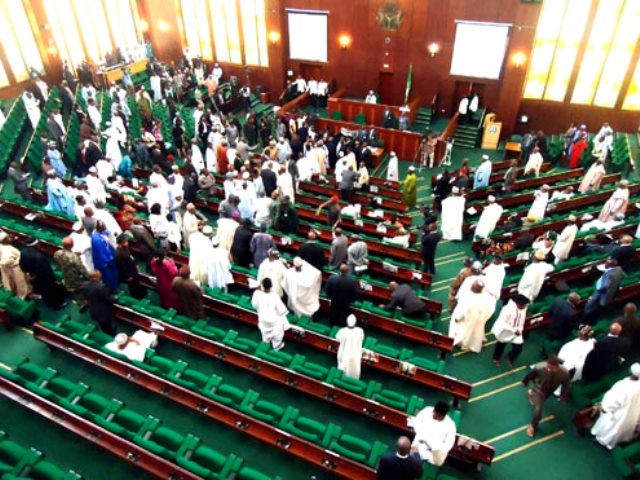
How we are crowding out illegal people from ungoverned mining space – FG

THE Federal government said today that it has been taking steps to stop the activities of illegal miners across the country, a concern it said had created serious economic sabotage for the country.

The Minister of Mines and Steel Development, Olamilekan Adegbite, stating this in Abuja, said part of the ministry’s steps had been to coordinate 4,000 mining cooperatives, while cracking down on unregistered miners, as well as on other illegalities in the sector.

Adegbite said, “We want to add value of beneficiation in the sector to enable us redirect it. We are de-risking the sector to make it attractive for investors.


READ ALSO:

Kogi govt bans illegal mining operations as two die in site collapse

Adeleke vows to clampdown on illegal mining in Osun

How Lafarge’s mining, corruption cause untold hardship to Mfamosing community (Part 4)

Illegal mining in Abuja: Stakeholders want ministry to revisit ICIR report 


“Our current reforms are yielding results. You need to see what the sector is contributing to the GDP 10 years ago and now to appreciate the reforms. For instance, we were doing less than a billion naira contribution to the GDP 10 years ago, but now it is more than N10 billion.”

Adegbite admitted that illegal mining remained a problem, disclosng that the ministry is currently in partnership with the Nigeria Customs Service and the Nigeria Immigration Service to curb the menace.

According to him, the current administration had intensified efforts to de-risk the sector with $100 million, which he said had heightened investors’ interest in the sector.

“These investments by the Buhari-led administration have helped us in acquiring data for the sector, which currently pushes up investors’ attraction for the sector,” he added.

Adegbite, commenting on why Nigeria does not have an economic edge on Australia and South Africa in mining benefits, said oil discovery  distracted Nigeria’s concentration on growing mining investments.

“These countries have been doing mining for over 200 years without interruption. Petroleum discovery swayed Nigeria’s interest in mining, with less investments by the government on mining exploration,” he said.

He also explained that global miners were finding their way to Nigeria due to lower cost of exploration, when compared with established global mining jurisdictions.

“It takes about $400 to mine gold in Nigeria, whereas in established jurisdictions like Australia and United Kingdom, it takes to up to $1,200 to mine an ounce of gold,” he said.

The minister added that upbeat investors from Canada and the United Kingdom had expressed interest in Nigeria’s mining sector, as the government intensifies efforts to de-risk the sector.

He also said the government had commenced enforcement of the beneficiation order, as approved by the Federal Executive Council, to disallow scavenging and raw exports of Nigeria’s solid mineral resources.

“I was in Saudi Arabia and the Tesla people approached us and requested to mine our lithium. I told them to come and build their battery factory in our country rather than explore the raw resources. This is how we are growing our beneficiation strategy and adding value to our mineral resources.

“In the last two years, people have come in from the United Kingdom, Canada and the United States to advance discussions with us on investments in the mining sector. All these are because of reforms in the sector,” he added.


IGP orders the standardisation of police investigation process

THE Inspector-General of Police (IGP) Usman Alkali Baba has ordered the standardisation of the Police investigation process.

The IGP also issued a directive against duplication of cases and parallel investigations in the Nigeria Police Force (NPF).

NPF spokesperson Olumuyiwa Adejobi disclosed this on his Twitter page on Tuesday, January 2.

Adejobi said the directive would strengthen the criminal justice system and standardise investigation processes in the Force.

According to NPF spokesperson, the IGP gave the directive while reviewing complaints concerning indiscriminate transfer of cases at various Police investigation outfits.

“The IGP gave the directives while reviewing and dealing with files/cases in response to complaints on indiscriminate transfers of cases from Zonal/State Commands and other investigative units of the Force by operatives of the Force Criminal Investigations Department, Force Intelligence Bureau, and other Force Headquarters-based investigation outfits under the guise of re-investigation at the prompting of indicted parties,” a statement issued by the police spokesperson said.

According to the statement, the IGP frowned at situations where parallel investigations by multiple units lead to conflicting arrests of parties and different outcomes even when such matters have been conclusively investigated and charged to court.

Missing Nigerian mother found dead in UK lake

0

United Kingdom (UK) Metropolitan Police have recovered a woman’s body from a lake in Kent following a four-week search for a missing Nigerian mother from Bexley.

Taiwo Balogun, 53, was last seen in a shop in Crayford Road, Bexley at around 2:27 p.m. on December 1, with the police desperately searching for her since her disappearance.

She was described as being 5ft 9ins tall and at the time of her disappearance was wearing a black jacket with vertical stripes down the arms, dark trousers and black and white trainers.


READ ALSO:

Nigerians react as Chatham House invites Obi, Atiku, Kwankwaso to London

NEMA receives 105 stranded Nigerians from Chad

Nigerian doctors in the Diaspora move to address brain drain

Nigerians keep electing leaders with inferiority complex – Sowore


Bexley Metropolitan Police Service (MPS) tweeted: “A woman’s body was recovered from a lake near Bluewater Shopping Centre on Friday, December 30. While formal identification awaits, Taiwo Balogun’s family has been informed.”

The body was reportedly recovered at 6.54 pm on Friday and the Met Police has said her death is being treated as “unexpected but not suspicious”.

Earlier, the police released footage from a CCTV camera in the shop where she was last seen to see if anyone spotted her or may have captured dashcam images.

The Police had also said that the 53-year-old was considered vulnerable and might be a risk to herself.