Home Blog Page 168

NBA warns Police against enforcing tinted glass policy

0

THE Nigerian Bar Association (NBA) has warned the Nigeria Police Force (NPF) against proceeding with the enforcement of the tinted glass permit policy, despite a pending court case.

A statement by the Association, on its X handle, on Friday, October 3, stated the association is demanding an immediate abatement of all acts in disregard of the court.

In a letter dated October 1, 2025, and addressed to the Inspector-General of Police, NBA, through its Section on Public Interest and Development Law, SPIDEL, reminded the Force of Suit No. FHC/ABJ/CS/1821/2025 filed at the Federal High Court, Abuja, challenging the legality of the policy.

It also noted that it has further resolved to proceed with contempt and disciplinary proceedings against any erring officers.

The association stated that copies of the originating summons and a motion for interlocutory injunction had been served on the police since September 25, but noted with concern that police authorities had continued to issue public statements suggesting that enforcement would begin on October 2.

Recall that the NBA had earlier filed a suit at the Federal High Court, Abuja, challenging the constitutionality and legality of the tinted glass permit policy. 

However, despite the suit being active, the NPF declared its intention to commence enforcement of the tinted glass directive beginning October 2, 2025

This followed the NPF announcement in August to further extend the grace period for the enforcement of the tinted glass permit policy to October 2, 2025. 

Meanwhile, reacting to this, the  NBA-SPIDEL stressed that once a motion for injunction has been served, the law requires parties to maintain the status quo until the case is decided. 

It also warned that any attempt to proceed with enforcement would amount to contempt of court.

“Consequently, we admonish your good office to allow the rule of law to prevail by halting any further attempt to enforce a policy whose legality is a subject for judicial determination.

“The NBA is aware of a contemptuous press release issued by the Force Public Relations Officer, CSP Benjamin Hundeyin, presenting the Nigeria Police Force as obstinately proceeding with the enforcement of the policy despite the pendency in court of the suit challenging the legality of the same.

“We wish to make it clear that the action of Mr Hundeyin inciting the enforcement of the policy, which is subjudice, is an egregious act of disregard for and contempt for the majesty of the court. The NBA will therefore not hesitate to commence contempt/committal proceedings against CSP Benjamin Hundeyin if he fails to desist from clear utterances meant to downplay the authority of the court in the public domain,” the letter added.

What to know about US furloughs, federal job cuts, shutdown

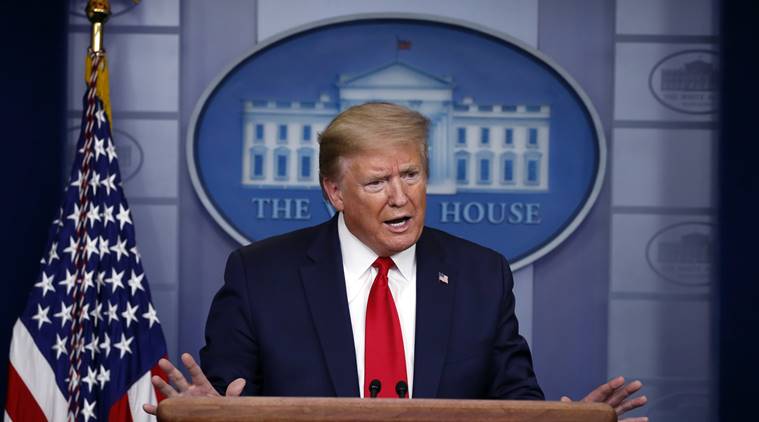
THE United States government shutdown began early Wednesday, October 1, after lawmakers and President Donald Trump were unable to reach a deal on the federal budget.

Trump threatened mass firings and to slash government departments, marking the first government shutdown of his current term since a similar halt during his previous administration and blaming Democrats for Congress’ failure to resolve a funding stand-off.

The stalemate revolved around democratic calls for increased healthcare funding, resulting in a suspension of financing for numerous government operations.

Both Republicans and Democrats have pointed fingers at each other for the deadlock, which is anticipated to impact hundreds of thousands of government employees and millions of Americans dependent on federal services.

In a statement issued late Wednesday, October 1, the Department of Energy (DOE) said it would revoke 321 financial awards tied to 223 projects. While it did not specify which projects were affected, the department noted the grants came from six of its offices overseeing clean energy, efficiency, grid deployment, advanced research, manufacturing, and fossil fuels.

The shutdown has halted operations across numerous federal departments and agencies, amid sharp partisan divisions in Washington, raising concerns about its duration and potential impact.

Many federal employees are now placed on temporary unpaid leave unless their work is classified as “essential”, and some “excepted” personnel may be required to continue working without pay until funding is restored.

Reports indicate that once the shutdown ends, furloughed employees typically receive retroactive pay under the Government Employee Fair Treatment Act of 2019.

However, this time, the new wrinkle is that the administration is proposing permanent lay-offs in addition to routine furloughs. 

Why the US Embassy in Nigeria is pausing social media updates

On Wednesday, The ICIR reported that the United States Embassy in Nigeria has announced that it will halt routine updates on its social media channels following the lapse in appropriations. 

It further stated that essential consular services such as passport issuance and visa processing will continue in the US, at embassies and consulates abroad, “as the situation permits.”

The Embassy also warned that service disruptions might emerge if the funding stoppage continues. 

This move is not unique to Nigeria, as US diplomatic missions globally are receiving the same constraints under the lapse in appropriations. 

The Embassy’s social media feeds are an important channel of public diplomacy, alerting US citizens abroad and local audiences about security, visa notices, and outreach. The pause means fewer updates, potentially lengthening reaction times or leaving gaps in information flow.

Furloughs and layoffs

The government announced on Wednesday that it has halted funding for several major New York transit projects, including the Hudson Tunnel and the Second Avenue Subway, as the Department of Transportation investigates whether small-business contractors involved are participating in improper diversity programs.

On Tuesday, the US Department of Transportation (USDOT) informed New York transit officials that the Second Avenue Subway extension and the Hudson Tunnel reconstruction must undergo a review to “ensure nondiscrimination.”

USDOT said it targeted the two New York projects located in a Democratic-run state in part because of their symbolism, noting that $18 billion in federal funding remains earmarked for them, though it is unclear how much of that involves Disadvantaged Business Enterprise programs currently under review.

The White House Budget Director, Russ Vought, said Wednesday that the Trump administration is also scrapping nearly $8 billion in climate-related funding affecting 16 states, including California and New York.

The DOE announced Wednesday that it intends to withdraw $7.56 billion in financing for hundreds of energy projects it says would not deliver adequate returns for taxpayers.

Labour unions have sued, arguing that threatened layoffs during a funding lapse exceed legal authority. 

Estimates suggest that roughly 750,000 federal employees could be furloughed under the current shutdown scenario. Some media reports put the number higher when including workers forced to work without pay. 

According to reports, the share of employees furloughed will be particularly high in some agencies like the Department of Health and Human Services, where 41 per cent of its workforce may be furloughed. 

Department of Transportation, with more than 11,000 employees, could be furloughed, and the Federal Communications Commission, which reported having suspended most operations and furloughed 81 per cent of staff. 

The longer Congress fails to pass funding bills, the more severe the impacts on federal employees and diplomatic missions will be.

What’s next?

Whether threatened layoffs beyond furloughs proceed, and how courts or unions respond, is a key legal and political question. 

However, the Senate will return on Friday to vote on bills to reopen the government.

“I keep telling them: When they have eight or 10 — preferably 10, or more — when they have a critical mass, let me know if there’s a conversation they want to have,” Senate Majority Leader John Thune said.

He maintained that he would not negotiate the details of an extension while the government remains shut down. However, when asked if he was willing to engage with Democrats on how health care talks could proceed after the shutdown or on advancing full-year spending bills, Thune responded, “We are.”

“Some of those conversations are happening,” he added. “With our members and their members, there’s a lot of back-and-forth going on right now about some of the things they would like to see happen.”

However, President Donald Trump’s administration on Wednesday did not make conciliatory gestures.

The pressure tactics came as the 15th government shutdown since 1981 suspended scientific research, financial oversight, environmental cleanup efforts and a wide range of other activities.


Here’s what to know about National Theatre renamed Wole Soyinka Centre

0

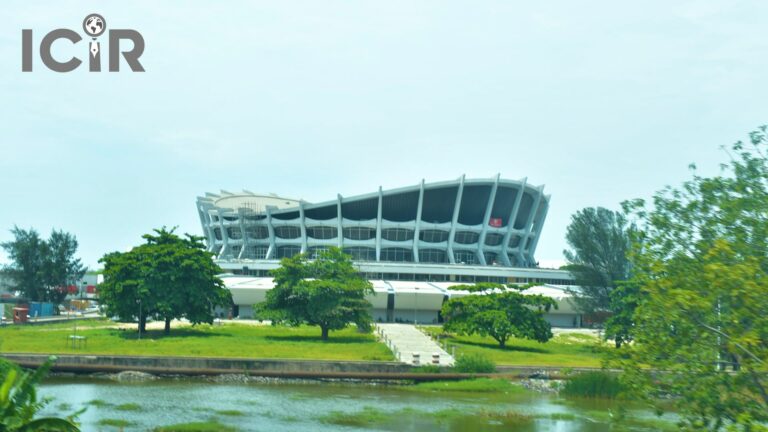
FOLLOWING the recommissioning of the newly designed National Theatre in Lagos on October 1, 2025, the iconic cultural landmark has officially been renamed the Wole Soyinka Centre for Culture and Creative Arts.

The unveiling, which coincided with Nigeria’s 65th Independence Day celebrations, marks the completion of about ₦68 billion renovation supported by the Bankers’ Committee, the Central Bank of Nigeria (CBN), the Lagos State Government, and the Ministry of Arts, Culture, and Creative Economy.

President Bola Tinubu, who first announced the renaming in July 2024, hailed Soyinka as a living repository of history, knowledge, and courage, recalling his decades-long role as a pro-democracy champion and outspoken critic of maladministration.

Wole Soyinka, a world-renowned playwright, novelist, poet, essayist, and Africa’s first Nobel Laureate in Literature (1986), has long been celebrated for his artistic brilliance and fearless activism.

Tinubu described Soyinka as “one of the finest minds of his generation,” a figure who embodies the highest ideals of human enlightenment while remaining resolute against injustice, oppression, and corruption.

“Today, I join the world to celebrate his profound influence on generations of writers, scholars, and activists who have been inspired by his work. I celebrate him for giving us the spark to fight and confront military dictators in our country.

“I am, accordingly, delighted to have the honour to announce the decision of the Federal Government to rename the National Theatre in Iganmu, Surulere, as the Wole Soyinka Centre for Culture and the Creative Arts,” the president said.

Here are key things to know about the centre:

Built in the 70s:

Originally completed in 1976, the theatre hosted the Second World Black and African Festival of Arts and Culture (FESTAC 77), one of Africa’s most historic cultural events.

It’s also the primary centre for the performing arts in Nigeria.

Landmark design

Although decades of neglect saw the theatre’s facilities deteriorate, its architecture, which was inspired by a military officer’s hat, remains one of Lagos’s most recognisable features. The monument is located in Iganmu, Surulere, Lagos.

The construction of the National Theatre began under the military administration of General Yakubu Gowon and was completed during the regime of General Olusegun Obasanjo. It also originally featured a 5,000-seat Main Hall with a collapsible stage and two cinema halls.

The multi-purpose National Theatre spans approximately 23,000 square metres and rises to a height of over 31 metres. Its architectural design was inspired by the Palace of Culture and Sports in Varna, Bulgaria.

Leadership and management 

Since its commissioning, the National Theatre has been overseen by various management teams. Between 1991 and 1999, it was headed by Jimmy Folorunso Atte, followed by Babafemi A. Osofisan (2000–2004), Ahmed Parker Yerima (2006–Aug 2009), Kabir Yusuf (2009–2016), among others.

The current General Manager, Akerele Tola, assumed office in 2024, according to reports.


Initial attempts at revival

One of the first major pushes to revive the National Theatre came in 2001, when then-President Olusegun Obasanjo announced plans to privatise the landmark. The proposal was met with fierce opposition from the arts community. The push to privatise the theatre resurfaced in 2007, sparking a wave of meetings, demonstrations, rallies, and protests against the proposed sale or concession of the facility.

The idea resurfaced years later under Minister of Culture Edem Duke. A committee was set up in September 2012 to look into the possibility of Public Private Partnership (PPP) in the management of the facility, but that later proved abortive.

Senate intervention to preserve the theatre

In December 2017, the Nigerian Senate reportedly called on the federal government to halt plans to sell or transfer ownership of the National Theatre in Iganmu and Tafawa Balewa Square in Lagos.

Lawmakers declared both facilities, alongside the President’s House at Marina, the Prime Minister’s Lodge in Onikan, and the National Assembly Complex in Lagos, as national monuments that must be preserved.

A Costly overhaul:

The recent facelift cost reportedly over ₦68 billion, with the Bankers’ Committee providing the bulk of funding. According to reports, the renovation exercise commenced in July 2021. The refurbished centre now includes state-of-the-art performance halls, cinemas, art galleries, solar-powered systems, fire safety installations, elevators, and advanced audiovisual technology.

Between Bauchi Gov’s big dream and citizens’ bigger concerns

ON Monday, September 30, the Bauchi State governor, Bala Mohammed, celebrated the completion of the International Conference Centre in the state while sharing photos of the newly completed space on X.

The governor said the completion of the International Conference Centre under his leadership showed Bauchi’s progress toward becoming modern and unstoppable.

“I dared to dream big for Bauchi, and I delivered. The International Conference Centre, built from start to finish under my leadership, is proof that the extraordinary is possible when vision meets courage. This is our Bauchi, fearless, modern, unstoppable,” Mohammed wrote on X.

However, the announcement attracted backlash from users in the comments section, many of whom questioned why the governor chose to focus on such a project instead of addressing high-priority issues.

@AminuMakama asked: “Have you tried to visit schools that are few meters away from this edifice and see the condition they are in, Sir?”

@tonario commented: “This is good but a focus on human capital development and industrialisation is better.”

Similarly, @udombiokoro questioned: “What’s it with international conference centers every governor wants to build?”

It is pertinent to note that Enugu State completed its own conference centre in December last year, Governor Ahmadu Fintiri recently held a groundbreaking event for a similar project in Adamawa State, and just a few days ago, President Bola Tinubu commissioned a new conference centre in Imo State.

As netizens argued that the project is not the priority of the Bauchi State government, the debate now turns to a pressing question: what should truly be the priority for Bauchi State?

According to the 2022 National Personnel Audit (NPA) Report, the education sector in Nigeria faces significant infrastructure and resource gaps. The pupil–teacher ratio stands at 54:1 in primary schools and 20:1 at the junior secondary (JSS) level. Sanitation facilities are grossly inadequate, with 868 pupils sharing a toilet in primary schools and 367 per toilet in JSS.

Furniture shortages are also evident, as one seat is shared by 11 pupils in primary schools and five in JSS. Only 40 per cent of public primary classrooms and 53 per cent of JSS classrooms are considered to be in good condition. 

Out of 3,055 public primary schools, just 194 have toilets, while only 425 of 751 public JSS schools are equipped with them. Furthermore, access to learning facilities remains limited, with only three per cent of public JSS schools having laboratories and four per cent possessing libraries.

Similarly, the 2022 Nigerian Multi-Dimensional Poverty Index (NMPI) highlights the scale of exclusion, revealing that 55.7 per cent of school-age children (6–15 years) in Bauchi State, equivalent to about 1.37 million children, are out of school.

Beyond education, broader socio-economic indicators also paint a troubling picture. The 2023 Nigeria Labour Force Survey (NLFS) Annual Report places Bauchi State’s unemployment rate at 4.2 per cent, pointing to limited job opportunities and persistent underemployment.

Poverty remains widespread, with 5.71 million people classified as poor according to the 2022 NMPI.

Maternal health outcomes are particularly alarming. Bauchi records a maternal mortality rate of 1,732 per 100,000 live births, meaning that for every 100,000 live births, 1,732 mothers lose their lives. This figure is among the highest in the country and significantly above national and global averages.

The ICIR reported that Yankari Game Reserve in Bauchi State, once renowned for its warm springs, elephant herds, and rich biodiversity, has suffered years of neglect and poor management. Visitors now lament deteriorating facilities, unreliable electricity, and inadequate maintenance, while weak promotion has further diminished its appeal. The reserve has also become a haven for terrorists, poachers, and intruders.

While the International Conference Centre may symbolise ambition and modernity, the statistics on poverty, education, unemployment, and maternal mortality highlight urgent needs that demand greater attention.

For many residents, the real measure of progress will not be in grand structures, but in whether governance translates into improved living conditions, better schools, access to healthcare, and opportunities that lift people out of poverty.


Philippine’s earthquake death toll rises to 72, with 20,000 displaced

THE Philippines’ government said the death toll from Tuesday’s 6.9-magnitude quake in the central Philippines has climbed to 72, as search efforts for the missing slowed and rescuers shifted their attention to 294 injured and the 20,000 displaced.

National Disaster Risk Reduction and Management Council spokesman Junie Castillo disclosed this on Thursday, October 2.

Castillo said that the bodies of the three victims were pulled from the rubble of a collapsed hotel overnight Wednesday in the city of Bogo.

“We have zero missing, so the assumption is all are accounted for,” Castillo said, adding that some rescue units in Cebu province have been told to “demobilise”.

He explained that 294 people were injured, about 20,000 displaced, and nearly 600 houses destroyed across northern Cebu, with many residents forced to sleep on the streets as hundreds of aftershocks continue to rattle the area.

“One of the challenges is the aftershocks. It means residents are reluctant to return to their homes, even those houses that were not (structurally) compromised,” Castillo said.

On Thursday, Cebu provincial governor Pamela Baricuatro called for urgent assistance, stressing that thousands of people needed clean drinking water, food, clothing, temporary shelter, and volunteers to help organise and distribute relief supplies.

According to the regional civil defence office, over 110,000 people across 42 quake-affected communities will require aid to rebuild their homes and recover their livelihoods.

Large parts of the area are still without power, while dozens of patients have been forced to take shelter in tents outside the quake-damaged Cebu provincial hospital in Bogo.

President Ferdinand Marcos, accompanied by senior aides, travelled to Cebu on Thursday to assess the damage.

He also toured a partly damaged housing project in Bogo that had been built for survivors of Super Typhoon Haiyan in 2013, one of the Philippines’ deadliest natural disasters.

The Philippines experiences earthquakes almost daily, as it lies along the Pacific “Ring of Fire,” a zone of frequent seismic activity that extends from Japan through Southeast Asia and across the Pacific basin.

While most tremors are too minor to be felt, powerful and destructive quakes occur unpredictably, with no existing technology able to forecast their timing or location.

Marking non-violence day: Nigeria’s ongoing quest for peace

0

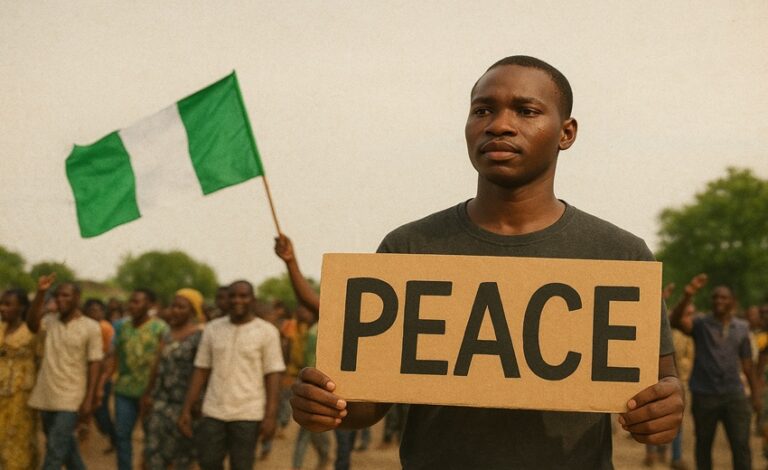
AS the world marks the International Day of Non-Violence on October 2, Nigeria finds itself at a crossroads as violence continues to plague the West African nation.

The International Day of Non-Violence was set aside by the United Nations in 2007 to honour former Indian leader, Mahatma Gandhi’s birthday. However, it is not just about remembering the Indian leader’s ideas, but also about confronting the modern challenges of violence and intolerance that threaten societies across the globe.

In Nigeria, the day resonates with Nigeria’s numerous conflict problems. From insurgency in the North-East to farmer-herder conflicts in the north central, separatist agitations in the South-East, banditry in the North-West, and rising political thuggery and kidnappings in the southwest, violence continues to define much of the country’s public life.

A country under siege

Various reports by The ICIR on insecurity highlight how violent conflicts have displaced millions and eroded public trust in state institutions. Communities in Benue, Plateau, Zamfara, and Borno live in daily fear of attacks, while schools across the North have been shut down due to recurring abductions.

Experts argue that this crisis is not just about the failure of security forces but also about the absence of a culture of tolerance and peaceful conflict resolution.

The ICIR report in 2024 states that, despite promises of security and peace, about 703 persons were abducted in 8 days under Bola Tinubu.

Also commenting on violence in Nigeria, Amnesty International (AI) said more than 400 displaced people in Borno state were abducted.

The organisation said on March 3, 2024, suspected Boko Haram fighters abducted at least 400 Internally Displaced Persons (IDP) – most of them women and children – from Babban Sansani, Zulum, and Arabic IDP camps in Gamboru Ngala, Borno State. 

Also on Thursday, March 7, a school teacher, Sani Abdullahi, said at least 287 students and a principal, Abubakar Isah, were abducted when bandits invaded the Local Education Authority (LEA) Primary and Junior Secondary School, Kuriga, in the Chikun Local Government Area of Kaduna State.

Peace message in Nigeria’s context

Gandhi’s philosophy of non-violence was not simply about refusing to fight. It was about challenging injustice through peaceful means like dialogue, protest, and civic resistance without dehumanising opponents.

Nigeria has examples that mirror this philosophy. In recent times, movements like Bring Back Our Girls drew strength from peaceful advocacy. Even the #EndSARS protest organised by youths in 2021 and the #EndBadGovernance protest of 2024 were initially peaceful before they were marred by state clampdowns and violence.

Why non-violence matters

Nigeria’s current trajectory makes non-violent lessons more urgent. According to the Institute for Economics and Peace, Nigeria remains one of the world’s most impacted countries by terrorism and communal violence. Beyond the loss of lives, the economic toll of insecurity is staggering, with agriculture, trade, and investment all affected.

For a security analyst, Emeka Okoro, promoting a non-violent approach in Nigeria is not optional but a practical necessity. He added that peaceful negotiation in farmer-herder disputes, effective mediation in ethnic conflicts, and a justice system that protects rights could reduce bloodshed.

Youths of Nigeria and peace

With over 60 per cent of Nigeria’s population under 25, young people are at the centre of both violence and peace building. Many have been recruited into violent gangs or extremist groups, while others have spearheaded peaceful campaigns on governance and human rights.

 A call for leadership

For Nigeria, commemorating the International Day of Non-Violence cannot be reduced to a symbolic gesture. It demands action from leaders, institutions, and citizens. Political rhetoric that incites division, excessive use of force by security agencies, and judicial impunity all fuel violence and must be curtailed.

Gandhi once said,There is no path to peace. Peace is the path.For Nigeria, this means choosing dialogue over war, fairness over oppression, justice over repression and tolerance over hatred across ethnic and religious lines.

The road ahead

There have been reported cases of how grassroots peace initiatives, such as community dialogues in Plateau and Kaduna, have reduced tensions where state security failed.

These efforts suggest that non-violence is not utopian but achievable when communities take ownership of peace.

Expert view

Commenting on the spate of violence in the country, a security expert, Oladele Fajana, told The ICIR in 2024 that he is disappointed in the approach of the government and security agencies towards peace and security.

Fajana said it is regrettable that government and security agencies still allow “unfortunate incidents like this (abductions) to keep happening again and again.”

“Our security forces are reactionary. We don’t have to wait until our schools are attacked before we react,” he stated.

On the way forward, Fajana said the security forces should continue to anticipate attacks and increase peace dialogues.

The managing director of Beacon Consulting Limited, Kabir Adamu, in a chat with The ICIR, said the government should focus on implementing its Renewed Hope Agenda.

He added that the government must ensure that national security formations are more effective and efficient and avoid using ad-hoc means to address security challenges.

In his opinion, the publicity director of Arewa Youths for Peace and Security, Dantata Mohammed, urged Tinubu to review the country’s security architecture by putting the right persons at the helm of affairs. 

He also called for adequate incentives for all the security agencies.

As Nigerians reflect on the International Day of Non-Violence, the challenge is clear: the culture of violence that has normalised killings, kidnappings, and hate speech must give way to a culture of peace and tolerance.

NEMA confirms 14 dead, 42 missing in Kogi boat mishap

0

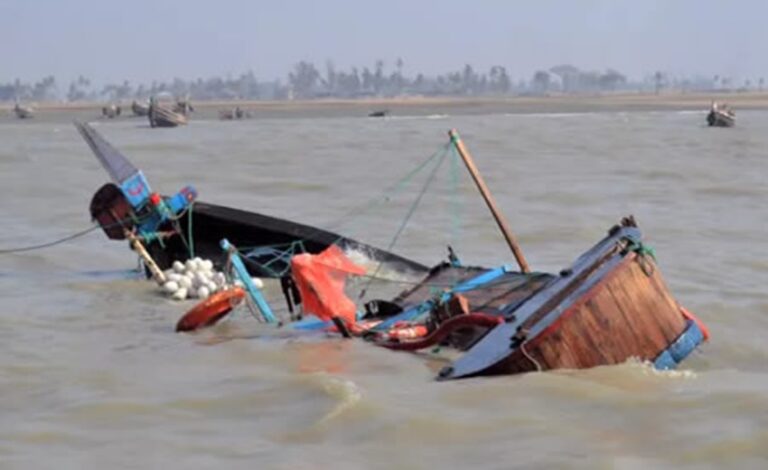
NATIONAL Emergency Management Agency (NEMA) has confirmed that at least 14 people have died while 42 others remain missing following a boat mishap on the River Niger in Ibaji Local Government Area of Kogi State.

According to the agency, the accident occurred at about 5:40 p.m. on Tuesday, September 30, when a boat carrying about 80 passengers capsized while travelling from Onugwa community to Olushi village.

In a statement posted on its X handle on Thursday, October 2, NEMA disclosed that 24 passengers have been rescued alive, while efforts are ongoing to find those still unaccounted for. 

“Search and Rescue (SAR) operations commenced swiftly, leading to the rescue of 24 passengers alive. Sadly, 14 corpses have so far been recovered, while 42 persons remain missing as efforts to locate and recover them continue.

“Community divers have been playing a critical role in the rescue operation, complementing the work of official response agencies.  The operation remains ongoing, and periodic updates will be provided as more information becomes available,” the statement added.

The agency emphasised the urgent need for strict adherence to water safety rules, including the use of life jackets and the avoidance of overcrowding on boats.

The ICIR earlier reported that President Bola Tinubu, on Wednesday, commiserated with the government and people of Kogi, who had earlier said that at least 26 people died in the incident.

However, NEMA’s confirmation indicates that the actual casualty figure stands at 14, with 42 others still unaccounted for.

The state commissioner for information, Kingsley Fanwo, stated in a press release that Governor Ahmed Usman Ododo had directed the State Emergency Management Agency to provide immediate relief to the victims’ families.

“This is a heartbreaking loss. Our thoughts and prayers are with the bereaved families and the entire Ibaji community in this moment of grief.”

The latest incident highlights the persistent challenge of unsafe water transportation in Nigeria. An ICIR report in September documented how at least 29 people died in a boat accident in Niger State when an overloaded vessel carrying over 90 passengers struck a tree stump on the River Niger.

Similar accidents were recorded in Sokoto linked to overloading, poor maintenance, and lack of safety gear.

In December 2024, no fewer than 54 bodies were recovered after a boat carrying about 200 traders capsized in Kogi, underscoring the recurrent nature of such disasters on the nation’s waterways.

The National Inland Waterways Authority (NIWA) and emergency agencies have repeatedly warned against overcrowding and neglect of safety protocols. Yet, ICIR found that many communities along Nigeria’s riverine belts remain dependent on rickety wooden canoes without proper regulation, leaving passengers vulnerable.

How Arise TV anchor Somtochukwu died during Abuja robbery-FCT Police boss

0

THE Federal Capital Territory (FCT) Police Command has confirmed that Arise Television anchor, Somtochukwu Christelle Maduagwu, died after jumping from the third floor of her apartment in Katampe while attempting to escape an armed robbery attack in the early hours of Monday, September 29.

FCT Commissioner of Police, Ajao Saka Adewale, disclosed on Wednesday, October 1, that officers responding to distress calls found the 29-year-old journalist unconscious on the ground floor of her residence, a three-storey twin block of 18 flats near the Gishiri axis of Katampe.

“She was immediately taken to Maitama General Hospital, where doctors tried to resuscitate her using CPR, but sadly, she could not make it,” Adewale said.

According to the police, armed men invaded the compound at about 3 a.m., shooting one of the private security guards on duty. In the panic that followed, Maduagwu, who lived on the top floor, leapt from her balcony in an attempt to flee the attackers.

“The consequences were tragic and very unfortunate,” the Police Commissioner said, adding that a team led by the Deputy Commissioner of Police (Investigation) had been set up to track down the assailants.

The FCT Minister, Nyesom Wike, also expressed grief over her death, describing it as “tragic and painful.” He assured that the Federal Capital Territory Administration would work with security agencies to ensure a thorough investigation.

“She was cut down in her prime. The police will unravel the circumstances surrounding her death and bring those responsible to justice,” Wike said in a statement signed by his aide, Lere Olayinka.

The FCT Health Mandate Secretary, Dolapo Fasawe, confirmed that Maduagwu was brought to the Maitama General Hospital dead at about 4:30 a.m. on Monday.

Arise News, in a statement, described her as “a vibrant voice that engaged and connected with our viewers,” noting that her passion and professionalism left a lasting impact on colleagues and audiences alike.

The killing of Maduagwu has reignited concerns about violent crimes in Abuja. Recent ICIR investigations highlighted persistent cases of armed robbery, kidnappings, cult clashes, and “one-chance” attacks on commuters despite official claims of improved security.

Residents of Katampe and neighbouring Mpape have repeatedly complained of night-time robberies and violent street attacks. In April, armed men stormed a hotel in Mpape and robbed a driver attached to the Zamfara State governor’s convoy before being arrested.

The capital city has also recorded several high-profile one-chance killings, including those of Freda Arnong in July 2025 and Greatness Olorunfemi in 2023, both victims of gangs posing as taxi drivers.

Barely three months ago, the murder of caregiver Chinyere Anaene and a toddler in Dawaki shocked Abuja residents and underscored the growing safety concerns in its suburbs.

Although the FCT Administration has cited reports suggesting a decline in crime rates, analysts told The ICIR that frequent violent incidents continue to cast doubt on the government’s assurances.

Meanwhile, the police have assured that “no stone will be left unturned” in bringing those behind the Katampe robbery and Maduagwu’s death to justice.

Fubara sacks commissioners, vows renewed service to Rivers

0

RIVERS State Governor, Siminalayi Fubara, has disengaged members of his cabinet affected by the recent Supreme Court judgment, ending the tenure of commissioners and public officers whose appointments were nullified by the court.

The announcement was made on Wednesday October 1, during a valedictory session with the outgoing cabinet at Government House, Port Harcourt, as part of activities to mark Nigeria’s 65th Independence Anniversary.

In a statement issued by his Chief Press Secretary, Nelson Chukwudi, the governor expressed gratitude to the affected officials for their service to the state over the past two years. “Your commitment and contributions have advanced the cause of development in Rivers State. I remain thankful for your sacrifices and dedication,” Fubara said.

The governor, who only recently returned to office following a six-month suspension under a federal state of emergency, urged Rivers residents to remain united and work with President Bola Tinubu “to build a peaceful, secure, and prosperous nation.”

The sack of the commissioners followed a Supreme Court verdict that nullified the appointments of several commissioners and public officers, effectively bringing their tenure to an end. Fubara said the decision to relieve them was in line with the judicial pronouncement.

The affected officials were part of the administration before March 2025, when President Tinubu declared a state of emergency in the oil-rich state, suspending Fubara, his deputy Ngozi Odu, and the state legislature.

The president cited insecurity and governance breakdown amid a prolonged rift between Fubara and lawmakers loyal to his predecessor, Nyesom Wike.

As The ICIR earlier reported, Tinubu’s intervention was controversial, defended under Section 305 of the Constitution but widely criticised by the Nigerian Bar Association (NBA) and civil society groups as an abuse of power.

During the six-month emergency rule, sole administrator Ibok-Ette Ekwe Ibas, a retired vice admiral, managed the state, supervised local government elections swept by Wike’s allies, and introduced new policies, including civil service verification.

On September 17, Tinubu announced the end of emergency rule, citing “a new spirit of understanding” among political actors in the state. By midnight of September 18, Fubara, Odu, and members of the state House of Assembly were reinstated.

Since his return, Fubara has sought to consolidate his administration while navigating a political terrain still influenced by Wike’s network of allies. His latest move to dissolve the cabinet marks one of his first major steps in reorganising the state’s executive arm.

Addressing Rivers people during the valedictory session, Fubara emphasised his renewed commitment to deliver on governance. “I assure you that we will continue to serve this state with vigour and sincerity. Together, we shall build the Rivers of our dreams,” he said.

The governor also used the Independence Day celebration to call for national unity.

“Nigeria’s 65th anniversary reminds us of our collective responsibility to keep faith with the ideals of peace, security, and prosperity. I urge everyone to support President Tinubu’s efforts to achieve this vision,” he added.

Observers say the disengagement of commissioners marks the beginning of a new phase in Rivers’ politics.