Home Blog Page 1960

ENDSARS: FG ignores call to reconstitute Governing Council for NHRC, sets up investigative panel

THE National Human Rights Commission (NHRC) has set up an investigative panel into police brutality in Nigeria.

This is despite calls by Nigerians to the Federal Government to constitute a Governing Council for the Commission.

Tony Ojukwu, the Executive Secretary of the Commission made this known in Abuja through a statement issued on Friday.

The Committee is headed by Suleiman Galadima, a retired Justice of the Supreme  Court.

Ojukwu said the Committee would hear petitions, complaints, and memoranda from Nigerians across the 36 states of the federation and the FCT, and thereafter make recommendations to the Federal Government on how best to reform the disbanded SARS and other units of the Police.

He added that the responsibility of the panel shall include investigating all complaints of human rights violations against SARS and other units of the Police force, making appropriate recommendations as per the damages and compensations to be paid to the victims of Police brutality.

Ojukwu stated that all petitions, complaints, and memoranda must reach the Commission, which is the Secretariat of the Panel on or before October 31, 2020.

However, Folarin Falana, a Nigerian musician also known as Falz had in an open letter called on President Muhammadu Buhari to reconstitute the Governing Council of the Commission.

According to Falz, the Executive Secretary of the Commission should not exist without the constitution of a Governing Council.

The Nigerian Musician stated that the NHRC has been functioning without a governing council since 2015.

Falz said in line with Section 7(3) of the National Human Rights Commission Act, the Executive Secretary of the Commission does not have the power to act without a Governing Council.

He also stated that due to the provision of the Act that vests the power to investigate cases of human rights abuses on the NHRC, the Commission needs not to constitute another Committee to investigate misconduct by operatives of the defunct SARS.

World Food Day: Groups warn on dangers of trans fats consumption in Nigeria

0

THE Network for Health Equity and Development (NHED) and Corporate Accountability and Public Participation Africa (CAPPA) on Friday charged the Federal Government to prioritise safe and nutritious food for vulnerable Nigerians who are hit by the coronavirus pandemic.

“Beyond coronary heart diseases, trans fats have been linked to increases in the risk of diabetes, obesity, cancers, dementia and death,” said Jerome Mafeni, Project Adviser for Trans Fatty Acids Elimination of NHED.

Mafemi spoke at a press briefing held in Abuja to mark World Food Day 2020, with the theme titled “Grow, Nourish, Sustain. Together”.

He explained that Nigerians should be concerned about the growing incidences of coronary heart diseases and other ailments to ensure food makers restrict and replace trans fats.

According to him, the role of dietary fats and oils in human nutrition is one of the most complex and controversial areas of investigations in nutrition science.

He noted that global health bodies recognise the growing epidemic of chronic diseases in developing countries related to dietary changes.

Estimates by the World Health Organization (WHO) show that over 250, 000 persons die yearly resulting from complications associated with the consumption of foods high in trans fats.

Transfats, also known as trans-fatty acids, naturally occur in small, safe quantities in some meat and dairy products.

It is also industrially produced by partially hydrogenating vegetable oils, and it is these artificial trans fats that are added to our cooking oils as well as packaged, processed and baked goods in much larger, unsafe quantities.

Akinbode Oluwafemi, Executive Director of CAPPA who was represented at the event by Philip Jakpor, CAPPA’s Director of Programmes, said Nigeria should borrow a leaf from the WHO agenda to persuade governments to eliminate trans-fat from its food supplies.

Oluwafemi Explained that across the world, critical attention is being paid to what people eat and that the public health of a nation largely depends on what its citizens consume.

According to him, Nigeria, with a huge and vulnerable population must not take the back seat in the global war against trans fats, which he insisted, is now a bomb waiting to explode.

He emphasised the need for increased awareness on the dangers of consuming foods high in trans fats and urged the Nigerian government to compel the oils and fats and the fast-food industry to comply with global best practice in relation to trans fats in the processing of their products.

NHED and CAPPA urged the Governing Council of the National Agency for Food and Drug Administration and Control (NAFDAC) to speedily approve the guidelines and regulations on the use of fats and oils, as well as pre-packaged foods, water, and ice labelling which has strong provisions on trans fats.

UNFPA commissions expanded fistula care centre in Sokoto 

0

THE United Nations Population Fund (UNFPA), has commissioned the rehabilitated Goronyo General Hospital operating theatre and patient ward in Sokoto.

A similar project was also inaugurated in March 2020 at the Maryam Abacha Women and Children Hospital in Sokoto metropolis along with the provision of essential medical equipment and kits as well as the training of healthcare workers on the management of obstetric fistula.

The project which is part of UNFPA’s commitment to implement a three-year project on “Addressing Gaps in Gender-Based Violence and Harmful Traditional Practices in Nigeria”, is receiving its funding from Global Affairs Canada.

The goals of the project are to reduce the prevalence of Gender-Based Violence (GBV) such as early child, forced marriage, obstetric fistula, and female genital mutilation.

It will also create an enabling environment and provide treatment and care for affected women and girls in Bauchi, Oyo, and Sokoto states.

Through this project, UNFPA supports the fistula program in Sokoto State with the aim of restoring the dignity of women and girls living with obstetric fistula and preventing fistula.

Sokoto State has one of the worst reproductive health indices in Nigeria with an estimated maternal mortality of more than 2000/100,000 live births.

More than two-thirds (71 per cent) of pregnant women in the state never attended antenatal care; 91 per cent of the women delivered at home and less than 10 per cent had skilled birth attendance, exposing them to the risk of maternal death as well as complications including fistula.

Oluwayi Adelugba, the UNFPA representative at the commissioning ceremony, appreciated the contribution of Sokoto State Government and for the continued collaboration towards ending preventable maternal deaths, ending the unmet need for family planning, and ending gender-based violence and all harmful practices, including child marriage and female genital mutilation.

She reiterated UNFPA’s commitment to ensuring that every pregnancy is wanted, every childbirth is safe, and every young person’s potential is fulfilled.

While thanking Global Affairs Canada for providing funding support for the project, she said UNFPA is committed to the Federal Government of Nigeria’s vision of becoming a country free of Obstetric Fistula by 2030.

CBN denies reports its website was hacked

0

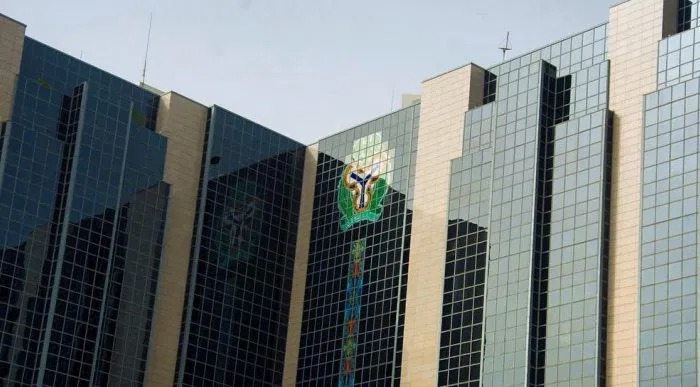
THE Central Bank of Nigeria (CBN), has denied its website was breached Friday evening.

There were media reports  Friday evening that the website of the apex bank has been hacked in solidarity with the ongoing #EndSARS protesters in Nigeria by a popular international cyber hacking group known as Anonymous.

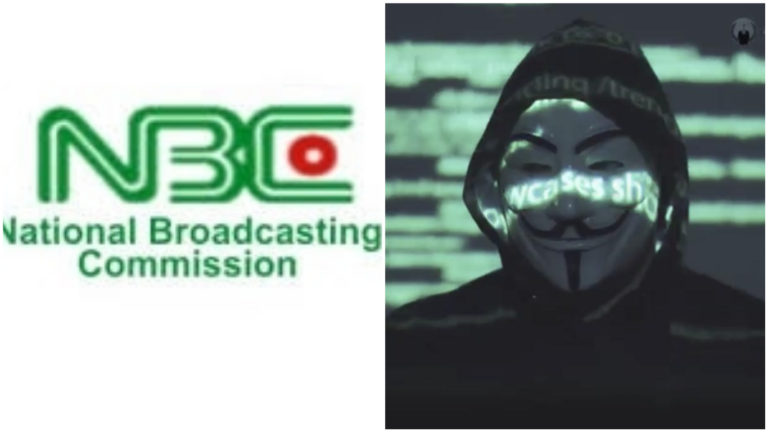
The group, which is identified as a decentralised international hacktivists is known for its various cyber attacks against several governments, institutions, agencies and corporations, claimed it has hacked several Twitter accounts owned by Nigerian government agencies including the National Broadcasting Commission (NBC).

NBC also confirmed the development in a disclaimer in the early hours of Friday morning.

But, Osita Nwanisobi, an Assistant Director at the CBN in a statement on Friday evening, said the website was secure.

He urged Nigerians and all its stakeholders to disregard the news, adding that the bank’s website was adequately protected.

“Contrary to claims in the social media alleging that the website of the Central Bank of Nigeria (CBN) (www.cbn.gov.ng) has been breached by malicious persons, we wish to state categorically that our website is secure,” he said.

“We wish to assure the Nigerian public and indeed all our other stakeholders that the CBN website is adequately protected and that there is no cause for alarm.”

The bank advised members of the online community to desist from peddling false news aimed at undermining the integrity of the Central Bank of Nigeria, saying it is “our collective asset.”

The ICIR reported on Thursday, how the official website of the Nigeria Police Force has been infiltrated after the group hacked into its database on Thursday.

Since it started, the #ENDSARS protest which has lasted almost a week has gained international recognition.

Jack Dorsey, founder, and CEO of Twitter tweeted on Wednesday in support of the #EndSARS movement and also shared a link soliciting financial donations for the protest

Meanwhile, Mohammed Adamu, the Inspector General of Police (IGP) had on Sunday, in response to the continuous protest to end police excesses and brutality in the country had announced the disbandment of the dreaded police unit.

Also, President Muhammadu Buhari had  issued a directive, calling for a reform of the Police Force.

However, the protests have continued, with the protesters demanding immediate actions from the government and issuing a five-point demand which includes the release of all persons arrested and justice for victims of police brutality.

Other demands are “setting up an independent body to oversee the investigation and prosecution of all reports of police misconduct (within 10 days), psychological evaluation of all disbanded SARS officers before they can be redeployed, and increase in police salary so that they can be adequately compensated for protecting lives and property of citizens.”

FACT-CHECK: Pictures of 2017 violence in Ibadan used to depict clash between SARS officers and protesters in Enugu

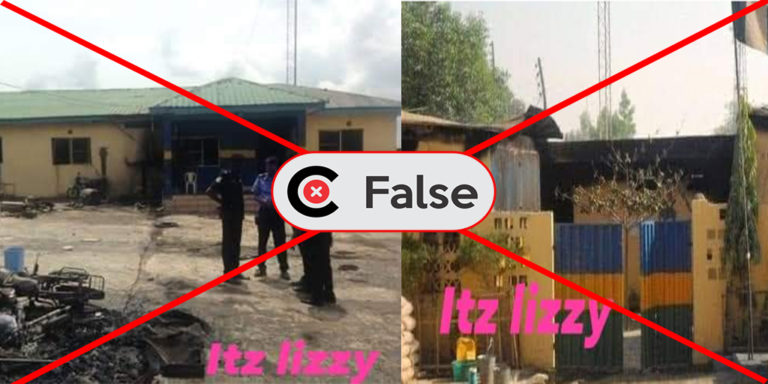
ON October 6, a Twitter user @OurPortHarcourt posted pictures of a fire-ravaged police station, claiming that the station was attacked by gunmen in Enugu.

She also wrote that the coordinated attack led to the death of six operatives of the (now disbanded) Federal Special Anti-Robbery Squad (FSARS) while many were injured. It also stated that, apart from setting the station on fire, prisoners were also freed.

As of 11:40 a.m. of October 15, the post attributed to Icons News has gathered 1,562 retweets and 2,715 likes. 

The author tweeted: “BREAKING NEWS: Gunmen Clash With SARS Officers At Their Police Station In Enugu State, 6 SARS Operatives Killed, Many Injured, Prisoners Set Free And Their Station Set Ablaze. More Details Coming Soon…

📸▪: Icons News”


How true are the pictures?

Findings

 The ICIR checked the picture via Google Reverse Image Search to see if there were similar images on the internet. Note that the four pictures were taken in the same environment.

Google reverse image, which provided results in 0.87 seconds shows that the images first surfaced online two years ago when a face-off ensued between men of the Oyo State Police command and butchers in Ibadan.

The incident, which happened at the abattoir section of the Bodija international market in the state capital, occurred as butchers in the market refused to relocate to a new market in Amosun village, Akinyele local government area of the state.

The clash led to the death of four people who were gunned down by the police for allegedly trying to burn the police station attached to the market.

While reacting to the killings, the irate butchers burnt vehicles parked within the station premises while also destroying other valuables.

In a bid to ensure proper sanitary and healthy practices among butchers in Ibadan, the state government had asked butchers in the state capital to relocate to a centralised abattoir at Amosun Village. This was on account of the unsanitary circumstances of major abattoirs in Bodija, Aleshinloye, Gege which led the State government to unlicensed all slabs in Ibadan for two years.

The Special Anti-Robbery Squad (SARS) was one of the 14 units under the Force Criminal Investigation and Intelligence Department of the Nigerian Police Force before it was disbanded following protests by Nigerians over the unit’s notoriety and gross violation of human rights.

The unit was established to detain, investigate prosecute people involved in crimes like armed robbery, kidnapping and other crimes

Over the years, SARS has been accused of gross human rights violations while discharging its duties, leading to a call for its disbandment. 

Verdict: FALSE

Checks by The ICIR have shown that the photograph is not related to the #ENDSARS protest because it was taken two years during the face-off between Ibadan butchers and the police.

The report was produced during the 2020 Dubawa Fellowship attended by the reporter. 

#EndSARS: Suspected leaked DSS document calls for intensified security in Ogun State

A SUSPECTED leaked letter from the Department of State Services (DSS) to the Ogun State Commissioner of Police has instructed that security in the state be intensified, in view of perceived threat in border communities.

Signed by D.D Tuksa, State Director of Security, the letter issued on October 15, stated that some youths in border communities were being mobilised by smugglers to stage protests against closure of the country’s land borders, instructing that security personnel be vigilant.

“Already, youths in border communities, particularly those in Idiroko in Ipokia LGA, Owode-Yewa and Oja-Odan in Yewa South LGA, Ilara in Imeko-Afon LGA and Ijoun in Yewa South LGA are being mobilised by smugglers and their foreign collaborators to stage protests simultaneously anytime soon against the continued closure of the nation’s land borders and activities of security agencies, particularly the Nigeria Customs Services (NCS) at the border points,” the letter read in part.

Tuksa in the letter further noted that residents were being mobilised by agents of opposition to protest against condition of bad roads across the state, adding that the protests are likely to hold in the areas of Abeokuta, Ifo, Ota, Sagamu and major towns in Ijebu axis.

He advised that patrol across the state be intensified and officers remain cautious.

“In view of the palpable threat and its negative impact on national security, it is imperative that patrol of key and vulnerable points (KVPs) and flashpoints/blackspots across the state be intensified among other security measures, while security operatives at border points be extra cautious and vigilant against possible attacks by aggrieved youths from the border areas,” Tuksa noted in the letter.

This is coming on the heels of a nationwide protest by the Nigerian youths who are demanding an end to police brutality and by extension, better governance in the nation.

Already, Feminist Coalition, a pro #EndSARS women group has raised over N62 million through donations by Nigerian youths to support the on-going #EndSARS protests.

Beyond financial donations, the movement has also gained the attention of the international community with founder of Twitter, Jack Dorsey tweeting in support and urging for BitCoin donations for the cause.

In an attempt to meet part of the people’s demands, Mohammed Adamu, the Inspector General of Police (IGP) on Sunday, October 11 announced the dissolution of the Special Anti-Robbery Squad (SARS) unit of the Nigeria Police Force.

However, governors of the northern part of the country under the umbrella of Northern Governors Forum have expressed their decision to reject the disbandment of SARS.

“SARS is not made up of bad elements alone as it also includes personnel who are doing their work diligently,” said Simon Lalong, Governor of Plateau State, who also serves as their chairman.

Obaseki directs police to provide security for ENDSARS protesters in Edo

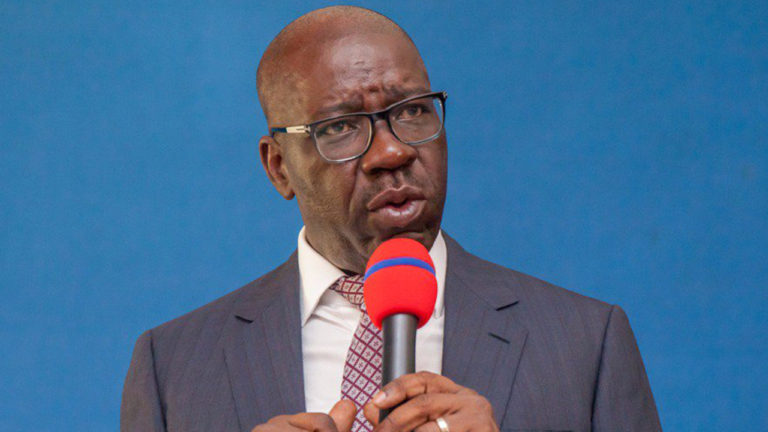
GODWIN Obaseki, the Governor of Edo State has directed the State Police Command to provide security for the #ENDSARS protesters in the state.

Obaseki said this in a series of tweets on Friday while condemning attacks on the protesters by hoodlums during the protest in  Benin City, the state capital.

“I have just learnt that hoodlums are attacking #EndSARS protesters, who have conducted themselves peacefully in Benin City. I extend condolences to the victims of the attack, including those who lost their lives and others who were injured by the thugs,” said Obaseki.

Speaking further against the attack on the protesters, Obaseki said ‘it is disheartening that anyone would attack a peaceful assembly of young people, who are expressing genuine concerns to #EndSARS, police brutality and intimidation in their own country’.

He stressed that the State Police Command must ensure that the protesters were not harassed during their protest in the state.

“I hereby call on the Police Command in the state to get out on the streets and provide adequate security for the #EndSARS protesters and ensure that no one is harassed in the course of exercising their rights in Edo State,” Obaseki noted.

Many Nigerian youths across the nation have taken to the street for more than eight days in continuous demand for police reforms.

From #ENDSARS, #ENDSWAT to #STOPPOLICEBRUTALITY, many hashtags have continued to spread across the Twitter while physical protests are taken to state government secretariats by the protesters as well as the National Assembly complex.

Adamu Mohammed, the Inspector General of Police had on Sunday in response to the youths agitation for police reforms announced the disbandment of the Special Anti-Robbery Squad (SARS).


REPORT: ASUU strike and deafness of the Nigerian Govt

0

ON 23rd of March 2020, Biodun Ogunyemi, the national president of  Academic Staff of Universities Union (ASUU) rose from a press conference in Abuja and declared an indefinite strike after the expiration of its two-weeks warning strike.  

His declaration coincides with the directive of the National Universities Commission (NUC) which ordered universities across the country to close for a month beginning from March 23, 2020

After a six-month closure of the schools in Nigeria due to the coronavirus pandemic (COVID-19), the Federal Government ordered the reopening of all schools in the country. The minister of education, Adamu Adamu, also disclosed that all Unity Schools should open by October 12 “while states and private schools will determine their own modalities of reopening”

Despite the school resumption order, ASUU however is yet to sheathed the sword, six months after.

Almost every year since 1999, university lecturers have been demanding, through a singular channel of industrial strike action, significant funding of Nigerian education amongst other demands.

The strike always starts with a warning strike which will later extend to either weeks or months after the government would have turned deaf ears to the union or they are unable to reach a common ground. 

Though strike action has always produce marginal outcomes, the students have always been on the receiving end, especially those in Federal and state-owned universities who regularly spend longer academic years before graduation.

What is ASUU’s demand?

In 2009 and 2013, the federal government signed a memorandum of understanding with the union to improve the state of education in the country.

The 2013 MoU stipulated that public varsities would need the sum of N1.3 trillion for a modest revitalisation.

The fund was to be paid in tranches of N20 billion in 2013 and N220 billion between 2014 and 2018. 

Some of the demands being made by ASUU are funding for revitalisation of public universities, the release of the forensic audit report on earned academic allowances (EAA), payments of all arrears of shortfall in salaries to all universities that have met the verification requirements of the presidential initiative on continuum audit (PICA), the release of university pension fund operational.

Towards the fall of 2019,  President Muhammadu Buhari ordered all federal workers to enlist on the Integrated Personnel and Payroll Information System (IPPIS) for the purpose of receiving salaries effective October 31, 2019, as a way of checking the incidence of ghost workers in the government payroll.

But ASUU opposed the decision. The union  protested the compulsory enrolment of federal universities on the IPPIS for the payment of salaries of all federal government workers for the reason that will undermine the sacred autonomy of the university. 

 The differences became tense in January following a threat by the government to stop the salaries of university lecturers who failed to comply with the directive, the latest by December 31, 2019.

In tandem, ASUU issued an ultimatum to the government to reverse the decision or risk a shutdown of the university system through a nationwide strike.

The IPPIS is an information Communications Technology (ICT) project initiated by the government to improve the effectiveness and efficiency of payroll administration for its Ministries, Departments and Agencies (MDAs).

President Buhari intervened and directed that the lecturers be paid pending when issues that affected the enlistment process were resolved.

However, ASUU has continued to oppose the implementation of the IPPIS in the universities, arguing that it does not take into consideration its unique operations.

ASUU also lamented alleged huge deductions from their salaries when their salaries were being paid using IPPIS, even as the accountant general insists the deductions were statutory taxes paid by all salary earners on the government payroll.

During the early days of the IPPIS argument, Theophilus Lagi, the Zonal Coordinator of ASUU, Abuja Zone, said at a press briefing in Abuja on Thursday, 24th October 2019, that ”there is no clear and convincing evidence that IPPIS can capture remuneration of staff on sabbatical, external examiners, external assessors, and Earned Academic Allowance. The IPPIS does not and cannot cater to the constant movement of staff in the cases of visiting, adjunct, and part-time,” 

He added that IPPIS cannot predict and address the promotion of academics especially, associate professors and professors, which are subject to external assessment and will constitute an impediment in the way of the ability of universities to recruit staff for new programmes as well as replace same, while newly employed staff cannot be paid their salaries until they are enrolled into IPPIS database.

He also quoted section 2AA of the universities Miscellaneous Provisions (Amendment) Act 2003 which stated that universities should be allowed to operate in compliance with enabling laws, statutes, rules and regulations in conformity with due process and within the laws of the land. He said IPPIS lacks the flexibility to address the peculiarities of the university system.

UTAS over IPPIS

However, on October 13th, rightly after a three-hour closed-door meeting with Ahmad Lawan, Senate President Biodun Ogunyemi, the national chairman of ASUU said the union has developed and recommended a new payroll system, University Transparency and Accountability Solution (UTAS) to the leadership of the senate against IPPIS.

According to ASUU, the implementation of UTAS as it is a home-grown platform developed by ASUU, is said to be better than the IPPIS. 

Ogunyemi said it should be used by the federal government to effect transparency and accountability in the process of payments of lecturers’ emoluments.

“What we have started is to open the issues, we will still meet again to continue from where we stopped.

“We have developed what we call University Transparency and Accountability Solution. We have presented it to the Senate today and the Senate President commended it.

“We have shown that we are inventors, we are creators of software and we are also capable of doing what our colleagues are doing in other parts of the world.”

Is Strike the only ‘language’ understood by the govt?

The ICIR looked as far back as 1999 when Nigeria returned to civil rule under the Fourth Republic, to check the many times ASUU has gone on strike till the moment. 

The checks revealed ASUU is currently on its 15th strike action. 

1999 – 150 days

2001 – 90 days

2002 – 14 days.

2003 – 180 days (ended in 2004)

2005 -14  days

2006- 3 days

2007 – 90 days

2008 -7 days

2009- 120 days

2010- 157 days

2011—59 days, started in December and ended in 2012

2013- 150 days and fifteen days

2014- None

2015-None

2016- none

2017- 35 days

2018- 3 months and 4 days

2020- 6 months, 15 days and still counting

However, if ASUU is yet to reach common ground with the federal government by the 23rd of October 2020, it will make approximately 47 months, which is 188 weeks, 1,373 days or 10, 984 hours (calculated based on 8hrs-per-day-working-hours). 

Between 1999 and 2020 ( 21 years) there is 7,665 days and 61,320 standard working hours

Therefore, between 1999 and 2020, if 10, 984 hours has been lost by each member of ASUU to strike, that means each member has spent an average of approximately 6 hours of their 8-working-hours on strike per day protesting against (mainly) underfunding of Nigerian university education. 

All efforts to get a comment from Professor  Ogunyemi, the national Chairman of ASUU proved abortive as he did not respond to calls and messages.


 

#EndSARS: International cyber hacking group, Anonymous takes over NBC’s Twitter account

ANONYMOUS, the popular international cyber hacking group, has taken over the Twitter account of the National Broadcasting Commission (NBC), the government agency regulating the broadcasting industry in   Nigeria.

As of Friday, the group had shared over eight posts on the NBC Twitter handle, including retweets, to the over 14,700 followers of the page with all posts related to the demand for an end to police brutality in Nigeria – a frontline demand that has driven the #EndSARS protests across the country.

In response, NBC through its Facebook page put out a disclaimer stating that it has indeed been hacked and was working to recover its Twitter account.

“Disclaimer!!!! The general public is put on notice that NBC Twitter account has been hacked into. Please disregard all tweets from our handle for now. We are making efforts to recover it. Thank you,” the post read. 

Anonymous, known as ‘freedom fighters’ and famous for its various cyber attacks against several governments, government institutions, and government agencies, corporations, announced on Thursday that it was joining Nigerians in demanding a just system that serves all.

The group said it has hacked multiple Nigerian government websites and warned that it was out to expose the dirty secrets of the government if they lagged in doing the needful, including prosecuting police officers guilty of gunning down protestors.

Although it did not specify or release the names of the government sites that were hacked, on Thursday, the official website of the Nigeria Police (www.npf.gov.ng) went down, following the group’s release of a list containing personal details including names, addresses, and phone numbers of officers of the disbanded Special Anti-Robbery Squad (SARS).

Nigerians have reacted to the moves by Anonymous, with most thanking the group for joining the movement and keeping the government on its toes as they demand better governance.

Anonymous hacked NBC nice one” a tweet by Tejumola read. 

Another tweet user identified as Ugo Mbaise said: “Anonymous now has control of NBC Twitter account and is using it to dish out premium #EndSARS contents. Things I love to see.”

Meanwhile, in one week, Feminist Coalition, a pro #EndSARS women group has raised over N62 million through donations by Nigerian youths to support the on-going #EndSARS protests.

As of October 15, the group disclosed that it had raised a total of N62,643,663.05 and has provided funds for the set up of 100 peaceful protests in 25 states across the country.

It also disclosed that it has paid N759,080 in medical bills for injured protestors, donated N400,000 to the families of victims murdered by police officers while protesting peacefully.

Is SWAT ‘SARS by another name?: Why Nigerians are wary of another police special ‎squad

WHEN Inspector-General of Police, Mohammed Adamu, announced the disbandment of the ‎Special Anti-Robbery Squad of the Nigeria Police Force, he‎ must have expected  Nigerians to praise the Federal Government for a ‘prompt’ response to the demands of irate Nigerians protesting against police brutality‎.

The abolition of SARS – an outfit which was the poster boy of police brutality and oppression – was tops on the agenda of the #EndSARS movement and the government would have expected that the protests would cease after it acceded to the populist demand by bringing a formal ‘end’ the loathed and dreaded organisation.

But the disbandment of SARS did not stop the protests, rather, the uprising escalated when the IGP announced the establishment of another police special squad – the Special Weapons and Tactics (SWAT) Team.

While announcing the formation of SWAT, the police authorities had moved to placate citizens who are still nursing grievances against SARS by assuring that personnel of the now defunct SARS would not be part of SWAT. However, what the police authorities and the Federal Government did not realise at that point was that Nigerians do not want a replacement of SARS with another police ‘special squad’.

So, the #EndSARS protests suddenly became #EndSWAT even though the proposed new police outfit was yet to formally take off. Not long after the government disclosed the name of the new special squad – SWAT – messages claiming that SWAT means ‘SARS With Another Title’ went viral in the social media. It became clear that Nigerians, who are hell-bent on getting rid of police brutality are not taking any chances.

‎So, rather than bringing an end to the protests, the IGP’s announcement of the formation of SWAT added fuel to the agitation which had taken on a life of its own.

As it were, the statement issued by Force Public Relations Officer, DCP Frank Mba, to announce the establishment of SWAT on October 13 did not help matters, as it noted that the new outfit was created to fill the gaps arising from the dissolution of SARS.

“The IGP has set up a new Special Weapons and Tactics (SWAT) Team that will fill the gaps arising from the dissolution of the defunct SARS,” the statement had said, while also disclosing that prospective members of the new team would also undergo a psychological and medical examination to ascertain their fitness and eligibility for the new assignment.

‎Although the statement reaffirmed the IGP’s “irrevocable commitment towards the successful and holistic implementation of the Police reforms”, and “enjoined members of the public, particularly protesting citizens, to exercise restraint and allow measures being put in place to come to fruition and engender a Police Force that would meet the yearnings and aspirations of the citizenry”, the speed at which the SWAT was set up, barely 24 hours after SARS was disbanded, appeared suspicious, suggesting that the government was only dressing the defunct outfit in new robes.

‎Going by the IGP’s statement, if SWAT survives the ongoing #EndSWAT protests, policemen that are selected to serve in the new unit would commence training at the different police tactical training institutions nationwide as soon as next week. ‎Personnel from the Police Commands in the South-East and the South-South are to be trained at the Counter-Terrorism College, Nonwa-Tai, Rivers State, while those from the Police Commands from the North and the South-West will be trained at the Police Mobile Force Training College, Ende, in Nasarawa State, and the Police Mobile Force Training College, Ila-Orangun, in Osun State, respectively.

The IGP’s statement also suggested that personnel of the defunct SARS are not going to face any disciplinary consequences for the atrocities committed by the outfit, which have been well documented over the years. Former SARS operatives were only asked to report at the Force Headquarters, Abuja for debriefing, and psychological and medical examination, following which they will be ‎redeployed into mainstream policing duties.

It appears that the statement that announced the formation of SWAT was meant to ‎bring a hasty closure to the longstanding SARS problem and immediately move on from the unresolved issues surrounding the police outfit.

In a recent ‎report titled ‘‎Time to End Impunity,’ the Amnesty International documented ‎82 cases of torture, ill-treatment, and extra-judicial executions by SARS between January 2017 and May 2020.‎ The report, signed by Director, Amnesty International Nigeria, Osai Ojigho, remarkably observed that police authorities are not prosecuting SARS operatives who were found to have committed criminal offences in the discharge of their duties, including murder, torture, and extortion.

‎“The complete failure of Nigerian authorities to bring an end to the gross human rights violations perpetrated by the Special Anti-Robbery Squad or to bring any SARS officers to justice is shocking and unacceptable. Nigerians are outraged by the systemic human rights violations perpetrated by the SARS with impunity.

“The systemic use of torture and other ill-treatment by SARS officers for police investigations and the continued existence of torture chambers within the Nigerian Police Force points to an absolute disregard for international human rights laws and standards.‎

“No circumstances whatsoever may be invoked as a justification of torture. In many cases, the victims are the poor and vulnerable, easy targets for law enforcement officers whose responsibility it is to protect them.

“Impunity sends the message to torturers that they will get away with it. ‎Impunity denies victims and their relatives the right to have the truth established, the right to see justice served and the right to reparations.

“The Nigerian authorities must go beyond lip service to ensure there is real reform within the Nigeria Police Force with an emphasis on SARS. These reforms must translate into holding police officers suspected of torture to account, ending torture, unlawful detention, extortion, extrajudicial execution and other human rights violations that SARS officers have been known for across Nigeria,” parts of the report said. ‎

Had SARS stuck to the mandate it was given when it was established in 1992, many innocent Nigerians would not have died as a result of the extra-judicial activities of its operatives, and in the course of the ongoing ‎protests that led to the outfit’s disbandment. SARS is one of the 14 units in the Force Criminal Investigation and Intelligence Department which was established to detain, investigate and prosecute people involved in crimes like armed robbery, kidnapping and other forms of crimes.

But by the time SARS was disbanded on ‎October 11, 2020, following a widespread protest from Nigerians worldwide, it has become synonymous with extrajudicial killings, extortion, torture, framing, blackmail and even kidnapping and armed robbery‎.

The #EndSWAT campaign must have been largely informed by the fact that, like SARS, other special police tactical squads that were established to check the escalation of insecurity and criminal activities in the country ended up becoming ‎part of the problem by engaging in the violation of human rights and outright crime.

During the days of military rule, the Mobile Police Force unit, popularly known as ‘MOPOL’, was referred to as ‘Kill and Go’. ‎The nickname illustrated MOPOL’s deadly activities during the period.

‎Special tactical squads or units in the Nigerian Police Force include the Intelligence Response Team, Special Tactical Squad, Counter Terrorism Unit, Force Intelligence Unit and the Anti-Cult Unit but, although they all have specific mandates, in reality, their activities overlap each other’s jurisdictions. In fact, as witnessed in the case of the now defunct SARS, operatives of police special squads get involved in petty civil matters and have been known to be enlisted by individuals to settle personal scores against rivals, often with murderous consequences.

In an apparent move to defuse the nascent #EndSWAT ‎campaign, the Nigeria Police Force on Wednesday, October 14, went on a social media platform, Twitter, to specify the mandate of SWAT, its new special squad.

The tweet by the police read, “Mandate of the new TACTICAL team is strictly restricted to: i) response to robbery attacks. ii) response to scenes of weapon-related crimes. iii) rescue operation. iv) special operations involving high profile criminals.” The tweet was signed by DCP Frank Mba, Force PRO, Abuja.

However, some replies to the NPF‎ tweet highlighted why many Nigerians are wary of another police special squad. Replying to the NPF tweet, one Leo tweeted “#SWATMUSTENDNOW them wanna tell us another story, story story.” Another Twitter user, Area_51, replying to the police tweet, ‎asked “You still dey disguise?”. On his part, UNCLE A.K asked the police, “Who killed Jimoh Ishaq????”. Ishag was reportedly shot dead by policemen in Ogbomoso, Osun State, during the ongoing protests against police brutality that culminated in the end of SARS, and the coming of SWAT. In yet another reply to the NPF tweet that stated the mandate of SWAT, one luwaclassiq simply tweeted “#EndSWAT.”‎