back to top
Home Blog Page 3

Insecurity: Oyo govt extends curfew in 10 LGAs by 24 hours

OYO State government has extended the 48 hours curfew imposed on the 10 local government areas bordering the Old Oyo National Park by 24 hours.

This was announced by the Secretary to the State Government, Musibau Babatunde, a professor, in a memo issued on Thursday evening in Ibadan.
The state government had, on Tuesday, announced a 48-hour curfew from 4.00p.m. to 8.00a.m. in the 10 local government areas.
With this extension, the 48-hour curfew in the first instance, will continue till Saturday.
The affected local government areas are: Oriire, Orelope, Irepo, Saki West, Saki East, Atisbo, Itesiwaju, Iseyin, Olorunsogo and Atiba LGAs.
The curfew is part of government’s efforts to secure the release of pupils and teachers abducted by gunmen at the Baptist Nursery and Primary School, Yawota; Community Grammar School, Ahoro-Esiele; and L.A. Primary School in Oriire Local Government Area on May 15.
The pupils, numbering 39, and seven teachers have since been with their captors. The attackers reportedly killed at least one teacher during the operation before marching the victims into the forest. Reports also showed that they beheaded another teacher in captivity.
The ICIR reported that the victims had remained with their captors 40 days after they were whisked away.

Building collapse: LASEMA recovers 9 bodies, rescues 27

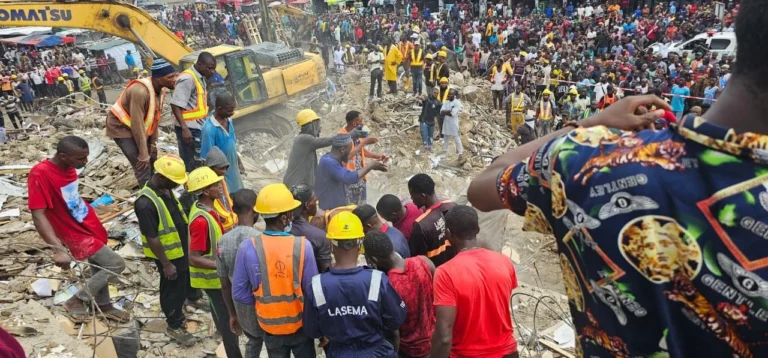
THE Lagos State Emergency Management Agency (LASEMA) has concluded search, rescue and recovery operations at the site of the collapsed two-storey building at Alakija Bus Stop, Satellite Town, rescuing 27 persons alive and recovering nine bodies.

The News Agency of Nigeria (NAN) reports that the building collapsed at about 12:47 p.m. on Thursday in the Amuwo-Odofin area of Lagos.

LASEMA, in a statement issued on Friday by its Head of Public Affairs, Afolabi Olawale, said the agency immediately activated its emergency response teams.

It said its Sharks Response Team from Lekki Base and Alpha Cobra Squad from Onipanu arrived at the scene within 40 minutes alongside other emergency responders.

According to the agency, emergency responders involved in the operation included the Lagos State Fire and Rescue Service, Lagos State Ambulance Service (LASAMBUS) and the Lagos State Traffic Management Authority.

Others are the Lagos State Neighbourhood Safety Corps, Federal Road Safety Corps, Lagos State Building Control Agency (LASBCA), the Nigeria Police Force, the Nigerian Army, the Nigerian Red Cross and the China Civil Engineering Construction Corporation (CCECC).

LASEMA said all 27 rescued victims received immediate pre-hospital care from LASAMBUS before being taken to nearby hospitals for further treatment.

It said the fatalities comprised four adults confirmed dead before emergency responders arrived and five additional victims, including a two-year-old girl, recovered during the rescue operation.

According to the agency, the remains were handed over to the State Environmental Health Monitoring Unit for identification and release to their families.

It said its heavy-duty excavator complemented two excavators deployed by CCECC, enabling responders to safely access trapped victims and complete the operation.

The agency said rescue operations ended at about 4:00 a.m. on Friday after responders reached ground zero.

It added that the Commissioner for Special Duties and Intergovernmental Relations and the Permanent Secretary of the ministry provided strategic oversight throughout the operation.

LASEMA also said Governor Babajide Sanwo-Olu had directed LASBCA to immediately assess the structural integrity of adjoining buildings and enforce compliance with building regulations in the area.

The agency expressed condolences to the families of the deceased and wished the injured speedy recovery.

It urged residents to promptly report distressed buildings to LASBCA or through LASEMA’s toll-free emergency lines, 112 and 767, to help prevent similar incidents. 

The ICIR reports that the incident adds to growing concerns over building safety and enforcement of construction standards in Lagos, where authorities have repeatedly pledged stricter oversight to prevent similar tragedies.

Building collapses remain a recurring challenge in Nigeria’s commercial capital, often linked to structural defects, substandard construction materials, poor regulatory compliance, or inadequate maintenance.

The ICIR reported how regulatory failures fuels building collapses in the state and other parts of Nigeria.

History of building collapses in Lagos

Lagos State has a long history of building collapses and accompanying human casualties and loss of valuables. The ICIR investigation revealed that regulatory failure is largely responsible for these preventable tragedies. The disasters happen almost yearly with alarming tolls.

The ICIR reported how eight building collapsed under the watch of the state former Commissioner for Physical Planning and Urban Development, Idris Salako, a doctor, under whose watch many buildings gave way. He resigned over continuous crumbling of buildings in the state.

The state government often reacts after a building has caved in, with threats to pull down substandard structures.

In 2019, the state government vowed to pull down old buildings at the Ita Faji area of Lagos Island after a three-storey building collapsed.

A two-storey building, located at No. 54 Cole Street, near Cemetery Bus Stop, collapsed in the early hours of Monday, October 27, trapping several occupants under the rubble when many of its occupants were asleep.

A five-storey building fell in the state in April 2023 at Ladipo Oluwole Street in the GRA area of Apapa.

At least five people died after another building gave way on Wilson Mba Street, Arowojobe Estate Maryland in July 2024.

In September 2022, a three-storey building collapsed on Sonuga Street, Palm Avenue, Mushin, Lagos. Two people were rescued from its rubbles.

No fewer than two people died following the collapse of a seven-storey building in the Lekki area of Lagos in September 2022.

What appears the most tragic of building collapse in the state in recent years was the 21-storey building under construction which crumbled and killed its owner and others at the Ikoyi area of the state in November 2021.

All these happened under the watch of successive governments and the Lagos State Building Control Agency (LASBCA) “set up to ensure that basic minimum standards are maintained in building construction and renovation of existing and new buildings to be safe, healthy, accessible and habitable for present and future generations.

“The agency works together with developers/owners to provide a highly quality service and make sure that all buildings are satisfactorily carried out,” according to information on its website.

Climate Story Fund opens applications for documentary filmmakers, podcasters, audio storytellers

INDEPENDENT filmmakers, audio producers, podcasters, and documentary storytellers worldwide are invited to apply for the Climate Story Fund, a global grant programme supporting compelling climate-related storytelling and audience impact campaigns.

The fund, administered by the Climate Story Unit and Doc Society, provides grants of up to $125,000 for nonfiction projects that help audiences imagine a just transition and inspire climate action.

The programme supports documentary films, nonfiction series, radio documentaries, and nonfiction podcasts that explore climate themes and their intersection with issues such as equity, migration, agriculture, conservation, technology, and community resilience.

The Climate Story Fund offers grants of up to $125,000 for production, post-production, and impact campaigns; support for completed projects seeking impact-only funding; funding for documentary films, nonfiction series, radio documentaries, and podcasts; and special encouragement for short documentary films of 40 minutes or less.

Applications are open to emerging and established storytellers worldwide. Eligible applicants include producers, directors, impact producers, independent filmmakers, and audio creators.

The organiser says, “Since its launch in 2021, the Climate Story Fund has awarded millions of dollars to projects across Africa, Latin America, Asia, and other regions, supporting storytellers who are reshaping climate narratives through film, audio, and innovative media”.

The deadline for applications is July 6, 2026. Interested applicants can apply here.

Why Nigeria is failing survivors of sexual and gender-based violence – Dorothy Njemanze

Survivors of sexual and gender-based violence (SGBV) in Nigeria continue to face enormous barriers to justice, medical care and rehabilitation due to systemic failures and inadequate government support, says gender rights advocate Dorothy Njemanze and founder of the Dorothy Njemanze Foundation (DNF). In this exclusive interview with The ICIR, Njemanze, who is also a sexual violence survivor, shares how her personal experiences fueled her passion to protect vulnerable women and children in society.

You’ve devoted much of your life to supporting women and children who have suffered abuse and violence. What inspired this journey, and what keeps you motivated?

I am a survivor of sexual and gender-based violence. I survived child sexual abuse, I survived sexual abuse and intimate partner violence as an adult. And so, for the rest of my life, I will be working on systems that will support vulnerable persons, especially survivors of abuse, to have better access to services and resources and also to prevent these things from happening.

Because if, in the first place, it was prevented, then we wouldn’t need to take action to save lives. So, to do that, the Dorothy Ndemanzi Foundation was born. There was a time, because of the random abduction and gross violation of women and girls in Abuja by the Abuja Environmental Protection Board, we needed to work with an organisation that can sue and be sued, and that birthed the Dorothy Ndemanzi Foundation, which people popularly call DNF.

Now, the majority of the people on the board, the management, and the staff of the organisation are survivors of violence. And with data, we see that the majority of the people who suffer violence are women and children. And the reason is because of the patriarchal culture, ideologies and practices. People justify these ideologies that shrink other human beings or make them relinquish their emotional status or their human rights very often.

One thing we pride ourselves on is that we are grounded in human rights. They say one in three females has experienced sexual violence. One in six children has experienced sexual violence. One in 18 men experienced sexual violence. And so, the question is across the board; it touches everybody, but there should be systems in place that recognise that everybody could be the victim. It could be a male, a female or a child.

Irrespective of who it is, there should be access to whatever resources are needed at a point in time, whether it is for preventive or for responsive.

What steps did you take to heal and turn your experiences into a source of strength and advocacy?

It’s more like experiences because it’s not one experience. Trying to know has expanded my views about a lot of things. It was, first of all, recognising that I am a human being with human rights. It was first of all me recognising that I am an emotional being with human rights and demanding accountability across the board, from everybody I encountered that way. Are there things I still live with? Yes, there’s a lot of depression. There’s a lot of anxiety that comes. I mean, exposure to trauma puts you on a disability spectrum, because in dealing with anxiety, you can’t sleep.

There are medical options for managing it, and that puts you on the disability spectrum. But because of the amount of stigma that exists, a lot of people choose to live in denial.

I prepare for the worst every day, but I try to live the best quality of life every day. I am deliberate about reflections. I am deliberate about what hurts me. I am deliberate about the extent to which things hurt me because many times, living in denial is like covering a sore. I have exposed myself to being open, but at the same time, I have learned to use my voice. I have learned to be assertive. I’ve learned to tell my story myself, and that is what made me take Nigeria to the ECOWAS (Economic Community of West African States) court.

There was a landmark court judgment in which Nigeria was the first country to be pronounced guilty of gender-based violence in the Dorothy Njemanze and three others versus the Federal Republic of Nigeria case.

Can you take us through the journey of establishing the Dorothy Njemanze Foundation and share some of the notable cases you have handled?

It’s a wide range of stories. We handle an average of three cases daily. In a month, there are usually a minimum of 40 active cases. And this is just a non-governmental organisation. We are not law enforcement. We render free confidential services around the clock to survivors of sexual and gender-based violence. We run a survival support centre, a working facility that people can come to and report cases in Abuja.

What we found out with providing medical care is that the medical results are corroborative evidence of whatever these people are going through. And so it helps the legal dynamics of their cases. And I’m proud to be a part of the system that has brought that degree of clarity for a lot of people.

Now, with the police, you still pay to buy a file in many places. You pay to be attended to and to have officers inspect the crime scene or invite the alleged perpetrator. The cost of all of this is on the survivor or the victim, right? Let’s use a two-year-old, for instance. A two-year-old who is raped is expected to foot the full medical and legal bills? All bills, you know, if the two-year-old wants justice. How much does a two-year-old earn? In light of that, imagine now how that affects adults who are expected to be able to look for money. So there’s an unfair burden that is placed on people who want to access justice.

There is now a lot of soft landing for perpetrators. There are many forced settlements, amongst other things. Many people who deserve justice cannot afford the increasingly high cost of accessing justice. Some children have been abused. I mean, one of the things I still cringe about is a three-year-old whom I had encountered saying, ‘Please, it’s itching me.’ I said, “What is itching you? She said, ‘My bum bum is itching me.’ And then, okay, we took her to the hospital. She had tears around her vagina and her anus. And it was her father who was the perpetrator. The child said, ‘Daddy gives me his peepee to eat,’ and this, amongst other things. Now, till today, that matter has not been prosecuted.

We report these matters to law enforcement, but not much is done. There was a matter in which we effected a citizen’s arrest. We dropped the perpetrator off at the NAPTIP office. In December this year, the child who was produced from the rape that led us to effect a citizen’s arrest is going to be six years old. Nothing has been done about that. The last we know of that case was the perpetrator was granted bail. Fine and good. It’s your duty to grant bail. But after granting bail, what happens next? Where does justice go?

In the case of a 12-year-old who was put to bed. We heard that a 10-year-old was about to be married off in Abuja, and so I gave my colleagues an ultimatum to locate the person within 48 hours. Indeed, we traced the child. At the time, the child said she was 11 years old, and she said they were living like husband and wife with the man.

We had heard that the parents had demanded a bride price from the person who got her pregnant to give legitimacy to the pregnancy the child was carrying. He was in his 30s, and the child turned 12 years old in December of 2025. I mean, the Rapid Response Squad of NAPTIP was fantastic and swung into action. We offered antenatal services, and that was the first time the child had been seen for anything related to antenatal care. She was over four months gone at the time, and so the perpetrator came with her to the hospital. We called the Rapid Response Squad, and they picked him up. But they released him on bail. This was done in November 2025. My question is, between November 2025 and April 2026, especially in the case of a minor who has been raped, is something not supposed to have been done?

We sent in several petitions, but none of them has been responded to. And then the perpetrator called my personal number last year, saying that NAPTIP says that his wife is with me, and that they had finished with him, and he’s written his undertaking so he can go and work. For somebody who has passed through NAPTIP to keep calling a child his wife, I worry about the quality of the kind of orientation or reorientation happening in the process of investigation, because there’s a gap.

In the first instance, how did he get my personal phone number? I’m not talking about an office number. And it seemed like I wasn’t giving him the response he wanted. Then he went on social media to the DNF platforms, and he sent messages saying: “You people are with my wife. Can I have my wife? And the office responded, “We don’t know who you’re talking about. Then he had the audacity. He sent a picture of the child as his wife.

Running a survivor support organisation in Nigeria comes with enormous demands. What would you say is the biggest challenge your foundation faces, and what kind of support do you need from the government and the public to sustain the work?

Let me give you an insight. In feeding, for instance, every day, we feed no fewer than 35 people breakfast, lunch, and dinner. Let us peg it at three meals a day at N4,500 a day, per person. Now, times 35, you’re talking about N157,500 a day. When you times this by 30, you get N4,725,000 monthly. Then in a year is N56,700,000. This is feeding alone. This is not a power bill. This is not school fees. This is not medical bills. This is not legal bills. This is not law enforcement engagement. This is not transportation at all. At the end of last year, we celebrated largely when a bus was donated to the organisation. And then by the end of March, the people who provided the bus retrieved their donation. So, it left us stranded.

We mobilise resources through partnerships. Schools have given us partnerships, a lot of people have said, oh, bring survivors, this is the business I do. And now we’re calling on people, are you a techie person, are you a developer? Give us resources and let us empower survivors. A lot of our people are very industrious.

We need to get free medical care, and we need to get health insurance for our survivors. Within the first year, at least, hospitals can help to manage these people. Because I watch people die so often, and it’s not good for us. The vicarious trauma that those of us on the front lines face is very unfair. So, if you have a business, please give us gadgets, you have a farm, give us food. We need resources to be able to support survivors.

Your organisation is based in Abuja, but cases of gender-based violence cut across Nigeria. How can survivors in other states access your services?

All our social media platforms are active. info at dnf.org.ng or communications at dnf.org.ng are emails that are very reliable. And then, Dorothy Njemaze Foundation on Facebook, Dorothy Njemaze Foundation on Instagram, DN Foundation on X, you know, Dorothy Njemaze Foundation on LinkedIn. Our social media platforms are always buzzing with a lot of information. And the information is relevant to all parts of Nigeria. And so please, I encourage everybody to follow, subscribe. The DNF helpline is 07013333307.



1 dead, 2 rescued in Lagos three-storey shopping complex collapse

ONE person has been confirmed dead while two others were rescued after a three-storey shopping complex collapsed Thursday morning in the Alakija area of Ori-Ade Local Council Development Area of Lagos State.

The Lagos State Emergency Management Agency (LASEMA) Permanent Secretary, Olufemi Oke-Osanyintolu confirmed the incident in a statement, noting that emergency responders were making efforts to locate victims feared trapped beneath the rubble.

“To facilitate the rescue efforts, heavy-duty equipment, including an excavator, has been deployed to the site to assist in clearing debris and gaining access to trapped persons,” he said.

Osanyintolu explained that emergency responders were mobilised immediately after distress calls were received, triggering a coordinated rescue operation involving LASEMA, the Lagos State Building Control Agency (LASBCA), and the China Railway Construction Corporation (CRCC).

The LASEMA scribe said that rescue teams successfully pulled two people alive from the debris, while the body of an adult male was later recovered from the collapsed structure.

He added that preliminary assessments indicated that more people could still be trapped beneath the rubble, including shop owners and other occupants who had resumed business activities in the building before it gave way.

He appealed to residents and onlookers to stay away from the scene to allow emergency personnel unrestricted access to conduct life-saving operations.

LASEMA assured the public that verified updates would be provided as rescue efforts continue, noting that investigations would commence after the conclusion of the ongoing rescue operation.

The ICIR reports that the cause of the collapse has not yet been determined, as the incident adds to growing concerns over building safety and enforcement of construction standards in Lagos, where authorities have repeatedly pledged stricter oversight to prevent similar tragedies.

Building collapses remain a recurring challenge in Nigeria’s commercial capital, often linked to structural defects, substandard construction materials, poor regulatory compliance, or inadequate maintenance.

The ICIR reported how regulatory failures fuels building collapses in the state and other parts of Nigeria.

History of building collapses in Lagos

Lagos State has a long history of building collapses and accompanying human casualties and loss of valuables. The ICIR investigation revealed that regulatory failure is largely responsible for these preventable tragedies. The disasters happen almost yearly with alarming tolls.

The ICIR reported how eight building collapsed under the watch of the state former Commissioner for Physical Planning and Urban Development, Idris Salako, a doctor, under whose watch many buildings gave way. He resigned over continuous crumbling of buildings in the state.

The state government often reacts after a building has caved in, with threats to pull down substandard structures.

In 2019, the state government vowed to pull down old buildings at the Ita Faji area of Lagos Island after a three-storey building collapsed.

A two-storey building, located at No. 54 Cole Street, near Cemetery Bus Stop, collapsed in the early hours of Monday, October 27, trapping several occupants under the rubble when many of its occupants were asleep.

A five-storey building fell in the state in April 2023 at Ladipo Oluwole Street in the GRA area of Apapa.

At least five people died after another building gave way on Wilson Mba Street, Arowojobe Estate Maryland in July 2024.

In September 2022, a three-storey building collapsed on Sonuga Street, Palm Avenue, Mushin, Lagos. Two people were rescued from its rubbles.

No fewer than two people died following the collapse of a seven-storey building in the Lekki area of Lagos in September 2022.

What appears the most tragic of building collapse in the state in recent years was the 21-storey building under construction which crumbled and killed its owner and others at the Ikoyi area of the state in November 2021.

All these happened under the watch of successive governments and the Lagos State Building Control Agency (LASBCA) “set up to ensure that basic minimum standards are maintained in building construction and renovation of existing and new buildings to be safe, healthy, accessible and habitable for present and future generations.

“The agency works together with developers/owners to provide a highly quality service and make sure that all buildings are satisfactorily carried out,” according to information on its website.

Police confirm 2 rescued from Rivers building collapse

0

THE Police Command in Rivers has confirmed that two persons were rescued from a collapsed three-storey building under construction along Odili Road in Port Harcourt.

The incident occurred on Wednesday, with reports indicating that one person was feared dead while several workers remained trapped beneath the rubble.

The command’s spokesperson, Blessing Agabe, a superintendent of police, told the News Agency of Nigeria (NAN) on Thursday in Port Harcourt that rescue operations were ongoing at the site.

Agabe said the police could not immediately confirm the number of casualties but disclosed that two persons were rescued alive.

“Rescue workers are still clearing the debris from the collapsed building, and as such, I cannot provide an accurate account of the casualties.

“However, I can confirm that two persons have been rescued from the rubble,” she said.

According to her, emergency responders are continuing efforts to locate and rescue other victims believed to be trapped under the debris.

Eyewitnesses at the scene attributed the collapse to possible structural defects, although the exact cause was yet to be determined.

A survivor, identified simply as Gift, said no fewer than eight workers were trapped when the building suddenly collapsed.

He claimed that some construction workers were rescued alive shortly after the incident on Wednesday.

“About eight persons were working inside the building when it collapsed,” he said.

Also speaking, Vincent Wachukwu, a doctor and Acting Permanent Secretary of the Rivers State Ministry of Health, said emergency personnel were immediately deplored after reports of the collapse.

Wachukwu said ambulances were mobilised to evacuated survivors for urgent medical attention.

“So far, two severely injured persons have been rescued and taken to the Rivers State University Teaching Hospital for treatment,” he said.

NAN reports that another person has been rescued from the debris by the rescue operations which are being coordinated by the Rivers State Ministry of Urban Development and Physical Planning and the Ministry of Health.

Other agencies involved include the Nigeria Police Force, the Nigeria Security and Civil Defence Corps and the Federal Road Safety Corps.

Excavation of the debris continues on Thursday as rescue teams intensified efforts to reach those still trapped beneath the collapsed structure. (NAN)

CHRICED launches project to strengthen independent media, human rights reporting

0

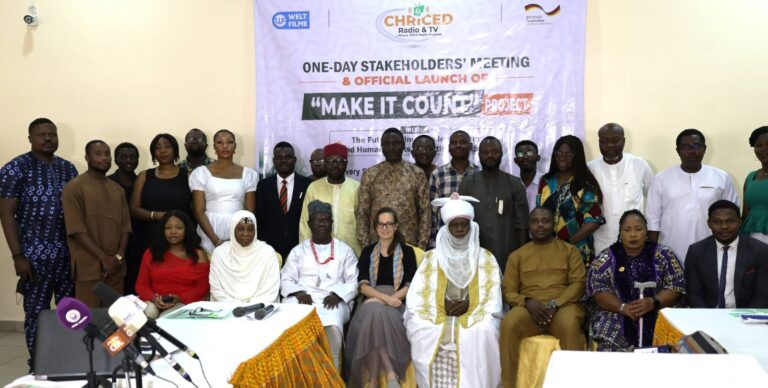
THE Resource Centre for Human Rights and Civic Education (CHRICED) has unveiled the “Make It Count” project, a new initiative aimed at strengthening independent media, promoting ethical human rights reporting and amplifying the voices of marginalised communities in Nigeria.

CHRICED Executive Director, Ibrahim Zikirullahi, launched the project themed “The Future of Independent Media and Human Rights Reporting in Nigeria,” during a stakeholders’ meeting in Abuja on Wednesday, June 24.

The initiative is being implemented by CHRICED in partnership with Weltfilme, Germany, with financial support from the German Federal Ministry for Economic Cooperation and Development (BMZ).

“Across Nigeria, the space for independent voices is shrinking. Journalists face intimidation, civic actors confront repression, and communities – especially the most vulnerable – struggle to have their stories heard,” Zikirullahi said.

He described the project as more than a programme but a movement designed to strengthen independent media, expand human rights reporting and ensure that the voices of women, youth, persons with disabilities and other marginalised groups influence democratic governance.

According to him, the initiative will train citizen reporters, support community-based storytellers and build collaborative networks that enable journalists and civic actors to expose corruption, document human rights abuses and report stories that inspire positive social change.

“We will invest in training, technology and collaborative networks that enable journalists and civic actors to document abuses, expose corruption, and highlight stories of resilience and hope,” he said.

Presenting an overview of the initiative, Project Team Lead at Weltfilme, Julia Krojer, said Make It Count was designed to strengthen human rights-oriented journalism through ethical storytelling.

She explained that many local journalists continued to operate with limited resources and training despite playing a critical role in informing citizens and amplifying marginalised voices, adding that the initiative aimed to bridge those gaps by equipping journalists and content creators with practical multimedia storytelling skills that produce accurate, ethical and impactful reporting.

Krojer added that expected outcomes include improved media professionalism, stronger collaboration among journalists and civil society organisations, increased public awareness of governance and human rights issues, and deeper citizen engagement in democratic processes.

Delivering the keynote address, veteran journalist and labour activist Owei Lakemfa urged journalists and media organisations to remain committed to ethical reporting and the defence of human rights despite mounting political and economic pressures.

Lakemfa’s presentation focused on the future of independent journalism in Nigeria and the need to protect press freedom as a pillar of democratic governance.

Meanwhile, participants who include civil society actors, and government officials, engaged in extensive discussions on the growing threats confronting the media, including shrinking civic space, economic hardship affecting newsrooms, digital misinformation, declining public trust, and safety concerns for journalists covering sensitive issues.

Several media practitioners emphasised the need for stronger collaboration between journalists, civil society organisations and development partners to ensure investigative and human rights reporting remains sustainable.

Others advocated greater investment in grassroots media, arguing that community journalists are often the first to document human rights abuses and governance failures in remote areas.

The launch concluded with a renewed commitment by participating organisations to support ethical journalism and expand opportunities for grassroots reporters to produce stories that promote accountability, protect human rights and strengthen Nigeria’s democracy. 

Senate passes state police bill, empowers governors to appoint commissioners

0

THE Senate on Wednesday, June 24, passed a constitutional amendment bill seeking to establish state police services across Nigeria.

The bill was approved after lawmakers considered the report of the Senate Committee on the Review of the Constitution, chaired by Deputy Senate President, Barau Jibrin.

Senate President Godswill Akpabio announced the passage of the legislation after more than two-thirds of senators voted in support through a manual voting process following the failure of the chamber’s electronic voting system.

The proposed legislation seeks to create a dual policing structure comprising a Federal Police Service and State Police Services operating alongside each other.

Leading debate on the bill, Senate Leader, Opeyemi Bamidele, described the proposal as one of the most significant constitutional reforms since Nigeria’s return to democratic rule in 1999.

He argued that the country’s centralised policing system had struggled to cope with rising security threats, including terrorism, banditry, kidnapping, communal violence, cybercrime and organised criminal networks.

According to the bill, the Federal Police Service will retain responsibility for national security matters such as counterterrorism, organised crime, cybercrime, border security and policing of the Federal Capital Territory (FCT), while state police services will focus on enforcing state laws, maintaining public order and protecting lives and property within their jurisdictions.

The amendment further seeks to update constitutional references by replacing the National Police Council and Federal Police Service Commission with the Nigeria Police Council and Police Service Commission.

The passage was also coming about two weeks after the House of Representatives endorsed the constitutional amendment for the creation of state police forces.

Governors to appoint commissioners

A key provision of the bill empowers state governors to appoint Commissioners of Police to head state police services, subject to confirmation by their respective State Houses of Assembly.

Clause 17 of the bill provides that while the Inspector-General of Police will head the Federal Police Service, each State Police Service will be led by a Commissioner of Police appointed by the governor.

The legislation also authorises governors to issue lawful written directives of a general policy nature to state police commissioners on matters relating to public safety and public order.

To address concerns about potential abuse, the bill states that a state police commissioner shall not arrest, detain, investigate or deploy force against any person, political party or group for criticising the government except in accordance with the law.

Several lawmakers who supported the bill, including Enyinnaya Abaribe and Aminu Tambuwal, stressed the need for adequate safeguards to prevent political interference and abuse of police powers.

Backstory

The ICIR reports that the push for state police gained momentum in recent months as Nigeria continues to grapple with insecurity across several regions.

Many have argued that the Nigeria Police Force has limited ability to respond quickly to local threats and that officers familiar with local languages, culture and terrain would be better positioned to gather intelligence and tackle crime.

The proposal also received a boost in November 2025 when President Bola Tinubu publicly backed the establishment of state police and called on the National Assembly to review existing laws to allow states willing to establish their own police services to do so.

However, some critics have warned that governors could use state police to intimidate political opponents, suppress dissent or influence elections. Concerns have also been raised about funding, oversight and the capacity of some states to maintain independent police formations.

The Senate’s approval does not immediately establish state police services. As a constitutional amendment, the bill must secure the endorsement of at least two-thirds of the 36 State Houses of Assembly before it can be transmitted to President Tinubu for assent.

Should it eventually become law, the amendment is expected to establish a multi-layered policing structure aimed at improving efforts to combat kidnapping, terrorism, banditry and other security challenges confronting the nation.

Applications open for Harvard Radcliffe Institute fellowship

APPLICATIONS are now open for the prestigious Harvard Radcliffe Fellowship Program 2027–2028, offering accomplished journalists, scholars, scientists, public intellectuals, writers, and artists an opportunity to pursue ambitious projects at Harvard University for a full academic year.

The fellowship is hosted by the Harvard Radcliffe Institute and supports innovative work that addresses pressing social, scientific, and policy challenges.

Each year, approximately 50 fellows are selected to join a multidisciplinary community of thinkers and creators. Fellows receive a stipend of $78,000, an additional $5,000 for project expenses, access to Harvard’s extensive research resources, office or studio space, and eligibility for relocation, housing, childcare, and healthcare support.

The fellowship welcomes applications from professionals across a wide range of disciplines, including humanities, social sciences, journalism, nonfiction writing, creative arts, science, engineering, and mathematics. Applicants must meet discipline-specific eligibility requirements.

For journalism applicants, candidates must have at least five years of professional journalism experience. The programme is not intended for current students, and individuals enrolled in degree programmess are not eligible to apply.

Journalists must submit three substantive published works and may also include up to 15 minutes of audio or video journalism work.

Successful applicants will be notified of the outcome of their applications by March 2027.

Application deadline is September 10, 2026 (Journalism and related fields) | October 1, 2026 (STEM fields). Interested applicants can apply here.

DNA test confirms body of missing #EndSARS journalist Pelumi Onifade

0

A DNA test has confirmed that an unidentified body at the Lagos State University Teaching Hospital (LASUTH) is that of Pelumi Onifade, a journalist with Gboah TV who went missing during the #EndSARS protests nearly six years ago.

The Lagos State DNA and Forensic Centre made the confirmation on Tuesday at a Coroner Court in Lagos, where investigating magistrate Temitope Oladele announced that the centre had matched the body, tagged No. 1385, to a DNA sample submitted by Onifade’s mother, Adebose Onifade.

The journalist’s parents, who were both present in court alongside their father, Olatunde Onifade, broke down in tears as the magistrate read out the findings.

Onifade was reportedly shot and arrested while covering the protests on October 24, 2020. His body was among six brought to LASUTH on November 3, 2020, on which autopsies were subsequently conducted.

The inquest was convened on the orders of a Federal High Court in Lagos following a wrongful death suit filed by Media Rights Agenda (MRA) against the police and the Lagos State Government, demanding, among others, an investigation into Onifade’s death and the prosecution of those responsible.

Delivering judgment on July 19, 2024, the judge, Ayokunle Faji, directed the Attorney-General to ensure an investigation into the circumstances of Onifade’s death, conduct a coroner’s inquest to ascertain the cause of death and identify and prosecute those responsible.

On May 22, 2026, the coroner ordered LASUTH’s Chief Medical Examiner to produce the autopsy report on the body within 21 days. She also ordered the Director of the DNA and Forensic Centre to submit the corresponding DNA test results within the same period, following LASUTH’s earlier disclosure in a March 24, 2026, report that DNA samples had been collected from the bodies and cross-referenced against samples submitted by families of those who died during the #EndSARS events.

Although the DNA and Forensic Centre complied with the directive, LASUTH had yet to submit its autopsy report as of Tuesday’s proceedings.

MRA’s lead counsel, Alimi Adamu, who appeared alongside Monday Arunsi and Victor John, argued that the family had shown considerable restraint despite repeated police denials of any involvement in Onifade’s death and their insistence that he did not die in their custody.

He added that the need for a second court order was itself evidence of non-compliance with the court’s earlier directives. He also drew attention to the growing concern within the media community over the death of a journalist killed while discharging his constitutional role.

The coroner acknowledged the delay and said the hospital was overwhelmed, adding that she believed the autopsy had already been done, or should have been done. Tensions rose when she cautioned counsel against pushing too hard, warning that she could order the arrest of the Chief Medical Examiner.

The coroner opted against immediate coercive action, directing instead that a final administrative reminder be sent to LASUTH and urging MRA’s lawyers to visit the hospital in person to press for the report rather than relying solely on formal correspondence. She warned, however, that she would invoke the court’s full powers if the hospital continued to delay, including taking measures against the relevant officials.

Expressing sympathy with the family, the coroner acknowledged that the matter had been ongoing long before it reached her court. She told counsel she understood their desire for justice and commended them for their persistence.

The matter was adjourned to July 7, 2026.