THE Economic and Financial Crimes Commission (EFCC) has cautioned Nigerians against making false cash declarations, warning that such actions put the country at risk of money laundering.
In a statement issued on Saturday, March 22, the anti-graft agency disclosed that it had commenced an investigation into Okorie Sylvernus Sunday, who was arrested at Murtala Muhammed International Airport, Ikeja, Lagos, with $578,000 in cash.
The anti-graft agency also stated that the Nigeria Customs Service (NCS) had earlier intercepted the suspect, who arrived in Lagos from Johannesburg aboard South African Airways Flight SA60. At the airport’s currency declaration desk, he declared only $279,000.
However, a routine search uncovered an additional $299,000 hidden in several packages, bringing the total amount to $578,000.
It further stated that authorities also recovered €100 and a counterfeit $250 note among the undeclared cash.
The EFCC quoted Comptroller Effiong Harrison of the NCS Murtala Muhammed International Airport Command, who said, “the suspect’s actions violated the Money Laundering (Prohibition) Act of 2011 before handing him over to the EFCC for further investigation.”
The anti-graft agency lauded the NCS for its cooperation and confirmed that it had taken the suspect into custody.
Speaking on the importance of inter-agency partnership, the Acting Zonal Director of the EFCC Lagos Zonal Directorate 2, Okotie Eboh Ahmed Ghali, highlighted the importance of such collaboration in tackling financial crimes.
“I want members of the public to be wary of this kind of act. It is incumbent on every person entering or leaving the country to declare any cash over $10,000. It is mandatory under our laws, especially the money laundering law,” Ghali stated.
He further warned that false or non-declaration of funds could damage Nigeria’s economy and reputation.
“We will not allow anyone to sabotage the economy. This kind of act exposes the country to money laundering risks and makes it appear as a haven for fraud. We will continue working together to strengthen the economy and financial system,” he added.
Ghali assured that the EFCC would ensure that the law takes its course against anyone found culpable in financial crimes.
The ICIR reported that the anti-graft agency has secured only 10,935 convictions from the 58,165 cases investigated between 2019 and 2023, despite its aggressive tactics, which violate the fundamental rights of citizens.
This represents approximately 19 per cent of all cases probed by the agency within the period, meaning that the remaining 81 per cent.
THE Inspector-General of Police (IGP), Kayode Egbetokun, has again directed all officers of the Nigeria Police Force (NPF) to respect the fundamental rights of Nigerians and avoid unlawful and pre-trial detention of citizens.
The IGP gave the stern reminder in a statement issued on Sunday, March 23, by the Force Public Relations Officer (PRO), Olumuyiwa Adejobi.
He emphasised that adherence to legally stipulated detention periods was not only a legal obligation but also a fundamental responsibility for upholding the dignity and rights of citizens, as enshrined in Sections 34 and 35 of the Constitution of the Federal Republic of Nigeria, which guarantees the right to dignity and personal liberty.
Egbetokun said police officers should desist from unlawful or prolonged detention that could undermine public trust and confidence in the Force.
He reiterated that any officer found violating the warning would face serious consequences.
Calling for a culture of accountability within the Force, the IGP urged officers to uphold the highest standards of conduct in their interactions with the public.
“By prioritising human rights, the Nigeria Police Force aims to build stronger relationships with the communities it serves, ensuring that policing is conducted with integrity and respect,” Egbetokun added.
The IGP further noted that the NPF was committed to ensuring that all people in custody are treated with respect and by the law.
He claimed that the commitment of the current police leadership to human rights reflected a broader vision of a Police Force that was not only effective in maintaining law and order but also dedicated to protecting the rights and dignity of everyone in the country.
The ICIR reports that the Nigerian Police Force has been notorious for unlawful detention of Nigerians before trials in courts, with many activists, journalists and other citizens often among the victims.
More so, Amnesty International and other civil rights organisations have continued to voice out concerns about the unlawful detention of Nigerians, noting that the government was not doing enough to protect the rights of Nigerians.
The Police have been caught in several acts of unlawful detention incidents. The ICIR reported how the Federal High Court in Kaduna awarded N2 million against the NPF, as damages for the unlawful arrest and detention of three persons for 19 months.
The victims, Idris Abubakar, Anas Abubakar, and Aliyu Abubakar had instituted the case against the IGP, the Commissioner of Police in Kaduna State, and the Divisional Police Officer, Kabala Police Station.
According to the complainants, the police arrested them for alleged theft and detained them for six days, after which the police claimed that they were members of Boko Haram terrorist group.
ANTHONY Chinwe, a former top banker and now CEO of De SME Facilitators, is like a guide for Nigeria’s unsung economic heroes: small and medium-sized businesses (SMEs). Think of them as the engine room of the country, full of potential but often struggling to get the fuel they need to really take off. In this insightful chat, Chinwe breaks down the secrets to helping these businesses thrive, from getting the right funding to finding markets for their goods. The former Group Head of Small and Medium Enterprises, SME banking at Fidelity Bank Plc also shares what the government can do to finally let these crucial players shine.
The ICIR: You have led the SME desk in one of the banks. What are those critical things that make SMEs’ loan requests fail to receive approval?
Chinwe: Our organisation – De SME Facilitators – happens to be one of those registered with the Bank of Industry, (BoI) with the mandate of preparing SMEs and getting them to put their proposals in bankable form to easily access suitable loans.
One of the things we have noticed about accessing credit is meeting the five C’s conditions. For a credit to do well, a borrower must have the capacity to pay the loan he or she or the entity applied for.
The cash flow must be robust or can be stimulated to be robust so that it will be able to pay over time.
The borrower must have the character, that is, the integrity, willingness, and genuineness to apply for the loan for the purpose for which it was approved. Character is very important. It’s about the most important in the credit lexicon.
The fourth ‘C’ is collateral, which talks about the stability, quality, and nature of the collateral. It’s a secondary comfort position that comes up when the primary repayment source fails.
And the fifth is the capital, which speaks to the promoters’ commitment to the project. That’s how much they have in their equity contributions, and how strong is it? Of course, other things could come up depending on the nature of the transaction. So, these are the five fundamental credit issues that need to be addressed.
Oftentimes, SMEs lack collateral, which is not their fault but the problem of the Nigerian financial structural environment.
Oftentimes, SMEs lack collateral, which is not their fault but the problem of the Nigerian financial structural environment. This is because what we take as collateral not all SMEs can afford it. For instance, not all SMEs can afford a legal mortgage as collateral or have enough shares to mortgage or pay down as collateral. As such, you walk around their cash flow and create that flexibility to enable you to lend to them based on their cash flow. You need to understand their business and build their loan around it, rather than emphasising too much on collateral.
Another thing is packaging their record-keeping, as they can’t employ real professionals to put their financial records in order. We assist them and deploy the services that take care of such challenges. Of course, there are three types of access to finance, which can be categorised into equity, debt, and hybrid, which have features of equity and debt. Again, SMEs lack access to equity financing and can’t easily go to the stock market to access funds. This is where we have been advocating that the government should create a platform that will enable SMEs to access equity funding. However, once SMEs can package their transactions and projects in such a bankable way, they can access loans.
Anthony Chinwe, chief executive officer (CEO), De-SME Facilitators Limited
The ICIR: Banks seem to prioritise corporate organisations over SMEs. How can they make lending to SMEs easier?
Chinwe: If you look at the cost of transaction per unit, you will see why microfinance banks and other lower-ticket institutions charge higher. You could go to a microfinance bank and borrow N300,000, and they tell you their fee is 15 per cent per month. Whereas if you borrow from a commercial bank, it will be much lower.
The reason for small ticket transactions attracting higher interest is because of the cost of administering the loan. There are administrative services we deploy in the loan process that are virtually the same whether you are lending N300 million or N300,000. There are processes you go through that are the same. So, for big-ticket transactions, you earn more in revenue from the transaction, which will be enough to take care of those administrative expenses and leave a substantial gap to increase your profit.
Also, most corporate entities have suitable hands in their structure and staffing and are well-developed. You could see transparency in the management of their finances, and they have professionals handling their funds and key departments in their organisation. Whether it is marketing, production, accounting, or so forth. As a lender, they give you fewer issues. You can rely more on their record, and you can see the process more clearly. Those are the things that make lending to them a little easier than to the SMEs.
However, the good thing about SMEs is that when you grow them, you have the opportunity to grow along with them because they have a high growth rate. An SME that is well-managed will, in a short time, transform into a large enterprise. Banks that have grown internal capacity to understand the problems of SMEs develop credit products suitable for their needs because SMEs are different from large enterprises in terms of structure, processes, staffing and all that. You need to understand them very well, study them, and come up with credit products that address their peculiar needs and also take care of the nature of their businesses.
The ICIR: Are Nigerian banks developing products for SMEs?
Chinwe: Back in the days when I was in banking, the Fidelity Bank was good at developing loan product papers suitable for special needs, whether it’s school or SMEs that are into manufacturing. Fidelity Bank used to have the capacity to develop suitable product papers that address the needs. However, all banks have their target market and the segments they lend to more.
What I believe is that the regulatory authority should play a more active role in compelling banks to distribute their loans in a way that will favour the areas that are targeted by the government to create jobs.
Most of the jobs in Nigeria are created by the SMEs. They are the engine of economic growth and agents of innovation.
The ICIR: How effective are the BOI and BOA in giving out loans to support SMEs?
Chinwe: The Bank of Industry (BOI) is very effective and they have done a whole lot to ensure the sectors they focus on come alive. They finance machinery and working capital and have even gone beyond their mandate, financing some agricultural value chains that, ordinarily, the Bank of Agriculture (BOA) should do.
It’s good that the government is working towards resuscitating, revitalising, and recapitalising the Bank of Agriculture to make it effective, just as the Bank of Industry is currently doing. A Bank of Agriculture, a Bank of Industry, and a functional mortgage system are the three institutions that will help the manufacturers and business communities. The people who may be complaining that the Bank of Industry has not given them loans may be that they haven’t done what they were supposed to do in presenting their transactions in a bankable way.
The ICIR: What should the government do to maximise SMEs’ potential towards achieving the N1 trillion economy?
Chinwe: The government should provide a regulatory environment that will enable them to access suitable funding, whether it’s equity, debt, or hybrid, specific to their needs. Secondly, the government should create an enabling environment through a legal, regulatory infrastructure that will enable SMEs to access markets, especially international markets, where the nation can benefit through foreign exchange enhancement to the GDP, job creation, and all that SMEs can bring to the table. They need to create that environment and bring up facilities that will enable SMEs to access the market more smoothly.
The government should provide a regulatory environment that will enable them to access suitable funding, whether it’s equity, debt, or hybrid, specific to their needs.
For instance, a friend who conducted research revealed that if you go to African markets in the United States, most of the goods in stock are from Ghana. He informed me that 60 per cent of the goods sold in that market, coming from West Africa, are from Ghana. Why is it easier to export from Ghana to the United States than from Nigeria? Have we leveraged the AGOA (African Growth and Opportunity Act), which allows duty-free access to the United States and eligible Nigerian exports from our end? What are the bottlenecks in the export of products of the agricultural value chain in Nigeria?
Also, is it that the goods don’t meet international standards? Then, what are we doing to create a proper certification framework that makes our goods acceptable in the international market? All these are some of the things that the government should look into and partner with the private sector to address to make it easier for SMEs to access markets, particularly foreign markets.
The African Continental Free Trade Area (AfCFTA) agreement – a treaty that aims to increase trade and economic integration in Africa – is on stream for us to maximise the benefits.
Another thing the government needs to do is apply a cluster approach to create workspace for businesses of a similar nature. Japan started what they call a one-village, one-product policy that enabled them to develop peculiar agricultural or mineral products that were obtained from different villages. That’s the law of comparative advantage. Sometime in 2010 to 2011, when Modupe Adelaja was the Director-General of SMEDAN (Small and Medium Enterprises Development Agency of Nigeria), she came up with an amended version of that policy that would be domesticated in Nigeria. That is, one local government, one product, but it was never driven to a conclusion by way of implementation.
When you create a cluster, there are advantages of linkages and having common shared services that would aid in the improvement of technology and innovation, and in bringing down the cost of doing business. The government has to take practical steps to set up clusters for different products in different areas. Every region, state, and local government has things they produce that give they a strategic advantage over other people. If allowed to run and merge with the larger economy, it will boost the entire Nigerian economy. Those are the areas – cluster creation, market access, and access to suitable funds – that the government should look into.
some of these SMEs produce their electricity and water, construct their roads, and provide their security. All these are the challenges that hinder and stifle businesses.
Why it’s important is that some of these SMEs produce their electricity and water, construct their roads, and provide their security. All these are the challenges that hinder and stifle businesses. The present government seems to be doing a lot and working on reforms. But if the right things are in place and there’s a segment of the capital market dedicated to SMEs even if you have a furniture company and you retired and your children are not interested in running it, you should have a platform that will enable you to sell it not as a scrab but as an ongoing business just as one will sell a big company in the capital market.
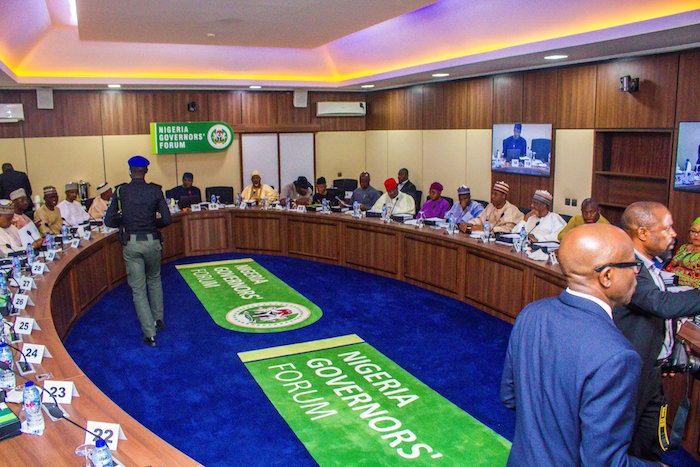
THE Nigeria Governors’ Forum (NGF) has clarified its decision to remain silent on recent political developments, emphasising its role as a neutral policy-driven body.
In a statement issued on Saturday, March 22, titled “NGF Clarifies Silence on Political Matters,” the forum explained that taking a stance on partisan issues could create divisions among its members, who represent different political parties.
This clarification comes in response to President Bola Tinubu’s recent declaration of a state of emergency in Rivers State, which resulted in the six-month suspension of Governor Siminalayi Fubara, his deputy, and elected members of the State House of Assembly.
According to the statement signed by NGF Director-General Abdulateef Shittu, the forum is dedicated to governance and policy matters rather than political disputes.
“The Nigeria Governors’ Forum (NGF) has received media inquiries requesting its position on recent political events in the country,” the statement read.
“The Forum wishes to clarify that it serves as an umbrella body for state governments, promoting unified policy positions and working with key stakeholders to drive sustainable socioeconomic growth and improve the well-being of citizens.
“As a technical and policy-driven institution comprising governors from various political parties, the NGF chooses to avoid taking positions that may create divisions among its members,” it added.
Shittu highlighted that past political disputes within the forum had threatened its unity, reinforcing the need to remain neutral on contentious political issues. However, he assured Nigerians that the NGF remains committed to addressing governance issues affecting economic development and public welfare.
“Despite this, the Forum has consistently taken strong positions on key governance and policy matters, such as wages, taxation, education, and universal healthcare,” Shittu stated.
Meanwhil, legal experts have criticised President Tinubu’s six-month suspension of Governor Fubara and other state officials, as well as his declaration of a state of emergency in Rivers State.
In a nationwide address on Tuesday, March 18, Tinubu attributed the political crisis in the state to a dispute between Governor Fubara and the Minister of the Federal Capital Territory (FCT), Nyesom Wike. Following the suspension, the president appointed retired Rear Admiral Ibok Ekwe Ibas as the state administrator.
THE Federation Account Allocation Committee (FAAC) distributed a total of N1.678 trillion in February to the federal, state, and local governments.
This information was released in a communiqué by FAAC, made available to the public on Saturday, March 22, by Bawa Mokwa, the Director of Press and Public Relations for the Office of the Accountant-General of the Federation.
According to the communiqué, the total revenue of N1.678 trillion was made up of:
Statutory Revenue: N827.633 billion
Value-Added Tax (VAT) Revenue: N609.430 billion
Electronic Money Transfer Levy (EMTL) Revenue: N35.171 billion
Solid Minerals Revenue: N28.218 billion
Augmentation: N178 billion
The total gross revenue available for distribution in February was N2.344 trillion.
The ICIR notes that the N1.678 trillion shared in February is lower than the ₦1.848 trillion shared in January 2025, representing a decrease of ₦194.664 billion.
The communiqué also detailed deductions and allocations:
Total deduction for the cost of collection: N89.092 billion
Total transfers, interventions, refunds, and savings: N577.097 billion
The communiqué said that gross statutory revenue of N1.653 trillion was received for February, which was lower than the sum of N1.848 trillion received in January by N194.664 billion.
It would be noted that the gross statutory revenue is a component of the total revenue generated and shared by the federation allocation committee.
It said that the local governments received a total sum of N410.559 billion, and a total sum of N136.042 billion (13 per cent of mineral revenue) was shared with the benefiting states as derivation revenue.
On the N827.633 billion statutory revenue:
The Federal Government received: N366.262 billion
The State Governments received: N185.773 billion
The Local Governments received: N143.223 billion
A total of N132.374 billion (13 per cent of mineral revenue) was shared among the benefiting states as derivation revenue.
Regarding the N609.430 billion generated from VAT:
The Federal Government received: N91.415 billion
The State Governments received: N304.715 billion
The Local Governments received: N213.301 billion
From the N35.171 billion in EMTL revenue:
The Federal Government received: N5.276 billion
The State Governments received: N17.585 billion
The Local Governments received: N12.310 billion
From the N28.218 billion in Solid Minerals revenue:
The Federal Government received: N12.933 billion
The State Governments received: N6.560 billion
The Local Governments received: N5.057 billion
A total of N3.668 billion (13 per cent of mineral revenue) was shared among the benefiting states as derivation revenue.
The communiqué further indicated that revenue from Oil and Gas Royalty and EMTL saw a significant increase. However, revenue from VAT, Petroleum Profit Tax, Companies Income Tax, Excise Duty, Import Duty, and CET Levies experienced a decrease.
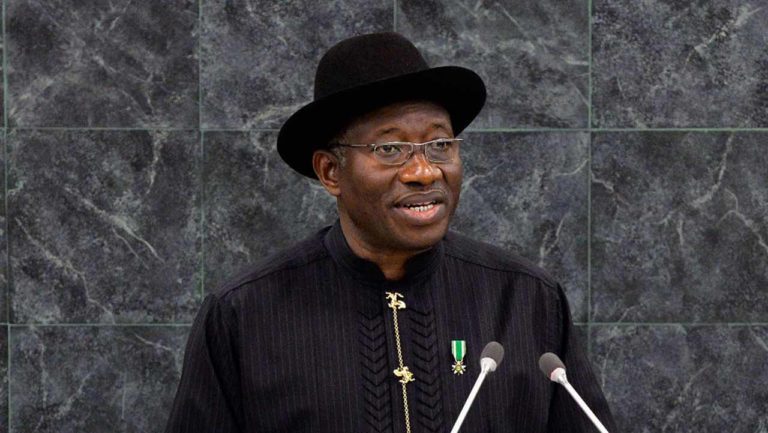
FORMER President Goodluck Jonathan has condemned President Bola Tinubu’s suspension of Rivers State Governor Siminalayi Fubara and other elected officials in the state, warning that such actions could damage Nigeria’s reputation.
Speaking on Saturday, March 22, as chairman of the Haske Satumari Foundation Colloquium in Abuja, Jonathan expressed disappointment over the removal of democratically elected leaders by Tinubu after declaring a state of emergency in the state.
“These actions by key figures in both the executive and legislative branches tarnish the image of our nation,” Jonathan said of the action, endorsed by both chambers of the National Assembly, despite condemnations by Nigerians, especially the opposition parties’ leaders and civil society organisations.
The ICIRreported that Tinubu declared a state of emergency in the oil-rich state and suspended Fubara, his deputy Ngozi Odu, and all members of the state House of Assembly for six months.
He said the protracted political crisis between Fubara and his predecessor – the Minister of the Federal Capital Territory (FCT), Nyesom Wike – was responsible for the decision.
He particularly criticised Fubara for failing to take action after an oil facility was blown up in the state a day before the declaration.
The president appointed Ibok Ekwe Ibas, a retired rear admiral, as the state administrator.
Many Nigerians, especially leading opposition figures, condemned the decision.
Despite widespread opposition, the decision was ratified by the Senate and House of Representatives on Thursday, March 20.
Reflecting on the political crisis in the state on Saturday, Jonathan noted that while it was uncommon for former presidents to weigh in on such matters to avoid escalating tensions, he felt compelled to speak out.
He stressed that a nation’s image and its ability to attract investments largely depended on the conduct of the executive, legislature, and judiciary.
Jonathan explained that he decided to comment following repeated calls from Nigerians urging him to address the developments in Rivers State, given his position as a prominent figure from the Niger Delta, to which the state belongs.
He also condemned the growing trend where individuals influence or dictate to the judiciary, warning that such interference would erode public trust in the courts.
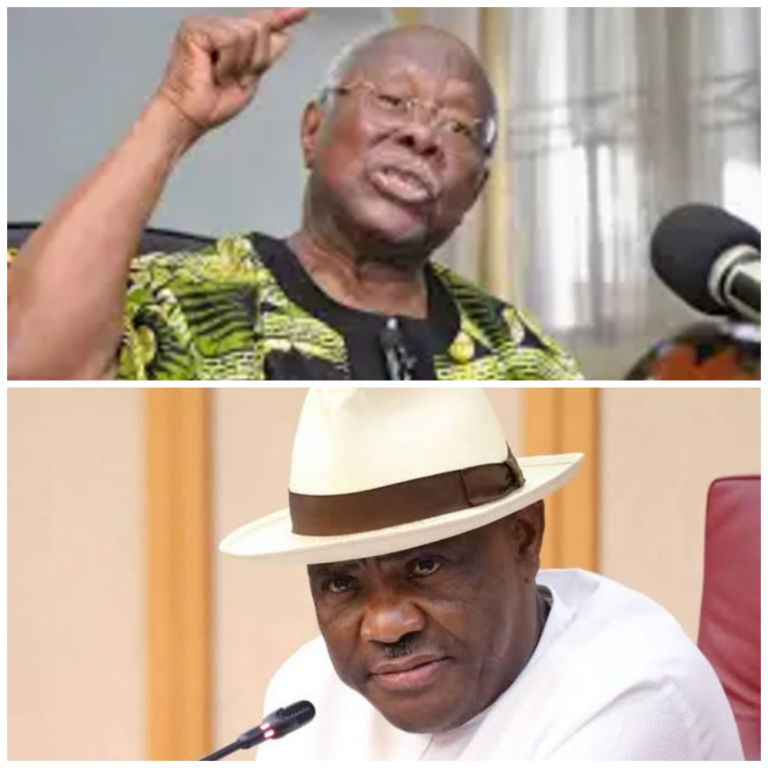
LERE Olayinka, the Senior Special Assistant on Public Communication to the Minister of the Federal Capital Territory, Nyesom Wike, said his principal should not be blamed for the revocation of the headquarters of the Peoples Democratic Party (PDP) in the heart of Nigeria’s capital – Abuja.
He stated this on Saturday, March 22, while reacting to an outburst by a PDP chieftain, Bode George, that Wike crossed the red line by superintending over the decision to revoke the land.
Olayinka argued that the party’s leadership, not Wike, should be blamed for failing to pay ground rent for 28 years, which ultimately led to the revocation.
The elder statesman had labelled Wike’s decision a “declaration of war” against the party and questioned why he continued to parade himself as a party member.
Reacting, Olayinka accused the party leaders of failing to conclude the purchase of the Wadata Plaza property, which he claimed the PDP had attempted to acquire since 2005.
He further claimed that the PDP was required to pay N26.9 million to obtain ministerial consent for the property’s purchase but failed to make the payment. Instead, the party sought a waiver from the former FCT Minister, Nasir El-Rufai, citing financial constraints, but the request was denied.
“The PDP offered to buy the Wadata Plaza property in 2005, and when the minister’s consent was sought, the party was asked to pay N26.9 million. The money was never paid. The party wrote a letter to Malam Nasir El-Rufai, the FCT Minister at the time, to waive the payment, claiming that it lacked the financial capacity to pay, but he (El-Rufai) insisted the party must pay.
“El-Rufai, who insisted PDP must do the right thing by paying the necessary fees to the government was a member of the party then, and Chief Bode George, who was in the PDP NWC, did not go to national television to accuse him (El-Rufai) of declaring war against the party,” the statement read in part.
He questioned whether Wike should be blamed for the PDP’s failure to pay a N7.6 million ground rent for 20 years, despite the party raising over N21 billion in 2014 for the completion of its national secretariat.
He further asked why the PDP neglected to pay ground rent on Plot No. 243, its only officially owned property among the 4,794 revoked land titles.
He argued that enforcing land title regulations could not be considered a “declaration of war” and questioned whether the FCTA under Wike should have given PDP special treatment over other landowners whose titles were revoked for the same reason.
Olayinka highlighted that the land revocation exercise affected 4,794 land titles, including properties owned by government institutions like the Central Bank of Nigeria, the Independent National Electoral Commission, and the Nigerian National Petroleum Company Limited.
He urged Bode George to verify facts before making public statements, stressing that Wike was simply enforcing the law without favouritism.
The ICIRreported that Wike had approved the revocation of 4,794 land titles in the nation’s capital due to alleged non-payment of ground rent for over 40 years.
One of the land titles revoked was the right of occupancy granted to the Peoples Democratic Party (PDP), National Secretariat, at the Central Area, in Abuja.
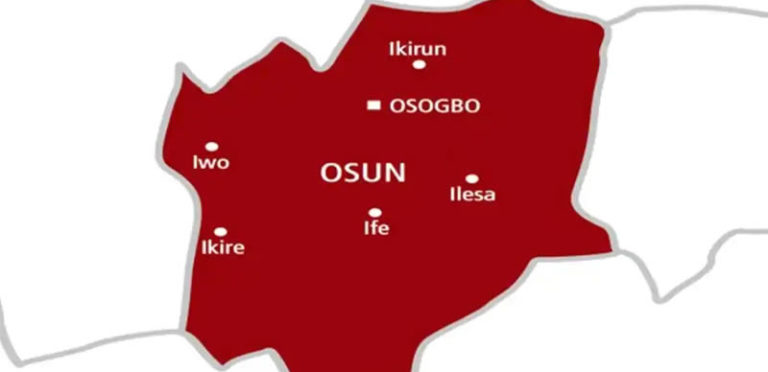
OSUN State Governor Ademola Adeleke has declared a 24-hour curfew on Ifon, Ilobu, and Erin Osun communities following fresh communal clashes that have resulted in casualties and destruction of property.
In a statement posted on his official X handle on Saturday, March 22, Adeleke said the curfew took immediate effect and would remain in place until further notice.
“I have received with great sadness disturbing footage and security reports of the resurgence of the age-long communal clashes between Ifon, Ilobu, and now Erin Osun communities within the past 24 hours,” the governor said.
Following consultations with security agencies, Adeleke directed a joint task force comprising the Nigerian Army, Nigerian Police, Nigeria Immigration Service, Nigeria Security and Civil Defence Corps (NSCDC), NDLEA, Amotekun, and other agencies to enforce the curfew and maintain 24-hour surveillance in the communities.
The governor expressed sympathy for families affected by the conflict and assured that perpetrators would be brought to justice.
To address the situation, the governor said he had summoned an emergency meeting with key traditional rulers such as the Olufon of Ifon- Peter Oluwole Akinyooye, the Olobu of Ilobu, Ashiru Olatoye Olaniyan, and the Elerin of Erin Osun, Yusuf Omoloye Oyagbodun II, alongside other critical stakeholders.
“I urge all sons and daughters of these communities, alongside their traditional rulers, to embrace peace and coexist harmoniously,” Adeleke pleaded.
He, however, gave a warning: “Any individual or group found inciting violence or aiding this unrest will be dealt with accordingly.”
At least 30 residents were reportedly shot in a clash between the Ifon community, located in Orolu Local Government Area (LGA), and Ilobu in Irepodun (LGA) of the state, following a renewed clash that began in the early hours of Friday.
The development saw several homes and businesses set ablaze, forcing residents, including women and children to flee.
THE management of Kebbi State University of Science and Technology, Aliero, has confirmed the death of six students following an outbreak of cerebrospinal meningitis at the institution.
In a statement on Saturday, March 22, the university’s public relations officer, Mustapha Ango, expressed the institution’s grief over the loss.
Speaking on behalf of the management, he condoled with the families of the deceased, noting that the vice-chancellor, B.G. Danshehu, was deeply saddened by the incident.
The statement read in part: “Upon detecting the initial signs of the outbreak, KSUSTA took immediate and decisive action to mitigate the spread of the disease. A specialised committee, led by the Provost of the College of Health Sciences, Prof. Balarabe Adamu Isah, was informed to conduct a thorough investigation.
“We promptly reported the outbreak to the Kebbi State Ministry of Health and the Ministry for Higher Education. A stakeholders’ meeting was convened, bringing together key health sector experts, including representatives from the World Health Organization (WHO), United Nations Children’s Fund (UNICEF), Médecins Sans Frontières (MSF), and other medical professionals.”
He stated that several key measures had been put in place to manage the situation, including improved medical support, enhanced sanitation, and preventive efforts.
Additionally, health awareness campaigns and immunisation were being carried out in collaboration with WHO, UNICEF, and MSF, he stated.
The school management assured parents, guardians, and the public of its continued dedication to ensuring students’ safety.
GOVERNORS elected on the platform of the Peoples Democratic Party (PDP) have directed their attorneys-general to contest President Bola Tinubu’s declaration of a state of emergency in Rivers State in court, arguing that Section 305(3) of the Constitution required judicial clarification.
In a communiqué issued after a Zoom meeting on Wednesday and signed by Bauchi State Governor Bala Mohammed, the PDP Governors’ Forum chairman, the governors expressed solidarity with suspended Governor Siminalayi Fubara and the people of Rivers State.
The statement was released to journalists on Saturday.
The PDP governors stated, “The Forum employed the occasion to review the unfortunate proclamation of a State of Emergency in Rivers State by President Bola Ahmed Tinubu in his nationwide broadcast of Tuesday, March 18, 2025; and frowned at the purported suspension by the president of the governor of Rivers State, the deputy governor, and the members of the Rivers State House of Assembly.
“The Forum reaffirmed its commitment to upholding the constitution, defending democratic governance, and ensuring that the rule of law prevails in Nigeria. Therefore, we have resolved to instruct our attorneys-general in the PDP-controlled states to challenge Section 305 (3) of the Nigerian Constitution as amended and subject it to judicial interpretation.
The governors expressed solidarity with Fubara and the people of Rivers State.
The ICIR reported that the president, in a nationwide broadcast, suspended Fubara, his deputy, Ngozi Odu, and members of the State House of Assembly. However, he retained the state judiciary.
Tinubu blamed the governor and the Minister of the Federal Capital Territory (FCT), Nyesom Wike, for allowing the political crisis in the state, which led to the emergency rule, to escalate.
He particularly criticised Fubara for failing to take action after an oil facility was blown up in the state a day before the declaration.
The president appointed Ibok Ekwe Ibas, a retired rear admiral, as the state administrator.
Many Nigerians, especially leading opposition figures, condemned the decision.
Despite widespread opposition, the decision was ratified by the Senate and House of Representatives.