Home Blog Page 346

Zelenskiy joins EU Summit as bloc revs aid for Ukraine

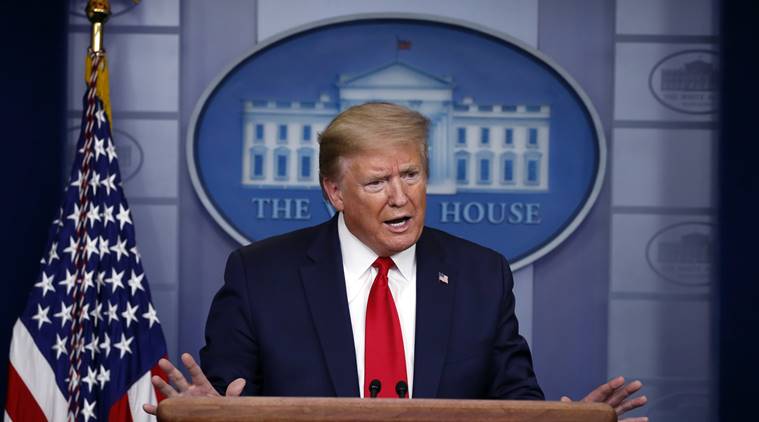
EUROPEAN leaders are set to agree on boosting defence spending and reaffirming support for Ukraine at a summit on Thursday, March 6, following Donald Trump’s suspension of military aid to Kyiv.

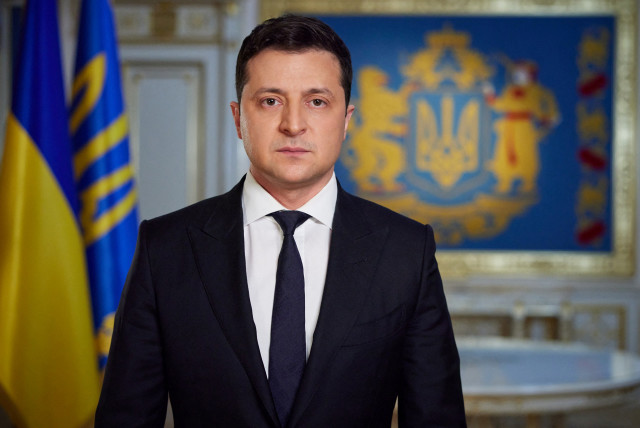
Ukrainian President Volodymyr Zelensky was invited to meet with the leaders of the EU’s 27 member states at the summit being held in Brussels.

The meeting comes amid significant defence policy shifts, driven by concerns that Russia, emboldened by its war in Ukraine, could target an EU country next.

Three years after Russia’s full-scale invasion of Ukraine, the Trump administration’s outreach to Russian President Vladimir Putin has sparked fears across Europe that the continent could no longer depend on U.S. support for its security.

French President Macron said on Wednesday, February 5, that his country was open to discussing extending its nuclear arsenal’s protection to European partners during a national address.

“I want to believe that the United States will stand by us. But we have to be ready if that is not the case,” Macron  said.

He stressed that Russia had become a threat to all of Europe.

“Faced with this world of danger, remaining a spectator would be madness,”.

This came after Friedrich Merz, who seeks to become Germany’s next chancellor, called for talks on expanding nuclear sharing on Tuesday, March 4.

The ICIR reported that the European leaders announced their plan to draft a peace plan for Ukraine on Monday, March 3, which would be presented to the United States.

British Prime Minister Keir Starmer described the move as a crucial step for Washington to offer security guarantees — a demand Kyiv considers essential to ending its conflict with Moscow.

The development followed a meeting at the White House, where Zelenskiy clashed with Trump and was eventually ordered out of the Oval Office.

Following the clash, on March 4, Trump ordered a suspension of all U.S. military aid to Ukraine. The following day, on Wednesday, March 5, the US also paused intelligence sharing with Kyiv.

Meanwhile, Trump is planning to temporarily revoke legal status for some 240,000 Ukrainians who fled the war, potentially putting them on a fast-track to deportation.

A senior Trump official and three other sources told Reuters on Thursday, March 6, that the move, expected as soon as April, would be a stunning reversal of the welcome Ukrainians received under Joe Biden’s administration.


Abducted Benue varsity students freed after eight days in captivity

0

THREE students abducted from Joseph Sarwuaan Tarka University of Agriculture, Makurdi, formerly known as the Federal University of Agriculture, Makurdi, have been released after spending eight days in captivity. 

The Benue State Police Command confirmed in a statement by its spokesperson, Anene Sewuese, on Thursday, March 6, that the victims, who were whisked away from the university campus by unidentified assailants, had been freed.

“On /3/2025, following continuous trail of the kidnappers, the victims were released at about 21:34hrs and are currently receiving medical attention at Benue State University Teaching Hospital, Makurdi.

“While investigation is ongoing, the Commissioner of Police, Benue State Command, CP. Steve H. Yabanet FCID, psc (+) commends all officers that have been involved in the operation, particular the IGP Intelligence  Response Team from Abuja and other security agencies in Benue State for their commitment to this investigation,” part of the statement read.

The ICIR reported that the three students were abducted from campus on Tuesday, February 25, by gunmen.

According to reports, the abduction occurred around 8:30 pm, as the students were moving from their hostels to the area designated for reading in the North Core section of the campus.

The incident sparked protests on campus, with fellow students rallying and marching around the campus with tree branches to demand immediate action from the university authorities.

Consequently, the university management granted a one-week mid-semester break and directed that all students vacate their hostels by 4:00 p.m. on Wednesday, February 26.

In an internal memo titled “Security Situation on Campus,” issued on Wednesday and signed by the Registrar, John David, the school also announced that the inaugural lecture scheduled for February 26, had been postponed indefinitely. 

“The inaugural lecture scheduled for today, February 26th, 2025, is postponed indefinitely. In solidarity with the students and parents of the abducted students, the university management has granted a one-week mid-semester break to all students to adequately address the security challenges on campus.

“Consequently, all students are to vacate their hostels by 4:00 pm today, Wednesday, February 26th, 2025,” the memo added.

The abduction came amid a chain of insecurity in Benue State, which has seen a spate of kidnappings in recent years. 

In a similar incident in August 2024, over 20 medical and dental students from the University of Maiduguri and the University of Jos were abducted in the state while en route to Enugu for an annual conference. 

The students were subsequently released a few days later. Confirming the release to The ICIR in a chat on Saturday, August 24, the spokesperson for the Benue State Police Command said the students were rescued on Thursday, August 23. 

MFWA offers story grants on digital public infrastructure

The Media Foundation for West Africa (MFWA) has announced story production grants to support journalists in Benin, Ghana, Nigeria, and Togo. 

The initiative aims to foster the creation of in-depth and impactful stories on Digital Public Infrastructure (DPI) and Digital Public Goods (DPGs).

 Journalists who have compelling story ideas on DPI and DPGs, especially those that can spark public discourse or influence policy decisions, are encouraged to apply.

Applicants must present a story idea that highlights issues related to digital public infrastructure and its societal implications. In addition, they must submit a letter of support from their media organisation, confirming the outlet’s commitment to publish the final work.

Successful applicants will receive grants averaging USD 300, with the exact amount depending on the complexity and potential impact of the story. Accepted story formats include print (newspapers and online), broadcast (radio and television), and documentaries.

To apply, journalists must submit a detailed story pitch outlining the topic, approach, potential sources, and expected outcomes. Applicants should also provide a breakdown of their budget and upload a signed consent letter from their media house.

Applications are reviewed on a rolling basis, with the first deadline set for March 20, 2025.

Interested journalist can submit their pitches here

Trump threatens to eliminate Hamas

UNITED States (US) President Donald Trump has issued what he described as a “final warning” to Hamas, demanding the immediate release of all hostages in Gaza.

“Release all of the hostages now, not later, and immediately return all of the dead bodies of the people you murdered, or it is over for you,” Trump wrote on Truth Social on Wednesday, shortly after meeting eight freed hostages at the White House.

Trump vowed that he would provide Israel with “everything it needs to finish the job,” warning that “Not a single Hamas member will be safe if you don’t do as I say.”

Trump’s warning came just hours after the US confirmed it was holding direct negotiations with Hamas regarding hostages and the Gaza ceasefire.

The U.S. had long refrained from direct contact with the Islamist group, which launched a cross-border attack into southern Israel on October 7, 2023, sparking a devastating Gaza war that Gaza health officials said had claimed over 48,000 Palestinian lives.

Trump’s warning reflects his “hell to pay” threat ahead of his return to the White House on January 20, which was followed by the ceasefire and hostages deal in mid-January that he took credit for before then-President Joe Biden left office.

In response, the Palestinian Mujahideen military group in Gaza condemned Trump’s warning, accusing his administration of intending “to proceed as a partner in the crimes of genocide against our people.”

“Trump’s threats today clearly reveal the ugly face of the United States of America and show its lack of seriousness and its renunciation of the agreement it mediated,” the group said.

However, Hamas has not commented on Trump’s threats yet.

The U.S. State Department designated Hamas as a terrorist organization in 1997.


Natasha’s sexual harassment petition against Akpabio dead on arrival – Ethics Committee

0

THE Senate Committee on Ethics, Code of Conduct, and Public Petitions has set aside Natasha Akpoti-Uduaghan’s petition against Senate President Godswill Akpabio, describing it as “dead on arrival.”

The committee, led by its chairman, Neda Imasuen, cited key procedural oversights that allegedly undermined the petition’s legitimacy.

Imasuen, during a probe session on Wednesday, March 5, explained that the petition was not properly endorsed because Akpoti-Uduaghan, who represents Kogi Central in the Senate, signed it herself, an action he claimed directly conflicted with established Senate procedures. 

“The petition that she (Natasha) presented today is actually dead on arrival; it runs contrary to order 40, sub-section 4, which states that no senator may present to the Senate a petition signed by him or herself. Since that petition was signed by her, it will not be entertained by this committee,” the committee chairman said.

Imasuen further noted that the issues raised in the petition were already before the courts, rendering them subjudice and outside the Senate’s purview. 

The committee expressed regret over Akpoti-Uduaghan’s absence during the session.

“We waited, and unfortunately, she is not here. I hope that before we conclude this procedure, she will join us,” the lawmaker said.

Meanwhile, the investigation into her alleged violation of the Senate rules was against the backdrop of the ruling of a Federal High Court in Abuja.

The court issued an order preventing the Senate Committee on Ethics, Privileges, and Public Petitions from continuing the disciplinary hearing.

The presiding judge, Obiora Egwuatu, issued the order, on Wednesday, March 5, following an ex parte application filed by counsel for Akpoti-Uduaghan.

However, the Senate Ethics Committee chairman stressed that the committee was acting within its mandate. He explained that “every petition is referred to us by the entire Senate, and the committee has the authority to deliberate on such matters.

The ICIR reported that Akpoti-Uduaghan submitted a sexual harassment petition against the Senate President on Wednesday, March 5.

After announcing her decision to formally present the allegations as a petition before the Senate, Akpabio granted her permission to proceed.

The Senate subsequently referred the petition to the Committee on Ethics, Privileges, and Code of Conduct, directing it to review the matter as soon as possible.

The submission of the petition followed the female lawmaker’s accusation that Akpabio made sexual advances towards her severally, during an interview on Arise TV on Friday, February 28.

She said her stance towards the advances was the reason for her incessant conflicts with the Senate President at plenaries within the National Assembly Complex.

U.S Supreme Court stops Trump from freezing nearly $2bn USAID’s fund

THE United States Supreme Court has rejected President Donald Trump’s request to freeze nearly $2 billion in foreign aid as part of his efforts to slash government spending.

In a split five to four decision on Wednesday February 5, the court upheld the order by the Washington-based District Judge, Amir Ali, directing the administration to swiftly release funds to contractors and grant recipients from the U.S. Agency for International Development and the State Department (USAID) for services previously rendered.

Chief Justice John Roberts and conservative justice Amy Coney Barrett joined the court’s three liberal justices to form a majority, rejecting the Trump administration’s request. 

Ali, a Federal High Court judge, had issued multiple rulings demanding that the government release funds frozen by Trump’s executive order, setting a February 26 deadline for the administration to disburse nearly $2 billion which the administration said could take weeks to be fully paid.

However, Roberts filed an emergency application to block the orders just hours before the midnight deadline, allowing the Supreme Court more time to review the administration’s formal request to block Ali’s ruling. 

On Wednesday,  the Supreme Court upheld Ali’s mandate in an unsigned order, noting that the federal judge’s original deadline for payment had lapsed, and the case remained active in district court, with further rulings anticipated.

A hearing is slated for Thursday, March 6, where Ali is expected to clarify the government’s obligations under a temporary restraining order issued on February 13.

The Supreme Court urged Ali to assess the practicality of compliance deadlines, signaling ongoing judicial oversight.

The ICIR reported that the Trump administration ordered a 90-day pause on all foreign aid on his first day in office on January 20, halting USAID operations around the world.

However, recipients and nonprofit groups filed two lawsuits, arguing that the freeze was an unconstitutional use of presidential power that blocked congressional funding allocated to USAID.

Lent begins today with Ash Wednesday: Here are things to know

0

LENT, a significant season in the Christian liturgical year, begins today, March 5, with Ash Wednesday.

The liturgical year is the Church calendar observed by Catholics, Anglicans, Lutherans, Orthodox Christians, and several other denominations.

On Ash Wednesday, worshippers receive a cross-shaped mark on their foreheads made from ashes. These ashes are obtained by burning palm fronds from the previous year’s Palm Sunday, according to the Catholic News Agency.

Palm Sunday, the Sunday before Easter, was observed on March 24 in 2024 and falls on April 13 this year. It is marked by the use of palm fronds, which worshippers wave during processions or fashion into crosses to take home.

This tradition commemorates Jesus Christ’s Triumphal Entry into Jerusalem when his followers laid palm branches before him, as recounted in the Gospels of Matthew, Mark, Luke, and John.

On Ash Wednesday, worshippers receive a cross-shaped mark on their foreheads made from ashes. Photo by Thays Orrico on Unsplash.

The Lenten season is a solemn period characterised by fasting, prayers, penance and almsgiving.

“Lent is a 40-day journey of sacrifice, prayer, and charity, echoing the time Jesus Christ, our Lord and Saviour, spent fasting in the wilderness” says the President of the Christian Association of Nigeria, (CAN), Daniel Okoh, in a statement released for the season.

Similarly, the Bishop of Enugu Catholic Diocese, Callistus Onaga, speaking on the need to use the Lenten season for sober reflection says,  “Once you are a human being, you have your shortcomings, and once you have your shortcomings, you are a sinner. So, observing the Lenten season helps Christians to turn away from their sins.”

The 40-day duration mirrors the fasting periods of Jesus Christ before his public ministry, as well as those of prophets Elijah and Moses, who each fasted for 40 days at different times.

The Lenten season culminates in Easter, which falls on April 20 this year, the Sunday after Palm Sunday.

Palm Sunday ushers in Holy Week, the sacred period in the Christian calendar.

“The Holy Week is where we take our journey with Jesus [Christ] from his passion through his death and into his resurrection. It begins this Sunday, Passion Sunday, sometimes called Palm Sunday,” says the Catholic Archbishop of Melbourne, Peter A. Comensoli, during last year’s video message titled “invitation to walk with Jesus this Holy Week”.

The Holy Week consists of:

  • Holy Monday, Holy Tuesday, and Holy Wednesday, which focus on Jesus’ teachings, his anointing at Bethany, and Judas’ betrayal.
  • Maundy Thursday, commemorating the Last Supper, where Jesus washed his disciples’ feet. The last super is said to be the beginning of the Eucharist (Holy Communion), celebrated in churches today.
  • Good Friday, marking Jesus Christ’s crucifixion.
  • Holy Saturday, a day of waiting, reflection, and remembrance of his time in the tomb before the celebration of the resurrection on Easter Sunday.

Beyond marking events and seasons, the liturgical year also dictates the colours of vestments  – clothes – worn by priests, choirs and used in church decorations.

During Lent, violet or purple is used, symbolising penance and preparation, while on Easter Sunday, the colour changes to white, signifying joy and resurrection. Red is used for the Holy week, while Black is used for Good Friday.

Amaewhule-led Assembly demands fresh list of appointees, gives Fubara 48 hours ultimatum

0

THE Rivers State House of Assembly has issued a 48-hour ultimatum to Governor Siminalayi Fubara, demanding the submission of nominees for various key positions within the state government. 

This resolution was passed during the Assembly’s 131st legislative session on Wednesday, March 5, in Port Harcourt, according to a letter addressed to the state governor. 

The Assembly, in the letter signed by the Speaker Martin Amaewhule, expressed concerns over the Governor’s alleged repeated appointments to positions that, by law, require prior screening and confirmation by the legislative body. 

The Assembly stressed that such unauthorized actions not only undermined the law but also posed a serious threat to democracy in the state.

According to the statement, the governor’s actions, including his decision to designate one Dagogo Iboroma for the post of attorney-general and commissioner for justice, without submitting his name for proper confirmation, constitute clear violations of the 1999 Constitution as amended, as well as other extant laws. 

The House further decried the swearing-in of several appointees as commissioners and members of other statutory bodies over the past months, noting that these appointments were executed without the mandatory legislative oversight. 

They considered the actions a breach of constitutional provisions governing such appointments.

The legislators also pointed out alleged irregularities in the constitution of the Rivers State Bureau on Public Procurement and the Rivers State Local Government Service Commission. 

They noted that appointments to these bodies were made without the mandatory screening and confirmation by the Assembly, alleged contravening the Rivers State Public Procurement Law No. 4 of 2008 and the Rivers State Local Government Law No. 5 of 2018, respectively.

The Assembly, however, mandated Fubara to submit a list of nominees for the aforementioned positions within 48 hours. 

This latest development came a few hours after the Assembly.gsve Fubara 48-hour ultimatum to represent the 2025 appropriation bill.

The Rivers government stated tha it had not yet received any official communication regarding the ultimatum.

In a letter dated March 5, 2025, addressed to the Speaker, the Secretary to the State Government, Tammy Danagogo, noted that the government only learnt about the letter containing the ultimatum on social media. 

He explained that, as of the close of business on March 4, neither the offices of the Governor, the Deputy Governor, nor the Accountant-General had received any such correspondence. 

The ICIR reported that the Assembly had, on Monday, March 3, given Fubara 48 hours to present the new 2025 budget.

In a resolution signed by Amaewhule, the lawmakers cited the Supreme Court’s directive halting federal allocations to the state and prohibiting spending from the Consolidated Revenue Fund until a properly passed Appropriation Bill is in place. 

The resolution stated that, in line with the provisions of the 1999 Constitution, the House expected the governor to submit the 2025 budget within 48 hours.

These ultimatums by the Rivers Assembly followed a recent Supreme Court judgment that reinstated Amaewhule and his faction as the legitimate members of the Assembly, which consequently invalidated the previous budget presentation made by Fubara to a rival faction. 

Earth Journalism Network launches 2025 biodiversity media grants

The Earth Journalism Network (EJN) has announced the launch of its 2025 Biodiversity Media Grants, aimed at supporting media organisations to enhance coverage of biodiversity issues worldwide.

EJN will award grants ranging from €10,000 to €12,000 to three or four media organisations. The initiative seeks to increase public awareness of biodiversity threats and highlight conservation solutions through quality journalism.

The grants are open to media organisations, journalist networks, civil society groups, and academic institutions based in low- and middle-income countries. Special consideration will be given to projects focusing on regions with high biodiversity or areas facing significant biodiversity loss.

Applicant projects should focus on themes such as exploring Other Effective area-based Conservation Measures (OECMs), nature-based solutions supporting biodiversity, Digital Sequence Information (DSI) and genetic resource sharing, and the potential negative impacts of conservation measures.

Applications for the 2025 Biodiversity Media Grants are due by March 30, 2025.

Interested applicants can apply using this link

Court orders temporary forfeiture of ‘diverted’ N1.37bn linked to El-Rufai’s government

0

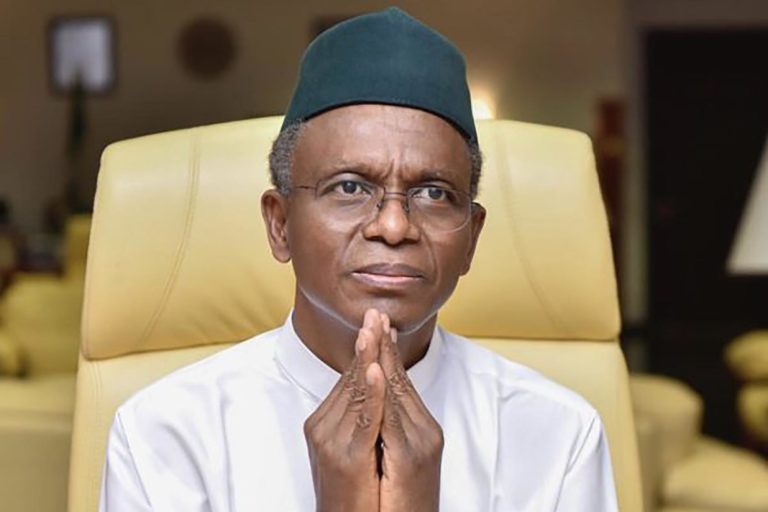
A Federal High Court sitting in Kaduna has ordered the temporary forfeiture of N1.37 billion allegedly diverted into a private account under the administration of former Kaduna State Governor, Nasir El-Rufai.

The ruling, delivered by the judge H. Buhari, followed an ex parte application filed by the Independent Corrupt Practices and Other Related Offences Commission (ICPC) on February 14, 2025.

The commission sought the order under various anti-corruption laws, including the Corrupt Practices and Other Related Offences Act 2000, the Advance Fee Fraud and Other Fraud Related Offences Act 2000, and the Proceeds of Crime (Recovery and Management) Act 2022.

The ICPC alleged that the funds were diverted into a private account belonging to INDO KADUNA MARTS JV NIG. LTD and were later recovered into the commission’s recovery account domiciled at the Central Bank of Nigeria (CBN).

The judge also directed that a public notice be published in two national newspapers, inviting any individuals or entities with legitimate claims to the funds to come forward and show cause why the money should not be permanently forfeited to the Federal Government of Nigeria.

The case has been adjourned to April 8, 2025, for a hearing on the final forfeiture.

The ICIR reports that the commission approached a Federal High Court in Kaduna, seeking an interim forfeiture order on the fund, which it said was a proceed from a fraudulent light rail project that the administration failed to execute.

The ICPC had recovered the money into the commission’s recovery account domiciled with the Central Bank of Nigeria in the course of an ongoing investigation into the activities of the officials of the state government during the period.

The exparte motion filed by the commission before the court seeks the court’s nod for the commission to repatriate the fund to the Kaduna State Government.

The ICPC noted that the alleged diversion had deprived the people of Kaduna State of the benefits of the rail transportation system which the money was meant for.

The ICIR reports that the alleged discovery contradicts El-Rufai’s claim that not a dime was stolen under his administration. The former governor had also boasted recently when he appeared on Arise Television for an interview that he led a corruption-free government.

According to documents filed by the ICPC before the court, the Kaduna State Government, under El-Rufai, entered into a joint venture agreement in October 2016 with Indo Kaduna MRTS JV Nig. Ltd to develop a light rail transport system in the state.

At the time the contract was awarded, the company was not registered with the Corporate Affairs Commission (CAC).  Despite this, the state government proceeded to transfer over N11 billion into the company’s account at Sterling Bank through multiple transactions between December 23, 2016, and January 17, 2017.

The ICIR reports that awarding a contract to an unregistered company is a serious violation of Nigerian law.

Section 814 of the Companies and Allied Matters Act (CAMA) 2020 mandates the registration of business names with the Corporate Affairs Commission (CAC).

Operating a business without such registration is considered an offence under Section 821 of the same Act. Therefore, making payment into the account of such a company not registered by the CAC contravenes these provisions.

How the alleged fraud unfolded

The ICPC’s investigation revealed that rather than execute the rail project, Jitender Sachdeva, the president of Indo Kaduna MRTS JV Nig. Ltd., also the Indian representative of Skipper Nigeria Limited, allegedly instructed Sterling Bank to place the funds in a fixed deposit account.

Over time, the fixed deposit yielded an interest of N326.8 million, increasing the total sum under scrutiny to N11.37 billion.

The interest on the fixed deposit was said to have been diverted to different accounts of Skipper Nigeria Limited domiciled with Sterling Bank Nigeria Limited.

Further investigations showed that in 2019, N10 billion was refunded to the Kaduna State Government following concerns about the project’s execution.

However, the ICPC found that a balance of N1.04 billion remained unaccounted for. This remaining amount, according to the commission, was funnelled into the accounts of GTA Engineering Nigeria Ltd., a subsidiary of Skipper Nigeria Ltd., under “payment for feasibility study” for the light rail project.

The ICPC said there was no evidence that any such study was conducted.

Relying on the Proceeds of Crime (Recovery and Management) Act (2022), and the Advance Fee Fraud and Other Fraud-Related Offences Act (2006) and Nigerian Constitution, ICPC asked the court to grant an interim forfeiture order on the funds.

The commission argued that the money represented illicit proceeds derived from a contract that was never executed and the fund should be forfeited to the Federal Government in public interest.

In addition to the forfeiture request, the ICPC also sought an order compelling the publication of the court proceedings in two national newspapers.

This would allow any interested parties such as the Kaduna State Government or companies involved in the transaction to contest the forfeiture request and provide justification for why the funds should not be permanently confiscated.

Controversial light rail project 

The Kaduna light rail project was initially presented as a major infrastructure initiative designed to modernise the state’s transport system and ease movement of residents.

However, the project was abandoned, despite the billions of naira allocated to it.

The legal battle over the N1.37 billion comes amid broader scrutiny of Kaduna State’s finances. The state is grappling with allegations of mismanagement under the former governor, particularly concerning massive debts allegedly incurred by his administration.

El-Rufai was accused by his successor, Uba Sani, of leaving Kaduna in a dire financial state with billions in liabilities.

Sani said he could not pay salaries and further lamented that El-Rufai left a “huge debt burden of $587m, N85bn, and 115 contractual liabilities” for his government.

El-Rufai’ defence 

Former members of the Kaduna State Executive Council (2015–2023) including El-Rufai, however, denied corruption allegations in the Light Rail Project and insisted that all payments made for the project followed due process.

They explained that the rail project was part of the El-Rufai administration’s infrastructural development agenda and was designed as a Public-Private Partnership (PPP), with an Indian firm, Skipper, securing the contract after a competitive bidding process.

The project was to be funded through a $600–700 million loan from the Indian EXIM Bank, with Kaduna State providing a 15 per cent equity contribution.

According to the statement they issued as their defence, the state government engaged a French consultancy firm, Systra, alongside GTA Engineering, to conduct a feasibility study, which cost $2.8 million (about N890 million). The officials said the study was necessary to secure the loan, and its findings led to an in-principle approval from the Indian EXIM Bank in 2017.

However, they claimed the project stalled after the Federal Government declined to provide a sovereign guarantee, which was a key requirement for securing the loan.

They further noted that the state had made a down payment of N12 billion as part of its equity contribution but later recalled the funds when it became clear that the project could not be executed. They argued that all refunds were made except for the N890 million feasibility study cost.

According to them, the feasibility study remains the property of the Kaduna State Government. They also said a forensic audit was conducted to verify the refunds.

They accused the ICPC of shifting its allegations “after initially claiming that N13 billion was missing.”

They further accused the commission of pressuring Sterling Bank to deposit N1.3 billion into an escrow account with the Central Bank of Nigeria (CBN), which they said comprised the feasibility study cost and accrued interest. They posited that the forfeiture process initiated by the ICPC was unjustified and politically motivated.

Reacting to the ICPC’s claim that the funds were deposited into an unregistered company’s account, the former officials admitted there was a delay in incorporating the joint venture company but maintained that no laws were broken.

They insisted that the project was handled transparently and that the feasibility study and related documents remained state assets that could be used whenever the project is revived.