Home Blog Page 41

Nigeria leads as global malaria deaths rise to 610,000

0

THE World Health Organization has raised concerns over the continued spike in global malaria cases and deaths, warning that Nigeria remains one of the most burdened countries.

The WHO also revealed that malaria killed an estimated 610,000 people globally in 2024.

Commemorating the World Malaria Day 2026 on April 25, the WHO launched its new campaign, themed: “Driven to End Malaria: Now We Can. Now We Must.”

It described the new campaign as a call to accelerate efforts toward ending malaria despite growing challenges such as drug resistance, funding gaps, and climate-related disruptions.

“Science is advancing faster than ever. For the first time, ending malaria in our lifetime is a real possibility. New vaccines, treatments, malaria control tools and pioneering technologies – including genetic modification of mosquitoes and long-acting injectables – are in development.

“Already, 25 countries are rolling out malaria vaccines to protect 10 million children a year. Next-generation mosquito nets now make up 84 per cent of all new nets distributed. Nationally led programmes are driving change. The possibility has never been greater,” the WHO said in a statement.

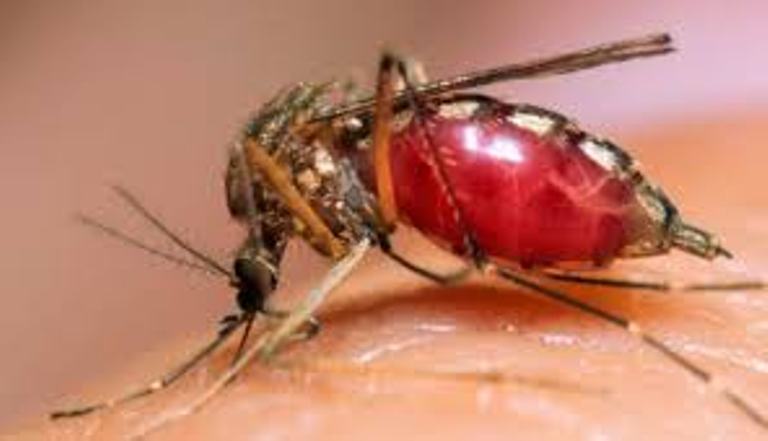
Malaria remains a life-threatening disease transmitted through the bites of infected female anopheles mosquitoes, and is most common in tropical countries.

Symptoms include fever, headache and chills, but severe cases can lead to breathing difficulties, seizures, organ failure and death if not treated quickly.

Infants, children under five, pregnant women, travellers, and people living with HIV/AIDS are considered most at risk.

The global health body noted that since 2000, malaria interventions had helped avert 2.3 billion cases and 14 million deaths, insisting that ending malaria within a generation “is now possible if urgent action is taken.”

It said 47 countries had been certified malaria-free, including two countries in 2024 and three more in 2025, while 37 others reported fewer than 1,000 malaria cases in 2024.

It also noted that between 2000 and 2024, malaria-endemic countries dropped from 108 to 80.

It urged governments and development partners to sustain funding, strengthen country-led programmes, accelerate innovation, and empower communities.

According to the WHO’s World Malaria Report 2025, there were an estimated 282 million malaria cases globally in 2024, representing an increase of about nine million cases compared to 2023, while deaths rose slightly from 598,000 in 2023 to 610,000 in 2024.

The WHO African Region recorded the heaviest burden, accounting for 95 per cent of global malaria cases. It logged 265 million infections, and 95 per cent of all deaths attributable to the disease, translating to about 579,000 fatalities.

Children under five years accounted for about 75 per cent of all malaria deaths in the region.

The agency said Nigeria contributed the highest share of malaria deaths in Africa, accounting for 31.9 per cent of all deaths in the region, followed by the Democratic Republic of Congo with 11.7 per cent, and Niger with 6.1 per cent.

The global health body said despite years of progress, malaria elimination efforts were facing fresh threats.

For instance, artemisinin partial resistance, which threatens the effectiveness of the main malaria treatment, was confirmed in four African countries, Eritrea, Rwanda, Uganda and Tanzania, while insecticide resistance to pyrethroids, commonly used in mosquito nets, has been confirmed in 48 out of 53 reporting countries.

WHO also warned that diagnostic failures linked to pfhrp2 gene deletions were spreading, making some rapid diagnostic tests ineffective, while the invasive mosquito species Anopheles stephensi, known for thriving in urban areas and resisting insecticides, was expanding across Africa.

A major concern highlighted in the report is inadequate funding. The WHO said only $3.9 billion was available for malaria response in 2024, less than half of the $9.3 billion target for 2025, leaving a projected shortfall of $5.4 billion.

It added that recent cuts in global health aid disrupted surveillance systems, healthcare delivery, and malaria prevention campaigns, especially in vulnerable countries.

The WHO stressed that malaria is preventable and curable through the use of mosquito nets, repellents, preventive medicines, vaccines, and prompt treatment with artemisinin-based combination therapies.
Nigeria urges citizens to close shops as Ghana summons S’Africa envoy over xenophobic attacks

0

THE Nigerians in Diaspora Commission (NiDCOM) has issued a fresh safety alert to Nigerians living in South Africa following renewed anti-foreigner protests that have turned violent in parts of the country.

This was as Ghana summoned South African senior official over attacks on its citizens.

In a statement on Friday, April 24, NiDCOM said demonstrations in East London, Cape Town, Durban and parts of KwaZulu-Natal had escalated into violence, with reports of looting, destruction of property and injuries.

The commission disclosed that intelligence from the Nigerian Consulate General in Johannesburg showed that more protests were being planned in Gauteng Province between April 27 and 29, as demonstrators continue to pressure the South African government over the presence of foreign nationals.

“In response, NiDCOM advises all Nigerian citizens to avoid confrontation with protesters, refrain from engaging with demonstration groups, and monitor local media for real-time safety updates.

“Nigerian nationals are also urged to remain law-abiding at all times,” the commission said.

It further advised Nigerian business owners to temporarily shut down their shops, especially on Freedom Day, April 27, and possibly on April 28 and 29, warning that foreign-owned businesses were often targeted during such unrest.

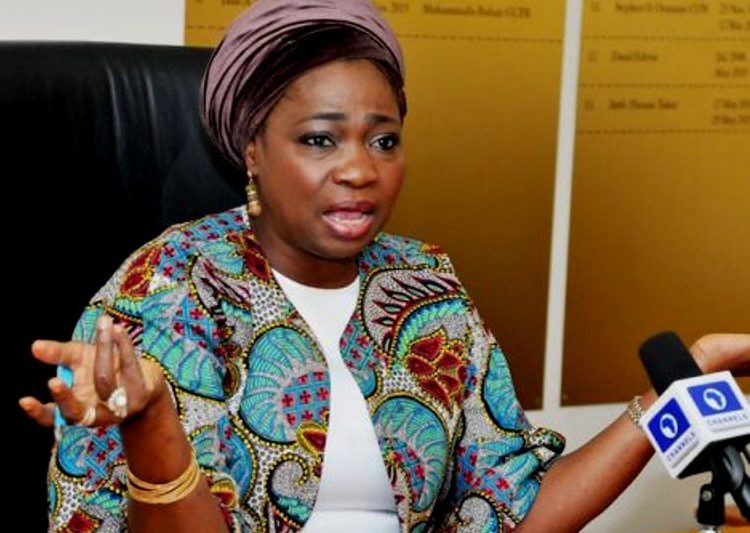
NiDCOM said that the Minister of State for Foreign Affairs, Bianca Odumegwu-Ojukwu, was engaging with South African authorities over the situation.

This latest warning came a few weeks after attacks on foreigners by some South African groups over the coronation of a traditional leader by Nigeria’s Igbo community in East London.

On Thursday, April 23, several viral videos reportedly showed groups of South Africans assaulting foreign nationals as they demanded that they leave the country.

In one of the videos, a group confronted a Ghanaian man, questioning why he had moved to South Africa.

“This thing of you guys moving from one country to the other, its no longer working,” a lady said on behalf of the group.

“We don’t want these African people anymore. We’re tired of seeing African migrants moving all over the world, refusing to fix your own countries. Now, we’re making it very clear to you guys: we don’t want you here. We want you to fix your countries,” she added.

A man in the same clip challenged the legality of the Ghanaian’s documents, accused him of fraud and warned other foreigners to leave before they were targeted.

Another video showed a man being assaulted after he was mistaken for a foreigner, while a separate clip captured a South African man complaining that foreigners were “sleeping comfortably” while locals struggled.

Ghana summons top South Africa official

The incidents prompted Ghana to summon South Africa’s acting High Commissioner to Accra, Thando Dalamba, over what it described as “acts of intimidation and harassment” against Ghanaians and other African migrants.

Ghana’s Ministry of Foreign Affairs said the victim in the viral video was legally resident in South Africa and condemned the public harassment.

“Such conduct undermines the dignity and rights of law-abiding citizens,” the ministry said.

Ghana’s Foreign Affairs Minister, Samuel Okudzeto Ablakwa, described the videos as ‘xenophobic’ and said he had spoken with South Africa’s Foreign Minister, Ronald Lamola, who promised a full investigation and expressed sympathy for the victims.

Rising tensions

Meanwhile, residents of Mthatha in Eastern Cape Province are expected to hold fresh protests over concerns about the presence of foreign nationals and limited job opportunities for locals.

The protests have been linked to anti-immigrant groups such as Operation Dudula, and March on March, which accuse migrants of causing worsening unemployment, crime and drug abuse in South Africa.

Earlier this week, March on March led demonstrations in Durban, where participants were seen in viral clips attacking a man they believed was an undocumented foreigner.

South African authorities have since condemned the attacks.

Acting Police Minister Firoz Cachalia said no individual or group had the authority to take immigration enforcement into their own hands.

He also warned that attacks on migrants threatened South Africa’s constitutional order.

“The Ministry of Police wishes to advise the members of the public that acts of xenophobia, violence, looting, or intimidation will not be tolerated under any circumstances. The #SAPS has been instructed to act decisively and without hesitation in addressing these incidents,” he said.

The ministry added that all those found participating in or inciting xenophobic violence would be identified, arrested and prosecuted.

A Million Ways To Hurt Women

0

By Olufunke Baruwa

THERE are shocking stories and then there are disturbing stories. The recent CNN investigation into what has been chillingly described as an online “rape academy”


straddles both. It is not just a story of depravity. It is a story of digital, social, and cultural systems working in quiet collusion to harm women on a scale that is both industrial and intimate.

According to the investigation, a site with tens of millions of visits, reportedly over 62 million in a single month, hosts communities of men who share not just explicit content, but strategies: how to drug women, how to violate them while unconscious, how to record the act, and how to distribute it.

This is not happening in the shadows of the dark web. It is happening in plain sight and that is the point.

At the heart of these horrors is a fundamental truth: the erosion of consent as a moral boundary. The men on these platforms do not see unconsciousness as a barrier. They see it as an opportunity. They do not interpret silence as absence of consent; rather, they redefine it as permission.

When men gather in spaces where rape is normalised, discussed, and even celebrated, they begin to internalise a different moral framework, one in which women’s bodies are objects, not agents. And once that shift occurs, the line between fantasy and action collapses. The digital world does not just reflect violence; it produces it in astronomical numbers.

A Global Pattern and Digital Architecture of Violence

For years, we have spoken about violence against women as though it were episodic—something that happens in dark alleys, in moments of individual moral failure. But what this investigation reveals is something far more sinister: the systematisation of sexual violence.

These platforms operate like any other online community. They reward participation, normalise behaviour and create belonging. Badges, rankings, and validation loops turn acts of violence into social currency. Men are not merely consuming content; they are learning from one another. They are teaching, improving techniques and building a culture.

And culture, once entrenched, is far harder to dismantle than any individual criminal act. This is the terrifying evolution of misogyny in the digital age: it is no longer just expressed, it is organised, networked, and optimised.

It would be comforting to believe that these are isolated incidents or aberrations in otherwise functional societies. But the evidence suggests otherwise. From France to the United Kingdom, from Nigeria to the United States, stories of drug-facilitated sexual assault, image-based abuse, and online exploitation continue to surface with disturbing regularity.

The CNN investigation is not an outlier. It is a window into a global ecosystem where technology enables anonymity, communities reinforce deviance and weak accountability allows it to flourish. Even more troubling is the scale. Sixty-two million visits is not a fringe statistic. It is a mass phenomenon.

It raises an uncomfortable question: How many men are participating in, consuming, or silently tolerating this violence against women and girls?

When Home Becomes the Crime Scene

If the online world reveals the scale, real-life cases reveal the depth of this violence. Consider the case of Gisèle Pelicot. For nearly a decade, her husband, Dominique Pelicot, drugged her repeatedly and invited dozens of men to rape her while she lay unconscious in her own bed. He filmed the assaults. He catalogued them. He shared them. She was raped at least 92 times by over 70 men and she did not know.

When she finally discovered the truth through police evidence, not memory, her world collapsed in a way that language can barely contain. She later described the experience as “unbearable.” This was not a stranger in a dark alley. This was her husband. Her home. Her life.

And he was not alone. Dozens of men participated, men with families, jobs, and social standing. Some claimed they believed it was consensual. Others did not bother to ask. What unites them is not ignorance. It is entitlement.

For generations, women have been told to be careful: Do not walk alone at night.

Watch your drink. Dress decent. Trust your instincts. But what happens when the danger is not outside but inside? Inside homes, marriages and trusted relationships.

What happens when the person who is supposed to protect you is the one orchestrating your violation? The case of Gisèle Pelicot shatters the illusion that safety can be achieved through vigilance alone. You cannot guard against what you cannot imagine. You cannot defend yourself against a betrayal you do not see coming.

This is the cruel paradox of gender-based violence: women are asked to be responsible for preventing crimes that are entirely outside their control.

The Role of Platforms and Policy Failure

There is another layer to this story, one that cannot be ignored: the role of platforms and regulators. How do communities like this exist, grow, and thrive without intervention?

The answer lies in a toxic mix of platform negligence, weak enforcement of content moderation, jurisdictional loopholes and a persistent underestimation of gender-based violence as a serious crime. For too long, online abuse has been treated as a secondary issue, less urgent than terrorism, less visible than financial crime, less politically costly than other forms of harm.

But what we are witnessing now is the consequence of that neglect. When you fail to regulate spaces that normalise violence, you are not neutral. You are complicit.

If there is any light in this darkness, it is the courage of survivors like Gisèle Pelicot, who chose to waive her anonymity and face her attackers in open court. In doing so, she made a radical demand: that the shame of rape should no longer belong to the victim, but to the perpetrators.

This is not just symbolic. It is transformative. Because silence protects systems. Visibility disrupts them. Her story has sparked outrage, yes, but also reflection. It forces societies to confront uncomfortable truths about masculinity, power, and the normalisation of violence.

A Million Ways, One System

Women are harmed in homes, at work and on the streets. In physical and digital spaces. By strangers and by those they love. But beneath these many forms of violence lies a single, unifying system: a world that still, fundamentally, does not value women’s autonomy as it should.

Until that changes, until consent is non-negotiable, until accountability is real, until platforms are forced to act, and until societies confront the cultures they have allowed to fester, these stories will continue. And each one will feel like an aberration. But they are not. They are the pattern.

The question is no longer whether women are safe. They are not. The question is whether we are willing to confront the uncomfortable truth of why. And more importantly, what we are prepared to do about it.

To curb this horrific trend, governments, technology platforms, and societies must move decisively to criminalise and aggressively prosecute digital sexual violence, enforce stricter platform accountability and content moderation, invest in survivor-centred justice systems, and fundamentally challenge the cultural norms that enable men to dehumanise and violate women with impunity.

The world will remain a dangerous place for women and girls until men see women as humans with agency and voice and those who profit astronomically from digital technology begin to hold their platforms accountable to womanity

Wike appoints third retiring FCTA director as aide 

4

THE Minister of the Federal Capital Territory (FCT), Nyesom Wike, has appointed another retiring Federal Capital Territory Administration (FCTA) official, Musa Idris, as his Senior Special Assistant on Procurement.

The appointment takes immediate effect and follows Idris’ retirement from the civil service on Friday, April 24, 2026.

Senior Special Assistant on Public Communications and Social Media to the minister, Lere Olayinka, announced the appointment in a statement on Friday.

According to Olayinka, Idris is a seasoned public servant with over 30 years of experience in administration, finance, and public sector procurement management.

Before his retirement, Idris served as Director of Procurement in the FCTA, a position he assumed in July 2021.

“He rose to the position of Director, Common Services (Procurement) in August 2019 and was later redeployed to the Department of Procurement as Director FCT Procurement in July 2021, where he played critical roles in overseeing procurement processes and ensuring compliance with regulatory standards.

“Over the years, Idris has gained extensive experience across key administrative and procurement functions, contributing to institutional efficiency and service delivery,” he said.

The latest appointment adds to a growing pattern of Wike retaining retiring senior FCTA officials as political aides immediately after their exit from the civil service.

In January 2026, the minister appointed a retiring FCTA official, Musa Daura, as Senior Special Assistant on Protocol Matters, with the appointment taking effect shortly after his retirement from service on January 24.

Daura, who served as Director of the FCT Protocol Department, had spent more than three decades in protocol and administrative roles within the FCTA.

His appointment came barely a month after Wike also named retired Director of the Department of Development Control, Mukhtar Galadima, as Senior Special Assistant on Development Control and Planning in December 2025.

Galadima had served as director of the Development Control Department from 2016 to 2025 and was appointed shortly after leaving office.

Building a greener, safer future: why local action matters now

0

By Abubakar  ABDULMUSAWWIR

In recent years, conversations around insecurity, poverty, and environmental degradation have dominated public discourse in Nigeria, particularly in the North-East. While these issues are often discussed separately, the reality on the ground tells a different story, one where they are deeply interconnected. To truly address them, we must adopt solutions that are holistic, community-driven, and sustainable.

It is precisely this gap that Make Yobe Green and Safe (MYGS) seeks to fill.

Yobe State, like many parts of the North-East, faces enormous challenges. Years of insecurity have disrupted livelihoods, weakened institutions, and displaced communities. Poverty remains widespread, and many young people struggle to find meaningful employment. Environmental issues such as deforestation, desertification, and poor waste management further compound these difficulties. In such a context, the need for innovative, grassroots solutions cannot be overstated.

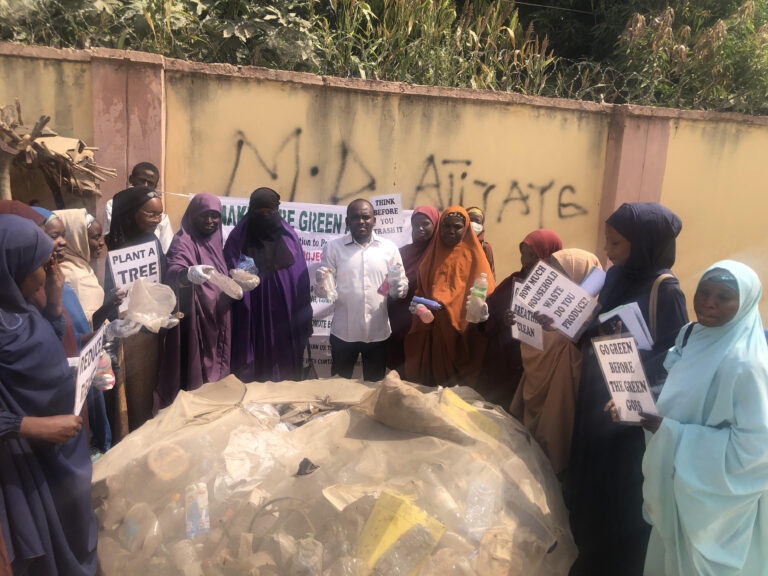
One important lesson from working within communities is that the environment can serve as an entry point for transformation. One of our flagship initiatives is plastic waste recycling. Across our communities, plastic waste is a common sight, littering streets, clogging drainage systems and contributing to pollution. However, we see waste not as a problem, but as an opportunity.

Yet waste can also be seen as an opportunity rather than simply a problem. Through our recycling program, we have established systems where plastic waste is collected, sorted and sold. We engage young people, women and other vulnerable groups, training them on how to participate in recycling and earn an income from it. What was once discarded is now a source of livelihood. This initiative not only helps to clean our environment but also provides economic relief for many households.

Tree planting is another practical intervention with long-term benefits. Trees help combat climate change, improve air quality, and prevent desert encroachment, which remains a serious threat in northern Nigeria. Encouraging communities to plant and protect trees also fosters a stronger sense of ownership and responsibility for the environment.

Education is equally essential. Environmental awareness must go beyond slogans and become part of daily community life. Schools, religious institutions, and local organisations all have a role to play in teaching sustainable practices and promoting responsible citizenship. In regions affected by conflict, promoting values such as tolerance, dialogue and coexistence is essential. By combining green education with peace studies, we aim to build not just environmentally conscious citizens, but also responsible and peaceful members of society.

Energy poverty also deserves urgent attention. Many communities still lack reliable access to electricity, limiting economic activity and affecting quality of life. Renewable energy solutions, especially solar power, offer cleaner and more dependable alternatives. Expanding access to sustainable energy can support homes, small businesses, schools, and health services while reducing dependence on harmful energy sources.

The impact of community-driven environmental initiatives is already visible in many places. Young people who were previously idle become engaged in productive activities. Women gain new sources of income. Communities become more conscious of environmental challenges and begin taking responsibility for local solutions. Most importantly, people begin to believe that change is possible.

However, grassroots efforts often face major challenges. Drawing from experience with MYGS, funding constraints often limit the scale and reach of our programs. There is also the challenge of visibility as many impactful local initiatives go unnoticed and unsupported, despite their potential to drive meaningful change.

This is why stronger support from government agencies, private sector stakeholders, development partners, and civil society is necessary. Supporting grassroots initiatives should not be seen as charity, but as a strategic investment in peace, resilience, and long-term development. By supporting community-driven solutions, we can build resilience, create jobs and foster long-term stability

Members of the public also need to get involved.  Environmental sustainability is not the responsibility of a few; it is a collective duty. Simple actions such as proper waste disposal, participation in recycling, and tree planting can make a significant difference. When communities come together with a shared purpose, the impact can be transformative.

The challenges we face are complex, but they are not insurmountable. With the right partnerships, support and commitment, we can turn them into opportunities for growth and transformation.

The future we desire – a greener environment, a safer society, and a more prosperous people – is within reach. But it requires collective effort. It requires us to rethink our approach, invest in our communities, and support local solutions that create lasting change.

Together, we can build a Yobe that is not only green but also safe, a place where people live with dignity, harmony, and hope.

Abubakar Abdulmusawwir from MYGS, writes from Potiskum, Yobe State. He can be reached through: abubakarabdulmusawwir@gmail.com

Fate of 416 Boko Haram captives uncertain as 72-hour deadline expires

0

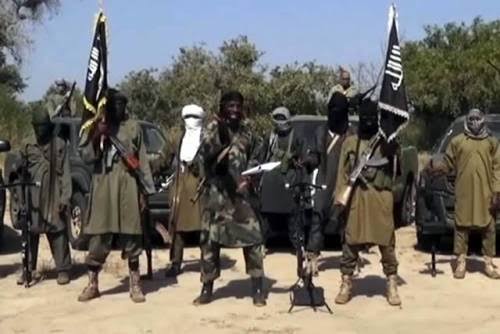
ANXIETY has deepened over the fate of 416 civilians abducted by Boko Haram terrorists in Borno State after the 72-hour ultimatum issued by the insurgents for the payment of ransom expired without any news of the captives’ release. 

In the reported footage, the insurgents, dressed in military camouflage and speaking in Hausa, warned that the abducted women and children would be moved to places where they might never be found again.

They also openly challenged the Nigerian government to attempt a forceful rescue, insisting they were prepared for confrontation and would not back down.

The group described the message as its “first and final warning,” stressing that once the deadline elapsed, the captives would be separated and taken to various locations.

We are Jama’atu Ahlis-Sunna Lidwatu Wal-Jihad under Imam Abu. Today, 19th April 2026, we are issuing a new message to the Borno South Youths Alliance and to the Nigerian government, which we do not recognise as our government. This is our first and final message. We are giving you 72 hours. 

“If our demands are not met, we will move these victims, including women and children, to different locations. All of them. You have made your decision, and we have made ours. We instruct you, in the name of Allah, not to exceed the given time,” the sect said.

The group’s spokesperson added that “And take a look at them before we do so, because you may never see them again. If the government believes it can rescue them by force, you are free to try. We depend on Allah.”

As of Thursday, April 23, however, there was no official statement from the Federal Government, Borno State Government, military authorities, or security agencies confirming whether the negotiations had succeeded or the victims had been rescued.

This silence has heightened fears among residents and families of the abductees that the insurgents might have carried out their threat.

Group demands N5bn ransom

Although the terrorists did not state their exact demands in the video, reports indicated that the President of the Borno South Youths Alliance (BOSYA), Samaila Kaigama, confirmed that the insurgents demanded ₦5 billion for the victims’ release.

BOSYA has reportedly been engaging with the media and acting as an intermediary between the terrorist group and the families of the affected victims.

Kaigama said the demand was communicated through a video sent by the terrorists and described as a “final warning” during ongoing mediation efforts.

According to him, BOSYA had been involved in efforts to establish contact and facilitate discussions between the insurgents and relevant authorities in a bid to secure the safe release of the abducted women and children.

He said the alliance considered the matter a humanitarian emergency and urged urgent intervention from both government and weall-meaning Nigerians.

Kaigama also appealed to President Bola Tinubu, Vice President Kashim Shettima, Borno State Governor Babagana Umara Zulum, and prominent philanthropists such as Aliko Dangote and Abdul Samad Rabiu to intervene before it became too late.

How the victims were abducted

The mass abduction followed a deadly Boko Haram attack on Ngoshe community on March 4, when suspected fighters from Boko Haram and the Islamic State of West African Province (ISWAP) invaded the area after first overrunning a military base.

Reports indicated that the insurgents attacked the military formation in the early hours, burnt operational vehicles, destroyed military equipment, and dispersed security personnel before moving into the community and launching attacks on civilians.

Several residents were reportedly killed during the assault, while hundreds of women and children were abducted and taken away toward the Mandara Mountains.

The attack forced hundreds of residents to flee to neighbouring Pulka town, where many displaced persons reportedly slept on roadsides and in school buildings for fear of further attacks.

The spokesperson of the Borno State Police Command, Nahum Kenneth, had confirmed that civilians were killed and many others were missing.

Senate urges FG to act

The Senate on April 22 called on the Federal Government to intensify efforts to secure the captives’ release.

The lawmakers’ position was prompted by a motion titled, “Urgent Need to Curb Attacks on Military Formations by Boko Haram Insurgents,” sponsored by a senator representing Borno North, Tahir Monguno, and co-sponsored by two other senators in the state, Ali Ndume and Kaka Lawan.

In its resolutions, the Senate condemned the continued Boko Haram attacks on military formations and local communities in parts of the nation.

BudgIT slams Tinubu’s fresh $516m loan, says poor loans worse than wasted revenues

THE Chief Executive Officer of BudgIT,  Seun Onigbinde, has warned that poorly taken loans are more dangerous than wasting public revenues.

Speaking on Friday’s edition of Channels Television Morning Brief, Onigbinde criticised the processes surrounding President Bola Tinubu’s fresh $516 million loan request, arguing that weak scrutiny by the National Assembly risked mortgaging the country’s future revenues.

The ICIR reported on Thursday, April 23, that Tinubu sought the Senate approval for the loan to support the Sokoto–Badagry Superhighway project.

He requested for the approval despite the current oil windfall for the Nigerian government, occasioned by the United States war in Iran and huge revenue accruing to the government’s coffers from the petrol subsidy removal.

The Federal Government had put the 2026 budget benchmark for crude at $64.85 per barrel, but Brent currently sells for $102.2 per barrel, according to data from oilprice.com.

Reacting to the development, the BudgIT CEO said on the TV programme, “No matter what interest rate, no matter the moratorium, at one point in time, you would have to pay back, and you will have to pay back with future revenue. So, you know, a poorly taken loan is so much more dangerous than wasting public revenues because you are literally averaging revenues that would come in the future at the end of the day.”

Tinubu had said the proposed facility sourced through a syndicated arrangement, led by Deutsche Bank, would finance Sections I, Phase IA and IB of the project, covering roughly 120 kilometres.

He explained that the request complied with Sections 16 and 21 of the Debt Management Office (DMO) Act governing public borrowing.

The loan request came barely 48 hours after the sack of the former Minister of Finance, Wale Edun, who, sources said, was not in support of frequent borrowings of the Tinubu administration.

Speaking further on Channels TV, Onigbinde stressed that borrowing decisions should undergo rigorous legislative and procedural checks before approval, warning that current practices fell short of expected standards.

“Before we even look at the propriety of the loan request…It’s unfortunate, I mean, to take a loan when procurement processes are not effective. And the National Assembly, there’s supposed to be the guardrail and the backstop to all of this. It’s also not standing up to its responsibility,” he added.

Onigbinde questioned the prioritisation of so-called “legacy projects,” citing ongoing infrastructure gaps across the country. He pointed to several incomplete road networks, arguing that the government should focus on finishing existing projects before embarking on new, capital-intensive ones funded by debt.

The BudgIT CEO also raised red flags over procurement practices tied to major infrastructure projects, including the Lagos-Calabar Coastal and the Sokoto-Badagry Superhighway, noting that the absence of transparent and competitive bidding processes undermined accountability and value for money.

He further criticised the legislature for failing to act as a safeguard against executive excesses, stressing that the constitutional role of the National Assembly is to serve as a guardrail in approving borrowing plans.

“The executive can propose anything…The framers of the constitution that said that the National Assembly should approve this funding, they were wise in their own ways because they understood that the executive could even choose to be exuberant, but the National Assembly should act as the buffer on all of these issues,” he added, warning that weak oversight could deepen Nigeria’s fiscal vulnerabilities.

Onigbinde remarks come amid growing public debate over Nigeria’s debt sustainability and the transparency of large-scale infrastructure financing, as the government continues to pursue ambitious development projects funded through external borrowing.

Last month, the president requested that the National Assembly approve a N9 trillion increase to the 2026 budget, alongside fresh external borrowing totaling $6 billion to support government spending, infrastructure, and debt obligations.


2026 Global Fact-Checking Awards seek entries

THE International Fact-Checking Network at the Poynter Institute is accepting entries for its 2026 Global Fact-Checking Awards.

These awards celebrate outstanding achievements in fact-checking journalism and are open to all signatories of the IFCN Code of Principles.

Entries must be submitted between April 21 and May 6, 2026. Each organisation may submit one entry total, in one category only.

A submission may consist of either a single piece of content or a series of up to five related pieces, such as articles or multimedia items.

Judges will consider each submission as one entry. All content must have been published between April 20, 2025, and April 21, 2026.

All signatories to the IFCN Code of Principles are eligible to enter. In the Collaboration category, joint entries may include non-signatories, but at least one participating organisation must be an IFCN signatory.

Winners will be announced during the GlobalFact 2026 conference in Vilnius, Lithuania, in June.

An independent expert panel of judges will review eligible submissions and select the winners. IFCN staff will conduct initial eligibility screenings.

Entries are welcome in any language. Please provide translations if submitting in other languages.

Deadline is Wednesday, May 6, 2026. Interested applicants can apply here.


Tinubu seeks Senate approval for $516m Sokoto–Badagry Superhighway loan despite oil windfall

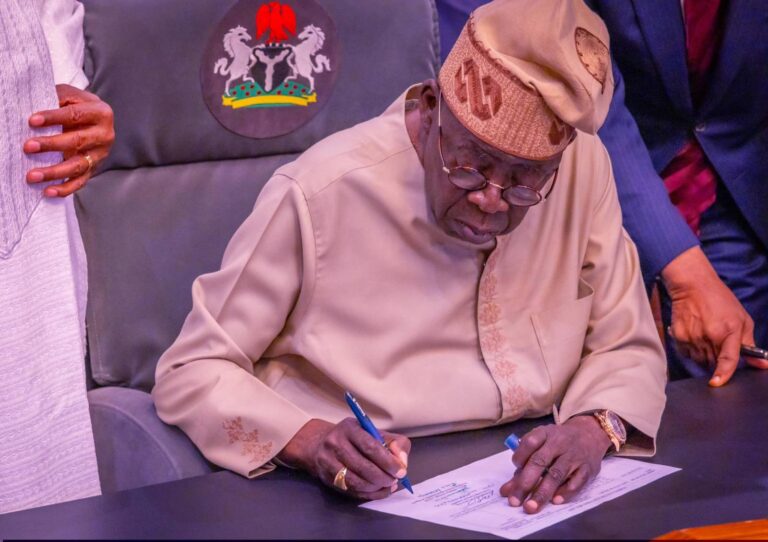
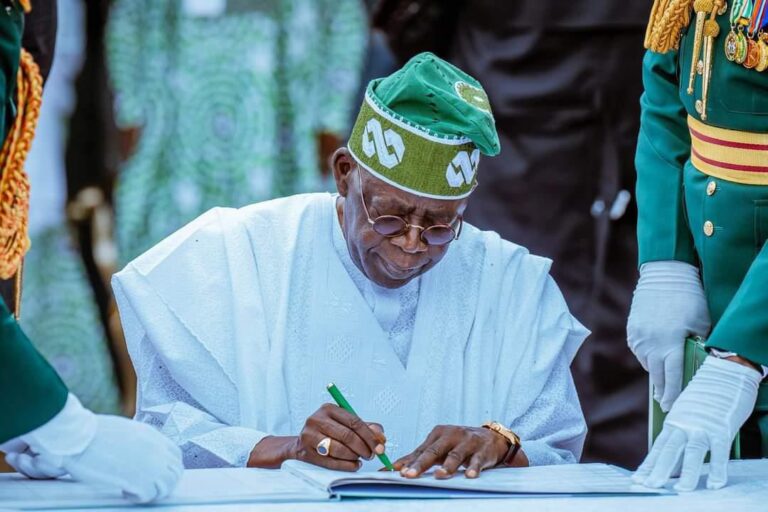
PRESIDENT Bola Tinubu has asked the Senate to approve a fresh external borrowing of $516.3 million to support the Sokoto–Badagry Superhighway project.

The fresh loan request was despite the oil windfall for the Nigerian government, with a budget benchmark of $64.85 per barrel, and Brent currently selling for $102.2 per barrel, according to data from oilprice.com.

The loan request was coming barely 48 hours after the sack of the former Minister of Finance, Wale Edun, who, sources said, was not in support of frequent borrowings of the Tinubu administration.

In a letter transmitted to the Senate, the president said the proposed facility sourced through a syndicated arrangement, led by Deutsche Bank, would finance Sections I, Phase IA and IB of the project, covering roughly 120 kilometres.

He explained that the request complied with Sections 16 and 21 of the Debt Management Office (DMO) Act governing public borrowing.

Tinubu described the highway as a cornerstone of his administration’s promise to establish a major North–South transport corridor.

The full project spans about 1,000 kilometres of dual carriageway, linking Kebbi, Niger, Kwara, Oyo, Ogun and Lagos states.

According to the president, the road is expected to significantly enhance connectivity across the country, improve safety, cut travel time and logistics costs, and boost trade and food supply chains by easing movement between production hubs, markets and seaports.

He added that the design also made room for future infrastructure expansion, including utility corridors and integration with other transport systems.

The financing plan includes a partial risk guarantee from the Islamic Corporation for the Insurance of Investment and Export Credit- an arm of the Islamic Development Bank, alongside federal government counterpart funding estimated at N265.5 billion. Additional provisions have been made for land acquisition, compensation and ancillary infrastructure.

Details of the loan also showed a nine-year repayment period, including a grace window of up to three years, with interest pegged at CME – Secure Overnight Financing Rate (SOFR) plus 5.3 per cent.

Tinubu noted that the Federal Executive Council had already endorsed the financing arrangement and urged lawmakers to incorporate it into the country’s borrowing plan.

Following its presentation, Senate President Godswill Akpabio referred the request to the Senate Committee on Local and Foreign Debts, directing the panel to report back within one week.

The frequent loan request has raised several questions about Tinubu’s appetite for borrowing.

Last month, the president requested that the National Assembly approve a N9 trillion increase to the 2026 budget, alongside fresh external borrowing totaling $6 billion to support government spending, infrastructure, and debt obligations.

The president’s request has also raised questions regarding the benefits of subsidy removal and the current oil windfall from proceeds driven by the US-Iran conflict.

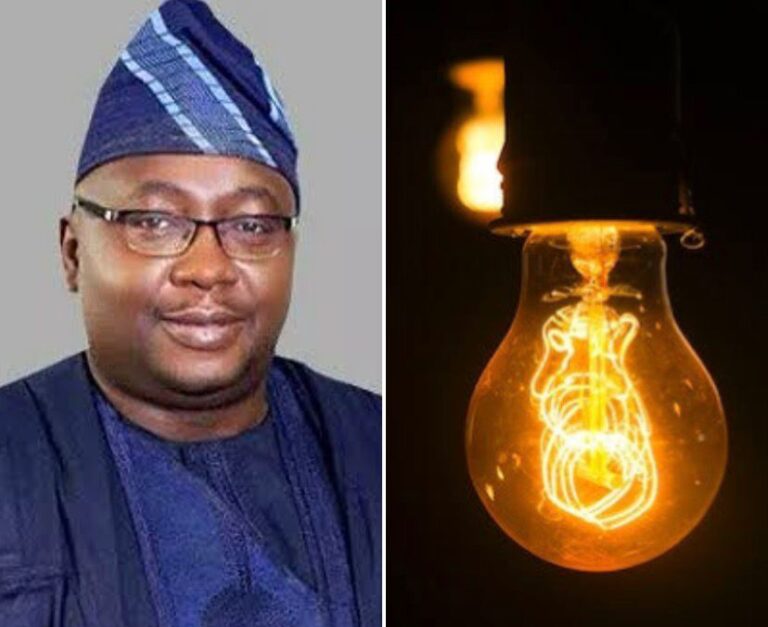
Will Nigeria’s power supply get worse or better after Adelabu’s exit?

NIGERIA’S Minister of Power, Adebayo Adelabu, on Wednesday, April 22, announced his exit from President Bola Tinubu’s cabinet to pursue his governorship ambition in Oyo State.

In a resignation letter he addressed to Tinubu, the former minister informed that his resignation would take effect from April 30 to allow for a smooth transition and proper handover of responsibilities.

Adelabu’s resignation had been described in many quarters as long overdue, with Nigeria’s power sector struggling under his watch without functional policy direction.

This resulted in arguably the worst epileptic electricity supply nationwide since the country’s power supply was privatised in 2013.

With the struggles of power privatisation, the Tinubu administration signed the Electricity Act 2023, which assigned regulatory and investment responsibilities to state authorities, in partnership with the federal and private sector.

When Adelabu, an accountant, took over as Minister of Power in August 2023, he walked into a disorganised sector. Like most of his predecessors, he failed to provide policy direction that would stimulate the sector and enable it to bolster Nigeria’s industrialisation.

His era in office saw the Presidency move from grid power and migrate to solar-powered electricity, which many analysts and other Nigerians said was a testament that the grid electricity was irredeemable.

The Executive Secretary of the Association of Power Generating Companies (APGC), Joy Ogaji, who spoke on the development with The ICIR in an exclusive interview noted that the migration was viewed by the government as a cost-saving measure to curb excessive billing, adding, however, that “the implication for on-grid power is severe, as it represents a sovereign vote of no confidence in the national grid.”

Under Adelabu’s watch, many thermal generating plants were idle, gas was scarce because of massive debts to generation companies, and the grid collapse became a routine.

Despite high hopes and expectations from re-organising the sector, Adelabu’s era not only failed Nigerians but deepened the mistrust and confusion in the sector.

While unbundling the sector through the Electricity Act 2023 offered a pathway for Adelabu to enforce policy direction for states to take regulatory and investment responsibility, the former deputy governor of the Central Bank of Nigeria is leaving a sector that lacks proper direction, with many investors confused about the specific investment path to take.

Poor management of the perennial problem

Nigeria’s electricity crisis follows the same cycle year after year. From idle thermal plants that are not optimally functioning to gas shortages that affect on-grid power, and to liquidity in the sector.

Adelabu’s principal – Tinubu – had pitched his re-election on the condition that he addressed the power crisis during his first tenure.

Currently, Nigeria’s power generation plants can generate 13,625 megawatts (MW), but in early 2026, the grid dispatched only 4,901MW. That means 64 per cent of capacity sat idle.

Several times, Generating Companies (GENCOs) threatened to declare force majeure because of liquidity problems and debts owed to them, which ran into trillions.

The sector experienced liquidity problems, with the country relying so much on $750 million interventions from the World Bank and other developmental institutions to fund key projects like transmission expansion and even metering.

As Adelabu leaves the sector, investors are struggling to recover their funds from gas companies that are still being owned trillions of naira.

Despite band classification for power supply to homes and industrial clusters, homes went from 24-hour promises to having less than six hours of supply daily.

Grid collapse under Adelabu

Grid collapse was frequent under Adelabu. For instance, the national grid collapsed 10 times in 2024. It fell 16 times in 2025, with three collapses in a single week in October.

February 2026 delivered the year’s first total blackout when every DisCo went to 0MW. Even the plants the government owns run at just 20 per cent capacity.

Tasks for the new minister

Nigeria doesn’t just struggle to generate power. The recurrent grid collapse is a symptom of a bigger problem and a pointer to an uncoordinated system.

Gas suppliers cut off the plants because GenCos haven’t paid them. GenCos can’t pay because Distribution Companies (DisCos) don’t collect enough revenue. DisCos fail to collect because customers get nearly four hours of light a day and refuse to pay for darkness, and the cycle continues.

The grid keeps collapsing because it was built 50 years ago, and it is overloaded daily. Meanwhile, the debts pile higher as seen with the back and forth between the Presidency and the gas generation companies.

Every power minister since 1999 has promised 6,000MW, 10,000MW, or 15,000MW. None of them delivered. They couldn’t because the sector demands three fixes at once: cash, gas, and governance. If one is solved without the others, the system falls apart again.

Analysts said that with the Electricity Act 2023, the new minister should not recycle old promises. He has to set a clear policy direction that does one thing first: give investors confidence.

“Investors need to know they will recover their money if they fund a gas pipeline, a new plant, or a mini grid. Without that confidence, the turbines stay silent, and the grid stays dark,” a public affairs analyst, Kingsley Obiakor, said.