Home Blog Page 500

Environmental Photography grant seeks proposals

Vital Impacts, a women-led non-profit focused on harnessing the power of art and storytelling, is accepting applications for its environmental photography grants.

The grants will fund documentary projects that spotlight solutions-based environmental narratives. They are particularly interested in projects about the Pacific Northwest and the Amazon rainforest.

The Vital Impacts Environmental Photography Grants aim to champion the power of visual storytelling in driving positive change for the planet.

“We’re offering one grant totalling $20,000 and six grants worth $5,000 each, all dedicated to nurturing documentary projects that spotlight solutions-based environmental narratives,” said the organisation.

Recipients will have the opportunity to work on their projects for twelve months, bringing these impactful stories to life.

In addition to the grants, Vital Impacts will select ten emerging photographers to participate in an intensive mentorship program and will invite all applicants to participate in an online mentorship series.

One established photographer will receive a US$20,000 grant and five emerging photographers will receive a US$5,000 grant each to develop their projects.

Established and emerging environmental photographers around the world can apply for this grant.

The application deadline is September 15, 2024. Interested applicants can apply here.

Okon’s 400m gold for South Africa sparks reactions on social media

0

EIGHTEEN-year-old South African sprinter of Nigerian descent, Udeme Okon, has secured a gold for South Africa in the men’s 400m gold at the World Athletics U20 Championships.

Okon came from behind to win the gold medal at the event held at Lima in Peru, running 45.69 to win the gold ahead of two Americans, Jyaden Davis (46.08) and Sidi Njie (46.29).

Announcing Okon’s victory on X, World Athletics wrote: “It’s Okon’s moment.

“South Africa’s Udeme Okon claims the 400m gold with an incredible comeback in the home straight 45.69.”

Okon has now succeeded Lythe Pillay who won it for South Africa at the 2022 edition of the World U20 Championship in Columbia. 

While Nigerian athletes faltered at the ongoing World U-20 Athletics Championships, South Africa has now won the men’s 100m and 400m golds.

On Wednesday, August 28, Paris Olympics finalist, Prestina Ochonogor, finished fifth in the women’s long jump with a 6.21m leap.

In the women’s 100m final, Justina Eyakpobeyan, who also ran in the women’s 4x100m in Paris, couldn’t fulfil expectations as she placed seventh at 11.63s.

Seeded in lane two, Eyakpobeyan was the only Nigerian, male or female, to make the 100m final in the competition. She had secured an automatic spot, getting to the line at 11.56s to finish 2nd in her semi-final heat. 

In the men’s 400m, Gafar Badmus was reported to have secured fifth place in his semi-final heat within 47.43 seconds, falling short of the finals. 

Meanwhile, Caleb Joshua, who initially finished third in his heat, was later disqualified for a lane violation.

The victory of South African sprinter Okon, who was born to a Nigerian father, has sparked mixed reactions on social media, with many believed to be from South Africa applauding his feat, while some Nigerians are calling them for not throwing him out.

Recall that The ICIR reported that the Nigerian-South African model, Chidinma Adetshina, withdrew from the Miss South Africa pageant following a series of xenophobic attacks after making it to the top 16 at the pageant competition.

“After much careful consideration, I have made the difficult decision to withdraw myself from the competition for the safety and well-being of my family and, with the support of the Miss South Africa Organisation, I leave with a heart full of gratitude for this amazing experience,” she had said.

Before that, the South Africa Department of Home Affairs in a statement signed by the spokesperson for the Minister, Duwayne Esau, claimed that Adetshina’s mother illegally obtained South African citizenship.

These actions led to a series of cyber attacks from both Nigerians and South Africans on X.

Reactions trail Okon’s victory 

An X user, Bobo Ekong, wrote “Where are the South Africans that bullied Chidinma out of Miss Universe pageant? Where is Gayton Makinzie the Sports Minister? What is he doing now that Udeme Okon is winning Gold for SA, I was thinking they will investigate Okon based on name,does that name sounds Zulu,Xhosa etc.”

Another user, Oceans, said, “So a Nigerian is still representing South Africa and they are not complaining. So why the noise about Chidinma and no noise about Udeme Okon?”

A South African user on X, Tebogo Koma, said although the name ‘Okon’ doesn’t sound like South Africa’s, they will fully accept him.

“That name doesn’t sound South African “Udeme Okon”, but if he’s legal, then we fully support him,” Koma wrote


Grants available to attend ScienceWriters conference

The National Association of Science Writers (NASW) and the Council for Advancement of Science Writing (CASW) are offering grants to assist colleagues in need who are interested in attending the ScienceWriters2024 (SciWri24) conference.

Applicants can apply for the NASW’s SciWri21 support grant and the CASW New Horizons travel fellowship.

All grants cover conference registration and other costs associated with conference attendance.

Journalists and students can apply for grants of up to $1,200 to attend a conference for science writers.

The conference will be held virtually and in person.

Virtual events begin on October 17, 2024, and the in-person conference will be held from November 8 to 11, 2024 in Raleigh, North Carolina.

The deadline for the submission of application is September 10, 2024. Interested applicants can apply here.

Joan Shorenstein Center fellowship at Harvard calls for application

Harvard University’s Kennedy School of Government is accepting applications for the Joan Shorenstein Center Fellowship in Cambridge, Massachusetts.

Applicants must be journalists, scholars or policymakers active in the field of press, politics and public policy. English fluency is required.

Fellows are required to live in residence for one semester and may receive a stipend. Travel and living expenses are not covered by the centre.

Journalists with at least 10 years of experience who are interested in sharing, expanding and researching public policy and political affairs can apply for this fellowship. Applicants should not have participated in another fellowship within the two years prior to their preferred semester.

A desk in the Shorenstein Center offices, a Harvard email address and a Harvard ID are provided. To apply, send a cover letter, a completed application form, a research project proposal, a curriculum vitae/resume and recommendations.

Applications are accepted on a rolling basis. Interested applicants can apply here.

2024 flood preparedness: How states’ negligence to budgets, allocations put Nigerians at risk

Following the 2024 flooding prediction by the federal government agencies, The ICIR’s Kehinde Ogunyale gathered data on ecological funds to state, analysed the 2024 states’ budget, and budget implementation report to spotlight allocations made for flood preparedness.


IN 2022, Jane Banigo was a victim of the devasting flood that displaced 1.4 million Nigerians from their home. The 54-year-old widow lost her house, and household properties, including her farm harvests to the floodwater that submerged Omoku, in Rivers state, where she lived. 

Her near-death experience with the 2022 flooding was worsened because she had to crawl on the ground to move from one place to the other, after losing her legs to a bacteria- Gangrene, which made her amputate it in 2011. 

“I do manage myself, there’s no help from anywhere apart from me going to the farm, I crawl in the ground to work on my farm, I crawl, I work, anything I come out to, I eat, the only thing is that the area I live is a flooded area, sometimes flood will carry everything we work through, the collected we get”, she told The ICIR.

For safety, Banigo had to temporarily live in a displaced camp set up by the government for flood victims in 2022, hoping that more preventive measures would be implemented by the government to avoid the reoccurrence of flooding. 

These expectations by Banigo are similar to millions of Nigerians who were affected by the 2022 flooding. Still, findings, from data gathered, show that with numerous allocations provided by both the state and federal governments, these expectations might be truncated in the event of flooding this year. 

Several media reports have recently captured flood-related incidences in states like Lagos and the Federal Capital Territory, Abuja, that submerged buildings and vehicles. 

2024 flood predictions 

According to the Nigeria Hydrological Services Agency report on the 2024 annual flood outlook, 33 out of 36 states in Nigeria have been predicted to experience a high risk of devastating flooding between July and September 2024. 

NIHSA said that at least 135 local government areas (LGAs) have been mapped out as vulnerable to flooding this year.

Some affected states included Adamawa, Akwa Ibom, Anambra, Bauchi, Bayelsa, Benue, Borno, Cross River, Delta, Ebonyi, Edo, Imo, Jigawa, Kaduna, Kano, Katsina, Kebbi, Kogi, Kwara, Lagos, Nasarawa, Niger, Ogun, Ondo, Osun, Oyo, Plateau, Rivers, Sokoto, Taraba and Yobe state.

Following this prediction, the National Emergency Management Agency said that the agency has begun to put in place proactive measures to mitigate climate impact 

The NEMA spokesperson, Ezekiel Manzo, told The ICIR that the agency has embarked on awareness and sensitisation with states at risk of flooding adding that meetings have been held with relevant stakeholders, including the state governments.

In 2022, more than 1.4 million people were displaced from over 33 states due to floodwater that submerged communities. Over 600 people were reportedly killed by the floodwater, while the federal government said that floods decimated 82,053 houses and 332,327 hectares of land were completely damaged

The economic impact on the country was estimated at $6.68 million, according to the World Bank. 

Ecological funds

The impact of this crisis raised several questions about the utilisation of ecological funds, estimated at N64 billion between 2021 and 2022, disbursed by the federal government to the 36 states monthly.

The ecological fund is disbursed to fund projects mitigating ecological-related problems like flooding. This is one per cent allocation from the Federal Account Allocation Committee (FAAC) monthly disbursements shared within all government levels.

However, checks by The ICIR have shown that between January and May 2024, the federal government released a total of N15.83 billion as ecological funds to all 36 states. The amount is higher than the N12.94 billion shared between January and April 2023. 

States like Kano, Lagos, Borno, and Kastina received the highest allocation within this period, while states like Bayelsa, Kwara, Ondo, and Edo received the lowest allocation within the period. 

While there are no clear indications as to how these funds have been spent, Manzo mentioned to The ICIR that NEMA does not have control over these funds that are been utilised to address ecological issues. 

2024 states budget for flood control

The ICIR went further to check the 2024 budget for the 36 states which is pegged at N16.15 trillion. Findings from quarrying the budget, with specific keywords related to flooding, showed that a total of N59.16 was budgeted by the 33 states to address flood and erosion-related projects. 

Approximately, only 10 out of these 33 states allocated up to one per cent of their budget to address flooding. The highest allocation was made by Imo state with an allocation of N12.90 billion out of N592.23 billion of its 2024 budget for erosion and flood control. This is 2.18 per cent of its budget. 

However, from our findings, Adamawa, Katsina, and Kaduna did not provide any allocation to address flooding this year. 

Beyond the approval of these funds, The ICIR went further to check the first quarter Budget Implementation Report (BIR) of the 33 states on the allocations made. Our findings showed that only nine out of the 33 states have released some percentage of the allocation made. 

States 2024 Flood Allocation Percentage released
Abia 2,339,120,000.00 16.80%
Anambra 1,375,000,000.00 0.70%
Bauchi 1,488,650,000.00 0.40%
Cross River 1,626,800,600.00 1.20%
Edo 2,082,000,000.00 0.40%
Enugu 447,000,000.00 129.20%
Niger 3,260,169,378.00 67.50%
Osun 752,763,390.00 44.50%
Sokoto 715,000,000.00 10.00%

Table showing states that have released allocation for Erosion and Flood control. Source: BIR document .

This means that between January and March 2024, only Abia, Anambra, Bauchi, Cross River, Edo, Enugu, Niger, Osun, and Sokoto states approved some percentage of flooding allocation to the respective commission supervising flood-related incidences. 

The effect of this may put many Nigerians living in the 22 states, where allocation has not been released, at risk of experiencing flooding whenever there is a heavy downpour; except the allocations are released during the second quarter. 

Climate expert reacts 

A flood risk consultant, Taiwo Ogunwumi, told The ICIR that finance is required for the development and implementation of engineering projects that can enhance mitigation and adaptation to flood.

He added that funds received can be used for creating wetlands and green spaces (in major cities) that can absorb excess water. 

“More funds can also be allocated to support GIS technology that can enhance prediction and early warning systems and communications. Lastly, the 2022 floods show a huge gap in the emergency response process; I believe some of this fund should be allocated into ensuring that emergency services and centres are well equipped and staff is trained to effectively handle flood events.”

Also, the Executive Director of the Global Initiative for Food Security and Ecosystem Preservation (GIFSEP), Micheal Terungwa, added that said that the allocation made by the federal and state governments to address flooding is very little compared to the impact people experience due to the crises. 

“The issues with increasing food inflation can be associated with land degradation caused by flooding and erosion. Ariguclute is dependent on land and if you have land degradation it would affect farmers. The true cost of soil erosion can not be quantified and it impacts agriculture production, especially in the northern part of the country,” he emphasised.

Benefit, health implications of embracing ‘Botox’ in Nigeria

THE emergence of new beauty standards in Nigeria is reshaping the cultural landscape, as young Nigerians increasingly embrace diverse expressions of beauty, from traditional aesthetics to global trends.

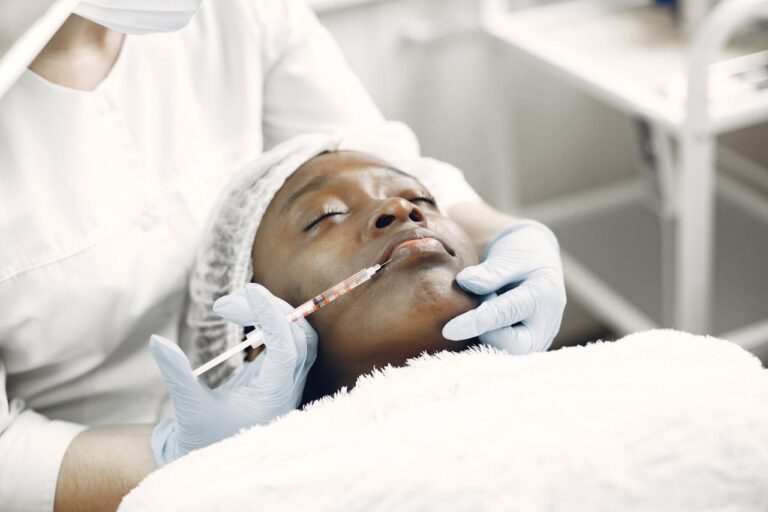
This evolving beauty paradigm reflects the nation’s rich heritage while also challenging and redefining societal norms, one of which is the use of botox, a neurotoxin derived from clostridium botulinum, which has surged globally as a popular cosmetic procedure to reduce wrinkles and facial lines.

Obiamaka Anyachebelu, a plastic and reconstructive surgeon at Haymill medical centre Abuja, explained that the procedure involves injecting a substance into the muscle to reduce nerve transmission, weakening the muscle. 

“What this does actually is that it is injected into the muscle and it reduces the nerve transmission in there. It weakens the muscle, the movement of the muscle increases frown lines on the face, so when that muscle is paralysed one does not have those lines again. For instance, the muscle at the forehead is called frontalis muscle.

“If I raise my eyebrows up, I have frown lines. So when it is injected, I am not able to raise it up anymore, it reduces the frown lines and just like the forehead, there are also muscles in other parts of the face, so when those muscles are injected, it reduces the lines, the muscles caused by their action.” 

A growing trend

In Nigeria, the trend has recently gained momentum, driven by the social and elite class, such as celebrities and public figures increased awareness of cosmetic procedures, and a cultural shift towards western beauty standards.

Speaking to The ICIR, Rekiya Aliyu, who is in her mid-twenties noted that the main reason she would like to get botox procedures is ageing. To reduce the effect of wrinkles on major features of her body.

“Ageing is one of the main factors that made me to consider getting botox or fillers, just to reduce wrinkles. You know when you get older, your face becomes like saggy so I need to bring a little stiffness back to my face when I am older,” she said.

Aliyu noted that she would like to get the procedure done on the superior part of her body.

“…Probably my forehead, my chin and my neck because of wrinkles and all that,” she emphasised.

Difference between botox and fillers

Explaining the difference between botox and fillers, Anyachebelu stated that botox is a neuromodulator injected to reduce muscle action, thereby decreasing wrinkles caused by muscle movement.

“In contrast, dermal fillers are used to replenish lost volume due to fat reduction in the face, which occurs with aging and leads to skin sagging. The gel-like substances are injected into the skin to restore volume and create a more youthful appearance.

“While botox promises a quick fix for aging signs, its emergence and widespread embrace in Nigeria comes with some health implications that may warrant critical attention,” she explained.

Negative impact…

Anyachebelu further noted that if the botox is administered too frequently or at the wrong time, it can over-paralyse the muscle, leading to increased activity in counter acting muscles. This imbalance can cause undesirable effects, such as drooping lips or overly elevated eyebrows.

“When started at the right age, at least from 35 onwards, botox is temporary, it just paralyses the underlining muscle so the effects lasts 3-6 months. If a patient doesn’t wait for the specific time.

“It would paralyse the muscle more than one would want and the other muscles in the area would be more active because when the muscle that is supposed to create some movement is paralysed, the muscles around it can show more effect, which can result to a droop in the lips or over elevated eyebrows around the forehead”.

The rise of botox in Nigeria can be attributed to factors such as the wealthy and middle class having the income to spend on beauty and wellness treatments. Also, the influence of social media and celebrity culture has heightened awareness and desirability of cosmetic enhancements.

When asked what influenced her decision to get a procedure done, Aliyu (earlier mentioned) attributed it to social media.

“It is something I have seen online and I would like to try this eventually. So, definitely social media is one of the influences because I have seen a lot of people do it and they have [sic] and if I have the money to do it in the future , I would definitely go through with it .

“I don’t think the cost would be a problem, if I really want to get it done in the future and I would not consider any other cosmetic procedures in the future, ” Aliyu said.

Some  Nigerian celebrities and influencers often showcase their flawless appearances, setting trends that their followers eagerly emulate. A video shared on X, showed Shaffy Bello, a veteran actress getting botox injections .  

Aliyu added that due to the popularity of botox and social media pressures, more young people, even as young as 20 or 21, are seeking botox, but this age group generally does not need it according to the doctor.

Health risks associated with botox

Despite its popularity, botox carries significant health risks, especially when not administered properly. In Nigeria, the regulation of cosmetic procedures is still developing, leading to potential misuse and complications.

“Short-term complications of botox and dermal fillers include pain, redness, swelling, and potential hypersensitivity reactions, especially to products with collagen. Therefore, allergy testing may be necessary before injection. Serious complications can occur, which is why it is essential to have injections done by a board-certified plastic surgeon.


READ ALSO:


“Misplaced injections can block facial vessels, leading to tissue death, although such risks are very low with a qualified surgeon. Nodule formation is also a risk, particularly with certain fillers injected close to the skin surface.

“If someone receives Botox injections from an uncertified and untrained provider, the chances of complications are significantly higher. These individuals may lack a thorough understanding of facial anatomy, proper injection techniques, and the knowledge of which areas to avoid, increasing the risk of injury and other complications,” Anyachebelu concluded.

While botox has become a symbol of modern beauty and a quick solution to aging concerns, its embrace in Nigeria comes with significant health implications. The lack of stringent regulations, the presence of unlicensed practitioners, and the influx of counterfeit products pose severe risks to individuals seeking these procedures.

FCCPC issues one month ultimatum to traders to reduce prices of goods

0

THE Federal Competition and Consumer Protection Commission (FCCPC) has issued a one-month ultimatum to traders across Nigeria to reduce the prices of goods.

At a stakeholders’ meeting on exploitative pricing held in Abuja on Thursday, August 29, FCCPC’s vice chairman, Tunji Bello, declared that the commission would begin enforcement at the end of the ultimatum.

He noted that the price margin of imported goods is excessively inflated, citing an instance of the price of a blender in Texas and the inflated amount in a Lagos supermarket.

“We have observed, for instance, that the margin in the prices of imported goods is very disproportionate in many cases; and in the case of locally produced goods, excessively inflated.

“This is an untenable situation, particularly in the retail segment, where we have identified patterns of price fixing perpetrated by some market associations, price gouging, and other anti-consumer practices. For instance, our check just two days ago at a popular supermarket chain in Texas, United States, revealed that a fruit blender called Ninja is displayed on the shelf at $89 (roughly N140,000). Just two days ago.

“Meanwhile, the same product was displayed at a popular supermarket on Victoria Island in Lagos for N944,999 on the same day and at the same hour. This represents more than 500 per cent inflation of the cost,” he said.

After citing several other examples from discoveries made following the FCCPC’s investigations in major cities including, Abuja, Kano, Port Harcourt and Lagos, Bello stated that the organisation realised that the prices were arbitrarily jacked up from time to time without any justifiable reason.

He added that such price fixing would no longer be condoned and the commission, moving forward, would crack down on those involved in this profiteering scheme.

In February, The ICIR reported how the FCCPC sealed off the popular Sahad store in the Garki area of Abuja after the supermarket’s management was accused of overcharging customers by implementing prices different from those listed on the shelf tags.

Court dismisses suit against #Endbadgovernance protesters

0

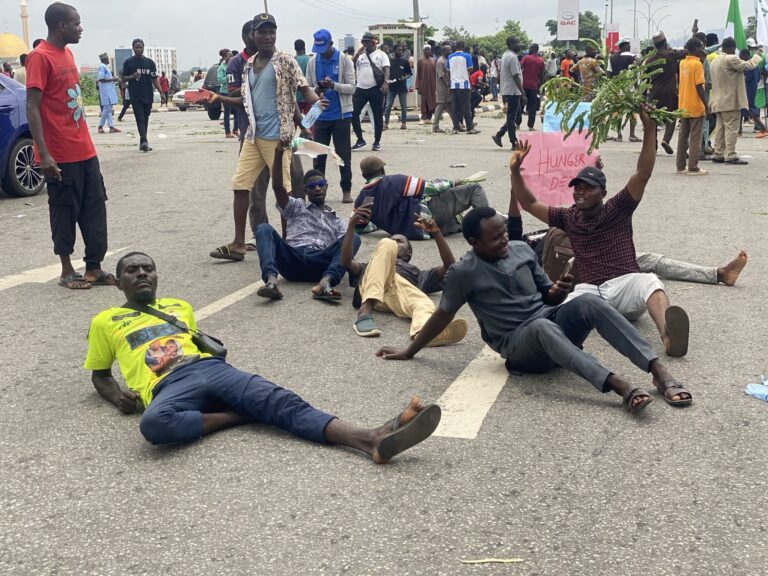
A FEDERAL High Court in Abuja on Thursday, August 29, dismissed the suit filed against the #Endbadgovernance protesters.

The case was presided over by a chief judge, Peter Lifu, after the 17 plaintiffs and 26 defendants were absent in court, with no legal representation from the two parties.

Representing each of the six geopolitical zones of the country, the plaintiffs had sought an order from the court to dismiss the protest because their fundamental rights to freedom of movement, human dignity, economic, social, and cultural development, and right to national peace and security were breached.

They requested the court to compel the director-general of the State Security Service (DSS), Inspector General of Police, chiefs of Army and Defence Staff and the Attorney-General of the Federation (AGF) to uphold their fundamental rights by stopping the protest.

Despite the case being fixed for a hearing on Thursday, August 29, none of the plaintiffs and defendants were in court, and no lawyer represented them.

They gave no excuse or explanation for their absence in court, leaving the presiding judge in shock after which he struck out the case, stating that the plaintiff had lost interest.

“This suit is hereby struck out as it is clear that the plaintiffs in the suit have lost interest in going further with this case,” he said.

The ICIR reports that many Nigerians trooped to the streets in the first and second weeks of August to protest poor governance and economic hardships caused by Tinubu’s reforms.

The protests were marred with violence, largely caused by the security operatives in places like Lagos and Abuja, where protesters were subjected to tear gas and harassment.

However, The ICIR reported that several groups frowned at President Bola Tinubu-led administration’s ‘unconstitutional’ detention of #EndBadGovernance protesters and the harassment of Nigerian labour leaders.


Nigeria to invoke ‘no work, no pay’ policy on striking doctors

0

NIGERIA’S Federal Ministry of Health and Social Welfare has threatened to invoke a “no work, no pay” policy on the Association of Resident Doctors (NARD) currently on a one-week warning strike over their colleague in kidnappers’ den.

The ministry said in a statement signed by its assistant director of information and public relations, Ado Bako, that the doctors’ strike was premature and counterproductive.

The ICIR reported that the doctors on Monday, August 26, began a seven-day warning strike over the December 2023 abduction of their colleague, Ganiyat Popoola, who has since remained with her captors.

The NARD president, Dele Abdullahi, on Sunday, August 25, said the strike would ensure that NARD members suspend all services in public hospitals, including emergency care. 

However, in response to this, the ministry expressed concern over the call for a strike, noting that it came despite ongoing negotiations and government efforts to rescue the kidnapped doctor.

“Over the past months, the ministry, in collaboration with relevant security agencies, including the Office of the National Security Adviser, NSA, have been working tirelessly to ensure the immediate and safe rescue of Dr Ganiyat Popoola. High-level discussions and coordinated efforts are currently under way and we remain confident that these measures will lead to a positive outcome.

“The ministry finds the decision to proceed with this strike action, in the midst of these ongoing discussions, deeply regrettable. As we believe that continued dialogue is the best approach to resolving any outstanding issues,” the statement read in part.

It further stressed that in line with extant labour laws, the Federal Government would implement the “no work, no pay” policy, meaning that resident doctors would not be paid for the days they participate in the strike. 

This action, according to the statement, was intended to mitigate the impact of the strike on essential healthcare services and ensure the doctors return to work.

Popoola was abducted with her husband and nephew, Folaranmi Abdul-Mugniy, a student at the Airforce Technology Institute. However, her husband was released after paying a ransom.

Since the incident, according to NARD, the abductors have called severally and occasionally allowed some family members to speak to them.

Following the incident, doctors across the country have rallied for her release and called on the government to ensure her safety.

The ICIR reports that NARD members, Osun State University Teaching Hospital chapter, staged a peaceful protest to demand Popoola’s unconditional release.

The doctors who trooped out in their numbers on Friday, August 16, said if their demand for the release of their colleague was not met, they would have no option but to down tools.

Usmanu Danfodiyo University bows, lifts ban on press club 16 days after suspension

0

THE management of Usmanu Danfodiyo University, Sokoto, has lifted the suspension it placed on one of the campus press clubs, Pen Press UDUS, after 16 days.

The decision was confirmed in a post by the Pen Press Udus on its Facebook page on Thursday, August 29, following widespread condemnation of the suspension by Nigerians.

Pen Press was suspended after publishing a report highlighting issues related to the poor drainage system in Zamfara Hostel, one of the university’s female hostels.

The report also detailed the hardships faced by students due to the defective drainage, including health risks and discomfort, citing accounts from different students residing in the hostel.

The hostel is believed to be one of the largest female halls of residence in the university, housing over 500 students.

The hostel, said to be jointly constructed by Zamfara State and the university management and inaugurated in 2016, has reportedly been plagued by poor drainage, particularly affecting the students living in Block A.

In a letter dated August 14 and signed by the administrative secretary of the Student Affairs Division, Mahmud Muhammad Isah, the school management directed that Pen Press cease all activities, including publication and interviews, until further notice.

The school management, in the suspension letter addressed to the editor-in-chief of Pen Press, cited concerns over “factual inaccuracies or misleading information” and “potential harm to the university’s reputation.”

However, in a post on its Facebook page on Thursday, Pen Press stated that the management had lifted the suspension.

“We are thrilled to inform you that the management of Usmanu Danfodiyo University Sokoto (UDUS) through the Student Affairs Division has lifted (the) suspension on Pen Press publication and other activities.

“Recall that we informed you in a post on August 21st that our activities have been suspended. From now on, you will be seeing our publications as the matter has been resolved with the management,” the statement read in part.

While no official statement has been released in this regard, the dean of Students’ Affairs, Umaru Aliyu, a professor, in a phone call conversation with The ICIR, confirmed that the suspension had been lifted.  “It’s true,” Aliyu said.

What the suspension means to Pen Press?

However, speaking with The ICIR, the editor-in-chief of Pen Press Udus, Abdulrasheed Akere, expressed concern over the possibility of continued censorship by the university management, despite lifting the suspension.

When asked if the press club would continue with its critical reporting, he said, “Not really because some of the management’s statements during the meeting were that we are practising journalism as if we have grown beyond the school or independent media organisation out there.”

According to him, this wasn’t the first time their report would be met with hostility and criticism from the management, adding that the club abandoned reporting about the situation of the school clinic over its past experiences with the management.

The ICIR reports that over the years, there have been efforts to suppress media and the civic space in Nigeria. The 2024 data by Reporters Without Borders (RSF) placed Nigeria as one of West Africa’s most dangerous and difficult countries for journalists.

By this, Nigeria ranks 112th out of 180 countries where journalists are regularly monitored, attacked and arbitrarily arrested. In 2020, The ICIR reported that 160 journalists were attacked in two years, as the country was ranked 115th out of 180 countries on the Global Press Freedom Index.

Also, The ICIR reported that 63 journalists and three media houses experienced various attacks in 2022.

According to The ICIR findings, at least 39 Nigerian journalists were harassed across the country by state and non-state actors in 2023.