Home Blog Page 601

Stakeholders set agenda for newly appointed SEC boss

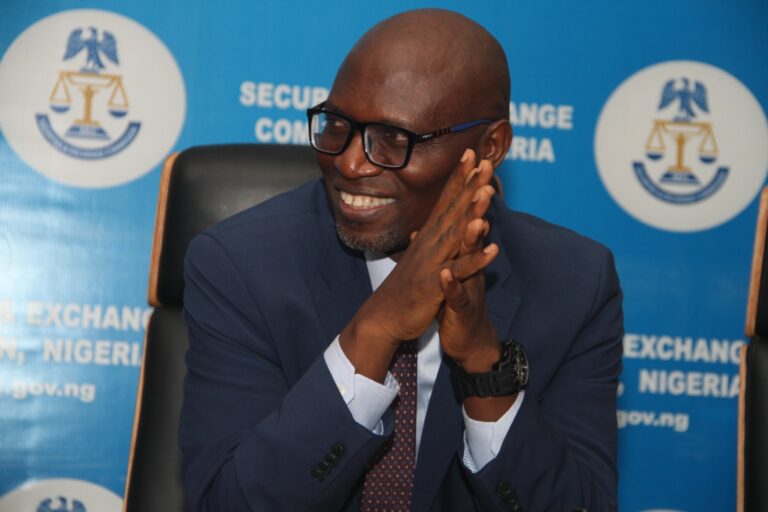
THE newly appointed Director General (DG) of the Securities and Exchange Commission (SEC), Emomotimi Agama, has a lot that would rest upon his shoulders, stakeholders told The ICIR.

Agama officially assumed office in an acting capacity on Tuesday, April 30, pending confirmation of his appointment by the Senate of the National Assembly.

President Bola Tinubu had, on April 19, appointed a new board for the commission.

Other board members are Mairiga Aliyu Katuka as chairman, Frana Chukwuogor as executive commissioner (legal and enforcement), Bola Ajomale as executive commissioner (operations), Samiya Hassan Usman as executive commissioner (corporate services), and two non-executive commissioners, Lekan Belo and Kasimu Garba Kurfi.

Agama remarked that the capital market is well-regulated and developed to contribute to the nation’s economy.


Read Also:


“I have had the pleasure of being involved in people’s careers here for the last 20 years. We have crossed many rivers, but each of us has added some value to this institution. 

“When we leave, we should be able to look back with joy at what we have done. I therefore solicit your support and cooperation to ensure that we all succeed.”

In a chat, the executive vice chairman of Highcap Securities Limited, David Adonri, said the acting SEC DG should prioritise the bank recapitalisation and capital raising.

“The Capital Market is focusing on banks’ recapitalisation exercise. This is the major task before SEC. 

“Along the line, manufacturers that suffered collateral damage from the floating of the Naira are also coming to raise capital from the market. The support by the SEC is also crucial to their capital-raising exercise,” he said.

The national president of New Dimension Shareholders, Patrick Ajudua, said shareholders were excited about Tinnubu’s appointment of a capital market technocrat as DG, hoping that he would build on his predecessor’s various capital market reform initiatives.

“Among issues deserving his attention is the unclaimed dividend, which has defied logic and has kept rising to over N200 billion despite the recently established Unclaimed Trust Fund. He needs to revisit this and work with all stakeholders to ensure full implementation of the E-dividend mandate,” Ajudua said

He highlighted other issues, including investors’ education, the passage of the Investments and Securities Bill 2024, and the implementation of the Revised Capital Market Master Plan (RCMMP), which remains ongoing, identity management, the establishment of a regulatory framework for the digital asset space, and commodities trading ecosystem.

“For effective market regulation, the new board and Management at the SEC are expected to utilise various modern-day regulatory techniques/supervisory tools, monitoring/inspection, investigation, strict enforcement of market rules, and punishment of any infraction,” Ajudua said.

Also, the national chairman of the Progressive Shareholders Association of Nigeria (PSAN), Boniface Okezie, said there was a need to enact a law to stop voluntary delisting and attract more companies to list the exchange.

He raised the issue of investors’ payoffs from delisted companies, which the commission had withheld for some years, giving the example of the Dangote Flour Mills payoff.

“He should prioritise asking that the money (payoff to investors) be returned immediately to the registrar’s concern so that it can commence disbursing immediately to their owners. He should also make quarterly returns to see how it should be.

“The issue of unclaimed dividends must also be examined. It is not okay with the stakeholders. The money in question does not belong to the government, and they can not claim it,” Okezie added.

Bank customers to lose 0.5% on e-transfer to cybersecurity funding – CBN

THE Central Bank of Nigeria (CBN) has directed banks and other financial institutions to implement a 0.5 per cent cybersecurity levy on electronic transfers.

The analysis of the charge showed that  ₦5 will be charged on every ₦1,000 transferred; ₦50 on every ₦10,000; ₦500 on every ₦100,000; ₦5,000 on every ₦1,000,000; ₦50,000 on every ₦10,000,000; and  ₦500,000 on every ₦100,000,000.

This is contained in a circular signed by Chibuzor Efobi, director of payments system management and director of financial policy and regulation, Haruna Mustafa,  on Monday, May 6.


Read Also:


The directive was issued to commercial, merchant, non-interest, and payment service banks and mobile money operators.

The CBN said the policy would take effect in two weeks, and charges would be described as a ‘Cybersecurity Levy’.

According to the apex bank, the deduction and collection of the cybersecurity levy follow the enactment of the Cybercrime (prohibition, prevention, etc.) Amendment Act of 2024.

“Following the enactment of the Cybercrime (Prohibition, Prevention, etc) (Amendment) Act 2024 and under the provision of Section 44 (2)(a) of the Act, “a levy of 0.5 per cent (0.005) equivalent to a half per cent of all electronic transactions value by the business specified in the second schedule of the Act, is to be remitted to the National Cybersecurity Fund (NCF), which shall be administered by the Office of the National Security Adviser (ONSA),” CBN said.

The CBN said the charges would be remitted to the National Cyber Security Fund, which would be administered by the office of the NSA.

“Deductions shall commence within two weeks from the date of this circular for all financial institutions and the monthly remittance of the levies collected in bulk to the NCF account domiciled at the CBN by the 5th business day of every subsequent month.”

The CBN said failure to remit the levy is an offence that attracts a fine of not less than two per cent of the defaulting business’s annual turnover, among other penalties.

“Finally, all institutions under the regulatory purview of the CBN are hereby directed to note and comply with the provisions of the Act and this circular.”

Meanwhile, banks had announced the reintroduction of a two per cent charge on deposits above N500,000.

The ICIR reports that this is not the first time the CBN has issued such a directive. In 2018, the apex bank issued the same and cited section 44(S,1 and 2)of the Cybersecurity Fund and mandated the payment of 0.0005 per cent into the CBN’s Trust Fund Account

Minister to represent Tinubu as faulty presidential jet aborts Shettima’s US trip

0

A faulty Presidential jet has aborted Vice President Kashim Shettima’s trip to the United States of America for the 2024 US- Africa Business Summit in Dallas Texas.

The presidential jet was said to have developed a fault as the Vice President was about to take off to the United States for the summit on Monday, May 6.

Consequently, Minister of Foreign Affairs, Yusuf Tugar is now scheduled to represent President Bola Tinubu at the summit.


Read Also:


The Senior Special Assistant to the President on Media and Communications, Office of the Vice President, Stanley Nkwocha, said in a statement that the fault was detected by a vigilant technical team attached to the Presidential Air Fleet.

According to the statement, ” Vice President Kashim Shettima, who was originally scheduled to represent the President, was unable to make the trip following a technical fault with his aircraft, forcing him to make a detour on the advice of the Presidential Air Fleet. The statement said the Vice President will carry on with other national duties.

The high-profile summit, taking place at the Kay Bailey Hutchison Convention Center, will bring together political and business leaders from across Africa, the United States, and other regions. It features high-level dialogues, networking sessions, and plenaries.

Among the African heads of state expected are President Joseph Boakai of Liberia, President Lazarus Chakwera of Malawi, President Joao Lourenço of Angola, President Mokgweetsi E.K. Masisi of Botswana, President José Maria Neves of Cabo Verde, and Deputy Prime Minister Nthomeng Majara of Lesotho.

The US-Africa Business Summit aims to foster economic cooperation and explore investment opportunities between the United States and African countries.

The ICIR reports that the meeting holds as the whereabouts of President Tinubu remains unknown a week after he attended the World Economic Forum in Saudi Arabia.


SEC to delist naira trading on peer-to-peer platforms

THE Nigerian Securities and Exchange Commission (SEC) has vowed to delist naira trading on peer-to-peer (P2P) platforms to rid the virtual assets space of illegal trading activities and protect investors’ interests.

SEC’s Acting Director General, Emomotimi Agama, declared this at a virtual meeting with the Blockchain Industry Coordinating Committee of Nigeria (BICCoN), an umbrella body of blockchain and cryptocurrency associations in Nigeria, on Monday, May 6.

He said, “One of the things that need to be done is delisting the naira from P2P space in order to avoid the level of manipulation that is currently happening, enjoining participants in the crypto space to be patriotic enough to name and shame those that are involved in disrupting the markets negatively.

“We ask that those involved in sharp practices that undermine national interest should cease and desist. We encourage you to reach out to us by naming and shaming the bad actors.”

The ICIR reports that the activities of cryptocurrency trading have raised concerns recently.


Read Also:


On April 30, the Central Bank of Nigerians (CBN) directed fintech firms such as Kuda, Opay, PalmPay, and Moniepoint to stop onboarding new customers.

Following the directive, on May 3, fintech companies released a notification to suspend any accounts of customers discovered to be trading cryptocurrency or virtual currencies on their platforms.

According to Agama, the SEC will be quick to utilise all the powers within its mandate to handle issues that are negative and pose a threat to the nation’s interest.

He stressed that recent concerns regarding crypto P2P traders and their perceived impact on the naira exchange rate had underscored the need for collective action and dialogue within the financial market ecosystem.

“There are basic practices enshrined in the Investments and Securities Act 2007, and we expect that everyone will abide by those rules. Some may say there are no rules to play by, but do not forget that we have the Investments and Securities Act 2007 that some actions by participants today may be violating. Hence, the law is the law irrespective of the technology used.

“However, for the specific digital asset regulatory regime that many have been calling for, we want to assure you that we are working tirelessly to establish an accommodating regulatory guideline for digital assets,” the new SEC boss said.

He told the stakeholders within the cryptocurrency ecosystem that the SEC was desirous of working with them to provide the assurance needed by all who operate within the market’s rules.

“Together, I am confident that we can weed out bad actors and harness the immense potential of this progressive technology for the benefit of all Nigerians in tandem with this government’s Renewed Hope agenda,” he said.

Agama hinted that the proposed regulatory guidelines currently being fine-tuned for activities within the cryptocurrency space would include wallet providers, digital asset custodians and fund managers, cryptocurrency crowdfunding, initial coin offerings (ICOs), security token offerings (STOs), initial exchange offerings (IEOs), cryptocurrency exchange platform providers, and virtual asset brokerage services.

“I am poised for an innovative digital asset regulatory regime that will sustain Nigeria as Africa’s digital asset powerhouse with diverse solutions like real world asset tokenisation (RWA) that will drive wealth and catalyse our capital market.

“We must explore innovative solutions to this problem and strike the right balance between encouraging innovation and safeguarding our national economic interests. We have a great market ahead of us, and we have the talents and the people to make the market great,” he said.

He warned that manipulations of activities that undermine the nation’s interest would not be acceptable, urging stakeholders to explore innovative solutions to the problem and strike the right balance between encouraging innovation and safeguarding the country’s economic interests.

Some of my commissioners are working against me – Fubara

THE Rivers State Governor, Siminalayi Fubara, said on Monday, May 6, that some of his commissioners were working against him.

Fubara also decried how the state House of Assembly had been working at variance with his government.

He threatened that the House members could cease to exist as state lawmakers if he so wished.


Read Also:

Fubara said these when he received a group of Bayelsa State political and traditional leaders who was in Port Harcourt, the state capital, to seek a resolution to the political unrest in the state and better ties between the two states.

The delegation comprised traditional rulers, former commissioners, state and National Assembly members, Peoples Democratic Party (PDP) officials, and Alfred Diete-Spiff, the first military governor of the defunct Rivers State.

Fubara told the delegation, led by the former Governor of Bayelsa State and senator representing Bayelsa West, Henry Seriake Dickson, that he had shown restraint since the crisis escalated in the state.

He said that despite state powers he could deploy to achieve his aim, he had continued acting as the big brother in the face of intimidation and unwarranted attacks.

“We might have our division, but I believe that one day, we could also come together. It has gotten to a time when I have to make a statement that they are not existing. 

“Their existence is me allowing them to exist. If I de-recognise them, they are nowhere. I want you to see the sacrifice I have made in allowing peace to reign in our state,” Fubara stated.

He said he had tried to end the enmity between the state legislators and executive but that the crisis masqueraded to another each time he thought he had conquered it.

Fubara acknowledged the roles some political figures, particularly his predecessor and Minister of the Federal Capital Territory (FCT), Nyesom Wike, played in his ascent to the governorship but stated that such efforts wouldn’t cause him to idolise a man.

He explained that God could use anybody to achieve His purpose in a man’s life.

In addition, Fubara bemoaned the way some of his commissioners were working against him.

The ICIR reports that many of Fubara’s commissioners he claimed were working against him are Wike’s loyalists. Some of them served in the former governor’s administration.

Wike and Fubara have been at loggerheads over who controls the PDP structure and other issues in the state.

Though a PDP member, Wike currently serves in the ruling All Progressives Congress’ (APC) government.

Following the hostility between the two leaders, 26 members of the River State House of Assembly members decamped from the PDP to APC in 2023, shortly after assuming office.

The feud had degenerated into nearly a physical combat between their loyalists and a possible chaos was palpable in the state that President Tinubu had to intervene twice before tempers were calmed.

However, camps of both leaders have continued to threaten a showdown with each other less than a year that the leaders were gambolling in the same political space.

Again, House of Assembly overrode the state governor, enacted the state procurement amendment bill

Meanwhil, the state House of Assembly again overrode Fubara on Monday and enacted the state Procurement Amendment Bill.

The bill was passed at the House plenary.

The decision indicates that the feud between Fubara and the House of Assembly has yet to be over. 

During the session, the House Speaker, Martin Amaewhule, accused Fubara of financial recklessness. He said the governor spent state funds without appropriation.

The deputy speaker, Dumle Maol, requested that his colleagues veto the governor by amending the state’s public procurement laws.

The Rivers State Public Procurement Amendment Bill 2024 was passed on second reading.

The act was the most recent in the hostility between Fubara and the Assembly.

On Friday, March 22, the Assembly overrode Fubara and enacted the Rivers State House of Assembly (RSHA) Service Commission Law.

In April, the Rivers State House of Assembly vetoed Fubara and enacted an amendment to the Rivers State Local Government Law.

Other bills that became law after Fubara declined to sign them include the Rivers State Traditional Rulers Amendment Law, the Rivers State Advertisement and Use of State-Owned Property Prohibition Repeal Law, and the Rivers State Funds Management and Financial Autonomy Law.


Media Monitoring Africa accepts application for Isu Elihle awards

Media Monitoring Africa, in partnership with UNICEF, is accepting applications for the Isu Elihle Awards. These awards aim to encourage journalists to highlight issues that are faced by children on the continent. 

Submitted story ideas can be targeted at any mainstream news medium such as TV, radio, or online.


Read Also

Documentary Film Fellowship open for Nigerians

Institute holds webinar on how journalists can use Palmwatch 

African Institute accepts applicants for 2024 writers fellowship


The top six story ideas will receive financial support for research and development into publishable news items. Journalists behind these ideas will each receive guaranteed financial support of ZAR10,000.

The final stories will be ranked and the final cash prizes will be awarded. The overall winner will receive ZAR25,000; first runner-up ZAR15,000; second runner-up ZAR10,000; and the Mandy Rossouw Category will receive between ZAR10,000 and ZAR25,000.

African journalists can submit story ideas and compete for cash prizes.

The deadline is May 30.

To apply click here.

Again, bandits attack Kaduna community, kill six

0

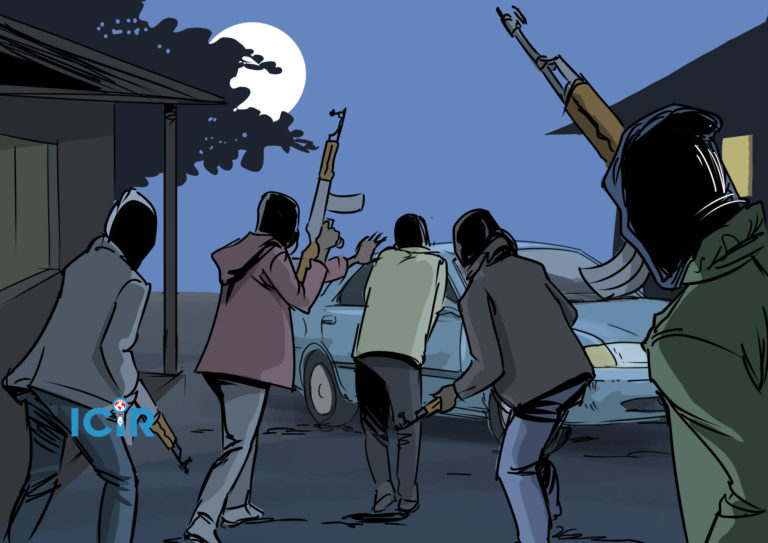
BANDITS attacked the Ambe community of Sanga Local Government Area of Kaduna State on Sunday, May 5, and killed six persons.

The spokesperson of the Kaduna State Police Command, Mansir Hassan, confirmed the attack to Channels Television on Monday, May 6.


Read Also:

He disclosed that the command arrested a suspect in connection with the attack.

Hassan claimed that police officers from the Sanga Divisional Police Station and Operation Safe Haven troops rushed to the community and engaged the bandits in a gunfight after receiving a distress call.

He said one of the bandits was taken into custody, and others fled into the forest with gunshot wounds.

Meanwhile, in a statement, the representative for the Jema’a/Sanga Federal Constituency, Daniel Amos, said eight persons were injured in the incident and were receiving treatment in a hospital.

He added that six people died in the attack.

The lawmaker urged the people of the Sanga Local Government Area to maintain peace while denouncing the most recent incident which he said aimed at undermining his constituency’s safety.

The ICIR reports that for years, Kaduna State has been the centre of violent attacks in Nigeria, recording several incidents of kidnapping for ransom, attacks on villages and abductions.

In 2022, the Kaduna International Airport was attacked by terrorists and a staff of the Nigerian Airspace Management Agency (NAMA), Shehu Na’Allah, was killed.

Terrorists, numbering over 200, invaded the Kaduna International Airport located in Igabi Local Government, disrupting the operation and killing one security personnel of the Nigerian Airspace Management Agency.

On Thursday, May 2, the police announced the arrest of Ibrahim Abdullahi, one of the suspects involved in the violent attack on the Abuja-Kaduna passenger train in March 2022.

The Force Public Relations Officer (FPPRO), Olumuyiwa Adejobi, disclosed this during a press briefing in Kaduna State.

The Police spokesperson also revealed that 48 AK-47 rifles were found with the suspect during his arrest.

According to Adejobi, Abdullahi, known as “Mandi,” was also involved in the abduction of students from Greenfield University in 2021. 


Discos effect NERC’s directive on tariff reduction for Band A customers

0

SOME distribution companies (DisCos) have effected implementation for a downward review of the electricity tariff for Band A customers, which was increased by over 200 per cent in April.

The downward review directive was contained in the Nigerian Electricity Regulatory Commission’s (NERC) May 2024 Supplementary Order to the DisCos, effective May 6, 2024.

The head of public affairs at NERC, Usman Arabi, explained that the decision was based on the current reduction in the foreign exchange (FOREX), one of the components considered before the tariff increase.

For instance, Ikeja Electricity Distribution Company has reduced the electricity tariff payable by its Band A customers to N206.80 per kilowatt-hour from the N225/kWh earlier approved by NERC.


Read Also:


The spokesperson for the IKEDC, Olufadeke Omo-Omorodion, confirmed this development in a notice on Monday.

According to the notice, the downward tariff review of the Band A customers would take effect from Monday, May 6, 2024.

Under the approved review, Band A customers who were previously charged N225/Kwh, are to pay N206.80/Kwh

“Please be informed of the downward tariff review of our Band A feeders from N225/kWh to N206.80/kwh effective 6th May 2024 with guaranteed availability of 20-24hrs supply daily,” the statement said.

Similarly, Kaduna Electric’s management has announced to the customers under its franchise areas a downward review of the tariff for its Band A feeders from N225/kWh to N206.80/kWh.

The review was contained in a statement signed by the company’s head of corporate communications, Abdulzeez Abdullahi. It is effective from 6 May 2024 and affects both prepaid and postpaid customers.

Kaduna Electric assured customers in its Band A feeders of the continued availability of 20-24hrs supply daily as stipulated in the Service Based Tariff regime.

The Abuja Electricity Distribution Company (AEDC) has also informed customers in its franchise areas under Band A feeders of tariff reduction from N225/kWh to N206.80/kWh effective today, May 6.

The decision to crash the tariff may not be unconnected with public outcry over the increased cost of electricity, which industry observers, civil society organisations and labour unions have described as insensitive.

Tariffs for Bands B, C, D, and E remain unchanged

In April, NERC approved an increase in electricity tariff for customers under the Band A classification. With the new tariff, customers under the category, expected to receive 20 hours of electricity supply daily, were to pay N225 per kilowatt, starting from April 3 — up from N66.


Police arrest kidnappers who slept off during operation in Ondo

0

THE Police in Ondo State have arrested five kidnappers who slept off while abducting the wife of a pastor and two others in the Ofosu area of the state.

According to reports, the kidnappers allegedly slept off after taking hard drugs, thus allowing their captives to escape.

The kidnappers were listed as Garuba Mumuni, Yusuf Tale, Kabiru Muhammad, Shaibu Umar, and Adamu Mohammed.


Read Also:

They were apprehended by officers of the Ondo Police Command’s Ofosu Division when the victims recognised one of them.

According to the police, the victims were a pastor’s wife, a member who was abducted from the church, and a third victim who was abducted while harvesting snails on the farm.

“Through intelligence, on May 1, 2024, five among the six kidnappers were arrested by men of Ofosu division and have been identified by the victims as part of the gang that abducted them,” the command stated.

The Ondo State police commissioner, Abayomi Oladipo, announced that the suspects would soon be charged in court.

According to the police, another suspect, Adetokunbo Adesina, who allegedly claimed to have been hired to kill over 500 people, was also detained after receiving N110,000 from his most recent victim.

The ICIR reported in January 2024 that over 380 persons were kidnapped between December 1, 2023, and January 3, 2024, across Nigeria under President Bola Tinubu.

According to Data obtained by The ICIR from the Armed Conflict Location & Event Data Project (ACLED), a data bureau collecting data on the locations, dates, actors, fatalities, and types of all reported political violence and protest events worldwide, those abducted include men, women, farmers, children, and students.

The victims were taken hostage at various events that happened during the last month of 2023 and the first week of the new year, illustrating the escalating number of kidnapping cases in the country.

The affected states include Anambra, Benue, Cross River, Delta, Enugu, FCT, Kaduna, Kastina, Kogi, Lagos, Nassarawa, Ogun, Rivers, Sokoto, Taraba, and Zamfara.

During the period, the Ondo state security outfit, Amotekun, detained 60 people, including an ex-convict named Usman Garuba and a 72-year-old informant named Suleman Abubakar, on suspicion of abduction and other offences in the state.

The state commander of Amotekun, Adetunji Adeleye, announced in Akure that the 72-year-old Abubakar was taken into custody for giving information to the kidnappers who whisked away his boss.

Garuba was arrested after kidnapping nine people and demanding a ransom in the Akure North Local Government Area of the state.

In recent years, Nigeria has seen a sharp leap in kidnappings. This has resulted in Nigerians paying billions of naira in ransom to secure the release of their loved ones at the hands of kidnappers.

 report published by The ICIR examined cases of kidnapping, ransom payment and the cost of being kidnapped in Nigeria.

Nigeria’s minimum wage has never protected workers from poverty: here’s why

By Stephen Onyeiwu, Allegheny College

WAGES have become the top issue for Nigeria’s organised labour movements in the past year. Reacting to recent increases in the cost of living, the labour movement has been calling for an upward review of the national minimum wage, currently N30,000 (US$24) a month. The Conversation’s Adejuwon Soyinka asks economics professor Stephen Onyeiwu if Nigeria’s minimum wage truly protects workers from poverty.


When did Nigeria get a minimum wage and why?

In 1974, the Nigerian government followed the recommendations of the Udoji Commission and increased workers’ wages. But public sector workers were the main beneficiaries. It was not until September 3 1981, that the first minimum wage law was introduced. The law covered all full-time workers except seasonal workers and those who worked in enterprises employing fewer than 50 workers.

Its introduction was prompted by a number of factors. The Nigerian Labour Congress (NLC), an umbrella organisation of trade unions then led by Hassan Sunmonu, was vociferous in its demand for improvements in workers’ welfare. It threatened to go on strike if its demand for a minimum wage was not met. As a new government at the time, the last thing the president Shehu Shagari administration wanted was a nationwide strike.

The first minimum wage in 1981 was N125 per month. At the exchange rate of US$1 = 0.61 naira in 1981, this amounted to about US$204. In 2024, that minimum wage would be equivalent to about 265,000 naira (US$204) per month, going by the current exchange rate of about US$1 = 1,300 naira. So the minimum wage in 1981 was at least eight times more than the current minimum wage.

The minimum wage in Nigeria has been revised a number of times but has not kept pace with the cost of living. It became N250 in 1991, N5,500 in 2000 and N18,900 in 2011. The current N30,000 took effect in 2019.

Who is affected by changes to the minimum wage?

The Nigerian labour market has two segments. Public-sector workers are the most affected by increases in the minimum wage. This is because the government cannot violate its own law, and nearly all public-sector workers are unionised.

Most Nigerians, however, are not affected by changes in the minimum wage. This is because 92.3 per cent  of the working age employed population work in the informal sector, mostly as farmers, traders or providers of services.

Only about 8 per cent of Nigerians (or 16 million), mainly in the public and “high-end” private sectors, would benefit from a minimum wage increase. This is in contrast to South Africa, where 60 per cent of workers are covered by the minimum wage.

In big corporations, skilled workers are often indifferent to the minimum wage, but sometimes their wages are adjusted upwards when a new minimum is introduced.

Many workers in small and medium-sized companies – part of the 16 million referred to above – are paid the minimum wage. Some of them, especially those in family-owned businesses, are paid less than the minimum wage.

Enforcement of minimum wage laws in Nigeria is at best weak. Consequently, many workers in the private sector, especially in services, hospitality, small private clinics and non-profit organisations, earn below the minimum wage. Most are not unionised and are unlikely to benefit.

Does the minimum wage protect workers from extreme poverty?

It depends on how one measures poverty.

A nation can establish a poverty line (or a minimum income level) below which someone would be considered poor. This minimum amount is deemed adequate to maintain an acceptable living standard, given the cost of living in a given country. The line is usually set very low.

In reality, however, Nigeria’s minimum wage traps workers in a cycle of poverty if a multidimensional measure of poverty is used – one that considers income and access to health, education and living standard indicators. These include sanitation, drinking water, electricity, and housing. As of 2021, when the latest data was compiled, 47.3 per cent of Nigerians were multidimensionally poor. That number may have gone up significantly, following the removal of fuel subsidies and a galloping inflation rate of 33 per cent. The subsequent steep increase in the cost of living, without wage adjustments, can only push more Nigerians into poverty.

It is, therefore, possible for someone earning the minimum wage to be regarded as non-poor under the income measure, but poor when the multidimensional measure is used. The current minimum wage of N30,000 (US$24) in Nigeria cannot extricate workers from multidimensional poverty.

The number of poor people in Nigeria has been rising for the past eight years, and will continue to do so until the minimum wage reflects the cost of living and recognises the salience of social services like health, education and housing.

Another reason the minimum wage does not protect Nigerian workers from poverty is that it is not indexed to inflation. Inflation has been rising faster than wage growth in Nigeria, thereby decreasing the real purchasing power of workers. Their income buys less and less. Inflation rose from about 11 per cent in 2008 to 25 per cent in 2023. The minimum wage has remained the same since then.

What impact has the minimum wage had on the economy?

The current minimum wage has had a negative impact on the Nigerian economy.

To make ends meet, many workers are now doing “side hustles”. Some public-sector workers are hardly available in their places of work.

The low wage has undermined morale and productivity, and created a sense of deprivation among workers.

What would be a better way to combat poverty?

One way is to help people acquire skills and capabilities that are needed in the new global economy. These are skills like information and communication technologies, artificial intelligence, data analytics, biotechnology, bio-informatics, industrial design, 3D printing, digital imaging, design and animation.

Nigerian workers have fallen behind in the acquisition of 21st century skills. In a survey of companies in Nigeria, 81 per cent said they had difficulty finding workers with the relevant skills.The Conversation

Stephen Onyeiwu, Professor of Economics & Business, Allegheny College

This article is republished from The Conversation under a Creative Commons license. Read the original article.