Home Blog Page 68

Recapitalisation: 30 banks meet threshold, three undergoing verification – CBN

FEW days to the March 31 deadline, Nigeria’s banking sector recapitalisation drive has gained significant momentum with 30 banks already meeting the new minimum capital requirements.

This is even as three lenders are still undergoing regulatory verification, the Central Bank of Nigeria (CBN) said.

The apex bank, in a statement on Friday, March 6, through its Acting Director of Corporate Communications, Hakama Ali, stated that a total of 33 banks successfully raised fresh capital through various channels, including rights issues, initial public offerings, and private placements, as part of the industry-wide recapitalisation programme launched in 2024.

“As of March 6, 2026, the recapitalisation exercise is progressing steadily. Thirty banks have met the new minimum capital requirements applicable to their respective licence authorisations. In total, thirty-three banks have raised additional capital through rights issues, initial public offerings (IPOs), and private placements as part of the programme,” the CBN said.

The apex bank explained that the capital positions of the remaining lenders were undergoing routine verification by regulators ahead of final confirmation of their compliance with the new capital thresholds within the stipulated recapitalisation timeline.

The recapitalisation programme was introduced in 2024 as part of broader efforts by the regulator to strengthen the resilience of Nigeria’s banking system, enhance financial stability, and position banks to play a stronger role in financing economic growth.

The initiative requires banks to significantly increase their capital base in line with revised regulatory thresholds tied to their operating licences, with the objective of ensuring that financial institutions are better equipped to absorb shocks, deepen credit intermediation, and support large-scale economic activities.

Since the policy was announced, banks across the industry have embarked on aggressive capital-raising programmes, tapping domestic and international investors through equity offerings and private placements. Several lenders have also restructured their balance sheets and expanded shareholder participation to meet the new regulatory requirements.

The recapitalisation push is widely seen as one of the most significant regulatory reforms in Nigeria’s banking sector since the 2004 consolidation exercise, which reduced the number of banks in the country while strengthening capital buffers and improving financial system stability.

The CBN reiterated that Nigeria’s banking system remained stable and sound, noting that the ongoing recapitalisation programme would further reinforce the sector’s capacity to support households, businesses, and long-term economic expansion.

According to the regulator, stronger capital buffers will enable banks to increase lending to critical sectors of the economy, finance infrastructure projects, support small and medium-sized enterprises, and deepen financial inclusion.

The Central Bank also emphasised that it would continue to maintain close supervisory engagement with regulated institutions throughout the recapitalisation process to ensure full compliance with prudential standards and capital adequacy requirements.

The ICIR reported that some banks, including deposit money banks (DMBs), were considering mergers as a last-ditch effort to meet the March 31, 2026, deadline for the CBN recapitalisation exercise.

In March 2024, the CBN announced new minimum capital requirements of N500 billion for international banks, N200 billion for national banks and N50 billion for regional banks, allowing compliance only through fresh equity injections, mergers and license re-classification.

Gunmen abduct residents in Abuja community

0

SEVERAL residents are feared to have been abducted in the Peze community of Byazhi, Kubwa area of Abuja, during a late-night raid by armed men.

According to a report by Sahara Reporters, the heavily armed attackers struck on the night of Tuesday, March 3, moving from house to house between 9:30 p.m. and 10:00 p.m and abducted at least 16 residents. 

A resident quoted by the newspaper, recounted that the assailants had gathered in an uncompleted building opposite his house before launching the attack. 

“They started banging on my door and moving around the house, shouting to see if anyone would react. The way they operate is that once you respond, they break the window to gain entry,” the source was quoted to have said.

When they couldn’t gain entry into some homes, the gunmen reportedly moved to other houses, eventually abducting 16 people, including the wife of a local vigilante commander, her younger sister, and four children belonging to a pastor who was away when the attack occurred.

According to the report, while the community’s vigilante commander narrowly escaped being ambushed after leaving his house before the attack, his wife, who recently put to bed, was taken alongside her sister, while the kidnappers left the newborn behind.

Other victims include four children belonging to a pastor in the community. 

Meanwhile, the FCT Police spokesperson, Josephine Adeh, refused to react to the incident, even after asking The ICIR to send her a text message when contacted on the phone over the incident.

Recurring kidnappings in Byazhin–Kubwa axis

The latest abduction adds to a series of security breaches in communities around the Byazhin and Kubwa areas.

In May 2025, suspected gunmen abducted a resident identified as Afam Nwankwo Onyedikachi in the Public Commentary area of Byazhin.

The victim was reportedly kidnapped in the early hours of the day while attempting to enter his residence after returning from a gymnastics session.

Another resident who reportedly tried to confront the attackers was shot and injured during the incident and was later rushed to a hospital in Byazhin for treatment.

Similarly, earlier incidents in the area have seen gunmen storm residential communities at night, abducting residents and attacking households.

 In January 2023, gunmen reportedly invaded the Paze community in Byazhin and abducted four residents who had just returned home from a New Year’s crossover church service.

Residents said the attackers, numbering about 15, emerged from nearby bushes and moved from house to house before breaking into compounds. In some cases, the gunmen forced residents out of their homes, collected money and valuables, and later whisked them away.

FULL LIST: Tinubu assigns countries to Fani-Kayode, Omokri, Yakubu, other ambassadors

0

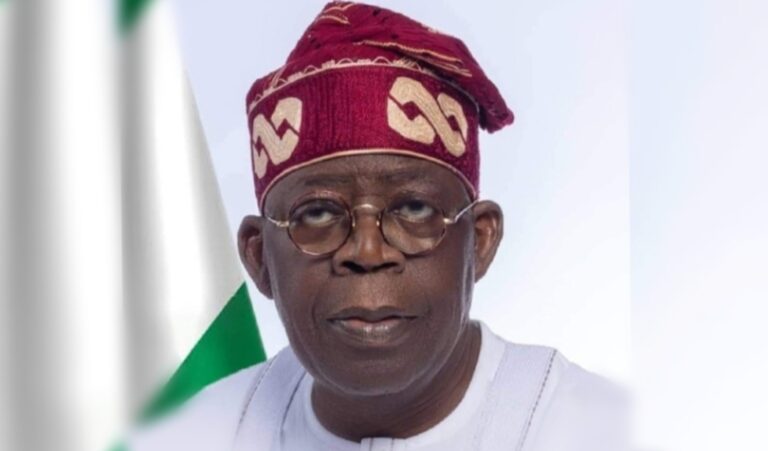
PRESIDENT Bola Tinubu has approved the deployment of 65 ambassadors-designate to Nigeria’s diplomatic missions worldwide, assigning several prominent political figures to key countries and multilateral institutions.

Among those posted are former aviation minister Femi Fani-Kayode, former presidential aide Reno Omokri, and former chairman of the Independent National Electoral Commission, Mahmood Yakubu.

A statement issued on Friday, March 6, by the president’s Special Adviser on Information and Strategy, Bayo Onanuga, said the deployment followed the confirmation of the nominees by the Nigerian Senate in December 2025.

According to the statement, the postings involve 34 non-career ambassadors and 31 career diplomats who will represent Nigeria in different countries and international organisations.

Among the non-career envoys, Fani-Kayode was assigned to Germany, while Omokri will represent Nigeria in Mexico.

Yakubu, who served as INEC chairman for two terms, was posted to Qatar.

Other appointees include former interior minister Abdulrahman Bello Dambazau to China, former Abia State governor Okezie Ikpeazu to Spain, and former health minister Isaac Folorunso Adewole to Canada.

Also on the list are former presidential adviser Ita Enang, who was posted to South Africa, and former senator Grace Bent assigned to Togo.

Businessman and politician Jimoh Ibrahim was named Nigeria’s Permanent Representative to the United Nations.

The list also includes former Enugu State governor Ifeanyi Ugwuanyi, who was posted to Greece, and former Plateau senator Nora Ladi Daduut to South Korea.

In the career diplomat category, several ambassadors were assigned to strategic missions across Africa, Europe, Asia and the Americas.

According to the Presidency, the Ministry of Foreign Affairs (Nigeria) has already received agrément from the government of the United Kingdom for the appointment of Aminu Dalhatu as Nigeria’s High Commissioner.

Similarly, the government of France has granted agrément for Ambassador Ayodele Oke to serve as Nigeria’s envoy in Paris.

The Presidency said the ministry had transmitted the nominations of the remaining ambassadors to their host countries to seek agrément in line with diplomatic practice.

The development came hours after The ICIR reported how the Tinubu’s administration had long delayed the posting of the ambassadors to their respective states despite initially taking over two years to nominate them.

The Special Adviser on Information and Strategy to the President Bayo Onanuga had told The ICIR that the list of postings was ready and awaiting concurrence from host nations.

According to the Presidency, the delay in postings was due to standard diplomatic procedures requiring agrément from host countries, including security vetting, background checks, and approval of credentials.

“There’s nothing delaying. He has already done it. If you understand the way the Presidency works, you cannot just announce the postings of those people. You need to get the concurrence of the countries where our ambassadors are going to. I can tell you that the list is ready, the postings are ready and maybe tomorrow we are going to release it. Maybe tomorrow. I have the list of the postings. We are waiting for words from those countries where our ambassadors are going,” Onanuga said.

Recall that in December 2025, the Senate Committee on Foreign Affairs screened and approved non-career ambassadorial nominees forwarded by Tinubu.

Subsequently, in January 2026, Tinubu began reversing this vacuum by approving ambassadorial postings for three key envoys, including former national security adviser, Lateef Kayode Are, to the United States, former ambassadorial head of the National Intelligence Agency, Ayodele Oke, to France, and former ambassador Aminu Dalhatu to the United Kingdom.

Meanwhile, the statement noted that Tinubu has directed the Ministry of Foreign Affairs (Nigeria) to immediately commence induction programmes for the ambassadors and high commissioners ahead of their deployments.

STATEHOUSE PRESS RELEASE


PRESIDENT TINUBU APPROVES THE POSTINGS OF AMBASSADORS


President Bola Ahmed Tinubu has approved the postings of 31 career and 34 non-career ambassadors to various countries and the United Nations. The Senate confirmed the ambassadors-designate last December.

SEE THE FULL LIST BELOW

POSTINGS OF NON-CAREER AMBASSADORS / HIGH COMMISSIONERS

S/N NAME MISSION APPROVED

1. SENATOR GRACE BENT: LOME-TOGO

2. SEN. ITA ENANG: SOUTH AFRICA

3. IKPEAZU VICTOR: SPAIN

4. NKECHI LINDA UFOCHUKWU: TEL-AVIV, ISRAEL

5. MAHMUD YAKUBU: QATAR

6. PAUL OGA ADIKWU: THE VATICAN CITY HOLY SEE

7. VICE ADMIRAL IBOK-ETE EKWE IBAS: THE PHILIPPINES

8. MR. RENO OMOKRI: MEXICO CITY, MEXICO

9. HON. (ENGR.) ABASI BRAIMAH (FMHR): BUDAPEST, HUNGARY

10. MRS. ERELU ANGELA ADEBAYO: PORTUGAL

11. BARR. OLUMILUA OLUWAYIMIKA AYOTUNWA: TOKYO, JAPAN

12. RT. HON. UGWUANYI IFEANYI LAWRENCE: ATHENS, GREECE

13. BARR. CHIOMA PRISCILLA OHAKIM: WARSAW, POLAND

14. AMINU DALHATU: UNITED KINGDOM, UK

15. LT. GEN ABDULRAHMAN BELLO DAMBAZAU: BEIJING, CHINA

16. HON. TASIU MUSA MAIGARI: GAMBIA

17. OLUFEMI PEDRO: AUSTRALIA

18. BARR. MUHAMMED UBANDOMA ALIYU: ARGENTINA

19. LATEEF KAYODE ARE: USA

20. AMB. JOSEPH SOLA IJI: RUSSIA

21. SEN. JIMOH IBRAHIM: UN PERMANENT REPRESENTATIVE

22. FEMI FANI KAYODE: GERMANY

23. PROF. ISAAK FOLORUNSO ADEWOLE: OTTAWA, CANADA

24. AJIMOBI FATIMA FLORENCE (F): AUSTRIA

25. MRS. LOLA AKANDE (F): SWEDEN

26. AYODELE OKE: FRANCE

27. YAKUBU N. GAMBO: SAUDI ARABIA

28. SENATOR PROF. NORA LADI DADUUT: SEOUL, SOUTH KOREA

29. BARR. ONUEZE CHUKWUJIKA JOE OKOCHA SAN: DUBLIN

30. DR. KULU HARUNA ABUBAKAR: TUNIS, TUNISIA

31. RT. HON. JERRY SAMUEL MANWE: PORT OF SPAIN, T&T

POSTINGS OF CAREER AMBASSADORS / HIGH COMMISSIONERS LIST

S/N NAME MISSION APPROVED

1. AMB. NWABIOLA EZENWA CHUKWUMEKA: COTE D’IV/OIRE

2. BESTO MAIMUNA IBRAHIM: NIAMEY-NIGER

3. MONICA OKWUCHUKWU ENEBECHI: SAO TOME, STP

4. AMB. MOHAMMED MAHMUD LELE: ALGIERS-ALGERIA

5. ENDONI SYNDOPH PAEBI: OUAGADOUGOU-BURKINA FASO

6. AHMED MOHAMMED MONGUNO: CAIRO EGYPT

7. AMB.JANE ADAMS (NEE OKON) MICHAEL (F): KINGSTON-JAMAICA

8. AMB. CLARK-OMERU ALEXANDRA (F): LUSAKA-ZAMBIA

9. CHIMA GEOGGREY LIOMA DAVID: BAMAKO-MALI

10. AMB. ODUMAH YVONNE EHINOSEN: MALABO –E/GUINEA

11. AMB WASA SEGUN IGE: BEIRUT, LEBANON

12. RUBEN ABIMBOLA SAMUEL (F): ROME, ITALY

13. AMB.ONAGA OGECHUKWU KINGSLEY: MAPUTO, MOZAMBIQUE

14. AMB.MAGAJI UMAR: KINSASHA, DR CONGO

15. AMB.MUHAMMAD SAIDU DAHIRU: NEW DELHI-INDIA

16. AMB. ABDUSSALAM HABU ZAYYAD: DAKAR-SENEGAL

17. AMB SHEHU ILU BARDE: ACCRA GHANA

18. AMB.AMINU NASIR: ETHIOPIA

19. ABUBAKAR MUSA MUSA: N’DJAMENA, CHAD

20. AMB. HAIDARA MOHAMMED IDRIS: THE HAGUE-NETHERLANDS

21. AMB.BAKO ADAMU UMAR: RABAT-MOROCCO

22. AMB. SULU GAMBARI OLATUNJI AHMED: MALAYSIA

23. AMB.ROMATA MOHAMMED OMOBOLANLE (F): TANZANIA

24. AMB. SHAGA JOHN SHAMAH: BOTSWANA

25. SALAU, HAMZA MOHAMMED: TEHRAN, IRAN

26. AMB.IBRAHIM DANLAMI: KENYA

27. IBRAHIM ADEOLA MOPELOLA (F): COTONOU-BENIN

28. AMB.AYENI ADEBAYO EMMANUEL: BRUSSELS, BELGIUM

29. AMB.AKANDE WAHAB ADEKOLA: BERNE-SWITZERLAND

30. AMB. AREWA (NEE ADEDOKUN) ESTHER (F): WINDHOEK-NAMIBIA

31. AMB.GERGADI JOSEPH JOHN: LIBREVILLE-GABON

32. AMB. LUTHER OGBOMODE AYO-KALATA (F): SIERRA LEONE

33. DANLADI YAKUBU NYAKU : KHARTOUM-SUDAN

34. BELLO DOGON-DAJI HALIRU: BANGKOK, THAILAND

Nigeria gains as Qatar warns oil price may hit $150/barrel in three weeks

0

NIGERIA is currently benefiting from a price surge as oil prices are forecast to reach $150 per barrel within three weeks if the conflict in the Middle East escalates further and disrupts energy supplies from the Gulf.

Nigeria has its oil price for the 2026 budget estimates premised on $64.85 per barrel, but data from oilprice.com shows that Brent crude currently sells at $88.32 per barrel, which would add more buffer to Nigeria’s net external reserves.

However, this gain for the national coffer will unlikely attract immediate benefits for the nation’s masses who will continue to struggle to purchase petrol and other fuels at high prices.

Currently, petrol sells for approximately N1,000 per liter across Nigeria, following a marginal increase from about N900 it was sold in February.

In his inauguration address on May 29, 2023, President Bola Tinubu suspended fuel subsidy, forcing the price to quadruple.

Nigerians have yet to see many of the promises made by the president with the subsidy savings, as majority of citizens battle with rising poverty and insecurity.

High cost of fuel products translates to more hardships for Nigerians, more overhead costs for businesses, additional spending on petrol for households that rely on petrol to power generators, and increased cost of transportation, foods and other necessities.

Qatar’s energy minister, Saad al-Kaabi, told Financial Times (FT) that a sharp rise in fuel prices could severely damage global economy.

According to the FT, al-Kaabi said a prolonged war in the Middle East could force Gulf energy exporters to shut down production within weeks.

He added that even if hostilities stopped immediately, it could take “weeks to months” for Qatar to restore normal delivery cycles after an Iranian drone strike on the country’s largest liquefied natural gas facility.

The warning comes as the conflict involving the US, Israel and Iran threatens to choke off supply routes critical to global energy trade. Oil markets are increasingly focused on the risk of disruptions around the Strait of Hormuz, a narrow shipping corridor through which roughly one-fifth of the world’s crude and a significant share of global liquefied natural gas passes.

A report by The ICIR shows the Nigerian government would see a significant increase in net external foreign reserves to $55 billion if the conflict, driven by the United States and Israel joint attacks on Iran, last until the end of March, according to some economic watchers.

Already, global oil prices have surged beyond $80 per barrel, driven by disruptions to supply chains across Middle Eastern countries following the conflict.

The net external reserves specifically help stabilise the currency, pay for imports, and service external debts. They also act as a buffer to ensure the country meets its international financial obligations and maintains stability in times of economic uncertainty.

Brokerages have also begun outlining worst-case scenarios if the waterway remains blocked for a prolonged period.

Already, analysts at DBS Bank said crude oil prices could climb to $100-150 per barrel in an extreme scenario involving a full disruption of shipments through the Strait of Hormuz.

According to oilprice.com, Brent crude has already begun reacting to the geopolitical risk. Prices rose sharply this week, climbing as much as to  $88.32 per barrel, the highest level since early 2025.

Notably, the escalation in the region has already begun affecting production.

For instance, Iraq, the second-largest producer in the Organisation of Petroleum Exporting Countries (OPEC) group, has reportedly cut output significantly as export routes remain under threat.

The Financial Times also confirmed that Tanker traffic through the Strait of Hormuz was disrupted amid attacks on vessels.

Analysts say the impact of any prolonged disruption would extend well beyond energy markets.

A sustained surge in oil prices would likely raise inflation across emerging economies and slow economic growth.

In Nigeria, the  Chief Economist at SPM Professionals, Paul Alaje, warned that petrol prices could climb to N1,000 per litre and push up inflation figures if the conflict is not effectively managed.

“While crude oil goes up, we all need to check the impact on our economy. The first thing you see is high inflation, because as crude oil goes up, the cost of PMS, diesel, and Jet-A1 will also follow.

“As that is going on, about nine per cent has already attracted more cost for PMS in Nigeria, and by the end of April, we project that if the war is not properly managed, it might get to ₦1,000 plus for PMS in Nigeria,” he added.

Higher oil prices typically widen current account deficits for oil-importing economies.

For equity markets, a spike toward $150 oil would likely trigger a broad risk-off reaction. Higher energy costs raise input prices for companies, compress corporate margins and weaken consumer spending.


Soldiers killed, residents abducted in Borno terror attack

SUSPECTED Boko Haram fighters and members of the Islamic State of West African Province (ISWAP) have killed many people and abducted scores of residents during an attack on Ngoshe community in Gwoza Local Government Area of Borno State.

According to reports, the attackers struck the community around 1 a.m. on Wednesday, March 4, after first overrunning a military post in the area.

The assault forced thousands of residents to flee to the neighbouring town of Pulka, where many displaced persons are currently sleeping on roads and in school buildings for fear of further attacks.

Daily Trust reported that the insurgents first stormed the military base in Ngoshe before moving into the community and attacking residents shortly after the Muslims broke their fast.

Reports further indicated that the violence lasted for several hours, causing panic and destruction before the air component of Operation Hadin Kai responded and pushed the attackers into nearby forests.

Confirming the incident, the spokesperson for the Borno State Police Command, Nahum Kenneth, said “some civilians whose number is yet to be ascertained were affected or killed during the attack. Several others are still missing and may have been abducted and taken towards the Mandara Mountains.”

Daso added that security authorities were still trying to determine how many people were taken during the attack.

“As of now, we have not completed the process of establishing the total number of those taken away. If reports about the Chief Imam being missing are confirmed, we will verify and update you accordingly,” he added.

When contacted by phone for further updates on the attack, Kenneth requested that a message be sent to his line.

He has yet to respond to WhatsApp and text messages sent to him as of the time of filing this report.

Ndume condemns attack

Meanwhile, the senator representing Borno South, Ali Ndume, condemned the attack while addressing journalists.

“The military base in the community (Ngoshe) was dislodged, with some major equipment destroyed. Residential houses and property worth millions of naira were also set ablaze,” Ndume said.

He added, “As it is, details about the unfortunate Ngoshe incident are still sketchy, but information at my disposal revealed that many of the fleeing terrorists were neutralised by the air component of the Joint Task Force North-East, Operation Hadin Kai.”

He also said some prominent members of the community were among those killed.

“Unfortunately, the Chief Imam of Ngoshe and some elders, as well as soldiers, were among those slaughtered or killed,” the lawmaker stated.

Ndume noted that many residents were still missing after the attack.

“More than 100 people are still missing or abducted during the attack, while thousands of civilians, mostly women and children, have been displaced and are currently taking refuge in Pulka community,” he stressed.

Authorities verifying number of missing people – Borno Gov’t

Reacting to the attacks, the Borno State Government said t was verifying the number of people abducted by the terrorists.

Speaking through the Commissioner for Information and Internal Security, Usman Tar said, the government said, “We are in the process of verification; the actual figure is yet to be ascertained.

The government said it had sent relief materials through the state Emergency Management Agency.

“Currently, the people are comfortable, and the military is on top of the situation, making sure that there is a security corridor for the transportation of the items to the victims.

“We have also dispatched healthcare and sanitation officials to the location to make sure there is no outbreak of a pandemic.”

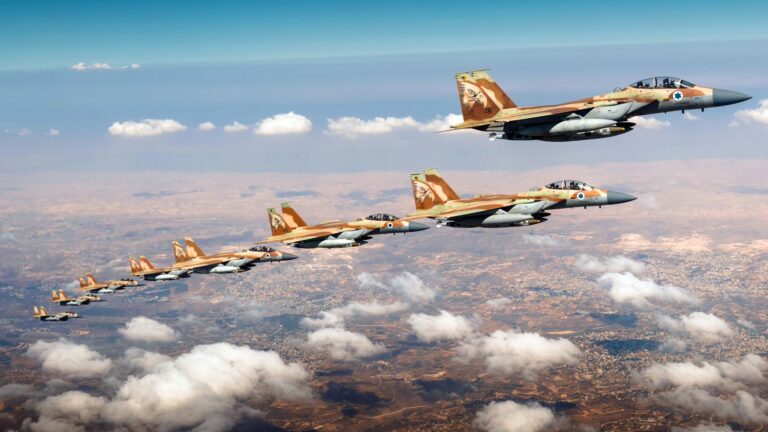
Israel expands airstrikes on Tehran as Iran fires missiles at Tel Aviv

THE war involving Iran, Israel and the United States entered its seventh day on Friday, March 6, with escalating military strikes across the Middle East.

Israel launched heavy airstrikes on Hezbollah-controlled southern suburbs of Beirut and began what it described as a “broad-scale” wave of attacks targeting infrastructure in Tehran on Friday. Meanwhile, Iran said it had fired missiles at the heart of Tel Aviv.

Explosions and flashes lit up the night sky over Beirut’s southern suburbs, according to Reuters footage. The Israeli military said it carried out 26 waves of overnight strikes in the area, targeting command centres and weapons storage facilities belonging to the Iran-backed Hezbollah militia.

Iran’s Islamic Revolutionary Guard Corps (IRGC) said it launched Kheibar missiles toward Tel Aviv on Friday as part of the 21st phase of its military campaign, dubbed Operation True Promise 4. In a statement, the IRGC said the operation involved a coordinated missile and drone assault aimed at sites in central Tel Aviv.

According to Qatari officials, Iranian drones also struck the Al Udeid Air Base overnight, the largest US military base in the Middle East, noting that no casualties were reported.

The IRGC added that Iranian forces had also targeted the Ramat David Airbase and a radar installation in Israel, as well as the Al-Adiri Camp where US troops are stationed. It also claimed responsibility for a drone strike on a base hosting US forces in Erbil in northern Iraq.

An IRGC spokesperson said new weapons and tactics would soon be deployed to confront what it described as Israeli and US aggression, without providing further details.

The seven-day conflict has hugely expanded beyond Israel and Iran as Iran has reportedly launched strikes toward Gulf states, Cyprus, Turkey and Azerbaijan. The confrontation has also extended to the Indian Ocean, where a US submarine reportedly sank an Iranian naval vessel near Sri Lanka.

Speaking at the Raisina Dialogue conference in New Delhi, Iran’s deputy foreign minister Saeed Khatibzadeh said the conflict was an “existential war” for Iran.

“This was an ‘existential war’ for Iran, leaving ​us with no choice but to respond wherever American attacks originate from,” he said.

Meanwhile, Hezbollah warned Israelis living close to the border with Lebanon to evacuate. In a message posted in Hebrew on its Telegram channel early Friday, the group urged residents within five kilometres (three miles) of the border to leave the area.

Reuters quoted the group as saying, “Your military’s aggression against Lebanese sovereignty and safe citizens, the destruction of civilian infrastructure and the expulsion campaign it is carrying out will not go unchallenged.” 

According to the Iranian Red Crescent Society, at least 1,230 people have been killed in Iran since the fighting began a week ago.

In Lebanon, the Health Ministry reported that Israeli attacks this week killed 123 people and wounded another 683. The ministry did not specify how many of the casualties were civilians or combatants. No deaths have been reported in Israel as a result of Hezbollah attacks.

Tensions have also spread to Azerbaijan as authorities said four Iranian drones crossed into its airspace on Thursday, injuring four people in the Nakhchivan Autonomous Republic exclave. Iran denied deliberately targeting its neighbour, which has a sizeable Azeri population.

Ambassadors in limbo: Tinubu yet to deploy Fani Kayode, Omokri, others


TWO years into his presidency, Bola Ahmed Tinubu began appointing ambassadors to Nigeria’s diplomatic missions in January 2026. This followed rising diplomatic pressure from the United States after threats issued by President Donald Trump. 

In late October 2025, Trump accused Nigeria of failing to protect Christians from violence by extremist groups, warning that the US military could take “fast” military action if Nigeria did not crack down on attacks against Christians. Trump also ordered the US Department of Defense to prepare options for intervention, raising fears of a major diplomatic crisis between the two countries.                     The Nigerian government rejected the accusations, insisting that violence in the country affects both Muslims and Christians and is driven by insurgency and criminal banditry rather than state-sponsored religious persecution.

Despite the denial, the threat increased international scrutiny of Nigeria’s security situation and strained relations with Washington. Analysts and officials had observed that Nigeria’s failure to appoint ambassadors made the country vulnerable during the crisis.

Without a Nigerian ambassador in Washington, the government lacked a high-level diplomat to counter US narrative about religious persecution or lobby American policymakers, leaving a diplomatic vacuum that weakened Nigeria’s ability to influence US policy and respond quickly to Trump’s allegations.

Swift response to US diplomatic vaccum

On January 23, 2026, Tinubu approved the posting of three ambassador-designates, reversing an earlier announcement that had included a fourth nominee for Turkey following a mix-up. The three ambassadors were designated to key nations, including the United States, France, and the United Kingdom, in a move that signalled an effort to enhance Nigeria’s global diplomatic footprint.

Tinubu directed the Ministry of Foreign Affairs to formally notify host governments under diplomatic protocols on the approval of three ambassadors, with the former Director-General of Nigeria’s National Intelligence Agency (NIA) Ayodele Oke posted to France.

A former security service head and national security adviser, Lateef Kayode Are was posted to the United States of America, and former Nigeria’s Ambassador to South Korea, Amin Mohammed Dalhatu was posted to the United Kingdom as High Commissioner.

However, several high-profile nominees, including Femi Fani-Kayode, Reno Omokri, are among 65 other nominees awaiting their postings months after their confirmation by the Senate.

In December 2025, the Senate Committee on Foreign Affairs screened and approved non-career ambassadorial nominees forwarded by Tinubu which included former ministers, Femi Fani-Kayode and Abdulrahman Dambazau, former presidential aide Reno Omokri, former Enugu State Governor Ifeanyi Ugwuanyi, former presidential aide Senator Ita Enang, and former Independent National Electoral Commission (INEC) Chairman, Yakubu Mahmood.

After assuming office in September 2023, the Tinubu administration recalled all Nigerian ambassadors, but replacing them proved slow. This attracted criticisms following prolonged gaps in diplomatic representation that weakened Nigeria’s international influence,  and hampered bilateral cooperation.

For nearly 28 months, Nigeria’s more than 100 diplomatic missions across the world operated without substantive ambassadors, with chargé d’affaires and senior diplomats managing embassies.

According to a report by Reuters, the delay was linked partly to funding issues and security background checks on potential nominees.

In November 2025, Tinubu forwarded an initial three nominees which included Are, Dalhatu, and Oke to the Senate for confirmation.

Just days later, he sent an additional 32 names, consisting of 15 career diplomats and 17 political who are non-career nominees. Additional names were subsequently transmitted, bringing the total number of nominees to about 65 individuals.

Despite confirmation, many of the envoys have not yet been assigned to specific countries.

Diplomatic sources say postings typically require several additional steps like presidential assignment to specific missions, agreement from host countries meaning approval of the envoy by the receiving government, formal letters of credence, deployment by the Ministry of Foreign Affairs.

Without agreement from host countries, ambassadors cannot formally assume their posts.

Some analysts also argue that the short time before the next general election cycle could complicate acceptance by certain countries, as ambassadors typically serve longer diplomatic terms.

We are awaiting diplomatic clearance -Presidency 

The Presidency says Nigeria will soon announce the postings of newly appointed ambassadors, explaining that the delay is due to diplomatic procedures requiring the approval of host countries.

The spokesperson to President Bola Ahmed Tinubu, Bayo Onanuga, told The ICIR in a phone conversation on Thursday, March 5, that the list of ambassadors and their postings has already been prepared and may be released as soon as the necessary diplomatic clearances are received.

“There’s nothing delaying. He has already done it. If you understand the way the presidency works, you cannot just announce the postings of those people. You need to get the concurrence of the countries where our ambassadors are going to. I can tell you that the list is ready, the postings are ready and maybe tomorrow we are going to release it. Maybe tomorrow. I have the list of the postings. We are waiting for words from those countries where our ambassadors are going,” Onanuga said.

Responding to concerns about the prolonged gap before new appointments of new ambassadors were made, Onanuga said Nigeria’s diplomatic missions remained functional even without ambassadors, noting that officials such as consuls-general and other senior diplomats continued to manage Nigeria’s foreign missions.

“Even though the envoys were recalled, you still have another line of diplomats there in charge of the affairs. So, it’s not only when you appoint an ambassador that you have the embassy running.

He downplayed suggestions that the absence of an ambassador, particularly in the United States, complicated Nigeria’s diplomatic engagement during recent tensions involving President Donald Trump.

“It’s not only when you appoint an ambassador that you have the embassy running. The president of the country is the first ambassador of the nation, followed by the foreign affairs minister,” Onanuga said, adding that the government had continued to conduct diplomatic engagements despite the absence of ambassadors.

Delay can weaken Nigeria’s diplomatic influence- Diplomat

A former diplomat and public affairs analyst, Iliyasu Gadu, said the prolonged absence of ambassadors could weaken Nigeria’s diplomatic influence.

“When they recalled the ambassadors in October 2023, the main reason given was the cost of maintaining those embassies. They were being recalled so that they could streamline the offices and the embassies and then send fresh ambassadors after doing the due diligence. We had only chargé d’affaires, that’s people in charge of affairs.”

He added that the absence of an ambassador in strategically important countries could limit Nigeria’s ability to influence discussions or respond to emerging diplomatic issues.

Gadu also explained that appointing ambassadors does not automatically mean they can assume their posts, as host countries must first approve them through a diplomatic process known as agrément.

“They have to do their own checks through intelligence investigations thoroughly. To represent a country abroad is not a small deal. You have to be able to know the kind of person that’s coming. Perhaps if some countries now do not allow people with questionable security background.

Secondly, if they have issues regarding health, this might also constitute delay. Under the process, the sending country submits the credentials and background of the proposed envoy to the receiving country, which then conducts its own checks before granting approval.

“They have to look at their academic records, business records and past utterances. In some cases, countries also carry out intelligence checks. If they are not satisfied, they can reject the nominee without giving reasons,” he added noting that the process could take between three and six months depending on the investigations conducted by the host country,” he added.

Gadu advised the Nigerian government to rebuild its diplomatic engagement with foreign partners after the long period without ambassadors.

According to him, the government must strengthen funding for foreign missions and restore the operational capacity of Nigerian diplomats abroad.

He also urged the government to consult experienced diplomats to help reposition Nigeria’s foreign policy and strengthen its presence in global affairs.

“A lot of things are happening in the world now and Nigeria does not seem to be present in some of these developments,” he said.

Iran war fallout: risks for the Red Sea and the Horn of Africa

0

By Federico Donelli, University of Trieste

The death of Ayatollah Ali Khamenei, Iran’s supreme leader, in March 2026 marks the end of a political era in the Middle Eastern country. Khamenei was killed in US and Israeli airstrikes on Iran’s capital, Tehran. This has triggered a war drawing in numerous countries across the Middle East.

The Horn of Africa and Red Sea regions, which link Africa and the Middle East, share a dense web of military, political and economic interactions that enable crises on one shore to quickly affect the other. Here, Somalia, Eritrea, Yemen, Sudan, Ethiopia and Djibouti sit along one of the world’s most important trade and geopolitical corridors.

But the consequences of Khamenei’s death may be less dramatic than many expect. This is because power in Iran is dispersed across entrenched institutions and security elites who are capable of preserving regime continuity.

The Horn of Africa and the Red Sea

Iran is no stranger to the Red Sea and the Horn of Africa. During the 1990s and 2000s, Tehran established security and economic ties with several countries, notably Sudan, to gain a foothold along the Red Sea.

Iran’s influence waned, however, during the 2010s as Gulf states, particularly Saudi Arabia and the United Arab Emirates, increased their diplomatic, financial and military presence.

As a political scientist studying Middle Eastern and African security, I have followed Iran’s regional engagement for years. From my perspective, events in Iran and the Gulf matter to African countries because conflicts, arms flows and rivalries can easily spill across shores in a single strategic region.

Three intertwined dynamics shape how Khamenei’s death affects the Red Sea and the Horn of Africa.

Firstly, Tehran’s influence here has declined over the past decade. This is with the exception of Yemen, where Iran supports the Houthi movement, which has previously attacked Israeli-linked vessels.

Secondly, the way this latest conflict was triggered and has escalated may be more important than a change in Iranian leadership. It could contribute to a broader erosion of moderation.

Thirdly, the Islamic Revolutionary Guard Corps (IRGC) – Iran’s powerful military force – is set to play a pivotal role in the post-Khamenei transition.

This is significant for the Horn of Africa and the Red Sea. Iran’s engagement here has largely relied on unconventional methods. Naval manoeuvres are an example, such as the long-term deployment in the Red Sea of the Iranian vessel Saviz, which has served as a logistical and intelligence platform. The country has also deployed military advisers and established arms networks to transport Iranian weapons.

Any future leadership closely aligned with the IRGC is likely to keep using these low-cost tools.

In this sense, continuity will likely prevail over rupture. Iran’s ambitions are filtered through a sober assessment of constraints that the ongoing war may entrench.

Iran’s shifting priorities

Since the 1979 revolution, Iran has considered itself a middle power with legitimate claims to regional pre-eminence. The Red Sea and the Horn of Africa gradually became part of Iran’s expanded strategic geography.

Following the consolidation of the regime promoted by Ayatollah Ruhollah Khomeini, Khamenei – who took over in 1989 after his predecessor’s death – progressively translated Iran’s ambition into strategic depth.

This aimed to extend Iran’s security perimeter beyond its borders through alliances, proxies and low-cost commitments.

In the 2000s, Iran cultivated close ties with Sudan and Eritrea.

It established naval access points in the two countries and used soft power tools, such as development aid and religious networks. It considered the Bab al-Mandeb Strait, which is between Yemen and Djibouti, vital for countering Saudi and Israeli influence and maintaining alternative trade routes.

The limitations of this expansion became apparent, however.

Iran’s ambitions soon came up against reality. The country’s economy was weakened by sanctions linked to its nuclear programme and US withdrawal from a 2015 nuclear deal.

Meanwhile, political power remained fragmented across competing institutions. Domestic pressures, including economic hardship and periodic protest movements, were mounting. Instability in neighbouring states such as Iraq, Syria and Yemen made long-term regional power projection costly and uncertain.

After 2015, Saudi Arabia increased its engagement in the Horn of Africa through financial aid, diplomatic pressure and military cooperation linked to the war in Yemen.

Seeking logistical support along the Red Sea and aiming to counter Iran’s influence near the Bab el-Mandeb strait, Saudi Arabia strengthened its ties with regional governments. This prompted Sudan, Djibouti and Eritrea to sever or scale back their relations with Tehran. They effectively aligned themselves with Saudi Arabia and its allies. Iran redirected resources to higher-priority theatres of war, such as Iraq, Syria and Yemen.

For a decade, therefore, Tehran’s presence in the Horn of Africa and the Red Sea has become more selective and opportunistic. Iran has relied on indirect leverage there, such as Houthi operations, rather than direct expansion.

Khamenei’s death is likely to reinforce rather than reverse the trend. In fact, the outcome of the current war and the start of a delicate succession process could prompt an even more cautious approach abroad.

Worsening fragility

Although a change in Iranian leadership may not alter the approach to the Red Sea and the Horn of Africa, the dynamics that led to the recent conflict may have an impact on the region.

The scale and visibility of the Israeli-US attack – and Iran’s direct retaliation – signal something deeper: the erosion of thresholds in the use of force.

Iran is not buying time and avoiding direct confrontation while limiting the manoeuvre room of its rivals.

This could usher in a period of “anything goes”.

Regional actors, from Gulf states to local governments, are likely to feel increasingly justified in bypassing established security norms. The Red Sea has already become a crowded arena. External powers are projecting their strength. Local states are exploiting competition among them. The reshuffling of forces triggered by the war in Iran will have repercussions throughout the region.

In such a context, characterised by multiple hierarchies, even a reduction of Iranian capabilities could have knock-on effects.

The region’s fragility – as seen in civil war in Sudan, tensions between Ethiopia and Eritrea, instability in Somalia and the heavy presence of military bases along maritime routes – amplifies these risks.

In other words, the question is not whether Iran will suddenly expand into east Africa. It is whether the regional climate will shift towards fewer restrictions and greater acceptance of coercive tools.

If escalation becomes normalised in the heart of the Middle East – the region’s most interconnected theatre – the fallout could be felt in places like the Horn of Africa.

Uncertainty in the short term

Khamenei’s death is likely to generate uncertainty in the short term at the regional level, but will lead to continuity in the long term.

Over time, Tehran has adopted what can be termed a “realist defence” doctrine – deterrence through a strong indirect presence, but at reduced cost and risk.

Iran’s view of international politics as a zero-sum game – where one actor’s gain is another’s loss – and its desire to reduce the influence of its rivals are not merely the result of personal legacies. Rather, they are deeply rooted in the country’s identity.

For the Horn of Africa, this means that Tehran is likely to remain a secondary but persistent player: active enough to hinder its rivals’ strategies, yet restrained enough to avoid major commitments.The Conversation

Federico Donelli, Associate Professor of International Relations, University of Trieste

This article is republished from The Conversation under a Creative Commons license. Read the original article.

Kyari still facing drug charges despite acquittal – NDLEA

0

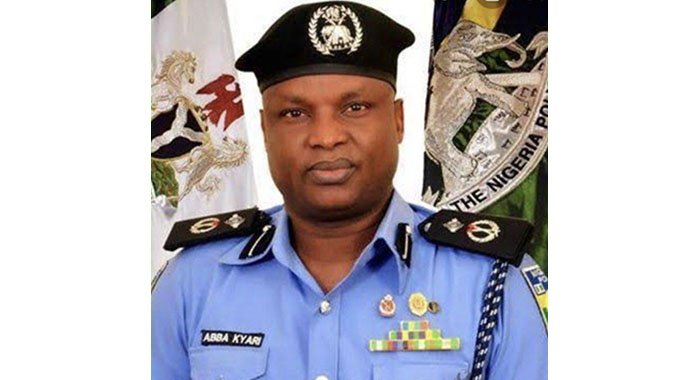
THE National Drug Law Enforcement Agency (NDLEA) has reacted to the acquittal of suspended Deputy Commissioner of Police, Abba Kyari by a Federal High Court in Abuja.

The court cleared him of a 23-count charge bordering on alleged non-declaration of assets on Thursday, March 5.

The presiding judge, James Omotosho, held that the prosecution failed to establish the allegations against Kyari and his co-defendants.

Kyari, a former head of the Police Intelligence Response Team (IRT), was charged alongside two of his brothers, who were accused of swearing false affidavits in an alleged attempt to conceal the ownership of certain properties.

Reacting to the judgment, the NDLEA’s spokesperson Femi Babafemi, in an interview with the News Agency of Nigeria (NAN), acknowledged the court’s decision but maintained that the ruling by Omotosho should not be confused with the main drug-related case against the suspended police officer.

The agency had accused Kyari of failing to fully disclose assets allegedly linked to him, including several landed properties in the Federal Capital Territory and his home state of Borno.

However, in his ruling, Omotosho held that the prosecution did not present credible evidence linking Kyari to the properties cited in the charges.

The judge explained that ownership of landed property could be established through traditional history, title documents, acts of possession or possession through a connected party.

According to him, the NDLEA failed to provide any of these forms of proof to establish that some of the properties allegedly linked to Kyari were actually owned by him.

Kyari had denied ownership of some of the properties cited by the NDLEA during the trial.

Testifying in his defence in November 2025, he told the court that some of the assets in Borno State belonged to his late father and were inherited by him and his siblings.

He also dismissed claims that he owned a polo playground in the state, saying the facility had existed long before he became a police officer.

However, Kyari admitted owning a farmland along the Abuja-Kaduna Road, which he said he had operated for about a decade.

He also acknowledged maintaining accounts with banks including United Bank for Africa, Access Bank and Guaranty Trust Bank.

2022 charges against him

The ICIR reports that the charges were filed in 2022 after the agency alleged that it uncovered 14 undeclared assets linked to Kyari.

The agency had claimed that the assets included shopping malls, a residential estate, farmland, lands and a polo playground.

It also claimed that about N207 million and €17,598 were found in Kyari’s bank accounts.

The charges, filed under suit number FHC/ABJ/CR/408/2022, accused the defendants of disguising the ownership of properties and converting funds, offences punishable under the NDLEA Act and the Money Laundering (Prohibition) Act, 2011.

‘Cocaine case ongoing’

Despite the acquittal in the asset declaration case, Kyari is still facing trial in a separate criminal matter.

He is currently being prosecuted before another judge of the Federal High Court in Abuja, Emeka Nwite, over allegations linked to a cocaine trafficking deal.

In that case, Kyari is standing trial alongside four other suspended police officers, Sunday J. Ubia, Bawa James, Simon Agirigba and John Nuhu, who were members of the police special tactical unit.

Two suspected drug traffickers initially charged in the case, Chibunna Patrick Umeibe and Emeka Alphonsus Ezenwanne, had earlier pleaded guilty and were convicted in 2022.

“First, I need to clarify that the ruling by Justice Omotosho is completely different from the main and substantive drug case which continues before Justice Emeka Nwite of the Federal High Court, Abuja on Monday, March 16.

“That one is very much on course. The case determined by Justice Omotosho today is a different case of money laundering and non-declaration of assets,” the NDLEA spokesperson said.

He added, “On your question on whether the agency will appeal the ruling or not, the prosecution team has been directed to apply for the Certified True Copy of the judgment, which details will help the management take a decision on what next to do.”

Disu removes Hundeyin as Force PRO – Report

0

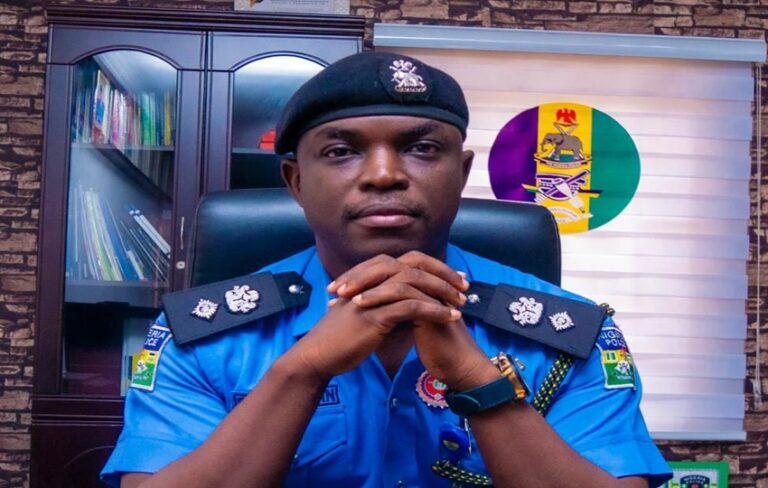
THE Nigeria Police Force (NPF) has removed its Public Relations Officer (PRO), Benjamin Hundeyin, an Assistant Commissioner of Police (ACP), six months after he assumed the role.

A report by The Whistler said the approval for his removal was granted on Thursday, March 5, although details surrounding the development remain unclear as of the time of filing this report.

The development comes amid a series of restructuring within the police hierarchy, barely 24 hours after his inauguration by President Bola Tinubu as the substantive Inspector-General of Police (IGP)

Disu was appointed last week as the 23rd IGP following the removal of Kayode Egbetokun, who had held the position since 2023.

Hundeyin was allegedly removed Thursday morning.

It remains unclear who will take over the role as the new FPRO.

“We don’t know who will take over from him, although we thought he would last longer, considering his expertise,” a source said.

“When a new IGP is appointed, it is not unusual that some positions would be vacant. Unfortunately, he was affected,” the source added.

Efforts to reach Hundeyin proved abortive as he could not be reached on the phone when filing this report.

The Badagry-born assistant commissioner of police was appointed Force Public Relations Officer by Egbetokun.

Hundeyin, an alumnus of Lagos State University, holds a BA (Hons) in English Language and an MSc in Legal Criminology & Security Psychology from the University of Ibadan.

He also possesses certificate in Civil-Military Coordination from the Martin Luther Agwai International Leadership and Peacekeeping Training Centre in Jaji, Kaduna.

His professional affiliations include the Nigerian Institute of Public Relations (NIPR), the International Public Relations Association (IPRA), and the Chartered Institute of Personnel Management of Nigeria (CIPM).