Home Blog Page 682

Naira depreciates by N456.73 despite CBN $500m FX clearance

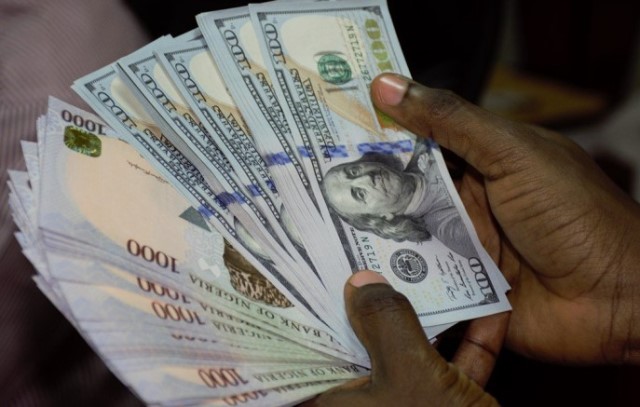
THE Nigerian currency lost N456.73 to the dollar on Monday, January 29, to close at N1,348.63/$1 at the official window, despite the Central Bank of Nigeria’s (CBN) clearance of $500 million foreign exchange (FX) backlog.

The plunge was the worst witnessed recently as the naira depreciated by 33.87 per cent from N891.90/$1 on a single day on Monday, January 29.

At the parallel or black market, the naira also depreciated by 2.43 per cent to N1,440 from N1,405 to $1.

On Monday, the CBN acting director of Corporate Communications, Hakama Sidi-Ali, was reported to have said the apex bank released $500 million to various sectors to clear the backlog of “verified” FX transactions.

She reiterated that the move was part of CBN’s plan to improve liquidity in the Nigerian FX markets in the short, medium, and long term.

“As the Governor said, the CBN’s focus is on addressing fundamental issues that have hindered the effective operation of the Nigerian FX markets over the years,” Sidi-Ali said.

She stressed that the FX market reforms were designed to streamline and unify multiple exchange rates, foster transparency, and reduce arbitrage opportunities.

Sidi-Ali believes a stable exchange rate would boost investor confidence and attract foreign investment, stressing that transparency in the market would enable the fair determination of exchange rates and, by extension, guarantee stability for businesses and individuals.

However, the naira has continued to witness a loss in value against the dollar as CBN has been releasing various sums to clear the FX backlog since the beginning of the year.

On January 17, CBN said it had cleared a $2 billion FX backlog to settle outstanding commitments across manufacturing, aviation, and petroleum sectors.

On January 7, the apex bank said it paid an initial $61 million to address the $800 million owed to foreign airlines.

However, the country has about $7 billion in FX forwards that have matured.

This is a significant concern for investors as foreign currency shortages continue to weigh down the naira despite assurances by CBN to clear the backlog.

AFCON 2021 finalists Egypt, Senegal ousted same day via penalties shootout

0

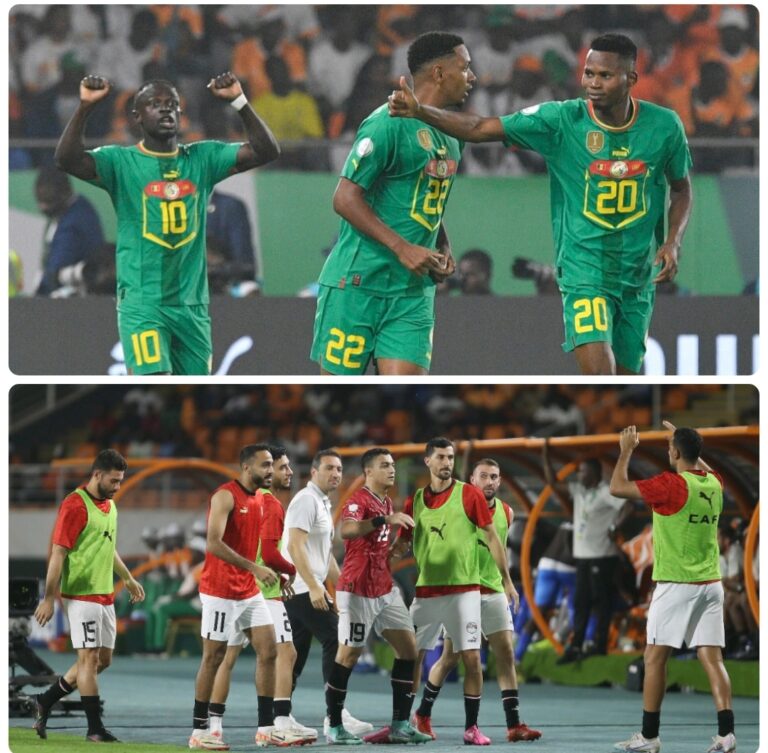
THE ongoing 2023 Africa Cup of Nations, AFCON continues to unfold drama as both finalists, Egypt and Senegal of the last edition, were eliminated in the round of 16 knock-out stage matches played on Monday, January 29, 2024.

The last edition was won by Senegal in 2021.

Participating again in the ongoing continental football showpiece, both teams’ road to the knock-out stage saw Egypt finish with three points after drawing their three matches to qualify to the next round, while Senegal convincingly won all their three matches to get the ticket to the next round.

Despite the performance, they both suffered defeats, halting individual teams’ quests to eye the title.

Egypt lost to Congo DR

Egypt began their knock out stage match against Democratic Republic of Congo DR at the Stade Laurent Pokou which ended 1-1 after the regulation time, leading to 30 minutes extra time.

Salah to return to Liverpool, misses Egypt vs Cape Verde match

2023 AFCON: Yemi Alade performs at opening ceremony

After the end of the extra time, the match went straight into penalty shout out which ended 8-7 after Egypt goalkeeper Mohamed Abou Gabal kick hit the crossbar.

Congo DR victory dashed Egypt’s star Mohammed Salah’s hope of returning to the team from Liverpool where he went for medical attention of his injury.

Defending Champion, Senegal ousted by host nation- Cote D’ Ivoire

The 2023 Africa Cup of Nations, AFCON host country Cote D’ Ivoire dusted off their lacklustre performance at the group stage to battled toe-to- toe against Senegal.

They  emerged as one of the best loser countries to the round of 16 on ousted the defending champion Senegal, 5-4 via penalties shootout.

The host, who heaved a sigh of relief after Morocco’s 1-0 win over Zambia to salvage them from the brink of eviction, qualifying as the best loser to the round, expressed high determination into the match against Senegal.

Despite their high determination, Senegal took the lead in the fourth minute after Habib Diallo, assisted by Sadio Mane, latched the ball into the roof of the net.

The early victory ignited the momentum of the match as the host nation increased the tempo in an attempt to level the scoreline.

All their attempt proved abortive as the first half ended 1-0 in favour of Senegal.

The second half saw the host nation scrambling for an equalizer, which paid off as they were awarded a penalty.

Substitute Franck Kessié stepped in to score the penalty, which erupted wild jubilation at the Stade Charles Konan Banny de Yamoussoukro stadium.

The match ended 1-1 after regulation, leading to 30 minutes of extra time.

The winner of the match was decided by a penalty shootout which was 5-4 in favour of Cote D’Ivoire.

FCMB reports nearly N1billion loss to fraud and forgery in 2023

FCMB Group Plc, the parent company of First City Monument Bank, has reported a 637.99 per cent increase in fraud and forgery expenses, from N123.08 million in 2022 to N908.35 million for the financial year ended December 31, 2023.

The bank disclosed this in its ‘unaudited annual report and financial statements for the year ended December 31, 2023’ released on Friday, January 26.

A check by The ICIR showed that the figure represents the highest amount the bank incurred on fraud and forgery issues in the last five years.

It also represents 65.23 per cent of the total N1.39 billion the bank spent on fraud and forgery issues since 2019.

The FCMB has incurred the following amount in fraud and forgery since 2019: N212.26 million (2019), N59.04 million in 2020, N89.86 million in 2021, and N123.08 million in 2022.

The bank did not give details on the fraud and forgery expenses; however, a public affairs commentator and finance expert, Bala Zakka, said banks use fraud and forgery in their financial statement to report cases already confirmed and yet to be ascertained.

“Once it is a fraud case, it has already been confirmed, and the loss must have happened. But forgery is a case of probability until forensic investigation is conducted to ascertain its truth. But once it is true, it is transferred completely to fraud cases,” he explained.

Generally, fraud and forgery expenses are regarded as losses and deducted from banks’ bottom-line profits.

The issue could be linked to corruption, concealment of information or misappropriation of funds by bank staff with the involvement of outsiders, a lecturer of Banking and Finance at the University of Lagos, Abu Noruwa, said.

Over the years, FCMB’s staff had reportedly been involved in fraud operations.

In March 2023, the Economic and Financial Crimes Commission (EFCC) arraigned one Kichime Gomwalk, a branch manager of FCMB, along with two others, before a High Court on a five-count charge bordering on N55 million fraud.

In March 2022, FCMB’s Ikeja GRA branch manager, Tope Munis, was reportedly docked before a High Court for allegedly aiding N1.2 billion fraud along with two other suspects.

In December 2020, the EFCC also prosecuted one Adejare Sonde, a former staff of FCMB, on four counts of stealing. He was sentenced to four years imprisonment.

To control incidents relating to fraud, banks should invest in modern fraud detection technologies that can identify and flag suspicious transactions and patterns, such as machine learning algorithms and artificial intelligence (AI) tools, according to a report by the Financial Institutions Training Centre (FITC).

It stated that regular risk assessments could help identify potential vulnerabilities and threats to the banking system while identifying emerging trends in fraud and updating risk management strategies accordingly.

“Moreover, it is crucial for Nigerian banks to collaborate closely with law enforcement agencies to investigate and prosecute cases of fraud. This entails sharing information on fraudulent activities, promptly reporting incidents, and providing assistance in investigations.

“By collaborating with law enforcement agencies, banks can help to bring fraudsters to justice and deter other potential offenders,” FITC added.

NASS increases capital budget of ministries by 68% to N5.6 trillion

0

THE National Assembly added an addition of N2.25 trillion across 45 ministries, and the presidency to spend in 2024, findings by The ICIR have shown.

The amount in the 2024 approved budget is an increase of 67.63 per cent against the initial N3.33 trillion presented by the president as a proposed budget in November 2023. 

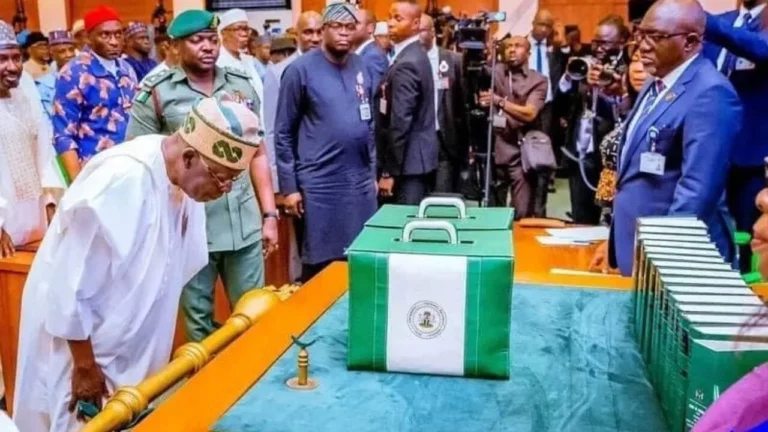
In November 2023, President Bola Tinubu presented a budget of N27.5 trillion to the Joint National Assembly of which N8.7 trillion was budgeted as capital expenditure for all Ministries, Departments, and Agencies (MDAs). 

However, following a review by the National Assembly, the president signed 28.7 trillion as the 2024 appropriation bill into law in January, increasing the capital expenditure of MDAs to N9.99 trillion. 

Of this amount, the 45 ministries and the presidency would be spending N5.58 trillion to implement capital projects in the 2024 fiscal year. 

In a previous analysis, The ICIR had reported how some institutions’ allocations might be insufficient for critical interventions promised by the President. The analysis showed that some of these promises which include poverty reduction, job creation, women’s inclusion, and development suffered poor allocations by ministries implementing their capital projects. 

Our findings on the signed budget showed that the capital expenditure of some of these ministries has been increased. For example, the Federal Ministry of Labour and Employment’s capital budget was increased by more than 700 per cent from N10.79 billion to N90.69 billion. Also, the Federal Ministry of Youth’s budget was increased by over 300 per cent from N3.22 billion to N14.42 billion and the Federal Ministry of Innovation, Science and Technology by over 209 per cent from N99.93 billion to N309.36 billion. 

Ministries Proposed Budget Approved budget percentage e increase federal
l Ministry of Labour and Employment 10,786,961,337 90,693,241,499 740.77%
Federal Ministry of Youth 3,222,760,037 14,417,024,381 347.35%
Federal Ministry of Innovation, Science and Technology 99,929,912,264 309,355,735,374 209.57%
Ministry of Humanitarian Affairs and Poverty Alleviation 59,452,251,714 121,223,758,947 103.90%
Federal Ministry of Power 72,612,496,687 146,888,468,670 102.29%
Federal Ministry of Women Affairs 7,602,142,164 12,055,872,258 58.59%
Federal Ministry of Transportation 61,830,993,664 91,175,298,776 47.46%
Ministry of Petroleum Resources 5,872,270,789 8,622,655,505 46.84%


Also, the Ministry of Humanitarian Affairs and Poverty Alleviation budget was increased by 104 per cent to N121.22 billion while the budget for the Federal Ministry of Power by 102 per cent to N146.89 billion. 

However, despite the increase in capital expenditure, checks by The ICIR have shown that while some ministries got more than a 200 per cent increase on their previous allocation, the allocation for some ministries remained unchanged.  

These ministries are Infrastructure Concession Regulatory Commission (N281.85 million), National Salaries, Incomes and Wages Commission (172.92 million), Fiscal Responsibility Commission (246.08 million), Federal Capital Territory Administration (17.11 billion) and National Population Commission (1.13 billion).

The Program Coordinator, of the Centre for Inclusive Social Development (CISD), Folahan Johnson told The ICIR that issues around budget come from implementation rather than allocation. He said that while the government may have an intention for the increase, the intention can only be judged by the budget performance.

He said, “If you look at the Q3 performance report, what is the performance level of these particular government agencies, both in terms of recurrent expenditure and capital allocation? In scenarios where you have the capital expenditure performing less than 50 per cent, it means that there is no point in increasing capital allocation now because what it means is that there is no significant improvement in the actual performance of those agencies.”

He also noted that increases must be checked based on allocation to line items and the mandate of the ministries as against the intention of the government.

CSOs urge Tinubu to declare state of emergency on insecurity

CIVIL society organisations (CSOs) in Nigeria have appealed to President Bola Tinubu to declare a state of emergency on the nation’s insecurity. 

Expressing concerns over worsening wave of insecurity across the country, the group advised the Federal Government to further recommit to tackling the menace.

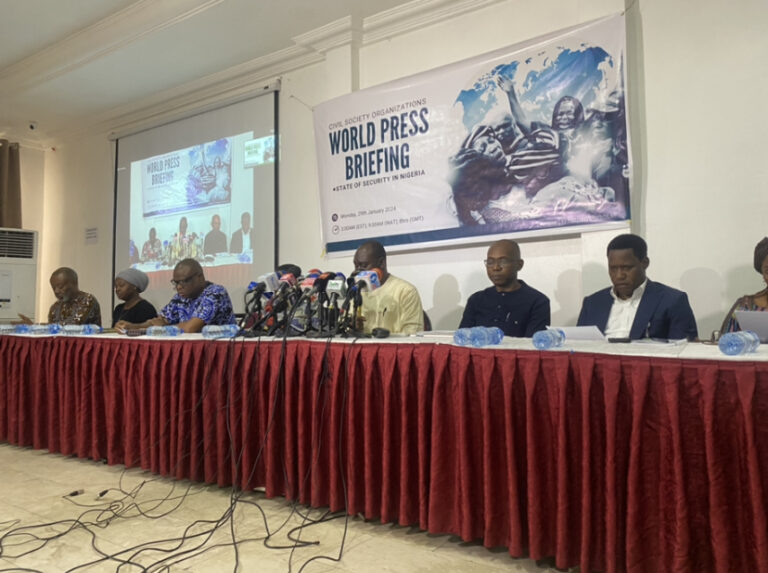
The CSOs, under the auspices of Civil Society Joint Action Group, stated this during a world press briefing on Monday, January 29, in the Federal Capital City, Abuja.

While highlighting the implications of insecurity that had overwhelmed the country, particularly in the northern region, the organisations offered 11-point recommendation for the Federal Government.

The ICIR reports that Nigeria has continued to grapple with cases of insecurity, with many citizens reported dead and over 380 persons kidnapped between December 1, 2023, and January 3, 2024, across the country under President Bola Tinubu.

With the recent cases of kidnapping and ethno-communal clashes in Plateau state, the country has been further plunged into crisis, leading many Nigerians and stakeholders to question the competence of the competence of the Tinubu-led Federal Government.

Briefing journalists on the state of insecurity in the nation, the Executive Director of the Civil Society Legislative Advocacy Centre (CISLAC), Auwal Musa, stated that several forms of insecurity had jeopardised Nigerians’ well-being and progressively deteriorated over the years.

Musa said insecurity had been endemic and longstanding in the last three administrations, noting that in the second term of the Buhari government, no fewer than 24,816 Nigerians lost their lives, and at least 15,597 persons were abducted, according to Mass atrocities, fatality tracking across the country by one of the CSOs – Nigeria Mourns.

He highlighted that the trend had continued despite Tinubu’s assurance at the beginning of his presidency in May 2023 to tackle insecurity. 

“It has now been eight months since President Tinubu took his oath of office and yet, things have failed to improve. Our tracking shows at least 2,423 people have been killed in mass atrocities-related incidents. And at least 1,872 persons were abducted since the beginning of President Tinubu’s administration till January 26, 2024. We are particularly concerned about the upsurge in abductions, noting that at least 230 incidents, in most of which multiple victims were involved, occurred within the first two weeks of January 2024 alone,” the statement added.

“Several communities across the country, including the Federal Capital Territory, the seat of government itself, are under siege, with entire families and, in some cases, communities taken hostage. Residents are being forced to flee due to repeated attacks by terrorists, kidnappers and other organised criminal groups. Kidnapping for ransom demands has become a disturbing norm, without appropriate response from the authorities,” he said

While listing different attacks recorded in the past few weeks, Musa stated that road ambushes made interstate travel more perilous for citizens.

“Reported incidents such as the abduction of 30 passengers near Katari along the Kaduna-Abuja highway and the kidnapping of 45 passengers in Orkam on the Benue-Enugu route underscore the gravity of the situation. Even homes are no longer safe. Homes in rural communities in Northern Nigeria have for over a decade contended with terror pillages, and more recently, urban centres, including the Federal Capital Territory, have witnessed a surge in invasions in which citizens are being abducted for ransom even within the confines of their homes,” he noted.

According to him, many families have resorted to public crowdfunding to pay ransom due to the failure of law enforcement agencies.

In the same vein, the Executive Director of Cedar Seed Foundation stated that the organisation was dismayed with the willingness of some political leaders and politically exposed persons to support ransom payments publicly, adding that their actions and utterances reflect a lack of faith in the system of which they are guardians.

According to her, their stance would embolden perpetrators and further erode citizens’ trust in their government’s capacity and sincerity.

She also pointed out the plight of people living with disabilities, who would be unable to run for safety when faced with insecurity, particularly kidnappings on highways.

“Obtaining education has become a risky venture for learners, teachers, and parents due to school abductions. Businesses are also suffering from the effects of this state of affairs.

“Farming communities are losing their resilience against perennial pillages, and traders can no longer ply roads safely. Foreigners no longer feel safe to visit and invest, and far too many resources that could have been invested in businesses are being paid out as ransoms and fortifying private security,” she said.

Setting agenda for the Federal Government

Meanwhile, the group urged the Federal Government to urgently secure Nigerians’ lives by doing the following:

  • Fulfil its constitutional imperative of safeguarding the lives of all citizens;
  • Declare a state of emergency on kidnapping and other forms of terrorism;
  • Enhance the country’s security infrastructure by conducting an audit of the responsibility matrix within security agencies and departments of government, bolster their capabilities and deploy requisite technology to address the evolving challenges of insecurity effectively;
  • Promptly prosecute the 400 sponsors of terrorism arrested under the Buhari regime and prosecute those responsible for the misappropriation of the $460 million earmarked for the provision of CCTV cameras in the Federal Capital Territory:
  • Implement more decisive measures to secure the release of all abducted victims promptly;
  • Create a register of victims of abductions and other forms of mass atrocities;
  • Recognise and address the floundering economy, corruption and human rights violations as factors exacerbating of Nigeria’s insecurity;
  • Engage citizens on best practices for ending insecurity, including disincentivising the payment of ransoms.
  • Provide holistic psychosocial support for abduction survivors and their families;
  • Promptly investigate and decisively prosecute all individuals implicated in fueling insecurity;
  • Investigate the financial flow of organised criminal groups and identify the sponsors and beneficiaries.

NDLEA declares ex-beauty queen wanted

0

THE National Drug Law Enforcement Agency (NDLEA) has declared an ex-beauty queen, Aderinoye Queen Christmas wanted after she fled her residence in Lagos during a raid.

In a statement signed by the agency’s director of media and advocacy, Femi Babafemi on Sunday, January 28, NDLEA operatives had raided her apartment at Oral Estate, Lekki, on Wednesday, January 24, following credible intelligence that deals in illicit substances.

Aderinoye was Miss Commonwealth Nigeria Culture 2015/2016 and founder of the Queen Christmas Foundation. According to Babafemi, the agency had recovered different illicit drugs and other related items from her house.

“Recovered from her home during the search, witnessed by estate officials, were 606 grams of Canadian Loud, a synthetic strain of cannabis, an electronic weighing scale, large quantities of drug packing plastics, a black RAV 4 SUV marked Lagos KSF 872 GQ, and her picture frame, among others”, the statement read in parts.

In a similar vein, the NDLEA had arrested a Brazil returnee, Udechukwu Ekene Theophilus, at the Murtala Muhammed International Airport, MMIA Ikeja, Lagos, for ingesting 60 large wraps of cocaine.

The suspect was arrested on Sunday, January 21 during the inward clearance of passengers on an Ethiopian Airlines flight from Sao Paulo, Brazil, via Addis Ababa, Ethiopia, at the D-Arrival Hall of the Lagos airport.

Initially, he had refused to undergo a body scan, raising health concerns in a desperate bid to evade arrest. However, when offered other options, he agreed to be placed on excretion observation.

Babafemi stated that, shortly after he was ushered into the NDLEA observatory, he excreted the first set of cocaine pellets, after which he expelled a total of 60 wraps of the class. A drug weighing 1.279 kilograms in five excretions.

In the statement, Babafemi also asserted that “Udechukwu claimed he ingested the consignment in Brazil and was to discharge everything at the airport in Addis Ababa but could only excrete 15 pellets, which he handed over to another member of his syndicate before his connecting flight to Nigeria was called.”

In January alone, the agency handled several cases of drug trafficking in various states across the country, including Kano, Yobe, Plateau, and Lagos, among others.

Supreme Court reserves judgment on Binani’s appeal against Fintiri

0

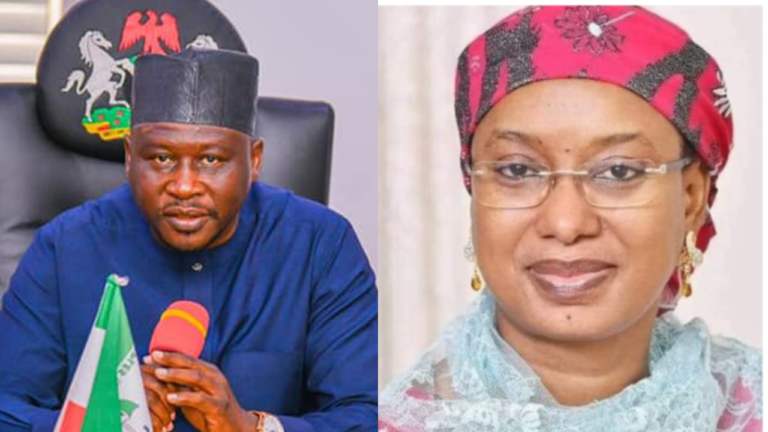
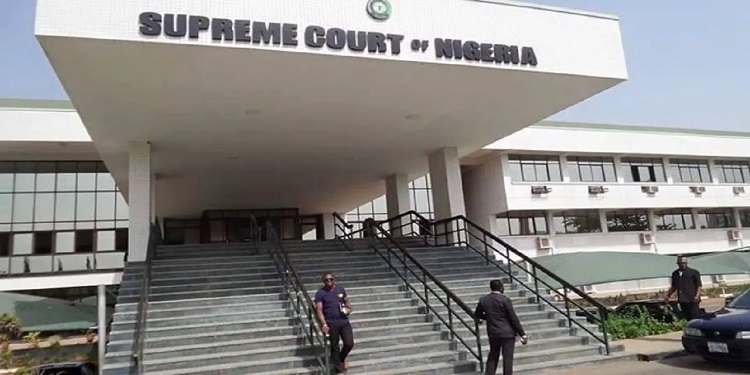
THE Supreme Court has reserved judgment in the appeal by the All Progressives Congress (APC) candidate in the 2023 governorship election, Aisha Dahiru, against the election of Adamawa State Governor Ahmadu Fintiri.  

After hearing the parties’ arguments, a five-member panel chaired by John Okoro at the Supreme Court on Monday, January 29, postponed the judgment.

The state Election Petition Tribunals and the Court of Appeal denied Binani’s appeals, contesting Finitiri’s victory in the gubernatorial election.

On December 18, 2023, the Court of Appeal in Abuja affirmed Fintiri’s victory in the poll.

The court dismissed a petition by the APC and Dahiru, known as Binani.

Dahiru and the APC, in their petition, sought to nullify Fintiri’s election as the governor of Adamawa State.

In its judgment, the court held that the tribunal was right in proclaiming Fintiri as the poll winner.

In October 2023, the ICIR reported that the tribunal dismissed Dahiru’s petition against Fintiri’s election.

Dahiru, in her petition, which had the Independent National Electoral Commission (INEC), Fintiri and the Peoples Democratic Party (PDP) as the first, second and third respondents, alleged that the election was not substantially compliant with the Electoral Act.

Binani and APC jointly filed the petition on May 6, 2023, alleging that the election conducted first on March 18, 2023, and the rerun on April 15, were marred by thuggery, ballot papers snatching, and harassment of electoral officers.

However, after delivering the judgement on October 28, the tribunal chairman, T. O. Uloho, dismissed the petition and affirmed Fintiri’s victory.

Uloho said the petitioners failed to establish their allegations of non-compliance with the Electoral Act.

She said all documents tendered by the petitioners were dumped on the tribunal and that their star witness did not link any documents with their material allegations.

The tribunal held that the petitioners failed to prove their case beyond reasonable doubt.

On April 18, 2023, INEC declared Fintiri the winner of the governorship election after a supplementary election was held to conclude the process, which was initially declared inconclusive.

Lagos PDP chairman regains freedom after 4 days with kidnappers

0

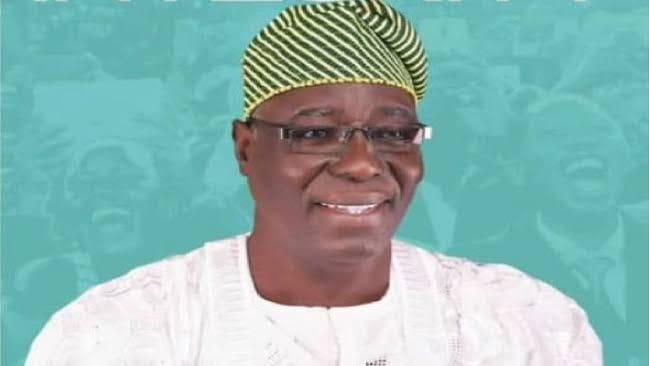
THE chairman of the Peoples Democratic Party (PDP) in Lagos State, Philip Aivoji, has regained freedom after spending four days with kidnappers.

The party’s publicity secretary in the state, Hakeem Amode, disclosed this on Monday, January 29.

Before the announcement, the kidnappers had contacted Aivoji’s family and demanded N200 million as ransom to release him.

However, Amode refused to say whether or not the ransom was paid before Aivoji was freed.

“Hon Philip Olabode Aivoji, the Lagos State PDP chairman, is free at last after four days in the kidnappers’ den.

“We use this opportunity to appreciate your prayers most importantly because God’s mercies were visible all the way, Amode said.

Aivoji was kidnapped by unidentified assailants last Thursday, January 25, at about 6:00 p.m. on the Lagos-Ibadan expressway as he was leaving an Oyo State stakeholders’ meeting convened by Governors Seyi Makinde and Ademola Adeleke of Oyo and Osun States respectively.

The PDP thanked the government and security services for enabling his release.

Amode had said while announcing the kidnap of the Lagos PDP Chairman. “It is disheartening that kidnapping has become a prevalent issue in our country, and the government’s inability to address this menace is deeply concerning,”

“Aivoji’s abduction was a violent incident, and his current whereabouts or any communication from the abductors remain unknown.

“We implore the governments of Oyo, Ogun, and Lagos States, alongside security agencies, to expedite efforts and secure his safe return to his family and well-wishers,” he stated.

The PDP spokesman said that with increased efforts from security agencies, Aivoji would be rescued.

According to the party, Aivoji’s kidnapping highlights the urgent necessity for the government and all stakeholders to act decisively to end insecurity in Nigeria.

Similarly, the Lagos State PDP governorship candidate in the 2023 election, Abdul-Azeez Olajide Adediran, sought immediate action against insecurity after expressing shock at the news of the party chairman’s kidnapping on Thursday, November 25.

He described the act as a regrettable and troubling addition to the nation’s rising insecurity, particularly in the southwest.

The ICIR reported that over 380 people were kidnapped between December 1, 2023, and January 3, 2024, across Nigeria under President Bola Tinubu.

According to Data obtained by The ICIR from the Armed Conflict Location & Event Data Project (ACLED), a data bureau collecting data on the locations, dates, actors, fatalities, and types of all reported political violence and protest events worldwide, those abducted include men, women, farmers, children, and students.

The victims were taken hostage at various locations across the country.


Despite anxieties, 5 governors escape Supreme Court’s hammer

0

THE Supreme Court has delivered verdicts on some governorship election disputes emanating from the 2023 polls.

The apex court affirmed the election of all the governors the Independent National Electoral Commission (INEC) declared winner in the March 18, 2023, governorship election.

The court has so far delivered judgment on Abia, Cross River, Plateau, Lagos, Akwa Ibom, Benue, Zamfara, Kano, and Ebonyi governorship appeals.

Others are Kebbi, Ogun, Nasarawa, Kaduna, Delta and Gombe states. 

Despite all the time and resources deployed on the litigations, the Supreme Court has sacked no governor elected in the 2023 election when filing this report.

On December 20, 2023, The ICIR reported how the appellate courts ruled on cases brought before them by parties in the election. 

Governors who escaped Supreme Court’s hammer despite Tribunal, Appeal Court’s verdict against them

The apex court restored some governors previously sacked by the State Governorship Election Petitions Tribunals and the Court of Appeal.

Kano State

The Court of Appeal in Abuja sacked Abba Yusuf as Kano State governor, affirming the state’s governorship election petitions tribunal ruling that sacked him earlier.

In a judgment delivered on Friday, November 17, a three-member appellate court panel held that Yusuf’s party – the New Nigeria Peoples Party (NNPP) – breached the Constitution by sponsoring him.

The court ruled that he was not a member of the NNPP when he picked the party’s ticket.

However, in a contrary judgement on Friday, January 12, the Supreme Court affirmed Yusuf as the state governor.

In a judgement delivered by Inyang Okoro, the court declared that the nomination issue was exclusively the internal affairs of a political party and said nullifying the party’s decision was unjustifiable.

The court upheld the governor’s election in a unanimous decision. 

The ICIR reports that there had been a raging feud between the All Progressives Congress (APC) and NNPP members in Kano since Yusuf took the oath of office as governor on May 29, 2023.

Shortly after assuming office, Yusuf embarked on a demolition spree of houses allegedly built on public land sold by the state’s immediate past government, led by Abdullahi Ganduje.

Ganduje is the incumbent APC national chairman.

The NNPP national leader and former governor in the state, Rabiu Kwankwaso, backed the demolition exercise, which was one of Yusuf’s campaign promises.

Ganduje and his supporters, on the one hand, and Yusuf, backed by Kwankwaso, on the other, engaged in a verbal war that almost ignited chaos in the state.

The brawl was one of the reasons for tension in the state while the governorship election litigation lasted.

Nasarawa State

The Court of Appeal in Abuja dismissed the Nasarawa State Governorship Election Petition Tribunal’s ruling sacking Governor Abdullahi Sule.  

In its decision on Thursday, November 23, the appellate court stated that the tribunal erred in declaring the PDP candidate, David Ombugadu, as the poll winner.

The court ruled that the tribunal did not give Sule a fair hearing.

The PDP appealed the appellate court’s judgment, which the Supreme Court upheld.

In a unanimous judgment, the Supreme Court’s panel of justices, led by Kudirat Kekere-Ekun, ruled that the decision upholding Sule’s election was thorough and well thought out.

Meanwhile, protests ensued in Lafia, the state capital, shortly after the Supreme Court’s ruling.

Plateau State

The Court of Appeal in Abuja nullified the election of Caleb Muftwang of Plateau State.

In her ruling on Sunday, November 19, 2023, the lead justice, Elfrieda Williams-Dawodu, set aside the tribunal’s judgment, which affirmed his election.

She held that Mutfwang’s party, the PDP, violated a court order to conduct a valid congress in the state’s 17 Local Government Areas.

However, on January 12, the Supreme Court’s five-man panel of justices, led by Emmanuel Agim, reinstated Mutfwang as the state governor.

Zamfara State

The Court of Appeal, Abuja, on Thursday, November 16, declared the Zamfara State governorship election inconclusive.

The court also ordered a re-run in three Local Government Areas of the state namely Maradun, Birnin-Magaji, and Bukyun.

This was after the state Governorship Election Petition Tribunal had affirmed Lawal’s election.

In a contrary judgment on Friday, January 12, delivered by Emmanuel Agimthe Supreme Court overturned the Appeal Court’s decision and affirmed Lawal as the state governor.

Enugu State

The INEC declared Peter Mbah the winner of the March 18 governorship election in Enugu state on Wednesday, March 22.

The ICIR reported that the Director-General of the National Youth Service Corps (NYSC), Dogara Ahmed, a brigadier-general, said the NYSC certificate the governor submitted to INEC to enable him to participate in the election was not issued by the organisation.

Ahmed stated this on May 19 while featured on the Arise News Television magazine programme ‘The Morning Show’.

The claim, earlier made by contenders for the governor’s seat and their supporters in the state, created anxieties as opposition parties, including the Labour Party, hoped they would assume the state leadership if Mbah is eventually sacked for presenting a forged certificate.

Mbah headed to court and sued the NYSC for N20 billion for the claim.

A Federal High Court in Abuja, headed by Nyang Ekwo, on Monday, November 6, confirmed the genuineness of the governor’s NYSC discharge certificate.

THE Supreme Court, in a unanimous decision on Friday, December 22,  also affirmed Mbah’s election as Enugu State governor.

Mixed reactions greeted Supreme Court’s rulings

Nigerians reacted differently to the Supreme Court rulings on the cases.

While some lauded the court for the rulings, others condemned them.

Among those who reacted is the Northern Emancipation Network (NEN) which claimed that INEC’s dedication to holding credible elections was validated by the Supreme Court’s upholding the governors elections without sacking any of them.

In a statement issued by its Chairman, Suleiman Abbah, the group said that Mahmoud Yakubu, the Chairman of the Commission, should be honoured after all arguments were settled in favour of INEC.

Also reacting to the apex court judgement, a security analyst, Bulama Bukarti, in a post on his X account, said the Supreme Court’s decisions might affect future elections.

“It’s evident that the Supreme Court of Nigeria just decided that it would affirm the victory of every governor. While there might be a public interest rationale for the court’s decision, the potential message to politicians is concerning – that achieving election victory by any means will be upheld by the Supreme Court. This could jeopardise the prospects of free and fair elections in Nigeria,” he posted.

 ‘I’m still feeling pain’ says Nwabali

0

SUPER Eagles goalkeeper Stanley Nwabali has expressed concerns about the condition of his injury, saying that he is still in pain.

He, however, informed that the official medical team would ascertain the level of injury and advise the Super Eagles officials on the possibility of him playing in the next round.

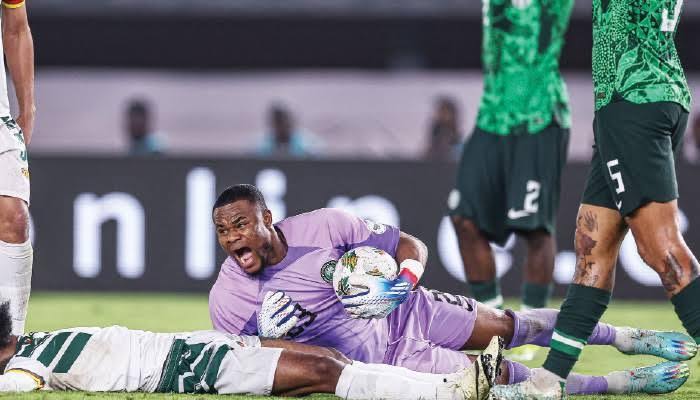
Nwabali, who has been between the sticks since the commencement of the 2023 Africa of Cup of Nations, AFCON sustained an injury after colliding with Cameroon player Georges-Kevin N’Koudou in an aerial challenge.

Injured Ndidi, Iheanacho in doubt for 2023 AFCON

The shot-stopper has endeared himself to many Nigerian fans with his confidence at the goalpost and marginal error at the continental championship so far.

The collision led to him being carried out with a stretcher, and he could not continue the match.

He was replaced by Francis Uzoho.

Giving an update after the 2-0 win over Cameroon on Saturday, the Chippa United goalie in an interview with newsmen, said he was still feeling some pain but awaited the doctor’s report.


READ MORE:


“I don’t know, but maybe the doctor would tell me, but I’m still feeling pain. You know, when the injury is new, you always feel pain,” he said.

Also, the Super Eagles coach Jose Peseiro was uncertain about Nawabali’s chance of playing in the quarter-finals, saying that the team’s medical staff was yet to assess the extent of the injury.

Nwabali conceded only one goal in four matches, while Nigeria recorded four goals.

The Super Eagles will face Angola at the Felix Houphouet-Boigny Stadium on Friday, February 2, in the quarter-finals.