Home Blog Page 685

Lagos pastor sentenced to life imprisonment for rape

0

THE founder of I Reign Christian Ministry in Lagos state, Feyi Daniels, has been sentenced to life imprisonment for raping his church member.

The Ikeja Sexual Offences and Domestic Violence Court sentenced him on Friday, January 26, for raping his 23-year-old assistant.

He was also handed three years imprisonment for sexually assaulting a 19-year-old member of the church.


Read Also:

In a statement by Lagos State Domestic and Sexual Violence Agency (DSVA), the two sentences are to run concurrently, and his name will be registered in the Sexual Offenders Register maintained by the state.

The judge, Rahman Oshodi, described Daniels as a liar who did not have regard for the truth.

Daniels faced an amended four-count charge bordering on rape, attempted rape and sexual assault. 

Rape contravenes Section 260 (2) of the Criminal Law of Lagos State, 2015.

Earlier this month, a BBC investigation said the late pastor T.B Joshua raped, tortured, and compelled many of his members into forced abortions, among other human rights abuses he allegedly perpetrated.

The BBC said Joshua sexually assaulted numerous women, while some other women claimed they were repeatedly raped for years on his church’s premises.

There were also multiple allegations of forced abortions inside the church following the alleged rapes.

Bribery: Supreme Court affirms Farouk Lawan’s five-year sentence

0

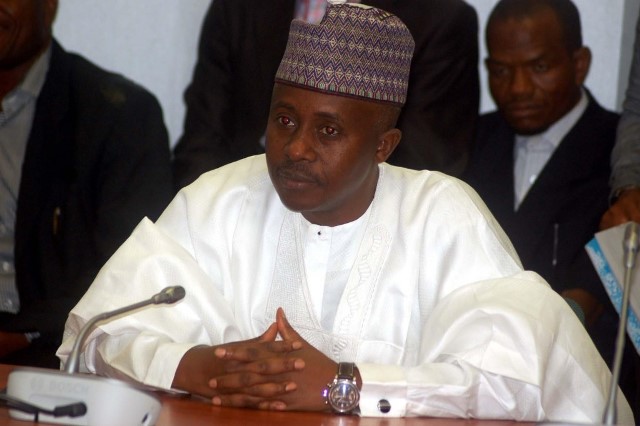
THE Supreme Court of Nigeria has upheld a ruling that sentenced former House of Representatives member Farouk Lawan to five years imprisonment for bribery.

The court gave the ruling following an appeal by the former lawmaker against previous judgments by lower courts convicting him of bribery.

Supreme Court Justice Tijjani Abubakar, who read the judgement on Friday, January 26 held that Lawan’s appeal was without merit, and dismissed it.

In 2021, a High Court in the Federal Capital Territory (FCT) sentenced Lawan, who was former Chairman of the House of Representatives Ad-hoc Committee on Petroleum Subsidy, to prison.

Lawan was first arraigned in 2012 by the Independent Corrupt Practices and Other Related Offences Commission (ICPC) on three counts for soliciting bribes to remove a company owned by Nigerian businessman Femi Otedola, Zenon Petroleum and Gas Limited, from the list of companies involved in fuel subsidy fraud.

He had demanded $3 million and received $500,000 from Otedola, who had earlier maintained that his company was not involved in the scam, but provided that money as part of a plan by the State Security Service (SSS).

Otedola had submitted a petition to the SSS over Lawan’s demand for a bribe and was given marked notes to use for the payment as a means of gathering evidence by the security agency. Otedola also recorded the transaction in a video that eventually went viral.

After receiving the payment from Otedola, Lawan moved a motion at the House to remove Zenon Oil and Gas from the list.

Lawan was found guilty of the charge, though he claimed the money was received to present it as evidence before the House.

The High Court ruled that the accused did not report the incident to law enforcement agencies and, therefore, could not prove that he intended to use the money as evidence.

He was to serve two prison terms of seven and five years concurrently and was ordered to return the $500,000 to the government.

However, an Appeal Court overturned the previous ruling on two of the three counts he was tried for, reducing his jail term from seven to five years.

Ogun governor warns Lafarge Africa over improper waste disposal

0

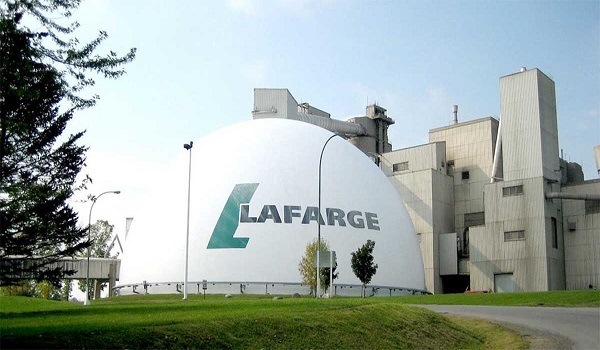
OGUN State Governor Dapo Abiodun has warned the management of Lafarge Africa Plc over the company’s harmful disposal of industrial waste in the Ewekoro community in the state.

Abiodun gave the warning when the company’s management visited him in his office at Oke-Mosan, Abeokuta, the state capital, on Thursday, January 25.

He said residents of Ewekoro and its environs had lodged many complaints at his office.

“There was a case where excessive water used in extracting limestone was released, and it continues to flood people’s farmland, and the farmers came to the Ministry of Agriculture to complain that the action was destroying their means of livelihood,” he said.


Read Also:

Ewekoro, a local government area in Ogun State, southwest of Nigeria, is known for its limestone deposits used in cement production.

Since 1959, Lafarge Africa has been operating in Ewekoro, but the company’s activities have caused the residents to suffer environmental discomfort.

For over 60 years of its operation, the communities have been forced to cope with the loud noise from the blast at the quarry, the effect of the accompanying vibration, the routine plume of dust emitted into space and the health hazards of the effluence.

In January 2019, Lafarge Africa was dragged to the Federal High Court in Abeokuta by members of the Ewekoro community.

The community had accused the company of polluting and destroying their environment by mining limestone.

Warning the company for its non-compliance with the rules regarding waste disposal, the Ogun State governor, however, urged the cement giant to work on its Ewekoro plant and review activities that negatively impact the lives of the host community.

He also urged the company to embrace global best practices in disposing of industrial wastes to safeguard the lives of the people in its areas of operations.

He advised the management to work in synergy with the state waste management agency and environmental protection agency to address the issues.

“It is important we work together and ensure that we are not doing business and making money while the people are suffering.

“The impact of your activities goes beyond just mining. The blasting and mining affect several kilometres of households beyond the immediate environment. I am not sure how many households are affected; what structural damages have occurred in some of these buildings,” Abiodun said.

Alleged rape: Police mum on UNILAG lecturer’s arraignment

0

THE Lagos State Police Command has failed to speak on the arraignment of a lecturer at the University of Lagos (UNILAG), Kadiri Akeem Babalola, who was accused of raping a 20-year-old female student of the institution in 2023.

The ICIR contacted the Lagos State Police Public Relations Officer (PPRO) Benjamin Hundeyin for an update on the case.

When filing this report on Thursday, January 25, he had yet to reply to texts sent to his phone number on November 20 and January 24.

Babalola, an associate professor, was accused by the student of raping her on August 16, 2023, when she visited his office to sort out issues concerning her results.

A non-governmental organisation, Inclusive Social Welfare and Empowerment Foundation (ISWEF), got involved and reported the case to the Gender Unit of the Lagos State Police Command, after which a warrant was issued for Babalola’s arrest.

Hundeyin had confirmed the incident via his official X handle in September 2023, saying the lecturer would be arraigned “in the coming days.”

However, Hundeyin told The ICIR the following week that the arraignment was being stalled due to Babalola’s ill health.

Sexual harassment has been a recurrent issue in Nigerian tertiary institutions, and female students are mostly the targets.

A survey carried out by the World Bank in 2018 showed that classmates and lecturers sexually harassed 70 per cent of Nigerian female graduates while in school.

“The effects experienced by victims were depression and perceived insecurity on campus,” the report said.

Although the Minister of Education Tahir Mamman has threatened to deal decisively with lecturers and other members of tertiary institutions involved in sexual harassment, the Nigerian government failed to assent to a bill criminalising the act, which was passed by the National Assembly nearly four years ago.

The bill, titled “A Bill for an Act to Prevent, Prohibit and Redress Sexual Harassment of Students in Tertiary Institutions and for Matters Concerned Therewith 2019,” was sponsored by former Deputy Senate President Ovie Omo-Agege and 106 other senators.

It proposed a 14-year jail term for offenders.

Former Nigerian President Muhammadu Buhari did not assent to the bill till he left office in May 2023.

The ICIR reports that before the bill can be passed by the incumbent President Bola Tinubu, it has to be re-introduced to the National Assembly.

Police arrest Mr Ibu’s son over alleged fraud

0

THE Federal Criminal Investigation Department (FCID) Alagbon, Lagos State, has arrested Onyeabuchi Okafor and Jasmine Okekeagwu, the son and adopted daughter of Nollywood actor John Okafor, also known as Mr Ibu.

The FCID  confirmed this in a statement released on Thursday, January 25, stating they were arrested over an alleged N50 million fraud.

According to the department’s public relations officer, Aminat Mayegun, an Assistant Superintendent of Police, the arrest was after they received a petition from Diamond Waves Law on behalf of Mr. Ibu’s wife, Stella, alleging they conspired to defraud the actor.

“On 6th September, 2023, a petition was received from Diamond Waves Law on behalf of Stella Maris Chinyere Okafor wherein one Onyeabuchi Daniel Okafor, Valentine Okafor, both of whom are sons of Mr. John Ikechukwu Okafor (Alias Ibu) and Jasmine Chioma Okekeagwu were alleged to have conspired to defraud Mr. Ibu while being on sick bed”, the statement read in part.

Mayegun in the statement further stated that investigation into the case established that as part of efforts to fund his medical bills, Mr. Ibu launched a public fund-raising initiative and attracted donations from his fans, entertainment industry players, and other well-spirited members of the public into a bank account which he publicised and dedicated for the purpose.

The Police also revealed that the actor’s wife was in charge of the funds raised to sort the medical bills and sustain the family but the accused took possession of his phone and hacked into his banking details.

According to the Police investigation, the duo had a false marriage at the Ikoyi Marriage Registry as part of their intentions to flee the country to the United Kingdom and spent N5 million, of which the Police later recovered N50 million from them.

The ICIR reported that Mr Ibu had his leg amputated and the family had solicited financial support from Nigerians to pay the medical bills.

Lagos postpones enforcement of single-use plastics ban

0

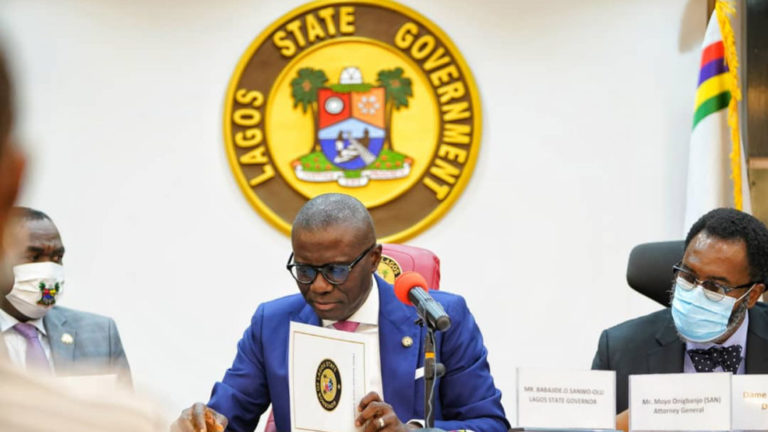
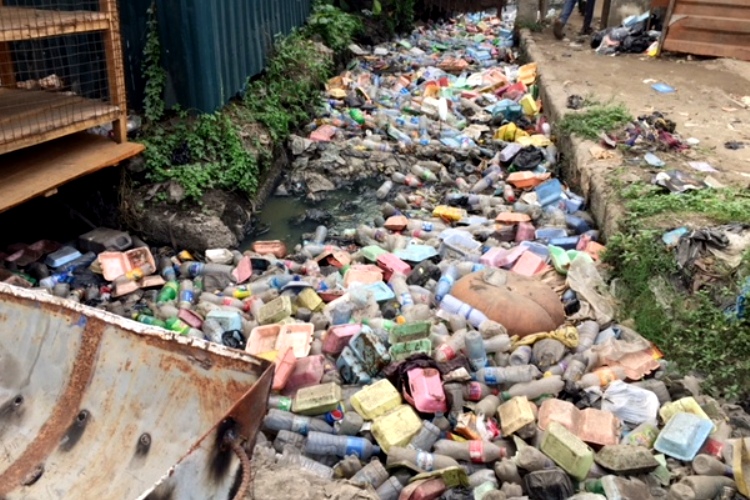
THE Lagos State Government has given dealers in styrofoam and other single-use plastics a three-week grace, after which a ban on the product will be enforced.

Commissioner for Environment and Water Resources Tokunbo Wahab made this known in a statement via his official X handle on Thursday, January 25.

“As a responsible government, the lives of the residents are far more important than the profit producers set to make for the continuous production of styrofoam.

“The only moratorium that the state is willing to offer all producers and distributors of styrofoam is to delay the commencement of enforcement of the ban by three weeks, after which the government will go on full enforcement of the law,” Wahab noted.

The state government announced an immediate ban on styrofoam and other single-use plastics on Sunday, January 21, citing environmental and health concerns as reasons for the ban.

Through its commissioner, Wahab, the state Ministry of Environment and Water Resource disclosed that the products had become a menace to the ecosystem, especially during the rainy season.

Styrofoam is made of styrene, a petroleum-based product used to manufacture food containers.

In 2018, the World Health Organization (WHO) classified styrene as a probable carcinogen. This means that there is a probability of increased risk of cancer associated with the use of the product.

Wahab said there was no going back on the ban, and though there had been a previous prohibition on using styrofoam in the state, it would be banned by the government.

“The havoc and destruction caused to public utility by single-use plastics during and after the rainy season is unimaginable. If the producers had been responsible enough to respect the law, the government would not have had to wade into the matter.

“The number of lives that have been lost through the effect of the use of styrofoam, the destruction of the ecosystem and aquatic lives, as well as the menace brought upon the environment, cannot be quantified,” Wahab noted.

BUA Cement more in debt than Dangote, Lafarge

BUA CEMENT Plc has more debt financing obligations than its main rivals in the cement industry, analysis by The ICIR on the companies’ debt-to-equity ratio has shown.

A debt-to-equity ratio, also known as a risk ratio, shows a company’s relative amount of debt and estimates how well it can service its long-term debts and other obligations.

It is widely considered as one of the most essential corporate valuation metrics, highlighting a company’s dependence on borrowed funds and ability to meet those financial obligations.

In the Nigerian cement industry, BUA Cement’s main rivals are Dangote Cement Plc and Lafarge Africa Plc.

Checks by The ICIR on the companies’ financial statements for the nine months ended September 2023 showed that BUA Cement had 1.59 debt-to-equity ratio compared to Dangote Cement, which had 1.45, and Lafarge Africa, 0.52, respectively.

It, therefore, means that BUA Cement had N1.59 of debt for every N1 of equity relative to N1.45 and 0.52 kobo; Dangote Cement and Lafarge Africa had for every N1 of equity.

According to the statements, BUA Cement had total liabilities of N624.55 billion and shareholders’ equity of N392.36 billion; Dangote Cement had N1.98 trillion liabilities and equity of N1.37 trillion, and Lafarge Africa had N220.41 billion liabilities and N423.19 billion equity, respectively.

The ICIR reports that a debt-to-equity ratio is calculated by dividing a company’s total financial liabilities by its total shareholders’ equity.

Though Dangote Cement recorded more liabilities on its balance sheet, a lower debt-to-equity ratio indicated less debt on its balance sheet than that of BUA Cement.

A debt-to-equity ratio below the weight of one is considered safe, whereas values of two or higher are risky, according to a research institution.

Over the last four years, Dangote Cement has carried the highest debt-to-equity ratio weight more than the two other cement companies, checks on the companies’ financial statements indicate.

In 2019, Dangote Cement had 0.94k debt for every N1 of equity, as its total liabilities stood at N844.51 billion and total equity at N897.94 billion.

Lafarge Africa followed with a 0.44k debt for every naira as liabilities were N152.24 billion and equity, N344.91 billion. At the same time, BUA Cement had 0.29k debt for every naira of equity, with N106.87 billion liabilities and N363.697 billion equity.

In 2020, Dangote Cement’s debt-to-equity ratio was N1.27, BUA Cement, N1.04 and Lafarge Africa, 0.41k for every N1 of equity.

In 2021 and 2022, Dangote Cement’s debt-to-equity ratio was N1.43 and N1.42 for every N1 of equity; BUA Cement had 0.83k and N1.13 while Lafarge Africa was 0.39k and 0.44k, respectively.

A steadily rising debt-to-equity ratio may make it harder for a company to obtain financing, as the growing reliance on debt could eventually lead to difficulties in servicing the debt obligations, and a high ratio may result in loan default.

The three cement giants collectively reported a 29 per cent increase in total borrowings to N868.76 billion in 2022 from N671.72 billion in 2021 to stay afloat.

Worrisome cost of borrowing, debt burden

Over the years, the Manufacturers Association of Nigeria (MAN) has been critical of the cost of funding for businesses. The benchmark interest rate, currently at the double-digit mark of 18.5 per cent, directly impacts the cost of production and the manufacturing sector’s competitiveness.

Higher interest makes lending expensive, affecting manufacturers as borrowing costs for production become more expensive, financial analysts have argued.

In a report by The ICIR, the Director General of MAN, Segun Ajayi-Kadir, said, “The increase in the MPR (monetary policy rate) portends worrisome negative consequences for the manufacturing sector.”

This discourages investment and leads to increased factor costs, which feed into high product prices, thus making the country’s manufacturing industry unproductive, he said.

A study, ‘Equity and Debt Financing on the Profitability of Cement Industry in Nigeria,’ shows that debt significantly affects the profitability of the cement industry in Nigeria.

In contrast, equity financing does not substantially impact Nigeria’s cement industry’s profitability.

“It is recommended that cement industry owners should diversify their sources of financing their businesses by focusing more on debts to save their costs and reduce their risk in the investment.

“Industry owners should look outside the box by employing other sources of financing their businesses like debentures, bonds and so on, other than absolute dependence on equity,” the study recommended.

The study added that when the cement industry performs well, it improves the country’s gross domestic product (GDP) and invariably solves the unemployment problem.


Court remands Fubara’s loyalists over Rivers Assembly’s inferno

0

A FEDERAL High Court (FHC) in Abuja on Thursday, January 25, remanded some loyalists of River State governor Siminalayi Fubara over the vandalisation of the State House of Assembly complex.    

Five supporters of the governor were charged before Bolaji Olajuwon of the FHC.

They were accused of being involved in the October 30, 2023, explosion that destroyed the Rivers State Assembly building.

The ICIR reported that Fubara claimed police and military officers shot at him on his way to the state House of Assembly in the early hours of Monday, October 30.

Fubara’s claim was made amid the suspension of the Majority Leader of the State House of Assembly, Edison Ehie, over allegations that he supervised the burning of the Assembly Complex.

Fire engulfed the complex on Sunday, October 29, around 10 p.m.

It was subsequently quenched by the Fire Service and security agents, who prevented it from consuming the entire building.

The crises follow reports of the House’s impending impeachment of the governor.

Those charged before the court are Chime Eguma Ezebalike, Prince Lukman Oladele, Kenneth Goodluck Kpasa, Osiga Donald and Ochueja Thankgod.

In the charges marked FHC/ABJ/CR/25/2024, the defendants were accused of committing terrorism offences by invading, vandalising and burning down Rivers State House of Assembly during the wake of the political crisis that rocked Port Harcourt in October last year.

They were also accused of killing a Superintendent of Police, Bako Agbashim, and five police informants in the Ahoada community of the state.

The police informants alleged to have been killed are Idaowuka Felix, Paul Victor Chibuogu, Saturday Edi, Charles Osu, and Ogbonna Eja.

They were also charged with wreaking havoc on the state’s citizens and their businesses using cult organisations such as Greenland, Degbam, Iceland, and the Supreme Viking Confraternity.

Each of them entered a not-guilty plea to the accusations.

They are expected to stay in jail until February 2, when the judge will decide on each of their bail applications.

Despite not being named in the seven counts of terrorism charges, the immediate past factional Speaker of the Assembly, Edison Ehie, was represented in court by Oluwole Aladedoyin because his name was prominently mentioned in the alleged offences.

He refuted the claims that he and other suspects were out of custody.

The judge, Olajuwon, did not, however, permit additional arguments on the grounds that he was not yet a defendant in the allegations. 

Olajuwon scheduled a hearing for February 2 to consider all bail applications after concurring with the prosecutor that the applications were not ready for a hearing.

The judge ruled that the five defendants would be detained at Kuje Prison and returned to court on the adjournment date, pending the hearing and resolution of the bail applications.

Low generation: TCN clarifies reduction in allocation to load centres

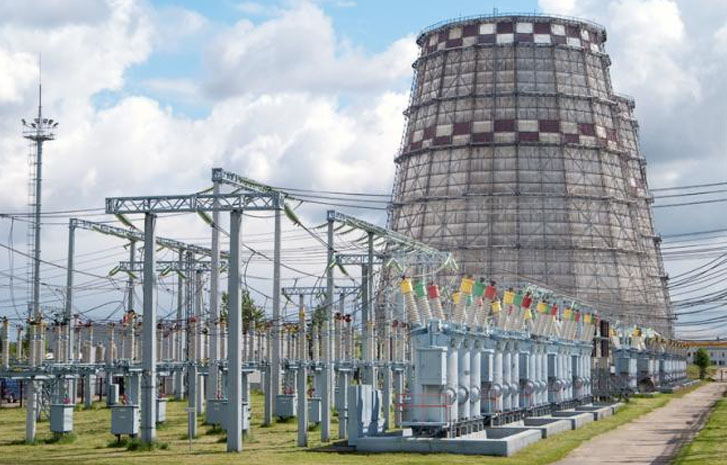
THE Transmission Company of Nigeria (TCN), on Thursday, January 25, announced a gradual decrease in available generation to the grid and distribution companies’ load centres.

In a statement issued by the general manager of the TCN’s public affairs, Ndidi Mbah, the organisation explained that the situation was due to gas constraints to the thermal generating companies, which has impacted the quantum of bulk power available on the transmission grid.

The TCN explained that it was working out measures with stakeholders in the sector to ensure that it keeps the grid intact despite the current low power generated into the system.

“Consequent upon the current load on the grid, load distributed to the distribution load centres have also reduced, as TCN can only transmit what is generated.

“TCN is committed to ensuring a gradual increase in electricity supply to load centres,” it added.

While calling for understanding, the organisation pledged it would continue to work with the stakeholders in the value chain to ensure that supply through distribution companies to electricity consumers nationwide improves.

Controversy trails Lagos ban on single-use plastics

0