Home Blog Page 798

Atiku rejects tribunal judgement asks lawyers to proceed to Supreme Court

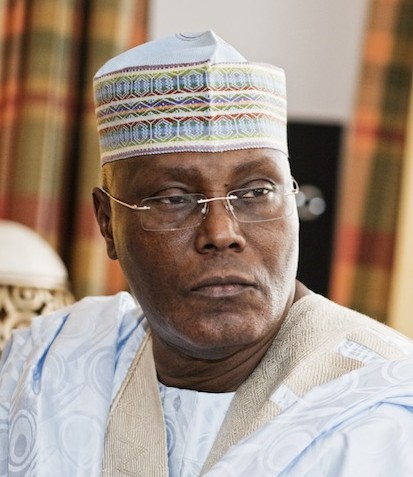
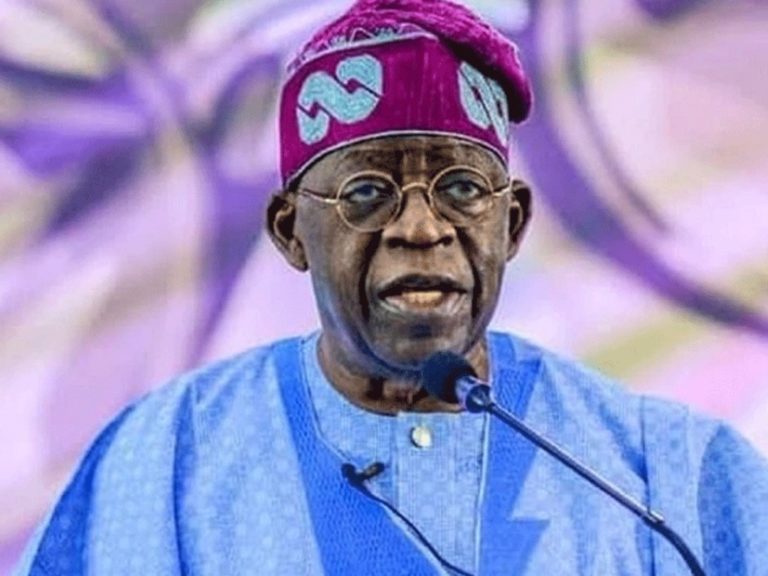
A FORMER Vice President of Nigeria, Atiku Abubakar, has rejected the Wednesday, September 6, Presidential Election Petitions Tribunal judgement that affirmed the victory of President Bola Tinubu.

Atiku was the candidate of the Peoples Democratic Party (PDP) in the February 25, 2023, presidential election.

Atiku said the tribunal judgement failed to restore confidence and is bereft of substantial justice,

Atiku said this via his X handle, formerly known as Twitter, after addressing a world press conference at the PDP headquarters in Abuja on Thursday, September 7.

“I take great pains to tell you that the decision of the court of first instance on this matter utterly falls far short of that expectation.

“I am therefore here to tell you that, though the judgment of the court yesterday is respected, it is a judgment that I refuse to accept. 

“I refuse to accept the judgment because I believe that it is bereft of substantial justice. However, the disappointment in the “verdict of the court can never destroy my confidence in the judiciary,” Atiku stated. 

Atiku said he has instructed his lawyer to take the legal battle to the Supreme Court.

He also promised to continue to explore the judiciary for respite.

“However, the disappointment in the verdict of the court can never destroy my confidence in the judiciary.

“Consequently, I have asked my lawyers to activate my constitutionally guaranteed rights of appeal to the higher court, which, in this instance, is the Supreme Court of Nigeria.”

“Consequently, I have asked my lawyers to activate my constitutionally guaranteed rights of appeal to the higher court, which, in this instance, is the Supreme Court. 

“It is my conviction that the electoral process in Nigeria should be devoid of untidy manipulations and that the outcome of every election should be a perfect reflection of the wishes of the electorate,” Atiku added. 

According to the former vice-president, whether he prevails at the Apex court in his quest or not, the record of his effort in ensuring an order of credible elections in Nigeria shall remain for future generations to evaluate. 

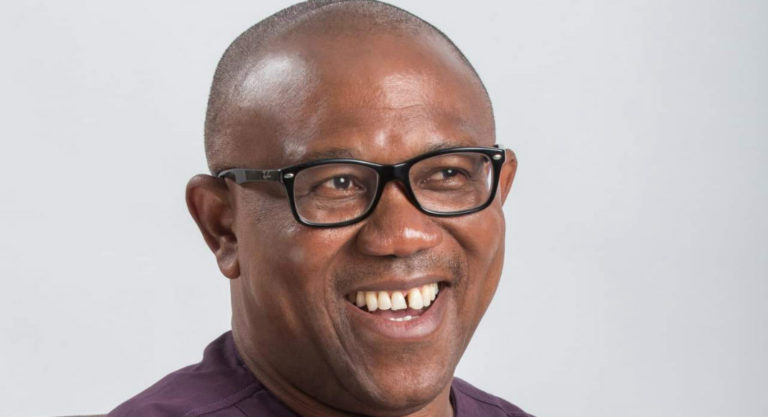
The ICIR reported on Wednesday that the election tribunal affirmed the victory of President of the All Progressives Congress (APC) Tinubu and dismissed the case of Peter Obi of the Labour Party (LP) and Atiku of the PDP.

“Having concluded and decided that all three petitions are all devoid of merit, the petitions are hereby dismissed,” the panel announced while affirming Tinubu’s victory.

In his judgement, the court described Obi’s petition as ‘unmeritorious’ and threw out Atiku’s case.

The judgement was given by Haruna Tsammani, the tribunal’s chairman, with assistance from the other judges on the panel, Stephen Adah, Monsurat Bolaji-Yusuf, Moses Ugo, and Abba Mohammed.

FG’s 2023 budget underperformed in first five months – CBN

0

THE federal government’s revenue and expenditure underperformed between January and May this year, negatively impacting economic development, the Central Bank of Nigeria (CBN) has said.

A member of the monetary policy committee (MPC) of the apex bank, Adeola Adenikinju, disclosed this in personal statements by the MPC members from the July 2023 meeting.

According to Adenikinju, the federal government’s retained revenue stood at N1,673.15 billion, lower than the pro-rata target of N1,968.12 billion.

“This was due to the underperformance of FAAC (Federal Account Allocation Committee) receipts, Gross independent revenue,” he explained.

The ICIR can report that the allocation committee, responsible for reviewing and adopting the allocation of funds to states of the federal government of Nigeria, had shared a total of N3.629 trillion to the tier of government between January and May.

FAAC shared N750.174 billion to the governments in January, N722.677 billion in February, N714.629 billion in March, N655.932 billion in April, and N786.161 billion in May, The ICIR had reported.

Of the total distributed revenue of N3.629 trillion in the review months, the federal government received N1.373 trillion.

In January, it received N277.334 billion; in February, N269.063 billion; in March, N276.141 billion; in April, N248.80 billion; and in May, N301.889 billion.

Similarly, Adenikinju hinted that the federal government’s total expenditure as of May 2023 was N4,769.26 billion, representing 27.8 per cent lower than the budget estimate of N6,606.02 billion.

“The shortfall came mainly from allocation for debt service, interest on Ways and Means, and capital expenditure,” he explained.

He further hinted that the overall budget deficit was reduced negatively by -18.15 per cent in the review period.

“The underperformance of the budget is especially felt in the capital expenditures, thus impacting negatively on economic development,” the MPC member said.

Highlights of the 2023 budget indicate a total revenue estimate of N10.49 trillion; aggregate expenditure, inclusive of gross operating expense and project-tied loans, projected to be N21.83 trillion; overall budget deficit of N11.34 trillion to be financed through domestic sources of N7.04 trillion, and foreign sources of N1.76 trillion; and debt service cost of about N6 trillion.

While the monetary and financial market indicators showed evidence of liquidity excess in the economy, annualised growth rates of Net Foreign Assets and Net Domestic Assets components also exceeded the provisional levels.

He said, “The rise in FAAC in July because of the petrol subsidy removal and narrowing of the FX market rates must be managed so as not to increase the liquidity in the economy.”

In July, FAAC reported a total gross revenue of N1.746 trillion, which indicated that more money came into the purse of the federal government.

In that same month, President Bola Tinubu said the federal government had saved N1 trillion in two months in funds from the fuel subsidy removal.

The immediate past administration had spent over N11 trillion on petrol subsidies, which many analysts had argued favoured the rich more than the poor masses.

Nigerian National Petroleum Corporation, now NNPC Limited, has been the sole supplier of petroleum products to the Nigerian market under which subsidies rained.

“The rise in FAAC overtime would help in managing the recourse of the FG and Subnational units on debts to finance government activities. This would also reduce Ways and Means finance and eventually reduce inflationary pressures from the monetary side.

“The FG and some states have also announced different packages of interventions to boost household incomes, expand agriculture output in the medium to long term, shift demand from petrol to other substitutes like CNG and support transportation costs. The FG has also announced other tax incentives to reduce costs of production for firms, several agricultural support initiatives, as well as several subsidised credits to different categories of firms, especially the MSMEs in the economy,” Adenikinju added.

At least 2 people die daily from insecurity in South-East

RISING insecurity in Nigeria’s South-East region has led to the deaths of more than 1,700 people between January 2021 and June 2023, The ICIR analysis from two data agencies has shown.

By calculation, there are 913 days between January 2021 and June 2023. If the total number of deaths is divided by each day, at least two persons are killed daily in the region.

According to the data, the deaths occur from protests, armed clashes, abductions, mob violence, secessionist groups, riots, electoral violence, and other conflicts.

The affected states are Abia, Anambra, Ebonyi, Enugu and Imo.

The ICIR analysed data from the Nigeria Security Tracker (NST) and the Armed Conflict Location and Event Data Project (ACLED), two data agencies that collate data on insecurity crises in Nigeria.

State20212022May-2023
Abia438125
Anambra22124897
Ebonyi19512828
Enugu5715633
Imo24216641
Data gathered from ACLED by The ICIR

These two agencies gather their data by surveying Nigerian and international media reports.

According to NST data, between January 2021 and June 2023, 1,844 people were killed in the region. Breaking it down, in 2021, a total of 951 people were killed in 227 incidents that occurred in the region.

In the following year, 627 people were reported killed in 223 incidents; between January and June 2023, 266 died in 92 incidents.

Meanwhile, ACLED data analysed by The ICIR showed a total of 1,761 killed between January 2021 and May 2023. 

The data showed that 758 and 779 were killed in 2021 and 2022, respectively. Meanwhile, between January and May 18, 2023, 224 people have been killed in various incidents.

Further analysis of both data by The ICIR revealed that Anambra state had the highest death rate recorded. It was followed by Imo and Ebonyi states, while Abia state reported the lowest death rate.

Further findings showed that Abia state has the lowest incidents reported despite being the hometown of leaders for proscribed groups.

STATE20212022Jun-23
ABIA765516
ANAMBRA22720195
EBONYI27210933
ENUGU8114118
IMO295121104
Data gathered from NST by The ICIR

Lingering attacks in the region

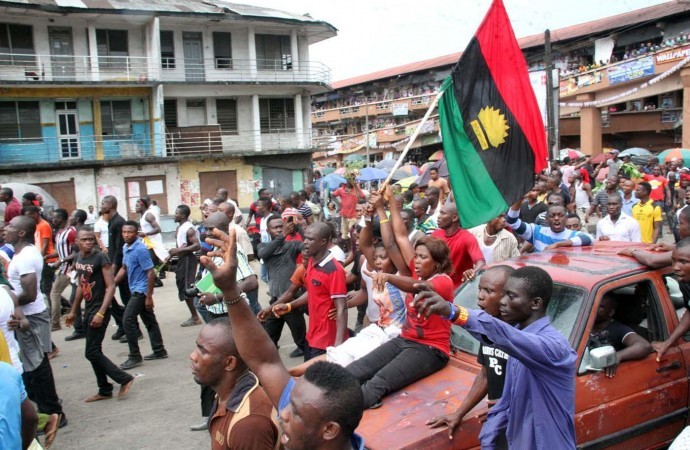
Agitation by the Igbo ethnic group to become an independent state (Republic of Biafra) separated from Nigeria started as far back as 1967 or even earlier. The declaration resulted in a prolonged civil war that claimed hundreds of lives.

Between 1967 and 1999, Nigeria experienced several military interregnums, but this did not stop the southeastern nationalism movement from gaining political and social relevance from the people up until the emergence of secessionist groups, including the Indigenous People of Biafra founded by Nnamdi Kanu in 2012.

IPOB has played a major role in the calls for Igbo secession from Nigeria, including engaging in actions considered by the Federal Government as treasonable, culminating in its proscription by the former President Muhammadu Buhari’s government in 2017.

Despite the proscription, IPOB has remained undeterred, with its major action being the enforcement of the Monday sit-at-home directive.

A recent ranking by the Global Terrorism Index listed the group among the 20 deadliest terror groups in the world.

The group communicates with its members, both in the diaspora, via social media and other platforms. It also holds protests and lockdowns, some of which develop into riots and clashes with security operatives or counter-groups.

When Kanu was arrested in August 2021, the group, in solidarity, locked down the southeast region and continued a mandatory Monday sit-at-home order that suspended every economic activity in the affected state.

A two-part investigation by The ICIR  (here and here) captured the implications of the sit-at-home order on businesses in the five states. There, however, have been efforts by the state governors to end the sit-at-home order, but this has not yielded much results.

The ICIR has also reported recent developments on residents protesting against the order and the security checks on transporters within the region. Some deaths captured in the data analyzed by The ICIR resulted from clashes by secessionist groups in the region.

‘A sad national reality’

A professor of political science at the University of Nigeria, Nsukka, Freedom Onuoha, told The ICIR that the conflict experiences within the region are not unconnected to failed policies from the government alongside militarized responses, which led to the emergence of separatist groups.

Onuoha said, “The case of the Southeast is a reflection of this sad national reality, but it is more a product of the way the past administration of Muhammadu Buhari deliberately or inadvertently mismanaged separatist agitation in the Southeast.

“The result was the rise and reign of roving armed criminal groups described as unknown gunmen. This group of criminal marauders are majorly behind the killings in the Southeast. Unmasking their true identity, whether state or non-state sponsored, is key to addressing bloodletting in the region.”

However, the professor noted that the emergence of a new administration at the federal and state levels opens a great prospect for resolving the crisis if strategic dialogue is made that would promote the interest of residents and agitators within the region.

“The administration of President Bola Ahmed Tinubu can leverage his political position to extract a negotiated settlement of the trial of Nnamdi Kanu in furtherance of national unity and cohesion while the state governors can close their ranks to effectively reign in the agitators towards the restoration of peace and economic vitality in the region,” he said.

Charms and rituals are used by criminals in Nigeria – should police deploy spiritual security too?

0

By Usman A. Ojedokun, University of Ibadan

CRIME is among the major challenges confronting Nigeria as a nation. The pervasiveness of crime has repeatedly called into question the effectiveness and efficiency of the Nigeria Police Force. This is despite their exclusive reliance on modern policing strategies and techniques.

Traditionally, crime-related matters have been handled through what’s known as “spiritual security”. This is a knowledge system that involves the use of amulets, charms, rituals and talismans for protection, power and clairvoyance.

As sociologists specialising in criminology, we were interested in what the Nigerian police personnel had to say about these mechanisms of protection.

We conducted a study of their perceptions and attitudes. Many told us that they believed criminals used spiritual security for power and protection. Some officers confirmed that they themselves used charms and the like to help in their jobs.

Nigerians use spiritual security mechanisms in other areas of social life such as healthcare delivery, conflict resolution and household crime control. But they’ve been overlooked in formal policing.

We conclude that this indigenous approach to crime fighting could prove useful to the police, particularly in intelligence gathering, crime investigation and crime control. Traditional belief systems could complement the country’s colonially based law enforcement and social control systems and improve their efficiency.

Traditional belief systems

Spiritual security is a traditional knowledge system that dates from precolonial times. It was a way that Nigerian people dealt with social issues. Not only for security, but also to settle disputes and for social control, conflict resolution, justice administration, peace engineering and social harmony.

The knowledge system of most African societies is generally predicated on a belief system that’s divided into the physical (visible and seen) and the spiritual (mysterious and unobservable). History tells us that African people gave high credence to this system of knowledge.

Although mystical, preternatural and esoteric powers are virtually inexplicable, many Nigerians believe that they know when they are being manipulated by those who have access to such powers.

The study

Our research was carried out among police officials serving at the Oyo State Police Command. We interviewed 35 police officers belonging to the State Criminal Investigation and Intelligence Department and the Special Anti-Robbery Squad.

We wanted to know to what extent the police were aware of criminals using spiritual security mechanisms. And we asked for their views on the police using them too. Should they be integrated into police operations?

Most police officers acknowledged that the system of spiritual security mechanisms was part of a cultural heritage which many Africans employed. They explained that people did so to protect themselves from their enemies’ spiritual attacks and to neutralise the impact of deadly weapons such as guns, machetes and knives.

Participants said that their professional experiences in the field showed that criminals routinely used spiritual security mechanisms. They did so to strengthen and protect themselves when perpetrating crime such as armed robbery, kidnapping, rape and homicide.

There was no clear consensus about whether the mechanisms were effective or not. But many officers said they believed that the criminals’ use of spiritual security was capable of compromising police operations. One police officer said:

Criminals, especially armed robbers, usually rely on it. Some time around 2003 … we arrested four armed robbers and handcuffed them. Can you believe that two of them who were handcuffed together disappeared? … What happened that day was like a miracle. It was only after making consultation from the people who are knowledgeable that we were told that one of them deployed egbe (a spiritual device for disappearance).

Our research also established that some police officers were secretly consulting custodians of the traditional knowledge system to enhance their performance and safety on the job.

Our respondents, however, expressed differing opinions about whether spiritual security mechanisms should be integrated into modern police work. Those who supported the idea believed it could improve crime fighting and help keep officers safe.

Others dismissed the idea. They stressed the value of modern policing strategies and technology. Some said their religion (both Christian and Muslim) expressly forbade them from associating with traditional charms. Some felt it went against police culture and codes.

Physical security and spiritual security

The work experiences of police officers, however, generally demonstrated the importance of a knowledge system that recognises a connection between physical security and spiritual security.

Modern policing strategies are not adequately dealing with Nigeria’s crime and insecurity crisis. Notorious criminals are combining the use of sophisticated weapons with spiritual charms.


READ ALSO:


We recommend that Nigeria’s police force should explore any potential advantages that the system of spiritual security mechanisms might offer. If well applied, this hybridisation could boost intelligence gathering capacity and crime control efforts.The Conversation

Usman A. Ojedokun, Sociologist/Criminologist, University of Ibadan

This article is republished from The Conversation under a Creative Commons license. Read the original article.

UNILAG lecturer accused of raping 20-year-old student

0

A LECTURER of the University of Lagos (UNILAG), Kadiri Akeem Babalola, has been accused of raping a 20-year-old female student.

Babalola, an Associate Professor of the University, was accused by the female student of perpetrating the act on August 16, 2023, when she visited his office to sort out issues concerning her results.

An X user, Deji Lambo, disclosed on Wednesday, September 6, that the case was taken up by a Non-Governmental Organisation (NGO), the Inclusive Social Welfare and Empowerment Foundation (ISWEF), and Babalola confessed to perpetrating the crime.

“InclusiveSWEF reported the case to the Gender Unit of the state police command, and through the OC Gender, the state CP, Idowu Owohunwa, issued a warrant of arrest for Babalola through the state High Court and involved the Vice Chancellor, UNILAG.

“The VC was given seven days to produce Babalola, and when the VC invited the randy lecturer for questioning, InclusiveSWEF said he admitted to committing the crime. The VC informed the police through the school’s Chief Security Officer, and Babalola was arrested,” Lambo posted.

Lagos State Police Public Relations Officer (PPRO) Benjamin Hundeyin shared Lambo’s post on the incident via his X handle on Wednesday. He wrote that the accused would “appear in court in the coming days.”

Sexual harassment has been a recurrent issue in Nigerian universities, and female students are mostly the target.

On Monday, August 15, female students of the University of Calabar Law faculty staged a protest within the school premises against sexual harassment and intimidation by Dean Cyril Ndifon.

The students carried placards that read, “Law students are not Bonanza, Prof. Ndifon should stop grabbing us. The Faculty of Law is not a brothel,” “Ndifon must go for our sanity,” among other inscriptions.

The University suspended Ndifon on August 17, his second suspension for sexual harassment since 2015, when he was accused of raping a final-year student. .

Some lecturers in other departments within the school were also named by students, including Frank Enor, Otora Agbor, Elvis Okorn and Okoi.

At the Nnamdi Azikiwe University, Awka, Anambra state, two lecturers were also accused of sexual harassment by an anonymous student.

PEPC: Obi failed to prove Tinubu was convicted in US –Tribunal

0

THE Presidential Election Petitions Court (PEPC) has ruled that Labour Party (LP) candidate Peter Obi failed to prove any criminal records or conviction of Nigerian President Bola Ahmed Tinubu for money laundering in the United States.

Appeal Court judge Haruna Tsummani declared this on Wednesday, September 6.

“From the legal definitions and judicial authorities cited above, it is clear that the sentence of imprisonment or fine for any offence involving dishonesty or fraud in Section 137 (1d) of the constitution is one imposed upon a criminal trial and conviction.

“In the instant case, the petitioners have failed to show evidence that the second respondent was indicted with charge or arraigned, tried and convicted and was sentenced to any term of imprisonment or fine for any offence,” Tsummani said.

He also said Tinubu’s legal team had proved that he had no criminal records in the United States by tendering certain exhibits and evidence.

“From all the foregoing, it is clear that having regard to the provision of Section 137 of the Constitution of the Federal Republic of Nigeria as amended, and the evidence laid before this court, the second respondent was not disqualified from contesting the presidential elections held on February 25, 2023,’ he said.

He, therefore, stated that the issue is resolved against the petitioners and in favour of the respondent.

In May, the court had admitted documents into evidence accusing Tinubu of drug offences in the United States.

The documents were filed by Labour Party candidate Peter Obi, challenging Tinubu’s victory at the 2023 general elections.

Oshimen, Oshoala nominated for 2023 Ballon d’Or award

0

TWO Nigerian strikers Victor Osimhen and Asisat Oshoala have been listed for the shortlist for the 2023 Ballon d’Or award for the male and female categories.

Oshimen became the highest scoring African in Serie A history after displacing Liberia’s president record with a total of 50 goals during the 2022-23 season.

He also helped his club Napoli to clinch their first Serie A title in over three decades most especially with his massive goal against Udinese last season.

Also, Oshoala played an integral part in Barcelona’s Spanish Iberdola and UEFA Women’s Champions League success last season.

She is the only African female player, who made the shortlist.

Oshoala has won the CAF Women’s Player of the Year Award for a record five times.

Meanwhile, Lionel Messi and Erling Haaland are among the leading contenders to win this year’s men’s Ballon d’Or, while Spain World Cup star, Aitana Bonmati, leads the nominees announced on Wednesday for the women’s prize.

Messi, who recently left Paris Saint-Germain for Inter Miami, is in with a chance of succeeding Karim Benzema and winning the Ballon d’Or for the eighth time in his remarkable career after leading Argentina to World Cup glory in Qatar last year.

Haaland may be his main rival for the prize after scoring 52 goals in 53 games to help Manchester City win the treble of Champions League, Premier League and FA Cup last season.

The Norway striker, last week won the UEFA Player of the Year Award for last season.

PSG’s Kylian Mbappe and Haaland’s City teammate, Kevin De Bruyne, also feature among the 30 nominees for the prize, the winner of which will be announced at a ceremony in Paris on October 30.

Labour Party rejects tribunal judgement, says justice not served

THE Labour Party (LP) has rejected the judgement of the presidential election petition tribunal that ruled against the petitions of Peter Obi, its candidate, against the victory of President Bola Tinubu in the February 25 polls.

The Tribunal on Wednesday, September 6, dismissed the petitions brought by Obi and the LP against President Bola Tinubu’s victory.

In a statement, the LP’s national publicity secretary, Obiora Ifoh, claimed the Presidential Election Petition Court (PEPC) judgement did not reflect the law or the people’s wishes and that justice had not been given.

“The Labour Party watched with dismay and trepidation the dismissal of petitions by the five-man panel of the Presidential Election Petition Court led by Justice Haruna Tsammani today, and we reject the outcome of the judgment in its entirety because justice was not served, and it did not reflect the law and the desire of the people,” the statement reads.

“Nigerians were witnesses to the electoral robbery that took place on February 25, 2023, which was globally condemned, but the Tribunal, in its wisdom, refused to accept the obvious.”What is at stake is democracy, and we will not relent until the people’s will prevail.

“We salute the doggedness of our team of lawyers who fearlessly exposed the wrath (sic) in our system. We can only weep for democracy in Nigeria, but we refuse to give up on Nigeria,” the statement reads.

Ifoh said the Party’s position details will be presented after consultation with LP’s lawyers after the Certified True Copy (CTC) of the judgement has been secured.

The Party advised all supporters of democracy to stay determined and upbeat, adding that a new Nigeria was not out of the question.     

Obi came third in the election, and his Party had filed a joint petition in March challenging the election that saw INEC declare Tinubu winner.

Earlier at the Court, the PEPC said the FCT was not superior to any state and couldn’t be ministered differently in an election.

The Court held that regardless of where voters desire to reside in the country, all people had equal rights.

On the $460k forfeiture by Tinubu in the US over a drug-related case, the panel said Obi and LP failed to demonstrate that Tinubu was convicted.

According to Tsammani, who read the lead judgement, the petitioners’ evidence (Exhibit P5) demonstrated that it was a civil forfeiture case.

Tsammani added that the petitioners did not present any convincing proof that Tinubu had been charged, had entered a plea, had received a sentence, or had been penalised in any criminal case in the US.

The Court also said Obi did not show how he secured the majority of lawful votes in the February 25 election.

The Court described Obi’s petition as lacking in merit and ruled against him.


PEPC: Court upholds Tinubu’s victory at polls

0

THE Presidential Election Petition Court (PEPC) has upheld the election of Nigerian President Bola Tinubu during the 2023 coring exercise.

The five-man panel delivering judgment on Wednesday, September 6, disclosed that the petitiona filed against Tinubu by the People’s Democratic Party, Allied People’s Movement and Labour Party were all without merit.

“Having concluded and decided that all three petitions are all devoid of merit, the petitions are hereby dismissed,” the panel announced.

Read about other related developments here:

PEPC resolves petition against Obi, says claim lacks merit

THE Presidential Election Petition Tribunal (PEPT) has decided all petitions filed by Peter Obi of the Labour Party (LP) against the February 25 presidential election winner, Bola Tinubu, in Tinubu’s favour.

The court declared that Obi’s petition lacked merit.

The election saw the emergence of Tinubu of the All Progressive Congress (APC) as the nation’s president.

The three major contestants in the election are Tinubu, Labour Party (LP) candidate Peter Obi and the candidate of the People’s Democratic Party (PDP) Abubakar Atiku.

Haruna Tsammani heads the five-man panel; other members are Stephen Adah, Monsurat Bolaji-Yusuf, Moses Ugo and Abba Mohammed.

In its judgement read by a panel member, Abba Mohammed, the panel said the petitioners only made “generic accusations of irregularities” in the election but failed to specify the anomaly, the places where it occurred and those affected.

“They failed to state the number of votes affected and the number of people disenfranchised,” says Mohammed.

The Court said that although Obi and LP claimed to have scored the majority of lawful votes cast, they failed to state the number of lawful votes they scored.

“The law is very clear that where someone alleged irregularities in a particular polling unit, such person must prove the particular irregularities in that polling unit for him to succeed in his petition.

“The determination of election is about figures,” the Court held.

Regarding Obi’s membership in the LP, which the respondents disputed on the grounds that Obi was still a PDP member as of the time of his nomination, the Court stated that LP and Obi certified the terms of Obi’s membership.

According to the Court, the request to reject Obi as a member of LP is no longer valid.

Tsammani has now continued the reading of the judgement.

The Judge struck out ten LP witnesses’ statements on technical grounds.

Tsammani said the statements made on oath and exhibit tendered through them are inadmissible and invalid.

Regarding the compulsory 25% in the FCT, Tsammani said Abuja is on par with every other state in Nigeria, and there are no special voters anywhere in the country.

The Tribunal added that the petitioners’ interpretation of Section 134(2)(b) of the 1999 constitution is “completely fallacious — if not outrightly ridiculous”.

On the alleged forfeiture of $460,000 and drug trafficking indictment by Tinubu in the United States, the Court overruled the argument that sought to have the documents submitted by Obi/LP struck out.

On the drug matter, the Court said, “The Nigeria Police, through its IGP, had written to the US to confirm the criminal status of Bola Tinubu, and the US government had replied in 2003 stating that Bola Tinubu had no criminal records in the US. Therefore, the Court admits this evidence.”

The Judge ruled that the sentence of crime for any offence involving dishonesty or fraud from section 37(d) has to be a criminal offence, and LP failed to supply evidence that forfeiture is criminal while the respondents proved it was not criminal.

The PEPC, in its judgement, claimed Obi’s case lacks merit and lacks the burden of proof.

“From the foregoing, it is clearly evident that the petitioners have failed to discard the burden of proof placed on them by law.

“They have failed to prove any of the three grounds contained in paragraph 20 of this petition,” the Judge stated.

The judge added that the petitioners have been unable to provide credible and acceptable evidence.

The panel, after that, resolved all issues against the petitioners.

“All issues in this this petition are resolved against the petitioners,” the judge said

This court described the petition as clearly “unmeritorious.”

INEC had declared Tinubu as the winner of the February 25 election.

According to INEC, Tinubu secured 8,794,726 votes to come first, Atiku Abubakar of the Peoples Democratic Party (PDP) finished second with 6,984,520, while Obi polled 6,101,533 to go third.

The tension that followed the announcement of the result was very high. 

The APC, which won the poll, has continued to hold that Tinubu’s victory was valid and that the election was free and fair.

In his petition before the Court, Obi stated that there was rigging in 11 states, and he promised to prove it based on the uploaded results.

Obi further claimed that Tinubu “was not duly elected by a majority of the lawful votes cast at the time of the election”.

Parts of the petition read, “The petitioners shall show that in the computation and declaration of the result of the election, based on the updated results, the votes recorded for the second respondent (Tinubu) did not comply with the legitimate process for the computation of the result and disfavoured the petitioners in the following states: Rivers, Lagos, Taraba, Benue, Adamawa, Imo, Bauchi, Borno, Kaduna, Plateau and other states of the federation.”

Obi and the LP said since all polling unit results had yet to be thoroughly scanned, uploaded, and transferred electronically as required by the Electoral Act at the time of the declaration, INEC broke its own rules when it announced the result.

The petitioners also urged the Tribunal to “determine that, at the time of the presidential election held on February 25, 2023, the second and third respondents (Tinubu and Shettima) were not qualified to contest the election.

“That it be determined that all the votes recorded for the second respondent in the election are wasted votes, owing to the non-qualification of the second and third respondents.

“That it be determined that the second respondent (Tinubu), having failed to score one-quarter of the votes cast at the presidential election in the Federal Capital Territory, Abuja, was not entitled to be declared and returned as the winner of the presidential election held on February 25, 2023.

“That it be determined that based on the remaining votes (after discountenancing the votes credited to the second respondent), the first petitioner (Obi) scored a majority of the lawful votes cast at the election and had not less than 25 per cent of the votes cast in each of at least two-thirds of the states of the federation and the Federal Capital Territory, Abuja and satisfied the constitutional requirements to be declared the winner of the February 25, 2023, presidential election.”

In addition, the petitioners request that the tribunal issue a ruling ordering INEC to hold a new election in which Tinubu, Shettima, and the APC shall not run.