Home Blog Page 801

How Tinubu ‘hit the ground running’ within 100 days in office

NIGERIA’S President, Bola Ahmed Tinubu, assumed office as the 16th democratically-elected president on May 29 after securing 8.8 million votes to win the country’s 2023 presidential election which was held in February.

Today, September 5th, marks 100 days since President Tinubu has been in office. The ICIR looked through several policies and actions taken by the president between May 29 and September 5, 2023.

Within these days, there have been appointments, dissolution of heads of agencies, implementation of policies, signing of bills and foreign journeys made by the president.

Earlier, The ICIR had reported on key decisions taken by the president and 18 new governors sworn into office after 20 days and the real cost of Tinubu’s economic policies in 50 days in office.

Here is a look at some of the activities:

Economic policies 

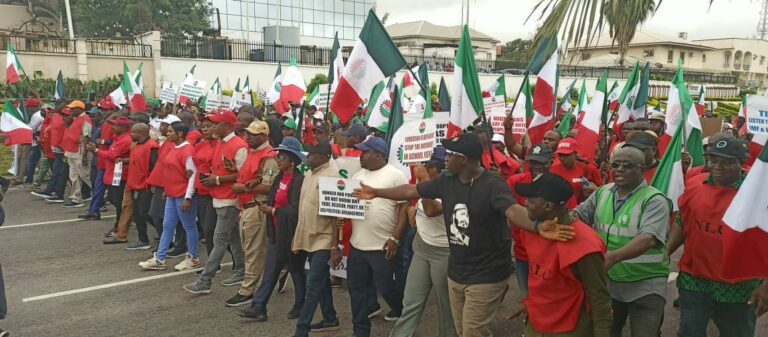
While giving his inaugural speech, Tinubu announced the immediate removal of subsidies on Premium Motor Spirit (commonly called petrol or fuel locally). This was the first economic action taken by the president. The removal increased the prices of transportation and foodstuffs by over 100 per cent. The ICIR also reported several strike actions organized by the Nigeria Labour Congress over the agitations on the removal.

A few weeks later, the Central Bank of Nigeria announced the abolition of the segmentation in the foreign exchange market. By implication, the naira currency floated after several years of regulations. The ICIR reported that the policy, after two weeks, increased the naira-to-dollar exchange by 15.84 per cent. 
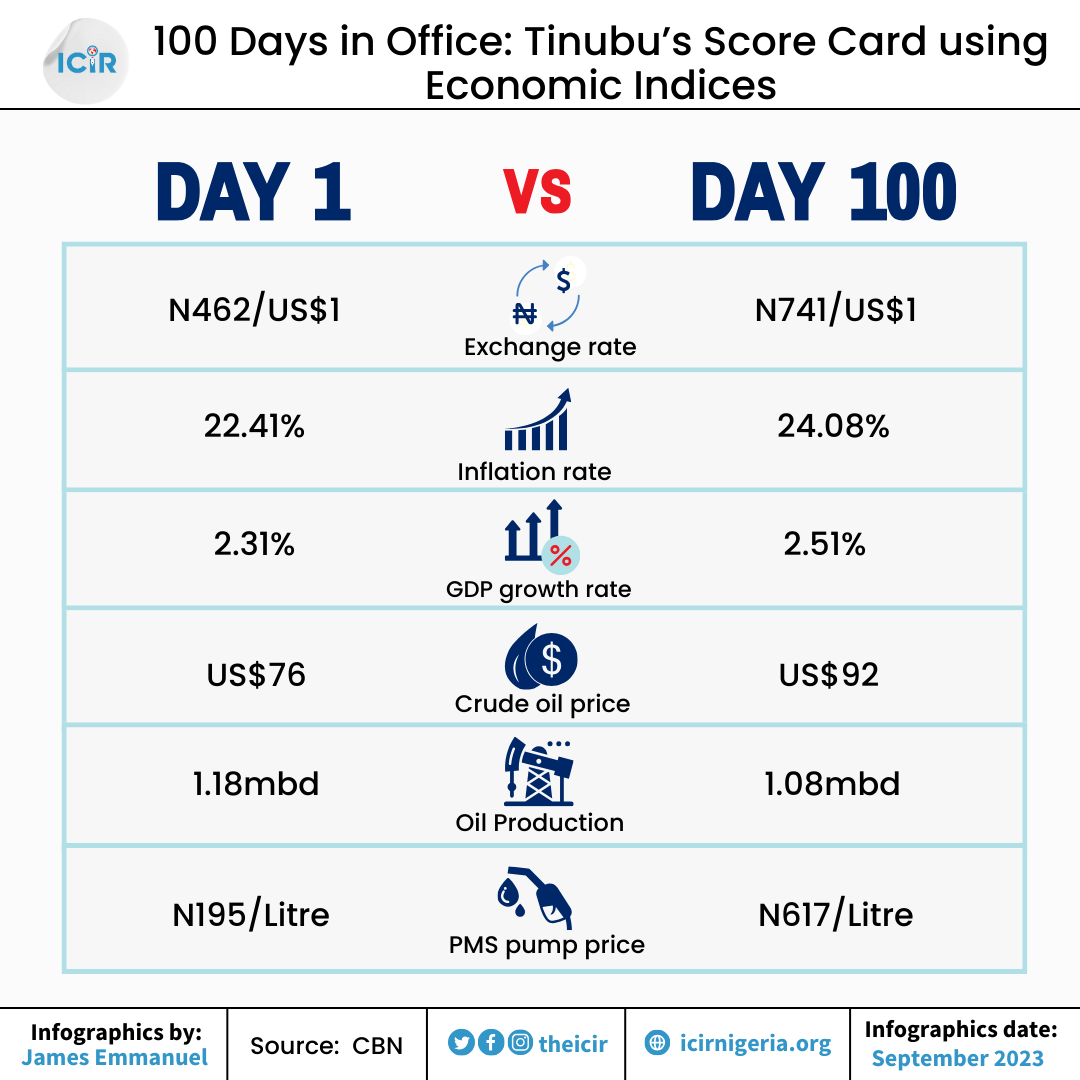
100 Days in Office: Tinubu's score card using Economic indices

Later, Tinubu said N8,000 was going to be distributed as palliative to 12 million poor households for six months before the policy was retracted for review. The ICIR reported how feasible the palliative would benefit poor Nigerians and by this review, the impact of conditional transfers by past administrations.

Also, the president inaugurated the National Economic Council and a Presidential Committee on Fiscal Policy and Tax Reform with a mandate to transform and rejuvenate the nation’s economy and signed an executive order suspending the five per cent excise tax on telecommunications services and locally manufactured products. 

Suspension and Appointment 

Three major dismissals by the president within 100 days include the suspension of Godwin Emefiele as the Governor of the Central Bank of Nigeria (CBN); Abdulrasheed Bawa, as chairman of the Economic and Financial Crimes Commission (EFCC) and all service chiefs from office replacing them with new heads.

Meanwhile, the first major appointment made by the president was the announcement of the immediate past Speaker of the House of Representatives, Femi Gbajabiamila, as Chief of Staff. Subsequently, the former governor of Benue State, George Akume, was appointed as Secretary to the Government of the Federation (SGF). There was also the appointment of 20 aides as Senior Special Assistants (SSAs), personal assistants, a personal physician and photographers.

Tinubu also assigned ministerial portfolios to 46 people after being screened by the Senate. The ICIR reported how it might cost taxpayers over N29.91 million monthly to pay the basic salaries of the appointed ministers.

Signing of bills

Between May and September 2023, at least four bills were signed by the president into law. 

The bill to increase the retirement ages of judicial officers in the country to 70 years was, first, signed into law by Tinubu on June 8. The new law will harmonise the pension rights of judicial officers of “superior courts of record” specified in Section 6(5) of the 1999 Constitution (as amended).

Also, on June 9, the Electricity Act 2023, empowering states and private companies to generate power, was signed. Similarly, the Student Loan Bill, which provides interest-free loans to indigent students in Nigeria’s tertiary institutions, was signed on June 12. 

While, the data protection bill, which provides how data should be managed, its limitations, and fines for violators, was signed on June 14.

Travels

Tinubu has also travelled to six countries; three countries in Africa and three countries outside Africa. 

In June, the president’s first travel was for a Global Financial Pact Summit where he spent three days and then moved to the United Kingdom on a private visit, spending four days.

Also, between July and August, Tinubu attended the Economic Community of West African States  (ECOWAS) Summit in Guinea Bissau, the African Union (AU) meeting in Nairobi -Kenya and the 63rd Independence Anniversary of Benin Republic.  

Currently, the president is in New Delhi, India, to attend the G-20 Leader’s Summit. 

Other activities

Within 100 days, the president only organized two live broadcast messages. The first speech was given during his inauguration as president, while the second speech came two months after where he highlighted plans to ease the hardship faced by Nigerians due to subsidy removal.

Tinubu was also appointed as the ECOWAS chairman on July 9 where he would be responsible for leading implementation of the decisions of the ECOWAS heads of state and government, promoting peace, stability, and economic growth within the West African region.

Within a short time frame, The ICIR has reported how Tinubu has been faced with taking critical steps in addressing the ongoing Niger coup

The president also approved the establishment of the Infrastructural Support Fund (ISF) for the 36 states and also declared a state of emergency on food security in Nigeria. The ICIR also reported how over 600 people were killed within the first 45 days under the new administration.

Wike condemns previous negotiation for N85bn Wasa mass housing project

0

MINISTER of the Federal Capital Territory (FCT) Nyesom Wike has expressed his displeasure with arrangements made by the previous administration over the N85bn Affordable Housing Project in Wasa.

He disclosed that the agreement between the FCT Administration (FCTA) and the private developers would be reviewed for better negotiations in favour of the government during a visit to the site in Wasa on Monday, September 4.

“We are not impressed with the arrangement made by the FCT. Government will not just cough out N85 billion and the land and we are providing all the infrastructure, then you want to give out to private developers who will now build and sell. We think that government must also participate, having provided the land and having provided the infrastructure.

“This kind of arrangement is not commendable at all. If we are partnering with private individuals or developers, the common sense is that you provide the land and also provide infrastructure and then they come and develop and make profit. Government can say okay we will take 10 percent, then they take 30 percent, depending,” he said.

Wike added that active participation of the government in the project would help with monitoring the pricing of the homes and keeping them within an affordable range as intended.

He also said contracts would only be awarded by the FCT if available funds could see to the completion of projects.

“We are not going to be awarding contracts for awarding sake. We are going to award contracts that we will finish and then embark on new contracts. Contracts in the FCT are something else. As I speak to you, you don’t even have up to 20 percent completion. Every contract abandoned because of no money. We are not going to encourage that. We are going to look at everything,” Wike said.

In 2014, the sum of N28bn was approved for the Mass Housing Estate in Wasa, meant to serve as affordable accommodation for FCT residents, with a completion period of 48 months. The sum was later reviewed to N85bn in 2018.

Wike also visited the yet-to-be-completed access road leading to the Institution and Research District in Jabi, along which some buildings housing government agencies, including the EFCC Corporate Headquarters, Body of Benchers Building and Federal Medical Centre, are located.

The Minister stated that the contractors have been invited to see to the completion of the road.

Banks, others shut down as workers begin strike

0

THE National Union Of Banks, Insurance and Financial Institutions Employees, NUBIFIE, and other affiliates of the Nigeria Labour Congress (NLC) are set for the two-day warning strike declared by the workers’ body.

The workers are downing tools to protest the escalating hardship arising from the removal of subsidy on Premium Motor Spirit (PMS), commonly known as petrol, by the Federal Government.

The strike holds between Tuesday, September 5 and Wednesday, September 6, 2023.

The ICIR reports that it will paralyse socio-economic activities across the country, leading to a further loss for a nation struggling with its economy.

NLC President Joe Ajaero ordered the union members to commence the strike on Friday, August 31.

He said unless the government takes significant measures to alleviate the effects of the subsidy removal on Nigerians, the union would commence an indefinite strike in either 14 working days or 21 days.

The Union had previously embarked on a nationwide protest on the same issue in August 2023, with its membership comprising workers from both the public and private sectors.

NUBIFIE, in a statement released on Monday, September 4, announced its solidarity and declared that all banks would be closed on Tuesday, September 5, and Wednesday, September 6.

According to the statement, the notice aligns with the NLC’s resolution on its planned two-day strike.

Part of the statement read: “In line with the communique issued after the meeting of National Executive Council (NEC) of the Nigeria Labour Congress (NLC) held on Thursday 31 August 2023, that all affiliates should direct their members to commence two days withdrawal of services from Tuesday and Wednesday the 5 and 6 September 2023, the directive is imperative to get the needed attention of the government and warn it of its new found love of meddling in the internal affairs of unions rather than addressing the punishing economic circumstances we find ourselves in.”

The group directed its organs to comply with the directive by ensuring all members stayed off duty for the two days.

The ICIR had earlier reported that numerous NLC affiliate organisations had instructed their members to adhere to the directive issued by the national body.

One of these groups, the Maritime Workers Union of Nigeria (MWUN), ordered its workers to mobilise its members effectively to ensure their participation in the strike.

In a circular shared by Deputy Secretary General Erazua Oniha, acting on behalf of the union’s Secretary General Felix Akingboye, the union stated, “We have received a communique from the Nigeria Labour Congress, NLC, regarding the aforementioned matter, instructing all NLC affiliates to initiate a two-day nationwide warning strike as a demonstration of our preparedness for the indefinite strike later in the month…”

“Consequent to the foregoing, all National Administrative Council, NAC, Central Working Committee, CWC, NEC and members in all ports, jetties, terminals and oil and gas platforms nationwide are by this notice directed to commence an immediate and total mobilisation of our members to effectively ensure their participation in the nationwide warning strike from Tuesday 5 to Wednesday 6 September 2023.”

Others, according to a report, are the National Union of Electricity Employees (NUEE), the Private Telecommunications and Communications Senior Staff Association of Nigeria (PTECSSAN).

The ICIR reports that sources within the judiciary said the strike would not affect the Presidential Election Petition Court (PEPT), which delivers judgment in the case of Atiku Abubakar of the Peoples Democratic Party (PDP) and Peter Obi of the Labour Party (LP) against the winner of the February 25, 2023 presidential election, and incumbent President Bola Tinubu, on Wednesday, September 6.

However, the government appealed to the NLC to shelve the strike on Monday, September 4.

The ICIR contacted Ajaero on the telephone Monday evening to confirm if the strike would go on as planned. He did not pick up the call put across to his telephone line. He did not also reply to text and WhatsApp messages sent to his line.

Super Eagles’ coach Peseiro extends contract despite 29% pay cut

0

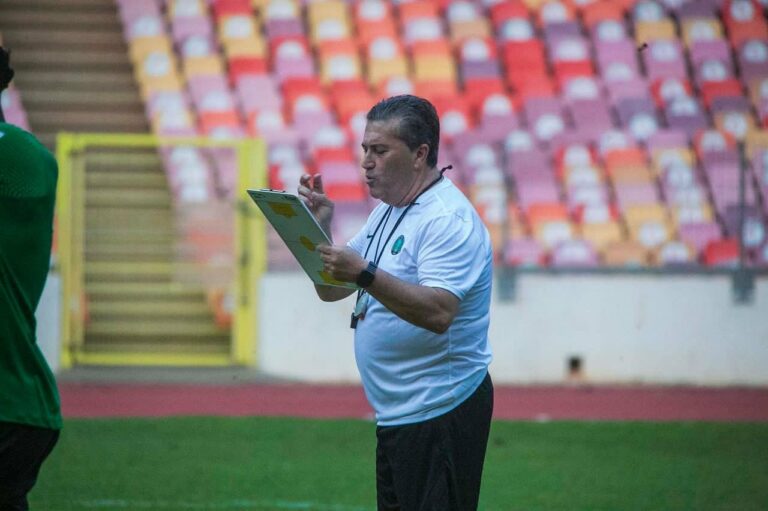
THE Super Eagles head coach Jose Peseiro will continue his contract with the Nigeria Football Federation, NFF as the head coach despite agreeing to a 29 percent pay cut.

His employer, the Nigeria Football Federation (NFF), made this announcement on Sunday.

The NFF said in a statement that the 63-year-old Portuguese will now lead Nigeria to the Africa Cup of Nations after his initial one-year contract ran out in July.

Peseiro’s initial contract with the country’s apex football administration was agreed on $70,000 a month, but it is understood the new agreement will have his monthly pay at $50,000 after the federation said they could no longer afford his previous salary.

The ICIR calculated the head coach’s pay cut dropped to 29 per cent.

Ahead of the Africa Cup to be hosted by the Ivory Coast in January 2024, he has been handed the target of leading the Super Eagles to at least the semi-finals.

The three-time African champions have 12 points from five qualifying matches and have already secured a place in the tournament.

However, the Super Eagles will need at least a point against Sao Tome and Principe next weekend to win their group ahead of second-placed Guinea Bissau, who are on 10 points and play at home to Sierra Leone.

Ahead of the match, Nigeria has called up several uncapped players, including Victor Boniface, Gift Orban and Jordan Torunarigha.

Among the players recalled up for the match include Portugal-based left-back, Bruno Onyemaechi, Tyronne Ebuehi, defensive midfielder Raphael Onyedika and defender Jamilu Collins, who has returned from a long-term injury.

Nigerians paid N302 million as ransom for kidnapping in one year

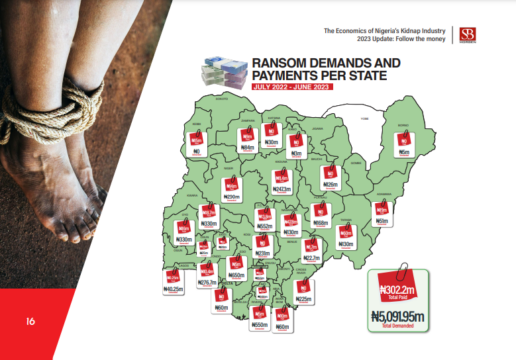
SB Morgan (SBM), known as SBM Intelligence, has revealed that between July 2022 and June 2023, $387,179, translating to N302 million, was paid as ransom to kidnappers in the country.

According to the SBM, the amount represents six per cent of the total N5 billion ($6,410,256 as of 30 June 2023) the kidnappers requested within the period. 

Nigeria has faced insecurity challenges in the last decade, from insurgent attacks, banditry, inter-ethnic or communal crises, and separatist agitations.

The ICIR reported how non-state actors killed 31,821 people between May 2015 and April 2023. Also, within the first 45 days of President Bola Tinubu, over 600 people were reportedly killed from the insecurity crisis. 

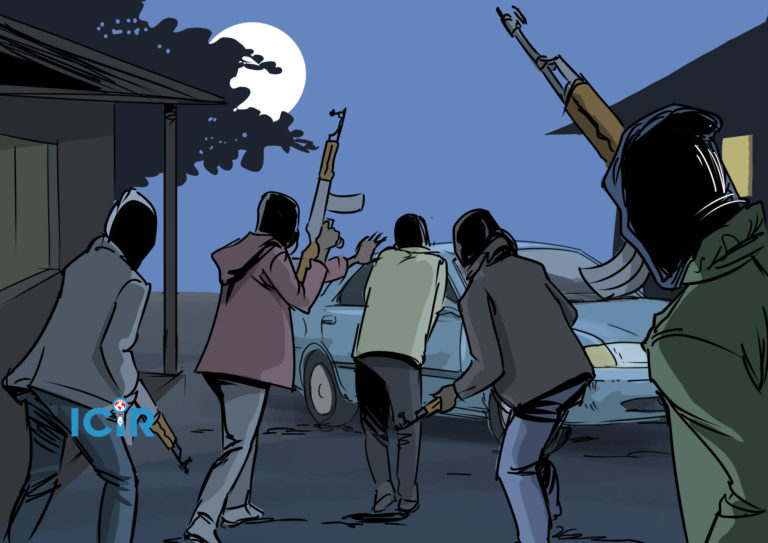
However, kidnapping in Nigeria has become an economic industry where abductors demand money from families and guardians before releasing abductees. This is most prominent in the Northern region of the country, which has recorded a plethora of cases of school children and other kidnappings like Chibok, Jangebe and Dapchi in the last decade.

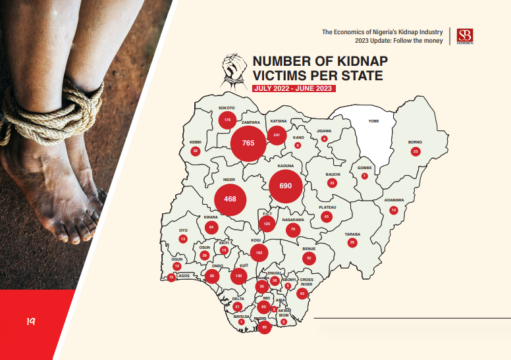
According to the SBM report, between June 2022 and July 2023, 3,620 people were abducted in 582 kidnap-related incidents in Nigeria. 

SBM said, “The north west and north-central regions exhibit higher numbers of in-kind ransom demands. This aligns with Nigeria’s poverty and its correlation with areas where food is commonly demanded. Additionally, these regions have seen a surge in motorcycle demands due to economic opportunities and possibly because of their potential use in terror activities.”

Analysis of the data

According to the report, at least 3,620 people were kidnapped, while 570 people were killed during kidnapping incidents. The North-West region had the highest number of people kidnapped and killed during kidnapping incidents.

However, the North-East region had the lowest number of people kidnapped, and the South-East region had the least people killed during the kidnapping incidents.

RegionNUMBER OF PEOPLE
KIDNAPPED
NO. OF PEOPLE
KILLED DURING
KIDNAP INCIDENTS
North East12563
North Central977153
North West1,921217
South East15927
South South27081
South West16829

The report said it was more likely to get kidnapped and killed in states like Zamfara, Niger and Kaduna than elsewhere. Meanwhile, three states recorded no deaths from kidnap: Akwa Ibom, Bayelsa and Borno.

“Civilians comprised the most casualties for persons killed in kidnap cases, with 430 dead. In the same period, 121 kidnappers were killed, mostly by security agents, with some of them meeting their end at the hands of irate mobs or in friendly fire. 19 security operatives—including state security agencies and vigilantes—lost their lives”, SBM stated.

Additionally, within the period in review, 21 Catholic priests were kidnapped.

Nigeria’s VAT rises to N781.35bn in second quarter – NBS

0

THE National Bureau of Statistics (NBS) has reported an increase in value-added tax (VAT) from N709.59 billion in the first quarter (Q1) to N781.35 billion in the second quarter (Q2).

The NBS disclosed this in its ‘Sectorial Distribution of Value Added Tax (Q2 2023)’ report released on Saturday, September 2, highlighting that the VAT grew by 10.11 on a quarter-on-quarter basis.

VAT is a consumption tax the final consumer bears, and it is paid when goods are purchased and services rendered.

It is one of the primary government funding sources as the federal government targets N10.49 trillion in revenue in its 2023 budget.

It is charged at a rate of 7.5 per cent, according to the Federal Inland Revenue Service (FIRS).

The latest NBS report shows VAT from local payments stood at N512.03 billion, foreign, N142.63 billion, while import VAT contributed N126.69 billion.

On the activity line, extraterritorial organisations and bodies recorded the highest growth rate with 212.06 per cent to N277.82 million, followed by real estate with 123.09 per cent to N1.15 billion.

On the contrary, households as employers, undifferentiated goods- and services-producing activities of households for own use had the lowest growth rate, falling by 57.06 per cent to N73.72 million even as agriculture, forestry, and fishing also declined in the review quarter.

Regarding sectoral contributions, manufacturing, information and communication, and financial and insurance activities were the top three contributors.

The manufacturing contribution rose by 29.64 per cent to N151.78 billion, information and communication by 21.19 per cent to N108.48 billion, and financial and insurance activities by 11.18 per cent to N57.27 billion.

However, activities of households as employers, undifferentiated goods- and services-producing activities of households for own use recorded a minor share, followed by water supply, sewerage, waste management, and remediation activities, and activities of extraterritorial organisations and bodies.

But on a year-on-year basis, VAT collections increased by 30.19 per cent from N600.15 billion in the corresponding quarter of last year.

To address revenue underperformance and expenditure efficiency, President Bola Tinubu set up a tax committee, chaired by Taiwo Oyedele, to look into the tax system.

Headies 2023: I am here to support our institutions – Rema [ + winners full list]

0

DIVINE Ikubor, known as Rema, clinched three awards at the just concluded Headies Awards held on Sunday, September 3.

Rema won the Best Male Artiste, Digital Artiste of the Year and African Artiste of the Year awards.

In his speech, the event’s highlight, Rema emphasised the importance of supporting the Nigerian music industry.

He also urged Nigerian artists to protect the “institutions” that propel them to global recognition.

“It is important to let everyone know I am not here because of the award. I am here because it is important to support our institutions. 

“When I say institutions, I mean you know the body that supports you to have these major successes, the media houses, the awards.

“I feel like we are in a very sensitive period that if we do not give attention to our institutions, with this chance that we have, if we miss this chance, we will never have this chance again,” he said.

The 16th edition of Africa’s most prestigious music award show, The Headies, was held at the Cobb Energy Centre, Atlanta, Georgia, for the second time in a row.

Hosted by Osas Ighodaro and Terrence J, this year’s edition, tagged “Celebrating African Renaissance”, had top artists from all around Africa come together to be celebrated.

Despite being the artiste with the highest nominations, Burna Boy received two awards, including Best R&B Single and Afrobeat Song of the Year.

Similarly, Asake won the Next Rated Artiste and Album of the Year award.

Full list of winners

BEST RECORDING OF THE YEAR

“Soweto” – Victony and Tempoe – WINNER

PRODUCER OF THE YEAR

Rexxie – “Abracadabra” -WINNER

SONGWRITER OF THE YEAR

“Loyal” – Simi – WINNER

Best R&B Single

“For My Hand” – Burna Boy ft ED Sheeran – WINNER 

Best Rap Single

“Declan Rice” – Odumodublvck – WINNER

Best Vocal Performance (Female)

“In Between” – Waje – WINNER

Best Vocal Performance (Male)

“Kpe Paso” Wande Coal – WINNER

Best Alternative Song

“Earth Song” – Wizard Chan – WINNER

Best Music Video

“Calm Down (Remix)” – Director K – WINNER

Best Collaboration

Spyro ft. Tiwa Savage – “Who’s Your Guy Remix” – WINNER

Best Street-Hop Artiste

Seyi Vibez – “Chance (Na Ham)” -WINNER

Afrobeats Single Of The Year

“Last Last” – Burna Boy – WINNER

Headies’ Viewers’ Choice

Victony– “Soweto” – WINNER

Best West African Artiste Of The Year

Black Sherif (Ghana) – WINNER

Best East African Artiste Of The Year

Diamond Platinumz – WINNER

Best North African Artiste Of The Year

El Grande Toto – Morocco – WINNER

Best Southern African Artiste Of The Year

Focalistic – South Africa – WINNER

Best Central African Artiste Of The Year

Libianca – Cameroon – WINNER

Best R&B Album

The Brother’s Keeper – Chike – WINNER

Best Alternative Album

Gbagada Express – Boj – WINNER

Best Rap Album

Young Preacher – Blaqbonez – WINNER

Album Of The Year

Mr Money With The Vibe – Asake – WINNER

Song Of The Year

“Last Last” – Burna Boy – WINNER

Best Female Artiste

Ayra Starr – WINNER

Best Male Artiste

Rema – WINNER

Next Rated

Asake – WINNER

Rookie of the Year

Odumodu Blvck – WINNER

African Artiste Of The Year

Rema (Nigeria) – WINNER

Lyricist On The Roll

Payper Corleone – “Fly Talk Only” – WINNER

International Artiste Recognition

Sean ‘love’ Combs

Hall Of Fame

Youssou N’dour

Best Inspirational Single

Eze Ebube” – Neon Adejo – WINNER

Digital Artiste Of The Year

Rema -WINNER

Special Recognition

Sound Sultan

International Artist Of The Year

Selena Gomez – WINNER

Presidential Election Tribunal to deliver judgement on September 6, approves live broadcast

0

THE Presidential Election Petition Court (PEPT) is set to deliver judgment on Wednesday, September 6, in the case of Atiku Abubakar of the Peoples Democratic Party (PDP) and Peter Obi of the Labour Party (LP) against the winner of the February 25, 2023 presidential election, and incumbent President Bola Tinubu.

The Registrar of the Court of Appeal, Umar Bangari, confirmed this to The ICIR in a telephone chat on Monday, September 4.

“Yes, it is confirmed. The date is September 6. I am sending the statement to your chapel chairman now,” Bangari said.

Judgement on the case of the Allied Peoples Movement (APM) has also been scheduled for the same day.

Bangari also added the proceedings would be open to live broadcast by interested media organisations.

The ICIR reported that the Presidential Election Tribunal on Tuesday, August 1, reserved judgment on the petitions filed by Abubakar and Obi against Tinubu’s victory.

In different suits, Atiku and Obi are challenging Tinubu’s declaration as the election winner by the Independent National Electoral Commission (INEC).

In Atiku’s case, the respondents in the suit are INEC, Tinubu and the All Progressives Party (APC).

After adopting the parties’ final written addresses, the tribunal reserved judgment on the petition.

The tribunal’s chairman, Simon Haruna Tsammani, announced that the verdict would be given at a later time that would be made known to all parties.

The lead lawyer for Atiku, Chris Uche, a Senior Advocate of Nigeria (SAN), stated in his concluding statement that no presidential election had ever been nullified in the country, which should not be a reason for not rejecting the result of the 2023 poll.

He maintained that the technical difficulties encountered during the transfer of results were intentional to permit manipulation.

Uche requested that Tinubu be removed from office due to the American Court ruling that ordered him to forfeit $460,000 for drug and money laundering-related offences.

He also requested that the tribunal consider the European Union (EU) report on the election.

Uche, however, urged the Tribunal to either grant the petitioner’s request for relief or, failing that, to void the election and order a new one.

In his submission, APC’s legal representative, Lateef Fagbemi, SAN, asserted that there was no written or verbal evidence from Chicago University refuting Tinubu’s enrollment.n

Fagbemi said the forfeiture was a civil one and was not a disqualification factor.

He added that the United States of America had awarded his client a clean bill of health.

Regarding the President’s relief from having dual citizenship, Fagbemi cited Section 137 (1a) to make the case that a citizen by birth cannot be disqualified for having citizenship in another country.

Tinubu’s counsel, Wole Olanipekun, SAN, requested that the case be dismissed because INEC is the object of Atiku and PDP’s complaints.

Olanipekun argued that the petition should be dismissed because it was without merit and referred to the petitioner as an intrusive outsider.

He added that the FCT counts as the 37th state for electoral purposes. In Abuja, the second respondent received two-thirds of one-fourth of the votes.

Lawyer to INEC, Abubakar Mahmoud, SAN, said the petitioners’ evidence demonstrated INEC’s sincere intentions to use technology to hold a legitimate election.

He claimed that the petition utterly failed to prove that human meddling caused the IReV problem and that it harmed the election’s result.

The Presidential Election Petition tribunal also reserved judgment in the suit filed by Obi of the LP.

Obi, who came third in the election, filed a petition in March challenging the outcome of the February 25 poll.

Obi and his party are asking the court to nullify Tinubu’s victory.

In their final written address dated July 20, the petitioners insisted that Tinubu and Vice President Kashim Shettima were not qualified to contest the poll.

The petitioners also argued that Tinubu, due to the forfeiture of $460,000 in the US and his failure to receive 25 per cent of the votes cast in the Federal Capital Territory (FCT), Tinubu should not have been declared President.

Obi ended his case on June 23 after interrogating 13 witnesses.

Apart from the Presidential Tribunal, at least 25 of the 28 states where elections were held are also contesting the results announced by INEC.

SSS uncovers alleged plot to stage violent protests across Nigeria

THE State Security Service (SSS) said it had uncovered plots by unnamed individuals to stage violent protests nationwide.

The secret security outfit claimed the protest had been planned to discredit the Federal Government over its economic policies.

This was disclosed in a statement issued on Monday, September 4, by the SSS spokesperson, Peter Afunanya.

“Intelligence reports have indicated that the plotters include certain politicians who are desperately mobilising unsuspecting student leaders, ethnic-based associations, youth and disgruntled groups for the planned action. 

“Meanwhile, the Service has identified the ring leaders of the plot as well as sustained monitoring around them in order to deter them from plunging the country into anarchy.,” the SSS stated.

In the statement, the organisation advised university vice-chancellors and heads of tertiary institutions to discourage their students from engaging in acts that derail public peace. 

The agency also urged parents and guardians to reprimand their children and wards to shun the lure of participating in inimical behaviours or conduct against law and order.

According to the SSS, as the government is trying to make an effort to ease people’s pains, those planning to undermine national security should desist from it.

It added that it would not hesitate to legally come against persons and groups behind the devious plans. 

The warning came on the heels of notice of a two-day warning strike issued by the Nigeria Labour Congress (NLC) over the Federal Government’s failure to alleviate the hardships caused by the removal of petrol subsidy in the country. 

At a press briefing on Friday, September 1, the NLC President Joe Ajaero said the strike would commence on Tuesday, September 5, and precede an indefinite action to begin later in the month.

“We have resolved to embark on a total and indefinite shutdown of the nation within 14 working days or 21 days from today until the government takes steps to address the excruciating mass suffering and impoverishment experienced around the country.

“We will commence a two-day nationwide warning strike on Tuesday and Wednesday the 5th and 6th of September, 2023, to demonstrate our readiness for the indefinite strike later in the month,” Ajaero said.

He added that there would also be a protest in Imo state against the abuse and violations of workers’ rights and picketing of Airpeace Airline’s office for violating workers’ rights.

“We are set to begin the shutdown of the operations of Airpeace Airline and other companies in the Aviation sector that are involved in serial violation of the rights of workers in the sector to freedom of Association and to collectively bargain and Organise,” he added.


CCIJ, CENOZO partner to combat corruption, promote transparency in West Africa

0

THE Center for Collaborative Investigative Journalism (CCIJ) and the Cell Norbert Zongo for Investigative Journalism in West Africa (CENOZO) have signed a joint commitment, to bolster investigative journalism and enhance media capacity in the West African region, with emphasis on transnational investigations and co-publications, among others.

The partnership, sealed on August 25, is poised to usher in a new era of collaborative journalism across the region through skill-building initiatives and the exchange of resources among journalists and editors across the sub-region.

A joint statement released by CCIJ and CENOZO on Thursday, August 31, said the accord underscored a commitment to cooperation, shared knowledge, training programmes, co-publications, and advancing journalism activities among their members. 

CCIJ, a non-profit news organisation with a global focus on investigative reporting that leads to accountability and solutions, boasts of orchestrating worldwide investigations with a foundation in strategic mentorship, aiming to elevate underrepresented communities’ stories.

Established in Burkina Faso in 2015, CENOZO is dedicated to fostering the capacities of investigative journalists through training, mentoring, grants, and networking.

By pooling their resources and expertise, CCIJ and CENOZO aspire to elevate the standard of investigative journalism, particularly by undertaking comprehensive cross-border investigations on issues of common concern.

Both organisations pledged to maintain an active and consistent collaboration, fostering excellence in the field and contributing to creating more transparent and equitable societies.

“The partnership also aims to foster solidarity between members by promoting shared surveys for publication, thereby maximising the reach and impact of crucial issues. Additionally, the collaboration seeks to identify opportunities for combined funding for cross-border investigative projects and the development of specialised resources catering to investigative journalism,” the statement added.

The organisations are also set to engage with other entities invested in strengthening investigative journalism across West Africa. This broader cooperation aims to cultivate an environment conducive to press freedom and the promotion of integrity in public affairs,” the statement added.

CCIJ Executive Director Jeff Kelly Lowenstein expressed enthusiasm about the partnership, lauding CENOZO’s integrity and investigative prowess. “I’m excited about what will come from our joint efforts, Lowenstein said.


READ ALSO:


CENOZO Board President David Dembélé emphasised the two organisations’ commitment to combat corruption and poor governance through a united front. “We know that financial delinquents and other apostles of bad governance have connections and structures with ramifications far beyond our states,” Dembele said.

While expressing delight to join forces with CCIJ, Dembele added that the collaboration was important in fighting every shade and/or appearance of unhealthy governance practices within African countries and the world. 

“The partnership between CCIJ and CENOZO not only promises to elevate the standards of investigative journalism in the West African region but also exemplifies a collaborative approach to addressing issues of corruption, impunity, and governance challenges that transcend national borders,” the statement added.