THE Police Service Commission (PSC) has compulsorily retired four Deputy Inspectors General of Police (DIGs), Moses Jitiboh, Dan-Mallam Mohammed, Adeyinka Adeleke, and Hafiz Inuwa.
The PSC spokesman, Ikechukwu Ani, disclosed this in a statement on Monday, August 28.
In the statement, the PSC said the retiring DIGs are seniors of the incumbent Inspector General of Police, IGP, Kayode Egbetokun.
According to Ani, the Commission had awaited retirement applications from the officers. However, it was not forthcoming, hence the need to wield the big stick.
“The Police Service Commission in the exercise of its statutory powers, pursuant to the Third Schedule, Part 1 M, para A&B of the 1999 Constitution, reinforced with Section 6 of the Commissions (Establishment) Act 2001, para a, c, d, e, &f, has compulsorily retired four Deputy Inspectors General of Police.
“The affected DIGs are Dan-Mallam Mohammed, Moses Ambakina Jitiboh, Hafiz Mohammed Inuwa and Adeleke Adeyinka Bode.
The PSC said in the wake of the appointment of the acting IGP Kayode Egbetokun on June 19 by President Tinubu, the Commission expected, in accordance with the revered tradition of discipline and regimented culture of the NPF that those DIGs who were seniors in rank before his elevation will voluntarily apply for retirement or elect to leave the Force.
But the Commission, having waited for ample time with no such application from any of them, decided to retire them compulsorily.
“Accordingly, the former DIGs have been mandated to immediately proceed on compulsory retirement with effect from Friday, 25th August 2023. The Commission appreciates their immense contributions and efforts towards the peace and security of our country and also wishes them well in their future endeavours in retirement,” the Commission added.
Similarly, the Commission also approved the appointment of four Assistant Inspectors General of Police (AIGs) to the rank of DIG, which would be subject to ratification by the Board of the Commission to replace the retired DIGs.
The Commission listed the newly appointed DIGs as Ibrahim Sani Ka’oje, Daniel Sokari–Pedro, Ayuba Ekpeji, and Usman Nagogo.
The PSC said it hopes their appointment will add value and greater vigour to the efforts of the NPF.
RESIDENTS of Bayelsa on Sunday night broke into a warehouse in Yenagoa, the state capital, to cart away food and materials meant for flood victims.
The warehouse, used to store flood palliatives since 2022, was reportedly raided by residents who made off with some food items that had deteriorated over time.
The theft resulted from mounting frustration stemming from the economic challenges exacerbated by the removal of subsidy on Premium Motor Spirit (PMS), commonly known as petrol, by the Federal Government. This removal resulted in a significant surge in petrol prices from approximately N190 to a staggering N620 per litre.
Similarly, In Adamawa state, The ICIRreported about the looting of warehouses by the residents. It showed hoodlums chanting “Enough of Hunger” stormed warehouses in the state.
The cascading effect has increased the cost of goods, services, and transportation fares.
Bayelsa State Emergency Management Agency (BYSEMA) officials revealed that the looted food items were no longer suitable for human consumption.
These items had been stockpiled during the 2022 flood crisis in the state.
It remains to be seen if the warehouse in Yenagoa contained food items that were part of the N5 billion palliative and grant programme announced by the Federal Government, led by the administration of President Bola Tinubu.
Responding to the incident during an inspection of the warehouse on Monday, August 28, the Director-General of BYSEMA, Walamam Sam Igrubia, stated that the Agency had been preparing for the upcoming flood season.
During his inspection, remnants of food items, including rice and garri, which had deteriorated beyond consumption, were cleared from the warehouse and placed outside for disposal the following day.
He said: “The Bayelsa State Emergency Management Agency (BYSEMA) notes with surprise and concern the unwarranted invasion of the premises of a privately-owned warehouse in the Kpansia area of Yenagoa, the state capital.”
“Importantly, these items are unfit for human consumption, and a responsible, caring government like ours will not give Bayelsans such items as palliatives”.
“In essence, there were no food items to loot. So, those who carted away the unfit things are advised in their interest not to consume them”.
Furthermore, the Agency refuted any claims of hoarding or political manipulation. It urged those who had taken the unfit things not to consume them for their well-being.
Igrubia criticised opposition elements in the state for attempting to politicize the incident and exploit it for political gain.
The Agency assured the state’s residents of its readiness to facilitate the distribution of legitimate palliatives provided by the Federal Government to mitigate the impact of the fuel subsidy removal policy.
THE Presidential candidate of the Labour Party (LP) in the February 25 elections, Peter Obi, has described as ‘cheap blackmail’ the allegation that he bribed Rufai Oseni, a journalist with Arise TV.
This followed a claim made by a former aide of ex-President Goodluck Jonathan Reno Omokri.
Omokri alleged that Obi financially sponsored the funeral of Oseni’s dad.
Reacting to the allegation in a series of tweets on his personal X account, formerly known as Twitter, Obi described the allegation as cheap blackmail.
He described Oseni as “the courageous journalist who has been doing his job professionally”.
According to the former governor of Anambra State, Oseni has frequently challenged him fearlessly and has always stood up for what is right.
“Ordinarily, I do not get involved in name-calling and mud-slinging, neither do I attack people nor try to defame their personalities in the course of my political journey.
“I have also avoided replying to cheap, wicked, or malicious blackmails publicly or openly in the same irresponsible manner they are thrown at me.
Reno’s tweet
“Anyone who has followed my corporate and political life knows that I always stay on issues, with my focus on finding solutions to societal challenges and ameliorating people’s suffering,” Obi tweeted.
He described the allegation as a “categorical lie from the pit of hell.”
He said everyone who knows him can attest that he doesn’t give anyone money to promote his name.
He claimed he has never monetarily induced any journalist to speak or write in his favour.
Obi said that witnesses may confirm that he always accepts invitations to social gatherings like birthday parties and wakes.
He continued by saying he had never visited Oseni’s village and had no idea where the journalist was originally from.
“As it is obtainable in Igbo tradition, I always attend such events with some gifts to support the celebrant.
“I have never been to Rufai’s village. Even at the point of writing this, I do not know where he is from. One then wonders why people could decide to tarnish other people’s image for no justifiable reason.
“To those involved in such evil endeavours, I wish them well and pray to God to have mercy on them,” he added.
Obi stated that he is dedicated to helping Nigeria overcome its problems and that its various problems should be the major focus of attention.
On Tuesday, August 1, the Presidential Election Tribunal reserved judgment on the petitions filed by the Peoples Democratic Party (PDP) candidate Atiku Abubakar and Obi against the outcome of the February 25 presidential election.
In different suits, Atiku and Obi are challenging President Bola Tinubu’s declaration as the winner of the election by the Independent National Electoral Commission (INEC).
THE special adviser to President Bola Tinubu on media and publicity, Ajuri Ngelale, has said the President will not take any excuse for failure from any of the newly inaugurated ministers.
Ngelale spoke when he appeared on Channels TV Sunrise Daily on Monday, August 28.
Ngelale claimed that the President has given the ministers deadlines and benchmarks.
“He doesn’t need to worry about power or works. The President said if I am going to put a minister in place who has a sole focus, there is no excuse for failure.
“And at that point, you can now say we can hold them accountable,” Ajuri stated.
According to Ajuri, Tinubu has spent the months since winning the election on February 25 formulating specific objectives for every sector of the nation so he won’t accept any of his newly appointed ministers to be ineffective.
“The President has set the benchmarks. The question now is about enforcement, and the President has shown, as he did during his time in Lagos State as governor, that he is not someone that is afraid to fire anybody.
“He is not somebody that is afraid to levy quick sanctions to ensure that they get the results that he wants ’cause, ultimately, if this administration fails, they will not say a minister failed, or a set of ministers failed. They will say President Bola Tinubu failed, and he will not accept failure.”
According to the Presidential spokesperson, Tinubu looked at exactly what Buhari has achieved and wants to do to build on all these achievements.
On the number of ministers appointed, Ngelale stated that the President prioritises specialisation for improved performance when assigning ministers.
The ICIR reported that President Tinubu had sworn in 45 new ministers on Monday, August 21, at Presidential Villa, Abuja.
During the inauguration, Tinubu emphasised the importance of the new cabinet in steering Nigeria towards prosperity and addressing its multifaceted challenges.
In his address, Tinubu stated that the newly inaugurated ministers were carefully selected and represented the diversity in the country.
THE Federal Capital Territory Administration (FCTA) has consistently failed to provide information on some of the abandoned projects in Nigeria’s Capital.
The ICIR had, between June 2022 to July 2023, sent six Freedom of Information (FOI) requests, asking for project details of some roads and abandoned hospital projects.
The ministry not only failed to provide such information but did not give reasons to that effect.
Beyond the six FOI requests sent, the ICIR also sent several reminders which stressed the importance of the information and why the Ministry must adhere to the FOI Act.
The requested information seeks transparency into the exact details of some awarded projects by the Ministry and explanations on why some projects were abandoned and ‘shabbily’ executed.
In all the FOI requests sent to FCTA, The ICIR also sent some copies to the office of the Federal Capital Development Authority (FCDA). The FCDA is an Agency of the government under the Federal Capital Territory Administration.
One of the six FOI requests sent to FCTA, FCDA.
The FCDA boasts of having the responsibility of overseeing “the infrastructural and physical development (planning, design and construction) of the new Federal Capital. It seeks further to ensure conformity to the global standards of new Capital cities around the world, while paying special attention to inclusivity, functionality, design and aesthetics.”
Meanwhile, the FCDA provided an answer to one of several requests after a reporter from The ICIR visited its office about four times. This was also coupled with consistent phone calls, messages and follow-ups.
This, The ICIR can confirm, was contrary to the Freedom of Information Act (FOIA) signed into law by the administration of former President Goodluck Ebele Jonathan.
Six FOI requests sent, one response gotten
While the Federal Capital Territory Authority and its Agency, FCDA, acknowledged receipt by signing and stamping each letter sent, they have, nevertheless, failed to provide The ICIR with the information requested or give reasons for their lack of response.
Request for details of some projects in FCT.
On June 7, 2022, The ICIR sent a FOI request to FCTA, requesting information regarding some road projects, such as Maitama Garu 1 road, Mpape, Bwari FCT. I, rehabilitation of Goma palace road, Kuje, Local Council III, construction of Giri Toad, Giri town, Gwagwalada local council IV., and Construction of sharp corner/Nura bread road, carried out by the Agency.
However, more than a year later, no response has been received.
Another FOI sent to the FCT on August 30, 2022.
On August 30, 2022, The ICIR also wrote in pursuant to the FOI act and requested information on open and competitive bidding for the Giri Road Project in Giri Town, Gwagwalada, that was awarded in 2015 by the Agency but has gotten no response.
Accordingly, on September 8, 2022, another FOI request was sent to FCTA to request details about the Abuja Light Rail Project commissioned on July 12, 2018, by President Muhammadu Buhari.
The Agency, despite being referred to as the Agency with the necessary information by the Federal Ministry of Transportation, failed to respond to The ICIR.
Request for details of Abuja light rail contract.
This situation, mirrors all other FOI requests sent to the Agency.
Attempt to frustrate journalists
In several attempts to get a response from the two institutions, The ICIR has faced numerous challenges, ranging from repeated visitations to the offices and unyielding texts and calls.
One of The ICIR’s reporters, who had faced this hurdle, explained that he visited the offices of the two institutions on four occasions before he finally got a response to his request.
The reporter, in July 2023, sent the FOI request to FCTA to request for project details of Utako General Hospital, which has been abandoned for years but got no response until a month later when he had to visit the office of the Authority.
“I sent the request to the Permanent Secretary of FCTA, but it was not responded to despite a reminder. I then sent it to the Health Secretariat. When I went to confirm, they said it had been forwarded to FCDA, I checked at FCDA, and they confirmed that it has been received and processed. I initiated a contact to inform me when it’s out, he did, and I went back there to pick it up.
“But I was there four times. It was a follow-up because I needed it. I sent it on July 17. I received it on August 8,” he added.
Also, a data analyst who works at The ICIR FOI Desk, Ibukun Ajayi, said the lack of proactive disclosure and timely response from MDAs, particularly FCTA, frustrates the repertoire process.
“After handling FOI correspondence, my initial observation is that many MDAs disregard the Act’s seven-day timeline for responding to requests, leading to frustration. Some MDAs take much longer, even up to a year to respond, despite the urgent need for the requested information. This lack of proactive disclosure and timely response hampers the process. Addressing this understanding within MDAs could lead to more urgent handling of requests.
She also stated that many MDAs lack dedicated officers to handle requests.
FCTA
What the FOI Act says
The Freedom of Information Act, in various sections, highlighted the right of any individual or organisation to access information from government ministries, agencies and departments.
Section 1, subsection (1) of the FOI act, states that “Notwithstanding anything contained in any other Act, law or regulation, the right of any person to access or request information, whether or not contained in any written form, which is in the custody or possession of any Public official, Agency or institution howsoever described, is established.”
Also, section 2, subsection 4, of the same act mandates Public institutions to ensure that information requested by an individual or organisation is widely disseminated and made readily available to members of the Public through various means, including print, electronic and online sources, and at the offices of such Public institutions.
In case there’s a reason as to why a FOI request will not be granted, the act rules that the concerned Agency must give a written notice to the applicant that information will not be granted, referencing the section of the FOI act under which the denial is made.
Furthermore, Section 4 stated that: “Where information is applied for under this Act, the public institution to which the application is made shall, subject to sections 6, 7, and 8 of this Act, within 7 days after the application is received- (a) make the information available to the applicant (b) Where the public institution considers that the application should be denied, the institution shall give written notice to the applicant that access to all or part of the information will not be granted, stating reasons for the denial, and the section of this Act under which the denial is made.”
Similarly, section 5, provides for a Public institution to transfer a FOI request to another Public institution if the organisation has a greater interest in the information within 2-7 days after the application is received.
Section 5: “(1) Where a Public institution receives an application for access to information, and the institution is of the view that another Public institution has a greater interest in the information, the institution to which the application is made may within 3 days but not later than 7 days after the application is received, transfer the application, and if necessary, the information, to the other Public institution, in which case, the institution transferring the application shall give written notice of the transfer to the applicant, which notice shall contain a statement informing the applicant that such decision to transfer the application can be reviewed by the Court.
“(2) Where an application is transferred under subsection (l), the application shall be deemed to have been made to the Public institution to which it was transferred on the day the Public institution received it.
“(3) For the purpose of subsection (l), a public institution has ‘a greater interest’ in information if – (a) the information was originally produced in or for the institution; or (b) in the case of information not originally produced in or for the public institution, the institution was the first public institution to receive the information.”
Experts react
The Media Right Agenda’s programme manager, Ayode Longe, in an interview with The ICIR, said every Agency owned by the government is expected to respond to FOI requests or give reasons for their non-compliance within seven days.
“In fact, the law does not specify who they should not respond to, and it applies to both Natural and legal persons, whether they are registered or not registered. They are expected to respond to all of that type of request.”
He however advised The ICIR and other NGOs who have been denied response to charge them to court or seek help to address the issue.
Also, a human rights lawyer, Festus Ogun, bemoaned the trend, adding their recklessness persists because there are no consequences for impunity in this country.
“I think the refusal to provide your organisation with the requested information is a violation of the Freedom of Information Act.
“It is gravely disturbing. It seems that the rule of law has no place in this country. And their recklessness persists because there are no consequences for impunity.”
The official in charge will get back to me – Chief Press Secretary
Meanwhile, in an attempt to seek a reaction as to why the institution failed to respond to its requests, The ICIR reached out to the chief press secretary (CPS) of the FCTA, Tony Ogunleye, on August 11.
He advised the journalist to re-send some of the FOI requests via text message for further tracking, which the reporter promptly did on August 14.
Ogunleye assured The ICIR of an update by Wednesday, but the update was provided on Thursday, August 17. He indicated that the responsible official would communicate with us, stating, “I have forwarded it to the relevant officers, and they will respond. They are currently reviewing it.”
However, The ICIR hasn’t gotten a response from the FCTA CPS as of the time of filing this report.
IT was a double eviction and end of the road for Tolani Shobajo, popularly known as Tolanibaj and Chukwuemeka Okoye, known as Frodd, housemates of the Big Brother Naija reality show, “All Stars” edition.
The live eviction show of August 27 did not have the jury come back to determine who leaves and remains on the show as it was done in the past weeks.
Frodd, who became a dad while on the show, had participated in the Pepper Dem edition (Season 4) before.
During the live eviction show, the host, Ebuka Obi-Uchendu, asked Adekunle and Venita Akporfure the status of their relationship of which they admitted that they are dating.
In the past week, Soma emerged as the Head of House (HOH), succeeding Mercy. He selected Angel, Adekunle, Alex, and Seyi to join him as his companions in the luxurious HOH lounge.
The organisers treated the housemates to a comedy night during which Deeone, Destalkercomedian and Akpororo were invited to entertain the housemates.
The “All Stars” edition commenced on July 23, featuring 20 housemates. Five have been evicted, leaving the rest competing for the grand prize.
THE Cameroonian government has written to the National Emergency Management Agency (NEMA) on its plans to open the floodgate of the Lagdo Dam soon, The ICIR can authoritatively report.
In a letter, received by the agency and signed by the director of African affairs, Umar Salisu, the Cameroon government said that the opening of the dam became necessary due to the heavy rainfall around the dam catchment area in Northern Cameroon.
“The authorities of the Ladgo Dam will be releasing only modulated variable small amount of water at a time in order to mitigate and avoid damages that the released water may cause along River Benue basin in both Cameroon and in Nigeria,” the letter said.
However, the officials advised that NEMA take proactive steps to mitigate damages and sensitise Nigerians living around the region, who might be affected by the released water.
The Lagdo dam is located in Northern Cameroon, and opening the floodgates allows water to flow into Nigeria’s River Benue. However, excessive release of water can exacerbate flooding in Nigerian communities around the water region.
In 2022, the dam was opened on September 13, and the excessive water released, alongside continuous heavy rainfall, displaced 1.4 million Nigerians from their homes. The ICIR also reported that about N700 billion in agricultural investments were lost.
Recently, the federal government disclosed that 32 states, 178 local government areas (LGAs) and the Federal Capital Territory (FCT) are at risk of heavy flooding in 2023. The ICIR has also captured in several flood series reports the preparations and mitigation plans of some states towards the 2023 prediction.
Despite this, over 33,00 people, according to NEMA, have already been affected by flooding this year. There are also questions around the utilization of ecological funds, as 12.9 billion have been shared with 36 states in the first four months of 2023.
Meanwhile, NEMA Spokesperson Ezekiel Manzo, told The ICIR that since the letter was received, the agency had increased its sensitization activities, particularly in the Benue state communities closer to the water channels
Manzo said, “We are not raising a reg flag yet but we are on alert. With this opening coming at this period of the rain season, the intensity of the rain will increase, It means all our activities and preparation for the flood would increase and that has started.”
The spokesperson noted that the country has entered into the timeline slated for another flooding but the agency is putting all effort into mitigating the effect.
THE Nigerian Content Development and Monitoring Board (NCDMB) and the Bank of Industry (BoI) have signed an amendment to the Memorandum of Understanding (MoU) on the $50 million Manufacturing Fund.
The Fund was created by the NCDMB and domiciled with BoI to to attract oil and gas equipment manufacturers to the Nigerian Oil and Gas Parks Scheme (NOGaPS) facilities established by the NCDMB, and increase access to affordable finance by manufacturing entities.
The signing of the amended MoU took place in Lagos on August 25, 2023 at the 2023 second quarter Review Meeting of the Nigerian Content Intervention Fund (NCIFund).
Executive Secretary, NCDMB, Simbi Kesiye Wabote, underlined the tremendous success of the NCIFund in catalyzing capacity development and investments in the Nigerian oil and gas industry.
He disclosed that the Fund serves as a model for local content practice across the African continent and inspired the creation of the African Energy Bank by the African Petroleum Producers Organization (APPO) in partnership with the African Export Bank (Afreximbank).
He added that countries like Angola and Namibia are currently engaging the Board with a view to understanding the workings of the NCI Fund so as to replicate the same in their jurisdictions.
He said: “Today, Angola is thinking of establishing a similar credit line for their oil and gas companies. I think the parliament recently approved some sum of money for them to manage in that respect. Namibia is planning to do the same with the potential enactment of a Local Content Act.”
Wabote, lauded and the BoI for the successes being recorded in the management of the NCI Fund, assuring that the Board will continue to look for other opportunities to increase its partnership with BoI.
He said: “Considering the effectiveness and success recorded by BoI, NCDMB may consider inviting BoI to send a nominee that will act as independent Director to the Board of Directors of some of the companies that we have invested equity in. This will help them overcome some of the prevailing issues around governance, liquidity and technical optimization.”
The Managing Director of the Bank of Industry, Olukayode Pitan expressed confidence in the future performance of the Board’s funds domiciled in the bank while noting that these quarterly review meetings will impact on sustaining the effective disbursements and recovery of these funds.
According to him, the NCI Fund is performing excellently with 194 applications equalling US$1 billion /₦80.6 billion with 69 disbursements totalling US$324 million /₦38.4 billion as of the day of reporting.
It would be noted that the board established the NCI Fund in 2018 with the purpose of financing Oil and Gas companies to increase capacity and grow Nigerian Content in the Industry.
Presently, the NCI Fund has five product lines which are being managed by the Bank of Industry. They include – Manufacturing Finance -$10m; Asset Acquisition Finance -$10m; Contract Finance -$5m; Loan Refinance -$10m; and Community Contractor Finance – ₦20 million.
TRADITIONAL Birth Attendants (TBAs), are community-based providers of care during pregnancy and childbirth. Despite their limitation in handling complications, these TBAs who are mostly unskilled and untrained middle-aged women seem to be widely accepted and patronized in most rural communities.
According to United Nations Children Fund(UNICEF), the new global maternal mortality report showed that 82,000 women in Nigeria die from pregnancy and childbirth related complications every year.
While the country’s maternal mortality rate according to the Society of Gynaecology and Obstetrics of Nigeria is 512 deaths per 100,000 live births, which is nowhere near the SDGs target of 70 per 100,000 live births by 2030. There is also a high density of unaccounted death of mothers during childbirth. Some of these deaths occur in the home of traditional birth attendants.
In Ebonyi State, postpartum hemorrhage, which is one of the complications from TBAs, contributed 36 percent of recorded maternal deaths in 2022. There are a number of reasons why these deaths occur and they are rooted in poverty, inequality, religious, cultural and poor knowledge.
Virginia Ekuma, mother of twins who gave birth at a traditional birth attendant’s house and suffered bleeding
Mrs Virginia Ekuma, a housewife and nursing mother, who delivered a set of twins on June 21 2023, at the home of a TBA, narrated her ordeal of bleeding before and after the delivery of her twins which left her unconscious, without the intervention of the TBA who lacks the necessary skills in handling complications.
“I gave birth to my twins at the home of the traditional birth attendant around PDP area, because I don’t have money to go to the hospital. Out of my six children, I delivered only one of them in the hospital and they charged me much money, so I stopped going to the hospital for childbirth.
“Before I went into labour, I started bleeding from my house and after considering how much it will cost me to go to the hospital, I decided to go to the house of a traditional birth attendant because I didn’t have money. The traditional birth attendant charged me 10,000 naira, two fowls and two tubers of yam which I could not afford as well.
“After giving birth, the bleeding started again and continued till I returned home. I was unconscious until around 2 O’clock when I regained consciousness. I was given some drip and injections by a patent medicine owner then I became stable,”she said.
A pregnant woman, Margret Chidume also recounted her experience during her first pregnancy and childbirth at a traditional birth attendant’s house and noted that she was not comfortable with the compound where the TBA conducted deliveries, which she said was a public yard housing other tenants.
Margret Chidume, pregnant woman
“I have two children and this is my third pregnancy. I delivered my first child at a TBA’s house, in Portharcourt, but I was not comfortable with the environment. It is just a compound where you have other tenants living, and it’s just a little room.
“It is not about being cheap, I went there on recommendation. After that pregnancy, I said let me try another method, so I had my second child in a general hospital at Enugwu-Ukwu in Anambra State.
“This is my third pregnancy and I am going to the Alex Ekwueme Federal University Teaching Hospital Abakaliki for antenatal. l think it’s okay to have people that can take care of me very well like in my second pregnancy, I had complication, which if it was not in a hospital, I don’t think a TBA would have been able to handle it. So out of that experience, I said it is better to go to a hospital so that in case of any eventuality, I will be properly taken care of,” Margret said.
Benedect Nwodom, mother of eight, who delivered all her children at home by herself
Another pathetic story discovered in the course of this investigation, is that of Benedect Nwodom, a mother of 8 children, who sells vegetables in small quantity from which she feeds her children. According to her, she delivered all her eight children including her new born baby at home without anybody’s assistance.
“I gave birth to this baby on June 5, 2023 at home just like his seven siblings because my husband doesn’t have money. After going to Mile Four hospital for antenatal, when labour starts, I normally deliver them at home at our backyard after which I cut their umbilical cord by myself,”she said.
These are just few out of many complications that sometimes lead to the death of pregnant women and their children, which are in most cases, covered by TBAs.
According to data from the Obstetrics And Gynaecology, O & G Emergency, Alex Ekwueme Federal University Teaching Hospital AE-FUTHA Abakaliki, the statistics of unbooked patients referred to the hospital from TBAs when they were unable to handle complications, from 2021 to middle of July 2023 is as follows: 2021= 37 patients. 2022= 61 patients. January to June 2023= 30 patients. Total of unbooked patients referred from TBAs to AE-FUTHA Abakaliki, for 2 years and 6 months= 128 patients.
While some of these patients survived, others lost their lives and their babies on getting to the hospital, said Dorathy Egbo, Chief Nursing Officer, O & G Emergency Alex Ekwueme Federal University Teaching Hospital AE-FUTHA Abakaliki.
This reveals that nearby health facilities often bear the brunt of cases of complications from traditional birth attendants.
Mrs Gladys Njaka, the Assistant Officer in charge of maternal child health care facility MCH Azuiyiokwu, Abakaliki local government area of Ebonyi State, decried that despite the campaign against visiting quacks and TBAs, many pregnant women still patronize them and end up being rushed to their health facility at the dying minute when complications occur.
Gladys Njaka, Assistant offer in charge MCH Azuiyiokwu
“We have been having series of them, the cases of people, they will go to TBAs instead of them to come to the health centre where the people working here are trained and qualified. But they will go there, when they go there, when they will come here is when the condition is already bad.
“Their cervix will swell up, when you check the fetal heart rate of the baby, you might not hear the fetal heart rate of the baby that is to say that they have stayed there for three or four days, the baby in the womb has died so we see a lot of them everyday, unbooked patients.
“You know we have a visiting doctor here at times it will lead to surgery or at times it will be the one we will do by ourselves.Then at the end it will lead to a successful story but majority of them lose their babies because of that.
Mrs Njaka called on the government to make a law banning traditional birth attendants from conducting deliveries or provide training for them.
“What I am saying that government should do is that they should have a law banning those TBAs from taking deliveries because they are not trained or if possible they should be trained.
“There is a chairman of a village here that made it compulsory that pregnant women must go to the hospital. If you don’t deliver your baby in the hospital you will not get a share of farmland which is being shared annually. So that made them to be going to the hospital to seek proper care from trained personnel,” Njaka added.
Elizabeth Anakpe, Chief nursing officer, ANC Alex Ekwueme Federal University Teaching Hospital Abakaliki
Elizabeth Anakpe, the Chief Nursing Officer, Antenatal Care clinic, Alex Ekwueme Federal University Teaching Hospital AE-FUTHA Abakaliki, said that an average of 300 to 400 women register for antenatal in the hospital every month, but regretted, that some of them, end up delivering their babies in TBA houses or at home.
“It depends, some months, 300 to 400 women register for antenatal here, and we know that there are still some that deviate and go and deliver somewhere else. Some will tell you it is proximity or one reason or another.But the good news is that the hospital management has slashed down so much on our bills.
On the issue of complications from TBAs and handling of delivery for HIV patients, Anakpe said that it is risky for pregnant women who are not sure of their HIV status to deliver at TBAs homes adding that they are not trained on proper skills to prevent mother to child infection during childbirth.
“That Programme is called, PMCT that is, Prevention of Mother To Child Transmission of HIV. So when women come to register for antenatal, the first thing we do, we send them for that test, and it is free of charge. Anyone that her result comes out positive, we sit them down and do a post counseling before we break the news.
“And we always warn them, don’t go to a quack to deliver, why? In the process of delivery, if you are not trained, you don’t have the skills or knowledge, you will not know that the blood of the mother or the product of conception, should not come in contact with the baby. But when they go to TBAs, they will just muffle up everything together and the babies are positive,” said Anakpe.
Although, most women who visit TBAs for childbirth in Ebonyi State, attribute their reason to poverty and high cost of childbirth in health facilities, research shows that the cost of childbirth in Maternal and Child Health Care facility, Azuiyiokwu Abakaliki is 12,000 naira for normal delivery and 112,000 naira for delivery through cesarean section.
Similarly, the Alex Ekwueme Federal University Teaching Hospital (AE-FUTHA) Abakaliki, which recently reviewed the hospital’s delivery rate, charges between 10,000 to 18,000 naira for normal delivery, and between 70,000 to 100,000 naira for cesarean section. As against the old delivery rates of between 35,000 to 40,000 naira for normal delivery and between 150,000 to 200,000 naira for cesarean section.
Despite the glaring dangers and implications of using TBAs during childbirth, a reasonable number of rural women in Ebonyi State still patronize them, giving high cost of hospital bills as one of their reasons.
Helen Nwibo Nwoba, an elderly traditional birth attendant at Agbaja community Abakaliki local government area
Ijeoma Igwe is a native of Agbaja community and a mother of six who gave birth to all her children at the house of Helen Nwibo Nwoba, a traditional birth attendant. She insists that traditional birth attendants are closer to rural people and as such, should be supported by government.
“I have never given birth in a hospital before but in this village there is a traditional birth attendant that lives close by. Anytime I went into labour especially at midnight, the woman will be called. Immediately she comes it will not be long I will deliver my child. Even when one of my children died in the womb, that traditional birth attendant delivered me of that dead child safely.
“I am pleading with the government to help these traditionalbirth attendants. It is always good to have the Orthodox and traditional medical practice because many people in this our village are not mobile and cannot afford a motorcycle if their wives go into labour especially at night. .
“Before they will run around to find means of transportation, maybe a car or tricycle any traditional birth attendant living close by will be called to salvage the situation. So they are really helping us in this village,” she said.
Mr Sunday Igwe of Agbaja community, a Retired Correctional Service staff and husband of Ijeoma Igwe, who delivered her six children in the house of a TBA. agreed that it is hereditary in some families that are born as traditional birth attendants, pointing out that their services are quick, accessible and affordable.
“There are families that specialize in traditional bone setting, once they touch you, that bone will heal, likewise there are families that specialize in childbirth (TBAs) especially women. When they attend to you they will attend to you like professional nurses because they are destined by God to work in that area.
“Yes, all the six children we have now all of them were delivered by a traditional birth attendant. Within an hour, my wife had delivered safely no death, no anything since I started living here in 1971.
“Inside the village, before a pregnant woman will be rushed to the hospital it will take up to five or six hours and even transportation is a big problem. But this traditional birth attendants are very close. The women will be rushed there and they will be attended to quickly and they will deliver safely.
“So I am appealing to government at least to assist these TBAs, give them training so that they will be equivalent to those trained nurses in government hospitals,” he said.
No matter the seeming benefits of TBAs, many respondents believe that TBAs lack the requisite skills, structures and equipment for handling child birth as some of them use huts situated in their yam barns and kitchen line rooms as their facility. Some of the traditional birth attendants denied ever encountering complications in their many years of practice. However, it was a difficult task getting the TBAs to speak, as they thought the reporter had come to arrest them.
Going inside the yam barn where this TBA has a hut she uses as delivery room
Elizabeth Mbam of Ndiebor Ofoke village in Ebonyi Council area of Ebonyi State, is a well known TBA who conducts deliveries in a hut inside her yam barn, with some woods she put together and uses same as a delivery couch.
She said that the art of delivery is a family inheritance and noted that she conducts 2 to 3 deliveries in a day or week and sometimes, 2 to 3 or more deliveries per month. Adding that she does not charge much money for childbirth.
“I didn’t learn how to conduct delivery anywhere, it is a gift in our family. But if a woman comes here for delivery, once I look at her and my spirit tells me that I cannot handle it, I will tell the person to go to the hospital. But if my spirit accepts, I will conduct the delivery. I use some prepared herbs that hasten labour.
Elizabeth Mbam, the traditional birth attendant that delivered the mother of twins of her babies
“I was charging between 1,000 to 3,000 naira per delivery, but now, my charge is 5,000 naira per delivery. And if it is a set of twins, I will charge the person 10,000 naira. It is not everyone that eventually comes back to pay the balance of the money they are owing me, but what can I do to them?,” She said.
Mrs Ukamaka Ogbonna is another traditional birth attendant in Agbaja community, Abakaliki local government area of Ebonyi State, she said that she learnt home delivery from her late mother-in-law and mother who were renowned traditional birth attendants during their lifetime.
According to Mrs Ogbonna, she took over from her mother-in-law after her death, adding that she administers some herbs on pregnant women and they deliver their babies safely. “When I moved into this family, my mother-in-law who was 132 years old before she died was a renowned traditional birth attendant, likewise my own mother who could only touch the belly of a pregnant woman and she will deliver her baby safely.This is the same situation with me.
“This twin youths here were delivered by me and I have delivered more than 30 women of their babies.
Mrs Ogbonna also claims that she uses herbs to prevent bleeding as well as provide cure for convulsion and fever.
“If a woman is bleeding and people rush her to me saying Ukamaka what shall we do? I will go to the bush and get some herbs and give to the person, the bleeding will stop then I will ask them to go to the hospital if it is a situation that requires blood transfusion because I don’t do that.
She further speaks on how she performs female genital mutilation as a legacy from her late mother-in-law and appealed to government, to engage her to assist in conducting deliveries in nearby health centres.
“When my mother-in-law was alive, whenever she was doing female genital mutilation she would call me to be around and learn how it is done. When she became too old and could no longer take charge, I started doing female genital mutilation but you know female genital mutilation is no longer in practice.
“So when a woman delivers a baby girl now, like my son’s wife, I use vaseline to rub and press her clitoris instead of cutting it. “If it pleases the government, they can engage me to render my services in nearby health centres here. If a woman is in labour and there is no doctor around I can help out after that, the government can pay me any amount they deem fit,” she said.
Another traditional birth attendant at Ishieke Ebonyi local government area, Mrs Martina Nworie, who conducts deliveries in a kitchen line room claimed that the keys to the room was lost at the time of visit and the state of the room could not be ascertained. According to her, she started working as a TBA at the age of 11 when a prophecy was given concerning her in the church about God’s calling upon her to be a traditional birth attendant.
Martina Nworie, a traditional birth attendant at Ishieke Ebonyi local government area.
“I was a little child just like this child here when I started working as a TBA because it was in the church that a prophecy was given that after my primary school I should not further my studies rather that I should go and understudy and learn how to conduct deliveries that that is the call of God for my life. So after my primary school, I proceeded to Akpugo Nkanu where I understudied a herbalist and learnt a lot about different drugs (traditional herbs). If a pregnant woman comes for delivery, I will just give her some prepared herbs and she will drink and deliver her baby safely, “she said.
Mrs Helen Nwibo Nwoba is another elderly traditional birth attendant in Agbaja community Abakaliki local government area of Ebonyi State, she told NTA news that she was instrumental to the birth of almost all the children in that community. But complains of low patronage these days as she does more of traditional bone setting nowadays.
“Since I started this work, I have never had any case of complication. When a pregnant woman comes she will just deliver her baby and go home in good health. I delivered almost all the mothers of the children in this community of them. There is none that was not given birth to in my house. It’s just that nowadays, hospitals seem to be everywhere and many women are no longer coming to give birth in my house the way it used to be.
“Some people are still coming for herbs but come to give birth if labour starts at odd hours when they cannot go to the hospital,” she added.
His Royal Highness, Eze Sunday Oketa, is the traditional ruler of Nkaleke Echara Unuhu Autonomous Community, Ebonyi local government area, he highlights the efforts of his cabinet in the fight against domestic violence and the need for women to go to hospital when they are pregnant.
The traditional ruler of Nkaleke Echara Unuhu Autonomous Community Eze Sunday Oketa
“In the area of women delivery and death during childbirth, the only thing that happens in rural areas is lack of nearby hospitals. I have so many educated people in my cabinet. “Whenever we have our cabinet meeting, we discuss such issues to let our women know that they should go to the hospital when they are pregnant and also we have made the law that guides my community that no one should maltreat women.
“No man will likely maltreat his wife. Whenever we hear of such, the man involved will be punished. Then we need government to have more hospitals very closely, mostly in the rural areas. What kills women during delivery is lack of hospitals or lack of health centres. If there are so many health centres in rural areas, it will assist us so that women will not die during childbirth,” he said.
What effort is Ebonyi State government making through its regulatory bodies to check the activities of traditional birth attendants? The Programme Manager, Ebonyi State Emergency Maternal and Child Health Intervention Centre (SEMCHIC), Mrs Aluu Otu highlights some of the complications arising from cases managed by traditional birth attendants, ranging from postpartum hemorrhage, perinatal death among others.
“Yes, all the complications of obstetric complications are coming up from them like postpartum hemorrhage, ruptured uterus, then perinatal death, death of the uterus and then tears and all those things. And even the woman going into shock and being unconscious.
“These are the complications that normally occur from the cases they have handled so resulting to and then you know, bladder rupture, fistula cases are part of the complications, the risk that when the women that they manage, when they come to the hospital they are just at risk of getting such things,” she said.
The Ebonyi State Co-ordinator, Reproductive Health And Safe Motherhood, Maryjane Ikechukwu Nwobodo, highlighted the efforts of the State government in checking the activities of traditional birth attendants, various laws and regulations as well as results achieved so far.
Ebonyi State Co-ordinator, Reproductive Health And Safe Motherhood, Maryjane Ikechukwu Nwobodo
“In the past, we have tried to regulate them through the Maternal and Child Care Initiative (MCCI) law, during Elechi’s administration, but to no avail. They still continued to do what they do. And they are causing so much havoc and the government is aware.
“I just want to have a kind of database for these PPMVs and TBAs. You know why we don’t actually for now train them, I mean the TBAs is because there was a time WHO, organized a training for them and they were of the opinion that, they have trained me.
“Then, some of them, the certificates they were given, they went and enlarged it, hung it, I’m now government person you see, they recognize me. And they were only trained on how to identify danger signs. Identify these danger signs and refer. Then the MCCI law told them not to deliver. If any woman comes to you, take that woman to a facility.
“They have some leaves that when contraction is not progressing, they will give you to chew, and then contraction will start immediately. Some of them, if you’re lucky you deliver, if you’re not, ruptured uterus. One of the complications in delivering with the TBAs, you don’t just have ruptured uterus, as a long term effect the prolapse. Most of our women are living with that uterine prolapse.
“Thank God our present government has health as one of the priority areas. And we are going to bring them out once again, to tell them their limit, because you see, a woman like the one we visited last month when we heard what she did, we went there, though on sighting us, she ran away.
“The report that we got was that this woman (TBA), delivered a woman of her baby and then kept that woman in her home, the placenta did not come out, she did not deliver the placenta. She had retained placenta which if she was to be trained, she would have known what to do. But she kept this woman in her room for 5 days telling the woman that the placenta will gradually come out. And that woman died of infection.
“Another one that we got from the same woman (TBA), was that a woman was bleeding, post partum hemorrhage, she kept the woman, finally, the woman died.
“So when we got this report, because we have our committee at the State level, every death that happens in the state be it in a health facility, be it in the community, the report comes to us and we review it. Those preventable deaths we will now know what to do, recommendations are given.
“So, in our meeting, this report came to us and the recommendation was that a team comprising myself, the Director Medical Services, the Director Pharmaceutical and the Medical Director of a very equipped health facility, Amurt health facility was just close by and this woman was just few meters away. So when we got there, when they saw us, they ran away but we are still on that matter.
Mrs Ikechukwu Nwobodo further stated, that the State is yet to prosecute any traditional birth attendant.
“On December 16, 2020, former governor David Umahi signed into law our Maternal Perinatal Death Surveillance And Response law. He signed it. It is gazetted, we have a copy. It is not a punitive law, that when in the course of managing a patient and you did everything you are supposed to do and the person dies, nobody is going to blame you.
“But where it will be an offence even to you as a health worker is that you have death, and you refuse to report that death,” She added.
Other dangers associated with childbirth through TBAs range from, lack of knowledge of the correct dosage of herbs to administer to pregnant women, lack of skills in identifying and handling HIV patients to avoid mother to child transmission, inability to handle complications such as bleeding, administering of harmful herbs that reduce the size of big babies to pregnant women, inability to conduct CS when a pregnant woman cannot deliver by herself, inability to give necessary immunization to newborns, lack of skills in giving proper medical check up and care to mothers among others.
To overcome these dangers, a retired Director, Nursing Services, Lagos State Primary Health Care Board, Oluwatoyin Adetoun Odukoya recommends that, Ebonyi State government should have a datebase (statistics of TBAs) operating in the state, check the influx of pregnant women that visit TBAs for childbirth ( the statistics) and compare it with the statistics of pregnant women that visit Health Care facilities in rural areas for childbirth. This she said, can be achieved through the Community Health Extension Workers.
“A survey should be conducted to find out the general cost of delivery in TBAs homes, and then compare same with delivery rates in health facilities in rural areas. If need be, delivery rates should be subsidized in government hospitals in rural areas. While periodic sensitization should be carried out for rural women on the need to visit health facilities for childbirth and bring to their notice, that the cost of delivery has been made affordable in government hospitals.
“Traditional rulers can be used to make laws in rural communities on the issue. Moreover, TBAs must be equipped and trained in identifying danger signs and referring women to health facilities at the first sight of danger sign.
“Ebonyi State government should establish a ‘Traditional Medicine Board to oversee the regulation of TBAs, traditional bone setters and other related traditional medical practice. If the government does not want to scrap the TBAs, the Traditional Medicine Board should be saddled with the responsibility of training, registration and licencing of TBAs( including auxiliary nurses, unemployed trained midwives and community health extension workers who are practicing as TBAs in rural communities).
“But the Primary health care development agency should oversee their overall activities through the Community Health Extension Workers. And give sanctions when necessary.
“There can be collaboration between traditional birth attendants and hospitals in rural communities, whereby a pregnant woman can register with a TBA and she will encourage her to also register with the closest PHC in the area. At the end of the day, if there is any complication, the TBA can comfortably take the pregnant woman to the PHC from where she can be referred to a general hospital or a higher one, as the case may be.
“The above method, is part of the reform on TBAs as implemented in Lagos State when I was still in service, and to a large extent, the activities of traditional birth attendants were brought under control in the state.
“Based on the foregoing, it is pertinent that government should as a matter of urgency, checkmate the activities of traditional birth attendants in order to reduce maternal and infant mortality to the barest minimum,” she ended.
This report was supported by the Wole Soyinka Center for Investigative Journalism (WSCIJ) under its Report Women! Female Reporters Leadership Programme (FRLP), champion building edition.
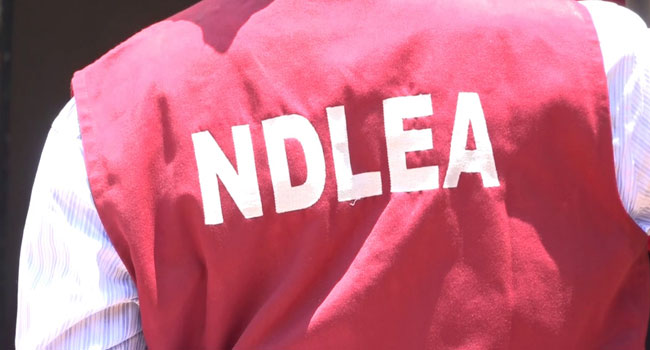
OPERATIVES of the National Drug Law Enforcement Agency (NDLEA), have arrested a 29-year-old South African, Erasmus Jean–Pierre, for trying to export 2.6 kilograms of methamphetamine through the Nnamdi Azikiwe International Airport (NAIA) Abuja.
According to the NDLEA, the drugs were concealed in his luggage to the Middle East through the NAIA Abuja on Wednesday, August 23. on Sunday, August 27, by
The Agency’s Spokesperson, Femi Babafemi, confirmed this development in a statement issued on Sunday, August 27, 2023.
The Agency said the suspect was intercepted by its operatives during the outward clearance of passengers on Ethiopian Airlines flight ET 404 from Abuja to the Middle East via Addis Ababa, Ethiopia.
“A thorough search of his luggage led to the discovery of the whitish powdery illicit substance factory packed in different parts of the bag.
“Preliminary investigation reveals that the suspect arrived Lagos through Abidjan, Côte d’Ivoire on Saturday 19th August, came to Abuja on Tuesday 22nd August, and took possession of the brown bag containing the drug consignment on Wednesday 23rd August before heading to the Abuja airport for his flight out of Nigeria,” the statement said.
According to the National Institute on Drug Abuse, Methamphetamine impacts the central nervous system and is a potent, highly addictive stimulant. It appears as a white, flavourless, bitter-tasting powder that dissolves readily in water or alcohol.
Meanwhile, NDLEA said officers in Gombe state on patrol along Darazo road on Monday, August 21, recovered an abandoned Volkswagen Sharon vehicle marked GME 76 XD containing 373,420 pills of opioids, including tramadol and diazepam.
In the same vein, operatives of the anti-narcotics Agency in Ogun state on Wednesday, August 23,raided the home of a drug dealer, Ifeanyi Orji, in the Ibafo area of the state, where 81,000 tablets of tramadol 225mg weighing 32.4kgs were recovered.
In Adamawa state, NDLEA operatives on Tuesday, August 22 recovered 60,000 tramadol pills from a suspect, Ibrahim Abba, 25, who was travelling in a commercial Toyota Starlet car from Kalaa village to Mubi.