In the first part of this two–part report, Lukman Abdulmalik, reported how political leaders in Kano state cornered water contracts in communities but failed to complete any projects. This part captures the impunity, where contracts were awarded to non-existent companies, and monies were shared for projects that were never delivered.
On June 28, 2023, it was Eid day, which all Muslims were expected to commemorate with joy and fanfare. But the case was different in Kunchi Local Government Area of Kano state; while some were celebrating, others had been at the stream since 4 a.m. searching for water that would be used to perform ablution, cook, and do some other chores.
The search for water had caused many residents to miss the Eid prayers because they had to trek for about hours to fetch unhygienic water from the ponds or streams for their domestic and other uses.
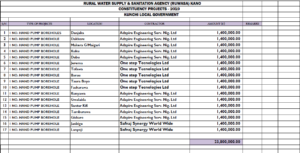
In Kunchi LGA, the Rural Water Supply and Sanitation Agency (RUWASA) project captured the provision of hand pump boreholes in Faskarawa, Gishare, Makera, Gishare, and Kunyawa.
RUWASA Constituency Project Information Source: https://kanoppb.org.ng/constituency-projects/
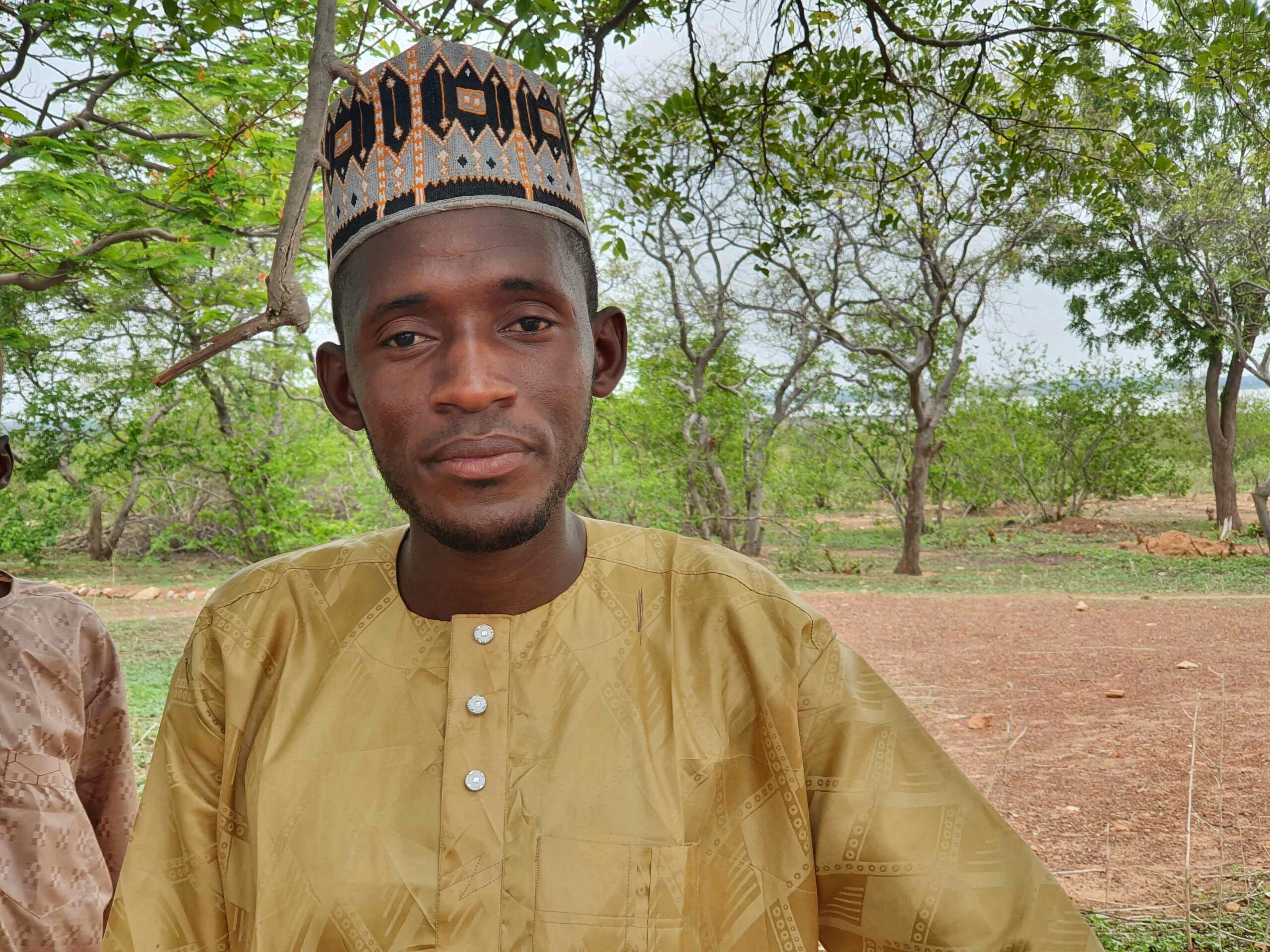
During a visit to the Kunyawa community by the reporter, he met Kabiru Adamu, a 32-year-old resident of Kunyawa who survived an infection known as Escherichia Coli (E. coli), a bacterium that normally lives in the intestines of people.
Some kinds of E. coli bacteria can cause diarrhoea, while others cause urinary tract infections, respiratory illnesses, pneumonia, and others. One strain can lead to kidney failure if not treated.
Eating contaminated food is believed to be the most common cause of the disease.
Adamu, who suffered from E. coli, contracted a urinary tract infection due to drinking unsafe water from a dam in his community.
He recounted that “In 2019, RUWASA came to our community for the project of providing one hand pump borehole. They conducted their water survey, and after the first attempt, they said the meter that they could dig or tap to find the water source was far from the land surface.
Kabiru Adamu narrting his experience encountered with infection
“We moved to another location for the survey, which the surveyors promised to return; we followed up on the project, but the surveyors told us that they hadn’t been paid to execute it.”
Adamu narrated that “Lack of execution of the hand pump borehole has put us in privation, as we only have a dirty dam, which we rely upon to get our water.
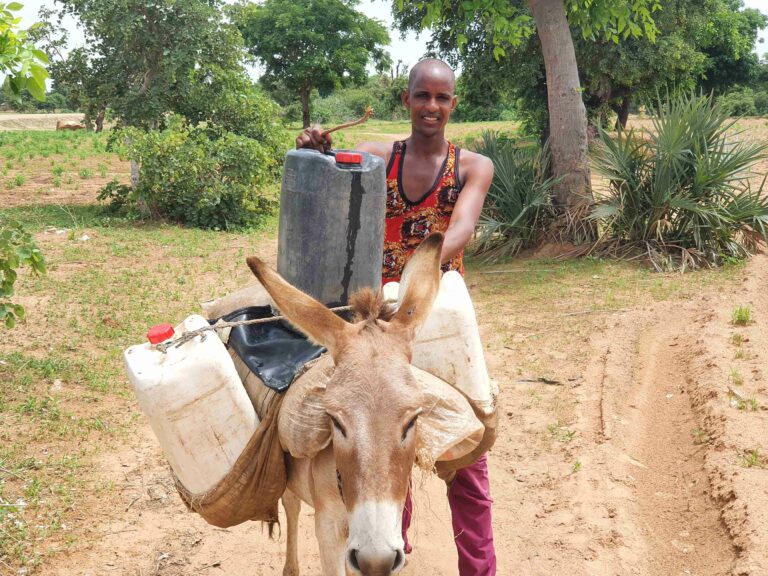
“The dam is about one hour and 30 minutes away from our home town; some use their donkeys or motorcycles, while others trek or push carts.”
Ibrahim Auwal riding a Donkey with jerrycans. PC: Lukman Abdulmalik
He lamented his suffering from the UTI disease and said that it took him two months to treat himself.
“In 2021, I visited over five hospitals to get rid of the infection, but the symptoms kept getting worse until I was referred to Abubakar Imam Urology Hospital in Kano metropolis. After a series of tests, it was confirmed by the doctor that my sickness was the result of consuming unhygienic water.”
Adamu said that he had spent N35,200 to treat his infection.
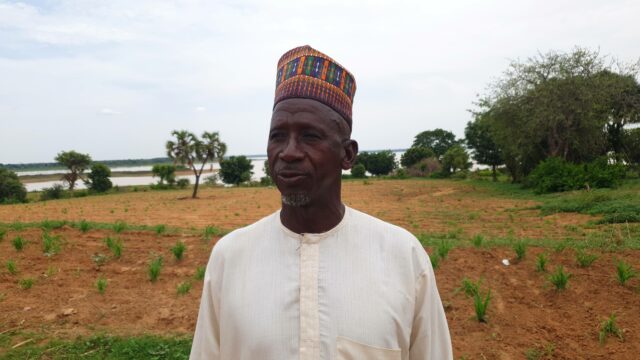
Alhaji Munhammad Tukur, the 67-year-old village head of Kunyawa, lamented that the non-availability of potable water in his village led him to contribute and dig a well in the year 2000, which is serving over 2,000 people in the community. But for over six months now, the well has run dry.
Alhaji Munhammad Tukur lamenting on the non-execution of water project. PC: Lukman Abdulmalik
The residents of this community are facing tribulation due to the non-execution of the construction of a borehole despite the disbursement of N1.4 million by the RUWASA of Kano State in 2019 constituency projects to Adzpire Engineering Serv. Nig. Ltd.
As in Kunyawa, in the Gishare community, in Kunchi LGA, the same contractor has failed to execute the project for the provision of one hand pump borehole after being awarded a N1.4 million contract.
The lack of access to clean, potable water forces residents of the Gishare community to consume dirty and unhygienic water, leading to the outbreak of diseases such as typhoid, cholera, and dysentery
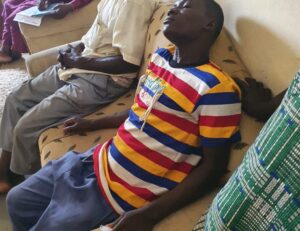
During a visit to the community by this reporter, he saw Usman Aliyu in an unhealthful condition as his relatives carried him up and down at Gishare Hospital, seeking health attention.
The reporter tried to speak with Aliyu, but he was too sick to speak.
Usman Aliyu, suffering from Typhiod as result of drinking unclean water. PC: Lukman Abdulmalik
Rabiu Aliyu, his 47-year-old elder brother, revealed that his younger brother had been suffering from acute typhoid for over one year.
Aliyu explained that “our lives are in danger; almost every year we usually lose five to six children or adults because of waterborne diseases.
“Lack of water has caused us untold hardship. The government is yet to provide us with pipe-borne water despite our repeated calls for help in this regard,” he said.
Rabiu stated that he used to wake up as early as 3:30 a.m. or 4 a.m. and sometimes trek approximately 20 kilometers to the dirty pond in the community to fetch water, adding that without access to clean water, he and his family must rely on dirty pond water for drinking and other domestic uses.
“We drink from the same pond with our animals; sometimes they will be inside the pond while we are also fetching the water,” Aliyu narrated.
According to UNICEF, the recent Multiple Indicator Cluster Survey (MICS), conducted by the government of Nigeria, disclosed that at least 69 million Nigerians do not have access to safe drinking water, and this remains a challenge for the majority of Nigerians, especially those living in rural areas.
The survey indicates that about 40 per cent of households, or about 69 million people, do not have access to clean water sources, adding that in rural areas, 19 million people walk long distances to collect unsafe water from lakes, streams, and rivers.
UNICEF revealed that children without access to safe water are more likely to die in infancy and throughout childhood from waterborne diseases.
SDG 6, titled Clean Water and Sanitation, stated that about 2.2 billion people worldwide lack access to safe drinking water, while 4.2 billion do not have access to adequate sanitation services. This crisis disproportionately affects women and girls, who are often responsible for collecting water and are vulnerable to violence and health risks associated with poor sanitation.
Lack of clean water and sanitation leads to numerous health issues, such as diarrheal diseases, which claim the lives of approximately 297,000 children under five every year.
Furthermore, inadequate water and sanitation have significant economic implications, including decreased productivity, increased healthcare costs, and negative impacts on education and gender equality.
Other communities’ vile tales in Kunchi LGA
Faskarawa and Makera are other hinterland communities in Kunchi LGA and are among the beneficiaries of the RUWASA 2019 constituency projects. These communities have a population of over 3,000 people who have zero access to potable water.
The lack of water in these communities has not only affected their health but also caused a massive dropout rate of children from school, as both parents and children are forced to walk long distances in search of water.
Amina Haruna, an eight-year-old girl and a student at Faskarawa Primary School in Kunchi, was seen pushing a water cart with six jerrycans of water when this reporter met her.
Amira narrated that she had fetched the water from a running stream, almost 20 kilometers away from her home Every morning, the eight-year-old girl is expected to join other children from the community to fetch water from the stream before heading to school.
Amina Haruna, an eight-year-old girl, returning from stream. PC: Lukman Abdulmalik
Unfortunately, Amira’s education has stopped for over three years, as she only fetches water from morning to evening.
The small girl, who appeared exhausted after pushing the cart for about two hours, revealed that she had now missed classes because she had to walk the long distance to get water for domestic chores, and by the time she returned, it was already closing time.
On a visit to Faskarawa Primary School on Friday, June 19, the school’s student population was below the average of the pupils enrolled in the school. The school has a total of 600 enrolled pupils, but hardly 150 could be counted as most of the pupils are down the stream with their parents to fetch water.
This reporter discovered that pupils have been irregular in attending classes, with a high increase in dropouts.
Khalid Sanusi, a parent, lamented the situation that “most of the children in this community are no longer coming to school. That’s why you can see some classes are empty. Because our children are assisting us in finding water. It’s very disheartening. This moment, we see our pupils in the school, and the next moment, they are no longer attending classes, all because of water.”
However, despite releasing the sum of N2 million to Adzpire Engineering Serv. Nig. Ltd. to construct hand pump boreholes in 2019, residents of Faskarawa and Makera have yet to see their project come to life.
Despite the country’s law granting free and compulsory primary education, about 10.5 million children aged 5–14, like those in Faskarawa and Makera, are school dropouts.
The National Bureau of Statistics (NBS), in its 2020 report on women and men, shows that a quarter of Nigeria’s 40.8 million school-age children were not attending primary education. The 10 states at the top of the chart had about 5.2 million of the country’s 10.2 million out-of-school children. Kano State had the most with 989,234.
Ghost contractor of Kunchi project
In total, the Kano State Rural Water Supply and Sanitation Agency paid the sum of N5.6m to Adzpire Engineering Serv. Nig. Ltd. to construct one hand pump borehole each in five communities in Kunchi LGA.
However, a full CAC search on the company’s status showed that it is not a legally registered entity, as the commission had no record of it. Under Nigerian law, companies have to be registered with the CAC in order to be awarded contracts.
The award of the contract by RUWASA also violated Kano State Public Procurement Law (KSPPL) under Section 31 (2b), which states that “All bidders shall fulfill all their obligations to pay taxes, pensions, and social security contributions.”
Also, the agency contravenes Section 31 (4d), which stipulates that “the bidder is in arrears regarding payment of due taxes, charges, pensions, or social insurance contributions, unless such bidder has obtained a lawful permit with respect to the allowance or difference of such outstanding payments in installments.”
Tales from Ungogo LGA
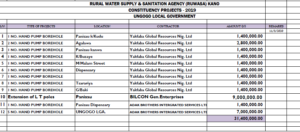
As part of the 2019 RUWASA constituency project, the sum of N7 million was awarded to Yakfaba Global Resources Nig. Ltd. to construct hand pump boreholes in Agalawa, Panisau Kofar Kudu, Panisau Kanwa, and Kofar Buzaye of Ungogo LGA, Kano State. The company was found to be unregistered as it had no records at the CAC.
RUWASA Constituency Project Information Source: https://kanoppb.org.ng/constituency-projects/
However, a visit by this reporter to the communities revealed that the hand pump boreholes were not constructed. This is true about the Panisau Kanwa community, for example, where no borehole was found.
Mahmuda Abdullahi, a 63-year-old civil servant, complained that the lack of boreholes is causing the people hardship.
He lamented that “the lack of easy access to water has made me miss my work sometimes, as I have to fetch nothing less than 10 jerrycans that will be enough for two days in my house.
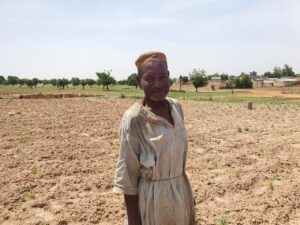
Mahmuda Abdullahi, a 63-year-old civil servant complaining lack of borehole provision. PC: Lukman Abdulmalik
“The distance we have to travel to get water is unbearable; we have to walk for at least 15 minutes before we can get water that is not even sanitary.”
Also, in Agalawa, a sum of N2.8 million was awarded for the construction of two hand pump boreholes, which were equally not executed.
Alarama Kamilu Agalawa, a laundry cleaner resident in the community, lamented spending a lot of money to buy water from cart pushers.
He stressed that “we don’t have any working boreholes in our community; the last borehole constructed was in 2014, which is also not providing water.
“I usually spend N1,000 to N1,200 to buy water for my business to keep running smoothly, so making profit is hard most times.
“But currently we are on the verge of contributing money to construct a borehole for our community.”
Just like Kamilu in the Agalawa community suffered business losses, Sulaiman Ilyasu, a trader in Panisau Kofar Kudu, suffered the same fate. Ilyasu said desperate residents were forced to dig a well from which they had to fetch water round the clock.
Iliyasu recounted that “because the well water is not sufficient to feed the whole community, I have to be using about 15 sachets of pure water for drinking, ablution, and others every day.
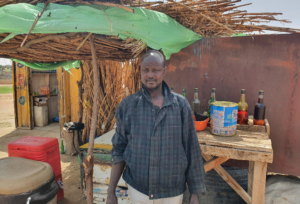
Sulaiman Ilyasu, a trader in Panisau Kofar Kudu. PC: Lukman Abdulmalik
“So, every day I have to lose N150, making it N4,500 in every blessed month.”
He, however, said their wells are often treated with chlorine, alum, corrosion inhibition, antifoaming, and alkalinity control by the Kano State Ministry of Environment and Sanitation.
Also, Iliyasu linked the scarcity of water in the area to increased health challenges and low economic output.
RUWASA reacts on award of contracts to unregistered companies
Yusif Abdullahi, Director of Physical Planning at RUWASA, disclosed that the award of contracts to non-existent companies is determined by the Kano State Constituency Project Office.
“We don’t examine contractors, we only award contracts to whoever the constituency office approves,” he asserted shockingly.
“However, the lawmakers are the ones undermining the process, and our agency has no chance to reject their decision,” he said.
Horrific Coliform Test Results
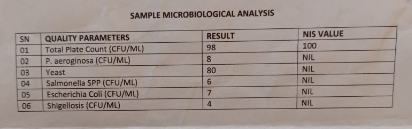
On July 11, 2023, this reporter submitted some stream water consumed by residents of Kunchi, Ungogo, Tsanyawa, and Kabo LGAs to a laboratory test conducted by MAMS Consultancy Services, Kano.
After three days, the results of the test showed that the water consumed by the communities was unsafe and contaminated with harmful microorganisms.
Microbiological Analysis of the Coliform test
According to the test result, Pseudomonas aeruginosa, one of the most dangerous bacteria known to cause inward fever, vomiting, and abdominal pain, was present in high proportion.
The water also contains a high concentration of a group of microorganisms, indicating, among other things, fecal contamination and the presence of harmful, disease-causing organisms. These organisms are known as coliforms.
A 2019 report by the Federal Ministry of Water Resources and the United Nations Children and Education Fund, UNICEF, showed that one-third of Nigeria’s population drinks contaminated water, while 130,000 Nigerian children die annually as a result of water-related infections.
Coliform bacteria include Escherichia coli, Salmonella, Shigellosis, Amoebiasis, Hepatitis A, Campylobacteriosis, Scabies, and Worm infections.
When these species are present in high proportion in any drinking water, they often cause life-threatening diseases such as typhoid, dysentery, and hepatitis, amongst others, as explained by Abdu Nasir, the examiner.
This report is supported by the John D. and Catherine T. MacArthur Foundation and the International Centre for Investigative Reporting (ICIR).
AWARD-WINNING singer, David Adeleke, popularly known as Davido, has taken to his social media to express his condolences and offer comfort to singer Wizkid, who recently lost his mother.
The singer, Ayodeji Balogun, widely known as Wizkid, lost his mother, Jane Dolapo Balogun, in the early hours of Friday, August 18, in London.
Mourning her demise, Davido, via his Instagram story on Saturday, said, “Praying for you, my brother @wizkidayo sadness flies away on the wing of time”.
Davido and Wizkid have a fanbase that are often in a rivalry on social media.
Additionally, Nigerians have expressed their condolences on social media.
Wizkid has not issued an official statement concerning his loss at this time.
WEST AFRICA especially Nigeria, Eastern Europe, and Southeast Asia account for a higher concentration of scam activities across the world, a study published by Social Catfish, a reverse search technology company has revealed.
The report which was titled State of Internet Scams 2023 shows that developed nations like the US are often targeted due to strong economies, technological advancements, global connectivity, and high levels of financial activity.
The report revealed that Tech-savvy teens are falling for online scams at a higher rate than seniors as online scams in the US reached an all-time high in 2022 totalling $10.3 billion in losses – an increase of up to 277 per cent from $2.7 billion recorded five years ago.
According to the report, victims of various scams, such as investment, romance, and cryptocurrency, often face devastating financial losses. The average loss per victim rose from $8,142 in 2021 to $12,859 in 2022. Unfortunately, only 4.2 per cent of the stolen funds were recovered in 2022.
A significant portion of romance scam victims – 81 per cent -, feel too ashamed to report the incidents to authorities. Furthermore, the study estimated that the actual losses from online scams could be closer to $200 billion, as many victims fear coming forward, the report stated.
It further highlighted the emergence of AI-driven scams, such as ‘voice cloning’ and ‘deep fake’ videos, which convincingly impersonate trusted individuals to deceive victims. Scammers are becoming more sophisticated, making it essential for people to stay vigilant against such tactics.
According to the report, the challenges of recovering stolen funds are due to the complexity of international jurisdiction, encryption, anonymisation, lack of cooperation, rapid fund movement, and victims’ hesitancy to report incidents.
The report stated that banks and governments have been working on security measures and raising awareness, but personal vigilance remains the primary defence against online scams.
The report discussed the technology behind scams, including phishing tools, botnets, VoIP, malware, ransomware, and social engineering techniques. It also discusses common types of scams in the crypto sector, such as fake ICOs, fake exchanges, pump-and-dump schemes, investment clubs, and malware/fake app distribution, according to the report.
Additionally, it addresses the rise of AI deepfake video scams, their implications in various contexts, and ways for people to protect themselves against them.
The report also provided ways to avoid AI deep fake and AI voice cloning scams, including being cautious of unsolicited requests, securing personal information, enabling two-factor authentication, staying informed about AI scams, verifying information sources, and reporting suspicious activity.
“Online scams can originate from various parts of the world, and it’s challenging to pinpoint a specific geographical location as the sole source of most scams. Scammers can operate from any country and target victims globally due to the nature of the internet and its borderless nature,” part of the report stated.
The report stated that certain regions, such as West Africa, especially Nigeria, Eastern Europe, and Southeast Asia, have been known to have a higher concentration of online scam activities.
“Nigeria has gained notoriety for being associated with various types of online scams, most notably romance scams, the report stated.
“It’s important to note that these regions should not be seen as the exclusive sources of online scams. Scammers can operate from anywhere in the world, and their tactics and techniques continue to evolve. It’s crucial for individuals to remain vigilant and practice online security measures regardless of the origin of the scams.”
The report strongly warned against giving money to strangers and sharing personal information online. It further recommended using reverse searches to verify identities, recognising red flags, and using password managers as preventive measures.
FORMER President Muhammadu Buhari on Saturday, August 19, expressed condolences over the death of officers and soldiers who died in an ambush and military helicopter crash at Chukuba village, Shiroro Local Government Area of Niger state.
In a condolence statement issued by the ex-president’s spokesperson, Garba Shehu, Buhari said that the soldiers would soon overpower the bandits causing havoc in the country.
According to a statement by the Defence Headquarters (DHQ) on Thursday, August 17, 36 officers were killed in the terrorist attack that happened in the region.
The ICIRreports that bandits in a recent attack caused havoc at Chukuba and other neighbouring villages of Shiroro Local Government Area of Niger state, with the recent incident starting on Friday, August 11 and lasting till Monday, 14.
The terrorists were said to have ambushed and killed an unconfirmed number of soldiers along the Zungeru-Tegina road in the Madaka Ward of the Rafi Local Government Area of the state.
Similarly, some terrorists affiliated to Abubakar Abdallah, popularly known as Dogo Gide, subsequently claimed responsibility for the Nigerian Air Force (NAF) helicopter that crasheď on Monday, August 14, in the region. The armed terrorists made the claim in a video obtained by WikkiTimes.
Reacting to this, Buhari said: “I am saddened by the helicopter accident following the tragic ambush in which we have lost our brave army personnel. My thoughts are with the bereaved families. I hope those injured recover at the earliest.
“My heartfelt condolences to the President, @officialABAT, the Armed Forces of the Federation and the families of the deceased.
“With the soldier discipline in our troops, it is a matter of time before they overcome,” the former President said.
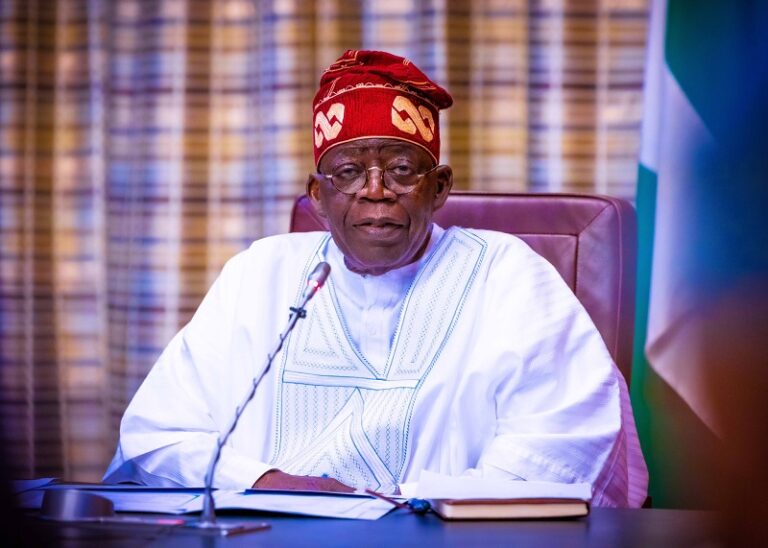
In the same vein, Nigerian President Bola Ahmed Tinubu had also reacted to the death of the soldiers killed while combating attacks in Niger state.
In a statement on Tuesday, August 15, Tinubu said the incident caused him “immense sadness.”
“These officers and men were answering the call of duty while on an evacuation mission. In their dedicated service to our beloved country, they paid the ultimate price.
“While we mourn their untimely departure, we will forever remember them, not just as servicemen, but as national heroes who gave their all for the peace and security of our country. They will always be remembered as courageous men who did not consider the perils and dangers of their national duty as paramount to their sacred mandate of ensuring that their fellow countrymen and women can live in peace,” the statement read.
THE Nigeria’s 4×400 mixed relay team quest for silverware at the 19th World Athletics Championships in Budapest, Hungary, ended on Day 1 after they failed to qualify for the final race.
The quartet of Dubem Nwachukwu, Patience Okon-George, Ezekiel Nathaniel and Imaobong Nse Uko represented country in the mixed 4x400m relay.
The team competed against Jamaica, Poland, The Netherlands, Switzerland, France, Czech Republic and Germany in group B, finishing 7th in the qualifying heat.
During the qualifying heat, Nwachukwu began the race in the first leg before passing the baton to Okon-George, who took the second leg handing over to Nathaniel, who took over, with Uko running the final leg.
After the race, the team ended in the 7th position, clocking a Season’s Best (SB) of 3:14.38 in Heat 2, with Uko anchoring at the time but ranked 12th overall.
At the last championship in Oregon, the Nigerian quartet ran 3:16.21 to finish in sixth position in the qualifying heat to become the first mixed relay team to get to the final of a global championship.
THE Nigerian government said it will monitor the distribution of the N5 billion palliatives approved for the 36 states and Federal Capital Territory (FCT), each to cushion the effects of fuel subsidy removal on citizens.
The Special Adviser to the President on Media and Publicity, Ajuri Ngelale, disclosed this during a Channels Television programme, Politics Today, on Friday. August 18.
He said this while admitting to the possibility of mismanagement of the funds by some government officials.
“It is true that there has been mismanagement of federal interventions with respect to social investments and some of these things in the past. Certainly, the government is a large operation, and you are going to have bad eggs that commit blunders within that,” he said.
Read about the previous palliative interventions here.
Ngelale also, berated antagonism by the Organised Labour and some other Nigerians on the palliative disbursement, as he noted that it is not a solution to the problem.
“What we are saying is Nigerians elected these state governors just as they elected the president, and we have to trust the judgment of Nigerians who elected these officials to conduct these activities on their behalf. So, it can’t just be at the outset panicking that they can’t do it. We have to trust them to do the job they were elected to do,” he said.
The Presidential spokesperson also clarified that the funds were not grants but loans to be repaid by the respective states. At the same time, he stressed that regulatory measures are in place by the federal government to check possible mismanagement.
“It is fair to say that given the history of maladministration in our country, especially with these kinds of palliatives and distribution mechanisms from the federal side, it is fair to say that there needs to be a check, there need to be a means of monitoring, which is why federal regulators are involved,” Ngelale said.
The federal government approved the palliative funds, which sum up to N185bn, for all the states and the FCT on Thursday, August 17.
An initial plan by the government to pay N8,000 to 12 million poor households for six months was received with criticism, as many people assumed the project would not be sustainable.
The government then decided that palliatives would be distributed using new registers created by states while discrediting the country’s National Social Record (NSR) used by the immediate past administration to implement the Conditional Cash Transfer (CCT) programme.
However, Organised Labour has, again, faulted the plan to distribute the N5bn palliatives funds to states through governors, saying they could not be trusted as affected residents of the states were unlikely to receive the funds.
THE Free Press Unlimited and Greenhost have introduced the Totem online learning platform, designed for journalists and activists, which offers content in English, Spanish, Russian, Arabic, French, Farsi, and Bangla. Those interested in mastering digital safety and privacy techniques can utilise this platform.
Currently, various courses are on offer, with topics like “Understanding the Internet,” “Recognising phishing threats,” “Secure messaging apps,” “Robust or secure passwords,” “Threat modelling,” “Researching on Social Media,” “Desktop investigations,” “Risk analysis,” and several more.
Each course is an hour long and can be taken flexibly. Applications are rolling.
THE United Nations Children’s Fund (UNICEF) has called on the federal and state governments to ensure proper prosecution of bandits for the various crimes committed in several parts of the country.
THE UNICEF Representative in Nigeria, Cristian Munduate, said this while speaking to journalists in Borno state on Friday, August 18, ahead of the World Humanitarian Day to be commemorated on August 19.
“It scares me that bandits are not taken to courts even though they have been assaulting and killing children and women, abducting and raping etc. It scares me that no laws are applied to prosecute and punish them. If there is any legal process, I think there is a need for proper punishment for these people legally.” Munduate said.
She added that national and international laws be applied in prosecuting the bandits, and Internally Displaced People be better relocated to enable them to rebuild their lives properly.
She called for strengthening the judiciary to enable children to have access to education without fear of attacks.
Banditry and terrorism in Nigeria have persisted for over a decade, despite certain efforts by governments to address the issue.
It has resulted in the loss of thousands of lives and property. The number of children lacking access to education has also been adversely affected due to the abduction of school children by terrorists, particularly in Northern Nigeria.
According to a report by Save the Children, at least 1,680 schoolchildren have been kidnapped in Nigeria since 2014.
The report also stated that at least 180 schoolchildren were killed and nearly 90 injured in 70 attacks between April 2014 and December 2022.
An estimated 60 school staff have also been kidnapped, and 14 others killed. During the period, 25 school buildings were also destroyed by the bandits.
Beyond these, they are also responsible for various violent activities that have unsettled many communities in the northern part of the country.
Bandits were officially declared terrorists by former Nigerian President Muhammadu Buhari in January 2022 after a court order stated that activities of bandit groups in the country constituted acts of terrorism.
However, there have been several cases of amnesty being granted to terrorists by the government, which many Nigerians have condemned.
MORE than a year after the Federal Airports Authority of Nigeria (FAAN) introduced its e-hailing service, travellers in and out of the Federal Capital Territory (FCT) have been confronted with terrible transport experiences while commercial drivers battle rougher business conditions.
April 2023 was the first time in two years that Tofunmi Odelade would be visiting Abuja.
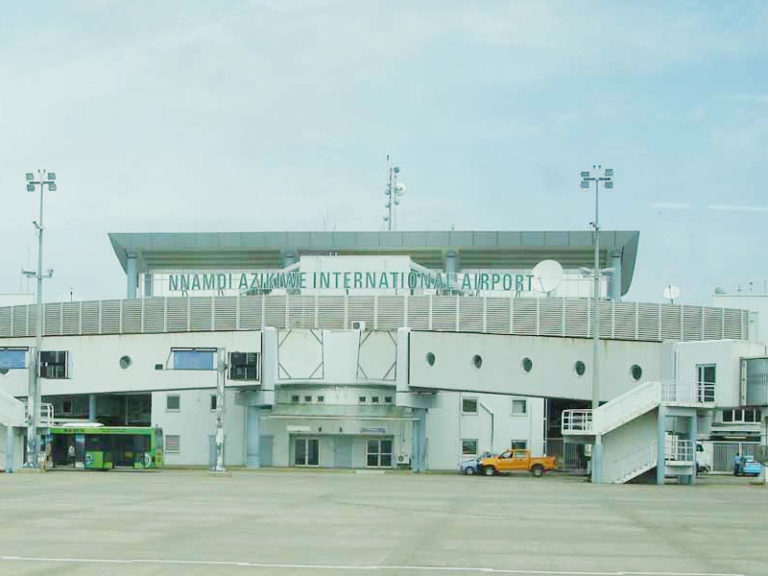
Upon arriving at the Nnamdi Azikiwe International Airport (NAIA) – also referred to as Abuja airport – in the Federal Capital Territory (FCT), she requested a ride on the popular e-hailing app Bolt, and the trip was estimated to cost N4,600. However, she was surprised when she learnt from the driver that her fee was N8,000.
“He told me that getting to Garki would cost me N8,000. I’d never heard of such a thing before that time. I called my cousin whom I was visiting with, and she said that was the new style and I should partner with any other passenger at the airport going into town so we could share the bill,” she said.
Odelade was not comfortable sharing a ride with a stranger, and although she did not understand why the trip cost more than the Bolt app requested, she paid.
Garba Bello, a businessman, also suffered the same unsavoury experience in January. Returning from a trip abroad, he used his Bolt app to request a ride to Asokoro a highbrow area of Abuja. The Bolt driver directed him to the car park. Upon locating the driver, he had settled in with his bags in the trunk before he was told that he would pay N7,000 instead of the N4,100 the app charged him.
Bello flared up, querying the driver for allowing him to settle down for the ride before telling him about the price, but the driver pleaded that it was not his fault as the airport authorities no longer allow Bolt to operate at the airport. He added that all drivers now had to use a FAAN app, which charges N7,000 for a trip to town.
“So, why would Bolt connect me with you? As long as Bolt connects me to a driver, I don’t have any business with the driver. I go with what Bolt tells me,” he said to the driver.
At the end of the day, in spite of his protest, Bello was forced to pay N7,000 for the trip.
Many travellers at the Abuja airport have found themselves in the same situation as Odelade and Bello.
When FAAN launched its e-hailing application FAANTAXI, in May 2022, the aim was to eliminate touting and outdated cab-hailing methods at international airports.
The app was first introduced at the Abuja airport in the Federal Capital Territory (FCT) with the intention of extending it to other international airports in Nigeria.
The FAAN’s Director of Commercial and Business Development, Sadiku Abdulkadir Rafindadi, said during the launch that the app would improve the safety, security and comfort of travellers.
“The app will enhance seamless passengers’ facilitation, comfort, safety and security of Nigerians using it,” Rafindadi said.
The FAAN Managing Director Rabiu Yadudu also assured drivers that the development was for the better.
“This is a good development. We fear changes naturally. Sometimes, when change occurs, we will be proud of it. I am assuring taxi and commercial drivers that this will actually lead to laudable development,” Yadudu said.
Based on the promises made at the event, Nigerians had high expectations of the app. But one year after the launch, the latest innovation is leaving visitors with sour transport experiences and frustrating commercial drivers who operate at the airport.
Following the launch of the FAANTAXI app, other e-hailing companies were required to register under the platform.
According to FAAN Director, Public Affairs and Consumer Protection Yakubu Funtua, there are at least 13 companies registered under FAANTAXI as of July 2023. By implication, drivers who ply the airport route under various e-hailing platforms had to register under FAANTAXI, as those not registered were denied entry into the airport car park.
While registration is free on Bolt, Uber and many other e-hailing apps, the sum of N25,000 is demanded from drivers who intend to register with FAANTAXI. However, many drivers confirmed to The ICIR that registration was free under the app in the first few months after it was introduced.
Drivers are also required to remit a service charge of N2,000 daily, in a few cases N1,000, depending on the transport company they work with, before gaining access to the FAAN loading base.
For every trip out of the airport, the sum of N500 is demanded by the airport authorities as a commission, which is usually paid through the driver’s app.
FAAN Taxi app incomplete
Despite these fees, there are relatively few requests from customers through FAANTAXI, as there is no provision for travellers to book trips online like other e-hailing apps.
A search through Google play store on May 25, 2023, showed that the only FAANTAXI app available online for download allows users the sole option of registering as drivers.
Commercial drivers at the airport confirmed to The ICIR that there is no functioning online application for passengers to connect with drivers.
To book a ride via the platform, therefore, customers have to approach designated FAANTAXI desks at the airport to be manually paired with drivers.
This is contrary to FAAN’s promise of “seamless facilitation” for travellers, who would rather book trips via e-hailing platforms readily available on their phones. Drivers also expressed dissatisfaction with the app.
“If you use that FAANTAXI app, you can be here till night without getting a passenger. We cannot rely on them because they don’t have customers,” a driver, Rahama Abdul, told The ICIR.
The lack of an adequate customer base has also been attributed to other factors, including the difference in prices of Bolt and FAANTAXI rides.
As of April 2023, Bolt prices for trips out of the airport cost about N4,600, while FAANTAXI charged an average of N8,000 for the same location.
Who bears the brunt?
To make up for these financial investments, commercial drivers who receive requests via Bolt, Uber or other apps bill customers according to FAANTAXI prices, which explains why travellers like Odelade and Bello pay higher prices for trips into town.
This has frustrated many travellers, including a Twitter user, Otoide A., who described the situation as institutionalised extortion in a May 3, 2023 post.
“So I arrived at Abuja airport this morning, and as usual, I ordered a bolt. The driver says I have to meet him at a Bolt car park. Getting there, I see it’s heavily branded FAANTaxi. The driver finds me and says sorry, they won’t allow him to leave using the Bolt app, that he has to book me on their FAANTAXI app.
“Same trip there was about N2,000 more expensive. Lo and behold, at the exit gate of the car park, there are FAANTAXI ‘enforcers’ demanding to see the trip commencing on their app. I thought this institutionalised extortion was only a Lagos thing,” Otoide A. tweeted.
Airport officials are strategically positioned at the exit of the car park to enforce the N500 payment, which is the FAANTAXI commission per trip.
As a result of multiple remittances, most drivers, who get passengers via other apps, proceed to carry out the rides offline to avoid running the same trip on both platforms and paying commission to the two apps.
“If you don’t go offline on Bolt, you’ll be working for nothing. For some of us, the car is not our own. You pay remittance, you pay for fuel, at the end of the day, how much will remain for you? Will you die being a driver? Will you do driving work till your old age?” Abdul asked.
However, frequent offline trips attract sanctions from Bolt and other apps, which sometimes include suspension from the app, a situation that blocks drivers’ access to passengers and can keep them out of work for a while.
“If I cancel three times today, tomorrow I will be blocked. Then there will be no app to work with,” another driver, Eneji Salami, said.
However, with the removal of fuel subsidy in Nigeria, the cost of transportation from the airport surged to about N9,500 per trip on the Bolt app, while FAANTAXI fares were increased to N10,000, leaving a negligible difference between both fares.
During a visit by The ICIR to the airport in July, it was observed that drivers did not charge more than the N9,500 fee demanded by Bolt for the trip.
“It was when the difference was much that drivers chose to go with FAANTAXI price. Now it is almost the same. The N500 is not that much, so there is no need,” Salami told The ICIR.
Ease of doing business
Nigeria is one of the countries ranking poorly on the Ease of Doing Business Index.
Ranking 131st on the Ease of Doing Business (EDB) index out of 190 global economies rated by the World Bank in 2020, several unfavourable factors affect entrepreneurship in Nigeria.
Many business owners and analysts have cited government policies, multiple taxation, among others, as some of the factors increasing the difficulty in conducting business in Nigeria.
For commercial drivers in the Abuja airport, excessive payments associated with driving under the FAANTAXI are frustrating businesses.
“The way they put it now, you must get that FAANTAXI app if you want to pick up a passenger from the airport, even if you are with Bolt or Uber. Meanwhile, it is not necessary, I’m driving with Bolt; I don’t see the reason why I will be paying Bolt a percentage and paying another person a percentage again,” Abdul said.
Another driver, Akinwale Rabiu, described the process as tiring during an interview with The ICIR.
“The pressure is too much. You cannot even enter the loading base without that app. And if they catch you picking passengers outside, they’ll arrest you, and you must pay N25,000. I will be paying N1,000 daily, even after paying N25,000 to register. Meanwhile, under Bolt, I registered for free.
“As you are coming inside before you get any request, you’ll pay the N1000 for the service charge. After that, you give them N500 commission on any request you get. You cannot pick passengers on Bolt price, that is their rule. Even if you decide to use Bolt, the expenses are much; you cannot get anything from it,” Rabiu said.
Who benefits?
The NAIA – Abuja airport – is mostly managed by FAAN.
In 2016, the federal government announced its intention to concession the Abuja and Kano airports for 20 and 30 years, which sparked protests from aviation workers in both states.
The concession was aimed at inviting private practitioners into the sector for investments and partnerships. In November 2022, the governmentdeclared Corporacìon America Airports Consortium as the preferred bidder for the NAIA, and the process wasapproved in May 2023.
The Consortium consists of Corporacìon America Airports (CAAP) and Mota Engil Group, a company with partners in Nigeria.
However, aviation workers kicked against the concession, accusing the federal government of not being transparent enough with the process.
In an interview with The ICIR, Secretary-General of the National Union of Air Transport Employees (NUATE), Ocheme Abah, said the lack of transparency makes it difficult to determine what part of the airport is still under the control of FAAN.
“What we are told is that the concession is supposed to apply only to the terminal. But part of why we are telling you that it is not transparent is that, at this moment, nobody knows exactly what sections of the airport have been concessioned. Nobody can tell you specifically now what has been concessioned,” Abah said.
The Nigerian Senate also ordered a probe into the concession in July 2023, saying the process was shrouded in secrecy, which was not in public interest.
However, payments on the FAANTAXI app are still being made directly into the FAAN account through the app as of the time of filing this report.
“You pay them through the app. If you want to drive out of the airport, you will use the FAANTAXI app to send the money directly to FAAN. If you pay with the app, it goes direct to the airport account. They don’t collect cash,” Rabiu told The ICIR.
However, on July 17, 2023, The ICIR observed as a driver made payment manually, remitting N700 instead of the usual N500.
“The FAANTAXI app is down. They are using the opportunity to make an extra N200 from us,” the driver said.
Customers were unable to book rides via the FAANTAXI desk due to the problem with the app, and a group of drivers gathered at the stand in what appeared to be a rowdy meeting.
Some drivers confirmed to The ICIR that the glitch being experienced was not an isolated case, as there have been similar occurrences in the past.
But passengers suffered the most from the technical problems with the app, as those without other alternatives had to wait for up to 30 minutes before they could be connected to a driver.
For many passengers who were used to other e – hailing taxis in the past that they had to wait for only a couple of minutes, the FAANTAXI is terribly inconvenient.
Speaking with The ICIR on some of the concerns raised, FAAN Director, Public Affairs and Consumer Protection, Yakubu Funtua, noted that the challenges with the app will be resolved as it is still in its infant stage.
Funtua said the app is meeting FAAN’s expectations as there were 1,826 drivers registered on the platform.
He also noted that higher prices demanded compared to internationally-owned e-hailing platforms were not a cause for worry to the authorities as they are part of measures to make the NAIA one of the best airports globally.
“The aim is to be among the best Airports in the world,” Funtua said. He noted that by airport records, drivers are required to only pay N500 commission per trip and a one-off fee of N25,000 for registration.
Although he promised to provide clarification on the daily service charge of N1,000 or N2,000 demanded of drivers at the airport daily, Funtua had not disclosed this information at the time of filing this report.
However, some drivers who spoke with The ICIR said the service charge was demanded by the various other companies registered under FAAN apart from Bolt, as Bolt’s service fees were already deducted per trip.
“It is not demanded by FAAN or Bolt, but if you drive under other companies registered with FAAN, then you pay the money to them. Bolt is not supposed to pay because if you are using Bolt, they are charging you the percentage you are supposed to pay on trips already.
“We that are under Bolt pay the N1000/N2000 daily because we sometimes register under other companies who do not take 25 per cent off our trips. So since we register with them, we have to pay that money so that any ride we get first, whether from Bolt or other companies, we take it,” a driver Ezekiel Baiye told The ICIR.
Meanwhile, earlier this month FAAN announced a temporary suspension of the service, which it stated was due to unresolved factional dispute among the car hire operators, affecting airport car hire service operations. However the suspension has been lifted.
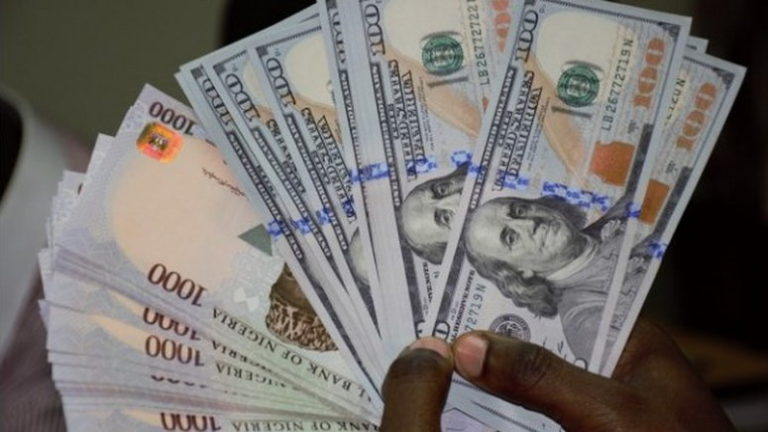
THE Central Bank of Nigeria (CBN) has intensified efforts to battle currency speculators and has brought back Bureau De Change operators (BDCs), with a new guideline to checkmate their operators.
Nigeria is currently facing serious currency problems since floating its currency-Naira against the dollar, causing problems in the economy with a surge on inflation leading to a high cost of living.
Also, there are concerns of floating the Naira against the American dollar, which has led to the dollarisation of the economy and currency speculation. This development, findings have shown, has been creating a wide gap between the official exchange window and the parallel market.
But, the President of the Association of Bureaux De Change Operators of Nigeria (ABCON), Aminu Gwadabe, told The ICIR that Nigeria’s currency problems could be solved if the CBN factor in their colleagues to get involved in the currency business.
“The BDC operators must be involved in the retail business of currency exchange. They should get allocation from the International Oil Companies and others who do dollar business in the country, to solve liquidity problems,” he said.
Recall, the BDCs were, before now, officially halted from foreign exchange business, by former Governor of the CBN, Godwin Emefiele, who cited concerns of ‘terrorism funding’, but the Acting Governor of the apex bank Folasodun Shonubi has brought their activities back with a stiff procedural guideline.
The announcement, made on August 17, 2023, outlines key measures to streamline and improve the BDC operations.
Under the new framework, the spread on buying and selling by BDC operators is set to fall within a permissible range of -2.5 per cent to +2.5 per cent of the Nigerian Foreign Exchange market window’s weighted average rate from the previous day.
This move is expected to provide more stability and transparency to exchange rate fluctuations, ultimately benefiting both BDC operators and the general public.
Another significant alteration is BDC operators’ mandatory submission of periodic financial reports.
These reports, including daily, weekly, monthly, quarterly, and yearly renditions, are to be submitted through the upgraded Financial Institution Forex Rendition System (FIFX), tailored to each operator’s specific requirements. This change aims to enhance oversight and ensure that the BDC sector operates with greater accountability.
The circular further emphasizes that failure to submit accurate returns within the specified timeframe will result in sanctions, potentially leading to the withdrawal of operating licenses.
Even in cases where BDC operators have had no transactions during a given period, they are required to submit nil returns, thereby fostering a culture of compliance and thorough record-keeping.
By implementing these measures, the Central Bank of Nigeria anticipates a more robust and well-regulated BDC segment that aligns with broader efforts to enhance Nigeria’s foreign exchange market efficiency.