THE National Assembly Election Petition Tribunal, Asaba, Delta State, has declared former minority leader of the House of Representatives Ndudi Elumelu winner of the Aniocha/Oshimili Federal Constituency seat.
The tribunal in a judgment delivered on Monday, July 24, nullified the election of Ngozi Okolie of the Labour Party (LP). Okolie had been inaugurated as the member representing constituency.
Elumelu, of the Peoples Democratic Party (PDP), was the runner-up in the February 25, National Assembly election in the constituency.
In a petition numbered EPT/DL/HR/06/2023, Elumelu had asked the tribunal to disqualify Okolie for not being properly sponsored by the Labour Party (LP). He added that Okolie did not resign his position as a public office holder before contesting the election.
In the judgment, the three-member tribunal panel headed by A.Z. Mussa nullified the declaration of Okolie as winner of the election by the Independent National Electoral Commission (INEC).
The tribunal held that the Labour Party did not duly sponsor Okolie and that he was not a member of the party as of May 28, 2022, when the primary was purportedly held.
Elumelu’s lawyer, Andrew Osemenem, in a chat with journalists, said the Labour Party did not conduct any primaries for the National Assembly election in the constituency.
“Sections 65 and 66 of the Constitution require that for a person to be qualified to contest election into the House of Representatives, he must belong to a political party and must be sponsored by that political party.
“In this instance, Okolie, the tribunal found that he was not duly sponsored by the Labour Party because there were no primaries.
“The second ground is, as we urged the tribunal, the tribunal also found in our favour, was that Okolie was in public office, he did not resign, he continued to collect salaries and emoluments in breach of the law. The tribunal agreed with us.
“So, for these two reasons his election was nullified, and in line with Section 135 of the Electoral Act, Elumelu who was the first runner up, has been declared and returned as winner of that election,” Osemenem added.
Okolie won the Aniocha/Oshimili Federal Constituency election in Delta, defeating Elumelu and others.
Elumelu pooled 33,456 votes, while the LP candidate got 53,879 votes to emerge the winner, as announced by INEC Returning Officer, Kenneth Ibe, in Asaba, Delta State.
NIGERIA has disappointed itself, the black race, and the rest of the world, former President Olusegun Obasanjo said on Monday, July 24.
The former leader justified his claim by citing several issues, including selfishness and self-centeredness, ethnic and religious jingoism and what he described as total lack of understanding of the world by the country’s citizens.
He also said peace and security had eluded the nation in the past decades because of injustice.
Obasanjo,in the same vein, predicted a more troubling future for the nation because of its high number of out-of-school children.
The former President stated these while addressing the audience virtually as a keynote speaker at the public presentation of a book titled ‘Reclaiming the Jewel of Africa’, according to the Punch.
A former Minister of Industry, Trade and Investment, and Minister of Finance, Olusegun Aganga, wrote the book.
Aganga was a minister under former President Goodluck Jonathan.
President Bola Tinubu launched the book through his Special Adviser on Monetary Policy, Olawale Edun.
Jonathan and top functionaries in Tinubu’s government, other politicians and scholars attended the event.
Addressing the gathering, Obasanjo said, “Over the last 63 years, we have not lived up to expectations. We have disappointed ourselves. We have disappointed Africa. We have disappointed the black race, and we have disappointed the world.”
According to him, ego, the emotion of self, ethnic and religious jingoism, a total lack of understanding of the world, and a ‘gross’ misunderstanding of what development entails had hampered Nigeria’s development trajectory and made it fall short of the expectations by the rest of the world.
He said Aganga’s book proffered solutions to most of the problems he highlighted.
The country’s longest-serving leader slammed leaders who had led Nigeria in the past decade as failing to ensure peace and security.
“These are peace and security, which we cannot achieve without justice, equity and inclusive society. And telling ourselves the truth, we have not done well on these scores in the recent past- in the last decade and a half.
“I will also point to the issue of education, where over 20 million children that should be in school are not in school. We do not need an oracle to tell us the consequences of that for tomorrow,” he said.
He posited that the way forward for the country was for it to admit its failure.
He argued that the nation always failed to do what was right.
Speaking on what the future holds for the nation over its high out-of-school children, the former president said, “We do not need to look far for the remote causes of banditry, Boko Haram, kidnapping and other organised crimes.
“We are living dangerously on a keg of gunpowder, driving more people into poverty through good policies poorly and thoughtlessly implemented or bad policy and no policy at all.”
The ICIR reports that Nigeria has faced insecurity resulting in the death of thousands and displacements of millions of people in the past decade, as stated by Obasanjo.
AFRICAN teams at the ongoing New Zealand and Australia 2023 FIFA Women’s World Cup are yet to record a win after the conclusion first round of group stage matches.
The four African countries taking part in the tournament – Nigeria, Zambia, South Africa and Morocco – failed to win their first matches.
Nigeria’s women team, the Super Falcons, opened the account for Africa at the World Cup with a draw against Canada.
Super Falcons goalkeeper Chiamaka Nnadozie was the hero of the match after she saved a spot kick taken by Christine Sinclair. With the result, Nigeria is third on the log in Group B.
The Copper Queens of Zambia conceded five goals against the Japanese at the Waikato Stadium in Hamilton, New Zealand.
The Zambian goalie Catherine Musonda was sent off, making two African players that have received red cards, so far, after Nigeria’s Deborah Abiodun.
Zambia is currently bottom of Group C.
South Africa took the lead through Hildah Magaia’s 48th-minute goal and was on course for a historic victory, until Sweden’s Fridolina Rolfo equalised in the 65th minute. A 90th-minute header from Amanda Ilestedt eventually gave victory to the Swedes.
South Africa is third in Group G.
The Atlas Lioness of Morocco lost 6-0 to Germany in their Group H opener at the Melbourne Rectangular Stadium.
The fixture marked the end of the first round of group matches for all four African representatives.
The ICIR’s analysis shows that two African countries – Morocco and Zambia – conceded a total of 11 goals in their first matches. Zambia conceded five goals while Morocco let in six.
THE Federal Competition and Consumer Protection Commission (FCCPC) has warned Point of Sale (POS) Operators and the Association of Mobile Money and Bank Agents in Nigeria (AMMBAN) against setting prices for their services.
The FCCPC issued the warning in response to plans by the money agents and POS operators to fix prices.
The FCCPC noted that it is open to individual POS operators raising their fees as they seem fit in order to generate profit from their operations.
Chief Executive Officer (CEO) of the Commission, Babatunde Irukera, explained that the regulatory body is only trying to discourage the associations “from engaging in coordinated or concerted efforts (otherwise known as price-fixing or cartel) and or acting in furtherance of any such coordinated or concerted efforts to uniformly determine, announce or implement price changes [s] of services they render”
In a statement released on Monday, July 24, and signed by Irukera, the Commission said it had observed the insistence of AMMBAN on a membership-wide implementation of illegal conduct.
“The Commission is concerned about such statements, and even more so, such conduct. The impunity associated with defiance or persisting in the course of action prohibited by law and clearly forbidden by regulators usually constitutes aggravating factors in determining penalties for illegal conduct where applicable.
“Considering that membership of AMMBAN probably consists mainly of small businesses and creates employment for young and mostly vulnerable citizens, the Commission adopted advocacy and business education as the tool to promote and enforce obedience to the law,” the statement said.
Irukera said the FCCPC is not weak but has opted for advocacy to ensure adherence to the law because the PoS business is dominated by young Nigerians who are creating jobs for themselves.
“This is a prudential, not weak or helpless approach to ensuring compliance, and it underscores the Commission’s proportionality approach to its consequence management system; and interpretation of the law,” he added.
The Commission stated clearly that it has not sought to limit the prerogative of POS service providers to determine and set prices for services in a manner of their choosing subject to Section 127 of the Federal Competition and Consumer Protection Act 2018 (FCCPA), which prohibits manifestly unjust or exploitative prices.
It added that contrary to that, the Commission respects and encourages a pricing methodology that is the product of market forces in a free, competitive, undistorted market.
The Commission said it welcomes each POS operator’s inherent powers and discretion to set prices based on their internal mechanisms and relevant markets, providing consumers with choices and the best possible prices while ensuring profitability.
The Commission added that FCCPA provides the Commission with statutory tools to ensure compliance and penalise law violations and warned that some of these penalties are stiff.
Accordingly, the Commission, in escalating this in accordance with the FCCPA and ancillary instruments, has entered an Order & Notice (ONO) of the Commission to AMMBAN, persons identified as executives, members and non-member POS operators to Cease and Desist from conduct that constitutes an infringement of the law.
Consequently, the ONC was issued by the Commission and served on AMMBAN.
Irukera, therefore, advised PoS operators to avoid violating an order of the Commission to avoid the consequences that come with it.
“The Commission advises PoS operators that violation of an order of the Commission attracts additional consequences apart from the underlying illegal conduct that is the subject of the order, such as up to N10,000,000 for corporate entities; and N1,000,000 and or a prison sentence of up to three months for individuals,” he said.
In June, the Association of Mobile Money and Bank Agents in Nigeria (AMMBAN) accused the FCCPC of selectively prosecuting individuals.
This was disclosed in an interview with DAILY POST by Elegbede Segun, the national publicity secretary of AMMBAN.
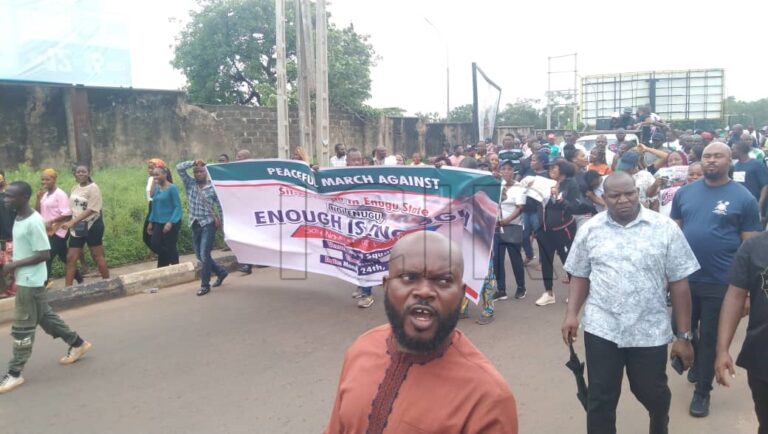
‘ENOUGH IS ENOUGH’ was the message written in bold letters on a banner displayed by hundreds of Enugu residents who staged a protest against the sit-at-home orders in the South-East on Monday, July 24.
The protesters, mostly youths and middle-aged persons gathered at Okpara Square, close to the government house, from where they marched around the Enugu metropolis.
As the protesters marched through major streets in the Coal City, they chanted solidarity songs, expressing their frustrations over the weekly Monday sit-at-home orders, which had taken a huge toll on personal and business activities in the South-East region.
Enugu residents protest against sit-at-home, say Enough is Enough Photos/video by Ihuoma Chiedozie, The ICIR
The weekly Monday sit-at-home was initially ordered by the Indigenous People of Biafra (IPOB), starting to demand the release of the leader, Nnamdi Kanu, who has been held in the custody of the Department of State Services since his forced repatriation from Kenya in 2021.
VIDEO: The protesters, mostly youths and middle-aged persons gathered at Okpara Square, close to the government house, from where they marched around the Enugu metropolis.
‘Enough is Enough’, Enugu residents protest against sit-at-home
Initially a peaceful exercise, the sit-at-home eventually became a bloody affair after hoodlums, referred to as ‘unknown gunmen’, started enforcing the order.
Nigerian security agencies insist those enforcing the sit-at-home are members of IPOB’s militant arm, the Eastern Security Network (ESN). But IPOB has continued to distance itself from the violence that surrounds the sit-at-home orders.
IPOB, through its spokesman, Emma Powerful, in January 2022, announced that it has suspended the sit-at-home exercise. The group declared that those enforcing the order are criminals and should be treated as such by security agencies and the government. But a faction of the pro-Biafra group, known as IPOB Autopilots’, led by Finland-based agitator Simon Ekpa, has continued to enforce the order.
Residents of the South-East, and visitors, who decide to flout the order by stepping out for business, work or personal issues on Mondays risk losing lives and property. Several lives have been lost, and property destroyed at the hands of the unknown gunmen who insist on enforcing the sit-at-home.
Checks by The ICIR indicate the two-week sit-at-home order was received with fury and a sense of alarm by most residents of the South-East, who are fed up with the affair.
The protest by Enugu residents on Monday was in line with concerted efforts to thwart the two-week sit-at-home.
The protest is backed by Enugu state governor Peter Mbah, who has moved to end the sit-at-home exercise since he assumed office on May 29. The governor recently said Enugu loses N10 billion every Monday to sit-at-home.
Mbah had directed that government workers who fail to report to work on Mondays, or any other day declared as sit-at-home, risk losing their jobs. Traders also risk losing shops in public markets if they don’t open for business, according to the directive issued by the governor. The directive was also extended to private schools and major shopping malls – failure to open on days the IPOB-faction ordered sit-at-home could lead to withdrawal of licence and shutdown.
As the protesters marched along major streets on Monday, one of the leaders, who was holding a public address system, declared that Enugu residents are fed up with the sit-at-home orders.
Enugu residents protest against sit-at-home, say Enough is Enough Photos/video by Ihuoma Chiedozie, The ICIR
“We want to let the whole world know that we are tired of the sit-at-home. We don’t want to sit at home anymore. We want to do business. We want to make money, we want to go to school, we want to go to work. Enugu residents want to go about their normal businesses without any molestation,” the man said in a loud voice.
A resident, who introduced himself as Ikem Nwobodo, told The ICIR correspondent that the two-week sit-at-home must not be allowed to succeed. “It will be suicidal for people to be forced to stay at home for two weeks with the economic situation in the country today. It must be resisted. Enough is enough!”
Another protester, Stanley Okeke, said it is time for residents of the South-East to resist those enforcing the sit-at-home.
“This nonsense (sit-at-home) has crippled the economy of the South-East. We (people of the South-East) are known for business. We are known to be enterprising and industrious. We can’t continue to sit-at-home. It is fear that has sustained this situation, but we are now ready to fight back,” he said.
The ICIR correspondent, who moved around Enugu metropolis on Monday, observed that major shops and malls opened for business. But there were few customers during the morning hours. Transporters, including commercial buses and tricycles (Keke), were also moving on the roads, although passengers were few. Private cars were also on the road. Residents who wished to go anywhere were able to get to the destination.
Heavily armed police operatives moved around the Enugu metropolis in patrol vans. Armoured vehicles were also seen on Enugu streets.
Some residents, who were not among the protesters, came out on the road to hail the group. Others joined in the protest. The number of protesters swelled as they moved around the city.
Sit-at-home takes huge toll on South-East
A woman, Chioma Anaele, who spoke to The ICIR, explained that the sit-at-home has taken a huge toll on residents.
“Parents will pay school fees but kids will not be able to go to school because of sit-at-home. Is that not madness? Things are hard, but we can’t do business because of fear of attacks by hoodlums. It (sit-at-home) has turned everything upside down. Many cities and towns in the South-East are now shadows of what they used to be,” the woman said.
She added that the sit-at-home has disrupted school schedules, making things more difficult for parents and guardians.
Enugu residents protest against sit-at-home, say Enough is Enough Photos/video by Ihuoma Chiedozie, The ICIR
“Now, because Mondays are lost due to sit-at-home, children go to school and come back by 5:00 pm from Tuesdays to Fridays instead of the usual 1:30 pm or 2:00 pm. Teachers and school administrators no longer have enough time to meet up with lessons. Everybody is struggling to meet up with limited time. It is not easy.”
A report published by The ICIR in January noted that micro businesses in the South-East states lost an average of N4.618 trillion ($10.495 billion) in one year to the sit-at-home order.
By the investigation, the total estimated revenues of micro-businesses in the five South-East states – Anambra, Enugu, Ebonyi, Imo and Abia – were summed up and multiplied by 52 to arrive at the total sum of N4.618 trillion.
The 52 weeks represented the number of the sit-at-home Mondays in a year.
The investigation relied on figures from the National Bureau of Statistics (NBS), Nigeria’s data agency, and the Small and Medium Enterprise Development Agency of Nigeria (SMEDAN) 2021 survey reports.
Another report, funded by The ICIR and published by Dataphyte, noted that micro businesses in the South-East wasted 71 Mondays between August 9, 2021 and December 19, 2022, losing N5.375 trillion ($12.215 billion) in the process.
In the same vein, a report by The Guardian newspaper noted that in sit-at-homes observed every Monday, from August 9, 2021, the South-East has incurred an estimated loss of N7.6 trillion in productivity, potential investments as well as loss of lives and properties.
FOLLOWING criticism from Nigerian Muslim faithful, Afrobeat singer David Adeleke, widely known as Davido, has deleted the snippet of his signee’s latest music video he shared on social media.
According to a report by The ICIR, Davido faced condemnation from some Muslims concerning the new music video released by his signee, Logos Olori.
In the video, Logos Olori was seen dressed in a white jalabia and cap alongside other men. While he was seated at the roof top, the other men were in front of the building praying and dancing on mats.
As a result, Davido faced various backlashes and pressure to delete the video due to its perceived disrespect towards the Islamic religion. Eventually, he yielded to the demands and took down the video.
In response to the situation, some notable Nigerians on Twitter have commended the singer for taking down the video. Those that reacted to the gesture include former aide to ex-President Muhammadu Buhari on Digital Communications, Bashir Ahmad.
“It is good to discover that Davido deleted that offensive and hurtful video. Hopefully, the entire scene will also be deleted from the actual footage before releasing it to the market, and we humbly urge that the same grave mistake should never happen again from him or anyone else.
“Nigeria is a beautiful country. It is always amazing when we celebrate the beauty of living in unity and harmony while embracing our differences”, he tweeted.
She also posted a picture of the logo projected on the company’s offices in San Francisco. The new logo is the latest change made by Musk since he bought the social media platform for $44bn last year.
On Sunday, July 23, Musk disclosed that Twitter will soon be changing its logo from a bird to an ‘X’ as it looks to drop the current Twitter brand gradually.
In a tweet on his Twitter page, Musk said, “And soon we shall bid adieu to the Twitter brand and, gradually, all the birds.”
He also noted, “If a good enough X logo is posted tonight, we’ll make (it) go live worldwide tomorrow.”
Musk has made several changes to the social media outfit since he acquired it. Earlier in the month, he put a curfew on the digital town square, limiting the daily tweets a user can read.
In April, the company also temporarily replaced the bird with Dogecoin’s Shiba Inu dog, helping drive a surge in the meme coin’s market value.
In May, Musk hired long-time NBC Universal executive Linda Yaccarino as Twitter’s CEO to win back advertisers.
The company’s most recent complication is a lawsuit filed on Tuesday, July 18, claiming the firm owes at least $500 million in severance pay to former employees.
Musk had laid off more than half its workforce to cut costs after he acquired the firm.
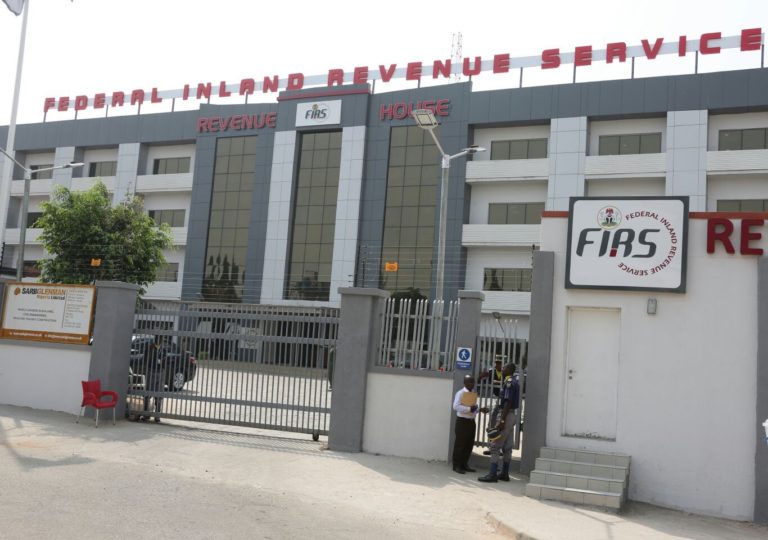
THE total revenue of N33.02 trillion generated by the Federal Inland Revenue Service (FIRS) between 2015 and 2021 fell below the period’s target of N40.69 trillion, figures obtained from the agency’s website have shown.
The data showed that during the seven-year period, oil tax revenue accounted for 36.58 per cent or N12.08 trillion, and non-oil taxes, 63.42 per cent or N20.94 trillion.
The FIRS targeted a total of N11.77 trillion for oil tax, and N28.92 trillion for non-oil taxes.
FIRS tax statistics, 2015-2021. Chart by The ICIR
Tax revenue is a primary source of funding government’s budget; when there is a shortfall, the budget runs into a deficit.
A cursory look at budgets’ appropriation in the seven-year period showed that the Federal government recorded a N27.92 trillion budget deficit.
The then minister of Finance, Budget and National Planning, Zainab Ahmed, had said revenue generation remained the major fiscal constraint of the government to fund its expenditures.
Government has over the years depended on crude oil earnings to fund its budget, but revenue from the earnings have been falling drastically a result of crude oil theft and infrastructure decay, among other challenges.
The ICIR analysis of the data showed that non-oil taxes component majorly included the company income tax (CIT), gas income, NCS-import VAT (value added tax), and non-import VAT.
The components accounted for 55.93 per cent of total generated revenue and 62.86 per cent of targeted revenue.
In the seven-year period, the tax agency generated N9.39 trillion revenue from CIT against the N11.52 trillion target; N608.37 billion from gas income against the N2.22 trillion target; N1.86 trillion from NCS-import VAT against N3.698 trillion; and N6.61 trillion from non-import VAT against N8.14 trillion.
Meanwhile, the FIRS generated N3.741 trillion in 2015; N3.307 trillion in 2016; N4.027 trillion in 2017; N5.320 trillion in 2018; N5.261 trillion in 2019; N4.952 trillion in 2020; and N6.403 trillion in 2021.
FIRS Tax, comparing annual target to actual collection. Chart by The ICIR
Commenting on the FIRS performance in the review period, the head of financial institutions ratings at Agusto and Co, Ayokunle Olubunmi, said revenue figures might seem huge, but when measured as a percentage of the gross domestic product (GDP), the revenue figure was relatively small.
Nigeria has one of the lowest tax-to-GDP ratio in the world, currently at 10.86 per cent.
Olubunmi added that the government might have to rely more on non-oil taxes to generate revenue to run its excessive cost of governance.
“Strengthening revenue mobilisation through tax administration reforms was essential for the country to create fiscal space and put public debt on a sound footing,” the director of communications department, International Monetary Fund, Julie Kozack, said at a press briefing on July 13, monitored by The ICIR.
FIRS’ push to boost tax revenue
The FIRS had on July 3 revealed a plan to introduce VAT in the informal sector, through a scheme dubbed, ‘VAT Direct Initiative’ to boost its collection.
The scheme aims at generating more money for the government to fund infrastructure and social amenities.
The FIRS said it would be partnering with the Market Traders Association of Nigeria (MATAN) to effect collection.
However, the director/chief executive officer, Centre for the Promotion of Private Enterprise (CPPE), Muda Yusuf, argued it would be impractical to develop a partnership framework with market associations for the VAT direct collection as being contemplated by the FIRS.
Yusuf, an economist, explained that the economics of collection does not support the move, and the cost of collection would be much more than the amount that could be collected.
He said, “Over 98 per cent of the informal sector traders are microenterprises who do not fall within the threshold of entities that are liable for VAT payment.
“Most informal sector operators have no records which could be used for purposes of assessment, which poses a high risk of arbitrary assessment.”
He also expressed the concern that the literacy level of many operators in the sector is low, which would create communication issues, adding that the political cost to the government would be very high.
“The FIRS should think of more creative ways of taxing the informal sector players, in ways that will be more cost-effective, less disruptive and with minimal political cost.
“More importantly, the FIRS should adopt the principle of focusing on the few players and individuals that could give the highest revenue yield. This is a model appropriate for an economy with a high level of inequality like ours,” the CPPE boss suggested.
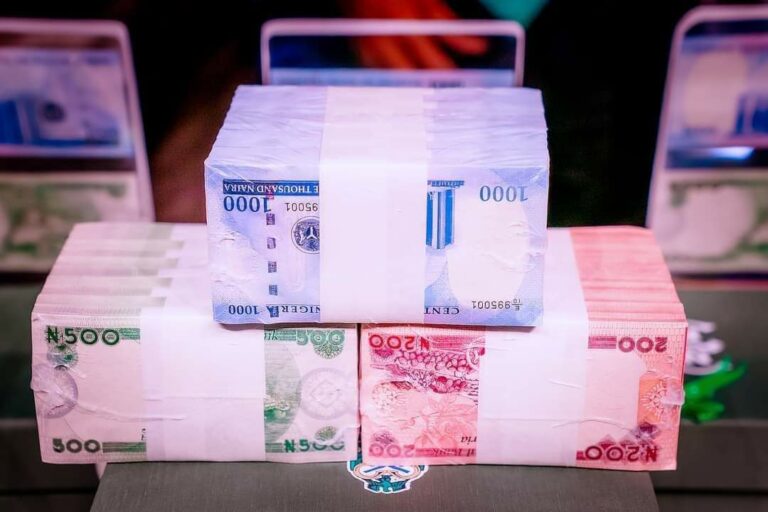
AS part of efforts to cushion the effects of the removal of the fuel subsidy on the economy, the National Assembly approved the request of the Federal government to give N8,000 each to 12 million poor households for six months.
The President Bola Tinubu administration was, by its initial plan, intending to share N500 billion among poor households using the N8,000 format.
But intense condemnation of the idea seemingly convinced Tinubu to have a rethink of the idea. He has, therefore, ordered a review.
Critics had doubted the feasibility of the scheme, with most comments querying how the money would be well widely spread to reach the indigents who truly deserved it.
The second eyebrow raised on the idea was the sum itself. A large number of Nigerians regarded the N8,000 figure as too negligible in these days of high inflation and the consequent impact on the astronomical prices of especially food items and transport fares.
Background
On July 13, President Tinubu requested the National Assembly’s approval on a conditional cash payment that would be used to cater for vulnerable Nigerians under the National Safety Net Programme of the Federal government.
The request was made in connection to the $800 million loan from the World Bank, which former president, Muhammadu Buhari, had requested for his social safety net programme.
The ICIRreported that Nigeria’s inflation rate increased to 22.79 per cent in June 2023, just a month after the announcement was made.
Tinubu, in his letter, said, “You may also wish to know that the purpose of the facility is to expand coverage of shock-responsive safety net supports for all vulnerable Nigerians and the cost of meeting basic needs.
“Under the conditional cash transfer window of the programme, the Federal government of Nigeria will transfer the sum of N8,000 a month to 12 million poor and low-income households for a period of six months with a multiplying effect on about 60 million individuals.”
Going by these figures, a household was expected to receive a total of N48,000 from the government after six months.
Several controversies, a report captured, trailed the implementation of the plan, with cynics saying this would not be the first time the Federal government would be conceiving and implementing a cash-palliative scheme, with unappreciable levels of success.
Analysing with data
To analyse the effects of what the cash palliative would be on poor individuals, The ICIR gathered data from the National Bureau of Statistics (NBS) on the multidimensional poverty index, Nigerian living standards, and consumption expenditure patterns in Nigeria, comparing them to the numbers of beneficiaries and how many can afford a proper meal.
Data from the NBS last year revealed that 133 million people living in Nigeria were multidimensionally poor, which was 66.5 per cent of the estimated 200 million people living in the country.
By this, if 60 million poor individuals were targeted by the government to receive N8,000 for six months, only 45 per cent would be the beneficiaries. Using the percentage share of multidimensional poverty, this means the northern region would have 33.3 million beneficiaries, while the southern region would have 26.7 million beneficiaries.
Furthermore, the government was targeting 12 million households as beneficiaries, but data have shown that the average household size in Nigeria is 5.06 persons per family.
By this calculation, it is expected that 60,720,000 individuals would be the beneficiaries as against the 60 million individuals the government projected, which would not be too far off the mark.
Meanwhile, a survey conducted in 2019 on over 22,000 households’ expenditures revealed that N22.8 trillion was spent on food products. At that time, the average inflation rate was 11.4 per cent compared to 22.2 per cent in the first half of 2023.
A report said that as of January 2023, a Nigerian family spent N48,130 monthly on food items. Also, SBM Intelligence, a socioeconomic research firm, said, in its Jollofrice index report, that the amount needed to make a pot of jollof rice for a family of five in Nigeria rose by 10.3 per cent to about N14,000 in March 2023, from N9,917 in September 2022.
To this end, when all these figures are placed together, a vulnerable Nigerian household with a family of five members would have an average chance of being selected as a beneficiary, while beneficiaries themselves would be able to afford only a meal with the cash palliative.
Revising the plan
President Tinubu has ordered a review of the N8,000 palliative idea following the largely unfavourable reactions that trailed it. Following the announcement, the National Economic Council decided that palliatives to cushion the effects of fuel subsidy removal would be implemented using new registers created by states.
The Founder of Policy Shapers, Ebenezar Wikina, told The ICIR that while the idea of a palliative was commendable, the lack of a data repository would limit the impact scheme.
Wikina said, “Because you have a hike in fuel prices which will have a ripple effect on other things, the palliative is a good idea but can barely do anything. In the same way, we had the COVID-19 palliative and all other palliatives. It would fizzle out because we do not have accurate data. Time and time again, all of these cash handout schemes from the past have shown us that they do not get to the people who need them.”
He opined that the fund would be better utilised if invested in the energy sector, food, transportation, education or soft loans for small-scale businesses and farmers.
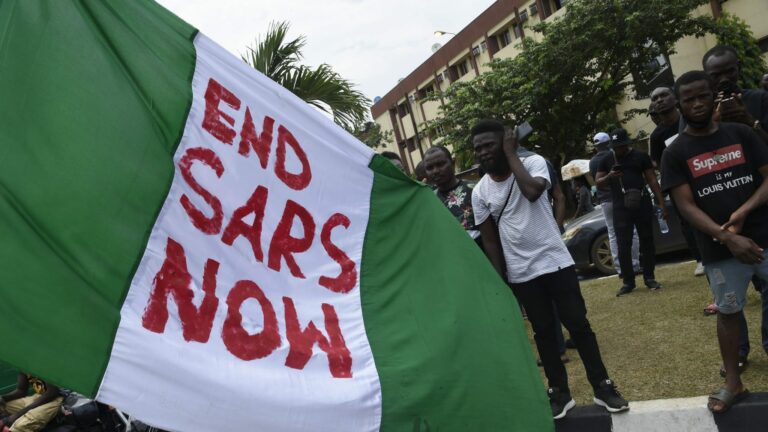
THE Lagos state government has said victims of the #EndSARS protest in 2020 being prepared for mass burial were not from the Lekki tollgate shooting incident that happened in the thick of the protest.
In a statement the government issued on Sunday, July 23, the Permanent Secretary, state ministry of Health, Olusegun Ogboye, confirmed that preparation for the mass burial of 103 #EndSARS victims was ongoing, but noted that none of the dead bodies was retrieved from the Lekki tollgate.
This statement is in response to a leaked memo which revealed that the state government had approved N61,285,000 for the mass burial of 103 persons identified as 2020 EndSARS victims.
The memo, dated July 19, 2023, which captured steps for the processing of funds for the burial after approval by Governor Babajide Sanwo-Olu, surfaced on social media on Sunday, July 23 morning, sparking outrage.
Ogboye confirmed the memo but insisted that details were being misconstrued.
He said the victims to be buried were not from the controversial Lekki tollgate shooting.
The areas cited in the statement as places where the corpses were picked up are Fagba, Ketu, Ikorodu, Orile, Ajegunle, Abule-Egba, Ikeja, Ojota, Ekoro, Ogba, Isolo and Ajah, all in Lagos State.
Ogboye noted that there was also a jailbreak at Ikoyi Prison in the state.
“The 103 casualties mentioned in the document were from these incidents and NOT from Lekki Toll Gate as alleged. For the avoidance of doubt, nobody was retrieved from the Lekki Toll Gate incident.
“Contrary to disingenuous narrative weaved around the recently approved mass burial, the #EndSARs Panel subpoenaed the Lagos State chief pathologist to produce full records of unclaimed bodies of dead deposited with the state central morgue during the days immediately preceding and following the event at Lekki tollgate on 20/10/20.
“The lists with their autopsies of provable cause and circumstances of death were duly submitted and testified to before the panel.
“This subpoena was at the request of lawyers who represented #EndSARS protesters, and the chief pathologist complied. There was not a single finding in the report or ensuing white paper attributing the death of any named citizen listed in the autopsy to the Lekki incident,” he said.
Ogboye said the bodies to be buried included unidentified victims deposited in a state-owned morgue.
He also disclosed that the mass burial was spurred by the “need to decongest the morgues – a procedure that follows very careful medical and legal guidelines if a relative may still turn up to claim a lost relative years after the incident.”
Ogboye explained that none of the unclaimed bodies was victim of the Lekki Toll Gate massacre.
The ICIR had reported that the findings of the Lagos State Judicial Panel on #EndSARS indicted the Nigerian Army of massacre at Lekki Toll Gate on October 20, 2020.
These findings were contained in a report submitted by the panel to the Lagos State Government.
According to the report, the panel noted that nine protesters were confirmed dead, while four others were presumed dead.
The report listed 48 names as casualties of the Lekki incident of October 20, 2020.
Among the 48 casualties listed, 24 sustained gunshot injuries, while soldiers and police assaulted 15 others.
The report noted that the testimonies of victims, eyewitnesses and independent experts employed to examine the footage taken during the incident proved that military operatives shot live bullets at protesters at the Lekki Toll Gate on October 20, 2020, resulting in deaths and severe gunshot injuries.