Home Blog Page 850

Alleged fraud: Court dismisses EFCC’s suit against Okorocha

A HIGH Court of the Federal Capital Territory (FCT) on Friday, July 14, dismissed a suit filed by the Economic and Financial Crimes Commission (EFCC) against a former governor of Imo State, Rochas Okorocha.

The EFCC had dragged Okorocha before the court after charging him over alleged fraud committed while he served as the governor of Imo State.

In his judgment on the matter, the presiding judge Yusuf Halilu, held that a court’s order is legitimate until it is overturned.

Halilu said EFCC ought to have appealed the judgment of the Federal High Court, Abuja, holding that the pronouncement made by the court and that of the Federal High Court, Port Harcourt, remains law.

He subsequently described the suit filed by the EFCC before the court as an abuse of the court process.

Halilu based his decision on the EFCC’s filing of a similar allegation against the former governor of Imo State at the Federal High Court, after it had been settled in the former governor’s favour in two earlier judgements.

The judge subsequently dismissed the suit for being an abuse of the court process.

Okorocha contested the validity of the indictment, claiming that there were active court orders prohibiting the Commission from bringing identical charges against him.

He noted that on December 6, 2021, the Federal High Court in Port Harcourt approved an application to halt his prosecution after faulting the EFCC’s investigation process.

Okorocha said since that ruling is still in effect, the EFCC’s current accusation represents an abuse of both the legal and prosecution processes.

He further highlighted a judgment issued by the Abuja Federal High Court in February 2023 that dismissed a related lawsuit brought by the Commission.

The EFCC had argued that the new charge was distinct from the earlier lawsuits.

This is the third time separate courts have exonerated Okorocha concerning alleged fraud and corruption allegedly perpetrated while he was the governor of Imo State between 2011 and 2019.

In February 2023, a Federal High Court presided by Inyang Ekwo discharged Okorocha of N2.9 billion fraud case.

The court, in a ruling, struck out the EFCC’s suit for being in contravention of Section 105 (3) of the Administration of Criminal Justice Act (ACJA), 2015, which gives the Honourable Attorney-General (HAGF) of the Federation the power to recall a case.

Ekwo said that the directive of the AGF and Minister of Justice, Abubakar Malami, SAN, in a letter dated September 12, 2022, to the anti-graft agency to forward the case file as well as the EFCC’s comments on the issues for consideration and review was binding on the Commission.

Also, in a 2021 ruling, a Federal High Court sitting in Port Harcourt dismissed the EFCC’s case against Okorocha after ruling that the investigation that formed the basis of the indictment was unconstitutional, unlawful, null and void.

The judge, Stephen Pam, ordered the EFCC not to pursue any more charges against the former governor for any suspected offence connected to the probe.

FAAN redeploys Lagos airport manager over stolen runway light

0

THE Federal Airports Authority of Nigeria (FAAN) says it has redeployed the South-West regional manager of the Murtala Mohammed International Airport (MMIA), Felix Akinbinu, to its Airfield Services department following the theft of a runway lighting system at the Lagos airport.

The director of public affairs and consumer protection of FAAN, Yakubu Funtua, said that the airfield lighting system at the domestic runway 18R/36L of the airport was the one stolen, The ICIR reported on July 12.

The missing lighting equipment led to the suspension of some heads of relevant departments at FAAN on the directive of the permanent secretary of the Ministry of Aviation, Emmanuel Meribole.

According to Funtua, FAAN has commenced an investigation into the matter and would do all it can to recover the stolen items, fish out the perpetrators and block all the loopholes that had been of concern about airport security.

In a memo signed by the managing director of FAAN, Kabir Mohammed, FAAN said it had redeployed Akinbinu to its airfield services department, The Punch reported.

Akinbinu is to hand over to Sunday Ayodele on or before Friday, July 14. Ayodele was until now general manager, airfield services.

An aviation consultant, Fatai Afolabi, had told The ICIR that FAAN needed to look inward to address the many security challenges at the airport.

Nigerians can now receive diaspora remittances in naira – CBN

IN what appears to be an intense effort to attract foreign currencies from abroad, the Central Bank of Nigeria (CBN) has directed that the nation’s currency, the naira, can now exchange for remittances from the diaspora.

The directive was contained in a circular dated July 10, 2023, signed by the CBN’s Director, Trade and Exchange Department, O. S. Nnaji.

Additionally, the apex bank mandated that in ascertaining the rate for such a naira payout, the foreign exchange rate from the investors and exporters (I&E) window be used.

The change implies that in addition to the already available options of receiving money in dollars or eNaira, beneficiaries of diaspora remittances will now also have the choice of receiving their funds in naira.

Nigeria’s diaspora remittance figure released by the Central Bank of Nigeria revealed that the country received a total of $952 million as direct remittances from Nigerians abroad between January and June this year.

The apex bank disclosed this in its International Payment just released. The half-year 2023 remittances represented a 21 per cent decline, compared to the $1.210 billion recorded in the same period last year.

There is a growing concern on the diaspora remittance drop, with industry watchers saying having increased diaspora remittance would play a huge role in Nigeria’s foreign exchange unification policy.

The general public, deposit money banks, international money transfer operators (IMTOs), and other parties were all addressed in the circular.

The statement reads, “Further to the circular referenced TED/FEM/FPC/GEN/01/011 dated November 30, 2020, in respect of the above subject, the Central Bank of Nigeria hereby announces Naira as a payout option for receipts of proceeds of International Money Transfers.

“Accordingly, all recipients of diaspora remittances through the CBN-approved IMTOs on the attached list shall henceforth have the option of receiving naira payment in addition to dollar and eNaira as payout options.

“For the avoidance of doubt, International Money Transfer Operators are required to pay out the proceeds using the Investor & Exporter’s window rate as the anchor rate on the day of the transaction.”

It noted that the regulation takes immediate effect and compliance is demanded.

The CBN also in the circular updated its list of registered International Monetary Transfer Operators (IMTOS) in the country.

It approved five additional IMTOs to facilitate diaspora remittances.

The ICIR had reported how huge the impact of diaspora funding would have on Nigeria’s foreign exchange unification policy if well harnessed.

Economic watchers believe that for a country to peg its currency against the dollar, there must be sufficient foreign reserves, and its export base must be well diversified. Nigeria is still lacking in the two, findings have shown.

“We must intensify efforts to improve the supply side of the dollar and attract more foreign direct investment into the economy. That way the supply will gradually stabilise demand,” the executive director of Cowry Assets Limited, Johnson Chukwu said.

Another knowledgeable expert, the Lead Director, Centre for Social Justice (CSJ), Eze Onyekpere, told The ICIR that a special purpose vehicle should be created for diasporans to shore up their remittances.

“The government must be strategic in engaging the diasporans so that their contribution can go beyond welfare and be impactful on the economy.”

EFCC nabs 13 Chinese nationals over alleged illegal mining in Kwara

1

THE Ilorin zonal Command of the Economic and Financial Crimes Commission (EFCC) says it has arrested 13 Chinese nationals for offences bordering on illegal mining activities in Kwara State.

A statement by EFCC Head of Media and Publicity Wilson Uwuajaren, on Thursday, July 13, said the suspects were 12 males and a female.

The alleged offence committed by the Chinese is contrary to, and punishable under Section 1(8) (b) of the Miscellaneous Offences Act Cap M17, 1983.

Uwuajaren explained that the 13 suspects were arrested on Wednesday, July 12 at the Government Reserved Area, Ilorin, following credible intelligence about their activities.

The illegal activities listed include illegal mining and non-payment of royalties to the Federal Government as required by law.

“The suspects are Guo Ya Wang (36), Lizli Hui (42), Guo Jian Rong (36), Lizh Shen Xianian (37), Lishow Wu (26), Guo Pan (38), Lia Meiyu (53), Guo Kai Quan (36) Lin Pan (50).

“Others are Ma Jan (38), Wendy Wei Suqin (31), Li Zhinguo Wei (29) and Xie Zhinguo (53).”

The statement further disclosed that investigations have shown that the suspects have different illegal mining sites in almost all the 16 Local Government Areas of the state prior to their arrest.

It added that the suspects, upon interrogation, confessed to being workers of a Chinese company known as W. Mining Global Service Limited situated at Olayinka in Ifelodun Local Government Area of Kwara State.

“It was gathered that the company was using the illegally mined crude to produce marble and sell locally within Nigeria. Findings also revealed that some of the suspects working in the said company were without ‘work permit’, but only came with ‘visit permit’ from China to Abuja and travelled by road to Ilorin,” the statement added.

The suspects are to be arraigned in court upon the conclusion of the ongoing investigations.

In 2020, the Osun State Government announced the arrest of 27 illegal miners, 17 of whom were said to be Chinese nationals and 10 locals, including a local traditional ruler (Baale).

The arrest followed a two-part investigative report on unlicensed gold exploration by The ICIR.

The state said culprits would be prosecuted and  made to pay compensations.

The ICIR report had exposed how traditional rulers engaged in arbitrary land grab, conniving with illegal gold miners to destroy the ecosystem and natural vegetation in several communities in the south-western state.

They were arrested after a joint operation around the Ilesa/Ife axis of the state.

DSS says it has filed charges against Emefiele

0

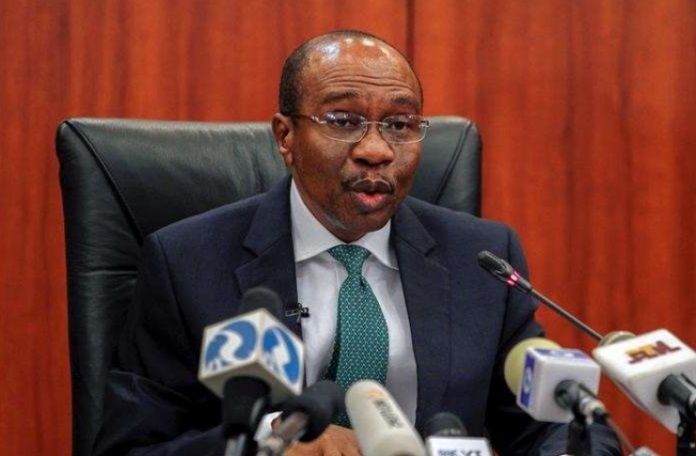
THE Department of State Services (DSS) on Thursday, July 13, said it has filed charges against the suspended Central Bank of Nigeria (CBN) governor, Godwin Emefiele.

This is coming more than a month after Emefiele was taken into custody by the secret police on June 10.

The DSS made the disclosure in a statement by its spokesman, Peter Afunanya.

Afunanya said Emefiele was charged to court in compliance with an order issued by a Federal Capital Territory (FCT) High Court earlier on Thursday.

However, the DSS spokesman did not disclose the identity of the court where Emefiele was charged and the specific charges levelled against him.

“Sequel to an Abuja high court order of today, July 13, 2023, the Department of State Services (DSS) hereby confirms that Mr Godwin Emefiele has been charged to court in compliance with the order.

“The public may recall that the Service had, in 2022, applied for a court order to detain him in respect of a criminal investigation.

“Though he obtained a restraining order from an FCT High Court, the Service, however, arrested him in June 2023, on the strength of suspected fresh criminal infractions/information, one of which forms the basis for his current prosecution,” the statement released by the DSS spokesman reads.

The DSS assured the public of “professionalism, justice and fairness” in handling the matter and discharging its duties.

The ICIR reported that an FCT High Court on Thursday issued a seven days ultimatum to the DSS to charge Emefiele to court or release him.

The court gave the order after hearing a fundamental rights enforcement suit filed by Emefiele to challenge his arrest and detention by the DSS.

The presiding judge, Hamza Muazu, noted that while Emefiele has not demonstrated that his detention and investigation were illegal, it is within his rights to have a fair hearing.

The judge added that the suspended CBN governor cannot be held in custody without a formal charge and that the DSS is not permitted to look for evidence against Emefiele while he is being held.

Muazu described the DSS as a renowned organisation tasked with ensuring the nation’s internal security and demanded that it carry out its duties strictly in accordance with the Constitution.

Emefiele filed a lawsuit against the Director General of the DSS and the Attorney General of the Federation (AGF) to have his fundamental human rights to freedom of movement and respect for life enforced.

In the suit marked FCT/HC/CV/6450/23, the suspended CBN governor had applied that his arrest and detention since June 10 without valid order of court be voided and set aside.

Emefiele demanded compensation of N5 million as exemplary damages for his alleged unlawful detention.

The ICIR reported that the DSS confirmed the arrest of Emefiele, whom President Bola Tinubu suspended on June 9.

The ICIR also reported that Tinubu suspended Emefiele with immediate effect and directed him to hand over the affairs of the CBN to the deputy governor, operations directorate, Folashodun Shonubi.

Emefiele’s suspension was announced in a statement released on June 9 by Willie Bassey, director of information, Office of Secretary to the Government of the Federation (SGF).

The DSS did not state or give any reason for Emefiele’s arrest. However, it may not be unconnected with the allegations the agency had levelled against him.

The DSS, in 2022, attempted to arrest Emefiele, accusing him of financing terrorism, aiding and abetting terrorism, and committing other economic crimes.

NCAA suspends Max Air’s Boeing 737 operations over safety concerns

0

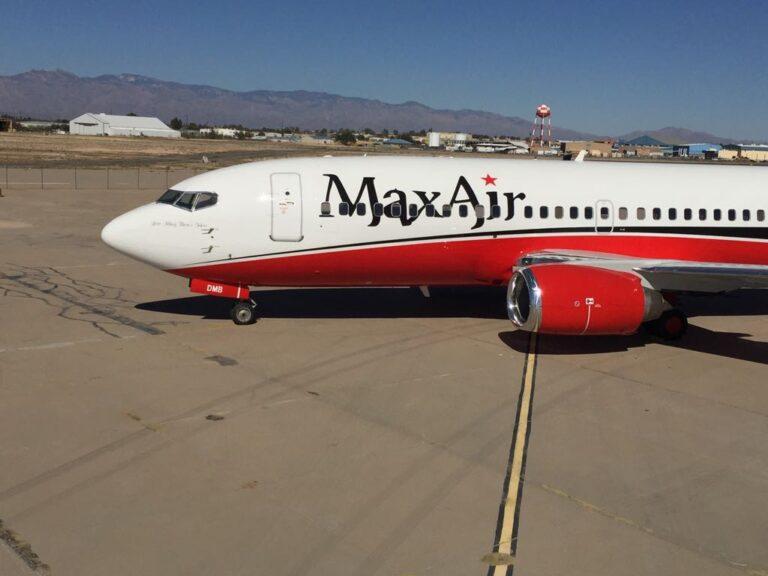
THE Nigeria Civil Aviation Authority (NCAA) has suspended the operations of Max Air’s Boeing 737 aircraft over safety concerns.

The suspension was conveyed in a letter dated July 12, according to a report.

Specifically, the NCAA suspended Parts A3 (Aircraft Authorisation) and D43 (Aircraft Listing) of the Operations Specifications issued to Max Air Limited regarding the operations of the Boeing B737 aircraft.

Citing a series of incidents that raised safety concerns, the NCAA directed the airline to immediately suspend the operations of all Boeing B737 aircraft in its fleet.

Some of the incidents cited by the NCAA include the “Loss of Number 1 Main Landing Gear (MLG) wheel during the serious incident involving a Boeing 737-400 aircraft, registration marks 5N-MBD, which occurred between Take-off at Yola Airport Adamawa State and on landing at Nnamdi Azikiwe International Airport, Abuja Nigeria on 7th May 2023″.

The aviation regulator also cited “Fuel Contamination of the main fuel tanks of aircraft B737-300, Registration Marks; 5N-MHM, leading to the Auxiliary Power Unit (APU) shutdown on ground Yola Airport on the 7th of July, 2023.”

It also raised concern over the aborted take-off of Max Air Boeing 737-400 aircraft, registration marks 5N-MBD, which occurred at the Mallam Aminu Kano International Airport (MAKIA) due to high Exhaust Gas Temperature (EGT) indication on July 11, 2023.

There was also the incident of an air return by aircraft B737-300, Registration Marks; 5N-MHM, to Nnamdi Azikiwe International Airport (NAIA) due to duct overheat indication in the cockpit on the July 11, 2023.

“The Authority has constituted a team of inspectors to conduct an audit of your organisation. The result of this audit must be found satisfactory by the Authority prior to considering the restoration of the privileges of the Operations Specifications to your organisation to further operate the aircraft type,” the NCAA said in the letter addressed to Max Air.

The ICIR, on July 10, reported that Max Air was one of the two airlines that accounted for the highest number of domestic flight delays between January and March 2023.

The Accident Investigation Bureau, Nigeria (AIB-N), had in three separate reports flagged Max Air for serious incidents, The ICIR reported.

Reacting to the suspension on Thursday, July 13, the Executive Director of Max Air, Shehu Wada, said the airline was working to resolve the issues.

“The fact is that there was the issue of adulterated fuel which we also noted. It was noticed by our maintenance. We now decided to give ourselves a two-day break to be able to audit ourselves, which the NCAA got the wind of.

“That is the true story. So safety is our number one priority, and we are looking at it. Nobody will joke with the life of anybody,” Wada said in a statement.

Amnesty for bandits, terrorists has failed to achieve objectives — Army chief

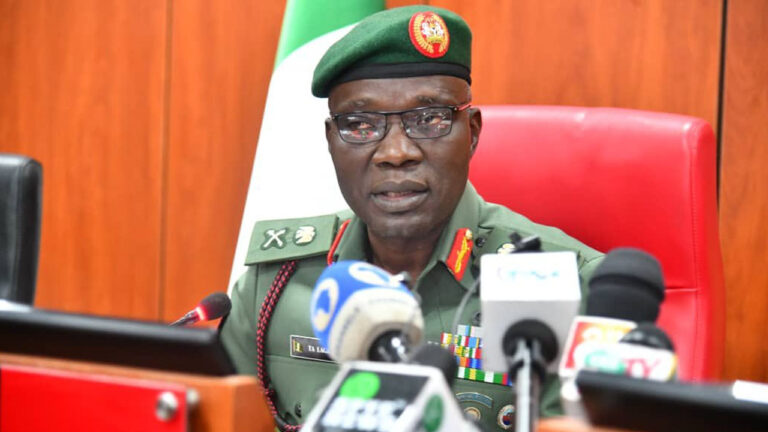
THE Chief of Army Staff (COAS), Taoreed Lagbaja, has declared that amnesty extended by some state governments to bandits and terrorists has failed to achieve expected objectives.

Lagbaja, who spoke when he hosted Zamfara State governor, Dauda Lawal, in Abuja, said amnesty, in most cases, emboldened the criminals to reorganise themselves to carry out more attacks on defenceless Nigerians.

“We also have the issue of the amnesty programme that has been instituted, and which has failed not only in Zamfara, but so many other states of the North-West,” Lagbaja said.

“So, I think we need to look at this issue of the amnesty programme because the criminal elements have proven to be incorrigible.

“The issue of amnesty has created an avenue for them to regroup and reorganise to launch attacks on our defenceless citizens. So I think we need to look at that.”

Lagbaja said he has directed the deployment of more platforms and release of funds to reactivate unserviceable to boost troops’ operations in different parts of the country.

He noted that the Zamfara crisis is a mix of farmer-herder clashes, ethnic confrontations and the quest for economic empowerment driven by mining activities.

The COAS assured that the Army is determined to tackle the security challenges in the state.

“We will not have a situation where some people constitute themselves into outlaws and just go into communities and kill children and defenceless women,” he added.

“By working on this with the state government and other critical stakeholders, we can eliminate these outlaws and reduce the insecurities by a significant percentage.

“So I want to appeal to you your excellency that as we come up with this strategy to address the issue of the Yan Sakai and other regional groups, the state government should be disposed to the implementation of the measures that we will recommend.

“So that together, we will address the activities of these criminal elements.”

Zamfara State is one of the worst-hit by banditry in Nigeria. In recent years, the state has experienced a surge in attacks by armed bandits, who have killed, kidnapped, and displaced thousands of people. The attacks have had a devastating impact on the state’s economy and security.

In an attempt to address the problem of banditry, the Zamfara state government, led by its former governor, Bello Matawalle, announced an amnesty programme for bandits in 2020. The programme offered bandits the opportunity to surrender their weapons and renounce violence in exchange for government assistance, including financial compensation, education, and job training.

The amnesty programme was initially met with some success. In the months following its announcement, hundreds of bandits surrendered their weapons and renounced violence. However, the programme soon began to unravel. Some bandits who surrendered their weapons later returned to banditry, while others used the programme as a way to buy time before launching new attacks. By the end of 2021, the number of bandit attacks in Zamfara state had increased significantly.

The government was forced to abandon the programme, and the state remains mired in insecurity.

In addition, the amnesty programme was criticised for being too lenient on bandits. Critics argued that the government was offering too much financial compensation to bandits, encouraging them to continue their criminal activities.

Banditry has also remained a major problem in Katsina State for many years. In 2016, the state government, under former governor, Aminu Masari, initiated an amnesty programme for bandits. The programme offered bandits the opportunity to surrender their weapons and renounce banditry in exchange for a pardon.

The programme was initially successful, with hundreds of bandits surrendering their weapons. However, the program collapsed in 2019 after some of the bandits who had surrendered their weapons resumed their criminal activities.

The programme was reactivated in 2020. It was more comprehensive than the first program, offering bandits a wider range of benefits, including financial assistance, educational opportunities, and job training.

The second amnesty program was also initially successful, with hundreds of bandits surrendering their weapons. However, the program has since collapsed, and banditry has again become a major problem in Katsina state.

In 2021, there were renewed calls for the Nigerian government to grant amnesty to bandits. These calls were led by Ahmad Gumi, an Islamic cleric who has been a vocal advocate for bandits.

Sit-at-home in South-East is criminal activity — Peter Obi

0

LABOUR Party (LP) presidential candidate in the 2023 general elections Peter Obi has described sit-at-home orders in Nigeria’s South-East as ‘criminal’ activity and charged security agencies to tackle the menace.

In a statement released via his Twitter handle on Thursday, July 13, Obi commended state governors in the region for making renewed efforts to combat the sit-at-home orders issued by Finland-based Biafra agitator Simon Ekpa.

Obi also condemned insecurity in other regions, including the North, saying the situation in the country is a cause for concern.

“According to the 1st Quarter Mass Atrocities Casualty Tracking Report, over 1,230 Nigerians were killed. Seventy-nine of them security operatives, with over 600 abductions in the first quarter of this year alone.

“With what has been happening in the North-Central and Zamfara State lately the figure as of today will be mind-boggling even far more than the deaths recorded in Russia/Ukraine ongoing carnage. It’s unacceptable that hundreds of innocent lives will continue to be wasted in Nigeria needlessly through communal clashes, bandits, and kidnapping activities,” Obi said.

“The situation in the Mangu Local Government Area of Plateau State has raised a lot of anxiety because of the number of lives and properties lost with very little resistance from security operatives.

“Also disturbing is the continued disruption of business and social activities in the South-East region over the Sit-at-Home directive purported to be coming from the Indigenous Peoples of Biafra, IPOB, when the body has publicly denied issuing such directive. What is going on in the South East therefore is essentially a criminal activity that must be nipped in the bud.”

He also urged clerics and leaders in all religious sects to contribute to the fight against insecurity by preaching peace.

Sit-at-home orders in South-East

While terror activities have ravaged many states in Nigeria, particularly in the Northern region, the spate of insecurity in the South-East has been rising at an alarming rate.

Agitations by the Indigenous People of Biafra (IPOB) in the region led to a weekly sit-at-home order, enforced every Monday since the arrest of the group’s leader Nnamdi Kanu in 2021.

Failure of residents to comply with the sit-at-home orders resulted in attacks and death in some cases.

However, a struggle for control divided IPOB the group into factions, with some members staying loyal to Kanu and others to his self-acclaimed disciple Ekpa, who rose to prominence after his principal’s arrest.

Following several erratic sit-at-home orders declared by Ekpa, Kanu reportedly dissociated from him in 2022, saying he was being sponsored by those opposed to the group.

In the past months, IPOB had urged residents of the South-East to ignore sit-at-home orders by the Ekpa-led faction. The latest order by Ekpa is billed to last for two weeks in August 2023.

Governor of Enugu State Peter Mbah banned sit-at-home orders in the state. However, residents have continued to stay at home on sit-at-home days over fears for their lives.

Ekpa extends sit-at-home to Lagos

Meanwhile, Ekpa has announced that after the two-week sit-at-home in the South-East, the order would be extended to Igbos living in Lagos.

“Biafrans in Lagos should get ready to be part of the demand to release Mazi Nnamdi Kanu. We are coming to Lagos after the 2 week-long sit at home.

“It is time to show your solidarity to this call for justice. Biafrans in Lagos will lockdown. The consultation will start soon,” Ekpa said in a statement on Wednesday, July 12.

In March, Ekpa made a similar announcement, ordering Igbos living in Lagos to remain indoors to cripple the economy of the state. IPOB, however, distanced itself from the order and urged residents to ignore it.

Reps approve Tinubu’s request for N500bn to fund palliatives

1

THE House of Representatives on Thursday, July 13, approved President Bola Tinubu’s request to source N500 billion from the N819.5 billion 2022 supplementary budget, to fund palliatives to cushion the impact of subsidy removal on Nigerians.

The ICIR reported that Tinubu’s request titled, ‘Request for the amendment of the 2022 appropriation act,’ was read to the House of Representatives on Wednesday, July 12, by the Speaker, Tajudeen Abbas.

The House on Thursday, July 13, approved the President’s request after contributions by members who called for proper utilisation of the funds for the purpose it was meant for.

“The request has become necessary in other to among other things source for funds necessary to provide palliatives to mitigate the effect of the recent removal of fuel subsidy on Nigerians.

“Thus the sum of N500 billion only has been extracted from the 2022 Supplementary Appropriation Act of N819.536 billion for the provision of palliatives to Nigerians to cushion the effect of fuel subsidy removal. I hope that the House of Representatives will consider the request,” part of Tinubu’s letter read.

Reacting to the letter today, the House commended the President for taking a bold step to remove fuel subsidy.

The Leader of the House of Representatives, Julius Ihonvbare, presented the request to members for debate, pushing for its approval.

The request was approved and passed by the House.

Tinubu makes new request, seeks approval of $800m loan

Similarly, Tinubu has asked the Senate to allow his administration process the $800m loan facility from the World Bank requested by the administration of former President Muhammadu Buhari.

Senate President Godswill Akpabio, read Tinubu’s request at plenary on Thursday.

The ICIR had reported that Buhari requested the approval of the Senate to borrow $800 million from the World Bank to help alleviate the negative impacts of fuel subsidy removal.

However, the request was referred to the Senate Committee on Local and Foreign Debt by the former Senate President Ahmed Lawal, but the committee did not report to the Senate till Buhari’s tenure ended on May 29.

Tinubu, re-explaining the importance in the letter, said the Federal Government of Nigeria will transfer the sum of 8,000 a month to 12 million poor and low-income households for a period of six months with a multiplier effect on about 60 million individuals.

Tinubu’s letter read: “It is with pleasure that I refer the above matter to you. Please note that the Federal Executive Council led by President Muhammadu Buhari GCFR had approved an additional loan facility to the tune of USD 800 million to be secured from the world bank to finance the social safety net programme. Copy of the Federal Executive Council extract is attached here.

“You may also wish to know that the purpose of the facility is to expand coverage of shock responsive safety net support for all and vulnerable Nigerians and the cost of meeting basic needs.

“You may further wish to note that under the conditional cash transfer window of the programme, the Federal Government of Nigeria will transfer the sum of 8,000 a month to 12 million poor and low-income households for a period of six months with a multiply effect on about 60 million individuals.

“In order to guarantee the credibility of the process, digital transfers will be made directly to beneficiaries’ accounts and mobile wallets. It is expected that the programme will stimulate economic activities in the informal sector and improve nutrition, health and education outcomes for beneficial households.

“Given the above, I wish to invite the Senate to kindly grant approvals for additional loan facilities USD800milliom to be secured from World Bank for the National Social Safety Net Programme,” the letter said.

The request has, however, been referred to the Committee of the Whole for consideration on the grounds that the Senate has yet to constitute the committee on local and foreign debt.

The Federal Government had in November 2022 noted that over 133 million Nigerians are living in multidimensional poverty. 

The government, giving the figure in its latest “multi-dimensional” poverty report, said that 65 per cent of the poor (86 million people) live in the North, while 35 per cent (nearly 47 million) live in the South.

The National Multi-Dimensional Poverty (MPI) report is 0.257, meaning that poor people in Nigeria experience just over one-quarter of all possible deprivations while the poverty levels across states was vary significantly, with the incidence of the poverty ranging from a low of 27 per cent in Ondo to a high of 91 per cent in Sokoto.

The report stressed that over half of the population of Nigeria are multi-dimensionally poor and cook with dung, wood or charcoal, rather than with cleaner energy.

This data shows that should the Federal Government decide to transfer N8,000 to 60 million Nigerians (12 million households). about 73 million people living in multi-dimensional poverty won’t benefit from the plan.

Ekiti APC chairman regains freedom, Police arrest suspects

0

THE Ekiti State Police Command has arrested three suspects in connection with the kidnap of the state’s All Progressives Congress (APC) chairman Paul Omotosho.

This was disclosed in a statement by the Command’s Public Relations Officer (PRO) Sunday Abutu in Thursday, July 13.

Abutu also disclosed that the party chieftain had regained his freedom, along with two other people who were recently abducted.

“This breakthrough was made possible through the combined efforts of the Police, other sister agencies, the local security outfits and the family members as well as the Ekiti State government,” Abutu noted.

The PRO, however, said those arrested are not the prime suspects. But he added that they are supplying relevant information which could lead to the arrest of the masterminds.

“Citizens are implored to be security conscious, vigilant and ensure the prompt reportage of any suspicious person or group of persons observed in their locality to the nearest Police Station or call 08062335577,” the police spokesperson said.

Omotosho and two others were abducted along the Agbado-Imesi-Ekiti road on Saturday, July 8, 2023.

The APC Publicity Secretary in Ekiti Segun Dipe said Omotosho was forced into a Toyota Hilux van during the incident.

“The gunmen shot at one of the tyres of the car. He was taken into a Toyota Hilus Van and driven off. It happened in the evening, we got the information at about 6pm. The security agencies, Police and Amotekun operatives have been alerted immediately and they have swung into action,” Dipe said.

His release comes after he spent five days with the abductors.

In May, an APC chieftain in Imo State Chinedu Eleliam was abducted in Umueze II, Ehime-Mbano Local Government Area (LGA).