Home Blog Page 870

NUC approves new varsity for Kogi 

THE National Universities Commission (NUC) has approved a new university for Kogi State.

The university will be sited in Kabba, one of the major towns in the state.

Kabba is in the Kogi West senatorial district.

The new institution will be the second owned by the state, coming after the State University in Ayingba, Kogi East.

It will be the 62nd state university in Nigeria, and brings the total number of universities in the country to 265.

The ICIR reports that Nigeria has 51 federal, 61 state and 147 private universities before the approval of the new school.

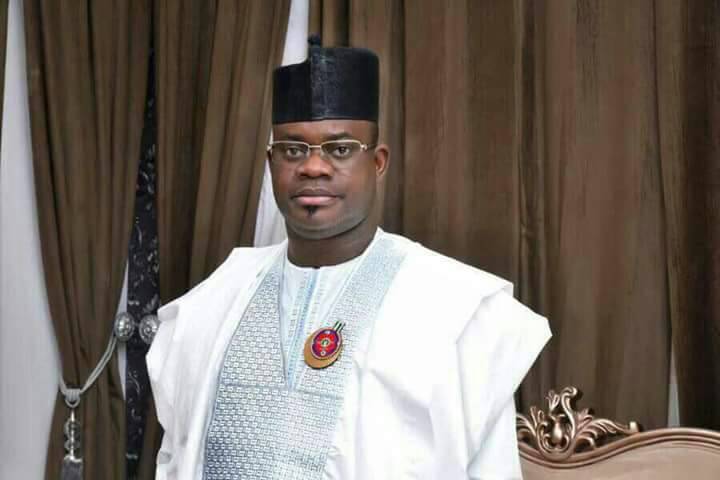
Sharing the approval letter, signed by the Executive Secretary of the NUC, Abubakar Adamu Rasheed, a professor, Kogi State Governor Yahaya Bello wrote on his Facebook Page on Tuesday, June 27, “Let’s continue to do more,” as he exchanged pleasantries with the government officials.

The letter with the reference number NUC/ES/52NOL.13/117 was dated June 26, 2023.

It has the title, “Recognition of Kogi State University, Kabba,”

NUC’s letter conveying the approval of the Kogi State University, Kabba, to Governor Yahaya Bello

Part of it reads, “Consequent upon receipt of your letter of intent dated June 19, 2023, and the formal presentation today of the Strategic documents, including the relevant gazetted law, academic brief and physical master plan, I write, on behalf of the National Universities Commission (NUC), to inform His Excellency, that with effect from Monday, June 26, 2023, Kogi State University, Kabba, has been recognised as the 62nd State-owned University and 265th University respectively, in the Nigerian University System.”


READ ALSO:


The NUC pledged to support the institution. It also advised the state government to take ‘full’ advantage of the professional and technical advice that the commission is statutorily required to provide on the university’s establishment, funding and operation.

“By a copy of this letter, the Joint Admissions and Matriculation Board (JAMB), the Tertiary Education Trust Fund (TETFund) and the National Youth Service Corps (NYSC) are being notified of the establishment of the university.”


Reactions trail renaming of airports after Buhari, Awolowo, others

THE renaming of 15 airports in Nigeria by President Bola Tinubu has generated diverse reactions among individuals and groups in the country.

The Federal Ministry of Aviation, in a memo dated June 1, 2023, signed by Director of Airport Operations Joke Olatunji, announced the President’s decision to rename the airports as part of reforms in the aviation sector.

The Federal Airport Authority of Nigeria (FAAN) was directed to implement the decision.

The Maiduguri Airport was renamed after the immediate past President Muhammadu Buhari, and the Port Harcourt Airport after the first premier of the defunct Western Region, late Obafemi Awolowo, while the Nasarawa Airport was used to immortalise the late founder of the Sokoto Caliphate, Usman Dan Fodio.

The Benin Airport was renamed after late Oba of Benin, Oba Akenzua II; Ebonyi Airport after late Senate President Chuba Okadigbo, and the Ibadan Airport after late Premier of the old Western Region, Ladoke Akintola.

Other airports affected by the renaming include Akure Airport, which now carries the name of Olumuyiwa Bernard Aliu, and Dutse Airport, renamed after Muhammad Nuhu Sanusi. Gombe Airport has been dedicated to Zakari Maimalari, while Ilorin Airport now bears the name of a late military general, Tunde Idiagbon.

The Kaduna Airport was renamed after Hassan Usman Katsina, and the Makurdi Airport after Joseph Sarwuan Tarka. Minna Airport was renamed after Abubakar Imam, while Osubi Airport was dedicated to Alfred Diete Spiff. Yola Airport now carries the name of Lamido Aliyu Mustapha.

Full list of renamed airports 

1. Akure Airport – Olumuyiwa Bernard Aliu

2. Benin Airport – Oba Akenzua II

3. Dutse Airport – Muhammad Nuhu Sanusi

4. Ebonyi Airport – Chuba Wilberforce Okadigbo

5. Gombe Airport – Brigadier Zakari Maimalari

6. Ibadan Airport – Samuel Ladoke Akintola

7. Ilorin Airport – Gen. Tunde Idiagbon

8. Kaduna Airport – Hassan Usman Katsina

9. Maiduguri Airport – Gen. Mumammadu Buhari

10. Makurdi Airport – Joseph Sarwuan Tarka

11. Minna Airpor – Mallam Abubakar Imam

12. Nassarawa Airport – Sheikh Usman Dan Fodio

13. Osubi Airport – Alfred Diete Spiff

14. Port Harcourt Airport – Obafemi Jeremiah Awolowo

15. Yola Airport – Lamido Aliyu Mustapha

According to the memo, these name changes will come into effect on July 1, 2023.

The ministry called for all necessary arrangements to be made to facilitate a smooth transition.

The announcement has triggered contrasting opinions within the country. While some individuals lauded the move as a means of acknowledging the contributions of notable Nigerians to the nation’s history and progress, others criticised it as a political ploy and a misallocation of resources that could have been better utilised for airport infrastructure and services.

Reacting to the development, a Twitter user @sheethjamaal, said the renaming of the airport will immortalise those that fought for the nation.


The renaming of the Port Harcourt Airport after Awolowo and the Nasarawa Airport after Dan Fodio sparked a lot of angry reactions on social media, mostly from residents of the two states.

A Twitter user, Nnamdi Onu, who said he didn’t understand the rationale behind the development, pointed out that the South-South region boasts a significant number of notable individuals, such as former President Goodluck Jonathan, who the Port Harcourt could have been named after.

Patrick Anum, from the Middle Belt, called on residents of Nasarawa State to resist the move to name the airport in the state after Dan Fodio, who he said was responsible for the murder of thousands in the region in the course of the Islamic jihad which he led.

The Pan-Niger Delta Forum (PANDEF) equally condemned the renaming of the Port Harcourt Airport after Awolowo.

PANDEF spokesperson, Ken Robinson, while acknowledging Awolowo’s contributions to the country, particularly to the South-West, noted that renaming the airport after him was an insult to the Niger Delta, the South-South, and particularly the people of Rivers State.

“The general perception of PANDEF, particularly the renaming of Port Harcourt Airport after the Awolowo, is that it is inappropriate and misplaced,” Robinson said in an interview with The ICIR.

“It is insulting to the people of not only Rivers State but also to the people of the South-South. Awolowo, with due respect to his personality and contribution to the South-West, has no relationship and correlation to the people of the Niger Delta, South-South and Rivers State.

“Why should we have people from Rivers State, Niger Delta and South-South, who had attained high national and global recognitions and then you ignored them and named the Port Harcourt airport after Awolowo? It is most unfortunate.”

The group, which vowed to mobilise its people to resist the decision, called on Tinubu to rescind the decision and find a worthy son of the region or the state to rename the airport.

Other individuals who criticised the renaming of the airports, argued that the focus should be on addressing the pressing challenges in the aviation sector, such as dilapidated infrastructure, inadequate facilities, and poor service delivery.

Attempts to get responses from the Ohanaeze Ndigbo and Afenifere proved fruitless. The ICIR made numerous unanswered phone calls to Ohanaeze spokesperson, Alex Ogbonnia, and he also did not reply to a message sent to him via WhatsApp.

Similarly, calls made to Afenifere spokesperson, Sola Ebiseni, were unsuccessful, and as of the time of filing this report, he has not responded to a WhatsApp message sent to him.

Controversy surrounds former Golden Eaglets star Amoo’s conviction

CONTROVERSY is trailing the conviction of former Golden Eaglets winger Akinkunmi Amoo, by a Danish court.

Amoo, popularly known as the “Nigerian Messi”, was sentenced to a one-year jail term by a Danish court after being found guilty of indecent assault, attempted rape, and rape in a sexual relationship other than intercourse.

However, the player’s Nigeria representative, UDE Sports Management Agency, has strongly reacted to the news that the 21-year-old footballer has been jailed and is threatening legal action against Nigerian media outlets that published the story.

Chairman of UDE Sports Uche Dominic Egbukwu, in a statement, expressed outrage at the Nigerian media for disclosing Amoo’s name as the convict, contrary to the name ban imposed by the Danish court.

Egbukwu has vowed to take legal action against all Nigerian media organisations that published the story unless they issue an unreserved apology within the next 72 hours.

Under Sections 24 and 25 of the Nigerian Cybercrime Act 2015, publishing fake news is considered an offense and carries a minimum punishment of three years.

The Danish court, on Friday, June 23, 2023, reportedly handed down an unconditional prison sentence of one year to the player, along with deportation from Denmark and a six-year ban from entering the country.

However, the representation agency has vehemently denied the accuracy of the reports and maintains that Amoo is still training with his club, FC Copenhagen.

“I have spoken to my player and his club officials, and they have confirmed to me that the news about his conviction and jail sentence is not the correct narrative. He is presently training with the club,” Egbukwu said.

He further revealed that an appeal had been filed by their lawyer, as the case was still ongoing in court.

Egbukwu who expressed disappointment in the Nigerian media for disseminating what he claims to be false narratives, added that due to the name ban in the Danish press, an official statement from Amoo cannot be provided at this time.

He stressed his agency’s commitment to fighting for justice, stating, “Unfortunately, this case is blackmail, and we will continue to fight for justice. Akin was not sent to jail.”

Similarly, the player’s elder brother Sunday Amoo, debunked the report of his being sentenced to prison in Denmark, during a chat with sports journalist Tobi Samuel Adepoju, dismissing Akinkunmi’s jail sentencing report as false.

Adepoju in a tweet on Tuesday wrote: “We appreciate everyone that has reached out to us, Akin is fine & he was not sent to jail. He has been injured & he is just coming back from injury. When the court permits, he will release a statement. He is not in prison, he is scheduled to train this morning.”

According to Danish newspaper Ekstra Bladet, the verdict against Amoo was delivered on Friday, June 23, 2023 by a dissenting magistrate in the Copenhagen District Court, following his arrest on September 10, 2022.

He was released on bail on October 7 after Danish authorities filed criminal charges against him and the trial spanned most of June, receiving significant media attention, given Amoo’s reputation as a talented football player.

As the sentence was read out, Amoo reportedly stood in the middle of the courtroom, visibly shaken by the outcome. He was handed an unconditional prison sentence of one year.

Additionally, due to the defense and the convicted party appealing the verdict immediately, a name ban in the case was extended, despite objections from Ekstra Bladet.

Amoo’s appeal will provide an opportunity for the case to be reviewed and reevaluated by a higher court.

SERAP urges Nigerians to participate in procurement process

0

THE Socio-Economic Rights and Accountability Project (SERAP) has urged Nigerians to participate in the budgeting and procurement processes to promote accountability in government.

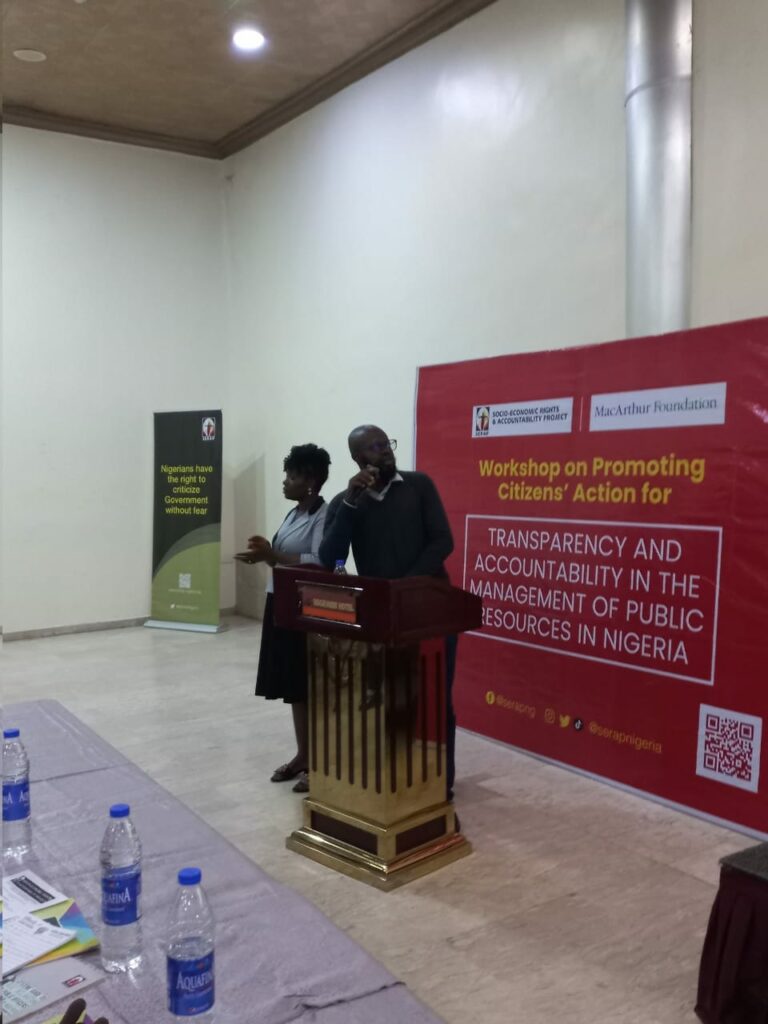
The organisation made the call at a workshop it organised on Monday, June 26, to train citizens on budget processes and other strategic actions that can promote accountability in managing Nigeria’s resources.

Monitoring and Evaluation Officer, Public and Private Development Centre (PPDC) Jonathan Ebe, who trained citizens on understanding the budget, said participating in budgeting and procurement processes can help in guaranteeing the efficient use of public funds.

“The budget process lies at the heart of governance. It determines how public funds are allocated and spent. So by understanding this process, we can contribute to more efficient and equitable resource distribution to reduce corruption rates and foster public confidence in our governance institutions.

“There is a process to how government budgets for projects. When the process is done appropriately, we see a lot of gains. We see positive results in service delivery and we also see an increased level of public trust,” Ebe said.

Nigerians invited from various parts of the country were present for the workshop, which also covered the country’s audit processes.

Deputy Director, SERAP, Kolawole Oluwadare, said the workshop was necessary to strengthen citizens’ awareness and involvement in governance.

“What we have found is that mostly, while citizens appear to be disenchanted with the benefits of good governance and democracy, they do not really have the wherewithal -sometimes it’s a matter of tool, it’s a matter of knowledge and the skill- to engage the government.

“Politics affords them the opportunity to go to the polls every four years to choose who represents them at the federal and the state level. But governance is a continuum, so advocacy for governance will continue irrespective of who wins or who loses at the polls, he said.

The Deputy Director added that the workshop was part of efforts to bridge the knowledge gap and educate citizens on what their rights are, equipping them with relevant tools to engage the government.

Oluwadare also noted that there were laws which should check government excess but identified a lack of implementation as an obstacle.

“It is not because we have these agencies or laws in that regard. What has been the problem is the impunity with which these laws are broken and nothing gets to happen. So that forms our education to citizens that there are laws,” he said.

ICPC tackles World Bank, TI over failed loans, corruption ratings

THE Independent Corrupt Practices and Other Related Offences Commission (ICPC) has faulted activities of the World Bank and Transparency International (TI).

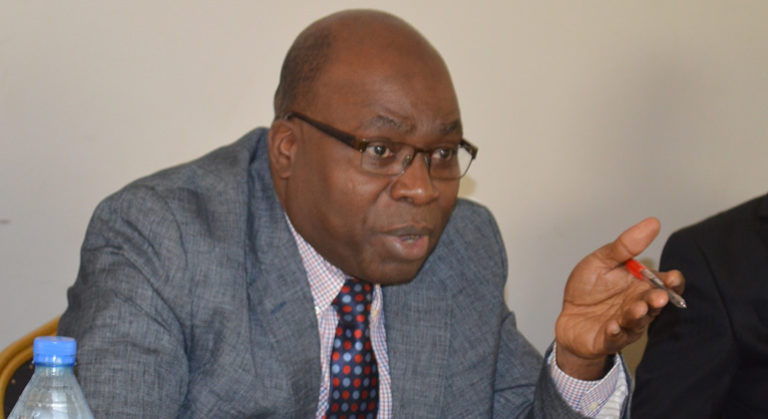
ICPC Chairman Bolaji Owasanoye, a professor and senior advocate of Nigeria (SAN), said the World Bank’s grants to countries had been marred with corruption, and no government dared challenge the Bank in any court.

He also accused TI of unfairness in its corruption rating of nations.

Owasanoye opined that TI rates countries that accept stolen wealth better than countries losing commonwealths to thieves.

The ICPC boss spoke when he hosted a delegation of Ghana’s Economic and Organised Crime Office (EOCO) on a tour of the Commission’s facilities in Abuja.

The visitors were led by the Commissioner of Police and Executive Director of the EOCO, Yaa Tiwa Addo-Danquah.

The ICPC boss frowned at the rules of engagement set by the international ecosystem, which “do not in any way favour the peculiarities associated with anti-corruption fight in developing countries”.

“We have to understand as developing countries that the political economy of the international ecosystem is not designed for us to progress no matter how hard we try. It is enlightened self-interest. For example, Nigeria borrowed one billion dollars in 1978. As of 2006, when we had the write-off, Nigeria was owing 32 billion dollars, and it is designed in that way because of their rules of engagement and dispute resolution. The rule uses IMF (International Monetary Fund) and the World Bank to whip you into line when you want to challenge the debt.

“How many countries have taken the World Bank to court? Does it not have failed loans? Many of the loans World Bank grants are marred in corruption, but nobody has the courage to take them to court because those issues are usually politically determined.”

Calling for more collaborations among developing nations, he urged them to develop local surveys they could rely on for socio-economic appraisals, thereby defeating foreign ‘perception surveys’ with local ‘experience surveys’.

According to him, local surveys on corruption will support home-grown solutions as against the international surveys, which he said were being used to form opinions on corruption perception in developing countries.

“In developing countries, we are driven by the outcomes and reports of international surveys. International surveys are not innocent, and it is naïve to think they are otherwise. If you do not create a system where your voice is heard, a kind of platform where you say your own and refuse to be driven by the outcome of those reports, you will continue to be apologetic.”

Speaking on TI’s ranking, Owasanoye stated, “Is it not strange that Transparency International will rank countries that are losing assets as more corrupt than the countries receiving the stolen properties? And under the common law, both the thief and the receiver of stolen properties are both guilty. But when they rate us, they will rate the receiving countries as being more honest, but those of us whose properties are stolen every day are rated to be more corrupt”.

The ICIR reports that the Nigerian government usually disagrees with its corruption rating by the TI because the country is often rated very low.

In 2020, the government faulted the TI through the Economic and Financial Crimes Commission (EFCC).

The ICIR reported in 2021 how the Nigerian government disagreed with the TI.

New York Public Library’s Cullman Center invites applications for fellowship

JOURNALISTS, creative writers and media entrepreneurs working on book projects can apply for this fellowship in New York.

The New York Public Library’s Cullman Center will choose 15 fellows for a nine-month term at the Library, from September 2024 to May 2025.

The fellowship aims to promote dynamic communication about literature and scholarship at the very highest level within the Center, in public forums throughout the Library, and in the Fellows’ published work.

Fellows work on their own projects and engage in an ongoing exchange of ideas within the Center. The fellowship provides up to US$75,000, an office, a computer and full access to the Library’s resources to each fellow.

International candidates fluent in English and visual artists at work on a book project are also welcome to apply.

The deadline Is September 29, 2023. Interested applicants can apply here

Sierra Leone election: Tallying of results underway, President Bio leading

THE ECOWAS Observation Mission monitoring Sierra Leone’s general elections has called for patience as the nation eagerly awaits the results of the polls held on Saturday, June 24.

The election has been marred by reports of attacks and intimidation against agents of the main opposition All Peoples Congress (APC) in three districts.

There have also been instances where election officials were beaten or intimidated. Concerns have been raised by international observers regarding transparency in the tallying of ballots.

Head of the ECOWAS Mission Mohamed Chambas commended Sierra Leoneans for their enthusiastic turnout and the disciplined manner in which they conducted themselves during the voting process and urged all stakeholders, particularly political parties, candidates, and supporters, to remain patient during the post-election period.

The Electoral Commission of Sierra Leone (ECSL) has also been called upon to demonstrate responsibility by expediting the tabulation process and releasing preliminary results in a professional and timely manner.

An election observer and lawyer Augustine Sorie-Sengbe Marrah, emphasised the importance of the electoral commission addressing any allegations of unfairness through transparency.

Sorting and counting of ballots began immediately after the polling stations closed at 5:00 pm on Saturday. However, due to delays caused by the late arrival of polling officials or materials, voting continued into the night in some polling stations, as directed by the ECSL.

The elections, held across 3,630 polling centres, saw a total of 3,374,258 registered voters participating to elect a new President, 135 parliamentarians and 493 mayors and local councillors.

Incumbent President Julius Maada Bio, 59, representing the ruling Sierra Leone Peoples Party (SLPP), is seeking a second term and, reportedly, is currently in the lead with over one million votes. His main challenger with less than 800, 000 votes is Samura Kamara, 72, of the APC, who narrowly lost to Bio in the 2018 election.

Meanwhile, Kamara has reportedly said he would not accept any results that are deemed biased, manipulated, or unverified, assuring his supporters and the citizens of Sierra Leone that the APC remains steadfast in its pursuit of an overwhelming victory.

Amidst these claims, the announcement of the election results is expected latest by Wednesday.

If no candidate secures the mandatory 55 per cent of valid votes in the first round, a runoff election between the top two candidates will be held two weeks after the official announcement of the first-round results.

The National Secretary General of the ruling SLPP Umaru Napoleon Koroma, has asserted that, based on preliminary reports, incumbent Bio is confident of securing a resounding victory, as results collated at the party’s centers indicate that a runoff election will not be necessary.

Koroma added that the people had spoken decisively, entrusting Bio with the nation’s destiny for another five years.

Sierra Leone on edge 

Sierra Leone remains on edge during the election period, haunted by memories of a devastating civil war that ravaged the country from 1991 to 2002.

The country’s citizens are acutely aware of the potential for unrest if a majority consensus is not achieved, heightening the importance of a peaceful and credible electoral process.

In a televised speech following the publication of provisional results on Monday evening, Bio called on citizens to maintain peace during and after the announcement of the election results, stressing the collective responsibility of all to uphold stability.

“We each have a stake in maintaining peace during and after the announcement of results of these elections,” he stated.

About 95 ECOWAS observers were deployed to monitor the presidential, parliamentary, mayoral and local council elections in the West African country.

New service chiefs vow to end insecurity, restore stability

NIGERIA’S newly appointed service chiefs have promised to end the insecurity bedeviling the country.

Chief of Defence Staff (CDS) Christopher Musa made the pledge on behalf of the new heads of the country’s security agencies during a visit to the Ministry of Defence on Monday, June 26.

“To the civilians, the Armed Forces are for you and we will do whatever it takes to ensure Nigeria thrives. We are committed to what we have been tasked to do. While doing this, we are going to respect human rights.

“We can assure you that we are going to be very professional in our approach.

“We assure you all that we are here and we are committed to ensuring that we achieve the mandate of the President. We want Nigeria to be peaceful.

“We grew up when Nigeria was peaceful and we know what it looks like and we want to ensure that our children will be proud of the country during our time,” Musa said.

Musa was appointed as CDS on Monday, June 19, along with other service chiefs, after Nigeria’s President Bola Tinubu ordered the immediate retirement of their predecessors.

The other service chiefs include Chief of Army Staff Taoreed Lagbaja, Chief of Naval Staff Emmanuel Ogalla, and Chief of Air Staff Hassan Abubakar.

The appointment of the new service chiefs was met with applause by Nigerians who see it as another chance to tackle the security challenges that have plagued the country for over a decade.

In 2022, many Nigerians called for the immediate sack of the former service chiefs due to incessant killings and abductions in the country.

The Nigerian Senate also adopted a resolution calling for the sack of the former service chiefs due to the worsening security situation in the country.

However, Buhari’s Special Adviser of Media and Publicity Femi Adesina responded to the lawmakers saying such a decision was a prerogative of the President, who “will do what is in the best interest of the country at all times”.

Buhari, however ignored calls for their sack, and they continued in office, including the former Inspector-General of Police (IGP) Usman Alkali Baba, who remained in office months after he passed the age of retirement.

IGP orders police convoys to obey traffic rules

Tinubu replaced Baba with Acting IGP Kayode Egbetokun, who on Monday, June 26, charged all police officials to uphold all Nigeria’s laws, including traffic rules.


READ ALSO:


“Let me end this speech by reminding you that those who keep the peace must be the epitome of peace. Those whose duty it is to enforce the laws of the land must themselves respect and obey the laws of the land. Without obeying the laws, the Police lack the moral high ground to interrogate and bring lawbreakers to book.

“Consequently, in line with my vision of building a rule of law compliant Police Force, it is my directive that henceforth all police convoys on routine, non-emergency movements must obey traffic lights and other traffic rules, I pledge to lead by example in this regard. As you will be returning to your various bases, I wish you a safe journey and please be assured of my best wishes always,” Egbetokun said.

[OPINION] Remembering governor Ajimobi from governor Makinde’s recycle bin

0

By Toye ARULOGUN

FOREWORD

Every day marks the beginning of the rest of our lives.

Life is a mystery yet to be unfolded. Life throws all kinds of curves.

No one will get out of life alive.

Life and Death are the twin reasons I believe in the supremacy of God – the giver and the taker of life.

The finality of death is overwhelming.

Exactly two months ago, Sola Ogunkoya, called me to announce the death of her husband – Tolu Ogunkoya, Regional Director, Media Reach OMD, my friend, brother and business partner.

This was in the middle of my preparations and countdown to the Yoruba Cultural Festival organised by the Yoruba Community Abuja.

Since then, I have kept a very low profile and switched off Facebook except for the 80th birthday congratulatory message to my mum and of course recently my wife’s tag of pictures from my mother in – law’s 90th birthday celebrations on the 15th of June in Uyo Akwa Ibom State.

Essentially I have been trying in my quiet moments to decipher the essence of life, and understand and appreciate its complexities.

To make matters worse and reinforce the fact that life is a mixed bag of joy and sorrow, I lost Martha, my Ibadan-based German Shepherd pet dog, on Wednesday,  June 14 and Suzzie, my Lhasa Apso breed on Thursday, June 15 while i was away in Uyo for the activities to mark Grandma Uyo’s 90th. With all of these, I naturally assumed a ”Calm Down” position, staying on my lane and “deying” my “dey.”

For Tolu’s early passage to the great beyond, I have been wondering and pondering how to dimension and put into proper context a top-drawer success in the marketing communications industry only to end up this way.

My conclusion, which I have shared with a few, is this; When your friend or family member shuts the door, kick it open and see how or what he or she is doing. When your friend or family member builds a wall, break down the wall to find out what is happening behind the wall. If need be, call for support if the wall is too big or too high for you alone to break.

Through some recent engagements, I have come to terms with the reality of his passing. Watch this space for a befitting tribute which i know not a few have been expecting.

While celebrating the joy of attaining 90 years by Mama Ayo Orebo Udo; my first wife who was gracious enough to give me her daughter as a second wife, I have been tapping into the 90 years of anointing and grace for the same and even more years.

For Suzzie and Martha, their deaths one day apart remain a mystery to me. While I suspect poisoning, from a very spiritual point of view, I am not oblivious to the fact that it is typically not a good omen when such happen. Rest assured, I know what I am talking about.

This has been my rhythm in the last couple of weeks, going under the radar and hibernating until I was jolted by the news of Governor Seyi Makinde’s decision to elevate eleven Ibadan High Chiefs to Obas on July 7, 2023.

Why the jolt?

This was the same reform implemented by the Abiola Ajimobi administration which Governor Seyi Makinde criticised its implementation before, during and after, culminating in a reversal by him upon the joining of the ancestors of the immediate past Olubadan of Ibadan, an Oba, Saliu Adetunji.

It is very much on record that  Seyi Makinde sang to high heavens the “ If it is not broken, why fix it ?“ chorus in rejection of his predecessor’s elevation of Ibadan High Chiefs to Obas.

My questions to HIs Excellency right now are: (1). “What have you suddenly realised to precipitate this volte-face?” (2). “What is now broken that needs to be fixed?”

I am therefore coming out of social media space hibernation, using this Sunday, June 25, 2023 which is the 3rd memorial of Abiola Ajimobi’s demise, to pay tribute to “Archipelago”, bringing to the fore some of his major policies, especially those in the mould of the elevation of Ibadan High Chiefs to Obas which Governor Makinde threw into the recycle bin with condemnation but have been brought back to his desktop without explanation, acknowledgement, or reference to the efforts of his predecessor who passed on to the great beyond three years ago today.

These major policy somersaults and about-face are goofs and gaffes by Makinde’s administration, which in my well-informed opinion, are driven by a strong desire to denigrate and desecrate the Ajimobi brand. Unfortunately, because of the sinister motives, in all of these instances, he has made 360-degree turns going back to his vomit or leaving the state in limbo in those specific areas.

Makinde’s administration has displayed enormous propensity and proclivity for throwing Ajimobi’s policies into its recycle bin with so much fervour and political relish. Unfortunately for Makinde, more often than not, in no time because of a lack of superior policies, the administration brings them out of the recycle bin surreptitiously after “giving a dog a bad name and hanging it.”

Come along with me, please.

Schools governing board (SGB)

One of the best policies of the Ajimobi Government sent representatives to study. It was a master stroke policy in 2017 which saw representatives of all major stakeholders on the board of secondary schools in Oyo State. With the firm belief that education stands on five pillars – Parents, Teachers, Students, Infrastructure and Curriculum plus the obvious fact that government alone could not fund education, the SGB was an ingenious conceptual framework to accelerate development in the education sector.

Each School Governing Board was composed of two representatives of lead stakeholders, one accredited representative of Parent Teachers Association, one accredited representative of Old Students Association, one accredited non-partisan community leader, the head boy or head girl of the school, the School Principal to serve as the secretary, the Local Inspector of Education (LIE) and one representative of Local Government Council/Local Council Development Area.

Makinde jettisoned the SGB policy claiming the Ajimobi government appointed APC members to the boards. When I heard this directly from him on the radio via an audio file sent to me by “observers”, I knew development in the education sector in Oyo State would go south as there was no iota of truth in that assertion.

Members of the SGB were not APC members rather they were individuals, families, faith based organisations representatives who were spending their time and resources to develop schools in which they were stakeholders.

Today, he has retraced his steps bringing the SGB out of his recycle bin, but too late to rescue Oyo State from WAEC’s delisting of 50 schools for Exam malpractice. Having stopped the payment of the One Thousand Naira per term levy in his first term inaugural speech, schools now lack funds, crippling performance, thereby earning the state the 33rd position out of 36 in the country as of August 2022 released WAEC results.

Elevation of high chiefs to Obas

A very thorny issue which attracted huge negative reverb for the Abiola Ajimobi Administration. Koseleri took the bold and courageous step of elevating Ibadan High Chiefs to Crown wearing Obas after due process. They did not see what he saw. Mischief makers took advantage. The structured and unstructured media went to town, castigating and lambasting. Songs were written and produced – Ar’Oba fin. (Disrespecters of the King).

By July 7 2023, Oyo State will be back to where  Ajimobi was courtesy of  Makinde’s recycle bin.

Let us wait to see who will not wear the crown.

First Technical University


A first-of-its-kind University which the Government at its establishment stated categorically was not a University of Technology. It is Nigeria’s Premier Technical University, grounded in entrepreneurial practices, innovations and sustainability. The University was established by the Oyo State Government to bridge the skill gap. Typical of my people, they spread the rumour it was owned by Ajimobi.

Makinde deployed this untruth as a campaign message. When he became Governor, he refused to visit the University until he concluded an investigation into the ownership of the university. When he found out the institution did not belong to his predecessor, he did not get back to the people but assumed the position of visitor in the Oyo State-owned University.

Shortly after winning a second-term ticket, Makinde renamed the University after SAAA as a guilt offering.

Certainly, a prophetic Freudian slip. Little wonder, the institution today is called Abiola Ajimobi Technical University.

Safety and Security 

The Ajimobi award-winning security architecture was also thrown into the recycle bin. Operation Burst, the joint task force security apparatus, was relegated to the background. Oyo State once again degenerated into a state of violence, brigandage, killings and robberies which had been long gone in the eight years of the builder of modern Oyo State. Thanks to Makinde’s just-ended romance with the NURTW bringing them to the fore by the instrumentality of the Parks Management System (PMS).

With the Governor using and dumping Auxiliary, he has gone back to his recycle bin to put the Ajimobi security model on his desktop for review, starting with the composition of the NURTW leadership.

Can Makinde’s Security Vote pay for the lives lost during Auxiliary’s reign of terror?

Waste Management 

Ibadan, the capital city of Oyo State, was ranked alongside Aba as the dirtiest cities in Nigeria. Koseleri 1 engaged West Africa Energy to pilot waste management. A new waste ecosystem emerged, giving a breath of fresh air with Government vehemently opposed to street trading.

Koseleri II sacked the operators and appointed a new contractor. Today, waste management is in limbo, just like the diesel-powered street lights.

It is the citizens who bear the brunt.

There are quite a few more in the recycle bin, but let me stop here. It is already a long read.

As we remember Ajimobi today, we salute the courage and boldness which supported his vision, mission, core values, plans and the Oyo State Future Strategic Profile, which he painted and drove us all to work towards.

Oyo State can reach its El Dorado easier and faster with a cursory look inside Governor Makinde’s recycle bin.

Toye Arulogun is the president of Spirit of Nigeria Radio

Ministry violates FOI law, fails to release details of capital, constituency projects

THE Federal Ministry of information and Culture has violated the Freedom of Information (FOI) law by refusing to release the details of its capital projects, as well as constituency projects sponsored by federal lawmakers under the ministry. 

This was despite the ministry acknowledging the receipt of a Freedom of Information Act (FOIA) request from The ICIR on June 2, 2023.

The FOIA request, dated May 31, 2023, was titled ‘Freedom of Information Act (FOIA) request for detailed list of capital projects of the ministry, and projects sponsored by federal lawmakers (Senators and House of Representatives).


Read Also:

Information demanded by The ICIR in the FOIA request include full details of the contracts, the approved threshold, procurement procedures and the duration and completion dates of the projects.

The FOIA request

Three weeks later, the ministry is yet to respond to the request and has also failed to give reasons for the refusal, as stipulated by the FOI Act.

The ICIR can confirm that the ministry’s refusal contradicts the FOI Act, which gave a maximum of seven days to respond to such requests. Going by the FOI Act, the ministry can be prosecuted for failing to comply with the law.

Section 1(1) and 2(4) of the Act highlighted the rights of individuals to access or request information and also stressed that the requested information should be made readily available to members of the public through various means, such as print, electronic and online sources, and at the offices of such public institutions.

Sections 4 and 5 of the FOI Act mandates all public institutions to grant or give reasons for denying a request within seven days.

What the FOI Act says

Section 1(1): “Notwithstanding anything contained in any other Act, law or regulation, the right of any person to access or request information, whether or not contained in any written form, which is in the custody or possession of any public official, agency or institution howsoever described, is established.”

Section 2(4): “Public institutions shall ensure that information referred to in this section is widely disseminated and made readily available to members of the public through various means, including print, electronic and online sources, and at the offices of such public institutions.”

Section 4 : “Where information is applied for under this Act, the public institution to which the application is made shall, subject to sections 6, 7, and 8 of this Act, within 7 days after the application is received- (a) make the information available to the applicant (b) Where the public institution considers that the application should be denied, the institution shall give written notice to the applicant that access to all or part of the information will not be granted, stating reasons for the denial, and the section of this Act under which the denial is made.”

Section 5: “(1) Where a public institution receives an application for access to information, and the institution is of the view that another public institution has greater interest in the information, the institution to which the application is made may within 3 days but not later than 7 days after the application is received, transfer the application, and if necessary, the information, to the other public institution, in which case, the institution transferring the application shall give written notice of the transfer to the applicant, which notice shall contain a statement informing the applicant that such decision to transfer the application can be reviewed by the Court.

“(2) Where an application is transferred under subsection (l), the application shall be deemed to have been made to the public institution to which it was transferred on the day the public institution received it.

“(3) For the purpose of subsection (l), a public institution has ‘a greater interest’ in information if – (a) the information was originally produced in or for the institution; or (b) in the case of information not originally produced in or for the public institution, the institution was the first public institution to receive the information.”