Home Blog Page 872

Key issues in Nigeria’s Students Loans Act

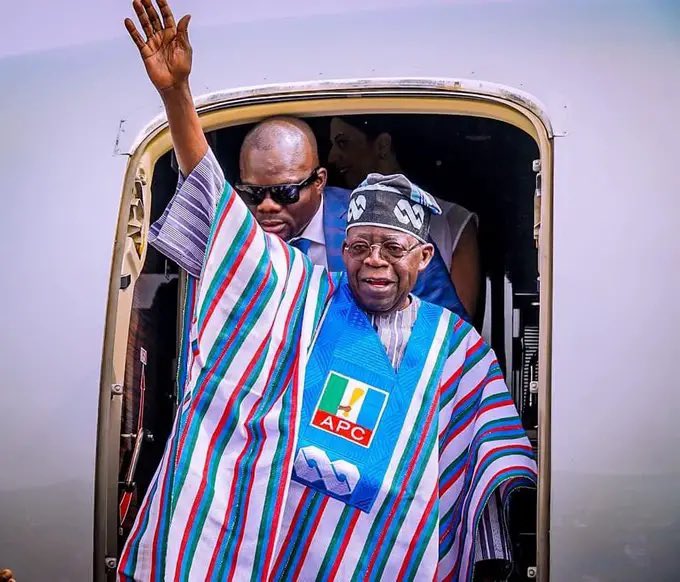
ON Monday, June 12, President Bola Tinubu signed the Students Loans Bill into Law.

The Act, having 23 sections, is also known as the Access to Higher Education Act 2023.

The law will enable indigent students in public tertiary institutions to take government loans to pay their tuition fees. 

Only students in public tertiary institutions can benefit from the loans.

In this report, The ICIR’s Marcus Fatunmole highlights key issues in the Act.

Section Two of the law gives equal access to students seeking higher education in any public institution of higher learning in Nigeria to access the loan without any discrimination arising from gender, religion, tribe, position or disability.

Section Three states clearly that the loan is only for tuition fee payment.

Section Five (1) notes that the Federal Government will establish the Nigerian Education Loan Fund (a bank) to manage and disburse the funds. 

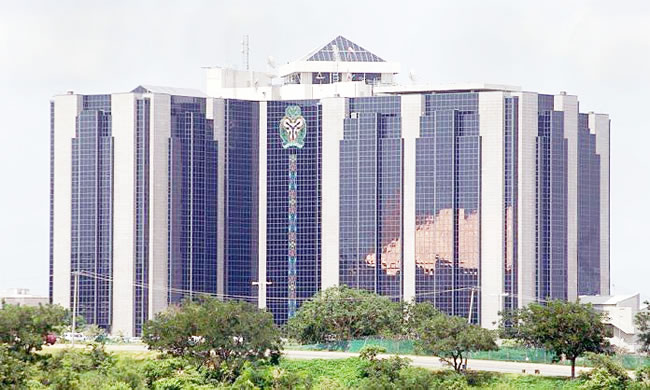
Section Five (2) gives the Central Bank of Nigeria (CBN) the power to manage the funds.

Section Five (3) empowers the CBN Governor to set up a Special Committee to perform the functions of the Fund.

Section Five (4): The Committee Chairman will be the CBN Governor, who shall appoint the Committee Secretary.

Section Seven: This part of the law contains the membership of the Committee, which includes: the CBN Governor as the Chairman; the Fund Secretary, who the Chairman will appoint; the Minister of Education; the Chairman of the National Universities Commission; and a representative of the Vice-Chancellors forum of all (public) universities in Nigeria.

Others are a representative of the Rectors forum of all Nigerian polytechnics and Provosts forum of all Colleges of Education in Nigeria; the Minister responsible for finance or his representative; the Auditor-General for the Federation; a representative of the Nigeria Labour Congress; a representative of the Nigeria Bar Association; and a representative of the Academic Staff Union of Universities.

Section 10 empowers the President to alter the Committee’s decision.

Section 12 captures the sources of the funds, which are education bonds; education endowment fund schemes; one per cent of all taxes, levels and duties accruing to the government of the federation from the Federal Inland Revenue Service (FIRS), Nigeria Immigration Service and Nigeria Customs Service.

Others are one per cent of all profits accruing to the government of the Federation arising from oil and other minerals; all sums accruing to the Fund by way of donations, gifts, grants, endowment or otherwise; and other revenue accruing to the Fund from any other source.

Section 14 deals with the requirement for obtaining the loan. Applicants must have secured admission into any Nigerian universities, polytechnics, colleges of education or any vocational schools established by the Federal government or the government of any state in Nigeria; applicant’s income or family income must be less than N500,000 per annum; applicants must provide at least two guarantors, and each of the guarantors shall be a civil servant of at least level 12 in the service, a lawyer with at least 10 years post-call experience, a judicial officer, or a justice of the peace.

Section 15:  A student is disqualified from accessing the loan if he is proven to have defaulted in respect of any previous loan granted by any organisation; he has been found guilty of examination malpractice by any school authority; he is convicted of a felony or any offence involving dishonesty or fraud; he has been convicted of drug offences; or any of the parents has defaulted in respect of students loan or any loan granted to the person.

Section 16 has to do with the method of application for the loan.

All applications must be submitted through the applicant’s bank to the Committee Chairman, accompanied by a cover letter signed by the vice-chancellor or rector or the head of the institution and the student affairs officer of the institution.

Each application shall have a copy of the student’s admission letter, and a letter by the guarantors addressed to the Committee Chairman recommending the student for the loan and stating that he accepts liability in the event of default.

Applicants will attach two passport photographs from each of the guarantors, the name of the employer and evidence of being so employed by the named organisation; and particulars of the guarantor’s business registration with the Corporate Affairs Commission or any other appropriate authority and his bankers, where the guarantor is self-employed.

The Committee shall communicate to the applicant the status of his application within 14 days of receipt, and loan disbursement to applicants will be subject to the Fund’s availability.

Section 17: Processing of any applicant’s application and disbursement shall be made within 30 days after the application gets to the Committee Chairman. 

Section 18: The beneficiary of the loan will commence repayment two years after completion of the National Youth Service Corps programme.

Repayment shall be by direct deduction of 10 per cent of the beneficiaries salary at source by the employer and credited to the Fund.

Whenever he changes his job, the beneficiary will communicate the change to the Committee Chairman within 30 days of resuming with his new employer with details of the new job.

Where the beneficiary is self-employed, he will remit 10 per cent of his total profit monthly to the Fund.

A self-employed person shall, within 60 days of assuming that status, submit all information such as the name of business, address and location, registration documents if registered, name of bankers, names of partners, names of directors and shareholders to the Committee.

Anyone who defaults in complying with the above or is found to be aiding the default commits an offence and is liable on conviction to a fine of N500,000 or imprisonment for two years or both.

Why Emefiele was suspended as CBN governor – Tinubu

PRESIDENT Bola Tinubu says the Central Bank governor, Godwin Emefiele, was suspended due to corrupt activities in the financial sector. 

Tinubu said this on Friday, June 24, while speaking at an interactive session with Nigerians residing in France. 

The President stated that the country’s financial system was “rotten” under Emefiele. 

The ICIR had reported how Tinubu had ordered the suspension of Emefiele as CBN governor. 

According to the office of the Secretary to the Government of the Federation (SGF), Emefiele was suspended due to an ongoing investigation into the bank and the planned reforms in the financial sector.

The suspension letter directed Emefiele to immediately hand over the affairs of his office to the CBN Deputy Governor (Operations Directorate), who would act as governor pending the conclusion of investigation into his office and reform of the financial sector.

Speaking on the suspension, Tinubu said many Nigerians living outside the country could not send money to their parents and relatives due to the multiple exchange rates while Emefiele was governor.

“Then, the financial system was rotten. Few people made bags of money, and then you, yourself, stopped sending money home to our poor parents. Several windows. But that is gone now.

“The man is in the hands of the authorities. Something is being done about that. They will sort themselves out,” he said. 

 Shortly after Emefiele’s suspension, the Department of State Services (DSS) confirmed his arrest.

According to the DSS, he was being held under an order of a competent court.

It said the arrest was “upon reasonable suspicion of committing acts which constitute a criminal breach of trust, incitement to violence, criminal misappropriation of public funds, economic sabotage, economic crimes of national security dimension, and undermining the security of the Federal Republic of Nigeria.”


Tinubu off to London on ‘a private visit’

0

PRESIDENT Bola Ahmed Tinubu will not return to Nigeria today, Saturday, June 24, as he proceeds to the United Kingdom on “a private visit.”

Tinubu, on Friday, concluded his official trip to Paris, France, where he participated in the summit for ‘A New Global Financing Pact’ hosted by French President Emmanuel Macron. 

A statement released by the President’s Special Adviser on Special Duties, Communication and Strategy, Dele Alake, said President Tinubu was heading to London for private reasons and would be back in the country in time for the upcoming Eid-el-Kabir festival.

The statement read, “Aside his participation at the event where he represented Nigeria well, President Tinubu also held high-profile sideline meetings with fellow heads of state and government, global business leaders and chief executives of leading multilateral and development finance institutions from around the world.

“The summit afforded the President the opportunity of projecting, on a global stage, his advocacy for widening the fiscal space and economic justice for Africa as the world accelerates the pace of energy transition, as well as advocating the urgency of addressing the pressing issues of poverty and climate change. 


READ ALSO:


“President Tinubu, who was initially scheduled to be back in Abuja today, will now proceed to London, United Kingdom, for a short private visit. The President will be back in the country in time for the upcoming Eid-el-Kabir festival.”

The statement was in contrast to the press release from Alake on June 19 when the President was departing for the global financial summit in France.

The special adviser had mentioned that the President would be back in Nigeria on June 24. 

Ebonyi govt to reactivate state Scholarship Board

0

EBONYI state governor Francis Nwifuru has said his administration would reactivate the state’s Scholarship Board as part of plans to address educational challenges in the state.

Nwifuru’s chief press secretary (CPS) Monday Uzor disclosed this in a statement he issued on Friday, June 23.

According to the statement, the governor decried the state of education in Ebonyi during a courtesy visit on him by the management and governing council of the Ebonyi State University and officials of the Abakaliki Medical and Dental Consultants of Nigeria.

“I want Ebonyi State University to be the best university. We have the capacity and we can do it. When it comes to the status of the university today, we are badly challenged. We are going to reactivate the Scholarship Board and we will get it right,” Nwifuru said.

The Scholarship Board was established to assist promising and indigent students access education. Its mission, as disclosed on its website, includes ensuring that “students/awardees do not suffer deprivation of academic activities as a result of non-prompt payment of tuition fees and living expenses.”

However, students have alleged abandonment by the state government in several cases.

In 2016, it was reported that 41 postgraduate Ebonyi students abroad who were beneficiaries of the scholarship accused the state government under the immediate past governor David Umahi of deserting them.

The students alleged that calls and messages to the government for tuition fees and living expenses went unanswered, as officials of the Scholarship Board claimed they had been barred from responding.

The Association of Ebonyi Indigenes Socio-Cultural in Diaspora (AEISCID) also criticised Umahi in 2022 for his attitude towards education after he said tertiary education was not for everybody.

Nwifuru expressed his readiness to resolve educational challenges in the state.

He also said a state of emergency would be declared on health in Ebonyi state.

“Many of the General Hospitals in the state are dead. How do we go about it?

“We need to have, at least, one functional hospital here in Abakaliki. With our collective support we will get it right,” he said.

Social media handles now required for bank customers – CBN

THE Central Bank of Nigeria (CBN) has made it mandatory for financial institutions to collect and verify customers’ social media handles as part of the institutions’ Know Your Customer (KYC) requirements.

The CBN made this known on June 23 when it released its Customer Due Diligence Regulations 2023 for financial institutions under its regulatory purview, as it takes a decisive stance against financial crimes.

The apex bank explained that the move was geared towards bolstering bank customers’ compliance with anti-money laundering (AML) and counter-terrorism financing (CFT) provisions, while aligning with international best practices.

Thabo Mbeki’s report on illicit financial flow in Africa had put such flow at $80 billion annually, raising concerns over rising terrorism in the continent.

The new regulations, which complement existing provisions outlined in the CBN’s Anti-Money Laundering, Combating the Financing of Terrorism, and Countering Proliferation Financing of Weapons of Mass Destruction in Financial Institutions Regulations of 2022, were designed to fortify the fight against money laundering, terrorism financing, and proliferation financing.

Under the new regulations, financial institutions are required to establish internal processes and procedures for conducting customer due diligence measures for both potential and existing customers, including occasional customers.

They must identify customers, whether individuals or legal entities, and obtain specific information like legal names, addresses, contact details, identification documents, account types, nature of banking relationships, and signatures. Furthermore, the regulations emphasise the need to identify politically exposed persons (PEPs).

To verify customer identities, financial institutions must rely on reliable and independent source documents, data, or information.

For individuals, this involves confirming date of birth, residential address, contact details, and the validity of official documentation.

In the case of legal persons or legal arrangements, financial institutions are required to undertake searches on public registries or databases, review annual reports or relevant financial statements, and examine board resolutions.

The regulations also emphasise the importance of record-keeping and maintaining up-to-date customer information.

Financial institutions must retain records obtained through customer due diligence measures, account files, business correspondence, and analysis results for, at least, five years after the termination or cessation of a business relationship or an occasional transaction.

FCT disengages contractor constructing public toilets

0

THE Federal Capital Territory (FCT) Rural Water Supply and Sanitation Agency (RUWASSA) has disengaged the services of a contractor, S. Y. Engineering Limited, who had been awarded a contract to construct public toilets.

RUWASSA disclosed this in a statement issued by its Executive Director, Mohammed Dan-Hassan, on Thursday, June 22.

One of the reasons for the disengagement was double allocation of sites by the contractor.

“The firm has failed to consummate and execute requisite documents to establish the terms of engagement and agreement between the two parties, leading to poor coordination and management of the Project.

“It is against this backdrop that RUWASSA withdrew the earlier offer of engagement made to S. Y. Engineering Ltd. With this development, the firm has no capacity to act for or on behalf of RUWASSA in anything relating to public convenience project and other matters in the FCT,” the statement read.

Globally, Nigeria ranks highly among countries that practise open defecation, with about 46 million Nigerians still engaging in it, despite plans to end the menace by 2025.

In 2022, the Federal Capital Territory (FCT) announced that it had begun construction of 10,000 public toilets across Area Councils to curb open defecation in major markets and parks.

“The project is part of Universal Sanitation Goals, which Nigeria is a signatory to end open defecation by 2030. Nigeria, as a nation, set 2025 as a local target in line with the directive of the President through Executive Order 009,” RUWASSA Public Relations Officer (PRO) told The ICIR in July 2022.

The announcement came two months after The ICIR reported that the lack of adequate toilet facilities was worsening open defecation in the FCT.

The ICIR confirmed that toilet facilities were being constructed in the Tipper Garage-Gwarinpa, Informal market, 3rd avenue-Gwarinpa, Apo bridge, Kubwa, and Lugbe areas of the FCT, many of which were constructed by S.Y. Engineering.

Timeline of flooding in Abuja Trademore estate

ON June 23, floods attended a heavy rainfall in the Federal Capital Territory, Abuja, displacing hundreds of residents living in Trademore estate from their homes.

The downpour started during the early hours of the day and raged till 4 pm. About 166 houses were reported to have been submerged in the floods. 

The ICIR report captured how many houses were submerged as residents struggled to save their lives and property. Government authorities said they had repeatedly warned residents in the estate to vacate the area as it was prone to flooding. 

This is not the first time Trademore estate would be flooded after a downpour. This report intends to draw a thread of flooding incidents reported in the estate.

In January this year, 30 houses were demolished as part of an effort to mitigate flooding in the estate. The Federal Capital Territory Emergency Management Agency (FEMA) said that flooding affected about 24,713 residents in 2022.

Record of flooding

About 60 houses were reported, in 2014, to have been affected by flood from rainfall that started at about 5.30am. The affected buildings included a Catholic church under construction. 

On August 26, 2020, one person was reported dead due to flooding in the estate. Residents said there had been flood incidents that happened as far back as 2011 and 2014.

In September 2021, another flooding tragedy hit residents of the estate. Four persons were reported to have been killed, while 166 houses were submerged in the waters. 

In 2022, Trademore estate was among many areas in the FCT reportedly submerged in flood that displaced 1.4 million Nigerians.

Government representatives who visited the flooded estate on Friday, June 23 in the latest flood disaster appealed to the residents to vacate the area. 

“We have all seen what happened. The water submerged the whole of this vehicle. Do not underrate the power of water. We do not want to have any loss of lives or properties this year,” one of the representatives said. 

Nigeria Army will defeat bandits, terrorists — new Defence Chief

2

THE new Chief of Defence Staff, Christopher Musa, has promised to ensure that the Nigerian army stops terrorists, bandits and other criminal gangs from disturbing the country’s peace.

Musa, making the promise at the Defence Headquarters, Abuja, on Friday, June 23, when he officially took over from Lucky Irabor, assured that the military’s determination would guarantee the country’s security.

“As the CDS, my promise to Nigeria is that we’ll continue to improve our mandate of sustaining peace and tranquillity in our country. We assure every Nigerian to feel safe that the Armed Forces of Nigeria are up and doing. We are highly professional and will be there for them.

“Nobody should doubt our determination to bring peace to Nigeria. Anybody, especially the criminals, bandits, terrorists, anyone who thinks otherwise, should be ready to face the music,” he said.

He vowed that the military under his command would fight to guarantee the security of Nigeria.

“Issues of welfare have been addressed. But you know we cannot be 100 per cent perfect. We’ll continue from where they stopped. We’ll ensure that our troops, our men, wherever they are, will never be left alone.

“We will ensure we give them what they need, what they require, and we’ll take care of the issue of administration, which is paramount because a soldier that is well fed, well-taken care of will give you the best, so they should not doubt we are here, and we are ready and we are willing to do that,” he said.

President Bola Tinubu appointed Musa as the new Chief of Defence Staff (CDS) on Monday, June 19.

He was the Commandant of the Nigerian Army Infantry Corps, Jaji, Kaduna, until his appointment as CDS.

In 2021, he worked as the Theatre Commander of JTF (NE) Operation HADIN KAI 2021, and was also a senior research fellow at the Nigerian Army Research Centre.

Musa holds a Master’s in Defence Studies from the National Defence University in Beijing, China.

He is a member of the 38th Regular Course of the Nigerian Defence Academy and was commissioned on September 21, 1991, into the Nigerian Army Infantry Corps.

Paris Summit: Key takeaway from Tinubu’s participation

THE need for the nascent administration of President Bola Tinubu to seek support, collaboration and partnership with multilateral financial institutions and foreign investors to solidify the country’s ailing economy was a key highlight of his participation at the Paris Summit held on June 22-23.

World leaders had gathered at the Summit for a New Global Financing Pact to make a case for urgent reforms in the world’s financial architecture.

The event, hosted by French President, Emmanuel Macron, was aimed at finding better ways to tackle poverty and climate change by reshaping the global financial system, The ICIR reported.

The two-day summit witnessed the signing of the New Global Financial Pact to prioritise support for and investment in vulnerable countries.

The pact was reached among world leaders due to the impact of climate change, the energy crisis, and the COVID-19 pandemic on the economies of developing countries.

Leveraging the summit, President Tinubu rallied investors to take advantage of opportunities in Nigeria as world leaders called for reforms in the global financial system.

He said his administration would sustain the ongoing reforms to attract foreign direct investment (FDI).

A statement released by Tinubu’s special adviser on special duties, Dele Alake, on Thursday, June 22, noted that his principal would be meeting with the president of the European Bank for Reconstruction and Development (EBRD), Odile Renaud–Basso, among other dignitaries.

“We are challenged in terms of reforms, and we have taken the largest elephant out of the room with removal of fuel subsidy, and multiple exchange rates are equally gone.

“We are determined to open up the economy for business. Consider us a stakeholder in the bank,” Alake quoted Tinubu to have told the Renaud–Basso.

In another meeting with the EBRD boss and the president/chairman of the Board of Directors of African Export-Import Bank (Afrexim), Benedict Oramah, the Nigeria President said, “We are ready for business, prepared to welcome investments,”

Tinubu highlighted agriculture as one of the focuses of his administration, assuring that the Federal government would stimulate the economy with policies that support investments in areas where the country has a competitive advantage.

“We need reforms for national survival,’’ he said, calling for collaboration to solidify the Nigerian economy.

“We must stimulate recovery for the growth and prosperity of our people, which will not be far away. Nigeria is ready for global business, and our reform is total,” he stressed.

Tinubu got Renaud-Basso’s nod when the latter told him that it would be a mistake for the development bank not to invest in Nigeria after considering six potential economies for investment.

“The focus would be on the private sector, especially small and medium-scale enterprises (SMEs),” Renaud-Basso said.

Commenting on the intertwined issues of climate change, poverty and fostering of sustainable development, he said Nigeria and other African countries were committed to tackling the problem.

He further declared, “We believe we have more pressing social issues in Africa. The argument has been that world leaders should elevate social issues just like environmental issues. I must commend President Emmanuel Macron, who has brought the issue of poverty to the table. This summit is about climate, people and diversity.

“The severe financial and economic crisis that African countries found themselves in after COVID-19 is all over. There are economic difficulties, and we’ve all realised that public resources would no longer solve the problem. We need to track private capital, and for us to track the capital we need to compete with other countries around the world.

“It is no longer business as usual for African countries. We now need to join the discourse. We need to compete with the rest of the world. We welcome the idea of President Macron to develop Net-Zero Data Public Utility (NZDPU) because we feel it is an open free repository that will greatly help African countries.”

In his welcome remark, Macron noted that the existing financial system, which resulted from a past consensus, was efficient in the past and brought assistance that was greatly needed, but that it was no longer fully adaptive, so he proposed a new financial pact.

According to Macron, the summit was for all facing the consequences of a deteriorating planet.

“We can see that inequalities are growing; we have seen that climate change vulnerability adds to the risk and our world is faced with multiple shocks.

“I do not think we can completely change our system, but we can make it much better,” Macron’s remarked.

Acting IGP unveils new policing strategies, appoints aides

0

THE Acting Inspector-General of Police (IGP), Olukayode Egbetokun, has unveiled a new policing strategy for the Force.

At his inaugural meeting with police chiefs comprising members of the Force Management Team, assistant inspector-generals of police, commissioners of police, and other heads of police formations, Egbetokun assured Nigerians that the Force under his command would symbolise excellence, integrity, and compassion. 

In a statement by the Force public relations officer, Olumuyiwa Adejobi, on Friday, June 23, Egbetokun urged Nigerians to collaborate with the Police “to shape a future where justice triumphs, the vulnerable find solace, citizens go about their lawful businesses without fear of insecurity or molestation, and where every citizen could truly believe in the power of law enforcement.”

The acting IGP said his new strategy was aimed at achieving operational successes and re-igniting public trust. 

His policing vision includes tackling crimes and criminality by establishing a specialised Quick Intervention Squad comprising combat-ready mobile police personnel with effective and enhanced training in crisis de-escalation and violent crime reduction strategies.

He guaranteed the “sanctity of the legal framework of the Force, leveraging cutting-edge tools, data analytics, and intelligence networks for a robust and effective human and technical intelligence-gathering process to enhance police capacity.”

The goals include strengthening inter-agency collaboration, enhancing the police training curriculum with a special focus on attitudinal and behavioural changes, improving welfare, and resuscitating the Police Officer Support Unit (POSU) of the police medical services to serve as confidential support.

Others are implementing a new recognition and reward system to motivate and encourage dedicated personnel, community policing through a more vibrant engagement of the Police Community Relations Committee (PCRC), and establishing a Citizens Engagement Focus Group.

Police chiefs at a meeting with the Acting Inspector-General of Police, Olukayode Egbetokun, at the Force Headquarters in Abuja on Friday, June 23

Meanwhile, Egbetokun has appointed Olatunji Disu, a commissioner of police, as his principal staff officer.

Disu, a former Commander of the Rapid Response Squad (RRS), Lagos State, and head of the Intelligence Response Team (IRT), Abuja, holds a Bachelor’s degree in English (Education), post-graduate diploma in International Relations and Strategic Studies, Master’s in Public Administration, and another Master’s in Criminology, Security & Legal Psychology.

Also appointed by the acting IGP are Ganiyu Adebowale, a chief superintendent of police, as his personal assistant; Adewale Ajibuwa, a superintendent of police, as his chief protocol pfficer; Sheriff Lawal, a deputy superintendent of police as his aide-de- amp; and Olawole Ogunwusi, a deputy superintendent of police as his chief security officer.

The ICIR reported how President Bola Tinubu appointed Egbetokun as acting IGP on June 19 after sacking Usman Alkali Baba, the former IGP, with other service chiefs.

This organisation also reported how Egbetokun claimed he felt like a lion ready to devour Nigeria’s enemies after his swearing-in on June 20.