THE Federal High Court sitting in Lagos has vacated the ex parte interim orders against Seplat Energy Plc, its chief executive officer (CEO) Roger Brown and board chairman Basil Omiyi.
Also vacated was the order that restrained Brown from participating in the running of the company, according to a statement on Thursday, April 6, signed by Omiyi.
“The case has been adjourned to May 16, 2023, to continue the hearing,” the statement read.
The interim orders were in relation to a court petition filed by five persons who claimed to be minority shareholders of Seplat, collectively holding 161 units of shares.
“The Company maintains that the petition lacks proper basis and is premised on false allegations,” the statement also read in part.
The court had adjourned the case on March 30 till Thursday, April 6 to rule on all pending applications that sought to vacate the ex-parte order, based on the lawyers’ consent.
The court had restrained Brown from carrying out his official duties pending the determination of a suit instituted against him, The ICIR can recall.
Brown had been accused of racism, favouring of expatriate workers, discrimination against Nigerians, and breach of good governance.
The defendants in suit no. FHC/L/402/2023 against the respondents (Seplat Energy, Brown, and Omiyi) are Moses Igbrude, Sarat Kudaisi, Kenneth Nnabike, Ajani Abidoye, and Robert Ibekwe.
In accordance with the court order, Brown had stepped down and delegated his official responsibilities to Samson Ezugworie, the company’s chief operating officer, as contained in a statement released by Seplat on March 10.
THE Defense Headquarters has said troops of the Nigerian Army killed 53 terrorists operating in North-East, North-Central and North-West in the last two weeks.
The Army added that troop also arrested 59 kidnappers and criminals perpetrating violence in the three zones within the period.
The Director of Defense Media Operations, Musa Danmadami, disclosed this while speaking at the bi-weekly news conference on armed forces operations on Thursday, April 6, in Abuja.
He said the troops also rescued 118 abducted victims across the operation theatres.
Danmadami said the troops in the North-East, Operation Hadin Kai, sustained offensive operations against two major terrorist groups, Boko Haram and Islamic State of West Africa Province (ISWAP) terrorists.
This resulted in the death of 29 terrorists; 20 others were also arrested.
He said a total of 974 terrorists comprising 77 adult males, 364 adult females and 533 children, surrendered to troops at different locations within the period.
The troops recovered several weapons, including 14 AK47 rifles, two NSVT guns, three PKT MG, three Gun Trucks, 188 rounds of 7.62 x 54mm ammunition, 142 rounds of 12.7x108mm ammunition, 110 rounds of 7.62mm special ammunition, 27 cartridges, 18 dane guns, 17 AK47 magazines and Improvised Explosive Device wires.
Danmadami said the troops also recovered “two grinding machines, one vulcanising machine, one mechanic tool box, tyre rims, three pairs of Boko Haram uniforms, shovel, bags of assorted foodstuff, cartons of spaghetti, medical supplies, solar panels, 12 motorcycles, 13 bicycles, mobile phones, radio, pouches, one vehicle and the sum of N2.3 million cash” from the terrorists.
He noted that the apprehended suspects and recovered items had been handed to the relevant authorities.
“Equally, the rescued terrorists escapees and members of their families were profiled and given medical attention, while the surrendered terrorists and members of their families are also being profiled for further action,” he said
The operations in the north-central and northwest also have similar results, according to Danmadami.
In the North-Central, troops of Operations Whirl Stroke and Safe Haven apprehended nine suspected kidnappers and nine other criminals and rescued 21 kidnapped civilians.
They also recovered two AK47 rifles, two pistols, two pistol rounds, machetes, four ATM cards, five SIM cards, and mobile phones.
In the North-West, Operation Hadarin Daji neutralised 24 terrorists and rescued 43 abducted civilians.
They also recovered 10 AK47 rifles, nine AK47 magazines, 14 dane guns, 28 rounds of 7.62mm special, six motorcycles, radios and 76 rustled cattle.
There have been several reports of successful military attacks on terrorists from the Defence Headquarters.
While insecurity remains rife, particularly in the north, the Nigerian armed forces claimed to have arrested several terrorists in different operations.
On Thursday, April 6, the DHQ said its troops neutralised 48 terrorists and recovered N2.3 million in Borno.
On April 1, it announced the killing of five bandits and the recovery of four AK-7 rifles in Kaduna.
Shortly after, the DHQ disclosed that the operatives killed another 11 suspected bandits and recovered ammunition in the same state.
In February, the DHQ said operatives eliminated 80 ISWAP members while 340 terrorists and members of their families surrendered to the troops in two weeks.
In September 2021, the Army said troops of Operation Hadin Kai killed about 36 Boko Haram terrorists and arrested two, also within two weeks.
Days after, 2,700 Boko Haram members was reported to have surrendered to the military.
THE University of Southern California’s Center for Health Journalism is accepting applications for the 2023 National Fellowship, which focuses on health journalism.
The program will help journalists and their newsrooms report deeply and authoritatively on the health, welfare, and well-being of vulnerable children, youth, families, and communities.
The fellowship will be held from July 16, 2023, to July 20, 2023, in Los Angeles at the University of Southern California, Annenberg.
Fellows will also receive mentorship for up to five months and a US$2,000 to US$10,000 grant to work on a reporting project.
Professional and freelance journalists from print, broadcast, and online media with three years of experience and an interest in health issues can apply for a fellowship.
The deadline for submission of applications is May 5, 2023. Interested applicants can apply here.
THE governorship candidate of the Labour Party (LP) in Lagos State, Gbadebo Rhodes-Vivour, has urged residents of the state to take a stand against violence and promote peace for the sake of democracy and posterity.
Rhodes-Vivour addressed the issue of violence that was witnessed during the March 18 governorship election on Arise TV’s Morning Show on Friday, April 7.
He condemned those fanning the embers of ethnic division and promoting violence as it portends danger for the future.
“I don’t want Lagos to be torn apart by violence. If this scenario is allowed to stand, anybody standing for future elections will not think about the debate but will think about violence,” he said.
“We are the future and the decisions that are being made are going to affect us. We must do the best we can not just for this election, but about the precedent that is being set by this election,” he added.
The LP governorship candidate described the culture of the Lagos people as one of openness and accommodation, not suppression and intimidation, noting that what played out during the election had never happened before and must be resisted.
“This is not about Gbadebo Rhodes-Vivour or Labour Party but about our democracy,” he stated.
During the general elections, Lagos was a hotbed of intense political activities that assumed a dangerous ethnic dimension as violence was witnessed and hoodlums stormed several polling units, destroying electoral materials and chasing away voters.
Lagos State Commissioner of Police also admitted incidences of violence and attacks on voters who came out to exercise their civic responsibilities during the gubernatorial election.
Rhodes-Vivour disclosed that documentary evidence and incidence reports across 700 polling units, to expose the violence that took place during the election, are being put in place.
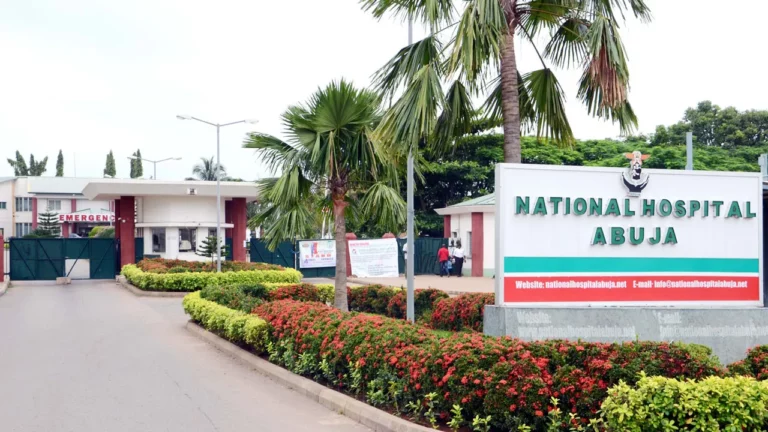
THE NATIONAL Hospital, Abuja, has debunked reports that negligence caused the death of a National Youth Service Corps (NYSC) member, Obinna Emeka, a pharmacist, who died at the hospital on April 1 after he was hit by a vehicle in the Kubwa area of the nation’s capital.
Emeka, 27, flew to Abuja on March 31 for a meeting, his father, Emeka Ogbonna, said in a viral message on social media.
Ogbonna, a pharmacist and a monarch, said he drove his late son to the Owerri Airport on March 31, 2023, from where he flew to Abuja for a meeting.
He lamented that two days after he drove his son to the airport, he flew to Abuja on April 2, 2023, to take his son’s corpse back home from the National Hospital mortuary.
“He was full of life. I have lost my son to incompetence and negligence,” he alleged, urging that the hospital be shut down for being “a death trap.”
After the accident at 7.10 pm, sympathisers rushed Emeka to Kubwa General Hospital.
The deceased father alleged there was no medical doctor to attend to him for nearly three hours before a doctor came and referred him to National Hospital.
“At National Hospital, the doctors insisted that he would not be attended to until they had his full body scan and x-ray. The body scan and x-rays machines in the National Hospital were not working and had not been working for close to two years.
“He was taken to a private hospital to obtain the full body scan, and when my son, pharmacist Obinna Emeka, was brought back to National Hospital, it took the hospital medical team close to two hours for documentation before he was taken in for medical attention.
“At this time, his veins have collapsed. The medical team, after watching my son gradually stop breathing came out and announced to his friends and people who brought him to the hospital that they were sorry, my son, the writer, my prince, my pharmacist who worked with me in our pharmacy till March 31, 2023, could not make it.”
As a ‘prolific’ writer, the deceased wrote his first book, Ice Age, in primary school. He submitted the manuscript for his newest book to a prominent publishing house in February 2023, his father said.
The late Ogbonna in his National Youth Service Corps (NYSC) uniform
Reacting, Friday morning, the National Hospital said the deceased was brought to the facility seven hours after the accident.
In a statement signed by its spokesperson, Tayo Haastrup, the hospital explained that it had all the equipment and expertise needed to attend to the patient and others.
However, the facility was silent on the claim by the deceased father that the hospital did not have the full body scan and x-rays machines needed for the corper’s scan but had to be referred to a private facility.
The ICIR reporter called Hastrupp to get the hospital’s reaction to this. He did not pick up the reporter’s calls.
The reporter also called his assistant, Eric Togbe, who promised he would call his superior (Hastrupp) to pick up. Further efforts to get Hastrupp, a monarch, to speak on the matter failed.
Part of the hospital’s statement reads, “The patient was said to have been knocked down by a vehicle along Kubwa Express Road and was taken to Kubwa General Hospital, after which he was referred to National Hospital Abuja. He was presented to National Hospital Abuja Trauma Centre on 2/4/2023, seven hours following the accident. Necessary investigations and procedures were carried out, but unfortunately, we lost the patient.
“As a matter of fact, there was no incompetence or negligence in the treatment of the said patient. National Hospital Abuja ensures that medical services are rendered promptly. Emergencies/trauma cases are given priority. Our CT scan, MRI and ultrasound machines are always available for in-patients and emergencies. Furthermore, it is a policy in National Hospital Abuja to attend to emergencies for 48 hours without emphasising the monetary aspect.”
The hospital appealed to the public to ensure patients are taken to hospitals on time for better management.
YET to be identified gunmen have abducted the former Deputy Governor of Nasarawa State, Onje Gye-Wado.
The Police said Gye-Wado, a professor, was whisked away on Friday morning when gunmen broke into his residence in Gwagi village.
The state Police Public Relations officer, Ramhan Nansel, in a press release, confirmed the abduction early on Friday, April 7.
According to the statement, the gunmen stormed into Gye-Wado’s home in Gwagi village, Wamba Local Government Area, and took him away.
A police tactical squad and other security officers have commenced a search to rescue the victim.
“The Commissioner of Police, Nasarawa State Command, CP Maiyaki Baba, has reassured the general Public, especially the family of Prof Onje Gye-wado, that an effort is ongoing to rescue the victim who was abducted by yet to be Identified hoodlums in the early hours of Friday, as Police tactical operatives have intensified search and rescue operation.
“Information received by the command indicated that on 7/4/2023 at about 12:30 a.m., unknown gunmen invaded Gwagi village in Wamba LGA, broke into the residence of one Prof. Onje Gye-wado and abducted him to an unknown destination.
“Upon receipt of the information, Police operatives attached to Wamba Division swiftly moved to the scene, but the hoodlums had fled with the victim before their arrival,” the Police stated.
The Police Command disclosed that in addition to the ongoing search to free the hostage in good health and apprehend perpetrators of the act, the Commissioner of Police further mobilised and deployed reinforcement consisting of Police tactical teams, military, vigilantes, and local hunters.
The Police urged anyone with information to call the following numbers: 09115629178, 09067877096, 08112692680, and 08104441179.
Gye-wado served one term as deputy governor of Nasarawa State during Abdullahi Adamu’s administration.
In January, the Nasarawa State Police command rescued two pupils abducted from the Local Education Authority (LEA) primary school, Alwaza, in Doma Local Government Area (LGA).
The pupils were abducted along with four others by gunmen riding on motorcycles.
THE Inter-Party Advisory Council (IPAC) has asked the Independent National Electoral Commission (INEC) to ensure that the April 15 re-run governorship election in Adamawa State is fair and credible.
Speaking during a press briefing in Yola on Thursday, April 6, Chairman of IPAC in Adamawa State, Bello Babajo also called for the appointment of a new Resident Electoral Commissioner (REC) ahead of the poll.
“The 2023 election has come and gone in some places, while in Adamawa ours is inconclusive as declared by INEC due to their own reasons. Adamawa State is a peaceful state which has never experienced any political crisis in the history of political struggles.
“We call on all citizens to remain calm as we continue to enjoy our peaceful co-existence as we pursue it in a legitimate procedure,” he said.
INEC had declared the March 18 governorship election in Adamawa State inconclusive.
The Commission had explained that the margin of victory recorded between the two leading contestants was less than the number of cancelled votes in the state.
Candidate of the All Progressives Congress (APC) Aishatu Dahiru Binani and the incumbent governor, candidate of the Peoples Democratic Party (PDP) Ahmadu Fintiri, are leading in the already collated votes.
Finitiri had polled 421,524 votes while Binani got 390,275, leaving a margin of 30,000 votes between them.
The incumbent governor won in 13 of Adamawa’s 21 local government areas while Binani won eight.
IN this report, Olugbenga Adanikin examines the health implication of consuming Sugar-Sweetened Beverages (SSB), with special emphasis on energy drinks, weak regulations, and the opacity in implementing the 10 per cent SSB Tax meant to discourage Nigerians from excessive consumption of the products.
What is the fuss about energy drinks?
Sugar-Sweetened Beverages (SSB), according to the United States Center for Disease Control and Prevention (CDC), is any liquid sweetened with various forms of added sugars like brown sugar, corn sweetener, honey, raw sugar, sucrose, dextrose, fructose and other similar sweeteners.
Research revealed these drinks could be soda, fruit, sports, energy drink, sweetened waters, and coffee and tea beverages with added sugars.
On July 4, 2014, the National Agency for Food and Drug Administration and Control (NAFDAC), in a statement posted on its verified Facebook page, established energy drinks as having caffeine and sugar as components, which “are known to cause a variety of adverse health effects.”
This raised other safety concerns, including how energy drinks can increase heart rate and blood pressure when consumed arbitrarily.
“Now that you know people, be WISE!!!” The warning stated after indicating the inherent dangers of consuming SSB products.
NAFDAC’s Warning on Energy Drinks. Source: NAFDAC Verified Facebook Page.
Multiple studies ( see here, here, and here) have also validated the consumption of these drinks was fast responsible for the rise in Non-Communicable Diseases (NCD).
These are diseases “…not spread through infection or other people, but are typically caused by unhealthy behaviours.”
They include type 2 diabetes, heart disease, kidney diseases, stroke, obesity, tooth decay and cavities, gout and even arthritis.
According to the World Health Organisation (WHO), NCDs kill 41 million people annually, accounting for 74 per cent of deaths globally.
Furthermore, the global health body said, “of all the NCD deaths, 77 per cent are in low-income and middle-income countries.”
Though not peculiar to Africa, the spike in NCBs has remained a global issue but is worst in a developing nation like Nigeria.
Reports say at least one in every 10 adults in Nigeria, accounting for six million adults, is suffering from diabetes, one of the multiple diseases associated with the consumption of SSBs.
In 2022, a consultant endocrinologist at the University of Port Harcourt Teaching Hospital, Sunny Chinenye, said the figure had risen to 11.2 million people.
Worse still, experts continued to express concern about the shortage of insulin, while patients spend between N20,000 to N150,000 monthly on Insulin as it helps regulate blood sugar (glucose) in the body.
Nigerian Budget to the Federal Ministry of Health in 10 years. Infographics by Ibukun Ajayi.
“Diabetes is a very costly condition. In Nigeria, a typical patient will spend N20,000 to N30,000 to control it properly. This is the minimum, covering medications, blood tests, and clinic attendance.
“When complications like kidney disease come into the picture, some patients have a monthly expenditure of N100,000 to N150,000,” A professor and a chief clinical coordinator at the NSIA-Lagos State University Teaching Hospital (LUTH), Olufemi Fasanmade, told Punch.
The shortage of endocrinologists in Nigeria is another nightmare.
It is far worse due to the sudden brain drain in the nation’s health sector. On March 16, the WHO ranked Nigeria among 55 countries with a shortage of health workers.
A Medical Practioner and Consultant Physician Endocrinologist at Ladoke Akintola University Teaching Hospital (LAUTECH), Michael Olamoyegun, further alluded to this shortage when he said the country could only boast of less than 200 endocrinologists. Still, the country lacks a systematic screening approach to recording diabetes patients. He suggested telemonitoring as a great approach to diabetes management.
Chart Shows 10 years of Budgetary Allocations to the Federal Ministry of Health Sector.
NAFDAC’s weak or no regulation
The Act establishing NAFDAC prohibits the sale of “counterfeit, fake drugs and unwholesome processed foods.” Mojisola Adeyeye is NAFDAC’s Director-General (DG).
This implies it is largely NAFDAC’s mandate to regulate the consumption of local or imported drinks, especially those with additives, including energy drinks.
In other words, adding additives to food or drinks make it ‘processed food.’ Still, NAFDAC has not achieved much with particular reference to the SSB.
The Food Additives Regulations, enacted on July 7, 2021, for instance, attempts to reflect SSB in its definition of food as “any substance, whether processed, semi-processed or raw, which is intended for human consumption and includes water and other drinks….and any substance which has been used in the preparation or treatment of food….”
This further positioned NAFDAC as the supposed regulator of SSB products because energy drinks contain additives.
Regardless, with reference to food additives regulation, the emphasis was more on food and not the SSB.
On Tuesday, March 14, The ICIR visited NAFDAC headquarters and randomly asked the officials which agency of the federal government should regulate the drinks such as energy drinks, and the response was NAFDAC. It was the same response when The ICIR visited the Federal Ministry of Health. The reporter was directed to the Food and Drugs Department and later to Food Safety Unit within the department.
Again, these field findings pointed to popular submissions that NAFDAC should regulate SSB products in Nigeria.
The ICIR further contacted NAFDAC Head of Media Department, Abubakar Jimoh, a doctor, to verify how the agency has been able to regulate sugar-sweetened beverages and if there is an existing NAFDAC regulation to regulate SSB products in Nigeria. The ICIR also asked him to point at one if such exists.
NAFDAC Headquarters, Abuja. Photo Source: Sun Newspaper.
He promised to ‘revert’, but the official is yet to respond as of the time of filing this report.
Two days later, Friday, March 17, at about 11:17am, The ICIR further reached out to remind Jimoh. But he never responded.
As such, to a large extent, and based on field findings, NAFDAC currently has no direct regulation on sugar-sweetened beverages, which might have implications for the public.
Dissecting the soft drinks regulations and linkage with SSB
The ICIR, in the course of these findings, studied the NAFDAC regulations. It showed that the Soft Drinks Regulations gazetted on September 15, 2021, at the moment, is the closest to checkmating production, sales, or importation of SSB. This is because it classified soft drinks into nine groups, which also recognised “carbonated beverage” and “drink”.
Findings would later reveal soft drinks in this context would also mean non-alcoholic carbonated or non-carbonated ready-to-drink beverages.
They include flavoured crush, flavoured squash or cordial, comminute drinks, fruit crush, fruit squash and fruit cordial.
Others are carbonated soft drinks, added substances for carbonated soft drinks, and names of carbonated soft drinks and non-carbonated soft drinks.
For instance, Section two (2) of the soft drink regulation addressed Prohibition, and Section three (3) dealt with the Labelling of soft drinks, Fruit squash, cordial or Fruit crush. In contrast, Sections four (4) and five (5) addressed ‘Offences and Penalties’, Forfeiture after conviction.
It forbids anyone from “manufacturing, importing, exporting, distributing, advertising, display for sale, offer for sale, sell or use soft drinks specified in the Schedule to these Regulations unless it has been registered in accordance with the provisions of these Regulations.”
Again, the Schedule referenced in Section 2 pointed at the nine classifications of soft drinks mentioned above. This implies that sugar-sweetened beverage is regulated by multiple guidelines such as food additives, soft drinks, wine regulations, etc.; thus, there is no particular guideline for SSB.
For instance, in the case of Carbonated Soft Drinks, which Energy Drinks are also classified, it was merely described as the “class of beverages made by absorbing carbon dioxide in potable water with or without various added substances.”
Also, Carbonated Soft Drinks with Added Substances such as nutritive sweeteners – “dry or liquid form of sugar, invert sugar, dextrose, glucose syrup…, or any combination of food flavours, colours and other food additives” should adhere strictly to the right quantity Food CODEX approved by the agency (NAFDAC).
However, these are controlled through the food additives regulations and somehow implied on SSBs.
The guideline discouraged false, misleading descriptions of additives on product labels. It also emphasised that the “food additives with a shelf life of not exceeding 18 months shall carry the date of minimum durability using words such as “will keep at least until…..”
The inscription “for food use” or a statement expressing similar context is expected to appear prominently on the label. And most essentially, the use of synthetic colours and a mixture of colours in the food item should visibly display the “lot number of the mixture, the food grade colour and the common name of the individual colours, either synthetic or inorganic in the mixture.”
Other items highlighted in the soft drinks guideline, which, if breached, could harm the public are quinine, stannous chloride, and caffeine, among other chemical preservatives.
According to the Standard Organisation of Nigeria (SON), the acceptable sugar content in soft drinks is between 7 – 14 grams per 100 ml. The ICIR could not establish NAFDAC’s specification on sugar content, but the maximum gram in wine, according to the Wine Regulations (2019), is 45 grams per litre.
Quinine, Stannous chloride, Caffeine – should Nigerians be worried?
Quinine, for instance, can be used to treat malaria, according to findings. It is considered toxic to yeasts and trypanosomes but could cause dizziness, diarrhoea, vomiting, abnormal heartbeat, and kidney damage in the worst scenarios.
The U.S Food and Drug Administration (FDA), in 2007, banned its use and warned against its purchase from vendors outside of the US.
A search on stannous chloride, another item flagged by NAFDAC, could be used to conserve soft drinks. Also described as Tin Chloride, Meghachem, an India-based chemical firm, highlighted how the chemical has remained an essential item in the steel industry, used to make Tin Cans.
“Direct exposure to the Stannous Chloride can be hazardous to human health. Any contact with the skin or respiratory system can lead to severe injuries and death,” it stated, emphasising the chemical could also release toxic gases when exposed to overheating.
Incidentally, most soft and energy drink-producing firms have adopted tin cans. And this can imply that excessive exposure of the can drinks to warm temperatures could cause more harm than good.
As for Caffeine in SSB is expected to range between 14.5mg/100ml and 32mg/100ml. NAFDAC maintained anything beyond 32mg/100ml might be harmful.
The agency particularly emphasised the compulsory declaration of other composing nutrients and boldly written inscriptions that should read – Not Suitable for Pregnant Women, Children and People Sensitive to Caffeine.
The ICIR bought three different brands of energy drinks in the course of these findings. The essence was to verify the sugar levels and the caffeine contents. One of the products was imported, and the other two were locally produced.
They all complied with the caffeine and sugar level guidelines. For instance, one of the local brands had 30mg/100ml of caffeine rather than the maximum of 32mg/100ml. The foreign brand had 32mg/100ml. Its total sugar was 11 grams per 100 ml against a maximum of 14 grams per 100 ml. Regardless, they all issued the inscription “High Caffeine Content.”
The SSB producers also warned against excessive product consumption and the need for pregnant women, lactating mothers, and those sensitive to caffeine or diabetes.
“High caffeine content. Not recommended for children, pregnant women, lactating mothers, people sensitive to caffeine or diabetics (30mg/100ml). Consume responsibly – limit daily intake to one bottle. Do not mix with alcohol,” the inscription read.
A medical practioner at the department of internal medicine, General Hospital, Orile-Agege, Lagos State, Rokibat Giwa-Ayedun, was among the experts who buttressed the implication of consuming caffeine and sugar in SSB products.
She said consuming caffeine products arbitrarily could lead to abnormal heart rhythm, insomnia, and palpitation, which could lead to sudden death and other fatal health conditions.
She explained that excessive sugar consumption would often make the body store the item (sugar) as fat, “and it will increase your chances of gaining weight, and could block the blood vessels, which eventually could cause a heart attack.”
In a 2020 study on the “Assessment of Sugar Content from Different Soft Drinks Sold in Nigeria” by Abass Ohilebo of the Redeemers University and Blessing Odudu, the researchers did a comparative analysis of 10 licensed soft drinks produced in Nigeria.
The drinks were tested, and the result revealed a range of between 0.036g/100ml (Limca) to 3.88g/100ml (Teem Bitter Lemon). The study arrived at low sugar contents from all drinks subjected to the test.
Regardless, The ICIR can confirm that the highest an offender can get is a maximum jail term of one (1) year or a fine not beyond N800,000 or both. And the maximum fine a corporate organisation could attract is N5 million.
But considering the inflation and depreciating value of the local currency, some have argued the sanction is ineffective enough to deter erring firms or individuals from breaching the relevant guidelines.
Meanwhile, The ICIR can confirm that the Federal Ministry of Health is yet to capture SSB products in its food safety policy. The food safety policy, as of the time of this finding, is currently being reviewed to capture the new realities posed by the consumption of SSB products.
The SSB Tax to the rescue
The Federal Government (FG) approved the SSB Tax to curb non-communicable diseases in the country. The tax was also part of the 2021 Finance Act and became operational in 2022.
The idea of taxing SSB products as a form of deterrent was largely due to consistent efforts from a group called National Action on Sugar Reduction (NASR).
The group, through the National Assembly (NASS), successfully pushed the advocacy for sugar reduction in the diet of Nigerians through a 10-per cent tax on sugary and carbonated drinks.
Ultimately, the vision of the coalition (NASR), which includes the Diabetes Association of Nigeria (DAS) and the Nigeria Cancer Society (NCS), is to increase taxes on SSB to the point that it will discourage Nigerians from excessively consuming sugary drinks and beverages for their health benefits.
The 10 per cent SSB tax later met contention from the Manufacturers Association of Nigeria (MAN). Meanwhile, relevant stakeholders were already asking for an increment in the excise tax from 10 to 20 per cent of the final retail price of the SSB products.
Part III, Section 21 of the Customs, Excise Tariffs (Consolidation) Act elucidates the non-alcoholic drinks – SSB.
It stated, “Excise duty on non-alcoholic, carbonated and sweetened beverages shall be charged at a specific rate of N10 per litre.”
Efforts are being made to ensure the tariff is diverted to the health fund as part of moves to fund the health sector and provide support for victims of SSB-related ailments.
This is more important because, for over two decades, Nigeria has been unable to meet its commitment to setting aside 15 per cent of its annual budget for the health sector. The commitment was from the Abuja Declaration on health, where member nations of the African Union (AU) agreed to earmark 15 per cent of their annual budget to the health sector.
10 years percentage difference allocation to the health sector.
Infographics show Nigeria’s annual budget for the health sector in the last 10 years
Sadly, managing NCBs, amidst the declining government revenue has worsened the plight of the victims to get the right treatment. Basically, the tax would come in handy in bridging the funding gap.
Thus, the Nigerian Customs Service (NCS), since July 2022, has been collecting the SSB Tax. It has feasted on the opportunity to drive more money into the government’s coffers. Still, how much has been collected via the tariff and the current utilisation level is not sure, and not currently in the public space.
On Thursday, March 2, The ICIR wrote a Freedom of Information (FOI) request to the Nigeria Customs Service (NCS) to establish how much has been recovered from the SSB Tax since its implementation and possible utilisation. But as of the time of filing this report, the Service is yet to respond to the FOI.
According to the freedom of information law, failure to respond to FOI requests attracts stiff punishment, such as a jail term or N500, 000 fine.
“It is a criminal offence punishable on conviction by the Court with a minimum of 1-year imprisonment for any officer or head of any government or public institution to which this Act applies to willfully destroy any records kept in his custody or attempt to doctor or otherwise alter same before they are released to any person, entity or community applying for it,” Section 10 read.
Unreplied FOI request to Nigeria Customs Service
Is the tariff from SSB channelled to the Health Fund?
The ICIR also attempted to verify from the health ministry how much of the tariff from the SSB has been collected and if it was rightly channelled to the health fund as stipulated by the law. And especially the utilisation of the funds? But the Director of Information at the Federal Ministry of Health, Ahmadu Chindaya, told The ICIR reporter to meet with the Director, Food and Drugs, as he was “not in the best position to speak on these issues.”
The director in charge of food and drugs, to which he referred this reporter, was unwilling to speak to The ICIR. After being briefed on the journalist’s purpose of the visit, she asked that the reporter be taken to another unit, the Food and Safety.
At the food and safety unit of the ministry, the head, Olugbemiga Atanda, advised that Femi Stephen, one of his colleagues, attend to the reporter. After brief questions on the SSB, The ICIR was asked to send its questions to Stephen.
On Tuesday, March 14, the questions were sent. It was acknowledged, but no feedback.
Another reminder was sent days after. The respondent apologised and promised to respond as soon as possible. Stephen replied by Wednesday, March 22, confirming issues regulating the SSB did now emanate from the ministry.
“In responding to your questions, please note that the SSB tax did not originate from the federal health ministry. It originated from the Federal Ministry of Finance, Budget and National Planning.”
He disclosed that implementing the tax would be within the mandate of the finance ministry. The official also confirmed, “SSBs are linked to certain Non-communicable diseases such as diabetes.”
While apologising for the delayed response, he provided data on diabetes prevalence in Nigeria.
Experts’ opinion on managing non-communicable diseases caused by SSBs
The medical practitioner from the department of internal medicine, General Hospital, Orile-Agege, Lagos State, Giwa-Ayedun, while proffering solutions, advised the public to stay away from SSB products and obey medical counsel. She explained that though some medical conditions might be hereditary, and few others could emanate due to age, lifestyles also contribute to NCDs, such as diabetes.
According to her, the Federal Ministry of Health has an important role, especially regarding awareness creation, to protect the public from health challenges that could arise from the intake of SSB products. Though she disclosed the responsibility lies with multiple stakeholders, the medical expert emphasised the cardinal role of NAFDAC in regulating what people consume.
Justifying why serious attention is required to manage the situation, she said the pancreas ordinarily produces hormones that regulate the blood sugar, which is insulin, but as “the body ages, the ability to produce enough insulin to manage the blood sugar wanes.”
A medical doctor, Solomon Chidiebere, also tasked NAFDAC to stand up to its duties. He said, “Many carbonated drinks are filled with sweeteners, and some are unhealthy for the body…”
He cited instances where people who consume carbonated drinks often complain of belching. “That is because they (the energy drinks) contain gas. The word carbonated means there is the presence of carbon. And carbon is used as a preservative.”
Chidiebere, a general physician at Pinecrest Specialist Hospital, Lagos, advised an optimum SSB consumption. He said those with a family history of diabetes or vulnerable to being diabetic should stay-off the SSB products.
“Usually, the body needs to take time to metabolise it (sweeteners), unlike when you take natural products such as carbohydrates like rice. The body tries to synthesise them naturally, but this (sweetener) is not in its natural form, so the body does not thrive well with unnatural products.”
“You must also be mindful that the producer is not selling with the mindset that you are in good health. His first interest is to make profits…”
During this report, The ICIR sought input from a professor and a Consultant Physician and Endocrinologist at the College of Health Sciences, University of Abuja, Anumah Felicia. She revealed the country currently lacks specific guidelines for regulating SSB products.
But, the medical practitioner affirmed the existence of a National Action Group, comprising the NAFDAC and Non-Governmental Organisations (NGOs). The group, she disclosed, were able to push for a 10 per cent levy as part of measures to checkmate SSB products in the country.
“It is not NAFDAC’s responsibility per se; a National Action Group in Nigeria is driving that process,” she said. “But NAFDAC is still part of the secretariat. It is like a coalition of NGOs. I am even a member, and we have achieved something. Some 10 per cent, which is not enough. We are looking at 20 per cent recommendation made by the WHO.”
A top source in the health ministry also disclosed efforts by the ministry to review its food safety policy to incorporate SSB products.
“We have a policy on food safety already, but all those things were not covered, so we are reviewing it to incorporate SSB”.
GOODS worth millions of naira were lost when a cargo and passenger boat capsized in Bayelsa State on Thursday, April 6.
The incident occurred near Okoroma, Nembe Local Government Area of the state while the boat was crossing the Yenegoa-Nembe-Brass waterways.
Assistant Secretary of the Maritime Workers Union of Nigeria in Okpoma, Tari Dikuma confirmed the incident in Yenagoa, stating that passengers on the boat swam to safety and no life was lost.
Dikuma, who was part of the rescue team, further disclosed that properties worth millions were lost.
“So far we have not recorded any casualty but we have salvaged a lot of items with speed boats, badge and open boats.” he said.
Boat mishaps in Nigeria have claimed many lives recently. According to a report in October 2022, the country recorded at least 53 boat accidents in less than three years.
The years under review include 2020, 2021 and 2022, during which at least 701 lives were lost to boat accidents in various states.
In Bayelsa alone, at least 35 people died following boat mishaps between 2020 and 2022, according to the report.
Overcrowding, poor maintenance of boats, bad weather conditions, and sometimes, dredging, are a few of the factors responsible for boat accidents in Nigeria.
AWARD-WINNING Nigerian author Chimamanda Ngozi Adichie has criticised the United States and other members of the international community for endorsing Nigeria’s president-elect Bola Ahmed Tinubu of the ruling All Progressives Party (APC), describing the process through which he emerged as unlawful.
Nigeria held one of its most competitive presidential elections on February 25 across all the 36 states and the Federal Capital Territory, after which Tinubu was declared the winner by the Independent National Electoral Commission (INEC).
However, the manner in which the elections were conducted has come under heavy scrutiny and criticism, with the opposition challenging the process and outcome in court.
Although the country’s last presidential elections were arguably the most competitive, it also recorded the lowest turn-out – only about 25. 2 million total votes were cast, even though INEC said it had distributed 87 million Permanent Voters Cards (PVCs).
Many have attributed the low voter turn-out to the late arrival of officials and election materials, inability to get accredited, voter suppression, voter intimidation and a cash crunch that had lasted more than a month.
In an open letter to US President Joe Biden, Chinamanda said the electoral commission reneged on its assurance to Nigerians as contained in the recently amended 2022 Electoral Act and failed to upload results of the presidential election in real-time, whereas, results of the National Assembly elections which were held at the same time were easily uploaded.
“Some electoral workers in polling units claimed that they could not upload results because they didn’t have a password, an excuse that voters understood to be subterfuge,” she said.
“Voters compared their cellphone photos with the uploaded photos and saw alterations: numbers crossed out and rewritten; some originally written in black ink had been rewritten in blue, some blunderingly whited-out with Tipp-Ex.
“The election had been not only rigged, but done in such a shoddy, shabby manner that it insulted the intelligence of Nigerians,” the writer added.
According to her, it came as a surprise when on March 1, the US State Department congratulated Tinubu, after noting that some of the parties had expressed frustration about the manner in which the process was conducted and the shortcomings of the Bimodal Voter Accreditation Systems (BVAS).
“American intelligence surely cannot be so inept. A little homework and they would know what is manifestly obvious to me and so many others: The process was imperiled not by technical shortcomings but by deliberate manipulation,” she said and urged President Biden to distance himself from the position taken by the US State Department.
“Has the United States once again decided that what matters in Africa is not democracy but stability? The battle for influence in Africa will not be won by supporting the same undemocratic processes for which China is criticized.
“Congratulating its outcome, President Biden, tarnishes America’s self-proclaimed commitment to democracy. Please do not give the sheen of legitimacy to an illegitimate process. The United States should be what it says it is.”
Chinamanda reiterated that Nigeria was a symbolic crucible of Africa’s future, and a transparent election will rouse millions of other young Africans who were watching, and who long, too, for the substance and not the hollow form of democracy.
If people have confidence in the democratic process, it engenders hope, and nothing is more essential to the human spirit than hope.
She warned: “Lawlessness has consequences. Every day Nigerians are coming out into the streets to protest the election. Rage is brewing, especially among young people. The discontent, the despair, the tension in the air have not been this palpable in years.
“The smouldering disillusionment felt by many Nigerians is not so much because their candidate did not win as because the election they had dared to trust was, in the end, so unacceptably and unforgivably flawed”.