Home Blog Page 1101

Intn’l Day of Education: Save the Children calls for increased funding

0

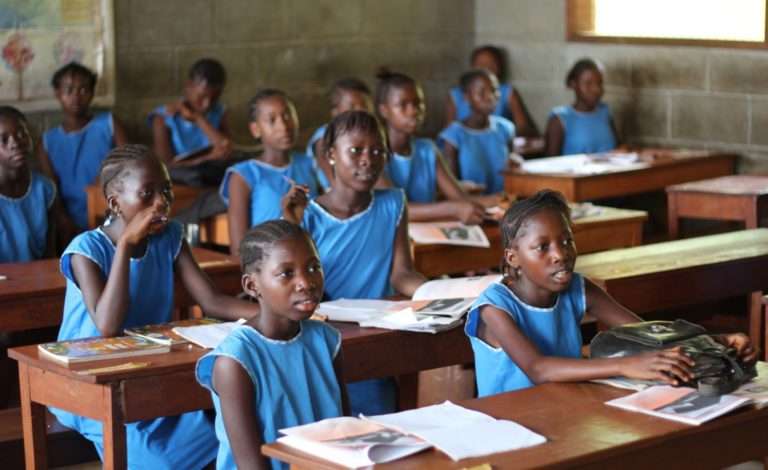
CHILD rights organisation Save the Children (SCI) has called on the Nigerian government to increase funding for the educational sector.

The organisation also condemned the rising number of out-of-school children in a statement released on Tuesday, January 24 to commemorate the International Day of Education.

It urged the government to resolve the literacy crisis plaguing the country.

“Save the Children International (SCI) Nigeria calls upon the government to ensure accessible, inclusive, safe, quality and free primary and secondary education that promotes lifelong learning opportunities for all children to realise and release their full potentials.

“To this end, we reiterate our demands for the Nigerian government’s fulfilment of H.E. President Muhammadu Buhari’s commitment at the GPE Global Education Summit to increase education funding to 14% by 2022, 16.7% in 2023, 20% by 2024, and 22.5% by 2025,” the statement signed by Media and Communications Manager Kunle Olawoyin, said.

The organisation also called for the implementation of the National Plan on Financing Safe Schools to guarantee safety of staff and students.

SCI noted that funding the education sector would hasten economic growth in the country and harped on the importance of investing in girl-child education.

“Education has been recognized globally as a veritable and strategic venture pivotal to the economic transformation of any nation. Save the Children urges for the prioritization of girl child education and investing more in it to ensure no one is left behind in the race to agenda 2030.

“Save the Children encourages the training and retraining of teachers to be prioritized so that the children can get better life skills and knowledge required to make their future brighter. Education offers children a ladder out of poverty and a path to a promising future,” the statement added.

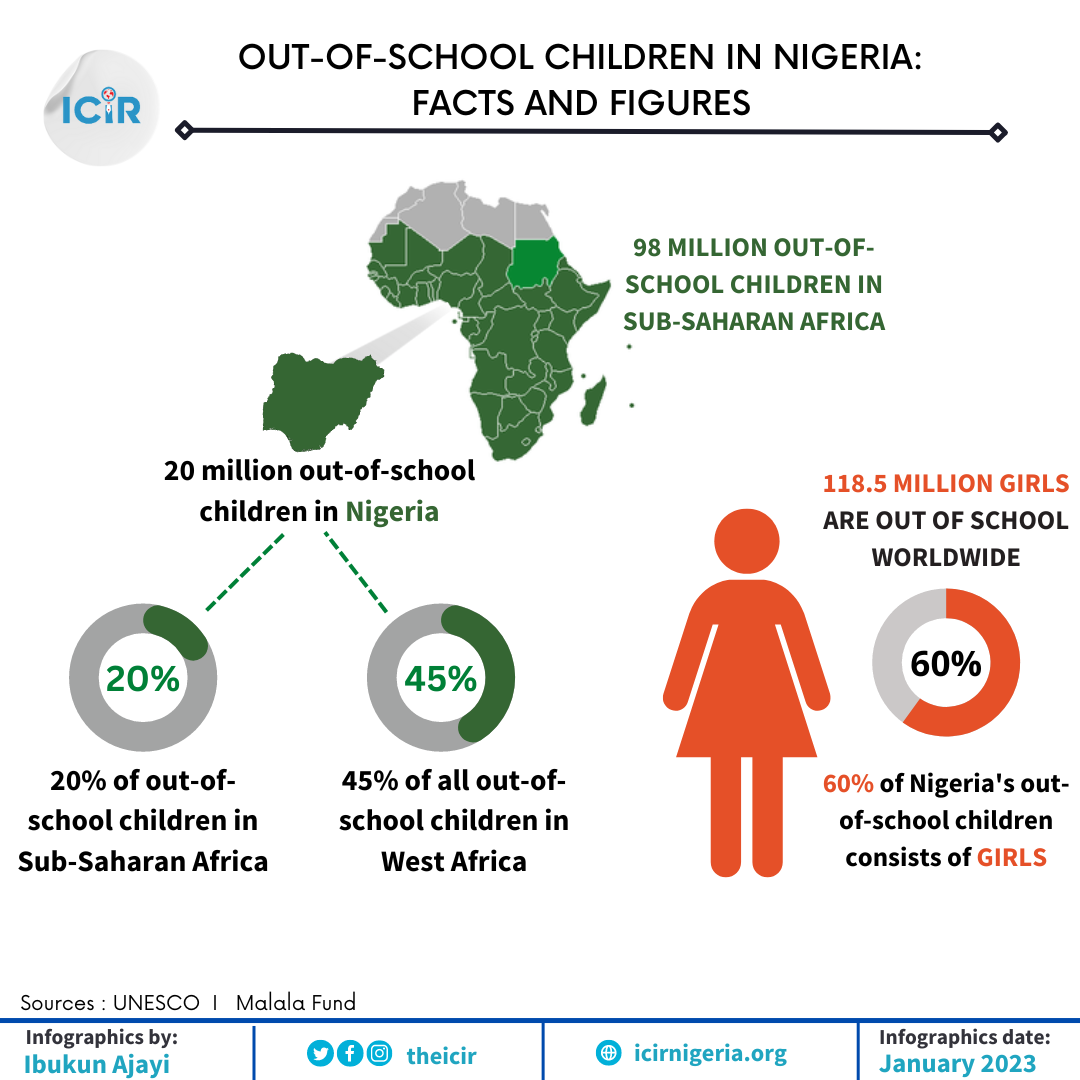
Nigeria is battling a literacy crisis with over 20 million out-of-school children, according to the United Nations Educational, Scientific and Cultural Organization (UNESCO).

The ICIR reported that fees demanded by government-owned schools in the FCT are contributing to the rise in the number of out-of-school children in the country. Many parents are unable to afford the cost of education due to harsh economic realities.

Businesses exposed to higher risks as CBN raises interest rate to 17.5%

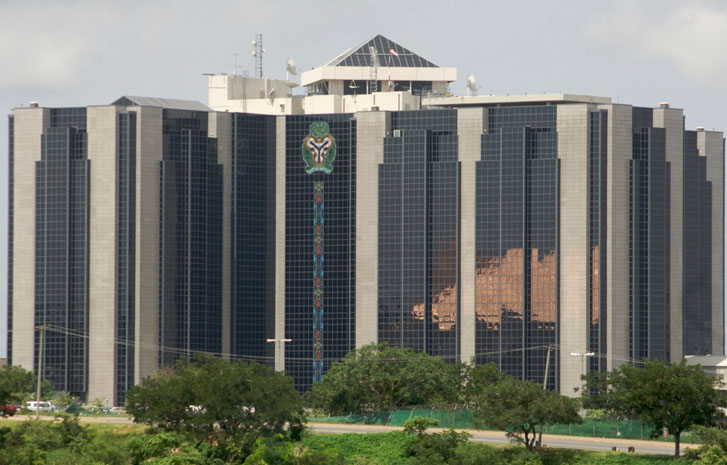
THE private sector and bank debtors may have further been exposed to higher risks of manufacturing costs and loan repayment interests, with the Central Bank of Nigeria (CBN) raising, today, interest rate to 17.5 per cent.

The Monetary Policy Committee (MPC) of the CBN voted at its meeting to increase the benchmark interest rate by 100 points to 17.5 per cent. This was a 10 per cent increase from the previous 16.5 per cent hike fixed in November 2022.

This is the fifth time the CBN would be increasing the interest rate.


READ ALSO:

Currency Redesign: CBN says no going back on January 31 deadline

Redesigned Currency: CBN to monitor, enforce circulation by commercial banks

Godwin Emefiele: CBN governor in the eye of the storm

CBN reconsiders policy on withdrawals, raises limits


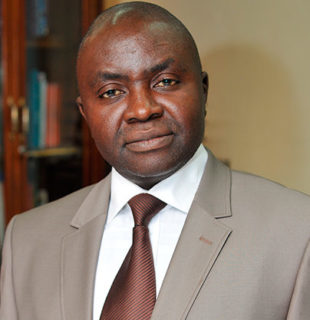
The CBN governor, Godwin Emefiele, announcing the new rate when reading the communique of the first MPC in the year, said previous increases were beginning to yield results with the slight drop in the inflation rate recorded in December 2022.

Emefiele stressed the need for the apex bank to keep tightening its fiscal policy.

Economists and industry watchers did not see the rate hike as a good development for the private sector, saying high lending rate would suffocate businesses.

“The hike in interest rate will hurt investors and the private sector, especially those in the real economy and enterpreneurs. As long as you are in production, and you borrow from the bank for your business, this hike in interest rate will hurt you, for it exposes your risk,” an economist and Executive Director, Centre for the Promotion of African Economies, Muda Yusuf, told The ICIR.

Yusuf says private sector will be strangulated by rate hike

“This is a time businesses are going through various challenges in exchange rate, high cost of diesel, cost of transportation and insecurity. Hiking of rate is compounding their problems,” Yusuf said.

He disagreed with Emefiele on increasing lending rate as a strategy to curb inflation.

Another economist, Kelvin Emmanuel, said overlending to the Federal government through unregulated means was a major factor that fuelled the current hike in interest rate.

“Inflation has continued to accelerate because of this unregulated lending through ways and means to almost N23 trillion. Inflation is now taking its toll on lending rate. This will choke the private sector further and put them in more distress,” Emmanuel said.

The CBN also retained the Cash Reserve Ratio (amount of cash commercial banks are expected to keep in CBN’s vault) at 32.5 per cent, while the liquidity ratio was kept at 30 per cent.

The apex bank had increased the MPR from 11.5 per cent earlier last year to 16.5 per cent across four consecutive rate hikes in 2022.

Emefiele said the committee took the decisions to rein in inflation.

Osun: Tribunal to deliver judgment on Oyetola’s petition Friday

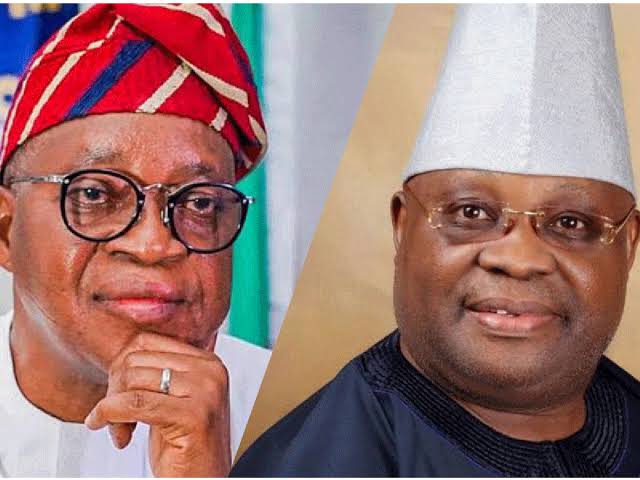
THE Osun State Governorship Election Petition Tribunal will on Friday, January 27, deliver judgment on the petition filed by former governor Gboyega Oyetola against Ademola Adeleke’s victory in the poll.

The Justice Tertse Kume-led panel issued the notice through the tribunal Secretary, David Umaru, on Tuesday, January 24.

Umaru stated in a short message pasted on the tribunal’s notice board that proceedings will commence by 9:00 am.

“EPT/OS/GOV/01/2022 Adegboyega Isiaka Oyetola & Anor and Independent National Electoral Commission (INEC) & 2 ORS”.

“The tribunal will deliver judgement in the above matter on Friday, January 27, 2023 at 9am,” the notice read.

Oyetola and the All Progressives Congress (APC) had challenged the outcome of the July 16 poll, won by Adeleke of the Peoples Democratic Party(PDP), alleging irregularities and over voting in 749 polling units across ten local government areas of the state.

Parties in the matter, which include the Independent National Electoral Commission (INEC), had on Friday, January 13, adopted their final written addresses after calling of witnesses and tendering of evidence before the panel.

Police Service Commission rules out extension for retiring senior officers

0

THE Police Service Commission (PSC) has said extending the tenures of senior retiring police officers is against existing laws.

The PSC insisted that every police officer due for retirement before the general election must leave.

It added that there could never be any leadership vacuum in the Nigeria Police Force (NPF).

The Commission said this in a statement signed by Ikechukwu Ani, Head, Press and Public Relations on Tuesday, January 24.

“Rising from a Management Meeting on Monday, January 23rd 2023, in Abuja, the Commission said the ongoing campaign for the extension of the tenures of some Deputy Inspectors General (DIGs), Assistant Inspectors General (AIGs), Commissioners (CPs) and other senior Police Officers was an unnecessary distraction and an affront on all the existing laws in the country guiding entry and exit in the public service.

“The Commission took a decision that it will not extend the tenures of the retiring senior Police Officers, stressing that even when requested, it can not do so as it is against all existing laws, the Police Act, the Police Service Commission Act and the Constitution of the Federal Republic of Nigeria,” the PSC said.

The PSC stressed that there is an institutional succession plan in the Nigeria Police Force, especially with the current injection of 10,000 Constables and several thousands of cadet ASPs from the Police Academy every year.

The Commission assured Nigerians that there would be no vacuum in the hierarchy of the Police with the touted retirement of hundreds of senior Police Officers.

The statement added that the Commission would rigidly uphold the provisions of the law, which stipulate that a serving public Officer, whether in the Police or any other Government Agency, must exit the service at the age of 60 or after having served for a period of 35 years.

Meanwhile, on Monday, January 24, the PSC denied ever endorsing the tenure elongation of the Inspector General of Police Usman Alkali Baba.

Baba is to attain the retirement age of 60 years in March 2023.

The Commission, in a statement, said it would commit itself to the letters and spirit of the laws of the land and would not at any time support or encourage any attempt to subvert the law.


READ ALSO:


This is coming after the Police Affairs Minister, Mohammed Dingyadi, said last week that the IGP would not be retiring when he turns 60 on March 1.
.
President Muhammadu Buhari appointed Baba as IGP in April 2021 after former IGP Mohammed Adamu turned 60.

The PSC is saddled with the Constitutional mandate to recruit, promote, dismiss and exercise disciplinary control over persons holding offices in the NPF.

States reject LG autonomy as NASS transmits Constitution amendment bills to Buhari

2

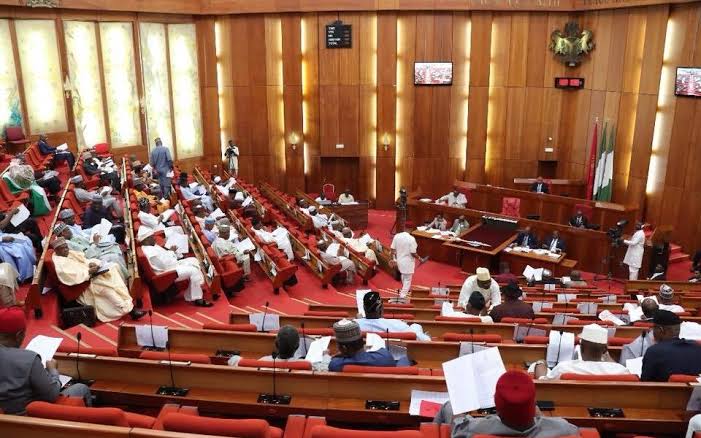
THE National Assembly has transmitted 35 Constitution amendment bills to President Muhammadu Buhari for assent.

The Senate on Tuesday, January 24, directed the Clerk of the National Assembly to transmit the amendment bills that met the requirement for assent as provided in Section 9(2) of the 1999 Constitution.

According to the Senate, the concerned bills have been approved by at least 24 state assemblies as required by law. A total of 44 amendment bills were considered but 35 met the requirement.


READ ALSO:
Constitution amendment: How the National Assembly voted on 68 bills

Constitution amendment: 10 controversial proposals

Constitution amendment: National Assembly proposes life pension for its presiding officers

Proposed 1999 Constitution amendment is a futile exercise – Afe Babalola


The state assemblies did not vote on the alteration of the Constitution and as a result, the two bills that seek to grant financial and legislative autonomy to local governments did not meet the requirement for being assented into law.

Presenting the report, Senator Opeyemi Bamidele identified Abia, Adamawa, Akwa-Ibom, Anambra, Bauchi, Bayelsa, Benue, Borno, Cross-River, Delta, Ebonyi and Edo states as some of the states who have presented their resolution on the bills.

Others are Ekiti, Enugu, Imo, Kaduna, Kano, Katsina, Kogi, Lagos, Nasarawa, Niger, Ogun, Ondo, Osun, Rivers and Yobe.

The Senate also asked nine state assemblies yet to submit their resolutions on the bills to do so.

The states yet to forward their resolutions are Gombe, Jigawa, Kebbi, Kwara, Oyo, Plateau, Sokoto, Taraba and Zamfara.

Here is a complete list of the bills considered by the 27 states.

1. Constitution (Fifth Alteration) Bill No 3 (Change of Names of Afikpo North and Afikpo South Local Government Areas (Ebonyi State)

2. Constitution (Fifth Alteration) Bill No 4 (Change of Name of Kunchi Local Government Area (Kano State)

3. Constitution (Fifth Alteration) Bill No 5 (Change of Names of Egbado North and Egbado South Local Government Areas (Ogun State)

4. Constitution (Fifth Alteration) Bill No 7 (Correction of the name of Atigbo Local Government Area (Oyo State)

5. Constitution (Fifth Alteration) Bill No 8 (Correction of Name of Obia/Akpor Local Government Area (Rivers State)

6. Constitution (Fifth Alteration) Bill No 9 (Financial autonomy of State legislatures and State Judiciary)

7. Constitution (Fifth Alteration) Bill No. 10 (Enforcement of Legislative Summon)

8. Constitution (Fifth Alteration) Bill No. 11 (Inauguration of Members-Elect)

9. Constitution (Fifth Alteration) Bill No. 21 (Deletion of reference in the Constitution to the provisions of the Criminal Code, Penal Code, Criminal Procedure Act, Criminal Procedure Code or Evidence Act)

10. Constitution (Fifth Alteration) Bill No. 22 (Provision for Intervening Events in the Computation of Tine for the Determination of Pre-Election Petitions, Election Petitions and Appeals therefrom)

11. Constitution (Fifth Alteration) Bill No. 24 (Expansion of the Interpretation of Judicial Office)

12, Constitution (Fifth Alteration) Bill No. 25 (Appointment of Secretary of the National Judicial Council)

13. Constitution (Fifth Alteration) Bill No. 29 (Devolution of Powers (Airports))

14. Constitution (Fifth Alteration) Bill No. 30 (Devolution of Powers (Fingerprints, identification and criminal records)

15. Constitution (Fifth Alteration) Bill No. 31 (Devolution of Powers (Correctional Services)

16. Constitution (Fifth Alteration) Bill No. 32 (Devolution of Powers (Railways)

17. Constitution (Fifth Alteration) Bill No. 33 (Devolution of Powers (National Grid System)

18. Constitution (Fifth Alteration) Bill No. 39 (Power to enforce compliance of remittance of Accruals into the Federation Account and Review of Revenue Allocation Formula)

19. Constitution (Fifth Alteration) Bill No. 40 (Independence of Certain bodies)

20. Constitution (Fifth Alteration) Bill No. 41 (Removal of Transitional Law-making Powers of the Executive

21. Constitution (Fifth Alteration) Bill No. 43 (Domestication of Treaties)

22 . Constitution (Fifth Alteration) Bill No. 44 (Timeline for the Presentation of Appropriation Bills)

23. Constitution (Fifth Alteration) Bill No. 45 (Timeframe for the Submission of the Names of Ministerial or Commissioner Nominees)

24. Constitution (Fifth Alteration) Bill No. 48 (Power to summon the President and Governors)

25. Constitution (Fifth Alteration) Bill No. 49 (Authorization of Expenditure)

26. Constitution (Fifth Alteration) Bill No. 50 (Replacement of the Consolidated Revenue Fund of the Federation with the Consolidated Revenue Fund of the Federal Government)

27. Constitution (Fifth Alteration) Bill No. 51 (Creation of the Office of Accountant-General of the Federal Government)

28. Constitution (Fifth Alteration) Bill No. 53 (Separation of the office of the Attorney-General of the Federation and the State from the office of the Minister or Commissioner for Justice)

29. Constitution (Fifth Alteration) Bill No. 54 (State of the Nation and State of the State Address)

30. Bill No. 55 (Composition of Members of the Council of State)

31. Bill No. 57 (Restriction on Formation of Political Parties)

32. Bill No. 62 (Correction in the Definition of the Boundary of the Federal Capital Territory Abuja)

33. Constitution (Fifth Alteration) Bill No. 63 (Fundamental Human Rights)

34. Constitution (Fifth Alteration) Bill No. 65 (Food Security)

35. Constitution (Fifth Alteration) Bill No. 66 (Nigeria Security and Civil Defence Corps)

Lassa fever: NCDC says it did not shun Edo’s call for support

THE Nigerian Centre for Disease Control (NCDC) has debunked the claim by the Edo State government that it shunned its call for support against Lassa Fever outbreak in the state.

In response to The ICIR’s enquiry on the allegation, the Centre’s Director General Ifedayo Adetifa, a doctor, said the claim was untrue. 

At the first Executive Council meeting of the Edo State government on January 18, 2023, the Edo state Commissioner for Communication and Orientation, Chris Nehikhare, alleged that the Federal Government abandoned the state with the disease.

He accused the Minister of Health, Osagie Ehanire, a medical doctor, who hails from the state, and agencies of the Federal Government, including the NCDC and the National Primary Health Care Development Agency, of failing to heed the state’s plea for support to confront the Lassa fever outbreak.

Nehikhare said the state had over 50 persons infected with Lassa fever as at January 18. 

He noted that experts warned that the case fatality rate in the state was five per cent. He also argued that the warning was a sufficient reason to be deeply worried and the reason it raised the alarm for help.

The state government called on the World Health Organization (WHO), the United Nations Children’s Fund (UNICEF) and other agencies within the global health ecosystem with a mandate to intervene in infectious disease outbreaks to come to its aid.

“This call has become necessary as the Federal Government of Nigeria has clearly abandoned Edo State and our people in the fight against Lassa Fever that is spreading at an alarming rate.”

Debunking the allegation, the NCDC DG explained that the Centre continued to work with the Federal Government to offer material and technical support to all states with Lassa fever, especially high-burden states like Edo.

Adetifa maintained that healthcare remained a collective responsibility of governments at all levels. 

“While the NCDC, as the country’s national public health institute, has the mandate to lead the prevention, preparedness, and response to public health emergencies, states also have statutory responsibilities for planning and delivery of preventive and curative health services to their citizenry.

“At the end of November 2022 and ahead of the projected rise of Lassa fever cases, the NCDC prepositioned supplies for case management, infection prevention and control, laboratory diagnosis, etc., in all historical Lassa fever hotspots, including Edo State. All these supplies, including their delivery, are provided at no cost by the Federal Government and Federal Ministry of Health through the NCDC.”

He said since 2017, working through the Lassa Fever Technical Working Group (TWG), the NCDC had been offering support to all states responding to Lassa fever, especially the high-burden states – Edo, Ebonyi and Ondo. 

Support offered includes capacity building and training of healthcare workers on infection prevention and control, as well as clinician training on Lassa fever case management (including the provision of Ribavirin, consumables such as intravenous fluids, and antibiotics among others).

Adetifa said the NCDC got a request from the Edo State Commissioner of Health, Obehi Akoria, a professor, asking for more consumables to support the state’s response to the disease and had delivered the products.

The World Health Organization defines Lassa fever as an acute viral haemorrhagic illness transmitted to humans via contact with food or household items contaminated with rodent urine or faeces. 

Multiple reports by the NCDC in Nigeria have shown Edo and Ondo states leading the outbreak and mortality charts of the disease.

Nigerians should look beyond Tinubu’s age, health — Shettima

0

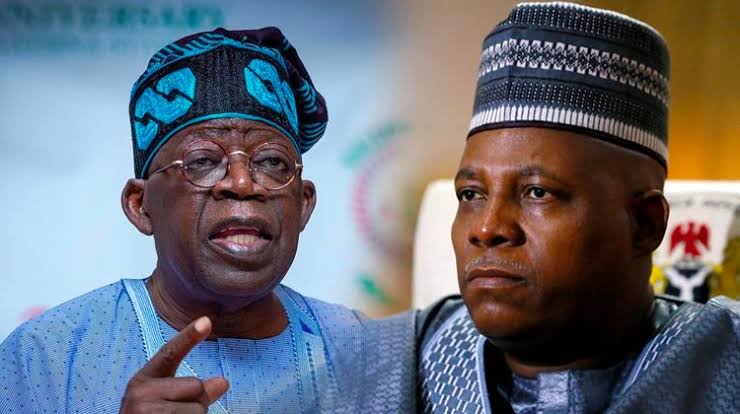
THE Vice Presidential candidate of the All Progressives Congress (APC), Kashim Shettima, has asked Nigerians to look beyond the age and health of the party’s flagbearer, Bola Tinubu.

Speaking at a dinner hosted in honour of President Muhammadu Buhari in Lagos on Monday, January 23, Shettima urged Nigerians to look at the bigger picture of what Tinubu’s presidency holds for the country.


READ ALSO:


Explaining that he was not saying Nigerians should not conduct a critical assessment of their leaders, the former Borno State governor described concerns expressed over Tinubu’s health and age as mischievous.

He noted that he and the former Lagos State governor were not preparing to participate in the Olympics but for what he described as governance that “thrives on superior ideas”.

“There is this mischievous fixation on Asiwaju’s health and age,” he said.

“We are not urging Nigerians to turn down critical assessments of their leaders but we direct them to look at the larger picture, we are not preparing for the Olympics but an institution that thrives on the superiority of ideas and established track records.”

He claimed that Tinubu has shown a propensity for sacrificing his personal comfort for the good of the nation.

According to him, right from the days of the nation’s struggle for the enthronement of democracy till date, a lot has been said about Tinubu but largely by “quacks with a poor sense of history.”

Speaking further, Shettima said when Tinubu’s contemporaries were trading their principles for a seat at the table in the Presidential Villa during President Olusegun Obasanjo’s administration, he stood for justice and fairness.

He said that the Peoples Democratic Party (PDP) presidential candidate, Atiku Abubakar, sought refuge in Tinubu when he was “harassed” by his party in 2007.

“For Atiku Abubakar, in 2007, when he was harassed, intimidated and chased out of the PDP, he (Tinubu) gave him a sanctuary and platform to contest for the presidency of this country under AC,” he said.

“It happened four years later when the same platform was provided for Mallam Nuhu Ribadu to contest for the presidency of this country.

“Those of us from the North owe him (Tinubu) debt of gratitude for supporting our leader, President Muhammadu Buhari, in 2015 and 2019.”

TRACE offers prize for investigative reporting on financial crimes

THE Trace Foundation is now accepting entries for the 2023 Prize for Investigative Reporting themed ‘Uncovering Commercial Bribery’.

The TRACE Prize for Investigative Reporting recognises journalism that uncovers business-related bribery and financial crime with the goal of increasing commercial transparency and good governance.

Nominees may be print, broadcast or online reporters from any country who have investigated commercial bribery schemes, business activities that create serious conflicts of interest, or similar commercial misconduct. Team entries and multiple submissions per author are permitted. Book-length entries are not accepted.

A panel of independent judges will review the submissions and select up to two winners, who will each receive a cash prize of US$10,000. Reporter(s) will be invited to an award ceremony hosted by TRACE. The judges may also name up to two honorable mentions, who will each receive US$1,000.

Founder and President of TRACE, Alexandra Wrage says, “Every year we receive extraordinary examples of investigative journalism that expose corruption with the goal of advancing accountability and transparency. We look forward to receiving this year’s submissions and honoring the journalists undertaking this important work.”

Application is rolling and submissions will be accepted through January 31. Interested applicants can apply here


Intn’l Day of Education: Nigeria battles high number of out-of-school children

0

NIGERIA is faced with a challenge of high number of out-of-school children as the world marks the International Day of Education on Tuesday, January 24.

The United Nations General Assembly proclaimed January 24 as International Day of Education in celebration of the role of education for peace and development.

With the theme ‘To invest in people, prioritize education’, this year’s event is dedicated to Afghan women and girls who have been denied the opportunity to receive formal education.

Status quo: Out-of-school children

Unfortunately, this is also the situation in Nigeria as 60 per cent of over 10 million out-of-school children are girls. Globally, there are 118.5 million girls out of school.

With the current global recession and widening inequality, stakeholders have urged the Nigerian government to give priority to education in order to get towards all of the Sustainable Development Goals (SDGs) more quickly as there hasn’t been much of a change in Nigeria’s out-of-school rates among adolescents and young people in secondary school whose out-of-school population has grown by 61 per cent, from 6.3 million to 10 million. Also, the number of primary school-aged children who are not in school also increased by 50 per cent, from 6.4 million to 9.7 million.

Nigeria has a total of 19.7 million out-of-school children – the country with the third highest number of children deprived of education according to the United Nations Educational Scientific and Cultural Organization (UNESCO) 2020 Model Estimates.

Call to action: Improvement in levels of literacy/digital literacy

In order to reverse the trend and spur accelerated development, the UN urges governments, the global community, and important stakeholders to stick to their pledges to prioritize investment in education and educational transformation.

Governments have been advised to ensure adequate funding and implementation of policies towards tailoring learning to students’ unique abilities and needs at all levels.

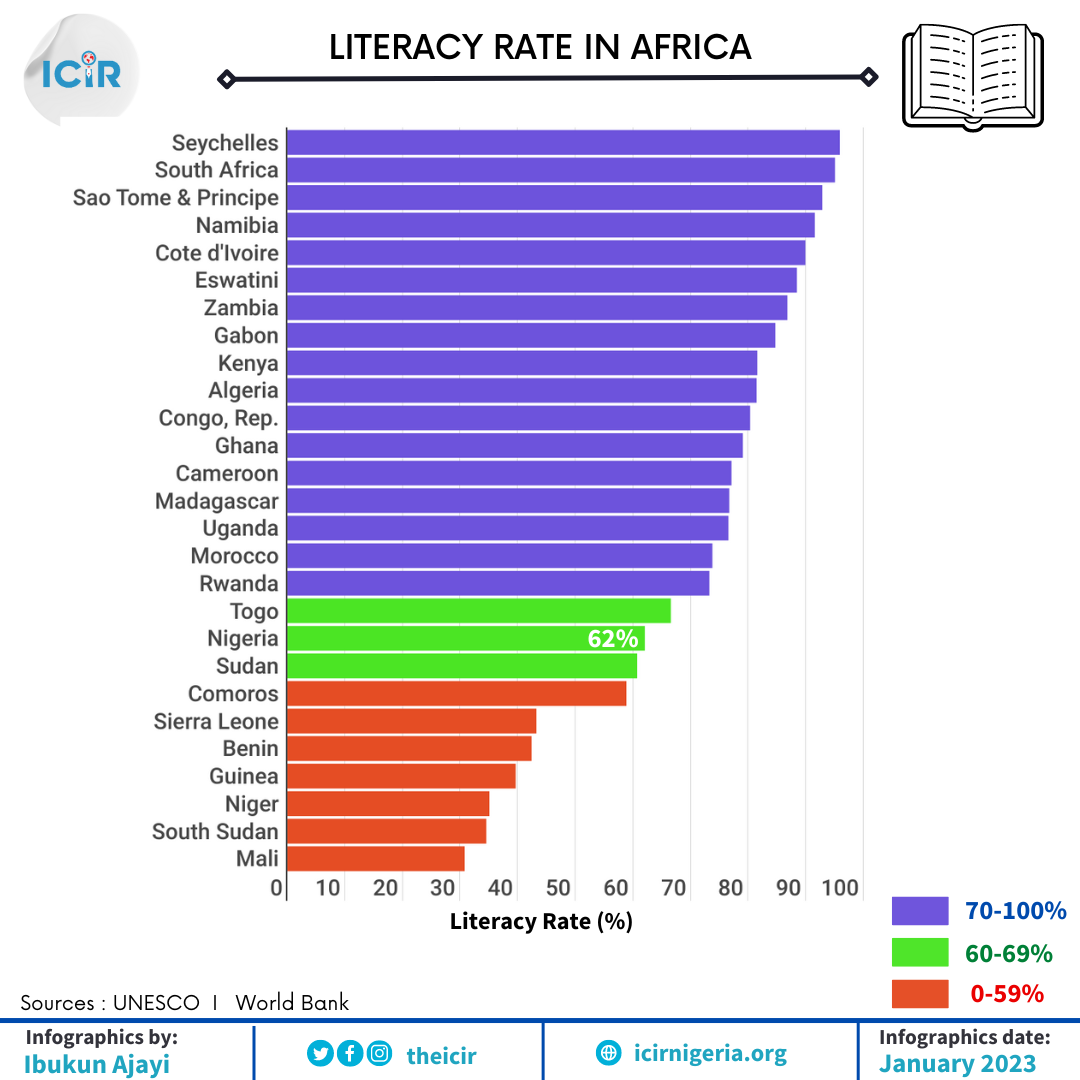
Stakeholders have also urged the Federal Government to make literacy (ability to read and write) and digital literacy the hallmark of the country’s educational system. Nigeria’s literacy rate stands at 62 per cent, far below many other African countries.

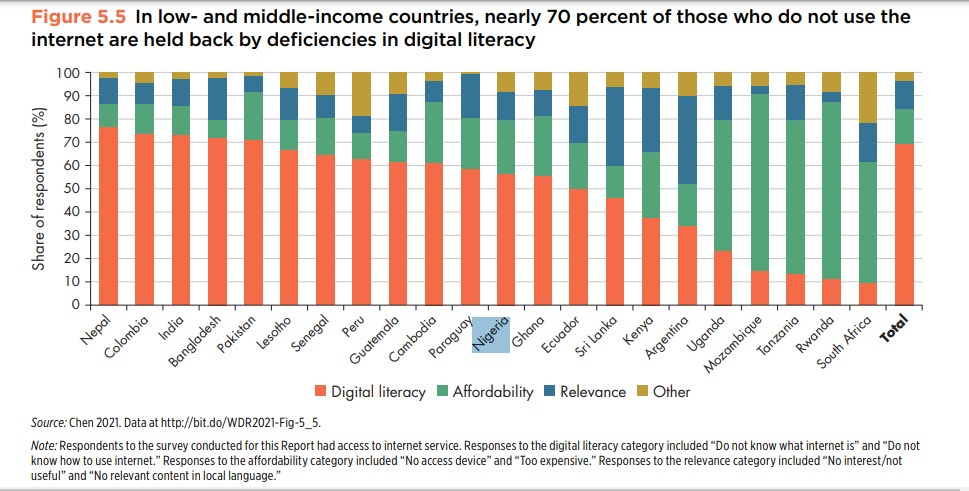
In South Asia, there are more issues with digital literacy, whereas in some African nations, there are more issues with affordability. However, these various restrictions are not mutually exclusive. A survey carried out in the World Development Report 2021 shows that about 60 per cent of Nigerians who participated in that survey do not know what the internet is and do not know how to use the Internet. About 25 per cent do not have access to digital devices as they could not afford to purchase them while others considered the use of digital devices or gaining digital knowledge irrelevant.

Relevant stakeholders, including the government, have been urged to make efforts to not only equip Nigerian citizens with digital knowledge but also to make digital devices affordable.

Nigeria to host regional digital economy conference

THE Nigerian Communications Commission (NCC) has announced that Nigeria is set to host the West Africa Digital Economy Conference.

NCC’s Director of Public Affairs, Reuben Muoka made this known in a statement on Monday in Abuja.

Muoka said digital economy policy makers and stakeholders in the West African sub-region would converge in Abuja from January 31 to February 1.

He noted that the conference will discuss the future of digital economy and intensify regional public private partnerships.

With the theme ‘Positioning West Africa’s Digital Economy for the Future’, Muoka said the conference will provide a platform for countries in the region to discuss issues to strengthen the digital economies in West Africa and by extension, the continent.

Parts of the statement read: “The event is being hosted by the Ministry of Communications and Digital Economy on behalf of the Federal Government of Nigeria, in collaboration with the World Bank.

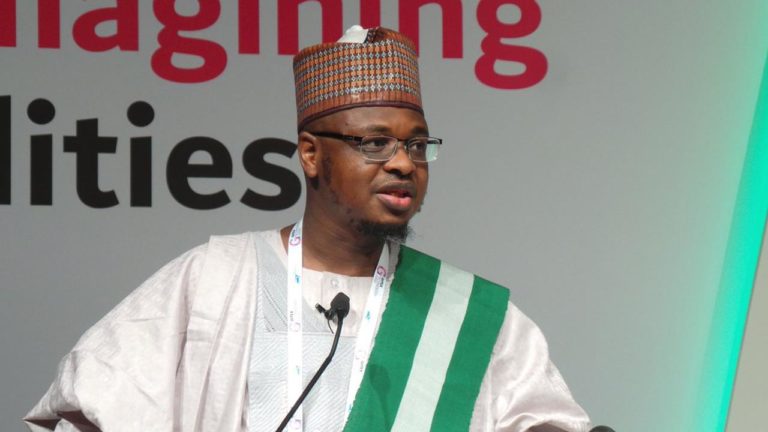
“The Minister of Communications and Digital Economy, Prof. Isa Pantami will deliver the keynote address at the event.”

The statement also said the Federal Capital Territory (FCT) Minister, Mohammed Bello will join Pantami to welcome Ministers and top government officials from the sub region.

Meanwhile, Pantami said the conference would create an avenue for peer review to accelerate digital transformation and increase collaboration to secure partnerships within the region.

The Minister added that it would also strengthen the innovation and entrepreneurial ecosystem while intensifying regional public-private partnerships for digital economy funding, research and development.

“It is expected that the gathering will also provide an opportunity to showcase the progress made in the development of digital economy in the West African sub-region.

“Identify winning strategies, discuss challenges, and prepare for the future in addition to creating awareness of the region’s needs in the areas of policies and framework for the digital economy.

“It will also attract private sponsors for digital transformation in the region”, Pantami said.