Home Blog Page 1134

Reactions trail Obama’s 2022 list of favourite songs featuring three Nigerians

THREE Nigerian superstars made it to the 2022 list of top 25 favourite songs that a former United States President, Barack Obama, released, with some fans expressing their views about his choice of music.

Sharing the list of his favourite songs for 2022 on Friday December 23 via his social media handles, Obama wrote, “I always enjoy sharing my end-of-year music playlist with all of you, and this year we heard a lot of great songs.”

Burna Boy, born Damini Ebunoluwa Ogulu, made the list with his Grammy-nominated ‘Last Last’ single off the Grammy-nominated ‘Love, Damini’ album.

Ayra Starr’s recent release ‘Rush’ and her Mavin record label mate, Rema’s widely-acclaimed ‘Calm Down’ are also in the 25-song list.

Other popular songs on the list included ‘Pull Up’ by Jamaican singer, Koffee; ‘The Heart Part 5’ by American rapper, Kendrick Lamar; ‘About Damn Time’ by American singer, Lizzo; and ‘Shirt’ by SZA.

Nigerian sports journalist Lolade Adewuyi said although ‘Calm Down’ and ‘Last Last’ were really cool Afrobeats hits, Goya Menor’s ‘You want to Bamba, you want to chill with the big boys?’ should also have been on the list.

Another Nigerian, Olabode Abdulkabir, reacted via twitter, “Your excellency you’re incredible sir. Thank you for always showing our artistes the love. We do appreciate your support here in Nigeria.”

The former president received criticisms for excluding Drake and Taylor Swift from the list, as many fans believed the latter had one of the best albums of all time this year.

However, Obama has invited suggestions on songs or artistes which he needed to check out, and it is hoped that some of the suggested songs would make it to his next list.

Umahi slams N5m fine on APC for disobeying orders on campaign in Ebonyi

THE Ebonyi State governor, David Umahi, has sactioned the All Progressives Congress (APC) in the state for contravening the provisions of the state’s Executive Order 3 of 2022.

Executive Order 3 prohibits political parties from using public places like schools, parks, and markets for political activities without seeking and obtaining due clearance from the state government.

The order for the fine the government imposed on the APC was contained in a statement signed by the Commissioner for Information and Orientation, Uchenna Orji, on Sunday in Abakaliki.


Read Also:

According to the statement, Umahi was saddened by political parties’ continuous pasting of posters on electric poles, meridians, concrete roads, and on flyover bridges.

“These parties include the APC, the Peoples Democratic Party (PDP) the Labour Party (LP) and the All Progressives Grand Alliance (APGA).

“When the APC flagged off its presidential and governorship campaigns in the state, it littered the infrastructures with posters, and that made other political parties follow suit.

“Most of the critical infrastructure have been littered with posters against the laws of the state government and the Executive Order regarding the pasting of posters and billboards,’’ the statement noted.

Orji noted that Gov. Umahi had consequently decided to use his political party, the APC, to set an example as a deterrent to others.

“The party is thus fined N5 million for contravening the law and the Executive Order. The APC must pay the money to the state’s Internally Generated Revenue account and obtain a receipt.

“The party should publish the payment in all media platforms, including the social media, before December 31 or risk paying a default fee of N50 million,’’ the statement read.

Umahi also ordered the APC to remove all posters on pasted infrastructures before December 31.

“The Governor has decided to forgive all other political parties and appeal to them to remove their posters on critical infrastructures before December 31. They are to desist forthwith from defacing our facilities or face a similar penalty like the APC in Ebonyi.

“The governor appeals to all political parties not to take this benevolence as a sign of weakness. Government will seal all secretariats and campaign offices of parties that fail to remove their posters or desist from continuous pasting of posters on critical infrastructure,’’ he warned.

Orji stated also that Umahi had banned all street campaigns in the state.

“He has directed all local government area chairmen, the Commissioner for Youths and Sports, and the Commissioner for Education, among other aides, to process all applications of political parties intending to use infrastructures for campaigns.


READ ALSO:


“Any political party that is denied such opportunity and has complied with the laws of the state and the Executive Order must report to the state governor.

“Affected parties can also report to the Commissioner of Police or the Director of the State Security Service within 24 hours for immediate approval,’’ the statement read.

Yuletide: Petroleum Authority vows to clamp down on fuel hoarders

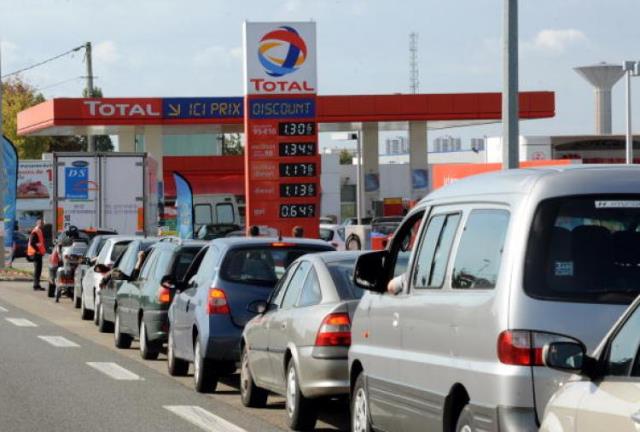
THE Nigerian Midstream and Downstream Petroleum Regulatory Authority (NMDPRA) has assured that there will be availability of fuel during the Christmas and new year period.

The authority also warned it would clamp down on petrol stations hoarding fuel to create artificial scarcity.

The Controller of NMDPRA, Abdulsalam Mohammed, who disclosed this in Jos, said the agency had taken measures to ensure petrol stations did the right thing to ensure smooth transportation during the festive period.


Read Also

Muhammed explained that a smooth petroleum delivery and dispensation process would not only ensure transportation ease, but would also lead to safe motoring and reduction of suffering.

He noted that the issue of fuel hoarding would be squarely tackled, adding that petrol stations/marketers were strictly being monitored to comply with best practices.


NDLEA seizes 6.2 million kilogrammes of drugs in eight years

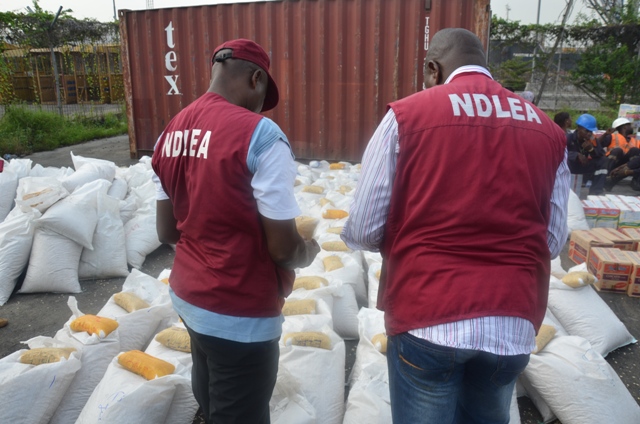
DATA exclusively obtained by The ICIR has revealed that the National Drug Law Enforcement Agency (NDLEA) seized a total of 6.213 million kilogrammes of drugs between 2015 and the second quarter of 2022.

The figures encompass the weight of five different drugs, which are cocaine, heroin, cannabis, meth and some other psychotropic substances.

The data also showed that the NDLEA counselled 27,541 clients against the use of drugs within that period.

Of the total 6.2 million kg of drug seized, 2021 had the highest volume, with 3.4 million (3,480,368.80) of drugs seized. That was 56 per cent of the total number, while 2020 was the year with the lowest drug seizures, with an estimated figure of 144,795.66 (2.3 per cent).

The agency noted that the 2021 figure included 2.9 million kilogrammes of cannabis destroyed on farms across the country.

Cannabis topped the most drug seizure in the last eight years

Cannabis, followed by psychotropic/others and meth were the most seized drugs by the agency in eight years.

A further breakdown of the figures showed that in 2015, the drug enforcement agency seized an estimated 903,624.56 kilogramme of drugs, representing 14.5 per cent of the drug seizures. Likewise in 2016, 2017, 2018 and 2019, a total of 267,591.48, 309,356.31, 317,764.85, and 612,903.48 kilogrammes of drugs were seized, respectively.

The NDLEA disclosed that in the first and second quarters of 2022, it seized 176,818.08kg of drugs.

An infographic showing the kilogrammes of drug seized by NDLEA in the last eight years

Comparing the 2020 and 2021 figures, The ICIR discovered that there was a 2,303 per cent increase in seized drugs. This shows that there was a drastic seizure increase in 2021.

However, the cases of drug seizure dropped drastically in 2020 (144,795.66), compared to the figures in 2019 (612,903.48 kilogrammes), as there was a 76.4 per cent decrease.

This may not be disconnected from the Covid-19 pandemic, which made its way to Nigeria in February 2020.

During the earlier stage of the pandemic, the Federal government declared a total lockdown across the country, leading to less human and public office activities.

Similarly, comparing the data of 2019 to 2021, the percentage of cocaine, heroine, cannabis, meth, psychotropic and others altogether increased by 20 per cent in 2021.

The drastic increase in the percentage of drug seizure in the year where over 465 million was spent on advocacy implies that there was no value for the amount spent on the sensitization project as cases of drug use was high.

An infographic showing the number of clients NDLEA counselled between 2015 and June 2022

The data revealed that out of the 27,541 persons counselled between 2015 and June 2022, 7,096 (26 per cent) were recorded in 2021, while in 2020 and 2019, 3,751 (14 per cent) and 1,202 (4 per cent) persons respectively were counselled against the use of drug abuse.

The ICIR had gathered, through a document exclusively obtained on May 26, 2022, that the NDLEA spent N467.66 million in 2021 on advocacy sensitization programmes across the country.

The ICIR also discovered some discrepancies in the 2021 Constituency and Capital projects as five out of the 10 projects sponsored by the Federal lawmakers were awarded to contractors who were not specialized in training and advocacy.

There is no record that these companies had executed such kinds of projects before. The only credible information is that they were awarded projects for which they lacked competence.

This is in disagreement with the Bureau Public Procurement guidelines, which state that contracts should be awarded to firms based on their core areas of competence and business focus as submitted at the Corporate Affairs Commission (CAC).

Section 23 (c) of the procurement act (Pre-qualification of Bidders) requires the contractor to have demonstrated capacity before being awarded contracts.

The contractors are Autonorths Limited, Ejadams Essence Limited, Seapoch Associates Resources Limited, Issachar & Juvi, and Baysline Nigeria LTD.

In the case of Autonorths Limited, the company specialized in construction activities but was assigned “through selective tendering” to carry on with an advocacy/sensitization programme on narcotics/psychotropic drugs addiction for secondary school youth in Bokkos LGA, Plateau State.

The breakdown also showed that 10 of these projects were sponsored by lawmakers (constituency projects), while the remaining 10 were funded by Capital releases.

The 10 constituency projects as sponsored by the lawmakers cost N232,953,449.7, and had 10 different contractors for the projects.

Further investigations also showed that four out of the 10 constituency projects, which were meant to benefit the entire country, were taken to Plateau State. Benue State had three advocacy projects executed in their state, while Ebonyi, Imo and Sokoto states had one advocacy project each.

According to the data, the advocacy and sensitization programme against the use of narcotics in Izzi/Abakaliki Federal constituency of Ebonyi State was contracted to Randburg Nig. Ltd at an amount of N49.5 million, making it the state with the highest amount spent on a single constituency advocacy project.

The advocacy projects on psychotropic drugs addiction for secondary school youths in Kanke LGA, Plateau Central senatorial district of Plateau State, which was awarded to Endez Farms Limited at a total cost of N11.7 million, was the least on the list.

Further breakdown of the document revealed that three out of the other 10 projects from Capital releases were again executed in Plateau State, making it seven. Imo and Ebonyi states had one project on advocacy programmes each, while the remaining five remained vague.

The NDLEA could not provide the states or locations where the five projects were executed.

Details of the capital projects, contractors and the procurement methods were not revealed in the document received by The ICIR for the 10 projects.

Police rescue four kidnapped victims in Enugu

0

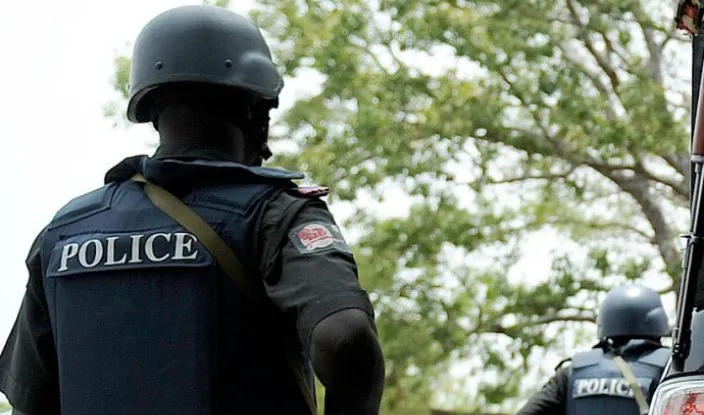
THE Enugu State Police Command said it has rescued four kidnapped victims in a forest at Akama-Oghe in Ezeagu Local Government Area of the state.

According to the command’s spokesman, Daniel Ndukwe, on Sunday, December 25, the police operatives at the Iwollo Division, with the help of the Neighborhood Watch and forest guards, rescued the victims on December 24.

Ndukwe said, “Those rescued in the hands of kidnappers in a forest at Akama-Oghe in Ezeagu Local Government Area were three males and one female, reported to have been kidnapped along the 9th-Mile/Eke/Akama-Oghe Road on Friday at about 8pm.


Read Also:

“The police operatives also recovered a black-coloured Mercedes Benz car belonging to one of the victims, while all the victims have been debriefed and reunited with their families,” he said.

He added that the state’s Commissioner of Police, Ahmed Ammani, had ordered tactical operatives of the command to investigate and arrest the fleeing kidnap suspects.

The command spokesman stressed that the kidnappers fled and abandoned the victims due to the investigation and manhunt launched by the combined security operatives.

Aside multiple strikes, here are key issues that marked Nigeria’s education sector in 2022

THE Nigerian education sector for most part of 2022 was at the forefront news immediately after the Academic Staff Union of Universities (ASUU) declared a four-week warning strike on February 14 following the Federal Government’s failure to implement a 2009 agreement and other unmet demands of the union.   

The strike affected all federal and most state universities, as students were forced out of campuses to return home.

Affected students hoped the impasse would end soon, but they waited in vain for eight months before ASUU suspended the action on October 14.    


READ ALSO:

Buhari makes 16 foreign trips in 11 months – spends 28 days on medical trips

Owo shooting, other security crisis that mar South-West in 2022

[REVIEW] 2022 in numbers

Review of key issues that trailed FCT in 2022


While the crisis lasted, ASUU, on one side, the Federal Ministry of Labour and Employment and the Federal Ministry of Education, on the other, locked horns and exchanged tantrums that exacerbated the stalemate.

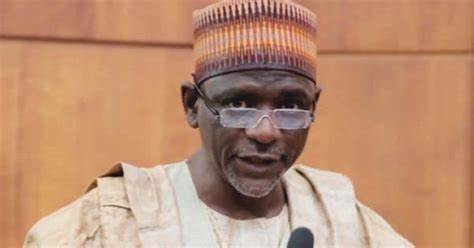
ASUU accused both ministers, Chris Ngige and Adamu Adamu, respectively, of insensitivity and showing a lackadaisical attitude to resolving the crisis. But the ministers always said they were available for talks.

After failed attempts to force the striking lecturers back to work, including the “no work, no pay” threat, the government headed for the National Industrial Court of Nigeria (NICN) and secured an injunction ordering ASUU back to work.

In what appears to be a move to break the union’s ranks, the federal government registered the Congress of University Academics (CONUA), a splinter group from ASUU, on October 4 

ASUU appeals ruling, calls off strike

The ASUU appealed the NICN ruling at the Court of Appeal. But the Appeal Court said the union must obey the lower court order before filing its appeal.

The union then backed down on October 14 and ended its strike after the intervention by the leadership of the National Assembly, headed by Speaker Femi Gbajabiamila.

Crisis remains unresolved

Meanwhile, the government has yet to come to terms with paying ASUU’s salaries backlog. On October 31, ASUU received alerts of half salary for the month to fulfil the threat that the government would not pay the group for its strike period.

But there have been moves by the union to make the government pay the backlog salaries. There have been meetings and protests among the university union chapters, raising concerns that there could be another round of downing tools.

The ICIR reported that ASUU went on strike for over 600 days under President Muhammadu Buhari’s government.

The government has also refused to pay CONUA.

However, CONUA has threatened to sue the government over its withheld salaries.

Polytechnics, colleges of education lecturers also went on strike

Like ASUU, the Academic Staff Union of Polytechnics went on a two-week warning strike in May. But the government’s swift intervention to the group’s demands resulted in the strike ending on the 28 of the same month.

Similarly, the Colleges of Education Academic Staff Union (COEASU) issued a three-week strike notice over unmet demands on May 25. The strike started after three weeks and dragged till August 12, when the association called it off.

 I have failed – Minister

Following the chain of crises bedevilling the sector, the Minister of Education Adamu Adamu described himself as a failure on November 4. 

Apart from recurring strikes under his watch, there has been a string of abductions of students and teachers in several schools in the country, especially in the North.

The ICIR reported in January how parents withdrew their wards from schools in Niger and Kaduna States because of exacerbating insecurity.

 The ICIR  also reported in October how 30 schools remained shut for over a year in Zamfara State over insecurity. 

More universities, others approved

There are 50 Federal Universities, 59 state universities, 111 private universities in the country as of the time of filing this report on December 14.

Similarly, the country boasts of 40 federal polytechnics, 49 state polytechnics, and 76 private polytechnics.

Besides, there are 22 federal colleges of education, 47 state colleges of education, and 76 private colleges of education in the country.

The government approved one federal university -David Nweze Umahi Federal University of Medical Sciences, Uburu, Ohaozara LGA of Ebonyi State – in the year. It approved three new state universities during the year. They are the Shehu Shagari University of Education, Sokoto, the Enugu State University of Medical and Applied Sciences, Igbo-Eno, and the University of Ilesa, Osun State.

There were also three federal polytechnics, namely Federal Polytechnic Umunnoechi, Abia State; Federal Polytechnic Kabo, Kano State; and Federal Polytechnic Orogun, Delta State.

No state polytechnic was created within the year. But there are ten private polytechnics. They are West Land Polytechnic Ilobu, Osun State, Ultra Excellence College of Tech Uyo, Akwa Ibom State, The Polytechnic, Omuo-Ekiti, Ekiti State, Teedek Polytechnic, Ilogbo-Ekiti, Ekiti State, Brainfill Polytechnic, Ikot Ekpene, Akwa Ibom State.

Others are the Foundation Polytechnic, Ikot Idem, Ikot Ekpene Akwa Ibom State, Inspire Polytechnic Egbeda, the polytechnic Ojoku, Kwara State, Lagos Lagos State, New Land Polytechnic, Idofian, Kwara State, and Southern Atlantic Polytechnic, Uyo – Akwa Ibom State.

Supporting Nigerian students affected by the Russian/Ukraine war

Shortly after the Federal Government evacuated thousands of Nigerians affected by the Russian-Ukraine war, the government promised students affected by the war to indicate their interest in completing their education in Nigeria by registering on a portal it provided to enable it to place them in available universities.  

1.5 million girls enrolled, after the completion of UNICEF, others project

The country’s partnership with the United Nations Children Fund (UNICEF) and the Foreign, Commonwealth and Development Office (FCDO) of the United Kingdom (UK) resulted in the enrolment of 1.5 million girls in schools in the North in ten years.

The intervention began in 2012 and ended this year. It gulped $109 million.

States that benefitted from the initiative are Katsina, Kano, Niger, Sokoto, Zamfara and Bauchi.

Despite the intervention, the United Nations Educational, Scientific and Cultural Organization (UNESCO) said there were 20 million out-of-school children in the nation.

JAMB admission into higher institutions

On July 22, the Joint Admissions and Matriculation Board (JAMB) adopted 140 as the minimum cut-off mark for 2022 admissions into universities.

At the 2022 Policy Meeting on Admissions chaired by the Minister of Education, Adamu Adamu, in Abuja, JAMB Registrar Ishaq Oloyede, a professor, said the minimum cut-off mark for universities was 140 while Polytechnics and colleges of education would use 100 as their minimum.

Results of the 2022 JAMB examinations showed that only 378,639 of the 1,761,338 candidates who sat for the examinations scored 200 or above.

Some FG’s decisions on education

Some of the decisions taken by the government on education in the outgoing year include the removal of sex education from the curriculum, the use of teaching in local languages at basic schools, and sustaining the school feeding programme.

The government also registered two unions, the Nigerian Association of Medical and Dental Academics (NAMDA) as a trade union and the Nigerian University Academics (CONUA).

Meanwhile, the president is yet to sign the Students Loan Bill passed by the National Assembly in November.

When signed into law, the Act will create the Nigerian Education Bank, which will have the power to award student loans.

President failed to fulfil the promise of revving the sector’s budget in 2022, but he has done so in the 2023 appropriation

In July 2021, President Buhari promised at the Global Education Summit in London to beat the global benchmark of 20 per cent and raise his government’s budget for education to 50 per cent in 2022 and 2023 and 100 per cent by 2025.

“We commit to progressively increase our annual domestic education expenditure by 50 per cent over the next two years and up to 100 per cent by 2025 beyond the 20 per cent global benchmark,” he had said.

The 2022 budget for education was the lowest since the president assumed office in 2015.

The budget shows that the government would spend more of the education budget on salaries and office running, much more than it spends on infrastructure.

Of the proposed budget of N16.39 trillion, the sector got N705.27 billion. The recurrent budget, comprising funds for salaries, training of employees and running of offices, was N593,47 billion and funds for infrastructural development in the sector, known as the capital budget, took N111. 80 billion.

The percentage allocation for the sector is 4.3 per cent of the national budget. 

Past education budgets approved by the president

In 2021, the percentage allocation to the sector was 5.68 of the national budget. 

The approved national budget for the year was N13.58 trillion. The government devoted N771.46 billion to education.

Recurrent and capital votes for the year were N615.28 billion and N156.17 billion, respectively. 

The government had an Appropriation Act of N10.81 trillion in 2020, from which it allocated N607.66 billion to education. 

Recurrent spending in that year was N532.49 billion, while the capital fund was N75.17 billion.

Therefore, the total percentage of the education budget against the national budget for the year was 5.62 per cent.

Education got 7.12 per cent of the 2019 budget, as the government earmarked N634.55 billion of its N8.91 trillion to the sector.

Recurrent expenditure for the year gulped N575.86 billion, while capital spending got N58.68 billion.

In 2018, the percentage funding for the sector against the national budget was higher, put at 7.14 per cent.

The total national budget for that year was N9.12 trillion, and allocation for the sector was N651.22 billion.

Recurrent expenditure gulped N548.31 billion of the fund, while spending on capital projects took N102.90 billion.

The sector received its highest proportion of the national budget in 2016 at 7.92 per cent. The federal budget for the year was N6.06 trillion. Education got N480.27 billion that year. The government allocated N444.84 billion and N35.43 billion for recurrent and capital expenditures, respectively. 

However, there was a sharp drop in the budget for education in 2017. Of the total national budget of N7.44 trillion, the government approved N455.40 billion for the sector.

Recurrent and capital expenditures for the year were N398.68 and N56.72 billion, respectively.

2023 budget for education

The total allocation for the sector in the 2023 Appropriation Act is N923 billion (N923,787,614,465). Personnel cost will gulp N662 billion (N662,732,758,942), overhead takes N38 billion (N38,842,766,015), and N222 billion (N222,212,089,508) goes for capital projects.

N’Delta farmers win litigation against Shell

0

ROYAL Dutch Company, widely known as Shell, on Friday agreed to pay €15 million to four farmers that were affected by multiple oil pipeline leaks in the Niger Delta.

This is as a result of a court case instituted by a non-governmental organisation, Friends of the Earth, in which Shell’s Nigerian subsidiary, Shell Petroleum Development Company (SPDC), was held liable and ordered to pay for damages.

The Nigerian farmers and fishermen lost their livelihoods after oil from leaking Shell pipelines streamed over their fields and fishing ponds, and consequently claimed compensation from Shell.


Read Also:

The communities that will benefit from the award include Oruma, Goi and Ikot Ada Udo, which were affected by four oil spills that occurred between 2004 and 2007.

“The settlement is on a no-admission of liability basis, and settles all claims and ends all pending litigation related to the spills,” Shell said.

It added that independent experts confirmed that SPDC had installed a leak detection system on the  Kolo-Creek Rumuekpe Trunkline Replacement Project (KCTL), in compliance with the appeal court orders.

The case was brought in 2008 by four farmers and Friends of the Earth, seeking reparations for lost income from contaminated land and waterways in the region.

In a historic ruling against Shell, the Court of Appeal in The Hague ruled in favour of the four Nigerian farmers.

After the appeal court’s final ruling last year, Shell hadmaintained the spills were caused by sabotage.

But the court in its ruling said Shell had not proven beyond reasonable doubt that sabotage had caused the spill rather than poor maintenance.

The court maintained that Shell Nigeria’s parent company had a duty of care to prevent future spills and must build warning systems to detect future leaks.

Responding to the court judgment, one of the plaintiffs, Eric Dooh, said, “It is a great relief to all of us that after the years of legal battle with Shell, we will soon be recipients of this money as compensation for all we have lost.”

Osun Government tells Oyetola, appointees to return official vehicles

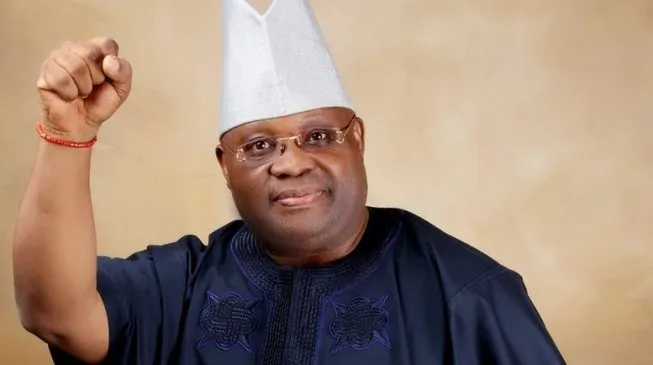
THE Osun State Assets Recovery Panel, instituted to recover government property in possession of private individuals, has asked Governor Ademola Adeleke’s predecessor, Adegboyega Oyetola, and other former appointees to return official vehicles in their possessions.

The directive was made known in a statement signed by the spokesperson to the Osun State Governor, Olawale Rasheed, on Friday, December 23.

The Assets Recovery Panel, chaired by Dr B. T. Salam, accused the former governor and some officials who served him for not returning various models of vehicles without any legal basis for such action, noting that Oyetola has 11 vehicles in his possession.


Read Also:

“As at today, there is no law that authorised any elected or appointed officials to go with state vehicles after completing their tenure of office.

“The Chairman of the Assets Recovery Committee, Dr B. T. Salami, reported that due diligence has been conducted and the committee has concluded that the affected past officials should return government vehicles in their possession,” the statement read.

The panel also added that the former governor’s wife, Kafayat, and appointees have official vehicles valued at N2.9 billion in their possession.

“In the list of affected officials, Governor Oyetola alone has 11 vehicles ranging from Lexus SUV, Toyota Prado SUVs and assorted models of costly vehicles. His wife, Mrs Kafayat, also has in her possession several brands of government vehicles that were taken away against the provisions of the law.

“The former deputy governor has more than seven government vehicles in his custody contrary to the provisions of the law. A serving Senator, Oriolowo, is also directed to return to the Osun State Agricultural Development Programme five machines- namely, motor grader, bulldozer, and a soil compactor machine, among others,” the statement added.

However, the Osun State chapter of the All Progressives Congress faulted the report and transparency of the panel.

The party’s Media Director, Mr Kola Olabisi, said in a statement that the incumbent deputy governor has started using the vehicles in question.

The statement read in part, “If you take a look at the video attached, you will observe the vehicles they announced that they are looking for are already being used by the current deputy governor. Yet, they claimed they did due diligence.

“Should we continue to believe characters like them? How did they come about the cost? Are they using the current market value or how?

“Talking about this particular panel, have they concluded their sitting? When was their report submitted? We asked these questions because only two days ago, the governor was quoted to have said any of the former political appointees that want his November salary should return the vehicle in his custody.

“Or is that also part of the recommendations of the panel? For clarity sake, the former governor and his deputy, by law and convention, are entitled to certain privileges and these are well documented. Apart from those vehicles which their offices permit them to take home, they never took any other item.

“As for the commissioners and other appointees who are also statutorily entitled, the governor formally approved their used official vehicles to them as a gift for their meritorious service to the state since they are not entitled to either pension or gratuity.”

NANS threatens nationwide protest over fuel scarcity

0

THE National Association of Nigerian Students (NANS) has decried the recurring fuel scarcity across the country, vowing it will embark on a nationwide protest if the Federal government does not take action.

According to the association’s vice president, Akinteye Babatunde-Afeez, in an interview with Saturday Punch, the unending fuel crisis has worsened the hardship of students in their various universities with hikes in fares and commodities.

Babatunde-Afeez noted that the association frowned, at its recent Executive Council meeting held on December 10, at the menace of fuel scarcity and resolved to take action if the scarcity persisted.


Read Also:

According to him, the Nigerian National Petroleum Company Limited (NNPCLtd) and security operatives were being “mischievous”, alleged that major oil marketers were involved in the scarcity.

“The NNPCL and security operatives are just being mischievous. Where exactly is this fuel scarcity coming from? We don’t know.

“NNPCL has come out to say there is enough fuel that can go around during the festive season. Now, what is delaying the distribution? Major marketers are involved in this corruption. Some of them are getting the oil directly because they can import it. Now, look at the unending queues compounding the suffering of Nigerian students.

“The government needs to explain to us. It is a compounded problem. As NANS, we are directing our issue to the Minister of Petroleum and the NNPCL MD. We don’t want to know how they will do it but they must put an end to this fuel scarcity.

“We are not joking. We are ready for them, else there will be a nationwide shutdown,” he said.

Buhari’s ex-minister, Nwajiuba loses bid to disqualify Tinubu

THE Abuja Division of the Federal High Court has dismissed a suit the immediate past Minister of State for Education, Chukwuemeka Nwajiuba, filed to stop the candidate of the All Progressives Congress (APC), Bola Tinubu, from contesting the 2023 presidential election.

Delivering judgment on Friday, December 23, Justice Zainab Abubakar held that the suit was statute-barred, having been filed outside the 14 days period prescribed by Section 285(9) of the 1999 Constitution.

Nwajiuba, a chieftain of the APC and one of the presidential aspirants in the party’s primary conducted to elect its candidate for the 2023 presidential election, failed to show up during the election.


Read Also:

In a suit marked FHC/ABJ/CS/1114/2022, which is now dismissed, Nwajiuba  prayed the court to nullify the nomination of Tinubu as flag-bearer of the party for the impending election.

He contended that the primary election that produced Tinubu was not only marred by manifest irregularities, but was conducted in breach of both the 1999 Constitution, as amended, and the Electoral Act.

Justice Abubakar held that the suit, which was filed outside the 14 days allowed by Section 285(9) of the Constitution, had become statute-barred.

Abubakar, who upheld the arguments raised in the preliminary objections of the defence counsel, said her court lacked the jurisdiction to entertain the suit.

Consequently, she dismissed the suit and declined to grant any of the reliefs the plaintiff sought against the defendants, making it the second time the high court would dismiss Nwajiuba’s legal quest to invalidate Tinubu’s nomination.

Nwajiuba had earlier in a suit marked FHC/ABJ/CS/942/2022, which was dismissed by trial Justice Inyang Ekwo on December 15, accused Tinubu of acting in breach of the Electoral Act.

Nwajiuba, in the suit he filed alongside a non-governmental organization under the aegis of the Incorporated Trustees of Rights for All International, alleged that the primary election that produced Tinubu was fraught with massive vote-buying, insisting that majority of the delegates were bought over with dollars.

To strengthen his allegation, the ex-Minister, who polled only one vote at the primary election held on June 8, included in his proof of evidence a video recording showing the immediate past Minister of Transportation, Rotimi Amaechi, decrying that delegates at the APC primary sold their votes.

He also queried Tinubu’s source of income and his educational qualifications, but all were dismissed as lacking in merit by the court.