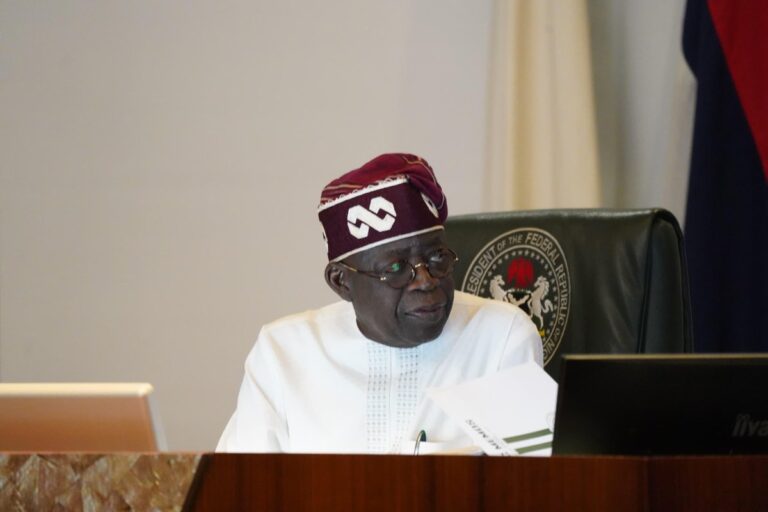
PRESIDENT Bola Tinubu on Friday announced that Nigeria will spend a record N5.41 trillion on defence and security in 2026, describing the allocation as the largest in the country’s history and reaffirming his administration’s commitment to tackling insecurity.
In his Democracy Day address, Tinubu acknowledged that the national mood had been overshadowed by the abduction of schoolchildren in Oyo and Borno states, declaring that democracy without security is a mirage.
“Though this year’s mood is dampened by the abduction of our children in Oyo and Borno, we remain hopeful for their safe return,” Tinubu said, adding that the government had declared a security emergency and approved the recruitment of more than 50,000 police officers and thousands of military personnel.
Despite record spending and repeated assurances, kidnappings and bandit attacks continue to fuel concerns about whether security spending is delivering results. For many years, a substantial share of the nation’s budget has been allocated to security.
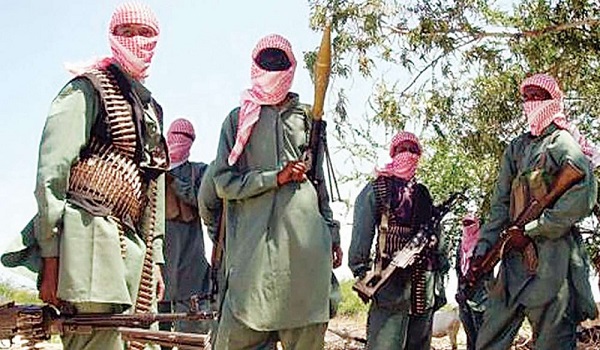
The ICIR reported on May 15, that armed men attacked three schools in Oriire Local Government Area of Oyo State, abducted 39 pupils and seven teachers. They killed a teacher during the assault and beheaded another later. Families have spent weeks anxiously awaiting the return of the remaining victims.
Reports indicate that the kidnappers are demanding the release of their detained members, among others, as a condition for freeing the captives.
The incident marked one of the most significant school abductions in southern Nigeria and revived memories of previous mass kidnappings that have plagued northern states for more than a decade.
In Borno State, insurgency-linked kidnappings remain a major threat. The Nigerian military recently announced the rescue of 360 civilians, mostly women and children, abducted earlier this year by Boko Haram fighters in Gwoza. Two infants died during the operation because of the harsh conditions endured in captivity.
The rescue came amid protests in Abuja over the abduction of children and renewed concerns over the persistence of insecurity despite years of military campaigns.
Beyond Oyo and Borno, kidnappings and banditry have continued across several parts of the country.
Last week, armed bandits in Zamfara State abducted dozens of villagers who had gathered for what was supposed to be peace talks, with authorities confirming that at least 39 people were taken.
Data compiled by local media show that at least 551 students and school workers have been kidnapped in nine major incidents since President Tinubu assumed office in 2023, highlighting the continued vulnerability of schools despite repeated assurances from government.
The persistence of these attacks has fueled debate over the effectiveness of Nigeria’s security spending.
However, Tinubu insists progress is being made, noting that terror-related deaths have fallen by 81 per cent since 2015, more than 13,000 terrorists were neutralised in the last year, and over 124,000 fighters and their dependants have surrendered through Operation Safe Corridor since 2023.
The president blamed insecurity in the country on failure of the states to grant local governments autonomy, despite a landmark ruling by the Supreme Court mandating it.
“Recognising that democracy is undermined when people do not feel its impact, my administration has sought financial autonomy for our 774 local councils. A fundamental challenge to our nation’s advancement has been ineffective local government administration. The insecurity we are addressing is partly due to the collapse of grassroots governance,” he stated.
The ICIR reports that many states in Nigeria appropriate funds meant for local government administration and end up allocating only a paltry portion to the officials they installed as elected local government chairmen. This habit has worsened unemployment, underdevelopment, poverty, and crime in communities across the country.