Home Blog Page 15

AXS Film Fund offers grants for documentary filmmakers, new media creators

THE AXS Film Fund is accepting applications for its 2026 grant cycle, offering awards of up to $10,000 to support documentary filmmakers and nonfiction new media creators working on projects at any stage of production.

The fund prioritises creators living with disabilities, particularly those from underrepresented communities, but welcomes applications from all eligible storytellers.

Eligible projects include feature-length documentaries (45 minutes or longer), experimental nonfiction films, and nonfiction new media projects with a video component. Applicants must be at least 18 years old, not enrolled in a degree-granting programme, and serve as the director or producer of the project.

Each year, the fund supports between three and five creators, helping them complete impactful nonfiction stories that bring underrepresented perspectives to audiences. Selected projects are evaluated based on artistic merit, feasibility, ethics, accountability, and the strength of the proposal.

Applications close on July 31, 2026, at 11:59 p.m. ET. Interested applicants can apply here.

Pulitzer Center opens applications for AI Accountability Fellowships

THE Pulitzer Centre is inviting applications for its AI Accountability Fellowship 2026–2027, a fully funded programme designed to support journalists reporting on the real-world impact of artificial intelligence systems.

The fellowship will fund in-depth investigative reporting that examines how AI is used in areas such as policing, healthcare, hiring, social welfare, and surveillance, with a strong focus on accountability, transparency, and human impact.

Selected fellows will receive financial support (up to $25,000), mentorship, training, and access to a global network of journalists working on AI-related investigations.

Open to staff and freelance journalists worldwide, the programme encourages ambitious, evidence-based reporting projects that explore how AI systems are built, deployed, and regulated—and how they affect everyday people and communities.

The fellowship runs for 10 months, beginning in September 2026, and includes additional support for engagement and impact activities to help ensure reporting reaches wider audiences.

The deadline is July 12, 2026. Interested applicants can apply here.


CSOs, stakeholders seek stronger citizen participation ahead of 2027 elections

0

CIVIL society actors, the media and youth groups have called for stronger citizen participation, intergenerational collaboration and sustained civic engagement ahead of Nigeria’s 2027 general elections.

The stakeholders warned that growing voter apathy, insecurity and misinformation could undermine the country’s democratic future.

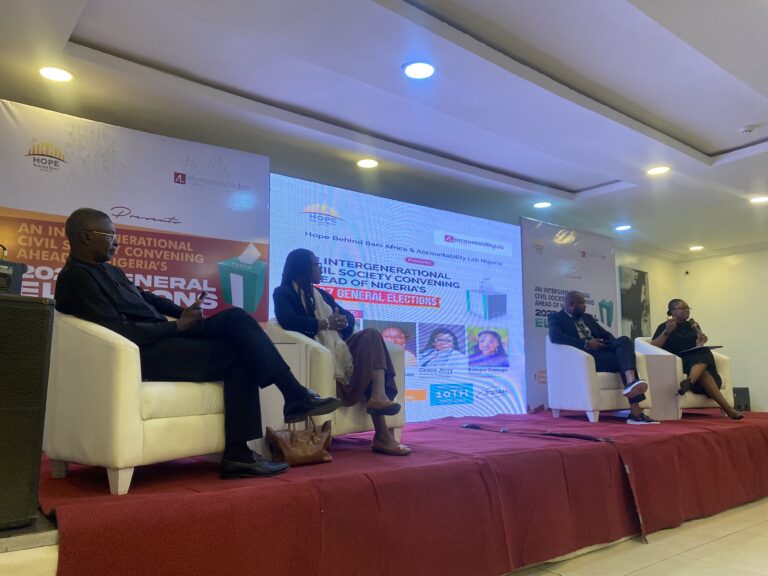
They made the call at an event organised by Hope Behind Bars Africa and Accountability Lab, with the theme “An Intergenerational Civil Society Convening Ahead of Nigeria’s 2027 General Elections,” held in Abuja on Wednesday, June 10.

The participants highlighted the need to bridge the gap between older generations of democracy activists and younger Nigerians, many of whom, they said have become increasingly disinterested with political processes following contentious elections and unfulfilled promises.

In his keynote address, the Executive Secretary of the National Human Rights Commission (NHRC), Tony Ojukwu, represented by the commission’s Director of Civil and Political Rights Department, Halilu Adamu, argued that citizen participation is not merely a political aspiration but a constitutional obligation.

According to him, Nigeria’s constitution places sovereignty in the hands of citizens and requires their participation in governance beyond elections.

He stressed that democracy should not be reduced to voting every four years, but should involve continuous engagement in policymaking, accountability processes and public affairs.

“The constitution does not envision a citizen who appears only on election day,” he said. “It envisions an active citizen who continuously participates in shaping public affairs, contributing to national development and helping to strengthen democratic institutions.”

Meanwhile, during the panel discussions, panelists reflected on the significance of the June 12, 1993 election and previous movements, as well as what younger generations could learn from the movement that followed its annulment.

Representing Grace Jerry, the Executive Director of Inclusive Friends, Molly Joshua said one of the defining features of the June 12 struggle was the unity that emerged among Nigerians regardless of ethnic, religious or political differences.

“There was one voice and one goal,” Joshua said, adding, “People came together to pursue a common objective. That unity is one of the biggest lessons we should learn from that period.”

Joshua, however, warned that many Nigerians have lost confidence in elections and democratic institutions, leading to voter apathy and disengagement.

“The sovereignty is with the people, but that sovereignty has been taken away,” he said. “This is the right time for us to take back that sovereignty moving into the 2027 election.”

He argued that civil society organisations must rethink voter mobilisation strategies by engaging citizens in more accessible ways and communicating in languages and formats that resonate with different demographics.

Joshua also advocated the formation of broad-based coalitions involving civil society groups, traditional institutions, religious organisations, youth groups and persons with disabilities to strengthen democratic participation before the next polls.

The Director of the Nigeria Youth Futures Fund (NYFF), Elisabeth Agbiti-Douglas, said the previous struggles by Nigerians during the June 12 election and occupy Nigeria, left positive legacy for younger Nigerians.

According to her, while the movements demonstrated the power of collective action, it also created a lingering sense of helplessness among many citizens who felt their votes and voices could ultimately be ignored.

“One of the lessons many Nigerians learned was that no matter what you do, those in power will do whatever they want,” she said, stressing that “Part of our responsibility is to challenge that narrative.”

Agbiti-Douglas rejected suggestions that young Nigerians are impatient in their activism, arguing that their urgency reflects the reality that they will live longest with the consequences of current political decisions.

“Social change is a marathon, not a sprint. There is never going to be a point where we can say we have arrived. Democratic gains require constant vigilance.”

Drawing from the #EndSARS protests and subsequent civic engagements, Agbiti-Douglas said many young Nigerians were already leading change in their communities through advocacy, policy interventions and accountability initiatives.

“The zeal of youth and that sense of urgency must shake hands with institutional memory and experience if this generation is going to achieve the kind of change it wants,” she argued.

On his part, the Executive Director of the International Centre for Investigative Reporting (ICIR), Dayo Aiyetan, who participated in the June 12 struggle as a journalist with Concord Newspapers, echoed concerns about declining civic participation and weak coordination among civil society actors.

Aiyetan said one major difference between the June 12 movement and contemporary activism was the existence of stronger civic leadership structures capable of mobilising citizens around clear objectives.

“There were stronger civil society organisations and stronger leadership. People were organised and rallied around common goals,” he stated.

Nevertheless, he argued that civic movements in Nigeria have achieved significant milestones despite setbacks.

“I do not think our voices have not counted. What every social movement from June 12 until now has shown is that you cannot silence the people.”

He described the 2020 #EndSARS protests as a defining moment in Nigeria’s civic history, noting that the movement created new templates for mobilisation that continue to influence activism across Africa.

Looking ahead to the 2027 elections, Aiyetan identified insecurity and misinformation as major threats to democratic participation.

“With AI, it is going to be such a chaotic thing to handle,” he said.

The participants further highlighted other key issues such as inclusion, data privacy, and cybercrime laws, among others.

Edo shuts schools over abduction fears hours after governor defended Tinubu on insecurity

EDO State Government has ordered the immediate closure of three secondary schools in Akoko-Edo Local Government Area following intelligence reports of a kidnap threat against students.

The directive, contained in a circular issued by the State Ministry of Education and signed by its Permanent Secretary, Enodolomwanyi Otamere, said the affected schools were Ososo Grammar School, Ososo Comprehensive High School and Makeke Secondary School.

The circular dated June 9, was obtained by the News Agency of Nigeria (NAN) on Wednesday in Benin.

NAN reports that the closure came against the backdrop of a security intelligence report by the State Security Service (SSS), also known as Department of State Services (DSS).

The reports in a memo dated June 5, and sighted by NAN, warned of an alleged plan by suspected bandits to carry out a mass abduction of school children in Edo North Senatorial District.

According to the intelligence memo addressed to the Nigeria Security and Civil Defence Corps (NSCDC), the SSS intercepted communications between two suspected bandits.

The two suspects allegedly discussed targeting school children after earlier attempts to kidnap wealthy individuals failed to yield expected financial gains.

The report indicates that the suspects believed abducting students will attract greater government attention and increase their chances of securing substantial ransom payments and other concessions.

The memo further revealed that a 25-year-old suspect, was arrested on June 4, while allegedly conducting surveillance around Makeke Secondary School in Makeke community, one of the schools subsequently shut by the government.

According to the document, the suspect’s activities heightened fears that preparations for the planned operation may already have been underway.

Responding to the threat, the security agency advised authorities to strengthen protection around schools and educational institutions across the state, particularly in Edo North.

The SSS also recommended the deployment of additional security personnel, enhanced collaboration among security agencies, local vigilante groups and hunters, as well as intensified patrols and surveillance in vulnerable communities.

Meanwhile in the memo directing the closure of the schools, the permanent secretary said that the decision followed security advisories from relevant agencies warning of threats to the safety of students, teachers and surrounding communities.

“The Ministry of Education has received intelligence reports and advisories from relevant security agencies regarding credible threats to the safety of students, staff, and school communities in some parts of Akoko Edo Local Government Area,” he said

He added that all academic and non-academic activities in the affected schools had been suspended until further notice as part of efforts to safeguard lives and property.

Otamare said that in spite of the closure, candidates sitting for the ongoing West African Senior School Certificate Examination (WASSCE) would continue to have access to examination centres under strict security arrangements.

“Candidates currently participating in the ongoing West African Senior School Certificate Examination (WASSCE) shall be allowed access to sit for their examinations under strict security arrangements and supervision as may be provided by the relevant security agencies and community stakeholders,” he said.

He directed school principals to ensure the orderly release of students to their parents and guardians, secure school facilities and maintain close communication with government authorities and security agencies.

He also urged parents and residents of the affected communities to remain calm and cooperate with security agencies as efforts continue to neutralise the threat and restore normal academic activities.

The ICIR reports that schools closure came hours the state Governor Monday Okpebholo blamed opposition politicians for rising insecurity in Nigeria. He alleged that they kidnap Nigerians to undermine President Bola Tinubu’s leadership.

“There is no vacancy in Aso Rock. They can even kidnap all of us. Yes, there is no vacancy in Aso Rock. What is happening today is in the hands of the opposition. They have failed. Have they not failed?

“Is it by kidnapping children? Then who are you going to govern? There will be nobody for you to govern. So, let them give us peace so that the president and other elected officials can govern effectively,” Okpebholo said.

Nigeria has seen a sharp rise in kidnapping and other criminal activities by armed non-state actors in recent months.

Schools and communities have come under repeated attacks, with pupils and residents being whisked away, respectively.

The ICIR reported the incident in Oriire Local Government Area of Oyo State, where gunmen stormed three schools and abducted dozens of pupils, students, and staff. A teacher was killed while the attack was being carried out, while another was beheaded by the assailants after the incident. The remaining victims have yet to be freed.

This organisation also recently reported how the Nigerian security forces freed 360 civilians, mainly women and children, abducted by terrorists from Ngoshe community in Gwoza Local Government Area of Borno.

Obi demands N5bn damages, apology from Kenneth Okonkwo over defamation claims

THE PRESIDENTIAL candidate of the Nigeria Democratic Congress (NDC), Peter Obi, has sued his former ally and actor-turned-politician, Kenneth Okonkwo, over comments he allegedly made during a live television appearance.

In a pre-action letter dated June 9, 2026, Obi, through his legal team led by Alex Ejesieme, a senior advocate, accused Okonkwo of making damaging allegations during an interview on Channels Television’s Sunrise Daily programme on June 8.

According to the lawyers, the statements were later circulated widely by news outlets, blogs and social media users, further amplifying their reach.

Okonkwo allegedly claimed that Obi and senior NDC figures in the South-East demanded money from aspirants seeking tickets to contest legislative positions under the party platform.

The pre-action notice notes that “Obi, together with the leaders of the Nigeria Democratic Congress (NDC) in the South-East, informed the party’s aspirants that any person seeking to contest as a member of the House of Representatives must, after paying the prescribed expression of interest fee, pay a bribe of ten million naira (N10,000,000.00) to the NDC and to the caucus leaders.”

Obi’s lawyers said Okonkwo also suggested that evidence existed to support the accusation and further alleged that Obi personally handled the selection of candidates from a hotel room.

According to the pre-action notice, Okonkwo allegedly warned party members that Obi would deceive them, adding that the presidential candidate collected funds from Nigerians abroad and was involved in unlawful activities alongside other party officials.

The legal team argued that the claims portrayed the former Anambra State governor as someone engaged in corruption, fraud and other criminal conduct.

In the letter, the lawyers stated: “The above statements, in their natural and ordinary meaning, and by necessary implication, falsely and maliciously represent our client as a person who demands, solicits, organises and collects bribes; who extorts, defrauds and swindles political aspirants of their money; who is a fraudster, a scammer and a dishonest political actor; and who, in concert with others, is engaged in criminal conspiracy and is actively perpetuating criminality.”

They maintained that the allegations lacked any factual basis and exceeded the limits of ordinary political criticism.

Describing the statements as “false, baseless, malicious, reckless, defamatory and wholly unsupported by any fact,” the lawyers insisted that the comments caused serious harm to Obi’s reputation and public image.

As part of the demands, Obi asked Okonkwo to publicly withdraw the statements and issue an apology within seven days. The apology, the notice said, must receive equal or greater publicity than the original allegations.

The letter further demanded: “Pay to our Client, through our chambers, the sum of five billion naira (N5,000,000,000.00) only, as general, aggravated and exemplary damages for the grave injury occasioned to his hard-earned reputation, character and public standing by the said false, malicious and defamatory statements; and deliver to us a written undertaking that you shall cease and desist from making, publishing, circulating or causing to be published any further false, malicious or defamatory statement concerning our client.”

The lawyers warned that failure to meet the conditions would lead to court action seeking damages, injunctive orders, legal costs and other remedies.

Reacting to the legal threat, Okonkwo dismissed the demand in a post on his X account, claiming he had yet to review the notice.

He wrote: “It has been brought to my notice that there is a letter circulating online from the hypocrite, Peter Obi, and his lawyers that I should pay him N5 billion. Hahaha! If Peter Obi is looking for money to campaign, he should privately ask me for assistance, not come from extortion, and I will help him.”

The former Labour Party campaign spokesperson, the party on which Obi vied for the presidency in 2023, added that he would provide a detailed response after reading the document.

“I will reply to the letter whenever I have the time to read it later in the day. Please, send it here if you have it. It will be a shame to Peter Obi and his lawyers if they do not take this case to court. I don’t have time or patience for scammers,” he stated.

Okonkwo also suggested that a court case could expose information he obtained while serving as Obi’s spokesperson during the 2023 election campaign.

“Anyone who decides to sue his former spokesperson for defamation is indeed very unwise,” he added.

Obi and Okonkwo were close political associates during the 2023 presidential election when the actor joined the Labour Party after leaving the All Progressives Congress (APC). He later became one of the prominent voices of Obi’s campaign team.

However, the relationship between both men has since deteriorated, leading to a series of public disagreements.

US-Iran ceasefire under strain as Trump vows response to helicopter shootdown

UNITED States President Donald Trump’s decision to retaliate after Iran allegedly shot down his country’s Apache helicopter while it was patrolling the Strait of Hormuz has put the fragile ceasefire between the two nations under threat.

In a post on social media on Tuesday, Trump said the two pilots on the jet survived unharmed after it went down near Oman’s coast, noting that a US military drone later rescued the crew.

“I have just been informed by our Great Military that last night the Iranians shot down one of our highly sophisticated Apache Helicopters while patrolling over the Strait of Hormuz. There were two pilots involved, both are safe and uninjured,” Trump said on his Truth Social.

He described the development as an attack that required a response, raising fresh concerns about the fragile ceasefire and ongoing efforts to reach truce between Washington and Tehran, following months of war.

Reacting to the claim, Iranian Foreign Minister Abbas Araghchi did not directly confirm or deny involvement but warned that foreign military forces operating near Iran’s territory risked accidents or being caught in crossfire.

Araghchi warned that foreign military forces operating near Iranian territory to leave the region following Trump’s remarks.

IAraghchi stressed that the Strait of Hormuz is not international waters but a shared waterway between Iran and Oman, adding that maritime boundaries in the area are clearly defined.

“Foreign forces operating close to our territory are constantly exposed to risks arising from their own mistakes, accidents, or the possibility of being caught in crossfire,” Araghchi said.

He noted that Iran’s armed forces remained on high alert to respond to any violation of the country’s airspace, territorial waters, or land borders.

He urged foreign forces to withdraw from the region, stating that doing so would be the best way to reduce tensions and avoid attacks.

While reiterating Tehran’s preference for diplomacy, the Iranian minister added that the country was prepared to respond through other means if necessary.

The incident comes amid heightened tensions in the Middle East, with clashes continuing between Iran and Israel, as Israeli strikes on the southern Lebanese city of Tyre on Tuesday, reportedly killed at least eight people, marking one of the deadliest attacks on the city since fighting began on February 28 this year.

The Strait of Hormuz remains a critical global shipping route, carrying a significant share of the world’s oil and gas exports, while ongoing hostilities continue to threaten regional stability and international energy markets.

Reps summon Ribadu, service chiefs over worsening insecurity

0

THE House of Representatives has directed the National Security Adviser, Nuhu Ribadu, and heads of Nigeria’s security institutions to appear before it to provide explanations on the deteriorating security situation in the country.

The decision was reached during Tuesday’s sitting of members of the lower national legislative chamber after lawmakers considered and approved a motion by Sulaiman Gumi, who represents Gummi/Bukkuyum Federal Constituency in Zamfara State.

The move comes as many parts of the country continue to grapple with violent attacks linked to banditry, terrorism, kidnappings, and other criminal activities that have left hundreds of families displaced and grieving.

During deliberations, legislators expressed dissatisfaction with the persistent violence despite repeated promises from both the Federal Government and security agencies that the situation would be brought under control.

The invitation followed growing public concern over a series of recent attacks, including incidents targeting educational institutions. The abduction of pupils and teachers in parts of Oyo and Borno states has further heightened fears among citizens and renewed questions about the effectiveness of current security measures.

Pressure has also mounted on the administration of President Bola Tinubu, with some Nigerians calling for changes within the nation’s security architecture, with the hope of achieving better results against the menace.

The latest parliamentary action comes not long after Tinubu addressed the plight of victims still being held by kidnappers. In a statement personally signed to commemorate Children’s Day on May 27, the president acknowledged the pain faced by affected families.

“As we mark this special day, which coincides with Eid-el-Kabir, some Nigerian children and their teachers in Oyo and Borno should be with their families but are being held captive by criminals. Some children have been forced into fear. Some parents cannot join today’s celebration because their hearts are set on one prayer: ‘Bring our children home.”

The president assured citizens that efforts were ongoing to secure the release of those in captivity. However, fresh incidents have continued to fuel concerns over safety in several communities.

One of the attacks that drew national attention occurred on May 15 when gunmen stormed Community High School in Ahoro-Esinele, Oyo State. The assailants took away the school principal, several members of staff, and dozens of students. A teacher lost his life during the assault, while another victim who was abducted was later beheaded by the attackers.

The incident sparked demonstrations by teachers in Ogbomoso and intensified demands for stronger protection around schools.

Education stakeholders have also voiced alarm. The Nigeria Union of Teachers described the attacks as “barbaric and inhuman,” warning that continued threats against schools could force educators nationwide to reconsider their services.

Silent battles: Nigerian families and heavy burden of sickle cell

FOR many Nigerian families, living with sickle cell disease means enduring persistent pain, exhausting sleepless nights, and the heavy emotional and financial toll of constant medical care.

These discomforts are shadowed by the constant fear of losing a loved one too soon.

The excruciating pain of sickle cell anaemia has claimed countless lives and left families drowning in grief and emotional trauma across Nigeria.

In recognition of the trauma associated with sickle cell, the United Nations designated June 19 annually as World Sickle Cell Day.

Its mission is to shed light on the societal impact of Sickle Cell Disease (SCD), drive research advancements, and advocate for improved clinical care and early detection procedures.

Experts define SCD as a genetic blood disorder that causes red blood cells to become abnormally shaped, blocking blood flow and leading to severe pain, infections, organ damage, and sometimes death.

According to the Centre for Policy Impact in Global Health, Nigeria remains the global epicentre of SCD.

The country records more than 150,000 babies born with the condition every year, representing over 33 per cent of the global burden.

The disease continues to cause high mortality, especially among children, with many dying before reaching adulthood due to limited access to quality healthcare and funding for treatment.

For Shiva M’ouul-Kondoun, Bursar of the University of Abuja, now Yakubu Gowon University, childhood memories are filled not with joy or laughter but with repeated tragedy.

She recounted how sickle cell disease wiped out half of her siblings.

Born into a family of 12, she watched six of her siblings die from the disease before turning 16.

“I watched my siblings lying side by side in one room, gasping for breath, while my mother stayed with them and the rest of us ran around seeking help.

“Months and years passed. One after another, without much of a gap, they died; it was a painful cycle of hope and grief,” she said.

Her voice trembled as she described the helplessness her family endured, watching young lives fade away despite desperate efforts to save them.

M’ouul-Kondoun’s story reflects the painful reality faced by so many families across Nigeria, where sickle cell disease remains one of the country’s most devastating but often neglected health conditions.

Binta Salisu also recalled her ordeal.

She still remembers the pain her son, Ismaila Salisu, suffered before he died.

He was a playful and lively child whose life gradually became overshadowed by the unbearable pain of SCD.

She said the sign started shortly after his first birthday.

“He would cry through the night holding his hands or legs as if something was biting him from inside.”

She said at first, her family thought it was just a normal childhood illness.

Medical tests later confirmed that Ismaila had SCD. From that moment, life changed completely for the family.

“It became a cycle of hospital visits, medications, and sleepless nights. He was always in pain.

Sometimes he wouldn’t eat. Sometimes he would just lie there and stare at me.”

The emotional burden became unbearable for her as a mother. “I used to pray and ask God to take my life instead and spare him because he was too young.”

She said a doctor later explained that Ismaila suffered repeated sickle cell crises, episodes of intense pain caused by blocked blood vessels, which gradually weakened his body system.

On the day he died, Salisu said her son struggled for breath.

“He held my finger so tight, like he did not want to let go, then suddenly he became still.

“He was gone forever,” she said.

Beyond the physical pain suffered by patients, families also battle financial hardship, especially when emergency medical care is needed.

Ruqqayya Abdulrahman, 27, knows this reality too well.

She narrated how she lost the man she intended to marry to sickle cell disease in 2025.

Describing him as kind, loving, and full of dreams, she said his death shattered her world.

“He was the man of my dreams.”

She said the tragedy happened after they attended his younger sister’s graduation ceremony.

Abdulrahman said her former partner started complaining of stomach pain.

“We thought it was just the usual crisis, so he took painkillers and the pain reduced briefly.

“But after some time, the pain became severe and we rushed him to the hospital.”

At the hospital, doctors reportedly recommended an urgent blood transfusion.

However, the family struggled to raise money for the blood.

“After spending so much on tests and treatment, they said he needed blood urgently, but there was no money.

“The delay in getting a blood transfusion was what led to his death on September 7, 2025, a date I will never forget,” she said.

Across Nigeria, similar stories echo in homes, hospitals, and communities: stories of parents burying children, lovers losing partners, and families silently battling emotional and financial exhaustion.

Health experts say that in spite of advances in treatment, many sickle cell patients in Nigeria still lacked access to adequate care, essential drugs, and proper counselling.

They also point to poor genotype awareness, inadequate newborn screening, and weak healthcare systems as major factors worsening the burden of the disease.

However, a pharmacist at the Federal Medical Centre, Keffi, Nasarawa State, John Uwaya, points out that there is hope for people living with SCD.

He said advanced stem-cell approaches or gene-based correction of haematopoietic stem cells could functionally reduce sickle cell disease by establishing erythropoiesis that produces non-sickling haemoglobin.

“It can be curative when a compatible donor is available, but it requires rigorous compatibility testing and carries risks related to conditioning, compatibility, and procedure-related complications.

“Stem cell-based or gene therapies are emerging options described as potentially less invasive but currently technologically complex and costly.”

Uwaya said stem cell therapy and bone marrow transplantation worked by increasing the number of healthy red blood cells in the body so that they outnumber the sickled cells.

As a result, patients experience fewer crises, less severe pain, and a better quality of life.

However, he stressed that the treatment did not necessarily mean that a person’s SS genotype completely changed to AA or AS.

While stem cell therapy and bone marrow transplantation offer hope for curing sickle cell disease, they remain out of reach for average Nigerians due to high cost.

Uwaya said that treatment could cost over N5 million, making it unaffordable for most families, particularly those already burdened by the economic challenges associated with managing the disease.

“Although some patients have benefited from grants and special intervention programmes, access to curative treatment is still limited because the technology is expensive and not widely available,” he said.

These challenges have pushed non-governmental organisations and advocacy groups to intensify efforts toward supporting patients and creating awareness.

One of them is the Crystal Shape Sickle Cell Foundation, which has continued to advocate for better healthcare access and support for persons living with SCD.

Mariam Hassan, co-founder of the foundation established in 2016, said many families suffered silently because treatment remained expensive and inaccessible.

According to her, poor awareness, inadequate advocacy, high cost of drugs, especially hydroxyurea, and difficulty accessing safe blood continue to threaten the survival of patients.

“Many people still do not understand the seriousness of sickle cell disease until it affects their family directly,” she said.

She stressed the need for stronger government intervention, subsidised treatment, public education, and improved healthcare services for patients.

Hassan said that beyond medical treatment, there was also an urgent need for emotional and psychological support for families living with the condition.

For many of them, SCD is more than a health challenge; it is a lifelong emotional battle marked by fear, uncertainty, and painful loss.

Above all, rather than mere sympathy, families navigating Nigeria’s sickle cell crisis are demanding broader awareness, affordable treatments, accessible care, and the prospect of a better future. (NAN)


Four killed, 24 injured in Warri–Itakpe train crash

0

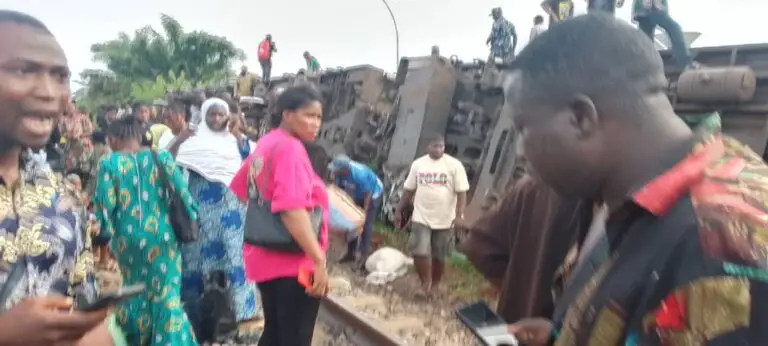
THE Nigerian Railway Corporation (NRC) has confirmed the death of four passengers and injuries to at least 24 others after four coaches of the Warri–Itakpe Train Service (WITS) capsized and another derailed near Agbor, Delta State.

The NRC disclosed details of the incident in a statement released on Tuesday, June 9, through the Federal Ministry of Transportation and signed by the ministry’s Permanent Secretary, Funsho Adebiyi.

The ICIR reported that the accident, which occurred on Monday, June 8, is the latest in a series of operational setbacks that have plagued the rail corridor in recent years, raising renewed concerns about safety on one of Nigeria’s major standard-gauge railway lines.

“The Nigerian Railway Corporation (NRC) regrets to confirm that a serious train accident occurred yesterday along the Warri–Itakpe Train Service (WITS) corridor near Agbor, Delta State,” the statement partly read.

“Preliminary reports indicate that four coaches capsized while one coach derailed, resulting in the unfortunate loss of four lives, comprising two adult females, one adult male, and one infant passenger,” the statement added.

The ministry said a total of 442 passengers had booked for the journey, while 40 crew members, security personnel and third-party service providers were also on board, bringing the total number of persons on the train to 482.

It stated that emergency rescue and evacuation operations were immediately activated with support from the Delta State Government and relevant emergency agencies.

“Rescue and evacuation operations were immediately activated with the support of the Delta State Government, NEMA, FRSC, the Police, Civil Defence, local authorities, security agencies, and other emergency responders, and were completed by 6:30 p.m. Injured passengers were evacuated to medical facilities in Agbor for treatment,” the statement said.

The ministry disclosed that among those onboard were Ede Dafinone, a senator representing Delta Central Senatorial District, and former Delta State Secretary to the State Government, Patrick Ukah.

“As of the time of this release, 24 serious injuries have been recorded, while several other passengers sustained varying degrees of injuries and are receiving medical attention. One NRC staff member suffered a traumatic limb injury and is currently receiving treatment and is reported to be in stable condition,” the statement noted.

The ministry expressed condolences to the families of the deceased and wished those injured a speedy recovery.

The corporation also commended the Delta State Government, emergency responders, security agencies, medical personnel, members of the public, the NRC Mechanical Directorate and the Special Rescue and Emergency Team for their swift response to the incident.

According to the ministry, the train’s full passenger manifest has been recovered and would be made available to relevant authorities. It added that efforts were ongoing to identify all injured and deceased persons for proper documentation.

The latest derailment adds to a series of operational setbacks that have plagued the Warri–Itakpe rail corridor in the last couple of years.

In May 2026, the Nigerian Railway Corporation (NRC) suspended services on the route, citing operational challenges and technical advice from its engineers to allow for safety checks, maintenance and system assessments.

Recall that in November 2025, the Warri–Itakpe train derailed in the Agbor area of Delta State just four days after the route resumed operations following months of suspension linked to technical faults and track repairs.

The NRC subsequently halted services again to conduct safety and security audits.

Before the November derailment, the NRC had suspended operations on the Warri–Itakpe route on August 2 following a series of train breakdowns and technical faults.

Meanwhile, the Ministry of Transportation said a full investigation had commenced to determine the cause of Monday’s accident.

“A full investigation into the cause of the accident has commenced, while efforts will continue to account for all passengers and provide the necessary support to those affected.”

NLC confirms death of Nigerian labour leader attending Geneva conference

THE Nigerian Labour Congress (NLC) has confirmed the demise of prominent trade unionist, Domingo Adeleke, who passed away in Geneva, Switzerland, while attending the 114th Session of the International Labour Conference (ILC).

Confirming the development to The ICIR, the NLC spokesperson, Benson Ukpa, said Adeleke died on Tuesday after a brief illness.

“It is with deep sorrow that the Nigeria Labour Congress and the entire trade union movement in Nigeria, especially the 2026 Workers’ Delegates to the International Labour Conference, announce the passing of Comrade Domingo Michael Adeleke, who died today in Geneva after a brief illness while attending the 114th Session of the International Labour Conference,” the NLC said.

The congress explained that Adeleke was part of Nigeria’s delegation to the annual conference organised by the International Labour Organization (ILO), which brings together governments, employers and workers’ representatives from across the world to deliberate on labour and employment issues.

“Comrade Domingo was a committed trade unionist whose dedication to Nigerian workers and the struggle for decent work took him to the global stage right to the end. His loss is felt deeply by all who knew him and worked alongside him,” it added.

The NLC noted that its leaders visited the hospital where Adeleke’s body is being kept and commenced arrangements for its repatriation to Nigeria.

The workers union extended its condolences to the deceased family, colleagues and members of the labour movement, as it described his passing as a significant loss to organised labour in Nigeria.

The ICIR reports that until his passing, Adeleke was the chairman of the Lagos State Joint Negotiating Council (JNC) and a member of the Nigeria Civil Service Union (NCSU), among others.

His death has cast a sombre mood over Nigeria’s participation at the ongoing International Labour Conference in Geneva, where delegates are discussing key issues affecting workers and employment worldwide.

Tributes have continued to pour in from labour leaders and workers across the country, many remembering him for his contributions to labour relations, advocacy for workers’ welfare and his commitment to social justice.