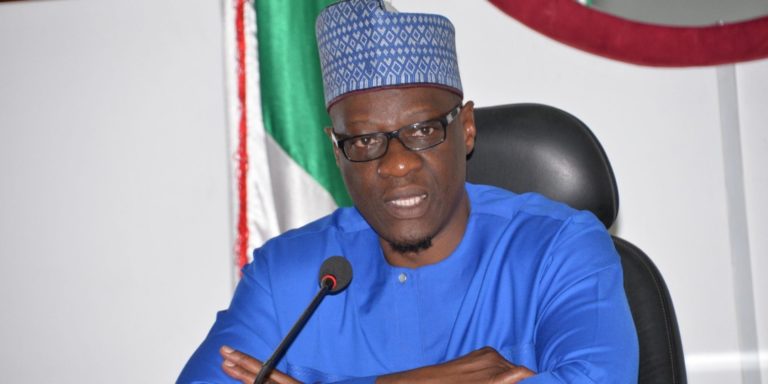
SEVERAL properties belonging to former Kwara State Governor Abdulfatah Ahmed have been taken over by the Asset Management Corporation of Nigeria (AMCON) over indebtedness of nearly N5 billion.
AMCON Spokesperson Jude Nwazor, who revealed this in a statement on Wednesday, said the debt was personal.
He stated that the seizure was consequent upon an order by Justice A.M Liman of the Federal High Court, Lagos.
He also noted the judge had ordered the freezing of the bank accounts of the former governor and his two companies, including Trans Properties and Investment Limited and Trans It Consulting Limited in Suit No: FHC/L/AMC/01/2021.
Before going to court, AMCON said that all previous efforts to resolve the loan peacefully had been frustrated by the former governor, who remained recalcitrant.
According to the statement, the former governor’s house located at No. 9A Abdulrazaq Street, GRA, Ilorin, had been seized.
Other properties belonging to Ahmed in Kwara, Lagos and Abuja, seized by AMCON included: “houses at 13, Alhaji Masha Road, Surulere; No. 9 Wharf, Apapa, Lagos; Plot 3632, Cadastral Zone E27 of Apo, Abuja; Plot 4115, Cadastral Zone F14 of Bazango, Abuja; Plot 8502, Cadastral Zone E31 of Carraway Dallas, Abuja; and Plot 494, Cadastral Zone E31 of Carraway Dallas, Abuja.”
AMCON has also taken over the non-performing loans of the former governor and his companies, Trans Properties and Investment Limited and Trans It Consulting Limited, from the former Intercontinental Bank, FinBank and Bank PHB during the first phase of EBA purchases, in line with its mandate under the AMCON Act.
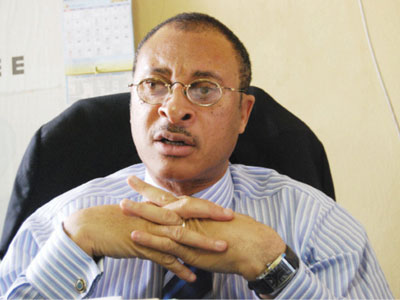
The development comes barely 24 hours after Ahmed, alongside a former Chairman of the Independent National Electoral Commission Attahiru Jega and foremost Nigerian Professor of Political Economy Pat Utomi unveiled the Rescue Nigeria Project ahead of the 2023 elections.
OHANAEZE Ndigbo socio-cultural group has kicked against the recent sit-at-home threat by the Indigenous People of Biafra (IPOB).
In a telephone interview with The ICIR on Wednesday, Ohanaeze Spokesperson Alex Ogbonnia urged IPOB to reconsider the decision as the proposed lockdown would have adverse economic and social consequences on residents in the region.
Ohanaeze noted that it does not believe that Nnamdi Kanu, the founder and leader of IPOB, would want to lock down the whole South-East for a month to inflict economic pains on those he was trying to liberate.
“I don’t want to believe Nnamdi Kanu will shut down the entire South-East to inflict injuries and pains on those he claims to be liberating. I don’t think he would,” he said.
“The only purpose of the lockdown is to suffocate the Igbos. There would be a lot of problems, including losses of good services.”
Ogbonnia stated that Ohanaeze was working with members of the National Assembly and leaders from the South-East to proffer a political solution to the matter and ensure that Kanu was released from detention.
He also called for unity among the Ndigbo nation for a common purpose to address issues affecting the people of the region.
“We are collaborating with all groups of people, including members of Idigbo in the National Assembly, to ensure that there is an amicable and legal solution to this matter so that Kanu will be freed.”
IPOB had in a statement on Wednesday threatened to declare a month-long lockdown in the South-East if its leader, Nnamdi Kanu, is not produced in his next court appearance slated for October 21, 2021.
The group alleged that the Federal Government had perfected plans to keep Kanu perpetually in court by not bringing him to court to continue his trial.
It warned that its peaceful disposition should not be misconstrued as a weakness by the Nigerian government, stating that Kanu’s perpetual incarceration without trial had worsened his health.
Kanu was rearrested and brought back to Nigeria in June four years after his trial on charges of treasonable felony.
Trial Judge Binta Nyako had, on June 29, ordered Kanu to remain in SSS custody.
But in July, the court could not continue the trial after the SSS refused to produce him in court because of ‘logistical” issues.
THE International Fact-Checking Network (IFCN) at the Poynter Institute, in partnership with Facebook Organizations, invites applications for an $800,000 Climate Misinformation Grant Program.
The climate misinformation grant programme aims to support fact-checkers, climate organisations and solution providers working to combat false and misleading information about climate change.
“The Climate Misinformation Grant Program allows members of the fact-checking ecosystem to present innovative proposals and launch initiatives that will reduce climate misinformation and help shape the future of accountability journalism,” the organisers said.
Grantees will have opportunities to access IFCN staff, build tools to fight climate misinformation and share their outcomes with the global fact-checking community.
The organisers accept requests from institutions around the world with demonstrated track record of detecting or disproving false climate claims.
An independent selection committee of scientists, researchers, and journalists will award recipients up to $100,000.
IFCN encourages collaborative partnerships with creative mechanisms to verify the information.
The application period will run from September 16 to October 31, 2021, and recipients of the grants will be notified by December 15, 2021.
SOUTH Africa’s Broad-Based Black Economic Empowerment (B-BBEE) Commission has accused a Nigerian-born naturalised South African man Olufunsho Adebayo Ademoye of benefiting from government tenders after falsely claiming his company, Vicky Adey Consulting CC, was 100 per cent black-owned.
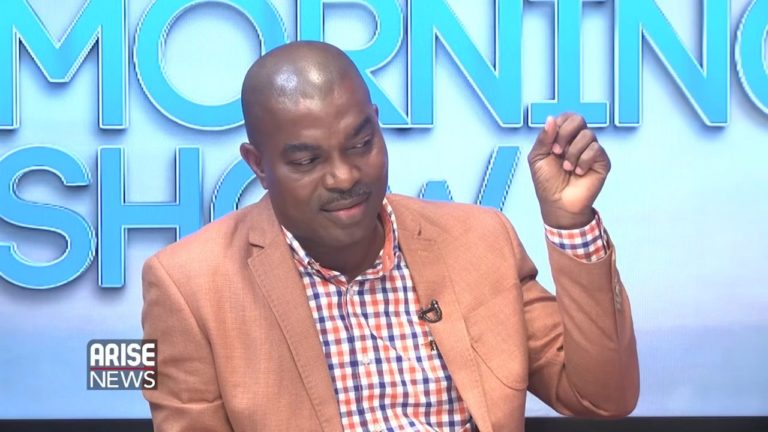
The commission launched an investigation into the consulting firm in May 2020 after Ademoye featured on Arise Tv’s ‘Morning Show’ in 2019. He stated that he benefitted from the B-BBEE programme designed for Africans and people of colour.
Ademoye explained during the show that after the apartheid, South Africa introduced the B-BBEE for Blacks, which ordinary South Africans believed was exclusive to them, and urged the government to do more to educate its citizens to avoid xenophobic attacks on those perceived to be ‘foreigners.’
“The BEE was meant for Africans, Indians, Chinese and coloured. I think the South African government still needs to educate their people that, don’t forget, those foreigners who have been here after 1994 who are now permanent residents are also part of the BEE. They need to do that to their people so that they would stop attacking foreigners because we are all Africans,” he said.
However, the Head of Investigations and Enforcement at the Commission, Moipone Kgaboesele, said Ademoye’s comments were misleading.
According to her, Section 1 of the B-BBEE Act limits benefits to Black people, including Africans, ‘coloured’ people, and Indians who were South African citizens by birth or descent or naturalisation before April 27, 1994.
She said the Commission found that Ademoye naturalised as a South African citizen in August 2009. Therefore, he could not claim benefits under the B-BBEE Act, even though his South African wife Phumudzo Muthelo owned a 60 per cent stake in Vicky Adey Consulting CC, while he owned the remaining 40 per cent.
Ademoye and Muthelo claimed they were unaware of the requirements of the B-BBEE Act. They had, however, agreed to immediately withdraw from the panel of contractors and service providers of any organ of state or public entity, which were awarded based on false and misrepresented information.
The company had secured opportunities on the panel of contractors and service providers in the Gauteng provincial department of education, Coega Development Corporation and Independent Development Trust.
The commission said ignorance of the law was not an excuse and would not absolve Ademoye and Muthelo from liability, warning private and public sectors, including foreign nationals, as beneficiaries of any B-BBEE element.
It also recommended that Vicky Adey Consulting CC, Ademoye and Muthelo issue a written public apology and place it on social media.
In addition, the Commission directed the company and its shareholders to pay R50,000 to the National Student Financial Aid Scheme.
The B-BBEE is an integration programme launched by the South African government to reconcile South Africans and address the inequalities of apartheid by compensating black South African for the land taken away from them.
The federal government says it has spent about N5 billion on a covid-19 relief fund for transport sector operators, but many said they had not received the N30,000 one-off grant.
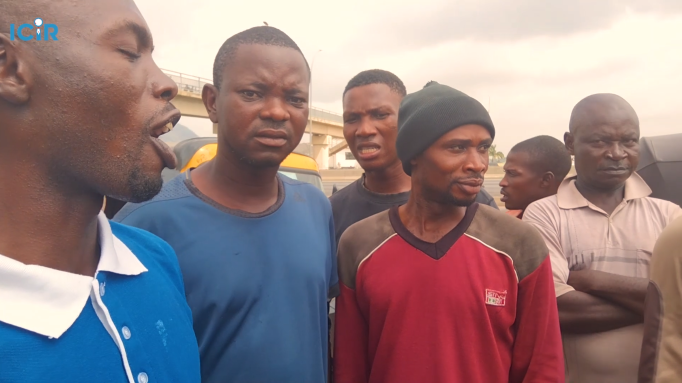
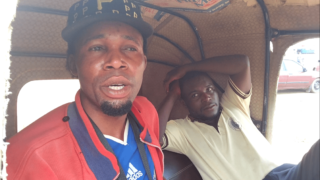
AGBO Sunday, a tricycle rider, lives in Byazhin Across in Kubwa, one of Abuja’s densely populated satellite towns. On February 27, 2020, he left home at 7 a.m. for his work station, a ‘NNPC’ bus stop in the town. He turned on his radio as he drove. That was when he heard that the dreaded COVID-19 had entered Nigeria.
Mr Sunday later asked his mates what the development meant, but they were as clueless as he was. Unknown to them, their trade would be one of the most affected by the pandemic.
Agbo Sunday keke driver kubwa
A month later, President Muhammadu Buhari announcedthe first phase of a lockdown to curb the spread of the virus. The restriction of movement halted Mr Sunday’s transportation business.
Aside from being the main source of income for his family of seven, not working also meant Mr Sunday risked losing his tricycle for not meeting the payment schedule in the hire-purchase agreement through which he got it.
The lockdown lasted for over a month. But even after it was relaxed, patronage remained low.
“Before Covid-19, I was making between N6,000 and N7,000 daily but now I hardly get N1,500 in a day. I wait up to four hours on the queue for my turn to load passengers,” he said as he spoke with this reporter in July this year.
Mr Sunday said he had to transfer his five children to a public school in Byazhin because he could no longer afford the fees of the private school they were attending before the pandemic. His wife also took to selling sachet water to supplement the family income.
Thus, with excitement, he heard the news on the radio in March this year that the federal government was disbursing N30,000 each to transporters as palliative over the economic effects of the pandemic.
But four months later, Mr Sunday said neither he nor his mates at their station had heard anything else about it.
“They should stop saying they gave tricycle drivers money because it is making me angry,” he said.
Tracking palliative for tricycle drivers
The federal government launchedthe N2.3 trillion Nigeria Economic Sustainability Plan (NESP) in September 2020 to reduce the negative impact of the pandemic on small businesses.
The plan includes the Transport Track of the Transport and Artisans scheme, a subset of Micro, Small and Medium Enterprises (MSMEs) Survival Fund targeting 4,505 beneficiaries in each of the 36 states and the Federal Capital Territory (FCT).
This involved disbursing a one-off grant of N30,000 each to qualified individuals operating in the transport sector. An estimated N5 billion has been reported spent on this scheme. The target beneficiaries include rideshare drivers, such as Uber, Bolt, etc., taxi drivers, bus drivers, Keke Napep (tricycle), okada (bike) riders, cart pushers, etc.
On March 23, Vice President Yemi Osinbajo met with beneficiaries in the Transport and Education sector. At the event, the President of the Road Transport Employers Association (RTEAN), Musa Muhammed, commendedthe initiative as “unprecedented in the country’s history.”
The Deputy General Secretary of the National Union of Road Transport Workers (NURTW), Tony Asogwa, also lauded Mr Osinbajo and the coordinating committee for “smooth implementation of the scheme.”
This means 146, 811 transport sector beneficiaries had been paid N30,000 one-off grant under the Transport Track, the disbursement totalling N4.4 billion.
Later at a press briefing on August 31, Mrs Katagum said 293,336 persons across the 36 states and the FCT benefitted from the artisans and transporters scheme, out of a target of 333,000 beneficiaries.
Kubwa, Bwari, Deidei tricycle and bike riders “unaware”
However, like Mr Sunday, many tricycle riders operating in Kubwa and Bwari areas of the FCT either said they heard about the stimulus package for the first time when the reporter mentioned it, or they were yet to receive anything.
Habib Abdullahi, a tricycle rider, is a member of the Amalgamated Commercial Tricycle and Motorcycle Owners, Repairers, and Riders Association of Nigeria (ACOMORAN). He said leaders of the association had not disclosed that they received such money from the federal government.
“I want the government to know that keke drivers have not received any money, not even one naira,” he said.
Usama (he only provided one name) was a tricycle driver until the owner retrieved it from him because he could not meet up with his daily payment due to low patronage. He said he now relies on handouts from his colleagues to survive.
“Covid-19 collected my keke,” he said. “This place was filled with tricycles. But over 100 people no longer have keke because they cannot ‘balance’ the owners. Most of us just hang around now.”
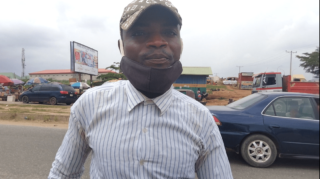
Edeh thankGod keke driver kubwa
Edeh ThankGod also said he had never heard about the palliative from the federal government.
“I used to ride a motorcycle, but the task force collected it. Then I started driving a tricycle that I got through hire purchase, but my owners’ target is too high. Even if I meet my target, I am left with little which I use only for feeding.”
He appealed to the government to investigate how the funds were disbursed so that transporters can collect their share.
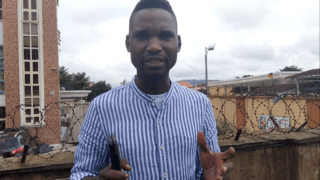
John, a motorcycle rider in Deidei, described the information as either a rumour or a lie because he had never heard of a stimulus package for transporters.
John bike rider arab road kubwa and deidei
Taxi drivers
Our reporter also spoke with taxi drivers in Wuse and Berger areas of the Abuja municipality who are members of the National Union of Road Transport Workers (NURTW).
David (many of the respondents wished to be addressed with his first names) operates in Wuse Zone 5. He too had not heard of a stimulus package for transporters. He said if his mates working in other parts of Abuja had gotten it, they would have informed him.
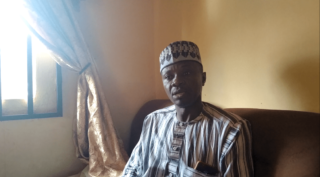
The Secretary of the Taxi Drivers Association in Berger, who identified himself as ‘Berger Alhaji’, said no disbursement had been made to group members.
David taxi driver wuse zone 5
“How many transporters got the N30,000? Who did they support with N30,000? What are the procedures? Moreover, is N30,000 enough?”
For him, if the government was sincere about helping transporters, it would have approached their associations to help with the disbursement process.
Female drivers yet to benefit from Government’s intervention – President
Mrs Katagum had said in March that “only 22 per cent of female beneficiaries in the track were reached because of the peculiar nature of the transportation business.”
The President of Female Drivers Association of Nigeria (FEDAN), Eunice Odeghe, said the body in March contacted the Federal Ministry of Transportation to partake in the scheme. She said it was asked to submit the database of its members and it complied.
Secretary of taxi drivers association in Berger ‘berger alhaji’
“But up till this moment, we have not gotten anything from the government. We have been following up. We got information that the money is no longer with them and it is now with the Federal Ministry of Trade and Investment,” Mrs Odeghe told PREMIUM TIMES.
She said the Federal Ministry of Transport also said it had forwarded the database of members of the association to the Federal Ministry of Industry, Trade and Investment.
Few rideshare drivers received stimulus package
However, findings show that some drivers in private ride-hailing companies got the money. For instance, Berekete Taxi, a ride-hailing company in Abuja, said some of its drivers that met the requirements were selected.
President of Female Drivers Association of Nigeria (FEDAN), Ambassador Eunice Odeghe
A driver with the company, who asked not to be identified for fear of being removed from the platform, said the major condition was for the drivers not to be owing the company, because they get the vehicles on hire-purchase.
This condition excluded many drivers who were no longer meeting their payment schedules due to low patronage. The driver said competition for passengers has increased from private car owners (kabukabu) driven into the trade by economic hardship.
“Also selected were those that pay dues and attend meetings. You just write your name, phone number and vehicle number,” another Berekete Taxi driver who also did not benefit, added.
Even at that, not all drivers who met the requirements received the money.
Other ride-hailing drivers left out
An official of Bolt Nigeria, another private ride-hailing company, told PREMIUM TIMES that the company contacted the federal government to support their drivers through the scheme, but their efforts were futile.
Femi Akin-Laguda, the Country Manager of Bolt Nigeria
Femi Akin-Laguda, the Country Manager of Bolt Nigeria, said that unlike at the state level, the federal government is not involved or aware of the nature of the operations of ride-hailing services.
“For the sector that they were able to prove the value, they were able to provide some support. But for ride-hailing, which the federal government does not have enough coverage over, that didn’t happen,” he said.
The reporter, however, gathered that Bolt could not benefit from the scheme because the government deals with only associations and the private transport company do not belong to any. Also, Bolt does not regard its drivers as employees but as ‘partner drivers’, a Bolt driver who requested anonymity told PREMIUM TIMES.
But while Bolt said its drivers did not benefit through the company, some of them did through City Online Drivers Association (CODA), an association of e-hailing drivers like Uber and Bolt.
However, while CODA has over 1,000 members, only 50 persons reportedly benefitted. The government gave the association limited slots, the chairman of the Board of Trustees and Chief Provost of CODA, Anthony Ojo, said.
Chairman of the Board of Trustee and Chief Provost of CODA, Anthony Ojo
Mr Ojo said only its members who “were lucky and available” for biometrics got the money.
He told this reporter that the Ministry of Humanitarian Affairs did the drivers’ biometrics for them at Calypso Garden, Wuse 2, and requested confirmation of the driver’s rideshare platform, their names, bank account details and Bank Verification Number (BVN).
“Within a month or two, the money was paid. It was between the end of last year and beginning of this year.”
Only 20 per cent of our members benefitted- NURTW
The FCT chapter of the National Union of Road Transport Workers (NURTW) also said only a few members got the money.
“The efforts of the government are a welcome development but the people that are supposed to send the message down have failed, because out of 100, only 20 per cent got it,” the vice-chairman of the union, Isiaka Abdullahi, said.
Vice-Chairman NURTW, FCT, Isiaka Abdullahi
Mr Abdullahi said NURTW has over 50,000 members.
Although the official commended the government’s initiative to provide packages for transporters, he faulted the use of the Survival Fund Office to implement the process.
He said officials from the office came to the union’s office to capture the biometrics of 750 members in March, requesting their names, account numbers, branches, and units of the drivers but only a few were credited in May.
“If any money is meant for an organisation, let the money be sent to the organisation’s purse. The organisation knows the members better and they will do it. We can even do a patrol and deliver the same to the doorsteps of the members. But the current system has failed,” he added.
No relief from government – President ACOMORAN
On his part, the National President of Amalgamated Commercial Motorcycle Owners and Riders Association (ACOMORAN), Shamsudeen Apelogun, in a telephone interview with this reporter, said the union did not benefit from the scheme.
He lamented that the union used money from its purse to purchase face masks and hand sanitisers for its members to comply with the Covid-19 safety protocols with the hope that they would also benefit from the relief.
“They set up a committee at the Ministry of Transportation. We appeared before them and they asked us what we would use the money for. I said we would use it to eradicate the poverty within us. At the end of the day, they directed us to the Ministry of Trade and Investment and they said we should go and apply online. We are yet to see any relief from any government contact,” Mr Apelogun said.
RTEAN keeps mum to inquiries
PREMIUM TIMES visited the office of the Road Transport Employers’ Association of Nigeria (RTEAN) on July 16, but the officials deferred interview requests till after the Sallah break. Efforts at reaching them for an appointment after the said break were ignored.
FG reacts to concerns about the scheme
At her press briefing of August 31, Mrs Katagum said not everyone can benefit from the scheme.
“It is not everyone that will receive it. We work on a first come first served basis on our database. I am just informing you we had a large list waiting for us to make sure that we have reached some kind of equity”, she said.
She said the Ministry of Transportation submitted a list of key transport associations for her ministry to work with. She said the ministry also kept slots for those who “feel that the chairman of your association does not like your face so you can apply.”
She dismissed complaints of lack of awareness of the initiative. The minister said the steering committee in charge of implementing the schemes aired radio jingles, held town hall meetings, made fliers in different languages, and shared them in parks.
“Saying they do not know, for me, sometimes it is a Nigerian factor and sometimes, it is a factor of those who know not transmitting it to others. Because we worked with those large transport associations. We went on the radio, we even went to Berekete (a popular programme of Human Rights Radio, Abuja). The DG of SMEDAN has done town hall meetings in every state of the Federation to talk about this,” the minister said.
Mrs Katagum said the steering committee experienced some setbacks while implementing the scheme. These include failed payments, interconnectivity problems between banks, wrong bank details on the part of the applicants, and banks debiting beneficiaries for loans they earlier took.
She also disclosed that beneficiaries were not given cash but monies were disbursed to their account.
“Nobody collected money on behalf of another person. Some people don’t want to tell their neighbours that they actually got this money. Some confessed. Some will say, ‘actually, it is my friend that told me’. ‘I got but my friend did not get’, so they don’t tell”, she added.
PREMIUM TIMES through a letter requested details of beneficiaries. But the minister said the list of beneficiaries cannot be provided, to protect the data of beneficiaries. However, she said it will be shared with the federal government who will remove the sensitive information before making it public.
Despite the complaints from the intended beneficiaries like Mr Sunday, Mrs Katagum insisted that the MSME Survival Fund is “one of the recent programmes of government that has been executed with utmost transparency and accountability.”
*This investigation is supported by the John D. and Catherine T. MacArthur Foundation and the International Centre for Investigative Reporting.
THE Indigenous People of Biafra (IPOB) has threatened to declare a month-long lockdown in the South-East if its leader, Nnamdi Kanu, is not produced in his next court appearance slated for October 21, 2021.
IPOB Spokesperson Emma Powerful said this in a statement issued to journalists on Wednesday.
He alleged that the Federal Government had perfected plans to keep Kanu perpetually in court by not bringing him to court to continue his trial.
The group warned that its peaceful disposition should not be misconstrued as a weakness by the Nigerian government.
“The attention of the Indigenous People of Biafra (IPOB), ably led by our great prophet and liberator of our time, Mazi Nnamdi Kanu, has been drawn to the plot by Nigeria government and her DSS in Abuja not to produce our leader Mazi Nnamdi Kanu to court on 21st October 2021, the date he is due to appear in court to start his case,” he said.
“The federal government of Nigeria has again perfected plans not to bring him to court on that day. Their wicked plan is to perpetually keep him behind bars without trial to see if they can demoralise him and Biafrans but they are late.
Nigerian government remands Nnamdi Kanu
“If the federal government refuses to bring him to court in his next court appearance on October 21, 2021, the entire Biafra land will be on total lock down for one month. The federal government will know that they cannot take us for granted any more.
“Our peaceful disposition as a people should not be misconstrued as weakness. Nigeria cannot incarcerate our leader illegally and expect things to be normal again. If by October 21, Kanu is not brought to court, Nigeria will know that Kanu commands the unflinching loyalty of over 60 million Biafrans home and in Diaspora.”
IPOB said Kanu’s perpetual incarceration without trial had worsened his health.
Kanu was rearrested and brought back to Nigeria in June four years after his trial on charges of treasonable felony.
Trial Judge Binta Nyako had, on June 29, ordered Kanu to remain in SSS custody.
But in July, the court could not continue the trial after the SSS refused to produce him court because of ‘logistical” issues.’
A POLITICAL movement that is to be unveiled in a few weeks time would present a draft new constitution for Nigeria.
The group that is spearheading the movement would insist that there will not be any elections in Nigeria if there is no provision for electronic transmission of election results.
A Professor of Political Economy Pat Utomi disclosed these when he appeared on Arise Television on September 22.
Utomi was part of the group, including a former chairman of the Independent National Electoral Commission (INEC) Attahiru Jega, that unveiled a political movement – Rescue Nigeria Project (RNP) – in Abuja, Nigeria’s capital, on September 21.
The RNP is reportedly designed to provide an alternative political platform to the dominance of the All Progressives Congress (APC) and the Peoples Democratic Party (PDP).
Speaking on Arise Television, Utomi suggested that the RNP was linked to other groups which are springing up to address specific political and economic issues in the country.
“Expect three or four more of these groups that I know of to emerge in the next couple of weeks and I think many of them will focus on specific areas,” he said.
“Another group I am associated with has been focusing on constitutional reform, electoral process reform. There is going to be a major coming out for that group, offering Nigeria a draft new constitution. Free Nigeria. A movement that says unless electronic transmission of election results is going to define how we go forward, then let us not have elections,” Utomi added.
Noting that the new group would be likened to a movement, Utomi explained that the insistence on electronic transmission was informed by the realisation that there are no credible elections in Nigeria.
“We don’t have elections in Nigeria. There are people who are relying on state capture, abusing the electoral process and announcing they have won elections.
“That group will be so insistent with its work that people will say this is one more movement.”
Utomi further revealed that one of the groups that would be unveiled in the coming days would focus on “responsible economic management”.
The need to focus on responsible economic management was informed by the lack of a clear economic strategy in the country.
According to Utomi, the Nigerian government was borrowing from all kinds of places without any clear strategy on how the borrowings can lead to real growth in the economy by providing millions of desperately needed jobs.
“We need to invest in our young people and make it the basis for the renewed growth and expansion that the economy needs,” he said.
The political economist frowned on what he described as the emphasis on power rather than purpose in Nigerian politics.
“In Nigeria, there is too much focus on power rather than purpose. Building a strong nation with a viable economy is more important than power. Nigerians are fixated on power. Anytime there is any grouping that is more about purpose people ask how are they going to get power?
“Unless we see things in this context, focusing on purpose, the obsession with power – this party, that party – will make us poorer, more miserable, create more insecurity and all the kinds of problem we are dealing with today.”
Utomi further explained that the unveiling of the Rescue Nigeria Project (RNP) on September 21 was the culmination of discussions between people who are interested in solving problems.
The people involved in the RNP understand that Nigeria’s major problem was quality of leadership, Utomi observed, noting that purpose was the starting point in entrenching good leadership.
Apart from Utomi and Jega, others involved in the formation of the RNP include a former governor of Cross River state Donald Duke, a former governor of Kwara State Abdulfatah Ahmed, Tunde Adeniran, Lee Maeba, Usman Bugaje and Nkoyo Toyo.
“This particular group (RNP) is looking at the issue of quality of leadership, competence and courage. Not the usual issues of where you come from and that type of stuff,” Utomi said while shedding light on the objectives of the Rescue Nigeria Project.
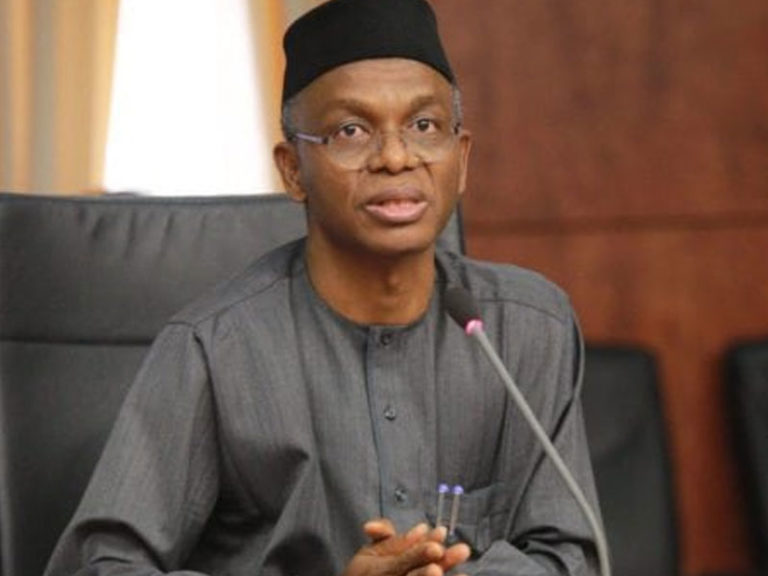
KADUNA State Governor Nasir El-Rufai has faulted the anti-grazing laws being enacted by state governments, especially those in the southern part of the country.
El-Rufai, who said this to newsmen during a visit to the National Secretariat of the All progressives Congress (APC) on Tuesday, stated that banning open grazing was not the solution to perennial clashes between herders and farmers in the country.
“But moving towards ranching cannot be done overnight. We have to have a plan; we have to have resources, and we have to implement it sensibly. It is not a matter of populist legislation or saying tomorrow, this or that. It is not a solution. We have taken a position as northern state governors and we are implementing that,” he said.
“And in my state, for instance, we are developing a huge ranch to centralise the herders. And that is the solution, a long time. But can it be done overnight? No.”
He warned states against politicising the matter, saying they should not make legislation they would not be able to implement.
He stated that although open grazing was outdated, the only solution was ranching which required a huge financial investment.
“This project we are doing will cost us about N10 billion. The CBN is supporting us with about N7.5billion. And it will take about two years to do.
“We will be settling Fulani herd families. And I hope that they will see that there are alternative ways of producing livestock instead of running up and down with cattle going to people’s farms to cause all kinds of problems. We want to solve the problem.
“What is unhelpful is to politicise the situation and pass legislation that you know that you cannot implement. So, we have taken a position and we are working round the clock to implement that position.”
Concerned by the growing spate of killings and clashes between herders and farmers, the Southern Governors Forum (SGF) had banned open grazing in the region during their meeting in Asaba, Delta State, in July.
Thirteen states have already followed up with that agreement by enacting open grazing laws in their various states.
A NIGERIAN lady in France, Elizabeth Henry, has said that she is being investigated and risks jail term over fake euro notes paid into her account by her sister.
The euro notes, according to her, were issued to her sister by the Maitama branch of Standard Chartered Bank on August 17, 2021.
Elizabeth’s sister, Mary, had taken to social media on September 18 to explain how she applied for a €3,000 Personal Travel Allowances (PTA) at the Standard Chartered Bank, Maitama, Abuja, on August 17, 2021, to finance her studies at the University of Burgundy, France.
I applied for PTA for my travel 3000 euros 💶 was given to me from @StanChartNG@GazetteNGR@StanChartIN@StanChartHelpIN branch Maitama, i was then contacted from the bank of France to proof where I got money from @cenbank is shame that such reputable bank will engage in fraud!
But she learnt, after depositing the money into Elizabeth’s account, that two out of the six notes issued to her by the Maitama Branch of Standard Chartered Bank were fake.
A passport picture stamped by Standard Chartered bank acknowledging Mary was issued €3,000
She told The ICIR that the issue was already affecting her studies and causing her documentation to suffer delay.
Elizabeth, who further spoke on behalf of Mary in a WhatsApp interview with The ICIR, said the money was paid into her account as Mary had no bank account in France.
According to Elizabeth, when Mary got into France, she deposited the euro notes into her account.
Elizabeth said she later learnt on September 17 that two €500 bills out of the €3,000 Mary had deposited were fake.
Consequently, the bank had to deduct €1,000 from her account.
“So my sister arrived in France on August 18 for her master’s degree. She came with €3,000 notes (500×6) because she didn’t have a French bank account yet. She asked to pay the money into my account so she could pay for some fees online for school and this was done. However, only €2,000 was credited. So, I was pissed and called my banker to ask why only €2,000 euros was deposited and she said she was going to ask the service in charge of counting money.
“She got back to me a few hours after and told me that they found out that two of the notes were fake and the money was sent immediately to Bank of France (equivalent of CBN in Nigeria). They authenticated the notes and confirmed that they were fake. They documented the notes and sent me two attachments (one for each note) with the serial numbers of the notes. The money was not given back to me because they didn’t want it circulating in France,” Elizabeth said.
Note from Bank of France
Photo Credit: Elizabeth Henry
Note from Bank of France
Photo Credit: Elizabeth Henry
Elizabeth told The ICIR that the case had been handed over to the Police for investigation and she risked being blacklisted by the Bank of France and sent to jail.
“They will hand over the case to the police to investigate because I told my banker that the money was bought as PTA from a reputable bank in Nigeria. Because of the case, I risk being blacklisted by the Bank of France, and my account might be closed, not to talk about possible jail term.”
The ICIR called the Manager of Standard Chartered Bank Maitama branch, Jumoke Adewoye, but she did not answer her calls.
She also did not respond to messages sent to her via SMS and Whatsapp. Several calls made to the bank headquarters in Lagos did not go through.
Jumoke Adewoye image Mary shared with The ICIR
Meanwhile, Standard Chartered Bank, in reaction to Mary’s allegation posted on Facebook, said the bank was investigating Mary’s claim about the alleged fake euro notes issued to her.
LAST YEAR, when the Nigerian governmentlaunched a five-year nutrition action plan to reduce hunger and malnutrition in the country, stakeholders in the food and nutrition sector at the Presidential Enabling Business Environment meeting were brimming with excitement.
The action plan titled ‘National Multi-Sectoral Plan of Action for Food and Nutrition (NMPFAN) 2021-2025’ seeks to guide the implementation of interventions and programmes to address the problems of hunger and malnutrition across all sectors in Nigeria.
“The approved plan will reduce the proportion of people who suffer malnutrition by 50 per cent and increase exclusive breastfeeding rates to 65 per cent,” Vice President Yemi Osinbajo announced earlier this year.
Osinbajo, who is also chairman of the National Council on Nutrition, also said the plan “will reduce stunting rate among under-five year olds to 18 per cent by 2025 through the scaling up of priority high impact nutrition specific and nutrition sensitive interventions.”
But analysts point out that the spate of violence across the country poses significant threats to the plan, resulting in food insecurity and high inflation.
The decade-long insurgency in the North-East and armed banditry in the North-West have led to a decline in agricultural production, displacing a large number of people and putting considerable pressure on food resources.
Since 2018, armed banditry, especially in the North-West where terror groups sack villages and kidnap for ransom, has increased across Nigeria. This atmosphere of fear does not spare farmers in the region who have had to abandon their farms in their droves for safety.
An estimated 1.6 million people arebelieved to be food insecure due in large part to raging insecurity in the region. Five per cent of the total food insecure population now live in Internally Displaced Persons (IDPs) camps where children are more likely to suffer from malnutrition.
Malnutrition is one of the world’s major public health and development concerns. It causes rapid weight loss and makes under-five children11.6 times more likely to die due to symptoms such as lower respiratory infection, severe dehydration, and high fever.
A 2019study conducted by the World Food Programme alongside Nigeria’s National Bureau of Statistics showed that IDPs in Sokoto, Zamfara and Katsina states faced severe food shortages.
According to the study, two in every IDP household did not have sufficient food supply, inhibiting many families from getting optimum food intake and often resulting in severe acute malnutrition (SAM).
Severe malnutrition contributes to half of the one million children who die in Nigeria every year,according to the National Nutrition and Health Survey.
An Expert on Nutrigenomics and Lecturer at Usmanu Danfodiyo University, Sokoto, Imam Umar Mustapha said children bore the brunt of the growing insecurity in the country as a result of the effect of the crisis on their parents, as they depended largely on them.
Umar said that insecurity and the resulting food crisis ( which is fast depleting the supply chain across the country) was responsible for the deepening child malnutrition in the region.
“Children are largely dependent on adults for food. And looking at the spate of violence in the North-West which has forced tens of thousands of people from their primary base and source of livelihood, parents are under so much pressure that providing food for their children may not even be their major concern because they do not even have food for themselves.
“There is also a decrease in food supply in the region which means that the one in circulation is not even enough to feed everyone. If an adult cannot provide nutritious food for a child, then it means hunger will set in, which could degenerate into severe acute malnutrition among children.”
This is also the position of a Pediatrician at Usmanu Danfodiyo University Teaching Hospital, Sokoto, Udah Inalegwu.
“Malnutrition has been a major problem in Nigeria even before this raging instability plaguing the country. Insecurity only made it worse. Nigeria has always grappled with food security. The mismatch between production, storage and transport of food produce contribute significantly to the lack of enough food to satisfy the basic needs of Nigeria’s rural population and provide them with good nutrition
“Insecurity has aggravated these issues, and women are mostly vulnerable. Their children are more so. With insecurity, most families have lost their homes, their means of livelihood, their homes and access to sanitation and clean water, the children sometimes even lose their parents. All these add up to worsen the situation.”
Rising cases of malnutrition
In May, the UN Food and Agriculture Organization (FAO) cautioned that at least 9.2 million Nigeriansfaced crisis or worse levels of food insecurity this year because of the country’s conflicts.
Umar corroborated the report, stating that malnutrition had both ‘immediate and long term consequences.’ Apart from weakening the immune system, it also slows the pace of human capital development which invariably affects the economy.
According to the World Bank, a one per cent loss in adult height due to childhood stunting wasassociated with a 1.4 per cent loss in economic productivity.
“We are just starting to understand the effect of malnutrition on individuals, and the picture doesn’t look good. Any person that suffers acute malnutrition at a younger age, they tend to develop chronic diseases later in life.
“And it doesn’t look good for a country when a large number of its population suffer malnutrition-induced diseases later in life. They will not only depend on others but also be unproductive as the government will spend more on them at the expense of other developmental services.”
Solving the crisis
For the national action plan on nutrition to be effectively implemented, experts believe the rising cases of insecurity in the North-West and the resulting food crisis must be addressed.
“Tackling severe acute malnutrition in crisis-ravaged areas like the North-West is as simple as tackling the root causes behind people moving from their primary places to camps where they are likely to suffer malnutrition. Banditry, terrorism and other form of instability must be scrubbed away. And this requires political will on the part of the government,” Umar submitted.
Inalegwu added that an awareness campaign on proper feeding habits needed to be strengthened to cover rural communities.
The efforts should, therefore, be complemented with the expansion of theCommunity Management of Acute Malnutrition (CMAM), one of the many programmes introduced to tackle severe acute malnutrition in the country, analystssaid.
The initiative seeks to “educate the community about acute malnutrition and availability of services through community mobilization, early detection of severe acute malnutrition in children through screening using mid upper arm circumference (MUAC) tape.”
In addition, CMAM allows timely treatment for those without medical complications, with ready-to-use therapeutic foods (RUTF) at home.
If expanded and integrated with other preventive measures, it could halt 19 per cent of the death of children in the country as it has a high recovery rate and can be 90 per cent cost-effectivethan conventional treatment.