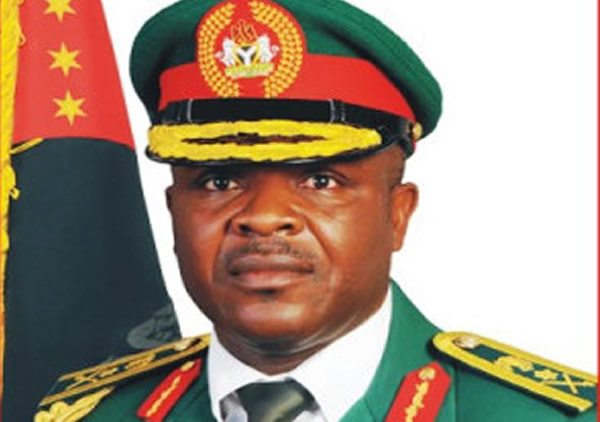
FORMER Chief Of Army Staff Azubuike Ihejirika has tasked the Federal Government to embrace dialogue with groups aggrieved with the current state of things in the country.
He stated this during the visit of the Chief Of Defence Staff Lucky Irabor in Owerri, Imo State, on Thursday.
Ihejirika said it was internationally acceptable for a government to dialogue with opposing groups rather than take to war.
He said that he was in support of any approach that would restore peace to warring parts of the country.
“All over the world, it is better to jaw-jaw than to war-war,” he said.
“It is important for government to go for dialogue.
“I stand for the approach that would ensure peace in our country.”
There have been suggestions that Buhari’s administration should dialogue with the various groups to proffer lasting solutions to various agitations threatening the existence of the Nigerian state.
In June, the apex Igbo socio-cultural organisation Ohanaeze Ndigbo urged the government at the centre to employ dialogue to resolve the present national crises in Nigeria.
Ohanaeze President-General George Obiozor, who gave the appeal during a press conference in Enugu, asserted that “no secessionist forces can defeat Nigeria.”
He equally condemned human rights abuses in the South-East part of the country, stressing that though Ndigbo were in support of a United Nigeria, “they will not be victims of the country’s unity.”
THE Nigerian military have said they would not hesitate to resist every form of violent agitation against the Nigerian state.
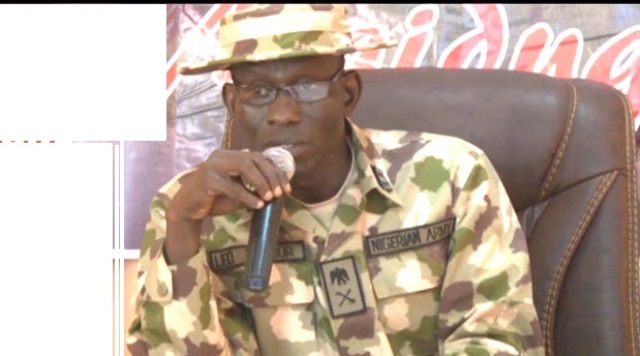
Chief of Defence Staff (CDS) Lucky Irabor stated this during a security meeting with retired senior military officers in the South-East zone on Thursday.
He said the meeting was part of the collaborative effort towards addressing security challenges troubling the country.
Irabor, however, stated that while the military were not against anyone seeking to express their constitutional rights, they would not tolerate killing innocent citizens in the name of agitation.
He added that whoever wanted to agitate should take advantage of the provisions of the constitution in doing that and not carrying out violence on people to achieve their aims.
“It is not the job of the military to stop anyone from agitation for whatever he so wishes, it is a political thing,” Irabor said.
“But what we are against is having to use the instrument of violence to bring about the agitation.
“We have a constitution and the constitution enables us to present whatever grievances that we have.
“So anyone going outside the provision of the constitution of course we as military and other security agencies won’t allow that. Why do you have to kill in order to achieve your desires?
“The military will resist any attempt by anybody, group or individual wanting to use the instrument of violence against the state, that we will not allow.
“Again, there are provisions for anyone who believes that he has certain desires within the confines of the arrangement as enshrined in the Constitution to ventilate such views.
“So this is the reason why we think that violence is not the way to go, we are appealing to everyone to seek the course of rule of law to bring about whatever his agitations are.”
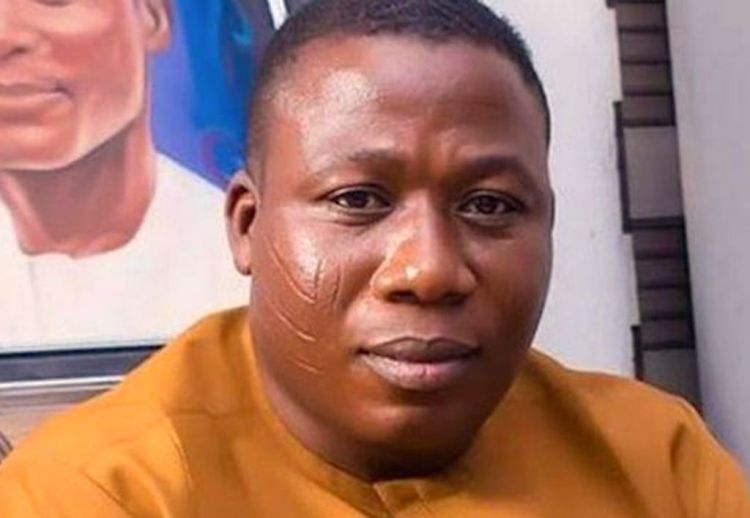
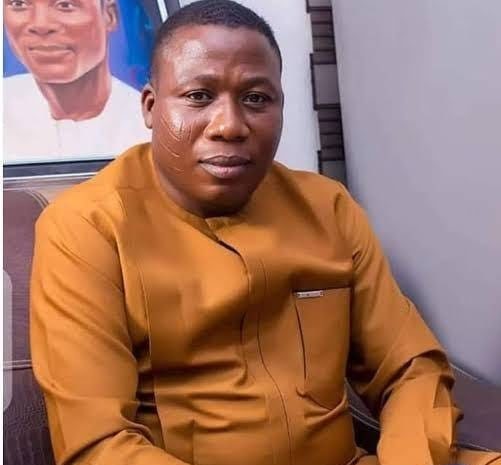
NIGERIAN government’s allegations against Sunday Adeyemo, popularly known as Sunday Igboho, were seen by the government of the Republic of Benin as spurious and untenable, a Yoruba leader, quoting Adeyemo’s lawyer, has revealed.
According to a statement by the leader of the umbrella body of Yoruba self-determination groups known as Ilana Omo Oodua (IOO) Banji Akintoye, the allegations were not sufficient for the Beninese government to want to hand over Igboho to its Nigerian counterpart.
“What Nigerian government came up with were mere allegations against Ighoho such as trafficking in arms and inciting violence that could result in the social disturbance without evidence which the government of Benin Republic considered spurious and untenable, and insufficient to warrant extradition,” Akintoye said in a statement.
He quoted Igboho’s lawyer as saying that another reason his client would not be extradited to Nigeria was that there was no extradition agreement between the Nigerian and Beninese governments.
“The lawyers handling the case reported after the proceedings that Chief Sunday Adeyemo lgboho cannot be extradited to Nigeria for two principal reasons:
“That contrary to insinuations, Nigeria and Benin have no Extradition Agreement.
“That Nigeria has not been able to come up with charges that could lead the court to order lgboho’s extradition to Nigeria.”
He added that the Coury De’appal De Cotonou, hearing Igboho’s extradition case, had adjourned the case till Monday.
The ICIR had earlier reported that the Beninese court ruled on Thursday that Igboho’s wife, Ropo, should be released unconditionally as there were no charges against her.
Igboho, who had been declared wanted by the State Security Service (SSS), was arrested alongside Rope, his wife, in Cotonou by Benin Republic’s security forces while trying to flee to Germany on Monday.
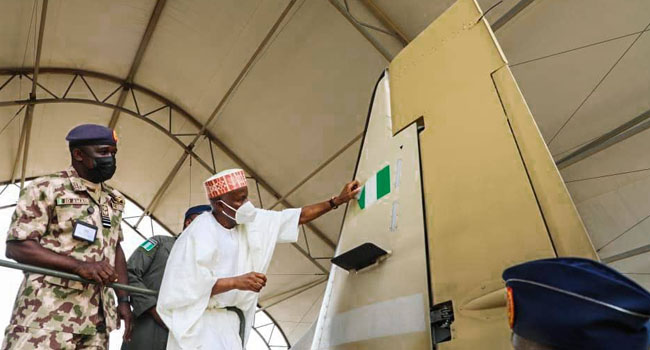
The Nigeria Airforce (NAF) said it had received the first batch of six A-29 Super Tucano aircraft from the United States since its purchase in 2018.
This was disclosed in a statement by the Director of Public Relations and Information for NAF Headquarters Edward Gabkwet, on Thursday, in Abuja.
Gabkwet said the aircraft arrived in Kano State in Nigeria at about 12.34 p.m on Thursday.
He noted that they were received by the Minister of Defence Bashir Magashi, Chief of Army Staff Faruk Yahaya and Chief of Air Staff Oladayo Amao.
On July 15, the Airforce command announced that the six aircraft would be leapfrogged through Canada, Greenland, Iceland, Spain, and Algeria before arriving at their final destination in Nigeria.
The NAF also said that the second batch of the Super Tucano aircraft was expected to arrive in Nigeria before the end of the year.
The ICIR had reported that Nigerian pilots trained on Super Tucano fighter jets at the Moody Air Force Base in Georgia, United States.
The purchase of the Super Tucano had caused drama between the Nigerian president and the 8th National Assembly.
In April 2018, in a letter to the National Assembly, Buhari disclosed that the sum of $496m was withdrawn from the Excess Crude Account for the purchase of military aircraft.
However, the money was paid to the United States for the 12 Super Tucano aircraft without the approval of lawmakers as required by the constitution.
After the payment, Buhari then sought the approval of the National Assembly to include the money in the 2018 appropriation bill, which was at the time under consideration by the lawmakers.
The budgetary request contributed to the delay in the passage of the 2018 budget by the then Bukola Saraki led administration.
Checks by The ICIR show that the Embraer EMB 314 Super Tucano, also named ALX or A-29, is a Brazilian turboprop light attack aircraft designed and built by Embraer to develop the Embraer EMB 312 Tucano.
The A-29 Super Tucano carries a wide variety of weapons, including precision-guided munitions, and was designed to be a low-cost system operated in low-threat environments.
The delivery of the aircraft comes few days after terrorists shot down an Alpha jet belonging to the Nigerian Airforce. The Alpha jet was shot down while returning from a mission between the boundaries of Zamfara and Kaduna states.
For over 12 years, Nigeria has been embroiled in insurgent and terrorist attacks in the Northern part of the country.
Although it was learnt that his bail application would be heard today, his lawyer was quoted to have said it was not the best time to speak on the case after the court proceedings on Thursday.
Igboho, who had been declared wanted by the State Security Service (SSS), was arrested in Cotonou by Benin Republic’s security forces while trying to flee to Germany on Monday.
Socio-political leaders from the South-West region, who shared his secessionist ideas, have vowed to resist and stop his extradition to Nigeria.
His supporters protested to demand his unconditional release by his supporters in Ibadan on Wednesday.
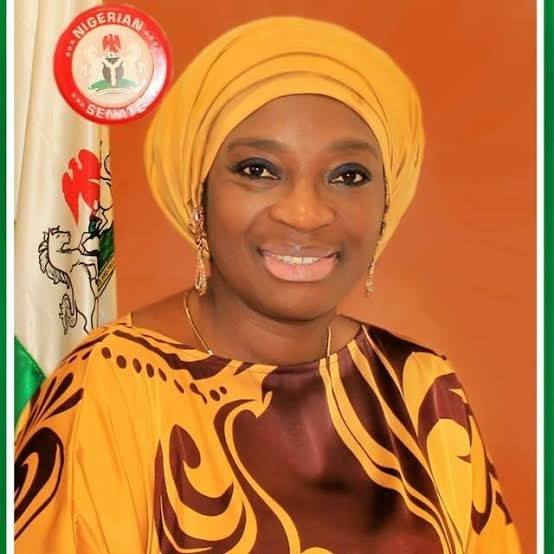
SENATOR representing Anambra Central in the National Assembly Uche Ekwunife has explained why she was absent during voting on the electronic transmission of electoral results.
Ekwunife, who was reacting to a query letter by some of her constituents demanding she explained why she was conspicuously absent during the plenary, said that she was scheduled to commission projects and attend some programmes in her constituency.
Ekwunife said contrary to concerns raised by her constituents in their letter, she was fully in support of the electronic transmission of results.
She said instant electronic transmission of election results would address many of the challenges in the country’s electoral process and end the alteration of results and electoral fraud during collation, which was usually occasioned by human error or a deliberate attempt to upturn the wishes of the people.
“My stand has always been that electronic transmission of results should be mandatory in all polling units and collation centres across Nigeria without exceptions,” part of her response stated.
“Even though some argued that INEC should be allowed to choose or exempt areas where there is poor network coverage, I vehemently argued against such positions, which in my opinion, would favour some regions against others, knowing fully well that the South East is one of the regions in Nigeria that have good network coverage.”
She said she had argued that if automated teller machines (ATMs), point of sale (POS) terminals, internet banking, and other electronic transactions were obtainable nationwide, she did not see why the electronic transfer of election results could not be equally achieved nationwide.
She referred to “ the situation where card readers were used in the South East in the last general elections, while manual voting was allowed in some other parts of the country, which significantly affected the voting strength of the region in the previous elections.
“While I consider the recent complaints by some of my constituents as germane, it is important to state that my absence at the time of voting was never deliberate.”
The senator apologised to her constituents who felt disappointed that she wasn’t there to cast her vote, noting that she was not someone who would shy away from her constitutional responsibilities.
Members of the Obosi Development Union (ODU), Abuja branch, had addressed a letter to the senator demanding an explanation for her absence during a plenary session last Thursday.
The letter, which was signed by the group’s President Goddy Ikebuaku and Secretary Chimezie Obi respectively, demanded to know why she was not present at the Red Chambers when others cast their votes on the issue of electronic transmission of results.
The group pointed out that Ekwunife was elected to represent a people who expected that her presence at the National Assembly would favour their cause, especially during important discussions such as the e-transmission of results.
They warned that failure to offer a satisfactory explanation was proof that she was one of such politicians profitting from manipulation of election results.
APEX socio-cultural body of the Igbo, Ohanaeze Ndigbo Worldwide, has blamed what it described as ‘selective efficiency’ of Nigerian security forces for the rise of secessionist agitators such as Nnamdi Kanu of the Indigenous People of Biafra (IPOB) and Sunday Igboho of the Yoruba Nation.
National Publicity Secretary of Ohanaeze Ndigbo Worldwide Chiedozie Ogbonnia, in a statement made available to The ICIR, observed that Nigerian security operatives had, in recent times, shown that they could be efficient with the re-arrest and repatriation of Kanu to Nigeria and arrest of Igboho in Benin Republic.
Kanu was on bail while standing trial before an Abuja Federal High until he escaped from the country after soldiers invaded his father’s compound in Umuahia Abia State, during the Operation Python Dance, in 2017.
Pro-Biafra agitator, IPOB leader Nnamdi Kanu
The IPOB leader was recently re-arrested and repatriated to Nigeria in controversial circumstances, with his lawyer alleging that he was intercepted in Kenya and tortured for eight days before he was handed over to Nigerian security agents.
The Nigerian government, which had deployed military force to crush the pro-Biafra agitation championed by IPOB in the South-East, said it would resume Kanu’s trial on treason charges.
Igboho, who is leading the Yoruba Nation movement which seeks the actualisation of an independent nation for the Yoruba known as Oduduwa Republic, went on the run after his country home in Ibadan, Oyo State, was attacked by men of the Nigerian State Security Service (SSS) on July 1.
Three of Igboho’s associates were reportedly killed during the operation while several others were arrested.
The invasion of Igboho’s home was the culmination of warnings issued by Nigerian authorities against rallies being held by the Yoruba Nation activists in cities in the South-West.
Just like Kanu, Igboho was recently arrested outside the country – in Cotonou, Benin Republic, on July 19, reportedly while trying to make his way to Germany, and the Nigerian government is currently making moves extradite him to Nigeria to face trial.
Reacting to the developments concerning Kanu and Igboho, Ohanaeze Spokesman Ogbonnia observed that the efficiency displayed by Nigerian security forces in clamping down on southern self-determination agitators had not been extended to northern actors such as the Fulani herdsmen, leaders of the Boko Haram insurgents and the bandits in the North-West.
In the statement titled ‘Concerted effort on Kanu and Igboho is a search for peace without justice,’ the Ohanaeze spokesman noted that the selective efficiency of the Nigerian security agents was a primary factor in the emergence of the separatist leaders.
“The Nigeria security operatives have in recent times shown that they have teeth and can bite. The question on every mouth is whether they can apply similar zeal in treating the Boko Haram kingpins, Fulani herdsmen, the North-West bandits, etc. The foregoing selective efficiency of the security operatives elicits the reason for the making of Nnamdi Kanu and Sunday Adeyemo aka Sunday Igboho,” Ogbonnia said.
The Ohanaeze publicity secretary noted that Igboho would not have taken up the struggle for a Yoruba Nation if Nigerian security forces had not wilfully turned a blind eye to the atrocities committed by Fulani herdsmen, who attacked, maimed and killed defenseless villagers in agrarian communities in the southern part of the country.
“We recall that Sunday Igboho emerged on the scene because he could not endure the daily menace of the Fulani herdsmen in the Yoruba localities for a very long time.
“The herdsmen would kill, maim and rape women at random. All entreaties to the presidency for a swift action against the AK-47-wielding herdsmen appeared to fall on deaf ears. Then Igboho in a patriotic heroic zeal intervened to save the rural farmers, women and children from the daily menace of the herdsmen.
“The rate at which the herdsmen destroy farm crops, attack villages, kill the indigenes and forcefully occupy their ancestral lands is most callous, unconscionable and condemnable. This is where the intervention of the presidency is most needed; and of course, the Igboho paradox,” Ogbonnia added.
Yoruba Nation activist Sunday Igboho
Stressing that Ohanaeze Ndigbo had maintained the need for the President Muhammadu Buhari administration to embrace equity, justice and fairness in public policy formulations and execution, Ogbonnia described the various forms of agitation in Nigeria as results of injustice.
Kanu and Igboho were products of an unjust society, according to the Ohanaeze spokesman.
Noting that the cause of the agitations “is the obvious injustice in federal public policies,” he said measures should be taken to address the causes of the agitations.
“Only then can Nigeria have peace and sustainable economic growth. Nnamdi Kanu and Sunday Igboho who wittingly or unwittingly are now seen as heroes by their people, are but the products of unjust society.”
Ogbonnia warned that deploying security forces to apprehend Kanu and Igboho, as the Nigerian government appeared to have done successfully, would not bring an end to agitations for secession in parts of the country.
“A concerted effort in search of the Kanus and the Igbohos without addressing the basis of the agitation is an effort in futility. Otherwise other Kanus and Igbohos will sooner than later emerge,” Ogbonnia said.
In a related development, Convener of Oodua Self-Determination Groups Razaq Oluokoba has urged the Nigerian government to handle the planned extradition of Igboho with care.
Speaking on a Channels Television programme, Sunrise Daily on July 21, Oluokoba said due process should be followed in moves to repatriate the Yoruba Nation activist to Nigeria, where the authorities intended to detain and charge him to court.
Oluokoba also demanded justice for Kanu, currently in the custody of the SSS while awaiting the resumption of his trial.
“The Sunday Igboho saga must be handled carefully. It must not go the way of Kanu where there were procedural errors. And for Kanu there must be a demand for justice and redress.”
A change of approach was required from Buhari for peace and stability in Nigeria, according to Oluokoba.
“The president must change his pattern and the new pattern should be accommodating all sections of the country so that Nigeria can be together,” he said, adding that Buhari needed to isolate himself from differences between the Igbo, Hausa, Yoruba, Fulani and other ethnic nationalities in the country.
THE National Leader of Afenifere, a South-West socio-cultural group Ayo Adebanjo, said his group would take President Muhammadu Buhari to God for intervention over his approach to governance in the country.
He stated this on Wednesday in response to the arrest and planned extradition of Yoruba Nation canvasser, Sunday Adeyemo, otherwise known as Sunday Igboho, on Arise TV’s ‘The Morning Show.’
The 93-year-old said Buhari was a despot who would not listen to anyone, including eminent citizens and leading emirs in his region.
According to him, those allegedly oppressed by the president had no power on their own to fight back but would run to God for help.
“They are keeping everybody quiet. But I tell you, Buhari may depend on chariots and everything; we have God. We will call on our God to deal with Buhari because we are helpless…God will come to our aid at the right time. Buhari may think we are helpless now, but God is there for those who are helpless.”
He added: “He has that ammunition of power. I’m talking now, I have told people my life is not safe. I’m ready. At 93, what do I want? But I will fight for the cause that I have lived for since I was a younger man. It’s sad for me to see Nigeria the way it is going.”
He said all of Buhari’s actions in his party and Nigeria’s parliament were anti-democracy.
He said the Electoral Bill recently amended by the National Assembly, which many saw as capable of hampering the electronic transmission of votes after poll, exemplified Buhari’s despotism.
Adebanjo also accused the president of bias.
According to him, “Buhari is chasing Igboho all around. He is chasing Nnamdi Kanu. But he is negotiating with robbers, with armed bandits who are terrifying and troubling the country.”
He said it was because Buhari failed to protect lives and property in Igboho’s area that made the activist stand up in the self-defence of his people.
Speaking on arrest and attempted extradition of Igboho from the Benin Republic, Adebanjo said Nigeria secret police, the State State Security (SSS), behaved like a department under a dictatorship.
“What is his offence? To put it roundly, he’s calling for secession. No more, no less. He’s been holding meetings in Akure, Osogbo and other places without damage to anybody.”
He cited the instance when late Obafemi Awolowo, himself and others were accused of treason by the Tafawa Balewa government and how Ghana and countries where they fled protected them.
“In the First Republic, Balewa accused Chief Awolowo and me of treasonable felony. We were in Ghana, and there was a meeting of African leaders at that time. Balewa insisted that he wouldn’t come because myself, Ikoku and others were in Ghana.
“Ukrumah did not repatriate us because of that. What did he do? He sent us abroad to Russia and other places while that conference would be taking place. He didn’t break the relations. He didn’t repatriate us because he wanted the conference to hold there. That is what is done in a democracy,” he said.
The Afenifere leader said he fought for Nigeria’s independence with others by struggling under British colonialism and vowed that the Yoruba race would resist Fulani domination under any guise.
He said despite public outcry against the atrocities allegedly committed by the Fulanis in the South-West, the people continued to unleash mayhem on their hosts.
The SSS arrested Igboho on July 20 while reportedly attempting to travel to Germany.
The arrest followed the raid on his house by the SSS on July 1.
The operatives reportedly killed some of his aides and took away dangerous weapons, charms and other items from his Ibadan home.
His arrest and attempted extradition have resulted in various manoeuvrings by the Nigerian government and some heavyweights in the South-West.
Adebanjo had earlier described Igboho’s arrest as an attack on the South-West, which comprised mainly people of Yoruba extraction.
Igboho is one of the prominent leaders calling for the creation of a Yoruba nation out of Nigeria.
Yoruba is one of the three major tribes in Nigeria.
The leader of Ilana Omo Oodua, Emeritus Professor Banji Akintoye, Igboho and 49 other Yoruba self-determination activists dragged Buhari and top members of his government to the International Criminal Court recently, alleging genocide to the people of the race.
Some stakeholders in the region have also vowed to further push the Yoruba nation agenda through the 76th United Nations General Assembly coming up in September.
The ICIR had earlier reported that Igboho’s extradition would hold on Thursday.
SENATE Minority Leader Enyinnaya Abaribe has said that the leader of Indigenous People of Biafra (IPOB) Nnamdi Kanu did not jump and violate his bail conditions.
Abaribe, who stated this while appearing on TVC’s ‘Journalist Hangout’ on Wednesday, said the IPOB leader only escaped for his life when operatives of the Nigerian Army invaded his country home in 2017.
He said that he could not be arrested when Kanu fled the country because he informed the court of the circumstances that led to his disappearance. Hence, the court took away the burden of providing Kanu from him by revoking his bail and declared him arrested.
“There is a difference between jumping bail and escaping for your life,” he said.
“I went back to court and deposed that on the basis of the principle of ‘last seen,’ that the last people seen with him were soldiers of the Nigerian army who were invading his father’s residence. ”
“The judge ultimately ruled that she was revoking bail and issued a warrant of arrest, thereby removing us from the responsibility of providing him. A lot of people did not understand.”
He noted that he was ready to stand as Kanu’s surety again given that the circumstances were the same as in 2017.
The Nigerian government, through the Attorney-General and Minister of Justice Abubakar Malami, claimed Kanu was extradited two days before he was brought before an Abuja on Tuesday, June 29.
Kanu had told the Federal High Court in Abuja where he was arraigned two days after he was arrested and brought into the country in June that he jumped bail because he believed he would have been killed if he had not fled the country.
He said that he had to leave the country after soldiers raided his residence in Umuahia, Abia State, stressing that the invasion of his residence by the Nigerian Army was the reason for his prolonged absence from court.
He faces an 11-count charge of treason, treasonable felony, terrorism, and illegal possession of firearms.
THE Ghana Union of Traders (GUTA) has said it would employ every means at its disposal, including the use of protests, to resist any attempt to review or change the Ghana Investment Promotion Centre (GIPC) Act that ensures foreign retailers, including Nigerians, pay a minimum capital of $1 million.
A joint communique between Ghana and Nigeria after an Extraordinary ECOWAS Summit held earlier this month had exempted Nigerians from the $1 million minimum capital requirement under the GIPC Act 2013, Act 865 which hitherto prevented them from trading in Ghana’s retail market.
Speaker of Ghana’s Parliament Alban Bagbin assured that a consensus had been reached and that selected lawmakers from Ghana and Nigeria would constitute a special committee that would work together to enact a Ghana-Nigeria Friendship Act that would end a 25-year retail impasse between both countries.
“The Act will set up the proposed ‘Ghana-Nigeria Business Council,’ which is intended to provide the legal and institutional framework to sustain the continued friendship and business interests of our people,” Bagbin said.
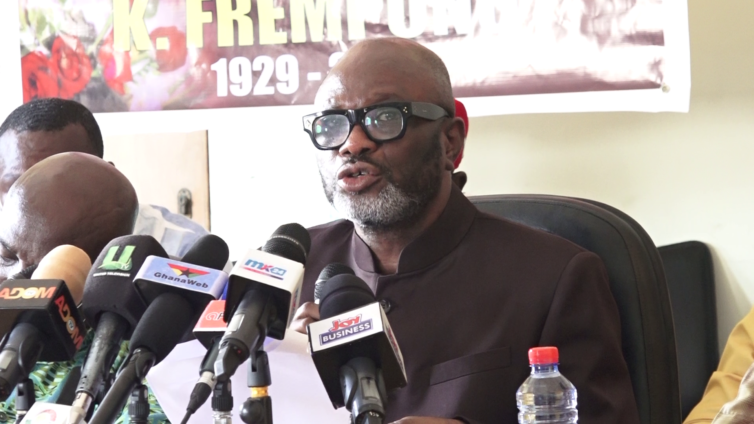
However, addressing the media this week, President of GUTA Joseph Obeng described the review as retrogressive and spiteful of Ghana’s trading community.
“We will resist any attempt to take away the only retail market the 1992 Constitution grants us. We will never sit back and watch this happen. GUTA is prepared for a nationwide protest should this happen,” Obeng told journalists.
For 25 years, Nigeria and Ghana traders have been at loggerheads over the controversial GIPC Act, prompting The ICIR in December 2020 to launch an investigation into the crisis that was impacting trade activities in the region.
Nigeria accounts for 76 per cent of total trade in the region, followed by Ghana with 9.2 per cent and Cote d’Ivoire with 8.2 per cent, according to data obtained from the Economic Community of West African States (ECOWAS) Commission.
The ICIR findings published in January revealed that most business owners, including the Ghanaians, only occupied small stalls at the markets.
As a result, paying the $1 million levy was a challenge to most foreign traders, particularly those who were in the business of mobile phones and automobile spare parts.
Our findings also showed that Nigerian stalls took the largest percentage of locked-up shops in the markets across Ghana, especially in Accra, resulting in heavy revenue loss for both the Nigerian businessmen and the Ghanaian authorities.
Dozens of shops belonging to Nigerians which were shut since November last year by Ghana’s Trade Ministry, with support from GUTA, have remained closed, while their owners are left stranded.