Home Blog Page 1862

Kaduna abduction: Troops rescue 180 students, 30 still missing

THE Kaduna State government has announced the rescue of 180 students of Federal College of Forestry Mechanization kidnapped by gunmen in the late hours of Thursday.

The government said they were rescued by the Nigerian Army, revealing that 30 were still missing. 

“Commissioner-Internal Security @samuelaruwan has confirmed the sad news of the attack on the Federal School of Forestry, Afaka. Troops rescued 180 persons, but about 30 students are missing. Families of the students have been briefed on this security emergency,” Governor Nasir El-Rufai said on his Twitter handle on Friday afternoon.

Earlier, Samuel Aruwan, commissioner for internal security had, in a statement confirming the abduction and rescue, disclosed that about 30 of the students were yet to be accounted for.

“180 rescued, several students missing following attack at Federal College of Forestry Mechanization, Afaka, Igabi LGA. Troops of the Nigerian Army in the early hours of today, Friday, 12th March 2021 rescued 180 citizens, many of them students, at the Federal College of Forestry Mechanization, Afaka, Igabi local government area of Kaduna State” the statement read.


The ICIR had earlier reported that the abduction of an unspecified number students from Igabi Local Government Area of the state by gunmen.

Arunwa said in the statement that armed bandits in large number had attacked the institution at around 11:30pm on Thursday and kidnapped several students and staff.

The armed bandits, according to him, broke into the institution by breaching a perimeter fence and then encroached about 600 meters to attack the first facility.

“The Ministry of Internal Security and Home Affairs on receiving a distress call, alerted the 1 Division Nigerian Army and the Air Training Command of the Nigerian Air Force. Troops of the Nigerian Army immediately moved to the school and engaged the armed bandits accordingly.”

“The troops successfully rescued 180 citizens; 42 female students, eight staff and 130 male students. However, about 30 students, a mix of males and females, are yet to be accounted for. Some of the rescued students were injured and presently receiving medical attention at a military facility.”

The abduction is coming fewer than 48 hours after Aruwan presented the 2020 security situation report to the state governor, Nasir El-Rufai.

In the report, the commissioner had said that bandits killed no fewer than 937 persons, kidnapped 1,972 persons, and rustled 7,195 cattle in the state in 2020.

So far, nearly 800 students have been abducted since December and this is the third kidnapping of students from their schools in 2021 in Nigeria.
Buhari restricts comments to Twitter posts

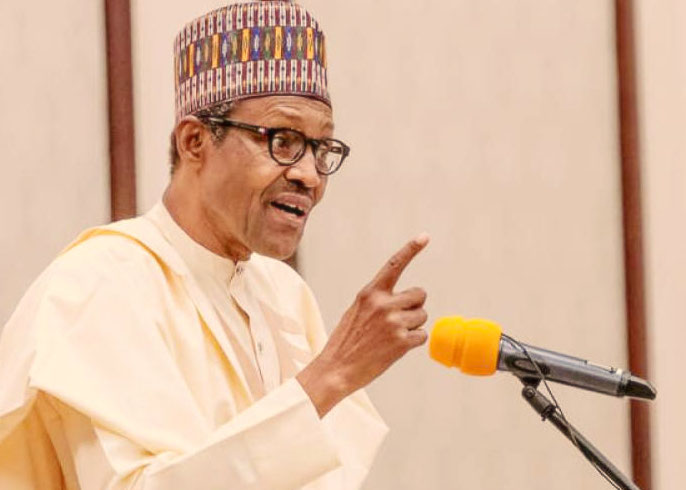
NIGERIANS who want to reply to President Muhahamdu Buhari’s tweet posts can no longer do so at will, at least for now.

The president has limited those who can respond to his message on a per- tweet basis.

Unlike his pre-election days when his Twitter account was open to all for comments, now, the president’s four million followers can only ‘like’ or retweet his posts as they want but not express their views about the government policy statements.

The ICIR waded through some of the recent tweets by the president and discovered that many Nigerians, including journalists, had been shut out.

On Wednesday, March 10, the president tweeted only four times. But Nigerians could only respond to one out of the three tweets because he has locked the rest of the tweets.

On International Women Day, Monday, March 8, President Buhari also tweeted four times. The first tweet was about the election in the Niger Republic, which the president said: “went well”. The other three were congratulatory messages to his vice president, Yemi Osinbajo.

“Happy 64th Birthday to@ProfOsinbajo, a reliable and dedicated deputy who is not only admirably competent but also exudes confidence and passion in the performance of his job; a cool-headed gentleman who puts the interest of Nigeria above other narrow considerations.

“Vice President Osinbajo is an incredibly patient politician who demonstrates remarkable intellectual and mental energy in the discharge of his duties. I’m proud to have selected him as my running mate, and he has given a good account of himself since our journey began in 2015.

Read AlsoWhy Twitter suspended Osinbajo’s Twitter account

“I wish him many more prosperous years and Almighty God’s continued guidance and blessings,” the president tweeted. But none of the tweets was open to accepting a reply.

On Saturday, when the president and his vice received their vaccine, Buhari tweeted about it three times. As of today, the combined tweets have been “liked’ by 4,862 and retweeted by 1,465 followers, but no Nigerian could respond to the tweets because they were locked.

Samples of Buhari’s tweets to which his follower could not reply, as at the time I filed this report.

Other President’s tweets checked by The ICIR from March to December 2020 followed the same pattern. Some were open; others were locked.

Not many Nigerians were surprised, though. The ex-general hardly engages his fellow citizens in a national address, and when he did, it was brief.

The ICIR sent messages to the four spokespersons of the president: Femi Adesina, Garba Shehu, Bashir Ahmad and Tolu Ogunlesi, asking to know why the president wanted to restrict responses to his tweets. Mr Shehu replied that the question should be directed to Ogunlesi, the president’s special assistant on digital/new media.

“The President has an SA on new Media. Speak to him,” he replied in a text message. But Ogunlesi has not replied as at the time this report was filed for publication.

Speaking on ARISE Television programme recently about the Buhari presidency’s behaviour, Dele Olojede, founder of the defunct NEXT newspaper and winner of the Pulitzer Prize, said President Buhari just “went into Aso Villa and just closed the door behind him.”  Shutting the Twitter gate against Nigerians may have validated Olojede’s claim.

In a debate between Elizabeth Joh, a law professor at the U.C. Davis School of Law and  Danielle Citron, another law professor at the Boston University School of Law in 2016, the two experts expressed divergent views on the proprietary of a president blocking comment on Twitter.

According to Professor Joh, an expert on constitutional law, the president should keep open his social media account to all.

“In a democratic society that values transparency and accountability, keeping the social media account of a president open to all ought to be part of these [democratic] custom. Twitter and other social media platforms are part of the new normal, a shared reality that demands new best practices about press freedom and good governance,” she argued.

Another example

Professor Citron, an expert on information privacy, free expression, and civil rights, argued differently.

“If the president tunes out advice from strangers or intimate, that is his choice.  Blocking followers on Twitter is not a matter of government censorship but rather of expressive freedom to listen and speak.

“The president can decide if he wants to hear out the public in-person, on the phone or online. The choice to block is no different from a decision to decline an invitation to a conference. It may be inadvisable, but ultimately it is his decision.”

But when former President Donald Trump blocked people from following his Twitter account because they criticized or mocked him, a federal appeals court ruled in 2019 that he violated the Constitution.

Judge Barrington D. Parker then wrote that government conduct is subject to a “wide-open, robust debate” that “generates a level of passion and intensity the likes of which have rarely been seen.”

It is yet inconceivable in Nigeria that citizens will file a lawsuit against the president that shut the Twitter gate against his countrymen.

PPPRA deletes template as NNPC insists no change in petrol price

THE Petroleum Products Pricing Regulatory Agency (PPPRA) has deleted the template that announced an increase in price of Premium Motor Spirit (PMS), otherwise called petrol, to N212.6 per litre.

Checks by The ICIR show that the template titled ‘Guiding Prices for the Month of March 2021’ was deleted a few hours after the increase in price sparked outrage among Nigerians on the social media on Thursday.

The ICIR can also confirm that the PPPRA did not only delete the March 2021 template but also pulled down that of February 2021 earlier seen by the Centre.

Reacting to the template, the Nigerian National Petroleum Corporation (NNPC), in a tweet via its official Twitter handle @NNPCgroup, insisted that there would not be an increase in petrol price in Nigeria.

“NNPC Insists No Increase in Ex-Depot Price of PMS in March,” the agency posted.

However, in a telephone conversation with The ICIR, Folashade Kayode, spokesperson for PPPRA, said the template was only a projection for March 2021.

“I cannot answer questions on that. We just gave an indicative of what it is supposed to be, but I will get back to you. We are having a meeting on that now,” Kayode replied.

THE ICIR had earlier reported that the PPPRA posted a new template for March 2021, putting the price of petrol at 121.6 naira per litre.

According to the template, which has now been deleted, for the month of March 2021, the expected retail prices for the lower band was 209.61 naira while the expected retail prices for the upper band was 212.61 naira, from February’s 183.74 naira and 186.74 naira respectively.

Due to the fears of Nigerians over the template, many residents in Abuja and Lagos State have begun panic buying, and long queues are mounting up.

The ICIR observed a long queue around the NNPC petrol station in Wuse and F.O petrol stations in Abuja.

Supreme Court upholds 10-year sentence on Joshua Dariye, ex-Plateau governor

THE Supreme Court has upheld the 10-year imprisonment imposed on Joshua Dariye, former Plateau State governor, on the offence of criminal breach of trust.

A five-man panel of the court, led by Mary Odili, in a unanimous judgment on Friday, upheld Dariye’s appeal in part, quashing the one-year sentence imposed on him by court of appeal in relation to the offence of criminal misappropriation.

Ejembi Eko prepared the lead judgment, which was read on Friday by Helen Ogunwumiju. Other members of the panel included: Lawal Garba, Samuel Oseji and Tijani Abubakar.

The Supreme Court upheld Dariye’s concurrent conviction and sentence by the trial court and the court of appeal on the offence of criminal breach of trust.

Read AlsoUPDATED: Former Plateau governor, Joshua Dariye bags 14 years in jail

Dariye had, in his appeal, prayed the court to upturn the November 16, 2018 judgment of the Court of Appeal, Abuja, which convicted him and sentenced him to 10 years for diverting public funds estimated at 1.162 billion naira while he was governor.

A three-man panel of the court of appeal, led by Stephen Adah, in its decision, upheld an earlier judgement by Adebukola Banjoko of the High Court of the Federal Capital Territory (FCT), delivered on June 12, 2018.

The trial court convicted Dariye on 15-count charge relating to criminal breach of trust and criminal misappropriation, contained in the 23-count charge on which he was tried by the Economic and Financial Crimes Commission (EFCC).

Ifeanyi Ubah, Kashamu, Chimaroke and Dariye ─ four Nigerian politicians that top list of AMCON debtors

In upholding Dariye’s conviction, the appeals court noted that the prosecution, led by Rotimi Jacobs, effectively proved its allegation of criminal breach of trust and criminal misappropriation against the ex-governor.

The court, however, faulted the trial court for convicting Dariye on counts 12 and 23, which it said the prosecution did not prove.

It also faulted the trial court for imposing the maximum sentences on both offences of criminal breach of trust and criminal misappropriation.

It proceeded to reduce the 14 year-sentence for the offence of criminal breach of trust to 10 years and reduced the two years sentence for criminal misappropriation to one year.

Ikpeazu hails Biden’s appointment of Abian as African affairs secretary

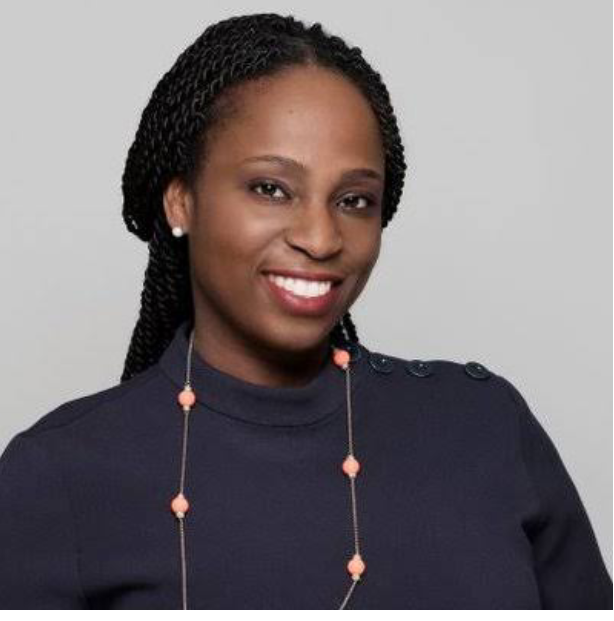
OKEZIE Ikpeazu, Abia State governor, has applauded the recent appointment of Akunna Cook as deputy assistant secretary of state for African affairs by Joe Biden, United States president.

Cook, an advocate and attorney, is the daughter of Anthony Enwereuzor of Ntigha, Isiala Ngwa North Local Government Area of Abia State.

“I feel highly elated & proud as a governor of one of the most enterprising people on earth recognised for their hard work & dedication to the good causes of the world wherever they go,” said the elated governor via his Twitter handle, @GovernorIkpeazu

Ikpeazu said that America needed experienced hands leading the U.S. policy towards Africa, and Cook  “is among the best.”

Rosa Whitaker, president and chief executive officer of Whitaker Group,  described Cook as “a seasoned diplomat & Africanist with an impressive record of achievement in economic empowerment and equity for people of colour.”

READ ALSO: US Race Equality: 3 Nigerians to serve in Biden administration

Prior to practicing law, Cook had served for 10 years as a career diplomat with the Department of State where she focused on economic and political development. She also served overseas in China, South Africa and Iraq where she advised U.S. companies on trade, investment, and political risk.

In Washington, she was special assistant to the deputy secretary of state responsible for African affairs, multilateral engagement, management, and legal issues.

Women entrepreneurs in Nigeria risk their health, pollute environment to eke out a living

She bagged her law degree from Yale Law School and a master’s degree in public policy from the Harvard Kennedy School of Government. Cook is a term member of the Council on Foreign Relations and a member of the Washington, DC Bar.

Her elevation brings the total number of Nigerians appointed by Biden to five. Previous appointments included: Enoh Titilayo Ebong, acting director of the U.S. Trade and Development Agency; Funmi Olorunnipa Badejo, general counsel of the House Select Subcommittee on the Coronavirus Crisis; Osaremen Okolo, member of COVID-19 Response Team, and Adewale Adeyemo, deputy secretary of the Treasury department.


Police confirm abduction of College of Forestry students in Kaduna

THE Kaduna State police command has confirmed the abduction of an unspecified number of female students of the Federal College of Forestry Mechanisation in Mando, Igabi Local Government Area of the state, by suspected gunmen.

Mohammed Jalige, state police public relations officer, said the incident took place last night, but BBC reported that it was early hours of Friday.

The Kaduna State commissioner for internal security and home affairs, Samuel Aruwan, confirmed the incident and said an investigation was ongoing.

According to BBC, almost half of the female students were kidnapped and not a single male student was taken.


Read Also:


Residents of the town said they heard gunshots around 11:30 pm but thought it was at the NDA Military Academy.

“Sometimes in the NDA, they shoot at night. Since it is a military school, we thought about what was happening. It was not until the next morning that we went out to pray and found out what had happened,” he said.

One resident explained that security officers had so far surrounded the school and the rest of the students had been evacuated to the NDA school.

This is coming fewer than 48 hours that Aruwan presented the 2020 security situation report to the state governor, Nasir El-Rufai.

In that report, the commissioner had said that bandits killed no fewer than 937 persons, kidnapped 1,972 persons, and rustled 7,195 cattle in the state in 2020.

During the event, Governor Nasir El-Rufai had insisted that his administration had no room for negotiation or granting amnesty to bandits

So far, nearly 800 students have been abducted since December and this is the third kidnapping of students from their schools in 2021 in Nigeria.

Higher inflation looms as FG increases petrol price to N212.61 per litre

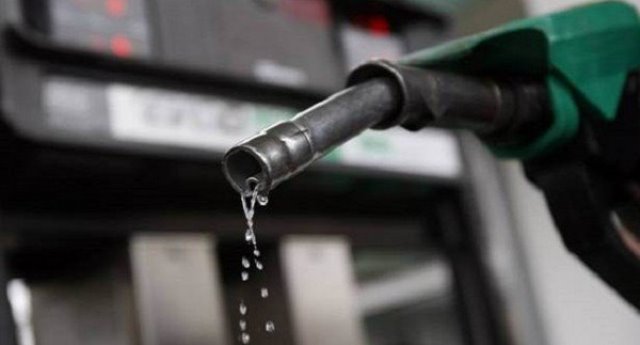
THE Petroleum Products Pricing Regulatory Agency (PPPRA) has announced an increase in the price of Premium Motor Spirit (PMS), otherwise called petrol, to N212.6 per litre.

PPRA, an agency of the Nigerian National Petroleum Corporation (NNPC), made this known in a monthly template titled ‘Guiding Prices for the Month of March 2021’ posted on its website late Thursday.

According to PPRA, the landing cost of petroleum for March 2020 has increased to 189.61 naira from 163.74 naira per litre in February.

PPRA Guiding Template for March 2021

The March 2021 template shows that the expected retail prices for the lower band is 209.61 naira while the expected retail prices for the upper band is 212.61 naira, from February’s 183.74 naira and 186.74 naira respectively.

The increase in price comes in contradiction to a recent statement by the NNPC assuring Nigerians that there would not be an increase in the price of petrol in the country.

Timipre Sylva, minister of state for petroleum resources, had said Nigerians should prepare for an increase in the pump price of petrol despite the new fortunes of crude oil in the global oil market.

Sylva said this earlier in February at the official inauguration of the Nigerian Upstream Cost Optimisation Programme (NUCOP) in Abuja.

“Since we are optimising everything, the Nigerian National Petroleum Company (NNPC) needs to also think about the optimisation of product cost because as we all know, oil prices are at 60 dollars per barrel.

“As desirable as this is, it has serious consequences as well on product prices. Today the NNPC is taking a big hit from this as we all know that there is no provision in the budget for subsidy payments,” Sylva said.

In Abuja and Lagos, especially  two to three weeks ago, heavy queues resurfaced in petrol stations as some residents resorted to purchasing from the black market.

Nigerians to bear the brunt

Following the hike in petrol price, Nigerians would bear the heavy burden of the changes that are likely to arise from the increase.

Petrol is at the centre of most or all the economic activities in Nigeria, including transportation. The cost of transportation may increase to fit into the reality of the new petrol prices, thereby forcing farmers,manufacturers and critical economic agents into paying more to move their goods.

When farmers pay more to get their produce to the market, Nigerians would likely buy food items at increased prices. The same applies to other sectors of the economy.

Analysts believe that the increase in petrol prices will balloon the inflation rate, which hit 16.47 percent in January 2021.

“Food inflation is already above 20 percent and will further rise on multiplier effect. It is not going to be rosy for a country with almost 50 percent of extreme poverty rate,” Ike Ibeabuchi, an economic analyst and managing director of a manufacturing company, said.

“Small businesses will also take the hit because their cost of operations will skyrocket,” he said.

He wondered why the government was fixing petrol price when it was also talking about deregulation.

Economists say deregulation implies that prices are set by the market forces, rather than government agencies. This means that government and its agencies have no business fixing prices of petrolueum products.

Petrol is one of the major components of inflation. Nigerians fear that cost of living, which is already high, will bite harder.

Lagos-based Taiwo Adekoya, a fashion designer, told The ICIR that his raw materials’ cost would rise, thereby affecting his patronage.

“Sometimes I wonder what is going on here. It is obvious that we will increase our prices, but how many Nigerians have money to purchase new clothes now?” he asked.

COVID-19: European countries suspend AstraZeneca vaccine over blood clot death fears

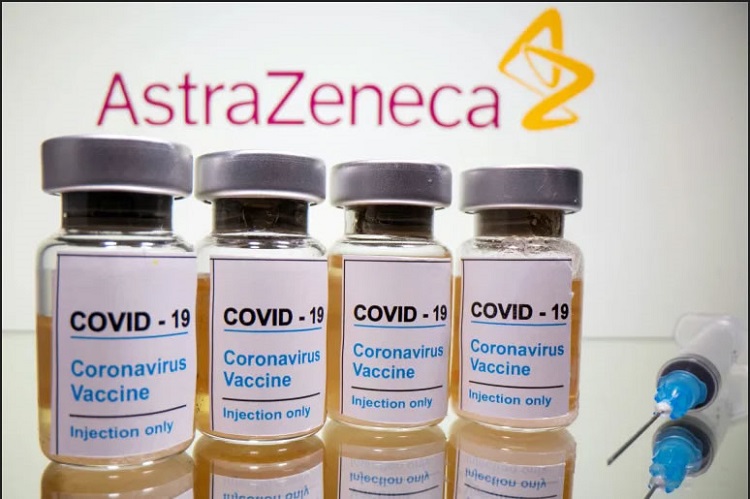
A number of European countries, on Thursday, stopped the use of  AstraZeneca coronavirus vaccine after fatalities were recorded from blood clot. 

Denmark, Iceland and Norway have stopped administering AstraZeneca vaccine entirely while the incident is being investigated. Italy has also suspended a batch of the vaccine.

Other countries, including Latvia and Austria, said they would stop using doses from a separate batch of the vaccine, ABV5300, which had been linked to death from coagulation disorders and an illness from a pulmonary embolism in Austria.

The United Kingdom, Sweden, and the Netherlands said there was not yet enough evidence showing that the deaths were linked to the vaccine, and would continue their campaigns.

The European Medicines Agency, in a statement on Thursday, said it was also investigating the situation, but stated that the number of ‘thromboembolic’ events marked by the formation of blood clots was not higher among vaccinated people than in the general population.

It said that vaccinations should continue while it carried out investigations.

Magnus Heunicke, Denmark’s health minister, said in a statement on Twitter that the country was acting ‘on the precautionary principle.’

“We cannot yet conclude that there is any connection,” he said. “We are taking action early and this will now be thoroughly investigated.”

The Danish Medicines Agency has called on anyone who has received the AstraZeneca vaccine within the last 14 days and experienced symptoms for more than three days to visit their doctor.

Read AlsoOut of 36 states, Lagos, FCT, Kano receive over 23 percent of AstraZeneca vaccine

A spokesperson for the agency stressed that it remained unclear whether the person who died of a blood clot in Denmark had received a shot from batch ABV5300,  although the European Medicines Agency (EMA) confirmed on Wednesday that 17 other European countries, including Denmark, received doses of the same shipment used in Austria.

“We can’t say with any certainty that it is the same batch. That’s going to be one of the issues that the forthcoming investigation will look into,” he said.

Italy’s decision to ban a batch of AstraZeneca vaccine was taken following the deaths of two men in Sicily who had recently been inoculated, a source close to the matter said on Thursday.

Nigeria recently received doses of AstraZeneca vaccine. Many health workers and strategic leaders, including President Muhammadu Buhari, have been administered the vaccine. Medical analysts fear that the backlash in Europe could trigger fears in COVID-19-prone population in Africa’s biggest economy.

In Europe, Italy’s medicines authority Aifa said earlier that the ban was a ‘precautionary’ measure, adding that no link had been established between the vaccine and subsequent ‘serious adverse events.’

Iceland’s state epidemiologist Þórólfur Guðnason told the Frettabladdid newspaper that it was normal to see similar events when so many were being vaccinated.

“I realise that this news will increase people’s worry about the vaccines, but I would like to remind you that when so many people are vaccinated at the same time, we always see something after vaccinations that we need to study and evaluate.”

Fani-Kayode, Bello, Melaye and other conspiracy theorists spreading misinformation about COVID-19

The EMA said the number of blood clot events seen in people who had got the shots in the European Economic Area was no higher than among the general population.

The United Kingdom government, which did not get any doses from the ABV5300 batch, said the vaccine was both ‘safe and effective.’

Phil Bryan, vaccines safety lead at the Medicines and Healthcare products Regulatory Authority (MHRA), said 11 million doses of the AstraZeneca vaccine had been given in the UK with no more reports of blood clots than in the unvaccinated population.

Spain’s health minister Caroline Darias said they too had not registered any case of blood clot related to the AstraZeneca vaccine.

The Dutch Medicines Evaluation Board said that there was no evidence of a link. It added that thrombosis and pulmonary embolism were no known side effects of the vaccine.

When large groups are vaccinated as is now the case, then you can expect such reports, it said.

The CNN quoted a spokesperson for AstraZeneca as saying that patient safety was the company’s ‘highest priority.’

“Patient safety is the highest priority for AstraZeneca. Regulators have clear and stringent efficacy and safety standards for the approval of any new medicine, and that includes the COVID-19 vaccine AstraZeneca.

“The safety of the vaccine has been extensively studied in Phase III clinical trials and peer-reviewed data confirms the vaccine has been generally well tolerated.”

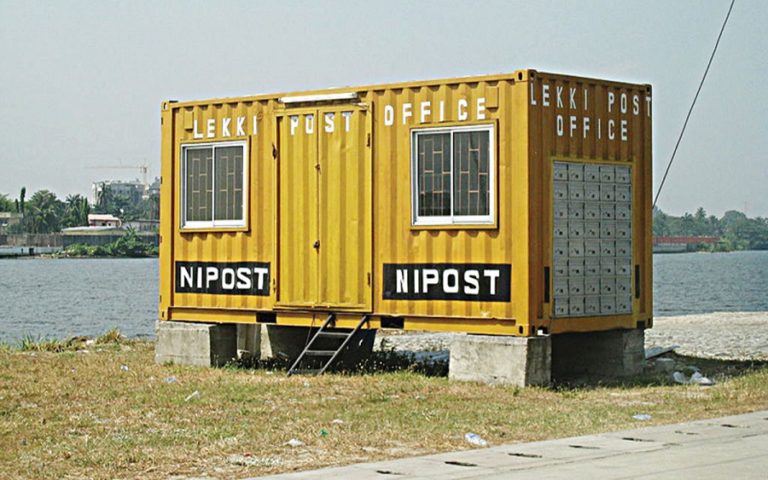
NIPOST reclaims collection of stamp duty charges from FIRS

THE Nigeria Postal Service (NIPOST) has reclaimed the collection of stamp duty charges from the Federal Inland Revenue Service (FIRS), Isa Pantami, minister of communications and digital economy, announced on Thursday.

The development puts to bed more than three years of controversy and acrimony over who, between the two federal agencies, should collect stamp duty charges in the country.

Pantami commended President Muhammadu Buhari and the leadership of the National Assembly, especially the Senate and House Committees on Communications and Digital Economy, for their interventions in the matter.

He also praised the management of NIPOST and other stakeholders for their resilience, saying it was heartwarming that critical stakeholders ensured that justice was done on the issue.

Read AlsoHow FIRS plans to meet N5.9trn revenue projection in 2021

Pantami made the remarks at the launch of Nigeria’s 60th Independence Anniversary Commemorative Postage Stamps held at the Digital Economy Complex, Mbora, Abuja.

“Our efforts regarding the issue of stamp duty collection with other government Institutions have yielded positive results. NIPOST has been recognised as a government agency with statutory and historical authority to be the producer of stamps and recognised for collection of stamp duties for validation of financial transactions in the country.

“We appreciate Mr. President for listening to our complaints, and we extend our gratitude to him and the Senate and House committees for their intervention in ensuring that justice was done,” Pantami said.

The minister further said that challenges of regulation as well as policy and financing confronting NIPOST over the years was being addressed with a view to placing the agency on a platform that would enable it to generate revenue for the federal government.

He said NIPOST would be unbundled into three companies to boost its operations, while efforts were on the pipeline for the Federal Executive Council to approve the renovation and rehabilitation of all its dilapidated offices across Nigeria.

The minister noted that 97 percent of the rule-making procedures of NIPOST was being done to facilitate robust debates on the acts establishing the agency, asserting that this was being done to ensure robust contributions from stakeholders any time there was a need.

Ex-FIRS boss Fowler, Buratai make list of politically exposed Nigerians who own properties in Dubai

In her remark, chairman of NIPOST board, Hajiya Maimuna Abubakar, said NIPOST, by the presentation of anniversary stamps, had again shown that it would continue to play its roles in advancing the rich culture and historical heritage of the country.

” The postal industry, from time immemorial, has fostered the use of postage stamp as a veritable medium for nurturing of culture,” she said.

“Nigeria as a country is amply blessed with historical evidence of great works of arts, cultural monuments and features that help in the transmission of cultural heritage from one generation to another.

“Many of such have been reflected on Nigerian postal stamps, most especially in colonial and post-colonial Nigeria. A strong Nigeria must be a cultural Nigeria and NIPOST has a role to play in advancing this by marking events such as this one.”

Manufacturers struggling to access CBN’s intervention funds – MAN

THE Manufacturers Association of Nigeria (MAN) has said that its members hardly access many intervention funds set up by the Central Bank of  Nigeria (CBN). 

In a statement signed by Segun Ajayi-Kadir, director-general of MAN, on Thursday, the group said despite the availability of several funding windows, manufacturers still suffered the dual challenges of scarcity of investible funds high lending rate.

“Generally, MAN observed through feedbacks from members and interaction with the CBN on several occasions that these facilities and funds have not been adequately accessible to manufacturers due mainly to the prevarication of the participating financial institutions (PFIs) and deposit money banks (DMBs),” the statement made available to The ICIR said.

MAN cited an example with CBN’s N1 Trillion COVID-19 Stimulus for Manufacturing and Import Substitution, which commenced in 2020, saying that only 76 companies had received 300 billion naira, translating to 30 percent of the total.

The N1 Trillion COVID-19 Stimulusor Manufacturing and Import Substitution was instituted in 2020 to sustain manufacturing and improve the output of the sector.  It was to be managed by PFIs, which included commercial banks and development finance institutions.

While acknowledging the excellent initiative of the CBN in setting up the N1 trillion COVID-19 facility, MAN noted that most of its members who applied were not able to get it.

Read AlsoManufacturing is suffering, electricity tariff hike will worsen it, MAN tells FG

The group said that the various CBN funding windows were commendable, but poor implementation hindered attaining the noble objectives of these funds.

Benchmark Interest Rate in Selected Sub-Saharan African countries

It suggested that the CBN’s strict enforcement should be strict to ensure that the PFIs and DMBs grant transparent and effective access to their intervention funds to manufacturers. “This is especially concerning the N1trillion manufacturing and import substitution facility; the N220 billion Micro, Small and Medium Enterprises Development Fund (MSMED), the 100 billion Health Care and Pharmaceuticals Support Funds and N300 billion Real Sector Support Facility (RSSF).”

It also recommended specific guidelines and timelines for effective and complete disbursement of the intervention funds, saying that there should also be a periodic report of the status of implementation to the CBN to ensure progressive monitoring. It further recommended that PFIs and DMBs who failed to diligently and timeously disburse all the funds allocated be sanctioned.

It likewise urged the CBN to be part of the monitoring process.

Godwin Emefiele
Godwin Emefiele, CBN Governor Credit: Financial Times

Naira 4 Dollar Scheme

On the Naira 4 Dollar Scheme recently introduced by the CBN, the association said the scheme should encourage Nigerians working abroad to remit more
into Nigeria and improve the forex inflow. It noted, however, that the apex bank must dimension the inflows, which had historically been 70 percent for family support and 30 percent for other purposes, including real estate, which carried the greater part.

“To yield more of the anticipated inflow for investment in productive activities, the CBN would have to work with the banks and other relevant government agencies to initiate portfolios and measures to point the remitters in that direction,” MAN counselled.

There was also a need to consider where the domestic foreign exchange-earners stood within the context of this scheme.

“For instance, could a manufacturer who exports his product and repatriates his dollar profit get his money in dollars and also benefit from the Dollar 4 Naira Scheme? This way, you can guarantee almost a 100 percent re-investment in production and reap all the attendant benefits and even partly make up for the losses incurred due to the poor implementation of the Export Expansion Grant (EEG). The average manufacturer who is confronted with a lot of infrastructure and macroeconomic challenges is eminently qualified, if not more qualified, to benefit from such a scheme.”

Read Also: CBN tweaks strategy to shore up dollar supply, boost flagging economy

The liquidity challenge 

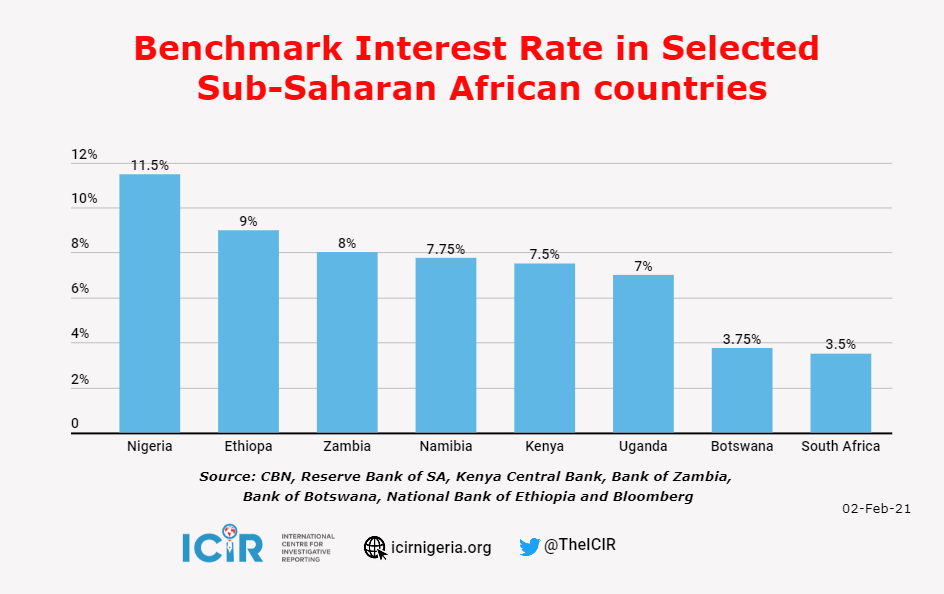
Nigerian manufacturers face many challenges, particularly lack the liquidity to expand operations; Monetary Policy Rate (MPR), which is the benchmark interest rate, is 11.5 percent currently. Still, banks charge as high as 20-30 percent, according to the Lagos Chamber of Commerce and Industry (LCCI).

In 2020, the Interest rate charged to manufacturers averaged 20.75 per cent as against 21.25 percent recorded in 2019, MAN said in a recent economic review.

The cost of funds in Nigeria is high compared with many Sub-Saharan African (SSA) countries. According to their central banks, Nigeria’s MPR is higher when compared with South Africa’s 3.5 percent, Kenya’s 7.5 percent, and Zambia’s 8 percent. In Ethiopia, another SSA nation, the benchmark interest rate is estimated at 9 percent, according to the National Bank of Ethiopia. Botswana’s rate is at 3.75 percent, while  Uganda’s is 7 percent. Similarly, while Namibia’s benchmark rate is 7.75 percent, Mali’s is 9.12 percent.

Ibrahim Maigari Ahmadu, the founder of Liverstock247.com, Nigeria’s first livestock online marketing and listing platform, said the interest rate in banks was high, just as there were many gridlocks to access funds.

Manufacturers identify dollar scarcity, cost of funds as biggest business impediments

“Nigerian commercial banks are risk-averse. They put so many bottlenecks on the way when you want to access funds,” he said.

“Interest rate is very high, which is a major inhibiting factor. Collaterisation is structured to knock you out,” he added.

CBN’s position

The CBN has severally threatened to punish commercial banks not disbursing intervention funds or lending to the real sector. In September 2020, it  threatened to sanction banks not lending to farmers. The previous year, the apex bank had debited 499 billion naira from accounts of 12 banks not meeting Loan-to-Deposit Ratio (LDR) of 60 percent. The LDR was later raised to 65 percent and banks that did not meet the threshold were sanctioned. However, manufacturers believe the  apex bank should move a notch further by strictly monitoring intervention funds domiciled in commercial banks.