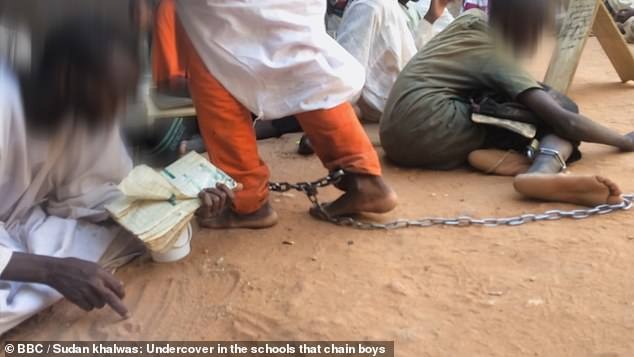
AN undercover investigation by the British Broadcasting Corporation (BBC), has revealed that thousands of boys have been kept under chains and serious torture and abuse in Islamic schools across Sudan.
Marina Forsythe, BBC World Service Group Communications, in a statement to The ICIR, said the investigation which was titled, “The Schools that Chain Boys”, has found that boys as young as five-years-old are routinely chained, shackled and beaten by the “sheikhs”, or religious men in charge of the schools, which number nearly 30,000 in the country.
The investigation also found evidence of sexual abuse of the boys.
She noted that the 18 months investigation was carried out by Fateh al-Rahman al-Hamdani, its undercover reporter, who used to study at a khalwa himself and secretly filmed inside 23 khalwas across Sudan. The reporter found boys shackled and chained and witnessed brutal routine beatings.
The statement added that many of the children were malnourished and living in squalid conditions, forced to sleep on the floor in extreme heat. Sick children were left without medical help.
At the heart of the BBC investigation, Forsythe said are two boys; Mohamed Nader and Ismail – who were beaten so badly they nearly died. The boys were imprisoned and tortured for five days in their khalwa without food or water and had tar rubbed into their wounds.
A few months into his recovery, Mohamed Nader told BBC the reporter that he witnessed boys being raped inside the khalwa by older students.
“The worst thing about the khalwa is the rape. They make you go against your will,” he said
BBC said when it confronted the sheikh in charge of the boys’ khalwa, he admitted that it was wrong to imprison the children but maintained that beating and shackling were “packed with benefits” and that “most khalwas use chaining, not just me.” When asked about allegations of sexual abuse he categorically denied these claims and accused our reporter of attacking the Koran. The sheikh died in a car accident earlier this year.
The film follows the boys’ recoveries and their families’ fight for justice as they take on the sheikhs who wield huge power and influence in Sudan.
Mohamed Nader’s mother, Fatima, hopes that since the 2018 revolution and the ousting of Omar al Bashir’s Islamist government, they stand a better chance of holding those in charge of the khalwas accountable.
During the course of the investigation, the BBC came across further reports of rape and sexual abuse in other khalwas. A forensic doctor, who examined three boys that recently escaped from one of Sudan’s many khalwas, told the BBC that boys were repeatedly raped: “I asked them ‘“How were you raped?” They said, “Sometimes our families visit us, they rape us just before they arrive.”
The investigation reveals that it’s not only children who are being abused. In a khalwa in central Sudan, the BBC filmed grown men chained to their beds, supposedly being treated for mental illness and addiction. One man told our undercover reporter, “They chain you up and beat you with a stick like a donkey… we are their slaves.”
In Sudan state prosecutors are obliged to take on all cases of crimes against children but when they take place inside khalwas the authorities are slow to act. When asked whether the beating, shackling and torture of children inside khalwas are considered a violation of children’s rights, a Public Prosecutor in Omdurman, Batool Sharif Ahmed, told the BBC “This is just normal practice inside khalwas. These children are sent to the khalwa with the consent of their parents.”
In the case of Mohamed Nader and Ismail the police arrested the sheikh in charge of the school and three other teachers. They were charged with assault and perverting the course of justice and released on bail. The khalwa remains open and the new sheikh in charge told the BBC that under his management the beating of children would not be tolerated.
At the time of publication, thousands of children are still at risk of being abused inside khalwas. The Minister of Religious Affairs told BBC News Arabic that they are assessing the state of khalwas across the country but that it is impossible to “solve a problem caused by 30 years of the old regime overnight.”
You can watch the full documentary of the investigation here.
Reports of torture inside khalwas are not limited to Sudan. In recent years, there have been reports about abuse of boys at religious schools in Nigeria, Senegal and Pakistan.
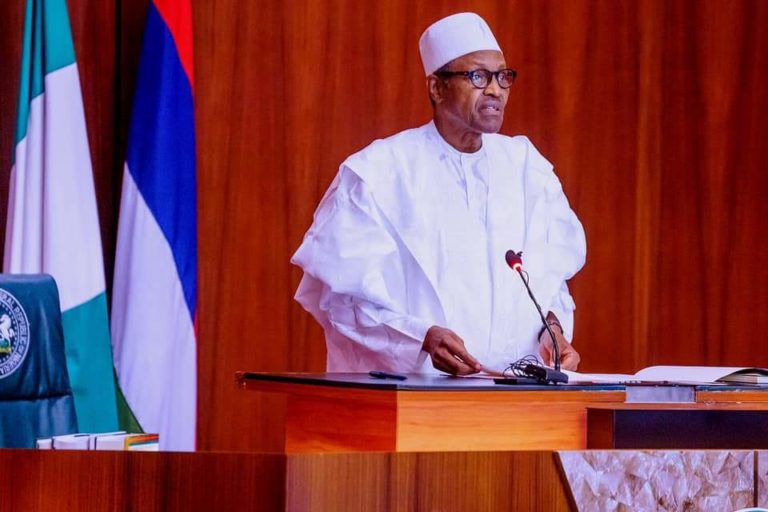
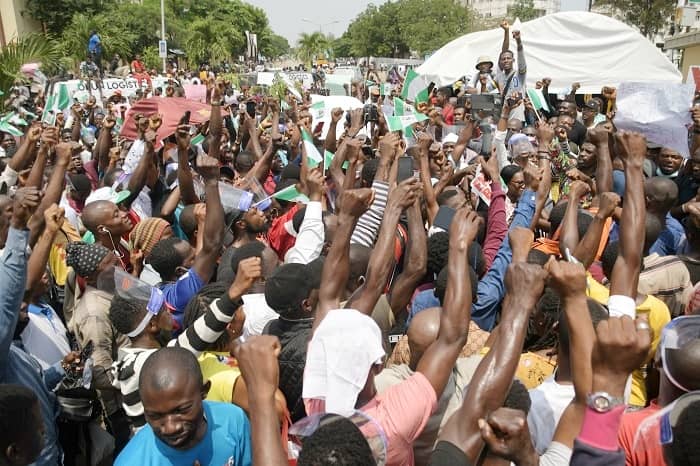
AS the ENDSARS protests escalate into violence and disruption of daily activities in Nigeria, the Senate has urged the president, Muhammadu Buhari to break his silence and address the nation over the issue.
“Senate resolves to urge Mr President to address the nation as soon as possible on the issue,” a statement from the Senate read in part.
Buhari has failed to address the citizen on the ENDSARS protest since it began more than ten days ago in some part of the country.
The call was made on Tuesday during the Senate plenary when Biodun Olujimi, the senator representing Ekiti South sought the leave of the Senate to present a Motion on the #EndSARS and the need for comprehensive police reforms.
Speaking on the motion, Ovie Omo Agege, the Deputy Senate President said the ENDSARS protest is one that everyone identifies with because he had also been a victim of the defunct Special Anti-Robbery Squad (SARS).
“All of us in this Chamber are co-sponsors. We need to be made co-sponsors because these children who are on the streets are our children.
“I don’t know of anyone in this country who supports the illegal activity of SARS. I stand here as a victim of SARS.
“Nobody here is a friend of the illegal activities of SARS. When our children went in the streets demanding an end to SARS, I think it is a cry we all identify with and we will continue to identify with provided the protest remains peaceful,” said Omo Agege.
However, he noted that the protest has now been hijacked due to recent happening in some part of the country.
“What we have today right now is that the very good actions of our children is being hijacked. My own children are in the streets of the U.S. participating in this #EndSARS protest.
“I am not sure that my kids are in support of those who have hijacked this protest to go release prisoners. I urge that they should remain lawful. The protest should remain peaceful while they give government the opportunity to address these demands.
“We don’t want any harm to befall our children. We want to appeal to our children and kids to give this government the opportunity to address this issue,” Omo Agege further stated.
Enyinnaya Abaribe, the Senate Minority leader supported the motion and recommended that Buhari addresses the nation over the issue.
“I support this motion. I think part of what is going to resolve this issue is for the President of the Federal Republic of Nigeria to look at the issue and address the Nation on them.
“And I think that the people will listen knowing that he has now come out directly to deal with the issue.
“I suggest also that in doing that, he must try a way of setting up a judicial panel that will have people that are well respected by the same youth so that they can address a certain issue and that issue is those notorious SARS officers that have been identified and even identified by the presidential panel,” Abaribe said.
After submissions from the senators, the Senate resolved to urge the President to address the nation as soon as possible on the issue, call upon the Police to operate strictly in accordance with the rules of engagement appropriate in a democratic environment and urge all tiers of government to put in place and sustain policies of social-economic reforms that raise the standard of lives of Nigerians.
The Upper Chamber appealed to Nigerians to resort to using legal institutions to resolve disputes and conflicts, stop their actions and embrace genuine dialogue . He also urged the Police to accompany protesters during their peaceful demonstration.
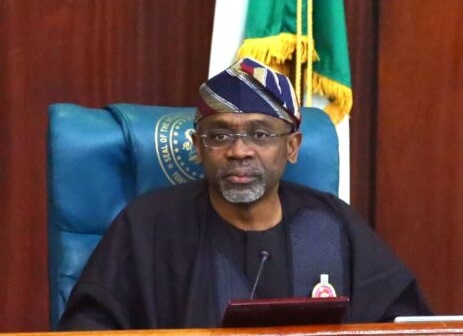
Femi Gbajabiamila, Speaker of the House of Representatives on Tuesday revealed that the 2021 Appropriation Bill before the National Assembly might not be signed if provisions for the compensation of the families of victims of police brutality were not included.
Gbajabiamila disclosed this at the opening of House Plenary Session which held in Abuja at the National Assembly.
“I will not sign off on a 2021 budget that does not have adequate provisions to compensate those who have suffered violence from police in the last decade,” he said.
The Speaker of the House and President of the Senate sign bills passed by the National Assembly before they are transmitted to the President for assent.
The Nigeria Police was not above the laws of the land and must be held accountable to the citizens.
He reiterated the commitment of the National Assembly to “establish a system of citizen-led accountability for the Nigerian Police Force because in a democracy we have set out to build, the police are not above the citizenry.
“We see your true cause. Please do not allow your righteous cause to be hijacked by those with base motives, who see at this moment an opportunity to pursue vendettas, to spread division, exploit the many existing fissures that exist in our society and bring our nation to its knees,” he said.
He said the Federal Government, through the National Human Rights Commission, NHRC had set up a panel of enquiry to take complaints from victims of police brutality.
The draft legislation would be enacted in collaboration with the Nigeria Bar Association (NBA) and the NHRC which he said will be ready for consideration within 30 days.
Gbajabiamila also appealed to the #EndSARS protesters not to allow the protests to be hijacked by unscrupulous elements seeking to cause chaos in the country.
However, the Lagos State Government announced a 24-hour curfew after hoodlums set fire to a police station in the Orile part of the state, as widespread protests continue across the country over police brutality.
Amnesty International on Monday said that police violence against protesters had continued and that at least 15 people had been killed since the protests began two weeks ago.
Imagine that you have a medical emergency, but you can’t communicate with the doctor because he doesn’t understand what you are saying. Imagine the doctor asking you questions to diagnose your ailment, but you don’t understand what he is saying or what the medication he has prescribed for you is for. JOSEPHINE EJEH looks at this and many other challenges faced by people with hearing loss when accessing healthcare services in public hospitals in Abuja, Nigeria’s Federal Capital Territory (FCT) due to the absence of sign language interpreters.
IT was her first pregnancy in 2012. Like every other expectant mother, she was very excited to register for her ante-natal clinic. Her expectation was that she would be given all the necessary healthcare support other pregnant women usually enjoyed. But against her expectation, it all turned out to be one of her worst nightmares ever as her pregnancy progressed.
Beyioku-Alase Hellen is hearing and speech impaired, a condition that makes her unable to hear or speak. She developed these conditions in 1994 at the age of six.
Though she had heard many unpleasant tales of how people with speech and hearing loss were marginalized at public hospitals, the 32-year-old expectant mother had thought health workers in the hospital where she enrolled for the ante-natal care would be sympathetic with a pregnant woman who is speech and hearing impaired.
Hellen was wrong.
Her hope of getting the best ante-natal care continued to dim after each appointment in the hospital. She would leave her home very early in the morning so that she would be among the first few pregnant women to arrive at the hospital, yet she always ended up being the last patient to leave the hospital as a result of the communication barrier. Oftentimes, her hospital card would be abandoned after the nurses have repeatedly called her name without any response.
On the first day of her ante-natal clinic, Hellen, now a mother of four, was the first to arrive at the clinic so she was the first on the list of patients for medical attention, but she was left unattended to for almost nine hours and not allowed to see the doctor until other expectant mothers had seen the doctor. All her efforts to get the attention of the nurses and other health workers when they were calling out names and she couldn’t hear them, were frustrated. The health workers shouted her down and ordered her to sit down.
In her confused state, after so many hours, Hellen mustered the courage to report the matter to the medical director of the hospital.
“I was very angry, so I summoned the courage to approach the Medical Director of the hospital. I laid my complaints to her in writing and she was sympathetic with my plight and the issue was resolved. I thought that was all, but I was wrong. When I went into labor subsequently and went to the hospital, there was no health worker to explain to me what I should do at each stage of my labor. The nurses just signaled to me with their hand to wait and left me in severe pain for up to 45 minutes. I felt so bad,” she narrated to The ICIR.
Throughout the period of her painful labor, Hellen could not explain to the nurses how she felt. She muttered some sounds, but no one understood what she meant. Even when she felt the baby head was coming, the nurses were nowhere to be found and she could not call out to them. Hellen laid there in the labor ro0m all alone panicking that something bad could happen if the baby arrived when nurses were not around.
“As God would have it, a nurse came in to check and behold she saw the head of the baby and shouted. She was not prepared to deliver the baby so that was how God saved me and my baby,” she said.
Front View of Kubwa General Hospital, Abuja
It was a similar experience during her second pregnancy. Hellen would be in the hospital as early as 6 am but nobody cared if she was around or not. Some expectant mothers who arrived at the clinic hours later would be attended to while she was left out.
During the sessions of health talks for pregnant women, she would sit down among other expectant mothers in the clinic feeling ignored, marginalized, neglected and left out because she could not make any sense of what the nurses were saying. Hellen had no slightest idea of the things she ought to do as an expectant mother and what not to do due to the communication barrier.
In one instance, she wrote to a nurse to plead with her to explain in writing what she lectured the other pregnant women but, the nurse shouted at her down, saying that she was disturbing her.
The attitudes of the health workers made Hellen who was then a student of Abuja University to resolve never to return to the hospital again for delivery since she realised she could not trust them with her life and the life of her unborn baby. She re-enrolled in a private maternity clinic belonging to a church to deliver her second baby.
Like Hellen, many women with speech impairment and hearing loss have been forced to boycott ante-natal clinic when pregnant because of the hostile and unfriendly attitude of health workers. Some of them even prefer to deliver their babies at home to avoid the harsh experiences they have in the hospitals.
“When you are sick, you have the right to go to the hospital but when you go to the hospital, you don’t find anybody who understands your language. Sign language is the language of the deaf so if I don’t have anybody who understands my language how do I express myself? Imagine as a pregnant woman I go to an ante-natal clinic. I sit down like every other woman, but there is no interpreter. How do you expect me to be able to make sense of what is being said? How do I take care of myself as a pregnant woman, if the information is not available because of communication barriers?
“So, how do the deaf get all that information? This is one of the sad experiences that makes deaf women not go to the hospital because we feel ignored, marginalized and not considered. It is as if our human rights don’t matter to the health workers. They feel hospitals are for only people who can speak and not for deaf people, that is wrong,” Helen said while recanting her ordeals in the hospital during her first pregnancy.
“Even if I remember that experience most of us prefer to give birth at home. Just imagine if the woman dies giving birth herself. So, we need to change the attitude and orientation of doctors and nurses to know that we are all humans too. We are all humans. We have equal rights when it comes to health. Whether deaf, blind or physically challenged, we are all the same,” she said.
Hellen’s sad experiences in the public hospital birthed the Deaf Women Aloud Initiative (DWAI), an initiative she pioneered.
DWAI is an organisation which promotes the rights of deaf women and girls, works to ensure proper access to health care services and information as well as help them to fight sexual and gender-based violence, among others
Years later, the thought of how to communicate with the doctors and other health workers remains a source of worry to the Executive Director of Women Aloud Initiative, whenever she is ill.
“As I am here today, each time I feel any pain or discomfort in my body, what comes to my mind is, if I go to the hospital, how will I be able to communicate with the doctor? I may be educated and can write but what about other deaf people who only depend on sign language because they can neither read nor write,” Helen asked?
With her experiences and those of other pregnant women suffering from speech and hearing loss, who died due to negligence and lack of communication, she was determined to change the situation so that other women with speech and hearing loss will not have the same experience.
Hellen is one of the thousands of faceless people with speech impairment and hearing loss facing the challenges of accessing healthcare service due to the communication barrier with health workers in Abuja public hospitals.
Enniyin Bose, 46, always feels frustrated anytime she visits the Kuje General Hospital because she can’t communicate with any of the health workers in the hospital.
Due to the language barrier and the absence of a sign language interpreter, often spends longer periods in the hospital before she eventually sees the doctor.
Her predicament is compounded as she is further subjected to the rigors of communicating with the doctors through writing.
“It is not always easy because when I submit my hospital card, the nurses will keep calling and shouting my name, I will not hear so I will not answer. So, sometimes I get very angry and frustrated that I am kept so long in the hospital,” Bose, who lost her hearing and speech at the age of nine due to medical complications, told The ICIR.
Ignored and marginalized
The enjoyment of the highest attainable standard of health is one of the fundamental rights of every human being, including people with hearing loss, according to the United Nations in the World Health Organisation(WHO) World Report on Disability, 2011.
Also, access to health care without barriers is one of the rights of people with disabilities clearly defined by the United Nations Convention on the Rights of People with Disabilities (UN- SCRPD). Based on this provision, people with hearing loss and speech impairment have the right to enjoy the highest attainable standard of health, yet the communication barrier has resulted in health workers ignoring and neglecting them, making them feel frustrated, intimidated, and marginalized.
United Nations Convention on the Rights of Persons with Disabilities
On March 30, 2007, Nigeria signed the United Nations (UN) Convention on the Rights of Persons with Disabilities. Subsequently, on September 24, 2010, it gave a formal confirmation, ratified and assented to the Convention.
The 2006 UN Convention enjoins the States Parties to secure the human right to a signed language in legislation; to ensure its use in civil society, educational settings and cultural settings; and to secure its use as a means of access to wider society, including health services.
Article 30 of the Convention enjoins States Parties to provide early intervention services designed to minimize and prevent further disabilities, and that best practices in health-care access should follow these Articles, as well as Article 9, which mandated the provision of accessibility in health-care settings via national signed language interpreters.
Although Nigeria is one of the signatories to the Convention and its Optional Protocols, it has not lived up to the expectations of the Convention because in the area of health, accessing healthcare remains a challenge for individuals with speech and hearing impairment in various parts of the country, including Abuja, the Federal Capital City of Nigeria where they are constantly discriminated against, intimidated and ignored.
No Professional Sign Language Interpreters to Sign for Deaf Patients
Investigation revealed that many hospitals in the FCT-primary, secondary and tertiary health facilities, do not have professional sign language interpreters who are very important to bridge the communication gap between health workers and patients with speech and hearing loss visiting the hospitals.
Nearly all the public hospitals visited by our reporter do not have professional sign language interpreters that would have helped to bridge the typical communication gap people with speech and hearing loss usually face with health workers in hospitals.
Hospitals Rely on Note Taking to Communicate with Patients with Hearing
Checks also revealed that many of the hospitals in the FCT predominantly rely on note-taking as the method of communicating with patients suffering from speech and hearing loss.
In many instances, doctors or other health workers were not even patient enough to allow such patients ample opportunity to explain vividly in writing, their health challenges.
Demian Ayo, who lost his hearing at the age of eight is one of such persons who are being deprived of the right to receive the best medical attention.
Each time he visits the Asokoro General Hospital where he accesses healthcare services, he faces communication barriers because there is no sign language interpreter in the hospital. Demian often feels sad because, on many occasions, he is not given the opportunity to be diagnosed.
“Sometimes the doctors are patient to write, sometimes they just look at me and administer treatment or drugs without saying anything to me,” he told The ICIR.
Doctors and other health workers in Nyanya General Hospital also depend primarily on note-taking. A female nurse confirmed to The ICIR on the condition of anonymity that there has been no professional sign language interpreter in the hospital for over three years that she has been in employment, so the health workers communicate with patients with speech and hearing loss basically by writing notes.
When The ICIR visited that hospital, Dr. Ekpe Philip, the Medical Director of the hospital could not be reached. Our reporter was asked to wait for hours to see him. But after waiting for hours, she was denied access to him and told instead by his Personal Assistant to write an official letter requesting to have a chat with the Medical Director.
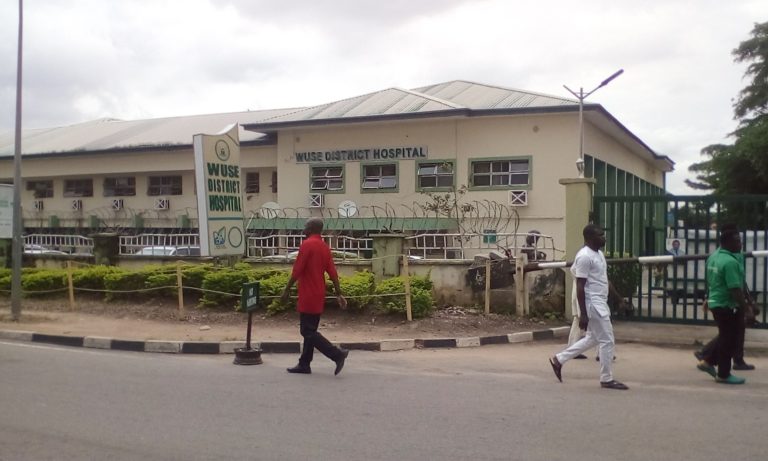
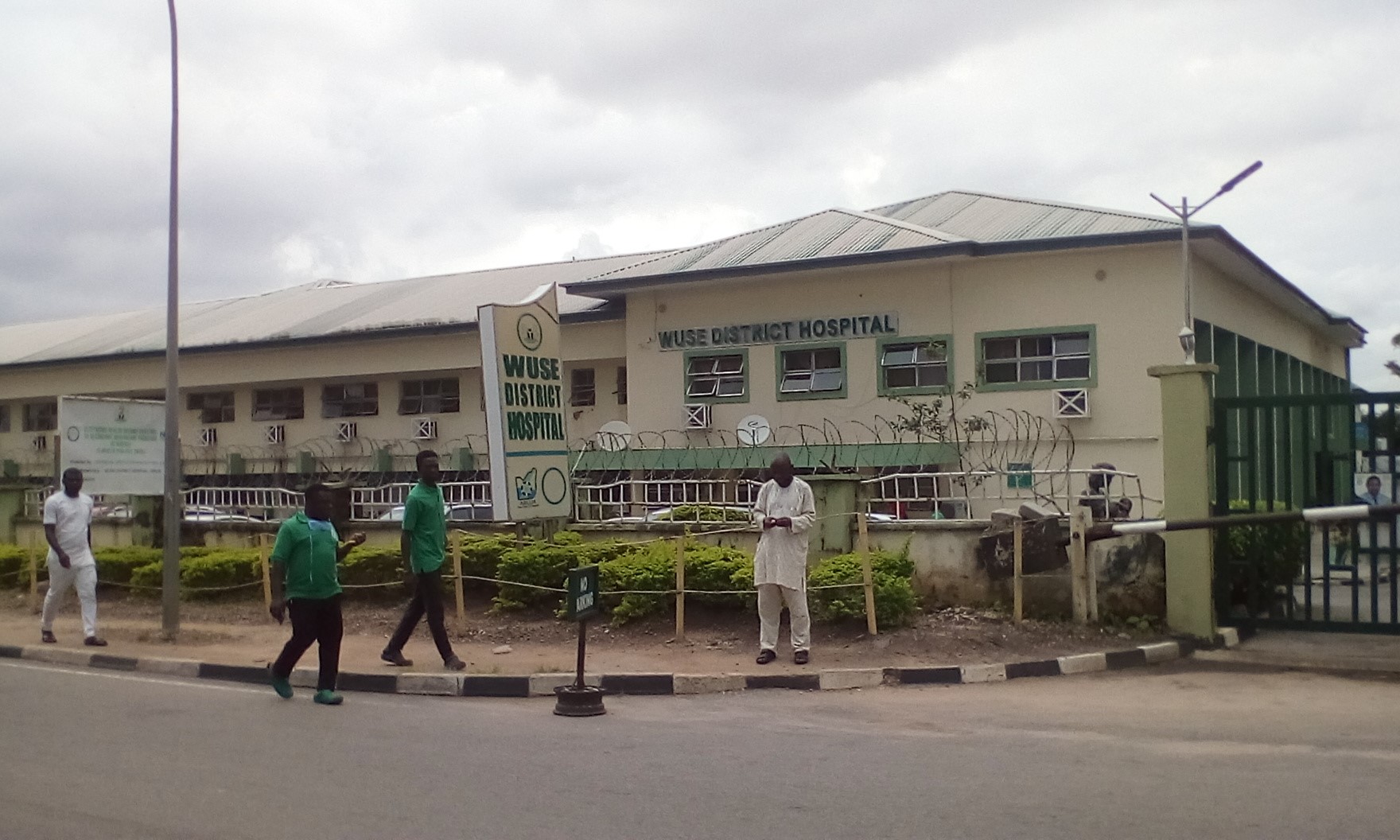
The situation is the same at Wuse Hospital, where a top management staff also confirmed to our reporter that the hospital depends on the writing method to communicate with speech and hearing-impaired patients.
Other patients who cannot read or write, usually come to the hospital with an interpreter.
High Cost of Hiring Services of Private Sign Language Interpreter
Hearing and speech impaired people from wealthy backgrounds and those of average economic status living within the city centre, pay for the services of professional sign language interpreters to escort them to the hospital. However, how many poor persons with speech impairment and hearing loss in the hard-to-reach communities in the FCT struggling to make ends meet are financially buoyant to pay for the services of a sign language interpreter?
Sometimes, even those who can afford to hire the services of an interpreter, face the difficulties of finding one on short notice. There is also the issue of confidentiality as persons with speech and hearing loss who spoke with TheICIR said they feel ashamed disclosing personal information, asking and responding to private issues in the presence of an interpreter, a friend, or family member.
Family members, friends and children used as interpreters
In most of the communities visited, people with speech and hearing loss use family members, friends and their children as interpreters because they cannot afford the service of a private sign language interpreter.
Where they are not available, they (people with speech and hearing loss) visit the hospital alone without communication support and demonstrate how they are feeling by just pointing to the part of their body where they have discomfort, leaving the health workers with the difficult task of figuring out what he is implying.
Joseph Denda, 43, uses his younger brother Benjamin as an interpreter whenever he visits the Primary Healthcare Centre in Leleyi Gwari community in Kwali Area Council where he lives.
The peasant farmer whose speech impairment resulted from an illness, can hear what the health workers say but due to the speech challenge uses gestures to respond to the health workers’ enquiries with the help of his brother.
Benjamin who always feels sad and frustrated each time he has to accompany his elder brother who is a grown man to the hospital like a child shares similar feelings with other relatives of people with speech impairment and hearing loss who are forced to abandon their works or other activities to accompany their relatives to the hospital.
Mitsi Dimitra, Armyra Christina, Fradelos Evangelos in a publication on ‘Deaf People Accessibility in Health Services” published on researchgate.net, observed: “The use of these individuals as interpreters and mostly deaf children should be avoided as interpreters as it is more likely to make mistakes due to their lack of knowledge of the medical terminology.”
The researchers noted that the personal relationship of these persons with deaf people put to question the impartiality and credibility “as there is the possibility of concealment or paraphrasing of the content provided by the physician or patient’s information.”
They also observed that “the presence of these people and the use of them as interpreters may inhibit discussion and reporting of sensitive issues such as domestic violence, substance abuse and sexually transmitted diseases.”
For Bose and other persons with speech and hearing loss who are literate, noting taking may provide an alternative in the absence of a professional sign language interpreter, but can this equally apply for uneducated ones who can neither read nor write?
Patients with Speech and Hearing Loss Misdiagnoses and not Diagnosed
Finding shows that many people with speech and hearing loss are often not diagnosed properly. Symptoms point the doctor in the right direction, hence, a patient’s description of the symptoms he or she is having helps the doctor identify the problem. But due to the communication barrier, patients with hearing and speech impairment are not able to explain their symptoms vividly to the doctor for correct diagnoses.
The Executive Director of Deaf Women Aloud Initiative (DWAI)who also confirmed this at the recently held 2020 International Week of the deaf said people with speech and hearing loss are at a greater risk of being misdiagnosed or not diagnosed at all because of the existing communication barrier between them and health practitioners.
“They (patients with speech and hearing loss) touch their head to demonstrate that it is aching and that’s all, but how do you figure out exactly what their ailment is with just that? Honestly, most of us go to the hospital with malaria and other ailments but the doctors prescribe only paracetamol for us because we were pointing to our head, so they assume it is a headache that is the issue,” the said with a sad look on her face.
Whenever Patrick Usman, a blacksmith visits the health centre in Passepa community in Bwari Area Council where he lives, he usually points to where he is experiencing a disorder in his body, leaving the doctor or health worker to presume what could be the issue.
Patrick Usman became Deaf at the age of 10, following an ailment. The 34-year-old blacksmith is frustrated that he can’t explain how he feels whenever he visits the hospital or health care centre as he can only point to the part of his body where he has a disorder when he visits a doctor.
“I feel very bad and frustrated whenever a very serious sickness takes me to the health centre because I can’t explain exactly how I feel. Nobody understands me so I just point to the part of my body that I’m not feeling well. If it is a headache, I will use my hand to touch my head and if it is a stomach ache, I do the same thing,” the 34-year-old who spoke through his childhood friend who understands his signs told The ICIR.
Like other persons with speech and hearing loss, Patrick believes that if a sign language interpreter is stationed at the hospital, the communication barrier he experiences would have been surmounted.
Patrick’s story is not different from that of Maikasuwa Sharia, who lives in Kayache also known as Buzunkure in Kuje Area Council of the FCT.
His wife, Tausayi sometimes accompanies him to the hospital when he is sick to explain his symptoms better to the doctor since there is no sign language interpreter at the clinic in Kuje where he accesses health services.
However, if the situation requires urgent medical attention and Tausayi is indisposed, the 37-year-old man has no other choice but to visit the clinic alone without communication support.
Due to the communication barrier, all Maikasuwa does is point to the part of the body where he is having the discomfort and it is left for the doctor to figure out what he is implying.
The mother of four, who always abandons her children at home to escort her husband to the hospital, believes that a sign language interpreter at the hospitals will save her all the stress.
“Since he (Maikasuwa) is an adult, I don’t need to be following him to the hospital like a child because he can explain what is wrong with him to the doctor by himself if there is somebody at the hospital to interpret his sign language,” she said.
Health Workers Rely on Lip reading to Communicate with the Deaf
Over the years Rebecca Adeyanju, a midwife at the Primary Health Centre in Leleyi Gwari community in Kwali, relied on lip-reading methods to communicate with her patients since there is no sign language interpreter in the clinic.
Justina Faruk is one of the persons with speech impairment and hearing loss in the community Rebecca has cared for over the years. She lost her hearing at the age of seven due to meningitis infection when she was only in primary school three.
Pointing to the 22-year-old mother of two at the premises of the hospital, Rebecca said: “We communicate very well. We understand each other. When I speak, she reads my lips because she can’t hear but she replies to me because she can speak.”
Though, health practitioners like Rebecca, believe lip reading or speech reading and note writing provide effective health communication, Lieu, Sadler, Fullerton and Stohlmann in a 2007 study on “Communication Strategies for Nurses Interacting with Patients who are Deaf, describe these methods as “ineffective communication modalities for healthcare conversations.”
According to the researchers, “Deaf people who have practiced lip-reading/speech-reading for many years and who are familiar with spoken language are able to understand at best 30–45 percent of spoken English.”
A visit to Tunga-Ashere, a community in Angwan Madaki District under Abuja Municipal Area Council (AMAC), revealed a similar communication gap between health workers and people with speech and hearing loss.
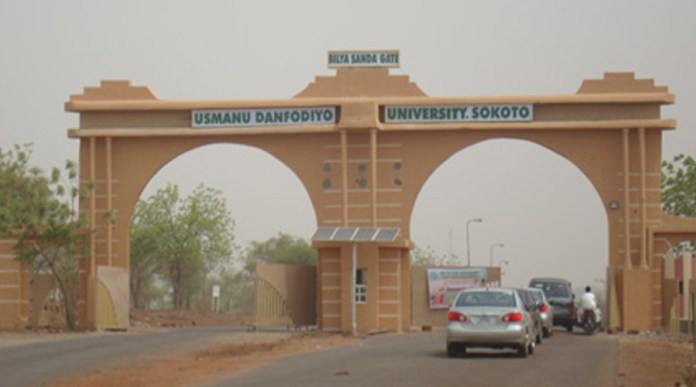
THE Academic Staff Union of Universities (ASUU), Usmanu Danfodiyo University Sokoto chapter, says its members will continue with the ongoing strike in Nigerian universities until all pending issues with the Federal Government are resolved
The union made this known at the end of a consultative meeting held Monday to deliberate on the proposals by the Federal Government in order to present its stand on the months-long industrial action.
In a statement signed by Abubakar Sabo, the Chairman of ASUU-UDUS, the chapter said it accepted the N20 billion offered by the Federal Government as part payment of the revitalization fund which is expected to be paid latest by January 2021.
It, however, rejected “the N30 billion offered by the Federal Government and demanded the increase of the fund to N40 billion.
The Branch also resolved that the payment should be made before the strike is suspended while also agreeing with the guideline given by the Federal Government on the visitation panel to Nigerian universities.
It accepted the proposal of the Federal Government and demanded that all issues contained in the 2009 Agreement be resolved based on the December 2020 deadline.
On IPPIS, the chapter rejected the payment system while stating that the ASUU’s proposed payment system that is currently undergoing an integrity test should be the only acceptable payment platform for its members.
“The Branch rejected IPPIS and preferred only UTAS as the only acceptable payment platform for its members. The Branch also advised that FG should pay our salaries using GIFMIS before UTAS is finally deployed,” it said.
“The previous platform used in paying February and March salaries was characterized by a lot of anomalies and inconsistencies.”
“The Branch is not comfortable with the FG saying it will pay our withheld salaries and allowances immediately without any time frame. Hence, the Congress resolved that all withheld salaries and entitlements must be paid before Friday 23rd October 2020 using GIFMIS platform in the interim.”
University lecturers in Nigeria have been on a strike over six months ago to protest against poor funding of federal universities in the country and the Federal Government’s ss insistence on compulsory enrolment of ASUU members on IPPIS for the payment of salaries like it does to all Federal Government workers.
The union argued that the new payment system would undermine the university autonomy.
In January, the Federal Government vowed to stop the salaries of university lecturers who failed to comply with the directive to enroll on IPPIS by December 31, 2019.
Responding to the threat, ASUU issued an ultimatum to the government to reverse the decision or risk a shutdown of the university system through a nationwide strike.
Last week, the Federal Government met with the leadership of the striking lecturers to iron out the outstanding issues.
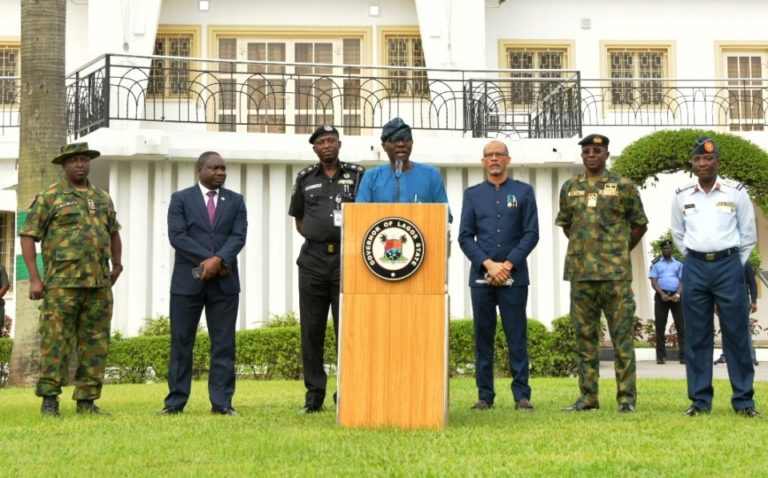
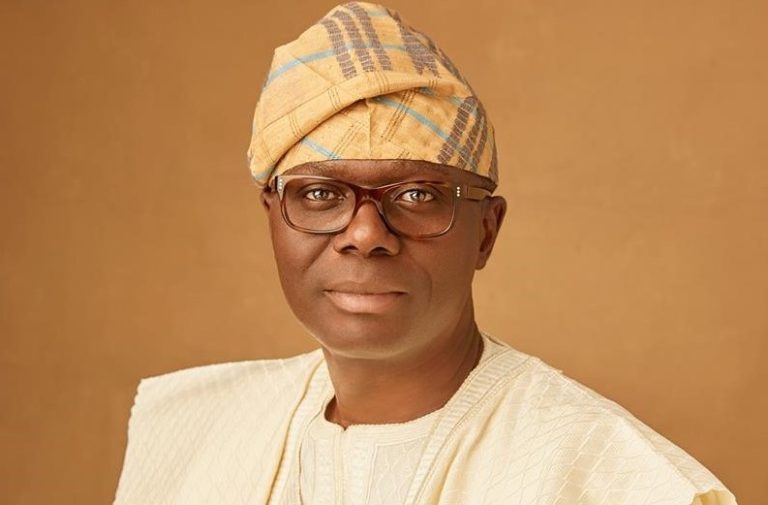
BABAJIDE Sanwo-Olu, the Governor of Lagos State on Tuesday imposed a 24-hour curfew in the state, following reports that suspected ‘thugs’ have hijacked the #EndSARS protests.
Sanwo-Olu stated in a press release he signed, that the curfew would kick off from 4 pm, October 20, adding that nobody except those providing essential services is to move around the state.
“I, therefore, hereby impose a 24-hour curfew on all parts of the State as from 4 pm today, 20th October 2020. Nobody, except essential service providers and first responders, must be found on the streets,” the statement read in part.
The Governor also expressed how the peaceful #ENDSARS protest had degenerated into a security matter threatening the well-being of the citizens.
“I have watched with shock how what began as a peaceful #EndSARS protest has degenerated into a monster that is threatening the well-being of our society. Lives and limbs have been lost as criminals and miscreants are now hiding under the umbrella of these protests to unleash mayhem on our State,” said Sanwo-Olu who Sanwo-Olu had appealed to the protesters to embrace dialogue for the resolution of their agitations.
“As a government that is alive to its responsibility and has shown a commitment to the movement #ENDSARS, we will not watch and allow anarchy in our dear state.”
For 12 days, Nigerian youths have taken to the streets everyday to demand police reform. They have also asked the government to ensure that justice is served for all who have been victims of impunity displayed by officers of the disbanded Special Anti-Robbery Squad (SARS).
Their demonstrations, both online and offline, have gained the attention of the international community after Nigerians in the Diaspora also joined the protest.
Meanwhile, the protesters have launched two online stations in a bid to bypass traditional media censorship.
The two stations named ‘Soro Soke’ and ‘Radio Isiaq’ were launched Saturday with the aim of educating Nigerians on the objectives of the protests as well as to pass information and updates on protests holding across different locations.
THE Lagos State Government has ordered the suspension of activities in all public and private schools in the state due to the ENDSARS protests.
Folasade Adefisayo, the Lagos state commissioner for education issued the directive on Tuesday, noting that the safety of the pupils and students, parents, and all staff working in schools is paramount.
Adefisayo called on parents to keep an eye on their children in order not to allow them to be used as willing tools in the hands of those who might want to hijack the protests to unleash terror in the society.
She added that schools are to utilize other means of distance teaching and learning i.e radio, television, and online media as they did during and post the recent COVID-19 lockdown.
The commissioner stated that a new date of resumption for all classes would be communicated to the public in due time.
Many Nigerian youths in Lagos, Abuja and other states have for more than ten days taken to the streets to demand an end to police brutality and reforms.
While the protestants began the protest through demand for the disbandment of the now-defunct Special Anti-Robbery Squad (SARS) of the Nigerian Police Force, other demands including compensation of victims of police illegal killing and brutality have set in.
However, some Nigerians who do not share the same sentiment with the protestants have attacked the protestants in Lagos and other parts of the country where there is the presence of ENDSARS protesters while some have used the opportunity to perpetrate other crimes.
On Monday, some hoodlums, disguised as ENDSARS protesters attacked a Maximum Prison yard and freed some inmates in Edo state.
According to reports, the hoodlums also attacked three police stations and carted away guns and ammunition.
Godwin Obaseki, the governor of Edo state in response to the attack has imposed a 24-hour curfew in the state.
“While the government of Edo State respects the rights of its citizens to undertake legitimate protests, it cannot sit idly when hoodlums have taken laws into their hands to cause mayhem on innocent citizens and the state,” a statement by Osarodion Ogie, Secretary to the State Government read.
Ogie, in the statement, said all schools and businesses in the state are to be suspended until calm is restored in the state.
“REST In Pieces” was the title of a comprehensive report released in March 2005 by Human Rights Watch on Police Tortures and Deaths in custody in Nigeria.
The investigations, which produced that report were conducted in three cities, Enugu, Lagos and Kano. Some 50 people, victims and witnesses, were interviewed. In its preamble, the summary of the report noted that “Since the end of military rule in 1999, Nigeria, under President Olusegun Obasanjo, has moved to take an increasingly influential position in Africa.”
Aside from his moves to broker peace in regional conflicts, the report noted the important steps he took in combating corruption and reviving the Nation’s economy. Sadly, the report noted that the Nigerian government had failed to show the same determination in “addressing human rights abuses, in particular, widespread and persistent violations perpetrated by the security forces, most notably the police, military and other law enforcement agencies”.
For a nation just recovering from the brutish era of 16 years of military rule at the time, that report was a clarion call to Nigeria to put its Fundamental Human Rights House in order. Obasanjo himself saw fire in that era, and only narrowly missed death by the whiskers.
But, as usual with such reports, the 2005 report must have been presented to an appropriate agency of the Federal Government, which would have promised urgent action immediately. In such matters, though, that is the end of the story. For, the report was dumped along with others preceding it, to gather dust.
Last year, a similar fate befell another report prepared by the Nigerian Human Rights Commission, NHRC. Interestingly, the report was based on the findings of the Presidential Panel on the Special Anti-Robbery Squad, SARS, constituted in August 2018. The panel was mandated to investigate allegations of human rights violations and abuse of office against SARS and the Nigeria Police Force.
The panel sat in the six geo-political zones of the federation; received 113 complaints on alleged human rights violations from across the country and 22 memoranda on how to reform and restructure the notorious SARS and the Nigeria Police in general. It completed the assignment within 10 months and submitted its report to President Muhammadu Buhari in June 2019. That is some 16 months ago. Some of its recommendations, according to media reports in the wake of its submission to the President, were the renaming of SARS and the creation of state and local government police. Ha! If only Buhari had acted with dispatch.
Other notable recommendations were the dismissal of 37 police officers and the prosecution of 24 others. The Inspector-General of Police, IGP, was asked to unmask 22 officers accused of the human rights violations of innocent citizens.
Furthermore, various sums of compensation were to be paid by the Police to 45 complainants by the Police; apologies were to be tendered in five other complaints, and the police were asked to obey court orders in five others. If only Buhari had acted with dispatch.
On the day he received the report, the President directed a three-man panel made up of IGP Mohammed Adamu, inspector general of police, Dayo Apata, Federal Solicitor General, and Tony Ojukwu, Executive Secretary of the Nigerian Human Rights Commission, NHRC, to review the recommendations and submit a White Paper within three months. That White Paper must have been presented to the President in September 2019, some 13 months ago. Perhaps, if only Buhari had acted with dispatch, today the youths would not have taken to the streets in several cities to demand the disbanding of the Special Anti-Robbery Squad.
Since its submission, and while it was gathering dust on a shelf in Aso Rock, several Nigerians have been extra-judicially eliminated by the Police and other law enforcement agencies.
For instance, within the first few weeks of the nationwide lockdown due to the COVID-19 pandemic, the Nigerian Human Rights Commission reported that 18 people were extra-judicially killed by the police. Their offence was a failure to comply with lockdown restrictions.
Currently trending on social media is a long list of some of those who have been killed in the last 10 years in the course of their encounters with the police. Here, we will only mention four persons on that list that could have been alive today if Buhari had acted on the report submitted to him last year with dispatch. In the course of a minor misunderstanding with the police, Musab Sammani was killed in Kano last December; In February, 21-year old Tiamiyu Kazeem, a professional footballer died in Shagamu when he fell out of a police van and was overrun by a speeding vehicle. His death sparked a protest which resulted in the loss of five other lives; and in May, 16-year old Tina Ezekwe was hit by a stray bullet from the gun of a drunk policeman who fired at a bus driver who refused to bribe him at a checkpoint; and during the Eid-el Kabir festival in August, Ayomide Taiwo, aged 20, was shot by another drunk SARS official in Osun State for refusing to settle him adequately.
These untimely deaths are aside from the many lives that have had been lost in the last few days to the violent repression of protesters by the police. In fact, in Lagos, the police even shot one of their own. Thus, if the President had acted on the report submitted to him last year, the nation could have avoided the current heartaches from extrajudicial killings. And Buhari would not have needed to sympathise with the family of Jimoh Isiaka, who was the first casualty in the several killings of protesters by the police in Ogbomosho, Oyo State.
While high-handedness by the police is as old as Nigeria, it gained ascendancy under military rule, when soldiers decided to teach “bloody civilians” how to behave. And cumulatively the two military eras lasted for 29 years.
However, not a few thought civil rule in 1999 would herald a breath of fresh air. How wrong they were. The failure of the Obasanjo presidency to champion the upholding of the citizens’ human rights informed the report, “Rest In Pieces” in 2005.
That report called attention to how the police and other law enforcement agencies breached observed in the breach, their rules of engagement. To them, constitutionally guaranteed human rights and international laws on the same are mere academic exercises. If only then President Obasanjo had acted with despatch on the suggested police reforms in that report.
For, three months after that report was submitted to his government, a bizarre extrajudicial killing by the police took place in Abuja, the Federal Capital Territory. That was in June 2005. Five spare parts traders, Ekene Isaac Igbe, Chinedu Meniru, Paulinus Ogbonna, Anthony Nwokike, Ifeanyi Ozor, and the latter’s girlfriend, Augustine Arebu were extrajudicially executed by the police. They were alleged to be armed robbers. The case, popularly called the APO Six, became celebrated in the media. After their murder, they were hurriedly buried in two shallow graves behind a police station.
Unfortunately, as the police themselves know, there is no perfect crime.
A judicial panel of inquiry set up by the President unravelled the mystery surrounding their cold-blooded murder. A senior police officer, Danjuma Ibrahim, then a Deputy Chief Superintendent of Police, had an altercation at a nightclub with the APO Six on the night of June 7. He left the nightclub in fury, only to lay an ambush for the unlucky six at a nearby police checkpoint. Although two locally made pistols were planted by the police in the car Peugeot 406 the victims rode in that day, a ballistic expert discovered the pistols had not been used in the previous six months. It turned out, the pistols were recovered two weeks earlier by the police from an investigation scene in an Abuja hotel. Thus putting a lie to the police claim that the APO Six died in a shootout.
A policeman, Anthony Idam, who was ready to spill the beans as to what transpired was poisoned and died a day before his appearance at the panel. That is not all. The District Police Officer in charge of the APO Police Station, where the gruesome killings were committed done escaped from a cell, where he and the others were being held. For all we know, he is still at large.
The panel recommended the trial of all the policemen involved. Those arraigned were Danjuma Ibrahim, Othman Abdulsalami, Nicholas Zakaria, Ezekiel Acheneje, Emmanuel Baba and Sadiq Salami. The trial lasted all of 12 years, at the end of which two of them, Achejene and Baba, were sentenced to death in 2017.
In spite of the convictions, and the payment of three million Naira compensation to them, the families of the APO Six did not agree that justice had been fully done. Their reason? Danjuma Ibrahim who was the one who accused the victims, and not only engineered the planting of guns in their vehicle but supervised the gruesome murder is now an Assistant Inspector General of Police.
The APO Six, and many others like them, died because Nigerian policemen are not only fond of undue profiling of the youths, but abuse their office to settle personal scores. Their mindset is captured in a recent interview aired on Africa Independent Television, AOT, as reported by the Vanguard newspaper. The interviewee was Vandelan Tersugh, a retired commander of the dreaded but now disbanded SARS.
According to him, “I stop you on the road, and I want to have a look at your phone. I want to have a look at your Facebook. I don’t think I’ve committed any crime… I have seen you with a car, and now I have assessed your age, and I know in Nigeria how difficult it is for someone who is 20, or 30 to start having a car worth seven million naira.”
While many would agree with Tersugh, not a few would point out that against the backdrop of his narrative, the Nigeria Police is conducting business in the 21st century with the mentality of the 19th. And the major reason is the systemic failure that has become endemic in the Nigerian State.
Right from the way and manner of recruitment, the training, deployment, welfare on the job and conditions of service, the system is full of hiccups. A top police officer once revealed that because of poor records keeping of the forensic data of criminals, many former convicts have inadvertently found their way into the Force. So, what can a nation expect from such elevated criminals now armed by the State which they once violated all its norms? And at times, atrocities perpetrated by some policemen and other law enforcement agents make them look like an army of invaders.
Nigerians want to take consolation in the fact that the bad eggs are few. In his Twitter feed recently, President Buhari asked Nigerians “to recognise that the vast majority of the men and women are hardworking and diligent in performing their duties.”
One celebrated officer is Abba Kyari, a Deputy Commissioner of Police, DCP, and commander of the Intelligence Response Team. His Unit has performed wonders in the fight against kidnappers. For that feat, he was honoured by the House of Representatives recently. And in an interview with The Sunday Sun, Kyari struck the heart of the matter mater as to what ails the police.
In his words, “We actually need support from the government because, for more than 30 years, the Nigeria Police Force has not gotten the kind of funding that it needed. We have deficiency in so many areas. And many of the logistics that we needed to work with are not on the ground.”
That is one area the latest presidential panel on police reforms, which begins work shortly, anchoring its work on the White Paper submitted to President Buhari last year, cannot ignore. Many Nigerians eagerly look forward to their review and its speedy implementation by President Buhari.
* Ayodele Akinkuotu, former Editor – in – Chief of TELL, writes from Lagos
SOCIAL media users in Nigeria are in for troubled times with the introduction of a ‘cyberwarfare’ component in this year’s edition of the Nigerian Army’s annual Operation Crocodile Smile.
Operation Crocodile Smile, an annual military exercise conducted by the Nigerian Army since 2015, will commence on October 20 and end on December 31.
The Operation, this year, will feature cyberwarfare exercises which, according to the Army, was designed to identify, track and counter negative propaganda in social media and across cyberspace.
It will be the first time the Army will include cyber warfare exercise in the Operation, which usually involves patrols, deployment of checkpoints, surveillance and general security-beef-up in parts of the country.
Already, there are concerns that Operation Crocodile Smile is targeted at the ongoing #EndSARS protests across the country but the Army has said there are no links between the protests aimed at putting a stop to police brutality and the timing of the operation.
But, in response to enquiries by the ICIR, the military authorities have shed further light on the ‘cyberwarfare’ exercise which will take-off across the country on Tuesday, as part of Operation Crocodile Smile.
Acting Director of Army Public Relations, Col. Sagir Musa, told our correspondent on Monday, October 19, that the cyberwarfare exercise is mostly aimed at combating ‘fake news’ and other socio-economic crimes associated with the cyberspace.
“It is aimed at enhancing the peace and security of Nigeria and its citizens,” Musa said.
Asked how the army intends to go about the cyberwarfare, Musa explained that the Cyberwarfare Command of the Nigerian Armed Forces will detect and neutralise fake news and also tackle other criminal activities that are perpetrated through the Internet.
According to him, the Army would be more concerned with fake news that undermines Nigeria’s security.
“Fake news that have the capacity to breach the security of Nigeria will be acted upon by the Cyberwarfare Command of the Nigerian Army,” he said.
Individuals, or groups, who are found to be peddling fake news through any of the social media platforms would be arrested and prosecuted.
Going by Musa’s explanations, the Army will not only detect and neutralise fake news, it will also go after those behind the fake news reports.
The Army spokesman said, “The people behind the fake news will be handed over to the necessary agency for prosecution.”
The introduction of the cyberwarfare exercise in this year’s Operation Crocodile Smile is coming on the heels of earlier attempts made by the Nigerian government to introduce legislation against fake news in the country.
The infamous Social Media Bill, officially known as the Protection from Internet Falsehood and Manipulation and for other related matters bill 2019, which proposed steep fines or jail time for spreading what the government deems as fake news, was widely opposed by Nigerians who feared that it could lead to censorship and a crackdown on dissent.
The proposed legislation sought to give government regulatory control over conversations on social media platforms, and individuals whose posts are thought to threaten national security or diminish public confidence in the government could be arrested. Authorities could also cut the Internet access of those that violate the regulation.
Although supporters of the Social Media Bill said it was meant to protect Nigerians from misinformation that threaten national security, those who opposed the proposed legislation argued that it would muzzle free speech.
Penalties for breaking the social media law, according to the draft bill, include a fine of up to ₦300,000 or three years imprisonment for individuals and ₦10 million for corporate organisations.
The Nigerian government’s fear of ‘fake news’ was further highlighted in a recent lecture where Information Minister, Lai Mohammed, canvassed a national policy on social media usage, and also made a case for a campaign against fake news as an aspect of the national security programme.
Mohammed said the topic of the lecture – ‘Fake News, Hate Speech and National Security in Nigeria’ – which he delivered at the National Defence College, in Abuja, on October 15, was informed by “what we are facing in Nigeria at the moment”.
He added, “Social Media platforms are now the preferred medium for reaching millions of people with whatever ideas, including subversive or anarchic ideas, hence it is the platform of choice for the purveyors of fake news and hate speech. The advent of the Internet as well as the introduction of smart phones have democratized access to and dissemination of information in a very profound way. Anybody with a smartphone and data can access the Internet and disseminate whatever he or she feels like from his or her comfort zones.”
Quoting a report by a Social Media marketing platform, Hootsuite, which was published by Pulseng in August 2019, Mohammed noted that Nigerians spend an average period of about three hours 17 minutes on the Social Media each day, which is higher than the global average of three hours 14 minutes.
The report also noted that WhatsApp is the most active social media platform in Nigeria, with 85 percent of users, followed by Facebook with 78 percent. Instagram is third with 57 percent while Youtube is fourth with 53 percent.
”The fact that the Internet is unrestrained and the absence of a policy or Act of Parliament to regulate its use, at least for communication purposes, makes the platforms susceptible to abuse,” the minister said while observing that “willful circulation of fake news can put the lives of the citizens in danger and put the very existence of a nation in jeopardy”.
Interestingly, Mohammed had, in the lecture also noted that “Originally conceived as protection against military attack, national security is now widely understood to include non-military dimensions, including the security from terrorism, minimization of crime, economic security, energy security, environmental security, food security, cyber-security, etc.”
The submissions made by Mohammed in the October 15 lecture at the National Defence College, and the announcement by the Army that the Operation Crocodile Smile would feature a cyberwarfare exercise, suggests that the Federal Government is becoming increasingly concerned over what is going on on the social media in the country.
The statement released by the Army to announce the commencement of Operation Crocodile Smile had said, “The Exercise is deliberately intended to be all-encompassing to include cyberwarfare exercises designed to identify, track and counter negative propaganda in the social media and across the cyberspace.”
While the military authorities have said that the Operation is not targeted at the #EndSARS campaign, mass movements against government policies are usually mobilised through social media, and most times involve the broadcast of unverified, viral messages which the government might deem to be fake news.
The military operation is also likely to involve a clampdown on all manner of cybercrimes, including fraud, going by Musa’s explanation that the Army’s Cyberwarfare Command would also act on socio-economic crimes associated with the cyberspace.
Internet fraud, popularly known as ‘Yahoo Yahoo’, is one of the most common socio-economic criminal activities associated with the cyberspace in Nigeria. Before it was disbanded, the Special Anti-Robbery Squad (SARS) of the Nigeria Police Force was known to go after suspected Internet fraudsters, or ‘Yahoo boys’.
At the moment, it is not yet clear how the Army intends to go about the operation against socio-economic criminal activities associated with the cyberspace, including Internet fraud.
But Musa stressed that the Cyberwarfare Command of the Nigerian Army has the capacity to undertake the exercise.
The cyberwarfare exercise in this year’s Operation Crocodile Smile is the first of its kind to be conducted in the history of African armed forces, according to the Nigerian Army.
The operation will also include a positive identification component aimed at identifying Boko Haram terrorists fleeing from the North-East and other parts of the country as a result of the ongoing operations in the various theatres of operations especially in the North-East, North Central and North Western parts of Nigeria.
Babajide Sanwo-Olu, the governor of Lagos State, has appealed to the youths demonstrating against police brutality in the State to embrace dialogue for the resolution of their agitations.
Sanwo-Olu said on Monday, that the state government had shown sincerity and willingness to address all concerns raised by the protesters, given the actions taken so far, including the constitution of the Judicial Panel of Inquiry and setting up of compensation funds for the victims.
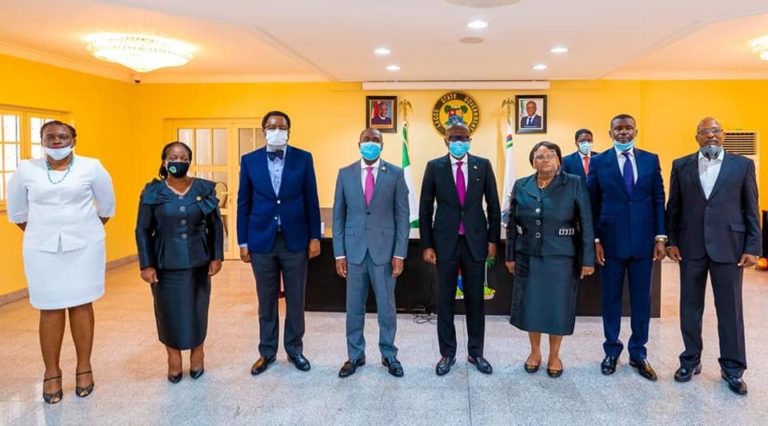
Sanwo-Olu made the appeal during the swearing-in of members of the Judicial Panel of Inquiry and Restitution at the State House in Marina.
The Governor’s appeal came on the heels of the violent dimension assumed by the #ENDSARS protests in some parts of the State.
Reiterating his solidarity with the protesters’ demands, Sanwo-Olu said the pain expressed and concerns raised were genuine and legitimate. This, he said, prompted the Federal and States’ governments to immediately acquiesce to some of the demands, while setting process in motion to implement other changes demanded.
The Governor urged the protesters to be part of the process of implementing the reforms they clamoured for in the police, stressing that continuous blocking of roads, Government and private offices would slow down the procedure of implementing their demands.
“We have shown unprecedented commitment to the complete overhaul of the Nigerian Police. The inauguration of this Judicial Panel of Inquiry is only the first step in a long line of reformative actions that will lead to a thorough revamp and reorientation of the Nigeria Police. I believe that some of the actions we have taken should, to a large extent, show our sincerity and willingness to address all your concerns,” he said.
“Let me reiterate that I am on the side of the young people out there. I understand your pain and I know your concerns are genuine and legitimate. While we are able to immediately acquiesce to some of your demands, some others will require time. We ask you to bear with us as we dutifully work on your demands.
“I will, therefore, like to renew my appeal to you to suspend the protests and create an atmosphere for the resolution of all pending demands. I encourage everyone brutalised by the disbanded SARS, including the families of those who died, to present their case before this tribunal.”
Sanwo-Olu said he believed the task of reforming the police was achievable, but required the input and cooperation of the youth to accomplish the task.
He commended the cohesiveness of the “resilient” young people who stood their ground in the last two weeks. Their tenacity, Sanwo-Olu said, has made the much-desired change in the policing system become inevitable.
Speaking about the judicial panel, the Governor said he was convinced that its outcome and recommendations would open a new chapter in police-citizen relationship.
He promised that the State Government would ensure that all wounds are healed, justice served to victims of abuse, and guilty police officers prosecuted.
Members of the panel are Doris Okuwobi, chairman; Ebun Adegboruwa, (representing the Civil Society); Taiwo Lakanu (a retired Deputy Inspector General of Police); Patience Udoh (representing the Civil Society); Olutoyin Odusanya (Director, Lagos Citizens Mediation Center); and the representative of the Human Rights Commission.