THE Media Rights Agenda (MRA) has called on the Federal government of Nigeria to implement the United Nations Human Rights Council Resolution on Safety of Journalists.
MRA made the call in a statement issued in Lagos state and made available to The ICIR on Wednesday.
Edetaen Ojo, the Executive Director of MRAin the statement said the resolution with code A/HRC/45/L.42/Rev.1, was introduced by Austria and adopted by a consensus of the 47-member UN Human Rights Council at its 45th Regular Session, which ends on Wednesday in Geneva, Switzerland.
Ojo said the Federal Government should give full effect to its provisions, including bringing all its laws, policies and practices into compliance with its obligations under international human rights law, as required by the resolution.
“This latest resolution by the Human Rights Council on the safety of journalists is clear and comprehensive guidance to governments around the world, including the Nigerian Government, on the concrete actions they need to take to protect their journalists and media communities given the invaluable service they provide to their societies; to keep their citizens properly informed, and to fulfil their obligations under international human rights law as far as media freedom is concerned,” said Ojo.
According to Ojo, the Nigerian government should establish preventive mechanisms, such as an early warning and rapid response mechanism, to give journalists and media workers, when threatened, immediate access to authorities competent and adequately resourced to provide effective protective measures.
He also urged the government to develop and implement strategies for combating impunity for attacks against journalists as well as accountability into the conduct of investigations on attacks on media workers.
He further reiterated that the authority should take into account the specific role, exposure and vulnerability of journalists and media workers observing, monitoring, recording and reporting protests and assemblies, and protecting their safety and ensured that defamation and libel laws are not misused to censor journalists.
“Cooperating with journalists, the media and civil society organizations to assess the damage that the COVID-19 pandemic is inflicting on the provision of vital information to the public and the sustainability of media environments, and to consider devising appropriate mechanisms to provide financial support to the media, including local journalism and investigative reporting, and to ensure that support is given without compromising editorial independence,” MRA advised.
The Community to Protect Journalists (CPJ) had also called on the Nigerian government to scrap or amend the Nigeria Cyber Crimes Act to ensure it is not used to stifle the press.
IF President Muhammadu Buhari complies with an instruction given by the Senate on Wednesday, just a few people will be in his entourage when he goes to the National Assembly to present the 2021 budget estimates on Thursday.
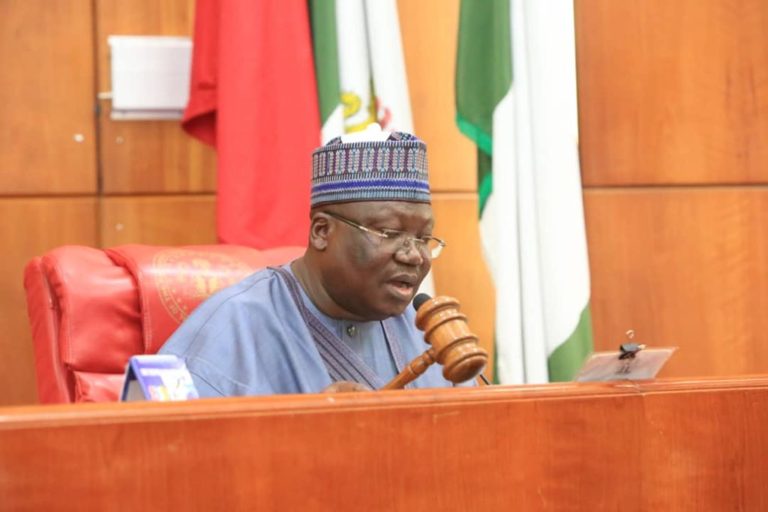
At Wednesday’s plenary, Senate President Ahmed Lawan announced that only those involved in the actual preparation of the budget should accompany Buhari for the event.
Buhari is expected to present the 2021 budget to a joint session of the National Assembly tomorrow (Thursday).
Outlining the National Assembly’s plans for the budget presentation ceremony, the Senate President said, “This time around because of the situation of COVID-19 pandemic, we have made arrangements to observe social distancing in the chamber.
“We also have to wear or face masks mandatorily. We are going to also abridge the entire event because we will be many there.
“So the entire event will last just about an hour. From the entry of the President into the chamber and addresses and the presentation and laying will be just an hour event.
“This is done so that we would be able to comply with the requirements of the COVID-19 protocol.
“Mr. President this time around will not be accompanied by many people on the entourage.
“Only a few people – very key and relevant to the budget – will accompany Mr. President into the chamber. I think by the arrangement those of them that have little to do with the budget will join virtually what will happen.”
The National Assembly’s call for a lean presidential entourage for the budget presentation ceremony might have been informed by a need for social distancing, in compliance with COVID-19 prevention guidelines, but it has also highlighted the need to drastically reduce the huge of governance in the country – a need that has become very urgent against the backdrop of dwindling revenue and spiralling public debt.
Over the years, successive governments have identified the obvious need to reduce the cost of governance, but they all ended up paying lip service to the issue, while at the same time, taking actions that further worsened the situation.
Despite trillions accruing to the country as revenue from oil each year, Nigerians are still confronted with inadequate infrastructure and a major reason for the situation is the fact that most of the country’s funds go into recurrent expenditure, such as payment of salaries and allowances, purchase of vehicles, accommodation, medical expenses and others.
And in a country where political office comes with mind-boggling perks, including wardrobe, furniture and vehicle allowances, it is not surprising that recurrent expenditure, which takes us a greater proportion of annual budgets, will continue to increase of political office holders appoint numerous aides into even unnecessary positions just to service political patronage.
In the revised 2020 budget, out of the N10.8 trillion budgeted by the Federal Government, N4.9 trillion – the largest share of the budget – went to recurrent expenditure while capital expenditure got just N2.4 trillion – less than 50 percent of the amount allocated for recurrent expenditure.
Interestingly, N2.9 trillion – more than the amount voted for capital expenditure – was earmarked for debt servicing.
It was a similar tale in 2019, when, out of the N8.91 trillion Federal Government budget, N4.05 trillion went to recurrent expenditure leaving just N2.09 trillion for capital expenditure.
This is despite the fact that the Federal Government claims that most of the borrowings made in recent times, which has taken the country’s total public debt portfolio to about N31.01 trillion, as at June 2020, was to fund capital projects.
While campaigning before the 2015 presidential election, the All Progressives Congress had, in its manifesto promised to have a leaner government bureaucracy when elected into office but, since 2015, it’s administration led by President Muhammadu Buhari, has not fulfilled the promise. Rather, Buhari has actually done the opposite – when he named his cabinet in 2019, he created five new ministers and appointed ministers for each of them, thereby increasing the cost of governance by enlarging the size of the bureaucracy.
The constitution stipulated that each of the country’s 36 states must have a minister, but, at the moment Buhari has 44 ministers. In most of the ministries, the Ministers of State are merely filling in positions without any practical roles assigned to them. And this situation extends to countless aides, whose remunerations contribute to bloating the cost of governance without any measurable benefit to the country.
Hopes that the longstanding problem of the huge cost of governance would be addressed once and for all were raised when, on the occasion of the Democracy Day on June 12, 2020, Buhari promised that the White Paper on the rationalisation of government parastatals and agencies would be reviewed for implementation.
The White Paper, also known as the Oronsaye Report, was the report of the Presidential Committee on Restructuring and Rationalisation of Federal Government Parastatals, Commissions and Agencies, under the chairmanship of Mr. Steve Oronsaye, which was set up by former President Goodluck Jonathan in 2011.
The 800-page report contained far-reaching recommendations on ministries, departments and agencies of the Federal Government that should be scrapped, those to be merged and those to become self-funding, in order to free funds for much needed capital projects across the country.
While Buhari’s pronouncement that the White Paper would be finally implemented is yet to materialise, the government’s body language suggests that it is still business as usual and even more new agencies are to be created.
Despite misgivings over duplications in the functions of the anti-corruption agencies – the Economic and Financial Crimes Commission and the Independent Corrupt Practices and other related offences Commission, as well as the police, the Federal Executive Council in September approved a bill that seeks to, among other things, create a new agency that will be saddled with the responsibility of managing proceeds of crimes in the country. The proposed agency is, from the title of the bill, to be known as ‘Proceeds of Crime Recovery and Management Agency’. By the time the agency becomes functional, it will have its own personnel, require office accommodation and other logistics, all of which would further bloat the cost of governance by bloating the Federal Government’s recurrent expenditure.
As of May 2020, there were about 142 presidential aides attached to the President, his wife, the Vice President, the Vice President’s wife, and the President’s Chief of Staff. The list includes about eight Special Advisers to the President, 55 Senior Special Assistants, 64 Special Assistants, and 15 Personal Assistants.
Ministers also have their own aides, and in fact, even aides have been known to also have a retinue of aides.
In normal situations, nearly all the presidential aides would accompany the President to major events, such as the budget presentation and the large entourage that would be brought about by the development would become a major burden for security agents, who in their overzealous quest to protect the ‘VIPs’, end up harassing ‘ordinary’ people.
The large fleet of expensive vehicles that form the convoys of major public office holders, particularly those of the President, state governors, and principal officers of the National Assembly, as well as military chiefs, is another factor that bloats the cost of governance in the country.
These large convoys could be done away with if the social distancing requirement of the COVID -19 prevention guidelines is adopted as the tradition in the post-COVID -19 era.
SAVE for an elderly man and a little boy, no older than 10 years old sheltering from the smothering sun, the open-air trampoline roofed shack was almost empty.
Four months ago, Olayemi Oluwafemi, 35, a welder, would has been seen at the shack, cutting and soldering together iron rods for burglar-proof doors and gates, which were a popular order from his clientele.
The ear-splitting noise from his rickety 3.5kVA petrol-powered generator indicates that residents of Kwamba in Suleja, Niger State, were without electrical power supply, again.
Oluwafemi, a father of four, was running his welding business in Suleja at a loss. He was spending N1,000, One thousand nairas ($2.60) daily to purchase petrol to power his welding machine because electricity from the national grid comes up only for two hours daily.
He barely makes a weekly profit of N10,000 ($26.04). A hard pill for him to swallow, considering he pays N10,000 monthly for electricity consumed from the national grid.
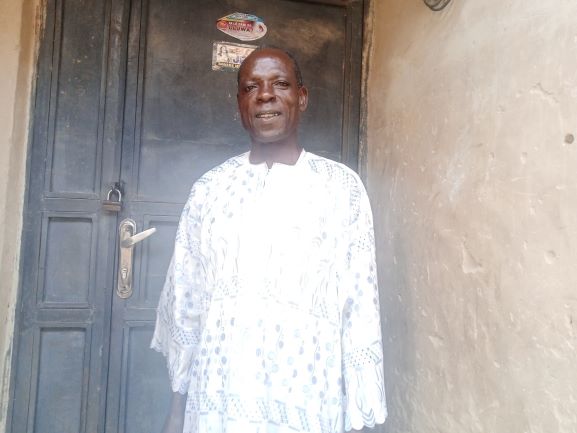
Olayemi Oluwafemi, 37, relocated from Suleja to Abuja due to inconsistent power supply.
During the COVID-19 pandemic, his flow of customers from Suleja slowed down to a trickle. This prompted him to tag along with some of his friends to look for welding job opportunities in Abuja, Nigeria’s capital city– 30 kilometres from home.
The interstate lockdown at the time led to a price hike in the transport fare, which made it financially difficult for him to commute from Suleja to Abuja weekly in his quest for new opportunities.
After shuttling between both cities, while working for some clients in Abuja he packed up shop in Suleja, permanently relocating his workshop to Abuja while his family stayed back in Niger State.
“If I was going to train my children with this work, staying in Abuja permanently was the sensible option. Besides in Kwamba here, I was spending over N1,000 daily on fuel, and that doesn’t stop the electricity company from charging me N10,000 for the estimated electricity bill every month,” he said.
Since he relocated to Abuja, the welder only sees his kids on the weekends when he visits home.
The city of dams, darkness, and dirty alternatives
Niger state is home to three of Nigeria’s largest hydroelectric generation dams—Kainji, Jebba and Shiroro constructed in 1968, 1985, 1990 respectively. A fourth dam is currently under construction.
The ride from Suleja to Abuja takes barely an hour and 30 minutes. Because of its proximity to the Federal Capital Territory, it is easy to erroneously assume Suleja enjoys constant power supply, just as the FCT.
However, the rural city is often plunged into days of darkness with no electrical power. On such days, small enterprises such as a beauty salon run by Ogbuanohs that rely solely on electricity to run their businesses are left to grope in the dark.
Ogbuanoh, 18, had a piece of paper on her hands with which she fanned herself and her sister Blessing Ogbuanoh, 38, at intervals.
The Ogbuanoh sisters run a beauty hair salon on Old Nepa Road, Suleja. For the next 10 hours, this section of the town will be in a blackout.
The electricity distribution companies (Discos) are rationing electricity supply and the shops on this lane will have to wait their turn.
The electricity power supply had been interrupted since 11 am that morning, barely two hours after it was restored and the stylists had no option but to generate their electricity for business.
And the two sisters are not the kind to let a walk-in customer leave without a hair wash and a dry. In a few minutes, the loud hum of their genset will contribute more noise to the already uproarious plaza.
To make up for the N15,000 ($39.06) monthly petrol expenses, customers are charged more for the extra service.
Over the two decades since Blessing Ogbuanoh, a mother of two has been a stylist, generating energy for her hair salon has never been as financially burdensome as the past few years.
Blessing and Ruth Ogbuanoh, Hairstylist &Beautician. Photo credit, JENNIFER UGWA
Per annum, she spends around N180,000 ($468.75) on petrol alone. This sum is higher than her yearly rent.
“I pay N150,000 ($390.62) for my shop rent and N5,000 ($13.02) as an estimated electricity bill every month.
“Thankfully, my customers understand the situation so the complaint is minimal when I ask for the extra electricity charge when I use the power while I make their hair,” she said.
Put together, all three functioning dams in Niger State supply a combined 1,900 megawatts of power to the national grid.
‘They have tried’, referring to Discos, is now a normal comment. The tongue-in-cheek remark is never far from the lips of residents and businesses upon the interruption of electrical power on the rare occasions that more than three hours of power is supplied.
According to the Nigerian Bureau of Statistics, SMEs contribute to about 50 percent of the country’s Gross Domestic Product, GDP. A 2019 report by PricewaterhouseCoopers, PWC only 772,441 commercial ventures are consumers of electricity in Nigeria.
This is a small number compared to over 41.5 million SMEs operating in the country. It is assumed that the remaining 40 million businesses are either running their business using residential meters or entirely unmetered.
Only 3.39 million of 7.48 million households connected to distribution companies are metered according to PWC.
Hence, paying high estimated electricity bills has since become a financial burden that most Nigerians shoulder and this is no different for electricity-dependent businesses in Suleja.
No one listens to anyone
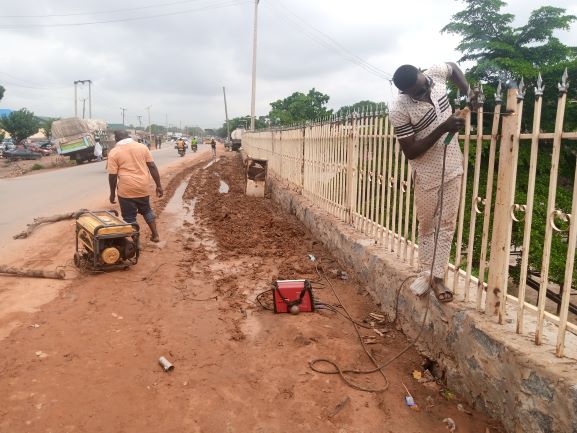
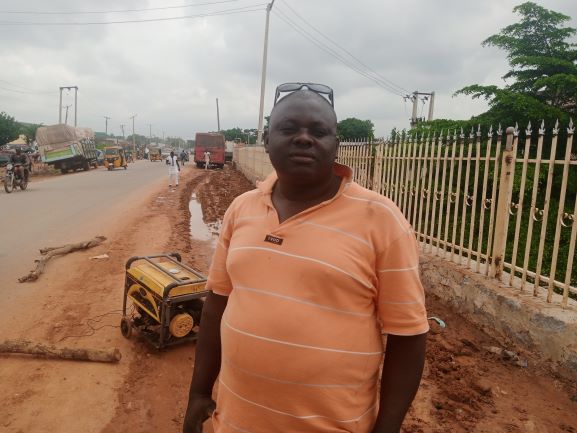
Just like his colleague Olufemi, who two months before he decided to relocate his business base to Abuja, Ade Ola, 46, works independently off the national grid.
Ola and his apprentice at work. Photo Credit, JENNIFER UGWA
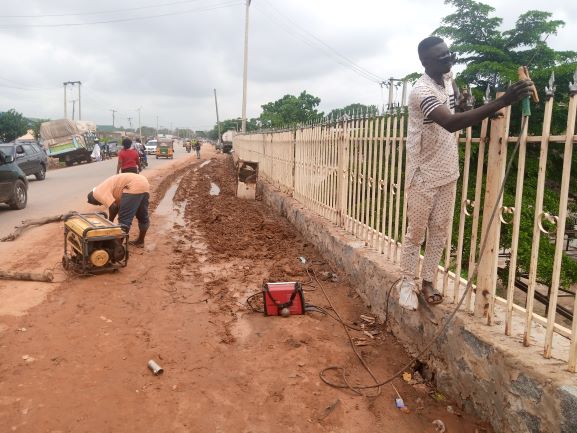
Ola and his apprentice at work. Photo Credit, JENNIFER UGWA (2)
Ola Ade, Welder in Suleja, Niger state, Photo credit, JENNIFER UGWA
Today he is seen assisted by an apprentice while he makes haste to keep to the allotted number of days his new secured welding contract allowed.
Ola was contracted to fix a series of aesthetically pine-shaped rods on the outer fence of Mac Hotel, a nondescript modern building on the outskirts of the city center.
He’s also going to be installing new poles for solar-powered street lights.
“We have already spent N1,500 ($3.91) on fuel today, and we are yet to meet the day’s target. The light is useless to me when it comes on, sometimes the voltage is too low for my welding equipment.
“A serious-minded government would help the people but this is Nigeria for you. No one listens to anyone.
“I am my own Disco. That is the only way to get this done,” Ola laughed.
He has been a welder for the past 27 years. After three days and no stable grid power, the duo is getting the work done with a Thermocool mini generating set running on what is supposed to be a walkway now covered in mud.
The World Health Organization linked outdoor air pollution associated with combustion, including generators, to an estimated 4.2millon premature deaths in both cities and rural areas in 2016 alone.
Despite the health and environmental risks of using Gensets, Nigerians spend $14 billion on generators and fuel annually, according to Ebrima Faal, African Development Bank (AfDB) in Nigeria.
Trading blames
The Nigerian energy sector was reformed in 2005. Since then, private companies can take part in the generation, transmission, and distribution of energy.
At the moment, 11 fully privatised distribution companies distribute power to the 36 states in the country.
Abuja Electricity Distribution Company, (AEDC) is responsible for distributing power to four of these states: Abuja, Kogi, Niger and Nasarawa, all in the north-central region.
Kainjidam.jpg Photo credit_ Ministry of water resources
Electric connections. PhotoCredit_ Rural Electrification Agency.
“The energy supply in Suleja is a reflection of what the majority of Nigerians are experiencing due to low power generation,” said Emmanuel Onemu, Office Manager Abuja (AEDC) in an interview with this reporter.
He acknowledged that the sector is limited by multiple challenges.
According to Onemu, Nigerians are kept away from reliable power supply due to a mix of low power generation, transmission and distribution, corruption, fund diversion, mismanagement on rural electrification projects, inadequate transmission equipment and energy theft.
“The three key levels in the energy sector are handled by different bodies. That makes it harder to achieve certain goals, and that’s why there’ll be certain bottlenecks that could hinder effective operation.
“The resultant effect will be that power will not always be regular,” he said.
Meanwhile, the official, who said he was not entirely familiar with the technical intrigues of the sector, said the systematic rationing of energy in Suleja was due to low power generation from the generating company and a limited number of transmission equipment.
“For instance, if there are 5,000 buildings and the capacity of the installed transformer within the locality cannot transmit the required amount of electrical energy to all 5,000 houses at the same time, instead of leaving all 5,000 in darkness, we can decide to supply power to 2,500 building for a few hours and then the next 2,500 for another few hours.
“It is what we call load-shedding,” he said.
The Disco official claimed that government policies and interference put distribution companies at a loss.
However, contrary to the Disco official claims, Engr. Ishaq Mohammed Lapai, Director for Energy and Power, Ministry of Works, Niger State in a phone interview with this reporter said the unstable power supply in the state “is a surprise to the Ministry”.
Rather he claimed that a major factor affecting constant energy supply in the state was the Discos’ unwillingness to invest and upgrade distribution equipment.
“Enough power is generated and transmitted, but they cannot distribute it efficiently. The government felt that the reform in the sector would yield new developments, but the opposite is the case,” he said.
Lapai claimed that despite a series of dialogues between the Disco and the government to rectify the erratic electricitysupply situation, no change is in view.
No leave, No transfer
Lapai is not the only one who feels that the privatisation of the sector limited energy distribution in Suleja.
“The Disco’s can decide to seize the power all day and restore it in the middle of the night by 11 pm to 1 am. And at that time, I won’t risk stepping out of my house even if I am being paid a million Naira. Automatically, no light means no work ” said Benjamin Omojesu, 57, electrical technician and a father of nine.
Benjamin Omojesus. Photocredit_ Jennifer Ugwa
Popularly known as “Baba No Problem” due to his interjections of ‘no problem’ in conversations, Omojesu has been an electrician for over 30 years.
In narrating the challenging ordeals brought on by lack of power in the city and the effects on his job, the electrician said the privatisation of the Nigerian Power Holding Company was a crippling move.
“There is more increase in payments and a decrease in consumption. It was when we had the National Electric Power Authority that Niger state had a better power supply.
“Now despite having functioning dams, we do not have a steady power supply,” the technical director of God’s Will Electrical Work complained.
The grandfather from Ondo who has made a life for himself in Suleja is not considering a permanent relocation to Nigeria’s federal capital but hopes to get contracts from Abuja.
He is not opposed to commuting from Suleja to Abuja for a few days’ job.
Taking a clean break
The recent increase in the prices of petroleum products in the post-COVID-19 era, made worse by the estimated billing systems of electricity-dependent businesses in Suleja, is pushing entrepreneurs to opt-out of the unfavourable status quo.
But some businesses, such as Barbers Gallery, are taking a more sustainable and healthy path.
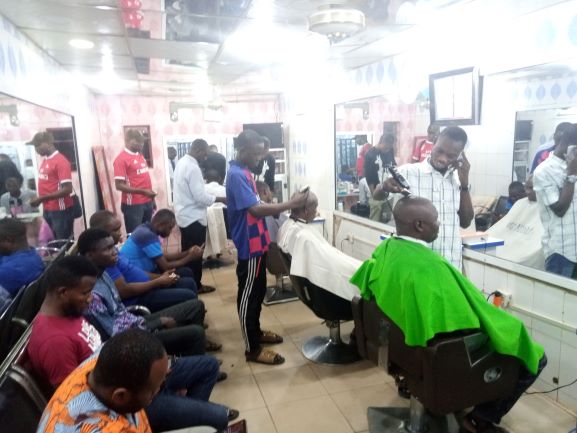
Tucked in a corner of the busy street leading to the Ibrahim Babangida International Market, the barber-shop is the only one of its kind that runs solely on solar energy in the area.
After trashing another generator two weeks ago due to technical issues; making it the fourth one in three years, Badamasi Aleey Zachery, 36, father of three and professional barber, knew that if he was going to keep running a customer satisfying establishment, it was time for an electric power upgrade.
And this time, he was going clean.
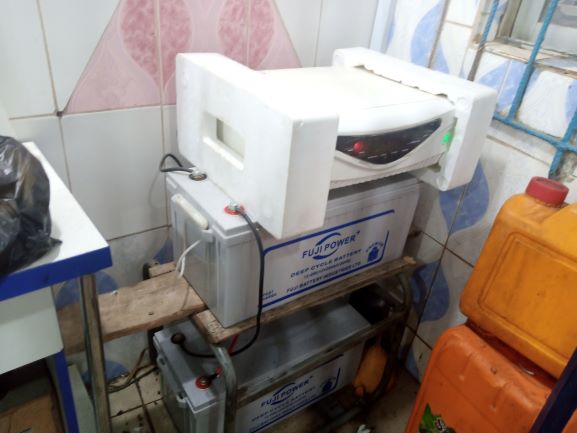
After days of deliberation with renewable energy consultants, Zachery had a solar hybrid inverter installed one week later. His new upgrade cost N600,000 ($1562.50).
“Despite payments of outrageous estimated electricity charges, there was nothing to show for it.”
“I did the math and realised that I was making massive losses. I have three boys that need food on their plates and I have bills to pay. A huge portion of my earnings was spent on fuel and fixing the generator.
“Disconnecting from the national grid is one of the best business decisions I made this year. Now I can breathe easy,” he said.
The barber told this reporter that, before, he spent a weekly total of N8,500 ($22.14), on fuel alone. In a year, Zachery would have spent N442,000 ($1137.81) on fuel alone. A sum that would pay his annual rent four times!
Nonetheless, with three apprentices and a recent boost in clientele that he attributed to his recent energy upgrade, Zachery is optimistic to make more than 50 percent of the amount it cost him to install the energy system by December.
Government policies and the renewable energy sector
In March when a bill to ban the importation of generators into Nigeria passed the first reading in the Senate, climate and health activists hailed the push by the lawmakers for laws on cleaner sources of energy.
However, until May 2020, a five per cent Value Added Tax and a heavy customs duty was still placed on the importation of solar panels into the country.
So, when the VAT waiver for a few renewable energy equipments was announced, it came as a relief for investors in the sector.
But even though the news may seem good, the list of exempted equipment excluded deep cycle solar batteries.
Deep cycle solar battery used by Zachery. –
Experts say this undermines Nigerian’s commitment to the 2015 Paris Climate Change Agreement, intrinsically connected to SDG goal 7; of achieving affordable and clean energy by 2030.
Engineer Paul James, Director Polar Advance Energy Solution Limited and former consultant on power to Nigeria on Millenium Goals, now Sustainable Development Goals bemoaned high taxes and customs duties on renewable energy equipment.
In an interview with this reporter, James said heavy importation charges will keep huge investments in the Nigerian renewable energy sector from serving its energy-starved populace.
“Whatever VAT they (government) claimed to have removed is a joke. There is no significant change. Instead, we are seeing an increase rather than a decline.
“Besides, the port officials find other means of billing investors.
“They are ready to take you for all you have if they have their way,” James said.
Also, he said the lacklustre attitude of the government in creating and implementing policies is a big setback within the renewable energy sector.
“The high cost of renewable energy equipment is due to the absence of a cost control regulatory agency. So everyone sells as they buy. I think we still have a long way to go,” he said.
This weekend, Oluwafemi is spending an hour away from his children again. But this time, he is within the neighborhood.
The welder had been called on by an old client upon his arrival from Abuja the previous day to fix a door lock for one of his old clients in Suleja.
He still has dreams of moving his business back home someday.
“My life is here, but this is just the way it has to be for now,” Oluwafemi said.
With only 12,000 MW of installed capacity out of which just 3,000 MW to 4,000 MW gets to end-users in a country of almost 200 million people, Suleja is not the only Nigerian city experiencing energy challenges as it is estimated that over 90 million Nigerians are not connected to the grid.
This story was supported under the African Energy reporting fellowship by Climate Tracker.
BABAGANA Zulum, Governor of Borno State, has charged the Nigerian Army to change its tactics to achieve more successful outcomes in its fight against Boko Haram terrorists in the North East.
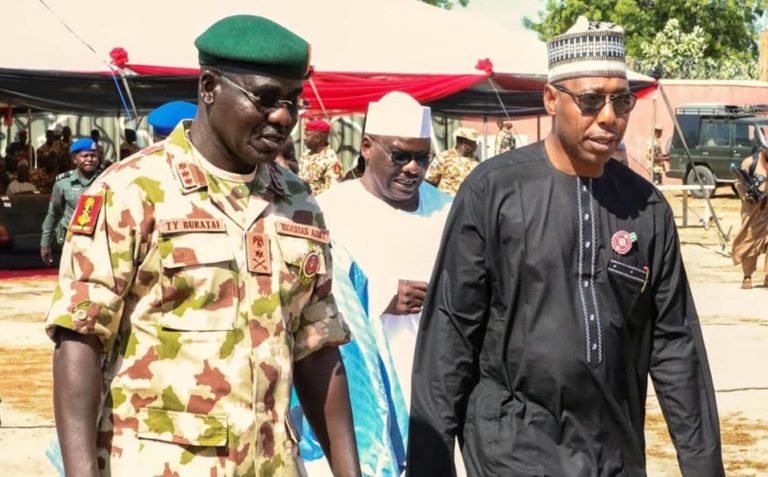
Zulumwho made the charge during the Chief of Army Staff quarterly meeting which was held in the state capital, Maiduguri, on Tuesday, added that the Army must also embark on confidence-building and sharing mechanisms with its host communities.
“The Nigerian Army must, therefore, take the war to all the hideouts of the Boko Haram Camp and surely should not wait and give the insurgents the opportunity of the first attack,” he said.
“Ladies and gentlemen, the Nigerian Army must also embark on confidence-building and confidence sharing mechanisms with communities and civil authorities.”
Speaking, Tukur Burutai, Chief of Army Staff, applauded the delivery of more equipment which according to him, would help in the prosecution of the war against terror.
Borno State has been the epi-centre of the terrorist attacks with the governor also coming under a series of attacks in recent times.
On September 27, while on his way out of Baga town after a two-day visit to receive indigenes of the town back home after 21 months of exile, the governor’s convoy was attacked.
Few kilometres away from Baga, unknown assailants believed to be Boko Haram opened fire on his escorts.
The attack happened barely 48 hours after his officials were ambushed on the same route while travelling to Baga.
At least 11 security personnel made up of eight policemen and three civilian JTF members were killed in the attack.
Saddened by the incident, which according to him, was the first in 18 months since he became governor, Zulum assured the wives of the slain officers of his commitment to supporting their livelihood and education of their children.
Nigerian Senators have on Wednesday condemned the recent misconducts of operatives of the Special Anti-Robbery Squad (SARS) of the Nigeria Police Force.
This followed a motion by the Senator representing Lagos Central, Oluremi Tinubu, on the need to check the culture of brutality by security operatives against Nigerians.
“SARS members are agents of corruption. They extort money from innocent people and lock people up arbitrarily. They are not VIOs; they will go ahead to ask for a driving license. That is not their function. They must face their functions.
“SARS has turned back against the nation. This is the right time to do something about them,” said George Sekibo representing Rivers East senatorial district.
Taking similar position, Sabi Abdullahi, senator representing Niger North senatorial district said: “the only difference between SARS and criminals is that they are holding AK47. Some very wicked Nigerians go to SARS to tell them to harass their fellow citizens’.
He added that the National Assembly must ensure that SARS has a rule of engagement that everyone is aware of.
Elisha Ishaku said the Inspector General of Police must come with a plan to reform SARS so they can look like decent law enforcement officers and not armed robbers in their dressing.
“These people go about killing people for no just reason. Once they suspect somebody, they chase and kill the person. It is unfortunate. You see these SARS people (sic) and you wonder if they are armed robbers,” he noted.
Philip Aduda commended the Abba Kyari group of the NPF, adding that they have shown commitment and loyalty “but all the others (special squads) have lived short of their responsibilities. I support this motion and we must ensure the lives of the citizens are safe”.
Speaking on the motion, the Senate President, Ahmad Lawam said “this is something that concerns our day-to-day lives and it is something that is all over the country. I think this is a situation that should be properly investigated those involved in the recent incidents should be arrested and prosecuted. Senator Oluremi Tinubu, thank you very much for bringing this motion”.
The Senate resolved to mandate the Committee on Judiciary, Human Rights and Legal Matters to investigate human rights abuses by Nigerian security agencies and urged the various security agencies to establish hotlines to enable Nigerians to report abuses by their agents.
Other resolutions of the Senate on the motion include: urging the various security agencies to establish a Special Bureau Unit that monitors the contacts of officers, arresting and charging erring ones, mandating the Committee on Police Affairs and Judiciary, Human Rights and Legal Matters to investigate allegation on extrajudicial killings and make recommendations, mandating the Committee on Police Affairs to organize stakeholders meeting to investigate the implementation of the Police Trust Fund.
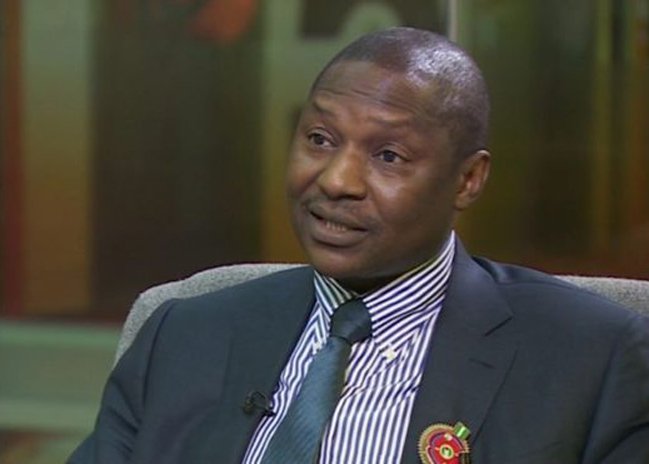
ABUBAKAR Malami, the Minister of Justice and Attorney-General of the Federation (AGF) has disclosed that a US-based court International Centre for Settlement of Investment Dispute has absolved Nigeria of a $1.5 billion suit by InterOcean Oil Company.
Malami made this known in a statement on Wednesday signed by Umar Gwandu, the Special Assistant on Media and Public Relations, Office of the Minister of Justice.
The tribunal absolved the Federal Government of Nigeria from any liability maintaining that Nigeria did not breach any of its obligations in the contract agreement with Interocean Development Company and InterOcean Oil Exploration Company.
“The tribunal finds no liability on the part of Respondent in connection with Claimants’ loss of control over their investment, Pan Ocean,” the statement quoted part of the judgment.
According to the statement, William Park, the Head of the U.S. based tribunal ordered InterOcean Oil Company to pay the Federal Government of Nigeria $660,129 as reimbursement of its share of the arbitration costs.
Gwandu said the judgment was an addition to the multiple success stories recorded in international litigations by the Federal Ministry of Justice.
According to NAN, a former Attorney General of Lagos State, Olasupo Shasore is among the legal team of the oil companies that requested the Nigerian Government to pay $1.5 billion damages.
The ICIR had reported how Shashore compromised Nigeria’s case against Process and Industrial Development (P&ID), a British engineering firm that has engaged the federal government in a legal tussle for years.
The Senate Committee on Anti-Corruption and Financial Crimes has charged the Economic Financial Crimes Commission (EFCC) to stop the media trial of persons under investigation, but conduct 90 per cent investigation before carrying out the arrest.
“Ninety per cent of investigation should be done before an arrest is effected,” said Suleiman Kwari, Chairman of the Committee on Tuesday, at the commencement of the 9th Senate Legislative Anti Corruption Strategy Implementation Session at the National Assembly Complex, Abuja.
“Media hype must stop. If you want to be effective forget the media, do the work and let your work speak for you.”
Kwari disclosed that the 9th Senate was determined to see that there was a constant flow of information and engagement between the Senate and the EFCC.
Aliyu Wamakko, Deputy Chairman of the Committee and former Governor of Sokoto State expressed concern on the Commission’s lean budgetary allocation for legal fees, noting that there must be adequate provision for legal fees in the EFCC budget for effective prosecutorial activities.
Addressing the Committee, Mohammed Umar Abba, the acting Chairman of the EFCC, noted that the Commission has earned the confidence and trust of Nigerians because of its unblemished professional disposition.
“The EFCC is doing remarkably well above all other law enforcement agencies in the country and that is why the UNODC and National Bureau of Statistics in the 2017 survey they conducted ranked EFCC as the most effective government agency in Nigeria,” Abba said.
He disclosed that the Commission has recorded 646 convictions and recovered over N11billion in monetary assets this year, despite the restriction imposed by the COVID-19 pandemic.
Reacting to the senators’ enquiry on the state of seized vehicles by the Commission, Abba expressed pain at the deteriorating state of assets in the custody of the EFCC.
“We are working on this challenge and I am sure the Attorney General of the Federation is coming out with a gazette so that this issue will be a thing of the past, not only vehicles, but landed properties,” he said.
He also weighed in on the worry of the legislators on the waning impact of the Whistle-blowing policy of the Federal Government.
Abba blamed the situation on mischief and misinformation by members of the public who turned it to a tool for settling personal scores.
“It is true that the whistle-blowing policy has gone down, unlike what it was at the beginning of the policy, where we received several reports from whistle-blowers. People started being mischievous with the policy. So we have to tread carefully as people turned it into a personal vendetta tool against individuals,” he said
He however revealed that the policy was being fine-tuned by the Ministry of Finance to make it more efficient.
The EFCC boss used the occasion to acquaint the legislators with the challenges confronting the agency.
These, according to him, include lack of adequate personnel and office accommodation, (especially in the Commission’s zonal offices); lack of internet facility; and Information and Communication Technology equipment, among others.
He canvassed for the support of the Committee in overcoming these challenges through appropriation.
Other members of the Senate committee present at the session were Senators Michael Nnaji, Aliyu Abubakar, Kola Balogun, Abba Moro, Abubakar Yusuf and Dauda Binos Yaroe.
AS the Ondo election draws closer, candidates contesting in the governorship election have on Tuesday gathered in Akure, Ondo State capital to sign a Peace Accord.
The candidates who signed the peace accord includes Rotimi Akeredolu of the All Progressives Congress (APC), Eyitayo Jegede of the People’s Democratic Party (PDP) and Agboola Ajayi who is contesting under the banner of Zenith Labour Party (ZLP).
The Peace Accord ceremony was organized by the National Peace Committee in preparation for the polls.
Giving his welcome address virtually, a former Nigeria’s military head of state, Abdulsalami Abubakar (Retired), says responsibility and accountability are key to promoting peaceful election.
He added that since 2015, NPC has contributed immensely to a peaceful election in Nigeria and nothing can be achieved without peace.
Mahmood Yakubu, chairman of the Independent National Electoral Commission (INEC) during his address said without peace, the credibility of the election would be undermined.
“Without peace, our deployment plans, new innovations in result management, the safety of personnel, the security of materials and above all, the credibility of elections will be undermined,” Yakubu said.
The Inspector-General of Police, Mohammed Adamu, represented by Adeleye Oyabade, emphasized that peace must be maintained before, during and after the Ondo election.
Muhammad Sa’ad Abubakar, the Sultan of Sokoto, noted that the essence of the Peace Accord by the governorship candidates is that it reaffirms that the candidates must conduct themselves in a professional and peaceful manner.
“Youth, do not be vulnerable to the political manoeuvring of the politicians. Their children will not join you. There is no life that is so cheap as millions of dollars. So cast your vote and ensure that your vote counts,” Sultan added.
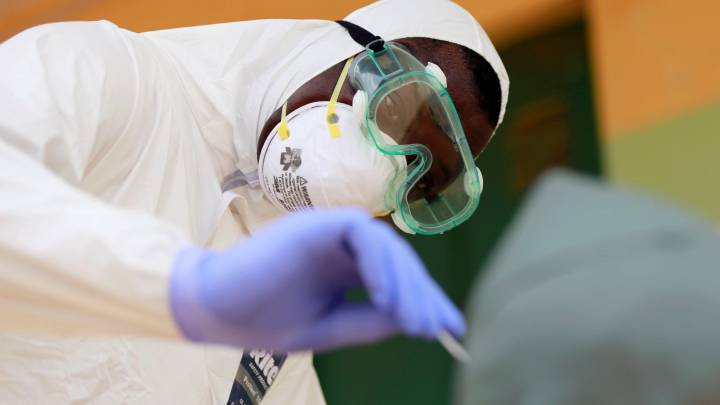
OLAOLUWA Oluwo, 27, confirmed her suspicions in June that she had contracted the coronavirus after the medical result of a COVID-19 test she took at the Lagos University Teaching Hospital, LUTH revealed she was positive.
Before Oluwo went for the test, she was already battling with an asthmatic condition but in early June she could barely perceive the aroma of the food she ate or the fragrance of her body spray.
She also noticed an unusual discomfort whenever she attempts to breathe as the rush of air through her lungs leaves a sharp pain that made breathing a difficult task. Along with the severe fatigue and constant headaches she felt, Oluwo blamed her stress on the Lagos traffic.
“I was not sure what was wrong with me until I started reading about symptoms of COVID-19 online which made me doubt if what I was feeling was mere fever until my health started deteriorating with each passing day,” she said.
After she took the COVID-19 test, an official of the COVID-19 team had asked her to return in two days for the result but after visiting the hospital three times later that week, she was still told the result of her test was not yet ready and this made her very anxious.
Most Nigerians who had been tested for COVID-19 do not get to know the outcome of their tests results or taken into isolation centres, according to a Cable undercover investigation.
However, but through the intervention of a senior health official at LUTH she finally confirmed her worst fear that she was COVID-19 positive.
An official of the Nigeria Centre for Disease Control, NCDC contacted Oluwo on phone three days later, enquiring about her welfare assuring her the NCDC would take her into an isolation centre for further treatment and monitoring.
That day never arrived, despite the repeated calls, she placed to the NCDC helpline for several weeks they never responded or called in to take her into the isolation centre.
“I could not self-quarantine at home effectively because my sibling would always invade my space and the NCDC officials never answered my calls so I had to resort to taking my destiny in my own hands by taking malaria drugs.
Despite the absence of conclusive scientific evidence to support the use of malaria drugs for COVID-19 treatment, she decided to take a chance on it.
“It hasn’t been easy taking the necessary precautions of wearing masks and social distancing for me because people rarely adhere to these rules but the speed of my recovery has surprised me even without taking another test to confirm my status. My breathing is currently normal and I am doing great without fever or complications,” she said.
Thousands of Nigerians infected with COVID-19 like Oluwo may have resorted to self-medication, but the low recorded rates of COVID-19fatalities in the country tells an entirely different story.
As several Nigerians have abandoned social distancing and wearing of masks that saw moderate compliance in the early months of the outbreak.
Doomsday predictions proved wrong
As the virus ravaged other parts of the world, Nigeria propped up for the worst impact of the pandemic, ramping up ventilators, stockpiling protective equipment and building isolation centres as it prepared for a potential health crisis.
The World Health Organisation, WHO in a predictive model study published in August had stated that countries with a population ranging from 29 to 44 million people could be infected and between 83,000 and 190,000 Africans could die of Covid-19 if it was not controlled.
A similar prediction by the United Nations, UN, in April also projected that without adequate intervention, about 300, 000 Africans were likely to die from the virus social distancing and wearing of masks were in place.
Contrary to the predictions, Africa’s fatality rates stand at 2.4 per cent with an estimated 35,000 deaths with more than 1.4 million people infected with COVID-19 based on data obtained from WHO dashboard on COVID-19.
The percentage death rates on the African continent from COVID-19 is low when compared to North America which has a fatality rate at 2.9 per cent and Europe whose percentage death rates is pegged at 4.5 per cent.
Also, the worst-hit countries in Europe which include Italy and Britain both have fatality rates at 11.6 per cent and 9.0 per cent respectively. South Africa is Africa’s worst-hit country with a fatality rate of 2.4 per cent while pales in comparison to Ethiopia’s COVID-19 death rate at 1.6 per cent and Nigeria at 1.9 per cent.
A study published in the Scientific World Journal says the low rates in Nigeria could be partly because of the relatively young population where more than 60 per cent are under the age of 25.
Experts also say expertise in epidemic control from tackling other outbreaks, cross-immunity from other coronaviruses, low travel and outdoor living could also be contributing to Africa coping better.
In terms of the proportion of people who get Covid-19 that go on to die, there were 12 African countries with rates comparable with or higher than the global average rate of 3 per cent as of October, 1.
An unanswered question
Data obtained from Our World in Data, a UK project that collates Covid-19 information revealed that Africa accounts for 4.4 per cent of COVID-19 global cases and 3.6 per cent of the total deaths globally, despite, the low testing rates.
John Nkengasong, Director General of the African Center for Disease Control, CDC, he warned that Africa is not out of the woods despite the low fatality rates.
“I don’t think we are over the first wave yet, we have not yet hit the bottom at all,” he said in a report.
Nigeria had carried out 2.5 tests per 1,000 people by September 29, while Kenya had done 10 tests per 1000 people by September, 28.
On September 30, South Africa was conducting 71 tests per 1,000 people, but that pales into insignificance when compared with 305 tests per 1000 people in the UK or the US with 342 tests per 1000 people as of September, 27.
Speaking to The ICIR, Chikwe Iheakweazu, Director General of the Nigeria Center for Disease Control, NCDC, said it was too early to assume the coronavirus was a thing of the past in the country because the Nigerians were not experiencing the virus en masse.
“The epidemiological situation in Nigeria varies across states. In some states like Lagos and Kaduna, testing has continued at a high rate but the number of people who test positive has reduced. However, in most other states, the rate of testing has declined as a result of poor demand for testing.
“Therefore, it is still too early to reach a conclusion on the overall epidemiological situation in the entire country. Some countries that recorded a decline a few months ago have begun to record a spike,” he said.
Nigeria has a poor record on health spending which is ussually less than 3 per cent of its GDP, however, the Federal Government has spent N30.5 billion on its COVID-19 emergency response between April to June from a total of N36.3 billion received from donations, according to a report.
“We are working very closely with all states to increase both demand for and access to testing. Many states are setting up more sample collection sites so that Nigerians can be encouraged to get tested if they have symptoms or are at risk due to contact with a confirmed case,” Iheakweazu said.
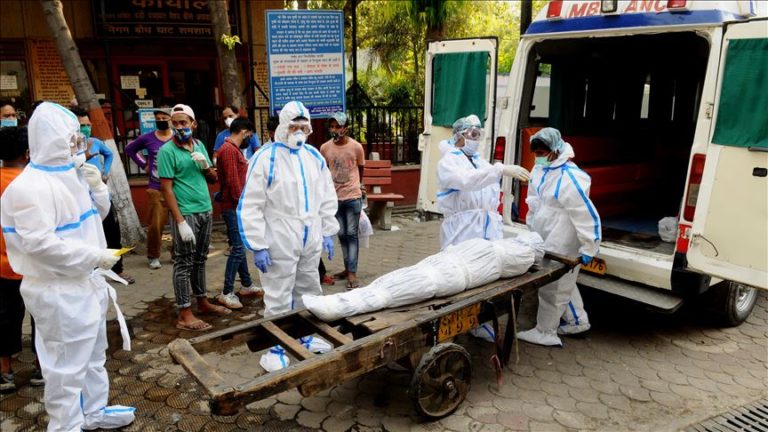
IN 24 hours, India has recorded a total of 884 deaths from the COVID-19, the World Health Organisation (WHO) database of the global pandemic has revealed.
So far, India has recorded a total of 6,685,082 cases and has had more than 100, 000 COVID-19 related deaths in the country.
In September, the country recorded 97,894 new COVID-19 cases and 1,132 deaths in just 24 hours.
Maharashtra, the second largest state in India has the highest number of cases and death in the country as 1.44 million persons have been infected, 1.15 million have recovered while 38,084 have died of the virus.