THE Bayelsa State Government has taken steps to end ongoing strike by Resident Doctors at the state government owned Niger Delta University Teaching Hospital (NDUTH), Okolobiri, the resident doctors’ association said.
The doctors said they have yet to resume from the indefinite strike called off on Sunday by the national body of their association over several outstanding issues tabled before the government.
Dr Oru Oru Inetsol, President of Bayelsa State chapter of Association of Resident Doctors on Tuesday disclosed that Bayelsa government was in talks with the leadership of the resident doctors to resolve the labour dispute.
He noted that following the goodwill shown by the government in the negotiations, the resident doctors deployed to the COVID-19 isolation centre were rendering services.
“The Bayelsa Deputy Governor and the Speaker of the House of Assembly led the government team that met with us on Monday and we are making progress with the negotiations,” Inetsol said.
“Our grievances are beyond hazard allowances and conditions of service but stretch into the general health sector. But we are hopeful of a resolution from the ongoing dialogue.”
The leadership of National Association of Resident Doctors (NARD) had on Sunday directed its members across the country to return to work as the Federal Government said it has cleared outstanding hazard allowances among others.
The Niger Delta University Teaching Hospital (NDUTH) hosts the 100-bed capacity COVID-19 Isolation Centre located at the outskirts of Yenagoa, Bayelsa capital.
Bayelsa has recorded 117 confirmed cases of COVID-19, with 137 active cases, 29 recoveries and 11 deaths with less than 200 bed isolation capacity.
However, at the Federal Medical Centre, Yenagoa normalcy was gradually returning as many patients were receiving medial attention.
Dr Ebidimie-Divine Irole, President of ARD at the hospital said that work was gradually returning to normal pace as the doctors have returned to work as directed by the national leadership of resident doctors.
“We have all resumed work and you can see that patients are gradually returning to the hospital and are receiving services,” Irole said
“We are optimistic that the federal government would reciprocate the gesture and offset the hazard allowance as earlier pledged.”
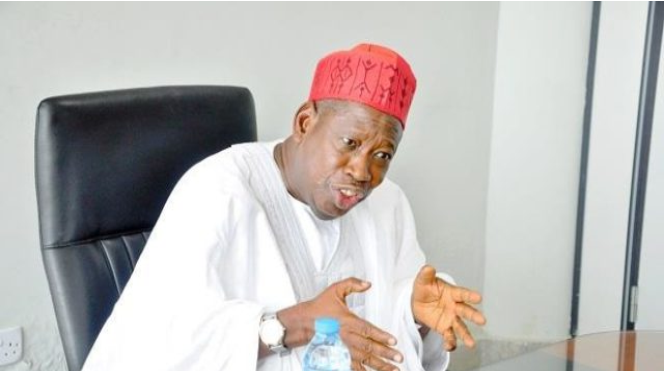
ABDULLAHI Ganduje, Governor of Kano State on Tuesday says the state government has discovered three categories of students in the state who are learning under the Islamic education popularly known as Almajiri.
“We found out we have three categories of Almajiris in Kano – those that belong to Kano state, those from other states and those that don’t know where they come from,” Ganduje said during a virtual meeting on Alternate Pathways and Future of Almajiri Children in Kano, organised by the United Nations Children’s Fund (UNICEF).
Ganduje stated that the discovery followed a census conducted in the state by his administration as part of plans to reform the Almajiri students.
“In the Northern Governors Forum, while discussing the issue of insecurity in northern Nigeria, the issue of Almajiri came up and we took our decision to reform the Almajiri. Here in Kano, we decided to carry out a census to build up our data,” he said.
Almajiranci is a system of Islamic education practiced in Northern Nigeria, in which a person migrates his home in search of Islamic knowledge. The system encourages parents to leave parental responsibilities to the attached Islamic school.
But in his submission, the governor emphasised that these children, known as Almajirai have a right to education and parental care, adding that plans are underway to create a program to cater for them.
“These children have a right to be educated, protected and a right to be with their parents. We are trying to create a sustainable program, so even when we leave office the program will still be sustained,” Ganduje said.
While noting that Almajari children are easy recruits for Boko Haram and bandits, the governor said tackling the problem of Almajiri would also mean tackling the issue of insecurity.
“Yes, the Almajiri are easier recruits for BokoHaram and bandits. By tackling the problems of Almajiri, we are also tackling the issue of insecurity,” he said.
On education, Ganduje revealed that his administration’s most recent policy is focused on girl-education, saying, “Our new policy on education is taking care of the girl-child.”
He added that education in Kano is now free, in order for people not to be marginalized.
“Education in Kano is now compulsory from primary to secondary. Compulsory education is now included in the law,” the governor said.
While saying that the state government has created new schools and also recruiting teachers, Ganduje added that the administration has given room for those who wish to continue the Almajiri system, but they must make room for; curriculum, accommodation, feeding and health facilities fior the students.
“It’s a vicious cycle! The parents are illiterates, the children follow suit and are also illiterate. We are breaking that cycle by making education compulsory for all children.”
Speaking also during the meeting, Peter Hawkins, UNICEF Nigeria Representative stressed the need to enhance the social protection element, increase livelihood, identify and reintegrate the Almajiri children with their families.
“We need to improve education. Education is a simple concept; girl + boy + teacher = education. It is about valuing those teachers. Why don’t we start a program of valuing teachers and showing the communities how valuable they are,” Hawkins said.
He stated that girls’ education is so critical saying,” We must not leave the girls behind.”
“With the COVID-19 lockdown, this is a period to skill up the teachers, bring the girls & boys back to school, give them access to education. It’s about the ability to value what they will learn.”
Hawkins lamented that Kano State is one of those states that have not domesticated the Child Right Act.
“Kano has not yet domesticated the Child Rights Act. The act defines the rights of a child, parents, communities and government in fulfilling the rights of that child,” he said.
According to a fact sheet presented by Mutaka Muktarthat, UNICEF’s Education Specialist, Kano ranks highest in the population of out of school children in the country, with a total number of 1,496,736, children not enrolled in schools.
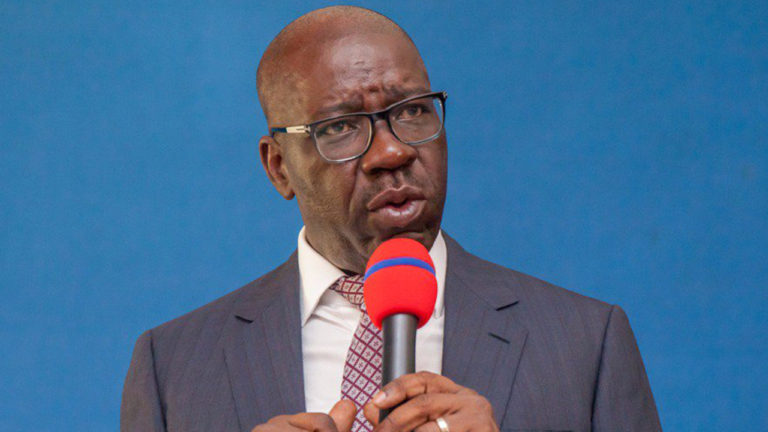
DADDY D.O, a Twitter user with the username @DOlusegun, on Monday posted a document at exactly 11:51 pm with the claim that a Federal High Court sitting in Port Harcourt has restrained Godwin Obaseki, the incumbent Edo state governor, from participating in the Peoples’ Democratic Party’s gubernatorial primaries in the state.
In the past 11 hours, his post has garnered over 300 retweets and 500 ‘likes’ respectively.
The ICIR investigation also showed that the post has garnered 1,012,832 views as the time of filing this report.
In the last 7 hours, more than 6 popular Nigerian newspapers including Sahara Reporters, Vanguard, TheNation, TheCable, DailyPost, amongst others, have also reported on Tuesday that Obaseki was restrained from contesting the party’s primary election.
The Findings
The ICIR examined the same reported document, with suit number FHC/PH/CS/69/2020, and discovered that the Federal High Court sitting in Port Harcourt, Rivers State, only ordered “accelerated hearing” of the suit seeking to stop Governor Obaseki from participating in the Edo PDP’s primary election slated for Thursday.
The suit in question was filed on Monday by Omoregie Ogbeide-Ihama, One of the PDP governorship aspirants in Edo State. Prior to the court order, Ogbeide-Ihama has vowed not to step down for Obaseki after Gideon Ikhine, another aspirant, withdrew from the race.
On the first page of the document, the suit has Uche Secondus, National Chairman of the PDP, as the first defendant. Other defendants are Emmanuel Ogidi, Kingsley Chinda, Debekeme, James Manager, Ajibola Muraina, the PDP, Obaseki and the Independent National Electoral Commission (INEC) as second to ninth defendants respectively.
Ogbeide-Ihama, through his lawyers, Donald Denwigwe (SAN) and Chief F. Orbih, SAN, and leader of PDP in Edo State, had prayed the court to stop Obaseki because his defection to the party, a few days to the primary, was unreasonable and aimed at destabilising other aspirants.
The plaintiff also prayed the court to order the Independent National Electoral Commission, INEC, from recognising Obaseki as a candidate in the party’s primary.
According to TheNigeriaLawyer.com, the judge allowed the Plaintiff to serve the parties through substituted means in two national dailies and adjourned till June 24 for the hearing of the summon.
The judge ordered that the processes be served on Secondus, Ogidi, Chinda, Obaseki, and the PDP.
However, the court presided over by Justice E. A. Obile, after listening to the prayers of Denwigwe and Orbih, refused to grant the order stopping defendants, Obaseki or any member or non-member of the party other than those that have purchased forms and were screened within the time stated in the timetable from contesting for Thursday’s primary.
Lekan Bello, a legal practitioner, told The ICIR that the first paragraph of the order which is conspicuously missing in the pictures posted by the said Daddy D.O raises a serious doubt as to whether an order was granted restraining Governor Obaseki from participating in the party’s primaries.
He further explained that the first page in the pictures shows only the prayer of the plaintiff before the court and not the order of the court.
Also, The ICIR checks revealed that a page is missing in the document which caused sentence-break on the first page and the subsequent ones. The first page ends with “from further recognising and/ or” while the succeeding page starts with “2nd defendant, Emmanuel Ogidi.”
The Verdict
The court has, however, adjourned the case till Wednesday, 24th of June, to hear the motion on notice and did not restrain Obaseki from contesting under the party. The reports are FALSE.
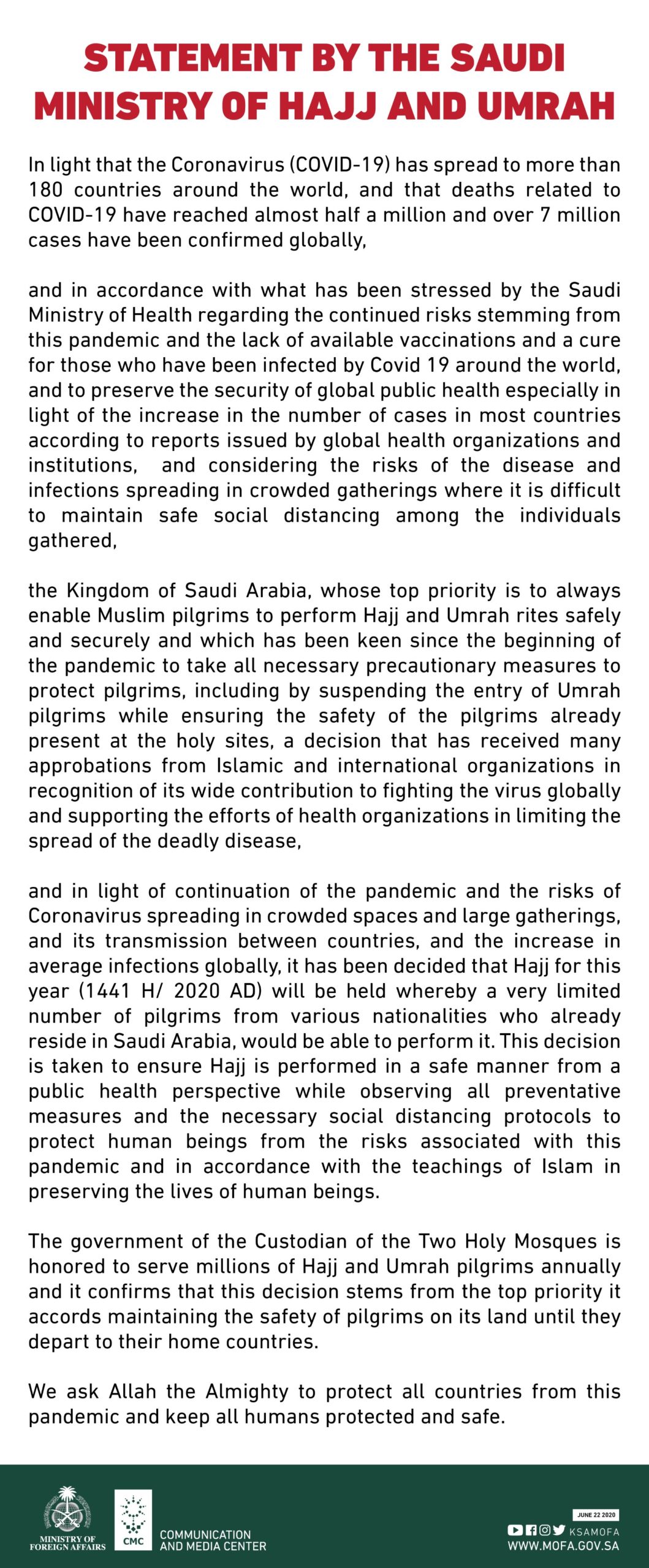
NO Nigerian will travel this year to Saudi Arabia for the annual Hajj exercise, a statement by the Saudi Arabia Ministry of Hajj and Umrah has indicated.
Saudi Arabia on Monday disclosed that it would only allow a very limited number of pilgrims from various nationalities who already reside in the kingdom to perform the Hajj and Umrah rites this year due to the Coronavirus pandemic.
This it said in a statement released on its official Foreign Affairs Twitter page was put in place to curb the spread of the COVID-19, noting that its top priority is to ensure the safety of pilgrims in order for hajj to be performed in a safe manner from public health perspective while observing social distancing protocols.
It further revealed that this decision was advised from the country’s Ministry of Health regarding the continued risks stemming from the pandemic and the lack of any available vaccinations and a cure for those who have been infected around the world, it was necessary to preserve the security of global public health.
The Saudi authorities had earlier suspended the entry of Umrah pilgrims to ensure the safety of pilgrims already at the holy sites, an action it disclosed was as a result of its top priority to always enable Muslims to perform the Hajj and Umrah rites safely.
According to Arab News, Saudi Arabia’s Ministers of Hajj and Heath have assured the safety of pilgrims during Hajj 2020 – announcing guidelines including age restrictions, social distancing measures among others at a press conference held on Tuesday.
Mohammad Benten, Saudi Hajj Minister said the plan for this year’s pilgrimage has been outlined with the Ministry of Health, in accordance with coronavirus precautionary measures.
Tawfiq Al-Rabiah, Saudi Health Minister said the ministry has prepared a hospital in case of emergencies during the pilgrimage.
The number of pilgrims to be allowed to perform Hajj has not yet been finalized, Benten said.
Among the general guidelines announced during the press conference is limiting the pilgrimage to residents and citizens under 65 years old, as well as mandatory coronavirus testing and quarantine.
The National Hajj Commission of Nigeria (NAHCON) has not issued any official statement on this development. When contacted, Fatima Mustapha, spokesperson of the Commission was not available. Calls and SMS to her phone were not answered or replied.
On Saturday, the Commission revealed that it would not comprise the safety of Muslims as it waited for an official decision by the Saudi government on the 2020 hajj exercise.
Abdullahi Magaji, NAHCON Commissioner in charge of Operations, Licensing and Tour assured that the commission that health and safety and health of pilgrims would be highly considered in deciding its participation in the annual pilgrimage as life and health are paramount.
In 2018, the government of Saudi Arabia approved 95,000slots for Nigeria pilgrims for 2019 Hajj exercise. The allocation for 2019 indicated that Nigeria maintaine the quota enjoyed in 2018 exercise despite the inability to cover the slot.
But a total of 45, 450 Nigerians performed the 2019 hajj, according to report.
THE Gombe State government’s website (www.gombestate.gov.ng), is filled with outdated and inaccurate information, long after many changes occur, as findings show.
Despite Governor Muhammad Inuwa Yahya recently swears in Justice Mu’azu Pindiga, as the acting Chief judge, the state government website still recognises Justice Beatrice Iliya as the state Chief judge.
The website still lists Justice Beatrice Iliya as the acting Chief Judge, sworn in on September 3 , 2019.
In December, her tenure expires as acting CJ (three months). Again, Governor Muhammad Inuwa Yahya swears in Justice Mu’azu Pindiga as the new acting Chief judge since the national judicial council didn’t recommend Justice Beatrice Iliya for the appointment of Chief judge within the stipulated period.
Justice Pindiga replaces the former but the state government official website continues to show Justice Beatrice Iliya as the chief judge who heads the state high courts and many other functions assigned to chief Judge after six months.
After adequate findings, this newspaper notes that Justice Saad has retired months ago, but is yet to be updated on the state government official website which may lead to misinforming the readers.
Retired Justice Saad named as Justice Abubakar Jauro
Meanwhile, in the list of high court Justices, two different pictures appeared with the name of Justice Abubakar Jauro in the state government official website. Further findings show that the other person is Justice Saad and has retired last year, 2019. Months later, the state government didn’t update its website.
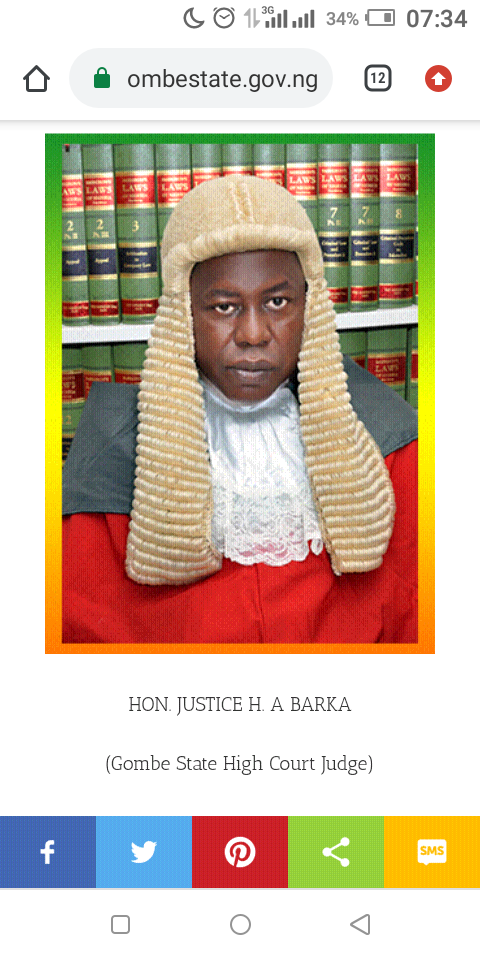
This newspaper understands that Justice H. A. Barka who is listed amongst the state high court judges has since joined the court of appeal, but the website still parades him as a high court judge.
Photo: Muhammad Auwal Ibrahim
This is not all. It has been noticed that the state government has made no announcement concerning the coronavirus pandemic in the state. The website seems to be last updated in 2019. Despite the fact that the state has recorded the highest number of confirmed cases on June 14, 2019, the state government’s website is yet to provide any information on the COVID-19 pandemic safety measures and the number of cases recorded.
The Gombe state government website was last updated on 9th November 2019, despite the risk of community transmission of the novel coronavirus, which broke out months ago in Wuhan, China, and has since killed fourteen people, with 479 confirmed cases and 215 cases currently on admission in the state.
For the state government, the website was last updated on November 9, 2019.
This newspaper observed that the state government has trimmed the number of state ministries on October 16 2019 from 27 to 21. Despite that, the website still lists 26 ministries.
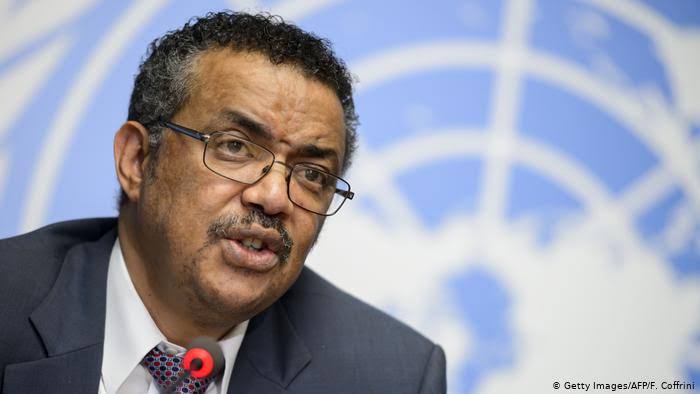
TEDROS Ghebreyesus, Director General of the World Health Organisation (WHO) has disclosed that dexamethasone, a type of corticosteroid medication, has life-saving potential for critically ill COVID-19 patients.
Ghebreyesus described the development as a breakthrough and a much needed reason to celebrate.
He shared the new development during a virtual briefing on COVID-19 from Geneva, Switzerland adding that the most immediate challenge is getting the medication equitably distributed worldwide.
“Although the data are still preliminary, the recent finding that the steroid dexamethasone has life-saving potential for critically ill COVID-19 patients gave us a much-needed reason to celebrate,” Ghebreyesus said.
According to him, there’s been a surge in demand, following the United Kingdom (UK) trial results showing dexamethasone’s clear benefit.
He, however, emphasized that dexamethasone should only be used for patients with severe or critical disease, submitting that there is no evidence that the drug works for patients with mild disease.
“WHO emphasizes that dexamethasone should only be used for patients with severe or critical disease, under close clinical supervision.
“There is no evidence this drug works for patients with mild disease or as a preventative measure, and it could cause harm,” he said.
Calling for action, Ghebreyesus advised that countries must work together to ensure supplies are prioritized for countries where there are large numbers of critically ill patients, and that supplies remain available to treat other diseases for which it is needed.
He added that suppliers should guarantee quality, as there is a high risk of substandard or falsified products entering the market.
Dexamethasone is a type of corticosteroid medication.
It is used in the treatment of many conditions, including rheumatic problems, a number of skin diseases, severe allergies, asthma, chronic obstructive lung disease, croup, brain swelling, eye pain following eye surgery, and along with antibiotics in tuberculosis.
BBC reports that in a trial, led by a team from Oxford University, about 2,000 hospital patients were given dexamethasone and compared with more than 4,000 who were not.
It was found that for patients on ventilators, it cut the risk of death from 40 percent to 28 percent and for patients needing oxygen, it cut the risk of death from 25 percent to 20 percent.
“This is the only drug so far that has been shown to reduce mortality – and it reduces it significantly. It’s a major breakthrough,” Peter Horby, a chief investigator said.
Currently, there are over 9.2 million confirmed coronavirus cases globally, with over 474,000 deaths, according to Worldometer.
Meanwhile, the WHO has said that the lack of global solidarity and leadership is worsening the Coronavirus (COVID-19) pandemic, adding that the politicisation has exacerbated the fight against the deadly virus.
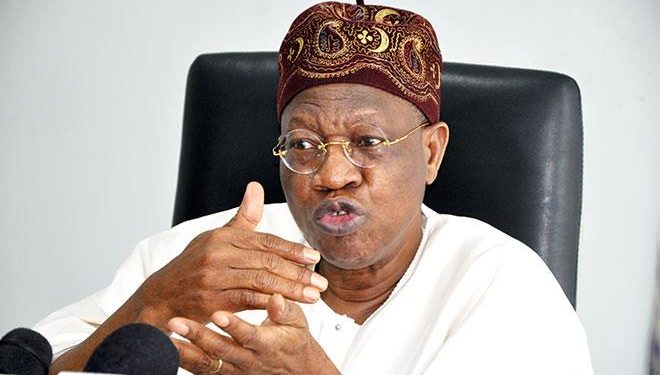
LAI Mohammed, Nigeria’s Minister of Information and Culture, on June 14 said the prevalence of insecurity in the country has ‘reduced considerably’ when compared with what was witnessed in 2019, Daily Trust has reported.
He disclosed this in Abuja while rolling out the achievements of the current administration’s second term in office.
Mohammed was specific about banditry and kidnapping.
He said though President Muhammadu Buhari-led government, of which he is a cabinet member, may not have completely wiped out the two insecurity challenges – banditry and kidnapping, he argued that they have significantly dropped in the country, unlike the previous year.
Since the minister made this claim, it has been reported by several media organisations.
The report, which was shared on the Twitter and Facebook pages of the Daily Trust with an aggregate 2.5 million followers, has generated 234 comments, among other reactions.
THE CLAIM
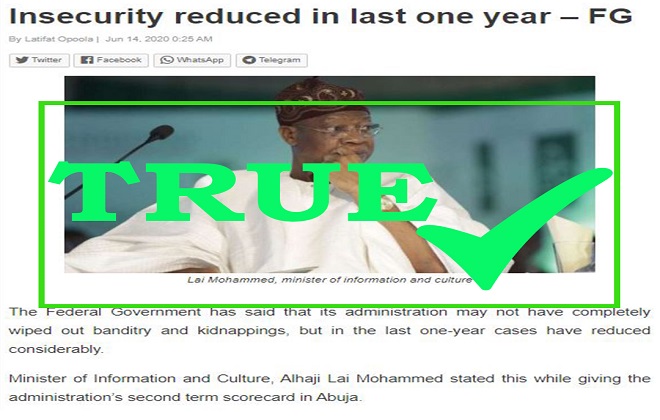
“The Federal Government has said its administration may not have completely wiped out banditry and kidnappings, but in the last one year, cases have reduced considerably,” Daily Trust reported quoting him.
Screenshot of the news report on DailyTrust.com
The publication further quoted Mohammed saying the activities of the bandits and kidnappers have been checkmated.
He admitted though that the federal government needs to do more, “but compared to what it was this time last year, to what it is today, it has reduced drastically.”
FINDINGS
The ICIR checks through data obtained from the Nigeria Security Tracker (NST), an initiative of Council on Foreign Relations (CFR), to verify the reported cases of kidnappings in the country within the period.
The NST methodologically collects data of violent incidents reported by both local and international media organisations about Nigeria.
However, data obtained from the NST about kidnappings from January 2019 to June 2019 was benchmarked against that of January 2020 to June 2020.
Figures of tracked abduction cases from the CFR website says between January to June 2019, 709 cases of kidnappings and 18 deaths were recorded in the country while 339 abductions and 24 deaths were tracked between January to June 19, 2020.
This shows a drop in the incidents of kidnap cases in the first half of 2020 unlike the figure recorded in the first half of 2019, with a difference of 370 abductions as of June 19, 2020 when the data was downloaded.
Data of kidnap cases from Jan to June 2019 and Jan to June 2020 Infograph: The ICIR
Though, the context of the claim was made within the fixed period of 2019 to 2020, the search was extended to a one-year comparison. Further findings of the kidnap cases from June 2019 to June 2020 was verified in comparison with abductions from June 2018 and June 2019.
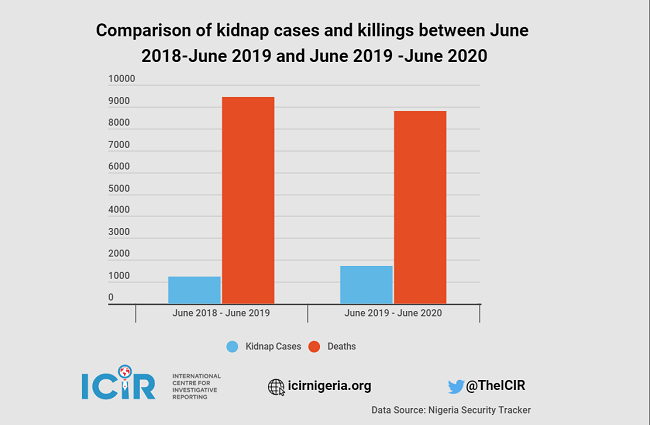
It revealed that 1,236 persons were kidnapped between June 2018 and June 2019, while there was a total of 9,443 casualties from all forms of insecurity that bedevilled the country within the same period.
But between June 2019 and June 2020, a total of 1,724 kidnap cases were recorded and 8,802 total deaths claimed by insecurity within the period under study.
The data above showed a difference of 488 more cases of abductions this year when compared with the previous year.
Comparison of kidnap cases and killings between June 2018-June 2019 and June 2019 -June 2020 Infograph: The ICIR
Though the 2019 Global Rights Mass Atrocities Casualties Tracking report identified a total of 3,188 killings due to insecurity in the country between January to December 2019, no similar report has been released for 2020 to benchmark the actual deaths recorded as a result of kidnapping and banditry.
However, from the 3,188 deaths recorded in the independent report last year, 2,707 were civilians.
From the overall figure, 1,075 of the casualties were killed due to banditry, the second-highest figure was 702 which was attributed to the Boko Haram insurgency followed by electoral violence which reportedly claimed 605 lives, among other categories. The report only recorded 117 abductions in 2019.
The report further noted that the highest killings in the country per month occurred in June 2019 with 504 deaths.
“…banditry and extrajudicial killings moved at an incremental pace westward, affecting communities in Niger and Kogi States,” the global right report stated.
However, The ICIR could not get data on the number of banditry cases recorded for 2019 and 2020. As stated earlier, it only confirmed that 1,075 deaths were recorded from banditry in 2019 alone.
VERDICT
Based on available data as shown above, cases of kidnapping has dropped considerably, as claimed by Lai Mohammed. So, the claim by the minister is indeed TRUE.
JUSTICE Bala Yusuf of the Federal Capital Territory High Court on Monday granted a Remand Order to the Economic and Financial Crimes Commission (EFCC) to remand John Yusuf, a convict and former Assistant Director in the Federal Civil Service who stole over N32.8 billion Police Pension Fund in Kuje Correctional Service.
Dele Oyewale, spokesperson of the Commission confirmed this to The ICIR in a text message, adding that Yusuf who has been on the run for a while was rearrested in Gombe State by operatives of the anti-corruption agency.
Yusuf was accused of stealing N32.8 billion from the Police Pension Fund. The theft was uncovered by the Senate Joint Committee on Public Service and Establishment. The Committee was investigating Abdulrasheed Maina, head of the Pension Reform Task team at the time.
EFCC had on March 21, 2018, secured a “re-conviction” of Yusuf for a six-year jail term and N22.9 billion fine.
The Commission also obtained a remand order that would enable Yusuf to serve his six-year jail term in Kuje prison as directed by the court of appeal in Abuja.
In a judgement delivered on March 22, 2018, the court of appeal had reversed an earlier judgment of FCT high court and sentenced Yusuf to a cumulative term of six years (two-year per count on a three-count charge).
Abubakar Talba, a judge of the FCT high court, had initially ruled that Yusuf serve a two-year jail term with the option of a N750,000 fine. After the ruling, the National Judicial Council (NJC) suspended Talba for 12 months without pay.
Justice Talba was suspended from office following the findings by the Council that he did not exercise his discretion judicially and judiciously with regard to the sentences he passed on one of the accused persons, John Yakubu Yusuf, in the police pension case of FRN Vs Esai Dangabar and five others,” the council said at the time.
BALA Mohammed, Governor of Bauchi State, has reacted to the seizure of his multi-million naira property in Abuja by the Independent Corrupt Practices and Other Related Offences Commission (ICPC) describing the report by the Commission as false and mischievous.
Bala who stated that he resigned from the school as soon as he was appointed a minister by former President Goodluck Jonathan, added that the claims by the anti-graft agency was “premised on bare-faced double standards, favoritism, dishonorable tactics and impunity.”
Rasheedat Okoduwa, ICPC Spokesperson, had in a statement, said that the property seized houses Zinaria International School located at Plot 298 Wuye District, Cadastral Zone B3, FCT, Abuja.
Okoduwa had disclosed that ICPC’s investigation revealed that Mohammed, as FCT Minister allocated the property to a school which had himself and family members as directors and shareholders.
But, the former Minister of the Federal Capital Territory (FCT) in a statement by Mukhtar Gidado, his Senior Special Assistant on Media, described the action of the ICPC as unjust persecution.
Gidado further disclosed that the governor during his tenure as the FCT Minister, did not flout any policy or break any law, known to the Constitution of the Federal Republic of Nigeria.
He further stated that the former minister did not in any way, breach his oath of office to warrant perniciously scandalising his name or subjecting members of his family to mindless persecution as the ICPC is willfully pushing.
The ICIR reported that the ICPC said it had seized a multi-million naira property which houses Zinaria International School located at Plot 298 Wuye District, Cadastral Zone B3, Abuja, belonging to Bala Mohammed, Governor of Bauchi State.
According to ICPC, the seizure was pursuant to its powers contained in Section 45 (4) (a-c) of the Corrupt Practices and Other Related Offences Act, 2000.
It disclosed that Mohammed had earlier been charged for using his office to confer corrupt advantage upon himself and relations under Section 19 of ICPC law but could not be arraigned before he was sworn in as Governor of Bauchi State.
The Federal Ministry of Foreign Affairs says Ngozi-Okonjo Iweala, a former Minister of Finance would be the first African to occupy the position of Director General of the World Trade Organisation (WTO) if elected.
The ministry in a statement issued in Abuja on Monday by Ferdinand Nwonye, its spokesperson said this is one of the reasons the Economic Community of West Africa States (ECOWAS) has endorsed her for the position.
While announcing the endorsement of candidature of Okonjo-Iweala by the ECOWAS Authority of Heads of State and Government for the position which runs from 2021-2025, the ministry noted that no African has assumed the position of Director General of the organisation.
“The apex body noted that since the creation of WTO on January 1, 1995, which is a successor to the General Agreement on Tariffs and Trade (GAAT) established on January 1, 1948, no African has assumed the position of Director General of the WTO,” the statement read.
According to the statement, the ECOWAS Authority of Heads of State and Government backed her candidature citing her long years of managerial experience at the top echelon of multilateral institutions, established reputation as a fearless reformer, her negotiating and political skills.
It added that her over 30 years as a development economist with long standing interest in trade, excellent academic qualifications, her positions as managing director World bank, and currently a board chair at Gavi, and AU special envoy to mobilize financial resources for the fight against COVID-19 make her the perfect candidate for the period of 2021-2025.
The ECOWAS therefore called on other African and non-African countries to support Okonjo-Iweala’s candidature.
It would be recalled that President Muhammadu Buhari had earlier in the month nominated Ngozi Okonjo-Iweala as the Nigerian candidate for the position.
Ngozi Okonjo-Iweala, was nominated as the candidate for the job of Director-General of the World Trade Organisation, following the abrupt resignation of Roberto Azevêdo.
She was nominated by the president to replace Yonov Frederick Agah, Nigeria’s permanent representative at the WTO, and a deputy director-general for the organisation who was earlier nominated for the post.
With Kenya already touting Amina Mohamed as a candidate – a very strong contender given she nearly got the role last time – Egypt’s chance of grabbing the top position for its own Abdel Hamid Mamdou, makes it an even tougher race with Okonjo-Iweala now in the running.