Home Blog Page 241

Despite Court verdict, Senate sets conditions for SenatorNatasha’s return

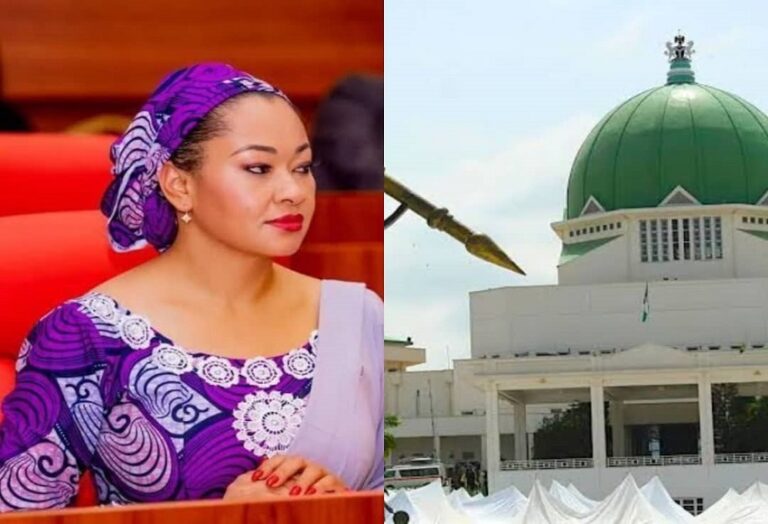
THE Senate has outlined conditions for the reinstatement of Senator Natasha Akpoti-Uduaghan, despite a Federal High Court ruling in Abuja that nullified her six-month suspension.

In response to the judgment, Senate Spokesperson Yemi Adaramodu said that the Red Chamber would not reinstate the embattled Senator Natasha Akpoti-Uduaghan immediately.

Adaramodu noted that the court judgment did not override the Senate’s constitutional powers to discipline its members.

“Which judgment are we appealing when they (the court) said the Senate has the right to discipline its erring members? The court has not ousted the Senate’s statutory right to punish any erring senator.

“It was established that the senator in question erred. The court has already told her to go and do some things, like restitution, so after the restitution, the Senate will now sit again and consider the content of that restitution, and that will inform our next line of action,” Adaramodu said.

The ICIR reported that the Federal High Court (FHC) in Abuja on Friday, July 4, ordered the Nigerian Senate to recall the suspended senator Akpoti-Uduaghan.

The judge, Binta Nyako, described as extreme the six-month suspension that was imposed on the lawmaker by the Senate.

The judge faulted the provision in Chapter 8 of the Senate Standing Rules, as well as Section 14 of the Legislative Houses, Powers, and Privileges Act, declaring both to be overextending.

However, Adaramodu explained that the Senate would only reconvene to deliberate on the issue once Akpoti-Uduaghan complies with the court’s directives.

“The onus is no more on us now; it is already on her doorstep to go and apologise. Once she does that, then the Senate will sit and determine how to deal with her matter.

“The first reaction now will not be from us, the court has ruled, so once she takes the step to redress and does what the court has directed her to do, then the Senate will sit and look at the content of her reaction as prescribed by the court,” Adaramodu added.

Delivering her judgment on the matter, Justice Nyako stressed that the two legislations failed to specify the maximum period that a serving lawmaker could be suspended from office.

Justice Nyako stated that while the Senate had the authority to discipline its members, such disciplinary actions must not strip citizens of representation in the National Assembly.

Speaking to journalists after the judgment, Senate counsel Paul Dauda, SAN, described the ruling as a partial victory for the Senate, especially regarding the issue of civil contempt linked to social media posts made during the proceedings.

“The first application filed by the Senate, that no social media posts should have been made, was decided in our favour. The court directed that the satirical apology be taken down and that a proper apology be published in two national dailies. Additionally, damages of five million naira were awarded to be paid to the court.” Dauda said.

He emphasised that the court did not mandate Akpoti-Uduaghan’s reinstatement but merely advised that the Senate could consider recalling her.

“There was no relief asking for the suspension to be lifted. The judge only made what we call an obiter dictum, a non-binding remark, that the suspension may have been excessive. We will consult with our colleagues, read the full judgment, and respond accordingly,” he added.

The ICIR reported that in March, Akpoti-Uduaghan was suspended by the Red Chamber for six months for alleged gross misconduct, following her face-off with the Senate President, Godswill Akpabio, over the sitting arrangement.

The dispute between Akpoti-Uduaghan and Akpabio started on February 27, after the former discovered that her seat had been reassigned without prior notice.

Her refusal to move to the new seat led to a tense confrontation with Akpabio, who ordered the sergeant-at-arms to order her out of the chamber.

Akpoti-Uduaghan filed a suit, marked FHC/ABJ/CS/384/2025, challenging her suspension in court.

Ukrainian forces capture Nigerian fighting for Russian military

UKRAINIAN forces have reportedly captured a Nigerian national, Kehinde Oluwagbemileke, who is said to have been fighting alongside Russian troops in the ongoing war in Ukraine.

In a video released by the Ukrainian Freedom of Russia Legion, Oluwagbemileke is seen being interrogated, stating that he was captured in the Zaporizhzhia region after serving with Russian forces for five months.

“Our stormtroopers have returned from a mission with an unusual trophy—Kehinde Oluwagbemileke. He was identified as 24-year-old Wang Wu. Apparently, due to a shortage of cannon fodder, Putin’s commanders are luring foreigners by deception to “defend the motherland” in far-off Ukraine,” it said.

It revealed that the man had been living in Russia for four years before his arrest on drugs related charges.

He reportedly agreed to join Russia’s military campaign in exchange for a reduced sentence, rather than serving prison term under Article 228 of the Russian Criminal Code.

“Kehinde is one of thousands of mercenaries from third countries recruited by Russia’s Defense Ministry to fight in Ukraine,” the organisation stated.

“We’ve already published data on nearly 7,000 foreign fighters from 14 countries, but that’s only a small part of the foreigners the Kremlin has sent to die in Ukraine. All of them are cheap manpower, which is not spared.” it added.

The ICIR reports that the Ukrainian Armed Forces captured another foreign soldier, a Chinese national, last week, who was reportedly fighting for the Russian military.

Thousands of people, mostly Ukrainians, have been killed  since the war that began with Russia’s full-scale invasion in February 2022. 

Eight Chinese nationals convicted for cyber-terrorism in Nigeria

A Federal High Court sitting in Ikoyi, Lagos State, has convicted eight Chinese nationals for cyber-terrorism and Internet fraud.

The conviction was secured by the Lagos zonal directorate 1 of the Economic and Financial Crimes Commission (EFCC).

The anti-graft agency disclosed this in a statement on its X handle on Friday.

According to EFCC, the suspects are Pan Cai Qi, Zeng Xian Tao, Weng Mao Rong, Wang Xiong Wei aka Xiao Bai, Shi Dong Fu, Wang Shi Long, Liu Ke Fan and Ting Liao.

The anti-graft agency said the convicts were part of the syndicate of 792 alleged cryptocurrency investment and romance fraud suspects arrested on December 19, 2024 in Lagos during a sting operation tagged ‘Eagle Flush Operation’ conducted by EFCC operatives.

This brings to 22 the number of Chinese nationals that have been convicted of offences bordering on cyber-terrorism and internet fraud in the last eight days.

Fourteen Chinese nationals were on June 27 convicted and sentenced by the court.

One of the charges against the latest convicted Chinese nationals reads: “That you, Pan Cai Qi, sometime in December 2024 at Lagos, within the jurisdiction of this Honourabe Court, willfully caused to be accessed computer system for the purpose of destabilising and destroying the economy and social structure of Nigeria and thereby committed an offence contrary to and punishable under Section 18 of the Cybercrime (Prohibition, Prevention, Etc) Act, 2015 (As Amended, 2024]”

They initially pleaded “not guilty” to the charges filed against them.

However, EFCC said during Friday’s sitting, they all changed their “not guilty plea” to “guilty.”

The prosecution counsel, M.K Bashir, prayed the court to convict them accordingly.

Delivering his judgement, Justice Chukwujekwu Aneke, convicted and sentenced all the defendants to one year imprisonment, with a fine of N1m.

The Judge also ordered that upon completion of their sentences, the Comptroller-General of the Nigeria Immigration Service, should ensure that the convicts are repatriated to their country of origin within seven days.

Justice Aneke ordered the forfeiture of the items recovered from them to the Federal Government of Nigeria.


FG pays N1.186trn electricity subsidy in Q1, 2025, despite power privatisation

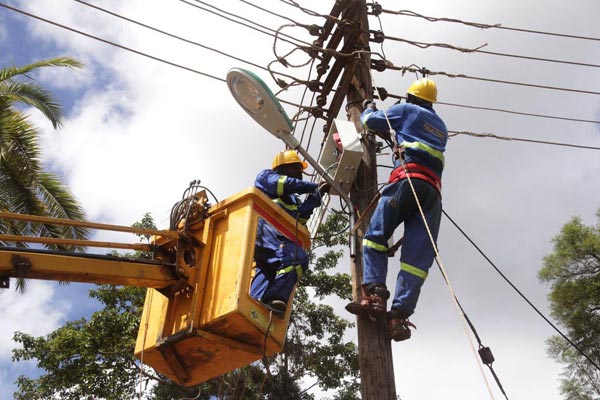
THE Nigerian government has continued intervening in Nigeria’s power sector through electricity subsidy payments to the tune of over N1 trillion in the first quarter of 2025, despite power sector privatisation.

The Nigerian Electricity Regulatory Commission (NERC) revealed that the subsidy for electricity consumed in the first half of 2025 was N1.186 trillion.

The NERC disclosed this in the latest analysis and report of monthly Multi-Year Tariff Orders (MYTO), in addition to the Federal Government’s outstanding debt of over N4 trillion owed to electricity generation companies.

The NERC’s order showed that the subsidy owed to Electricity Distribution Companies (DisCos) increased by 27 per cent from the N935.81 billion the Federal Government incurred in the second half of 2024 and a 17 per cent from the N1.013 trillion incurred in the first half of 2025.

A breakdown of the subsidy indicated that the government owed N196.4 billion in January, N193.09 billion in February, N194.6 billion in March, N198.4 billion in April, N201.7 billion in May, and N201.8 billion in June.

It also showed that the Abuja Electricity Distribution Company (AEDC) got the highest amount of N170.6 billion, followed by Ikeja Electricity Distribution Company (IE) with N163.7 billion, then Ibadan Electricity Distribution Company (IBEDC) with N144.7 billion.

Other DisCos include Eko Electricity Distribution Company (EKDC), N137.7 billion, Benin Electricity Distribution Company (BEDC) with N94.7 billion, Enugu Electricity Distribution Company (EEDC) with N94.4 billion, Port Harcourt Electricity Distribution Company (PHEDC) with N87.9 billion, Kaduna Electricity Distribution Company (KAEDCO) with N87.2 billion, Kano Electricity Distribution Company (KEDCO) with N85.08 billion, Jos Electricity Distribution Company (JEDC) with N72.6 billion, and Yola Electricity Distribution Company (YEDC) with N47.1 billion.

While giving the reason for the electricity subsidy, NERC explained that in the absence of cost-reflective tariffs, the government undertakes to cover the resultant gap between the cost-reflective and permissible tariff in the form of tariff subsidies.

But for ease of administration, the subsidy is only applied to the generation cost payable by DisCos to Nigeria Bulk Electricity Trading Company (NBET) at source in the form of a DisCo’s Remittance Obligation (DRO).

The Order indicated further that the DRO represented the total GenCo invoice that is billed to the DisCos by Nigerian Bulk Electricity Trading plc (NBET) based on what the allowed DisCo tariffs could cover.

On April 3, 2024, NERC declared that Band A customers would see an instant increase in power tariff from N68 to N225 per kilowatt-hour.

The ICIR reported that on April 13, 2025, the Minister of Information and National Orientation, Mohammed Idris, in a statement, said 85 per cent of Nigerians who fit into various categories under the new electricity supply regime continued to receive the subsidy.

He claimed that only 15 per cent of the population, comprising mostly wealthy individuals and industrial clusters, classified under Band A, paid a cost-reflective tariff and did not enjoy a subsidy.

The subsidy has led to rising debt in the power sector, with the government struggling to close the gap amid dwindling oil revenue resources.

In May, the Association of Power Generating Companies (APGC) threatened to shut down tools over the N4 trillion owed by the Federal Government in subsidy and legacy debt. They include N2 trillion for 2024 and N1.9 trillion for legacy.

But in April, the Minister of Power, Adebayo Adelabu, promised to pay the debt following high-stakes talks between him and the chairmen of Generating Companies of Nigeria (GenCos) in Abuja.


Amaechi’s wife received N48bn from NDDC in one year, claims Wike

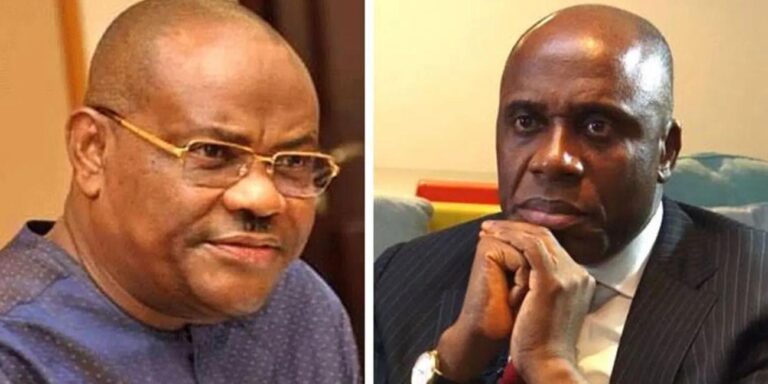
THE Federal Capital Territory (FCT) Minister, Nyesom Wike, has called on President Bola Tinubu to release the forensic audit report of the Niger Delta Development Commission (NDDC), alleging that former Minister of Transportation, Rotimi Amaechi’s wife, Judith, received N48 billion under the guise of training women in the Niger Delta.

Wike made the call and allegation late Friday on Channels’ “Politics Today.”

He accused Amaechi’s wife of receiving N4 billion monthly for one year under the pretence of training women in the Niger Delta region.

“I call on Mr. President to release the forensic audit of NDDC. To Amechi’s wife’s company, every month, N4 billion, to train Niger Delta women for one year, N48 billion. And the forensic report audit is there,” Wike said.

He also claimed that former Attorney General Abubakar Malami concealed the document to shield those implicated in the audit.

“It was Malami, the Attorney General at the time, that killed that document to protect those who were concerned”, he stated.

The Minister stressed that if the document did not confirm his claims, he would resign from his position as the FCT Minister.

“If what I am saying is not in the document, I will resign as the Minister of FCT. I said I would resign. I don’t worship office” Wike added.

The minister also alleged that Amaechi lacked the necessary educational qualifications, as he questioned his educational background.

The ICIR reports that the minister’s comments came in response to Amaechi’s recent remark that “Wike’s wealth is questionable” when he appeared on the same TV programme on Thursday, July 3.

The ICIR further reports that both politicians are past governors of Rivers State. While Amaechi governed the state between 2007 and 2015, Wike succeeded him in 2015 and ended his two terms of four years apiece in 2023.

Both leaders led the state as members of the People’s Democratic Party (PDP). They soon fell apart after Wike took over power and Amaechi defected to the All Progressives Congress (APC) government, led by former President Muhammadu Buhari.

While Wike held sway in Rivers as governor, Amaechi reigned in Abuja as Minister of Transportation.

However, it is believed that tensions between them have been heightened by a new coalition of opposition politicians, in which Amaechi plays a prominent role. The coalition is reportedly positioning itself to challenge Tinubu’s bid for a second term in 2027.

Furthermore, Malami, whom Wike accused of concealing documents, also recently left the APC to join the ADC. In recent times, he has been vocal in criticising the APC-led government, of which Wike is a part.

Speaking on the state of security in Kebbi State, he said, “I wonder how the Federal Government is not doing enough to protect the lives and properties of citizens, let alone the state and local governments.

Breadmakers decry rising tariff, poor electricity supply impact on production costs

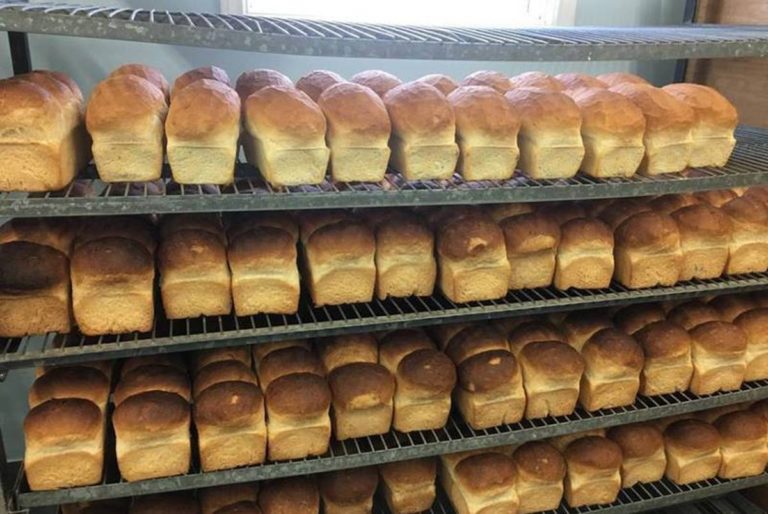
BREAD could further go out of the reach of an average Nigerian as breadmakers lament rising electricity tariffs and poor power supply, impacting production costs.

President of Premium Bread Makers Association of Nigeria (PBAN), Emmanuel Onuorah, stated this on Friday, July 4, while assessing how the current economic reforms affect bakery business performance in the first half of 2025.

He said, “The President offered us a moratorium on the importation of wheat, dough, flour, and some other raw materials. This helped our production. However, the energy cost rise wiped all of them out.

“Energy costs for some of us in band A went up so high, and yet we can’t see the light. We had to resort to using diesel for our baking business. Can you imagine someone’s energy cost rising from N1 million to N15 million in a month because of Band A classification?” he said.

He stressed that despite the rising electricity costs, the supply had been poor, as most bakers had to rely on diesel to sustain their businesses.

He posited that the association had reached out to relevant electricity stakeholders such as Eko DisCo, the Nigerian Electricity Regulatory Commission (NERC), but got no response.

“In my bakery, we have written to Eko DisCo, FCCPC, and NERC, but we have no response. We have been with Eko DisCos on this for the past three months, and they don’t even answer us. Electricity cost is wiping out our gains in business.

“You write to their customer care to explain how they arrived at the energy cost per kilowatt, yet no response. It’s discouraging for our business and the cost of production,” he added.

He noted that bread makers, under his leadership, were thinking out of the box, away from the electricity-grid supply, with discussion already advanced with a solar company.

He explained further that energy conservation was not easy in the breadmaking business as “mixers would keep running and other apparatus on bread production will keep running for production to happen.”

He expressed worry that the rise in tariff costs had failed to support Nigeria’s manufacturing sector, with power supply still epileptic.

“You pay for diesel, pay for maintenance of diesel, and pay for light that’s not supplied,” he stated.

Notably, the average price of premium-quality bread currently in Nigeria ranges from N1,000 to N2,500, with many middle-income earners struggling to buy as currency devaluation taking its toll on spending.

The ICIR reported that despite the pace of inflation easing to a 25-month low of 22.97 per cent in May, a recent report by  Stanbic IBTC indicated that the cost of purchase increased in June.

This development, analysts say, was triggered largely by the rising cost of production and raw materials.

Data from the National Bureau of Statistics (NBS) has shown a sharp drop in the inflation rates since the rebasing of the consumer price index earlier this year, but the prices of goods and services have yet to mirror that reality.

The Stanbic IBTC report noted that supplies were hampered in June, which some firms blamed on poor road conditions, as many roads in the country are notably in bad condition.


Court orders Senate to recall Natasha, fines her N5m for contempt

0

THE Federal High Court (FHC) in Abuja on Friday, July 4, ordered the Nigerian Senate to recall the suspended senator representing Kogi Central, Natasha Akpoti-Uduaghan.

The judge, Binta Nyako, described as extreme the six-month suspension that was imposed on the lawmaker by the Senate.

The judge faulted the provision in Chapter 8 of the Senate Standing Rules, as well as Section 14 of the Legislative Houses, Powers, and Privileges Act, declaring both to be overextending.

The court ruled that Senate President Godswill Akpabio acted correctly in denying Akpoti-Uduaghan the opportunity to speak during plenary since she wasn’t seated in her designated seat and ordered Akpoti-Uduaghan to apologise to the Senate.

Nyako added that the two pieces of legislation failed to identify the maximum period that a serving lawmaker could be suspended from office.

The court noted that Akpoti-Uduaghan’s six-month suspension effectively kept her from her legislative duties for about 180 days, given the 181-day sitting requirement for lawmakers per cycle.

The court ruled that while the Senate has the authority to discipline its members, any sanction imposed must be proportionate and not excessively deprive constituents of their representation.

Earlier, the court fined Akpoti-Uduaghan ₦5 million for contempt.

Nyako, on Friday, found Akpoti-Uduaghan guilty of contempt over a satirical apology to Akpabio that she posted on her Facebook page on April 27, 2025.

In her judgment, Nyako, in the suit filed by Akpoti-Uduaghan challenging her suspension, began with the contempt application filed by Akpabio.

Akpabio, in his application, challenged the senator’s post on social media, arguing it violated an earlier court order curbing all parties from commenting to the media or making social media posts related to the case.

Akpoti-Uduaghan’s lawyer argued that the post was unrelated to the court’s order on her suspension, instead referencing separate allegations of sexual harassment against Akpabio.

However, Nyako held that after reviewing the post and the application before her initiated by the third respondent (Akpabio), she was satisfied that it was linked to the suspension matter before the court and therefore found Akpoti-Uduaghan guilty of contempt.

Nyako ordered Akpoti-Uduaghan to publish an apology in two national dailies and on her Facebook page within seven days. She also levied a fine of ₦5 million.

Akpoti-Uduaghan is also facing two separate cases of cybercrime and defamation in two separate courts in the nation’s capital.

The ICIR reported that a Federal High Court in Abuja on Monday, June 30, granted bail to Akpoti-Udauaghan on self-recognition.

She was arraigned on six counts bordering on alleged cybercrime.

The senator allegedly made false statements against Senate President Godswill Akpabio and Kogi State’s former governor, Yahaya Bello.

According to the charge, she alleged that Akpabio instructed the Kogi State former governor to ensure that she was harmed in Kogi State rather than in Abuja to mislead investigators about her attackers.

The federal government, which sued the lawmaker on behalf of Akpabio and Bello, stated that her statements, widely shared through digital platforms, were knowingly false and intended to initiate unrest.

The judge, Mohammed Umar, proceeded to grant the request of the defence counsel and granted the senator bail on self-recognition.

The court adjourned until September 22 for the commencement of the trial.

The ICIR reported that in a similar suit, a Federal Capital Territory (FCT) High Court on Thursday, June 19, granted Akpoti-Uduaghan a ₦50 million bail in a case involving her and the Nigerian government.

The bail came after she pleaded not guilty to an alleged defamation charge preferred against her.

In the ruling, the judge, Chizoba Orji, granted the female lawmaker bail with one surety, who must be aresponsible residentof the FCT and have landed property in the nation’s capital.

The judge adjourned the case to September 23, 2025, for continuation of the trial.

Akpoti-Uduaghan, currently suspended by the Senate, had urged Nigerians to hold Akpabio, Kogi State Governor Ahmed Ododo, and his predecessor, Yahaya Bello, responsible if she and her supporters were attacked.


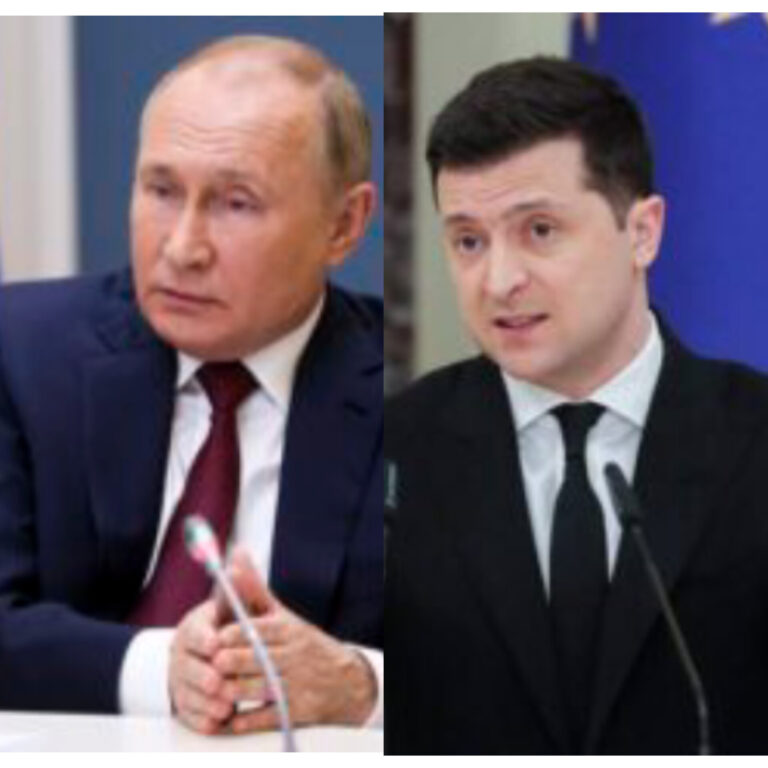
Russia launches largest drone attack on Kyiv, hours after Trump-Putin call

Ukraine’s Air Force said Russia launched its largest drone assault on Kyiv late Thursday, injuring at least 23 people and damaging multiple buildings across the capital, just hours after United States President Donald Trump spoke with Russia’s Vladimir Putin.

The ICIR reports that Trump called Russian President Vladimir Putin on Thursday but said that his conversation with Putin yielded no progress toward ending the war. At the same time, the Kremlin maintained that Moscow would continue working to address the conflict’s “root causes.”

Ukraine’s Air Force announced this on Friday, July 4, that air raid sirens, the whine of kamikaze drones, and booming detonations reverberated from early evening until dawn as Russia launched a total of 539 drones and 11 missiles.

Reuters reported that the officials said the drone assault damaged around 40 apartment buildings, passenger railway infrastructure, five schools and kindergartens, several cafés, and numerous vehicles across six of the city’s 10 districts.

Ukraine further reported that the Russian shelling killed five people in and around the eastern city of Pokrovsk, a strategic location that has been under sustained Russian assault for months.

President Volodymyr Zelenskiy, who is due to speak to Trump later on Friday about the war and a United States pause in some deliveries of air defence missiles, called the attack “deliberately massive and cynical.”

“Notably, the first air raid alerts in our cities and regions yesterday began to blare almost simultaneously with media reports discussing a phone call between President Trump and Putin,” Zelenskiy said on X.

“Yet again, Russia is showing it has no intention of ending the war and terror,” he added, calling for increased pressure on Russia and more air defence equipment.

Russian airstrikes on Kyiv have intensified in recent weeks, with some of the deadliest attacks of the war targeting the capital, home to three million people.

Washington’s decision earlier this week to suspend certain shipments of critical weapons to Ukraine has sparked warnings from Kyiv, cautioning that the move could undermine its ability to repel escalating airstrikes and battlefield advances.

On Friday, Zelenskiy urged the international community to step up pressure on Moscow to put an end to its “dumb, destructive behavior”.

“For every such strike against people and human life, they must feel appropriate sanctions and other blows to their economy, their revenues, and their infrastructure,” he said.

Ukraine’s Air Force reported that it intercepted 478 Russian air weapons overnight. Despite this, airstrikes hit eight locations across the country, with a total of nine missiles and 63 drones launched, the military added.

Both Russia and Ukraine deny deliberately targeting civilians in the war that began with Russia’s full-scale invasion in February 2022. However, thousands of civilians, mostly Ukrainians, have been killed in the conflict. While military casualties are believed to be significantly higher, neither side discloses official figures.

Implosion: PDP in tethers as Atiku, other bigwigs endorse coalition ADC ahead 2027

THE Peoples Democratic Party (PDP) has been struggling to stay relevant in Nigerian politics following significant challenges confronting the party.  

The internal discord has fractured the party’s leadership and raised questions about its future viability.

Genesis of the current crisis

The PDP’s leadership void and indecisiveness have deepened internal divisions within the party, which once claimed to be Africa’s largest. Acting National Chairman Umar Damagum’s perceived loyalty to certain party members and failure to address internal grievances have deepened factionalism.

The current issues within the PDP, a party that ruled the country for 16 years, started from its 2023 presidential primaries. At the controversial primaries in 2022, former Vice President Atiku Abubakar and former Rivers State Governor Nyesom Wike clashed, a situation that set the stage for a prolonged discord.

Abubakar Atiku and Nyesom Wike
Atiku Abubakar (L) and Nyesom Wike
Source: Vanguard Newspaper

Wike’s discontent with Atiku’s candidacy has persisted, splitting the national leadership into factions.

After losing the party’s presidential ticket to Atiku in 2022, Wike, who was then governor of Rivers, in conjunction with 4 other sitting governors—Samuel Ortom of Benue State, Seyi Makinde of Oyo State, Okezie Ikpeazu of Abia State, and Ifeanyi Ugwuanyi of Enugu State—formed the G5, a group that openly worked against the PDP and turned against the party’s presidential candidate.

The rebellion weakened the PDP’s chances in the 2023 elections.

The PDP candidate in the 2023 presidential election, Atiku, came second behind Bola Tinubu of the All Progressives Congress (APC).

After his swearing-in as president, Tinubu appointed Wike as the Minister of the Federal Capital Territory (FCT) despite Wike’s membership of an opposition party. That action further threw the PDP into crisis, with Wike openly endorsing Tinubu for the next election in 2027.

Loss of members to the APC

The crisis got even worse with the main opposition party suffering a wave of defections, with key members jumping ship to the APC or other parties.

In recent months, the PDP has faced significant losses, including the defection of Governor Umo Eno of Akwa Ibom State and Sheriff Oborevwori of Delta.

The party has also lost several other key members, and its situation has become dire, with some top leaders considering joining a coalition to confront the ruling APC in 2027.

This exodus is fueled by perceptions that the PDP is a sinking ship, plagued by internal squabbles and unable to present a viable alternative to the APC in 2027.

The struggle continues

In another heartache, the PDP‘s attempt to hold its National Executive Committee (NEC) meeting has been postponed repeatedly, making it impossible for the party to take any key decision.

The crisis has resulted in the frequent postponement of the party’s NEC meeting.

The NEC meeting was postponed several times recently due to irreconcilable differences on who is the party’s substantive national secretary. Between Ude Okoye and Sam Anyanwu. A matter that a Supreme Court judgement was not able to settle.

After a lot of struggle and in consultation with the Independent National Electoral Commission (INEC), the party finally fixed Monday, June 30, for its 100th NEC meeting, but the day came with its drama.

The recent problem started when the Acting National Chairman of the party, Damagun, announced the postponement of the NEC meeting planned for Monday, June 30, but the National Working Committee (NWC) of the PDP insisted that the meeting would proceed as scheduled.

PDP’s NEC held affirms Sam Anyanwu as party’s national secretary

When the NEC of the PDP finally met on Monday, June 30, it reached a consensus, allowing Sam Anyanwu to continue as National Secretary of the party.

The decision was announced by the acting chairman of the party, Damagun, after the 100th NEC meeting of the party in Abuja.

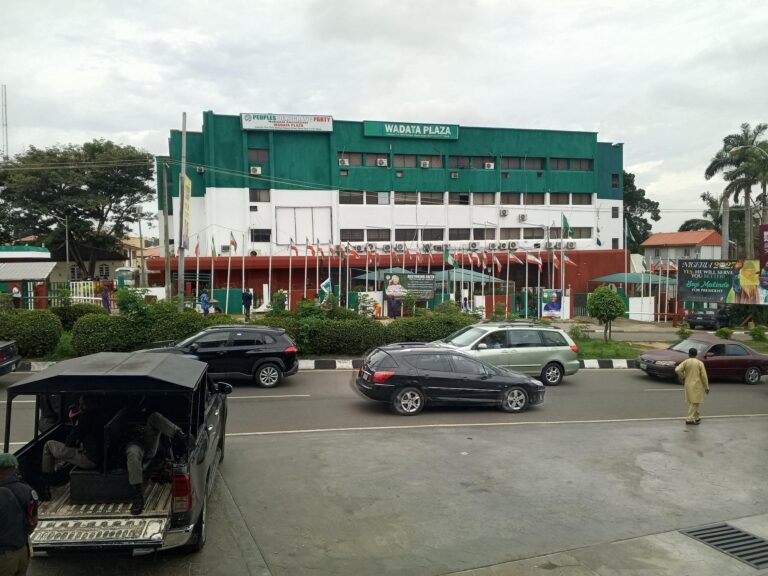
PDP headquarters in turmoil as Anyanwu, Ude-Okoye storm BoT meeting
Samuel Anyanwu and Ude-Okoye contesting for National Secretary of PDP. Image courtesy of Intel Religion

The party also agreed to hold another NEC meeting in July. It also directed Anyanwu to forward a letter to INEC informing the electoral body about the proposed meeting.

Those in attendance at the meeting are the chairman of the PDP Board of Trustees (BoT), Adolphus Wabara; chairman of the PDP Governors’ Forum and Bauchi State Governor, Bala Mohammed; Governors Ahmadu Fintiri (Adamawa), Dauda Lawal (Zamfara), Seyi Makinde (Oyo), Caleb Mutfwang (Plateau), and Douye Diri of Bayelsa State.

Others include former Senate President Bukola Saraki, Senate Minority Leader Abba Moro, and Senator representing Bayelsa West, Seriake Dickson.

Shortly after the party’s NEC meeting, a group of concerned PDP leaders met at the Transcorp Hilton Hotel in Abuja, decrying the party’s decline and urging a national coalition to rescue Nigeria.

They criticised the party’s internal decay and the country’s deteriorating state under the All Progressives Congress (APC) administration and sought an alternative party.

David Mark officially resigns from PDP, leads opposition coalition

In another significant setback for the PDP, former Senate President David Mark officially resigned from the party, dealing a blow to its reconciliation progress.

He cited worsening internal divisions and unresolved leadership crises in the PDP for his resignation.

David Mark officially resigns from PDP
Former Senate President David Mark

In his resignation letter, Mark highlighted deep-seated internal issues that have diminished the party’s stature.

Here Comes the coalition

To further make the PDP crisis worse, The ICIR reported that Mark and ex-Osun State Governor Rauf Aregbesola emerged as the interim chairman and secretary of the African Democratic Congress (ADC).

Recall that as part of its strategies to dislodge the ruling All Progressives Congress (APC) in the 2027 elections, leading opposition figures, including former Vice President Atiku Abubakar, Labour Party presidential candidate in the 2023 poll, Peter Obi, former Rivers State governor Rotimi Amaechi, and Nasir El-Rufai, launched a coalition in Abuja on March 20.

After months of speculation over which platform the coalition would pursue its agenda, the ADC now appears as a key opposition party that will challenge President Bola Tinubu’s APC in the 2027 elections.

According to a former spokesperson of the Peoples Democratic Party (PDP), Kola Ologbodiyan, who was present at a meeting of some PDP leaders that met with Abubakar on Tuesday in Abuja, the coalition unanimously agreed to adopt ADC as their new political platform.

They also endorsed Mark and Aregbesola to lead the party. El-Rufai also confirmed the decision in a post on his X handle.

Media reports also suggested that a former sports minister, Bolaji Abdullahi, was picked as the interim National Publicity Secretary of the ADC.

The new leaders were unveiled in Abuja on Wednesday, July 2.

The adoption of the ADC by some former leaders of the PDP and its emergence in the 2027 political landscape have further complicated the PDP’s situation.

It remains to be seen whether the PDP’s reconciliation efforts will succeed, given the APC’s growing influence and the recent emergence of a new coalition.

Former Super Eagles goalkeeper Peter Rufai is dead

0

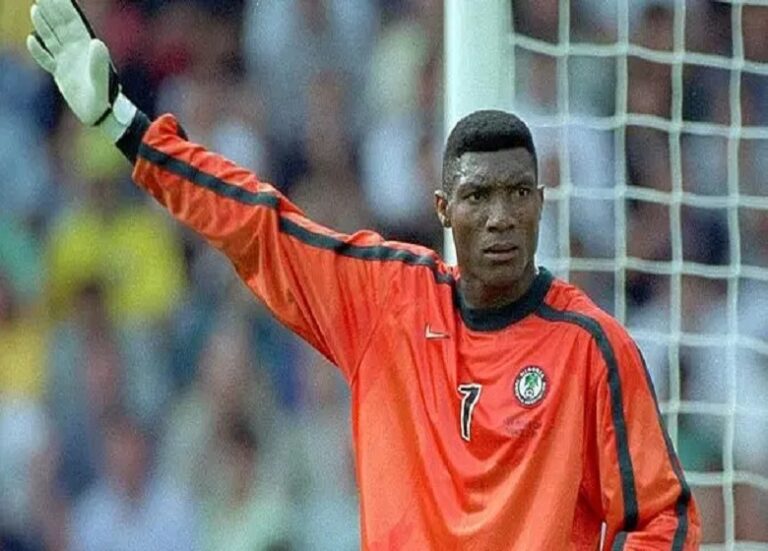
FORMER Super Eagles goalkeeper Peter Rufai is dead.

Rufai, popularly known as Dodo Mayana, was part of the glorious 1994 Super Eagles team that won the Africa Cup of Nations (AFCON)

The news of his death was confirmed in a post on Thursday, July 3, by the Nigeria Football Federation (NFF) via its official X handle.

“Forever in our hearts, Dodo Mayana. We mourn the passing of legendary Super Eagles goalkeeper Peter Rufai, a giant of Nigerian football and a 1994 AFCON champion.

“Your legacy lives on between the sticks and beyond. Rest well, Peter Rufai,the tribute read.

Rufai made 65 appearances for the national team and was part of the golden generation that lifted Nigeria’s second AFCON title in Tunisia in 1994.

He was also part of the team that represented the country at the 1994 and 1998 FIFA World Cup tournaments in the USA and France, respectively.

He died after a prolonged illness.

The news of Rufai’s death is coming on a day the world is mourning the death of another footballer.

The ICIR reported that Liverpool Football Club (LFC) forward Diogo Jota died from a fatal car accident in Spain on Thursday.

The Spanish sports newspaper MARCA reported that Jota died at the scene of the crash.

According to reports, he was involved in a fatal car crash on the A-52 road at Cernadilla, near Zamora.

His car reportedly veered off the road and burst into flames.

Jota, 28, was reportedly travelling with his 26-year-old brother, Andre, who also lost his life in the accident.

He died two weeks after his wedding to his long-time girlfriend, Rute Cardoso, in Porto.

Jota, a Portuguese, was born in 1996 and was a key figure for both Liverpool FC and the Portuguese national team.

He helped Liverpool FC win the 2024/2025 Premier League season in May.

He was also part of the Portuguese team that won the UEFA Nations League recently.

The news of his passing has stunned the football community and beyond.