Home Blog Page 428

Supporting flood victims, communities our key achievements in 2024 – Nigerian Red Cross

0

THE Nigerian Red Cross Society (NRCS) has said helping flood victims and communities across the country were some of its key successes in 2024.

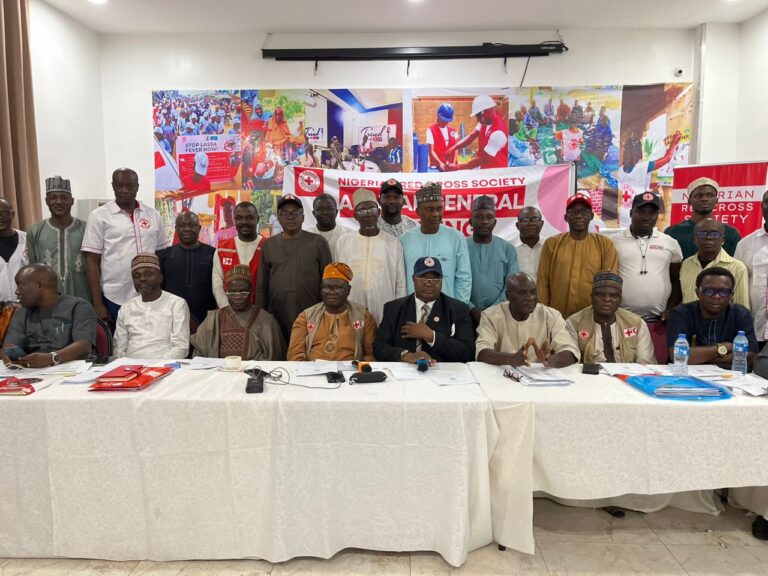
At the presentation of its Humanitarian Report for the year at its annual general meeting in Abuja on Saturday, November 16, the president of the Society, Oluyemisi Adeaga, acknowledged the efforts that defined the year’s successes, according to a statement mailed to The ICIR by the coordinator, communications and advocacy of the NRCS, Chima Nwankwo.

The meeting had the theme “reflection, resilience, and recommitment to humanitarian service.”

Key highlights of the report include flood response initiatives, mpox preparedness, fundraising to tackle hunger, and the first international youth camp.

Speaking about the interventions, the NRCS said in partnership with the Federal Ministry of Humanitarian Affairs and Poverty Alleviation, it distributed food items and dug 12 water boreholes to ensure access to clean water.

It said the relief operations supported thousands of families in Adamawa, Anambra, Oyo, Kebbi, Kogi, and Rivers states.

On mpox preparedness, the NRCS noted that it collaborated with the Norwegian Red Cross and the Nigeria Centre for Disease Control (NCDC), to launch a training of trainers (ToT) programme to strengthen the country’s preparedness for mpox outbreak, which affected 26 states and the Federal Capital Territory (FCT) within the year.

Following the deadly flooding in Maiduguri and its environs in Borno State, the NRCS said it mobilised prompt relief efforts, raising ₦6.7 million in three weeks.

“Recently, the Society provided items worth ₦100,000 each to 1,850 affected households…

“Recognising the urgent need to address hunger and malnutrition, the NRCS launched a ₦2.5 billion fundraising campaign. While the full amount was not raised, the initiative fostered partnerships that will support future humanitarian efforts.”

Besides, the organisation said the inaugural youth camp, held in Agbor, Delta State, showcased its commitment to nurturing young humanitarian leaders.

The state Governor Sherriff Oborevwori declared the event opened and emphasised the importance of empowering youth for sustained impact.

“The Humanitarian Report presentation served as a platform for charting the future of the Nigerian Red Cross Society. As climate change, health emergencies, and disaster management challenges persist, the NRCS aims to innovate and strengthen its networks to better serve vulnerable communities.”

Adeaga commended the NRCS’ donors for believing in the Society’s mission. “Together, we will continue to serve humanity with dignity, efficiency, and compassion,” he said.

The NRCS reaffirmed its commitment to its core values of humanity, impartiality, neutrality, independence, voluntary service, unity, and universality.

The Humanitarian Report presentation ended with a renewed determination to amplify humanitarian impact in 2025 and beyond.

Wike approves N70,000 minimum wage for FCTA workers

0

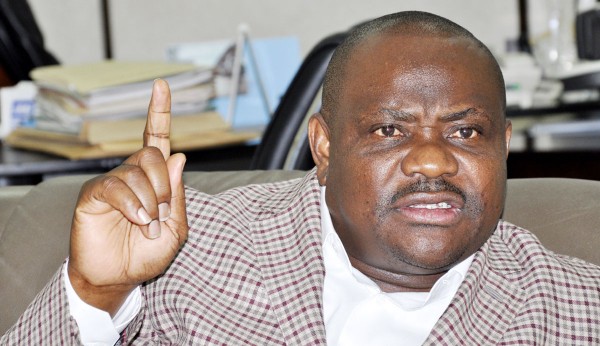
THE minister of the Federal Capital Territory (FCT), Nyesom Wike, has approved the immediate payment of N70,000 as the new minimum wage for all workers engaged by the FCT Administration.

This was announced in a statement signed by the press secretary to the head of the civil service of the FCT, Anthony Odeh, on Tuesday, November 19.

This development was at the heel of the strike threatened by the FCT chapters of the Nigerian Labour Congress (NLC) and the Trade Union Congress (TUC), which vowed to shut down activities on November 30, 2024.

The union’s decision to embark on strike also followed directives by the national arms of the unions to embark on a nationwide strike over the government’s failure to implement the minimum wage in some states, including the FCT.

The two unions also accused the Wike-led administration of failing to meet with labour representatives since his inauguration in August 2023.

However, in the statement by the acting head of the FCTA civil service, Wike approved the payment of the minimum wage on Monday, November 18, “in a bid to ameliorate the plight of workers under the employ of the Federal Capital Territory Administration.”

The statement also stated that the minister approved the payment of three months’ arrears for all staff of the administration, effective from November 2024.

“This gesture will further spur the entire administration staff to support the minister in continuing to deliver on President Bola Ahmed Tinubu’s Renewed Hope Agenda,” the statement added. 

Recall that President Bola Tinubu on Monday, July 29 signed the National Minimum Wage Act 2024 Amendment Bill into law, approving a minimum wage for civil servants from N30,000 to N70,000.

The ICIR reports that FCT has joined the growing list of Nigerian states ready to implement the new minimum wage for workers.

Other states, including Lagos, Anambra, Kebbi, Ogun, Rivers, and Kogi have already approved similar wage adjustments, with some going as high as N85,000.

Nigeria’s terror group Lakurawa is nothing new

0

By John Sunday Ojo, Leiden University and Ezenwa E. Olumba, Royal Holloway University of London

THE Nigerian army has spoken of attacks on the Niger-Nigeria border in 2024 as being carried out by a new terrorist group.

This sect is known as Lakurawa … The Lakurawa are affiliated to terrorists in the Sahel, particularly from Mali and Niger Republic.

News reports had the same message: that a new terrorist group was active on this border.

Nigeria’s north-west has a long history of armed banditry. Insecurity, poverty and hunger are at their most severe levels in this region.

The messages being conveyed by the Nigerian army were that the group had emerged as a result of the turmoil following recent coups in the Sahel region.

Niger (July 2023), Mali (August 2020 and May 2021), Guinea (September 2021) and Burkina Faso (January and September 2022) are countries in the Sahel currently ruled by military juntas. Niger shares a border with Nigeria.

Relations between the Nigerian government and Niger are strained.

But it is surprising that the army is labelling this as a new terror group. It has in fact been operating in several communities along the Nigeria-Niger border since 1999.

This is according to research by Murtala Ahmed Rufa’i, an associate professor of peace and conflict studies at Usmanu Danfodiyo University Sokoto.

His book chapter is based on interviews in 2021 with traditional and religious leaders, teachers, vigilante group members, and members of various Islamic sects. He suggested that the Lakurawas were herders who from about 2016 transformed into a criminal group which operated in border communities, with headquarters in Sokoto state.

Rufa’i said the group was formed at the invitation of local traditional leaders seeking assistance in fighting armed bandits. He described Lakurawa as a unique group of terrorists, among the few in the world who are herders, who promote their own version of Islam and also seek to create a caliphate.

In one of our papers we’ve argued that the inability of Nigeria’s government to provide security for its people has led to an increase in ungoverned spaces, which has bred groups like the Lakurawa.

In our view, the group’s growing activities, and the army’s assertion that this is a new development, highlight the fact that the region’s ungoverned spaces are increasing. Making it seem like a newly discovered problem may be an effort by the army to avoid blame.

Who are the Lakurawas?

The Lakurawa group has been known for over 20 years. In his book chapter Rufa’i provides the following insights:

  • The Lakurawa are armed herders who speak Arabic and Fulfulde. The predominant language in northern Nigeria and many parts of Niger is Hausa, whereas Fulfulde is primarily spoken by the Fulani people.
  • Members of the group came from Mali to settle in border communities. They married local women, and recruited young people from these communities into jihadist activities.
  • They promote an interpretation of Islam that deviates from mainstream sects such as Tijjaniya, Qadiriyya and Izala.
  • They have attempted to implement sharia law in communities where they live.

Rufa’i says the group was initially recruited to fill the security void left by Nigerian state agencies between 2016-2017. Recruitment was arranged by the district head of Balle in Gudu Local Government and the district head of Gongono in Tangaza Local Government, with support from a former chairman of the Miyetti Allah Cattle Breeders Association of Nigeria.

The aim was to protect local communities against armed bandits from Zamfara State.

The Lakurawa were paid for their services and succeeded in dislodging the bandit threat between 2016 and 2017.

However, they soon began their own campaign of violence and imposed their own form of Islam. Consequently, their activities became a threat to the leaders who had invited them to form the armed group. This led to a fallout, culminating in the killing of the district head of Balle.

Since then, the Lakurawa have remained in the area, preaching, collecting taxes from the locals and engaging in other illicit activities.

The security vacuum

The porous nature of Nigeria’s borders has been a big factor driving insecurity in these communities. This situation is worsened by the lack of a security presence in many of the affected areas.

Terrorist groups do not recognise borders or state authority. They often seek to create their own mini-states where they can govern, collect taxes, and enforce their own rules or religion.

Linking the Lakurawa’s rise to recent coups in the Sahel might support the narrative of them being “new”. However, the insecurity across the Sahel has led to decades of military operations by the French and their allies.

Labelling the Lakurawa as a new group and attributing their emergence to coups does not lessen the harm done to the sovereign integrity of Nigeria and Niger. It also doesn’t absolve the security agencies and leaders of these countries from their failure to fulfil a basic duty of a government: the protection of lives and property.

What’s next for Nigeria’s security strategy?

The Nigerian security forces, under Operation Fansan Yamma and Operation Farautar Mujiya, launched air and ground assaults on camps belonging to the terror group after Lakurawa attacked residents of Mera in Kebbi State, killing 15 people, on 9 November 2024.

But operations like this in the past have not stopped the violent conflicts between the nomadic herders and sedentary farmers nor the activities of Boko Haram and its affiliates in Nigeria. These security measures alone are unlikely to eliminate insecurity without empowering local communities and creating state police. In one of our papers, we suggested that police authority be devolved from the central government to the federating units to enhance the effectiveness and responsiveness of policing.

The reliance of communities on groups like the Lakurawa for protection made it possible for a band of armed herders in Mali to become a powerful terror group in Nigeria. This situation shows how security agencies in Nigeria have failed these communities. Also, it underscores the need to reconsider establishing state police in Nigeria.

Nigerian security agencies’ reactive approach to insecurity must change. The lack of preventive intelligence operations to stop terror groups like the Lakurawa from infiltrating communities is also a major challenge.

In addition, Nigeria must increase its security cooperation with its neighbours to stop the armed groups operating in the Sahel.The Conversation

John Sunday Ojo, Post-Doctoral Research Fellow, Institute of Security and Global Affairs,, Leiden University and Ezenwa E. Olumba, Doctoral Research Fellow, Conflict, Violence, & Terrorism Research Centre, Royal Holloway University of London

This article is republished from The Conversation under a Creative Commons license. Read the original article.

Full list of Ondo governorship election results across LGAs

0

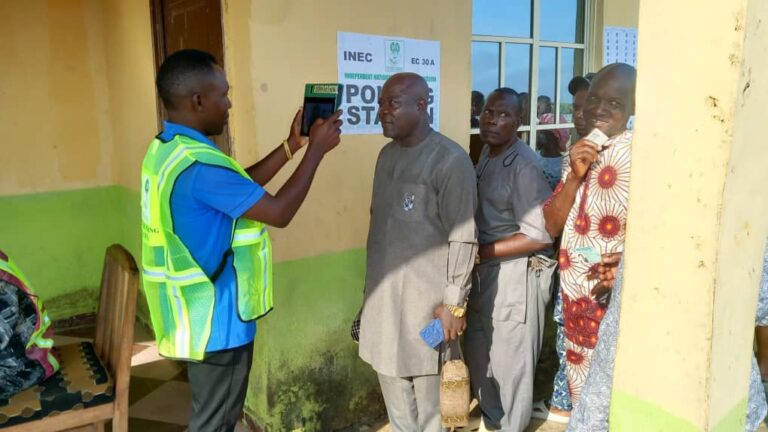
THE Ondo State governorship election was held on Saturday, November 17.

The ICIR reported that the Independent National Electoral Commission (INEC) declared the incumbent Governor Lucky Aiyedatiwa the election winner.

Aiyedatiwa polled 366,781 votes to defeat his closest rival, the Peoples Democratic Party (PDP) candidate, Agboola Ajayi, who garnered  117,845 votes.

He recorded a landslide victory in all the 18 local government areas (LGAs).

Below are the results from the 18 LGAs as declared by INEC:

  1. Ile Oluji/Oke-Igbo LGA

Registered voters:81,954

Number of accredited voters:22,256

Results according to parties:

A-13
AA-2
AAC-13
ADC-185
ADP-63
APC-16,600
APGA-31
APM-9
APP-3
LP-23
NNPP-3
NRM-7
PDP-4,442
PRP-8
SDP-3
YP-6
YPP-5
ZLP-38

2. Idanre LGA

Number of registered voters:91,392

Number of accredited voters:19,712

Results according to parties:

A-4
AA-2
AAC-10
ADC-147
ADP-66
APC-9,114
APGA-25
APM-7
APP-4
LP-24
NNPP-4
NRM-26
PDP-8,940
PRP-12
SDP-9
YP-8
YPP-14
ZLP-14

3. Irele LGA

Number of registered voters:78982

Number of accredited voters:24,031

Results according to parties:

A-2
AA-1
AAC-4
ADC-156
ADP-67
APC-17,117
APGA-30
APM-5
APP-3
LP-15
NNPP-1
NRM-14
PDP-6,601
PRP-5
SDP-1
YP-4
YPP-1
ZLP-4

4. Akoko South West LGA

Number of registered voters-116,368

Number of accredited voters -36,300

Results according to parties:

A-2
AA-5
AAC-15
ADC-276
ADP-87
APC-29,700
APGA-23
APM-6
APP-4
LP-16
NNPP-3
NRM-5
PDP-5,517
PRP-7
SDP-11
YP-4
YPP-9
ZLP-10

5. Owo LGA

Number of registered voters-143,751

Number of accredited voters-38,340

Results according to parties:

A- 8
AA -3
AAC- 16
ADC-353
ADP-140
APC- 31,914
APGA- 36
APM- 12
APP- 5
LP- 42
NNPP -6
NRM- 3
PDP- 4,740
PRP- 5
SDP -22
YP -8
YPP- 6
ZLP- 15

6. Ondo West LGA

Number of registered voters-190,666

Number of accredited voters-31,418

Results according to parties:

A- 31
AA- 9
AAC-30
ADC-415
ADP-143
APC- 20,755
APGA -56
APM- 17
APP- 12
LP-181
NNPP -6
NRM- 26
PDP- 6,387
PRP- 9
SDP-123
YP- 17
YPP- 49
ZLP- 1,972

7. Akoko South East LGA:

Number of registered voters=41978

Number of accredited voters=15,150

Results according to parties:

A-2

AA-0

AAC-4

ADC-81

ADP-28

APGA-12,140

APM-1

APP-0

LP-10

NNPP-1

NRM-3

PDP-2,692

PRP-1

SDP-3

YP-1

YPP-0

ZLP-2

7: Akoko North West-LGA

Number of registered voters-84,908

Number of accredited voters-31,263

Results according to parties:

A-6

AA-4

AAC-14

ADC-130

ADP-51

APC-25,010

APGA-21

APM-3

APP-3

LP-23

NNPP-2

NRM-7

PDP-5,502

PRP-6

SDP-5

YP-3

YPP-2

ZLP-13

8. Ose LGA

Number of registered voters-78,307

Number of accredited voters -21,661

Results according to parties:

A-6

AA–3

AAC -8

ADC–16,555

APGA- 19

APM– 2

APP- 1

LP- 6

NNPP -0

NRM -2

PDP-4,472

PRP- 0

SDP-4

YP- 1

YPP -0

ZLP-5

9. Akure South -LGA

Number of registered voters -314,285

Number of accredited voters -54,670

Results according to parties:

A- 39

AA-8

AAC- 58

ADC-630

ADP-320

APC- 32,969

APGA -95

APM -29

APP-15

LP-238

NNPP -53

NRM -63

PDP- 17,926

PRP- 98

SDP-138

YP- 10

YPP- 46

ZLP-252

10. Akoko North-East LGA

Number of registered voters-93285

Number of accredited voters-31734

Results according to parties:

A-8

AA-3

AAC-19

ADC-250

ADP-66

APC-25,657

APGA-36

APM-8

APP-3

LP-14

NNPP-7

NRM-14

PDP-5,072

SDP-3

YP-7

YPP-5

ZLP-6

11: Ifedore-LGA

Number of registered voters-83,831

Number of accredited voters -20,438

Results according to parties:

A-13

AA-1

AAC-16

ADC-174

ADP-54

APC-14,157

APGA-18

APM-7

APP-8

LP-19

NNPP-0

NRM-16

PDP-5897

PRP-6

SDP-21

YP-7

YPP-10

ZLP-14

12. Ondo East LGA

Number of registered voters-52,274

Number of accredited voters-20,438

Results according to parties:

A-8

AA-0

AAC-5

ADC-152

ADP-46

APC-8,163

APGA-24

APM-7

APP-0

LP-31

NNPP-1

NRM-8

PDP-2,843

PRP-8

SDP-15

YP-3

YPP-11

ZLP-219

13. Okitupupa LGA

Number of registered voters-126,021

Number of accredited voters-38814

Results according to parties:

A-5

AA-2

AAC-28

ADC-284

ADP-70

APC-26,811

APGA-36

APM-7

APP-3

LP-27

NNPP-6

NRM-11

PDP-10,233

PRP-17

SDP-18

YP-10

YPP-19

ZLP-10

14. Akure North LGA

Number of registered voters -91,392

Number of accredited voters-21,608

Results according to parties:

A-9

AA-4

AAC-22

ADC-180

ADP-62

APC-14,451

APGA-40

APM-9

APP-7

LP-238

NNPP -5

NRM-11

PDP-5,787

PRP-6

SDP-49

YP-7

YPP-13

ZLP-42

15 Akoko North West LG

No of registered voters – 84,908

No of accredited voters – 31,263

Result of political parties:

A 6
AA 4
AAC 14
ADC 130
ADP 51
APC 25010
APGA 21
APM 3
APP 3
LP 23
NNPP 2
NRM 7
PDP 5502
PRP 6
SDP 5
YP 3
YPP 2
ZLP 13

16 Odigbo LGA

No of registered voters – 154,382

No of accredited voters – 38,163

Results according to parties:

A 19
AA 08
AAC 29
ADC 392
ADP 136
APC 26683
APGA 76
APN 22
APP 4
LP 34
NNPP 19
NRM 62
PDP 9343
PRP 31
SDP 12
YP 32
YPP 18
ZLP 70

17: Ilaje LGA

No of registered voters – 146,146

No of accredited voters – 29,131

Results according to parties:

A 9
AA 2
AAC 10
ADC 107
ADP 52
APC 24474
APGA 21
APN 7
APP 5
LP 176
NNPP 87
ÑRM 3
PDP 3632
PRP 1
SDP 0
YP 1
YPP 1
ZLP 4

18: Ese-Odo LG

No of registered voters – 84,888

No of accredited voters – 22,975

Results according to parties:

A 2
AA 1
AAC 3
ADC 85
ADP 31
APC 14511
APGA 17
APM 4
APP 3
LP 45
NNPP 2
NRM 17
PDP 7814
PRP 5
SDP 1
YP 1
YPP 7
ZLP 2

Culture minister, Obi, celebrate Chidinma’s Miss Universe feat

0

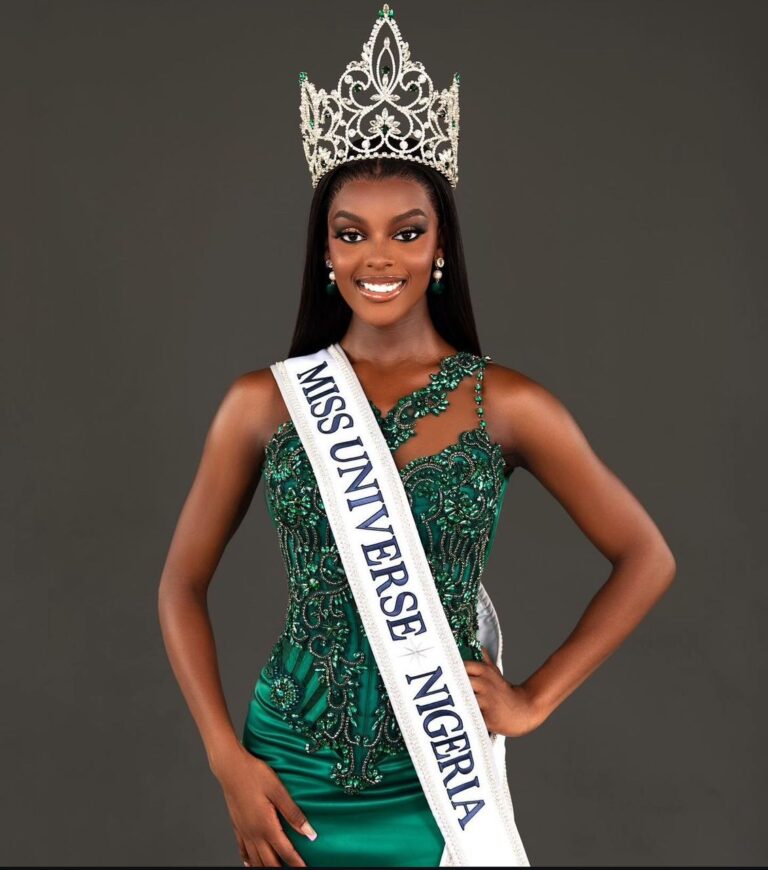
THE minister of art, culture, tourism, and the creative economy, Hannatu Musawa, and former presidential candidate, Peter Obi, have lauded Nigerian beauty queen Chidinma Adetshina for her feat as the first runner-up at the 2024 Miss Universe competition.

Adetshina, who emerged as the highest-ranked African contestant, was also crowned Miss Universe Africa and Oceania.

In a statement on Monday, November 18, Musawa commended Adetshina for her perseverance and exceptional representation of Nigeria’s rich cultural heritage on the global stage.

“Chidinma’s achievement is a shining example of the creative and innovative spirit that defines our nation, as she was focused and never gave up in her days of trial. We are proud to celebrate her success and tenacity and recognise her impact on the global stage.

“Her commitment to empowering women and girls through education and advocacy aligns with our ministry’s vision for a vibrant and inclusive creative economy,” she said.

Musawa also highlighted how Adetshina’s cultural performance at the event promoted tourism, cultural exchange, and international cooperation, describing her as a shining star and Nigeria’s pride.

“Chidinma is a shining star and Nigeria’s pride. Nigerians are proud to celebrate her success and recognise the impact that she has made on the global stage.”

She added, “We reaffirm our commitment to supporting and empowering creative talents, particularly women, to excel in their chosen fields.”

Meanwhile, Peter Obi, in his congratulatory message on X, on Monday, praised Adetshina’s resilience, while also describing her journey as a testament to perseverance and dedication.

“I followed with keen attention, the journey of our Nigerian beauty queen, Chidimma Adetshina, and her rise to stardom. I can only describe her journey as a demonstration of resilience, perseverance, and dedication.

“Through her struggles and the very challenging times, she held on to faith, hope, and her determination to rise to the top. And today, she has emerged victorious,” Obi wrote.

He acknowledged the challenges Adetshina faced on her path to success and hailed her as a symbol of hope for Nigerian youth.

“I sincerely congratulate her for believing in herself and our nation. And to all those who contributed to her success today, your hard work has indeed paid off.

“In these very challenging times in our nation, she stands as a symbol of hope, especially to our youths facing different kinds of challenges, in their journey to greatness – Never give up, no matter how hard the journey, success lies ahead,” he added.

On Sunday, November 17, Adetshina finished as the first runner-up at the 73rd Miss Universe Competition held in Mexico.

The grand finale of the 2024 edition of the beauty pageant was held in Mexico City in the early hours of Sunday, November 17.

Victoria Kjaer Theilvig, who represented Denmark, clinched the Miss Universe crown, securing Denmark’s first-ever win at the competition.

Alongside Denmark and Nigeria, other contestants that made it to the Top 12 finalists were Bolivia, Mexico, Venezuela, Argentina, Puerto Rico, Russia, Chile, Thailand, Canada and Peru with Nigeria being the only country from the African continent.

The ICIR reported that despite participating in the pageant for 37 years, Nigeria has neither won the Miss Universe title nor emerged as a runner-up.

However, the country has succeeded in some categories including a top 10 finish in 2001, winner of the Miss Congeniality award in 2014, top 20 finish in 2019, and best national costume in 2021.

Adetshina’s victory is significant for Nigeria as she first made history as the first Nigerian to make it to the top 5 at the Miss Universe pageant and then emerging first runner-up. 

The ICIR reported how Adetshina, a South African model with a Nigerian father, faced xenophobic attacks and abuse while competing in the Miss South Africa pageant earlier this year. 

The backlash intensified after she advanced to the top 16 in the 2024 edition of the pageant, leading to her withdrawal.

Following her withdrawal, Adetshina was invited by the Silverbird Group to participate in the 2024 Miss Universe Nigeria pageant. She accepted the invitation, competed, and ultimately won the Miss Universe Nigeria 2024 before proceeding to represent Nigeria at the Miss Universe competition.

Reinstate Baruwa as NURTW president, Falana tells FG

0

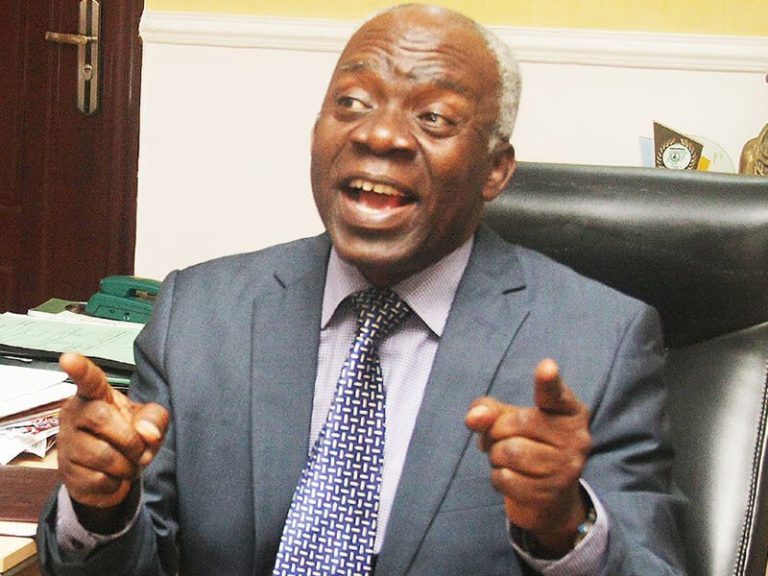
HUMAN rights lawyer, Femi Falana, has called on the Federal Government to immediately reinstate Tajudeen Baruwa as the president of the National Union of Road Transport Workers (NURTW). 

This demand followed two court judgments affirming Baruwa’s leadership amid a prolonged leadership tussle within the union.

In a statement on Monday, November 18, Falana, a senior advocate, recounted how armed thugs stormed the NURTW national secretariat in Abuja on August 28, 2023, resulting in the death of a security officer and the unlawful seizure of the secretariat. 

Following the invasion, Baruwa and members of his executive were arrested and charged with murder, but the charges were later withdrawn.

Falana noted that Baruwa consequently approached the National Industrial Court for legal redress.

The lawyer further noted that Baruwa’s opponents appealed the judgment. 

However, on November 8, 2024, the Court of Appeal dismissed the appeal and upheld the decision of the National Industrial Court, recognising Baruwa as the union’s legitimate president.

“As a law-abiding citizen, comrade Baruwa approached the National Industrial Court for legal redress. In a judgment delivered on March  11, 2024, the court confirmed comrade Baruwa and members of his executive as the elected leaders of the NURTW.

“Dissatisfied with the judgment,  the opponents of comrade Baruwa appealed to the Court of Appeal. On November 8, 2024, the Court of Appeal delivered its judgment. The justices of the court dismissed the appeal and confirmed the judgment of the National Industrial Court which had recognised comrade Baruwa as thepPresident of the NURTW,” Falana wrote.

A certified true copy (CTC) of the judgment, obtained by The ICIR, confirmed that the Court of Appeal, in its decision on appeal number CA/ABJ/CV/293/2024, dismissed the case filed by Najeem Usman Yasin and others against Baruwa and his executive. 

The judgment, delivered by the court justices Hamma Akawu Barka, Nnamdi Okwy Dimgba, and Asmau Ojuolape Akanbi, also ordered the appellants to pay ₦100,000 in costs.

Despite the Industrial Court’s ruling, Oluomo’s team conducted an election in which they declared him the union’s president. The Appeal Court nullified the election.

Oluomo was alleged by his loyalists to have received unanimous support from all delegates during the union’s quadrennial delegate conference for Zone 2, held in Osogbo, Osun State capital.


READ ALSO:


The ICIR reports that the election that led to Oluomo’s declaration as the union’s president was overseen by Aliyu Issa-Ore, the acting national president, whose own position had been nullified by the National Industrial Court in March 2023, a decision subsequently upheld by the Court of Appeal.

While the court’s rulings affirm Baruwa’s leadership, the delay in enforcing the judgments has raised concerns over compliance with the rule of law, with Falana calling on the attorney-general of the federation and minister of justice, Lateef Fagbemi, a senior advocate, and the inspector-general of police, Kayode Egbetokun, to restore Baruwa as the NURTW president.

“In view of the foregoing, we call on the attorney-general of the Federation and Minister of Justice, Mr. Lateef Fagbemi SAN and the Inspector-General of police, Dr. Kayode Egbetokun to ensure that comrade Baruwa is restored to his office in strict compliance with the judgments of the National Industrial Court and the Court of Appeal,” Falana said.

How to prevent AI from taking your job – experts

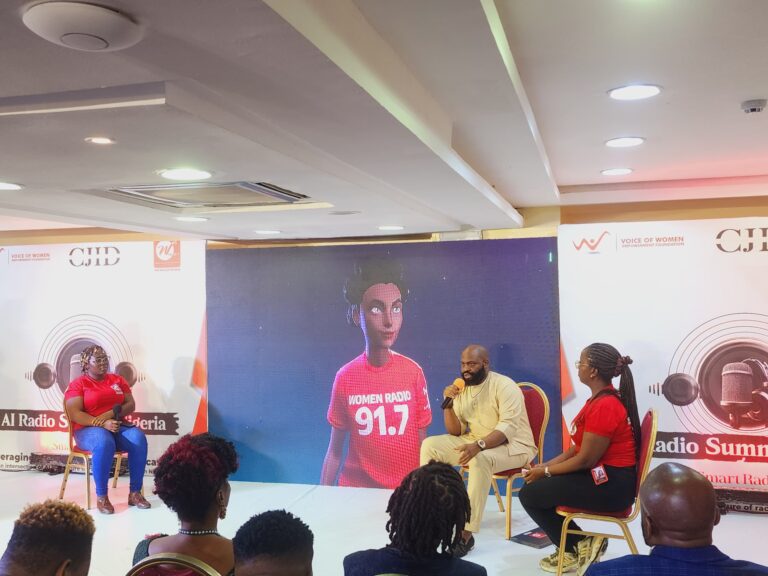
DEBATES on the capacity of artificial intelligence, known as AI, to sack people from their workplaces took centre stage at the launch of AI-powered radio by Women Radio 91.7 in Lagos State on Saturday, November 16.

Speakers took turns to speak on AI’s strengths and what people should do to match up with its growing influence in the workplace and entire human endeavours.

The Oxford English Dictionary defines AI as software used to perform tasks or produce output previously thought to require human intelligence…”

While some participants agreed at the Lagos Summit that AI could sack workers from their jobs, others disagreed. However, all speakers concurred on the need for workers to hone their skills to enable them to cope with emerging technologies and contemporary knowledge.

The event had the theme, “AI Radio Summit Nigeria – Leveraging AI for Next-Gen. Broadcasting.”

Among the speakers was the head of Innovation, Centre for Journalism and Innovation (CJID) Monsur Hussain. He argued that AI would not take his job.

He said his job involved rethinking how journalists work. “While rethinking the way we do things, I know there is going to be a lot of people whose work can’t be automated.”

He added, “One thing I like to note is that we’ve been here before. If you think about the Industrial Revolution, you see that there were hundreds of people working in manufacturing companies and all of that. Then, the Industrial Revolution came and a lot of automation went into all of this work.

“If you think about how, say Ford manufactured cars, they needed like 100 people pre-Industrial Revolution, and now they need maybe like ten people. So, there has been a drop in the number of people needed in the factory.

“This is because some people elsewhere are doing the job of creating tools that help automate those mundane tasks that require so many people at the factory. What this means is that there will be other jobs created.”

He explained that there would be new tasks, rethinking, and jobs with the AI.

Business programme manager, Microsoft Nigeria and Ghana, Stella Marris Okebor, said people should think of leveraging AI on the current and next generation.

“If you look at it from the argument we’ve been having on ‘will AI take jobs or not’, for me, I believe strongly that AI will take some jobs but it will not take all jobs. It depends on the kind of job that you do.”

The managing director of AI Academy for Beginners, Sam Onigbanjo, posited that people would witness a shift in their work before the next decade because of AI.

Speaking on AI’s capacity to transform the media space in a few years, Onigbanjo said AI had already started taking over the industry.

“From my perspective, in the next five to ten years, what you currently describe as your job will record a shift. The job will stay but the roles will shift. What I’m saying is that there is not going to be AI taking your jobs but the functions will change.

“What you are currently delivering has to change, almost like saying you’re in Lagos and you want to go to Ibadan. Many years ago, you walked, it might take you days. But when you have a car, it might take an hour. That’s AI for you. AI is your tool, it’s not here to take your job.

“Just like a car, if you drive it into the bush, you can’t say that car killed me. You drove it into the bush. If you hit somebody, the car didn’t kill anybody, you did. This AI is waiting for you to instruct it. That’s the first thing. It’s there for you to instruct. The good news is that you can instruct it in French, you can instruct it in Hausa, you can instruct it in any language, even pidgin English. Then, it will start to deliver what you want it to do.”

Meanwhile, the founder of the Rise Network, Toyosi Akerele-Ogunsiji, said people worried so much about how AI would sack people from their jobs.

“I’m going to let you know that it’s not AI that’s going to take your job. it’s the person that knows AI that’s going to take your job.”

Another speaker, Anikwe Soluchukwu, also said AI would not take her job, but people who use AI would take others’ jobs.

She urged workers to learn how to use the tools. “You don’t have to keep doing things the same way you’ve been doing it before. You have to learn new skills. Otherwise, people who use AI are going to take your job.”

The programme director of Nigeria Media Innovation Programme, Adedeji Adekunle, emphasised the need for Nigerians to understand AI technologies and their usage.

Dubbed Mimi AI, the chief executive officer of Women Radio, Toun Okewale Sonaiya, said AI Radio was part of her team’s efforts to embrace technology.

She said the objective of the Radio AI Summit was to revolutionise the broadcasting industry by harnessing the transformative power of artificial intelligence.

“This groundbreaking event today is already unlocking the future of radio broadcasting as we explore how AI can enhance audience engagement, how it can streamline audio content production and boost operational efficiency through smart editing and data analysis.

“Today’s highlight for me is the unveiling of Mimi, the Women Radio intelligence virtual assistance, which I believe is Nigeria’s first in radio broadcasting. Mimi is Nigerian, and we engage listeners with real-time information, symbolising our strides in AI-driven broadcasting.”

She stressed that as a pioneer in radio AI broadcast in Nigeria, her organisation’s mission was to use AI for ethical journalism standards and leverage it for sustainable solutions and growth.

In his remark, the special adviser to Lagos State governor on media and publicity, Gboyega Akosile, noted that AI Radio represented a significant milestone in Nigeria’s media industry, bringing together passionate individuals and organisations dedicated to pioneering advancement in the world of broadcasting.

“Women Radio 91.7 FM has demonstrated a remarkable commitment to harnessing the power of artificial intelligence for social impact. The introduction of Mimi AI, Nigeria’s first radio host and interactive TV Avatar is a clear testament to the limitless potential of AI in enhancing how we engage with our audiences and offer compelling content.

“Mimi AI not only represents technological innovation but also serves as a role model of what can be achieved when creativity meets technology. The goal of the summit resonates deeply with our collective vision for a more progressive and inclusive future in broadcasting.”

The chief executive officer, Wole Soyinka Centre for Investigative Journalism, Motunrayo Alaka, expressed concerns about journalism ethics, affirming credibility as the profession’s unique value.

She noted that AI improves with human usage and encouraged journalists to upskill.

Addressing challenges in struggling democracies, Alaka stressed the need for accountability from authorities when using AI and advocated for rules of fairness and credibility. She highlighted the importance of trust as a critical ethical consideration.

Knight-Bagehot fellowship in Economics and Business Journalism seeks entries

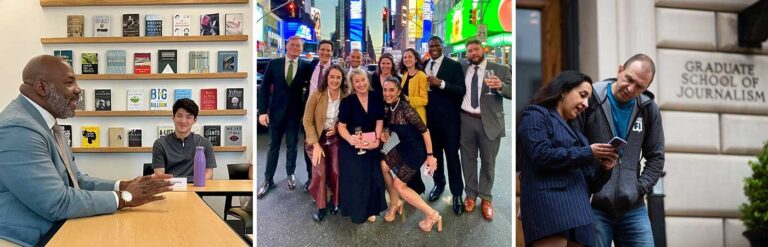
The Columbia University Graduate School of Journalism is accepting applications for its Knight-Bagehot Fellowship in Economics and Business Journalism, which aims to enhance journalists’ understanding of business, economics and finance.

Fellows can choose from two academic tracks: a certificate in Economics and Business Journalism, or the Master of Arts in Journalism.

They also participate in off-the-record seminars and dinner meetings with corporate executives, economists and academics, and attend briefings and field trips to New York-based media companies and financial institutions.

Business and economics journalists worldwide with at least four years of experience can apply for a fellowship in New York.

Conducted during Columbia’s academic year from August through May, the fellowship accepts up to 10 fellows each year.

Fellows receive free tuition plus a stipend to offset living expenses. Housing is available in a Columbia-affiliated facility.

The deadline for the submission of application is January 31, 2025. Interested applicants can apply here.

Court sacks Tinubu’s loyalist MC Oluomo as NURTW president

0

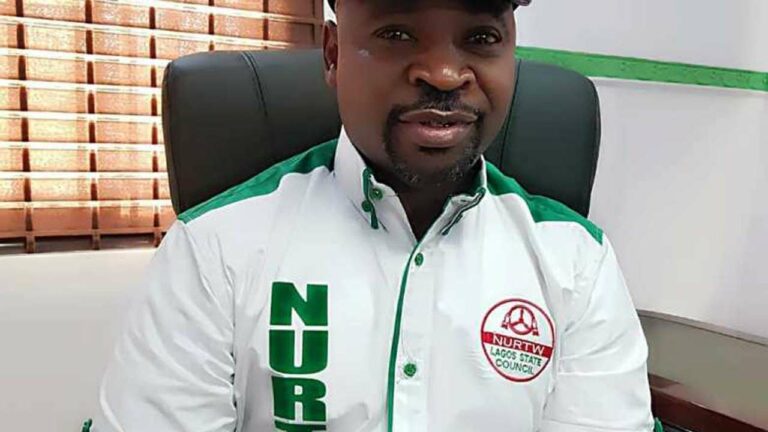
THE Court of Appeal in Abuja has voided the election that led to the declaration of Musiliu Akinsanya, popularly known as MC Oluomo, as the National President of the National Union of Road Transport Workers (NURTW).

According to the certified true copy (CTC) of the judgement obtained by The ICIR, the court affirmed Tajudeen Baruwa as the duly re-elected president of the union.

On Saturday, November 9, 2024, reports emerged that MC Oluomo was elected the president of the NURTW, allegedly running unopposed for the position.

He was said to have received unanimous support from all delegates during the union’s quadrennial delegate conference for Zone 2, held in Osogbo, Osun State capital.

Meanwhile, the Court of Appeal, in a unanimous judgment delivered on Friday, November 8, upheld the March 11, 2024 decision of the National Industrial Court in Abuja, which confirmed Tajudeen Baruwa as the re-elected national president of the NURTW.

The judgment was delivered by Hamma Akawu Barka, Nnamdi Okwy Dimgba, and Asmau Ojuolape Akanbi.

The Court of Appeal, in its judgment on appeal number CA/ABJ/CV/293/2024, dismissed the case brought by Najeem Usman Yasin, Tajudeen Badru Agbede, Aliyu Isa Ore, Kayode Agbeyangi, Alhasan Haruna 313, Aliyu Tanimu, and Hakeem Adeosun against Tajudeen Ibikunle Baruwa, Bello Adamu, Eugene Eze Job, Danjuma Saidu, Prince Isah Dahiru Uman, Suleiman Adamu, Odion Olaye J.P, and Chief Herbert C. Iwuji.

The three-member panel of justices not only rejected the appeal but also ordered the appellants to pay ₦100,000 in costs.

Part of the judgement read: “This is an appeal against the judgment/decision of the National Industrial Court Sitting in Abuja, in Suit No. NICN/ABJ/263/2023 delivered on the 11th March 2024 by Justice O. O. Oyewumi. This appeal is devoid of merit and the same is hereby dismissed.

“I affirm the Judgment of the trial court delivered on the 11th day of March 2024 in respect of Suit No. NICN/ABJ/263/2023. I award the cost of N100,000 against the appellants and in favour of the respondents”

One of the judges, O. O. Oyewumi, while ruling on the leadership crisis within the union, affirmed that the delegates’ conference held on May 24, 2023, across the six zonal councils, which resulted in Baruwa’s re-election as president for a second term, was valid.

The judge also issued an order restraining the union’s former president and board of trustees chairman, Najeem Yasin, from interfering in the union’s daily operations, emphasising that his role was limited to serving as the board chairman.

The ICIR reports that the election that led to Oluomo’s declaration as the union’s president was overseen by Aliyu Issa-Ore, the acting national president, whose own position had been nullified by the National Industrial Court in March 2023, a decision subsequently upheld by the Court of Appeal.

Obi celebrates Nigerian prodigies Shokunbi, Akiogbe, urges focus on youth potential, education

0

FORMER Anambra State Governor and 2023 Labour Party presidential candidate, Peter Obi, on Monday, November 18, celebrated two young Nigerians making global headlines for their exceptional feats. 

Obi, in a statement on X, acknowledged 12-year-old Eniola Shokunbi, an inventor based in the United States, and 15-year-old David Akiogbe, for his record-breaking scores in the Scholastic Assessment Test (SAT). 

He stated that their achievements were evidence of the vast potential of Nigerian youth when given the right opportunities.  

The ICIR reports that Shokunbi’s journey began as a fifth grader at Commodore MacDonough STEM Academy in Middletown, Connecticut, where she embarked on creating a low-cost air filter system to combat airborne diseases in schools.

Motivated by the challenges posed by the COVID-19 pandemic, her project targeted enhancing air quality and safety in classrooms during future pandemics.

Her device, built with a simple combination of a box fan, furnace filters, duct tape, and cardboard, costs just $60 per unit—a fraction of the price of commercial air purifiers. 

The Environmental Protection Agency confirmed that the system eliminates over 99 per cent of airborne viruses, marking it as both innovative and impactful.

In October 2024, the Connecticut State Bond Commission approved $11.5 million in funding to support Shokunbi’s initiative. Connecticut State Senator Matt Lesser, while commending her invention, described her as ‘fabulous’ and a “real rock star.”

Obi hailed Shokunbi’s accomplishment as a testament to the potential of Nigerian children when given the right environment to thrive. 

Joining Shokunbi in the spotlight was David Akiogbe, a 15-year-old Nigerian boy who achieved an extraordinary score of 1580 out of 1600 on the Scholastic Assessment Test (SAT). 

Achieving perfect scores in Mathematics (800) and 780 in Reading and Writing, David’s results rank him among the top young scholars worldwide.

Akiogbe, without formal tutoring, was said to have begun preparing for the SAT in 2022, handling his research, study schedule, and application process independently. 

While his path to the Massachusetts Institute of Technology (MIT) is not yet guaranteed, MIT’s recognition of his SAT score means that David is in a strong position for his application to the prestigious university.

Celebrating their achievements, Obi noted that Shokunbi and Akiogbe exemplified the untapped potential of the Nigerian youth. 

He contrasted their achievements with the dire situation many Nigerian children face, noting that over 20 million were out of school. 

Obi further urged leaders to address this crisis by making education a national priority.  

“The inspiring stories of these young Nigerians represent the potential of millions of Nigerian children whose talents remain untapped, many of whom are among the over 20 million out-of-school children roaming the streets, all because of our uncaring attitude as leaders. 

“We must now focus on investing in their future through education.

“I have repeatedly stated that my continual support for education across the country stems from my unwavering belief that with the right investments in our youths, they will be able to explore their talents, develop their skills, and contribute productively to the development of our nation while excelling on the global stage,” Obi added.