Home Blog Page 595

Iraq demands termination of UN aid mission by end of 2025

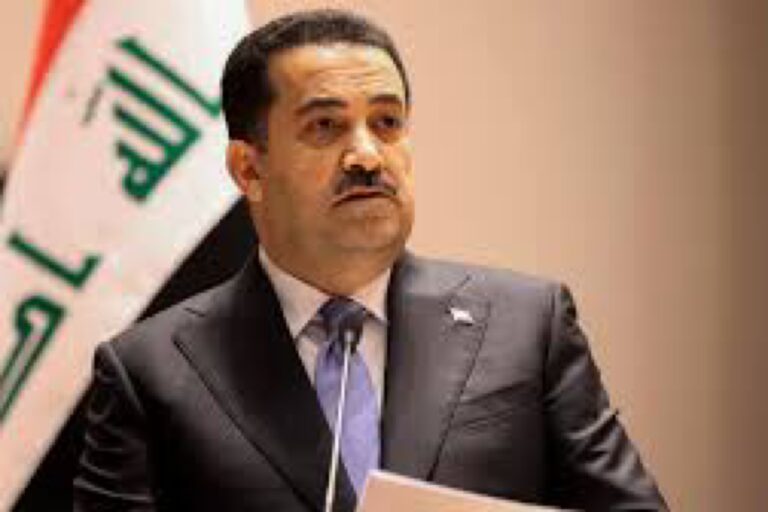
THE government of Iraq has requested the termination of the United Nations Assistance Mission for Iraq (UNAMI), operations by the end of 2025.

According to a statement by the country’s Prime Minister, Mohammed Shia’ Al-Sudani, based on the findings by the UN-formed Independent Strategic Review Team, Iraq’s request for UNAMI to end by 2025 is a timeline sufficient for a responsible closure.

“Unami is no longer required as the Middle East country has made significant progress towards stability and wants to deepen cooperation with other UN organisations.


Read Also:


“Iraq has managed to take important steps in many fields, especially those that fall under Unami’s mandate,” the prime minister said in his statement.

The prime minister also noted that the government of Iraq anticipated a UN Security Council resolution by the end of May in response to Iraq’s request and the Independent Strategic Review Team’s recommendations.

UNAMI is a special political mission established by the UN Security Council Resolution 1500 in 2003 at the request of the Iraqi government.

Its mandate is to prioritise the provision of advice, support and assistance to the government and people of Iraq on advancing inclusive, political dialogue and national and community-level reconciliation.

It also assists in the electoral process, facilitates regional dialogue between Iraq and its neighbours and promotes the protection of human rights with judicial and legal reforms.

The Mission is also mandated to work with government partners and civil society to coordinate the humanitarian and development efforts of the UN agencies, funds and programmes.

This request by the government of Iraq has elicited a range of responses from politicians and other citizens in the country, with some applauding it and others condemning it.

Family sues Abuja school for N500m over child’s bullying

0

THE family of Namtira Bwala, a student of Lead British International School, Abuja, who her schoolmates bullied in a video that went viral recently, has sued the institution, demanding N500 million.    

This was disclosed in a statement by the founding partner of the law firm handling the case, Marvin Omorogbe, on Monday, May 13.

The suit demanded that the sum be paid as general damages for negligence and a breach of duty of care which, otherwise, would have prevented the assault and trauma suffered by the student.

The claimant also requested a public apology from the school to be published in two national newspapers.

“Our client hopes that this lawsuit will bring about drastic changes and adequate measures to prevent a reoccurrence of similar issues in the school,” the statement read in part.

In April 2024, videos showing some of the school students bullying their colleagues went viral.

Bwala was recorded being slapped repeatedly by other students in the video, which generated public outrage.

Some social media users alleged that bullying has been one of the biggest issues in the school.

The school was shut for three days following the incident and the school announced that it had commenced investigations into the videos.

A few days after the incident, Bwala threatened legal action against the school via a letter from her legal representatives, if it failed to punish her bullies.

“Sequel to the preceding, we have our client’s instruction to demand the immediate investigation and the pronouncement of the stiffest possible sanctions in the student’s rule book on Ms Maryam Hassan, Miss Faliya and nine other students who have formed a cult of bullies in Lead British International School, Gwarimpa, Abuja.

“Please note that if the school fails to sanction the student bullies within 48 hours of the receipt of this letter, we have our client’s further instruction to seek an immediate and severe legal redress against Lead British International School, Gwarimpa, without further recourse to you,” the letter read.

Cybersecurity levy: No country can tax its way to prosperity – KPMG

GLOBAL tax and advisory firm, KPMG has criticised the Nigerian government on its move to implement the 0.5 per cent cybersecurity levy as stipulated in the Cybercrime Amendment Act 2024.

Alhough President Bola Tinubu has suspended the implementation of the levy following public outcry, the global tax firm argued that no country could tax its way into prosperity.

Commenting on the new levy, the company argued that there was empirical evidence proving that higher taxes would not lead to sustainable growth.


Read Also:


In a tax alert statement it issued on Monday, May 13, through its head, Tax, Regulatory and People’s Services, Wale Ajayi, the firm raised concerns over the timing of the Act’s implementation, considering the country’s prevailing economic conditions.

It further noted that the need for revenue mobilisation in the face of significant challenges warranted the implementation of the levy even though the law had been there since 2015.

“Given this context, the government may go to any length to mobilise the required revenue. However, research has shown that higher taxes do not lead to sustainable growth. No country can tax itself to prosperity! Perhaps, it is in recognition of this that the current administration and the Presidential Committee on Fiscal Reforms have often emphasised that the government will not introduce new taxes,” said KPMG.

Also, the firm criticised the lack of cost-benefit analysis given multiple reports of about N3 trillion to be generated from the levy annually.

It further advised that such levies should be accompanied by an adequate expenditure statement to justify them.

Furthermore, it questioned how the implementation of the Act would drive financial inclusion across the country given the fear that individuals and businesses would resort to other forms of transaction.

New Eagles coach targets World Cup qualification, vows competitive squad selection

0

NEWLY-APPOINTED Super Eagles’ coach, George Finidi has vowed to secure six points in the upcoming World Cup qualifiers against South Africa and Benin.

Finidi said this at his unveiling ceremony as the Super Eagles’ head coach at the MKO Abiola National Stadium, Abuja, on Monday, May 13, adding that he knew what the Nigeria Football Federation (NFF) expected of him.

Finidi, who has led the team to two friendlies after the expiration of the immediate past coach, José Santos Peseiro, said he would only call up players regularly playing for clubs in Nigeria or abroad for international assignments to ensure the Super Eagles’ continued competitiveness.

“My first target is to make sure that we are in line to qualify for the 2026 FIFA World Cup by winning the upcoming two matches against South Africa and Benin Republic. The 2025 AFCON qualifiers will soon start and we must also be prepared for those as well. 

“I know what the NFF wants as it is boldly written in the contract, and I will work very hard to add value to the team and put myself in the position to earn even more than I will be earning from the take-off.”

He also noted that there would be no controversy regarding his relationship with the players, adding that they were professionals who would be given what they are used to in Europe.

“I will try my best to ensure the team starts functioning properly and we start winning games again. There is no pressure on me; I have a tough skin. I just want to call for your support. I know this is not an easy job, but with the support of everyone, we can achieve our objectives,” he said.

On his part, Nigeria’s Minister of Sports Development, John Owan Enoh, applauded the leadership of NFF for settling for an indigenous head coach for the Super Eagles, despite numerous foreign applicants for the position.

He also urged the NFF and all Nigerians to provide full support for the new coach.

The President of NFF, Ibrahim Musa Gusau expressed delight over the “new chapter” in the nation’s senior men’s football team, assuring that the football governing body was determined to fully support George and his assistants to lead the Super Eagles to new heights.

“When we returned from the Africa Cup of Nations in Cote d’Ivoire, we began the search for a new head coach. There was a plethora of foreign applicants, far more than the indigenous applicants. However, we undertook a thorough process that has produced an indigenous coach and we are very happy about that. 

“Finidi George was part of the technical crew that came close to winning the AFCON, and we have faith in him that he will lead the team to the title next time. 

Gusau also disclosed that the Federation granted George autonomy in selecting his assistants.

According to him, Finidi chose Daniel Amokachi and Benjamin James as assistants, along with Olatunji Baruwa as the goalkeepers’ trainer, Chima Onyeike as the Fitness Trainer, and Mehmet Ozturk as the Analyst.

Recall that The ICIR reported that NFF announced the appointment of Finidi as the new head coach of the Super Eagles.

According to a statement released on Monday, April 29, the 52-year-old former Real Betis and Ajax Amsterdam forward was given the reins of the nation’s senior men’s team after the NFF Board approved the recommendation of its Technical and Development Committee the appointment.

Following the Super Eagles’ remarkable run to the final of the 2023 Africa Cup of Nations in Cote d’Ivoire, the Super Eagles gaffer at the tournament, Peseiro, a Portuguese, stepped down, and Finidi George, who had worked as his assistant for 20 months, took over as temporary coach.

Considering George’s remarkable career, the NFF statement highlighted his achievements, which include “gold, silver and bronze medals from the 1992, 1994, 2000 and 2002 AFCON tournaments.”

Application opens for Daphne Caruana Galizia Prize for Journalism

THE European Parliament is accepting applications for the Daphne Caruana Galizia Prize for Journalism.

The prize rewards outstanding journalism that promotes or defends the core principles and values of the European Union such as human dignity, freedom, democracy, equality, rule of law, and human rights.

The prize is named in honour of Daphne Caruana Galizia, a Maltese journalist who was murdered in a car bomb explosion on Oct. 16, 2017.


Read Also:


Interested journalists must submit in-depth pieces published or broadcast by media based in one of the 27 European Union member states. Only entries published or broadcast between Sept. 1, 2023, and July 31, 2024 are eligible.

The winner will receive EUR 20,000 (US$21,494) at an awards ceremony in mid-October, coinciding with the anniversary of the assassination of Daphne Caruana Galizia.

The deadline is July 31.

To apply click here


Tariff hike: Falana backs picketing of DisCos’ offices, faults NERC

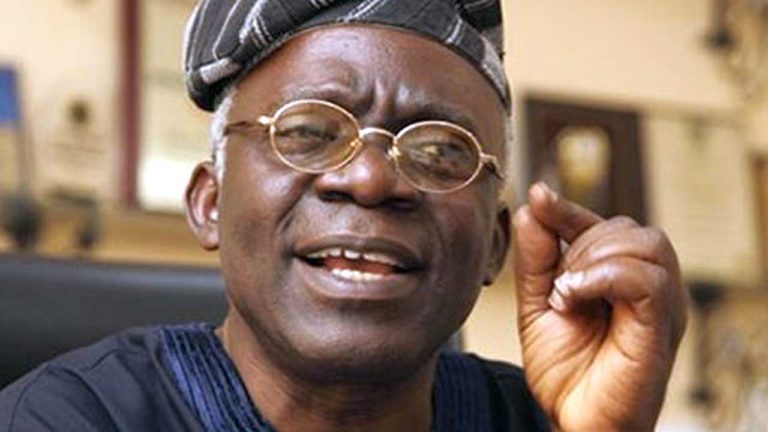
HUMAN rights lawyer, Femi Falana, has backed picketing of the Nigerian Electricity Regulatory Commission (NERC) headquarters and offices of the Electricity Distribution Companies (DisCos) across Nigeria over the hike in electricity tariff.

The senior lawyer said the action was justifiable and was provided for in Nigeria’s Labour Act.

Falana stated this on Sunday, May 12, during a monitored interview on Channels Television’s Sunday Politics.


Read Also:


It would be noted that the organised labour under the auspices of the Nigeria Labour Congress (NLC) and Trade Union Congress (TUC) had a few days ago issued NERC a May 12 deadline to reverse the hike in electricity tariff to N65/kwh or risk having its commission and DisCo offices nationwide picketed.

The labour unions directed their state branches and affiliates in a warning letter jointly signed by NLC president, Joe Ajaero, and his TUC counterpart, Festus Osifo, to mobilise their members in readiness for the picketing if the federal government and NERC failed to heed their warning.

NLC Letter to picket Power Distribution Companies
NLC’s letter to picket power distribution companies

The ICIR confirmed on Monday that Abuja, Ikeja, Eko and Benin Distribution companies were picketed following the directive of the labour leaders.

Falana who lent his support for the picketing exercise said  NERC failed to follow due process and did not engage the stakeholders before taking such an unpopular decision.

According to Falana, the Labour Act supports the workers’ action. “They are going to picket the headquarters of NERC and offices of the DISCOs to register their protest against the illegal increase in electricity tariff. This is because the Nigeria Electricity Regulation Commission did not follow due process and didn’t conduct a public hearing as required by the Electricity Act 2023.”

He urged NERC to engage and discuss with the labour movements and work for the reversal of the hike.

“Again, the increase was anchored on the assumption that there would be regular electricity supply for at least 20 hours. But that has not been the case. If DisCos cannot meet the electricity supply, people have no right to pay the increased tariff,” he added.

He expressed concern that it would be unfair and insensitive of any government to supply darkness and expect its citizens to pay for electricity tariffs.

Falana said it was becoming obvious that privatisation had failed ‘woefully’ in Nigeria.

Citing relevant sections of the law, he said, “By Section 116 of the Electricity Act 2023, you can only justify a hike in tariff if you supply the electricity. There must be evidence that there is an improvement in electricity supply.

“But if Nigerians have to power their offices or business premises with generators in the face of epileptic electricity supply, it is difficult to justify. Again when they talk about unbundling, to the best of my knowledge, the majority of the DisCos have been acquired by the government because of their toxic loans.

Falana argued that the distribution companies had been sold since 2013,as such the sector had become self-sufficient and did not need government subsidy any longer.


READ ALSO:


He pointed out that if the government considered unbundling again, it must engage and consult widely.

“This is because privatisation has failed woefully in Nigeria. I think the Senate has once called on the government to take back all the DisCos and take firm control.

“We cannot increase tariffs when the majority of our people are supplied with darkness. I am not even talking of those in Band B, C and D. We are only talking of Band A for now and there is no basis for such discrimination,” he stated.

African Fact-Checking Awards open application 

Africa Check, a project of the AFP Foundation, is accepting applications for the African Fact-Checking Awards. The awards honour journalism that exposes misleading claims made by public figures and institutions.

Works must be original pieces of fact-checking journalism first published or broadcast by a media house based in Africa between July 1, 2023, and July 14, 2024. Entries may have been published or broadcast in French or English.


Read Also:


The categories are fact-check of the year by a working journalist, fact-check of the year by a professional fact-checker, and fact-check of the year by a student. The working journalist and professional fact-checker will receive US$3,000, while the runners-up will be awarded US$1,500. The student journalist winner will receive US$2,000 and the runner-up US$1,000.

The deadline is July 14.

To apply click here


Female genital mutilation is on the rise in Africa: disturbing new trends are driving up the numbers

0

By Tamsin Bradley, University of Portsmouth

THIRTEEN-year-old Salamatu Jalloh had her whole future to look forward to. But in January 2023, her lifeless body was found wrapped in a pink and blue shroud on an earthen floor in a village in north-west Sierra Leone.

Salamatu and two other girls bled to death after participating in a secret Bondo society initiation into womanhood. The ceremony, which lasts for several weeks, began with a sense of excitement and anticipation – a rare occasion in this rural community to celebrate girls. But at its core was a violent act: the cutting and removal of the girls’ external genitalia.

Their tragic deaths were highlighted in the latest Unicef report on female genital mutilation. According to the UN agency 230 million girls and women alive today have survived female genital mutilation, but live with the devastating consequences.

Most procedures happen in African countries, accounting for 144 million cases.

Despite campaigns to end this practice there are 30 million more women and girls globally who have undergone this form of torture than eight years ago.

As an applied social anthropologist who has researched women and violence for many years I’ve been studying this form of abuse, and the reasons it persists, for over two decades. Some countries are making strides in reducing the practice. In others, advancements have stalled or even been reversed due to changing ideologies as well as the fallout from instability and conflict.

Unicef calculates the rate of decline would need to be 27 times faster to eliminate this abuse by 2030.

Understanding the trends is the starting point for ending female genital mutilation. Some of the new trends are alarming. They include a backlash by conservatives against efforts to stop female genital mutilation; increasing numbers of “secret procedures” which are difficult to keep track of; and shifts towards what are termed “less severe” forms. Increased “medicalisation” of the procedure by health care professionals is another disturbing trend.

Reasons given for FGM

The types of cutting vary. In its most severe form, infibulation, the cut edges of the labia are sewn together to achieve a smoothness considered to be beautiful. The vagina must be reopened for sexual intercourse or childbirth.

Every year, over half a million girls globally undergo this extreme form of vaginal mutilation.

Most of those who support female genital mutilation believe it maintains cleanliness, increases a girl’s chances of marriage, protects her virginity and discourages “female promiscuity”, thus preserving the family honour. They also believe it improves fertility and prevents stillbirths.Most supporters of the practice do so for religious or cultural reasons.

In fact female genital mutilation has no health benefits, and it harms girls and women in many ways. It carries the risk of immediate complications like shock, haemorrhage, tetanus, sepsis, urine retention, ulceration of the genital region and injury to adjacent genital tissue. Long-term consequences include increased risk of maternal morbidity, recurrent bladder and urinary tract infection, cysts, infertility and adverse psychological and sexual consequences.

FGM in African countries

Countries with the highest levels of female genital mutilation are Somalia (99%), Guinea (95%) and Djibouti (90%).

In Kenya, over the last half century a remarkable transformation has occurred. Female genital mutilation was once widespread, but most of the country has now abandoned the practice.

Yet among the Somali community, concentrated in the north-eastern province of Kenya, there has been little change, and the practice remains nearly universal.

Somalia and Sudan face the challenge of addressing widespread female genital mutilation amid conflict and population growth.

Ethiopia has consistently made progress, but climate shocks, disease and food insecurity make it harder to maintain these successes.

The fragility of progress cannot be overstated.

Conservative backlashes and compliant doctors

There are some alarming trends that make eliminating this practice even more difficult.

  • Backlash by conservatives: In The Gambia religious leaders have demanded that legislators revoke a 2015 law banning female genital mutilation. They reacted after three women in the northern village of Bakadagi were found guilty of mutilating eight infant girls in 2023, the first major conviction under the law. The World Health Organization has warned that a repeal in The Gambia could encourage other countries to disregard their duty to protect these rights.
  • Secret procedures: In countries where the practice is banned it has often gone underground. Girls are also being cut at a younger age to avoid detection. This makes accurate rates of female genital mutilation harder to capture.
  • Shifts towards “less severe” forms: One of these is sunnah, the removal of the clitoris. In countries such as Sudan and Somalia this is considered by many to be unharmful as the vagina is not sewn up. Proponents argue that this does not count as female genital mutilation.
  • Medicalised” procedures, performed by trained people like doctors, nurses and midwives: Some people consider these legitimate as they are thought to be safer. More of these are being performed in public or private clinics, chemists, homes, or elsewhere.
  • Destabilisation and eroded rights: Around 4 in 10 girls and women who have undergone female genital mutilation live in countries affected by conflict or fragility. Ethiopia, Nigeria and Sudan account for the largest numbers of girls and women who have undergone female genital mutilation in conflict-affected countries.

Armed conflict and the devastating impact of climate change have led to a sudden deepening of poverty and mass displacement, driving people from their land and livelihoods. Families are plunged into deep poverty and studies have shown that the rights of girls slip away when families are faced with stark choices.

The commodification of girls through marriage practices such as bride price means that when families are stripped of all other resources daughters become an object to be sold. Female genital mutilation, as a marker of a girl’s purity, becomes essential.

Progress to eliminate this horrific form of abuse needs to be a lot faster. Understanding the shifting trends is a start.The Conversation

Tamsin Bradley, Professor of International Development Studies, University of Portsmouth

This article is republished from The Conversation under a Creative Commons license. Read the original article.

Nigeria police arrest father for posting daughter’s nudes

0

THE Nigeria Police Force (NPF) said it had arrested a 28-year-old father for allegedly uploading his four-year-old daughter’s nude images and videos on social media.

The NPF disclosed this in a statement on Sunday, May 12, by its public relations officer, Olumuyiwa Adejobi.

It said it received public outcry in response to disturbing images and videos involving a four-year-old child with the Instagram handle @officialsarah_ig, circulating on social media.

Although the NPF did not disclose the name of the father of the girl, it condemned the action and adjudged the content portraying the young child in inappropriate poses, akin to adult content.

It said, “Prima facie investigations indicate the involvement of the child’s father, who has been apprehended by the police at the Auchi Divisional Police Headquarters, Edo State Police Command.

“Every necessary measure is being implemented to ensure that justice is swiftly served.”

Father of the four-year-old girl
Father of the four-year-old girl; Source: NPF

The Force also said that as the investigation unfolded, it was imperative to establish proactive measures to guide and counsel parents, to prevent the proliferation of such anomalies in our society.

“In light of the above, the Force emphasises the importance of implementing support systems for parents and guardians to protect the safety and well-being of their children.

“It is crucial for caregivers to also prioritise the security of minors and seek assistance or guidance when required,” the NPF urged, reiterating its commitment to safeguarding children and upholding the law.

Checks by The ICIR show that the contents, on the Instagram handle @officialsarah_ig of one Suleman Sarah who has about 8,626 followers as of the time of filing this report, might have been deleted as the page appeared to have been removed.

However, the contents were still on some some social media accounts as of the time of filing this report.

A report by Daily Trust said the man, 28, allegedly took his four-year-old daughter to a hotel, removed her clothes, took her picture and uploaded it on his Instagram handle, @officialsarah_ig, where it raised controversy.

New tax policy will exempt 95% of small businesses – presidential committee

THE chairman of the Presidential Fiscal Policy and Tax Reforms Committee, Taiwo Oyedele, said the Federal government is working on a system that would provide tax relief for 95 per cent of the Nigerian economy’s informal sector.

Oyedele reportedly hinted at the committee’s closing session on Sunday, May 12 in Abuja.

The 95 per cent target will fall on businesses earning N25 million a year or less from the various taxes, he said, explaining that the committee was using data for its decisions.

Read Also:


“So, we think that 95 per cent of the informal sector should be legally exempted from all taxes; withholding tax, company income tax, even payee on their staff.

“We think that the informal sector are people who are trying to earn legitimate living. We should allow them to be and support them to grow to a point where they can then have the ability to pay taxes,” Oyedele said.

He said the reforms would focus on five per cent of that sector, the middle class and the elite for taxes and that the committee was drafting the laws to effect the necessary changes in the country’s fiscal policy and tax reform ecosystem.

The new laws will also ensure that reviews become sustained by subsequent governments, he said, adding: “We don’t want this whole effort to go down the drain, after one or two years.”

The tax committee chairman anticipates that the proposed tax law will be obeyed by all and sundry, especially by the authorities.

‘’We think they have to lead by example by showing that they have paid the taxes, not only on time but correctly to the lawful authorities as contained in the various laws,” Oyedele said.

Some taxes which Nigerians complained about are those already in the Constitution, which the committee called for their review, he pointed out.

He said his committee’s report would pass through the normal process of legislation to give it full legal backing.

“So, our expectation is, as we progress now from ideation, proposal to implementation, you’ll see less and less of those issues and then you’ll see harmony in the direction of the fiscal system.

‘’Not only in the number of taxes we collect, you will also see an improvement in how those monies are being spent in terms of priority and efficiency of spending and focusing on what impacts on the masses within multidimensional poverty line,” Oyedele said.

He noted also that the committee had been working with the sub-nationals and the local governments in harmonising the tax system in the country.

‘’So, we’re convinced, and that’s what the data tells us, that the right path we need to follow is the path where we repeal many of these taxes, harmonise whatever is left.

‘’We think we can keep that within single digit across local government, state and federal government combined, and then improve the efficiency of collecting those taxes.

‘’We are also very convinced that we need to increase the threshold of exemption for small businesses, for low-income earners because if you can’t make ends meet, the last thing you want is someone asking you to pay tax,” he added.

The ICIR reported that Nigeria’s President Bola Tinubu had on July 6, 2023, set up the presidential tax committee and appointed Oyedele as chairman.

The committee, later inaugurated on August 8, was charged with a mandate to achieve an 18 per cent tax-to-GDP (tax to gross domestic product) ratio within three years, among other responsibilities.

In a report by The ICIR, Oyedele said that the committee would focus on repealing Nigerian tax laws inhibiting the ease of doing business in the country and promoting trade facilitation and wealth creation.