Home Blog Page 773

NDLEA confirms response to Police enquiry, denies arresting MohBad 

0

THE National Drug Law Enforcement Agency (NDLEA) has denied a claim that it has yet to respond to an inquiry by the Lagos State Police Command over allegations bordering on the alleged arrest and detention of the late singer, Ilerioluwa Oladimeji Aloba, popularly known as Mohbad.

The ICIR gathered that the Lagos State Commissioner of Police, Idowu Owohunwa, during a press conference on its investigation of the death of Mohbad on Friday, October 6, stated that they are still awaiting “official response from the NDLEA on one of the viral videos containing allegations by the singer on his experience in the agency’s office sometime in October 2022.”

Reacting to this in a statement on Saturday, October 7, the spokesman of the agency Femi Babafemi, claimed that the statement was false, adding that the NDLEA responded to police enquiry since September 28, 2023.

Part of the statement read: “Following media enquiries on the claim by the Lagos state police command at a press conference on Friday 6th October 2023 that it was yet to get a response from the NDLEA on social media allegations bordering on alleged arrest and detention of the late artiste, Ilerioluwa Oladimeji Aloba, aka MohBad, the Agency will like to state that indeed its response was sent and received by the police since Thursday 28th September 2023.

“Indeed, to show the seriousness with which the Agency treated the issue, our formal response dated Thursday 28th September 2023 was sent by flight to Lagos, delivered and received by the police same Thursday 28th September. The summary of our response is reproduced below for the benefit of the inquiring public.”

Quoting the letter it sent to the Police, the NDLEA said it didn’t arrest or detain MohBad in February 2022.

“We also heard the unsubstantiated allegation on social media that Ilerioluwa Oladimeji Aloba, aka MohBad, was arrested and detained by NDLEA on the 24th of February 2022 and given a substance to drink. In response to this allegation, we wish to state categorically that MohBad was never arrested neither was he ever detained in the custody of the NDLEA on the said date or any other date before or after. The foregoing being the case, the issue of giving him any substance to drink does not arise.”

The ICIR, had on September 17, reported that the A agency denied a claim suggesting the late Nigerian singer Ilerioluwa Aloba, aka Mohbad, was poisoned while in its custody. 

The agency’s rebuttal came in response to a widely circulated video of the deceased that surfaced on the internet, where he claimed he was harassed and given a white substance to consume. 

The late singer was distressed in what looked like a hospital setting as he recounted his ordeal at the NDLEA custody.

In the video, MohBad said:  “They gave me water to drink. It was inside a bottle of water plastic. They said I was using drugs. I was the only one who drank it; they didn’t give others to drink. I won’t lie. Then they told me to go home and told the others to wait.

“They even hit a gun on my head. I saved Zino in that video, but Zino snitched on me.”

Addressing the allegation, Babafemi shared a link to a report by an online platform, TheCable Lifestyle, which detailed the arrest of six people—comprising two females and four males—specifically, Oniyide Azeez (known as Zinoleesky), Owoeye Michael, and Abimbola Ogbe.

Meanwhile, the Police has revealed how the late singer Mohbad, died.

Addressing journalists at the state Police Command headquarters in Ikeja on Friday, October 5, Owohunwa named an auxiliary nurse, Feyisayo Ogedemgbe, as the prime suspect.

Ogedemgbe injected the deceased thrice in his home on September 12, 2023, before he started vomiting and developing goosebumps.

Owohunwa’s revelations are the Police’s preliminary findings into the 27-year-old’s death.
NNPC sells below landing cost of N720, confirms subsidy is back

0

THE Nigerian National Petroleum Company (NNPC), has assured consumers that there is no planned price increase on the product.

This development has confirmed ‘subsidy is back’, since the current landing cost is N720, while the National Oil Company still sells at N615.

According to the National Oil Company,”we do not have the intention to increase our PMS pump prices as widely speculated, ”a statement officially placed on X account of the NNPC said.

“Dear esteemed customers, we at NNPC Retail value your patronage, and we do not have the intention to increase our PMS pump prices as widely speculated. Please buy the best quality products at the most affordable prices at our NNPC Retail Stations nationwide.”

Despite the the wide gulf between the landing cost and the selling price, the National Oil Company has failed to provide answers to who bridges the gap in the cost, which connfirmed the government still pays subsidy.

The Executive Secretary of Major Oil Marketers Association of Nigeria MOMAN, Clement Isong, told The ICIR that the organisation is determined to work with the government to facilitate full deregulation of the Petroleum downstream sector.

He stressed that the government must intensify efforts in providing Compressed Natural Gas (CNG), alternatives to ensure alternatives for Nigerian workers and transportation of goods and services.

“CNG is 70 per cent cheaper according to our research. It will be better for the government to channel its intervention on transport logistics of moving foods from food belt states to urban centres and movement of people instead of petroleum price interventions,” he said.

As a result of the wide difference between the landing costs and prices at retail outlets, many petroleum products depots are currently deserted due to lack of products caused by foreign exchange rate volatility, as the landing cost of petrol, has increased to N720/litre, oil marketers said on Thursday.

Petroleum products’ dealers also stated that filling stations were shutting down daily in large numbers, as it was becoming increasingly tough to run the business. They feared possible widespread fuel scarcity in coming months, if the government withdraws interventions.

The landing cost of PMS into Nigeria had increased to N720/litre, up from N651/litre in August this year.

Speaking at the National Executive Council meeting of the Natural Oil and Gas Suppliers Association of Nigeria (NOGASA) in Abuja on Thursday, the National President Benneth Korie, said a lot of depots were presently dried up or out of stock.

He said, “Depot owners are so terribly affected by the increasing cost of crude oil and exchange rate, to the extent that many depots are practically deserted as their owners are unable to secure bank loans to fund their business due to high-interest rates.

“Banks are not willing to guarantee funds release to stakeholders as a result of the difficulty, instability and galloping rates of foreign exchange and high cost of the dollar. Many depots are presently dried up or out of stock, and this is no gainsaying as it is evidently verifiable.”

He added, “Worst hit are filling stations whose owners find it extremely difficult to secure funds to procure products for their retail outlets. Both the independent and major marketers are so terribly affected.

“As of today, filling stations are shutting down in great numbers on a daily basis and dealers are going out of business, with many more on the verge of bankruptcy because of their inability to secure funds to facilitate orders for their stations.”

Korie said the government must therefore urgently come to the aid of the industry as quickly as possible to save it from an impending colossal collapse, which would result in a more devastating blow to the economy at large.

The Chief Executive Officer, PETROCAM Trading (Nig) Ltd., Patrick Ilo,said 52,000 metric tonnes of petrol imported by the company on Tuesday was already N720/litre without subsidies.

According to him, if the landing cost was already N720, the pump price should be around N729/litre in Lagos State if the Federal Government had truly stopped subsidising the product.

“This is the second time I am bringing in my vessel. But after bringing it in, I am trapped. I can’t sell it because I landed my own product at N720. And if you add transportation from depot to station, the value today should be N729/litre at the pump.”

He blamed the price hike on high foreign exchange rate, adding that the Federal Government was still subsidising petrol through the Nigerian National Petroleum Company Limited.

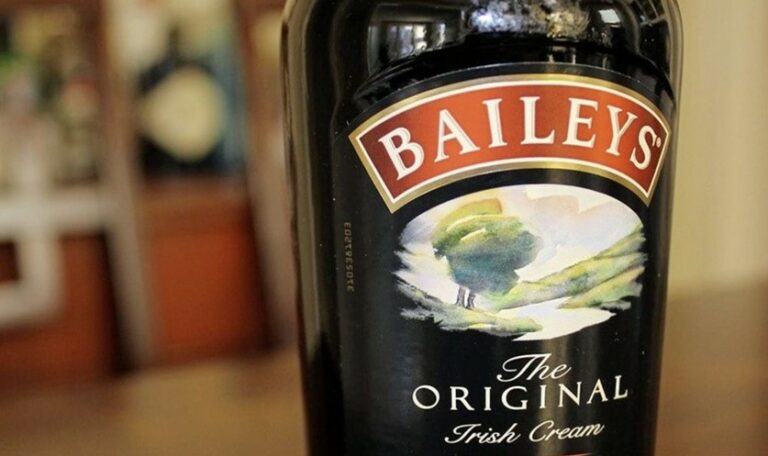
Nigeria’s currency problems made Guinness to stop Baileys, Johnnie Walker sales-Official

0

GUINNESS Nigeria Plc has announced plans to stop the sales and distribution of Johnnie Walker, Singleton, Baileys and other imported brands, citing Nigeria’s currency problems.

The company disclosed this in a statement on Thursday, October 5, signed by its Corporate Relations Director, Rotimi Odusola.

It said the strategic change resulted from its decision to mitigate the negative impacts of lingering foreign exchange (FX) scarcity in the country.

“This strategic change reduces the Company’s foreign exchange requirements and mitigates the negative impacts of lingering foreign exchange scarcity and exchange rate volatility on the financial performance of the Company,” it stated.

Findings by The ICIR showed that Guinness Nigeria suffered a massive loss in foreign exchange by 20,601 per cent to N45.95 billion in June 2023, compared to N221.98 million in June 2022.

The losses were reported in the company’s financial statements for the year ended June 30, 2023.

In 2016, Guinness Nigeria entered into a Sale and Distribution Agreement with Diageo Plc for its international premium spirits (IPS) brands in Nigeria.

In the ‘notification of a change in distribution model’ to the investing Public on Thursday, Guinness Nigeria said it would stop the IPS brand distribution effective April 2024.

“Guinness Nigeria will no longer import or distribute certain Diageo international premium spirits products, including Johnnie Walker, Singleton, and Baileys and others imported under its 2016 Sale & Distribution Agreement with Diageo plc,” the company stated.

Guinness Nigeria manufactures, markets, and distributes non-alcoholic drinks, beer, ready-to-drink (RTDs) and its locally produced spirits, including inter-alia Orijin, Captain Morgan Gold, Gordon’s Moringa, and Smirnoff X1 Choco.

In the financial statement, the revenue related to Guinness Nigeria’s portfolio of imported Diageo IPS products was N14 billion, constituting approximately six per cent of Guinness Nigeria’s total revenues.   

“There are no changes to Diageo plc’s shareholding in Guinness Nigeria, and Diageo remains a key shareholder of Guinness Nigeria,” it stated.

“This move is in line with Guinness Nigeria’s long-term growth strategy, and it is also in alignment with Diageo plc’s decision to establish a new, wholly owned spirits-focussed business to manage the importation and distribution of its international premium spirits portfolio in West and Central Africa, with Nigeria as one of the hubs,” the company said.

In December 2015, Guinness Nigeria acquired the distribution rights of Diageo Plc’s IPS brands in Nigeria.

The acquisition was worth N2.35 billion and is expected to deepen the company’s operations and grow its balance sheet in 2016 and beyond.

Under the deal, Guinness Nigeria was to take over various Diageo assets, including Diageo Brands Nigeria Limited, the wholly-owned business that marketed and distributed the IPS brands in Nigeria.

‘Nigeria must increase production, lessen import to solve currency problems’

MINISTER of Innovation, Science and Technology, Uche Nnaji, on October 6, 2023, said Nigeria must increase production, lessen importation to solve its currency problems.

Nigeria is currently facing serious currency problems since floating its currency-Naira against the dollar, causing problems in the economy with a surge on inflation leading to a high cost of living.

Also, there are concerns about floating the Naira against the American dollar, which has led to the dollarisation of the economy and currency speculation. This development, findings have shown, has been creating a wide gap between the official exchange window and the parallel market.

To address these concerns, Nnaji said the Federal Government is ready to implement Presidential Executive Order N0 5 to increase productivity.

The Presidential Executive Order No. 5 is geared towards achieving self-reliance, and self-sufficiency through local content development and increased productivity.

He said the value of the naira would appreciate when the country started producing rather than importing, adding citizens would benefit from a more producing economy.

“If we have made in Nigeria products, we can no longer import and the stress on the naira will reduce.

“When we stop importation of goods and products, we can easily produce here, the value of our currency will appreciate.

“That’s part of the advantage that comes with Presidential Executive Order No 5,’’ the minister said.

Nnaji stressed the importance of creating a conducive environment to support the innovative spirit of Nigerian youths and entrepreneurs.

He said: “We see it as a pivotal moment in our nation’s history that will propel Nigeria to new heights of innovation and technological advancement.

H he expressed optimism that the Executive Order 5 would address challenges by providing support for made-in-Nigeria goods and services.

” The order will develop home-grown capability and the capacity to maintain, redesign, reproduce, rededicate and duplicate any infrastructure built in Nigeria for self-reliance and development.

“The Order also seeks to closely monitor and promote the capacity of Nigerian professionals and contractors in science, engineering and technological progress to compete with their counterparts globally,” Nnaji said.

He added that full implementation of the order would bolster the economy, create jobs, reduce poverty and usher in a brighter future for Nigeria.

The minister said the ministry was currently developing a national strategy for competitiveness in raw materials and product development.

He said it was also formulating national policies on leather and leather products, welding and welding related fields, among others.

Meanwhile, the Naira continued its poor run against the dollar, which experts say could be solved when Nigeria earns more from crude oil sales, halt oil theft and lend at a single digit to the manufacturing sector to increase productivity.

“The President needs to do more on curbing oil theft and possibly declare a state of emergency on that so that we could meet up with our quota with the Organisation of Petroleum Exporting Countries, OPEC quota. It would help our reserves and help strengthen the Naira,”an economist, Kalu Aja, told The ICIR.

On October 5, 2023, the Naira had a mixed performance against the US dollar, strengthening on the black market but weakening through the Investors and Exporters (I&E) window.

Data from the black market shows the naira gained ground, trading at N997 to the dollar compared to N1,000 on Wednesday.

However, at the I&E window, the domestic currency depreciated to N775.2 per dollar from N756.21 previously.

This shows that the value of the naira at the official market sector has decreased by N18.99.

Open Notebook offers science writing fellowship

The Open Notebook and the Burroughs Wellcome Fund invite applications from candidates for a ten-month fellowship.

Fellows must report on and write four pieces for The Open Notebook under the supervision of a mentor. They will also participate in a professional discussion group of prior fellowship participants and editors.

This remote, part-time fellowship is open to early-career science writers with a US$6,000 stipend.


READ ALSO:


Aspirants must have at least three years of experience writing professionally about science. Graduate students who are interested in writing about science are eligible.

International applicants are accepted but must write in English.

The deadline is October 31, 2023. Interested individuals can apply here

Police reveal prime suspect, how Mohbad died

2

THE Lagos State Commissioner of Police, Idowu Owohunwa, has revealed how the late singer Ilerioluwa Aloba, aka Mohbad, died.

He also named the prime suspect as the Police’s investigation continues into the 27-year-old passing.

Addressing journalists at the state Police Command headquarters in Ikeja on Friday, October 5, Owohunwa named an auxiliary nurse, Feyisayo Ogedemgbe, the prime suspect.

Ogedemgbe injected the deceased thrice in his home on September 12, 2023, before he started vomiting and developing goosebumps.

Owohunwa’s revelations are the Police’s preliminary findings into the 27-year-old’s death.
Mohbad: Latest findings

The CP said as of October 6, 26 witnesses had been interviewed concerning Mohbad’s death.

Among those questioned, he listed the late singer’s father, mother, sisters, brother, wife and manager.

According to the Commissioner, Mohbad was brought to the hospital lifeless and was declared dead on September 12 by the attending physicians.

The Police chief said the auxiliary nurse (Feyisayo Ogedemgbe) was called to inject the singer at his home by Mohbad’s friend Ayobami Sodiq Isiaka, aka Spending.

Ogedemgbe gave the singer three injections that are believed to have resulted in a series of events that led to the singer’s death.

“Auxiliary nurse administered multiple and highly potent injections which triggered an immediate reaction that eventually occasioned the death of Mohbad.

“At about 14:35hrs of 12th September 2023, Miss Feyisayo (nurse Ogedemgbe) eventually arrived. Armed with one pack of Ceftriaxone injection, one paracetamol injection…. several needles, and syringes. Mohbad began vomiting and developed goosebumps after the injections,” Owohunwa said.

Other suspects

Meanwhile, the Police have also listed the roles played by other suspects in Mohbad’s death.

The other suspects include Primeboy, also known as Ibrahim Oluwatosin Owodunni, who has known Mohbad since childhood.

The police commissioner revealed that Primeboy and Mohbad went to a concert together on September 10, which resulted in a violent altercation between the two.

The ensuing fight from the altercation caused harm to the late singer.

“The management of the injury subsequently resulted in his death,” Owohunwa said.

Sam Larry, whose actual name is Samson Balogun, was detained and is still in custody over his role in the Afrobeats star’s death. He is being questioned for bullying and violence.

Owohunwa further explained that Abdul-Aziz Fashola, alias Naira Marley, was also detained and is still in custody due to accusations against him.

The Police commissioner, however, said the autopsy and toxicology results were pending.

The autopsy, toxicology test, and exhumation of Mohbad’s remains were all conducted on September 21.

Primeboy submits to the Police

The ICIR reported that Primeboy declared wanted by the Lagos Police Command, submitted himself to the Force on Wednesday, October 4.

The command’s spokesperson, Benjamin Hundeyin, disclosed this in a post on his X handle on Thursday, October 5.

The command declared Primeboy wanted following his failure to honour the Police invitation since the beginning of the investigation into the circumstances leading to Mohbad’s passing.

On Wednesday, October 4, The ICIR reported  Owohunwa promising to award N1 million to anyone who provided information that resulted in his capture.

The command further guaranteed that everyone discovered to be responsible for Mohbad’s death would be brought to justice.

The ICIR reported on Tuesday, October 3, that the Command arrested Naira Marley and took him into custody for interrogation over the singer’s death.

Apart from Naira Marley, the Command had arrested a music promoter, Eletu, known as Sam Larry, who many accused of having a rift with Mohbad.

Police arrested him at the Murtala Muhammad Airport after he arrived in Nigeria from Nairobi, Kenya, at about 10 p.m. on September 28 and took him into custody.

However, Naira Marley and Sam Larry have sternly denied having a hand in Mohbad’s death.

Meanwhile, on Wednesday, October 4, a magistrate court in Yaba, Lagos, ordered Naira Marley and Sam Larry to remain in Police detention.

Naira Marley and Sam Larry were asked to be held without bail for 30 days while the Lagos police concluded their investigation.

The court’s chief magistrate, Adeola Olatunbosun, decided that the suspects should only be imprisoned for 21 days.

The ICIR reported how Nigerians protested Mohbad’s death, prompting the Police to investigate it.

The investigation, supported by the Lagos State Governor Babajide Sanwo-Olu, began with the exhumation of the deceased body. 

Mohbad passed away on Tuesday, September 12. He was buried the next day.

His death has sparked nationwide protests, with many joining joining worldwide.

D’Tigress face US, Belgium, Senegal for Olympic slot

0

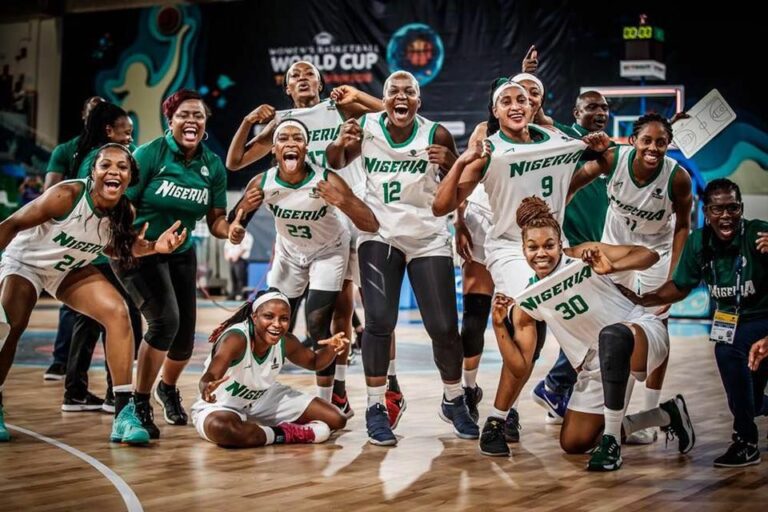
THE coast is getting clearer for the race for the Olympic slot as African champions D’Tigress is set to face the US, Belgium and Senegal at the 2024 FIBA Women’s Olympic Qualifying Tournament.

The draw was held in Hungary on Thursday, October 2023.

The draw put Nigeria’s women’s basketball team in Tournament 2, billed to be held in Antwerp, Belgium, from February 8, 2024.

Nigeria were seeded in Pot 3 due to their 11th-ranked position worldwide.

The qualifying tournament will feature 16 national teams, and the top teams earn a place in the 2024 Summer Olympics basketball tournament.

Ahead of the 2024 Olympics in Paris, there are 10 Olympic tickets available for the women’s national basketball game since France and the US are already assured of their spot.

France secured their spot as the Olympic hosts, while the US was the FIBA Women’s world champions in 2022. But, despite their secured spots in Paris, they will participate in the qualifying tournaments.

The FIBA Women’s Olympic Qualifying Tournaments will be held from February 8 to 11, 2024, in four cities, namely Antwerp, Belgium; Belem, Brazil; Sopron, Hungary; and a city to be confirmed in China.

In tournament 1, France is paired with China, New Zealand and the yet-to-be-decided qualifiers from the Americas. In tournament 3, Brazil, Germany, Serbia and Australia will slug it out for a spot at the Olympics.

Meanwhile, Spain, Hungary, Japan and the other qualifiers from the Americas region will hope to pick up one of the tickets from the group.

The teams from the Americas are Canada, Puerto Rico, Colombia and Venezuela.

SSS arrests UNICAL don accused of harassing students  

0

THE former Dean of the University of Calabar’s Law Faculty, Cyril Ndifon, has been arrested and detained by the State Security Services (SSS) for allegedly harassing female students. 

The DSS spokesman, Peter Afunanya, disclosed this in Abuja on Thursday.

He said the don was arrested and detained after refusing to accept repeated invitations from the Service.

According to Afunanya, the Service arrested the embattled don after the Independent Corrupt Practices Commission (ICPC) requested the secret police’s aid to apprehend him.

He also noted that Ndifon’s detention was carried out by a court order authorizing it.

The ICIR reported how the university suspended Ndifon after allegations that he molested his female students.

The institution set up a panel to investigate him.  

However, Ndifon denied the allegations and described them as the works of his enemies.

He claimed they were plotted after he emerged as a Dean of the Law Faculty.

He also called the accusations outright lies intended to harm his reputation.

Experts divided as Afrexim-NNPCL $3bn loan deal stalls

EXPERTS are divided over measures for stabilising Nigeria’s foreign exchange rate as there has yet to be a green light on the $3 billion deal between the Nigerian National Petroleum Company Limited (NNPCL) and African Export-Import Bank (Afreximbank) expected to be used in stabilising the rate.

The NNPCL and Afreximbank had, on August 16, signed a commitment letter for an emergency $3 billion crude oil repayment loan.

The Loan is expected to provide some immediate relief for the Nigerian authorities in their ongoing fiscal and monetary policy reforms to stabilise the exchange rate.

It is intended to boost dollar liquidity in the Nigerian Foreign Exchange Market (NFEM), easing the struggle businesses and individuals go through in seeking dollars at the unofficial (black) market.

It is also expected to help the Central Bank of Nigeria (CBN) offset the $10 billion foreign exchange obligation owed to local lenders.

File Image

However, the progress towards accessing the emergency loan has been slow as Afreximbank is still sourcing for oil traders to offtake the crude.

The right policy mix to stabilise the naira will be for the government to seek external borrowings, the Group Managing Director of Cowry Asset Management Limited, Johnson Chukwu, said.

He shared the view at a webinar on Thursday, October 5, while presenting a paper with the theme, ‘Nigeria’s Economic Landscape: An Overview of Q3 2023.’

“I have advocated that the government should go for bilateral or multilateral agencies to raise funds,” he said, pointing out that the most likely agency to approach should be the International Monetary Fund (IMF).

“It could be a 20-year loan, probably at a concessionary interest rate. That will allow us to clear those arrears. It is only when we clear those arrears that we can see stability in the exchange rate,” Chukwu argued.

According to him, if the exchange rate is stabilised, it will stabilise the inflation rate as the pass-through effect of the position of the local currency will moderate.

With that achieved, the authorities will only have to deal with inflation pressure from food items.

“The government must also avoid further Ways and Means (W&M) borrowing that leads to liquidity injection into the economy,” he said.

The Central Bank is already challenged with the weak macroeconomic environment as the task before its new leadership is daunting, and the tools to stabilise the exchange rate are not readily at the apex banks’ disposal.

“So, they will need to go to the government to understand how to raise foreign currencies to stabilise the exchange rate,” the Cowry boss said, stressing further that without stabilising the exchange rate, the authorities cannot stabilise the surging inflation rate.

Two of the three elements – exchange rate, inflation rate and interest rate, impacting economic stability are beyond the tools available to the apex bank, Chukwu noted.

“So they (CBN) need the support of the executive to access funding from bilateral or multilateral agencies to stabilise the exchange rate.

“The other aspect of inflationary pressure is coming from food production, so we also need the government to weigh in on the insecurity issues in the country,” he added.

Taking a different view, a finance expert and development economist, Kazeem Bello, told The ICIR that attracting debts from bilateral or multilateral institutions is not a good standard for any country to stabilise its local currency.

He believes the approach will create multiple problems, recalling that he had faulted the Afrexim-NNPCL $3 billion deal.

Bello noted that there were several ways to source funds to meet foreign exchange demands while not compromising the value of the naira.

For him, issues to be examined should be how to attract and generate the inflow of foreign currencies and how to utilise the resources to manage Nigeria’s market and meet its economic needs.

“The sources and the utilisation mechanism are therefore completely distinctive and should never be muddled together as we have repeatedly done in Nigeria, thereby creating all this confusion and trouble for the naira,” Bello said.

He highlighted ways to acquire foreign currencies for domestic needs, including export proceeds, inflows from foreign dividends or overseas repatriation, remittances, and inflow into the capital markets.

However, the way and manner in which these inflows are managed, especially regarding retention and retrievability of the currency usage, are of concern.

He said, “For instance, when you earn export proceeds, it is expected to assist in harnessing the foreign funds with which that country enters the global market to make foreign purchases for domestic needs.

“One of the significant reasons why countries keep foreign reserves is to ensure that they can effectively import goods and products at a competitive or what you call comparative advantage ways.”

Pointing out that the IMF offers some structural adjustment mechanisms with financial support to address domestic currency misallocation, currently experienced in Nigeria, Bello said the Fund had offered Nigeria some $5 billion in intervention to address and reposition its foreign exchange market.

However, the last administration rejected the offer when the IMF insisted that the Nigerian government operate a single window as a condition for the loan.

“By then, the Federal Government was totally against and unprepared to merge the different exchange rate windows.

“Rather than dissipate energy and resources in sourcing forex from bilateral or other multilateral institutions, the FGN (Federal Government of Nigeria) can return to the IMF to genuinely renegotiate the terms of that medium-sized restructuring support,” Bello suggested.

He believes the term support comes with prudent implementation and is one of the reasons it may be more expedient to approach the institution given the disciplines that come with its financial support and implementation.

He further explained that the restructuring package is not a loan but financial support to stimulate growth in critical sectors of the economy and assist with the short-term shock effect of the total deregulation of the foreign exchange market.

Bello also disagreed with the perception that the naira devaluation was simply because of the shortage of foreign currencies.

“Even if you inject $100 billion or $500 billion in an economy as big as Nigeria, it will only affect a minor change, but the naira will continue to be devalued,” he submitted.

World Bank to support Nigeria’s power sector reforms with 1.2m meters

THE World Bank has pledged to support Nigeria’s power sector reforms with 1.2 million meters to help the nation close its metering gap.

The support is expected to kick-start the Federal Government’s mass metering programme, which seeks to stop estimated billing.

With over seven million consumers yet to be metered, the Federal Government’s mass metering programme, designed to close the gap, had met a deadlock after controversies and allegations of corruption marred its first phase.

The number of metered electricity customers in Nigeria stood at 5.47 million in Q2 2023, indicating a growth of 10.4 per cent from the 4.96 million reported in Q2 2022.

On a quarter-on-quarter basis, the growth was only 3.1 per cent from 5.31 million recorded in the preceding quarter.

On October 5, 2023, bidders jostling to provide meters packed out a hall at the Transmission Company of Nigeria (TCN) in the Wuse Area of the Federal Capital Territory.

The Federal Government, at the event, emphasized that the initiative was committed to delivering reliable and cleaner electricity to Nigerian people and businesses.

Assistant General Manager in charge of World Bank Projects at TCN, Tukur Bamali, at the forum, said the reform would improve the performance of distribution companies (DisCos).

According to him, over $500 million is being provided by the World Bank for the project. $150 million will be expended on metering across eleven distribution companies, while $350 million will be given to DisCos directly to improve power supply.

The project would take about 18 months after the bidding process had ended and contracts were signed with suppliers, Bamali said, adding that it would be rounded off around the first quarter of 2025.

He said four million meters under phase one were on track.

Bamali affirmed that there was a need to consistently meter consumers to end to the estimated billing of end users.

The ICIR reports that the Nigerian government has been engaging with the Central Bank of Nigeria (CBN), which has been unable to provide the N200 billion required from the government for the project.

This organisation also reports that the World Bank has been supporting Nigeria’s power sector through the Power Sector Recovery Programme (PSRP), which has seen about $500 million lent to support the ailing sector.

Besides, a discussion on $1.5 billion loan is ongoing between the Bank and the Nigerian government.

According to a World Bank report, Nigeria has the world’s largest absolute electricity access deficit.

Lack of access to the electricity grid affects 45 per cent of the population (90 million people), making Nigeria the country with the largest number of people not connected to electricity. As such, Nigeria accounts for 12 per cent of the global access deficit.