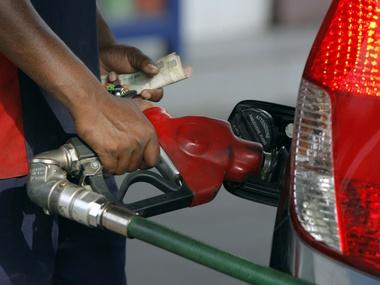
NIGERIA risks enabling an unhealthy monopolistic market if the Nigerian National Petroleum Company Limited (NNPCL) continues to solely determine the pump price of petrol, some industry stakeholders have warned.
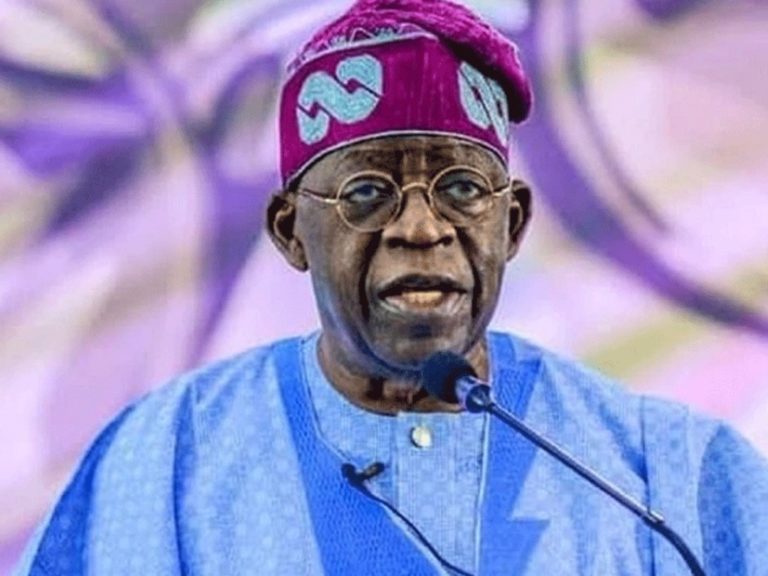
The NNPCL, rather than the defunct Petroleum Product Pricing Regulatory Agency (PPPRA), has been the agency determining the pump price of petrol since President Bola Tinubu removed fuel subsidy on May 29.
The Tinubu administration has maintained that the local petrol price would flow with market forces like the price of crude on the international market, foreign exchange rates, and marketing/ distribution logistics at home.
But some stakeholders in the business have condemned NNPCL’s price determining monopoly, saying it could trigger its hijack of the market.
Former Chairman of Major Oil Marketers Association of Nigeria (MOMAN), Adetunji Oyebanji, who spoke with The ICIR, said a serious regulatory enforcement would instill confidence in the sector and support competitive fair pricing.
“The NNPCL, because of its size, and because it is the major supplier in the market today, may likely influence the market. The regulatory authority needs to make necessary enforcement and ensure competitive fair pricing.
“For now, we follow their price. They are the major supplier now, although more marketers are being licensed,” Oyebanji said.
Adetunji argued that marketers’ participation in fuel importation would become more robust if the NNPCL reflected the true picture of the market fundamentals.
President of the Petroleum Retail Owners Association of Nigeria, (PETROAN) Billy-Gillis Harry, in a chat with The ICIR, also thrashed the fuel price adjustment by the NNPCL without conferring with stakeholders.
Harry said, “They changed price to N617 per litre without consulting us. This is completely wrong. We are all competitors, but the NNPCL is a super partner. They have the assets, and they still wield the powers they had when they were fully in government. This is not fair competition, but we will get to compete with them.”
But the chief executive officer of the Nigerian Midstream and Downstream Petroleum Regulatory Authority (NMDPRA), Farouk Ahmed, absolved the NNPCL of any price-setting monopoly, as he said price of the product was market-determined.
Ahmed said, “I had said back in May we are not going to be setting price. The market will determine itself. As you saw back in early June when price came out, it was based on the cost of importation plus other logistics of distribution, and, of course, the profit margin by the importer.
”This market is deregulated and is open to all participants. When I was in Lagos, we had about 56 marketing companies that have applied for and obtained licences to import.
”Out of those, 10 of them have indicated to supply within the third quarter which is July, August and September. And out of those already, we have received some cargoes from some of these marketers.”
Nigerians woke up on Tuesday, July 18 and were shocked to realise that the price of petrol had been adjusted at fuel stations across the country, including those of NNPCL.
In Lagos, the NNPC filling stations and major marketers like TotalEnergie are now selling the product at N570 per litre, up from N488 per litre, while independent marketers are selling it at N600 per litre and above, from N500-N520
In Abuja, the pump price of petrol is N617 at NNPC and some major marketers filling stations, while it is as high as N700 per litre and above at filling states in the South-south, South-east, North-central, North-west, North-east, and even the South-west.
FOR a chance to win a $1,000 grand prize and publication in each genre, creative authors can enter their poetry, nonfiction, and fiction pieces.
The 14th Annual Poetry, Fiction, and Nonfiction Contest is being hosted by Terrain.org. The first location-based online journal in the world, Terrain.org, combines literary works including poetry, creative nonfiction, and fiction with articles and community case studies.
One to four poems can be submitted in one document by creative writers. You may also submit one 5,000-word fiction tale and one 5,000-word nonfiction essay or article.
The scholarship program seeks to enhance the future of the news industry by accepting and advancing historically underrepresented and disadvantaged populations below the senior management levels at news media firms.
With the help of the scholarships, fresh faces and voices will be given access to networking and mentorship opportunities as well as solid news industry foundations.
Scholarship applications are accepted from media professionals in their early to mid-career stages.
Scholarship recipients will gain free access to three INMA masterclasses, receive a free membership in INMA for one year, be recognised via public announcements by INMA, and more.
The deadline for the application is October 6, 2023.
THE Nigeria Immigration Service (NIS) says data from the International Organisation for Migration (IOM) showed that about 1,200 Nigerians have died while trying to cross the Sahara Desert and the Mediterranean Sea, two dangerous migration routes in the world, in 2023.
Acting Deputy Comptroller General of the NIS, Kemi Nandap, disclosed this on Thursday, July 2 at the organisation’s headquarters in Abuja.
“We have a big problem in this country and that is the issue of ‘Japa syndrome’. We have so many of our youths who are dying in the Sahara Desert, dying in the Mediterranean Sea. They are dying for no cause,” said Nandap at the NIS 2023 Anti-Smuggling of Migrants Nationwide Sensitisation and Enlightenment Campaign.
The deaths of Nigerians on these dangerous journeys further highlight the worsening tragedy of young people trying to flee to the West, particularly to Europe.
The immigration of Nigerians en-masse, a phenomenon now known as “Japa syndrome”, has been a growing concern for the West African country.
‘Japa’ is a Yoruba locution which means to flee or retreat from a dangerous situation. Whether rich or poor, the reasons for Nigerians leaving their home country are often the same – the fear of economic uncertainty at home and hope for better opportunities elsewhere.
Many Nigerian youths have died from the risks of illegal migration to Europethrough the Sahara Desert and Mediterranean Sea.
Speaking on this, the acting Immigration DG urged Nigerians planning to leave the country to contact the migration desk in all the NIS state commands for necessary information.
She said citizens need to understand the ills of irregular migration to prevent more people from dying while attempting to migrate using illegal routes. Nandap indicated that “education and sensitisation is an effective way of prevention”.
“We do not want to continue to lose youths to the dangerous Trans-Sahara route and the treacherous Mediterranean Sea in their attempt to seek greener pastures.
“We know that many people want to go abroad seeking greener pastures. It is not bad, but these journeys must be safe, must be orderly, and must be regular,” she said.
However, illegal migration through rough routes is not restricted to Nigerians alone. Thousands of Africans take long, dangerous journeys to Europe yearly, traversing the Sahara Desert and leaving the North African shores on small, inflatable boats.
In 2022, 3,000 refugees, migrants and asylum seekers died or went missing while trying to reach Europe through the Mediterranean and Atlantic sea routes, according to a United Nations Refugee Agency report.
The ICIRreported that four Nigerian stowaways were discovered and rescued by crew members off the southeast coast of Brazil, after spending a harrowing 13 days concealed in a compartment on top of the rudder of a Liberia-flagged ship that sailed from Lagos, Nigeria.
The ship left Lagos on June 27 and the four stowaways had hidden in a compartment located in a submerged section of the ship. Upon discovery, the four men were found to be in good health and well-fed, but lacked documentation to confirm their nationality.
A police official told AFP, “The men rescued claim to be Nigerians, but they did not carry any documents confirming their origin.”
In another incident, the Spanish coastguard successfully rescued two Nigerian migrants who had stowed away on the rudder of a ship arriving in the Canary Islands from Togo.
The migrants were found and brought to safety on Monday night in the port of Las Palmas and were immediately taken to a hospital for evaluation.
The Guardia Civil police confirmed that the migrants were 19 and 22 years old.
After being released, they were transferred back to the ship responsible for their return to Togo.
The port police tweeted, “The migrants were taken to a hospital. They were later released and were transferred back to the ship, which has to return them to their port of origin.”
Visual evidence shared by the Las Palmas maritime police on Twitter portrayed the precarious situation in which the two stowaways were found.
The images depicted them huddled on the rudder, beneath the ship’s hull and just above the waterline of the MSC Marta.
Investigations revealed that the MSC Marta’s last port before reaching the Spanish archipelago was Lome, the capital of Togo, hinting at the point of origin for the stowaways.
The ship, which had departed from Lagos, Nigeria, on July 2, made a stop in Togo on July 4, indicating that the migrants had remained onboard for at least seven days.
Under Spanish law, stowaways who do not seek asylum must be returned by the ship’s operator to the port of origin.
The Canary Islands, owned by Spain, continue to be a popular yet dangerous route for African migrants attempting to reach Europe, given its geographical proximity and significant maritime traffic in the region.
Months after flood ransacked villages and towns in Rivers state, the residents of affected areas are still struggling to recover. The Nigerian Meteorological Agency (NiMET) has predicted a more lethal flood crisis that would sting harder should the state authority fail to implement a prevention plan.
In this report, Beloved John examines the state’s government preparedness level.
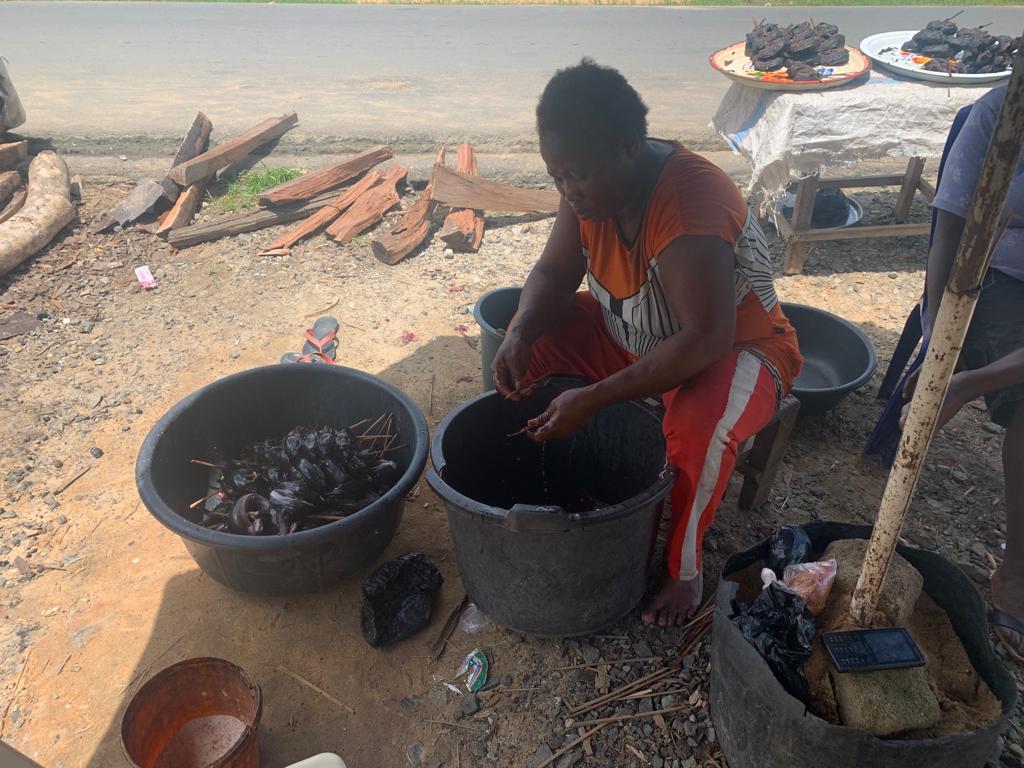
DORNEM Blessing, 45, snorts at the vague remark of imminent flooding in her community from a woman waiting in line to buy smoked fish in Mbiama, a small town in Ahoada West LGA, Rivers state. Her arms jiggle as she twists each fish into a circle, stitching the tail to the head with a toothpick before dropping them in a black bowl.
Dornem Blessing
There’s a mud-stained purple umbrella above her head, a broker between the shimmering sun and her brown-toned skin. On the left, fresh fish lined on a metal grid above burning woods roast to black. Smoke twirls towards the sky, leaving the air with a charred taste and in Dornem’s eyes, a burning sensation.
She repeatedly rubs the back of her palm across her face as she attends to her customers.
“The one we had last year, are we done suffering for it?” she blurts, speaking directly to no one. She pauses, wipes her eyes with the edge of her blouse. “I haven’t even gotten enough money to buy the things I lost. And I work all day. Please, I don’t want this talk in my shop.”
Dornem’s face tightens as she speaks. Since the last flood crisis, her days have been consumed by hardship and she is hardly alone in this.
Residents of Mbiama who spoke to The ICIR say they are rebuilding with the scattered pieces of their lives, and a recurrence of the crisis might destroy them.
“Why, is there another flood? Who said it? How?” Dornem asks with a blend of curiosity and confusion. There is an eerie silence. The four women waiting in line exchange glances. Each understands that neither of them has the answer to her questions or enough information to provide the clarity the others desire.
These could only signal low awareness of the imminent flooding predicted by NIMET and other relevant government authorities.
Flooding in Nigeria
Climate change is increasingly driving extreme weather in Nigeria, causing intense rainfall that makes rivers overflow their boundaries and submerge communities, destroying hundreds of homes and lives.
Reports say the 2022 flood crisis was worsened by the government’s failure to build the Dasin Hausa dam. This dam accommodates the water from Lagdo, a Cameroonian dam.
Over 600 people died in the flood, and 2.5 million others were adversely affected. The United Nations described it as Nigeria’s worst flooding. According to the Rivers state government, the incident affected about 200 communities in four LGA.
This tragedy will likely reoccur as the Nigeria Meteorological Agency (NiMET) has predicted a high possibility of flooding in 2023. A report published in January predicted an early onset of rainfall, followed by heavy flooding beyond the 2022 experience.
NiMET projected that the flood would affect 35 states and 314 local government areas. Rivers State, a place made up of several coastal lowlands, is one state at the top of the list.
The National Emergency Management Agency (NEMA) confirmed, months later, that the flooding was highly probable as the country had begun to witness other weather predictions like early rainfall across the states.
To mitigate the impact, the Agency released a flood prevention plan, advising state governments to be sensitive and relocate people in flood-prone areas, open refugee camps, clear drainages and speed up the provision of mitigating factors.
Absence of temporary accommodation
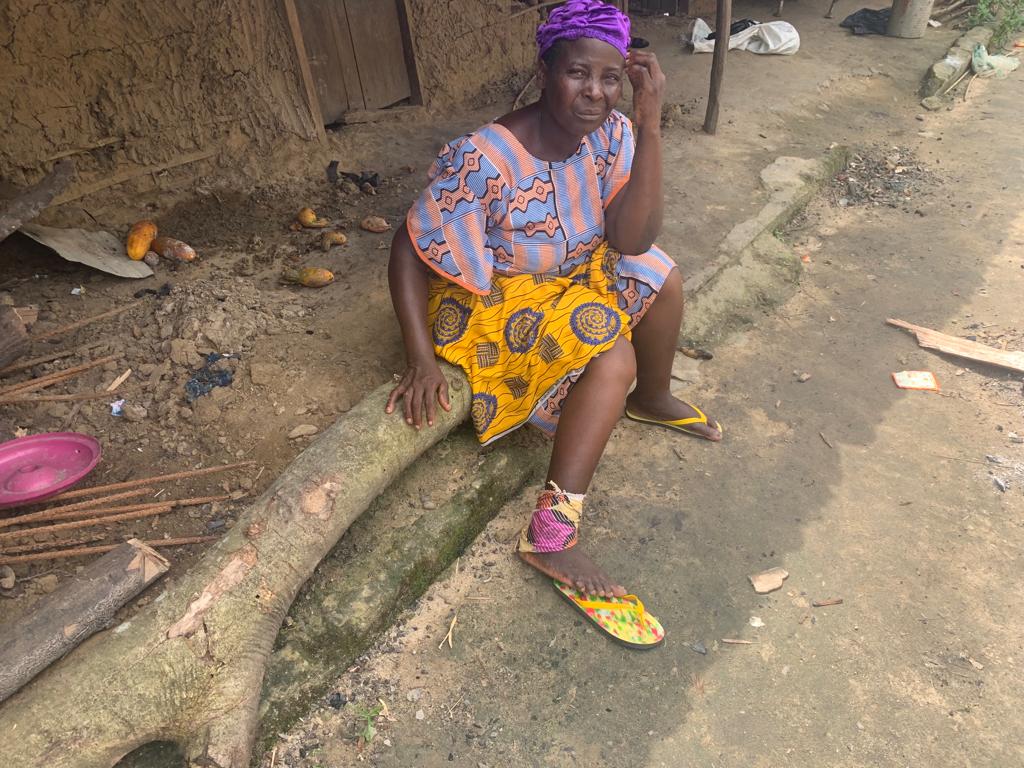
Agnes Thankgod, 47, is sitting on a log of wood outside her home, in Ikata, a tight-knit community of farmers nestled in a corner of the state, under Ahoada East local government area.
Agnes Thankgod sitting outside her house
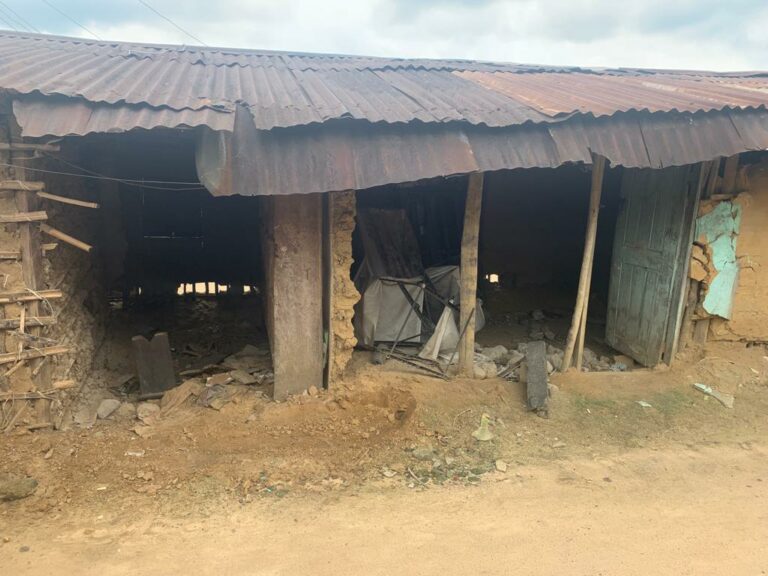
Her home, a mud brick house has fallen into disrepair, with broken walls and a zinc roof full of holes. Sadness is etched on her face as she stares, reminiscing on the nights her family ate and played together. What is left of this is a damaged mud house and a deafening silence.
Agnes Thankgod’s damaged mud house
Her husband drowned in the flood, while her sons are under the care of different relatives.
The absence of an IDP camp in the state worsens her condition. She says she has to live amidst the pile of debris while she works hard to rebuild. Relocation comes at a cost she cannot afford.
“I just have to manage this small corner,” she says.” Even though I wish to move from here, I don’t have the money.”
During the flood, most locals lived in uncompleted buildings and schools until the water receded. And some became stranded afterwards. They now squat with distant relatives or live in makeshift shelters beside their crumbled buildings due to the absence of an IDP camp.
“None of us here know of any camp that can acomodate us. I haven’t heard of anything like that anywhere either. I still live in my hut, although it is mostly broken,” Esan Alan, another resdient in Ikata, tells The ICIR, each sentence followed by a pause and deep sigh.
Esan Alan in Ikata, Ahoada east LGA, Rivers state.
“Yes, I think the flood can come here again. I don’t know when but I worry. Where will I go? What will I do? I can’t even afford a good meal as it is. Relocating is bigger than my pocket.”
He says, “If there is another flood this year, we will go to the roadside or find uncompleted story buildings like we did last year. Those that will survive, will survive.”
Misinformation in flood-prone communities
The ICIR also observed that residents’ awareness of the predicted flooding in Rivers is low as residents are yet to be sensitised about NiMET’s prediction and the importance of controlling the impact.
Faith Precious, a 45-year-old widow, who was forced to retreat to the safety of her parent’s house in Edeoha, a village in Ahoada East LGA, after the floodwaters crushed down her home, believes the next flood would mostly occur after ten years.
She says, “another flood cannot come now, maybe until 2032. That’s what I heard. you know that the last was in 2012. We will be ready for it by then.”
Another resident, Ogbo Ike, is certain that the village would not have such experience within the next ten years.
“That’s what everyone is saying. I am already counting it. By 2032, we will be ready. I don’t know what to do yet but we will figure it out,” he tells The ICIR
This assumption is based on a misinformed speculation that if the last two heavy floods occurred 10 years apart, in 2012 and 2022, the next incident must be in 2032.
When The ICIR inquired from residents of flood-prone communities if there had been sensitisation programmes by the state government, they all replied to the contrary.
This is despite multiple calls for the increased sensitisation of residents in flood-prone areas.
Orashi River remains shallow
The government’s failure to dredge Orashi Rivers, an ancient water source that runs through several hamlets and waterways in the state, is exposing residents to more danger.
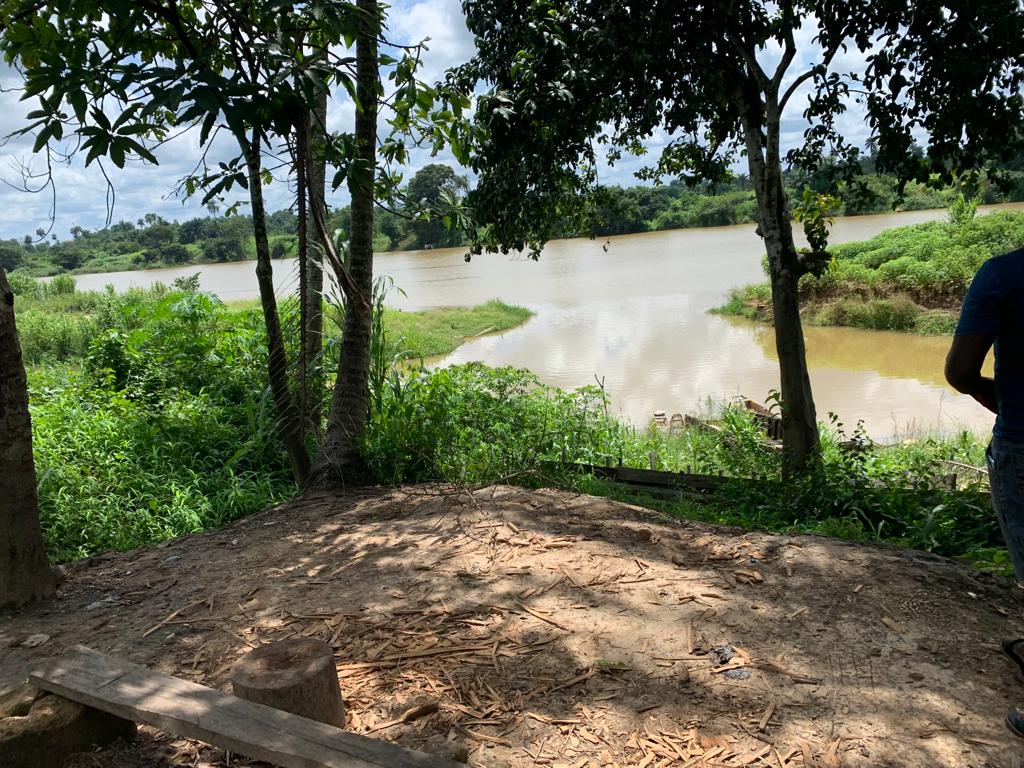
The river is a part of the lower Niger River Basin and a tributary of the Oguta Lake in Rivers. Last year, the water overflowed its banks, pummelling many nearby homes.
The Orashi River in Ahoada west
A few residents who spoke to The ICIR say the overflow of Orashi also caused the flooding in distant communities.
The water flowed out of Orashi because it is no longer deep and does not have enough space to accommodate much water, according to Aintini Opkuru, a resident at Mbiama community.
An environmental activist in Rivers state, Ebiaridor Kentebe, said the failure of the state authority to dredge the Orashi River puts residents at prone areas at a high risk of a devastating flooding crisis.
Kentebe, programme manager of the Environmental Rights Action friends of the Earth Nigeria, said, “the Orashi River has not been dredged and this has made flood-prone susceptible to another disaster.
He called for dredging and the clearing of waterways as measures to reduce flood impact.
There have been several calls for river dredging as a way to reduce flood impacts. Experts say river dredging could reduce river floods by removing these sediments and debris from river beds to improve the capacity of the rivers to hold and absorb more water.
However, Ebiaridor said “one has to be conscious on the impact of river dredging on the environment when doing this.”
Some of the drainages and waterways in Rivers communities are also in a similar situation. They are clogged by debris which restricts water flow.
In the 2023 approved budget, the Rivers state government budgeted N25 million for clearing drainages and another N20 million for flood and erosion control.
A small drainage filled with plastic debris in Rivers state.
However, The ICIR visited communities in Ahoada East, Ahoada West and Onelga LGA that was severely affected by the previous flood but did not see any sign of drainage cleaning or repair.
According to the chairman of the Nigerian Institute of Environmental Engineers, Sesan Odukoya, shorelines can be protected by dredging rivers and clearing waterways. He said this will prevent a repeat of the flood disaster that ravaged many parts of the country in 2022.
The United Nations Children’s Funds (UNICEF) reports that river dredging and cleaning of community drainages and waterways in flood-prone communities are significant ways to minimise the impact of flooding.
Damaged road in Omoku
Omoku, a small town in Onelga LGA, was severely affected by the recent flood. It submerged houses, properties and made an already bad road even worse.
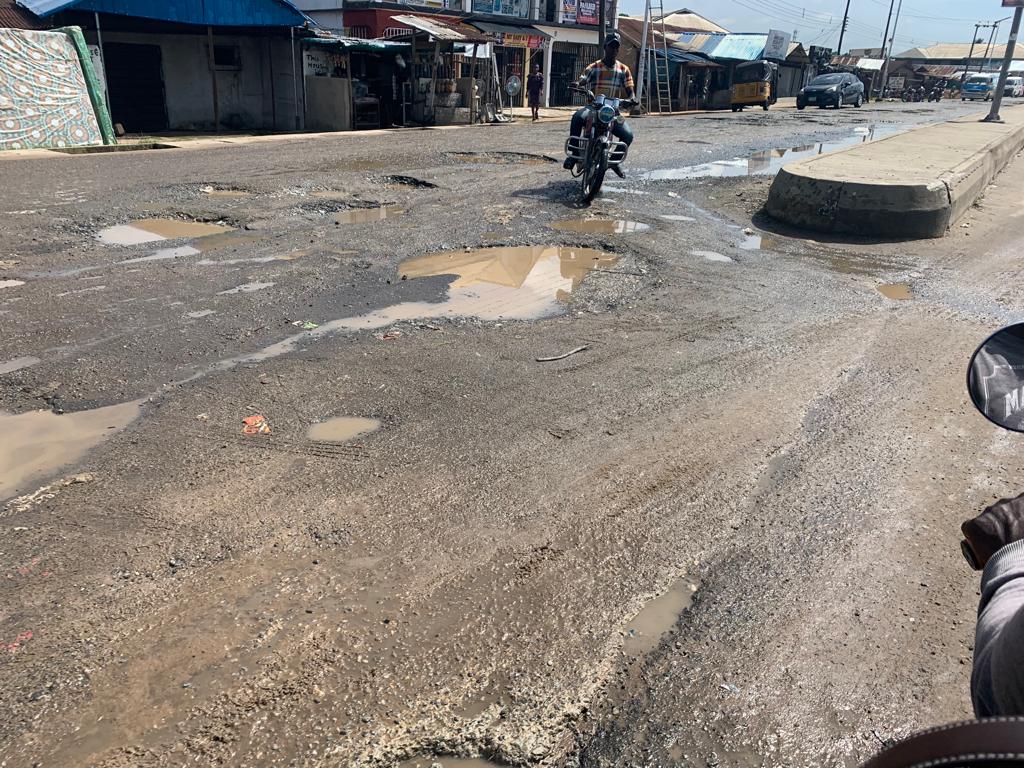
The ICIR observed that Omoku road is broken and eroded in different places, creating deep gullies that make navigation difficult.
A part of Omoku internal road
Months have passed since the incident and the road is still largely unrepaired. Findings show that the Rivers Ministry of Work, in the 2023 budget, allocated N33 million to repair Omoku Internal Roads.
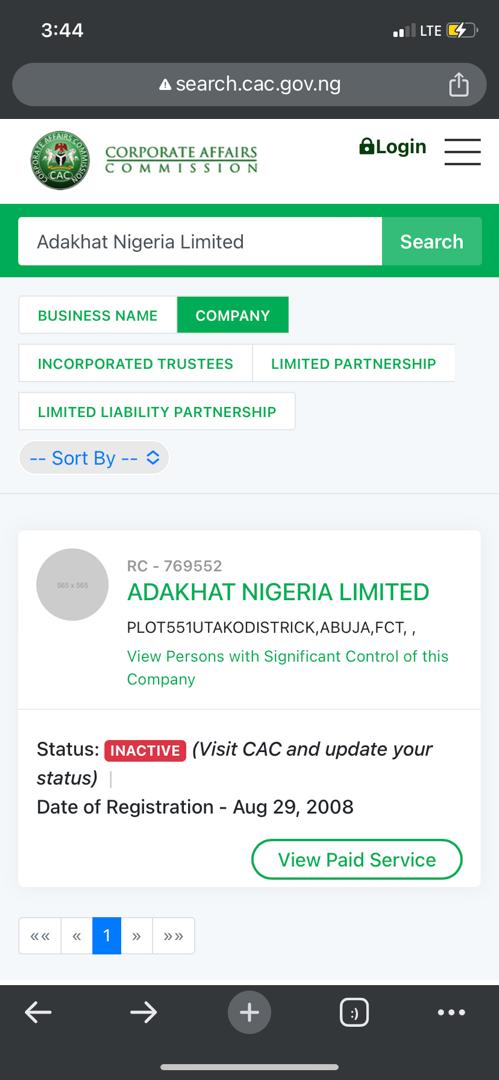
Also, information from Gov.Spend.ng shows that between 2021 and 2022, payment for the repair of Omoku Road was made to Adakhat Nigeria Limited multiple times.
The Federal Ministry of Works paid Adakhat Nigeria Limited N31 million in February and N34 million in October 2021. In July 2022, the Ministry paid Adakhat N12 million for the same road project.
Despite the state’s budget allocation and the repeated payment to Adakhat Nigeria, LTD, Omoku Road is still in terrible condition.
Public record search into the company’s profile on the Corporate Affairs Commission, CAC, verification page shows the company was registered in 2008. It is owned by Akkwaji Victor, Akkwaji Ungwueni, Akkwaji Iwali, and Akkwaji Toni — all directors of the company.
A screenshot of the CAC search.
The ICIR attempted to visit Plot 551, Utako District, Abuja, listed by the CAC as the company’s address but could not locate the address. The location does not have a specific street address within the claimed Utako district.
“This address is a scam address. It is incomplete. You can’t find this place unless you are able to get the name of the street or additional information,” Deji Yusuf, a resident of Utako district, told The ICIR.
The firm also lacks an online presence, such as a functional website documenting its activities over the years.
Government officials decline to speak
A visit was paid to the Ministry of Works for clarification on the project and other issues on Friday, June 2, the permanent secretary, Ebere Dennis Emenike, declined to speak.
She directed a media official to inform The ICIR that the office of the commissioner of works is currently vacant due to a change in government administration. And as such, there was no one authorised to address the press.
The response was the same when TheICIR tried to speak with officials of the state Ministry of Information. The reporter was directed to the director of publication, Val Ugboma, from the office of the permanent secretary, Ibiwari Clapton Ogolo.
However, Ugboma refused to speak, saying he is unauthorised to speak in the commissioner’s absence.
Instead, he directed the reporter to the 2022 flood committee Chairman, who is now the Rivers head of Service, George Nweke.
TheICIR met Nweke outside his office at the Rivers state federal secretariat on Friday, June 2, but he asked to be contacted over the phone but did not respond to any of the phone calls and texts sent to him.
George Nweke
While the government ignores strategies for mitigation and its officials evade accountability, inhabitants of Rivers State remain at high risk of losing lives and property to the predicted flood.
THE Federal Government has approved the payment of N25,000 peculiar allowance for medical and dental doctors in hospitals, medical centres and clinics in the federal public service.
According to a circular dated July 26, 2023, titled, “Accoutrement allowance for medical and dental doctors in hospitals, medical centres, and clinics in federal MDAs,” the allowance is to be paid from the overhead budget.
The development came on the heels of the ongoing indefinite strike by the National Association of Resident Doctors (NARD). The group’s president, Emeka Orji, on July 25, disclosed that the doctors would embark on an indefinite strike on Wednesday, July 26, after the Federal Government failed to meet their demands.
The resident doctors association had on May 15, declared a five-day warning strike to compel the Federal Government to accede to its demands before announcing the total indefinite strike.
The doctors are demanding immediate payment of the 2023 Medical Residency Training Fund (MRTF), release of the circular on one-for-one replacement, payment of skipping arrears, and upward review of Consolidated Medical Salary Structure (CONMESS) in line with full salary restoration to the 2014 value of CONMESS.
Other demands are payment of the arrears of consequential adjustment of minimum wage to the omitted doctors, reversal of the downgrading of the membership certificate by the Medical and Dental Council of Nigeria (MDCN), payment of new hazard allowance, skipping and implementation of corrected CONMESS in State Tertiary Health Institutions, and payment of omitted hazard allowance arrears.
Meanwhile, the July 26 circular read: “The Federal Government has approved the payment of an accouterment allowance of N25,000 per quarter to medical and dental doctors in hospitals, medical centres, and clinics in the federal public service. The allowance is to be paid from the overhead budget.
“The approval takes effect from June 1, 2023. All inquiries relating to this circular should be directed to the commission.”
The ICIRreports that this wasn’t the first time the resident’s doctors would be embarking on strike, as they had downed tools for 159 days since 2013, making the group the only association of workers in the nation’s health sector that has embarked on industrial action beyond 100 days within the period.
NARD’s current strike is the first major workers face-off with the Federal Government since President Bola Tinubu took over power on May 29.
PRESIDENT Bola Tinubu is yet to nominate a minister from 11 out of Nigeria’s 36 states, The ICIR reports.
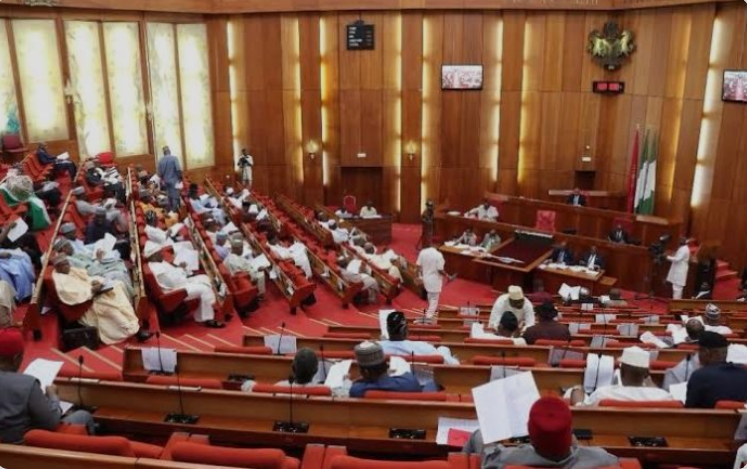
On Thursday, July 27, the President submitted 28 nominees to the Senate for screening and confirmation in his bid to meet the constitutional requirement mandating Nigerian Presidents to forward ministerial nominees to the Senate not later than 60 days after taking the Oath of Office.
The President assumed office on May 29 after taking over from former President Muhammadu Buhari.
The Constitution mandates the President to nominate at least one person from each state of the federation as a minister.
Eleven states yet to have a ministerial nominee are the President’s home state – Lagos, Kano, Adamawa, Bayelsa, Gombe, Kebbi, Kogi, Osun, Plateau, Yobe and Zamfara.
The ICIR reports that Bauchi, Cross River and Katsina got two slots each in the list sent by the President to the Senate on Thursday.
States with a nominee each are Abia, Akwa-Ibom, Anambra, Benue, Borno, Delta, Ebonyi, Edo, Ekiti, Enugu, Imo and Jigawa,
Others are Kaduna, Kwara, Nasarawa, Niger, Ogun, Ondo, Oyo, Rivers, Sokoto and Taraba.
Among the nominees are former governors Nyesom Wike (Rivers); David Umahi (Ebonyi); Nasri El-Rufai (Kaduna); and Abubakar Badaru (Jigawa).
Umahi, who completed his two-term of four years each as governor on May 29, is currently a serving senator.
Tinubu sent the list containing the nominees to the Senate through his Chief of Staff, Femi Gbajabiamila.
The Senate President, Godswill Akpabio, read the list at the plenary at about 1:30 pm.
The President’s letter, as read by Akpabio, stated: “In compliance with the provisions of Section 147, sub-section two of the Constitution of the Federal Republic of Nigeria (1999 as amended), I am pleased to forward to the Senate for confirmation the under-listed 28 ministerial nominees.”
The nominees, according to their states (included by The ICIR), are Abubakar Momoh (Edo); Yusuf Maitama Tuggar (Bauchi); John Enoh (Cross River); Hanatu Musawa (Kastina); Uche Nnaji (Enugu); Betta Edu (Cross River); Doris Uzoka (Imo); David Umahi (Ebonyi); Nyesom Wike (Rivers); and Mohamed Badaru (Jigawa); Nasir El-Rufai (Kaduna).
Others are: Adebayo Adelabu (Oyo); Ekperikpe Ekpo (Akwa Ibom); Olubunmi Tunji-Ojo (Ondo); Stella Okotete (Delta); Uju Ohaneye (Anambra); Dele Alake (Ekiti); Lateef Fagbemi (Kwara); Joseph Utsev (Benue); and Mohammed Idris (Niger).
The list also includes Olawale Edun (Ogun), Nkiru Onyejiocha (Abia); Imaan Sulaiman-Ibrahim (Nasarawa; Ali Pate (Bauchi); Bello Mohammed Goronyo (Sokoto); Abubakar Kyari (Borno); Ahmad Dangiwa (Katsina); and Sani Abubakar Danladi (Taraba).
While noting that the list was not exhaustive, as more names would be sent to the National Assembly in due course, Tinubu expressed hope that the nominations would receive expeditious consideration and confirmation by the Senate.
THE Super Falcons ended Africa’s winless streak at the ongoing FIFA Women’s World Cup after coming from behind to defeat the co-host Australia 3-2 at the Brisbane Stadium on Thursday, July 27.
The ICIR had reported that none of the four African teams – Nigeria, Zambia, South Africa and Morocco – recorded a win after the conclusion of the first group stage matches in the tournament holding in New Zealand and Australia.
But the Super Falcons have recorded Africa’s first win after stunning Australia in the second round of Group B matches.
The victory secured by the Super Falcons, thanks to goals scored by Uchenna Kanu, Osinachi Ohale and Asisat Oshoala, propelled the Nigerian team to the top of the Group B with 4 points.
Race for qualification to the next round
The Super Falcons now have a brighter chance of qualifying for the next round, having earlier drawn against Canada before defeating Australia.
Group B has become survival for the fittest among three teams which are Canada, Australia and Nigeria. The fourth team, Republic of Ireland, has been knocked out of the tournament after losing to Canada 2-1 on Wednesday.
The defeat recorded by the Republic of Ireland against Canada made it their second loss after losing 1-0 to co-host Australia in their opening match.
The Girls in Green, as they are fondly called, are bottom of the table with zero points despite scoring their first goal in a major tournament.
The current standing of teams in the group B table of the ongoing FIFA Women’s World Cup. Photo credit: FIFA website
The current standing in the Group B table has Nigeria at the summit with 4 points, followed by Canada with 4 points, then Australia with 3 points and the Republic of Ireland with 0 points.
Super Falcon’s chance of qualifying for the next round
The rule of qualification from the group stage states that the teams that finish first and second progress to the Round of 16, which takes place from August 5 to August 8.
To progress to the Round of 16, the Super Falcons would need a minimum of 5 points.
NIGERIANS can now make digital transactions in naira on Google Play Store.
This followed a partnership between the tech giant and Verve, a payment card company, to aid the purchase of apps in naira on Google Play Store.
Google will now conduct Verve transactions in Naira (₦) for its consumers in Nigeria, and banks will treat these transactions as local.
The head of retail and payment partnerships at Google Play, Anthea Crawford, said the Google-Verve partnership simplifies the payment process for Google Play Store apps and services while providing a more inclusive digital environment for Nigerians.
In a statement on Thursday, July 27, Crawford said, “Transactions will be undertaken in Nigerian Naira (NG) and treated as local transactions by the country’s banking institutions,” he said.
“As a result, any Nigerian with an Android device and a Verve card now has a streamlined method for making purchases on the Google Play Store.”
The Google official described the development as a milestone, adding that it will be of immense benefit to Nigerians.
“We are thrilled to collaborate with Verve, expanding Google Play access for more Nigerians.
“The introduction of local payments with Verve cards is a significant milestone, enabling more Nigerians to participate in the app economy and access the apps they need.”
Similarly, the managing director of Verve International, Vincent Ogbunude, posited that integrating with Google Play was a significant stride towards achieving Verve’s vision of promoting financial inclusion.
He said, “As a foremost payment card scheme in Nigeria, Verve’s expanding acceptance promotes inclusion by extending the reach of digital services to a larger segment of the Nigerian population.
“Maximising this exciting possibility, users can now add their Verve cards to their Google Play account and pay in naira, without stress.”
To use the service, visit Google Play Store, select your desired app, enter the amount, click “Add credit or debit card’, and, when prompted, enter your Verve card information.
You can also visit pay.google.com, log in with your Gmail account, select ‘Add a payment method’, enter your Verve card information, and save. After that, make your purchase by going back to the Play Store.
This service is available to Android users with Verve cards.
WOMEN made up 25 per cent of President Bola Tinubu’s ministerial list, which was unveiled by the Senate on Thursday, July 27.
The list, sent to the Senate for screening and confirmation as ministers, include 21 men and seven women, making a total of 28 nominees.
The female ministers include former deputy spokesperson for the ruling All Progressives Congress (APC), Hannatu Musawa.
Musawa was recently appointed by Tinubu as Special Adviser on Culture and Entertainment Economy.
Other female nominees include former Imo State Commissioner for Finance and Coordinating Economy, Doris Uzoka-Anite, and an ex-member of the House of Representatives, Nkiru Onyejiocha.
Others are APC National Women Leader and former Cross River Commissioner for Health Betta Edu; ex-Executive Director (Business Development), Nigeria Export-Import (NEXIM) Bank Stella Okotete; former Commissioner of the National Commission for Refugees, Migrants, and Internally Displaced Persons (NCFRMI) Imaan Suleman Ibrahim, and the only female presidential aspirant of the APC in the 2023 general elections, Uju Kennedy Ohanenye.
Tinubu, however, noted that the list was not exhaustive, suggesting that names of more nominees would be sent to the Senate.
“While noting that the above list is not exhaustive and that additional nominations will be sent in due course, I hope that the aforementioned nominees will receive the expeditious consideration and confirmation of the Senate,” Tinubu said in the letter.
To enhance women’s representation in governance, Nigeria introduced the National Gender Policy (NGP) in 2006, which recommends that women fill up 35 per cent of appointive positions in the country for more inclusion.
However, Nigeria ranked 123rd out of the 146 countries rated in the 2022 Global Gender Gap Report by the World Economic Forum.
Tinubu promised that women and young people will feature prominently in his government during his inaugural speech on May 29.
Although the list does not meet the 35 per cent mark recommended by the NGP, it is an improvement upon the 16 per cent recorded in the previous administration.