Home Blog Page 847

EXPLAINER: What you need to know about QR code phishing – ‘quishing’

RECENTLY, the  Joint Admissions and Matriculation Board (JAMB) announced the suspension of Ejikeme Mmesoma from writing its Unified Tertiary Matriculation Examination (UTME) for three years over reported forgery of her 2023 result.

The board in a statement by its Head of Public Affairs and Protocol, Fabian Benjamin, said, “its system was neither tampered with nor compromised  as the candidate simply falsified a copy of a result slip of a candidate named ‘Asimiyu Mariam Omobolanle’ who sat for the UTME in 2021 and scored 138.”

On the other hand, Mmesoma also shared her own side of the story.

In a viral video (now archived here) seen on social media, she showed the result she printed from the JAMB portal while reiterating that she never manipulated her result as alleged by the examination board.

According to her, she visited a cyber cafe to print her result and she was given a result slip with an aggregate score of 362. “They scanned this QR code here and it showed another name, a Yoruba name, Omotola Afolabi, 138,” she said.

Explaining further, she said the candidate linked to her QR code has another score reading 338, suggesting there’s a mix-up.

However, Mmesoma later admit to forging her UTME result, Arise News and TVC News reported.


Screenshot of the mobile app that allows users to create fake UTME results seen on Google Play store earlier but now removed from the store.

Our researchers at the FactCheckHub dig into the QR code phenomenon in a bid to educate the public about what QR code means, how it works, and how to avoid falling victim to QR code phishing or Quishing.

What is a QR Code?

The QR code stands for Quick Response code.

According to Kaspersky, a QR code is a type of barcode that can be read easily by a digital device and which stores information as a series of pixels in a square-shaped grid.

QR codes are frequently used to track information about products in a supply chain, and because many smartphones have built-in QR readers – they are often used in marketing and advertising campaigns. More recently, they have played a key role in helping to trace coronavirus exposure and slow the spread of the virus.
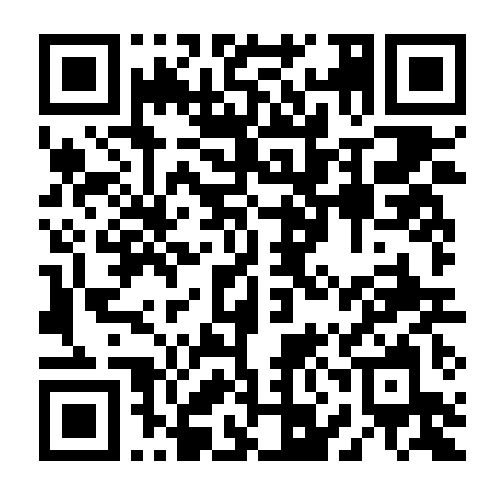
An example of what a QR Code looks like.

While they may look simple, QR codes are capable of storing lots of data. But no matter how much they contain, when scanned, the QR code should allow the user to access information instantly – hence why it’s called a Quick Response code.

The technology for QR codes was developed by Densa-Wave, a Toyota subsidiary. The codes were originally used for tracking inventory and required a separate reader app, but beginning with iOS 11 and Android 8.0, readers are native to most mobile device cameras, explains a TechTarget report.

It added that Static QR codes are typically used to disseminate information to the general public. They are often displayed on posters and billboards and in ads in newspapers and magazines. The person who created the code can track information about the number of times their code was scanned and whether or not the code’s call to action was taken.

It noted that Dynamic QR codes (sometimes referred to as unique QR codes) offer more functionality. They can be edited at any time and even target a specific individual for personalized marketing. Such codes contain more metadata to facilitate tracking.

The data stored in a QR code can include website URLs, phone numbers, or up to 4,000 characters of text.

Are there dangers associated with QR codes?

QR codes are not inherently dangerous. They are simply a way to store data. However, just as it can be hazardous to click links in emails, visiting URLs stored in QR codes can also be risky in several ways, writes Scott Ruoti, an Assistant Professor of Computer Science at the University of Tennessee, in The Conversation.

He says the QR code’s URL can take you to a phishing website that tries to trick you into entering your username or password for another website.

“The URL could take you to a legitimate website and trick that website into doing something harmful, such as giving an attacker access to your account. While such an attack requires a flaw in the website you are visiting, such vulnerabilities are common on the internet. The URL can take you to a malicious website that tricks another website you are logged into on the same device to take an unauthorized action,” says Ruoti.

Aside from opening a website, these actions can include adding contacts or composing emails. This element of surprise can make QR code security threats especially problematic – That is why it’s called QR code phishing or Quishing.

How does QR Code Phishing work?

Quick Response (QR) code phishing is a type of phishing attack that uses QR codes to lure victims into revealing sensitive information. It doesn’t differ from typical internet phishing.

“It’s a social engineering bout aiming to convince you to submit your financial details, personal information, or login particulars,” says Eric Solms, an IT specialist, via his blogpost on LinkedIn.

He explains that the scammer embeds a malicious link in the QR code’s barcode. After scanning, the link will lead you to a page that asks for your details and enables the attacker to steal your information.

He notes that QR code phishing or Quishing can occur online or offline. In the physical realm, QR code scammers replace the authentic QR codes on the walls of corporate offices, businesses, and government service points. “There’s no way to know whether the QR code is genuine or fake unless you see a replacement sign,” he says.

Physical QR code phishing can also occur in hotels, shopping malls, and other physical businesses. For example, suppose you are at a hospital or medical center, and someone mounts a QR Sticker on a wall. In that case, the average user won’t think it is a hacker putting a sticker; they will think it is the hospital, which can be an easy vulnerability, he opines.

Nwachukwu Ebenezer, an IT Support Specialist, also notes that this form of social engineering attack is gaining popularity among cybercriminals eager to steal people’s personal data.

“Quishing attacks can be hard to spot, as the attackers create legitimate-looking websites and logos impersonating known brands,” he adds.

It may also be configured to automatically download malware to the victim’s device allowing the attacker to steal sensitive information or take control of the device.

What happens if you scan fake or malicious QR codes?

Scanning fake or malicious QR codes can have serious implications as it does not only direct you to a URL but can take you to phishing websites designed to steal your bank accounts, credit cards, other personal or mobile apps information. Here are few things that could happen if you scan a malicious or fake QR code:

  1. The QR code could send emails from your accounts, send pre-written emails and it can be programmed to access payment sites and also monitor social media accounts.
  2. You could be directed to a phishing website. Threat actors develop websites that convincingly look like the content you expect then they request critical information from you which can be used to steal one’s identity.
  3. Phony codes can be configured to automatically download contents into your mobile devices such as malware and Trojans.

Quick tips to protect yourself from QR code phishing

It is very important to be cautious and look out for red flags. Suspicious QR code placement, unexpected payment redirections, or personal information requests indicate a potential scam. If something feels off or seems too good to be true, it’s better to err on the side of caution and refrain from scanning the code.

Here are further tips to safeguard yourself from QR code phishing or Quishing:

  1. Always verify the source before scanning QR codes. When scanning QR codes from unfamiliar sources or unsolicited messages, be cautious. After scanning, also check the destination site of the QR code to ensure the linked website or URL is secured.
  2. Visually examine QR codes for any signs of fiddling or manipulation as scammers may place stickers or overlays on genuine QR codes to redirect you to malicious websites. This occurs often with QR codes displayed in public places or in malls.
  3. Scanning QR codes that promise freebies or prizes, especially from unsolicited messages or emails, can lead to email scams or phishing. Verify its authenticity before scanning.
  4. Install and use trusted QR code scanner application on your mobile devices. Download from Google Play Store or Apple App Store only, and read reviews before downloading.
  5. Keep your smartphone operating system, apps, and QR code scanner updated with the latest security patches. Also, enable automatic updates whenever possible on your mobile devices.
  6. Be cautious when scanning QR codes that request personal details or login credentials; it might be phishing scams. Better still, you can manually enter the website URL into your mobile browsers instead of scanning the code directly.
  7. When using a QR code scanning app, review the permissions it requests. Be very cautious of apps that request excessive authorizations, such as accessing your contacts, messages, or other personal information that are unrelated to scanning QR codes.
  8. It is important to look out for phishing links and questionable attachments in emails.
  9. Always double-check the URL to ensure it matches the legitimate website you intended to visit.
  10. When scanning QR codes that lead to websites or online payment or social platforms, ensure you are connected to a secure network. Public Wi-Fi networks can be vulnerable to eavesdropping and data interception.
  11. Enable two-factor authentication whenever possible, especially for financial transactions or accessing sensitive information.
  12. Stay informed about common QR code scams and techniques used by attackers. Self-awareness is key to identifying and possibly avoiding potential threats.

More importantly, take immediate action if you come across a suspicious QR code or believe you have fallen victim to a QR code phishing or Quishing. Report the incident to relevant government agencies such as NCC, NITDA or the consumer protection agency in the country. Also, if it involves financial payment or transaction, quickly reach out to your bank through its customer care numbers to alert them and to further minimize potential damage or seek assistance in resolving the issue.

Republished from the FactCheckHub
One-chance: FCTA cracks down on illegal parking lots, cab drivers

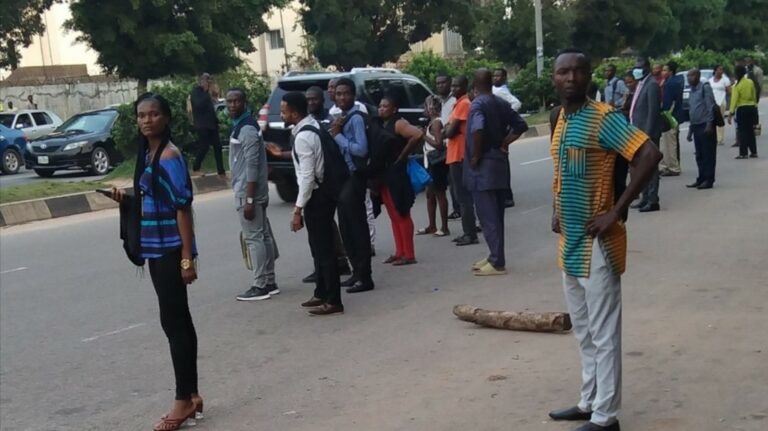
THE Federal Capital Territory Administration’s (FCTA) Command and Control Center task team has cracked down on illegal taxi drivers and parks within the city in a bid to curb the one-chance robbery menace.

The team which is made up of the Nigerian Police, the Department of State Security (DSS), the Abuja Environmental Protection Board (AEPB), the Immigration Service, the Nigeria Security and Civil Defense Corps (NSCDC), the Correctional Service, the NDLEA and the Directorate of Road Traffic Service (DRTS), in conjunction with relevant agencies in the Federal Capital Territory (FCT) removed unauthorised parking lots harbouring one-chance syndicates and beggars in the city on Wednesday, July 19.

The squad also seized vehicles from several locations in the city’s core centre, including Banex Junction and the Federal Secretariat.


READ ALSO:
CCTV can’t check ‘one-chance’ criminal ring in Abuja – FCTA

Caught in the belly of one-chance robbers: Nigeria’s major cities hotbed for crime on passengers

One-chance menace: Stakeholders divided over adequate transportation in Abuja

FCTA demolishes UTC shopping complex in Abuja


The team also dealt with various environmental issues in the Banex axis that were allegedly used in the past by alleged miscreants to target unwary pedestrians passing through the area late at night.

The Secretary, Command and Control Centre, FCTA, Peter Olumuji, who spoke during the operation, indicated that following receipt of reasonable intelligence from relevant security and paramilitary agencies, the team dislodged the activities of one-chance syndicates, who most times use unpainted taxies and illegal parks in locations that are not reserved for parking of vehicles in the city.

Olumuji said that the raid is part of its holistic operation to ensure that residents of Abuja can move freely at every point in time as well as curbing the menace of one chance and street begging.

“The enforcement team is all out to ensure that we raid any location that harbours indiscriminate parking, as we have been receiving reports about one-chance, and the security agencies with us have been giving us credible intelligence on this issue. That’s why we have to go round the city and dislodge these unapproved parking zones.

“And the aspect of the nuisance beggars do, they can also be used as a platform to gather information for criminal activities, and they are also public nuisance within the city centre.

“We had started this operation for the past few weeks now, and we are sustaining it, because from the feeders that we have been getting from the members of the public shows that they are appreciating the efforts of the FCT Administration in carrying out the operation, and we are not resting on it,” Olumuji said

Also speaking, the Deputy Director of Operations, DRTS, Deborah Osho, said that the team detained 15 vehicles from various sites throughout the city centre for various traffic rule infractions, including rickety vehicles that shouldn’t be on the road.

She pointed out that most unlawful parks provide substantial traffic impediments in the city since their operators block important thoroughfares, including pedestrian walkways, and force other drivers and road users to move slowly to pass.

“We were out yesterday (Tuesday) for sensitisation on the need for commercial drivers to take their vehicles to the available taxi parks within the city, but today (Wednesday), they are out on the corridors of the road forming illegal parks, thereby obstructing traffic.

“This is the reason that we are clamping down on them, in order for them to go into approved taxi ranks for their operations in the city so that our roads will be free,” Osho said.

The clampdown is coming a few weeks after The ICIR, in a report, looked at how residents of Abuja and Lagos have been entrapped in the cobwebs of the men of the underbelly popularly known as ‘one-chance’, a calibre of robbers who mask themselves as commercial motorists and passengers.

The report details the experiences of commuters who were victims of the horrifying One-chance robbers in Abuja and Lagos.

In a similar development, stakeholders who participated in a Twitter Space on Thursday, June 15, organised by The ICIR on the topic, ‘One chance – Abuja, hotbed for crimes on commuters’ were divided on the inadequacy of public transportation as one of the causes of the menace.

Listen to the conversation HERE.

The discussion centred on the inadequacy of commercial buses to cater for the needs of the rising number of residents in the FCT, leading many commuters to patronise private cabs, which sometimes might be one-chance drivers disguised as transporters.

Fake UTME result: Mmesoma apologises to JAMB

0

MMESOMA Ejikeme, the student accused by the Joint Admissions Matriculation Board (JAMB) of faking her Unified Tertiary Matriculation Examination (UTME) result, has apologised to the examination body over her conduct.

Mmesoma tendered the apology on Wednesday, July 19, when she appeared before an ad hoc committee set up by the House of Representatives investigating the issue.

“I feel a debt of pain for letting you down. I had already admitted that what I did was wrong. Based on that, I hereby presented to you all my letter of apology.

“I humbly seek your forgiveness for the mistakes I have made and the pain I have caused. I deeply and sincerely agree that I ignorantly got my JAMB result from another portal which was not a JAMB portal. I apologise for all the apportioned blame and all the pain I have caused,” she said.

The student also pleaded for leniency over the three-year ban imposed on her by the examination body.

The Board placed a three-year ban on Mmesoma after announcing that the UTME result she was parading, which suggested that she got the highest score in the examination was forged.

Prior to the ban, Mmesoma had been celebrated for having the highest result in the 2023 UTME and was awarded a N3 million scholarship by Nigerian automobile manufacturer Innoson Motors.

Anambra State’s Commission for Education Ngozi Chuma-Udeh described the feat as a source of joy and celebration to every Anambra indigene, adding that the state would subsequently monitor her academic progress.

However, JAMB, in a statement, disputed Mmesoma’s result a few days later, describing it as inflated.

While she claimed to have scored 362 in the examinations, the JAMB Head of Public Affairs Fabian Benjamin said her actual score was 249.

Following the Board’s statement, Ejikeme released a video, insisting that the result was printed from JAMB’s portal. But she later admitted to falsifying the result.

A panel of inquiry set up by the Anambra State Government also confirmed that the result was manipulated.

The report from the panel containing its findings, titled ‘Report of the Committee on Ejikeme Joy Mmesoma’s JAMB Score Controversy,’ was jointly signed by members of the panel and addressed to the state governor.

The panel directed Mmesoma to tender an unreserved written apology to JAMB, her school, Anglican Girls Secondary School, Uruagu, Nnewi, and the Anambra State Government.

BBN past winners: Where are they now?

AS the 8th season of Big Brother Naija (BBN) kicks off on Sunday, July 23, The ICIR has compiled a list of the previous winners, shedding light on the prizes they got and their accomplishments, so far.

Katung Aduwak- Season 1 (2006)

In 2006, Katung Aduwak, from Kaduna State, emerged victorious in the first edition of Big Brother Nigeria, which was later renamed Big Brother Naija. At the age of 26, Katung claimed the coveted title, accompanied by a cash prize of $100,000.

Katung Aduwak. Credit: Google

Following his triumph in BBN, Katung has earned a Doctoral Degree from the Digital Film Academy in New York. Presently, he is a filmmaker, music director, and a reality TV star coach.

Micheal Efe. Credit: Instagram

Micheal Efe Ejeba – Season 2 (2017)

Micheal Efe Ejeba, widely known as Efemoney, won the second season of the show. After an 11-year hiatus following its debut season, the show returned with a new name, “Big Brother Naija.” The theme of that season was ‘See Gobe,’ featuring 22 contestants competing for the grand prize of N25 million. Ultimately, Efe Ejeba emerged triumphant.

Since then, Efe delved into the music industry, and has released a couple of songs, including Lagos EP, Based on Logistics, Stubborn Boy and many more. Efe continues to pursue his passion for music. But he is yet to make his mark in nigeria’s highly competitive music industry.

Miracle Igbokwe. Credit: Instagram

Miracle Igbokwe – Season 3 winner (2018)

In the 3rd season of the show, Miracle Igbokwe, from Imo State, emerged the winner, securing a cash prize of N25 million. Additionally, he was given a brand new SUV, home appliances worth N3 million, and a trip for two, totalling N45 million worth of prizes.

Following his triumph, Miracle was honoured as the Imo State education ambassador. He subsequently returned to aviation school to complete his training and fulfilled his dream of becoming a pilot. Miracle recently shared the news of his latest accomplishment as a flight instructor after successfully passing the required examinations in April 2023.

Mercy Eke. Credit: Instagram

Mercy Eke – Season 4 winner (2019)

Mercy Eke secured her place in history as the first female winner of the show. Throughout her journey on the show and even now, she garnered a substantial fan base who steadfastly supported her ventures.

Following her victory, Eke and her boyfriend from the show ventured into the realm of reality TV once again with their own show titled ‘Mercy and Ike’ in 2020, offering viewers a continuation of their love story. The show however came to an end the same year due to the couple’s separation.

Mercy Eke received accolades in 2020, being honoured with the prestigious award for Best Dressed Female at the African Magic Viewers Choice Award (AMVCA). Moreover, she showcased her acting prowess by featuring in notable films such as ‘Fate of Alakada’ in 2020 and ‘Shanty Town’ in 2023.

Laycon. Credit: Instagram

Olamilekan Agbeleshe (Laycon) – Season 5 winner (2020)

Olamilekan Agbeleshe, known as Laycon, from Ogun State, emerged as the winner of the reality TV show in 2020, surpassing 19 other contestants. The victory earned him a grand prize of N85 million, which included a N30 million cash reward, a two-bedroom apartment, a trip to Dubai for two, a brand new SUV, a trip to Dublin, an opportunity to witness the UEFA Champions League finale, and an array of home appliances.

In addition to his win, Laycon secured numerous ambassadorial deals. He was also honoured by his state’s governor, Dapo Abiodun, as a Youth Ambassador. The gesture was accompanied by a cash prize of N5 million and a house.

While discussing his journey in a recent interview, the rapper, singer, and songwriter revealed that he temporarily paused his music career to pursue a master’s degree program. However, on Friday, July 7, he released an album titled ‘BIOBA’.

Whitemoney. Credit: Instagram

Hazel Oyeze Onou – Season 6 winner (2021)

In 2021, entrepreneur, singer, and songwriter, Whitemoney whose real name is Hazel Oyeze Onou, rose to prominence as the winner of the ‘Shine Ya Eye’ edition of BBN, securing a grand prize of N90 million.

Following his victory, Whitemoney got deals with multiple companies as well as government appointments.

Whitemoney also ventured into the music industry, releasing a series of songs. But like another past BBN winner, Efe, Whitemoney is yet to make a name in the music industry.

Phyna. Credit: Instagram

Ijeoma Josephina Otabor – Season 7 winner (2022)

Ijeoma Josephina Otabor, known as Phyna, emerged as the winner of the 7th season of the show, surpassing 27 other contestants.

Her victory was accompanied by various prizes, including N60 million cash, a brand new car, a luxurious trip for two to Dubai, and other gifts, combining to form a grand prize valued at N100 million. Phyna is also an actress and an influencer.

Season 8 takes off on Sunday, July 23

The highly anticipated 8th season of the show is set to captivate audiences with an “All Stars” edition, featuring the return of some selected former housemates. The winner of this special season will claim a grand prize of N120 million in cash, accompanied by a plethora of other rewards.

With the show’s premiere date edging closer, fans are eagerly anticipating the roster of returning housemates.

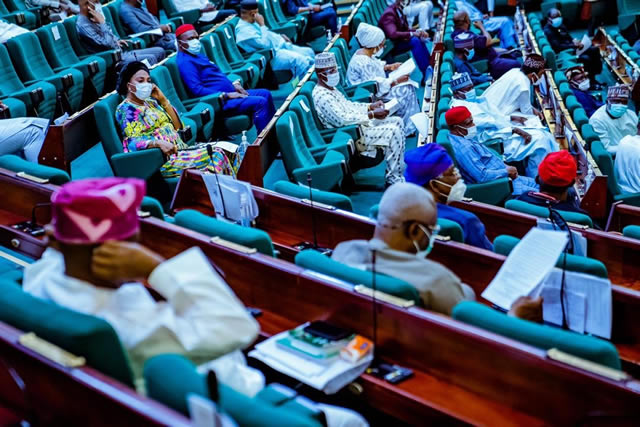
House of Reps rejects call for suspension of new fuel price

0

THE House of Representatives, on Wednesday, July 19, rejected a motion calling for the reversal of the hike in fuel pump price.

The motion, sponsored by a member, Ikenga Ugochinyere, demanded that the pump price revert to the old price of N537 per litre.

The motion did not succeed and the House instead resolved to set up an ad-hoc committee to look into the continued increase in fuel pump prices.


READ ALSO: 

Fuel price hike: College of Education lecturers to work twice weekly

Labour issues warning to FG over fuel price hike

No plan to increase fuel price to N700 per litre — IPMAN

NNPC mum as fuel price goes up


The House said that ordering the suspension of the price rise would amount to preempting the work of the investigating committee because it had already decided to look into the hike.

The House requested that its committee provide recommendations for implementing palliative actions to lessen suffering in the country.

The motion of urgent public importance, presented to the House by Ugochinyere, was titled ‘The need to investigate the incessant increase in fuel pump price’.

The House asked the Group Managing Director of the Nigeria National Petroleum Company Limited (NNPCL) Mele Kyari and oil marketers to appear before the ad hoc committee to explain the increase.

In order to lessen the impact of the elimination of subsidies, the ad hoc committee is also looking for ways to guarantee the effective distribution of palliatives to Nigerians.

According to Ugochinyere, the National Assembly is given the right to investigate the operations of any authority responsible for carrying out or overseeing laws passed by the National Assembly under sections 88(1) and (2) of the Constitution of the Federal Republic of Nigeria, 1999 (As Amended).

He added that the Petroleum Midstream and Downstream Regulatory Authority oversees and regulates technical and commercial midstream and downstream petroleum operations in Nigeria under Section 32 of the Petroleum Industry Act, 2021.

Ugochinyere noted that the incessant fuel price hike has caused hardship for Nigerians.

“Mr Speaker, this is the people’s House, and we represent the Nigeria people; very soon, with the way things are going, fuel will be sold for 1,000 per litre.

“On Tuesday, 18th July 2023, petrol pump price was increased from N537 to N617 by petrol marketers without conferring with the relevant government agencies.

“In view of the current socio-economic challenges being faced by Nigerians, a hike in the price of fuel will heap great suffering and hardship on Nigerians,” Ugochinyere stated.

He added that the high cost of transportation will cause food prices to rise in the near future, emphasising how the increase will cause the public great pain.

He expressed worry that a rise in fuel prices will cause tremendous sorrow and hardship for Nigerians, given their existing socio-economic woes.

Deputy Speaker Benjamin Kalu, who presided over the House, put to a vote an amendment made by another legislator asking the House to direct the NNPCL to suspend the new pump price of N617 and restore the old price of N540, but the lawmakers unanimously rejected the motion by shouting “Nay”.

Kalu said the amendment would not be adopted because no one wanted to influence the direction of the ad hoc committee’s probe.

The House, however, decided to summon Mele Kyari, Group Managing Director of NNPCL, to inquire about the ongoing increases in fuel co.

The Committee was given four weeks to conclude its inquiry and submit a report to the House for additional legislative action.

The ICIR reported on Tuesday, July 18, that the Nigerian Labour Congress (NLC) issued a warning to the Federal Government over the hike in the petrol pump price.

NLC, in a statement by its President, Joe Ajaero, rejected the new pump price, describing it as provocative.

Also, in another report by The ICIR, industry analysts gave reasons why petrol prices will keep rising.

According to them, the pump price will continue to rise till the naira attains measurable stability against the dollar.

UK passes ‘illegal migration bill’ amid human rights concerns

THE United Kingdom (UK) government has successfully passed the controversial ‘Illegal Migration Bill’ despite opposition and fears about its impact on human rights and refugees.

The bill is set to become law pending approval from the King and poses significant obstacles for migrants entering the UK, especially those arriving via small boats across the Channel.

The bill enforces a “legal duty to detain and remove anyone entering the UK illegally,” a move that aims to halt small boat crossings and discourage asylum applications via irregular routes.


READ ALSO:
Nigeria’s inclusion on UK red list won’t stop doctors from migrating – NARD

NMA threatens court action, strike over bill to stop doctors’ migration

Is Islam the second-largest religion in the United Kingdom?


Efforts were made by the House of Lords to introduce amendments to the bill, including reinstating time limits on child detentions and ensuring protection under the Modern Slavery act.

However, the government reversed most of these amendments in a late-night voting session on July 17.

Immigration Minister Robert Jenrick asserted that the bill aims to send a clear message that those entering the UK illegally will face detention and be returned to their home country or safe third countries they passed through en route, effectively denying such individuals the chance to apply for asylum and seek protection.

The UK deems 57 countries worldwide, including EU member states, as safe destinations.

However, securing the agreement of these safe third countries has become challenging following the UK’s departure from the EU and the Dublin Treaty.

The treaty allowed countries to send migrants back to their first entry point in the EU or a country where they previously initiated the asylum process.

The United Nations has expressed concerns about the bill, arguing that it contravenes the UK’s obligations to uphold international human rights and protect refugees.


READ ALSO:


UN High Commissioner for Human Rights, Volker Türk, stressed that the legislation could set a dangerous precedent, potentially influencing other countries to weaken their asylum-related obligations, thus jeopardizing the international refugee and human rights protection system.

Türk called on the UK government to reverse the law, renew its commitment to human rights, and uphold its responsibilities in safeguarding individuals in need of international protection.

Tribunal: APC says Tinubu did not discuss with CJN

THE ruling All Progressives Congress (APC) has refuted reports that President Bola Tinubu had a telephone conversation with the Chief Justice of Nigeria (CJN) Olukayode Ariwoola, regarding the possible outcome of his case at the Presidential Election Petition Tribunal.

Publisher of an online news platform, Jackson Ude, had, in a post on Twitter, alleged that during the said phone conversation, the CJN advised Tinubu and the APC to get ready for a rerun of the 2023 presidential election.

However in statement on Wednesday, July 19, APC spokesperson, Felix Morka, accused Ude of fabricating a falsehood on a matter of serious national importance that is actively under review by the tribunal.


READ ALSO:
Reps approve Tinubu’s request for N500bn to fund palliative

Subsidy removal: Tinubu writes NASS, seeks N500bn for palliative

Tinubu condemns Plateau killings, orders arrest of perpetrators

ECOWAS Chairman: What are Tinubu’s responsibilities?


Morka stated that Tinubu and the APC won the February 25 presidential election without a doubt, and do not have any need to engage in side conversations with the CJN regarding pending petitions before the tribunal.

He said the tribunal should be afforded the time and space to perform its important constitutional and statutory duty of adjudicating and delivering a verdict in the matter without needlessly calling the integrity of the judges into question.

“We have become aware of a decidedly mischievous and intentionally misleading tweet by one Mr Jackson Ude. He alleged that President Bola Ahmed Tinubu was in a telephone conversation with the Chief Justice of Nigeria, Justice Olukayode Ariwoola, in which the CJN purportedly told the President and APC to prepare for a presidential election rerun,” Morka said.

“President Tinubu and our Party won the last Presidential election without a doubt, and do not have any need to engage in side conversations with the CJN regarding pending petitions before the PEPC. As the core democrat that he is, the President respects the right of aggrieved candidates in the election to seek redress for any grievances that they may have. The Constitution and Electoral Act provide effective guarantees of that right.”

The APC spokesman said reports such as the one published by Ude only aim to inflame political passions, create doubt and panic, and preemptively undermine the verdict of the tribunal.

He said the APC is confident that Nigerians are smarter and more discerning to be affected by what he described as Ude’s brand of tasteless and crass mercenary expedition.

INEC had declared Tinubu as the winner of the February 25 presidential election.

According to the Commission, Tinubu secured 8,794,726 votes, Atiku Abubakar of the Peoples Democratic Party (PDP) came second with 6,984,520, while Labour Party’s (LP) Peter Obi finished third with 6,101,533.

The PDP and LP candidates rejected the result and approached the tribunal with separate petitions to challenge Tinubu’s victory.

They alleged that Tinubu was not qualified to contest the election and that he failed to secure the majority of lawful votes cast at the poll.

They are also contesting that Tinubu’s running mate, Kashim Shettima, had a double nomination contrary to the Electoral Act.

In addition to Atiku and Obi’s petitions, the Allied Peoples Movement (APM) is also asking the court to nullify Tinubu’s election.

The party argued that the withdrawal of Ibrahim Masari as the initially nominated Vice-Presidential candidate of the APC invalidated Tinubu’s candidacy under Section 131(c) and 142 of the 1999 Constitution, as amended.

The party contended that there was a three-week gap between Masari’s expressed intention to withdraw, the actual withdrawal of his nomination, and Tinubu’s replacement of him with Shettima.

The APM further claimed that Tinubu’s nomination had expired when he nominated Shettima as Masari’s replacement.

Although initially five petitions were filed challenging Tinubu’s victory, The ICIR had reported that two of the petitioners, the Action Alliance (AA) and the Action Peoples Party (APP), withdrew their cases during the pre-hearing sitting of the tribunal.

All parties in the suits have closed their cases at the tribunal. Written witness statements are currently being filed and exchanged by all parties in the suit.

The tribunal had also reserved judgment in APM’s suit, after the party and all respondents in the suit wrote and adopted their written witness statements.

Fuel price hike: College of Education lecturers to work twice weekly

FOLLOWING the hike in fuel prices, the College of Education Academic Staff Union (COEASU) has directed its members to work only two times a week.

The directive was contained in a statement issued by COEASU National President Smart Olugbeko on Wednesday, July 19.

Olugbeko said the decision was reached by the union’s executives during a meeting on Tuesday, July 18, and will be upheld until the Federal Government yields to its demand of a 200 per cent salary increase.

“The leadership of the Union has been inundated by members’ complaints that they could no longer go to work as a result of a hike in the price of petrol and the resultant high cost of transportation.


READ ALSO:
House of Reps rejects call for suspension of new fuel price

No plan to increase fuel price to N700 per litre — IPMAN

NNPC’s trans-shipment charges could lead to fuel price hike – Marketers

Labour issues warning to FG over fuel price hike


“Against this backdrop, it has become inevitable for the Union to direct members to go to work only two days weekly while an emergency NEC meeting shall be convened to ratify this decision and decide on the specific days of the week members are to go to work,” the statement read.

Noting that the salaries of staff of Colleges of Education in the country has not been reviewed since 2010, Olugbeko urged the Federal Government to address the issue and avert a distortion of the academic calendar.

“We have been on same salary since 2010 while the petrol price rose intermittently from N65/N70 in 2010 to N650 in 2023 (a tenfold increase). Our salary structure which is subject to renegotiation at three-year intervals, has remained static for 13 years, skipping four due renegotiations.

“It is ludicrous that Government has refused to return to the negotiation table on the welfare package for staff after the Union, prior to the removal of the fuel subsidy, had proposed a 200 per cent increase in salary as against the Government’s offer of a ridiculous 35 per cent for the Chief Lecturers and 23 per cent for other cadres,” he added.

The Nigerian National Petroleum Company Limited (NNPCL) on Tuesday, July 18, increased the pump price of petrol to N617 per litre, the second hike since President Bola Tinubu announced an end to fuel subsidy during his inaugural speech on May 29.

The price of fuel, which was less than N200 for a litre of fuel, surged above N500 in May before the recent hike, which brought it to N617.

The hike has led to rising transport costs, and with no commensurate increase in income, Nigerians are battling the resulting hardship.

Analysts, however, predict that fuel prices will continue to rise until the naira gains some stability against the dollar.

Troops arrest traffickers moving drugs from Ghana to Nigeria

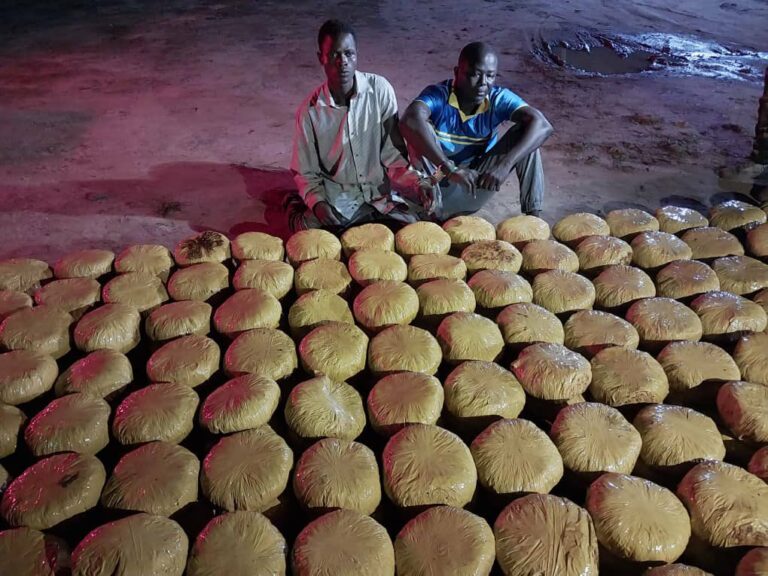
TROOPS of 192 Battalion of the Nigerian Army have intercepted an international drug syndicate smuggling a truckload of substance suspected to be cannabis sativa (marijuana) to Sango Otta in Ogun State.

A statement by the Director of Army Public Relations, Onyema Nwachukwu on Wednesday, July 19, disclosed that the troops, who operate in 81 Division Area of Responsibility, made the arrest on Tuesday, July 18, following credible intelligence.

“Responding to actionable intelligence, troops conducted stop and search operations along Ajilete Road in Yewa South Local Government Area of Ogun State, during which they intercepted and impounded the suspected truck without Registration number, loaded with 397 wraps of substance suspected to be marijuana.”

Preliminary investigations by the troops revealed that the illicit substance concealed in the truck were being transported from Ghana through Benin Republic via Igholo-Idiroko to Sango Otta.

“The suspects conveying the illegal drugs have been identified as Mr Matthew Edegbe, a Benin Republic national and Mr Joshua Dansu of Idiroko, who are currently assisting in ongoing investigations.

“Items recovered from the suspects include the truck’s Registration Number identified as (T 1826 LA Lagos), which was detached and concealed in the vehicle to prevent identification, an Infinix and Itel phone, one iphone, a Benin Republic National Identification card and a driver’s license belonging to one George Benyagbe, as well as the sum of N7000,” the Army spokesman added.

According to the statement, the two suspects, vehicle and exhibits will soon be transferred to the National Drug Law Enforcement Agency (NDLEA), Lagos State Command, for prosecution.

The Chief of Army Staff Major General Taoreed Lagbaja commended the troops for their commitment and vigilance, urging them to sustain the momentum to rid the country of criminality.

On Saturday, July 15, troops of the Battalion also intercepted a truck with of over 20,000 cartridges of ammunition heading to Anambra State.

The troops, who acted on actionable intelligence conducted a meticulous and rigorous Stop-and-Search operation along Ajilete-Owode Road in Yewa North LGA of Ogun State.

The soldiers uncovered the illegal ammunition in a truck with Registration Number ENU 697 XY, loaded with 720 packets of Red Star Cartridges of 12 Calibre, containing 25 cartridges per packet, totalling 18, 000 cartridges and an additional 250 packets of live (black) cartridges containing 10 packets each, totalling 2500 cartridges of same calibre.

According to the Nigerian Army spokesman Onyema Nwachukwu, “The suspects, identified as Mr. Eric Seworvor, a Ghanaian national, and the driver, Mr Lukman Sani, have been taken into custody and are helping with ongoing investigations.”

“Information gathered during preliminary investigation revealed that the ammunition, which were surreptitiously concealed in a supposed empty truck were imported from Mali, via Idiroko International Border, where the criminals had successfully beaten several other checkpoints en-route their final destination in Onitsha, Anambra State, where they intended to deliver the illegal ammunition.

“Timely intervention by the vigilant troops however thwarted the chaos that such volume of ammunition would have unleashed on innocent members of the public, if the criminals had succeeded.”

The Nigerian Army therefore appealed to all law-abiding citizens to continue to support the troops and other security agencies with credible and actionable information, as they combat security challenges across the country.

Buhari’s lopsided appointments come under scrutiny as Reps commence probe

LOPSIDED appointments made by former President Muhammadu Buhari has come under scrutiny following a resolution passed by the House of Representatives on Tuesday, July 18.

The Reps, during plenary on Tuesday, resolved to probe the appointments made during Buhari’s eight years as Nigeria’s President.

A motion to probe Buhari’s appointments was moved by Labour Party (LP) member representing Enugu East/Isi Uzo Federal Constituency, Paul Nnamchi.


READ ALSO:
Buhari’s lopsided appointments in six years continue to generate controversy

From Worst to Worst: Buhari’s six years and the fight against insecurity

Analysis: Nigeria health sector after Buhari’s six years in office

Judiciary: Stark inequalities plague yet another set of Buhari appointments


The lawmaker, while moving the motion, also said the Federal Character Commission (FCC):should be proved for allegedly abdicating its constitutional responsibilities.

Noting that the federal character principle was included in Nigeria’s constitution to promote national cohesion and equal opportunities, he argued that there “exists a brazen domination” of bureaucratic, economic, media, and political positions by a section of the country.

“Twenty-four years after its constitutional entrenchment, the perception is that there exists brazen domination of the bureaucratic, economic, media, and political posts at all levels by a section of the country at the expense of the others,” Nnamchi said,

The lawmaker also claimed that there is a “clash of interests” among the commissioners at the commission.

“Federal Character Commission has virtually abdicated its constitutional and statutory responsibilities and degenerated into personality clash of interest among its commissioners as was the case about a year ago.”

The House of Representatives adopted the motion and subsequently set up an ad hoc committee to investigate “the returns on appointments undertaken by Ministries, Departments and Agencies (MDAs) under its (FCC) jurisdiction between 2015–2023″.

The lawmakers also requested the Commission to submit a report of appointments in the MDAs between 2015 and 2023.

Buhari’s lopsided appointments 

During his tenure as President, Buhari was accused of favouritism and nepotism in federal appointments, but the former military head of state defended his actions.

In June 2020, a group of Southern leaders filed a lawsuit against Buhari in the Abuja Division of the Federal High Court. They alleged that Buhari’s administration had marginalised the Southern region of Nigeria in its appointments since 2015.

The leaders argued that the composition of the government of the federation under Buhari, and most of its agencies, did not reflect the principle of federal character. They claimed that there was a predominance of persons from a few states and sectional groups dominating the opportunities in the government, a situation which they said threatened national unity and integration.

The lawsuit was filed by 16 Southern leaders, including Edwin Clark, Reuben Fasoranti, John Nnia Nwodo, and Pogu Bittus.

But in an interview with BBC Hausa in 2015, Buhari explained the reason behind his appointments, saying he nominated people he could trust, and who had worked with him for years.

He also said the constitution allows him complete control over his choice of close officials. Buhari also made it clear that the appointments also served as a reward for those who remained loyal to him for years.

A 2017 BusinessDay report titled “81 of Buhari’s 100 appointees are Northerners” showed that 81 of those appointed into key positions by Buhari either from the North-East, North-west or North-Central since he became President.

Buhari’s Special Adviser on Media and Publicity, Femi Adesina, in a response to the report, published a list, which suggested that 82 of the 157 appointments made by the President were from the South, and 75 from the North.

The presidential spokesman said the government’s list “put the lie” to the “mischievous” claims about Buhari’s appointments, adding: “It is, indeed, false for anyone to say that President Buhari’s appointments are lopsided.”

However, a Fact Check by Premium Times on the list released by Adesina, said it contained several omissions and errors.

Despite public outcries, Buhari’s top appointment into the country’s security service between 2015 and 2020, favoured officers from the northern part of the country.

Checks on Buhari’s appointments into the leadership cadre of Nigerian’s security agencies during that period show that only two of the eight security chiefs were from the South: the Chief of Defence staff (South West) and the Chief of Naval Staff (South-South).

The remaining six, including the heads of the Army, Air Force, Police, Nigeru Intelligence Agency and Department of State Service were all Northerners.

Also, as of April 6, 2021, a regional analysis of the heads of security agencies conducted by The ICIR, including paramilitary organisations, based on their state of origin shows that 12 out of 16 of them (75 per cent) are from the Northern part of the country, while just four (25 per cent) are from the Southern part of the country.

Also, Buhari”s approval of the list of Justices of the Court of Appeal released in 2021 is considered as lopsided, with 61 per cent of jurists coming from the North versus 39 per cent from the South.

Buhari’s appointments into the top management of the Nigerian National Petroleum Corporation (NNPC) and its subsidiaries showed an uneven geographical spread of senior appointments.

An analysis carried out by The ICIR revealed a geographical imbalance within the ranks of the Corporation.

Apart from violating the Constitution in appointing his personal aides into sensitive positions in agencies like the Independent Electoral Commission (INEC), Buhari also in several cases appointed dead people into his government.

The former President also breached the Acts establishing several agencies, including the National Pension Commission (PenCom). He also engaged in illegal extension of tenures.

Unqualified persons were also appointed in agencies and ministries like the National Agency for the Prohibition of Trafficking in Persons (NAPTIP).

Buhari in 2021, approved approved Imaan Sulaiman-Ibrahim’s appointment as the new Director-General of NAPTIP. However, Sulaiman-Ibrahim did not possess the required qualification to hold the position.

According to the NAPTIP Act, the agency’s DG shall be someone of the director cadre in the Nigerian public service or its equivalent in any law enforcement agency.

“There shall be for the Agency a Director-General who shall be from the Directorate cadre in the public service of the Federation or its equivalent in any law enforcement service and shall be appointed by the President on the recommendation of the Minister,” Section 8 (1) of the NAPTIP Act 2015, reads.

Suleiman-Ibrahim did not have any record of attaining the director cadre in Nigeria public service as she had never held a major office in the country’s civil service. She was, however, appointed against the stipulation of the law.