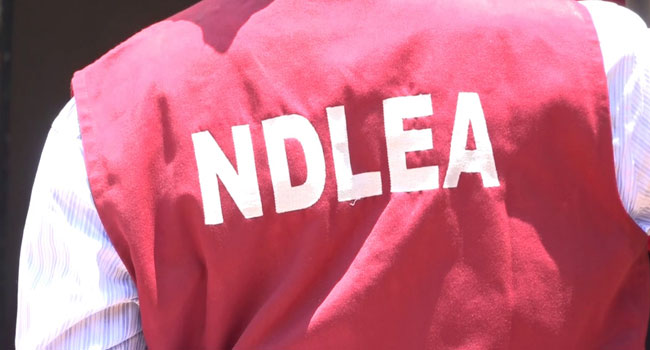
A 19-year-old student, Benjamin Nnamani Daberechi, has been apprehended with 7.2kg of mathamphetamine by officials of the National Drug Law Enforcement Agency (NDLEA) at the Nnamdi Azikiwe International Airport, Federal Capital Territory (FCT).
NDLEA Director, Media and Advocacy Femi Babafemi disclosed this in a statement on Sunday, July 16.
The consignment was concealed in a bag of crayfish with the intention to export the products to Europe, where Daberechi was headed for his undergraduate studies.
“The teenage suspect was intercepted on Wednesday 12th July, during an outward clearance of passengers on Turkish Airlines flight TK 0624.
“While being interviewed by operatives, Daberechi claimed he was a student on his way to Cyprus for studies, but upon a thorough search of his luggage, he was found in possession of 7.2kg of whitish substance neatly concealed inside a sack of crayfish. A field test of the substance however proved positive to Methamphetamine,” Babafemi noted.
He also said a female lawyer based in the Lekki area of Lagos state Ebikpolade Helen was arrested in Anambra State for the production and distribution of ‘skuchies’ a local drink manufactured using cannabis, opioids and blackcurrant.
Twelve bottles of the prepared drink and 5kg of cannabis were recovered from her Lekki-residence by the NDLEA.
Other operations carried out across the country led to the arrest of a Lagos resident Abubakar Shuaibu caught with 86 bottles of codeine-based cough syrup, an Ondo resident Abubakar Zayanu Gyambar found with 262 jumbo bags of skunk, among others.
According to the United Nations Office on Drugs and Crime (UNODC) Nigeria is a transit point for heroin and cocaine intended for European, East Asian, and North American markets.
Traffickers smuggle large amounts of illicit drugs through the country which is having adverse effects on migration conditions for Nigerians.
On Saturday July 15, The ICIRreported that The Republic of Seychelles confirmed a ban on Nigerian tourists due to criminal activities traced to some Nigerian tourists, including drug trafficking and fraud.
“We have seen a clear link between this with certain people from Nigeria. In the past two weeks, for example, 13 people coming from Nigeria have been arrested when entering Seychelles because they were carrying drugs into the country,” the country’s Vice President Ahmed Afif said.
THE Nigerian Federal Government’s borrowings from the Central Bank of Nigeria (CBN) through Ways and Means Advances hit N1.83 trillion in the first quarter of 2023.
This pushed Federal government’s borrowings from the CBN to N25.36 trillion in March 2023, from N23.53 trillion in December 2022, as disclosed in provisional data from the apex bank through its quarterly statistical bulletin.
The Ways and Means Advances is a loan facility a central bank offers the government to finance temporary budget shortfalls, subject to limits imposed by law.
Rising debts and debt servicing have remained a huge problem to Nigeria’s economy. According to a World Bank report, the Federal government uses over 90 per cent of its revenue to service debts. The development, economic experts say, does not augur well for funding of key infrastructural projects in the country.
To worsen the situation, the Federal government’s unification of exchange rates has resulted in the rise of the national debt to N82 trillion.
Economic watchers had kicked against the apex bank’s lending to the Federal government because of what they regarded as its dire consequences on inflation.
“The inability of the Federal government to repay money loaned it by the CBN is responsible for rising inflation, rising cost of borrowing, and crowding out of the private sector from business,” an economist and chief executive officer officer of CFG Advisory, Adetilewa Adebajo, said.
Another economist, Kelvin Emmanuel, told TheICIR that one implication of the development is that it puts intense pressure on lending to small and medium enterprises.
Emmanuel said, “You notice that cash supply deposits are higher than the production outlook of the economy. When so much cash is chasing few goods without commensurate production and services, it creates a problem.”
According to Section 38 of the CBN Act, 2007, the apex bank may grant temporary advances to the Federal government with regard to temporary deficiency of budget revenue at such rate of interest as the bank may determine.
The section declares that in the event of a revenue shortfall, the CBN must not lend to the Federal government an amount more than 5 per cent of the previous year’s revenue of the government.
That section of the CBN Act aims to prevent the overreliance of the Federal government on CBN financing, instead of opening up the economy to boost domestic investments and attract foreign direct investments.
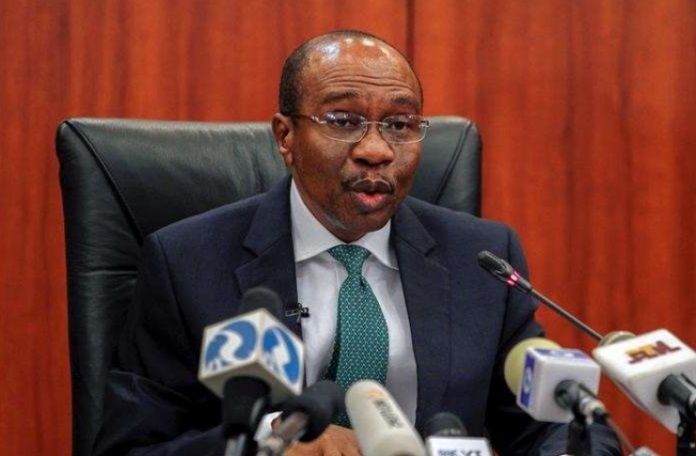
THE Nigerian Bar Association (NBA), some senior lawyers and human rights groups have called on the Federal Government to uphold the principles of the rule of law, fairness, and justice in the case against the suspended Governor of the Central Bank of Nigeria (CBN), Godwin Emefiele.
They also described the charges filed against Emefiele by the Department of State Services (DSS) as politically motivated.
Emefiele was arrested on June 10 over allegations bordering on economic sabotage and threat to national security amongst others and has since remained in the custody of the DSS.
He was arrested and detained shortly after his suspension by President Bola Tinubu on June 9, to pave the way for an investigation into criminal offences he was alleged to have committed as CBN governor.
A judge of the Federal High Court in Abuja gave the DSS one-week ultimatum to either charge him in court or release him. Another judge ordered for his release last week.
Shortly after the court issued the one-week ultimatum, the DSS announced that charges have been filed against Emefiele.
Emefiele was charged with two counts of unlawful possession of a single-barrel shotgun and ammunition without a license under the Firearms Laws of the Federation 2004. The DSS claimed to have found the items during a search of Emefiele’s Ikoyi residence.
However, in separate reactions to the development, the NBA, human rights activists and some civil society organisations (CSOs) have criticised the DSS for arresting and detaining Emefiele for nearly a month.
They argued that the recent charge of gun and ammunition possession was politically motivated.
They called on the Federal Government to respect the decisions of the courts regarding Emefiele’s arrest and detention, and to ensure that his trial follows legal procedures.
They groups also dismissed the charges filed against Emefiele as lacking substance and a distraction from more pressing issues.
The groups equally urged the DSS to focus on resolving pressing security issues affecting the country, and to uphold the rule of law and respect individual rights.
The former President of the Nigerian Bar Association (NBA), Joseph Daudu, emphasised the importance of respecting court decisions regarding Emefiele’s arrest and detention.
He expressed his expectation that Tinubu, as the newly appointed head of state, would not allow the organisations under his purview to disobey court orders. Daudu insisted that Emefiele’s trial should adhere to established legal procedures.
“I do not think that the President, Bola Tinubu, who is a newly minted President of the Federal Republic of Nigeria, will like to start his administration with the organisations under him disobeying court orders,” Vanguard newspaper quoted him as saying.
An Abuja-based human rights activist Abdulazeez Tijani faulted the prolonged detention of Emefiele while the DSS was still investigating his case.
Tijani pointed out that the DSS had been trying to arrest Emefiele for more than four months, and they should have concluded their investigation by now.
“The DSS cannot hide under the Administration of Criminal Justice Act (ACJA) 2015, to hold a Nigerian citizen till eternity because ACJA is inferior to the 1999 Constitution.”
The Chairman of the Nigerian Bar Association (NBA) Section on Public Interest and Development Law, Monday Ubani, also described the charges against Emefiele as false and misleading.
“I think these people are taking us for granted. They believed we are all fools. Did they not tell us that Emefiele was involved in financing terrorists? What has happened to that allegation? What has happened to the allegation of misappropriation of the money for printing new currency?
“What has happened to the allegation of stamp duty money allegedly squandered by Emefiele? What has happened to the allegation of manipulating our foreign exchange with Buhari cabals? What has happened to the allegation of operating several secret accounts not known to the Federal Republic of Nigeria?”
Constitutional lawyer and Executive Director of Environmental Rights Action/Friends of the Earth Nigeria (ERA/FoEN), Chima Williams, believed that the charge against Emefiele was politically motivated.
“Some of us see his travail as political more than any other thing. I had predicted that Emefiele will be in trouble if Tinubu becomes the President of Nigeria and there are no two ways about it, and I am not disappointed because what we thought will happen is happening.
“If we are going to move our nation forward we should look beyond the individuals and look at the laws because that is what would guarantee freedom, safety and people’s respect for institutions.”
The Chair of the Board of Trustees for Amnesty International (Nigeria), Auwal Rafsanjani, also dismissed the charges against Emefiele as lacking substance and serving as a distraction from more critical issues.
He criticised the DSS for prioritising frivolous allegations while the country grappled with severe challenges such as insecurity, economic instability, and social unrest. Rafsanjani called on the DSS to focus on resolving these pressing issues instead.
FOLLOWING a recent update on GTWorld mobile banking app, customers of Guaranty Trust Bank (GTBank) have been unable to access the new version, cut off from the old application and thereby left stranded in efforts to effect transactions.
GTBank, a subsidiary of Guaranty Trust Holding Company Plc, had announced an app update, informing its millions of customers through text and email that it would automatically update to the new version on July 12.
“On the 12 July, we will release the new and updated version of the GTWorld Mobile Banking App to Play Store and App Store. This means that when you launch the GTWorld Mobile Banking App, you will see a newly designed interface if you have App Updates set on automatic.
“However, if App Update is not set to automatic on your mobile device, you will need to manually update your GTWorld Mobile App to experience the newly designed app. Please note that we will discontinue support of the current version of the GTWorld App on 12 August,” the message read.
The bank’s customers are, however, finding it impossible to update to the new version as the process keeps returning errors.
“I have been trying to update the GTWorld banking app on my phone to the new version since July 14 but to no avail,” Tope Somuwa, a GTBank customer told The ICIR.
The process of updating to the new version is a total failure, Somuwa lamented.
The customer, a technology expert, said the project manager was supposed to test-run the update processes before launching the new version.
He explained that when he attempted to update the app, the process requested he put his phone number, but after he did, it returned an error, saying no Internet connection.
He said he tried with another Internet network, but the same issue persisted.
“You can keep trying it for a whole day without a result,” Somuwa lamented.
When the process of inputting the phone number eventually went through, the OTP (One Time Password) code expected to be generated did not arrive on his phone line up till the time he spoke with The ICIR.
“Subsequent retry will ask you to put another phone number,” Somuwa said.
He spoke of how he tried unsuccessfully on Friday, July 14, to transfer money to a client.
“I even tried to use the bank’s website but it was down as of Friday, July 14. I tried it out many times,” he added.
A GTBank staff, who spoke with The ICIR on Saturday, July 15, admitted to the issue, and said the bank had been having a network problem over the past three days.
The staff said GTBank marketers had been appealing to customers to be patient with the bank, but that in the meantime, customers can use the USSD (Unstructured Supplementary Service Data) code, *737*1*amount*account number#, for their transactions.
Many of the bank’s customers have gone to the social media to express their disappointment for being locked out of the GTBank’s app.
A customer Ahmadu Galadima with handle, @AhmaduGaladima, tweeted, “@gtbank don’t know what happened to you, but why on earth will you force an app update and not allow me log in with old credentials, do a password reset, use a secret question, the actual account number or card last 6digits etc? Why ask for just a phone no with an OTP that takes a year 2 drop?”
Similarly, @jude_chiji said, “Please fix this app asap, I am not able to go from the first screen and stock on the OTP screen, cos no OTP is coming forth. Please fix this.”
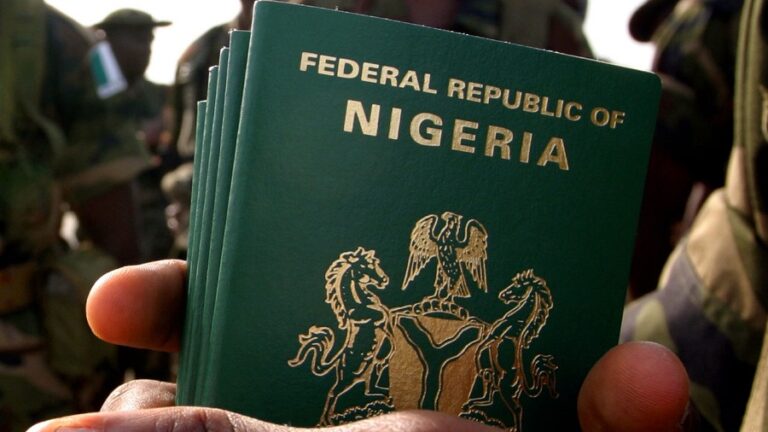
THE Republic of Seychelles has confirmed a travel ban on Nigerian tourists due to criminal activities, including drug trafficking and internet fraud.
According to a report by Seychelles News Agency, the country’s Vice-President Ahmed Afif confirmed the development tp journalists. Afif disclosed that some Nigerians have been linked to activities which the country considers to be dangerous to its economy.
“We have seen a clear link between this with certain people from Nigeria. In the past two weeks, for example, 13 people coming from Nigeria have been arrested when entering Seychelles because they were carrying drugs into the country,” the Vice President said.
He, however, noted that Nigerians with diplomatic passports, resident or valid work permits issued by the country would be granted access.
Most Nigerian tourists coming to Seychelles are part of an organised syndicate
“For the others, the government will keep its eyes open and SEBS (Seychelles Electronic Border System) will analyse much more to find out what reasons they are coming example someone who is coming for a holiday for only one day. We have to ask questions because it is strange and we have seen that happening.
“When we checked the payments made for them to come to Seychelles, it is from only one source. This is for different people coming on different days which shows an organised syndicate,” Afif said.
He added that some Nigerian tourists have duped several establishments of huge funds through the use of false credit cards.
“These people spent free holidays in the country at the expense of the establishment owners and there is nothing that can be done for them.
“There are other online scams originating from Nigeria. We have seen that these people are also coming to Seychelles and doing those scams. We do not have a problem with Nigeria or its people though we do not tolerate such criminal activities in our country.”
Before the confirmation of restrictions by Afif, there were widespread speculations of a possible travel ban on Nigerian tourists following rejection emails received from Seychelles’ Immigration authorities.
The ICIRreported that the ban may have been prompted by growing concerns over the involvement of Nigerian nationals in drug-related activities within the country.
President of the Nigerian community in Seychelles Mathias Adidi also stated that a syndicate in Nigeria is involved in smuggling drugs into the country.
“I am Mathias Adidi the President of the Nigerian community in Seychelles. Please help us inform Nigerians. Someone in Nigeria is sending Nigerians to bring drugs to Seychelles. And is not safe. They are been arrested every day,” Adidi wrote in a post.
Prior to the ban, Nigerian citizens enjoyed a long-standing visa-free agreement with Seychelles, allowing them to enter the country without a visa for up to 30 days.
About just six months ago, Nigeria and Seychelles signed an agreement for direct flights between the two countries.
A gas explosion has caused a fire outbreak at a residential building on Cachol Street in the Ojo area of Lagos State.
The incident occurred in the early hours of Saturday, July 15, after a camp gas exploded in the eight-room bungalow.
According to the spokesperson of the Lagos State Fire and Rescue Services, Amodu Shakiri, an occupant of the building, was cooking in the corridor when the explosion occurred.
“The call came in at about 9:05 am and we were able to isolate the fire to only the building alone while adjoining buildings were safe from the gas-induced fire,” he said.
“One of the occupants of the building was cooking with a camp gas when it exploded and the building was severely burnt with content therein. We also found that the passage was used as their kitchen because there was no specific area identified as a kitchen on the premises. We also counted not less than six camp gases in there.”
Shakiri noted that the incident would have been fatal if not for the intervention of some officers from the Ojo military cantonment.
He said the officers protected firefighters who were carrying out their duties.
The incident led to the destruction of many properties. However, there were no casualties.
The occupants of the building escaped unhurt.
There have been several cases of gas explosion in Lagos.
Last month, an explosion at Ijaiye, beside the Apostolic Church in the Agege area of the state, affected four persons – three females and one male.
A shop where gas cylinders was stored caught fire. According to reports, one of the gas cylinders exploded as a result of gas leakage and in the process caught fire, affecting the shop whilst other shops and adjoining buildings were salvaged.
The Lagos State Emergency Management Agency (LASEMA), has also urged the state government to conduct regular drills on safety measures regarding gas handling.
The body said it is only way to prevent tragic but avoidable deaths from gas explosions in the state.
THE National Drug Law Enforcement Agency (NDLEA) has said it is investigating the killing of a two-year-old by one of its operatives in Delta State.
This was disclosed in a statement by NDLEA Director, Media & Advocacy, Femi Babafemi, on Saturday, July 15.
“The Chairman/Chief Executive, Brig. Gen. Mohamed Buba Marwa (Retd) has, after receiving initial briefings from the Delta State Command of NDLEA, set up a panel of top officials from the national headquarters in Abuja to Immediately proceed to Asaba for an on-the-spot investigation of the unfortunate incident with a view to establishing the actual facts of the case.
“We’re in touch with the family to provide necessary assistance while we conclude our investigation of the incident. We will like to assure the family and members of the public that we’ll get to the root of the case and take necessary action(s),” Babafemi noted.
The two-year-old Ivan Omhonria died from injuries sustained after an NDLEA operative shot him during a raid in the Okpanam area of Asaba, Delta State.
Babafemi said the gunshot was a result of an accidental discharge.
“A team of NDLEA operatives carried out an intelligence-based raid of the joint of a notorious drug dealer located at Okpanam area of Asaba at about 1600 hours on Thursday 13th July and in the process of the operation, a Toyota Camry 2008 model, light blue colour at the scene suddenly zoomed off and knocked down one of our officers who is currently in critical condition, undergoing treatment in a hospital.
“In a bid demobilise the car and prevent it from escaping, another officer fired a shot aimed at the tyre of the car, which eventually escaped. While the injured officer was rushed for treatment, the officers got reports of a stray bullet hitting a young person and immediately located the father of the victim, followed him to the hospital and supported in facilitating his treatment but unfortunately died in the process,” Babafemi noted.
Public Relations Officer (PRO) of the Delta State Police Command Bright Edafe also confirmed the incident in a statement on Saturday, July 15.
“The Command is aware of this sad and unfortunate incident. The case has been transferred to SCID Asaba, and all parties involved will appear before the CP on Monday. Our heartfelt condolences to the family of the little child,” Edafe said.
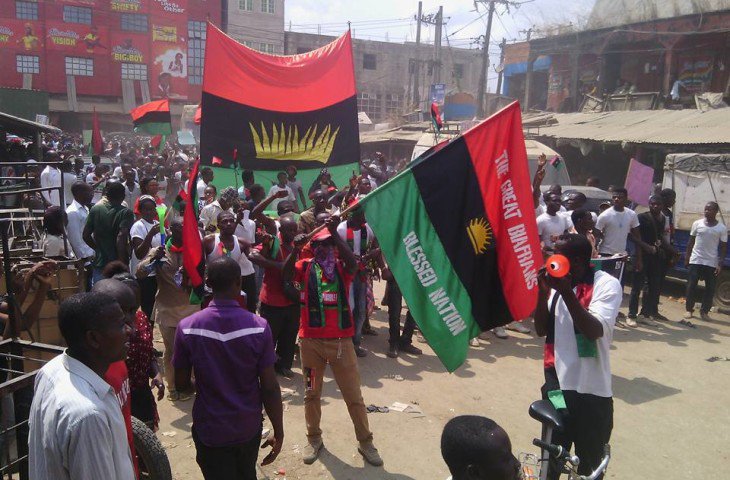
THE Indigenous People of Biafra (IPOB) has warned the Nigerian Army against carrying out extra-judicial killings in the South-East while going after sit-at-home enforcers.
The warning followed an order issued by Chief of Army (COAS) Staff Taoreed Lagbaja, who directed troops of the Nigerian Army to go after hoodlums enforcing sit-at-home orders in the South-East.
The COAS issued the order after Finland-based pro-Biafra agitator Simon Ekpa ordered a two weeks sit-at-home in the South-East, starting from July 31.
IPOB reacted to the COAS’ directive in a statement by its Media and Publicity Secretary Emma Powerful on Friday, July 14.
The group accused the Nigerian military of evil motives during previous interventions and added that attempts by the Army to invade the region would be resisted.
“The Nigeria Army uses every opportunity to extra-judicially murder Igbo people any time they are deployed to the East. That is why we object to their presence as much as we detest the malicious sit-at-home and violent enforcement from agent provocateurs. We oppose military interventions because they will be used to kill and destroy the livelihood of our people.
“The Nigerian military must not use this as a conduit to illegally arrest, detain, and kill innocent Igbo youths, mothers, fathers, and even innocent IPOB members and ESN. IPOB members have no hands in the sit-at-home. We advocate that anyone caught violently enforcing the oppressive sit-at-home should be arrested, investigated, and their sponsors brought to book. The Nigerian military should not allow ethnic hatred and biases to becloud their professional ethics,” the statement read.
Powerful, again, dissociated IPOB from Ekpa, who heads a separate faction of the group.
He added that continuously linking IPOB to violent enforcement of sit-at-home orders across the region was blackmail.
“General Lagbaja and the government of Nigeria are aware of the man responsible for the violent enforcement of sit-at-home in the East. Why, then, are they shying away from accusing him? Instead, they prefer to unleash military mayhem on our people in the guise of going after sit-at-home enforcers.
“They know their camps, so why not visit them there and stop them and stop linking this peaceful IPOB agitation to their criminalities. If they are not behind Simon Ekpa, why haven’t they made any official complaints against him as a democratic government should?”
IPOB said the release of its leader Nnamdi Kanu who was arrested in 2021 and has remained in detention, would end the insecurity ravaging the region.
Enforcement of sit-at-home orders in the South-East has led to loss of lives, property and left adverse economic impacts on the region.
An investigation by The ICIRrevealed that the region loses at least N4.6 trillion naira annually to Monday-sit-at-home orders.
Many Nigerians have criticised those enforcing the sit-at-home orders. Labour Party (LP) presidential candidate in the 2023 general elections Peter Obi described them as criminals.
The Chief of Army Staff Lagbaja directed soldiers to raid IPOB hideouts and apprehend enforcers in the region. This directive came after the Ekpa-led faction of the group declared a two-week sit-at-home order to begin on July 31.
THE 8th season of Africa’s biggest reality television show, Big Brother Naija, is scheduled to make a comeback on Sunday, July 23 with an“All Stars” edition, featuring former housemates from previous seasons.
During a press conference on Friday, July 14 in Lagos, the Executive Head, Content & West Africa Channels, MultiChoice Nigeria, Busola Tejumola, confirmed that the show will be back on television screens.
“We are here today to confirm to you that the 8th edition is an All Stars edition”, she said.
As stated by Tejumola, the premiere of the show is scheduled for Sunday, July 23, and will be broadcasted on all African Magic Channels.
Following the premiere, the show will continue on the dedicated Big Brother channel for a thrilling 70-day run, concluding on Sunday, October 1.
Furthermore, she emphasised that the housemates for this season were meticulously chosen from past editions, taking into account their unique personality profiles.
The ultimate winner of the show will have the opportunity to claim a grand prize of N120 million, in addition to other exciting rewards.
“The 8th edition will have a grand cash prize of a hundred and twenty million naira and there are other prizes that will be won”, she added.
In addition, it was confirmed that Ebuka Obi-Uchendu will be reprising his role as the show’s host for this season, marking his seventh consecutive year hosting the show.
Originally known as Big Brother Nigeria, the reality TV show later evolved into Big Brother Naija. It made its debut in 2006, but after an 11-year hiatus, it made a return to television screens in 2017.
Over the years, the show has served as a launching pad for numerous individuals in the entertainment industry.
Despite early warnings by relevant federal agencies of imminent flooding in 2023 than previous years, Benue and Kogi states have mostly ignored mitigation strategies ahead of the impending disaster, Ijeoma OPARA, who visited the states, reports.
MERCY Faga relocated to Makurdi from her village, Tse Ikyaan, Benue state, in January 2022 after losing some of her family members to terror attacks that plagued her community.
She moved with her only surviving family and brother, Terfa Fagar, who secured a single-room apartment at Wadata Rice Mill by River Benue.
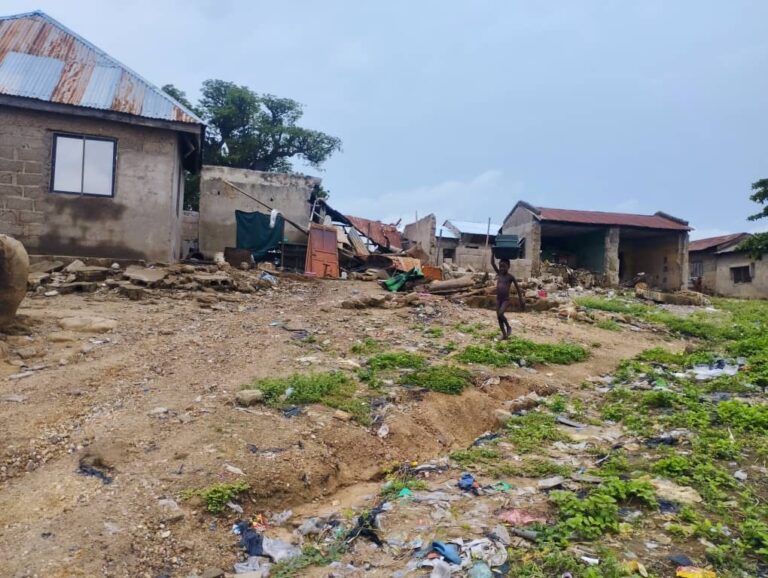
Eight months later, parts of Makurdi got submerged in a flood that claimed many lives, including her brother’s.
Benue Resident, Mercy Faga. Photo: The ICIR.
“Terfa was ill and just got discharged from the hospital a week before. It was the neighbours that called to say they couldn’t find my brother. I rushed there; the door was locked from inside. I called some neighbours to help me open the door. That was how we discovered his body,” she said.
Terfa’s death has now made Mercy the only surviving member of what used to be a large family.
Photo of Terfa Faga provided by Mercy.
The 2022 flood rendered many residents homeless, includingGabriel Yev, who lived in Wurukum, Makurdi, before the disaster.
Yev lost his home to the flood and now lives in a tent made from mosquito nets at the Internally Displaced People (IDP) camp with his wife, mother and six children who no longer attend school.
Benue resident,Gabriel Yev. Photo: The ICIR
In the Confluence state of Kogi, where the Niger and Benue Rivers meet, the situation is similar. Many residents of Adankolo, Ganaja village, Ojila and other communities fell upon hard times after the flood washed away everything they owned.
The flood, the worst in over a decade, was caused by excessive rainfalls and contributions from external flows by the release of excess water from the Lagdo Dam in Cameroon. Over 600 people died, and more than a million were displaced.
This is not the first flood incident in Nigeria linked to the Lagdo Dam. In 2012 over 400 people died hundreds of thousands were displaced due to floods caused by heavy rainfall and water from the Cameroonian dam.
According toreports, Nigeria reached an agreement with Cameroon in 1977 to build the Dasin Hausa Dam in Adamawa state, which would contain water from the Lagdo and prevent flooding. Over forty years after construction began, Nigeria is yet to complete the Dasin Hausa, leaving citizens at risk of regular flooding. Though the governmentdenies the existence of such an agreement. Environmentalists think the dam will reduce flooding in Nigeria.
The National Emergency Management Agency (NEMA)said water from the Lagdo Dam was not entirely responsible for the 2022 flood, as climate conditions played significant roles. Before the flood, there werewarnings of possible disasters in 32 states and the FCT by the Nigeria Hydrological Services Agency (NIHSA) and Nigeria Meteorological Agency (NIMET).
These warnings were ignored, bringing hardship to affected residents, and NIHSA Director-General Clement Nze blamed sub-national governments for not being proactive.
Nearly a year later, many people are still devastated, including Mimi Wanev, whose son drowned in the flood that submerged North Bank, Benue.
“Till today, we are struggling. My children could not go to school. We are lucky that we found refuge in the IDP camp. That is how they went back to school. We cannot even talk about home any longer. We are homeless, roaming about in our own place,” she said in tears.
Mimi Wanev recalls her experience. Photo: The ICIR
2023 flood prediction
Again, NIHSA and NIMET have predicted that Benue, Kogi and 30 other states are at high risk of flooding in 2023. Based on this, NEMA introduced the 2023 Climate-Related Disaster Preparedness and Mitigation Strategies, an early warning document with recommendations to minimise flooding.
NEMA recommended that governments should desilt major rivers, dams and establish standard drainages. Parts of the mitigation strategies include efficient sensitisation, relocation of residents in areas perennially affected by flooding, expanding and unblocking drainages and proper waste management.
However, findings by The ICIR show that the level of preparation in Kogi and Benue is low.
Blocked waterways, poor waste management
Despite how badly Benue and Kogi were affected by the 2022 flood, waste management is quite poor, as The ICIR observed that refuse dumps littered roadsides in both states.
Gboko road, Makurdi. Photo: The ICIR
Along Gboko Road, Makurdi, where several heaps of refuse littered the streets, The ICIR observed that there were no rural buckets for waste disposal.
Drainages had also been converted into dump sites, which seemed worse in Kogi.
Dumpsites along in Benue, Kogi roads. Photo: The ICIR
Beyond the health implications of improper waste disposal, it also increases the risk of flooding, as refuse gets washed by rains into waterways, leading to clogging.
By the Local Government Education Authority (LGEA) school in Ganaja village, The ICIR observed that a box culvert constructed to aid water flow was partially blocked, as the entire area had been converted into a dump site.
Blocked culvert in Ganaja village, Ajaokuta. Photo: The ICIR.
Many other drainage systems in Kogi were clogged with waste, even in flood-prone communities.
Inadequate awareness for rural dwellers
Rekia Abdullahi, who lives by River Benue in Makurdi, told The ICIR that her family left home to squat with relatives for two months in 2022 after their community was submerged.
She has not recovered from the previous flood, as the property destroyed are yet to be replaced. Her family is also regularly confronted by snakes and other reptiles that have found homes within the neighbourhood since the disaster.
Yet, Abdullahi said she was unaware of the impending disaster and expressed surprise when asked about her level of preparation.
“I did not know that this year would be worse. I have not heard of that. The government did not tell us anything since then. We have just been on our own,” she said.
Benue resident Rekia Abdullahi. Photo: The ICIR.
This was the case with several other residents that spoke to The ICIR.
In Agatu, Benue state, the monarch Godwin Onah, who lost his rice farm, which he estimated to be over N200,000, to the flood, said though he was expecting another disaster, there was no sensitisation programme by the state government on the impending flood.
However, Onah reached out to The ICIR days later, saying a chief confirmed to him that there were announcements by the state over the flood.
“One of my chiefs just told me they heard the announcement on the radio in Makurdi. You know we are in the village. We don’t hear anything,” he said.
Communities in Agatu, including Oweto and Utugolugu, perennially experience flooding due to their proximity to the River Benue.
Although the residents claim that sensitisation is inadequate, many are weary of farming due to the losses caused by the 2022 flood.
The ICIR reached out to the Benue State Ministry of Water Resources and Environment over inadequate awareness and poor waste management. The Information Officer of the Ministry Enokela Sule Onum, said efforts had been made to inform residents in affected areas of the predicted flood.
“Over the radio, we keep sending warnings. I think we have sent it three times since last year. Every year, we keep sending. NIMET gives us the prediction, and the moment we receive this, we release a statement. This year, I sent to three radio stations. That was on the 28th of February this year.”
“Benue has three zones, and each of these zones have a major radio station. When we visited Zone C, we used Joy FM, the dominant radio station there. In Makurdi, we used Radio Benue. We use Ashiwaves to cover the side of Zone A; two radio stations in Makurdi,” Onum said.
Information Officer, Benue State Ministry of Water Resources Enokale Sule Onum. Photo: The ICIR
He blamed what he described as the human factor for residents’ ignorance, adding that some fishermen ignore warnings, hoping that the flood might lead to a bountiful harvest.
Although The ICIR observed many clogged gutters, Onum said the Ministry carried out desilting exercises on drainages and waterways in the past year.
He said many residents do not comply with proper waste disposal methods. However, Onum also said efforts by the Ministry may not yield desired results until the Benue River is dredged.
In Kogi, some residents of Lokoja, the state capital, said they received warning messages on the impending flood via television and radio stations. But those tucked in remote areas such as Ibaji said they did not.
On Thursday, June 30, a local government official in Ibaji Onalo Achimugu called The ICIR to verify if there would be a repeat of the 2022 flooding. The response was affirmative, and The ICIR shared the 2023 flood predictions by NIHSA.
Meanwhile, speaking to The ICIR, Sani Yusuf, who lives by the Niger in Adankolo, Lokoja, said he was aware of the 2023 flood prediction.
“Last year, the flood was very bad. This year, they are telling us that another one more than last year is coming. We are hearing it from the news and even the radio,” he said.
Kogi resident Sani Yusuf. Photo: The ICIR
In Lokon-Goma, Lokoja, a trader Aisha Mohammed also said she learnt of the impending flood through her transistor radio.
However, residents of Ganaja village, a community under the Ajaokuta LGA, say they were unaware of the flood predictions.
“We have not heard anything like that. I’m not aware that we are expected to relocate this year,” a resident Kamilu Shuaibu told The ICIR, an indication that people in rural areas of both states are less informed than those in the towns.
While sensitisation in both states is quite low, those aware of the impending disaster are barely making efforts to leave flood-prone areas, as they have nowhere else to go.
Residents remain in flood-prone areas
Although NEMA recommended that governments relocate inhabitants of communities perennially affected by the flood, residents, most of whom are poor, have been left to their own means, and continue to live in these areas.
The Agatu monarch, Onah, said relocation from flood-prone areas was a major challenge facing his subjects.
“The movement of the people is my major headache now. We have tried to educate them; some say they have nowhere to go,” Onah said.
He said the state had not shown adequate commitment to the people but expressed optimism that with the change of government, there would be some assistance.
Similarly, Benjamin Ochohepo, who resides in Wadata, Markudi, said he did not receive any help from the government after the 2022 flood that left him stranded.
“I packed from that house with my mother, my nine children and siblings. We were sleeping in the church for almost three months. Up till now, the government did not come to my aid. Whether they gave palliatives, we don’t know.”
“Till now, there is no campaign from the SEMA or the federal government,” he said.
The District Head of Ankpa/Wadata in Markudi, Samuel Asema, also said he was not aware of any plans by the state to relocate residents of his community ahead of the flood.
“I am not aware of the government’s planned support in terms of relocation. No. Many people have died, their houses destroyed. It is only God that helped them,” he said.
District Head, Ankpa/Wadata Samuel Asema.
In Adankolo, Kogi, the story is the same.
“Last year, the government didn’t show up, but some NGOs came here and helped people with roofing sheets, cement, things like that,” a resident Ojochide Daniel told The ICIR.
Daniel is aware of a possible reoccurrence of the previous year’s disaster. But she said she had no relocation plans, as she could not afford it.
Ibaji Local Government Chairman Williams Iko-Ojo Obiora confirmed to The ICIR that there was barely any assistance from the government following the 2022 flood. He also called for the dredging of the Niger River.
“The major problem we have is the dredging of River Niger, because the Niger has been so shallow that a little flood will spread everywhere. Nigeria should build more dams and carry out proper dredging. That is the only solution that can take us out of this mess,” he said.
Drama around dredging of River Niger and Benue
It is not the first time stakeholders in the environment sector would be calling for the need to dredge Rivers Niger and Benue, and it has often been presented as a lasting solution to the perennial flooding in both states.
The ICIRreported that the Umar Musa yar’Adua administration awarded N36b for the dredging of the Niger River. The contract was awarded to Messrs Fung Tai Nigeria, Dredging International; William Boyd; and Van Oord.
Several years after, while defending the 2017 budget, then Minister of Transportation Rotimi Amaechi said the federal government has awarded a contract to dredge the Benue River.
He, however later said that N100m will be used for dredging the Niger River.
“People are wondering how on earth we are going to dredge the River Niger for N100m when the previous government awarded the same contract for N47 billion?”
“But we are going to dredge the River Niger, using dredgers owned by the National Inland Waterways Authority, NIWA. NIWA has dredgers, but the previous government preferred to give contractors money to dredge the river with private dredgers while NIWA’s dredgers were lying idle somewhere in Port Harcourt.”
“I told the NIWA MD that I will look for money to fuel their dredgers, and work has started. That is why we are dredging the River Niger with just N100 million,” Amaechi said.
But stakeholders, including the Nigerian Indigenous Ship-Owners Association (NISA), are doubtful that the exercise was carried out.
In March, the then Minister for Water Resources Suleiman Adamu said though the process for dredging both rivers had been initiated, it would take a long time to achieve.
Managing Director of Hydroelectric Power Producing Areas Development Commission (HYPPADEC) Abubakar Yelwa also said in May that dredging will be difficult without the intervention of foreign donors due to the financial implication.
Proposed projects for flood control ignored
The budget performance reports for flood control in Kogi and Benue states have been significantly low, despite the pressing need to prioritise mitigation.
According to the Budget Performance Report (archived here)for the first quarter of 2023, N101m was budgeted for erosion and flood control in Kogi state. The report showed that a total of N36.9m was budgeted for post-flood housing estates and social amenities and N53.8m for procurement of emergency tender for flood-related disasters.
Also, N10m was budgeted to relocate communities in flood-prone areas. However, no money was spent on these mitigation measures.
The Budget Performance Report for the four quarters in 2022 also show that out of N106.3m, only N4m was spent on erosion and flood control in Kogi.
The ICIR visited the Kogi State Ministry of Environment on plans being made ahead of the predicted flood.
The Information Officer, Mariam Adams, was not available at the time of the visit. During subsequent phone conversations, she did not respond to questions on the Ministry’s plans to mitigate the impending flood but directed The ICIR to the State’s Emergency Management Agency.
Similarly, N896.9m was budgeted for erosion and flood control in Benue, but no money has been spent on this, according to the Benue State Budget Performance Report(archived here)for the first quarter of 2023.
Speaking on the issue on May 23, Information Officer, Benue State Ministry of Water Resources and Environment Enokale Onum said the state had not received funds for 2023’s budget.
“The budget for this year, as far as I am concerned, has not come. But with the new government, maybe erosion control will become the major concern,” he said.
Onum further said residents of flood-prone areas are not being relocated due to paucity of funds, adding that the state was already overwhelmed by the presence of so many IDPs due to insecurity.
An IDP Camp in Makurdi. Photo: The ICIR
Koton-Karfe residents resort to self-help
It is a different situation in Koton-Karfe, a town in the Kogi LGA, where the 2022 flood also wreaked havoc.
The effect was felt not only by residents of the community but Nigerians in other states, as the traffic gridlock caused by the flood led to fuel scarcity in the Federal Capital Territory (FCT) and neighbouring states. The flood blocked the highway leading to the FCT, restricting the movement of fuel transporters.
National President Koton-Karfe Descendants Association Abdulkareem Shuaibu confirmed that the community was aware of another impending flood disaster, and while there has been minimal support from the state, residents were doing their best to stay prepared.
“We have been hearing from the radio; we read newspapers; we have heard that this year’s flood is likely to be more than that of last year.”
“So far, we don’t want to be caught napping this time. His Royal Majesty, as a way of mitigating against this thing, set up a committee of which I am a member. The committee is saddled with the responsibility of preparing towards cases of emergency as a result of this flood,” Shuaibu said.
He noted that the community had secured highlands in neighbouring areas where residents will relocate in the event of another flood.
“We have a hilly place in Adangiri. If it happens, we’ll move them to that side. We have another one at Okpaka here; there are four to five places that have been designated in case it happens,” he said.
However, Shuaibu noted that funding was a significant challenge in making designated areas habitable for residents.
“It is one thing to secure a place; it is another to maintain it. Our challenge is that we cannot have an ordinary camp. What of the tents, drinking water, and health facilities?
“It is not palliatives we need. We are calling on the government to please come to our aid. There is an extent to which we can go alone as a community. Let us have preventive measures instead of waiting for when it happens to give out palliatives. Enough of palliatives,” Shuaibu stated.
He added that the community had written letters to both the federal and state government with minimal response. He, however, noted that HYPPADEC had commenced some projects in the area.
Project by HYPPADEC in Koton-Karfe. Photo: The ICIR
Shuaibu commended HYPPADEC for the expansion of waterways in the area, which was ongoing during the time of The ICIR’s visit.
Ongoing construction by HYPPADEC in Koton Karfe. Photo: The ICIR
Until Kogi and Benue governments fully adhere to recommendations by relevant agencies, residents remain at risk of losing lives and properties in the impending disaster.