Home Blog Page 875

How unsettling economic policies affect Nigeria’s inflation rate

PRICES of goods consistently increased between January and May 2023 by almost one per cent and there are projections that this might continue up until July due to unsettling economic policies by the new government.

Going by this development, the inflation rate is not unexpected to reach between 22.42 per cent and 22.52 per cent in June and July, especially as the effects of fuel subsidy removal and exchange rates unification bite harder.

In May, the National Bureau of Statistics (NBS) reported that headline inflation hit 22.41 per cent. This is 0.19 per cent higher than what was recorded in April. Also, the food inflation rate rose to 24.82 per cent from 19.50 per cent in May.

The inflation trend means that Nigerians buy products, almost, at higher prices every month.

The ICIR reported how the International Monetary Fund (IMF) has warned against economic policies that could threaten overall financial stability.  Also, the World Bank said that increasing inflation rate would push 64 million Nigerians into hunger crises. 

Economic policies in five months

Six months before the tenure end of former President, Muhammadu Buhari, he approved the circulation of the new naira re-design and the phasing out of the old N200, N500, and N1,000 notes.

According to Buhari, the redesign policy was targeted at strengthening macroeconomic parameters, mop up excess money in circulation, boost cashless economy, and discourage cash-for-votes in the 2023 general elections.

The policy backfired and created a scarcity of the naira that resulted in spike in prices of goods. Between December 2022 and February 2023, Nigeria’s inflation rate rose from 21.34 per cent to 21.91 per cent. The trend continued in March (22.04 per cent) and April (22.22 per cent). The ICIR reported that the former chief executive of NBS, Yemi Kale, said the country lost N10 trillion due to the negative impact of the redesign policy.

There are also reports here and here on other fiscal decisions by the Central Bank of Nigeria which impacted negatively on the economy. 

Upon assumption in May, President Tinubu announced the immediate removal of the fuel subsidy. After this sudden announcement, prices of petrol skyrocketed by 150 to 200 per cent. The ICIR documented the plight of commuters. 

The extended effect of this impacted the prices of food products with the inflation rate rising by 0.19 per cent between April and May. 

Not the first time

Checks by The ICIR revealed that in the last eight years, Nigeria had experienced a five-month consecutive increase in inflation rate twice due to unsettling economic policies. 

In 2016, a report said that the decline in oil prices and the mismanagement of currency crises pushed the country into a recession tagged as the worst in 33 years. Similarly, Nigeria’s inflation rose consistently from 9.62 per cent in January to 15.58 per cent in May and 18.55 per cent by December. 

Also, in 2020, the COVID-19 pandemic crumpled the economy pushed the country into another recession and increased the inflation rate. Prior to this, Buhari had ordered the closed of land borders in 2019 and extended it till 2020.

The inflation rate, within that year,  rose from 12.13 per cent in January to 12.40 per cent in May and hit 15.75 per cent by December. The ICIR documented how the inflation rate rose 59 times under the last administration. 

A way out

IMF proposed that there is a need for policymakers to take aggressive actions on financial policies including various forms of liquidity support, asset purchases, or possibly direct capital injections.

It said, “While central banks can extend broad-based liquidity support to solvent banks, they are not equipped to deal with the problems of insolvent firms or borrowers, which must be addressed by governments.

“But emerging markets with weaker macro policy frameworks would likely have to confront the very difficult challenges posed by capital flight and currency depreciation-inflation spirals. The central bank would have to remain vigilant about the need to maintain a nominal anchor, limiting any scope to ease.”

Tinubu, in his inaugural speech, vowed to tackle economic challenges by growing the GDP annually by six per cent, among other issues of multiple exchange rates, taxation and industrial productions.

However, an analyst, the executive vice chairman of Highcap Securities Limited, David Adonri told The ICIR that if the policies are implemented without corruption, the country’s economy might become flexible.
Bolt, Uber drivers, others suspend planned strike

0

THE Amalgamated Union of App-Based Transport Workers of Nigeria (AUATWON) has suspended its planned indefinite strike in order to allow discussion with the government.

A statement by the chairman of the media and publicity committee of the union, Jossy Olawale, on Wednesday, June 21, disclosed that the discussion would involve the ministry of Labour and Employment, the app-based companies and the union.

The ICIR had on June 7 reported that the ride-hailing drivers intended to declare a shutdown of operations to protest against low fares and the commission rates set by the major ride-hailing companies, which comprise Uber, Bolt and others.

The aggrieved drivers were advocating a 200 per cent increase in fare and a 50 per cent reduction in commission rates.

This development followed President Bola Ahmed Tinubu’s “subsidy is gone” declaration, which led to a sharp rise in the cost of transportation on different routes as commercial cab drivers transferred the additional cost of petrol on passengers.

Olawale said the meeting with the ministry and the others had been rescheduled to June 26.

Part of the statement read, “The union and some app companies had earlier scheduled a meeting with the ministry for June 20, but got a letter that the meeting has been rescheduled for Monday, June 26.

“As a result of this, we wish to announce that the strike would not hold to allow the meeting to hold as stated.”

He further noted that the app drivers were finding it difficult to adjust to the new development as a result of the hike in fuel pump price. 

“We are concerned about the various challenges and multiplier effects the 300 per cent hike in the pump price of petrol has on our service delivery.

“The removal of fuel subsidy has created a burden of over 200 per cent loss on earnings and poor living style and capacity.

“We are also burdened by the lack of motivation and low morale toward work, aggression, and poor customer service,” he said.

Bendel Insurance win Federation Cup, end 28 years trophy drought

0

BENDEL Insurance has emerged winner of Nigeria’s oldest soccer competition, the Federation Cup, after they pipped Enugu Rangers 1-0 at the Stephen Keshi Stadium, Asaba, Delta state.

Imade Osarenkhoe’s lone goal, converted from the spot at the death of the first half, gave the Edo state team their fourth Federation Cup, which they won last in 1980.

They won the title (formerly known as the Challenge Cup) in 1972, 1978, and 1980, and 15 years later, in 1995 precisely, they won the West African Football Club Championship.


READ ALSO:


Bendel Insurance will receive the prize money and would also be representing Nigeria in the CAF Confederation Cup next season.

Bayelsa Queens clinch title in Women category

Also, in the women’s category, Bayelsa Queens emerged as the 2023 champions of the Federation Cup.

They defeated former champions Rivers Angels 4-2 via a penalty shootout to claim their fifth title after a goalless affair in regulation time at the Stephen Keshi Stadium, Asaba, Delta State.


France summit presents Tinubu first opportunity to market Nigeria – experts

AS President Bola Tinubu joins other world leaders to participate in the new global financial pact conference in France from June 22-23, the event presents him the first opportunity to market Nigeria to the international community, experts have said.

Tinubu had on Tuesday, June 20, left the country to attend the summit in what is his first official assignment, The ICIR reported.

Themed a summit for a ‘New Global Financial Pact: Towards more commitments to achieve the 2030 Agenda’, the event is focused on the reform of multilateral development banks (MDBs), debt crisis, innovative financing, international taxes, and special drawing rights (SDRs).

Other issues in focus are the repercussions of the multiple climate, energy, health and, of course, economic crises, particularly in the most vulnerable countries.

France President Emmanuel Macron had, in November 2022, on the occasion of the G20 Summit and at the end of COP27, announced the organisation of an international conference in Paris for June 2023.

Sharing his thoughts with The ICIR on how Nigeria could leverage the summit, the head of financial institutions ratings firm, Agusto and Co, Ayokunle Olubunmi, saw the event as ideal for President Tinubu to put his best foot forward, present his plans, talk to foreign investors, market Nigeria, and gain the trust of the international community.

Olubunmi recalled that when former president, Olusegun Obasanjo, took over the government in 1999, all the debt forgiveness and other benefits did not happen in one day.

“It took a lot of meetings, showcasing Nigeria and all that to convince the international community to accept our proposal,” he said.

He noted that Nigeria actually needed the help and support of the MDBs and the international financial institutions (IFIs).

“Don’t forget that with all the policies the government is putting in place, some have negative shocks on the economy.

“So, we need those development banks to be able to support the economy to cushion the impact either by giving direct loans to businesses or advisories, or other supports,” the analyst said.

The summit is also an opportunity for Nigerian development finance institutions (DFIs) to strengthen their partnership with multilateral DFIs, to get funding, and to get support in delivering on their mandates.

“If you notice, those multilateral DFIs do not like to deal directly with businesses; they go through an intermediary, either the DFIs or commercial banks.

“But they are more comfortable dealing with the local DFIs with good corporate governance,” Olubunmi said.

In the area of international taxes, he said the government could think of how to collaborate with the international community to enforce tax laws for people to pay taxes, as obtained in America, since a lot of global companies do business in Nigeria.

“If you are an American, in all your global income, you have to pay taxes on it. So, if Nigeria wants to go that extreme, it could say that all Nigerians in the diaspora will have to pay taxes,” Olubunmi said.

It also serves as an avenue for the government to see how it can collaborate with other countries to block leakages in the tax system, he added.

“Having noted all these, let’s not forget that this is a marathon. We might not see the results immediately. It might take months or even years to see the result, but it is an opportunity for us to start early,” Olubunmi added.

The executive vice chairman of Highcap Securities Limited, David Adonri, said the revision of the global financing pact, a multilateral initiative, might consider debt restructuring or forgiveness for Nigeria.

According to him, SDRs may also be increased to support Nigeria’s fiscal imbalance.

Adonri feared the imbalance might result in debt default if care was not taken.

“Perhaps, reform of the multilateral development bank can provide more development funds to Nigeria,” Adonri added.

I’m leaving Nigeria Police better than I met it – Usman Baba

0

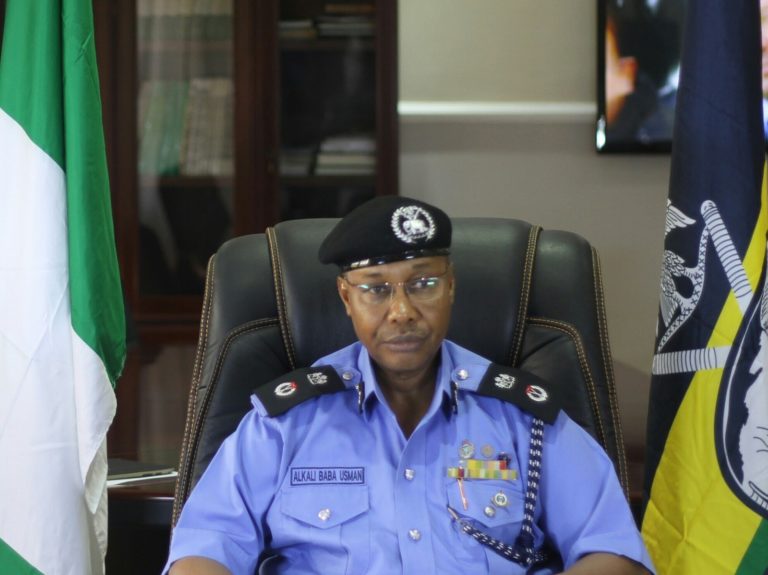
IMMEDIATE past Inspector-General of Police (IGP) Usman Alkali Baba claimed he has made the Nigeria Police Force (NPF) better than it was when he assumed office.

Baba said this while handing over to his successor, Kayode Egbetokun, on Wednesday, June 21.

“As I exit the leadership of the Force today, I believe that I am leaving it better than I met it. I believe that I have added value to policing in Nigeria,” he said.

Baba said his goals upon assuming office were to address the welfare concerns of both serving and retired officers, enhance the intellectual capacity of the NPF, and reposition special detachments of the Force, among others, all of which he claimed saw significant progress.

“We might not be there yet, but certainly, the pathways have been clearly defined, firm foundation built, and giant strides, taken. These are for the new leadership to leverage on in the quest for a better Police Force,” he stated.

Baba expressed his gratitude to the Force Management Team, whose members he described as strategic partners.

Egbetokun said while receiving the reign of authority that the NPF would strive for excellence and accountability under his watch.

“We will provide support structures for police officers that would cater for their physical, and psychological needs. We will introduce programmes to strengthen the minds and hearts of every officer. We will secure the nation,” he promised.

He said community policing would be one of the strategies he would deploy to strengthen the intelligence-gathering capacity of the force.

He also appealed to Nigerians to join in the fight against crime.

Nigerian President Bola Tinubu had approved Egbetokun’s appointment as Acting IGP after ordering Baba’s immediate retirement.

Although past the statutory age of service, Baba had continued serving as IGP amid calls for his retirement.

In May, a Federal High Court in Anambra declared his extended stay illegal and ordered him to desist from parading himself as the IGP.

Court orders police to pay slain journalist’s family N50m as damages

0

A FEDERAL High Court sitting in Abuja has ordered the Nigeria Police Force to pay the sum of N50 million to the family of slain Abuja-based journalist Alex Ogbu.

This was as revealed by the co-coordinators of the Justice for Alex group, Gerald Katchy and Dimeji Macaulay, in a statement they issued on Wednesday, June 21.

According to the statement, the judge, Mohammed Abubakar of the Federal Capital Territory court in the Kurudu area of Abuja had ordered the police to pay the sum of N50 million to the family of the late journalist.


Read Also:

Ogbu was tragically hit by a bullet from one of the police officers on January 21, 2020, while reporting a protest held by members of the Islamic Movement of Nigeria, popularly known as Shiites, demanding the release of their leader, Ibrahim El-Zakzaky.

The police had initially argued that Ogbu’s demise occurred when he struck his head on a stone, but a subsequent autopsy conducted on the body unveiled that the primary cause of death was haemorrhage due to gunshot wounds.

A group of activists then dragged the police and the Federal government to court, seeking justice for the slain journalist and his family.

Part of the statement read, “Today we have been vindicated by the court, and justice has been served after three and a half years of legal and political battles. The case suffered so many adjournments with frustrations, but we remained undaunted.

“Justice Mohammed Abubakar of the High Court of the Federal Capital Territory sitting at Court 58, Kurudu has ordered the Nigeria Police Force to pay the sum of N50,000,000 to the family of the late Alex Ogbu who was killed on January 21, 2020, during a protest of the Shi’ites.

“Alex left behind a young daughter and an unemployed wife. We are determined to get justice and we call on all Nigerians of goodwill to join us in this struggle until justice is served.

“We appreciate Comrade Femi Falana (SAN), Abubakar Marshal, and other lawyers who helped us on this case. We appreciate all the comrades and friends who stood by the family.”

Bertha Foundation offers Fellowship for activists and investigative journalists

THE Bertha Foundation is excited to announce the launch of the fifth Bertha Challenge.

The opportunity is for activists and investigative journalists to spend a year working on one pressing social justice challenge, and to deliver a body of work at the end of the Fellowship year.

Bertha invites investigative journalists and activists working towards effectively exposing and counteracting the combined effect of disinformation and corruption on the climate crisis to apply for this unique Fellowship.

Successful applicants will receive non-residential paid Fellowship and project budgets to work independently and together to investigate the causes of, and solutions to the annual Bertha challenge question.

Applications opened on May 30 and will close on July 4, 2023.

Interested applicants can apply here

Experts hinge DisCos’ revenue rise on contract-based agreement with NERC

INDUSTRY analysts in the electricity sector have attributed the rise in revenue collection by electricity distribution companies (DisCos) to the performance-based contract they signed with the Nigerian Electricity Regulatory Commission (NERC).

The 11 electricity DisCos in Nigeria’s electricity supply industry (NESI) earned N842.42 billion in revenue in 2022, the highest in five years, according to a new report by NERC.

Data sourced from the report showed that the total revenue all the DisCos collected increased by 91 per cent, from N442 billion in 2018.

Last year, NERC went into a contractual agreement with the various parties in the NESI to demand efficiency, as well as track the performance of value-chain players and enforce sanctions where necessary.

To some industry watchers, this has yielded positive results and the market is taking efficiency shape gradually.

“The increase in revenue collection by the DisCos shows that the market is taking shape following the contract-based agreement they signed with NERC,” a power sector governance expert and energy lawyer, Chuks Nwani, told The ICIR.

Nwani posited that “a competitive market would be healthy for a regulatory market, which gives positive signals to the market.”

A general manager at the NERC, Sharfudeen Mahmoud, who spoke on the agreement last year, had expressed optimism that the proposed plan would ensure that all the value-chain players work as a team to deliver power to Nigerians.

Mahmoud had explained, “The contract-based agreements are to ensure we get the commitment of various power stakeholders in the sector. It is to build trust between the regulators and the DisCos, while ensuring a committed response to the power sector cause.”

Notably, the contractual agreements is targeted at improving the capacity off-take by DisCos to attract commercial and industrial customers.

Most importantly, it is geared towards providing a stable base-grid through infrastructural expansion, creating certainty in the gas-power market segment through contracting as a way of improving firm gas availability to power stations, addressing challenges surrounding securitisation of payments across the industry, and widening the gap between peak demand and availability generation.

An energy sector expert and director at Bullox Resources Limited, Chinedu Onyegbula, linked the revenue increase to improved metering, technological monitoring of money flows, enhanced regulatory oversight by NERC and Bureau of Public Enterprise, and increased investments in infrastructural projects by the DisCos.

Data from the electricity regulator indicate a substantial increase in metering installations, rising from 85,510 meters in the first quarter of 2022 to 164,612 in the fourth quarter, reflecting a 93 per cent growth.

“The intentional efforts by the DisCos to meter the citizens are seen in their revenues. Metering has improved, as the price of power has also increased,” said Pedro Omontuemhen, Partner, PricewaterCoopers (PwC).

In the last eight years of the immediate past administration, electricity tariff rose by 168 per cent, with billing jumping from an average of N23.5 a kilowatt-hour (kWh) in 2015 to N63 kWh as of January this year.

To an experienced professional in the oil, gas, and energy industries, James Akwaji, the revenue increase can be attributed to three factors: an increase in the estimated number of customers, a rise in the number of customers using prepaid meters, and improved collection efficiency.

“This resulted in a higher recovery of funds, approaching or matching the amount billed to customers,” Akwaji said.

According to NERC figures, the collection efficiency of DisCos showed a gradual increase from 67.36 per cent in the first quarter of 2022 to 73.33 per cent in the fourth quarter, with an improvement in the total revenue collected, compared to the billed amounts.

Also, according to data obtained from the National Bureau of Statistics, electricity customers increased by 58 per cent from 6.99 million in 2015 to 11.06 million in 2022.

UPDATED: FG increases salaries of Tinubu, Shettima, governors by 114%

0

UPDATE: The commission’s spokesperson, Christian Nwachukwu, has denied what the organisation’s commissioner, who spoke on behalf of the chairman, stated.

Nwachukwu said the president has not yet approved the increment.

He said, “Not my chairman. Not my chairman. My chairman has never made any statement on it. And I have not made any statement on it. No statement from the chairman, no statement from me. So, I don’t know. I heard one of the commissioner’s say it,” he told Leadership newspaper.

***

THE Revenue Mobilisation Allocation and Fiscal Commission (RMAFC) has approved a 114 per cent increase in the remunerations of the President, Bola Tinubu; the Vice President, Kashim Shettima; and other political and judicial office holders.

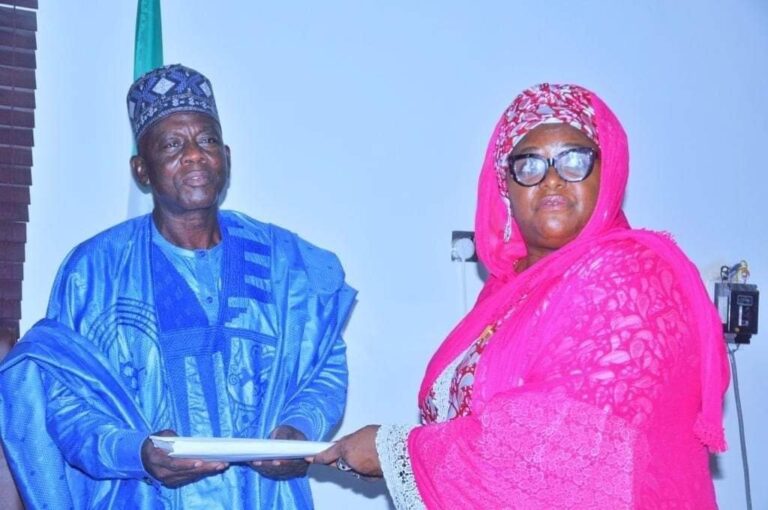
The RMAFC chairman, Muhammadu Shehu, disclosed this on Tuesday, June 20, while presenting a report of the reviewed remuneration package to the Kebbi state governor, Nasir Idris.

Shehu said the Commission made the decision after considering the impact of the review on the economy.

According to the chairman, represented by a federal commissioner in the Commission, Rakiya Tanko-Ayuba, the review of the salaries was necessary as the last review was conducted in 2007.

Shehu said, “It is imperative that the remuneration packages for the categories of the office holders mentioned in relevant sections of the 1999 constitution (as amended) should be reviewed.

“Pursuant to the above, your excellency may please recall that on Wednesday, 1st February 2023, the Commission held a one-day zonal public hearing on the review of the remuneration package simultaneously in all the six geo-political zones of the country. The exercise aimed to harvest inputs/ideas from a broad spectrum of stakeholders.”

The chairman said the Commission reviewed the remuneration using subjective and objective criteria.

He added that principles of equity, fairness, a national order of precedence and the motivation and tenure of office also guided the process.

“The subjective criteria reflected the various expressions by stakeholders through memoranda received, opinions expressed during the zonal public hearings and responses to questionnaires administered.

“The subjective criteria reflected the various expressions by stakeholders through memoranda received, opinions expressed during the zonal public hearings and responses to questionnaires administered.

“The objectives of the criteria were obtained from analysis of macro-economic variables, particularly the consumer price index (CPI),” he said.

During the presentation in Kebbi state. Photo NTA via Twitter (https://archive.is/VQPGe)

The approval of increased remuneration is coming a few weeks after President Bola Tinubu announced the removal of the fuel subsidy, which pushed up prices for transportation and commodities.

Tinubu had appealed to the millions of citizens who faced additional economic hardship to exercise patience.

He vowed that the money saved by ending the decades-old subsidy would help the government’s efforts to fight poverty and implement valuable initiatives.

The President also promised to increase the minimum wage to align with the country’s economic realities.

Advances to Fed Govt: Tinubu’s assent to CBN Act amendment will contradict fiscal responsibility – analysts

ECONOMIC analysts have expressed worry that the amendment to the Central Bank of Nigeria (CBN) Act, which increases the apex bank’s advances to the Federal government from five per cent to 15 per cent, will create monumental macroeconomic challenges now and in the future.

The analysts said the amendment contradicted best practices in fiscal responsibility and would authorise the Executive to create macroeconomic distortions through arbitrary and increased ways and means borrowings.

In a statement jointly signed by financial advocacy groups, Centre for Social Justice (CSJ) and Public Finance Management (PFM), and obtained by The ICIR on June 20, the two bodies recalled that the extant section 38 of the CBN Act grants the Federal government access to ways and means financing in respect of temporary deficiency of budget revenue at such rate of interest as may be determined by the CBN.

The Lead Director of the CSJ, Eze Onyekpere, signed on behalf of that organisation, while Chidi Sundayson, the Programme Manager for the PFM, Chidi Sundayson, signed for it.

They noted that as per the extant Act, the total amount of such advances outstanding shall not at any time exceed five per cent of the previous year’s actual revenue of the Federal government.

“All Advances made pursuant to this authority shall be repaid – (a) as soon as possible and shall in any event be repayable by the end of the Federal Government in the financial year in which they are granted, and if such advances remain unpaid at the end of the year, the power of the CBN to grant such further advances in any subsequent years shall not be exercisable unless the outstanding advances have been repaid,” the statement read.

The document, quoting Abdullahi Ibrahim Gobir, a senator in the 9th Assembly and a key proponent of the bill, stated, “The very essence of this bill is to enable the Federal government meet its immediate and future obligations in the approval of the ways and means by the National Assembly, and advances to the Federal government by the Central Bank of Nigeria.

“The amendment is very consequential, and it needs the support of us all. This is to enable the Federal government to embark on very important projects that will inflate and rejig the economy.”

But the two opposing bodies pooh-poohed Gobir’s arguments. They maintained that the amendment was a misconceived route to merely meeting the needs and obligations of the Federal government and can definitely not be the road to rejigging the economy.

“It will rather create new macroeconomic challenges,” they said.

Onyekpere: amendment of the Act is poorly conceived and not good for the economy

Citing specific concerns on the amendment, the bodies said the Federal government had been unable to refund previous advances from the CBN at five per cent of the previous year’s revenue and queried what machinery the amendment was putting in place to ensure that the government would be in a position to repay 15 per cent by the end of its financial year.

Gobir: proponent of the amendment

Previous high levels of advances had led the Executive to incur over N23 trillion in debt in ways and means, which could not be repaid and had to be converted by the National Assembly to long-term indebtedness, contrary to the provisions of the CBN Act.

Section 38 (1) of the CBN Act states that such advances should be in respect of temporary deficiency of budget revenue and not as a means of funding the deficit budget, as the Federal government had resorted to in recent years. Analysts pointed out that in accordance with fit and good practices, the ways and means option has never been listed in the Appropriation Act as a source of funding the deficit.

The ICIR had reported that the CBN’s crossing of the threshold of lending to the Federal government was violating the Fiscal Responsibility Act and creating high inflationary pressure on the economy.

The analysts also said the ways and means option to fund budgetary deficits further increases the already high inflation rate, especially when done by printing money not backed by value. They explained that this erodes the value of the naira and real income, and reduces the purchasing power of citizens.

The joint statement condemned the amendment to the CBN Act as not following due process, and was arbitrary and lacking in popular participation.

“There was no opportunity of a public hearing and publicity to give room for Nigerians to make inputs on this very crucial matter that could negatively affect overall economic growth and the general welfare of the people,” the group said.