Home Blog Page 975

Gangs of Lagos: Nigerians react as Lagos govt frowns at cultural misrepresentation

0

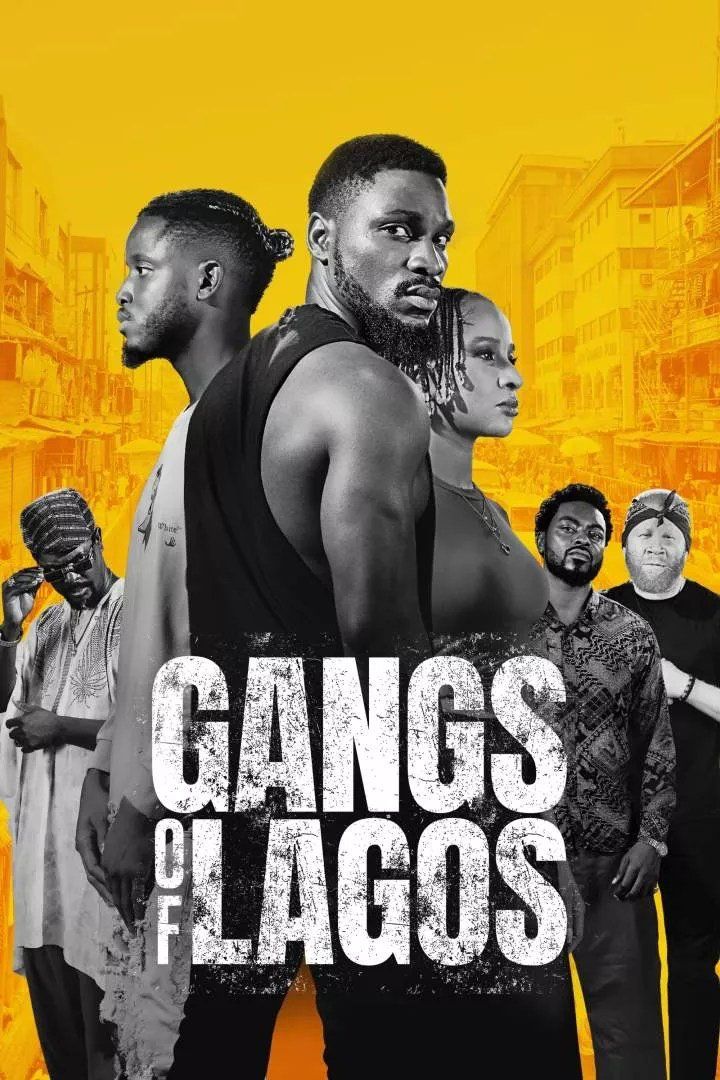
NIGERIANS on the social media have expressed mixed feelings following the displeasure of the Lagos State Government over perceived ‘cultural misrepresentation’ by the promoters of the ‘Gangs of Lagos’ movie.

The movie which was released on April 7, via Prime Video reportedly ranked in the top 10 categories in more than 30 countries within 24 hours of its release.

Gangs of Lagos, directed by Jade Osiberu, tells the story of three friends, Obalola (Tobi Bakre), Gift (Adesua Etomi-Wellington), and Ify (Chike) who have to join a gang after Obalola’s adoptive father was murdered by a group.

The director used Lagos Island and Eyo masquerade as part of the elements to tell the story.

Other notable Nollywood stars in the movie include: Olarotimi Fakunle, Chioma Chukwuka, Bimbo Ademoye, Iyabo Ojo, Zlatan, Debo “Mr Maraconi” Adedayo, Yhemolee, Pasuma, Toyin Abraham, Tayo Faniran, Damilola Ogunsi, and Funke Williams.

The movie, according to the Lagos State government, purportedly depicted Lagos culture as barbaric, noting that the film portrayed Eyo Masquerade as a gun wielding villain.

A statement signed by the Commissioner for Tourism, Arts and Culture Uzamat Akinbile-Yussuf, said the Ministry, being the regulatory body and custodian of the culture of Lagos State, viewed the film/series as a mockery of the heritage of Lagos.

She further expressed her displeasure with the promoters of the film, Jade Osiberu and Kemi Akindoju, for portraying the Eyo Masquerade as a gun-wielding villain while adorning the full traditional regalia.

The commissioner said: “We are of the opinion that the production of the film ‘The Gang of Lagos’ is very unprofessional and misleading while its content is derogatory of our culture, with the intention to desecrate the revered heritage of the people of Lagos. It is an unjust profiling of a people and culture as being barbaric and nefarious. It depicts a gang of murderers rampaging across the State”.

Akinbile-Yussuf maintained that the Adamu Orisha, popularly known as the Eyo Festival, is rarely observed and only comes up as a traditional rite of passage for Obas, revered Chiefs and eminent Lagosians.

According to her, Eyo Masquerade is equally used as a symbol of honour for remarkable historical events, adding that it signifies a sweeping renewal, a purification ritual to usher in a new beginning, a beckoning of new light and acknowledging the blessings of the ancestors of Lagosians.

Reactions

Meanwhile, reacting to the development, some Nigerians on the social media have criticized the government’s view of the movie. But others argued that the movie is indeed a misinterpretation of Lagos.

A twitter user, BeksFCB said, “We have seen different Nollywood/Yoruba movies about rituals, heavy witchcraft and charms. You did not frown at all of these but you want to draw the line because they portrayed Isale Eko in GANGS OF LAGOS as a dreaded area in the past. Just look at your priority! Smh!!!”

Another user with Uloma as the profile name, said the content of the statement by the Lagos State Government is just a smokescreen, noting that “their real anger is that certain people were portrayed as drug lords and corrupt elements and that is not good for history”.

“They’re telling us that any art we make that portrays them in bad light will be punished,” she added.

@iSlimfit said the movie carried a disclaimer. “Fiction”.

“Any resemblance to actual persons, living or dead, or actual events, is purely coincidental. You guys should stop embarrassing yourselves and the entire Nation!”

Ayò-Bànkóle Akíntújoyé wrote: “There are countless movies that portray the US intelligence as corrupt, brutal & fascist – direct opposite of what the US govt wants the world to believe. Heck, there are movies that show the White House attacked & taken down, or Christianity, Judaism, Greek Gods etc as all sorts. It’s creative liberty. Fiction. Govt shouldn’t be policing creative liberty and “cultural representation” in Nollywood when it has buildings collapsing & ravaging corruption & poverty to deal with.

“And what is it with this obsession with “culture” by Lagos state government for Christ’s sake??”

However, a popular musician Ogunmefun Olanrewaju, popularly known as Vector, expressed his displeasure at the ‘misrepresentation’ of Lagos in the movie.

He wrote: “I was born at the Onikan health center, lafiaji, Lagos island and all I have seen during the Eyo festival every time they’re out is, they stop by at ours and prayed wishing prosperity for my family.

“Most of our friends like the Olugbani’s who are direct Eyo Ologede gatekeepers (@hypeengine_mcbalo ) are not gun shooting criminals using culture as a disguise.

“As teenagers, i’ve had friends (underneath the regalia) chase me with the staff (Opambata) because I knew they would take advantage and show me shege lol.

“My idea of what the Bajulaiye is is totally different from murderous criminality.

“Going by what the term gang means, it is disrespectful to define the Eyo in the same light.”


READ ALSO:


Another twitter user, @LegendaryJoe wrote: “Well, I hope one day our filmmakers will write stories with positive outlook on Lagos and its politics and policies. Or they should weave their stories around Abia, Anambra, Jigawa etc. Appears only Lagos is marketable enough or our film makers are just plain -lazy, there’s a lot to write about Oyo. But I must praise the cast and crew of the movie for it made a near perfect delivery of an action themed movie, to that extent, I stand impressed. But as far as story is concerned, King of Boys appears to have blazed the trail around Lagos.”

Indigenes petition NFVCB over defamation of Isale Eko, Eyo Masquerade 

The Isale Eko Descendants’ Union (IDU) have petitioned the National Film and Video Censors Board (NFVCB) over alleged defamation of their community and the Eyo Masquerade in the Gangs of Lagos film.

According to a statement released on Wednesday, April 12, by the Union’s secretary Opeyemi Bakreen, the IDU has requested that the NFVCB withdraw the approval granted to the movie.

Parts of the statement read: “The Illegal and scandalous depiction of the Eyo Masquerade in the movie is actionable and a petition has been lodged by the IDU with the National Film and Censors Board (NFVCB) including other major stakeholders.

“The IDU has, among other things, requested that the NFCVB withdraw the approval granted to the movie – Gangs of Lagos and direct the withdrawal of the movie from all viewing channels available to the public. The IDU and other community stakeholders will also be considering legal action for the damage done to the culture, tradition and image of the Isale Eko community and the Eyo Masquerade.”
PSC investigates alleged bribery for promotions in Nigeria Police Force

0

THE Police Service Commission (PSC) is investigating allegations that $10,0000 bribe was paid to members of the Commission for special promotion of some junior police officers over higher ranking personnel of the Nigeria Police Force (NPF).

In a statement by the Public Relations Officer (PRO) of the Commission Ikechukwu Ani on Thursday, April 13, the PSC said it was not aware of the alleged bribery, adding that it had not received any formal petition on the issue.

“The Commission wishes to state that it does not sell promotions in the Nigeria Police Force and will not start now when a deliberate effort is being made to reposition and reinvigorate the Nigeria Police Force, especially with the assumption of duty of Dr. Solomon Arase as Chairman of the Commission,” the statement noted.

However, the PSC urged anyone with substantial evidence of bribery for promotions to present proof to the Commission. The statement added that officials found guilty of taking bribes, would be dealt with according to the provisions of the law.

“The Commission has also set up a panel of investigation, comprising of both members of the Commission and that of the Nigeria Police Force to investigate these allegations. Aggrieved Officers should avail themselves of the existence of this investigative Panel and come forward with substantiated proof that could aid the investigation.

“The Commission insists that those found wanting in the course of investigation will face the full wrath of the law. However, the Commission warns that it will not tolerate any frivolous and fictitious media claims as Officers and Men of the Police should be abreast and conversant with approved lines of communication,” the statement added.

According to a report by Sahara Reporters, some aggrieved senior police officers alleged that junior staff were being promoted by the PSC after receiving a bribe of $10,000.

The officers expressed their grievance through a statement signed by their representative Chijioke Okonkwo, and called on Nigerian President Muhammadu Buhari to probe corrupt practices in the PSC.

However, the PSC said there were channels within the Commission through which such issues could be communicated and directed the Nigerian Police Force (NPF) to unravel Okonkwo’s true identity.

The PSC intends to interrogate the said officer as part of investigations into the bribery for promotion allegation.

Nollywood could see a major boost from Nigeria’s new copyright law – an expert explains why

0

By Samuel Samiai Andrews, University of Gondar

NIGERIA has finally updated its 2004 copyright law, bringing it into the digital era – where the entertainment industry has been for decades already.

Before the late 1990s, it was difficult even to get telephone services in Nigeria. And it was very expensive for private enterprises to make films. Since then, digital technology has unleashed a multitude of ways to receive information and entertainment.

With the arrival of digital technology, all a filmmaker needed was a simple video recorder and a group of talented creatives. Thus modern Nollywood – the Nigerian film industry – was born.

Nollywood employs more than a million people directly or indirectly, making the sector Nigeria’s second largest employer after agriculture. In 2022, Nollywood’s contribution to Nigeria’s GDP stood at 0.1 per cent. It’s Africa’s most successful film industry and the third largest globally after Hollywood and Bollywood in terms of the number of movies produced annually.

But Nigeria’s copyright regime lagged behind the industry’s technological and business developments. The biggest issue was piracy, that it was easy to copy and sell other people’s work without their consent. The courts found themselves with new intellectual property problems to deal with and it was clear a new copyright regime was needed.

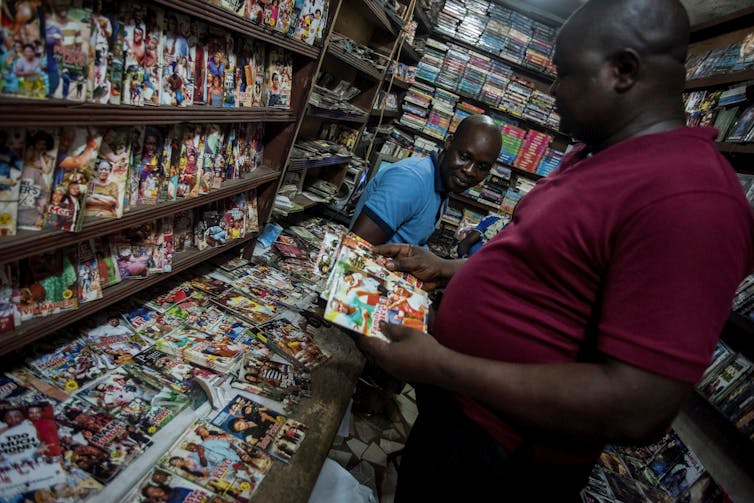
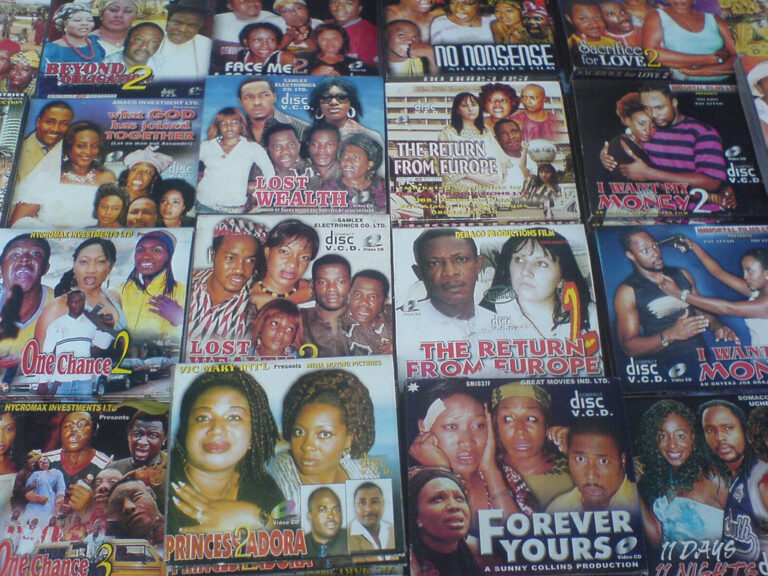
A man looking at some movies in a store filled with shelfs stacked with DVDs.
The new copyright law make provision for the digital rights of Nollywood creatives. Photo by Cristina Aldehuela/AFP via Getty Images.
from www.gettyimages.com

I have spent much of my career researching copyright law in Africa and the connection between copyright and the economic growth of Africa’s creative industries – films, fashion, music, literature and others.

I have written specifically about Nollywood, arguing that it needs a new copyright regime if it is to thrive. And I have researched the kind of copyright curriculum that law schools in Nigeria need in order to make the amended copyright law effective in growing its creative industries. My research supports the idea that Nigeria should deliberately include digital copyright regimes in its laws and strengthen the institutions that put them into effect.

And the new copyright law in Nigeria does fill gaps. Nigerians will now have a legal regime that can protect their creativity within the technological space. The new law will be useful to combat online film piracy and loss of revenue from the illegal use of copyrighted works.

The new law has the potential to create stability and predictability in industries like Nollywood. This is a positive step towards a more diversified national economy – and economic growth.

But it will be important to allow the courts to do their job. Trying to settle disputes through the Nigerian Copyright Commission – which is a new option – could complicate and prolong the litigation. That might discourage investment in the creative industry.

Key benefits of the new law

Nigeria’s new copyright law recognises and protects creative works that are based on current digital productive technologies. It covers films, music, performances, literary works and performances enabled by the internet and wireless devices through streaming techniques, uploads, hyperlinks and air-drops.

The law now provides anti-circumvention devices. It is now a copyright infringement to illegally circumvent a computer program, software or a technical protection measure created to protect a copyrighted work. Film piracy is both a criminal offence and a civil wrong, with severe punishment and consequences. This now applies to new forms of online film piracy too.

The new copyright law also includes a “safe harbour” provision which protects Nollywood entrepreneurs from unnecessary legal suits. For example, online service provider business is an emerging technology that requires huge investment and is vulnerable to illegal actions. People upload unauthorised content on an online platform and this can result in lawsuits which affect investors in this sector. The safe harbour comes with responsibility on the part of the online service provider: it must quickly remove unauthorised content and must not benefit financially from it.

The new law gives copyright owners ways to resolve disputes over ownership of online content without necessarily going to court.

Five other new aspects

The new law has five more aspects that will help sustain the creative economy and promote access to knowledge and education.

  1. Alternative dispute resolution system. This mechanism can be used to settle issues surrounding creative rights within contemporary digital platforms. The process will be organised by the Nigerian Copyright Commission, the regulator.
  2. Register of works. Creators are required to register their created works. Although creators of works like Nollywood films automatically own their copyright, the register – if well executed – may help with rights management and be a resource for potential investors in the industry.
  3. User-generated content. When you take a photo of yourself and upload it on platforms like Facebook, YouTube, Instagram or TikTok, what you have done is upload content on an online service provider. You may have copyright over that content. The new copyright law clearly defines your rights and regulates infringement of such rights.
  4. Copyright exceptions. Sometimes a copyrighted work can be used without the copyright owner’s authorisation. The new law seems to take the approach that the public has a right to use a copyrighted work if it’s good for society. For example, anyone can use a copyrighted work for educational purposes – to teach in a classroom, for news reporting, criticism, or parody. People can also use the underlying idea in the copyrighted work (ideas aren’t protected by copyright) to create a new, “derivative” work.
  5. Copyright management organisation. Another new aspect is that regulators can appoint more than one copyright management organisation to serve a specific class of creative work. This will potentially further liberalise and democratise creativity.

The cautions

Laws ought to be effective in action. If the new law is to benefit Nollywood and other digital industries, government institutions and policies will need revamping.

The Nigerian Copyright Commission should use its new administrative powers carefully. It should be sensitive to the fact that only the courts can judge disputes of property rights.

The commission must stop licensing only one collective management organisation per creative category. Currently, for example, in the musical works category the commission has granted only one copyright management organisation the licence to collect royalties on behalf of creators. This has resulted in court battles for sole control over royalties. If the commission makes rights management more competitive, there may be less tension in the sector. Creatives should have more choice.

Nigeria will also need to pay more attention to training experts with knowledge of the digital era laws. The university creative and legal curriculum needs reform along with the new law.

If the new law is to benefit Nollywood, it will have to be properly implemented.

Why this matters

The updated Nigerian copyright law recognises how a contemporary creative system can encourage investment in the Nigerian film industry.The Conversation

Samuel Samiai Andrews, Professor, University of Gondar

This article is republished from The Conversation under a Creative Commons license. Read the original article.

Ex Lagos deputy governor to renounce citizenship over Tinubu’s election

FORMER Lagos State deputy governor, Sinatu Ojikutu, has announced that she is in the process of renouncing her Nigerian citizenship and relocating from the country following Bola Tinubu’s victory in the 2023 presidential election.

She stated while addressing a press conference at home in Lagos on Wednesday, April 12.


READ ALSO:

Anti-Tinubu protester, Uja denied bail

APC asks tribunal to dismiss LP’s petition against Tinubu’s victory

APC seeks dismissal of petitions against Tinubu’s victory

Shun ethnic, religious rivalry, Tinubu urges Nigerians


The former deputy governor, who served from 1992 to 1993, had previously expressed her opposition to Tinubu’s presidency before the election.

Ojikutu claimed that she had been subjected to constant humiliation since his victory.

She stated that she would not hold a Nigerian passport with Tinubu as President and wants to find a new home where she can live peacefully.

Already, according to her, she has contacted lawyers to help her identify a country where she can obtain citizenship.

Ojikutu said she does not intend to travel to the United States or the United Kingdom, but instead prefers a simpler country to live in.

“I will not hold a Nigerian passport with Bola Tinubu as President,” she said.

“I am praying to God to give me the nation I can go to. I am not going to America or the United Kingdom.

“I want a simple place where I (can) stay and live for the rest of my life.”

She reiterated that she had been ostracized and humiliated since Tinubu’s victory, particularly in places where she should be honoured.

Despite receiving calls from people who tried to assure her that Tinubu would not do anything to her, she feels her safety is at risk.

Pulitzer Center offers rainforest journalism fund internship

0

THE Pulitzer Center is seeking a remote intern for the Rainforest Journalism Fund (RJF) initiative, which supports strong, independent journalism on issues related to tropical rainforests. 

The intern will participate in publishing, communications, and research activities, working with the RJF manager and regional coordinators.

The ideal candidate must have professional/written proficiency in one or more of the RJF languages: Spanish, Portuguese, French and Bahasa Indonesia.

United States based interns will be paid US$17 per hour. All non-US salaries are adjusted based on an international conversion index.

The organiser says the start date is June 1.

Recent journalism graduates with an interest in environmental issues can apply for an internship.

Applications are accepted on a rolling basis. Interested applicants can apply here.

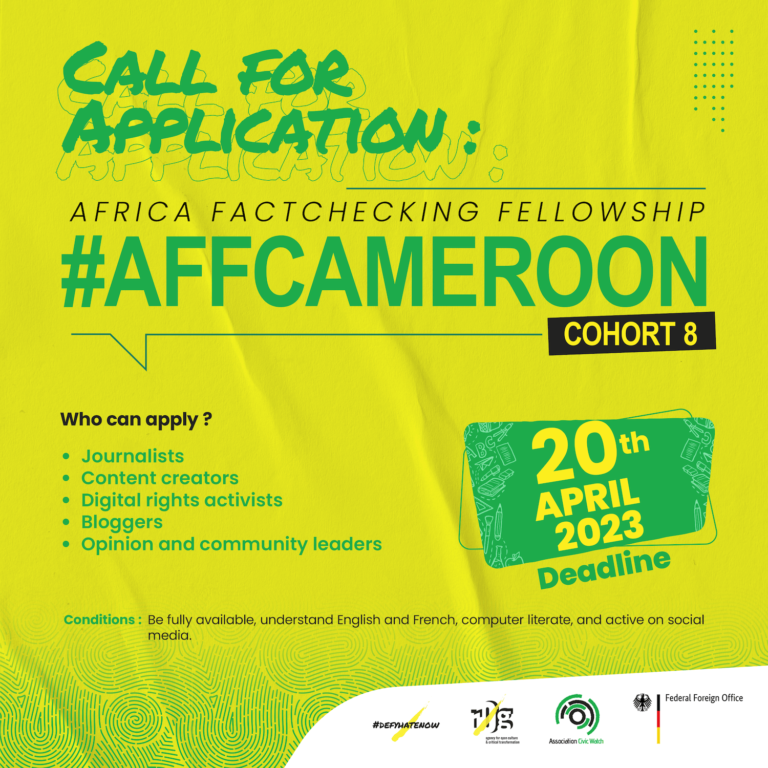
Africa Fact-Checking Fellowship seeks applicants

THE Africa Fact-checking Fellowship, offered by #Defyhatenow, is inviting applications for its fellowship that promotes fact-checking, data journalism and digital rights of journalists, bloggers and content creators in Africa.

The program, which will run from April to June, will equip fellows with fact-checking skills to recognise misinformation, disinformation, and mal-information online.

Fellows will participate in webinars, practical lessons, peer-to-peer learning, and hands-on fieldwork. 


READ ALSO:


Journalists between the ages of 20 and 40 can participate in a fact-checking fellowship in Cameroon.

The deadline for the submission of the application is April 20, 2023. Interested applicants can apply here.

Family of man lynched in Akure says he’s not ‘Yahoo boy’, calls for justice

0

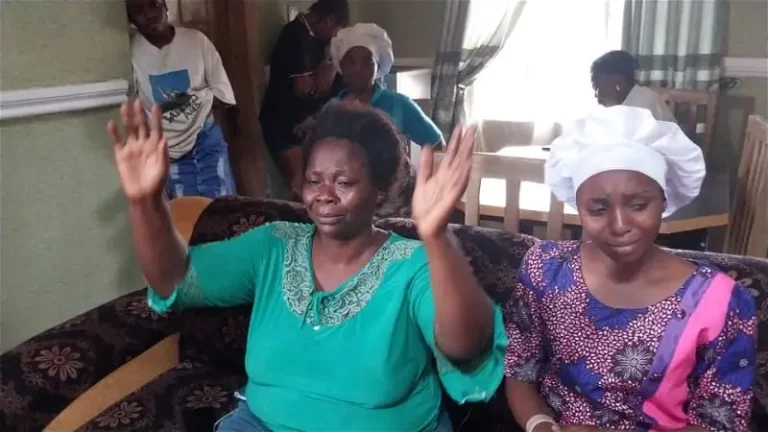
THE family of a 35-year-old man identified as Tope Olorunfemi, who was recently lynched by an angry mob in Akure, Ondo State, has debunked reports that he was an internet fraudster, otherwise known as ‘Yahoo Boy’.

Olorunfemi was killed on Monday by an angry mob after his vehicle collided with a commercial motorcycle, killing two people in the process.

Following the incident, rumours began to spread that he was a Yahoo boy.

However, in a interview with newsmen on Wednesday, April 12, Mojisola Olorunfemi, the mother of the deceased, said that contrary to the rumours, her son was a gentle and hardworking Uber driver.

According to her, the deceased Olurunfemi was never involved in any fraudulent activities.

She recounted how her son moved to Lagos after completing his education, where he registered as an Uber driver to make a living, adding that it was his father that bought him the vehicle for the business.

“Tope was never a Yahoo boy,” she said.

“He was a gentle boy who moved to Lagos after finishing his education. He bought a car and registered as an Uber driver to make a living. Three years ago, his father bought him another car for the same business.”

The grieving mother added that Tope was in Akure with his wife and child for the Easter celebration when the accident occurred.

She noted that the clothes found in his car belonged to his wife and child, who had agreed to stay behind in Akure for an extra week.

Mojisola also spoke of her futile efforts to save her son from the mob.

She noted that the piggy bank found in his car belonged to his wife and not a small coffin or casket, as claimed by those who tagged him a Yahoo boy.

The bereaved mother called on the government to bring those responsible for her son’s death to book, adding that those who kill by the sword would surely die by the sword too.

The wife of the deceased, Mosunmola Bosede Olorunfemi, also spoke out, calling on the state government and police to investigate her husband’s death.

She pleaded with the government to take decisive action to address the killing of youths in the country, adding that her husband was a bolt driver, not a Yahoo boy.

The incident has sparked outrage on social media with many people calling for an end to mob violence and a more effective justice system.

The State Police Command has announced the arrest of two people in connection with the incident.

CSO sensitises FCT residents on environmental hygiene

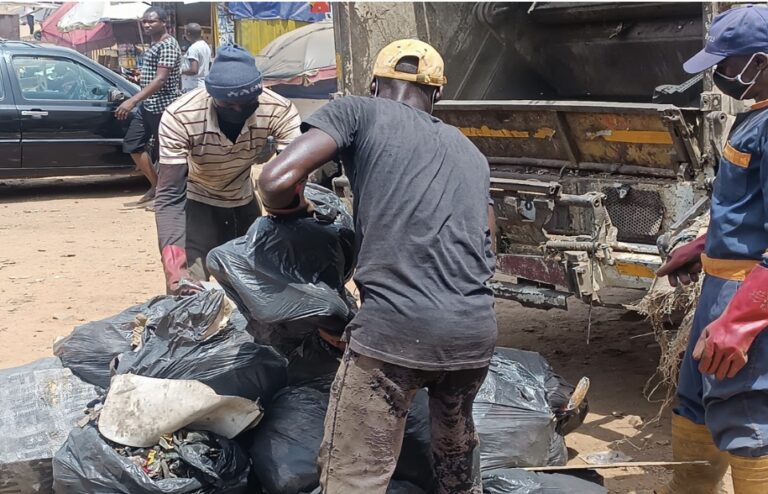
A Civil Society Organization, the Centre for Environmental Sustainability and Development Awareness (CESDA), is sensitising residents of Abuja suburbs on sanitation and good hygiene.

The move is aimed at curbing poor sanitation and hygiene practices in Abuja suburbs.

CESDA is an advocacy group established to promote good governance, development and defence of the human ecosystem.

In a statement issued by Olusola Babalola, the executive director of the non-profit, on Wednesday and made available to The ICIR, the group said the intervention began in the Nyanya area of Abuja.

Olusola said Nyanya is a “settlement characterised by endless traffic challenges and poor hygiene and environmental sanitation practices”.

“The intervention is to combat the menace of poor hygiene and sanitation practices effectively; there is a need for proper orientation among the populace, increase in government budgetary allocations to water sanitation and hygiene sector to shore up toilet facilities and proper waste management system as well as a public-private partnership to be able to cater for toilet deficit in our communities effectively.”

The group first carried out the month-long intervention on Monday, April 3, and will resume on April 25 with the prosecution of offenders while the clean-up exercise is ongoing.

“Prior to this, markets, parks and shop owners have been issued abatement letters well ahead of time, warning them to ensure that facilities and the environment are put in good shape,” she said.

“During the tour in Nyanya that lasted four days, the state of the community sanitation was in total shambles, with the toilet facilities broken down, with coloured stinking water dripping from the pipes inches away from the facilities due to overuse. The refuse was indiscriminately disposed of with no proper waste disposal plan. The ground was littered with both solid and liquid wastes.

“In addition, the drainages, pavement or bridge columns are used as makeshift toilets when people are pressed. Traders and motorists, as well as pedestrians, have converted such areas into a place for defecation which are often littered with human faeces, among other refuse.”

UBA, Jaiz, FCMB, Stanbic IBTC pay N1.38bn fine for money laundering, other offences

THE United Bank for Africa (UBA) Plc and three other banks have paid a fine to the tune of N1.38 billion for breaching the anti-money laundering requirements and other offences during the 2022 financial year.

This was disclosed in the banks’ audited financial statements for the year ended December 31, 2022, The ICIR can report.

The statements showed that UBA and the three other banks – FCMB Group, Stanbic IBTC Holdings Plc and Jaiz Bank Plc – were penalised for other offences that included breach of legislation, settlement of delays and regulatory infractions.


READ ALSO:
Money laundering: Okupe steps down as DG of Peter Obi’s campaign council

UBA silent on staff dismissal as ex-staff claim bank got rid of them like “spoilt goods”

Stocks: Banking, other indices plunge as MPR goes up


The UBA stated that it paid a total fine of N1.14 billion in 2022, compared to the sum of N513 million it paid in 2021.

Stanbic IBTC paid N159 million in the review year as against N233 million in the prior year, while FCMB’s fine for 2022 lowered to N70.30 million from N723.31 million paid in 2021.

Jaiz Bank said it got a fine of N6.25 million for flouting a Central Bank of Nigeria’s (CBN) regulation 2013, and also N5 million fine by the Securities and Exchange Commission in respect of renewal of 2022 registration as capital market operator.

Primarily, the legislations governing banking activities in Nigeria include the Banks and other Financial Institutions Act (BOFIA) and the Central Bank of Nigeria Act.

“The bank contravened certain sections of the Central Bank of Nigeria Anti-Money Laundering and Combating the Financing of Terrorism (AML & CFT) Regulations, 2013 (as amended) and Securities and Exchange Commission’s Rules and Regulations during the year,” Deloitte stated in its independent auditor’s report for Jaiz Bank.

The FCMB explained that the penalties it received were incurred as a result of settlement delays and regulatory infractions.

Subsidy Removal: Concerns of transparency, inclusivity over $800m palliative disbursement

AS the Federal Government prepares to disburse the sum of $800 million to most vulnerable Nigerians as a palliative to cushion agonies expected to arise from the planned removal of petroleum subsidy, there are wide misgivings of transparency and inclusivity on the ‘pro-poor’ register being drawn up to run the exercise.

There are also concerns on repayments by beneficiaries of loans disbursed to the low and middle income earners by the Federal government, the $800 million palliative itself being a loan from the World Bank

The concern followed previous interventionist programmes of the Federal government like N-Power, Trader Moni, and Market Moni, which failed some transparency tests and were unable to prune the estimated number of 133 million people in multidimensional poverty.

BusinessDay quoted the Minister of Humanitarian Affairs and Disaster Management, Sadiya Farouq, as, in an interaction with the media on February 18, raising her concern about loan repayment issues regarding some federal government’s interventionist programmes.

“The government was yet to recover any money from the beneficiaries of the previous disbursements to the TraderMoni, three years after disbursement,” BusinessDay qouted Farouq as saying.

TraderMoni is one of such interventionist interest-free loan facilities given to traders under the Government Enterprises and Empowerment Programme (GEEP), which started in 2018, shortly before the 2019 general elections.

Further concerns on transparency were raised when the government was accused of expending N500 million on school feeding during the Covid-19 lockdown, a situation that did not go down well with many accountability watchers.

Critics are worried that the constitution and formation of the pro-poor register that will list beneficiaries of the new $800 million loan does not define categorically what constitutes a poor Nigerian and proper geo-political spread.

They insist the government needs to explain more its plans, policies and programmes clearly before commencement of the palliative disbursement.

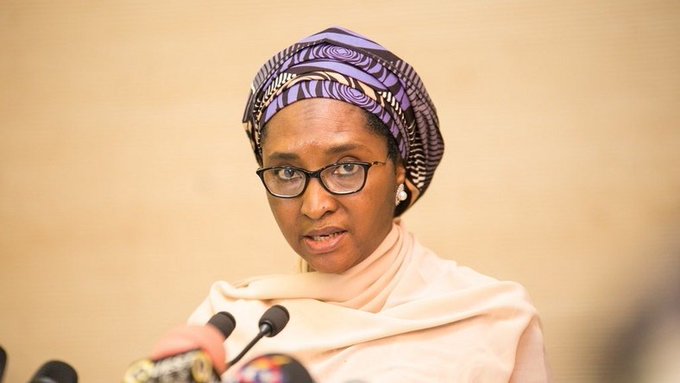
The minister of Finance and National Planning, Zainab Ahmed, who had confirmed the disbursement plan to journalists on April 5, 2023, said the government would stop subsidy on petroleum payment in June, adding that plans were being finalised with the Presidential Transition Council (PTC) on it.

The Federal government has already budgeted N3.35 trillion for the first half of 2023, with no subsidy vote for the rest of the year, confirming its resolve to end subsidy payments in June.

In 2022, subsidy cost the government the sum of N3.3 trillion in 11 months alone, the sum eating deep into the country’s infrastructure fund and other developmental projects.

This development does not sit down well with economic watchers, with even the World Bank maintaining its stance that the subsidy only benefits 3 per cent of Nigerians.

“The concern raised by the World Bank is in order. If you look at it objectively, trillions of naira spent on subsidy can solve Nigeria’s infrastructure problems and lessen our borrowings to fund the budget deficit,” a former chairman of the Major Oil Marketers Association of Nigerian (MOMAN), Adetunji Oyebanji, told The ICIR.

MOMAN Adetunji Oyebanji
Oyebanji believes subsidy funds can help Nigeriaʼs infrastructure facelift

Against this backdrop, Ahmed confirmed that engagements with the PTC and the incoming administration had been initiated.

She informed that the $800 million received from the World Bank would be disbursed to 10 million households considered to be most vulnerable, to cushion the effects of the subsidy removal.

“This is a commitment in the Petroleum Industry Act (PIA). There’s a provision that says that 18 months after the effectiveness of the PIA, all petroleum products must be deregulated. That 18 months takes us to June 2023,” she said.

The minister noted that the 2023 medium-term expenditure framework and the Appropriation Act made necessary provisions to facilitate fuel subsidy exit by June 2023.

She said, “We are on course; we’re having different stakeholder engagements. We’ve secured some funding from the World Bank. That is the first tranche of palliatives that will enable us give cash transfers to the most vulnerable in our society that have now been registered in a national social register.

“Today, that register has a list of 10 million households. Ten million households is equivalent to about 50 million Nigerians.”

Beyond the cash transfer, the minister noted that the government was working to include transport palliatives to ameliorate possible rise in cost in that area.

The $800 million loan from World Bank

A document sighted by The ICIR showed that the facility as a loan has a credit number 7019-NG. The financing agreement, according to the document, was signed on August 16, 2022 between the Federal Republic of Nigeria (Recipient) and International Development Association (IDA) of the World Bank.

The loan, a concessionary facility, has 1.65 per cent as the principal amount of credit repayable from January 15, 2027 to July 15, 2046. Another payment date for the loan is from January 15, 2047 to July 15, 2051. Within this period, the repayment per cent is 3.40 per cent of the principal amount.

According to the document, the sum of $565.3 million has been released so far to the federal government, as the first tranche of payment.

Ahmed signed on behalf of the Federal Republic of Nigeria, while the World Bank’s Nigeria Country Director, Shubham Chaudhuri, signed on behalf of the IDA.

Under the project description,  the objectives of the payment are to “expand coverage of shock response and safety net support among the poor and vulnerable”, and also “strengthen the recipients’ national safety net delivery system.”

According to the signed documents, the implementation arrangements comprise federal and state levels.

The federal aimplementation institutions include the National Steering Committee, National Safety Nets Coordinating Office, and the National Cash Transfer Office.

On the state level, the document listed states’ steering committees, states’ operations coordination units, states’ cash transfer units, independent verification of output-based financing, and targeted transfer.

A development economist, Kelvin Emmanuel, in a chat with The ICIR, said of the loan, “That the loan was given as a facility for the Federal government to provide palliative for 10 million households in the National Social Register is proof that we do not understand what ‘poverty’ really is and how to solve it in Nigeria.”

Emmanuel pointed out that the price of petrol going up 401 per cent without domestic refining and 297 per cent if the 27 per cent handling charge is taken off would place a financial burden on Nigerians, for which handing out “stipends” as conditional cash transfer is not the solution.

“And this is because despite the disbursement of over N2 trilllion over the last eight years, the per capita income of Nigerians has dropped 48.5 per cent, with the United Nations estimation of hunger rate at 13 per cent, and a projected 24.2 million Nigerians projected to be exposed to food insecurity,” he added. 

Worries over rising debts and transparency of ‘pro-poor’ register

Some analysts are worried that the new $800 million World Bank loan would worsen Nigeria’s debt burden, with the country currently showing weak repayment capacity.

“The government is struggling to cover N11.5 trillion in deficits for the 2023 budget. Yet, it’s collecting $800 million from the World Bank to fund palliative for removal of subsidy through conditional cash transfer to 10 million households,” the economist, Emmanuel, said.

Emmanuel: loan will worsen Nigeria’s debt problem

A development expert, Olawale Salami, expressed reservations on the impact of previous interventionist programmes of the Federal government.

Salami expressed a fear that the conditional cash transfer would likely go the way of N-Power and other similar intervention schemes.

He said, “UNESCO recommended 15-20 per cent of government budget on education. Africa Union countries agreed that recommendation on health allocation is 15 per cent of Government budget. Another $800 million is about to be wasted on cash transfer the same way N1 trillion was wasted on N-Power and other intervention schemes.”

Salami stressed that “investments in social overhead capital (education, healthcare, electricity) would sour and make private investment easier to expand.”

Citing country experience, he noted, “Israel has one of the highest per capita of scientists and doctorate degree holders,” sayng that these professionals provide talents for highly skilled technology industry for wealth creation.

To an associate consultant with the British Department for International Development (DFID), Celestine Okeke, the weak link in the $800 million palliative disbursement is the absence of a proper exit plan and integration into economic policies of the government for proper wealth creation.

Okeke believes palliatives must create pathway to economic prosperity

Okeke said, “This is more like a knee-jerk approach and lacking in proper exit plan. We witnessd this in N-Power and Trader Moni. Despite these interventions, we still have high unemployment rate inching to almost 40 per cent.”

Another economist, Olumide Adesina, also has his doubts about the palliative register, saying it is likely to be weakened by political interference.

“The problem with this measure is that just a quarter of Nigerian citizens have BVN (56.4 million).The most vulnerable Nigerians can’t be captured, and the e-naira could have helped, but not many Nigerians are there,” Adesina said.

Mohammed Adamu, a footwear dealer in Kubwa, the Federal Capital Territory, was emphatic he did not trust the proposed palliative distribution project.

“I keep wondering how they identify the most vulnerable and low income citizens of the country. We seem not to have learnt anything. Is it the same politicians that hoarded palliatives that would share the $800 million?” Adamu asked.