ChatGPT, a chatbot developed by OpenAI and released in November last year, is capable of writing logical essays and solving mathematical puzzles, as well as producing computer codes.
But this new artificial intelligence tool has been opposed by many academic institutions around the world for ethical reasons like plagiarism and misinformation.
For instance, the Sciences Po school in Paris, one of the most prestigious universities in France, has banned the use of ChatGPT for oral or written assignments.
It said anyone found to have used the chatbot for assignment would face “sanctions which can go as far as expulsion from the establishment, or even from higher learning.”
Officials in New York and other jurisdictions have also forbidden its use in schools, according to several reports.
On the contrary, a Twitter user, Mushtaq Bilal, believes that the potential of ChatGPT as an educational tool outweighs its risks if used “intelligently and ethically for academic purposes.”
Bilal, in a Twitter post on Friday, February 3, said, “ChatGPT is everywhere and everyone is using it, but most academics don’t know how to use it smartly.”
He outlined five ways academics can use ChatGPT to create what he described as “structure”.
“Combine ChatGBT’s artificial intelligence with your own natural intelligence and you will be unstoppable – Porsche with no brakes,” said Bilal in one of the Twitter threads.
Mushtaq Bilal. Credit: Twitter
With examples, Bilal explained how academics can use the tool to outline research or seminar paper, brainstorm research questions and draft personal statement for scholarship.
He added interview and presentation preparations as other ways academics can use the tool.
Endorsed by Microsoft, ChatGPT is an AI chatbot that can conduct meaningful a two-way conversational text interface that is inspired by data gathered on the internet.
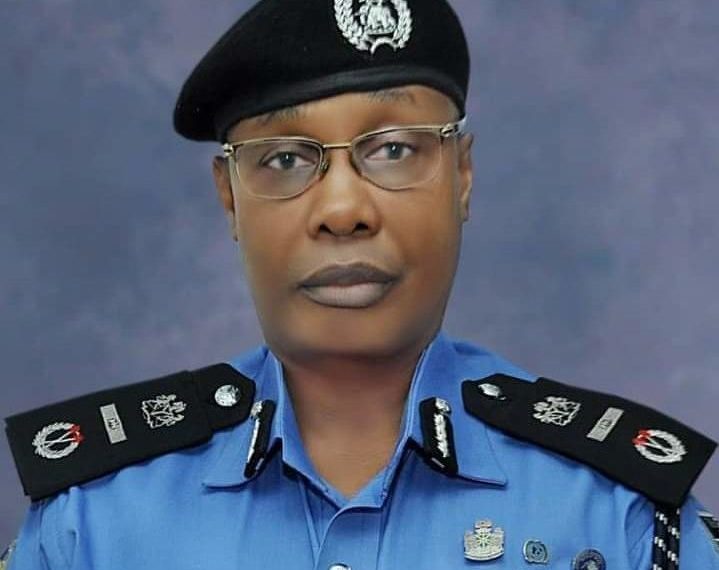
INSPECTOR-GENERAL of Police (IGP) Usman Alkali Baba has ordered the arrest and prosecution of Nigerians selling, spraying or generally abusing naira notes in the country.
Disclosing this in a statement he issued today, the Public Relations Officer (PRO) of the Nigerian Police, Olumuyiwa Adejobi, said Baba has ordered that officers of the Force Intelligence Bureau be stationed across the country to enforce the directive.
“The IGP has similarly charged all supervisory Assistant Inspectors-General of Police and Commissioners of Police in charge of Police Commands and Formations to carry out full enforcement of the provisions of Sections 20 and 21 of the Central Bank of Nigeria Act, 2007, which criminalizes, among other things, the hawking, selling or otherwise trading, spraying of, dancing or matching on the Naira notes, falsifying or counterfeiting of bank notes, refusal to accept the Naira as a means of payment, and tampering with the coin or note issued by the CBN,” Adejobi noted.
He urged residents to cooperate with the police in apprehending violators of naira notes.
Some Nigerians have been engaging in selling the naira, following the current scarcity of notes in the country.
The ICIRreported that currency hawkers were making fast cash from trading the redesigned notes.
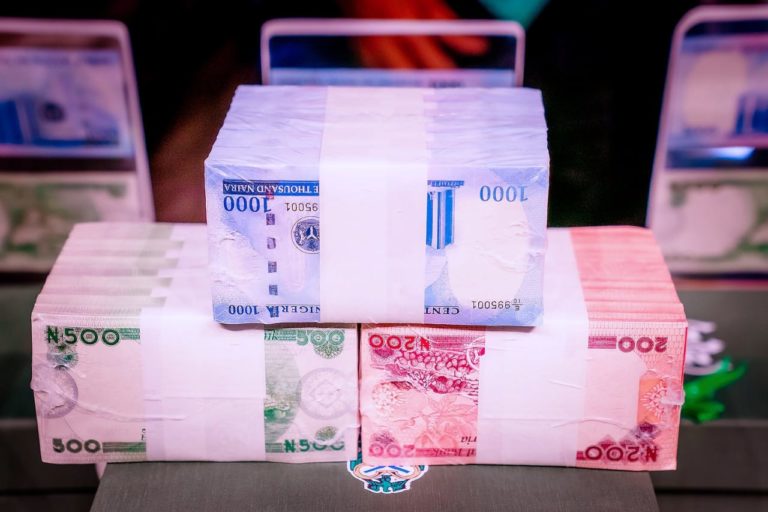
In Abuja, a wrap of the new N200 note, amounting to N20,000, was being sold for N29,000 at the Dei-Dei area of the Federal Capital Territory (FCT) up till last week.
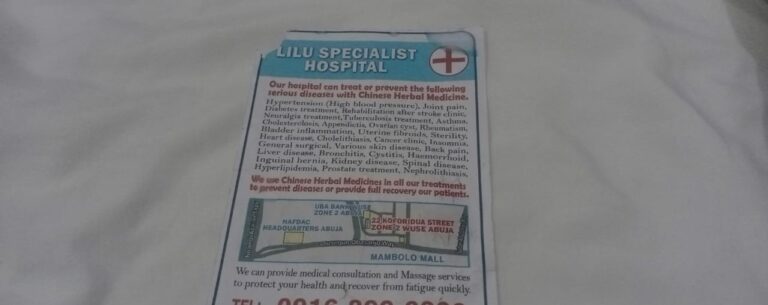
LILU Specialist Hospital, operating illegally at the Wuse Zone 2 Abuja, has shut down, The ICIR found out on Friday.
The facility, run by a North Korean, Jongsu Kim, who claimed to be Chinese, had run for four years in the nation’s capital.
The ICIR reported how the high and mighty in the country, including presidency officials and senior advocates, were patronising the hospital.
The Private Health Establishments Registration and Monitoring Committee (PHERMC), the private hospital registration and monitoring department in the nation’s capital, visited the hospital on Friday February 3, 2023 and met it locked.
Efforts by its officials who came to the premises – in the company of security personnel and officials wearing reflective jackets – to get into the hospital failed as no one opened the door for them.
The PHERMC had confirmed to The ICIR in its during the investigation that Lilu Hospital never applied for registration in the city and was operating illegally.
The ICIR confirmed that expatriates working with Kim were always inside the three-bedroom apartment the hospital occupied and would not come out in the daytime.
The Korean, whose nationality The ICIR discovered after a rigorous investigation spanning months, drives an SUV with a diplomatic number plate, a privilege enjoyed only by diplomats.
As of September 2022, when The ICIR was investigating the facility, Kim received payment of bills by patients into his personal account, rather than the hospital’s. The facility treated each patient for between N150,000 and N500,000, and had attended to many patients.
PHERMC’s bus conveyed the Department’s officials to Lilu Specialist Hospital on Friday but the hospital was locked
The hospital did not have a signpost, further confirming its secret operations.
In the course of the investigation, The ICIR contacted Bartholomew Chigozie Awugozi, one of the hospital’s three directors. He is based in Awka, Anambra State, where he manages his hotels.
Awugozi’s reaction gave the investigation a new twist. He claimed he was the hospital’s legal owner.
The businessman was shocked that the hospital he opened in Port-Harcourt some years ago and had shut down because it was not yielding returns was running in Abuja by people he claimed not to know.
When contacted, the hospital’s lawyer, Matthias Adeyemi, said the investigation was needless. He countered The ICIR findings.
When contacted again, after Awugozi claimed he owned the hospital and had run it in Port Harcourt, Adeyemi agreed that “some” of the findings were true.
Another striking part of the investigation is that while the Chinese Embassy responded to The ICIR request and said it did not know Kim and his hospital, the Korean Embassy in Abuja failed to speak on the issue after multiple enquiries and a visit to the embassy.
During the investigation, The ICIR contacted several government agencies, including the Nigerian Immigration Service (NIS), Federal Inland Revenue Service (FIRS), FCT Internal Revenue Service (FCT IRS), Medical and Dental Council of Nigeria (MDCN), Federal Road Safety Commission (FRSC), Corporate Affairs Commission (CAC), and the Chinese and Korean embassies.
The ICIR was also at the Lilu community in Ihiala Local Government Area of Anambra State, where the hospital initially registered to operate. Lilu community bears the same name as the hospital.
The ICIR tagged the Federal Ministry of Health, the Nigeria Medical Association (NMA), and the Minister of Health when the first story was published. Only the NMA promised to look into the findings.
The publication shared the report with the country’s secret police – the Directorate of State Services (DSS) – but has not received any feedback from the Service.
The ICIR reports that the first report has attracted wide reactions from Nigeria and beyond the country’s shores, including the NMA (FCT chapter), which promised to investigate the hospital’s activities.
The ICIR learnt today from a reliable source that the report was causing some storms within the highest level of power in the country.
While many Nigerians commended The ICIR for exposing the hospital, some others, especially relations of those who were receiving treatment at the facility did not share the same sentiment.
THE presidential candidate of Accord Party (AP), Christopher Imumolen, sees the redesign of the naira as a good policy that is being wrongly implemented.
Speaking on Arise TV on Friday, February 3, Imumolen described the policy as a viable way to address electoral malpractices and vote buying.
But he feared that the implementation of the policy would have adverse economic implications.
“Naira redesign is good but it will have a wrong impact on the economy, especially at this time,” he said.
The presidential candidate expressed his displeasure with the challenges Nigerians are experiencing to access the redesigned notes.
He said, “Look at what is happening in the city, let alone in rural communities where the level of digital transactions has gotten nowhere. I receive calls from villages telling us of their daily plights and stress.
“I believe that the policy is an APC policy to checkmate APC by themselves. That is why we hear uproar up and down. I now have more confidence that vote buying and other tools they use to manipulate election will be reduced.”
Imumolen stated the need to adopt Artificial Intelligence to address the insecurity challenges in the country.
“We must begin to run Nigeria’s security with Artificial Intelligence. We have so much human intelligence but the world has gone digital. Government must address the commission of crimes. Also, our security men must be trained and retrained and given all that it takes to fight insecurity.”
He identified illegal border entry as one of the factors causing the insecurity menace in the country.
He said, “I have made my research and visited a lot of borders in Katsina and other places. I have noticed that we have over 1,400 illegal routes in Nigeria. This puts our national sovereignty and safety in question.”
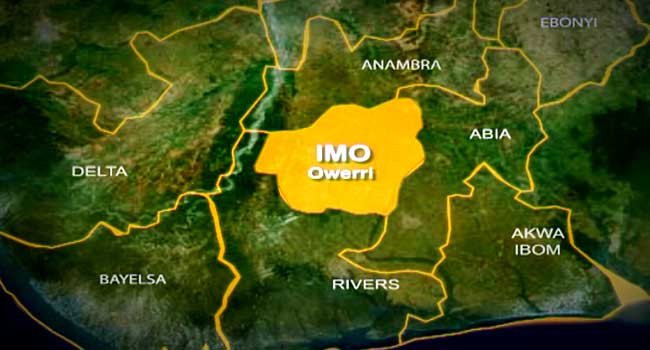
THE Chairman of Ejemekwuru Customary Court in Oguta Local Government Area of Imo State, Nnaemeka Ugboma, was reportedly killed by yet-to-be-identified gunmen on Thursday, February 2.
It was gathered that the gunmen, who were driving motorcycles, shot and killed Ugboma while he was presiding over a court session.
The incident affected the court sitting as lawyers, court staff, and claimants fled.
According to Punch Newspaper, the late judge hailed from the Nnebukwu community in Oguta LGA.
Spokesperson of the Imo State Police Command, Henry Okoye, did not take his calls when contacted, and he had yet to respond to a text message sent to his mobile number as of the time of filing this report.
The ICIRreportedthat gunmen beheaded the Sole Administrator of Ideato North Local Government Area of Imo State, Chris Ohizu.
The council boss was butchered on Sunday, January 22, after his abductors allegedly received N6 million as a ransom for his release.
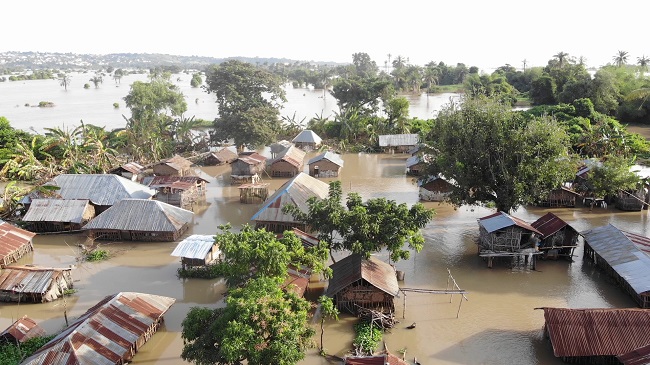
INVESTMENT worth about N700 billion ib Nigeria’s agricultural sector was destroyed by floods in 2022, according to the latest report by the National Agricultural Extension Research Liaison Services (NAESRLS).
Executive Director of NAESRLS, Emmanuel Ikani, said last year’s floods damaged crops and destroyed agricultural land, leading to reduced yields and economic losses for farmers.
He said it is estimated that there are over 3000 gully erosion sites in the 10 most-affected States in the South-East, South-South, and South-West regions of Nigeria.
Presenting the executive summary to Minister of Agriculture and Rural Development, Mohammad Mahmood Abububakar, Ikani noted that communities and government need to work collaboratively to implement measures aimed at reducing the risk of flooding and its impacts.
He said, “The economic value of the agricultural-related losses due to the 2022 flood was estimated to be about N700 billion.
“The 2022 flooding situation damaged roads, bridges, and other transport networks, making it difficult for people to travel and for agricultural goods to be transported. The flood also damaged agricultural stores and warehouses.
“The flood had serious consequences for human populations, including loss of life, injury, and displacement. It led to the spread of waterborne diseases and disrupted access to clean water and other necessities.”
Ikani added that as of September 14, 2022, many communities in Borno, Adamawa, and Yobe States regions had reported cholera outbreaks, with 586,110 and 320 cases, respectively, and while about 300 have died.
He explained that the release of water from the Lagdo dam in Cameroon was the main cause of the flood in South-South, South-East and North-Central regions of the country while flooding in the North-West, North-East and South-West was due to heavy rainfall and blockage of existing drainages.
“Kebbi, Delta, and Cross River States with calculated index values of 0.3500, 0.2951 and 0.2218, respectively were the most severely affected by the 2022 flood while Nasarawa, FCT and Oyo with 0.0515, 0.0243 and 0.0079, respectively were the least affected,” he noted.
Ikani further stated that a total of 1,798 communities were affected in 263 LGAs, while the major causes were releases of excess water from Lagdo Dam, Cameroon, and excessive rainfall.
He said interventions aimed at alleviating the effect of the flood were mostly shared after the occurrences of the flood by 23 states while farmers in 7 States did not receive any form of intervention during and after the flood situation.
“The assessment showed that the 2022 flooding damaged crops, washed farmlands and destroyed livestock and fish resources. The enormous flood is a potential threat to food security,” he said.
In his remarks, the Minister of Agriculture and Rural Development, Dr Mohammad Abubakar, called for collective efforts to educate Nigerians on how to mitigate flooding.
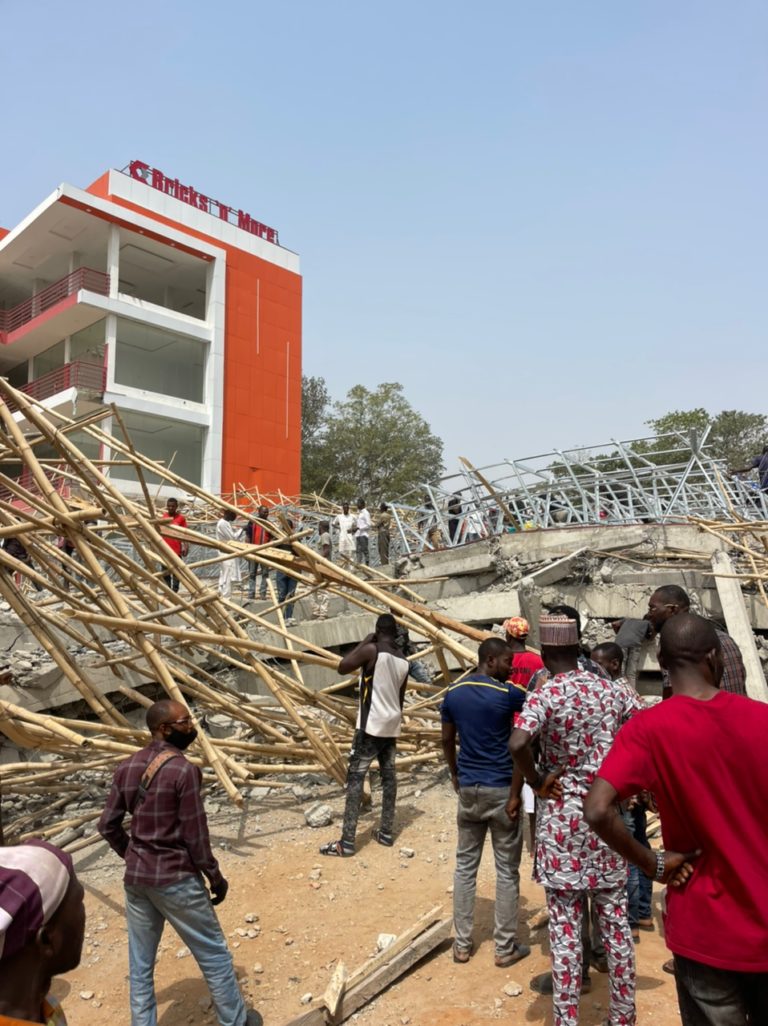
AT least 23 people have been rescued from a building that collapsed in the Gwarimpa area of the Federal Capital Territory (FCT) on Thursday, February 2.
The National Emergency Management Agency (NEMA) gave the update via its Facebook handle on Thursday night.
“So far, 23 people have been rescued,” the statement said.
NEMA also noted that rescue operations by its operatives and personnel of other agencies continued throughout the night.
The building, located along 7th Avenue in Gwarimpa, was still under construction at the time it collapsed.
According to eyewitnesses who spoke to The ICIR, at least 40 people were trapped in the rubble following the collapse, which occured at about 10.00am.
Several response teams were involved in the rescue operations, including the National Emergency Management Agency (NEMA), FCT Emergency Management Agency (FEMA), National Security and Civil Defence Corps (NSCDC), International Committee of the Red Cross (ICRC), Nigerian Police Force (NPF) among others.
Sector Commander of the FCT Federal Road Safety Corps Ochi Oga who spoke with The ICIR on Thursday said the rescue operations would continue till all those trapped in the building were rescued.
“I’m assuring you that this operation will continue until everybody involved in this is rescued,” he said.
THE Comptroller-General of the Nigeria Customs Service (NCS), retired colonel Hameed Ali, has given unpredicted stock market and fiscal polices of government like waivers and concessions as factors that led to a shortfall in the 2022 revenue target.
Ali, fielding questions from journalists at a briefing on Thursday, February 2 to mark the end of a three-day global conference organised by the World Customs Organisation (WCO), said the NCS had set a target of N3.1 trillion for 2022 but was able to generate N2.6 trillion, with a shortfall of over N400 billion.
He said, “Non-commencement of tariffs on carbonated drinks and telecommunications among other items, affected the actualisation of the target.”
He was hopeful that with these tariffs in place this year, 2023 would be better.
On the theme of the conference ‘Enabling Customs in Fragile and Conflict Affected Situations’, Ali said he was disturbed by the security challenges in border areas.
He added that the Service was making efforts to adequately equip its personnel for their jobs, and would do everything to build their capacity for effective performance.
The NCS had declared the sum of N2.24 trillion revenue for the year 2021, representing a 25 per cent increase on the N1.67 trillion target set for the year.
The generated sum represented a 43.45 per cent increase on the N1.56 trillion generated in 2020.
THE United Nations (UN) has condemned the airstrike that killed several herders in Nasarawa State, calling on the Nigerian government to look into the incident.
Speaking on Thursday, February 2, the Special Adviser to the UN Secretary General on the Prevention of Genocide, Alice Nderitu, urged Nigerian authorities to conduct counter-terrorism operations in accordance with international human rights and humanitarian law.
Nderitu expressed concern at the worsening security situation in Nigeria, urging authorities to address the challenges.
She stressed that it is important for the Federal Government to investigate the killings that happened in Nasarawa State.
According to her, the dynamics of targeting communities along identity lines, if unaddressed would further fuel inter-communal tensions, recruitment by armed groups, and retaliatory attacks, with obvious impact on civilians.
“In this extremely volatile environment, it is important that the general elections scheduled to be held on 25 February 2023 do not trigger violence and even atrocity crimes,” she added.
The UN official noted that the worsening security situation is characterized by the seasonal movement of livestock for grazing, and increasing divisions among communities, based on stigmatization along religious and ethnic lines.
She stressed the need for political leaders to abide by the peace accord signed that included a commitment to peaceful campaigns.
In the same vein, she urged religious and traditional leaders to work to appease tensions, prevent incitement to violence and address the risk of crimes ahead of the elections and beyond.
The ICIR earlier reported that the Nasarawa State Police Command said it is yet to identify those responsible for the airstrikethat claimed several lives at the Nasarawa-Benue border.
Hours after the Governor of the Central Bank of Nigeria, (CBN) Godwin Emefiele announced a 10-day extension of the initial 31 January deadline for the collection of old notes on Sunday January 29, *Ikechukwu Samuel walked into a First Bank branch in Enugu state and deposited his old naira notes.
Afterwards, he proceeded to the automated teller machine (ATM) area of the bank to withdraw the new notes but he got the response, “temporarily unable to dispense cash, do you want to perform another transaction?
Disappointed but still hopeful, he visited other bank branches, including First City Monument Bank, (FCMB), Access and Fidelity banks. By 5pm, he had already visited more than seven bank branches within the Enugu metropolis. But none of them gave him the new notes.
Response from FCMB ATM
Samuel planned to use the money to settle his sick mother’s hospital bills. He had tried to make a transfer which failed due to poor network. Now, he is confused as to what to do.
“If I knew, I would have kept my old naira notes since the new ones are not available,” a distraught Samuel said”. “Now, I can’t even withdraw the old notes”. I will have to go and keep trying to make a transfer”.
Samuel is only one out of thousands of Nigerians who have their monies deposited in banks but cannot withdraw, following the redesign of the naira notes.
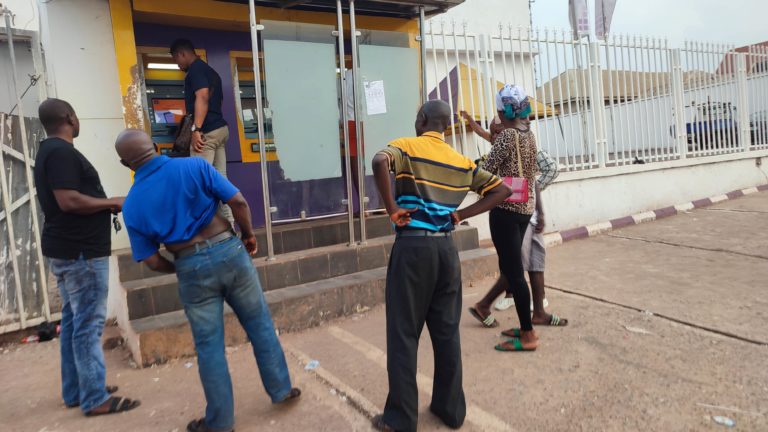
For almost an hour, Pregnant *Joy Chimezie tried to withdraw money from the automated teller machine (ATM) area of the Zenith Bank located at presidential road, Enugu. But the message remained the same: Temporarily unable to dispense cash.
Response from Zenith Bank ATM
Earlier in the day, she visited several banks within the metropolis, including United Bank for Africa and Access Bank located at the University of Nigeria, Enugu Campus, (UNEC) and Fidelity bank at Rangers Avenue but could not withdraw.
She is tired but needs the money for business.
“I will wait, she said, her hand wrapped around her waist. “But It is sad because the ordinary citizens often bear the brunt of these policies.”. “I have money in my account but cannot withdraw”.
These days, it is common to see Nigerians waiting on long queues, hoping to withdraw the new notes. Sometimes, they fight to get their money. Sometimes, they spend the entire day and return home without the notes.
The redesign
Last October, the CBN announced that it would redesign the N200, N500 and N1,000 denominations of the naira, with January 31 as the deadline for the return of the old notes to the banks.
At the unveiling of the new naira notes at the State House on November 23, 2022, the CBN Governor, Emefiele told journalists that the January 31 deadline was sacrosanct. He had said that the redesign was intended to among other things, make the country’s monetary policy decisions more efficacious and support the efforts of security agencies in combating banditry and ransom-taking.
Notice on First bank
from Nigerians.
Money in circulation
As the deadline approached, pressure was mounted on the CBN for a review of the policy and the extension of the deadline, especially given that the new notes were not in circulation yet.
Speaker of the House of Representatives, Femi Gbajabiamila even threatened to issue a warrant of arrest on Emefiele and some bank directors over their refusal to appear before the green chamber over the scarcity of the new naira notes and the January 31, 2023 deadline.
Having sought and obtained approval from President Buhari, Emefiele announced an extension of the deadline from January 31 to February 10 to allow for the collection of more old notes legitimately held by Nigerians and achieve more success in cash swap in rural communities.
The CBN governor also announced a 7-day grace period, beginning on February 10 to 17, in compliance with sections 20(3) and 22 of the CBN Act, allowing Nigerians to deposit their old notes at the CBN after the deadline when the old currency would have lost its legal tender status.
But while the deadline has been extended, there yet remains a problem of unavailability of the new notes across ATMs in Nigeria. While some marketers collect the old notes, especially with the extension of the deadline and given that that is the only way they can make sales, others insist on the new ones.
Empty ATM machines at Zenith Bank
To confirm the widespread unavailability, this journalist visited four banks within the Enugu metropolis, including First Bank, presidential road, Zenith Bank presidential road, First City Monument Bank, (FCMB) off presidential road, and Access Bank Ogui road.
On arrival, it was noticed that the various points, which normally would have long queues, were empty. While the Zenith and First bank branches have six and four ATM points, respectively, FCMB and Access banks have 3 ATMs. As of 5 pm on Sunday January 29, none of the machines in these banks was dispensing money to people who had come to withdraw money.
This reporter also tried to withdraw from each of the machines but got the response “temporarily unable to dispense cash, do you want to perform another transaction?.
At Access Bank, Ogui road, one of the security officers said that the ATMs paid in the morning hours and stopped.
Banks allegedly selling new notes
While the new notes remain scarce at ATMs points, they have been sited at various social gatherings, further confirming allegations that banks are selling the notes to high-net-worth customers, also known as priority customers or currency traders who allegedly pay extra when withdrawing large amounts of the redesigned naira notes.
Empty First Bank ATM
This January, a Twitter user shared a video that captured moments when a certain man was spraying bundles of mint new naira notes at a party. The video sparked concerns among Nigerians who wondered what the fate of the ordinary Nigerian is following the redesigned notes.
On Monday, January 30, another Twitter user shared a video showing moments when a group of men and women were throwing bundles of the scarce new notes at another party.
“It amounts to economic sabotage, and efforts must be made to find out where the disconnect is, and those behind it punished, said Segun Ajibola, a Professor of Economics at the Babcock University, Illisan, Ogun State, on a programme on Arise TV.
Implications for economy
Senior Analyst at SBM Intelligence, Gloria Oscar, said that the negative implications of the redesign include: Counterfeiting risk, reduced access to financial services, particularly for people in remote or rural areas, loss of value as people who are unable to exchange their old notes in time will lose the value of their savings, increase in black market activities.
Others include disruption of economic activities as businesses and consumers are being forced to temporarily stop transactions while they cannot access the new currency and decrease in spending because people hold on to their cash until they are confident in the stability of the new notes.
Response from Access Bank ATM
“The redesign also creates confusion and uncertainty among the public, particularly those less familiar with online banking”she said. “Banks also face logistical difficulties because people rush to exchange their old notes simultaneously, leading to long lines and congested banks”.
Commercial banks blame CBN for inadequate supply
As the public accuses commercial banks of selling the new notes, sources familiar with operations of the CBN accuse the apex bank of inadequate supply of the notes which makes it difficult for them to meet customers’ demands.
A source in a Premium Times report who prefers not to be mentioned was quoted as saying that banks were receiving an average of N12 million in some parts of the country, an amount the source said was grossly inadequate to meet operational demands.
“Cash needed for ATM operations alone in this place is about N25m, and that’s apart from other cash transactions within the bank,” the source said. “Bankers are scared to complain openly.”
Another bank manager in the report said that while his branch usually needs about N10 million to enable ATMs to dispense cash to customers, they only got N2 million of the new note for an entire week, which explains why the machines could not dispense money to customers.
Banks have since been ordered not to use the old notes.
In his statement on Sunday, Emefiele said that the CBN had received reports of breaches by some bank branches. He, however, assured that the bank had agreed with executive chairmen of the Economic and Financial Crimes Commission (EFCC) and Independent Corrupt Practices Commission (ICPC) to assist by sending their staff to all CBN and deposit money banks (DMB) branches nationwide to join in monitoring the implementation of the guidelines.
Billions outside banking industry
In a statement on the progress on implementation of the new redesigned currency on January 29, Emefiele said that while currency circulation had risen to N3.23 trillion as of October 2022 from N1.4 trillion in 2015, only N500 billion was within the banking industry and N2.7 trillion held permanently in people’s homes.
He however noted that since the commencement of the programme, the bank has collected about N1.9 trillion while about N900 billion remain outside the banking industry.
“We are happy that so far, the exercise has achieved a success rate of over 75 per cent of the N2.7 trillion held outside the banking system, “he said. “Aside from those holding illicit/stolen naira in their homes, for speculative purposes, we aim to give all Nigerians that have naira legitimately earned the opportunity to deposit their monies for exchange”.
EFCC, DSS arrest new notes traders, bank officials fingered
On Monday, January 30, the Economic and Financial Crimes Commission (EFCC) announced the arrest of members of a syndicate who were trading the redesigned naira notes around zone 4 and Dei-Dei axis in Abuja.
In a statement by EFCC spokesperson Wilson Uwujaren, the suspects said that they were working in connivance with some commercial bank officials.
Uwujaren said that the operation followed intelligence on activities of unscrupulous currency speculators who were exploiting desperate citizens by offering them the new Naira notes for foreign currencies at below the going rate.
“The Commission will extend the operation to all the major commercial centres of the country until all the syndicates involved in the illegal trade are demobilised,”he said. “Financial system operators are also warned to desist from the sharp practices or risk arrest and prosecution”.
The DSS had during operations across the country, arrested some Nigerians involved in the sale of the new naira notes. Its public relations officer, Peter Afunanya said in a statement that some Commercial Bank officials were aiding the act.
The DSS warned that the Service has ordered its Commands and Formations to ensure that all persons and groups engaged in the illegal sale of the notes are identified, calling on appropriate regulatory authorities to step up monitoring and supervisory activities to expeditiously address emerging trends.
N200 per N1000 new note
Apart from banks that have been accused of doing business with the new notes, others who seem to be benefitting from the scarcity are owners of Point of Sale (POS) Businesses who now charge exorbitant amounts for withdrawals.
To withdraw N10,000 in the era of the old notes cost only N100. Now it costs N2000 to withdraw the same amount. That is, N200 per N1000. Some of those who spoke to this reporter say they charge as much as N300 for N1000 because of the difficulty in getting the new notes.
Nelson John runs a POS business in Enugu. To make withdrawals, he leaves home as early 5am every morning and sometimes, when he gets to the machine, he finds people already queuing up and waiting for their turns.
“Sometimes, you have only one bank that gives the new notes, “he said. “It is affecting business because the highest you can withdraw is N20000 per day, you cannot even use more than one card,”. The old notes are not even available”.
Sometimes, he spends N10,000 to get N100,000 from an individual who according to him, buys the new notes from bank officials and sells to individuals.
Accusations, counter-accusations over naira redesign
The decision by the CBN to redesign the N200, N500 and 1,000 banknotes has ruffled many feathers. This January, the presidential candidate of the ruling All Progressives Congress (APC), Asiwaju Bola Tinubu told a crowd of APC supporters at the party’s presidential campaign rally in Abeokuta, the Ogun state capital that the naira redesign and fuel scarcity were intended to sabotage his victory at next month’s election.
Last November, the Chairman of the Economic and Financial Crimes Commission, Abdulrasheed Bawa, was quoted as saying that there was no political motive behind the idea. Rather, it was intended to have hidden funds returned.
At the apex bank’s sensitisation event and old notes swap in Ekiti , the Director of Finance at the CBN, Benjamin Fakunle, had also said that the redesign was not targeted at any politician or political party but in the interest of the nation.
CBN pledged to ensure new notes get to citizens
In the statement, Emefiele had assured that the bank had held several meetings with its deposit money banks, (DMBs) and provided them with guidance notes on processes they must adopt in the collection of old notes and distribution of the new notes to all Nigerians.
These, according to the statement, include specific directives to the DBMs to load new notes into their ATMs nationwide to ensure that an equitable/transparent mechanism for the distribution for the distribution of the new notes to all Nigerians.
ATMs charge exorbitant amounts
Emefiele said that the bank has also deployed 30,000 super agents nationwide to assist in the cash swap initiative in the hinterlands, rural areas and regions underserved by banks In the country to ensure that the weak and vulnerable ones can swap/exchange their old notes.
For Oscar, the redesign will enhance financial Inclusion and a cashless economy as well as stress out bandit and terrorist groups.
However, efforts must be made to ratify the shortages in the weeks leading up to the election because if it continues, “the government may be forced to still consider the old notes valid,”.