Home Blog Page 1096

INEC to conduct mock accreditation on February 4

0

THE Independent National Electoral Commission (INEC) will hold mock accreditation exercises in 436 polling units across the country on Wednesday, February 4.

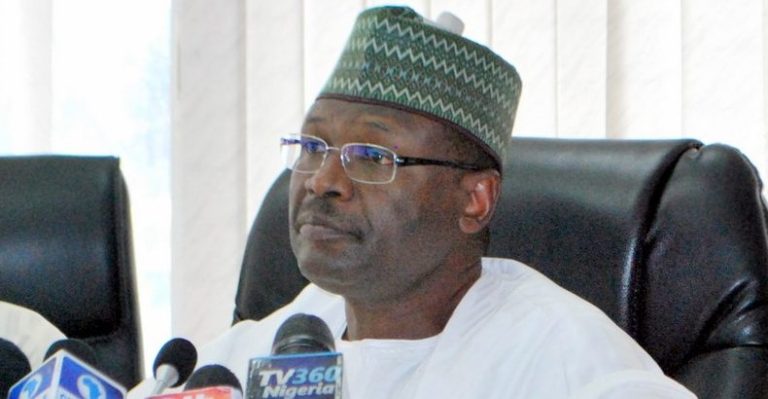
This was disclosed by the Chairman of the Commission Mahmood Yakubu during a meeting with Resident Electoral Commissioners (RECs) in Abuja on Friday, January 27.

Yakubu noted that the exercise was part of efforts to ensure the effectiveness of Bimodal Voter Accreditation System (BVAS) machines which the Commission had taken delivery of ahead of the elections.


READ ALSO:
Shettima condemns attacks on INEC offices, IPOB activities

PVC: Hitches caused by INEC will disenfranchise Nigerians – Global Rights

INEC extends PVC collection deadline by one week

Afenifere kicks as INEC says elections may be postponed, cancelled due to insecurity


“The mock accreditation will hold on Saturday, 4th February 2023, in 436 polling units nationwide. Twelve polling units have been designated in each State of the Federation and four in the Federal Capital Territory on the equality of the country’s 109 Senatorial Districts for the exercise.

“A comprehensive list of the polling units, including their names and PU Code numbers, as well as their distribution by State, Senatorial District, Local Government and Registration Area (Ward) will be uploaded to the Commission’s website shortly,” Yakubu said.

He urged registered voters in the selected polling units to participate in the mock accreditation process, adding that journalists and Civil Society Organisations (CSOs) could observe the exercise.

The INEC chairman assured that final preparations were being concluded ahead of the forthcoming elections, including movement of materials and consultation of stakeholders.

Noting that training of election officials would soon begin, Yakubu assured that the Commission was committed to resolving issues around collection of Permanent Voter Cards (PVCs).

“The Commission is aware that there are a few issues to be addressed. One of them is the ongoing collection of Permanent Voter Cards. The commission is encouraged by the determination of registered voters nationwide to collect their PVCs and the actual level of collection so far.

“This meeting with RECs will consider reports from other states of the Federation, and the commission will not hesitate to consider additional measures to ensure that all citizens have ample opportunity to collect their PVCs ahead of the general elections. We wish to assure Nigerians that the commission will always be responsive to the needs of the electorate,” he said.

Osun: Tribunal sacks Adeleke as governor, declares Oyetola winner

THE Osun State Governorship Election Petition Tribunal has sacked Ademola Adeleke as the duly elected governor of the state.

The tribunal gave the judgment in Osogbo, the state capital, on Friday, January 27.

In a split decision of two to one, the tribunal ordered that the Independent National Electoral Commission (INEC) to withdraw the Certificate of Return issued to Adeleke and issue the same to former Governor Gboyega Oyetola.


READ ALSO:

ERAD report did not suggest winner of Osun elections – Yiaga Africa

Hackers attacked our result portal during Ekiti, Osun elections – INEC

Anambra, Ekiti, Osun elections proof of my commitment to credible polls — Buhari

Osun election: INEC issues Certificate of Return to Adeleke


The majority judgment which was read by the Chairman of the tribunal, Justice Tertse Kume, said Oyetola scored the majority lawful votes of 314,931 against Adeleke’s 219,666.

Earlier, the tribunal ruled that Adeleke was eligible to contest the election in a certificate forgery petition pressed against him by Oyetola.

Meanwhile, a minority decision by one of the judges is being read as at the time of filing this report.

More details later…

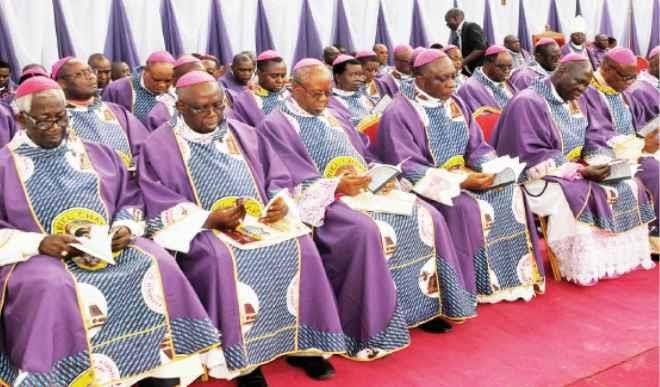
Ogun, Ondo Catholic bishops call on Nigerians to shun votes selling

THE heads of the Catholic Church in Ondo and Ogun states have called on Nigerians to resist the temptation to trade their votes for peanuts in the forthcoming general elections.

The bishops who made the call at the 25th anniversary of the Canonical Erection of the Catholic Diocese of Abeokuta, on Thursday, January 26, also tasked Nigerians to shun every form of election violence.

Bishop of the Catholic Diocese of Abeokuta, Peter Olukayode, expressed optimism and hope that Nigeria will come out better after the elections.


READ ALSO:
Pope Francis’ visit to Africa comes at a defining moment for the Catholic church

Ballot or bullet: Inside South-East Nigeria, ahead of 2023 election

2023: 10 factors that could affect presidential election outcome

INEC seeks Meta’s support to tackle election disinformation


“We pray that Nigeria will be better, we pray that all of us electing the right person to the right position, Nigeria will be better,” he said.

“We should go and perform our civic duties and vote rightly according to our consciences for good leaders who will lead Nigeria better and give us what we desire according to the mind and the will of God.”

On his part, the Catholic Bishop of Ondo Diocese, Jude Arogundade, called on Nigerians to reject candidates who according to him are “known criminals” that have been implicated by national and international agencies.

Arogundade urged Nigerians to vote for decent and credible leaders and save the country from imminent collapse.

He lamented that the impact of one hundred years of Christianity in the society had been eroded by bad governance, ethnic and tribal war and a new wave of paganism.

“Are we not the same Yoruba, Igbo, Hausa and indeed Nigerians that are calling on God for intervention and redemption from corrupt politicians that will also vote for known criminals that have been implicated by national and international watchdog bodies?

“All of us Christians and non-Christians alike are searching for decent and credible leaders who will reorganise our country to be the best that God has created it to be.

“Then vote for one and save the Church from the trauma of having to deal with the emotional outcome of leaders who continue to ravage our commonwealth for personal gains.”

He urged Nigerians not to stand by and watch “this great nation destroy itself under mediocre leadership that drifts from one crisis to the next, eroding our national will and purpose”.

Large mammals shaped the evolution of humans: here’s why it happened in Africa

0

By Norman Owen-Smith, University of the Witwatersrand

That humans originated in Africa is widely accepted. But it’s not generally recognised how unique features of Africa’s ecology were responsible for the crucial evolutionary transitions from forest-inhabiting fruit-eater to savanna-dwelling hunter. These were founded on earth movements and aided physically by Africa’s seasonal aridity, bedrock-derived soils and absence of barriers to movements between north and south.

These features promoted extensive savanna grasslands marked by erratic rainfall, regular fires and abundant numbers of diverse grazing and browsing animals.

My lifelong studies have focused on the ecology of Africa’s large herbivores and their effects on savanna vegetation. In my recent book, by linking pre-existing threads together for the first time, I explain how distinctive features of these animals’ ecology, founded on Africa’s physical geography, enabled the adaptive changes that led ultimately to modern humans.

What emerges is the realisation that this amazing evolutionary transformation could only have occurred in Africa. This recognition emphasises the deep cultural legacy formed by Africa’s large mammal heritage for all of humankind.

Ape-men

Starting during the late Miocene, around 10 million years ago, a plume of molten magma, hot liquid material from deep inside the Earth, pushed eastern parts of Africa upward. This led to rifting of the Earth’s crust, volcanic eruptions and soils enriched in mineral nutrients from the lava and ash. Grassy savannas spread and animals adapted increasingly to graze this vegetation component. Apes from that time were forced to spend less time up in trees and more time walking upright on two legs.

Progressive reductions in rainfall, restricting plant growth and worsening dry season aridity, forced the early ape-men, (Australopithecines), to change their diet. They went from eating mainly fruits from forest trees to consuming underground bulbs and tubers found between the widely spaced trees. These were tough to extract and chew.

This led to the emergence through evolution of the genus Paranthropus (colloquially “nutcracker man”), characterised by huge jaws and teeth. By about a million years ago they were gone. Apparently, the effort of extracting and processing these well-defended plant parts became too formidable.

Homo habilis

Around 2.8 million years ago, another lineage split off from the australopithecines, reversing the trend towards robust dentition. This lineage used stones chipped to serve as tools. These were used to scrape flesh from carcasses of animals killed by carnivores, and crack open long bones for their marrow content. This transition in ecology was sufficiently momentous to warrant a new generic name: Homo, specifically habilis (“handy-man”).

These first humans thus became scavengers on animal left-overs. They most probably exploited a time window around midday when the killers – mainly sabre-tooth cats – were resting, before hyenas arrived nocturnally to devour the leftovers. Walking upright freed their arms to carry bones away to be processed in safe sites to augment the plant-based dietary staples.

To facilitate such midday movements, Homo habilis lost its body hair; this made it possible for them to be active under conditions when fur-covered animals would soon over-heat.

Homo erectus

Several hundred thousand years of progressive advancements in upright walking and brain capacity led to the next major adaptive shift, exemplified by improvements in the design of stone tools. Stone cores became shaped on both sides to aid the processing of animal carcasses.

This led to the emergence of Homo erectus around 1.8 million years ago. These early humans had become efficient hunters. Consequently, meat and bones became reliable food resources year-round.

A division of labour came about. Men hunted; women gathered plant parts. This required a home base and more elaborate forms of communication about planned excursions, laying the foundations for language.

Homo sapiens

After 800,000 years ago, fluctuations in heat and aridity became more extreme in Africa. Finely crafted stone tools defined the transition into the Middle Stone Age, coupled with the emergence of modern Homo sapiens in Africa around 300 thousand years ago.

But despite its hunting prowess Homo sapiens had declined to precarious numbers in Africa by around 130,000 years ago, following an especially severe ice age. Genetic evidence indicates that the entire human population across the continent shrank to fewer than 40,000 individuals, spread thinly from Morocco in the north to the Cape in the far south.

One remnant survived by inhabiting caves along the southern Cape coast, exploiting marine resources. This reliable food source fostered further advances in tool technology, and even the earliest art.

The use of bows and arrows as weapons, along with spears, probably contributed crucially to the expansion of humans beyond Africa around 60,000 years ago. They spread onward through Asia and into Europe, displacing the Neanderthals.

Only in Africa

A herd of large brown wildebeest is spread out across a grassy landscape, chewing the grass
Wildebeest grazing on the Serengeti Plains in Tanzania.
Norman Owen-Smith

As outlined in my book, it was the abundance specifically of medium and large grazers in fertile savannas, concentrated near water in the dry season, that enabled the evolutionary transformation of a relatively puny ape into a feared hunter in Africa.

Africa’s high-lying interior plateau generated the seasonal dryness that restricted plant growth through its eastern and southern regions. Widespread volcanically derived soils were sufficiently fertile to foster the spread of medium-large grazers adapted to digest dry grass efficiently.

These especially abundant herbivores crowded around remaining waterholes, providing sufficient remnants of flesh and marrow to make scavenging a reliable means to overcome shortages of edible plant parts during the dry season. The increased dependence on meat to supplement a plant-based diet led to social coordination between male hunters and female gatherers, which in turn promoted advances in communication and tool technology supported by expanding cranial capacity.

If Africa had remained largely low-lying and leached of nutrients like most of South America and Australia, this would not have been possible.

Africa’s mobile grazers, such as wildebeest, are currently being squeezed out of their sanctuaries by expanding human settlements. These animals represent a global cultural heritage, having being pivotal to our evolutionary origins. We must ensure that sufficient space remains in Africa to enable their persistence despite burgeoning human populations.The Conversation

Norman Owen-Smith, Emeritus Research Professor of African Ecology, University of the Witwatersrand

This article is republished from The Conversation under a Creative Commons license. Read the original article.

Photo one and two here and here

EU to increase deportation of irregular migrants in 2023

A TOTAL of 27 migration ministers under the European Union (EU) are meeting to review strategies to curb irregular migration which has continued to soar, posing economic challenges for the continent.

EU border agency Frontex reported some 330,000 unauthorised arrivals last year, the highest since 2016, with a sharp increase on the Western Balkans route.

About 160,000 people are believed to have crossed the Mediterranean to Europe in 2022, fleeing wars and poverty in the Middle East, Africa and Southeast Asia.


READ ALSO:

Int’l Migrants Day: 280 million people seek greener pastures worldwide – UN

Nigeria has highest number of migrants to the UK – Report

Nigeria-UK Migration Agreement: Smugglers, illegal migrants to face maximum sentence, deportation

Pregnant Nigerian woman, 174 children among migrants rescued from shipwreck


European Commissioner for Home Affairs Ylva Johansson, said on Thursday that the increase in irregular arrivals of migrants was huge and the bloc received 924,000 asylum applications, but the return rate remained low and the meeting was to discuss ways to make “significant progress” in deportation.


READ ALSO:


“That means we have three times more asylum applications than irregular arrivals, and these are overloading the reception capacities and many of those [migrants] are not in need of international protection,” she said.

Denmark, the Netherlands and Latvia were among those to call for more pressure through visas and development aid towards the roughly 20 countries – including Iraq and Senegal – that the EU deems fail to cooperate on taking back their nationals who have no right to stay in Europe.

The ministerial talks come ahead of a February 9-10 summit of EU leaders who will also seek more returns, according to their draft joint decision seen by Reuters.

European hackers made 66 attempts to compromise virtual FEC meetings — Pantami

0

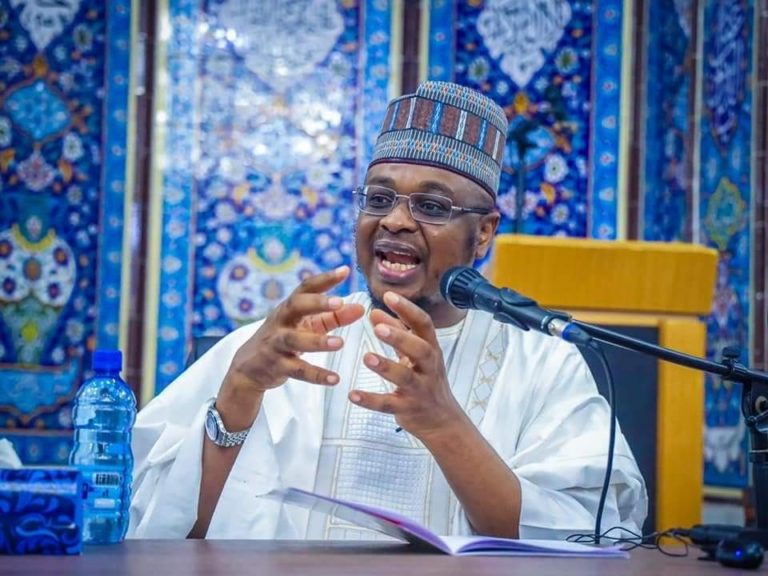
EUROPEAN hackers made 66 attempts to compromise virtual meetings held by the Federal Executive Council (FEC) in the last three years, according to Isah Pantami, the Minister of Communications and Digital Economy.

The minister disclosed this at the 19th edition of the President Muhammadu Buhari (PMB) Administration Scorecard Series (2015-2023) in Abuja on Thursday, January 26.

Pantami said the federal cabinet held over 108 virtual meetings since the unveiling of the National Policy on Virtual Engagements for Federal Public Institutions in October 2020.

He disclosed that 66 attempts were made by European hackers to compromise the meetings.

However, according to him, the attempts were successfully thwarted while the hackers were reported them to the authorities.

Pantami also said the Federal Government created more than 2.2 million jobs in the digital sector despite the nation’s telecommunications challenges.

He attributed the telecommunications problems to infrastructure deficit and vandalisation of fibre optic cables, noting Nigeria recorded 13,000 vandalism cases in a particular year.

Speaking further, Pantami said the government is working to stop criminals from using technology to commit crimes.

“Our role in cyber security is to ensure we minimise the possibility of a criminal deploying technology to commit a crime. So our work is proactive. At the same time, if the offence is committed and our intervention is required officially, then we will intervene.

“So, here, when it comes to minimising the probability of criminals committing a crime, we need to reintroduce the national NIN and civil registrations. Two, we enforce the NIN registration. NIN registration is by our law in Nigeria. NIN is mandatory for all citizens,” he said.

Currency Redesign: Emefiele faces backlash as Gbajabiamila threatens arrest

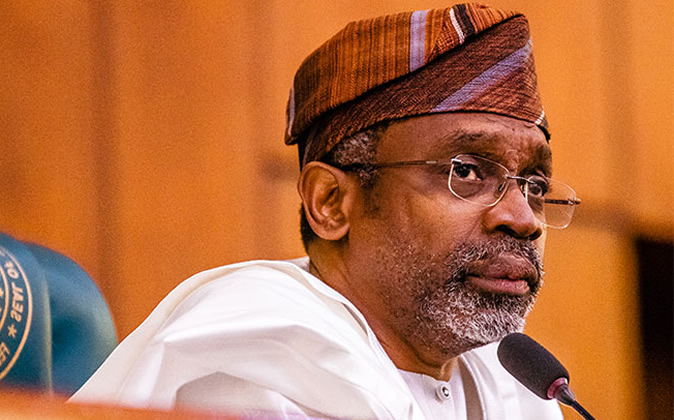
THE Speaker of the House of Representatives, Femi Gbajabiamila, has threatened to issue a warrant of arrest on the Governor of the Central Bank of Nigeria (CBN), Godwin Emefiele, if he fails to appear before the House committee investigating the scarcity of the redesigned naira notes across the country.

Most Nigerians have complained of the slow circulation of the redesigned N200, N500 and N1000 notes, with the deadline to the expiration of the old notes five days away, on January 31.


READ ALSO:

Emefiele meets Buhari at State House

DSS counters reported invasion of Emefiele’s office, as he resumes duty

Fiscal rascality, not Emefiele, responsible for Nigeria’s monetary problems – Peter Obi

Godwin Emefiele: CBN governor in the eye of the storm


Many Nigerians have also expressed worry that most commercial banks’ automated teller machines (ATM) are not dispensing the new notes as expected.

In a bid to resolve the seeming crisis, the lawmakers had set up a committee to investigate these claims and seek ways to resolve them.

On Wednesday, January 25, the committee invited Emefiele for him to explain issues around the scarcity, but he failed to appear before it.

Expressing his displeasure at the CBN governor for that failure, Gbajabiamila said he would not hesitate to ask the Inspector-General of Police to arrest him.

He said instead of the House adjourning plenary till February 28 for the elections as planned, the lawmakers would reconvene on Tuesday to take an action against Emefiele and other bank chiefs who failed to show up.

He informed the house that the CBN had written to the Clerk, informing the House of Emefiele’s failure to appear before the committee on Thursday, January 26. The Speaker said the House would exercise its powers as contained in Section 89 of the 1999 Constitution.

Gbajabiamila also noted that the CBN Act allows the admittance of an old naira note by banks, even after it had ceased to be legal tender.

The House, besides asking the CBN to extend the window for spending the old notes while the redesigned ones take firm circulation root, had also invited bank chiefs to a meeting on Wednesday, January 25 over scarcity of the new naira notes.

Currency Redesign: PoS merchants hike commission on transactions over redesigned notes

SOME point-of-sale merchants (PoS) have resorted to increasing the commission on transactions regarding the new notes by 100 per cent barely five days to the expiration of the old N200, N500 and N1000 as legal tender.

The ICIR investigations today revealed that as most Nigerians scramble in a last-ditch effort to obtain the new notes, PoS merchants who have those notes are already making brisk business from them.

For a cash withdrawal of N5,000 that normally attracts a N100 commission, some PoS merchants with the new notes are now charging N200, just as they have upped the normal commission of N200 on a N10,000 withdrawal to N400.

“We are still not getting enough of the new notes from the banks. Even getting these new notes is a business secret now.That is why I have to increase my cost of transaction. I don’t even know how soon I will get new ones when I run out of these,” a PoS merchant, Yusuf Abdulraman, told The ICIR.

Yusuf attending to a client in Kubwa market

Abdulraman said he would stop collecting old notes on January 29, 2023, citing uncertainties surrounding slow circulation of the new notes as a reason.

Another PoS merchant, Nkemdirim Okafor, operating in the Kubwa area of the Federal Capital Territory, told The ICIR that he and his colleagues were not getting sufficient new notes from the banks, citing it as a reason for the 100 per cent rate hike.

“I have to do the rate hike to sustain my business. As we speak, people are still coming and looking for the new notes. I don’t even have much of them,” she said.

Checks with some other PoS merchants in Nigeria’s capital, Abuja, indicated many of them had also set target dates to stop collection of the expiring notes.

“By Sunday, I will stop collecting the old notes. Banks are still issuing the new to us sparingly, lower than what was requested,” another PoS merchant, Uju Ezenwa, at the Central Market in Kubwa, Abuja, told The ICIR.

There is widespread concern across the country as the legal tender deadline for the old notes gradually sets in. Many automated teller machines (ATMs) our correspondent visited this week were not dispensing the new notes at all. A few of them seen dispensing, like the Stanbic IBTC branch on Ajose Adeogun Street, Victoria Island, Lagos, were giving out only the redesigned N1,000 note.

First Bank ATM in Kubwa with people on long queue for new currency

Many citizens said they were yet to set their sight on the redesigned N200 and N500 notes.

Arising from the deadline concern nationwide, the two chambers of the National Assembly at plenary on Tuesday, January 24, 2023, asked the Central Bank of Nigeria (CBN) to extend the street life of the old notes.

The House of Representatives and the Senate, in separate resolutions, on Tuesday asked the apex bank to extend the deadline till July 31, citing possible economic dislocation of several unbanked Nigerians in their constituents.

Besides the National Assembly, Governor Samuel Ortom of Benue State also on Wednesday, January 25, 2023, called for the extension of the deadline, saying even he was yet to see the newly redesigned notes.

Meanwhile, the CBN has denied scarcity of the new naira notes, as is the complaint by some Nigerians.

The CBN Governor, Godwin Emefiele, represented by its Director, Payment System Management Department, Musa Jimoh, debunked the scarcity allegation in a news conference held on Wednesday, January 25, 2023 in Jos, the Plateau State capital.

”The CBN has massively supplied the new notes to commercial banks to dispense, both at counters and ATMs.

”This is to enable quick circulation, and we want to advise commercial banks to desist from keeping the cash away from the public, or face stiffer sanctions,” Jimoh said.

Emefiele advised citizens to deposit their old notes at any commercial bank and acquire new ones with immediate effect, while insisting that the January 31 deadline remained sacrosanct.

The CBN governor explained that the decision to redesign the currency showed that the apex bank was in tandem with global standard, adding that currency notes ought to be redesigned every five years.

Speaking during a ‘monitoring and sensitisation’ exercise held in some locations in Jos on Wednesday, January 25, Emefiele said that the decision to redesign the country’s higher denominations of currency was a national project aimed at addressing problems related to cash circulation.

He added that it would also solve the challenge of prolonged savings in piggy banks, cash hoarding, and incidences of fake currencies.

“The Monitoring and Sensitisation project was activated by the apex bank for investigation of the attitude of banks towards the spread of the new currencies.

”We are equally using it to create awareness on the use of agents to circulate the cash in communities with few or no bank branches available,” he explained.

He advised that distorted currencies should be returned to banks for replacement, and cautioned people entertaining the thought that the apex bank might extend the deadline to banish such thinking as they could face losses.

Nigerian inmates in Ethiopian prison seek repatriation

2

NIGERIAN inmates in Kaliti prison, a maximum security prison in Addis Abba, Ethiopia, have called on the Federal Government to facilitate their transfer to prisons in Nigeria.

The inmates are asking to be allowed to serve the rest of their jail terms in Nigeria.

The detainees said they suffer grave human rights abuses in prison.


READ ALSO:

New visa guidelines for Nigerians travelling to Ethiopia 

Drug trafficking: More facts emerge on NDLEA arrests on Ethiopian Airlines flights

NDLEA has arrested suspected drug dealers aboard Ethiopian Airlines five times in six weeks

Few months ago, Ethiopia harvested about 200 professors from Nigerian universities – ASUU President, Ogunyemi


There are over 200 Nigerians in the Ethiopian prison facility, some of whom are still awaiting trial.

In a letter addressed to President Muhammadu Buhari and the Nigerian embassy in Ethiopia, the inmates appealed to the Federal Government to come to their rescue.

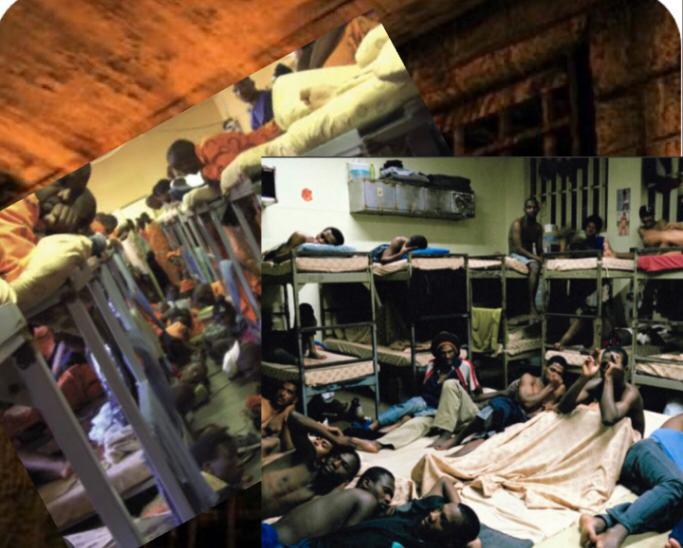
They complained of starvation, lack of access to medical care, corporal and capital punishment, and overcrowding.

“The Nigerian inmates in Kaliti maximum prison Ethiopia are soliciting help from the Nigerian government; we ask that the government come to our aid urgently.

“We lack access to water, food and medical care.

“We are asking the government to intervene so we can serve the rest of our jail terms in Nigeria. Many of us have fallen ill due to malnourishment, the health infrastructure is weak, and inmates are suffering from precarious health issues,” parts of the letter read.

The inmates said communication with families and friends outside Ethiopia is impossible.

They expressed remorse for their actions and appealed for a “second chance at rehabilitation”.

This is not their first appeal for a transfer to a Nigerian prison facility. In 2021, the detainees had decried their poor living conditions, begging for the Federal Government’s intervention.

Also in 2019, one Chika Nwachukwu raised the alarm over the horrible condition of Nigerians detained in the facility. However, their efforts did not yield the desired result.

There are multiple reports detailing the travails of Nigerians incarcerated in the Kaliti prison. The inmates are reported to be enduring conditions at odds with human rights standards.

In August 2019, a Nigerian detainee Odemu Efe reportedly died due to an undisclosed ailment at the facility.

The prisoners are in cramped and dirty quarters, with insufficient food allocations, horrible hygiene with little or no clothing and other amenities.

Authorities speak

The government can push for the transfer of a prisoner from Ethiopia or any other country to Nigeria only through diplomatic means, according to AbdurRahman Balogun, spokesperson of the Nigerians in Diaspora Commission (NiDCOM).

The NiDCOM spokesperson was responding to enquires by The ICIR concerning the Nigerian inmates’ request for repatriation.

Balogun said the transfer or swapping of prisoners is under the jurisdiction of the Ministry of Foreign Affairs and involves memoranda that have to do with Diaspora prisoners.

He disclosed that the government had established a committee headed by the Ministry to draft the MOUs. He, however, could not ascertain how much progress the committee had made.

“I understand that some Nigerians have a difficult time in foreign prisons because of the condition of living. The government has set up a high powered committee headed by the minister of Foreign Affairs and minister of Internal Affairs, and chairman Diaspora Commission and the like.

“The transfer of prisoners to Nigeria is diplomatic and bilateral and is strictly in the hands of the Ministry of Foreign Affairs.

“Prisoner swapping is under Foreign Affairs, and as far as I know, the high powered committee is working on drafting memoranda that have to do with Diaspora prisoners.

“Nigeria cannot interfere in the internal affairs of another country except through diplomatic means. And the government can only do that if there is an important reason for it,” the NiDCOM spokesperson told The ICIR.

The NIDCOM spokesperson also noted that it is within the rights of Diaspora prisoners to raise the alarm and call for help from the government if their fundamental human rights are being violated or abused.

When The ICIR reached out to the Ministry of Foreign Affairs, the Ministry’s spokesperson, Francisca Omayuli, said efforts are being made to resolve the issue.

Omayuli said the Ministry was liaising with Ethiopian authorities on the matter.

He noted that the Nigerian prisoners’ requests can be achieved using legal frameworks.

“The Nigerian government is already engaging the Ethiopian authorities to ensure an amicable resolution of the matter.

“The plea for a transfer is practicable and desirable, but it requires a legal framework to be in place, and Nigeria is working towards that,” she said.

ICPC re-arrests ex-JAMB Registrar, Ojerinde 

0

THE Independent Corrupt Practices and Other Related Offences Commission (ICPC) has re-arrested a former Registrar of the Joint Admission and Matriculation Board (JAMB), Adedibu Ojerinde.

Ojerinde, a professor, was re-arrested on Thursday, January 26, following a warrant issued by the Federal High Court, Abuja.

This was disclosed in a statement signed by the spokesperson of ICPC, Azuka Ogugua.

Ojrrinde is expected to face a team of investigators over new evidence uncovered concerning his ongoing trial for the diversion of funds while he was a public officer.

Parts of the statement read, “ICPC operatives uncovered two accounts opened in the names of Trillium Learning Centre Ltd and Sapati International Schools Ltd into which funds were diverted using fictitious names of students.

“The Commission had, on the 12th December 2022, invited the former JAMB Registrar for questioning over the new evidence, but he wrote through his solicitor requesting for 14 days grace to enable him honour the invitation. Ojerinde, however, refused to honour the invitation as undertaken by his counsel after the expiration of the 14 days grace on 27th December 2022.

“In the course of its ongoing investigation, the Commission unearthed new evidence that suggests that Ojerinde is the sole signatory to various bank accounts operated in the name of Trillium Learning Centre Ltd and Sapati International School Ltd. Ojerinde reportedly operated those accounts using false identities and forged documents in the names of Joshua Olakulehin Olaniran and Akanbi Lamidi respectively.” 

The Commission said Ojerinde also reportedly used another false identity, Adeniyi Banji, to operate a separate account in the name of Standout Institutes Ltd.

The ICPC added that it had recovered the cheque books of the companies’ accounts from Ojerinde, who has been taken into custody at the Commission’s headquarters.

The Commission said it will prosecute the former Registrar before a court of competent jurisdiction for offences bothering on forgery of documents, stolen identity, money laundering and concealment of gratification if the new evidence is confirmed.

The ICPC is currently prosecuting Ojerinde at the Federal High Court Abuja and Federal High Court Minna on an 18-count charge bordering on abuse of office and fraud to the tune of about N10 billion while serving as heads of two government agencies, the National Examination Council (NECO) and JAMB.

According to the ICPC, Ojerinde had allegedly conferred corrupt advantages upon himself at different times while being Head of JAMB and NECO, thereby violating Sections 19, 24, 25 (1) (a) and (b) of the Corrupt Practices and Other Related Offences Act 2000 and Section 1 (1)(b) of the Advance Fee Fraud Act, 2006.

On March 15th, 2021, ICPC arrested Ojerinde for allegedly misappropriating N900 million.