Home Blog Page 1105

Suspension: PDP violated my right to fair hearing, Nnamani says

FORMER Enugu State governor, Senator Chimaroke Nnamani, has protested his suspension by the Peoples Democratic Party (PDP), saying it violated his right to fair hearing.

The PDP National Working Committee suspended Nnamani, who is representing Enugu East in the Senate, on Friday, January 20 over allegations of anti-party activities.

But Nnamani took to Twitter on Saturday morning to complain about the decision, describing it as “a rude shock” and “a huge surprise.”


READ ALSO:

Court orders arrest of Chimaroke Nnamani, ex-Enugu governor

Ifeanyi Ubah, Kashamu, Chimaroke and Dariye ─ four Nigerian politicians that top list of AMCON debtors

Ex Gov Nnamani To Forfeit Assets To FG, Court Rules

Here are allegedly corrupt ex-governors heading to the 9th Senate


The former governor added that he was never at any time notified of any petition or complaint against him, nor informed of the grounds that formed the decision of the PDP NWC to suspend him from the party.

“I was not invited to any meeting, proceeding or hearing of the NWC of the party where my supposed offence(s) was/were discussed.

“I was, therefore, not afforded the opportunity to make representations on my behalf at any meeting where the proposal and decision to suspend me from the party was made,” he said.

He stressed that his right to fair hearing was consequently violated against the clear provisions of the Constitution of the party, especially in disciplinary proceedings.

Nnamani has been an ardent supporter of the presidential candidate of the All Progressives Congress, Bola Tinubu, despite being a PDP member.

NDLEA arrests fake policeman, others, destroys 317 tons of cannabis

0

THE National Drug Law Enforcement Agency (NDLEA) has arrested four suspects in Edo State over drug-related offences.

The suspects are an impersonator and three others.

This was disclosed in a statement by the agency’s public relations officer, Femi Babafemi, on Saturday, January 21.


READ ALSO:

NDLEA busts Tramadol cartel, seizes over N5bn drugs in warehouse

NDLEA intercepts drug consignments in wooden statue, imported vehicle

NDLEA arrests Brazil returnee with cocaine in candies

NDLEA seizes 6.2 million kilogrammes of drugs in eight years


Babafemi noted that the suspects were members of a syndicate operating in the Opuje community of the Owan West local government area (LGA) of the state, who stored cannabis in warehouses located within the forest.

“Operatives of the agency have dealt a lethal blow to a cluster of cannabis syndicates operating in the Opuje forests in Edo state where massive warehouses and tents storing over 317,417 kilograms (317.4 metric tons) of the psychoactive substance were destroyed and set ablaze in a two-day operation.

“At least, a police impersonator, Omoruan Theophilus, 37, who parades as a police Inspector to convey the drugs from the forests to the cities, and three others -Aigberuan Jacob, 42; Ekeinde Anthony Zaza, 53; and Naomi Patience Ohiewere, 42, were arrested in connection with the drugs,” the statement read.

Babafemi also noted that during a separate operation in Lagos State, the agency collaborated with the Economic and Financial Crimes Commission (EFCC) to arrest three other suspects for trafficking fake dollars.

The sum of $269, 000 was recovered by the operatives who embarked on the operation based on information from the Drug Enforcement Administration of the United States.

“While commending all the officers involved in the two special operations in Edo and Lagos states for their professionalism and commitment, General Buba Marwa has since directed that the fake dollars recovered and suspects arrested in the Lekki operation be immediately transferred to the EFCC for possible prosecution,” the statement added.

Petrol scarcity, arbitrary price hike worsen at filling stations

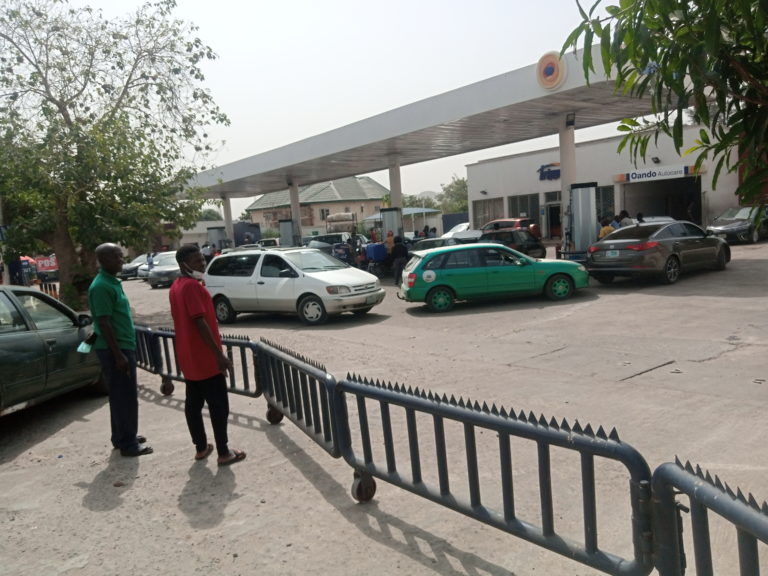
Scarcity of premium motor spirit, widely known as petrol, has worsened at retail outlets across the country, with pump price spiralling arbitrarily and vehicles forming long queues at filling stations where the product is available.

Petrol marketers, especially those in the independent group, have persistently complained of acute  difficulty in getting the product.

The Nigerian National Petroleum Company Limited (NNPCLtd) is the sole importer of petroleum into the country, supplying to marketers through their respective depots across the country.

The NNPCLtd ex-depot price is currently put at N160 per litre. However, independent marketers say that figure is a facade as they now buy the product at nothing less than N220 per litre at depots, that is if it is even available.

They add that increasing operational logistics cost was impacting their business negatively and affecting price determination.

Independent marketers had since last year declared they would not be able to match the pump price of major marketers because of operational logistics. So while retail NNPCLtd filling stations and other major marketers like Total sell at N169-N179 per litre in Lagos and N174-N180 in Abuja, independent marketers have been selling at prices ranging from N250 per litre to N500, depending on the state.

Unlike before when independent marketers masked pump prices, they now openly display such prices, suggesting a complete breakdown of government price control, regulation and enforcement. Consumers complain that even at that, some marketers still manipulate their pumps to defraud buyers, dispensing petrol quantity that falls a lot short of the figures displayed on their pumps.

Mele Kyari, the Chief Executive Officer of NNPCLtd, which maintains that the company always imports adequate volume of petroleum for consumption nationwide, accused marketers of taking the product to areas in the country where they can sell at higher price margins.

Checks yesterday in the Maraba axis of Nasarawa State showed a variation of prices in different petroleum retail outlets. Our correspondent’s observation at the NIPCO filling station on Abacha road in Maraba-Nasarawa showed the fuel selling at N195 per litre.

Some stations were seen barriers closed and not dispensing.

In Awka, the capital of Anambra State, The ICIR found some independent petroleum outlets selling at N250 and N310 per litre respectively, while it was N380 per litre in Owerri the Imo State capital.

In Enugu, petrol sells as high as N400 in some retail outlets.

In Lagos, independent marketers are selling between N250 and N300 per litre.

President of the Petroleum Retail Owners and Association of Nigeria (PETROAN), Billy Gillis-Harry, told The ICIR that logistics of supply chain from the NNPCLtd was still inefficient.

“Remember last year when we said that there was a supply glitch, there was a counter by the NNPCLtd that there was enough product that can last for 180 days. We said if there is product, bring it to where we can buy and take to our station since we are the last man in the distribution chain.

“We are still at the process whereby the supply side needs to be efficiently handled. If the NNPCLtd insists there is enough product, then the supply side needs to be improved.

“There are 39,000 independent petroleum retail stations across the country and about 300 NNPCLtd retail outlets. You can see the gap and the insufficiency to address the supply needs of Nigerians,” Gillis-Harry said.

He stressed the need of PETROAN getting enough product to address supply gaps.

According to him, “Some of our members are purchasing PMS at over N200 per litre and they have to sell to be in business. In Port-Harcourt, some sell as high as N500. These people also have to sell as they buy in order to be in business.”

On the impact of subsidy on the issue, he said, “A subsidy that does not impact on the people makes subsidy become something that we have to do away with.”

Already, marketers have warned that supply hitches associated with the distribution of petrol may persist till June this year.

This is despite the N3.6 trillion budget for subsidy in the first half of the year.

The National Public Relations Officer, Independent Petroleum Marketers Association of Nigeria (IPMAN), Ukadike Chinedu, lamented that fuel imports and subsidy were making Nigerians suffer.

Chinedu said, “This issue of subsidy and the importation of petroleum products are the major reasons why we are suffering like this and having epileptic supply of PMS. This may drag till the current administration leaves in May, or till June this year.

“The exchange rate is affecting fuel imports, which is also why the cost of petroleum products is high. We use too much naira to chase the few dollars that are available. So the solution is for us to refine our crude here and get our depots working.”

He added, “Also, we should note that most times when an administration is leaving, there is usually scarcity of products. It happened during the time of former President Goodluck Jonathan.

“This is because suppliers will be wary of selling petroleum products so that their debts will not be carried over to the next administration. Successive governments have suffered this epileptic distribution of petroleum products during transition to a new government.

“The government is winding up, and if you are a supplier you have to be careful in terms of supplying petroleum products. Remember that when Jonathan was there, marketers who were supplying products stopped and went on strike, demanding that they must be paid their arrears.”

A former president, Association of National Accountants of Nigeria (ANAN), Sam Nzekwe, said the crisis in the downstream oil sector would be best addressed when Nigeria’s refineries become functional.

Mike Osatuyi says members buying through other sources

The IPMAN National Operations Controller, Mike Osatuyi, said his members were yet to get any product from the NNPCLtd this year and had been buying from other sources.

“We are still waiting. We will wait until the middle of this month before we react. But as of last week, our members buy fuel above N200 per litre. But information reaching me is that as of today, the price has increased to N230 per litre, without transportation and other expenses”, Osatuyi said.

Atiku may lose big in G5 states in 2023 presidential election

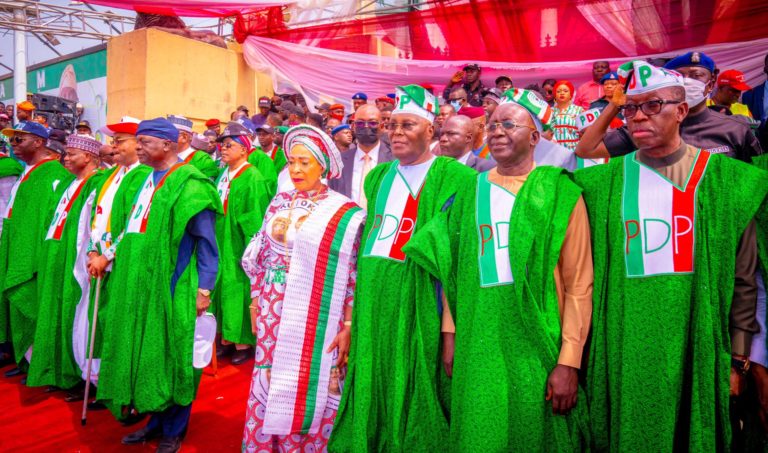
THE Peoples Democratic Party (PDP) candidate in the February presidential election, Atiku Abubakar, may lose a significant number of votes if the party fails to resolve its internal crisis before the 2023 election.

As the election draws nearer, The ICIR takes a closer look at the number of votes gathered by the PDP in the 2019 elections in the G5 states.

PDP and Abubakar are still battling it out with the G5 integrity group over the retention of Iyiorcha Ayu as the party’s national chairman.


READ ALSO:
Atiku gives conditions for appointments in his administration

Ogun govt denies PDP stadium for Atiku’s rally, cites renovation

Wike warns Atiku campaign team as thugs vandalise SDP office in Rivers

Atiku can’t see Buhari’s achievement because he lives in Dubai – Lai Mohammed


The five governors that make up the G-5 – Okezie Ikpeazu (Abia), Seyi Makinde (Oyo), Ifeanyi Ugwanyi (Enugu), Samuel Ortom (Benue), and Nyesom Wike (Rivers) – are insisting that Ayu, a northerner like Abubakar, be removed as chairman if the party must have their support and votes in the presidential election.

The governors maintain it would be politically immoral for the party to pick both its national chairman and presidential candidate for the February election from the North.

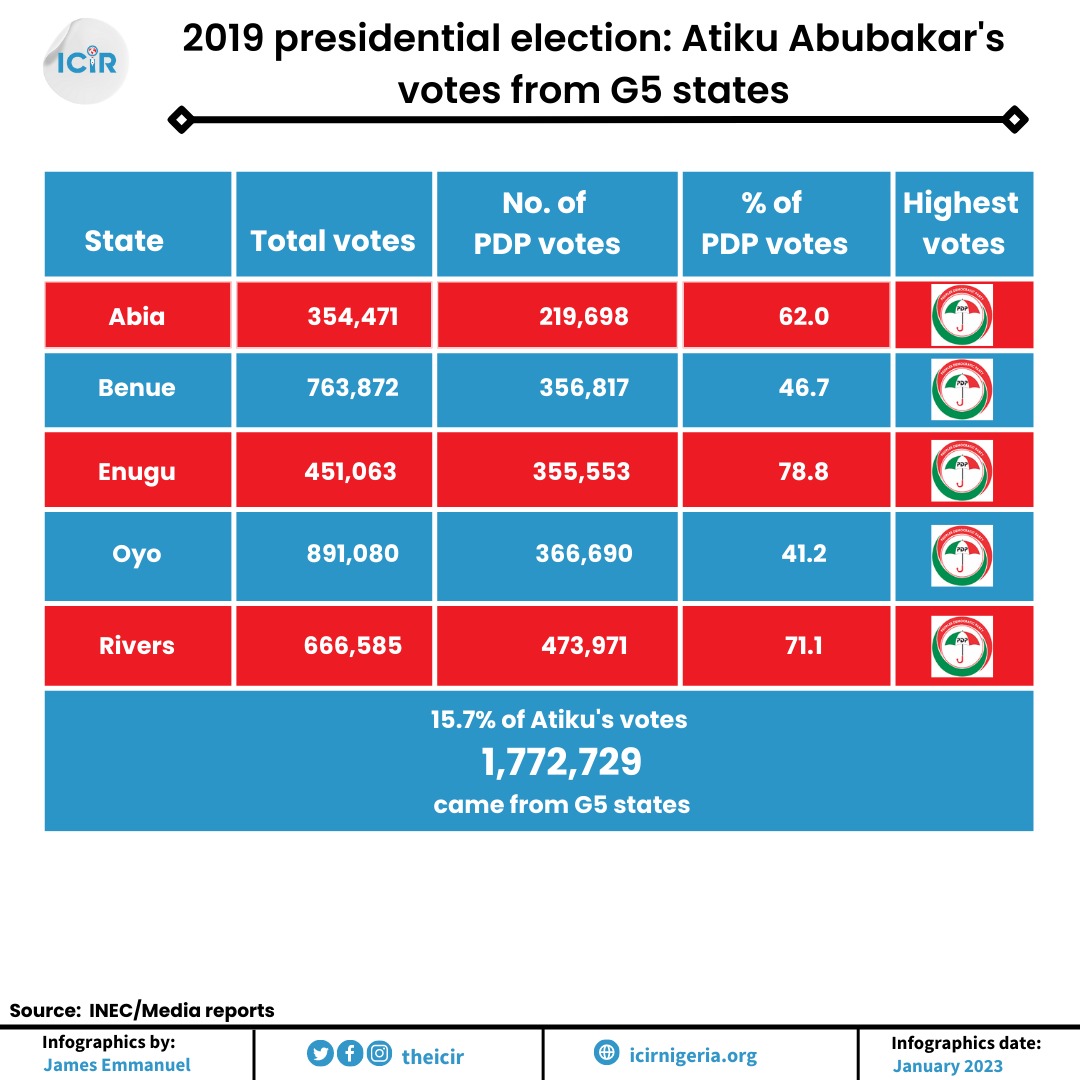
In the 2019 general elections, the five states produced 1,772,729 votes for the PDP, representing 15.7 per cent of Abubakar’s votes in the 2019 presidential election.

Infographic showing Atiku Abubakar votes from G5 states in 2019 presidential election.

The breakdown of the votes showed that Wike’s Rivers State delivered 473,971 votes for PDP, representing 71 per cent of the votes in the state.

The total number of votes cast in the state was 666,585.

In Enugu state, the party gathered 355,553 out of the 451,063 votes cast there, which was 78.8 per cent of the total votes.

In Oyo state, it was a close battle between Abubakar and Muhammadu Buhari. However, he was able to garner 366,690 votes out of 891,080, or 41.2 per cent of the total votes cast for the PDP.

Benue and Abia states produced 356,817 and 219,698 votes respectively for Abubakar, representing 46.7 per cent and 62 per cent of the votes in the two states.

The number of registered voters in the five states, according to 2022 data released by the Independent National Electoral Commission (INEC) is 13,471,789.

The breakdown showed that Abia, Benue, Enugu, Oyo, and Rivers states had 1,990,544; 2,693,303; 2,117,472; 3,137,480; and 3,532,990 respectively.

The figures imply an increase in number of registered voters and a remarkable expectation of voter turnout in the 2023 general elections, which makes it a big deal for any party hoping to win the election.

As the country prepares for another election, Abubakar will be contending with the rebellion of the five governors in his quest to realise his life-long ambition of becoming president of Nigeria.

Although the G5 governors have maintained their membership of the PDP, saying they would not defect, they have also remained unwavering in their words against Ayu’s chairmanship of the PDP and their intention to work against Abubakar in the presidential election.

Well, with Ayu not intending to step down anytime soon as PDP chairman, the aggrieved governors have also not been appearing in Abubakar’s campaign since the party flagged it off last year.

What’s at stake for Atiku?

The power that these five governors wield can’t be underestimated, according to a political analyst who spoke with The ICIR.

Ibrahim Abdulmajeed explained that although the PDP may be denying the influence of the G5, the five states have strong roles to play if Abubakar has to win the election.

Abdulmajeed who said he is a PDP member advised that Atiku should find a way to reconcile with the five governors.

“Wike and other aggrieved governors have the right to be angry. Wike felt betrayed, that’s why he’s fighting back.

“We can’t say these people don’t have any influence. They are the sitting governors of their states and joining the Atiku campaign team will surely make him stronger,” he said.

Oluwatosin Ishowo who writes polical opinion pieces, said, “I do not think it is moral to slam it on the G5 governors that they are fighting for personal gains. In politics, everyone rationalizes their interests. It is not like Atiku is entirely innocent. Hence, Wike and his G5 causing trouble is understandable, as the grievances date back to GEJ’s time as President.”

According to Ishowo, with or without Wike, PDP and LP are the only two states to battle for votes in Rivers State in the presidential election. He added that Wike did not throw his entire support behind Abubakar in the 2019 election anyway, which made Delta State to produce more votes than Rivers in 2019.

He said, “A right thinking person should naturally concede Oyo to Bola Ahmed Tinubu. To begin with, it is ridiculous to assume Atiku will win in Oyo State against Tinubu. Any candidate should know that it is Asiwaju’s zone and he will most likely take the state. Hence, the need not to romance Seyi Makinde unnecessarily. With or without Seyi, I doubt anyone will argue that Atiku won’t get 25/30 per cent in that state.

“I can’t say for Benue, but Ortom has everything to lose than Atiku because surprisingly, APC is strong in Benue than anywhere else, especially their governorship candidate. Therefore, his focus shouldn’t even be fighting with Atiku.

“The other two governors from the Southeast hardly have anything to do to avert Obi’s massive wave in that region. They are missing the reality that a war is about to sweep them all, while focusing on an enemy that has not fired any arrow to their fence.”

In a recent interview with Arise TV, former senate president Bukola Saraki insisted that the party would win four zones, noting that their biggest challenge would be the Southeast where Labour Party is strong.

“South-South is a strong PDP area. We will do very well in the South-South. The challenge we have in the Southeast, of course, is Labour Party,” he said.

*Additional research was Billdone by James Emmanuel.

After ICIR-funded investigation, Cross River Ministries of Agriculture, Finance get commissioners

0

By Archibong Jeremiah

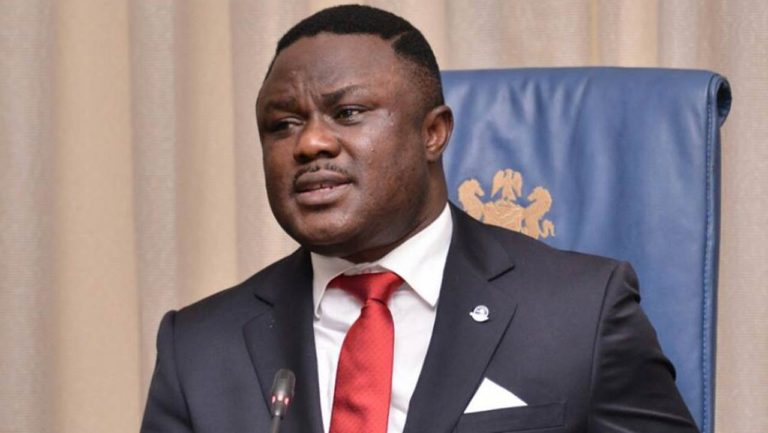
CROSS RIVER state Governor Ben Ayade has appointed Commissioners for the Ministries of Finance and Agriculture and Natural Resources after an ICIR-funded investigation exposing the soya beans farm project contract award scandal.

The two ministries had stayed without Commissioners for months before the investigation revealed that the contract envisaged to cost N1,541,003,500.50 awarded to Swamaco Global limited breached the established provisions of the extant laws including the State Due Process Guidelines and Rules for Procurement of Goods, Works, and Services, issued by the Due Process And Price Intelligence Bureau (DPPIB) in November 2007 and revised in 2020.

The DPPIB is a creation of the State Due Process and Price Intelligence Law (Law No. 9). It was enacted in 2011 and reviewed in 2020. It is an adaptation of the Public Procurement Act, of 2007.

Due to the absence of Commissioners in the two Ministries, it was difficult for the CrossRiverWatch the investigating platform  to get officials to confirm whether the project enjoyed any waiver, given that it was awarded in 2019.

The six weeks investigation was supported by the John D. and Catherine T. MacArthur Foundation and the International Centre for Investigative Reporting, The ICIR.

Oliver Orok, hitherto Commissioner for Sustainable Development, was moved to the Ministry of Agriculture and Natural Resources, while Goddy Eta was assigned to the Ministry of Finance.

Orok and Eta were appointed alongside ten others.

Cross River State Government in Soya Beans farm project contract award scandal

By Archibong Jeremiah

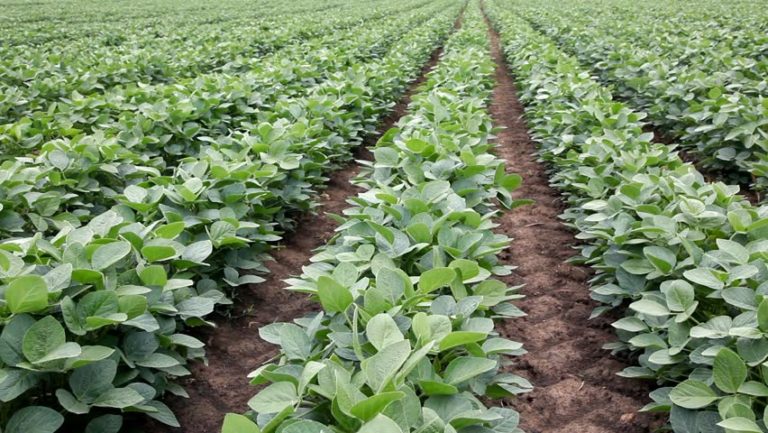
In July 2019 the Cross River State Government contracted Swamaco Global Limited to design and construct a soya beans farm city with supporting infrastructure, including an access road network, water supply, and solar lighting system.

Read an update to the investigation here

It was envisaged to cost N1,541,003,500.50. According to the government, the farm is aimed at producing grains to supplement maize production in the state.

The project was first budgeted for in 2018, for curiously a meagerly N100 million fueling suspicion that it was not a priority for the government.

However, in 2019 the same project appeared in the budget with the same N100 million appropriation, but the state government awarded the contract for the project to Swamaco Global Limited at the cost of N1,541,003,500.50.

People who are familiar with physical project costs have wondered if the government was serious about building or completing the project, given that the budgeted sum could never, in reality, build such a network of roads, water supply, and solar lighting infrastructure.

In 2020 N60,000,000 was budgeted for the soya beans farm, while N36,782,487 is the approved budget for 2022, bringing the total money budgeted for the project to N296,782,487, which is far below the amount for which the contract was awarded.

Indeed, the manner of budgeting with regard to the project has been a source of concern to members of the public.

Even the location of the project is a source of mystery. From 2018 to date, the project has featured in the state government’s budgets and was in various official documents planned to be sited in one of the following Yala, Ogoja, Obanliku, and Bekwarra Local Government Areas.

However, CrossRiverWatch has spent six weeks touring communities in the stated local councils without finding any project with similar descriptions.

The Violations

CrossRiverWatch investigation revealed that the contract award breached the established provisions of the extant laws including the State Due Process Guidelines and Rules for Procurement of Goods, Works, and Services, issued by the Due Process And Price Intelligence Bureau (DPPIB) in November 2007 and revised in 2020.

The DPPIB is a creation of the State Due Process and Price Intelligence Law (Law No. 9). It was enacted in 2011 and reviewed in 2020. It is an adaptation of the Public Procurement Act, of 2007.

It was difficult for CrossRiverWatch to get officials to confirm whether the project enjoyed any waiver given that it was awarded in 2019.

The contract process, particularly the tender, as awarded to Swamaco Global Limited, was only advertised in Cross River State Tender’s Journals which violates section 1.4.4C (advert guidelines for all contracts above N50 Million) of the State procurement guidelines and rules.

The provision of the guidelines states that “adverts for such procurement must be placed in the case of (i) national competitive bidding (NCB) – in at least two national newspapers, Nigerian Chronicles, Cross River State Government electronic procurement portal and State Tenders Journal.”

It was not immediately possible to ascertain whether the contract process benefitted from any exemption under part 3—Fundamental Principles for Procurements of Law No. 9. Part 3 (21b) states that “based only on procurement plans, supported by prior budgetary appropriations, no procurement contract shall be awarded until the procuring entity has ensured that funds are available to meet the maturing obligation and subject to the threshold in the Regulations made by the Bureau, has obtained a ‘Certificate of ‘No Objection’ to ‘Contract Award’ where applicable.”

Farmers express worries

Godshield Kanjal, CEO of Karlz Farm when contacted said he is worried about the state of the project. He said, “I’m a local farmer, I have travelled the length and breadth of the northern senatorial district, and I have not come across any soya beans farm. If the project was budgeted for, funds released, and the project was not executed, local farmers have been cheated.”

Kanjal observed that “one of the challenges facing the local farmers here is assessing inputs. An initiative like this would have been another avenue for the farmers to pick up another commodity in farming. The Ogoja weather is good for soyabeans. I had cultivated it and it did so well. I began wondering why our people are not majorly into soya beans.”

Tom Alim, a local farmer, called on the people to demand more responsiveness from the government.

“I have not seen any project as such in Cross River North, not to talk of Bekwara where I come from,” he lamented.

He assured that “Cross River State government has no farm in Bekwara at the moment other than a groundnut processing factory. This morning I reached out to government appointees to know if they know of any farm as such in Ogoja, Obudu, Yala, Bekwera, and Obanliku and the response from almost all of them is negative.”

He expressed fear that the project may have counted among the official conduits to siphon public funds using dubious contracts. “There is no gain in saying that most government contracts are fraudulent. The government will award contracts to its cronies, monies will be given to contractors to go out and execute these projects. They will never go on-site. They will go back and give kickbacks and share the money among themselves.”

Richard Inoyo, a farmer in the Southern part of the state, queried the award process, wondered about the size of the farm city that N1,541,003,500.50 would deliver, and called for a public inquiry.

In his words: “If you look at the traditional way of constructing roads in Nigeria, you will discover that too often they inflate the contract sum from research what we have observed is that the average contract value of constructing one-kilometer value of road in Nigeria is between 300 million to 1.5 billion, so if you ask me if 1.5 billion can construct average soya bean farm city alongside the road and other essential facilities, it is not possible based on the Nigerian factor it is not possible.

“The second factor is where is the government getting the fund if there isn’t appropriation and all of that. I think that is where public inquiry comes in, there is a need for civil society and the media to hold the Government accountable.”

Contractor issue threats

On inquiry, the Managing Director of Swamaco Global Limited, Ubong Jackson said that the government had not released funds for the project.

“The project was not funded,” he asserted before demanding: “please write officially and we will answer all your concerns, if you want an interview we will grant it.”

But the tone changed and the contractor became dramatic once we sent a request. His lawyer, David Idris of Raju Idris & Co. replied with an unsigned and not sealed letter that reads: “We acknowledge receipt of your letter dated 13th October 2022, wherein you demanded for private information, under the disguise of the freedom of information Act, also that we supply you with certain private and confidential information within our knowledge to aid in your report.

“In response to paragraph 2 of your letter under reference, we will love to inform you that our client is a private limited company, and it’s exclusively a private entity not a government or a public institution, wherein you can write and demand certain information of. We, therefore, enjoy(sic) you to do(sic) a proper study of the Freedom of Information Act before adventuring into voyage of discovery. Need to remind you that the awarding institution is a Public institution of government and information, as the appropriate demand should be rooted to them not our client.

“We equally draw your attention to your continued threat, cyber stocking(sic) of you and your organization on our client and the implication there to in our Criminal Jurisprudence. Take notice that we have the express instruction to formally commence a Criminal Petition against you and your organization to the Inspector General of Police for a holistic investigation of this Criminal act of cyber stocking(sic).

“Should you continue to write, or call our client in any way or form, our client will treat such write-up as a threat to his life and you leave our client with no option than to commence the enforcement of his fundamental right against you. A stitch in time saves nine. Accept our professional regards.”

The lawyer to Swamaco Global Limited’s response is stunning, he is ignorant of Section 31 of the Act – private institutions that are using public funds are answerable under the law to members of the public for such public funds.

According to the FOIA, the company is not exempted from answering questions from CrossRiverWatch.

A search on the CAC website about the company came up blank but NG Check and B2B Hint showed that it was registered 9 years before the contract, directors are Ikpechukwu Emmanuel Chukwuebuka and Atu Stephen Ikpechukwu and they are not known.

The Cross River State Director-General of the Department of Due Process and Price Intelligence, Mr. Francis Ekpo, and the acting Commissioner for Agriculture, Mr. Mfon Bassey did not respond to our inquiries.

When contacted after weeks of waiting for an FOI reply from the State Ministry of Agriculture, the Director of Planning, Research, and Statistics, Mr. Cliff Ayang Oyira spoke to CrossRiverWatch on the phone, he revealed that he is shocked that his ministry is not aware of such contract award.

Denying knowledge of the contract, he said “Incidentally, as the Director of Planning, I am not aware of any job or contract signed by my Ministry over soya beans.” Adding that “what we have that we have completed is the rice city in Ogoja, the cocoa factory at Ikom, and the vegetable oil factory in Bekwarra. Those are the two project we handled and has been handed over.”

Continuing, he said “As I said earlier, the soya beans factory is supposed to be domiciled in Agric, you are right to ask but it will surprise you to know that we did not sign an MOU with that kind of company (Swamaco Global Limited) in regard to soya beans. Maybe it was domiciled in the Governor’s office.”

Not satisfied, he requested the document this reporter is querying, reiterating his worries. After receiving and reviewing the document, he maintained that “I don’t know anything about the award.”

On whether the contractor was mobilized after putting pen to paper, the Ministry of Finance Information Officer, Mrs. Florence Kekong said “I wasn’t working there then.”

When pressed further, she said she only edits Mofi News (a publication of the Ministry of Finance) and knows nothing about contracts. “I wasn’t there in 2019 and can’t speak. When I came there I started picking my news about the State, I don’t know anything about contracts, we don’t even write news about contracts.”

When asked to find out she said she doesn’t have the time to do that, when asked for the Permanent Secretary’s contact, she said they don’t have one but an Administrator and couldn’t direct this reporter to his office.

She asked that this reporter reach her on a later date, calls went unreturned and messages were read but not replied to.

*This investigation, first published in December 2022 is supported by the John D. and Catherine T. MacArthur Foundation and the International Centre for Investigative Reporting, The ICIR.
Pope Francis’ visit to Africa comes at a defining moment for the Catholic church

0

By Stan Chu Ilo, DePaul University

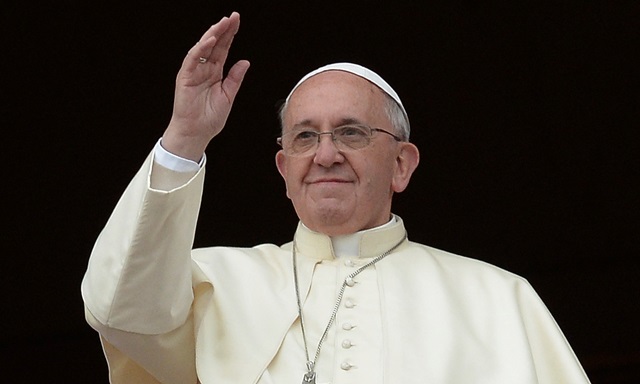
During his planned visit to the Democratic Republic of Congo (DRC) and South Sudan in February 2023, Pope Francis intends to be in dialogue with African Catholics – but also to listen to political leaders and young Africans.

This visit comes at a defining moment in what is regarded as a fairly progressive papacy.

Pope Francis has convened a worldwide consultation on the future of the Catholic church. This consultation, called a synodal process, began in 2021 and will conclude in 2024.

It is the most ambitious dialogue ever undertaken on bringing changes in Catholic beliefs and practices since the Second Vatican Council’s reforms in 1965. It is exciting for reform-minded Catholics, but distressing for conservative Catholics.

The ongoing synodal process has exposed the fault lines in modern Catholicism on the issues of women, celibacy, sexuality, marriage, clericalism and hierarchism. How Pope Francis – who marks a decade of his papacy this year – manages these increasingly divisive issues will, in my judgement, largely define his legacy.

My research has focused on how African Catholics can bring about a consensus approach in managing these contested issues.

The big questions for me are how another papal visit to Africa at this point will address the challenges and opportunities that Africans are identifying through the synodal process – and how this plays into the state of Catholicism in Africa.

The influence of African Catholicism

The Catholic church is witnessing its fastest growth in Africa (recent statistics show 2.1% growth between 2019 and 2020). Out of a global population of 1.36 billion Catholics, 236 million are African (20% of the total).

African Catholics are not simply growing in number. They are reinventing and reinterpreting Christianity. They are infusing it with new language and spiritual vibrancy through unique ways of worshipping God.

Given its expansion, the Catholic church in Africa is well placed to be a central driver of social, political and spiritual life. In many settings, the church provides a community of hope where the fabric of society is weak because of war, humanitarian disasters and disease.

The DRC, for instance, has the highest number of Catholic health facilities in Africa at 2,185. It is followed by Kenya with 1,092 and Nigeria with 524 facilities. Additionally, bishops have mobilised peaceful protests against violence in the DRC and Nigeria.

Another major feature of Catholicism on the continent is that it is witnessing a “youth bulge”. Central to Pope Francis’ advocacy for Africa is his appeal that churches, religious groups and governments show solidarity with young people. He calls them “the church of now”.

The pope expressed this most recently in November 2022 during a synodal consultation with African youth. He denounced the exploitation of Africa by external forces and its destruction by wars, ideologies of violence and policies that rob young people of their future.

Why DRC and South Sudan?

Pope Francis comes to Africa as part of the synodal consultation. He takes the message of a humble and merciful church to some of the most challenging parts of Africa: the DRC and South Sudan.

These two countries illustrate the impact of neo-liberal capitalism and the effects of slavery, colonialism and imperialism. Together, they have unleashed the most destructive economic, social and political upheaval in modern African history.

Pope Francis is coming to listen especially to the poor, to young people and to women who have been violated in conflicts. He also hopes to address the hidden wounds of clerical sexual abuse in the church.

Pope Francis will see how war, dictatorship and ecological disasters have denied ordinary people access to land, labour and lodging. These are the “three Ls” he proposes as vital in giving agency to the poor.

Some opposition

Pope Francis will no doubt receive a warm welcome during his visit. Most African Catholics embrace his message of a poor and merciful church because it speaks to their challenges.

But there are many African Catholics, particularly high-ranking church leaders, who are yet to embrace this reform agenda. The previous two popes encouraged a centralising tendency, which promoted unquestioning loyalty to Rome by African bishops. As a result, these bishops resisted attempts by African theologians to modernise and Africanise Catholic beliefs and practices to meet local needs and circumstances.

This has led to some African bishops being uncomfortable with Pope Francis’ progressive agenda on liberation theology, openness to gay Catholics, condemnation of clerical privilege and power, and inclusion of women in mainstream leadership.

Rather than being a strong church that looks like Africa, some of the Catholic dioceses on the continent have embraced medieval traditions – like Roman rituals and Latin – that alienate ordinary African Catholics, especially young people.

Africa’s future role

Pope Francis has often spoken of giving Africa a voice in the church and in the world.

Many African Catholics wonder how this will happen when, for the first time in more than 30 years, there is just one African holding an important executive function at the Vatican. This is Archbishop Protase Rugambwa of Tanzania, the secretary of the Dicastery for the Evangelization of Peoples, a department at the Vatican’s central offices.

Many African Catholics hope that Pope Francis will announce some African appointments to the Vatican during his February 2023 visit.

They also are hoping he will create a pontifical commission for Africa, similar to the Latin American commission created in 1958. This will be a significant way of giving African Catholics a voice in the church of Rome.

Pope Francis hasn’t fully recovered from the health challenges that led to the cancellation of the trip last July. But he is making this trip because he believes that Africa matters.

Through the sessions that the pope will conduct with Africans, especially young people, it’s hoped that the Catholic church in Africa can help address the causes of war and suffering in the DRC and South Sudan, and the obstacles to reforming the church in Africa.The Conversation

Stan Chu Ilo, Research Professor , World Christianity and African Studies, DePaul University

This article is republished from The Conversation under a Creative Commons license. Read the original article.

Trump fined for claiming Hillary Clinton tried to rig election

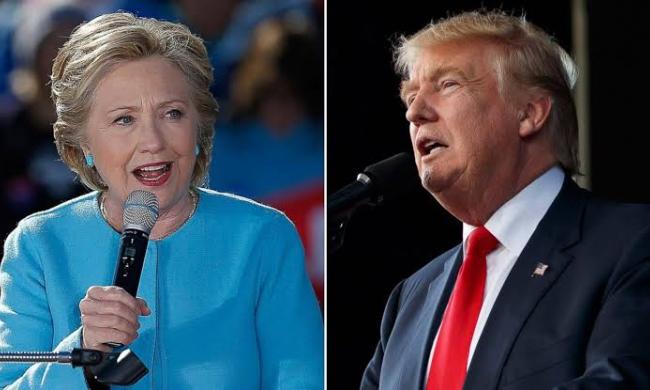
A FEDERAL Judge in Florida has fined former United States (US) President, Donald Trump and his attorneys more than $900, 000 for suing Hillary Clinton.

The presiding Judge, John Middlebrooks who dismissed Trump’s lawsuit last year September, said the sanctions were justified as the former President had a history of misusing the courts to advance his political vendetta.

According to the Washington Post, Trump filed a lawsuit against former Secretary of State Clinton, ex-FBI director James Comey and some other officials for their alleged attempt to rig the 2016 elections.

Clinton was the Democratic presidential candidate in 2016.

Trump, a Republican, ran for re-election in 2020 but was defeated by Democrat Joe Biden which prompted him to spread false claims about widespread voting fraud.

He has declared his interest to run for the 2024 presidential elections, laying down a rematch with incumbent President Biden.

2023: US threatens visa ban on electoral offenders

0

AHEAD of the forthcoming general elections, the United States (US), on Friday, January 20, warned that it would impose visa ban on electoral offenders.

US Consul General Will Stevens gave the warning in Asaba, Delta State, during the signing of Open Government manifesto by governorship candidates of various political parties in the state.

The event took place at the OpenGov Town Hall meeting organised under the auspices of the Niger Delta Open Observatory (NOGO) cluster supported by the USAID Strengthening Civic Advocacy and Local Engagement (SCALE) project implemented by Palladium.

Stevens said the visa ban is a long standing practice, noting that it will be applicable to offenders in the 2023 general elections.

He stressed that the US does not have a preferred candidate but is only interested in a free, fair and credible election in Nigeria.

“We in the US do not have a preferred candidate. We are not interested in particular political parties or candidates, what we are interested in is free, fair and credible elections to represent the people of Nigeria.

“These elections are so important. Nigeria is the fifth largest democracy in the world. So when the people of Nigeria come to vote, you are showing the strength of democracy to the rest of the world.”

He also disclosed that his home country has so far provided nearly $50 million worth of technical assistance to the Independent National Electoral Commission (INEC) and others to strengthen mechanisms for the election.

Lawyer accuses Police of intimidation, seeks N20m damages

0

A Plateau-based lawyer John Maton has accused the State Police Command of harassment and intimidation over his views on politics and security.

He has therefore sued the Police for N20 million in damages.

In a chat with The ICIR on Friday, January 20, Maton said he was forcefully taken to the B-division by police officers and accused of stealing cars.

“On Saturday, 18th June 2022, I was forcibly “invited” to the B-Division by persons purporting to be police officers, who drove off with me in a tinted, silver Mercedes-Benz. 

“They claimed it was because I was suspected of stealing cars.

“They threatened to handcuff, beat me up, and drag me to the station when I told them since an invitation is not an arrest, and no stolen vehicle is in my possession.”

Maton claimed he was illegally defamed and arrested by SARS officers of the Nigerian Police without a warrant and for made-up crimes. 

“This has led to many speculations as to their being sent by the government or some senior official to intimidate me for my anti – Buhari/Lalong/APC stance, my petition against the genocide of Christians and Indigenes of Plateau State, which got over 95,000 signatures, my campaign for Indigene and Minority rights protection; and my campaign against the Fulani invasion of Bokkos LGA and other parts of Plateau State,” Maton said.

He accused the Plateau State Police Command of still maintaining the banned State Anti Robbery Squad (SARS) in the state.

He also claimed he was arrested without a warrant, detained without his consent, harassed and intimidated.

“This is why I am asking the court for a declaration that the arrest is illegal and a violation of my rights, an order directing the Police and three others to pay Twenty million naira (N20,000,000) in damages and an order directing the Police and three others to deliver a written apology and publish same in two national dailies, all the cost incurred.”

He said the lawsuit has his name, but the issue is more significant than his being a lawyer. 

“This suit is simply my friends and I standing up to a system that is too corrupt,” he said.

The State Police Public Relations Officer (PPRO), Alfred Alabo, in a chat with The ICIR, claimed he is unaware of the development.


READ ALSO:


“I am not aware of such a matter. I cannot comment on what I don’t know about. Such a matter has not been brought to my attention,” Alabo said.

He added that he could only comment on issues directed to him by the State Police Commissioner.