Home Blog Page 1108

Strike likely if govt fails to meet our demands – ASUU

THE Academic Staff Union of Universities (ASUU) has hinted at the possibility of returning to strike this year if the Federal Government fails to meet its demands.

ASUU President Emmanuel Osodeke told The ICIR on Thursday, January 19, that the government had yet to address the issues that led to previous industrial actions.

Asked if the nation’s public universities would see a strike-free 2023, Osodeke said, “It is not possible in this country, except we have a set of leaders that will be elected and will be human beings and think about the system.”

He said ASUU members continued working because they wanted the best for the nation. 

The union leader, however, pointed out that his group was waiting for the government to fulfil its promises which led to the suspension of the union’s eight-month strike in 2022.

ASUU downed tools on February 14 following the government’s failure to honour the agreement it reached with the lecturers in 2009 and meet other demands by the union.

Following an Appeal Court ruling in favour of the government on September 21, directing ASUU to resume work while upholding a similar injunction earlier given by the National Industrial Court of Nigeria, the union called off its strike on October 14.

Unlike in the past, where striking workers were paid for the period they downed tools, the government vowed it would not pay ASUU.

At the end of October – two weeks after they resumed work – ASUU members received a half-month salary, which the government described as ‘pro-rata.’

The union has since demanded that the government pay its members’ backlog.

The ICIR reported in 2022 how ASUU had gone on strike for over 600 days under President Muhammadu Buhari, the longest under any leader in Nigeria.

Meanwhile, the government is processing the payment of salaries backlog for the Congress of University Academics (CONUA) members, The ICIR learnt on Thursday.

A Federal Ministry of Labour and Employment official who spoke with The ICIR said CONUA members would get their eight months backlog, covering the period ASUU suspended work in 2022. But ASUU will not receive the backlog.

The Minister of Labour and Employment, Chris Ngige, had given the assurance while certifying CONUA as a union.

The official who pleaded anonymity said relevant ministries were working on the payment.

According to the official, “What the government is saying is that CONUA is not affected (by the non-payment of the backlog of salaries to ASUU members.) 

“There is a difference between when workers are willing to work and when employers lock the gate. When ASUU was on strike, the university authorities closed the schools after some time. CONUA members said they wanted to teach. The universities shut them out. 

“So, they are entitled to their money. They have their list, register and names in each university. They have their IPPIS number and other records. ASUU had expelled them two years before the last strike.”

CONUA is a break-away group from ASUU. It claims its members did not participate in the last strike by ASUU.

The government registered the group as a trade union on October 4, 2022, when the ASUU strike was nearing eight months. 

Reacting to the planned payment to CONUA, (ASUU President) Osodeke said, “Ministry of Labour doesn’t pay workers salary.”

He said CONUA never existed between March and September when ASUU was on strike. According to him, expelling CONUA two years back does not make it a union.

The ICIR reports that ASUU threatened through its lawyer, Femi Falana, a senior advocate, on Tuesday to sue the government if it pays CONUA the backlog.


IGP presents N13bn cheques to families of deceased, injured cops

0

THE Inspector General of Police (IGP) Usman Baba has presented cheques worth N13.6 billion to families of deceased and injured Police officers.

The IGP during the presentation at the Force Headquarters in Abuja disclosed that the amount is expected to benefit 6,184 personnel who had previously fallen under the uninsured period from 2012 to 2020.

The police boss further sympathized with the families of deceased officers, urging them to judiciously utilise the funds in training their children. 

He said: “On my assumption in office in April 2021, my attention was drawn to this development. Consequently, an urgent representation was made to Mr. President, Muhammadu Buhari requesting for the release of funds to enable us pay all outstanding claims to the families of deceased Police officers.

“It was with great relief that Mr. President appreciated my representation and graciously approved the release of the sum of thirteen billion, six hundred and twenty-eight million, five hundred and thirty-five thousand, five hundred and eighty Naira (N13,628,535,580.00k) to pay the backlog of a total of six thousand one hundred and eighty-four (6,184) personnel that had previously fallen under the uninsured/uncovered periods of Group Life Assurance and Group Personal Accident Insurance Scheme, covering from Year 2012–2020.”


READ ALSO:


The IGP reiterated the commitment of the police authorities and the Federal Government on personnel welfare, noting that NPF has incorporated the Nigeria Police Insurance Ccompany.

“As soon as the practice license is granted, the company will be solely responsible for all insurance related issues concerning the Force,” he added.

Three injured as explosion rocks APC rally in Port Harcourt

THREE persons sustained injuries after an explosion rocked a rally of the All Progressives Congress (APC) at Rumu-Woji playground in Port Harcourt on Thursday, January 19.

The ICIR gathered that two of the injured persons are women.

The victims were rushed to the hospital for medical attention.

Although the cause of the explosion is yet to be determined, it was gathered that there was an altercation between youths of the community and APC officials over access to the playground.

An eyewitness who did not wish to be named explained that the explosion came with a loud bang.

“The party officials had altercation with the youths of the community over access to the venue of the rally before the explosion occurred,” the eyewitness added.

The Publicity Secretary of the APC in Rivers State Darlington Nwauju confirmed the incident, which he described as unfortunate.

100-year-old weekly news magazine to shut down in Japan

JAPANESE weekly news magazine Shukan Asahi will print its final edition in May.

Asahi Shimbun Publications Inc., the publisher of the magazine, made the announcement on Thursday, January 19, ending its over 100 year publication history.

The publisher highlighted that the decision was made because the market for weekly magazines was declining and advertisements revenues have lessened.

The firm added that it will focus its resources on digital media content and book publishing.

Shukan Asahi which was launched in 1922, is known for its focal point on social issues including Politics, Economics and Education. It is said to be Japan’s oldest weekly.

The magazine’s circulation exceeded one million copies in the 1950s. It sold only 74,125 copies in December last year.

Police arrest 405 robbery suspects, kill 51 in Lagos

0

THE Lagos State Police Command has said no fewer than 405 robbery suspects were arrested and 51 others killed in its operations between 2021 and 2022.

The Command’s spokesman, Benjamin Hundeyin, disclosed the figures while speaking with the News Agency of Nigeria (NAN).

Hundeyin said 245 suspects were arrested, and 25 killed in 17 robbery incidents in 2021, while 160 were arrested and 26 killed in 20 incidents in 2022.

According to him, 350 robbery operations were foiled within the period under review, including 169 in 2021 and 181 in 2022.

Hundeyin noted that 206 arms and 775 ammunition were recovered during the period. One hundred and eight arms and 348 ammunition were recovered in 2021, while 98 arms and 427 ammunition were recovered in 2022.

He further disclosed that 262 suspected cultists were arrested during the period from 32 cultism cases recorded. One hundred and twenty-eight cultists were arrested from 18 cases in 2021 while 134 others were apprehended from 14 cases in 2022.

Three Police personnel lost their lives from 20 attacks on the Command’s operatives during the period, with each year recording 10 attacks.

Hundeyin further disclosed that kidnapping cases reduced from five in 2021 to two in 2022.

Banks are not collecting new notes, CBN says as deadline nears

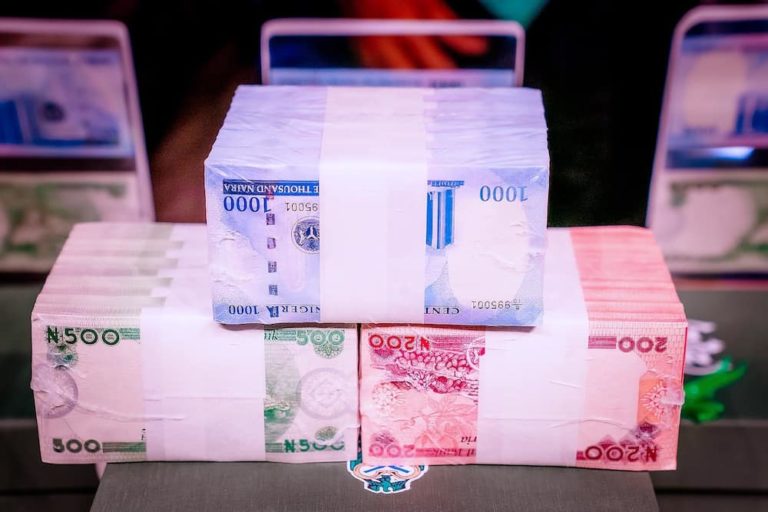
THE Central Bank of Nigeria (CBN) has revealed that commercial banks are refusing to collect the new naira notes.

The apex bank had directed the commercial banks to approach its branches across the country to pick up the new naira notes to ensure access to all bank customers.

The ICIR had reported that the newly redesigned notes are poorly circulating in the face of the January 31 deadline.

The apex bank has insisted that there is no plan to extend the deadline for the discontinuation of the use of the old notes as legal tender.

The Director, Legal Services Department, CBN, Salam Alada, revealed that commercial banks are refusing to collect the new notes while speaking during a sensitization tour at the Computer Village, Ikeja, Lagos, on Wednesday, January 18.

He said the new naira notes were in the apex bank’s vaults awaiting pick up by the commercial banks.

“I am reliably told that we are actually begging commercial banks to come and take money (the new notes) from the CBN. We have these new naira notes in our vaults and we are waiting for banks to come and collect it,” he said.

Alada disclosed that the apex bank was currently going around commercial banks and their Automated Teller Machines (ATM) to ensure the stoppage of across-the-counter withdrawals so as to allow for even distribution.

“We don’t want a situation where one chief who is known to the manager or everyone will cart away all the new naira notes from a particular branch.

“And that is why we said if you want the new naira notes, walk to the ATM where there is no distinction between myself and the hawker over there,” he stated.

Erring banks to face penalty

He also said penalties await banks that fail in coming to pick up the new notes, as well as those who fail to disburse them through their ATMs.

“What you have been experiencing will actually ease off very soon because the banks now know there will be a penalty for failure to come and pick the new naira notes from the CBN and the failure to load the notes into their branches.”

Report for the World seeks local newsroom partners

REPORT for the World, an international service program that matches local newsrooms with talented emerging journalists to report on under-covered issues around the globe, is accepting applications from newsrooms. 

Interested newsrooms must make a case for what critical issues are going under-covered or uncovered in their communities, and also how they will provide support and mentorship to their prospective Report for the World corps member.

Local newsrooms around the world can participate in a partnership program.

The program pays for half the full-time salary of a corps member for the first year, while coaching and supporting local partner newsrooms to raise the other half of the salary through philanthropy, earned revenue, and crowdfunding.

The organiser says the application process is highly competitive with two rounds of interviews with shortlisted applicants to determine a mutually beneficial fit.

The selected newsrooms will then hire corps members through a competitive process and welcome them as full-time employees of the newsrooms for up to three years. Corps members take on critical issues from gender inequality to climate change, corruption, labor rights, health, and education as their assigned beats.

The deadline for submission of applications is February 20. Interested applicants can apply here.

Shettima condemns attacks on INEC offices, IPOB activities

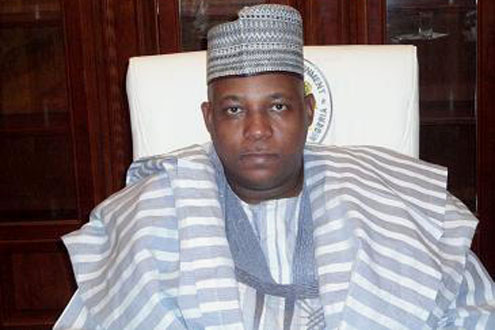
VICE PRESIDENTIAL candidate of the All Progressive Congress (APC) Kashim Shettima has described attacks on facilities of the Independent National Electoral Commission (INEC) as acts of terror.

Shettima made this statement in Birnin Kebbi during a courtesy visit to the palace of the Emir of Gwandu, Muhammadu Iliyasu-Bashar.


READ ALSO:

2023: INEC ready for run-off in presidential election

Nigeria has 16.7 million voters more than rest of West Africa – INEC

PVC: Hitches caused by INEC will disenfranchise Nigerians – Global Rights

INEC removes underage voters, records 93.5m voter registration


He urged all Nigerians to condemn the vandalisation of government properties in order to foster economic growth and political development.

“The incessant attacks on INEC offices and facilities is an act of terrorism, every meaningful Nigerian must condemn it in totality.

“Nobody in this country can force himself into power through threats, intimidation, and blackmail,” he said.

Shettima also condemned the instability caused by activities of the Indigenous People of Biafra (IPOB) in the South-East of the country.

“Also, locking down towns and cities in the South-East is also a pathway to anarchy and insanity. It should be condemned. The activities of the proscribed Indigenous People of Biafra are not in tandem with modern democratic practice.

“Nobody in this country can force himself into power through threats, intimidation, and blackmail. Politics and democracy is a game of numbers, your ability to reach out and build bridges and win the hearts and minds of people is much more important than issuing threats and intimidation,” he said.

Police arrest nine robbery suspects, recover ammunition in Bauchi

THE Bauchi State Police Command says it has arrested nine suspects for robbery and other offences in the Bauchi metropolis.

The state Police spokesperson SP Ahmed Wakil made this known in a statement released on Thursday, January 19.

He disclosed that the Command also recovered a locally made revolver with three 7.62mm live ammunition, three knives and mobile phones from the suspects.


READ ALSO:

Police deny sit-at-home order in South-East 

Police react to alleged killing of Uber driver in Abuja

Police debunk reports of planned protest by aggrieved officers

Kenyan Police officers arrested for abducting, framing up Nigerians


The suspects who are alleged to be involved in robbery and attacks on residents were apprehended on January 15.

Wakil listed the arrested robbery suspects as Sani Mohammed, 27; Suleiman Mohammed, 19; Imrana Abbas, 19; Ibrahim Muhammed, 18; Hassan Alhassan, 18; and Babangida Salisu, 20.

He said: “The Command acting on credible intelligence that some restive youths locally called ‘Yan Sara-Suka’ came out enmass in parts of Bauchi metropolis.

“The affected areas include Unguwar Kur; Bakaro, Karofi, Yakubu Wanka, Kwanar Kwaila and Unguwar Doya.

“The suspects armed with weapons unleashed terror on innocent citizens and looted shops at Kobi Street.”

The Police spokesperson also disclosed that the Command arrested one Umar Abubakar, 21, at Nabardo village in Toro Local Government Area of the state.

The operatives, according to him, recovered a locally made revolver with three 7.62mm live ammunition from the suspect.

Wakil added that preliminary investigation showed that Abubakar obtained the gun about two years ago and claimed to have fired one bullet while chasing cattle rustlers in the Mangu area of Plateau State.

He also noted that the Command, on January 13, arrested one Abdul Mohammed for possession of a stolen vehicle.

“The suspect alias (PA) was in possession of a stolen Toyota Corolla LE car with registration number NSR 510 TY, ash in color.

“On interrogation, the suspect claimed to have received the vehicle from one Haruna of Biu, in Biu LGA of Borno, who is now at large.

“The suspect received the vehicle for onward delivery to one Ibrahim Babaji, 30, of Misau town in Misau LGA of the state.

“Babaji said that he purchased the car from one Barau Alim Tela, who is also at large,” he said.

Who invented jollof rice?

0

By Fatima Fall Niang, Université Gaston Berger

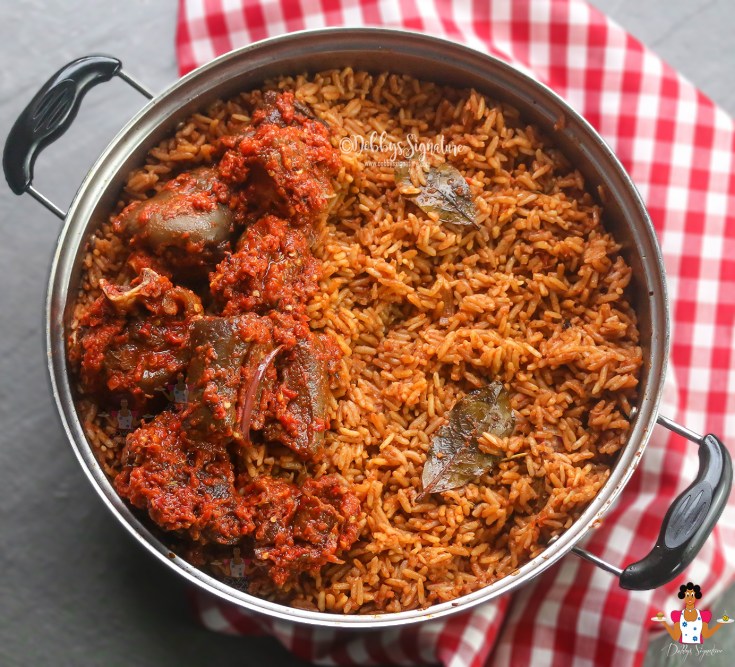
The authorship – and therefore origins – of jollof rice (called ceebu jën in Senegal according to the Wolof spelling) is the subject of a spicy debate between West African nations. In particular, Senegalese, Nigerians and Ghanaians claim ownership. And each believes their recipe surpasses all others.

In a bid to settle the issue we explored the subject in our book. In it we point out the “Senegality” of this dish. The word jollof refers to an ancient kingdom that was a part of Senegal between the 12th and the 13th centuries.

More broadly, we found that the origin of the dish is linked to a particular period in history – the entrenchment of colonial rule in West Africa. Between 1860 and 1940 the French colonisers replaced existing food crops with broken rice imported from Indochina.

In time, broken rice came to be much more prized by the Senegalese than whole rice grain.

This was followed by what we call le ceebu jën, un patrimoine bien sénégalais – the genius of the natives, especially the Saint-Louisians who set about creating something completely new. Ceebu jën consists of rice and fish, accompanied by vegetables and sometimes tomatoes.

As it happens in history, when an art reaches a certain fame or notoriety, its paternity becomes an object of controversy. This is what has indeed happened with jollof rice.

Colonial legacy

The first act of the settlers was to make all those disconnected from agricultural activities dependent on rice. This included the men and women who had come to try to make their fortune in the markets of Saint-Louis, one of the gateways to the West and, for a good period, the capital of French West Africa.

If we add teachers, various agents of the administration and the military, we can better understand the pernicious process of rice promotion.

Overflowing in urban centres, rice was consumed in practically all of the colony of Senegal.

The success of the rice promotion strategy resulted in the entrenchment of an economy that became increasingly dependent on crops preferred by the colonisers. To this day efforts continue to be made to grow rice in Casamance and the Saint-Louis region.

At the same time, the exploitation of the market garden areas of Niayes and Gandiol contributed to meeting the population’s need for vegetables.

Another intriguing part of the history of the dish is the myth that’s developed over centuries around the role of a Senegalese cook called Penda Mbaye who is regularly attached to the name of rice with fish.

Although no one disputes the connection between the dish and Penda Mbaye, serious information on her identity, on the place and time she lived and on the conditions in which the dish was created is cruelly lacking. This is why we have stated in our book that she left history very quickly to take her place in legend.

Why the passion?

To understand the importance of ceebu jën in the diet and imagination of the Senegalese, it would be wise to point out that its attractiveness can’t be reduced to its nutritional value or its intrinsic delicacy.

This culinary art is closely linked to a know-how and a way of life. Thus, the consumption of the dish is strongly linked to the ceremonial – the aesthetics of the presentation and the service.

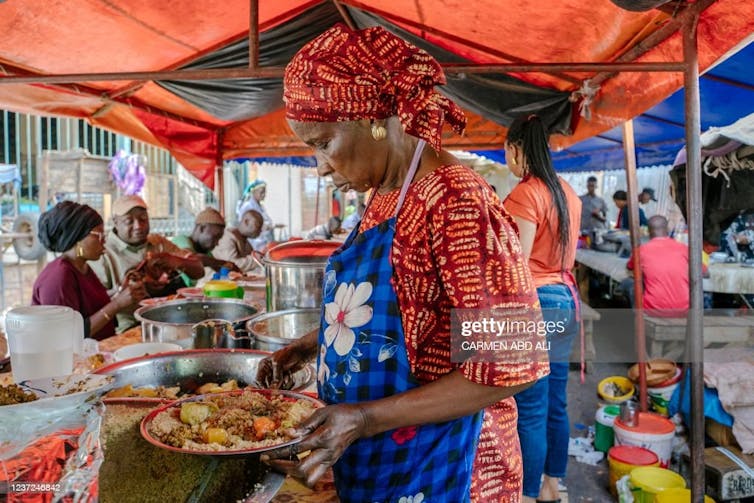
A woman serving ceebu jën. Cellou/AFP via Getty Images.

The women of Saint Louis, a port city in the northern part of Senegal, are singularly credited with remarkable know-how in this area. Their finesse and elegance is expressed in the way they dress, their speech and their gestures. All are put to good use so that the meal is a moment when they give pleasure by being pleased themselves.

Stamp of approval

At the end of 2021 Unesco included the Senegalese version of jollof rice – ceebu jën – on the intangible heritage of humanity list. This certification was recognition of the know-how of the Senegalese of an integral part of an intangible heritage.

The labelling should also have a positive impact on the economy, particularly tourism, agriculture, fishing and catering. Or, as some would describe it, gastro-diplomacy.

But to make the most of all these advantages, Senegal must pay more attention to its fishery resources and, above all, settle the recurrent question of self-sufficiency in rice production for good, in order to put an end to the scandalous perversion of feeding on what is not produced.

Senegal, whose reputation is based more on its cultural influence and diplomacy, has every interest in capitalising on this trend. Thus, in addition to rice with fish, it will have to promote its broader gastronomic heritage to make it an additional asset for the role it intends to play in the concert of nations.

In this spirit, Senegal’s Food Technology Institute would be given a new lease of life. This public establishment, created in 1963, was assigned the mission of research and development in food and nutrition.

In its efforts to enhance the rich Senegalese heritage, the institute could set itself the objective of promoting all the remarkable Senegalese consumables based on millet, cowpea, bissap, ditax and (monkey bread) bouye. And to take up this challenge Senegal would be well advised to make use of all the proven expertise of researchers as well as economic players.

This article was written with the contribution of Alpha Amadou Sy, co-author of the book Ceebu jën, un patrimoine bien Sénégalais.The Conversation

Fatima Fall Niang, Directrice du Centre de recherche et documentation du Senegal (CRDS), Université Gaston Berger

This article is republished from The Conversation under a Creative Commons license. Read the original article.