Home Blog Page 1110

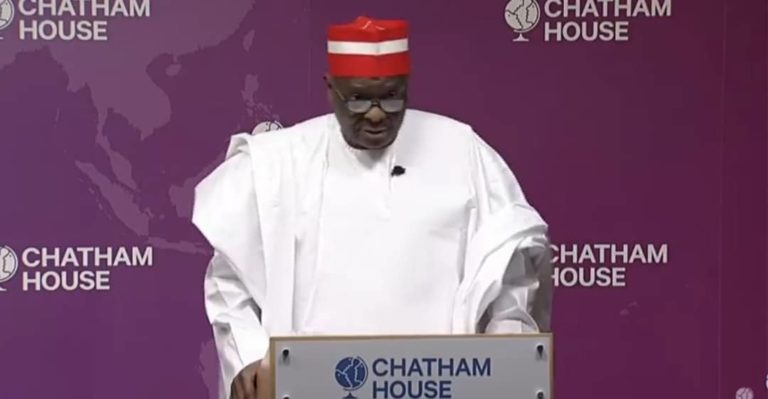
Chatham house: Wrong priorities, mistakes responsible for Nigeria’s challenges – Kwankwaso

0

PRESIDENTIAL candidate of the New Nigerian Peoples Party (NNPP), Rabi’u Musa Kwankwaso, has said that mistakes and wrong priorities set by the country’s leaders are responsible for the challenges plaguing the country.

Kwankwaso said this during a Chatham House presentation in the United Kingdom on Wednesday, January 18.


READ ALSO:
APC used lobbyists to organise Chatham House debate – PDP campaign spokesperson

Nigerians react as Chatham House invites Obi, Atiku, Kwankwaso to London

Video does not show Reno Omokri campaigning in support of Tinubu at Chatham House

Reactions trail Reno Omokri’s protest as Tinubu addresses Chatham House

Chatham House: Tinubu promises student loan, technology hub for youths


“We can point figures at all sorts of factors allegedly responsible for our situation. From coronavirus to global, economic recession; from western powers to international capital, etc. But for me, we are where we are because of the mistakes and wrong choices made by the very people entrusted with the business of governing Nigeria in the last 24 years,” he said.

He noted that his understanding of the issues involved was responsible for his intention to run for presidency, adding that the burden of free and fair elections rests mainly on the presidency.

“My 30 years experience in politics has taught me that free, fair and credible elections require so many inputs, so many commitments. But the commitment of the President, in particular, and that of the presidency, in general, is key.

“If the presidency wants free and fair elections, it will happen. The burden of free and fair elections, much as it depends on the performance of INEC, politicians, security agencies and others, largely rests on the corridors of the presidency,” Kwankwaso said.

He urged Nigerian president Muhammadu Buhari to leave a legacy of free and credible elections and ignore proposals seeking to undermine democracy ahead of the forthcoming exercise.

“I want to appeal to the Nigerian president to ensure that he leaves the legacy of free, fair, and credible elections. Luckily for us, the outgoing president was a serial victim of election rigging and manipulation and also the first beneficiary of free, fair and credible elections in 2015,” he said.

Kwankwaso also noted that the forthcoming elections would be different, as Nigerians would not be swayed by financial tricks employed by politicians in the past.

“I believe that the masses of Nigeria are very committed. Our fear now is that of INEC and other stakeholders because we have seen what happened in the past. And most of these issues are centred around the villa and the president, not necessarily this president but the ones before inclusive.

“And as long as the leadership in Abuja will convince themselves to allow the people to go and vote, I have no doubt in my mind we are going to have free, fair and credible elections. And for me, I have not seen any reason why Buhari will not allow that to happen because, probably, it is one of the early and few legacies he will leave behind,” he said.

Speaking on his plans if elected, the former governor of Kano State said he would create 500,000 classes in four years to tackle out-of-school children, foster unity in the country while addressing insecurity and other challenges.

FG spent $1bn to regain captured territories in the north — Buhari

President Muhammadu Buhari said the Federal Government spent $1 billion to regain some northern parts that terrorists had captured since 2015. 

Buhari said this on Tuesday January 17 at an award ceremony in his honour at the Abu Dhabi Peace Forum in Nouakchott, the Mauritanian capital, shortly after the ‘Award for Strengthening Peace in Africa’ was conferred on him.


READ ALSO:

N77trn debt: Each Nigerian to owe N384,864 by end of Buhari’s tenure

Despite insecurity in Nigeria, Buhari to receive peace award today

Buhari’s visit: Kogi govt rejects monarch’s response to query

[SPECIAL REPORT] Aisha Buhari: Can Aminu Adamu sue?


He regretted that Nigeria’s security and that of the Lake Chad Basin remained unstable despite spending over $1 billion to reclaim Boko Haram-held territories in Borno, Adamawa and Yobe states.

This was disclosed in a statement signed by the Special Adviser on Media and Publicity to the President, Femi Adesina.

Adesina quoted the President as also noting that Nigeria would continue to engage bilaterally and multilaterally to comprehensively win the war against insurgency and other related terror groups through kinetic and non-kinetic approaches.

Buhari urged leaders to place a dividend on youth development, with more seriousness and actionable ideas in promoting skills acquisition, while preventing idleness.

“When I assumed power in 2015, Boko Haram held about two-thirds of Borno State, half of Yobe State, and a couple of local government areas in Adamawa State, all in the North-East of Nigeria.

“We have been able to retrieve these swathes of territories by investing over $1 billion to acquire hard and software weaponry from the US and other friendly countries to carry out sustained operations against insurgency since 2015,” the President said.

According to him, these monies would have been better spent on critical infrastructure such as healthcare and education.

Buhari said that despite the difficult times confronting the country, it would continue to spend its very scarce and lean resources to ensure that the military is well equipped for the task.

Also at the event, the President of the Forum for Promoting Peace in Muslim Societies, Shaykh Abdallah Bin Bayyah, said the 2023 conference theme was based on the recommendations of the ‘Nouakchott Declaration’ that emerged from the inaugural conference.

He added that the award was given to Buhari for providing good leadership, and promoting peace in a multi-ethnic, multicultural and multi-linguistic country like Nigeria.

2023: Marwa warns of tougher times for drug barons and cartels

0

THE chairman of the National Drug Law Enforcement Agency (NDLEA), Mohamed Buba Marwa, has warned that drug barons and cartels would face tougher times in 2023.

Marwa gave the warning on Wednesday, January 18 at a press briefing at the NDLEA national headquarters, Abuja, on his second anniversary of his leadership of the anti-narcotics agency.


READ ALSO:

Nursing mother jailed six years for drug trafficking

NDLEA busts Tramadol cartel, seizes over N5bn drugs in warehouse

NDLEA intercepts drug consignments in wooden statue, imported vehicle

[UPDATED] NDLEA gives conflicting figures on number of drug traffickers arrested in 2 years


Updating the public on the agency’s efforts to rid the country of illicit substance abuse and drug trafficking, the retired general said, “Last year, I issued a New Year appeal to them and also warned that those who refused to heed the warning will find themselves in a difficult situation. Already, we have 34 barons in our net, and they are facing the music in court. We have secured orders for the temporary forfeiture of their assets.

“With our prosecution being top notch, they can look forward to a long time in prison and final forfeiture of their wealth and assets.

“Those involved in the illicit drug trade should take a cue from our actions. They can again look forward to a tough time this year.”

He disclosed that the agency had already taken down three major drug cartels in the first two weeks of 2023.

“The details you will get to know in the coming days. In these two years, we arrested 26,458 drug traffickers, among them 34 barons. In 24 months, we successfully prosecuted 3,733 offenders who were convicted and handed various jail terms in court. Of the conviction figure, 2,346 were recorded in 2022 alone, which is the highest in the history of the agency and almost doubled the highest ever recorded in the 33 years of NDLEA.

“This is not happenchance but a result of professionalism, determination, commitment and hard work of our officers, men and women,” he added.

He described 2022 as an epoch year in drug demand reduction with the establishment and commissioning of the NDLEA drug abuse call centre, which broadened access to treatment and rehabilitation.

He warned citizens to be wary in their dealings with people of questionable wealth, and to anticipate an amendment of the NDLEA Act this year.

Marwa added that the Proceed of Crime Act 2022, enacted last year, gave the agency a new leverage.

He expressed gratitude to President Muhammadu Buhari and other stakeholders for their support in the total transformation of the agency.

The anti-drug boss also thanked the National Assembly, the Attorney General and the Minister of Justice  Abubakar Malami, the foreign partners, sister agencies, the media and all those who all had, in one way or the other, been catalysts to the NDLEA productivity in the past two years.

Education ministry’s hqtrs to spend N25.8m on meals, refreshments in 2023

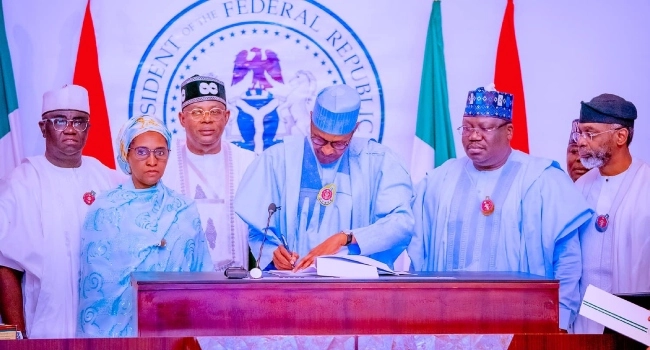
THE Federal Ministry of Education headquarters in Abuja will be spending N25.8 million on meals and refreshments this year, as approved in the Federal Government’s budget signed by President Muhammadu Buhari on January 3.

The ministry will also be spending N367 million on local and international travels during the year.

The ministry has a share of N1.076 trillion from the government’s N21.8 trillion for the year.

In addition to the meals and refreshments budget, there is another N49.65 million for welfare packages for the ministry.

The ministry’s headquarters will be paying N35.52 million on security charges and N36.4 million on cleaning and fumigation services. It will spend N2 million on sewage charges.

It will also be paying N42.2 to cover motor vehicle fuel costs, N5 million for other transport equipment, and another N34 million for fueling its plants and generators.

Besides, the ministry’s headquarters has an approved budget of N6.2 million for telephone charges, N6.1 million for internet, and N5 million for water rate.

Meanwhile, the Federal Ministry of Health, which shares the same building with the Education ministry, has almost the size of the Education ministry’s budget, at N1.07 trillion.

It has no budget for meals and refreshments, but will spend N24.57 million on welfare packages. 

The ministry’s headquarters will spend N51.6 million on travels within and outside Nigeria. The ministry has about 14 per cent of the Education ministry’s budget for travel.

The Health ministry headquarters has a budget of N36.7 million for security charges, and another N36.79 million for cleaning and fumigation. Unlike the Education ministry, which has N2 million for sewerage charges, the Health ministry has a budget of N17.2 million.

Fuelling vehicles by the ministry will gulp N11.79 million, while transport equipment fuel costs will take N14.74 million.

The ministry has a budget of N6.29 million for fuelling its generators and plants.

It also has N2.65 million for internet access, and N3.14 million for satellite broadcasting access charges. 

On Tuesday, The ICIR reported what the Presidency, Office of the Secretary to the Government of the Federation, Office of the Head of Civil Service of the Federation (OHCSF), and headquarters of 12 key government ministries would be spending to purchase newspapers, magazines and periodicals.

Earth Journalism Network offers 2023 ocean media initiative story grants

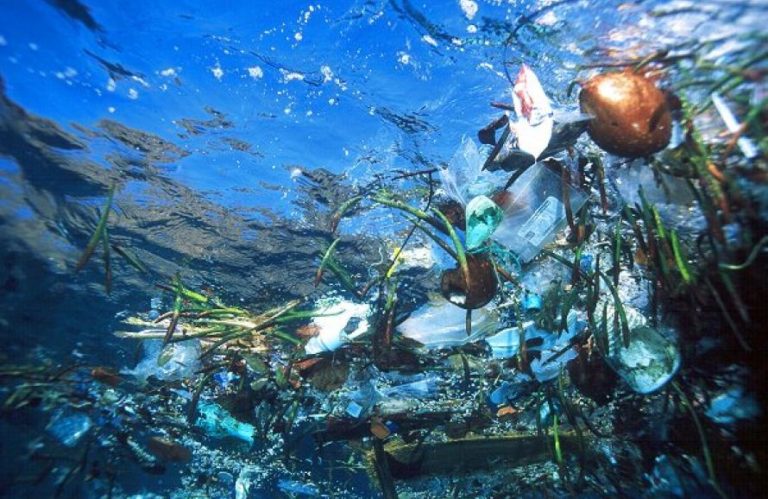
EARTH Journalism Network is inviting applications to its 2023 Ocean Media Initiative Story Grants themed, ‘Reporting on Marine Pollution’

The grants will support the production of in-depth stories on the sources and impacts of different forms of marine pollution and solutions to curb them.

EJN says story ideas that focus on marine pollution – its sources, impacts on ecosystems and marine species; and ongoing efforts to curb and regulate sources of marine pollution will be eligible.

Journalists may explore the impacts of improper waste disposal, agricultural runoff, drilling for oil and gas, mining, shipping, and other anthropogenic activities that are contributing to these crises.

Stories should highlight research and initiatives, either proposed or in effect, to curb the impacts of marine pollution. Solutions stories should explore policy and governance measures at the local, national and international levels while highlighting the challenges inherent in addressing these issues.

EJN will be offering up to eight grants of approximately $1,200 each.

The organisers say they aim to support the production of stories that raise awareness about marine pollution and drive conversation among communities and policymakers at the local, national, and regional levels, and are particularly interested in cross-border collaborations and stories.

Applications are open to journalists working in any medium (online, print, television, radio) and other expert media practitioners with professional reporting experience and a history of covering ocean issues.

Applications are encouraged from freelance reporters and staff from all types of media organizations – international, national, local, and community-based.

The deadline for the submission of the application is February 13, 2023. Interested applicants can apply here.

Cross River govt sacks 12 school principals, suspends six others over corruption

0

THE Cross River State government has sacked 12 school principals and suspended six others for offences bordering on bribery and corruption.

The Commissioner for Quality Education, Dr Godwin Amanke, disclosed this during a ministerial briefing in Calabar on Tuesday, January 17.

Amanke also said that 16 secondary school teachers and principals were transferred to other schools for imposing illegal levies on students.


READ ALSO:

Cross River civil servants are retiring to poverty as government defaults on pension payment, squanders money on frivolities

Insecurity: Kidnappers of two medical doctors in Cross River demand N100m ransom

Cross River flags off deworming of 8000 children

BHCPF: After ICIR/IBP-funded investigation, Cross River health agency to sanction erring staff, distribute laptops


He noted that the government gave series of queries before issuing the new directive.

The commissioner said,  “Tuition fee in the state is free, but some Cross River teachers and principals connived to alarmingly inflate other charges, which is not acceptable at all.

“We have suspended six principals so far over the unusual and inflated charges on students. We have given several queries to others involved in illegal charges and dealings, including bribing and acceptance of bribes to be posted to township schools.

“These principals collect a hefty sum of N40,000 from each student, as against N1,200. They collected fees for three terms upfront, claiming that many students abandon school after taking the WASCE exams.

“We are monitoring defaulting teachers and principals, and won’t hesitate to wield the big stick.”

According to him, the school principals were also paying as much as N300,000 to be transferred.

He disclosed that the government was already deploying officials to curb the menace of cultism in secondary schools, adding that it had also employed 1000 teachers.

Amanke said, “If I had my way, I would make education free in the state. I did it as a local government chairman.”

Police deny sit-at-home order in South-East 

0

THE Nigeria Police have denied knowledge of the sit-at-home order across states in the southeast region.

The ICIR reports that the the Indigenous People of Biafra (IPOB) initiated order has been active for over a year ago.

In August 2021, the IPOB introduced a sit-at-home order to compel the Nigerian government to release its leader, Mr Nnamdi Kanu, whose arrest the Nigerian Federal government initiated in Kenya, and who has been standing trial in Nigeria for alleged treasonable felony and terrorism.


READ ALSO:
South-East Nigeria pays heavy price – for Monday sit-at-home exercise – (Part 1)

South-East Nigeria pays heavy price – for rising spate of insecurity – (Part 2)

When Hunters Become Hunted: How attacks on Police Stations in the Southeast leave Officers at risk and communities vulnerable


Since then, social and commercial activities in the region have been disallowed by IPOB enforcers every Monday.

A two-part investigation by The International Centre for Investigative Reporting – read the investigation here and here –  has shown the human and economic cost of the order, particularly on small businesses.

The findings showed that the South-East region has sat at home for over 71 Mondays since the exercise began.

During the investigation, The ICIR interviewed 22 small businesses in each of the five states under the region.

It also estimated that annual revenue of N4.618 trillion ($10.495 billion) could have been lost due to the order.

However, when The ICIR contacted the Anambra state police spokesman, Deputy Superintendent  Tochukwu Ikenga, he dismissed the practical existence of the order in the state.

According to Ikenga, business activities are active in the state.

“I don’t have such information.  I go to work every day,” he replied when asked why the police had failed to quash the sit-at-home order.

“I go around with public vehicles. I don’t have such a report. Anybody that has an engagement should go out. Being a security man is a secondary factor,” he added.

Similarly, the Ebonyi State police spokesperson, Chris Anyanwu, said there was no sit-at-home exercise in the state.

Anyanwu said, “There is no sit-at-home now, except in the earlier period. We have been maintaining it. We do our routine show of force to make the assurance double sure in case there is any attack.”

The ICIR was unable to speak with the police spokesmen in Enugu and Imo states, Daniel Ndukwu and Michael Abattam, respectively, as the two men did not respond to calls or WhatsApp messages.

The Abia State police spokesperson, Godfrey Ogbonna, also refused to answer repeated calls.

Gov Umahi inaugurates commission of enquiry into Ebonyi killings

The governor of Ebonyi State, David Umahi, has inaugurated a nine-man commission of enquiry to probe the killings and vandalism in Ekoli and Amoso Edda, Afikpo south local government area of the state.

This was made known in a statement issued in Abakaliki on Wednesday, January 18 by the Special Assistant to the Governor on Media, Chooks Oko.

There have been series of attacks and destruction in the two areas of the local government, which led to the death of some persons on Boxing Day last year.

The victims included the younger brother of a leader of the All Progressives Congress in the state and a police officer.

Members of the enquiry commission are Nkama Nkama as the secretary, while Mike Okoro, Etta Uka, Kalu Mba, John Igwe, Ibiam Ekpe, Ufere Okoroafor and Ama Kalu Ikwor will serve as members.

During the inauguration, Umahi urged members of the commission, headed by Sonni Ogbuoji, to carry out their responsibilities with utmost conscientiousness.

Responding, Ogbuoji assured the governor that they would perform their duties with diligence, and without panic or indulgence.

Nursing mother jailed six years for drug trafficking

0

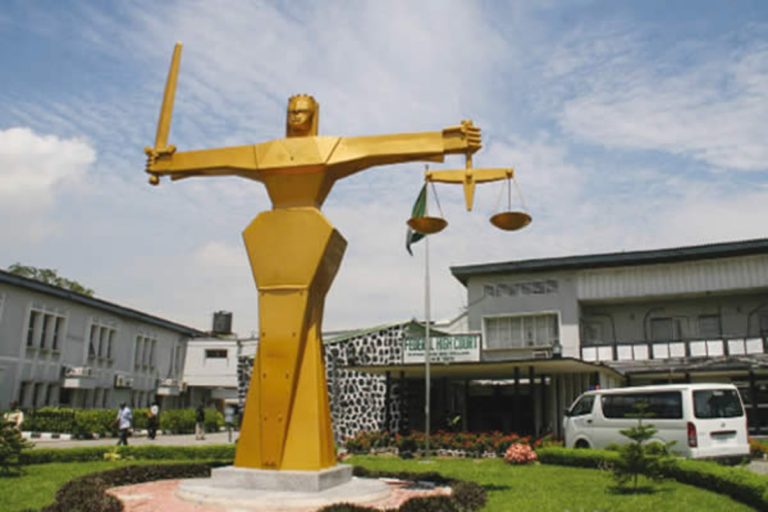
THE FEDERAL High Court, Lagos, has convicted and jailed a nursing mother, Fatimah Adeoye, to six years imprisonment for drug trafficking.

Justice Tijani Ringim sentenced Adeoye after she pleaded guilty to a two-count charge of unlawful export of 1.10 kilogrammes of cannabis sativa, also known as marijuana, and 17 grammes of rohypnol, a psychotropic substance, brought against her by the National Drug Law Enforcement Agency (NDLEA).

The NDLEA counsel, Abu Ibrahim, told the court that the convict was arrested with the prohibited drugs on November 18, 2022 at the Gate ‘C’ of the departure hall of the Murtala Muhammed International Airport, Lagos, during an outward clearance of passengers on Ethiopia Airline flight.

She had attempted to export the drug to Oman.

The ICIR reports that the NDLEA also arrested a businesswoman, Okefun Darlington Chisom, over her links with two Pakistanis, who were arrested at the Lagos airport with eight kilogrammes  of cocaine.

The prosecution counsel told the court that Adeoye’s offence contravened Section 11(b) of the National Drug Law Enforcement Agency Cap. N30, Laws of the Federation of Nigeria, 2004.

The convict admitted to committing the offence and pleaded guilty to the two counts.

The prosecutor urged the court to convict and sentence her in accordance with the NDLEA law she was charged with.

After listening to both parties and citing a plethora of decided cases, the judge sentenced Adeoye to three years jail term in each of the counts.

The judge held that the jail term would run consecutively, but gave the convict an option of a fine of N500,000 on count one only.

The judge also ordered that the banned substances be confiscated from the convict and destroyed by the NDLEA after the appeal period has elapsed.

Naira redesign and withdrawal limits: questionable policy and bad timing

0

By Stephen Onyeiwu, Allegheny College

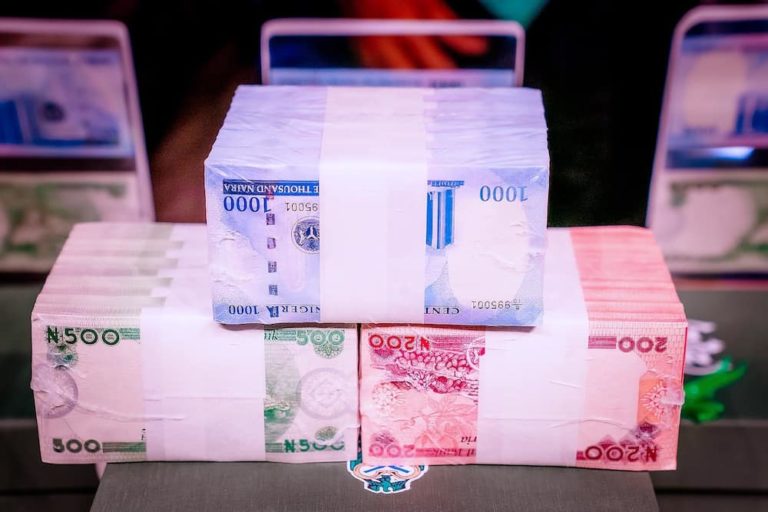
THE Central Bank of Nigeria launched new banknotes in November 2022. The new notes came into effect on 15 December 2022.

The apex bank also capped withdrawal of the new banknotes at N100,000 (US$222 at the official exchange rate) per week for individuals, and N500,000 (US$1,111) for corporations.

Reactions across Nigeria were swift and acerbic. The National Assembly called for the suspension of the policy, at least until after the 2023 general elections.

Concerns were expressed that the withdrawal limits were too low and would impose hardships on Nigerians. Following those concerns, the central bank raised the limits to N500,000 per week for individuals, and N5 million ($11,111) for corporations.

But does Nigeria need to redesign its currency? And why is it necessary to impose withdrawal limits, especially for a country that aspires to scale back regulation and liberalise its financial sector?

Why the central bank introduced the policy

The bank says the new banknotes are being introduced to rein in counterfeiting, promote a cashless economy by limiting the amount of the new banknotes that can be withdrawn, reduce the large quantity of dirty notes circulating in the economy, discourage hoarding, curb crimes like kidnapping and terrorism, and head off illicit financial transactions.

It also sees the policy as a way of addressing the huge amount of currency outside the formal financial sector; 85% of banknotes circulate outside the banking system, largely because of hoarding and illicit financial transactions.

The introduction of the Bank Verification Number system, which requires depositors to have a unique number that could be used to determine who they really are, has encouraged criminals and money launderers to operate outside the banking system. The circulation of large quantities of money outside the banking system, according to the Central Bank of Nigeria, makes it challenging to conduct effective monetary policies.

Many pundits believe there’s another, unspoken rationale for the policy’s rules around cash withdrawal: to discourage vote-buying during the upcoming elections. They suggest that limits on cash withdrawal would make it harder for politicians to monetise and corrupt the electoral process.

Not a useful policy

The central bank’s urgency is puzzling. The problems it claims the policy change will solve are not new.

I do not see how the policy as it’s been publicly explained will foster a cashless economy. Apart from politicians, top government officials and those involved in illicit financial transactions, most Nigerians don’t stash huge sums of cash away. How could they? The country’s unemployment rate is 33%; the minimum wage is N30,000 ($67) per month. Most Nigerians don’t have enough money in their bank accounts to be worried about withdrawal limits.

Besides, the country is already making progress in becoming cashless. During my recent seven-month stay in Nigeria, I was impressed by how I could pay the Uber driver through bank transfer with my phone, purchase assorted goods at the local market through transfers, and use point of sale to withdraw money when cash is necessary.

Meanwhile, if its goal, as pundits suggest, is to curb vote-buying, then the policy still likely won’t be effective.

Politicians will always find a way of using money to influence the political process. They could resort to the use of foreign currencies. There has been a surge in the demand for dollars and other foreign currencies, following the announcement of the policy.

And then there are the new banknotes. The central bank claims it redesigned the naira to head off the nationwide spate of kidnappings, terrorism and other violent crimes. But surely this will just give criminals an incentive to demand dollars or other foreign currencies from their victims.

Implementation already flawed

People have been given up till 31 January 2023 to return old naira notes to banks, central bank cash offices, and other designated financial intermediaries. But the 38 million Nigerians (or 36% of the adult population) who don’t have a bank account have no choice but to hold on to the old notes. Banks don’t have enough of the new ones to exchange for the old ones.

Unbanked Nigerians cannot deposit the old notes in an account. To avoid this dilemma, the central bank should have allowed the old and new notes to coexist as legal tender, while the former is gradually phased out.

It’s not just the banks that don’t have access to the new banknotes. Ordinary Nigerians are struggling, too.

The top Central Bank of Nigeria officer who appeared before the National Assembly to brief members about the new policy did not readily know how many banknotes had been printed. That points to the lack of planning for the implementation of the policy.

The bank failed to carry out due diligence in calculating the optimal quantity of the new notes needed to maintain stability in the financial system. The old naira notes are expected to be phased out by the end of January 2023, but there are doubts that the bank will meet this deadline.

Although the central bank has embarked on a sensitisation exercise to assure the public that things will be fine, it should have done so simultaneously with the announcement of the policy.

Jitters and uncertainty

The timing of the policy announcement and rollout is bad. Domestic and foreign investors are already jittery about the upcoming elections and the state of the Nigerian economy. This new policy will add another layer of uncertainty.

For a country that is grappling with slow economic growth, inflation and exchange-rate volatility, the last thing the central bank should do is destabilise the economy by introducing a policy whose immediate benefits are questionable.The Conversation

Stephen Onyeiwu, Andrew Wells Robertson Professor of Economics, Allegheny College

This article is republished from The Conversation under a Creative Commons license. Read the original article.